


 Long live Ukraine! Fuck the war!
 RSS of site articles
Whereas, at a global level, the best-known and most widespread Russian motorcycles are those of the Ural marque, in Russia the «Izh» motorcycles are equally well known but far more common. This is due to their lower prices and a much wider range of models. I have decided to devote a general post to this marque as well, the first (in chronological order) motorcycle manufacturer in the USSR.
In the second half of the 1920s, the Soviet government decided to promote the construction of a motorcycle factory in Izhevsk, a city already heavily industrialised and equipped with the necessary infrastructure. However, without waiting for the promised large factory to be built, Izh engineers designed the first five models in just a few months in 1928. Demonstrating considerable imagination, they named them simply with the numbers from 1 to 5. As early as 1929, experimental examples of all five models had been produced. They all had a heavy pressed-steel frame and differed from one another in engine power and weight. None of these models went into series production, but two of them are worth mentioning.
The Izh-1 had a V-twin engine with a displacement of 1,200 cc and 24 hp, a longitudinal crankshaft, a three-speed gearbox integrated into a single unit with the engine, and the inner part of the frame also served as the silencer body.

The Izh-4 proved, during road tests, to be the most successful model and was recommended for series production. It had only one cylinder and was the lightest of the five models. In the early 1930s, however, other priorities were imposed on the factory.
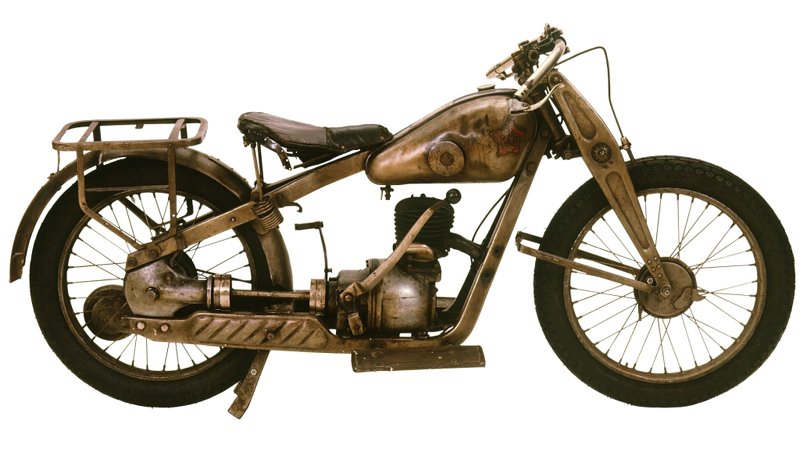
In 1933, motorcycle production resumed, this time on a series basis. The new model was called the Izh-7 and was produced from 1933 to 1938. It had a single-cylinder engine with transverse scavenging, a three-speed gearbox, rear-wheel drive via chain, and a frame made of pressed elements bolted together.
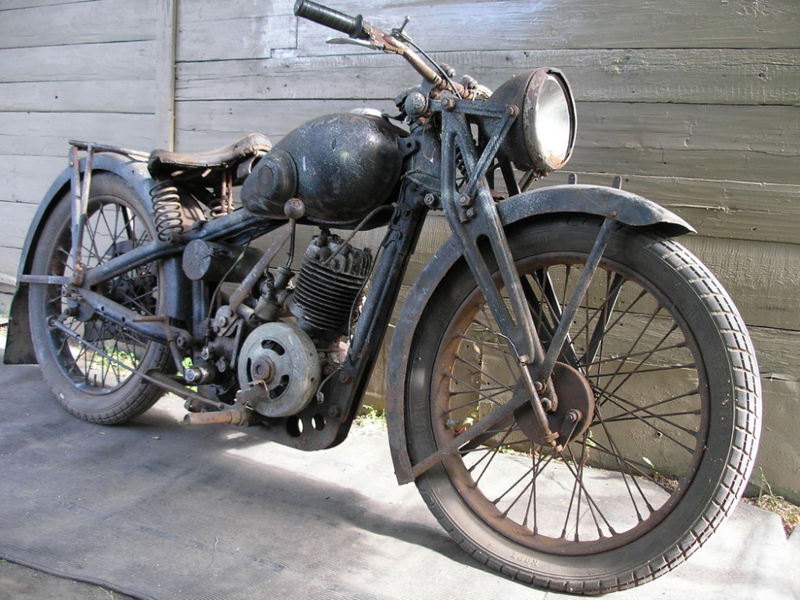
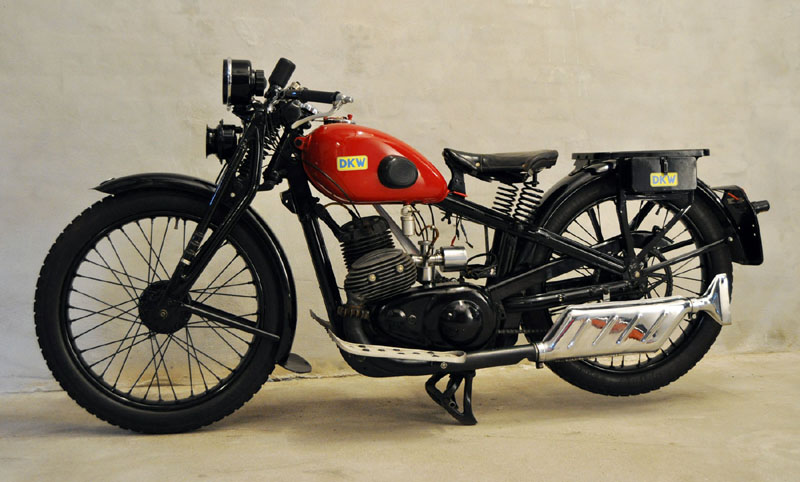
The Izh-7 was, in fact, an almost exact copy of the German DKW Luxuss-300, the technical documentation for which arrived in the USSR by unknown means. Thus another myth of Soviet industry is dispelled by the photograph of the original:
The «7» was followed by the «8» and «9», introduced respectively in 1939 and 1940, almost identical in nearly every respect to the Izh-7: only the engine had been slightly uprated. Production of the next model, the Izh-12, was due to begin in 1941 but was postponed because of the war. The factory resumed its operations in 1946 with the Izh-12.
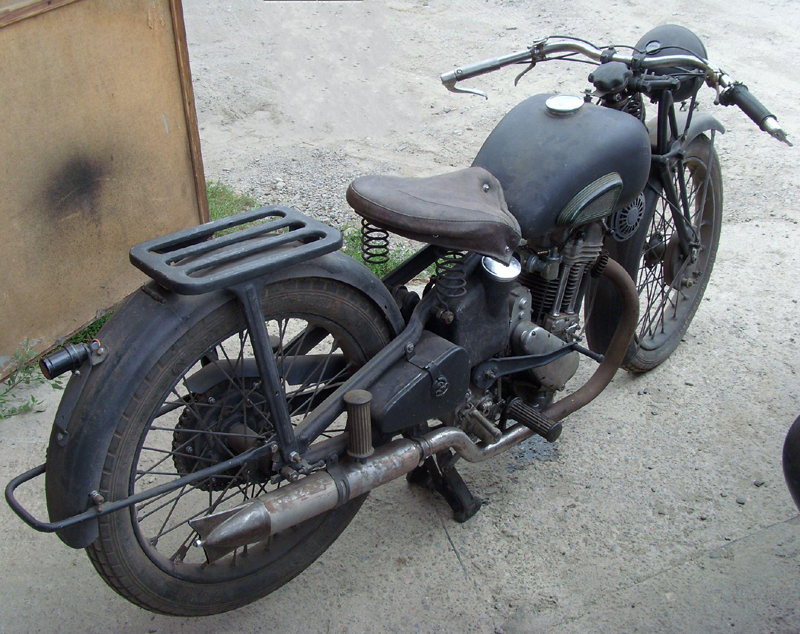
It is known that at the end of the Second World War the USSR did not formally have the right to war reparations. Nevertheless, it brought back from Germany a large quantity of goods, machinery, technologies and designs. Among the many works taken in this way was also the technical documentation for the DKW NZ-350 motorcycle: produced in the USSR from 1946 onwards, it became the Izh-350. The original German version is shown here:
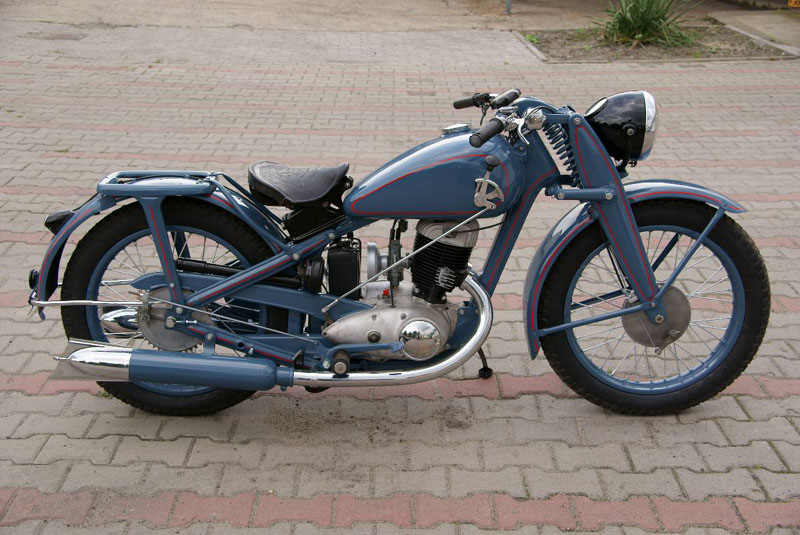
The Izh-350, with aluminium engine components and an electrical system of Soviet manufacture:

In the 1950s, the factory experienced significant growth and learned to offer an increasing number of models and to create new ones with regular frequency. Thus, as early as 1951, the Izh-49 was introduced, becoming extremely popular in the USSR thanks to its improved comfort and durability.
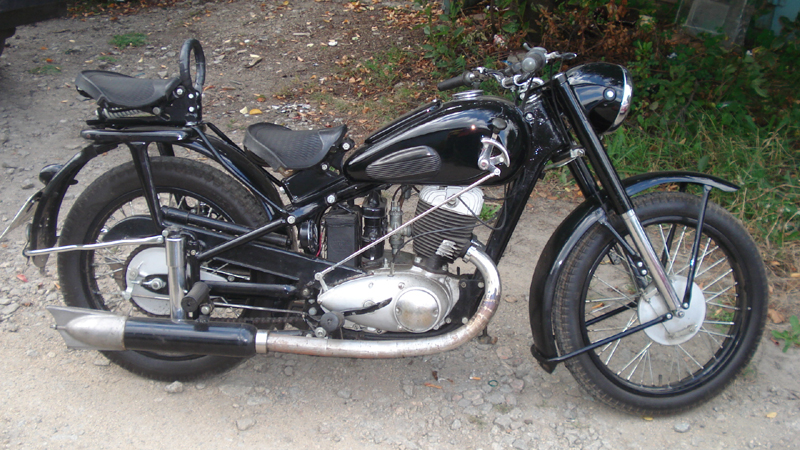
The Izh-56, launched in 1956, had a tubular frame instead of a pressed one, a 13 hp engine, curved wheel covers, a rubber saddle and improved styling. Thanks to this model, truly modern for its time, the popularity of the marque quickly reached national level.

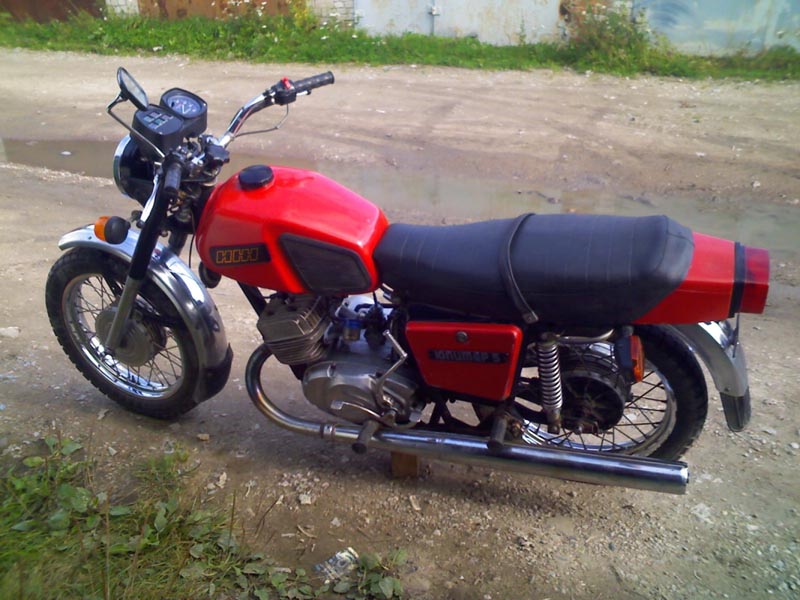
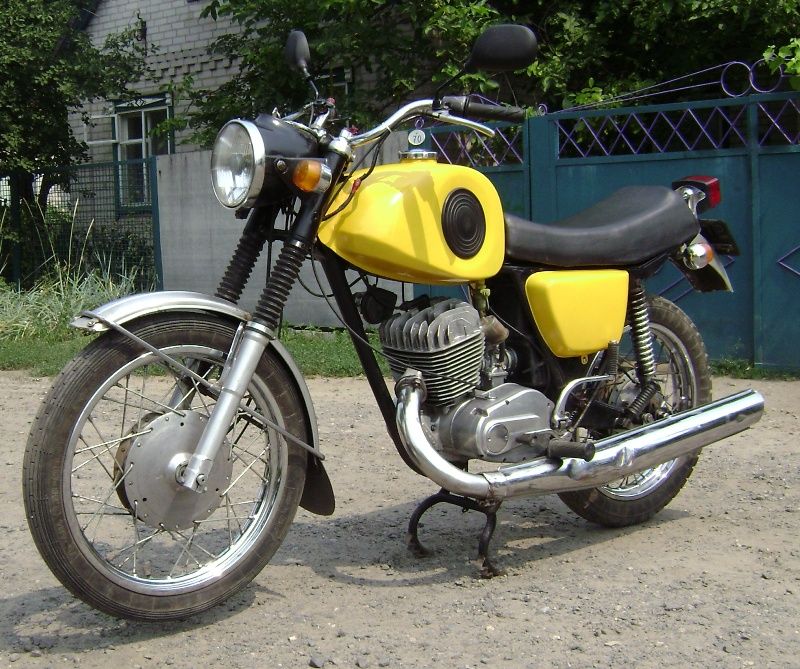
The Izh-58 Jupiter was introduced in 1958 and went into series production in 1961. Essentially, it was the «56» with a new engine: 19 hp and an original design with separate cylinders, improved gearbox and improved oil circulation. Two versions of the Jupiter existed: with and without a sidecar. Having become the most popular Izh model of all time, the Jupiter reached its fifth edition in 1985.

Its styling was modernised only in 1988, while the engine was gradually upgraded and improved throughout the model’s history. Thus the Izh Jupiter-5 looked as follows:
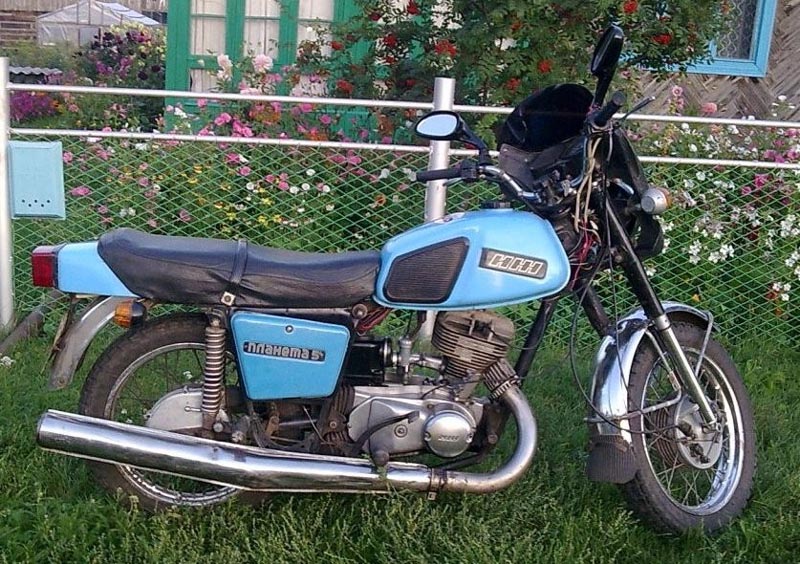
The «Planeta» model, also introduced in 1961 on the basis of the Izh-56, likewise enjoyed a long life and five editions until the end of its production in 2008. Its engine was also gradually modernised (reaching 22 hp), while its styling changed only in 1987 (fuel tank, side decorative elements and instrument panel).
Very different was the Izh Planeta-Sport, designed in 1974. It was an entirely new model, completely different from the German ancestor of all Izh motorcycles produced from 1946 onwards. Assembled using Japanese-made components, it had an output of 32 hp and a separate oil circulation system. It was very popular among young people, but when the factory stopped importing parts from Japan, its popularity declined together with its quality. In 1984 its production was discontinued.
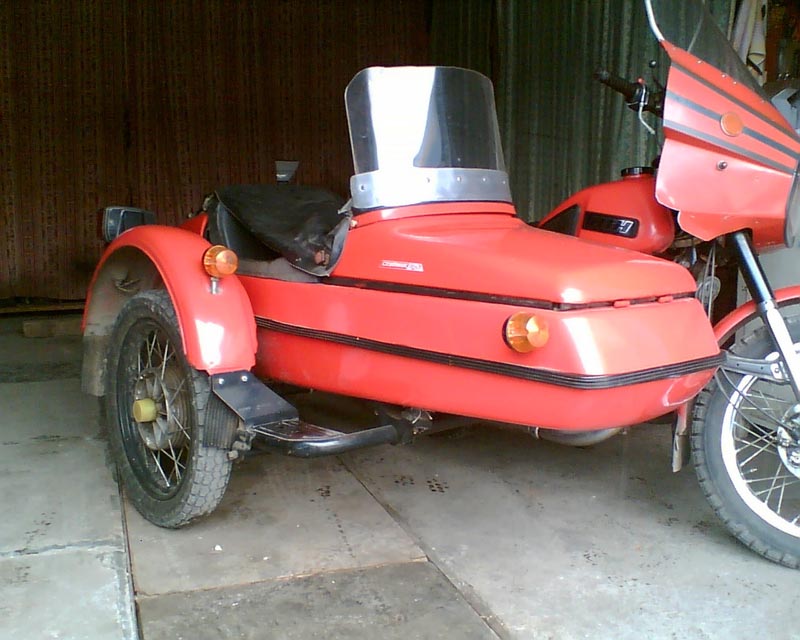
A sidecar could be added to any «Jupiter» or «Planeta» motorcycle:
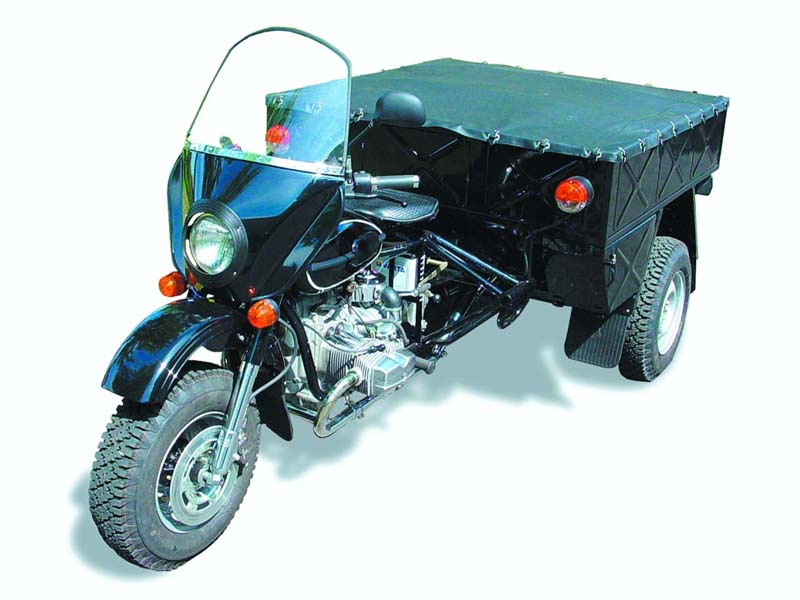
In the first half of the 1990s, after the collapse of the USSR, the Izhmoto factory found itself facing the free market with two models still in production: the Jupiter-5 and the Planeta-5. That is to say, two motorcycles which, despite numerous modifications, essentially replicated the Izh-350 of 1946 (see above). After several years of instability, it was therefore decided to produce cargo transport modules. These two-wheeled modules could be attached to any Jupiter or Planeta in place of the rear wheel and fork. Thanks to the transfer case, differential lock and reverse gear, the result resembled a three-wheeled vehicle.
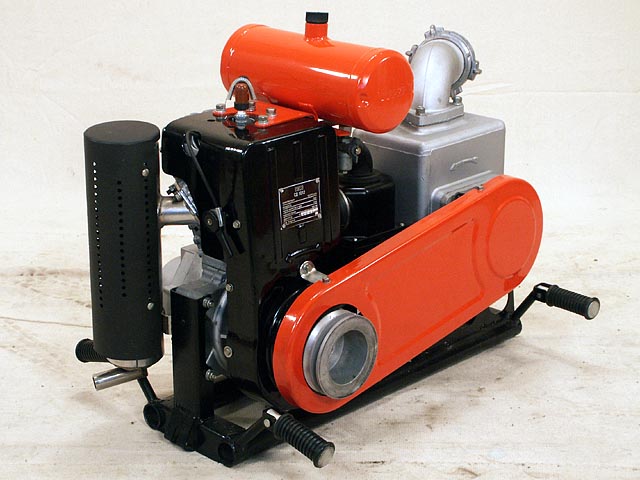
A motor pump produced by Izhmoto could also be mounted on the cargo modules:
In 1996, a new chopper-style model was introduced: the Izh Junker. For several years, this model was used by the Moscow traffic police (who wished in this way to support the domestic manufacturer). However, in the early 2000s, the supply contract was terminated, for various reasons, at the initiative of the police.
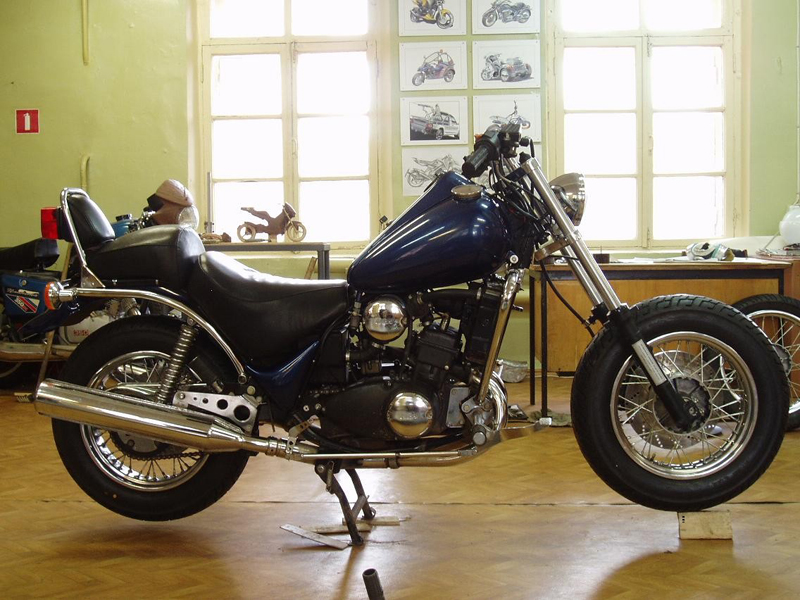
In 1994, the name of the factory was changed to «Izhmash-moto», its legal status became a joint-stock company, and control passed to the holding company which, among other things, also oversaw the production of Izh cars (I had previously written about the Izh-2125 «Kombi» and the Izh-2715 «Kabluk»).
At the beginning of 2008, due to excessive debts, the Izhmash-moto factory was closed, while most of its facilities were sold off.
§2. The “Izh” Motorcycle
↓ Show comments ↓

