


 Long live Ukraine! Fuck the war!
 RSS of site articles
I find it logical to begin this series of articles on Russian (and Soviet) motorcycles—generally little known in the West—with the most famous marque, widely marketed in Europe as well: Ural.
Almost everyone knows that the first Ural was copied, in the late 1930s, from the BMW R71. As happened with many other motor vehicles copied by Soviet engineers, this motorcycle too was slightly adapted to Russian road conditions. Yet in photographs, to the untrained eye, the two machines may appear identical.
The name «Ural» was assigned to the factory only in 1961, whereas the first model, whose production began in August 1941, was called MMZ M72.
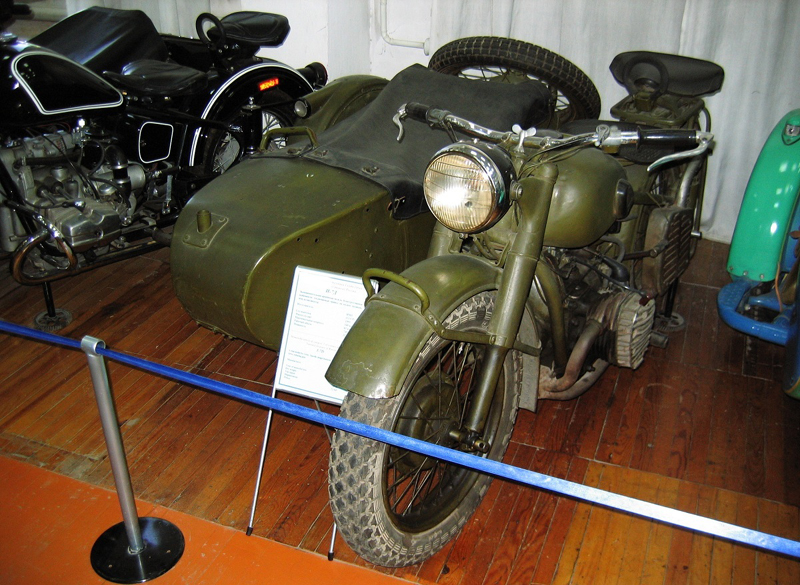
In the late 1930s, when the need arose to create a heavy motorcycle for the army, the Government of the USSR decided to copy the motorcycle used by the German army, considering it the most suitable for Russian requirements. Thus, under a plan of the utmost secrecy, five BMW R71 motorcycles were purchased in Sweden. One of them was kept as the reference model, while the other four were distributed among engineers and materials specialists for detailed study. You can now compare the original (below) with the result (the first photograph).

The Russian version featured strengthened suspension and gearbox, a larger fuel tank and simplified decorative elements. The M72 motorcycles were initially produced in Moscow, but as early as 21 October 1941 it was decided to evacuate the factory to Irbit (near the Ural mountain range) due to the approaching enemy. During the Second World War, 9,799 M72 motorcycles were supplied to the Red Army.
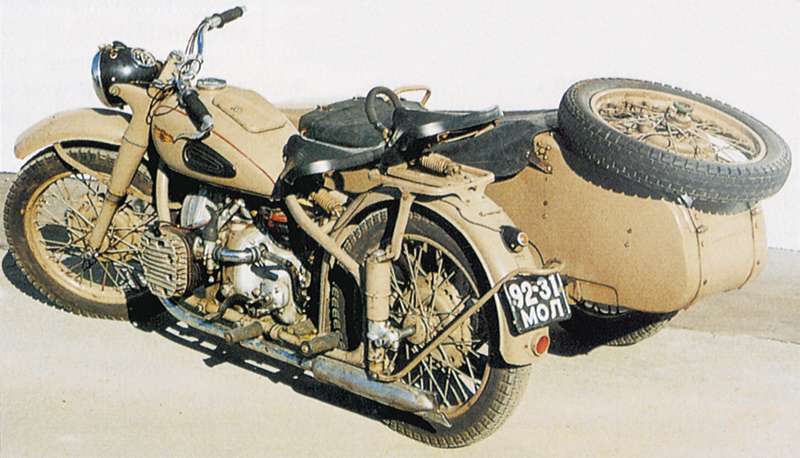
In the post-war period, between 1947 and 1952, new factory facilities were built and an industrial plan was drawn up according to which annual production was to reach 20,000 units. Production of the new model, however, did not begin until 1957. Only 250 examples were made; it differed from the original model solely by its new 500 cc engine.
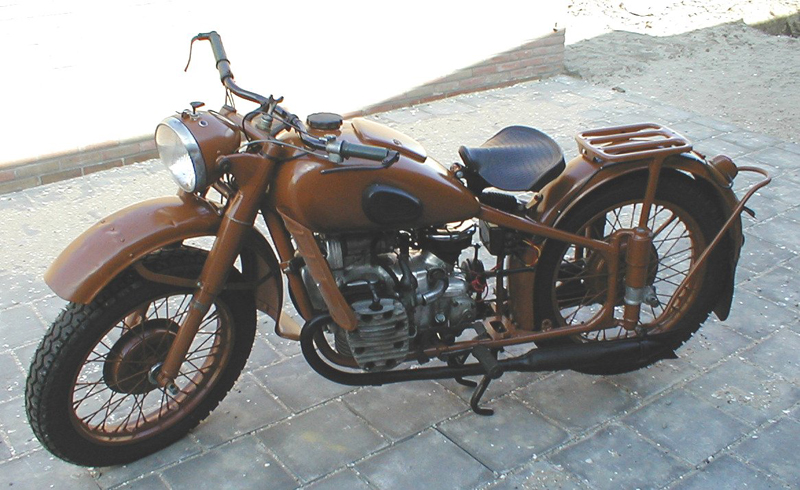
Until 1992, the factory never produced more than one model at a time. Eight models produced from 1960 to 1992 retained the same basic structure inherited from the M72, but with engines of ever-increasing displacement (the horsepower, oddly enough, rose only slightly). In 1986 a reverse gear was introduced, which experienced users often converted into a fifth gear. The top speed never exceeded 100 km/h, the weight never fell below 300 kg, and average fuel consumption was around 7 litres per 100 km.
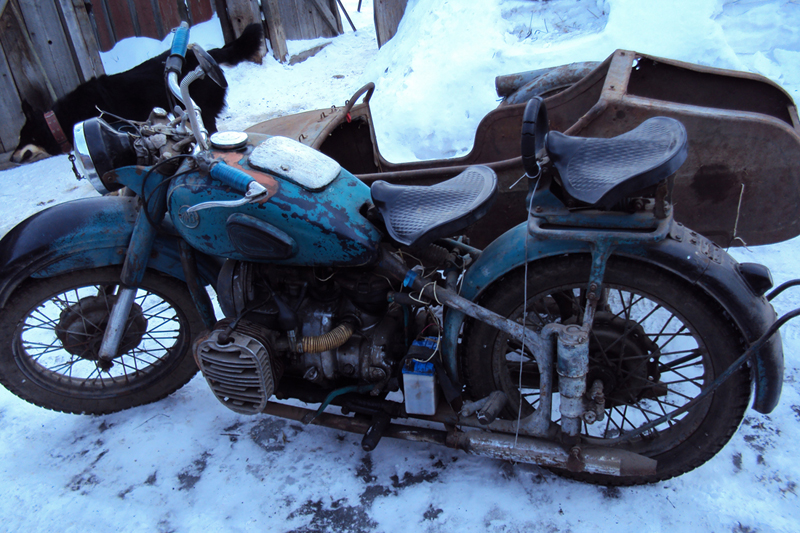
From 1954 onwards, the factory was no longer the supplier of motorcycles to the army. Instead, it began supplying civilian organisations and placing its products on the open market. Export of Ural motorcycles, initially only to Eastern Europe, had already begun in 1953.
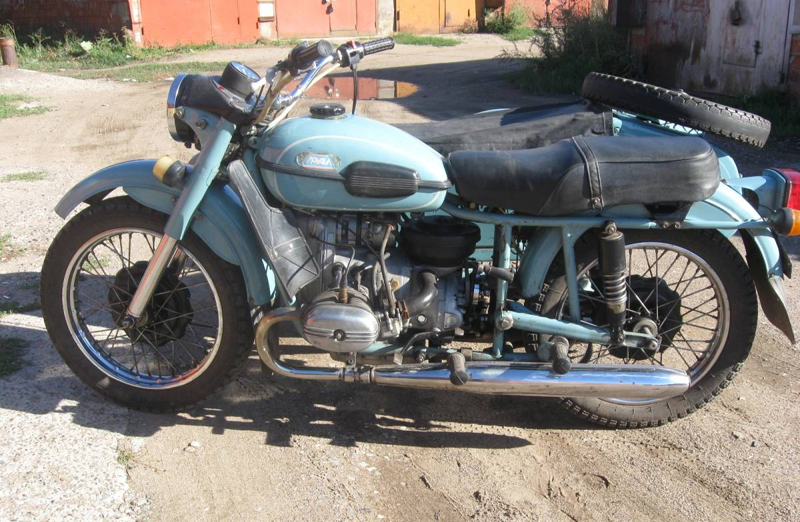
In the 1980s, Ural motorcycles earned the nickname «the Russian Harley» because they were slow, cumbersome, heavy and expensive. By the end of the 1980s, however, the export boundaries of Ural had expanded beyond the USSR’s political sphere of influence: sales began throughout Europe and in Latin America. Before the collapse of the USSR, the factory had produced approximately three million motorcycles.
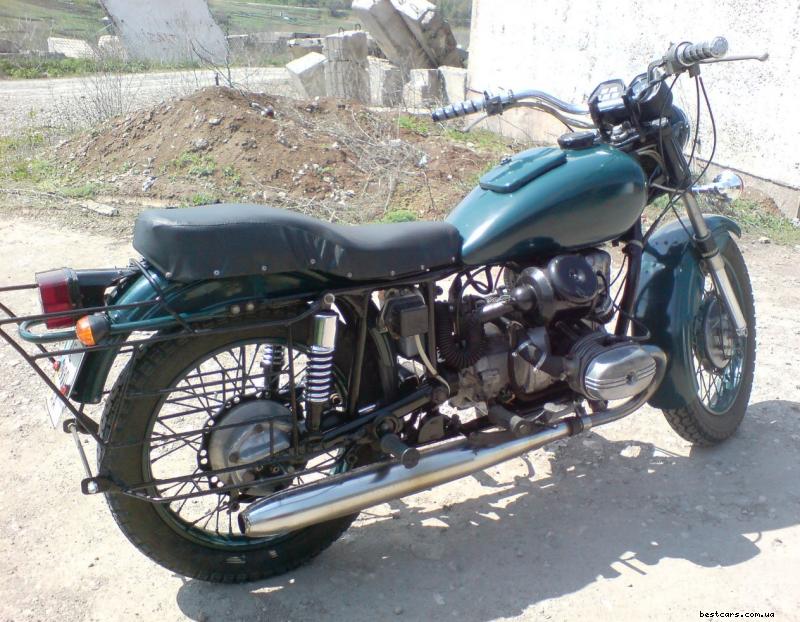
In 1992, the factory was renamed «Uralmoto» and transformed into a joint-stock company. The entire 1990s were very difficult due to the almost non-existent demand for its products. The factory survived only because it was in such poor condition that no one thought it worth taking an interest in its assets. Its revival began in the early 2000s with a series of new models, the first of which was the 40 hp Ural «Solo». After more than forty years, it was the first single-seat Ural. For the first time, a version without a sidecar was also offered. Today it is one of the most up-to-date and popular Ural models.

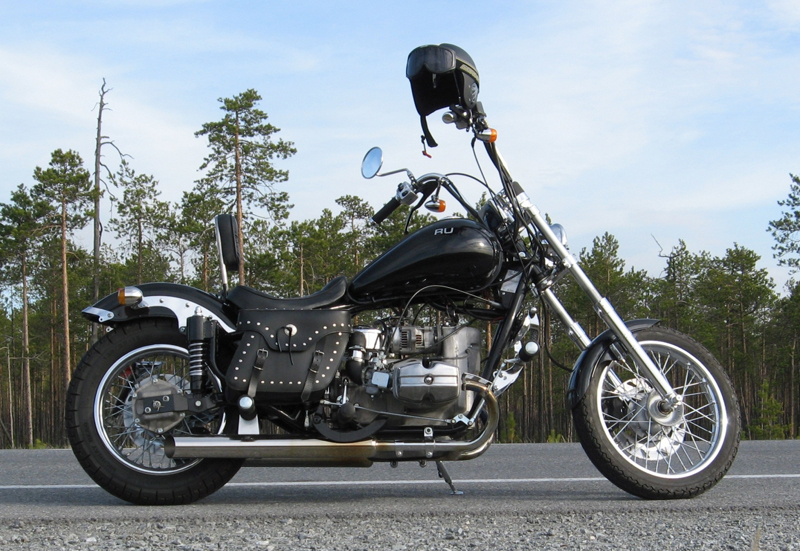
The new market strategy also proved beneficial to the factory’s health. Indeed, only 10 per cent of production is destined for the domestic market, while the remainder is exported abroad. In Russia, in fact, the overwhelming majority of motorcyclists buy either inexpensive motorcycles or famous and prestigious ones (such as Harley, Honda, etc.). Uralmoto, by contrast, manages to sell its Ural Wolf chopper in the USA:
In general, a good level of sales for Ural motorcycles in foreign markets is ensured by the fairly high number of retro enthusiasts and the very low level of competition among manufacturers of sidecar motorcycles. Consequently, one of the most popular models is the Ural «Retro» equipped with a sidecar.

In fact, of the eight Ural models, five have a sidecar and an appearance harking back to the old BMW R71 copied seventy years ago. The frame and front fork, indeed, have changed very little over time. The 750 cc engine, introduced in the 1980s, is currently the only one available for all models, and only in recent years has its gradual modernisation resumed. From one model to another, only the name and very few technical characteristics differ. Ural «Tourist», «Tourist 2WD», «Gear-Up» and «Troika-lux» are practically identical:
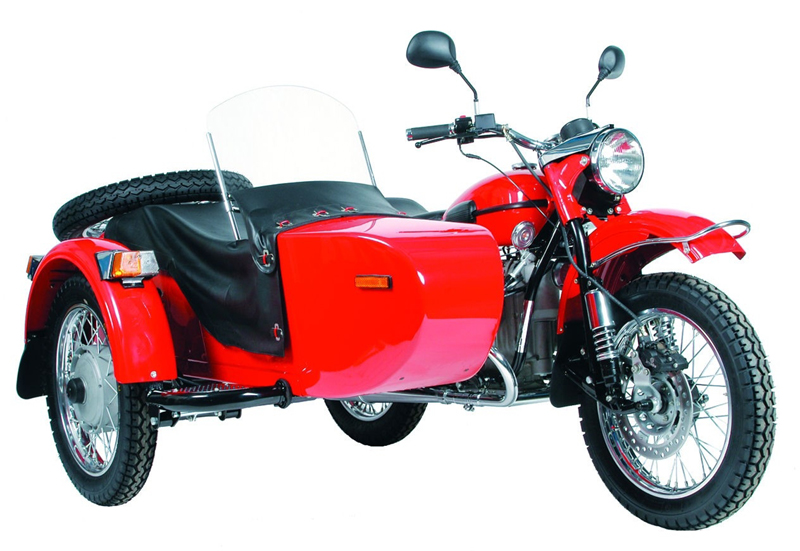
The Ural «Troika-lux» is the only one to have telescopic front suspension rather than leading-link suspension. The Ural «Gear Up», which in theory is intended for law enforcement forces, features military-style colouring. Otherwise, all the Ural motorcycles listed in the previous paragraph have 19-inch wheels, 125 mm of ground clearance, 45 hp and 750 cc displacement, four gears plus reverse, rear drum brakes and a front disc brake. The seat may be either dual with separate adjustment or a single unit. It is possible to add a luggage rack above the spare wheel, crash bars and windscreens.
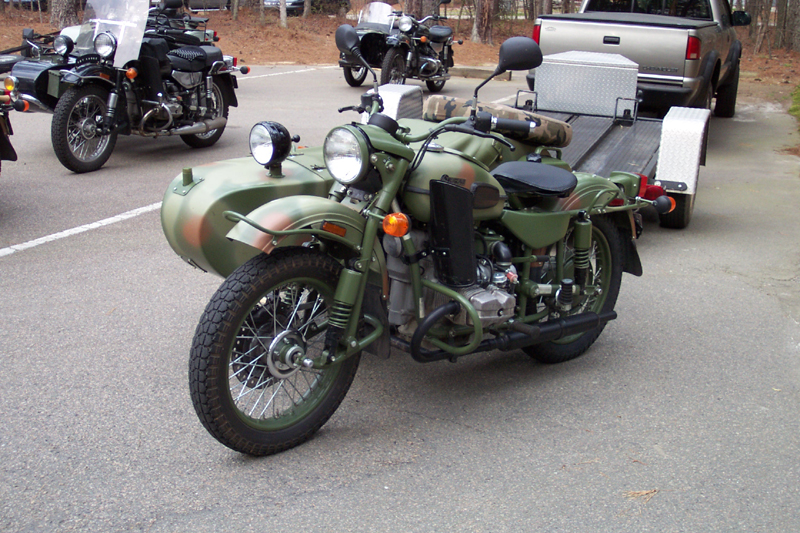
It must be emphasised that there is always a significant difference between motorcycles produced for the domestic market and those for export. The motorcycles produced for Russia are often poorly assembled, with misaligned frames and original parts. As a result, they break down easily, lose litres of oil per day, become unstable at speeds above 80 km/h, have a very stiff gearbox, and poorly adjusted brakes and carburettor. Anyone buying a Ural motorcycle in Russia must necessarily be a good mechanic. Motorcycles produced for export, by contrast, are well assembled and make use of European and Japanese components: they perform decidedly better.
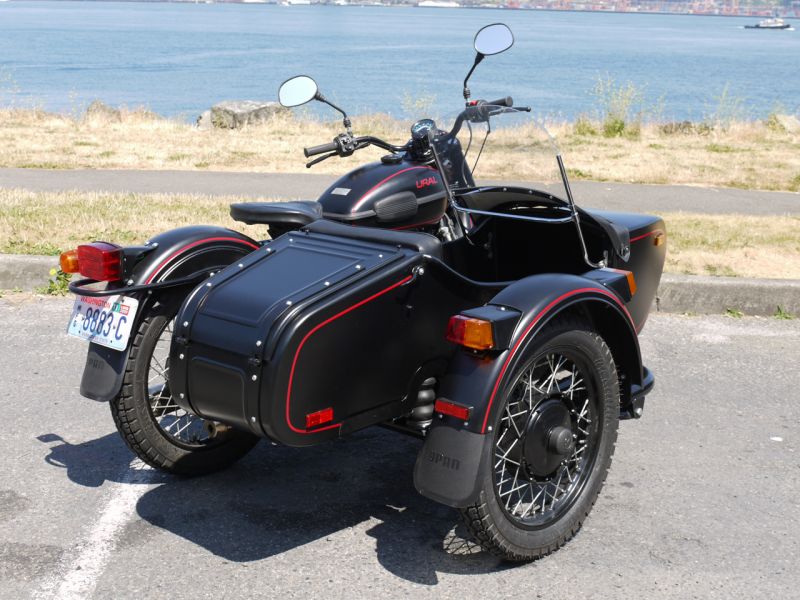
To complete the description of the factory’s current condition, I should add that assembly of all models is entirely manual. For this very reason, prices are rather high: between 8,000 and 10,000 euros—that is, almost double the price of a new VAZ-2107 or equivalent to a good used car. In 2010, approximately 800 Ural motorcycles were produced. The factory employs 155 people.
Apologies for such a long text. Perhaps one day I shall publish articles devoted to individual Ural models, but for the time being I am not yet sure how to approach them.
§1. The “Ural” Motorcycle
↓ Show comments ↓

