


 Long live Ukraine! Fuck the war!
 RSS of site articles
At the end of September 1945, the government of the Soviet Union ordered the conversion of the Kiev factory specialising in the repair of tanks into a motorcycle factory. This might seem a slight madness, but after the end of the Second World War the USSR had transferred several factories (including motorcycle plants) from Germany and had to install them somewhere.
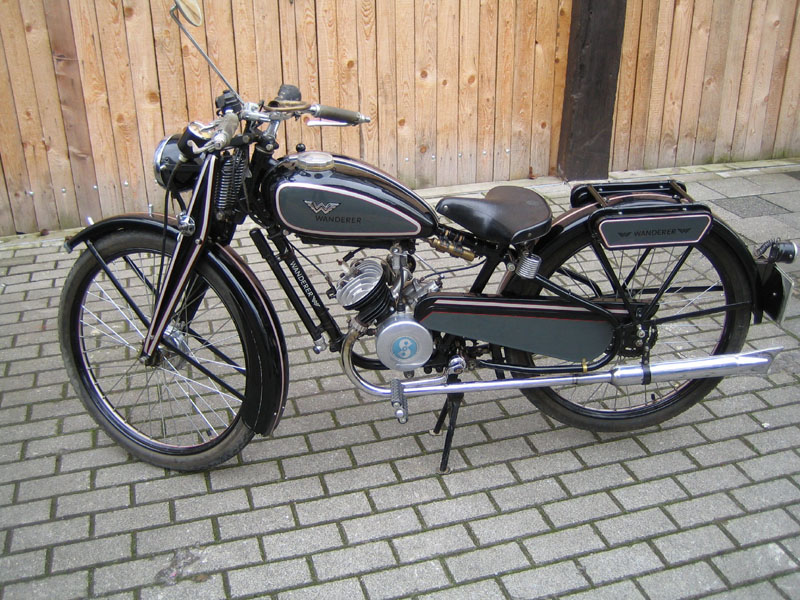
Production of the first model from the converted factory began as early as 1946. It was called the «Kievlianin» K-1B and was an exact copy of the German Wanderer-1Sp motorcycle.
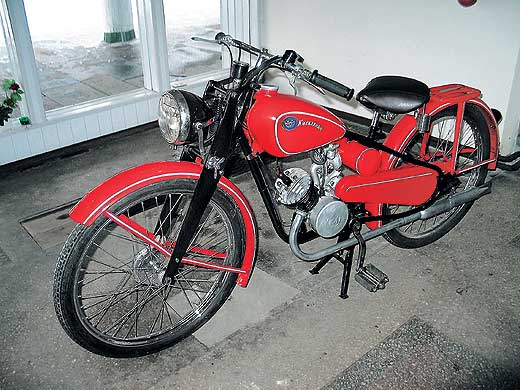
The K-1B’s engine was initially produced by an external factory, and only in 1947 did the K-1B become 100 per cent Ukrainian. Compare it with the German original:
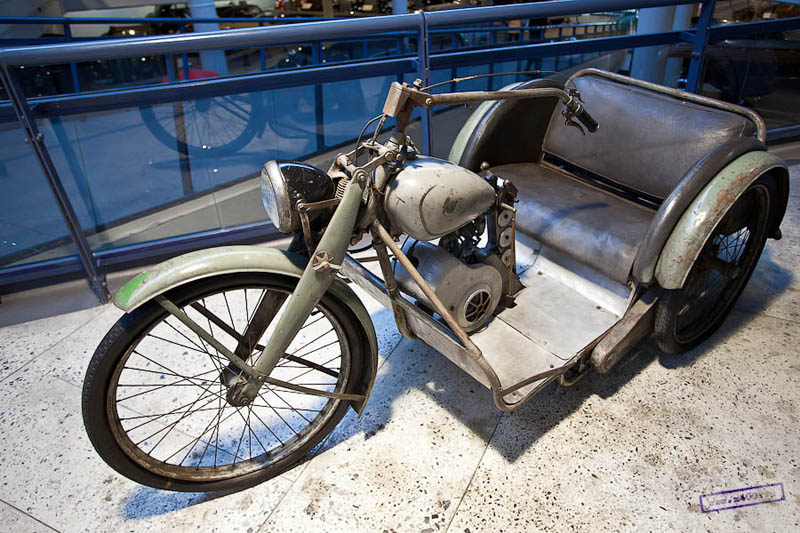
At the end of 1946, the K-1V motorcycle for disabled riders was designed and put into production: it was the first vehicle of this kind in the USSR. Essentially, it was a three-wheeled version of the K-1B. Its creation was mainly due to the high number of Second World War veterans who had been mutilated; production continued until 1951. It weighed 116 kg, had an 8-litre fuel tank and a 2.3 hp engine. Subsequently, the production of vehicles for disabled riders was transferred to the automobile factory in Serpukhov, about which I have already written.
In 1947 the factory began designing the first Soviet tricycle, but it did not produce a new model until 1956. In fact, even the 1956 K-750 model was not entirely new: it was a modified Ural M-72. It featured modernised suspension and engine cooling, increased power up to 26 hp, an improved gearbox, and the possibility of checking the oil level with a proper dipstick rather than with any random twig. With drive extended to the sidecar wheel as well, the model was renamed MV750.

In 1963 the K-650 model was introduced, with an improved engine compared to the previous version: power rose to 32 hp, and the cylinders were made of aluminium (though the liners remained cast iron). At the end of the 1960s the factory changed its internal system for naming models, so the K-650 was redesignated MT-8.
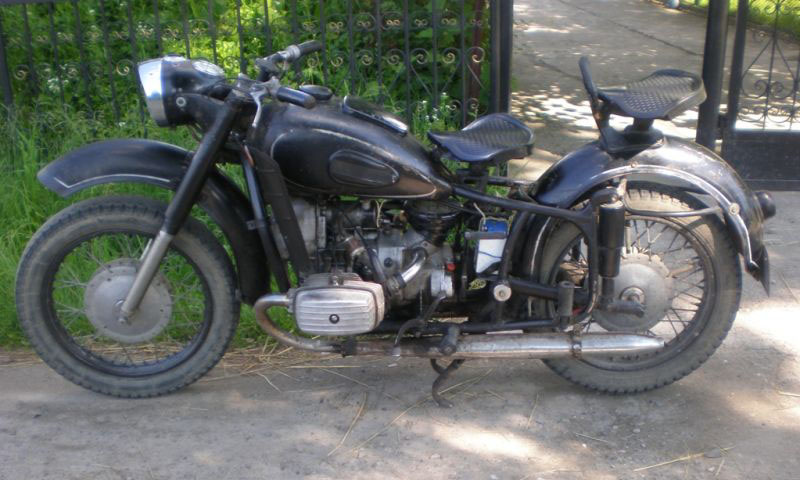
The 1971 MT-9 model differed from its predecessors by the newly introduced reverse gear.
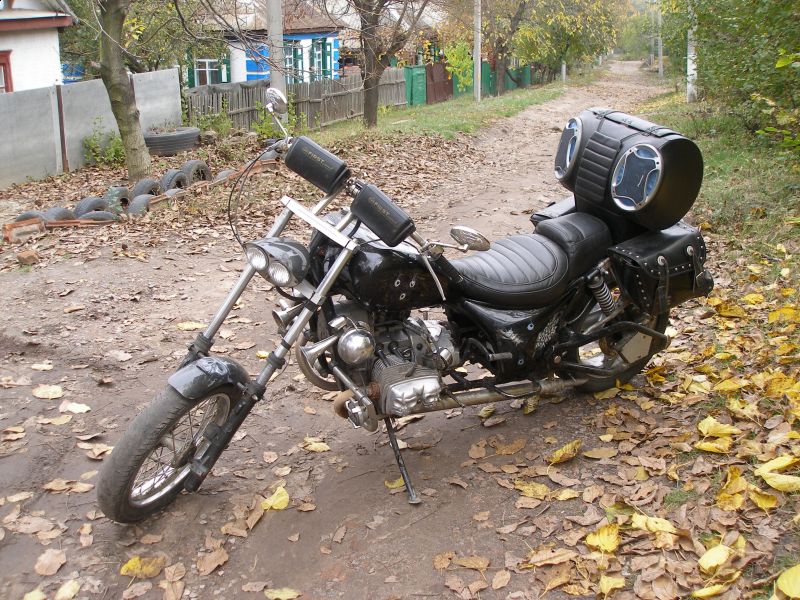
The 1974 MT-10 was the first «Dnepr» motorcycle with a 12-volt electrical system and a single seat. In addition, the fuel tank capacity was increased.
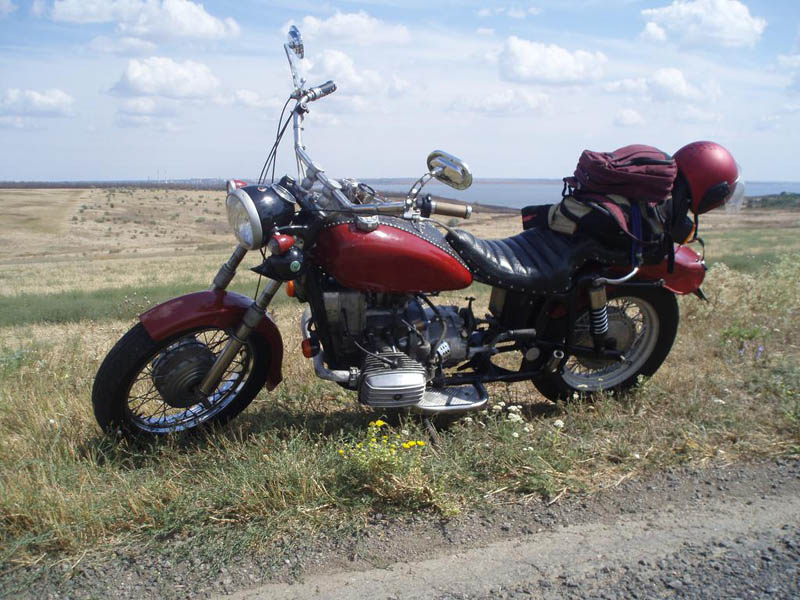
The 1976 MT-10-36 had its power increased to 36 hp thanks to new carburettors.

The peak of development of the MT series was represented by the 1985 MT-11 model, with a 32 hp four-stroke engine, a gearbox with four forward gears plus reverse, drum brakes on all wheels (including the sidecar) and a parking brake. Its maximum speed was 105 km/h, and its load capacity 265 kg.
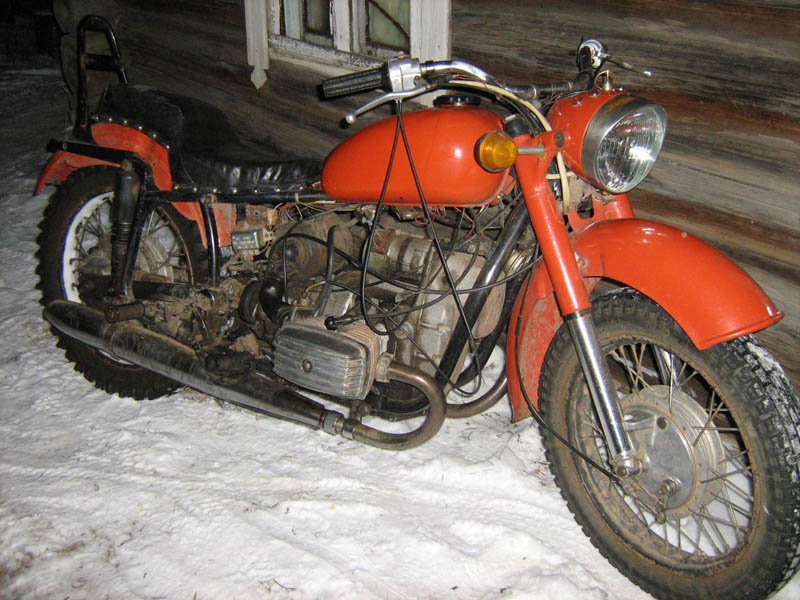
A complete statistical record has never been compiled, but it is known that from 1967 to the first decade of the twenty-first century the Kiev factory produced more than three million motorcycles. During the Soviet period it was considered the worst motorcycle in the entire country: crooked frames, poorly assembled engines, metal shavings in the crankcase, and so on. As a result, ordinary citizens often bought a Dnepr merely to use it for spare parts. The only high-quality Dneprs were those supplied to the army: the latter’s anger could cause serious trouble for the factory’s management.
The economic crisis of the 1990s, which affected the whole area of the former USSR, also had consequences for the Kiev motorcycle factory. It attempted to resist by introducing a new model, the Dnepr MT-12, which incorporated «the very best» of local experience: the K-750 engine, drive to the sidecar wheel, and the gearbox of the 1985 MT-11.
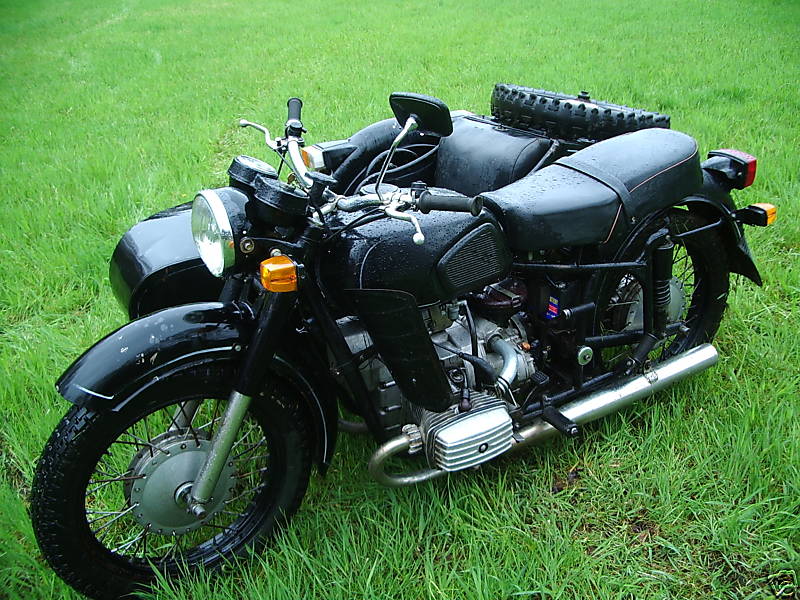
The trick did not work, and the decline in sales continued. At the end of 1994 the factory was transformed into a joint-stock company and privatised at the beginning of 1995. The new owner was not interested in developing the factory, so it was nationalised again and revived at the end of the 1990s. However, the positive effect was very limited: from that time to the present, only two not particularly innovative models have continued in series production. One of these is the Dnepr-11M: 649 cc, 32 hp, two cylinders, brakes on three wheels, three seats, weight 625 kg, maximum speed 105 km/h.

The other model currently in series production is the Dnepr-16M: 649 cc, 32 hp, two cylinders, brakes on three wheels, three seats, weight 640 kg, maximum speed 105 km/h. It has all-wheel drive.
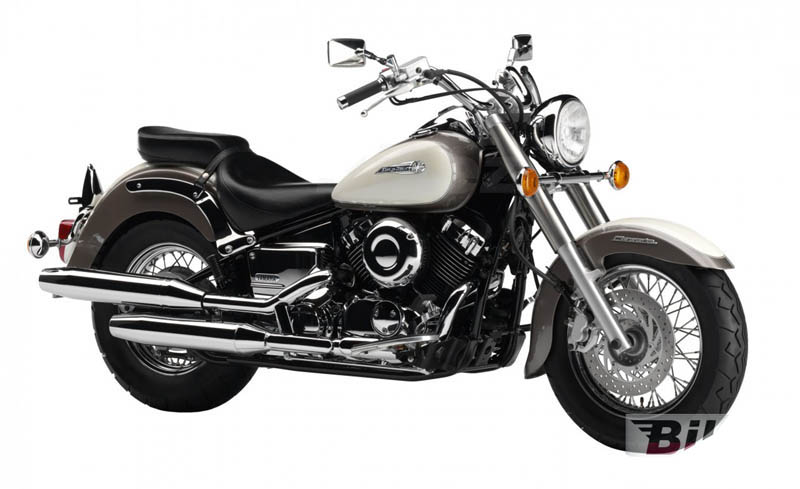
In addition to these two models, the factory produces ten versions of its own chopper. These are not regular production models but are manufactured periodically in very small quantities. They are fairly popular among a certain segment of Ukrainian youth, allowing the factory to survive. However, the most interesting Dnepr models are the tricycles, whose production began in 1956.
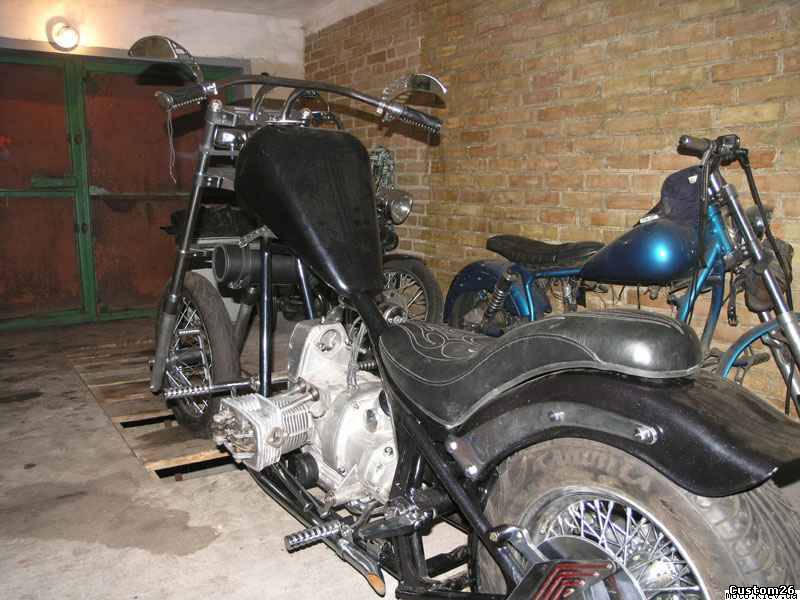
The engines used, however, are the same as those of the classic 11M and 16M models. Therefore, the principal value of the tricycles is aesthetic.
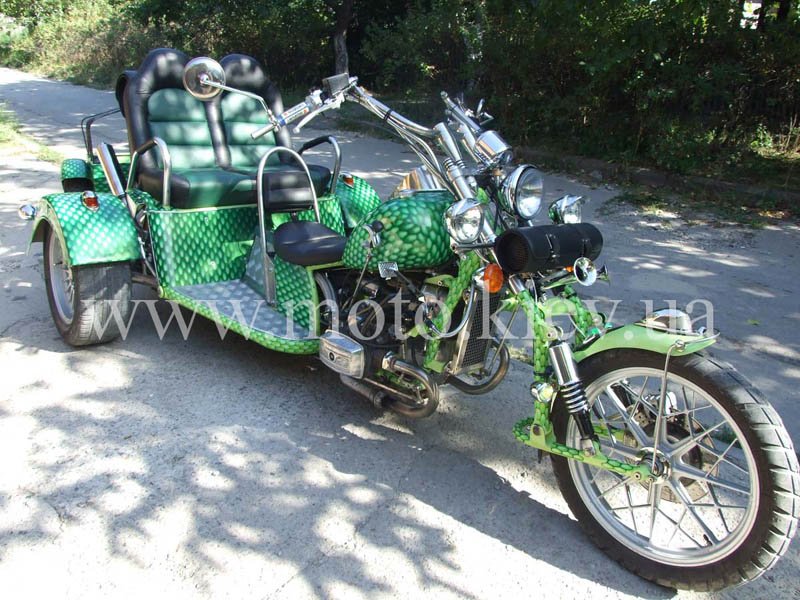
Unfortunately, the market is not always won over solely by a product’s appearance. Knowledgeable people are aware that the quality of assembly has not improved significantly compared with twenty years ago.
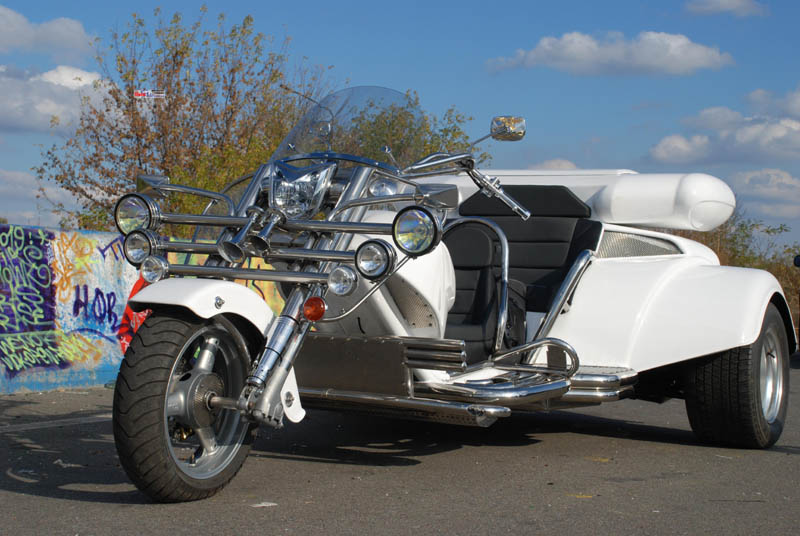
The fundamental mistake made by the factory’s management has been to set unjustifiably high prices for its innovatively designed models. If they were inexpensive, Dneprs would have become very popular among those capable of repairing them immediately after purchase (as happens with many Russian cars straight from the factory, which owners dismantle and reassemble properly). Yet one of the tricycles I have just shown costs as much as half of a one-room flat in Kyiv, while not even approaching the quality required to become a luxury-class product. Consequently, the factory’s financial problems have still not been entirely resolved.
§4. The “Dnepr” Motorcycle
↓ Show comments ↓

