


 Long live Ukraine! Fuck the war!
 RSS of site articles
The most unfortunate Soviet motorcycle manufacturer, so to speak, was ZiD: the only one not to benefit from German machinery in the second half of the 1940s. As a result, it had to earn its popularity—achieved only in the 1960s—by producing very basic, simple and inexpensive motorcycles. This may not seem remarkable for a factory, yet the story becomes more interesting when one recalls that its principal activity had always been the production of firearms and missiles.
The factory was founded in 1916 in Kovrov (an industrial town east of Moscow) and initially produced machine guns. In 1918 the Soviet government instructed the designer Vasily Degtyaryov to revitalise and expand the factory’s activity. From that moment, arms production continued to grow steadily until the end of the 1980s. At the end of 1945, however, an order was issued to complement weapons manufacturing with civilian products, chiefly motorcycles. The local engineers had to comply, despite having no experience in motorcycle design.
In 1946 the first model appeared: the K-125, equipped with a single-cylinder two-stroke engine, dual air-cooling circuit, 4.25 hp and a displacement of 123.7 cc. The motorcycle weighed 75 kg and could reach 70 km/h.

In essence, it was an exact copy of the German DKW RT 125, whose documentation had been provided by the Minsk motorcycle manufacturer—a form of sharing war trophies. Here, therefore, is the original German version:

By 1949 annual production of the K-125 had reached 5,000 units, and the factory adopted its current name: ZiD (Zavod imeni Degtyaryova — the Degtyaryov Plant). In 1951 the K-125 was modernised: the front fork and shock absorbers were changed. Its weight increased to 84 kg, while the maximum speed remained 70 km/h.
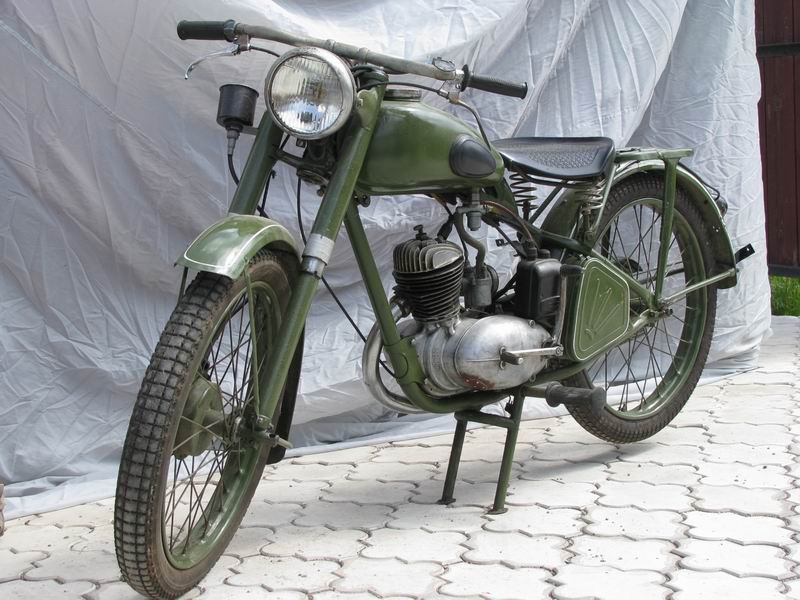
In 1955 it was replaced by the K-55. Thanks to a new carburettor and improved silencer, engine output rose to 4.75 hp. Maximum speed increased to 75 km/h, and weight to 98 kg.

The K-58, produced from 1957 to 1960, featured an enlarged fuel tank, engine output increased to 5 hp and an alternating current electrical system without a battery. The motorcycle weighed 92 kg and had a top speed of 75 km/h. This was the final model derived from the DKW RT 125.
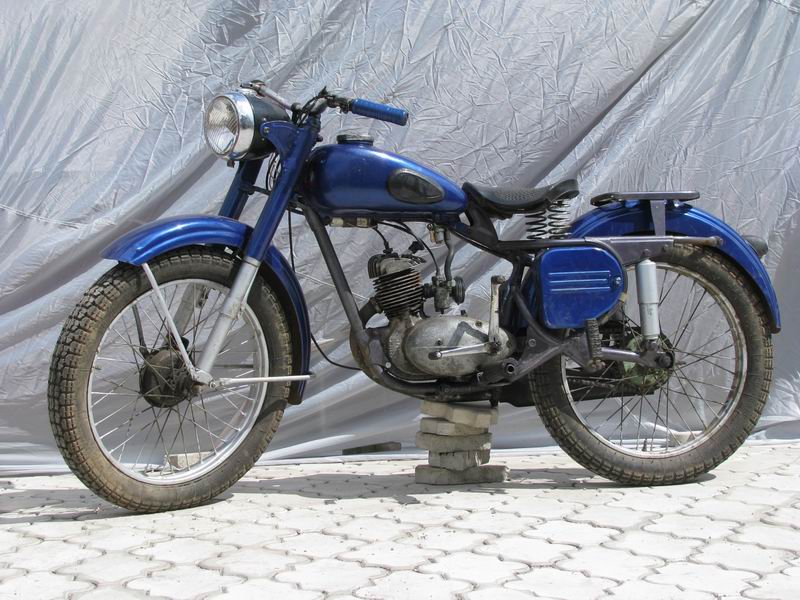
Between 1957 and 1965, four successive versions of the K-175 were produced. All had a displacement of 173.7 cc, while horsepower gradually increased from 8 to 9.5 hp. Maximum speed rose from 80 to 85 km/h, and weight from 105 to 115 kg. Aesthetic features included a covered chain and partially enclosed engine components, as well as a dual seat.
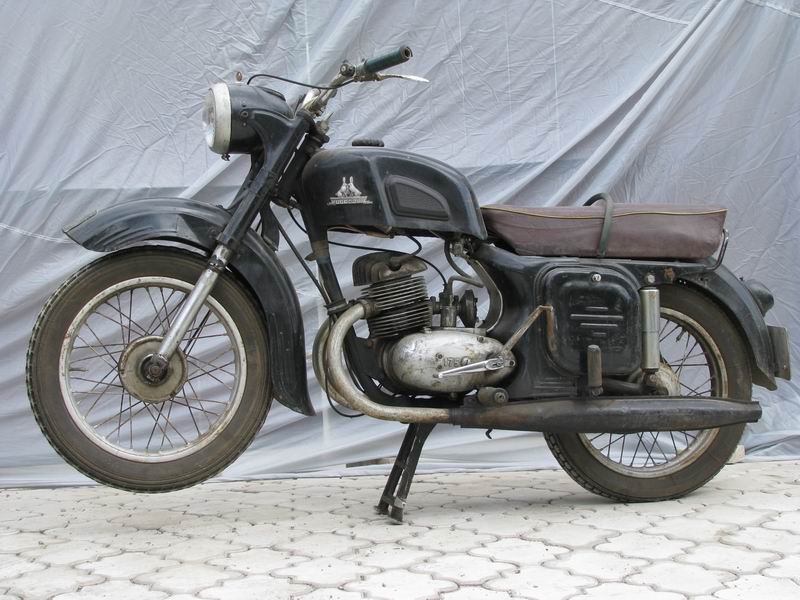
In theory this model underwent continuous modernisation, yet in practice this was hardly visible. The previous photograph shows a 1957 example, while the next shows one from 1961. No significant difference can be observed.
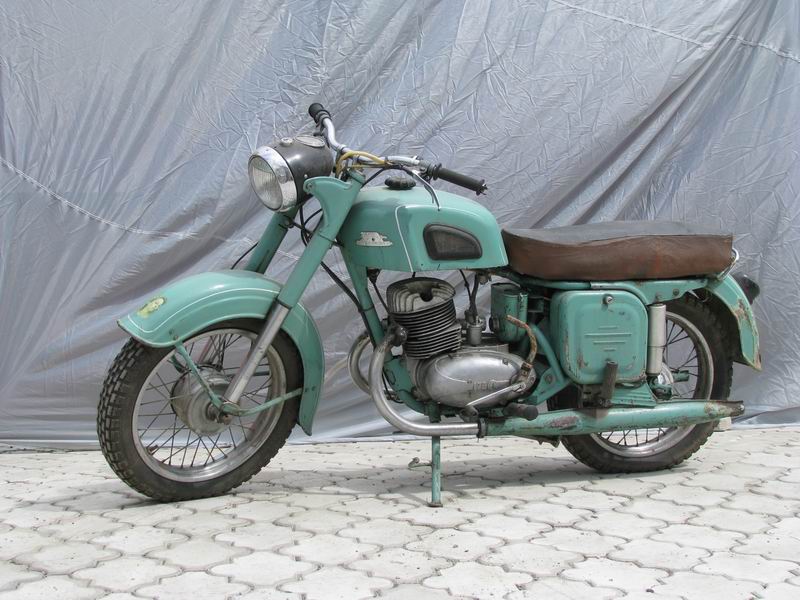
It is interesting to note that the sporting version, K-175SM, possessed all the necessary characteristics—lighter, stronger and more powerful—yet was often produced with a standard upright windscreen.
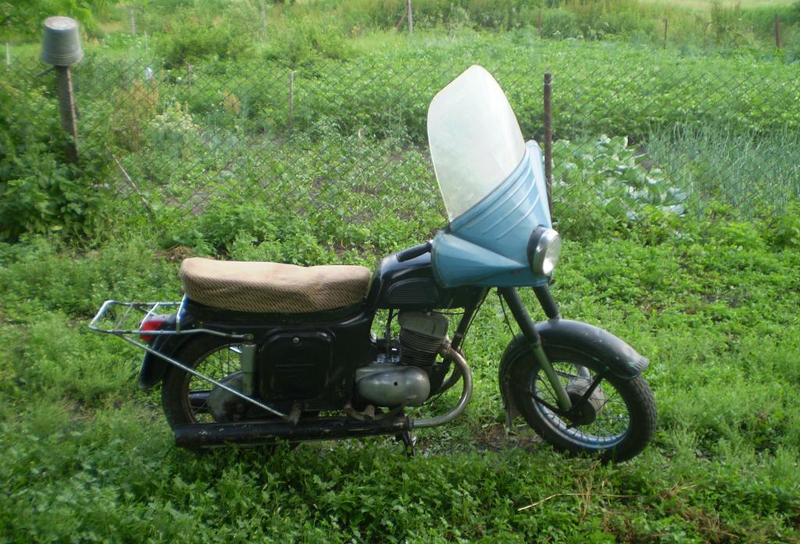
In 1965 the ZiD production motorcycle was modernised once again. The principal change lay in its new name: «Voskhod» (Sunrise). Under this name the brand became known throughout the USSR. The Voskhod series was inexpensive, easy to repair and extremely basic—even by Soviet standards—making it an ideal first motorcycle for a young rider. All Voskhod motorcycles were equipped with a single-cylinder two-stroke engine of 173.7 cc. The first model, produced from 1965 to 1972, had four gears, 10 hp (5,400 rpm), a top speed of 90 km/h and weighed 110 kg.
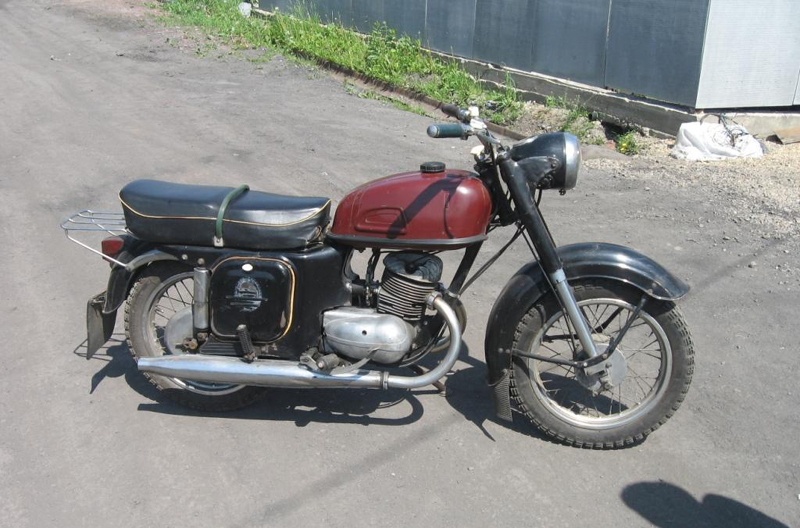
The Voskhod-2, produced from 1972 to 1979, delivered 10.5 hp (5,400 rpm) and featured differently shaped rear lights. Its maximum speed was 95 km/h, and it weighed 112 kg.
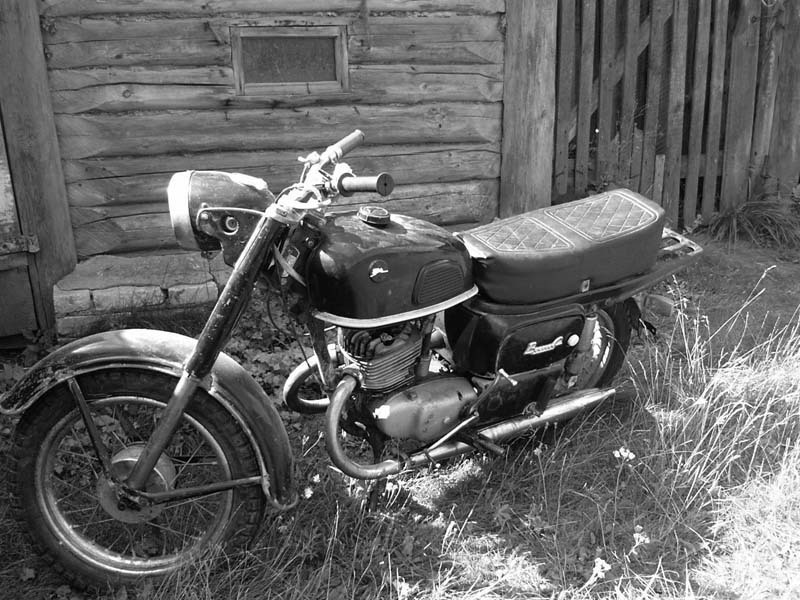
In 1977 the Voskhod-2 was modernised: power increased to 14 hp (5,800 rpm), while displacement remained 173.7 cc. The improvement was achieved by modifying the internal channels of the crankcase and cylinder heads. The updated model had a top speed of 105 km/h and weighed 121 kg.
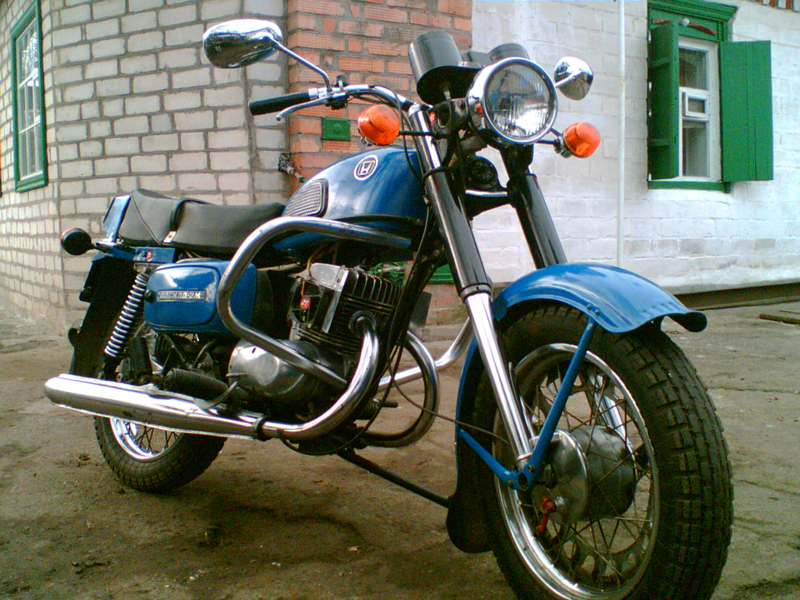
The Voskhod-3 was produced from 1979 to 1984. It had a fuel tank enlarged by two litres, a modified jet system, improved rear shock absorbers (at 12 degrees) and modernised drum brakes. The engine and performance figures remained unchanged, as did the weight at 121 kg.
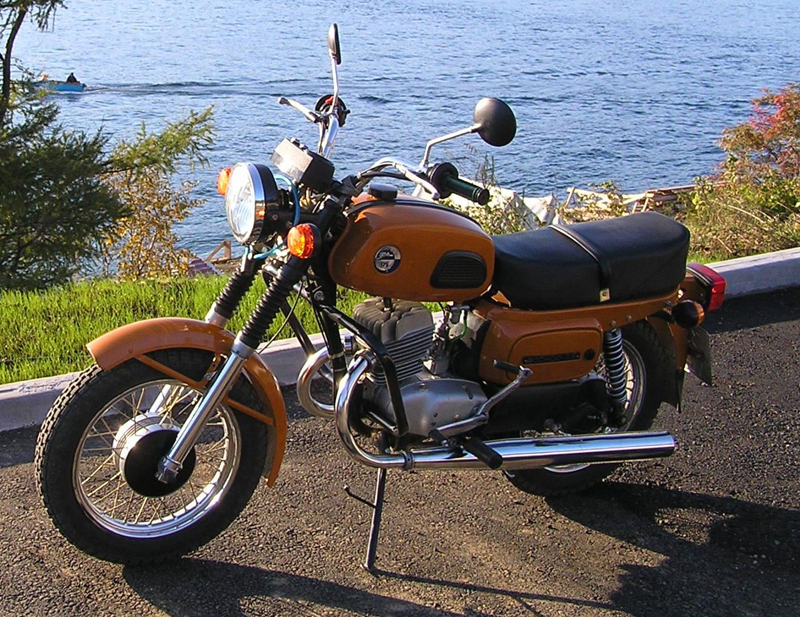
The modernised Voskhod-3, produced from 1984 to 1993, was the first ZiD motorcycle equipped with speed and brake-wear indicators. All lighting was also updated to comply with contemporary European standards.

The Voskhod-3M Tourist (1985–1993) was the third modernised version and included several touring features: a wide sport-style handlebar, crash bars, two mirrors, a rear luggage rack and mounts for panniers. Its top speed was 105 km/h, and it weighed 125 kg.
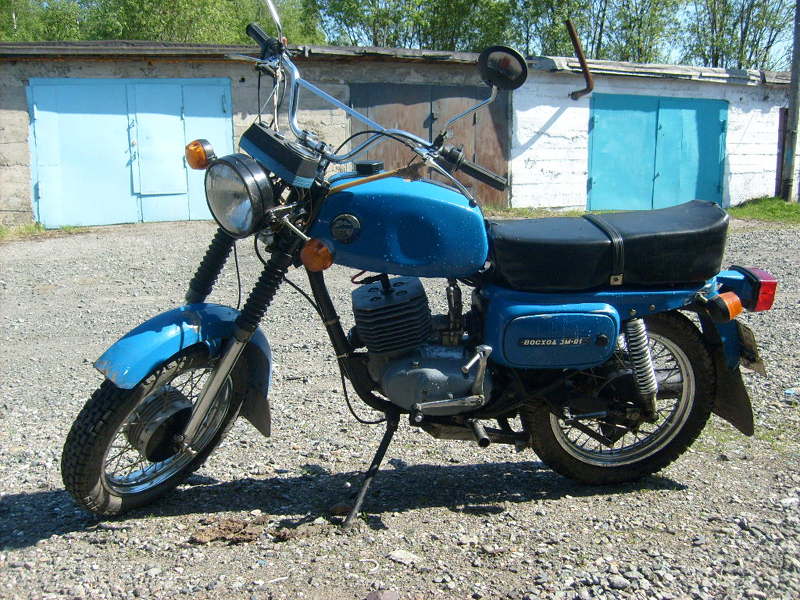
The Voskhod-3M-01 of 1989 featured a modernised engine with the introduction of a reed valve at the cylinder intake. Power increased to 15 hp (6,000 rpm), while fuel consumption fell from 6 to 4.2 litres per 100 km.
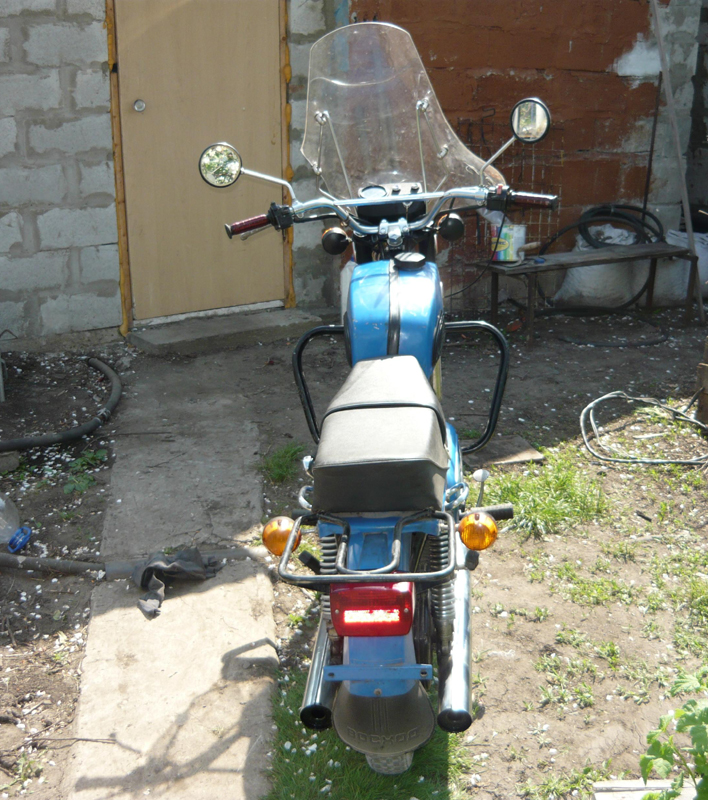
As a factory specialising in weapons production, ZiD did not experience a crisis even during the 1990s, the most difficult period for the Russian economy. Its motorcycle division, somewhat surprisingly, was not closed, although for nearly ten years it was represented on the market solely by the Voskhod-3M Tourist and Voskhod-3M-01 models. Popular among a modest segment of the public, they brought the factory several national and international awards. In 1999 ZiD resumed the production of new motorcycle models, but that is a long story deserving of a separate article.
§5. The “Voskhod” Motorcycle
↓ Show comments ↓

