


 Long live Ukraine! Fuck the war!
 RSS of site articles
One day — the precise date now lost in the fog of memory — I came across some intriguing photographs on a well-known social network. The captions identified the place as Ubiale Clanezzo. Those few images were entirely sufficient to convince me that I wished to see the location with my own eyes.
At the same time, it struck me as faintly unreasonable to dedicate an entire day (and a journey) to a single small village. Consequently, I resolved to combine my principal destination with several other minor settlements in the vicinity. Experience has taught me that beautiful and interesting things may be discovered at any point on the planet. Thus, in my modest tourist planning, the village of Zogno appeared: only a few kilometres from my main objective, on the same bank of the Brembo, but further north.
As usual, I had not prepared in any particular way beforehand. From the first steps on site, it was not entirely clear whether the village possessed anything of note.
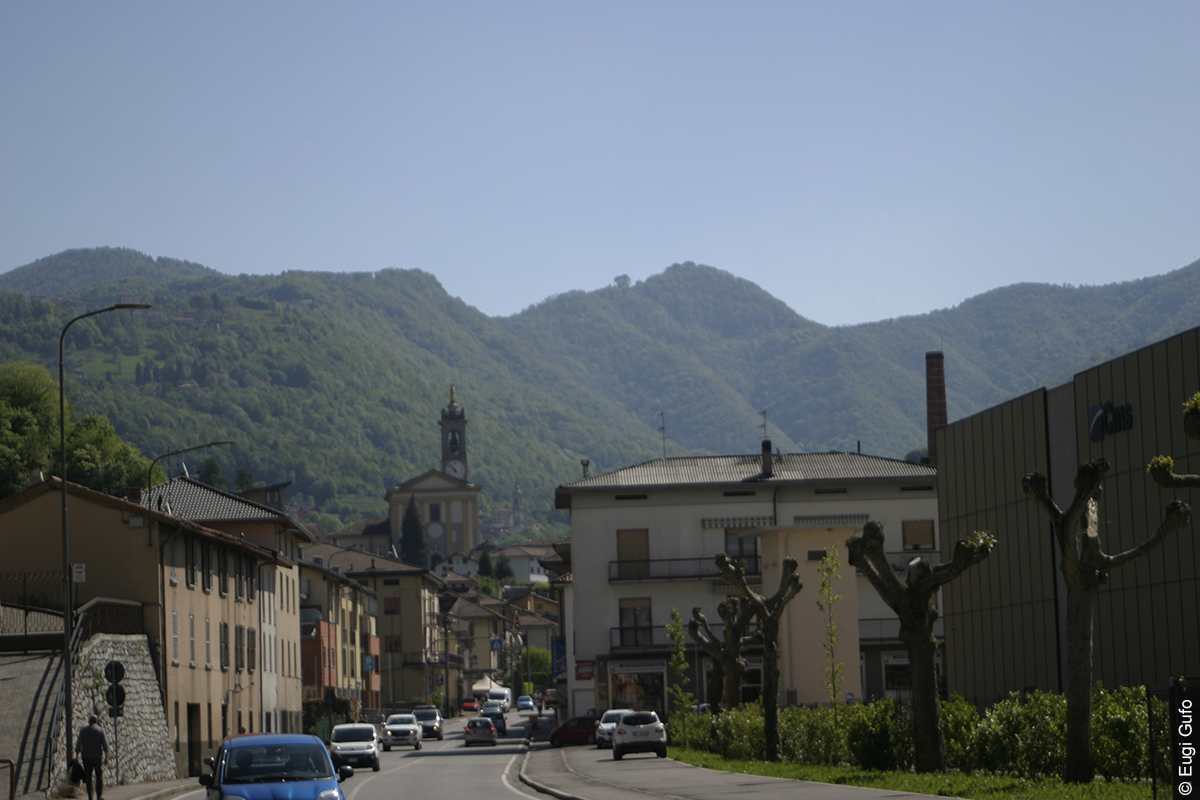
Zogno’s historic centre is not especially small in proportion to the overall built-up area, yet genuinely interesting civil buildings are relatively few. They do occur — one simply has to remain attentive.
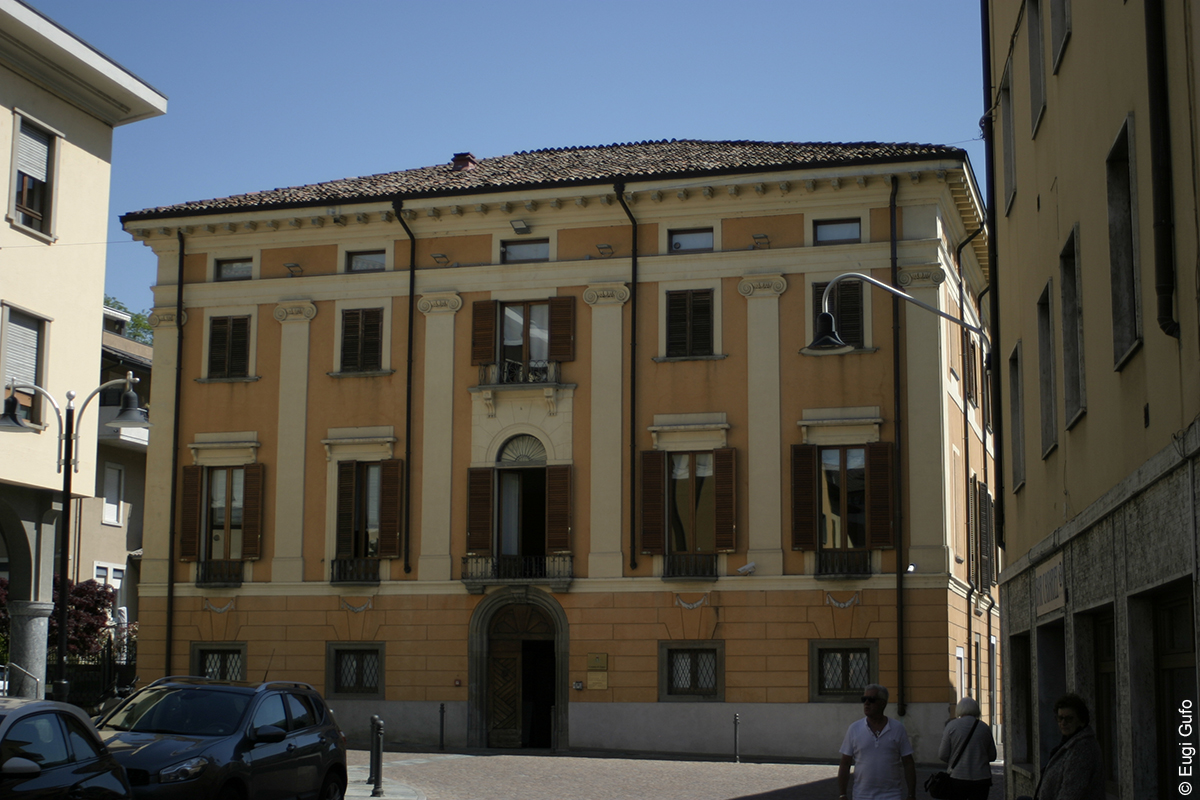
Moreover, in several parts of the village I encountered ongoing works: renovations and road improvements. This suggests that Zogno is gradually improving (or at the very least, not deteriorating).
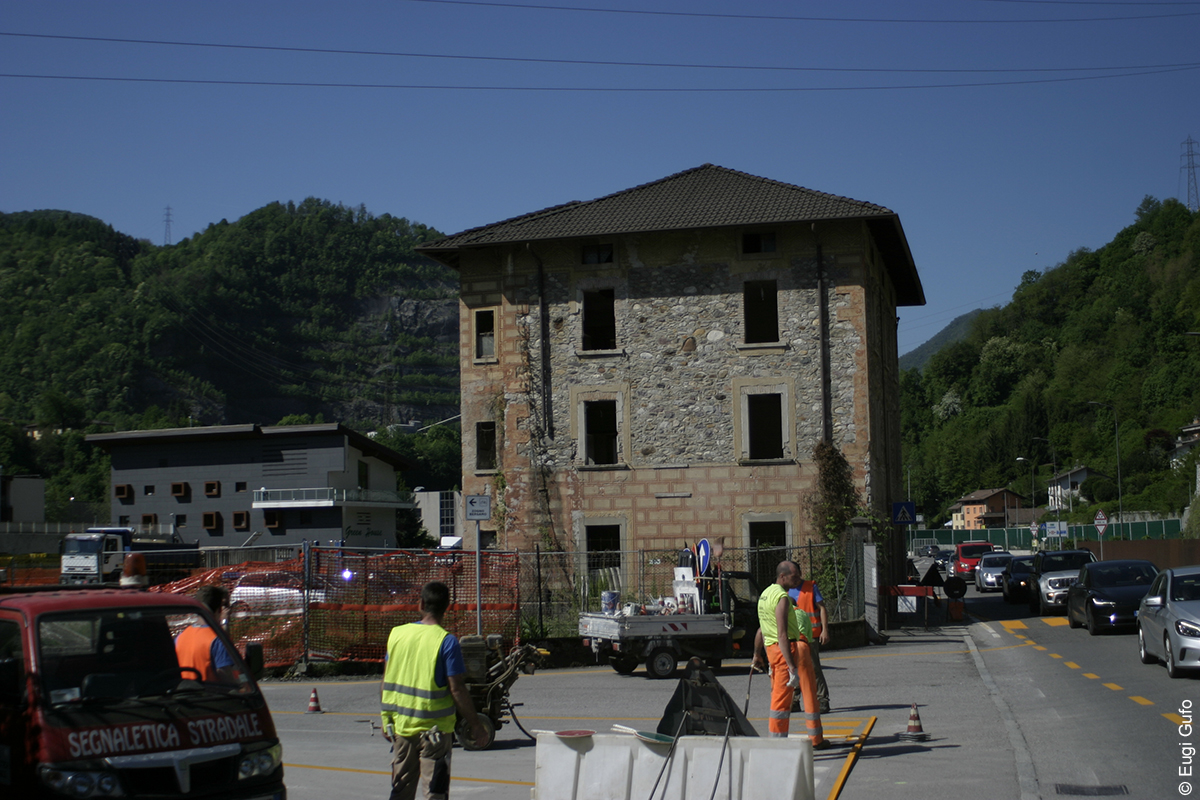
The redevelopment of the former industrial area is already roughly halfway complete.
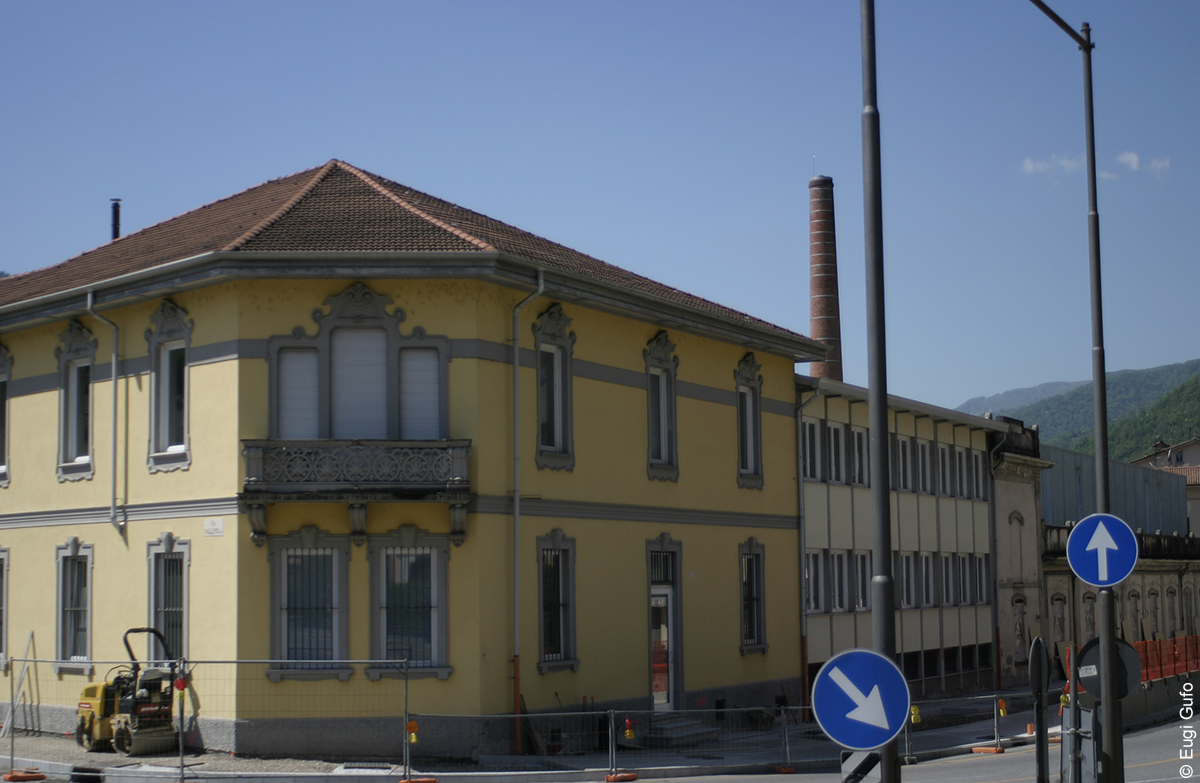
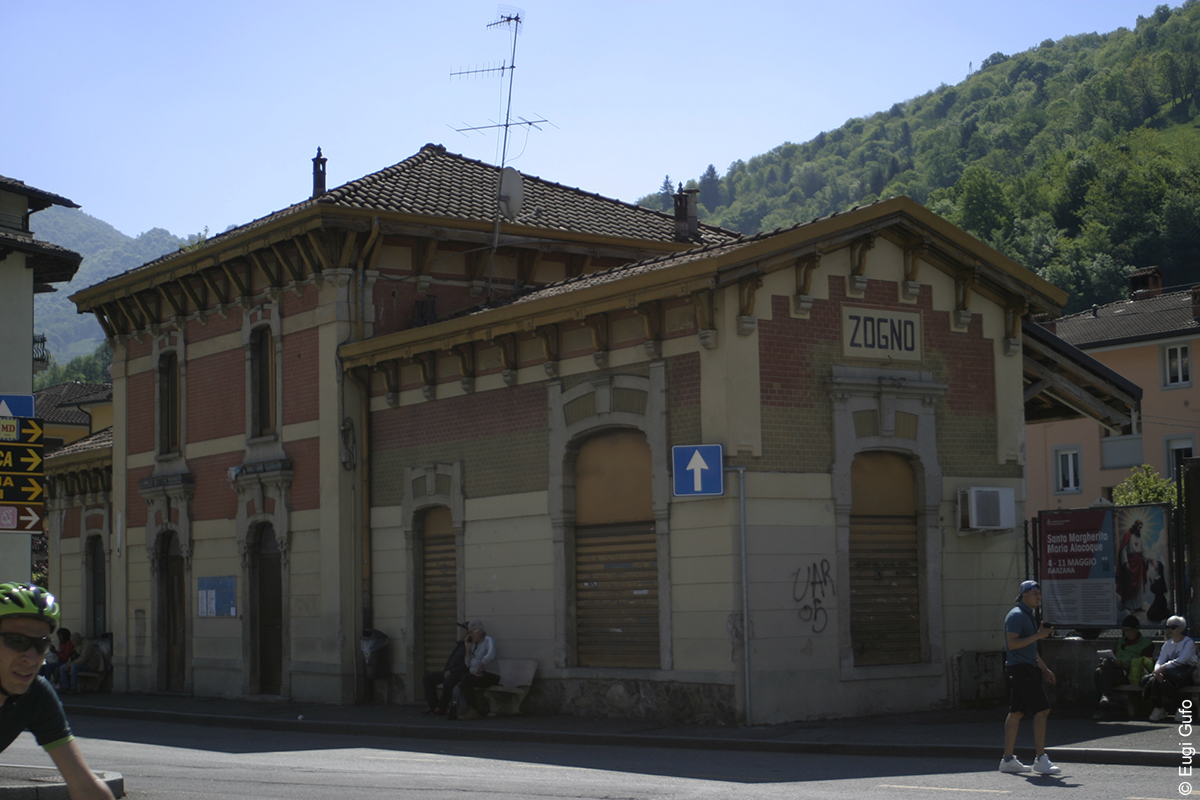
The former railway station of the Valle Brembana line (which operated between 1906 and 1966) has long since been converted into a sub/interurban bus station. A building of such Liberty-industrial elegance might arguably deserve even more intensive use — a café, a tourist office, perhaps.
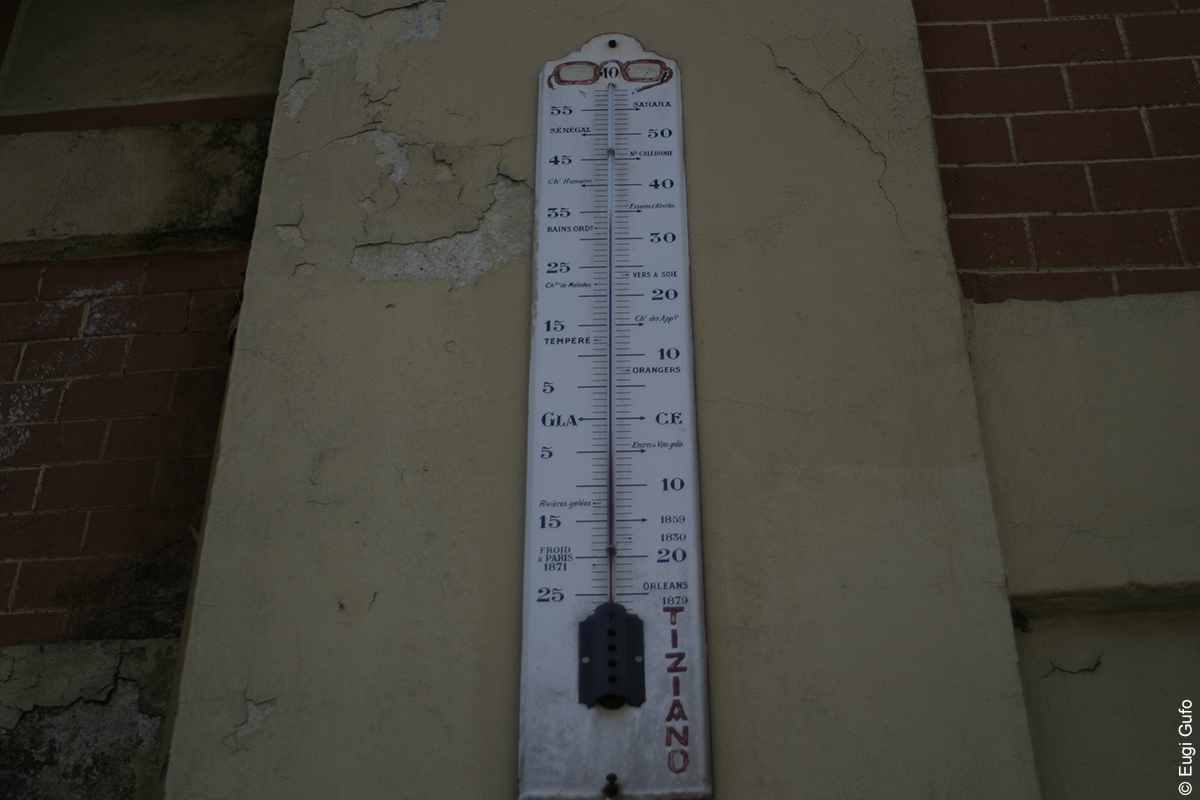
One small but curious detail of the station is the large thermometer affixed to the side facing the square, covered with official-looking inscriptions in French. I gathered that they indicate minimum temperatures recorded in Paris and Orléans, and maximum temperatures (perhaps?) in Senegal and the Sahara, though I harbour doubts about the many other inscriptions in between. And one cannot help but ask: what precisely are all these random climatological references doing in a modest Bergamasque town?
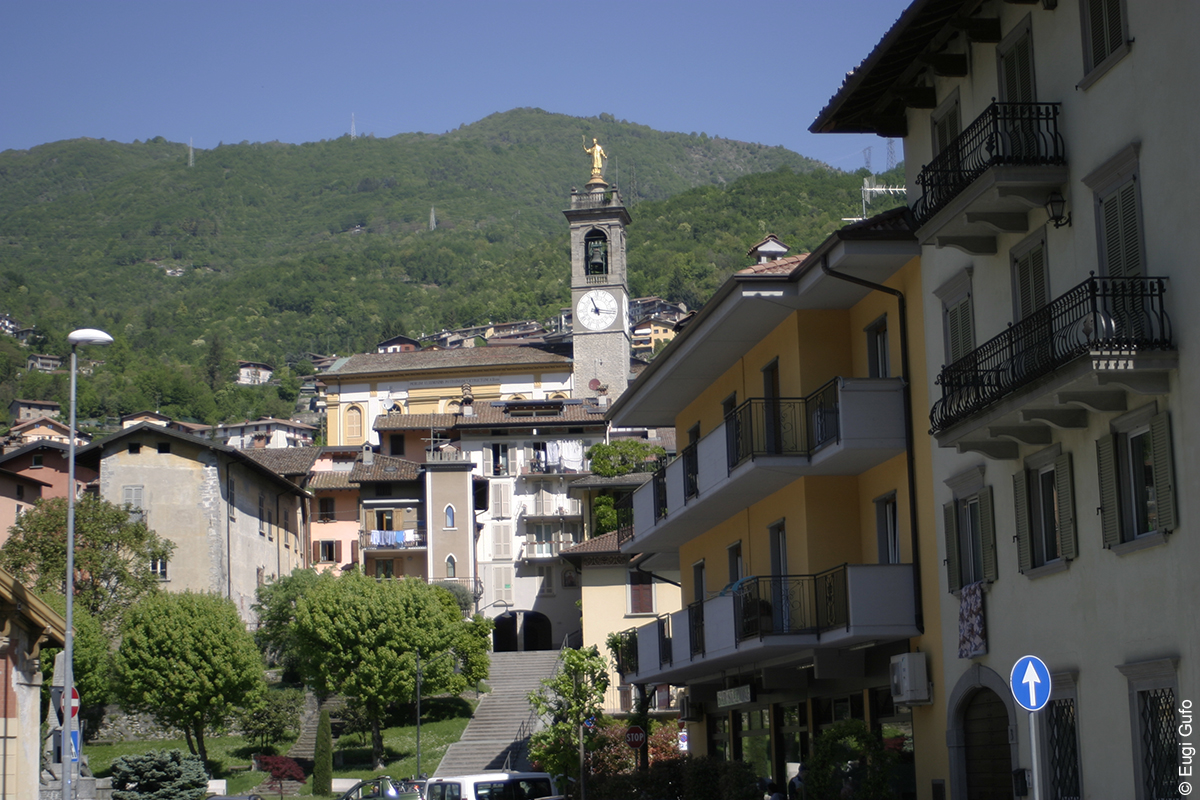
We have not yet reached Zogno’s principal attractions, however, so let us not linger excessively on details. The bell tower of the main parish church — dedicated to San Lorenzo Martire — is visible from almost every point in the centre. Let us approach it.
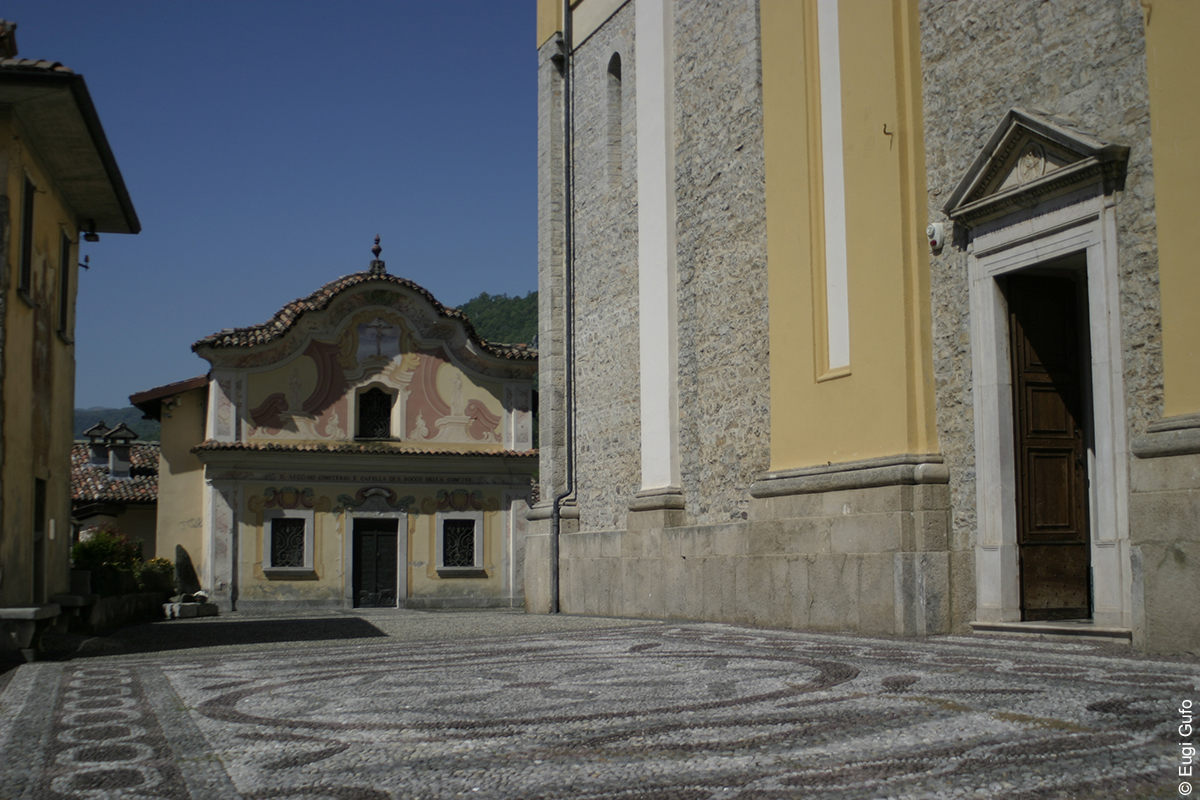
As I drew nearer, I discovered that the church forms part of a small complex of religious buildings from different periods and styles. For reasons I cannot fully explain, the ensemble faintly reminded me of Clusone — though that complex is far larger and more distinctive; perhaps the shared hillside location triggered the association. In any case, let us proceed in order.
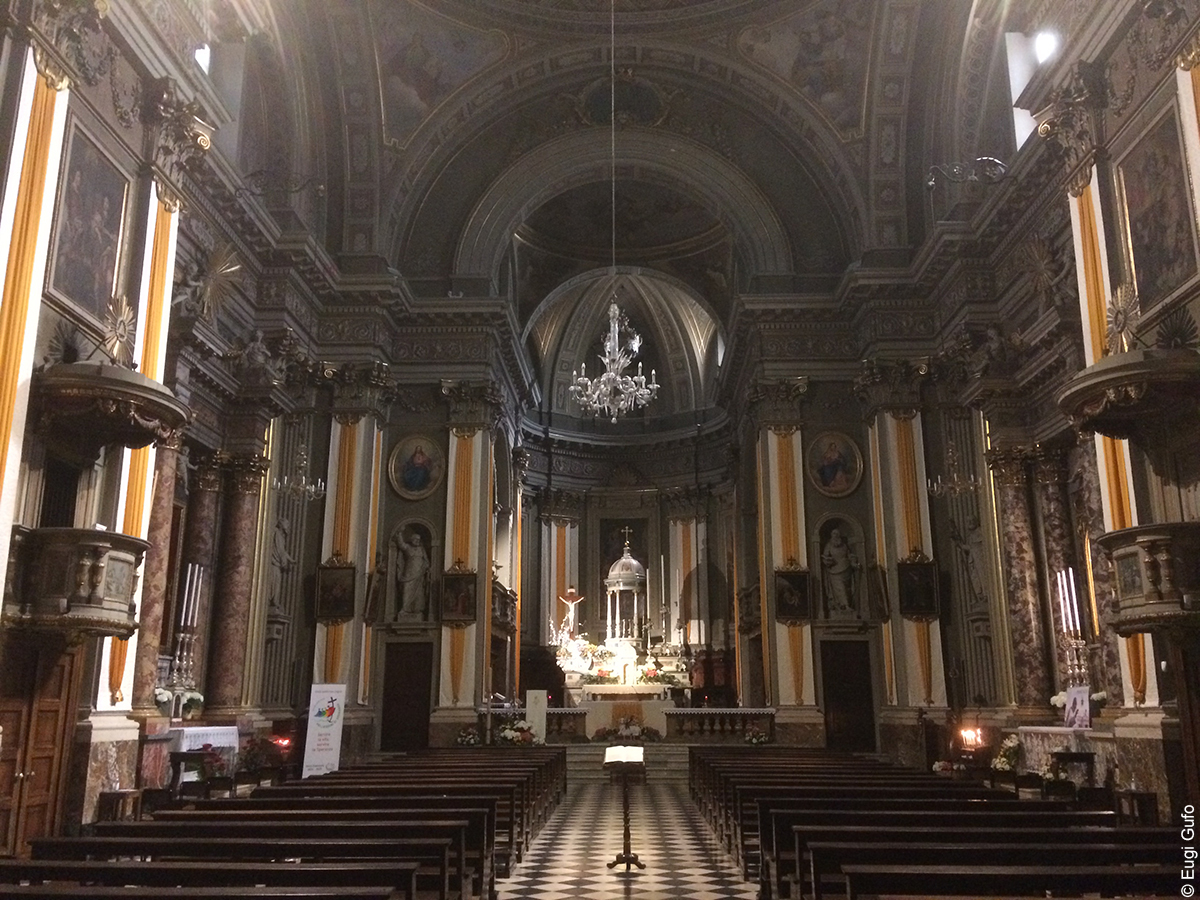
The interior of the Church of San Lorenzo Martire — built in the second half of the fifteenth century and heavily modified in the eighteenth — is rather pleasing, distinguished by a few curious details (indolent students, you now know where to request assistance, ahahaha).
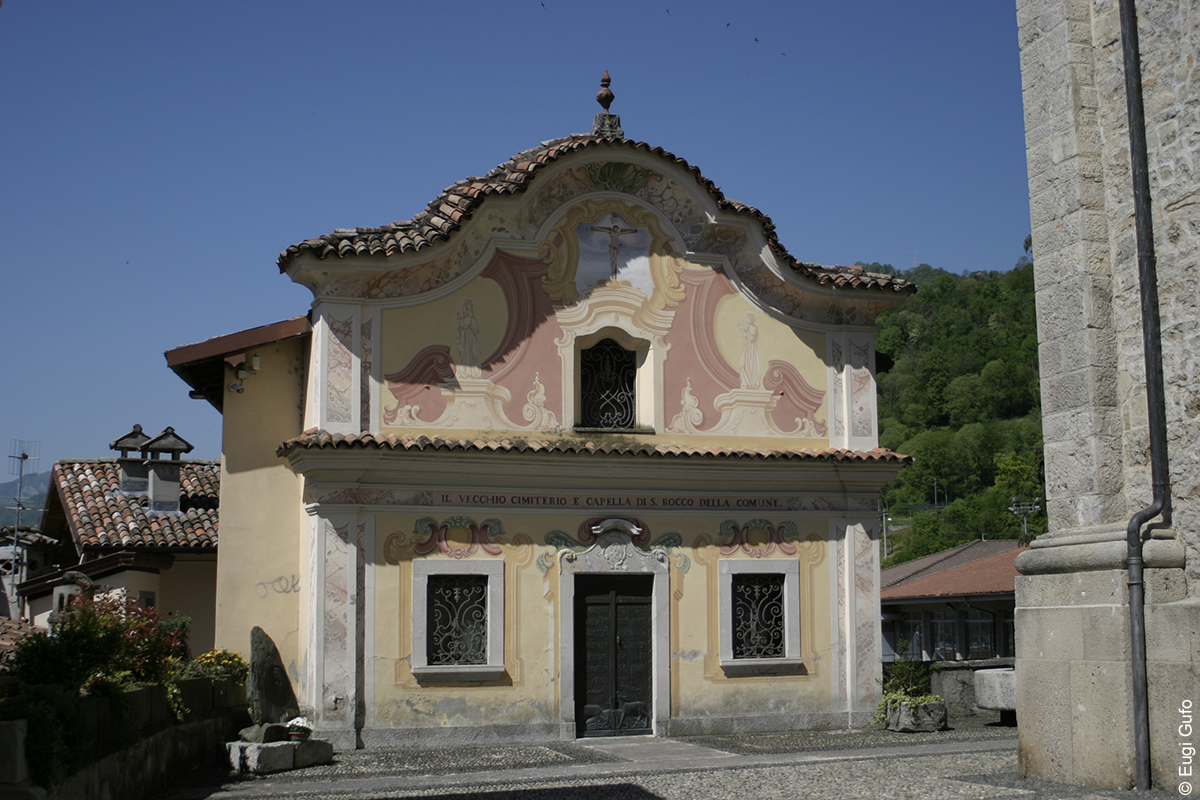
Standing before the church, to the left we find the charming Chapel of San Rocco, constructed no later than the twelfth century and originally part of a now-vanished fifteenth-century complex. The façade has evidently been restored not too many years ago, though humidity has already resumed its quiet campaign. Regrettably, I cannot report on the interior: it was closed.
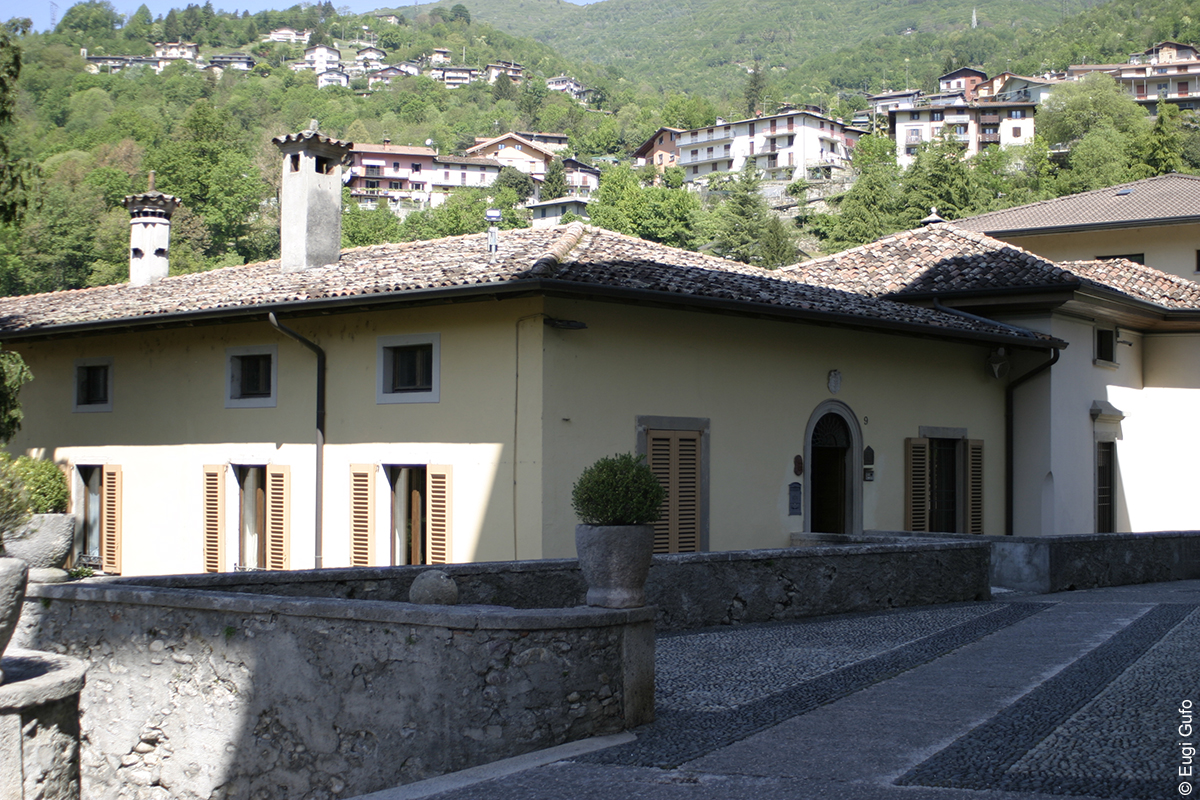
Nearby stands the parish house…
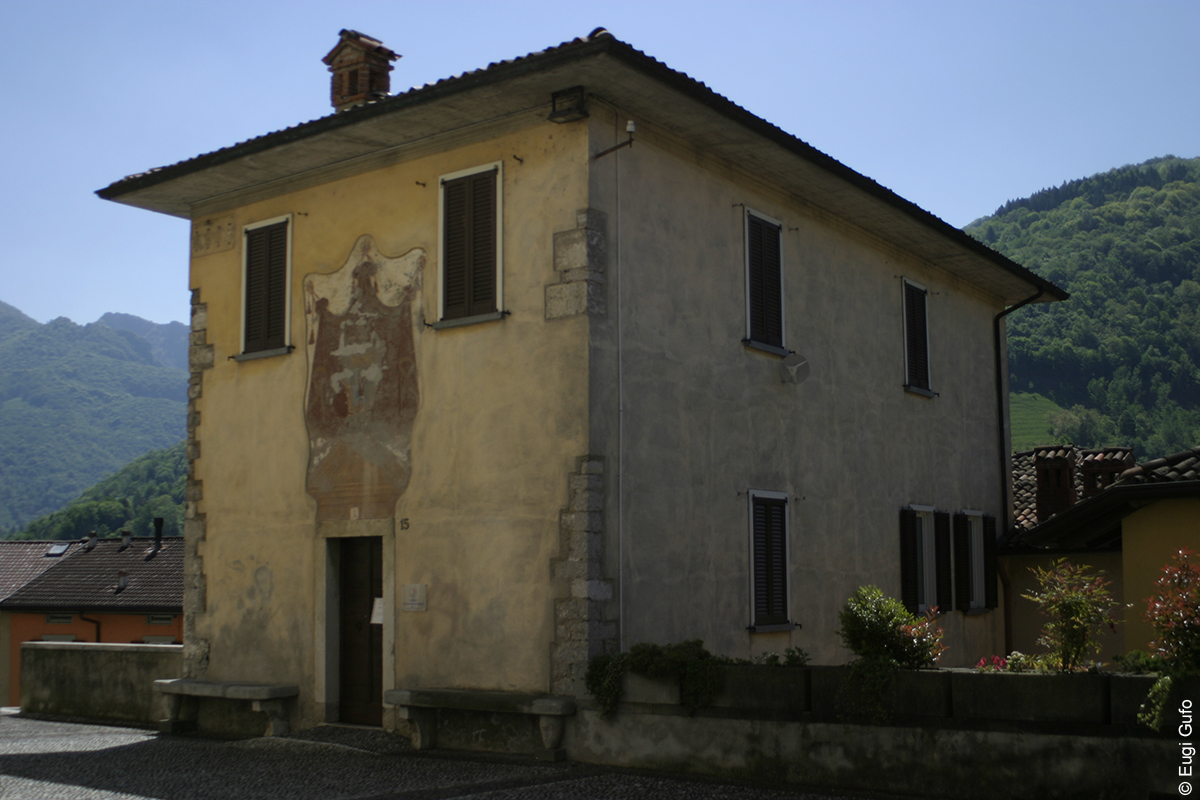
… and another house of uncertain identity (perhaps a former parish house).
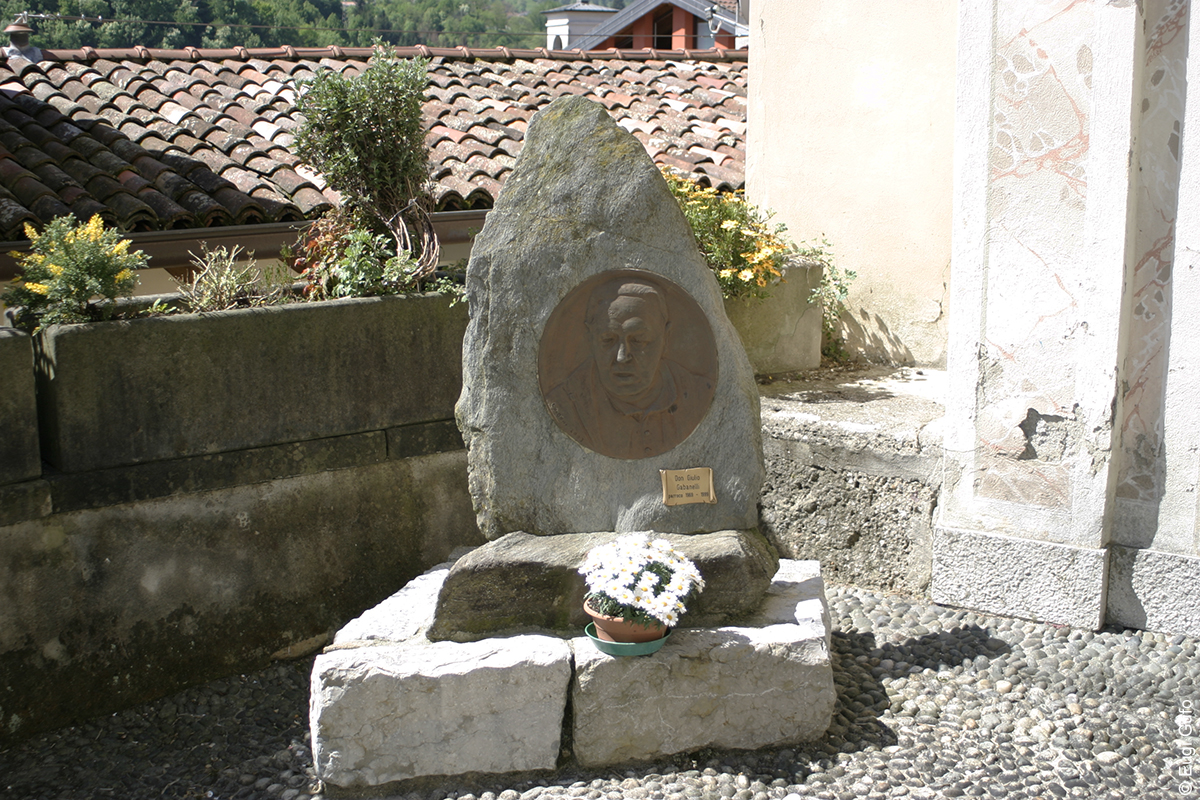
And then a monument to one of the former parish priests — though I must confess ignorance regarding the precise distinction that earned him singular commemoration.
Behind the church, slightly higher up, lies the present cemetery of Zogno: architecturally non-trivial in form and layout, yet containing surprisingly few sculptural works compared to the «standards» I had grown accustomed to in Italian cemeteries, which often resemble rather fine open-air museums.
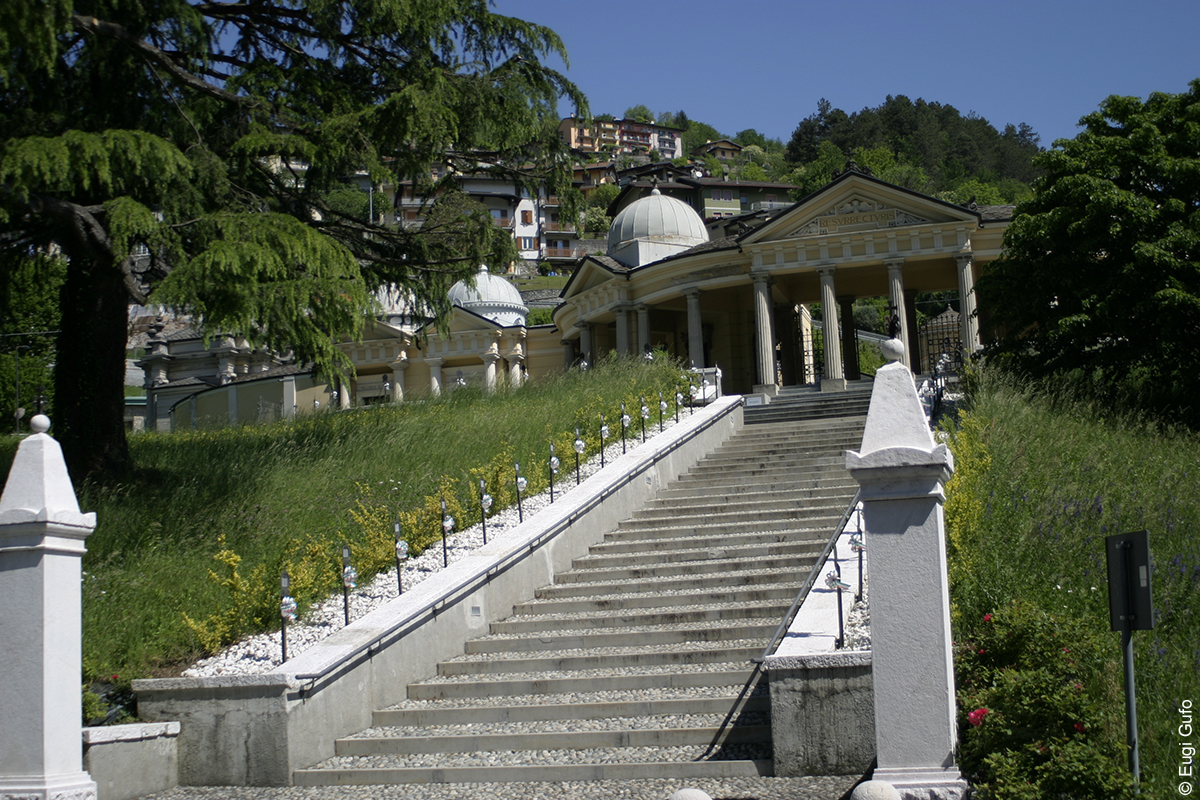
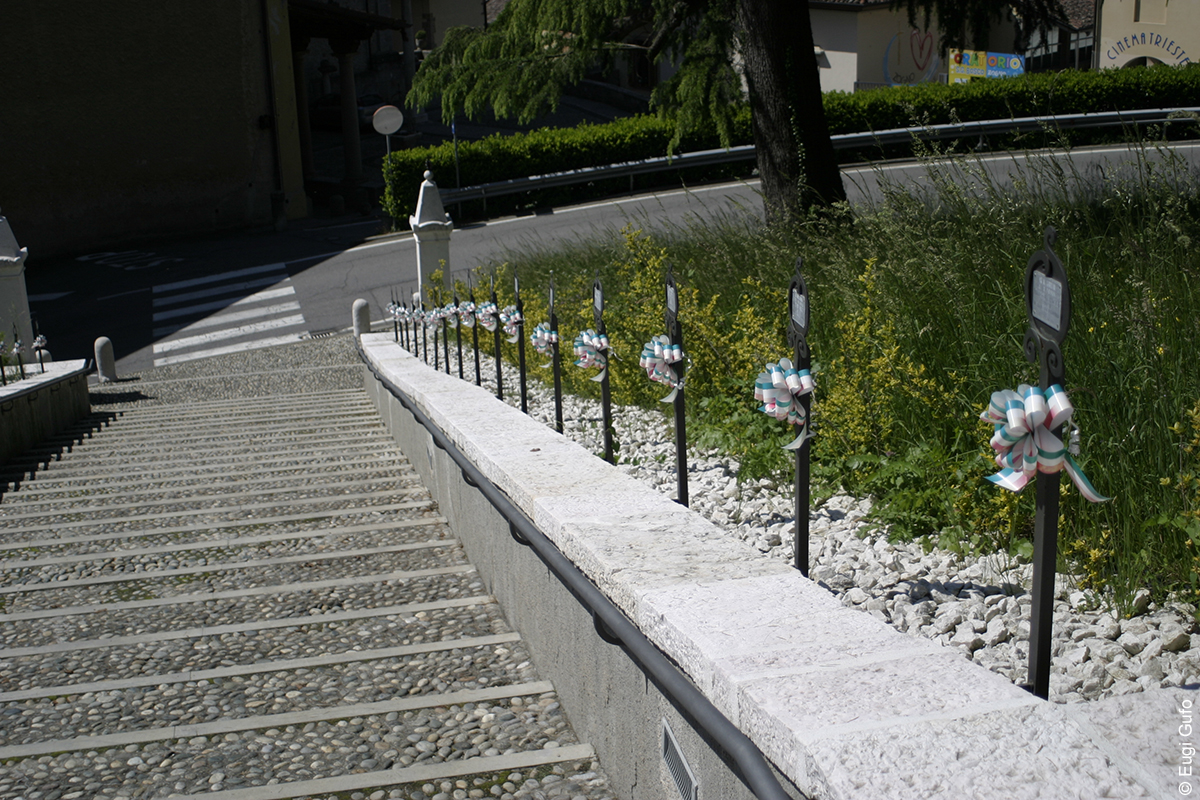
Its most genuinely striking feature lies outside the main area: objects that at first glance appeared to be decorative fence posts. Only by chance did I focus on one of them and discover that each post bears a small plaque with the name of a Zogno citizen killed in the First World War. One name per post; the number of posts corresponding to the number of the fallen. One wonders how many others, like myself, realised this only accidentally — and how many never realised it at all.
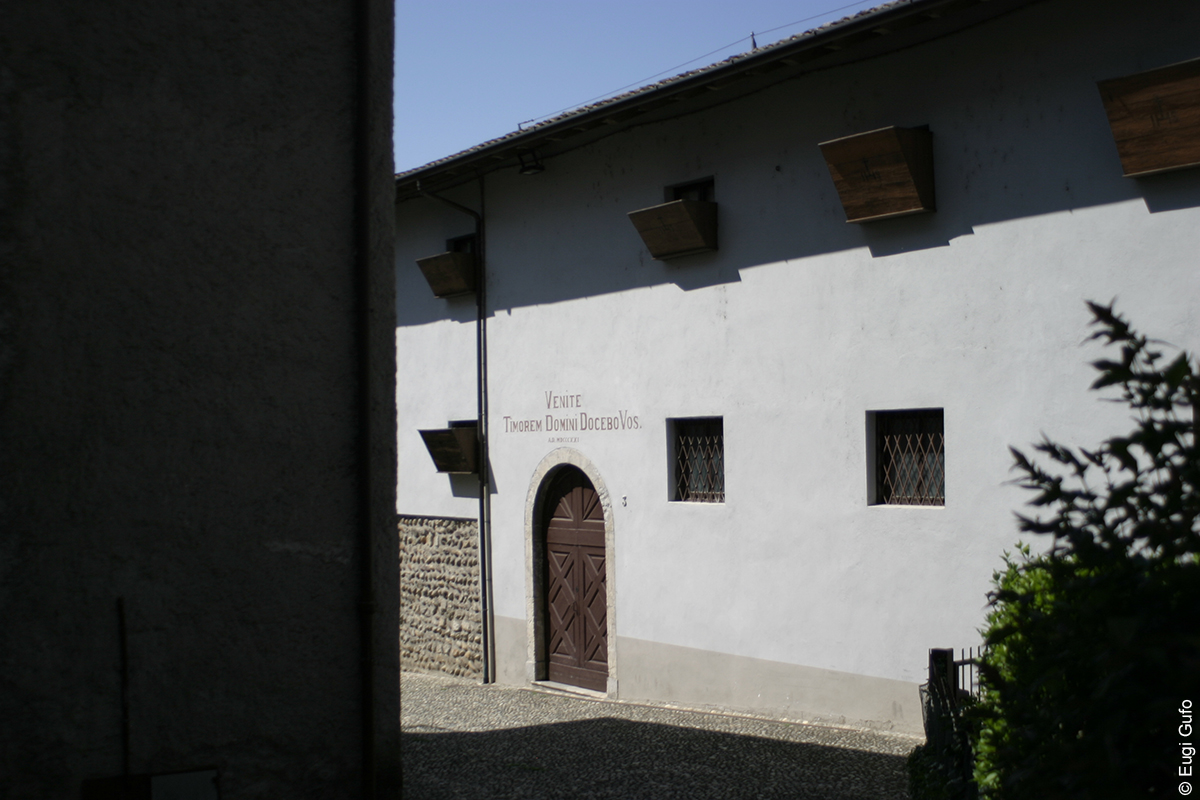
Opposite the Church of San Lorenzo stands the Monastery of Santa Maria Annunciata of the Franciscan Tertiary nuns, established in 1631. The nuns live in cloister, though I have read that guided visits are organised by the FAI — Fondo per l’Ambiente Italiano. Should that interest you.
During this particular journey, I concentrated on freely accessible sites. Among the smaller religious architectural elements was, for example, this roadside shrine — eminently practical for believers. As an apatheist, I may have misunderstood, but is it truly the case that during those forty days one may request absolutely anything? It would appear so, as no limitations are specified.
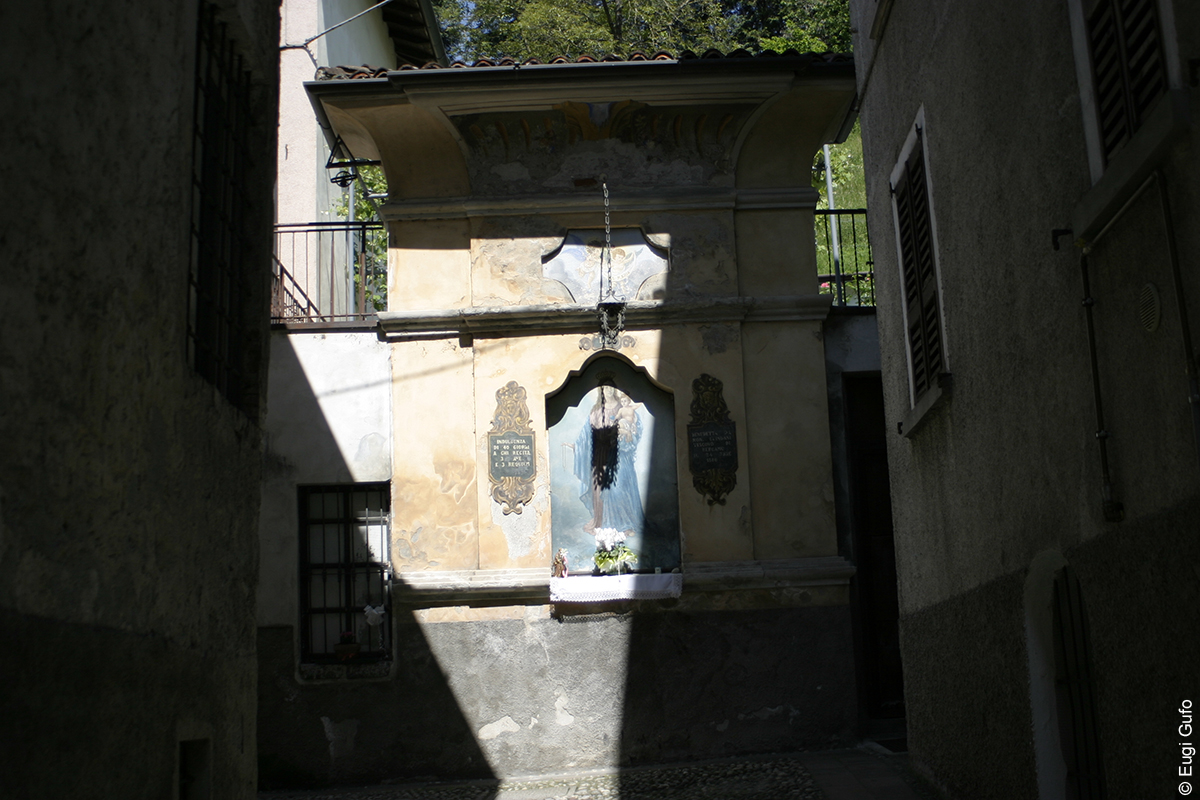
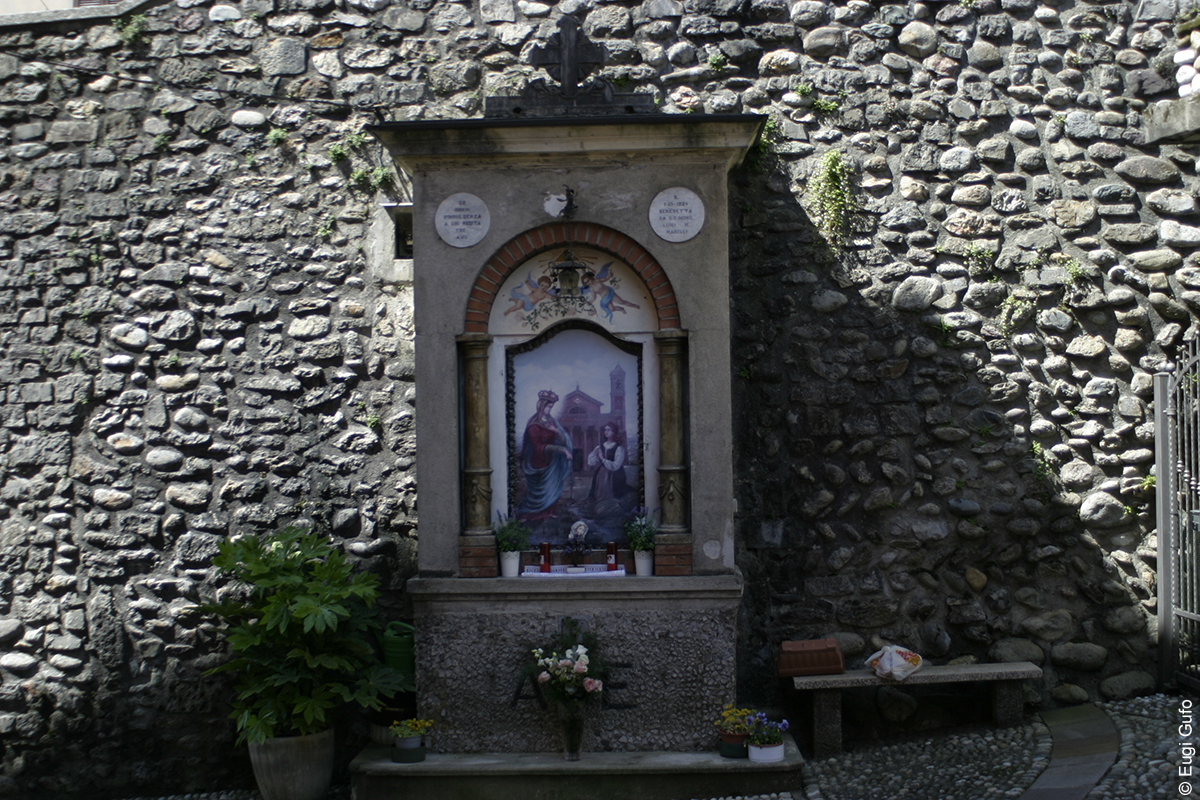
A kindly local lady, noticing my photographic interest in the aforementioned shrine, directed me to another one nearby. Stylistically different, better preserved, and equally intriguing. From a practical perspective, it is more «generous»: promising more for less effort. Thus I learned that religious competition for clients can indeed occur within the same Church, assuming innumerable forms. Always compare in order to minimise exertion.
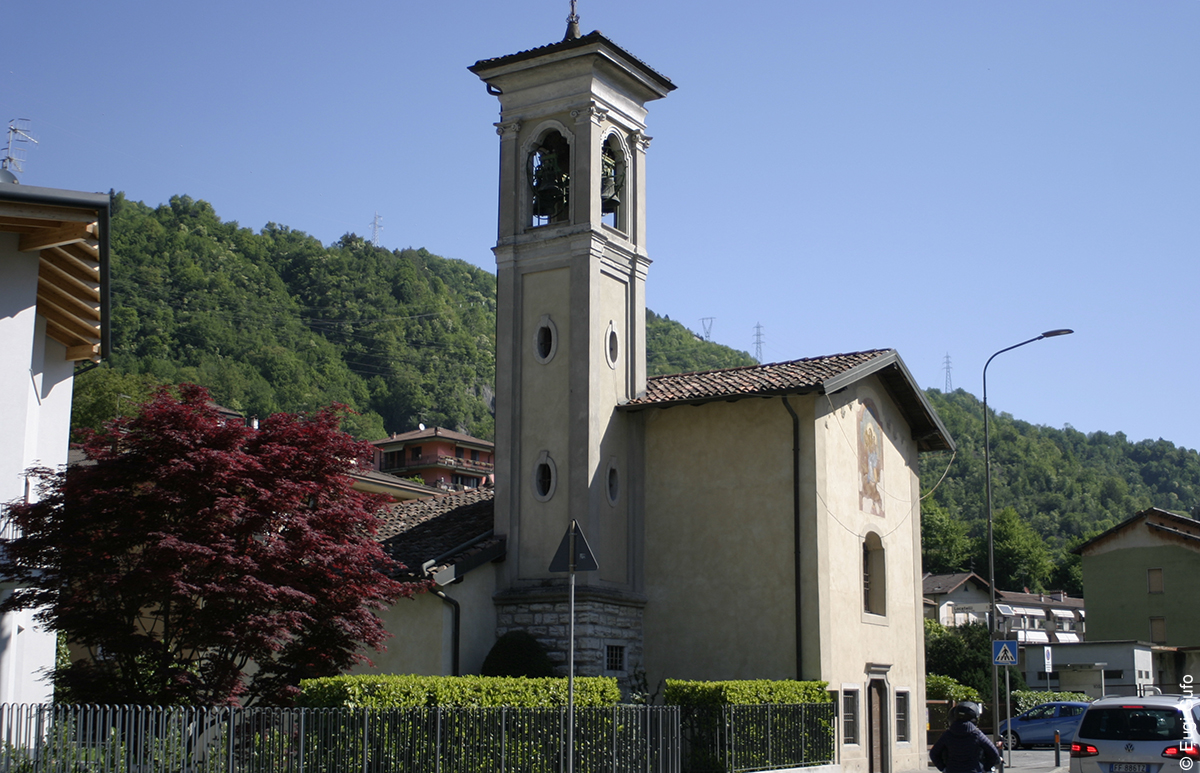
The tiny Church of the Beata Vergine del Carmine, built in the early seventeenth century (its bell tower and lateral portico date from the early twentieth), is genuinely delightful.
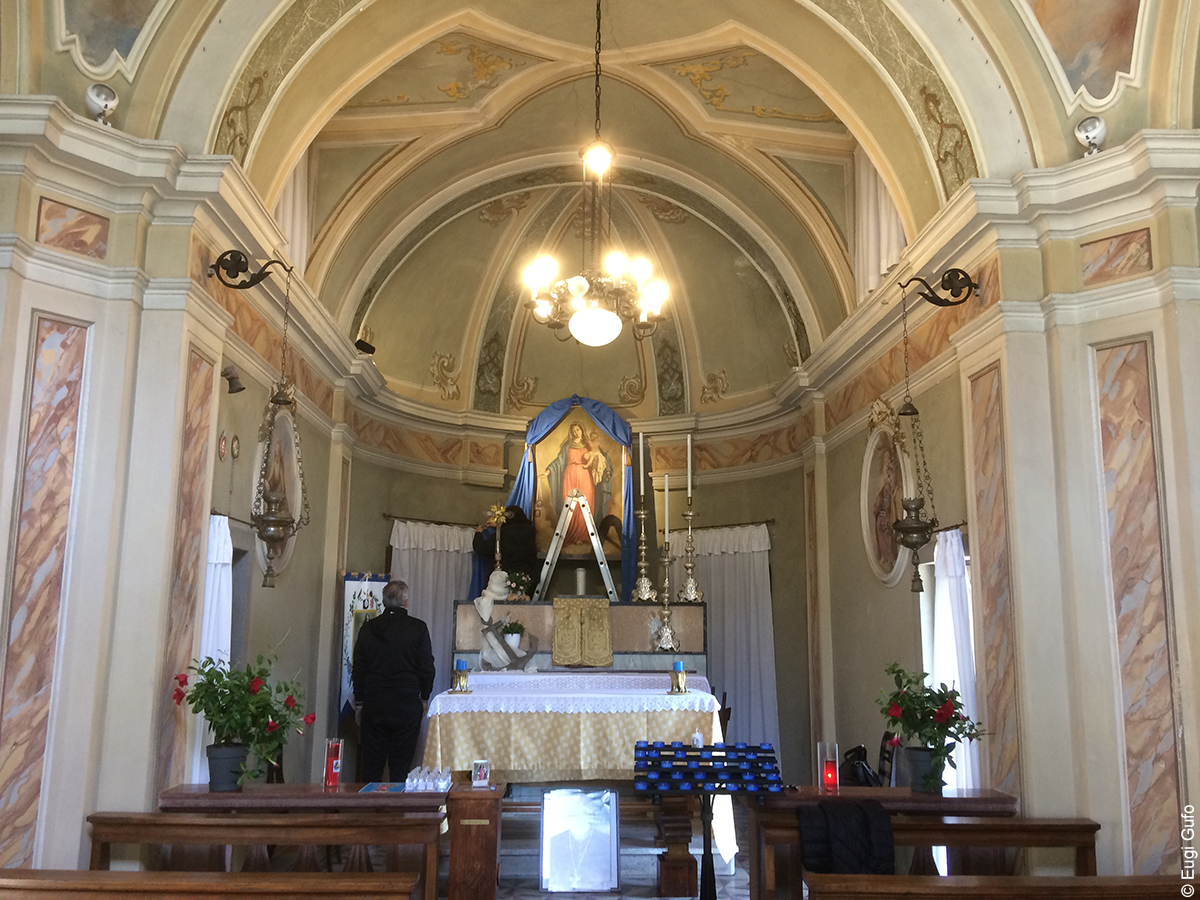
Simple and luminous inside, it contains curious paintings. It is cared for by pleasant people; if you find it open, you will be fortunate twice.
From the street, the Church of the Nativity of Mary might appear less appealing, though clearly older (sixteenth century).
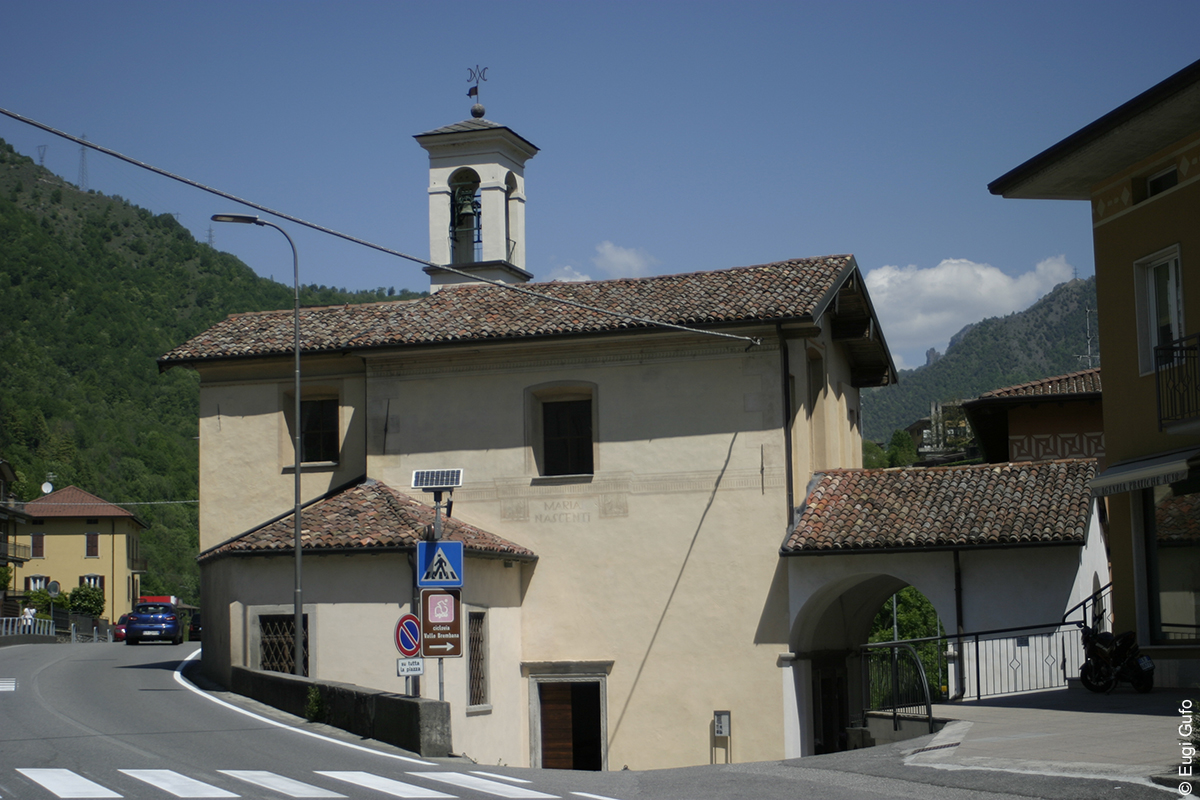
Its interior, however, is stylistically rather rare — at least according to my Lombard observations.
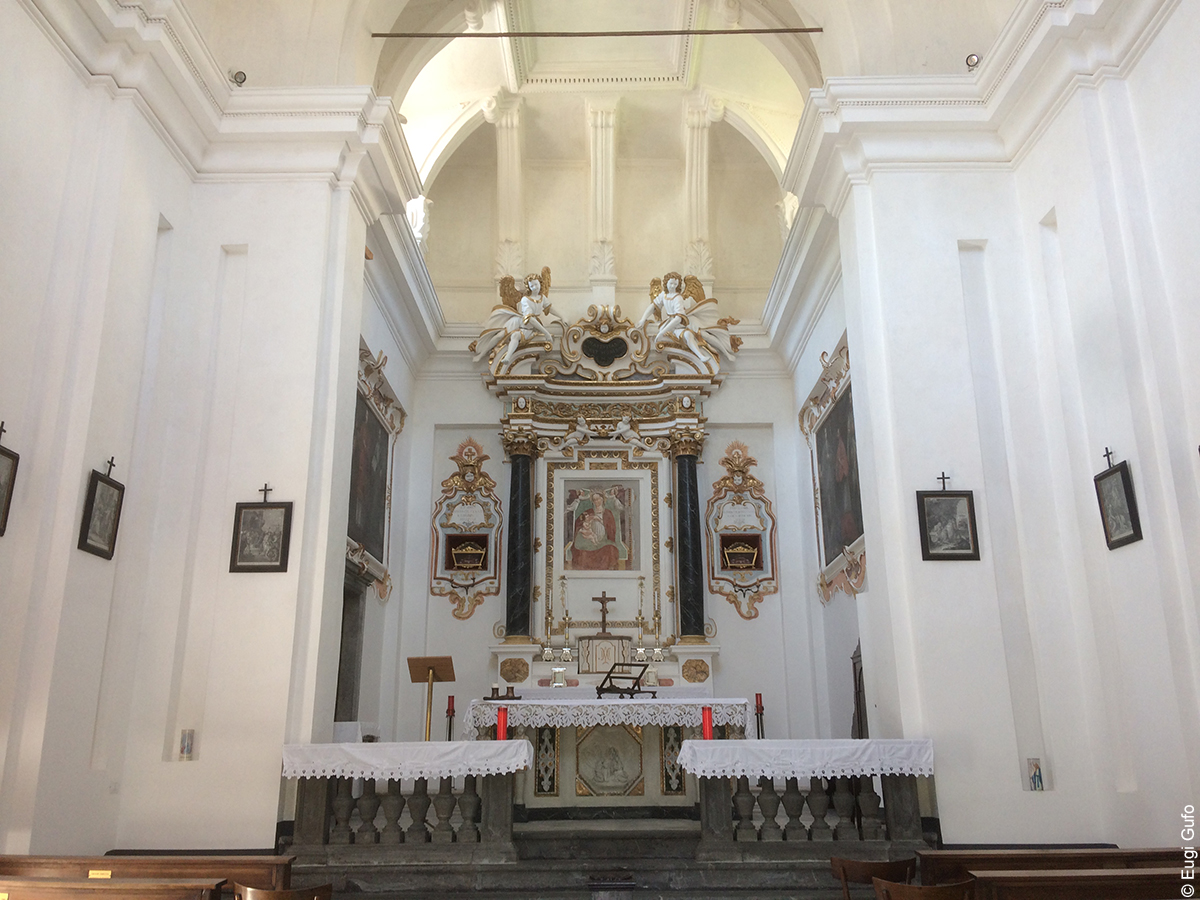
The same could be said of the small church of Nostra Signora del Sacro Cuore di Gesù (nineteenth century). The average passer-by would likely not even pause.
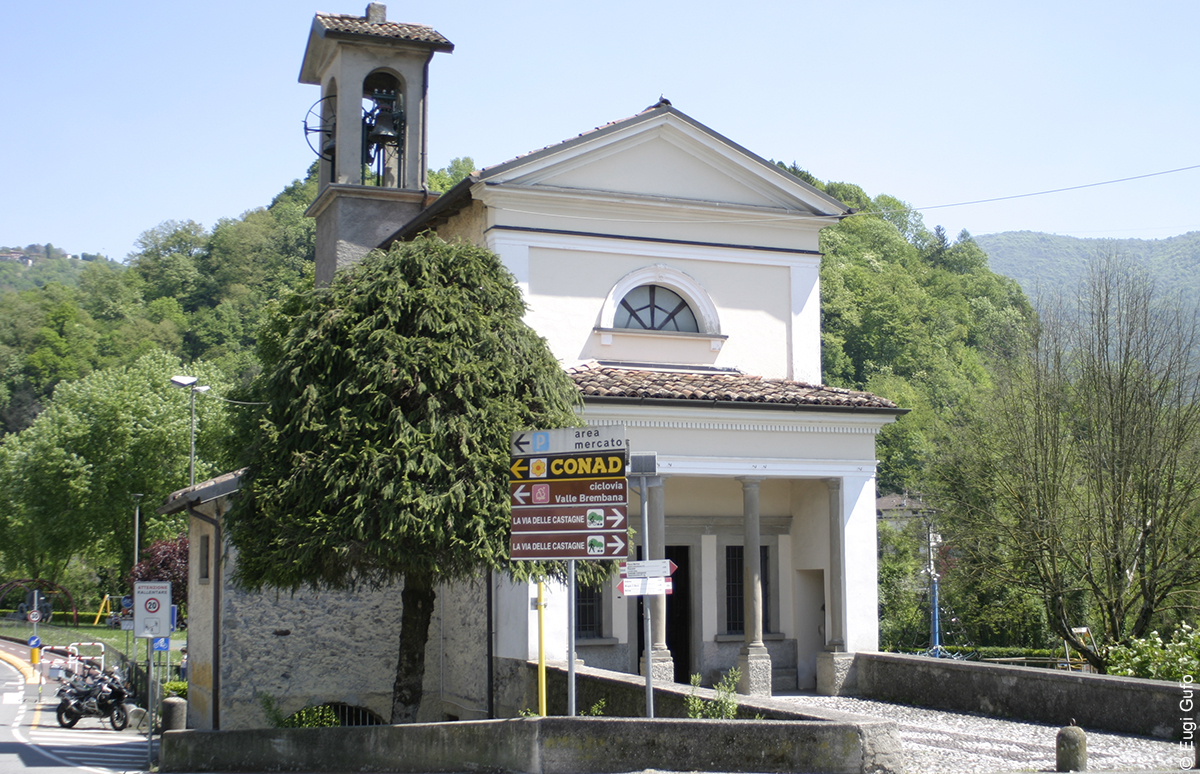
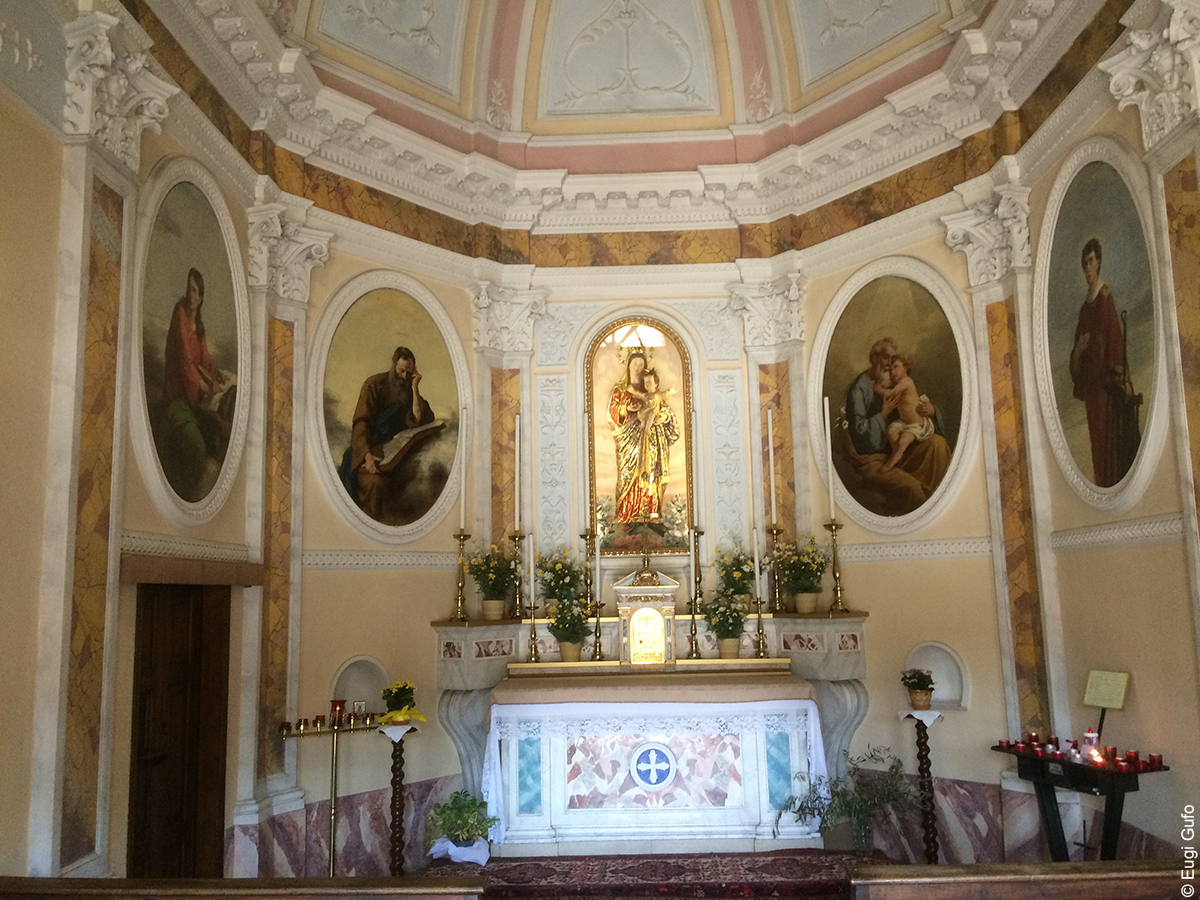
Yet its interior is not entirely «typical.»
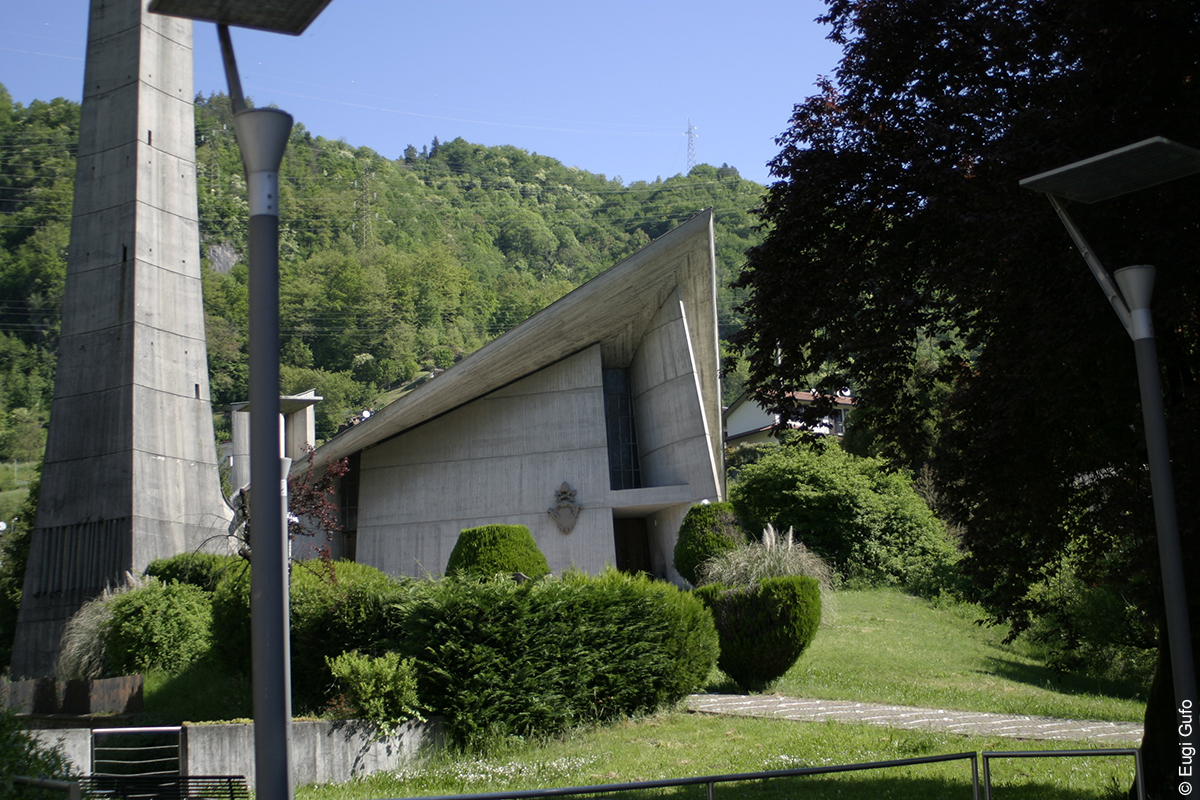
Far more visually striking — because stylistically unusual and distinctive — is the Santuario di Maria Santissima del Carmine, constructed in 1965–1966. Regrettably, it was closed, though even from the exterior it appeared to be a fascinating example of modern architecture.
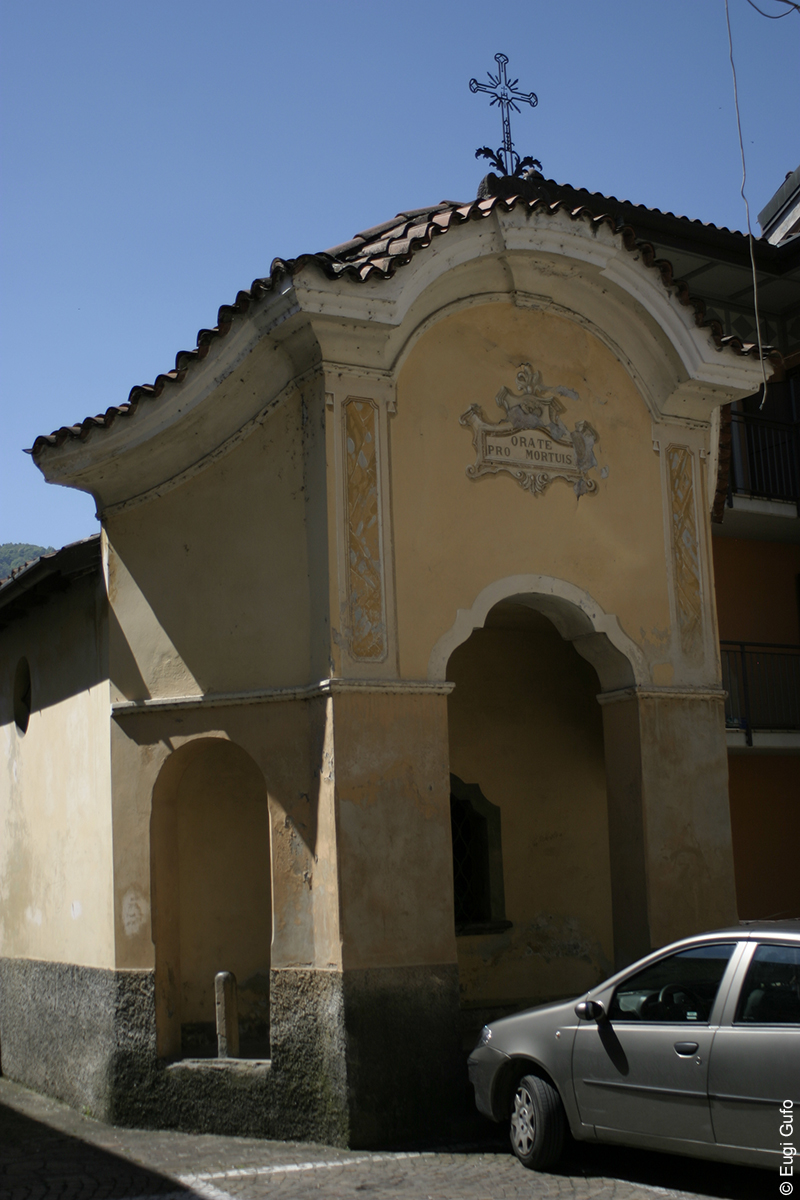
The final religious structure to mention — more for the sake of narrative completeness than aesthetic merit — is the Mortini Chapel. Nothing particularly remarkable.
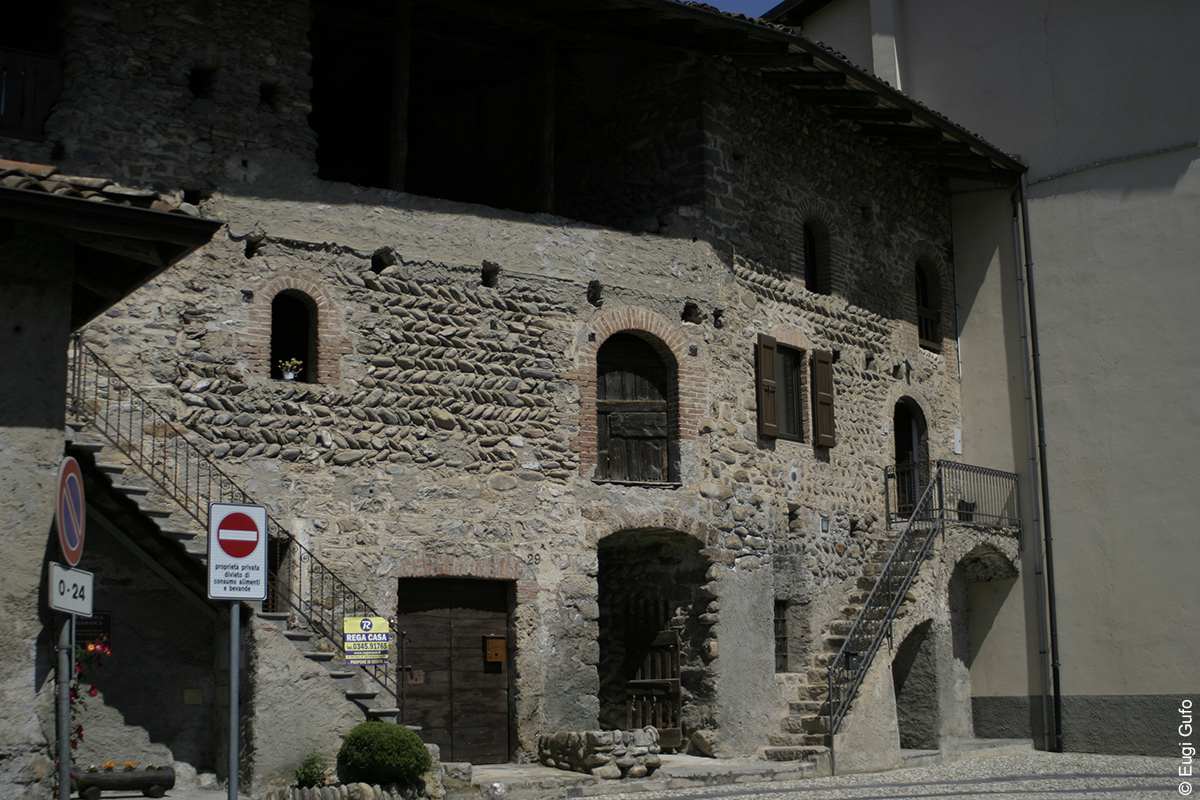
In truth, I sometimes find it faintly melancholy that in many small and medium-sized Italian municipalities the most beautiful and best-preserved historic architecture consists predominantly of churches: the observer risks boredom, while the narrator risks appearing a religious enthusiast. I therefore wish to emphasise that Zogno also possesses and preserves historic civil architecture.
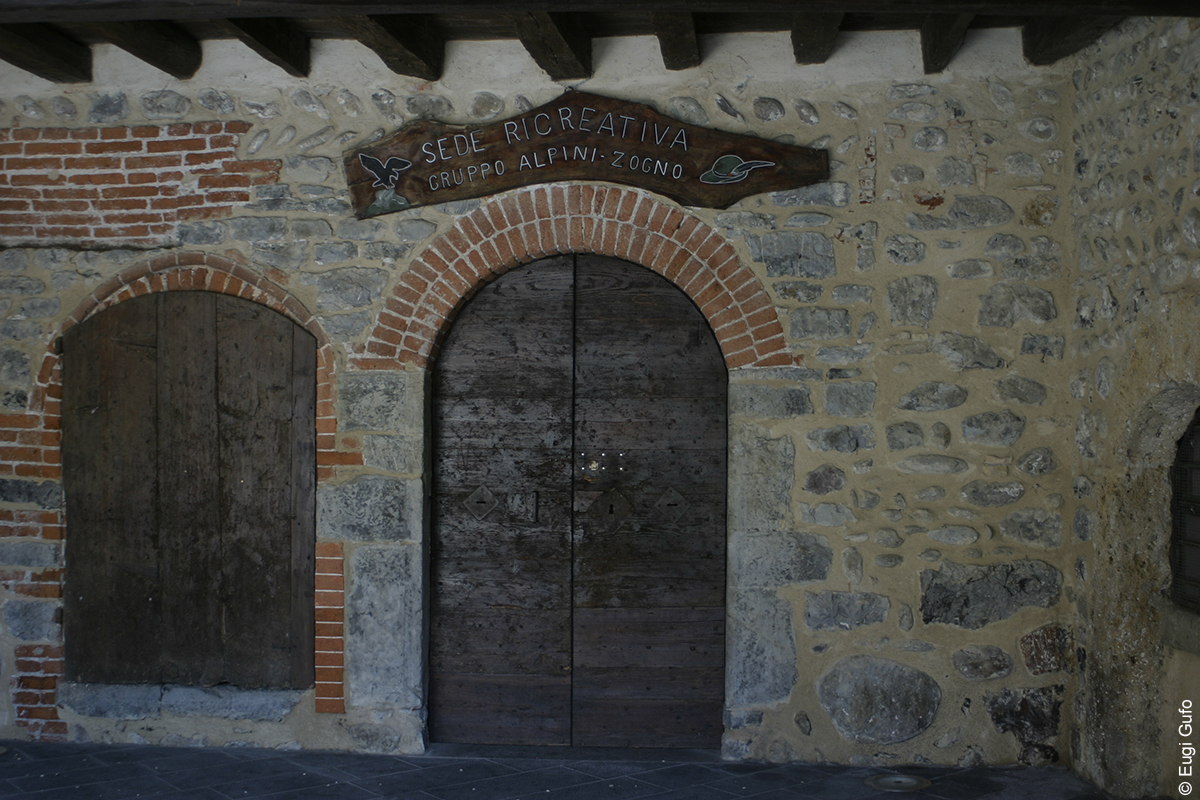
One such building has even been transformed into a museum of local traditional architecture: the fifteenth-century «Casa rustica bergamasca,» illustrating how houses of that era once appeared.
A more conventional museum is «Villa Belotti,» the residence of the lawyer and politician Bortolo Belotti. He practised law in Milan; served as councillor in Zogno (1907–1909) and Milan (1909–1914), and in the Province of Bergamo (1914–1924); was a deputy in the Italian Parliament from 1913 to 1924; and Minister of Agriculture, Industry and Commerce from 4 July 1921 to 26 February 1922. Between 1919 and 1921 he also promoted the creation of several liberal parties. The bust near the entrance portrays him in legal robes, likely because it was executed in 1921.
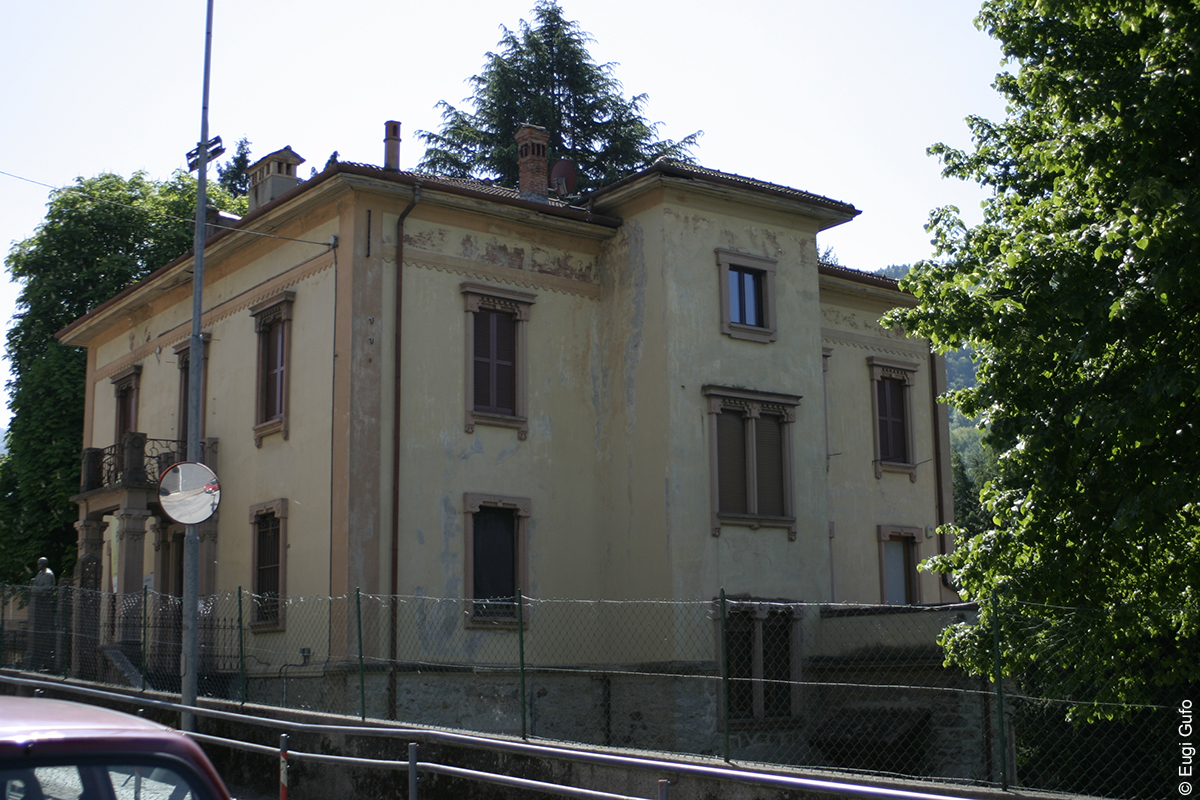
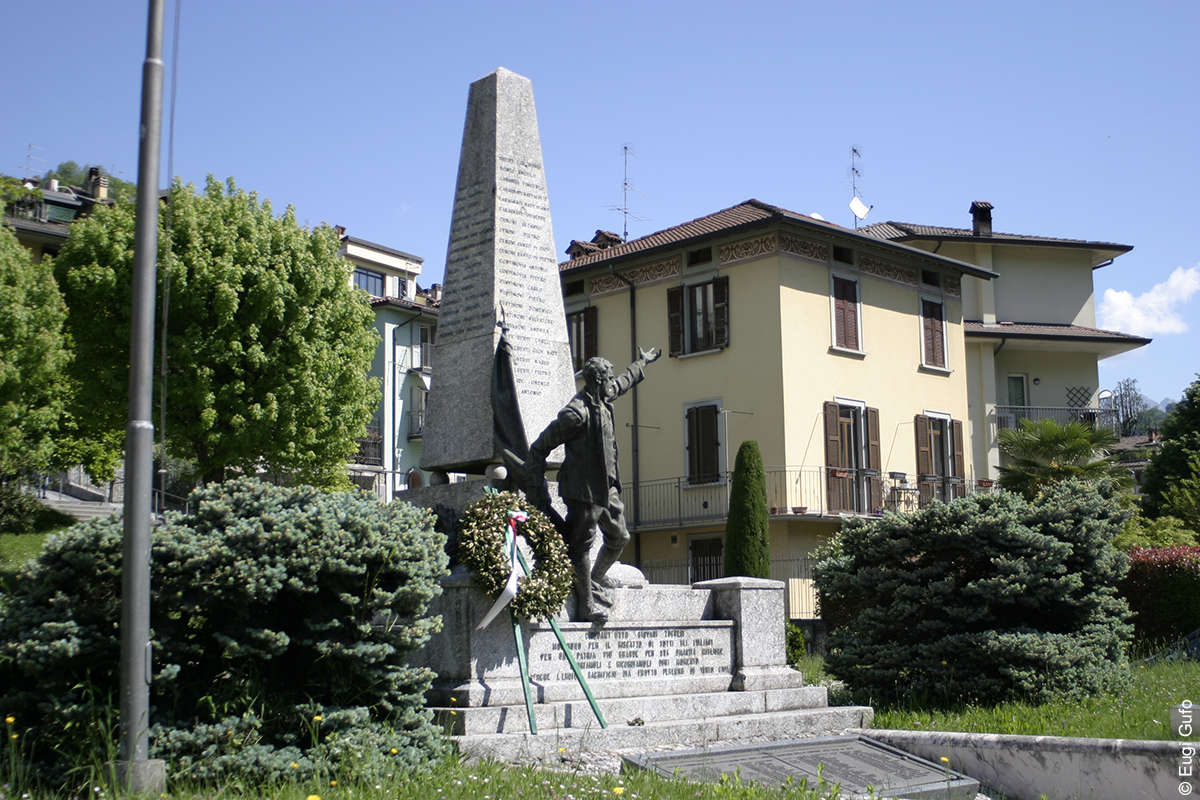
There are, naturally, more traditional and «less personal» monuments as well — for example, the memorial to those fallen in the two World Wars.
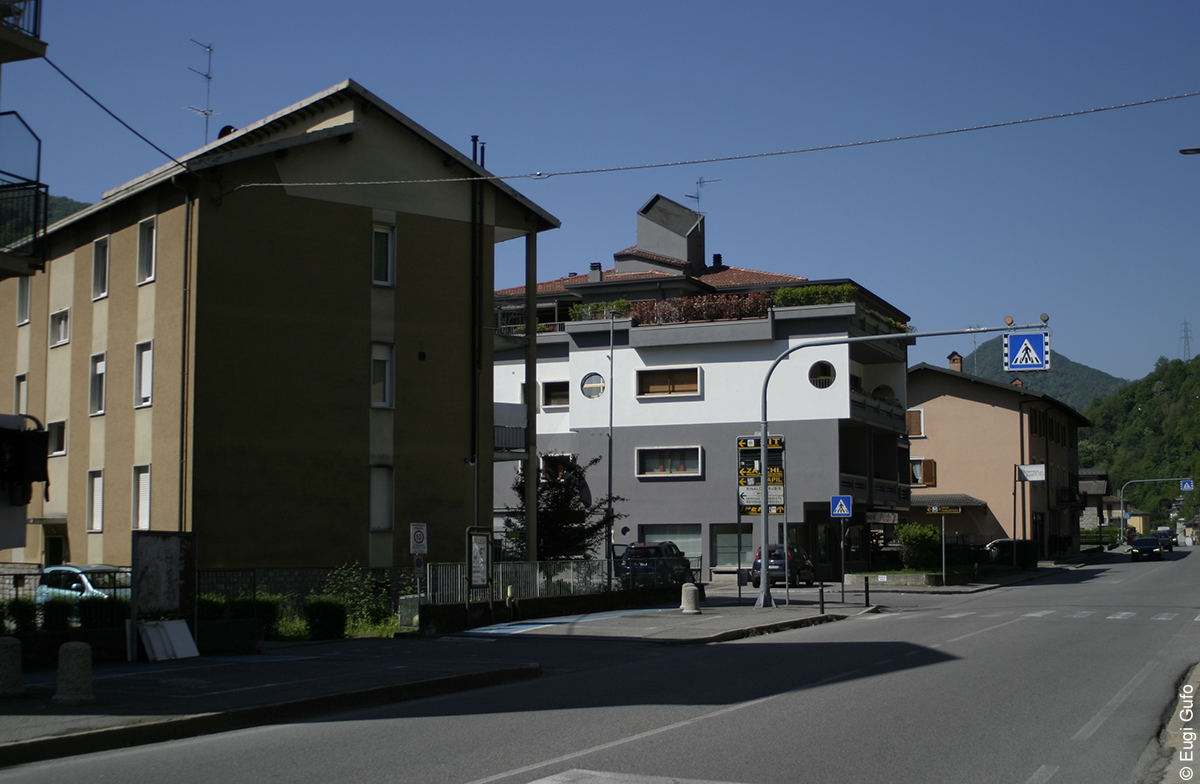
Local architecture, however, is not exclusively ancient; as we have observed in the course of this account, respectable examples of modern design also occur.
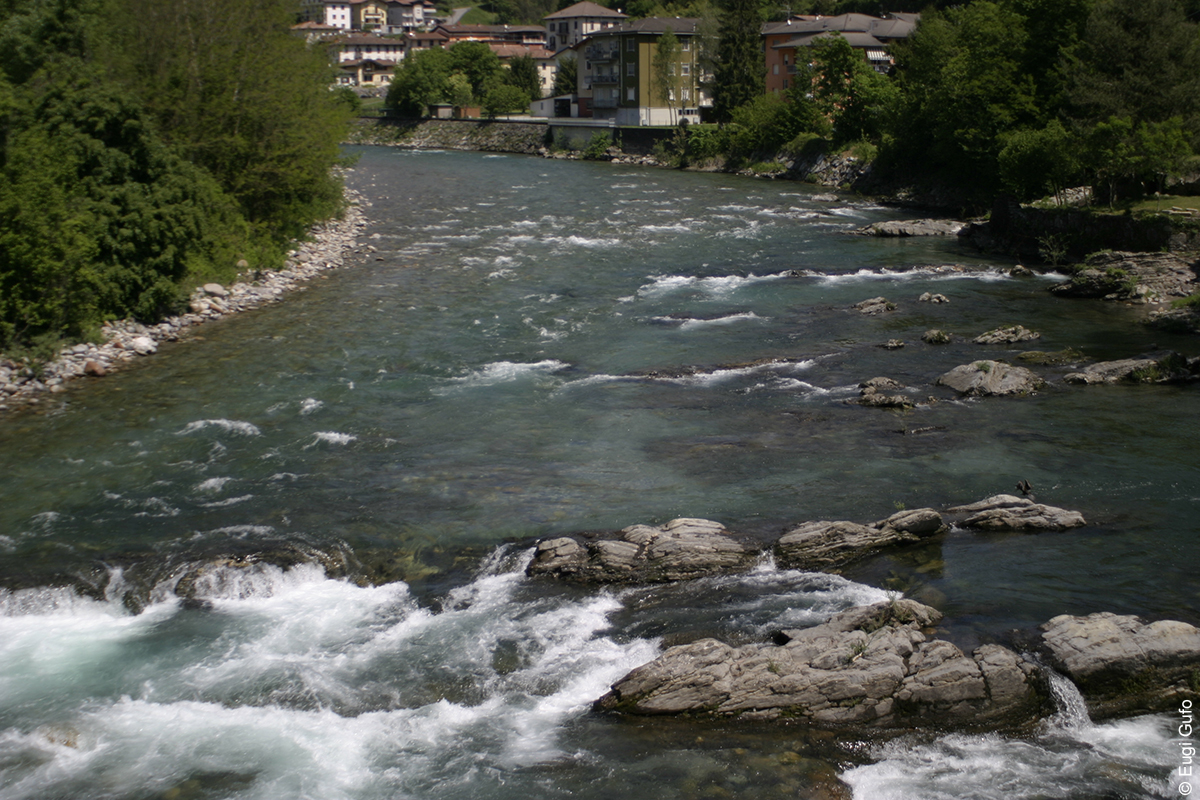
At this point, I suddenly realised that I had already presented all the principal sights of Zogno. Did I mention that the town lies on the bank of the Brembo? Repetition is not invariably a vice.
We may now take the cycle-pedestrian path built along the route of the former Valle Brembana railway and proceed toward the next stage of our journey: the village of Sedrina.
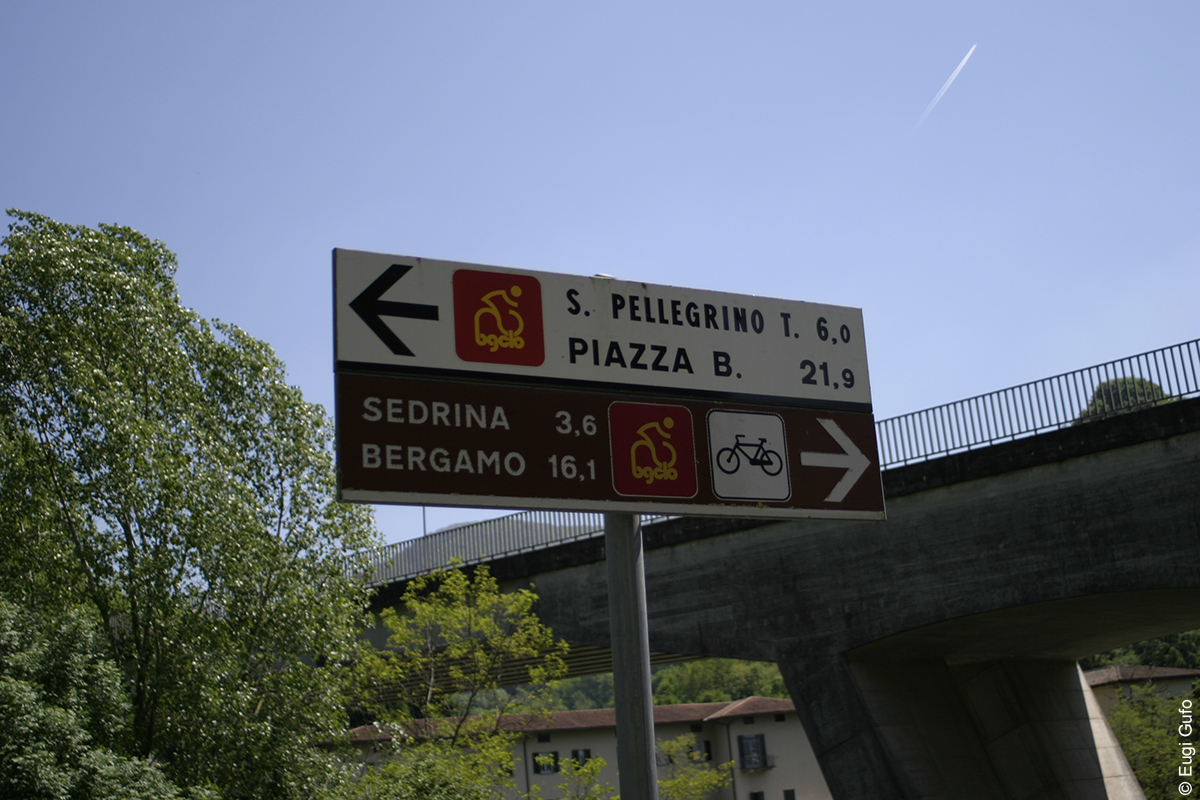
But that, as ever, is another story.
Zogno, 2 May 2025
↓ Show comments ↓


