


 Long live Ukraine! Fuck the war!
 RSS of site articles
One day in July, while walking along the 45th parallel, I suddenly found myself in Voghera. And since I was already there, I decided to take a walk around the city.
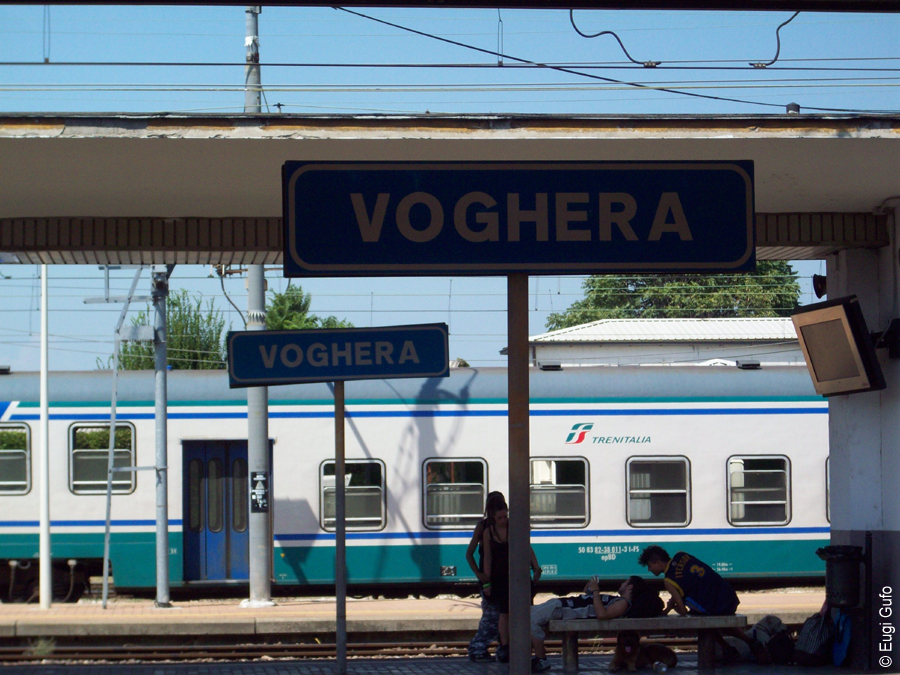
The only interesting aspect of the railway station is its rejection of conventional pictograms: all essential information is conveyed exclusively through words. And in Italian, despite the fact that the station is described as «an important railway hub».
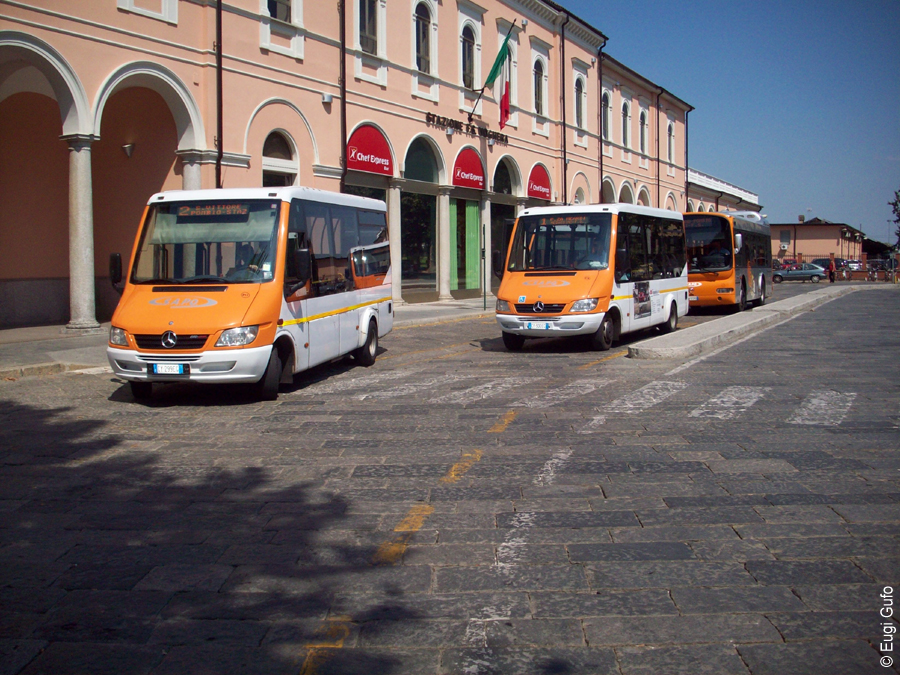
Few experts know that the (indeed large) station is the only real reason for Voghera’s existence. But not only that: it is also the only serious source of public transport. For example, there are only two urban bus lines, even though they are served by very large vehicles. To disguise the scarcity of services, the return trips have been given different numbers.
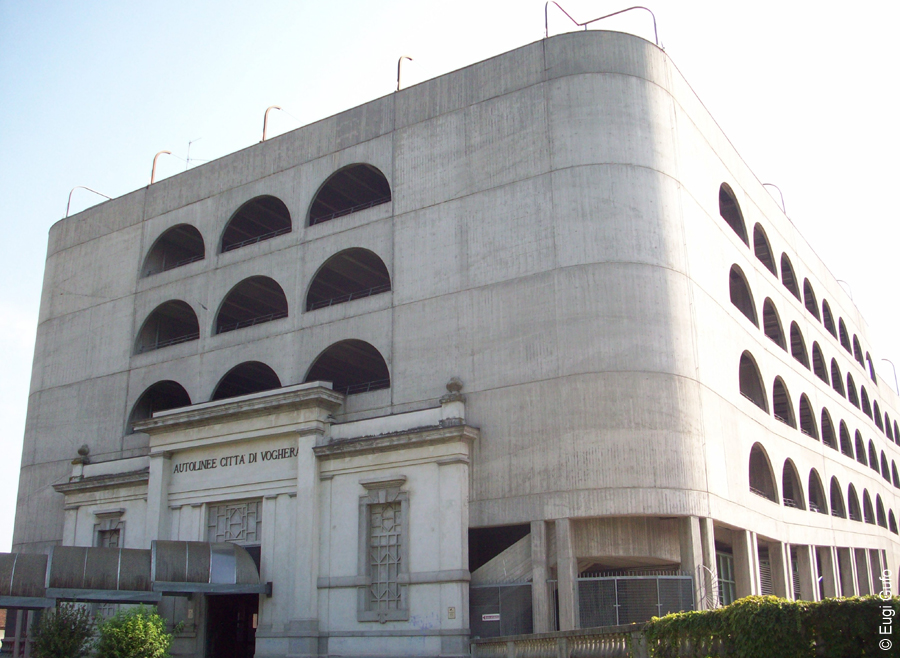
Next to the station we find the Monumental Car Park with 700 parking spaces. From the same building, extra-urban buses also depart.
Lovers of slightly older architecture will probably be disappointed by the relatively small number of monuments to see. About 99% of them face the central square, in the middle of which stands the Duomo (17th century): interesting both inside and out. At the time of my visit, major restoration works were under way inside the Duomo.
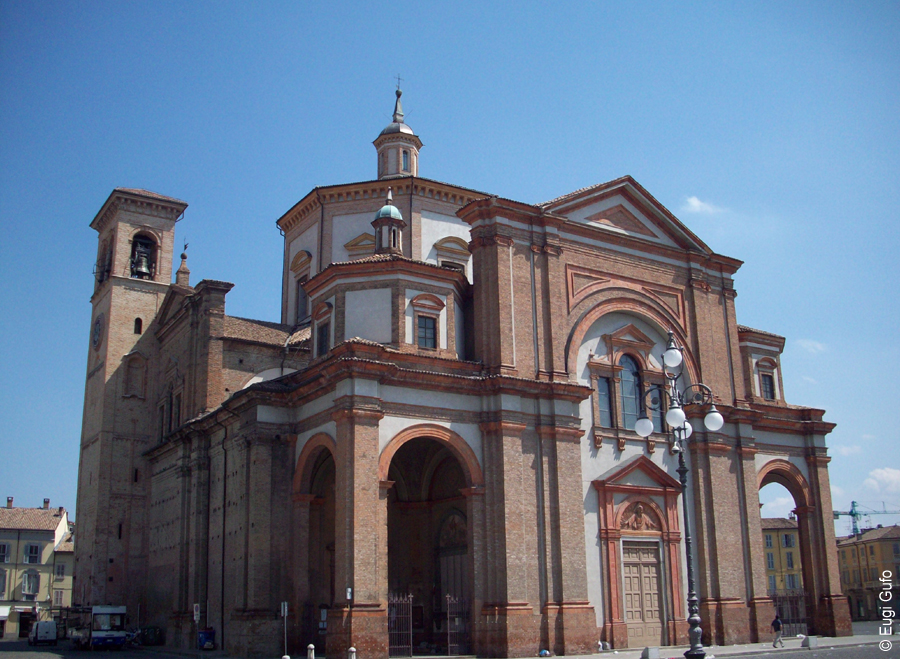
I would say that a large part of Voghera’s historic centre is in need of serious intervention.
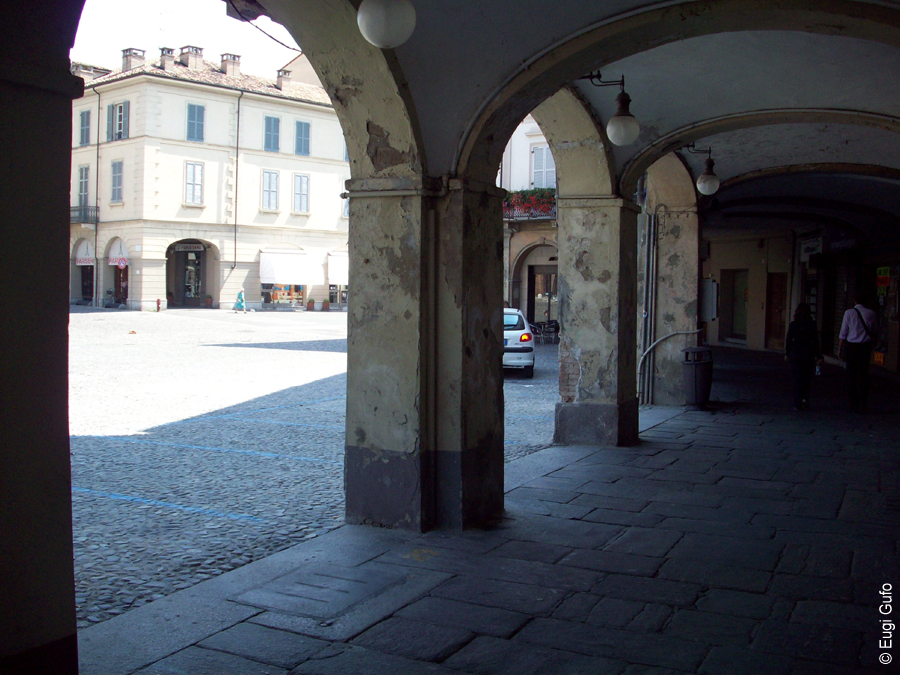
But even in the almost peripheral areas one can find architectural works that deserve to be preserved a little better.

In general, I can say that in the city of Voghera many new buildings and villas are constructed, but the historical beauties are rarely preserved properly.
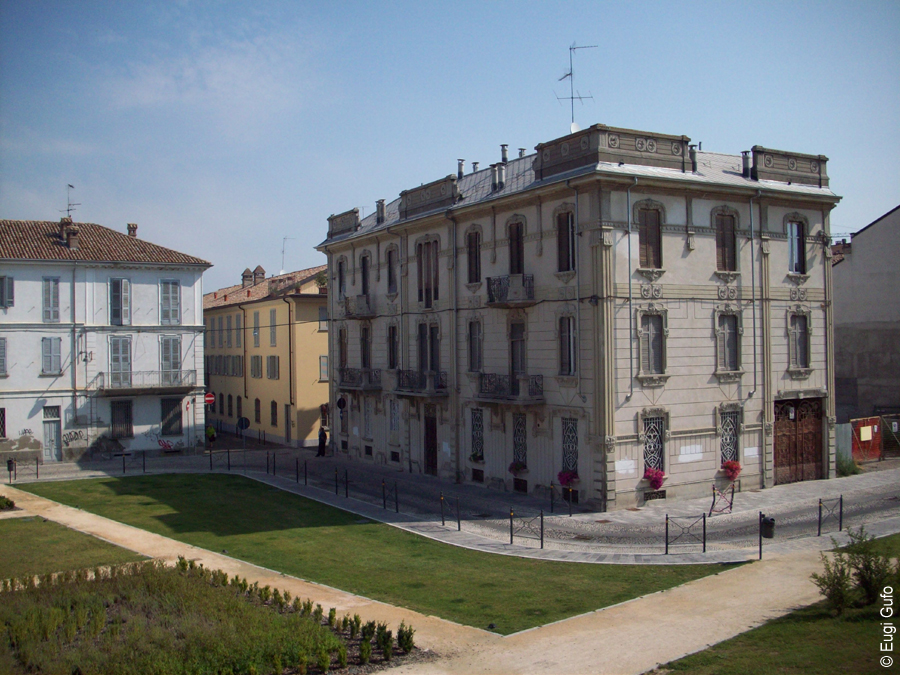
Some of the exceptions turn out to be fakes: take, for example, «Casa Nava», rebuilt in 1903.

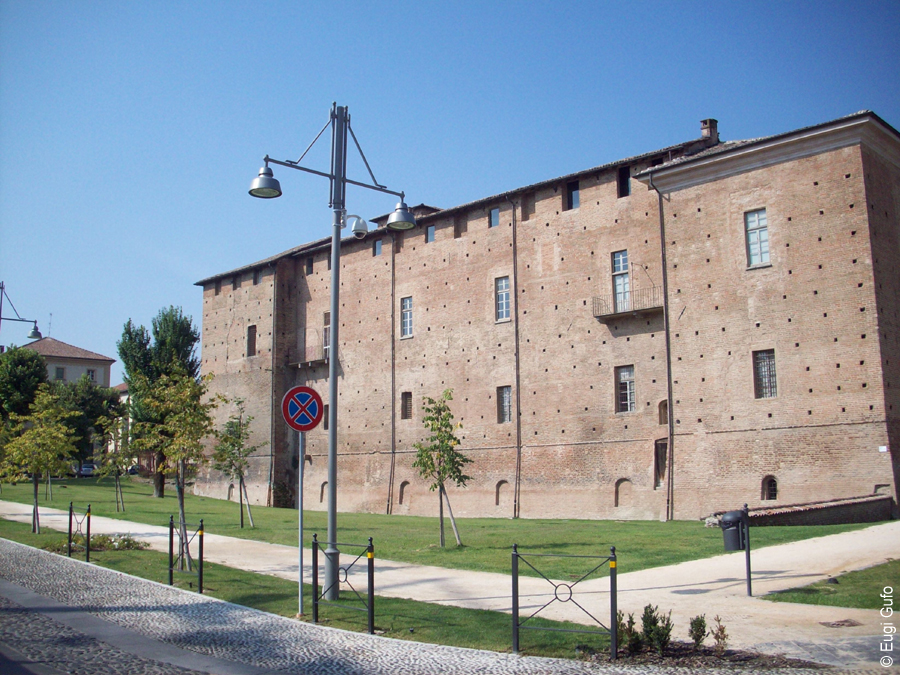
Or the small Visconti castle from the 14th century, which for a long time was used as a prison. Seen from the main entrance side, it looks like a real castle.

I do not know what its interiors look like, because they too are closed for restoration works.
But the rear part of the castle has been restored in a truly disgusting way.
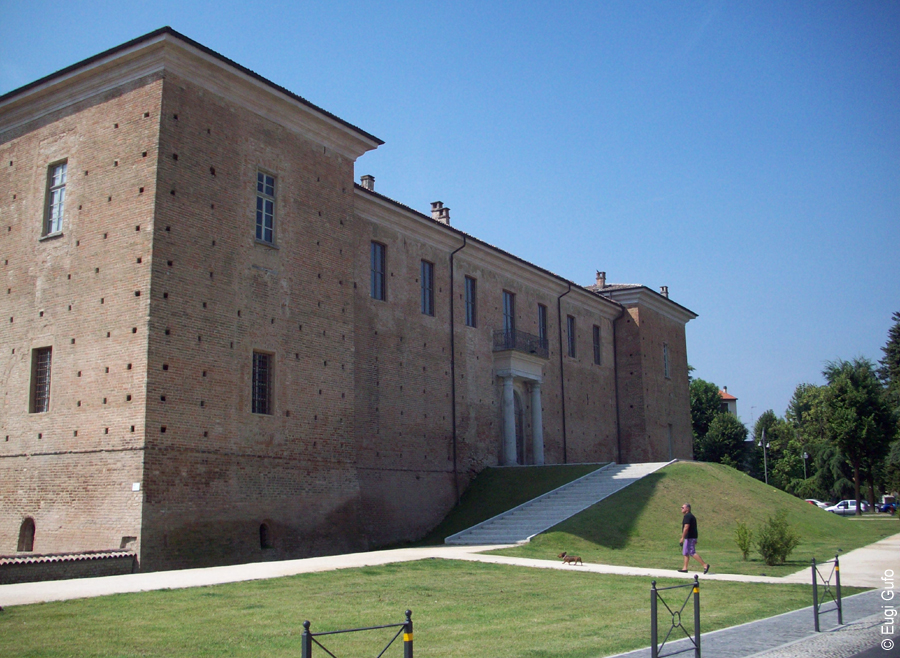
The decaying state of many buildings could perhaps be tolerated, because there is always hope that they might be reborn with the arrival of a new owner who is a little less stingy than the previous one. Therefore, my greatest disappointment is due to the conditions of the former cavalry barracks «Vittorio Emanuele II». Some small parts of it (about one quarter of the total) have been restored and now house two museums, the civic library, some municipal offices and a boxing gym.
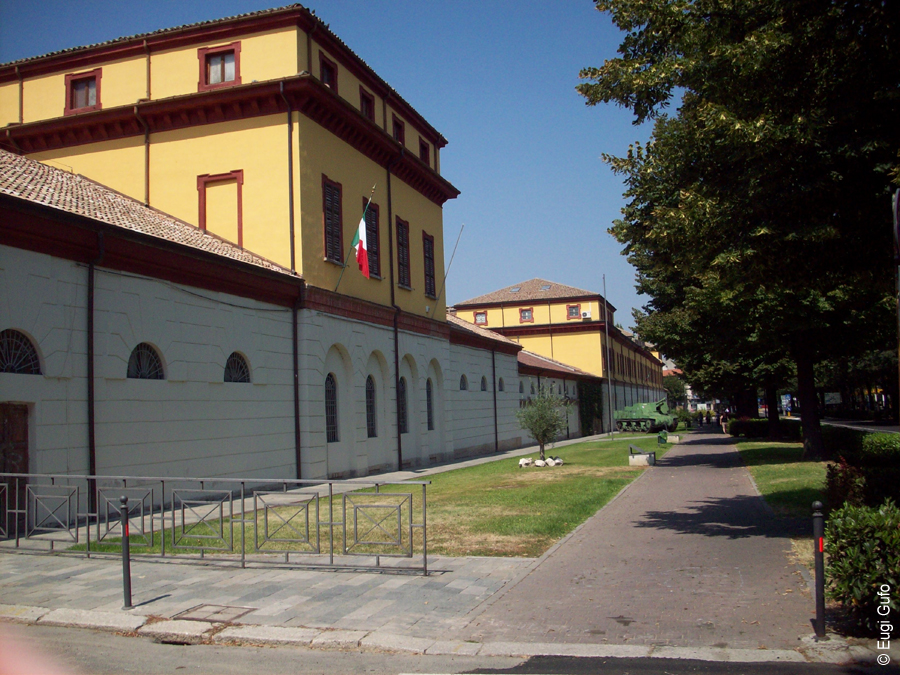
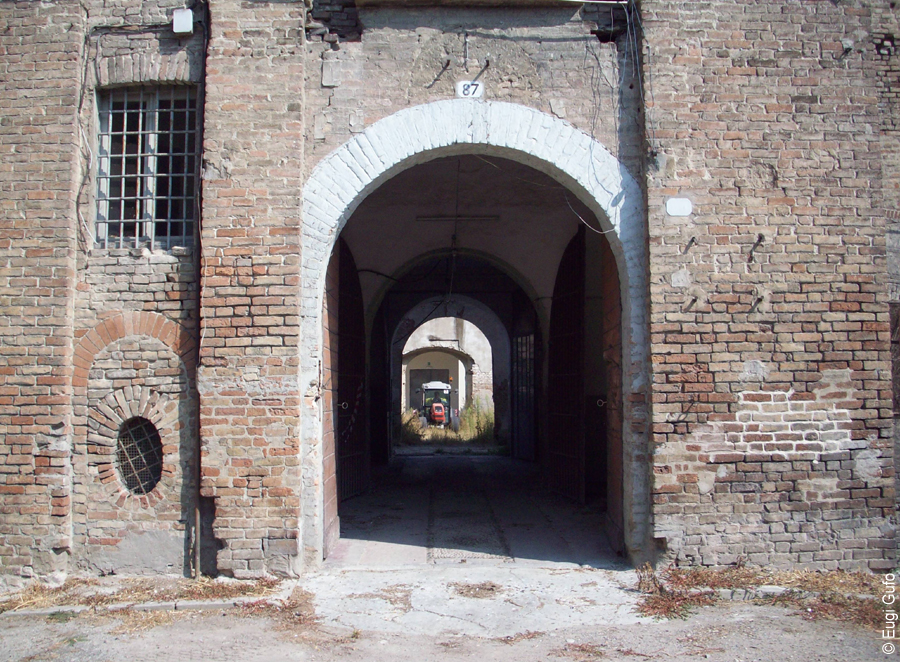
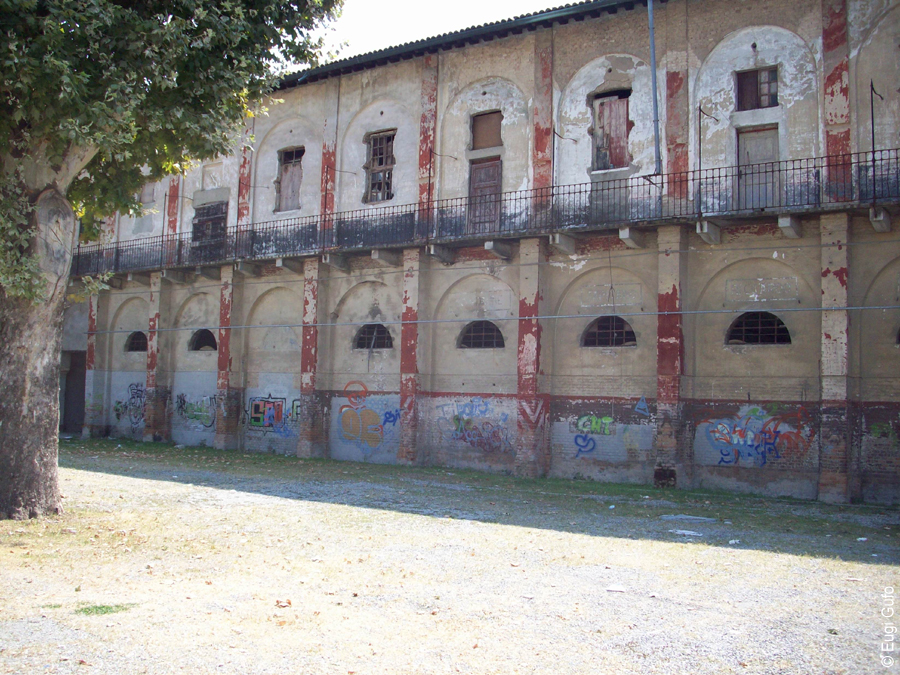
The barracks were built between 1857 and 1864 and were capable of accommodating four squadrons [one cavalry squadron could consist of 4 platoons with 21–50 people; it was commanded by a non-commissioned officer]. Today both courtyards are used as car parks, while all the unrestored parts (including the towers) are locked or even bricked up. Be content with the horse’s prayer that has miraculously survived the passage of time under one of the arcades.
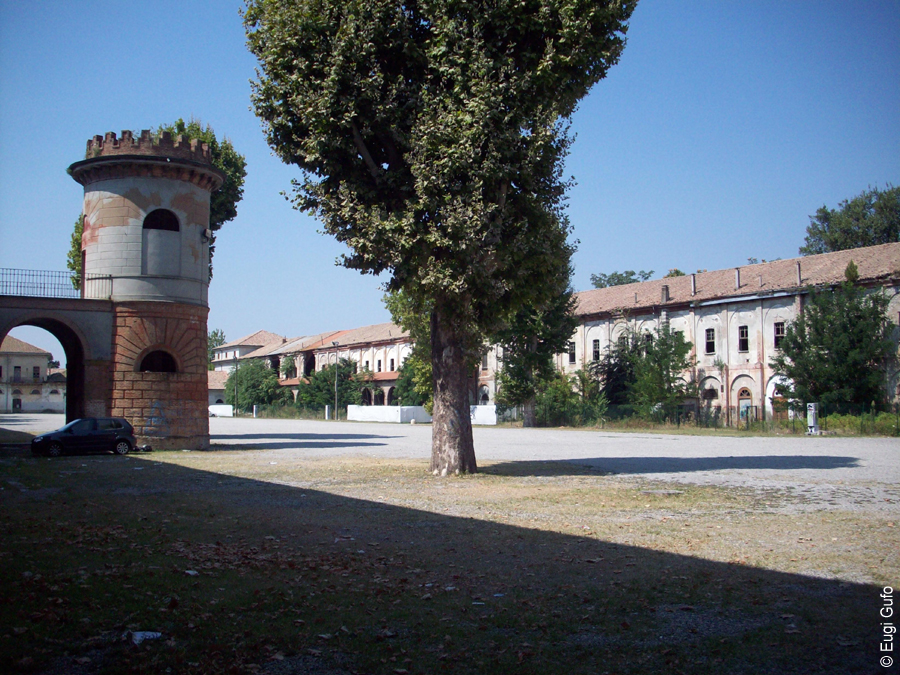
As you can see, the stables were located on the ground floor, while the soldiers’ rooms were above. These areas are all inaccessible, yet they were the parts of the entire barracks that interested me the most. Bastard whoever decided to close them.
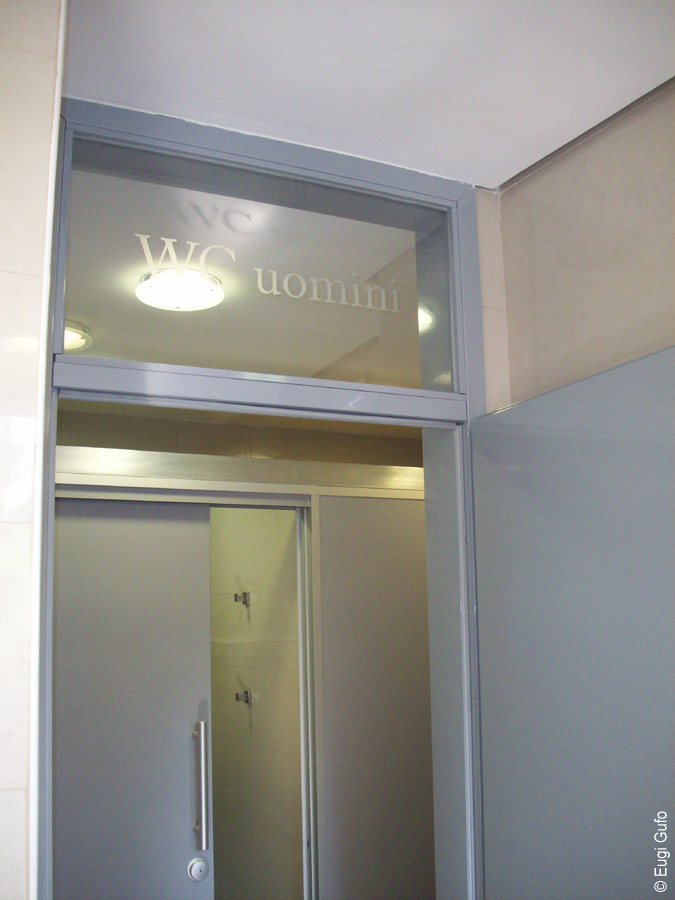
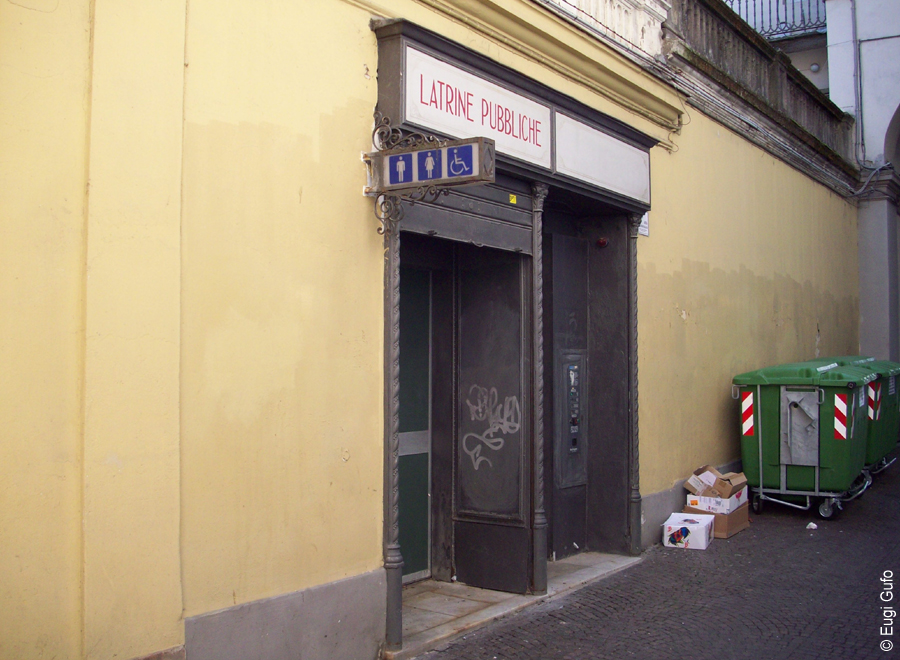
So let’s return to the city to collect a few interesting details. Public toilets that respect the style of the historic centre:
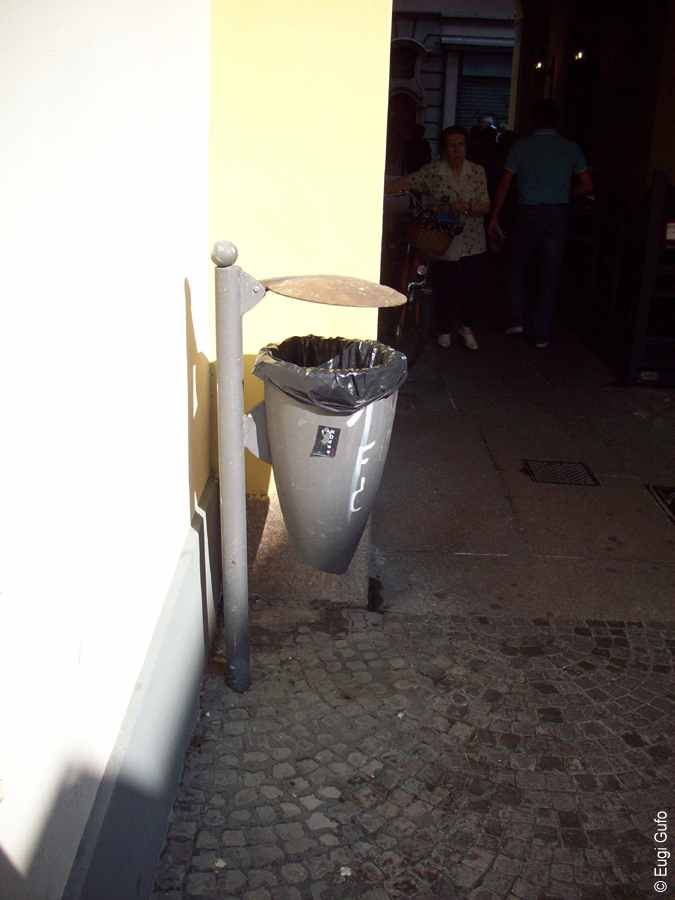
Some small litter bins are interesting not only for their shape, but also for their lids, which open but do not detach.
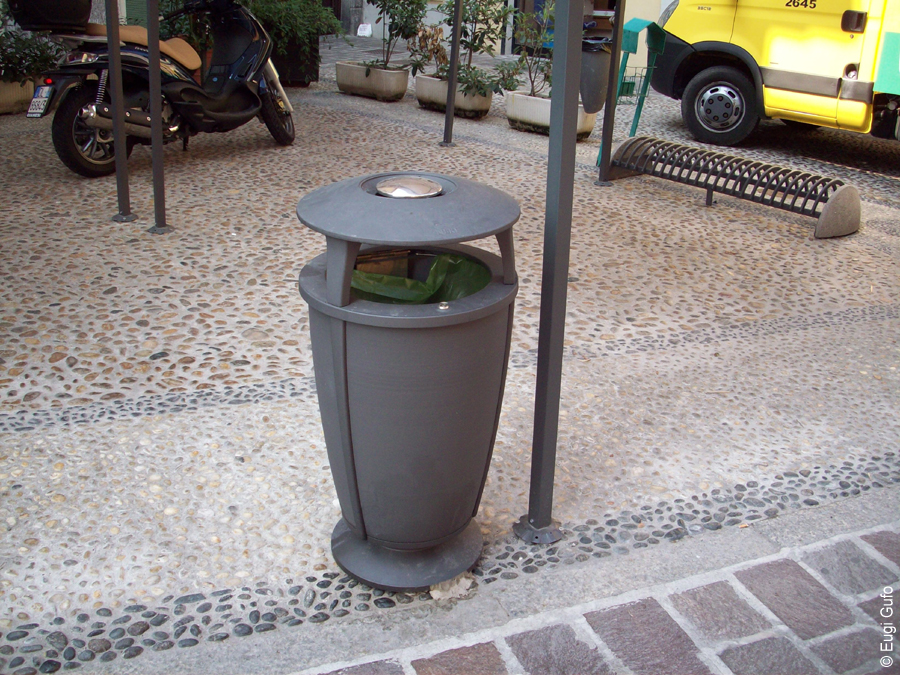
The large bins are equipped with chrome ashtrays: nice, but I’m not sure how long they will remain so.
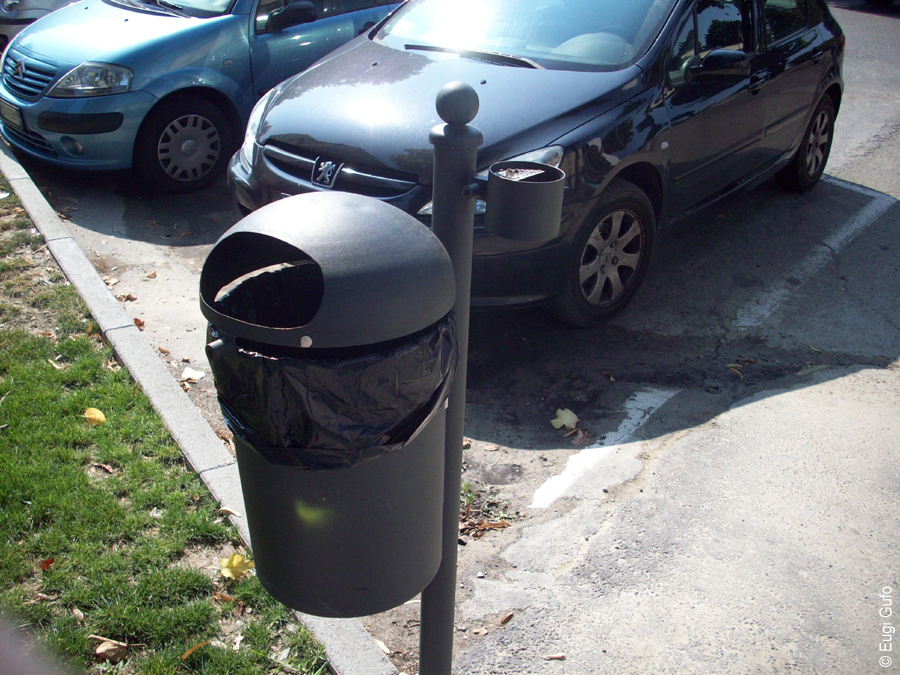
The most widespread small bins are often equipped with tiny ashtrays.
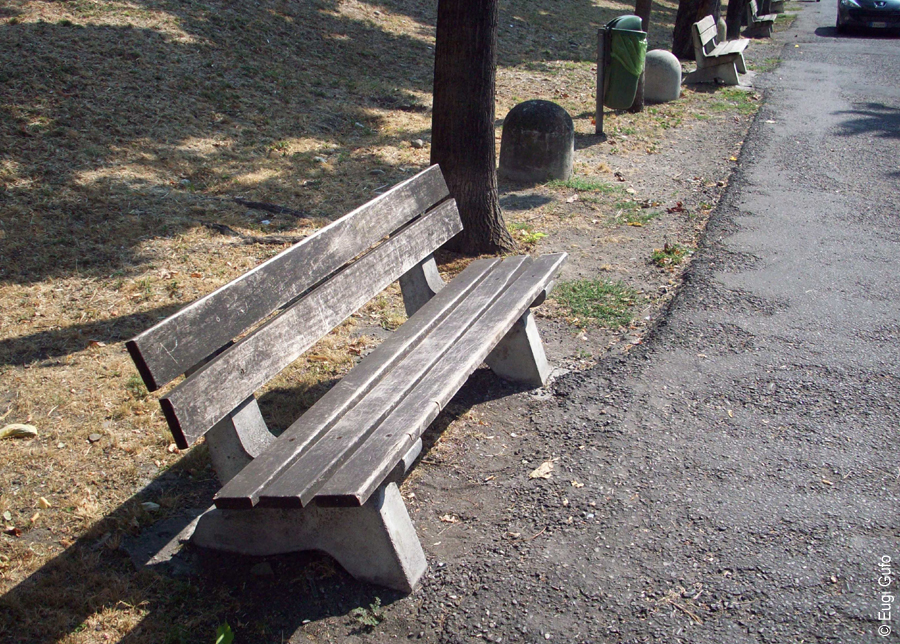
Wood-and-concrete benches used to be very common in the USSR, while in Italy I have seen very few of them. So we can include them among Voghera’s peculiarities.
The only truly interesting and original street lamp was spotted near the castle. Video surveillance, on the other hand, is not particularly widespread.
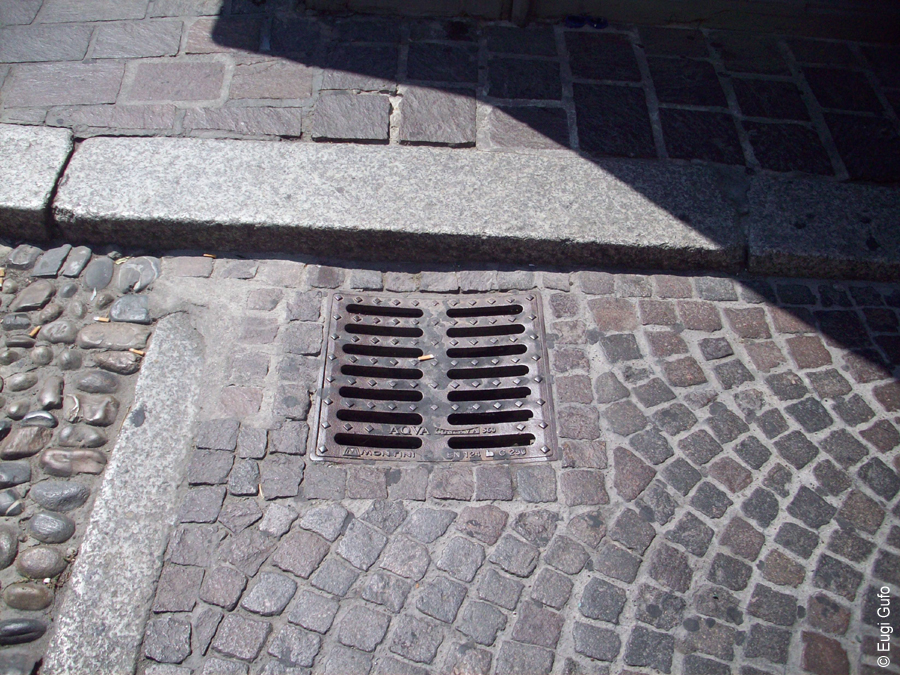
Storm-water drains are often covered in such a way as to catch as many cyclists as possible: with the slots parallel to the road.
An interesting aspect of the road markings: the pedestrians painted on the designated lanes look like people crushed by a road roller…
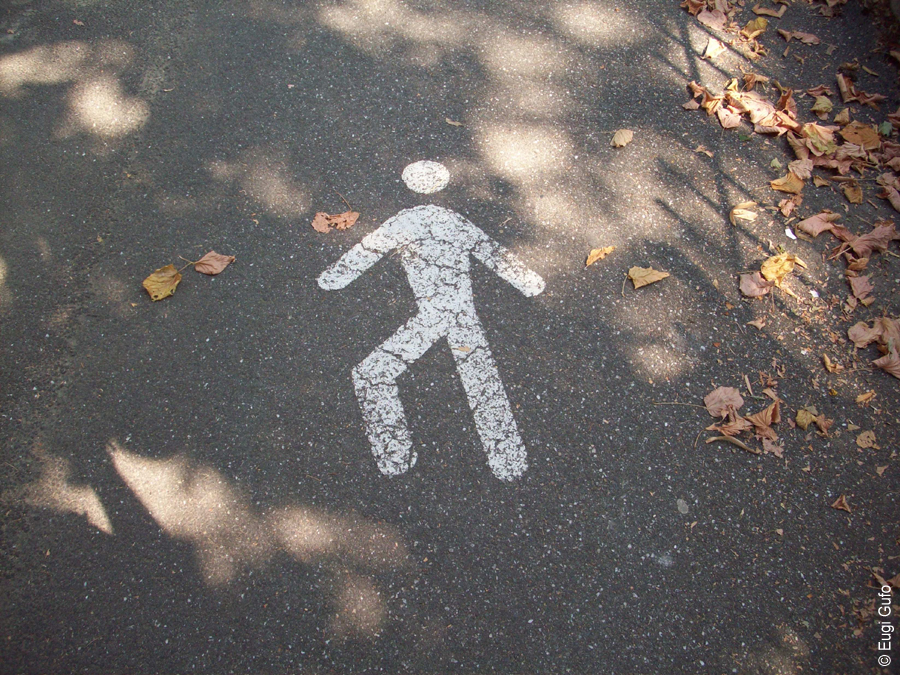
…or by a tank. Like the one parked next to the former barracks mentioned above. It is a modified Canadian M7 Sexton that served in the Italian army in the 1950s. Its restoration, for some inexplicable reason, was carried out by the Fire Brigade.
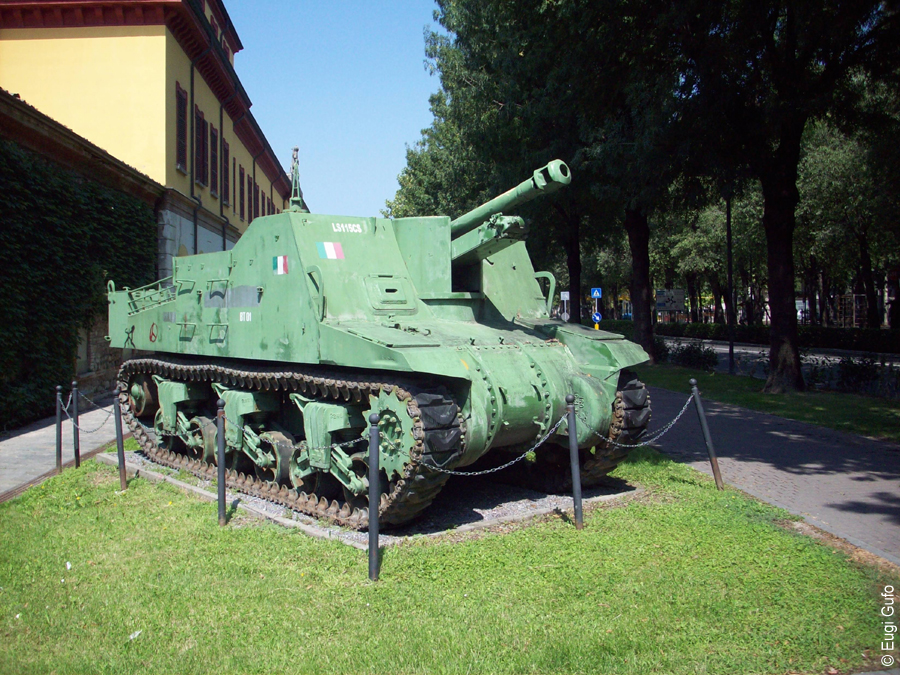
Near the castle we also find a steam locomotive of the 940 class, placed on a short stretch of track. Fifty of them were produced between 1922 and 1923; among all the preserved examples, the one in Voghera is one of the worst treated.

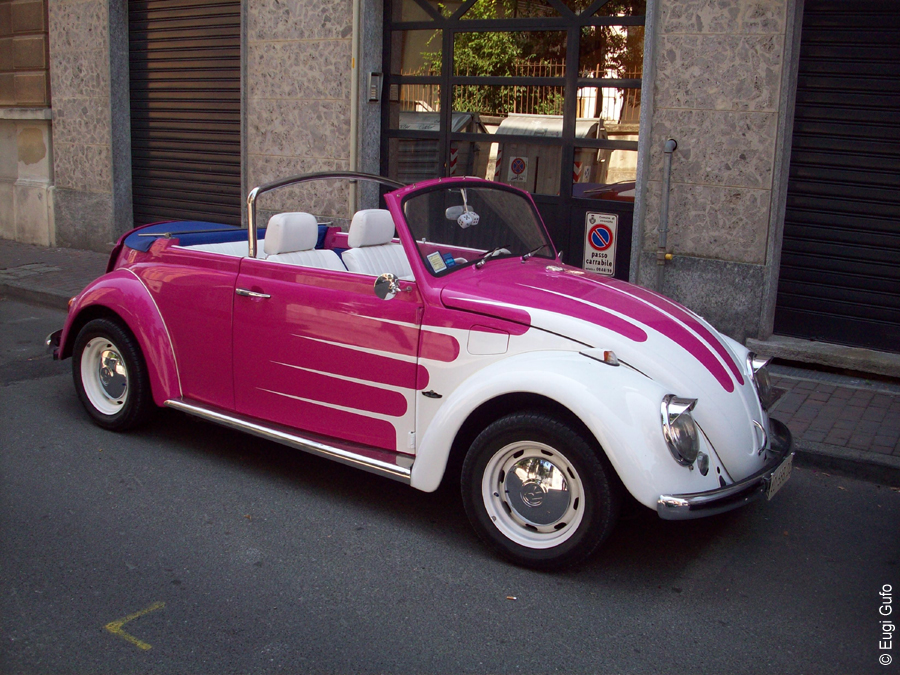
These are two motorised vehicles to which I will probably dedicate separate posts. For now, however, I will show you the car of a classic brainless blonde parked halfway between the two.
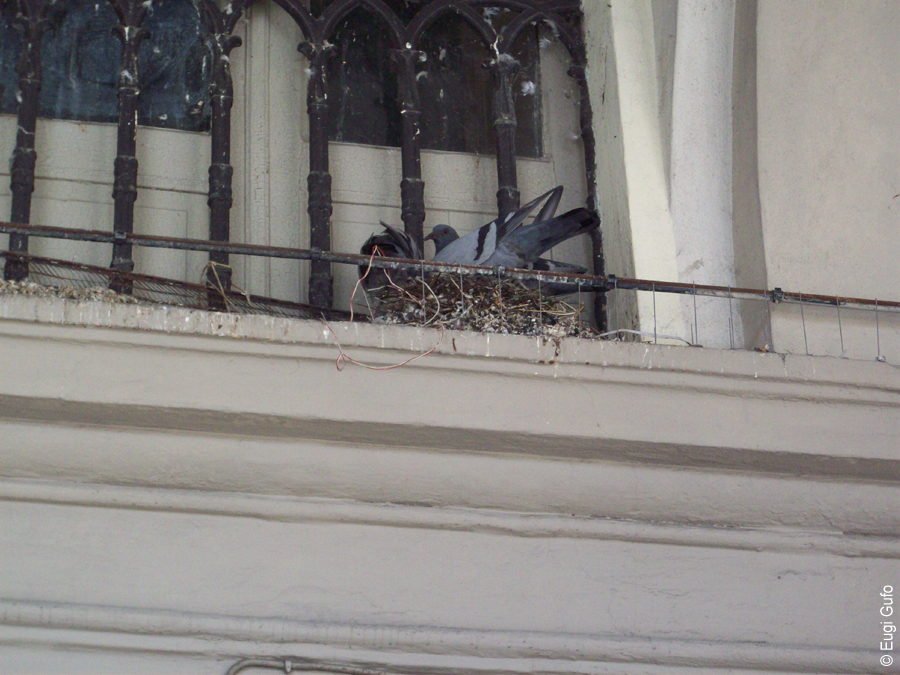
I conclude with a photograph of a piece of urban construction I had never seen before and that I finally found right here in Voghera: the nest of the city pigeons.
That’s all for today. Stay tuned.
Voghera, July 2011
↓ Show comments ↓


