


 Long live Ukraine! Fuck the war!
 RSS of site articles
On Monday 31 October I went to explore the city of Vigevano, from which I had initially expected quite a lot. Judging by what I saw, I was expecting too much.
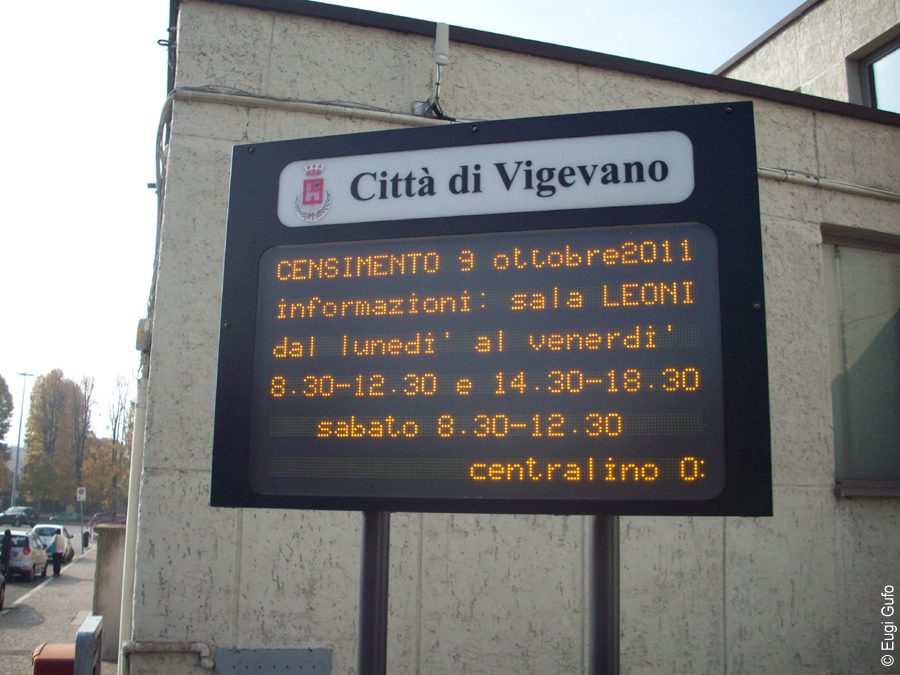
The journey began at Milan Porta Genova station, where an inexplicably long train (on average, two people per carriage) was being announced every 30 seconds. I assume this is an original way of convincing overly hesitant «last-minute» travellers.
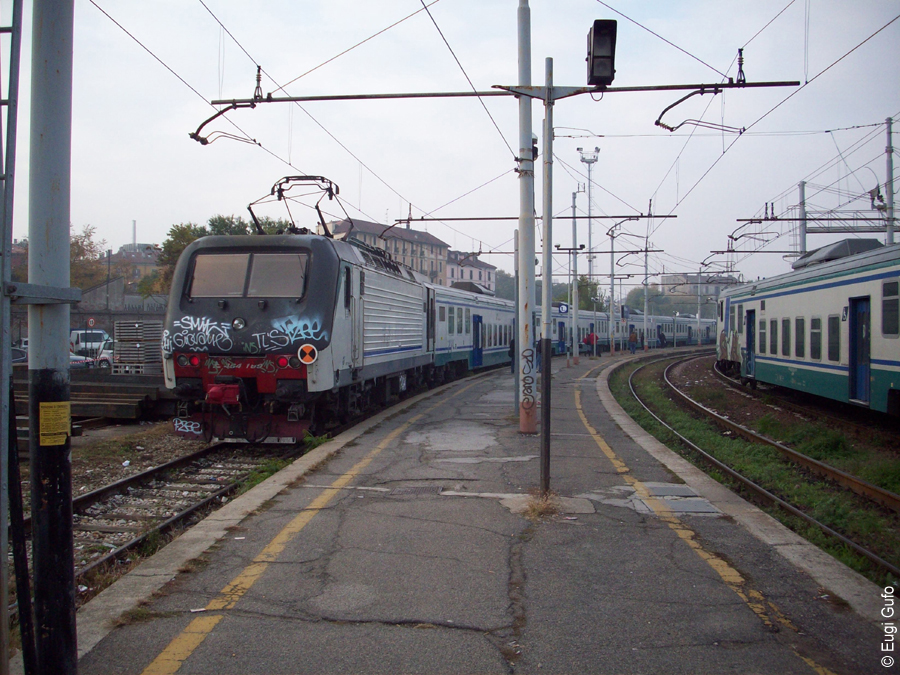
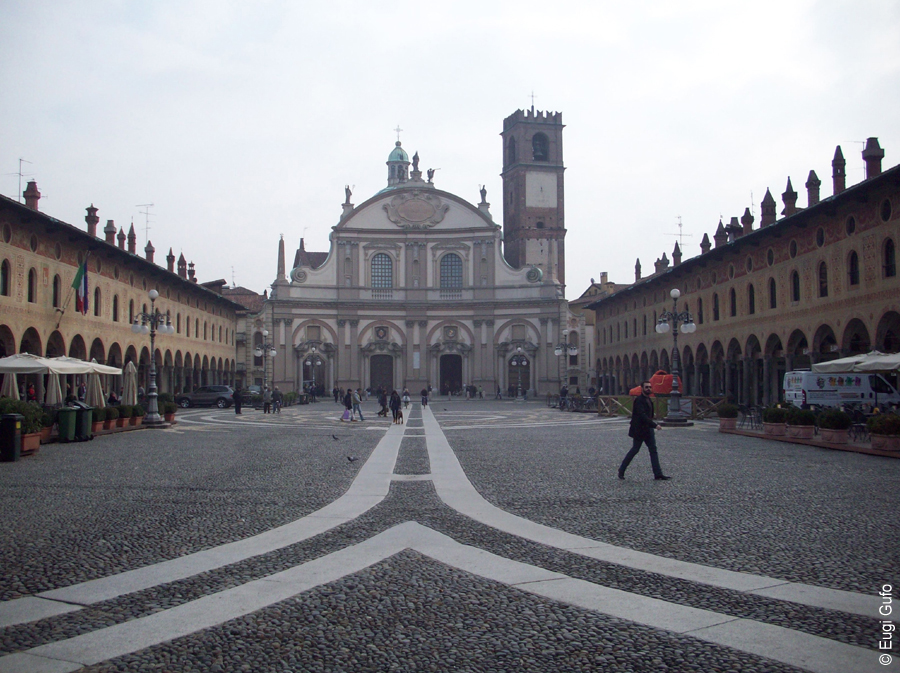
During the journey I thought again about everything I knew, up to that moment, about Vigevano. For instance, I knew about the central square, designed and built at the end of the 15th century at the request of a Sforza. The photograph of the square, taken from the castle tower, is so well known that I will spare you (also because the tower is closed for restoration works until the end of 2011).
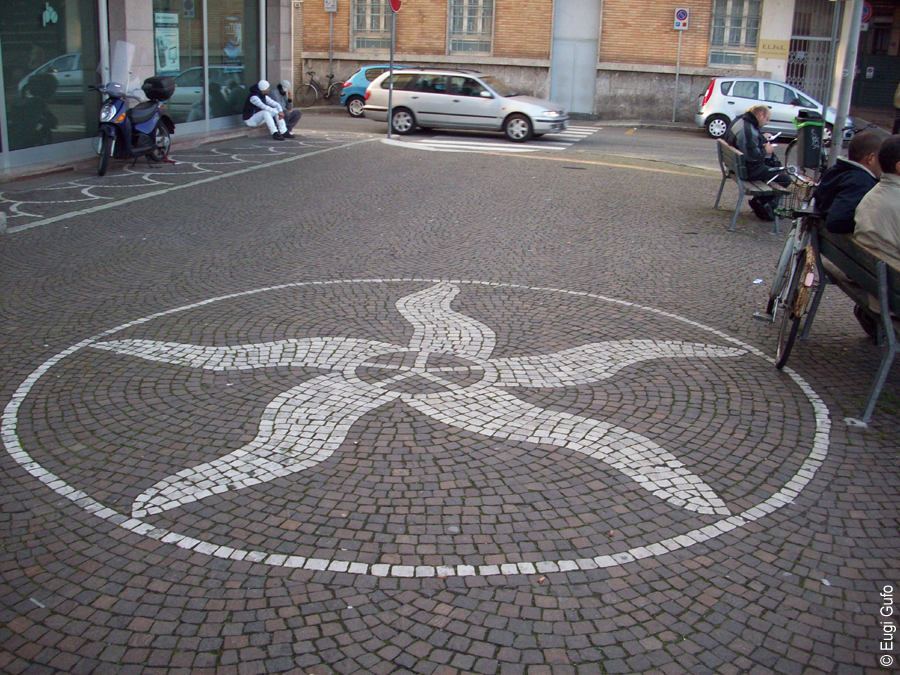
It was easy to predict that the pebble mosaics, characteristic of Piazza Ducale, would soon become one of the most widely copied symbols throughout the city. In fact, it is easy to find the older ones…
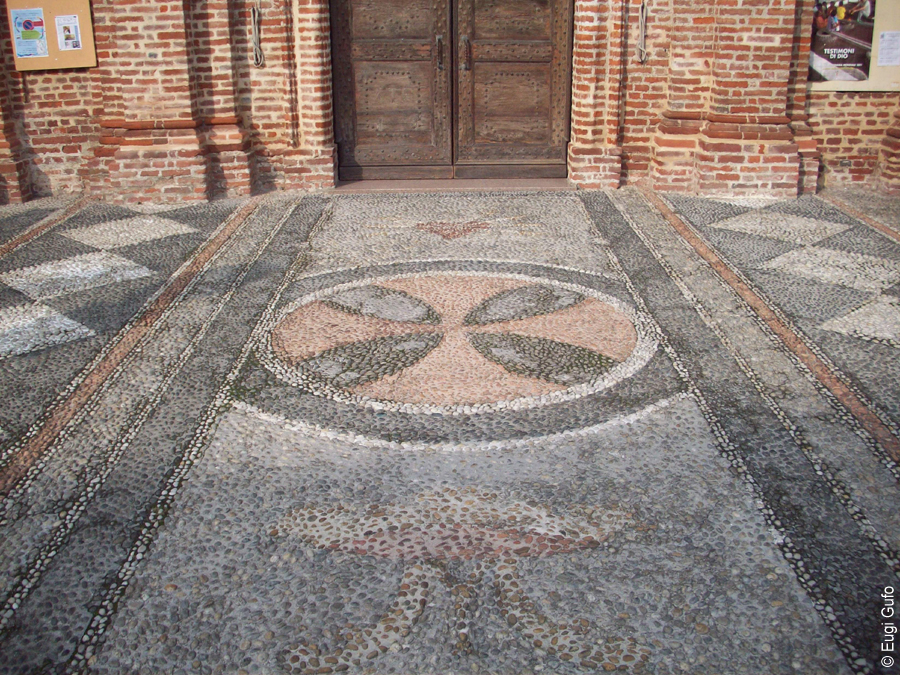
…and the more modern ones.
The castle itself left me with no particular impression: it gives the feeling not of a single architectural complex, but of a jumble of buildings disconnected from one another.
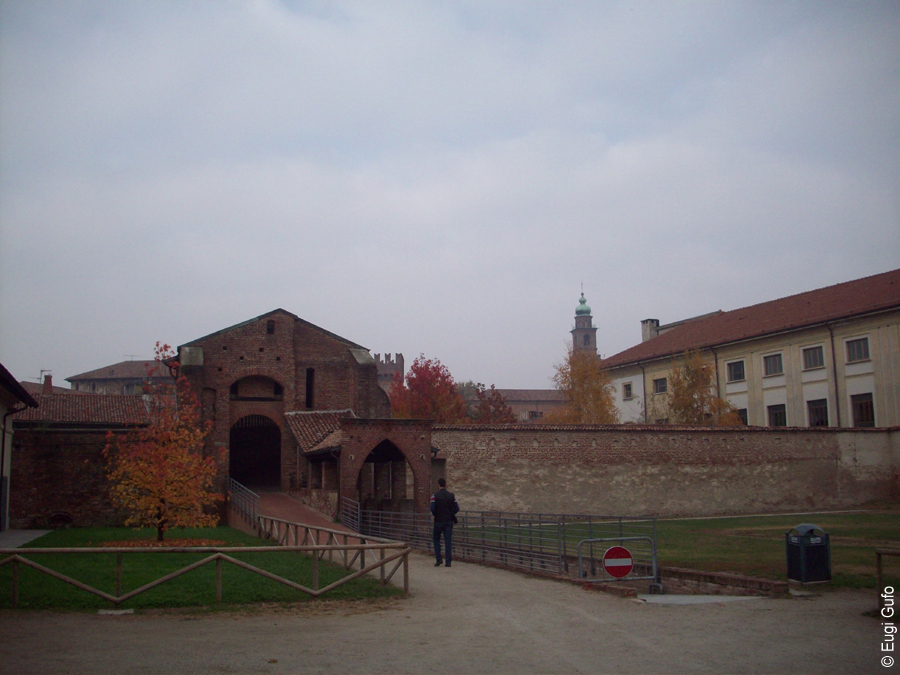
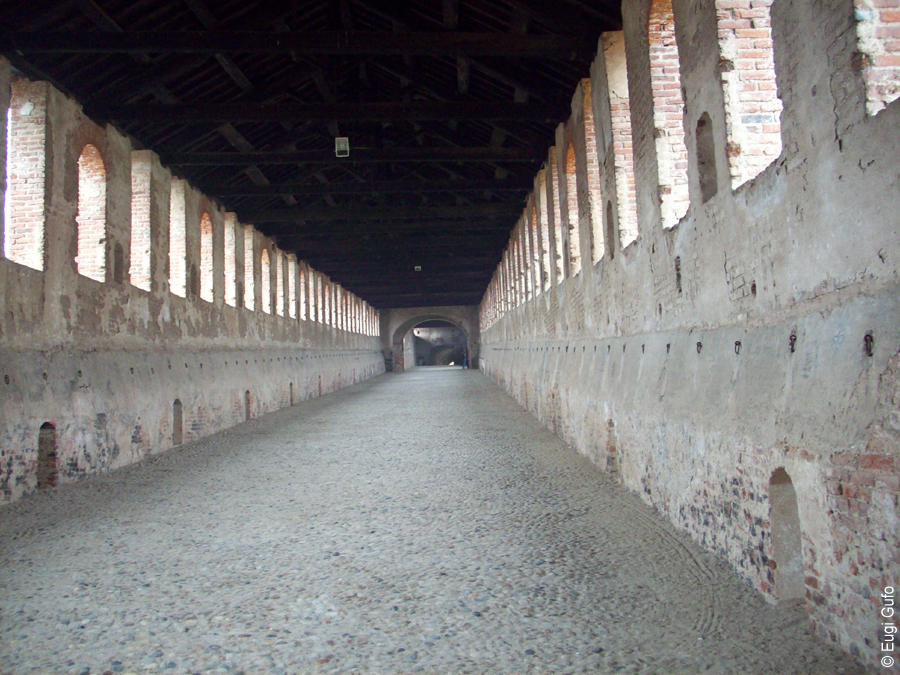
So the only really interesting thing is the former stable (the entrance is in the photo above), which ends in a «hall» inside which there is an impressive echo: try making some noise in there!
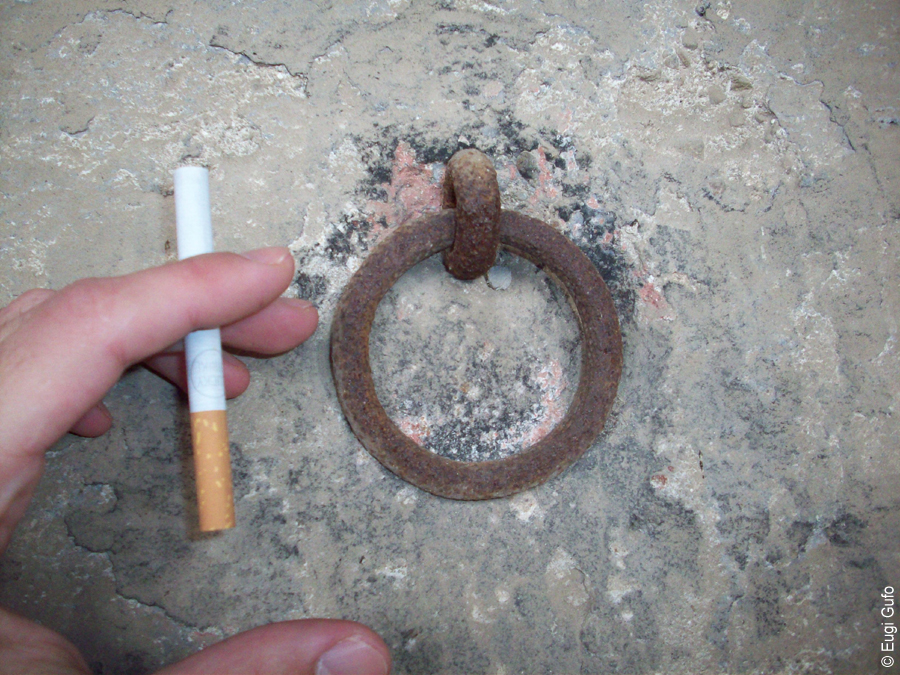
Another interesting detail: it is the first time I have seen rings for tying horses (is there a technical term?) with such a small diameter.
Anyway, let’s move on. In Vigevano there are quite a few beautiful churches from different periods, but I, as you may already know, never photograph their interiors: it would be a pointless effort from every point of view. But sometimes there are exceptions: I cannot fail to note that in all the churches of Vigevano the holy water is kept in very banal small bowls placed inside the original ones.
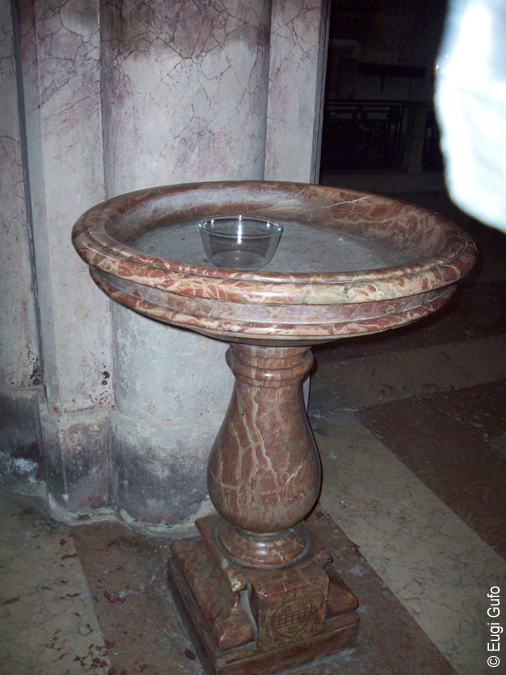
Speaking of holy water: near the local cathedral there is a fountain with a charming monument to Saint Francis preaching to the birds.
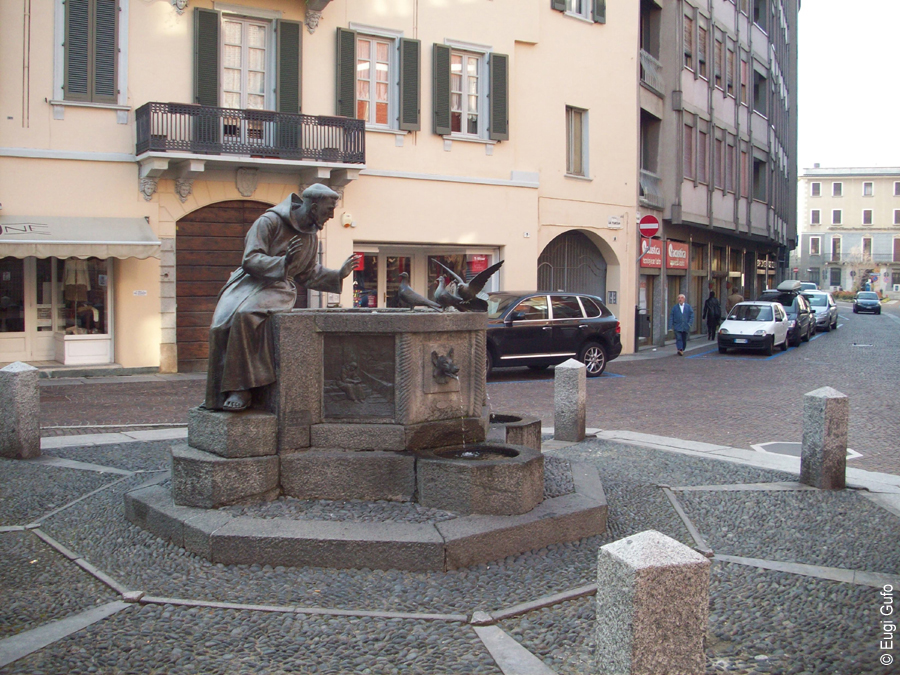
Anyone who pays a bit of attention, however, will notice that the birds depicted seem to come from the area of a nuclear accident: pigeons with peacock tails and eagle legs.
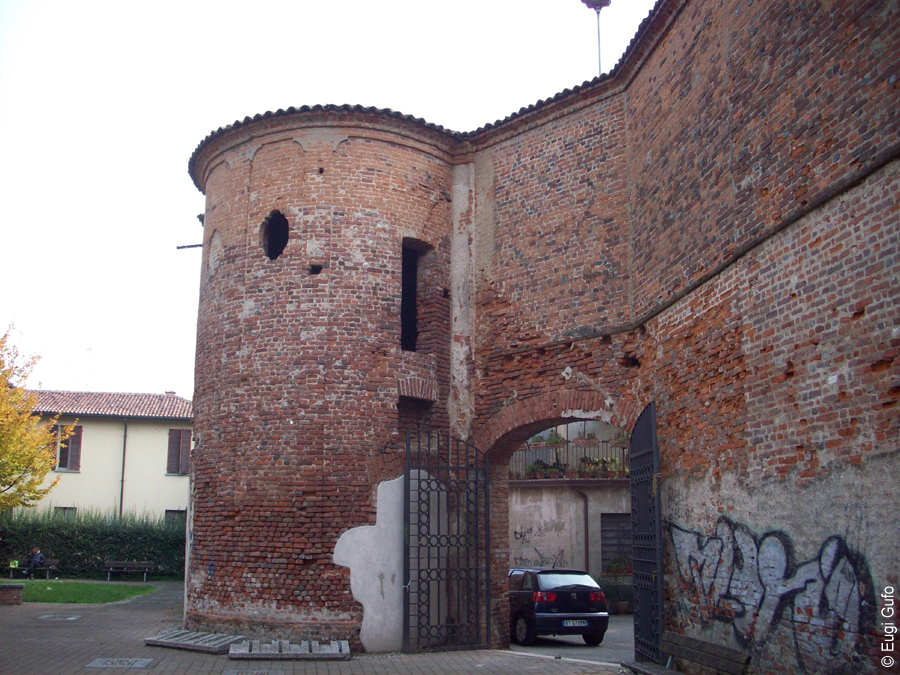
Returning to historical buildings, I must note that even in Vigevano access to the most interesting buildings is denied to everyone. Sometimes the entrances are even bricked up (as, for example, at the former barracks in Voghera).
Having travelled quite a lot around Europe, I had got used to the idea that the historic centre of an old city can be well or poorly preserved, but that these are always historic buildings used in modern ways. In Vigevano, instead, right in the city centre there are streets that seem frozen in the Middle Ages: buildings and roads unrepaired for who knows how many centuries, rubbish on the ground, an incredible stench… All that was missing was horse manure. What strikes one most is that these streets are inhabited by people, often young people, therefore perfectly capable of taking care of their living environment.
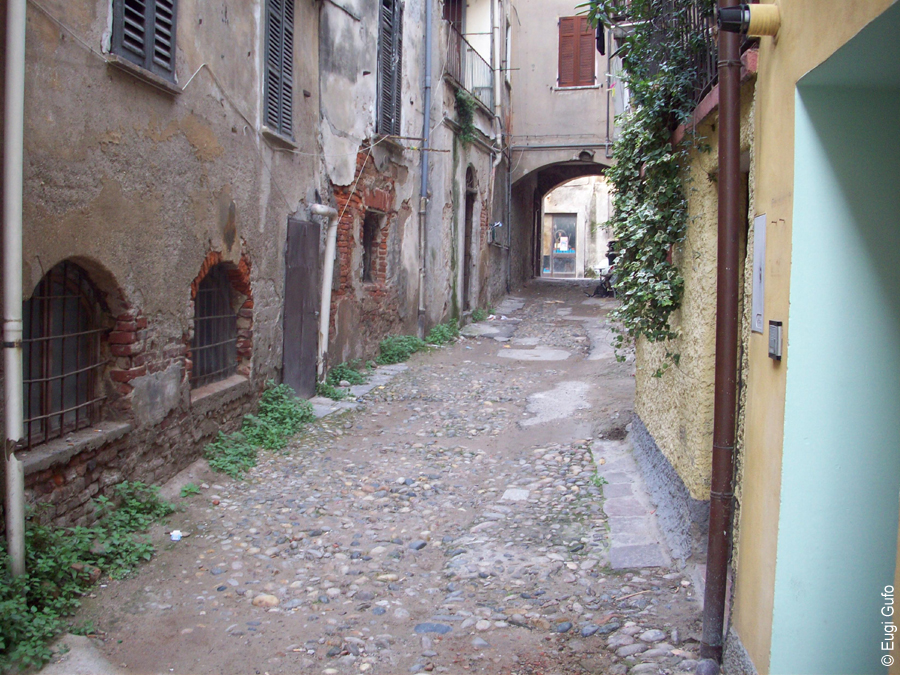
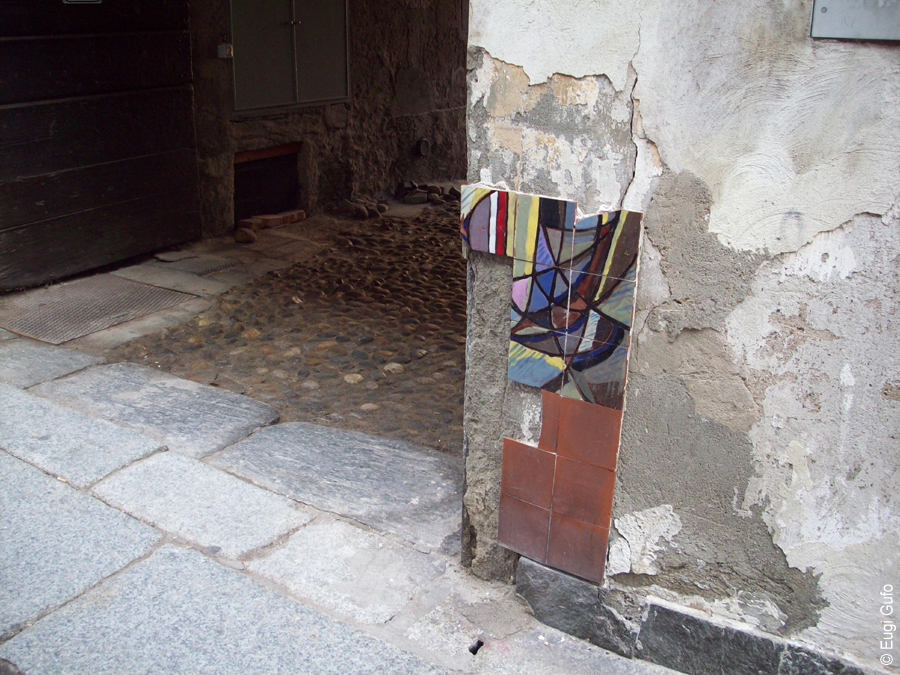
Not even the timid efforts of earlier generations to embellish some of the buildings in these streets have been preserved by today’s inhabitants.
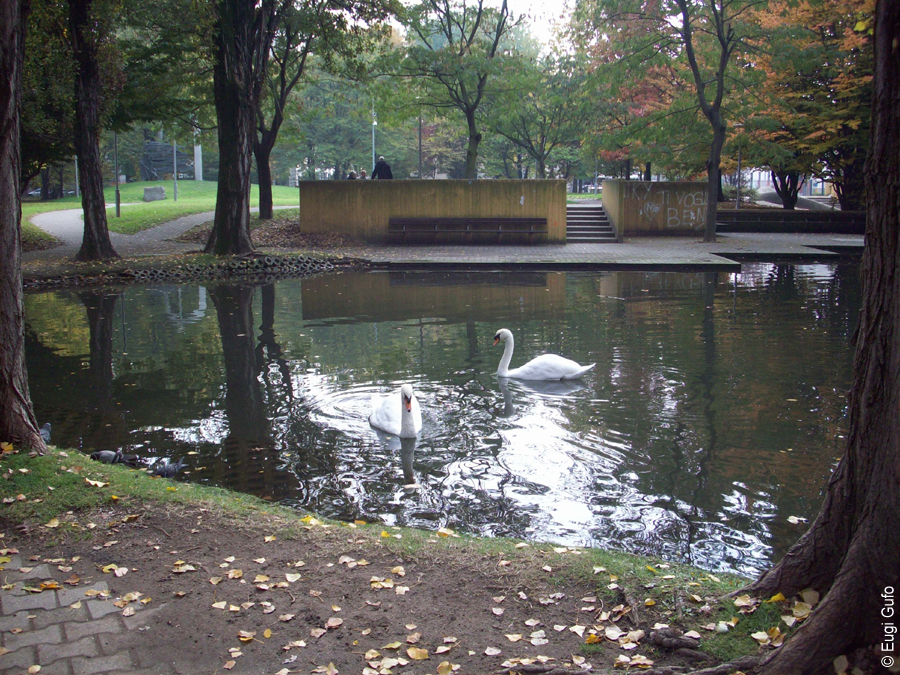
On the other hand, the city has a park (in my opinion somewhat overloaded with concrete) with a swan lake in the middle. There are only two swans, both white.
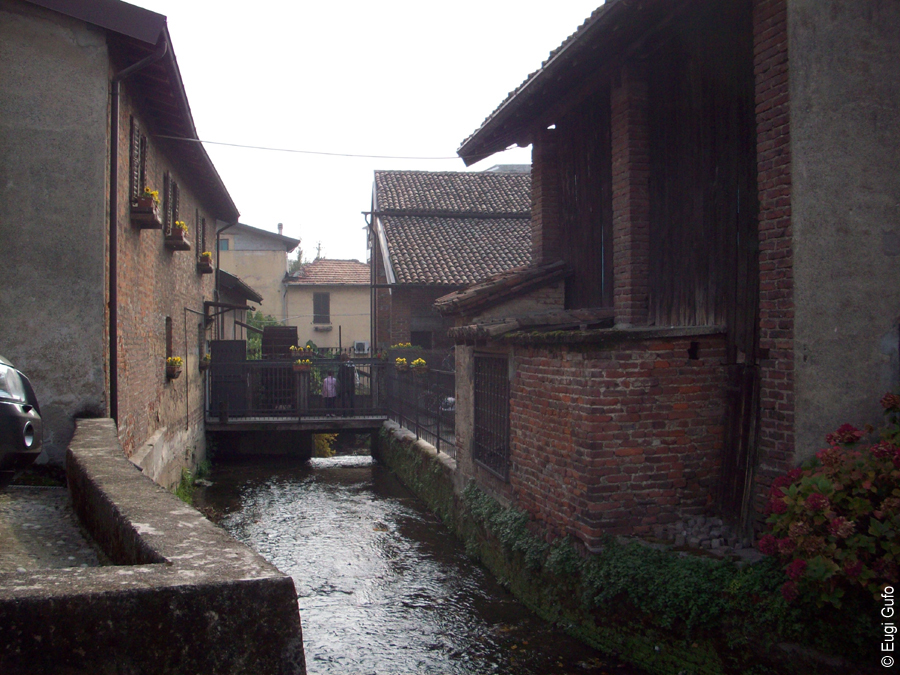
In fact, the city is crossed by several streams (or is it just one, but very winding?), some of which look like simple artificial canals. Surprisingly, the water is always clear and very little rubbish can be seen on the bottom.
The layout of some ancient buildings is striking for its inexplicable functionality:
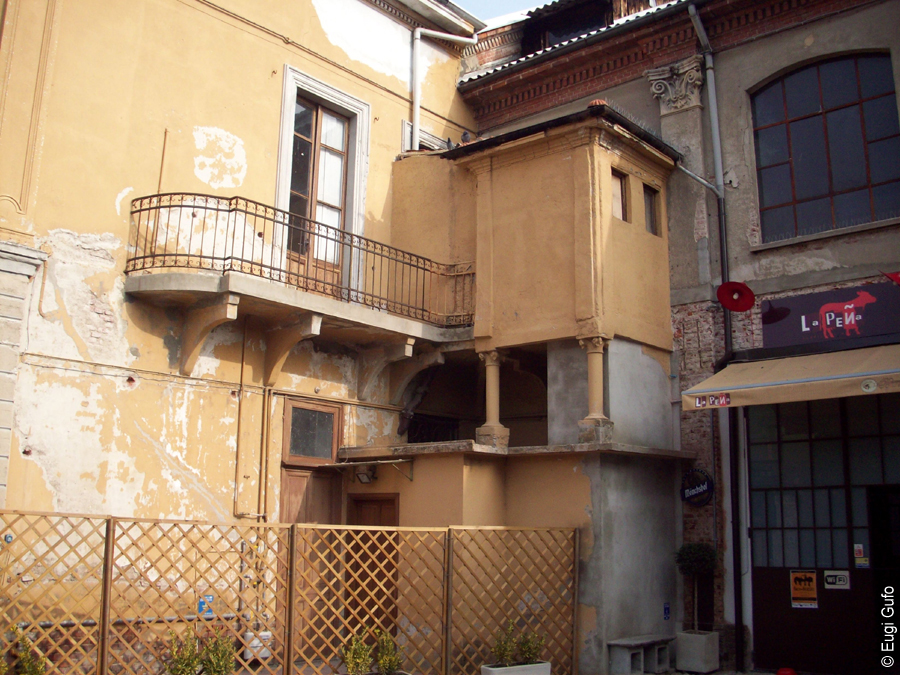
The 20th century (presumably in the 1970s) responded with an original monstrosity, so ugly as to become attractive:
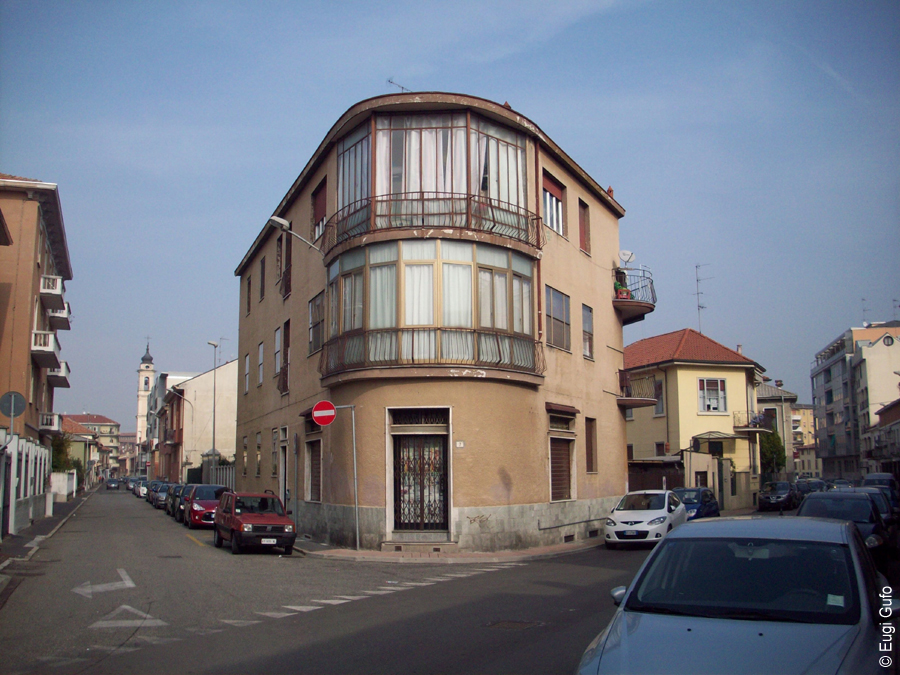
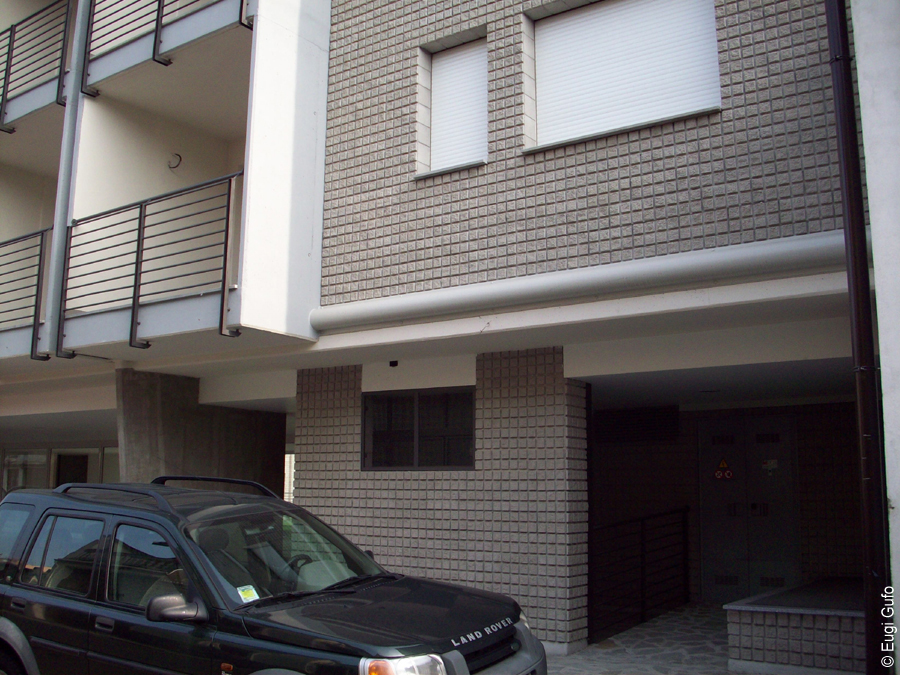
In the outskirts, I then found a newly built apartment block (partly still uninhabited) whose walls are decorated like the stations of Milan’s yellow underground line.
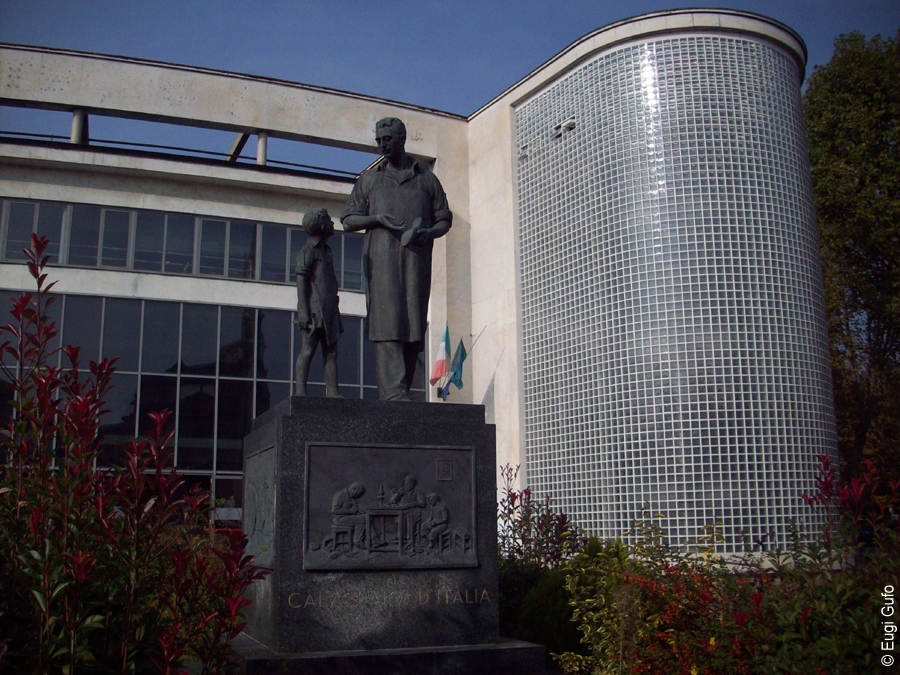
Another important thing to know about Vigevano is the nickname «capital of footwear», attributed to it in past centuries. Until 50 years ago the city was full of factories; now it is essentially full of memories. In front of the town hall stands the monument «To the Shoemaker of Italy».
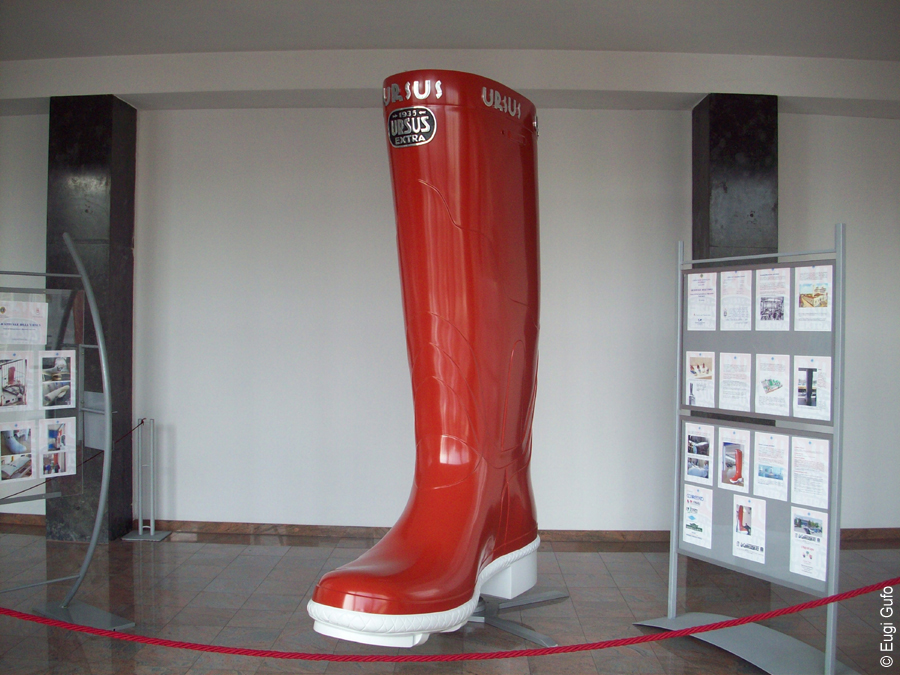
Inside the town hall there is a giant boot advertising a local footwear exhibition.
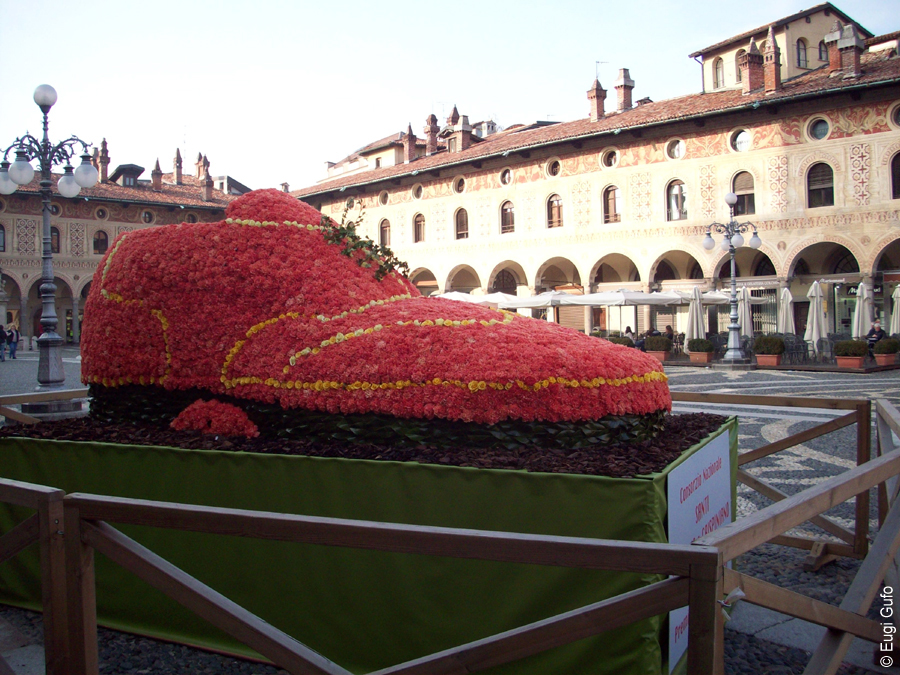
In Piazza Ducale, instead, for no particular reason, a shoe made of flowers was on display.
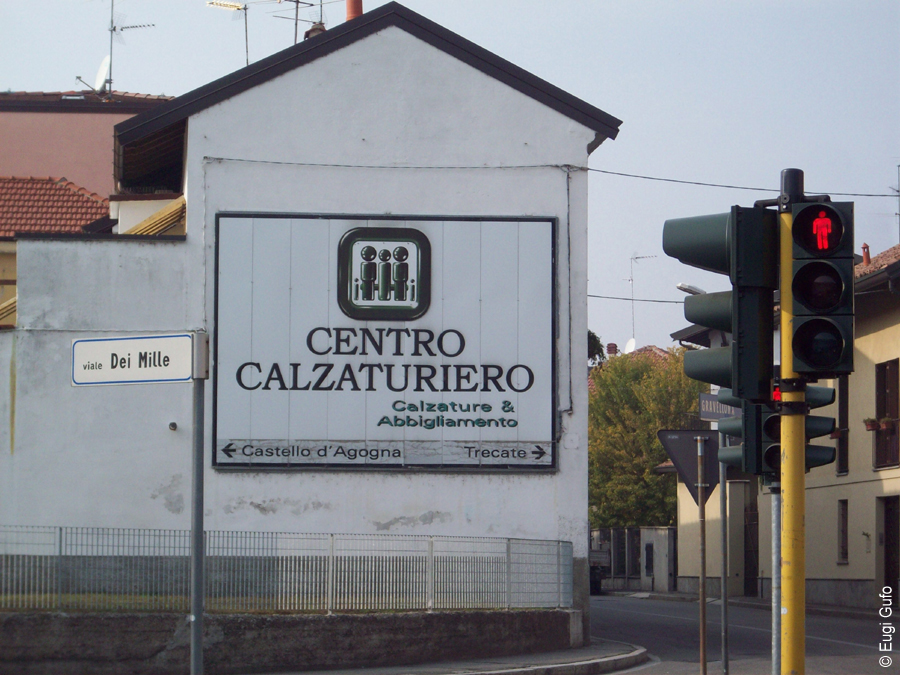
The entire city is full of advertising signs of various sizes but very similar in content.
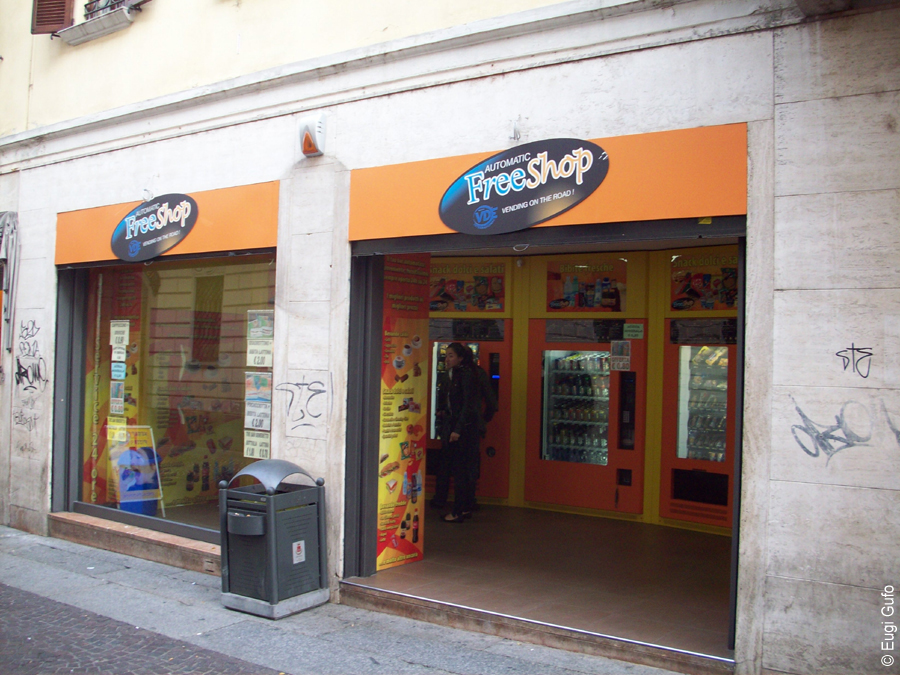
But to live, people need not only buildings, shoes and advertising. They also need food. Therefore, in one of the central streets there is a vending shop. The assortment and prices are similar to those of the vending machines installed, for example, in the already mentioned Milan underground: the usual rubbish at not particularly low prices.
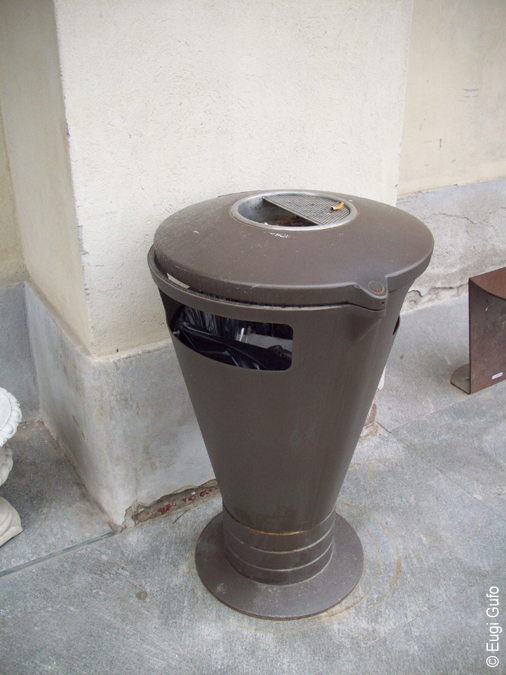
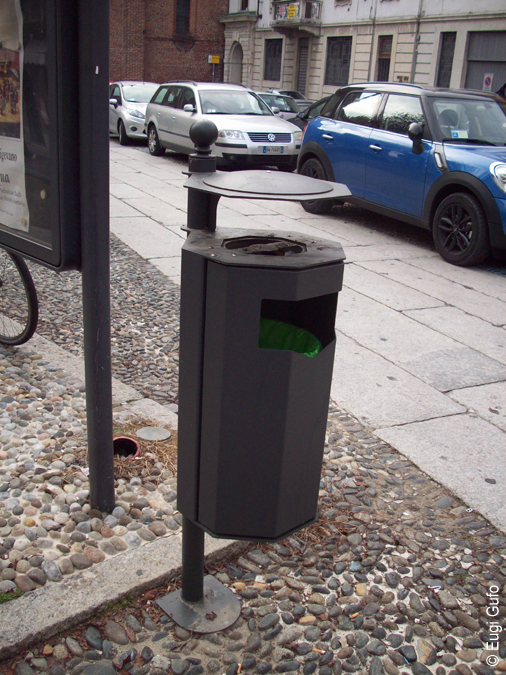
People also need to get rid of small items of waste in a civilised way, and for this purpose three types of litter bins are available in Vigevano. In addition to the model visible in the previous photo, there are conical ones without ashtrays:
And small ones with a very uncomfortable ashtray: the lid is an appreciable detail, but placed so low it forces a civilised smoker to bend down in order to control the movement of the hand.
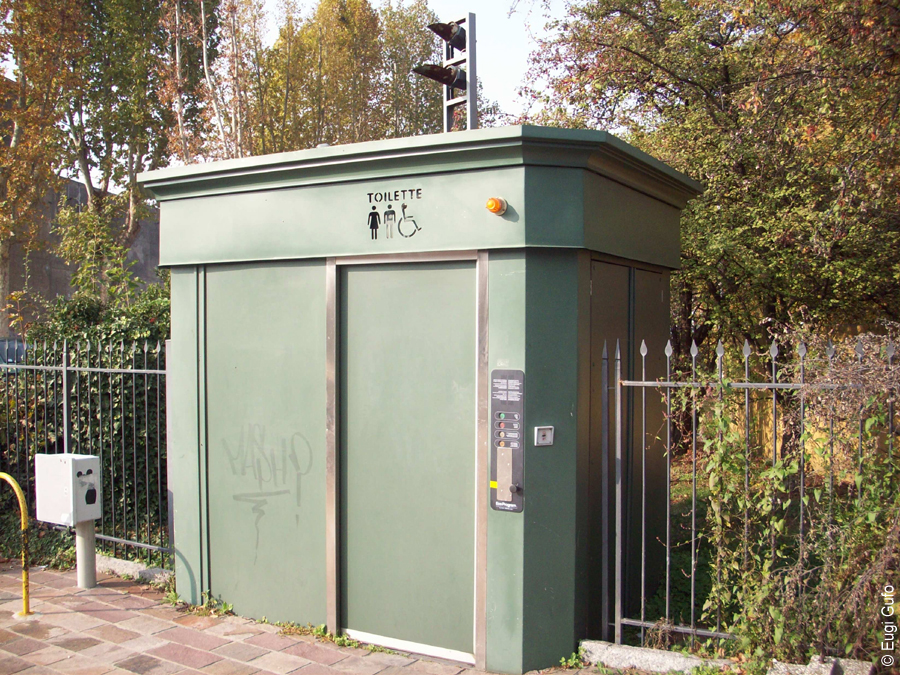
Near the city park there is a free public toilet (good!), but very dirty (bad!). While people need…
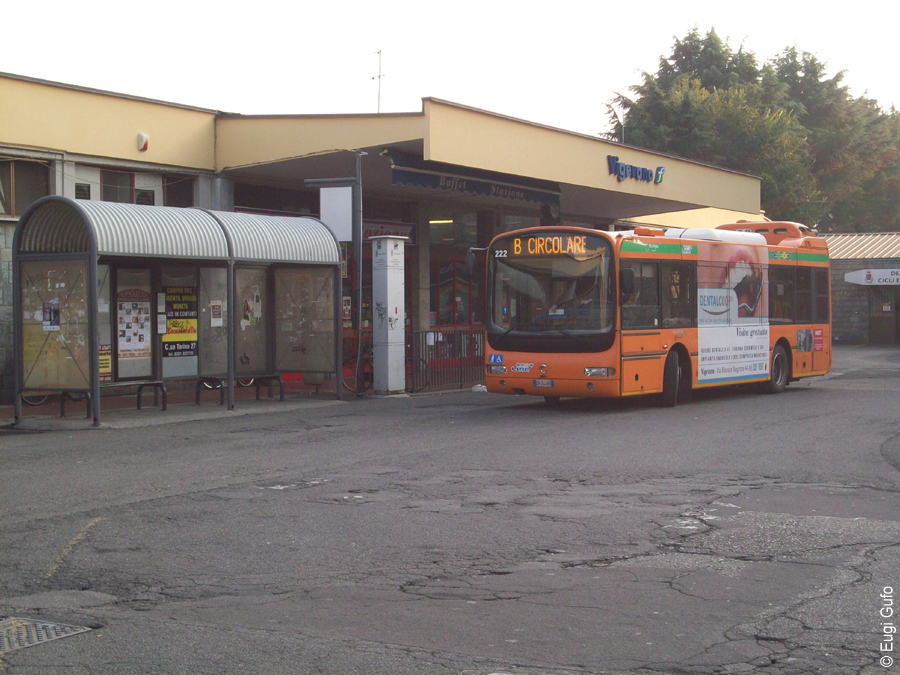
Let’s say that people also need public transport and covered, well-lit stops. Two out of three are there.
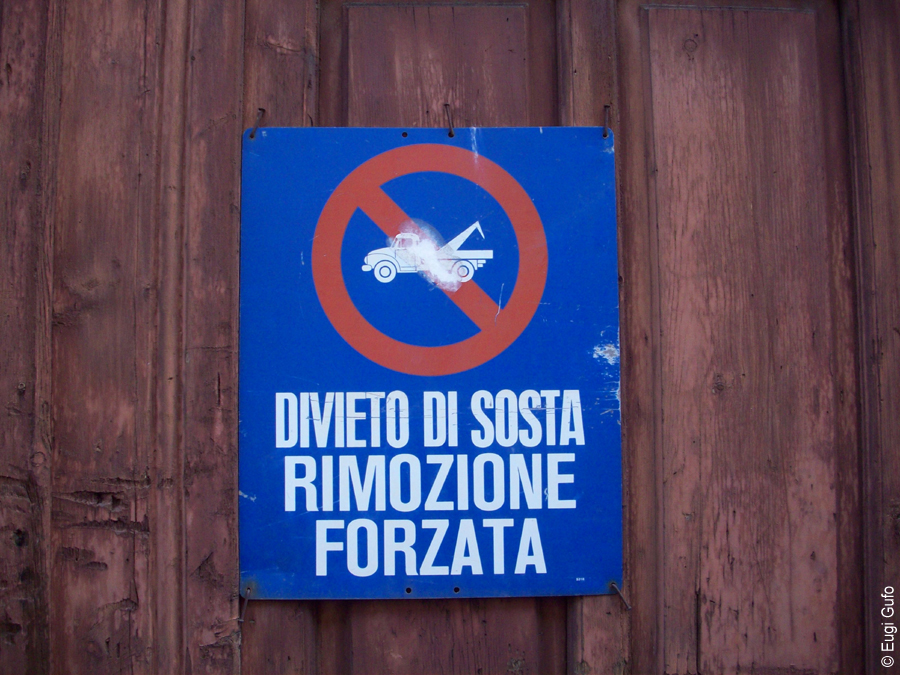
Those who use their own vehicles should at least be able to exit their garage gates. On one of the old gates I noticed an aesthetically pleasing and original sign (look at the little car), which unfortunately has been ruined by a vandal with a sticker.
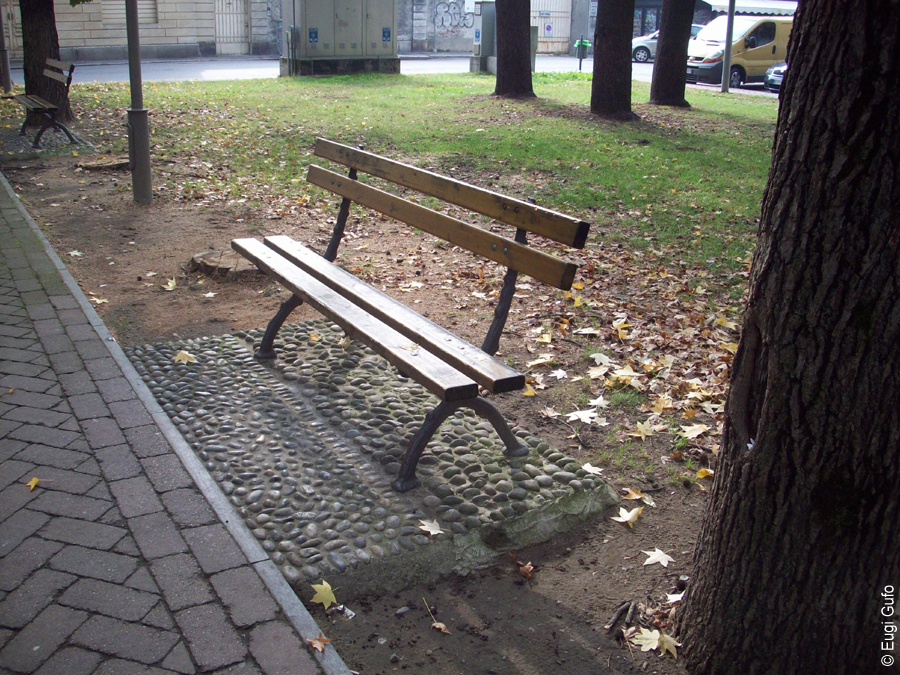
The right to rest is guaranteed by minimalist benches (perhaps they are meant to discourage certain people from lying down on them).
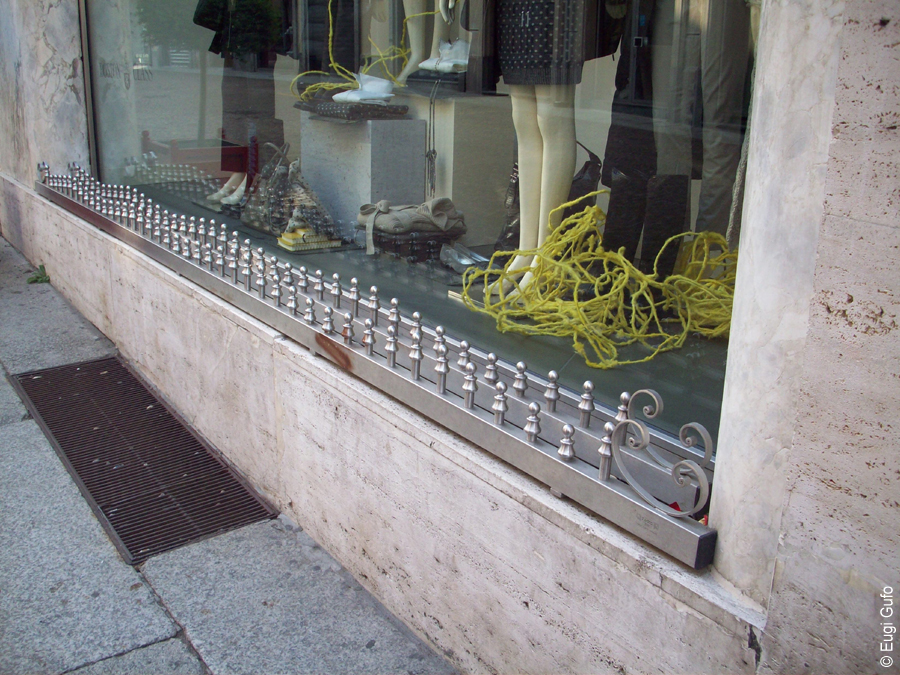
The same right is denied to people by capitalist owners of some shops, who have installed railings to prevent people from sitting under their shop windows.
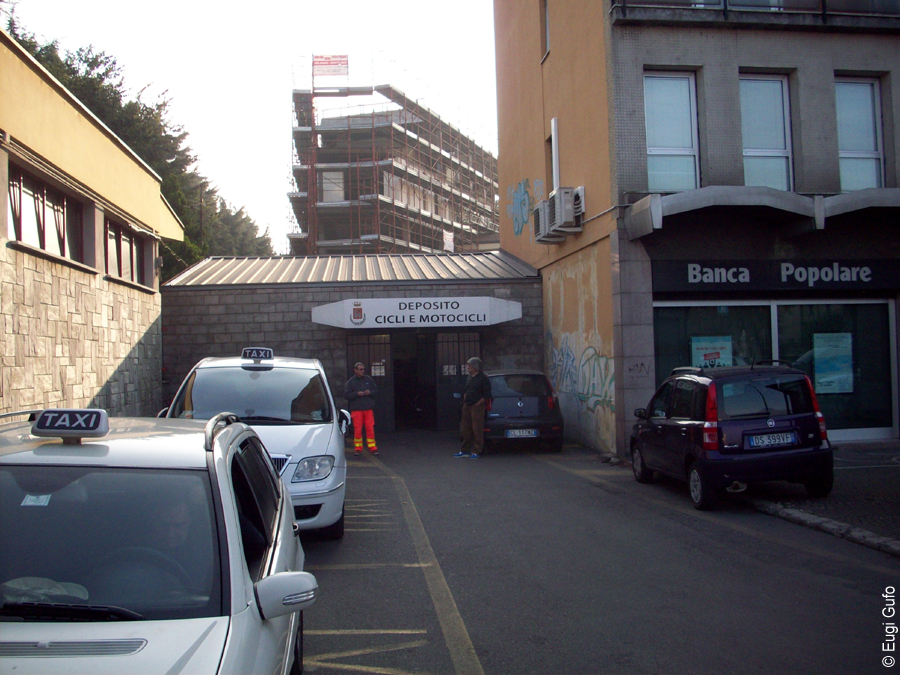
Finally, among the undoubtedly positive things, we find the guarded motorcycle parking near the railway station.
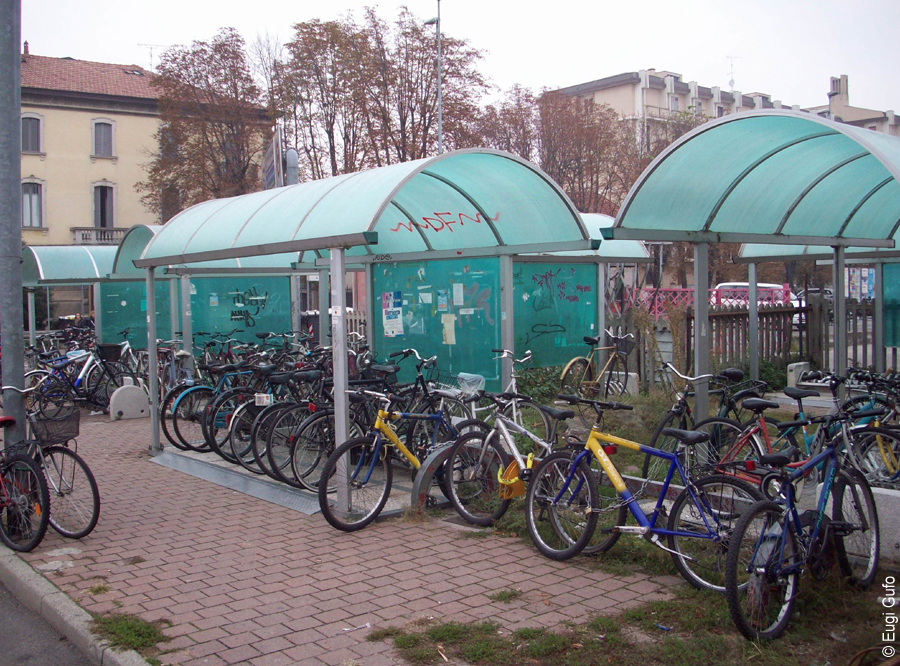
Also near the station there is a large covered bicycle parking area.
Well. Now you know a bit more about life in Vigevano. So you can go and see it a little better prepared than you were ten minutes ago.
Vigevano, 31 October 2011
↓ Show comments ↓


