


 Long live Ukraine! Fuck the war!
 RSS of site articles
One of the greatest mysteries of my tourist life is why I had not visited Vercelli before the end of 2022. I clearly remember thinking several times that I should go there sooner or later — and I also remember that, inexplicably, I never even managed to develop a slightly more concrete plan. And yet the city is extremely easy to reach by public transport: trains from Milan depart roughly every thirty minutes; direct ones take less than an hour, and even those requiring a change take about seventy-five minutes.
In the end, I almost managed to outwit fate. «Almost,» because I did go to Vercelli — but I caught a rainy day. Fortunately, the weather did not prevent me from appreciating the city’s beauty.
First of all, Vercelli’s beauty is easily accessible to all categories of tourists: both to those who simply wander aimlessly through the streets and to those who walk around holding a carefully prepared checklist of attractions. Tourists of the second category are certainly diligent and well prepared, but they too often miss the most important aspect of any journey: the precious opportunity to form their own personal impression of a place. They limit themselves to confirming what they had already read at home before arriving. Their method works perfectly — but mainly for the second (and subsequent) visit to the same city.
To the checklist-bearing tourists, I can confidently say: Vercelli’s historic centre is beautiful almost in its entirety. This applies not only to the main streets…
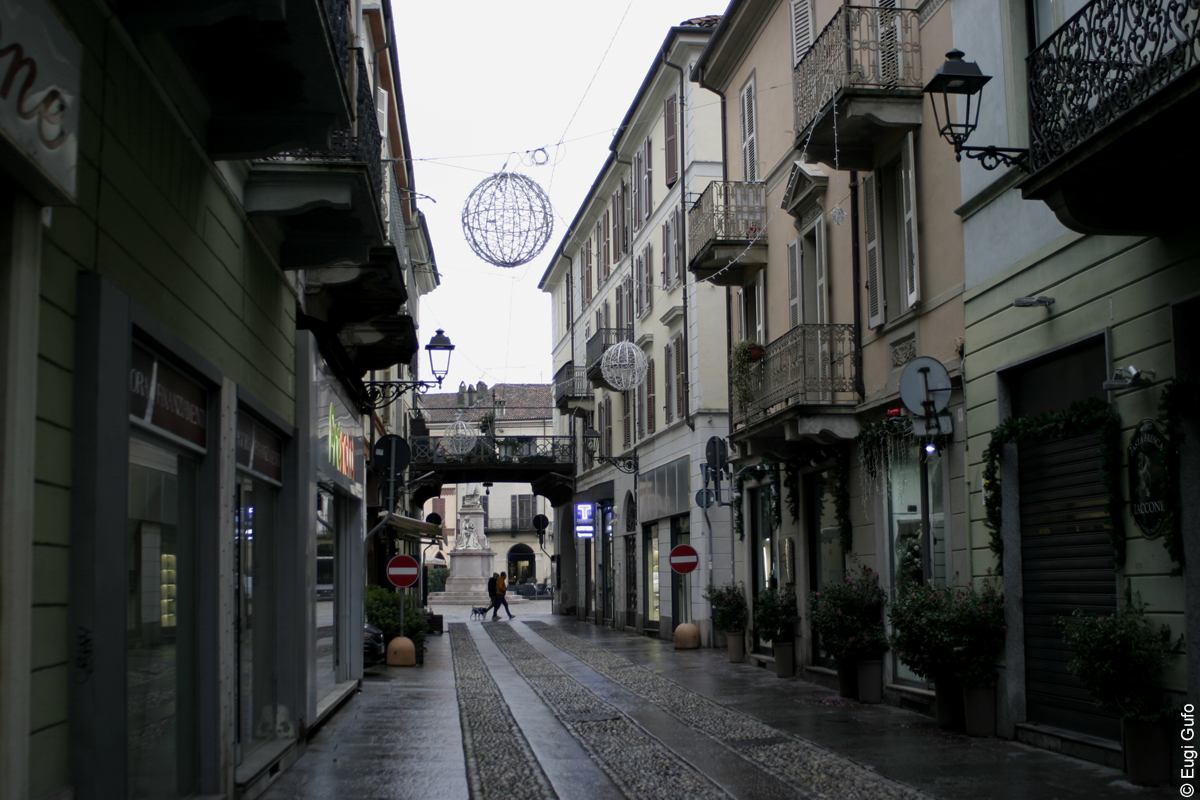
… but also to the main square, Piazza Cavour.
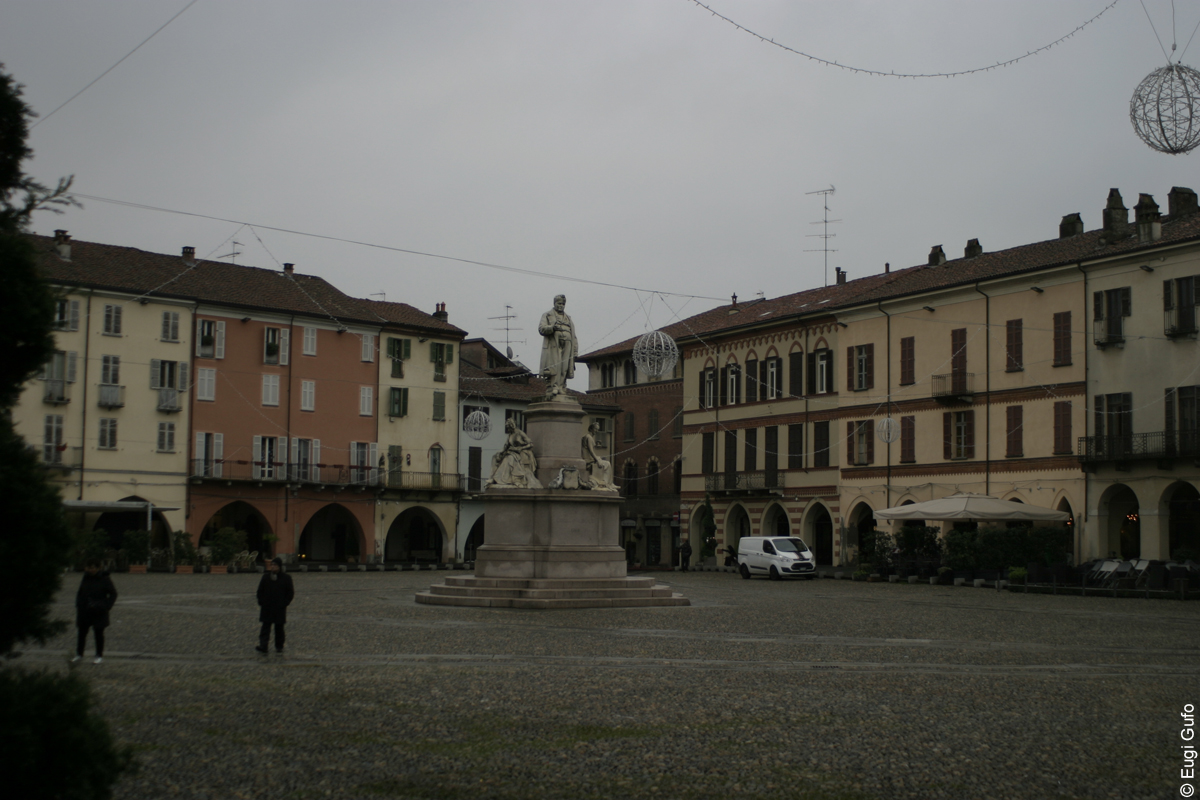
It applies as well when Piazza Cavour is occupied — every Wednesday and Friday morning — by the weekly market. I often struggle to understand people who go to such markets to buy products readily available in normal shops, but the historical presence of markets in old squares is authentic and fully justified.
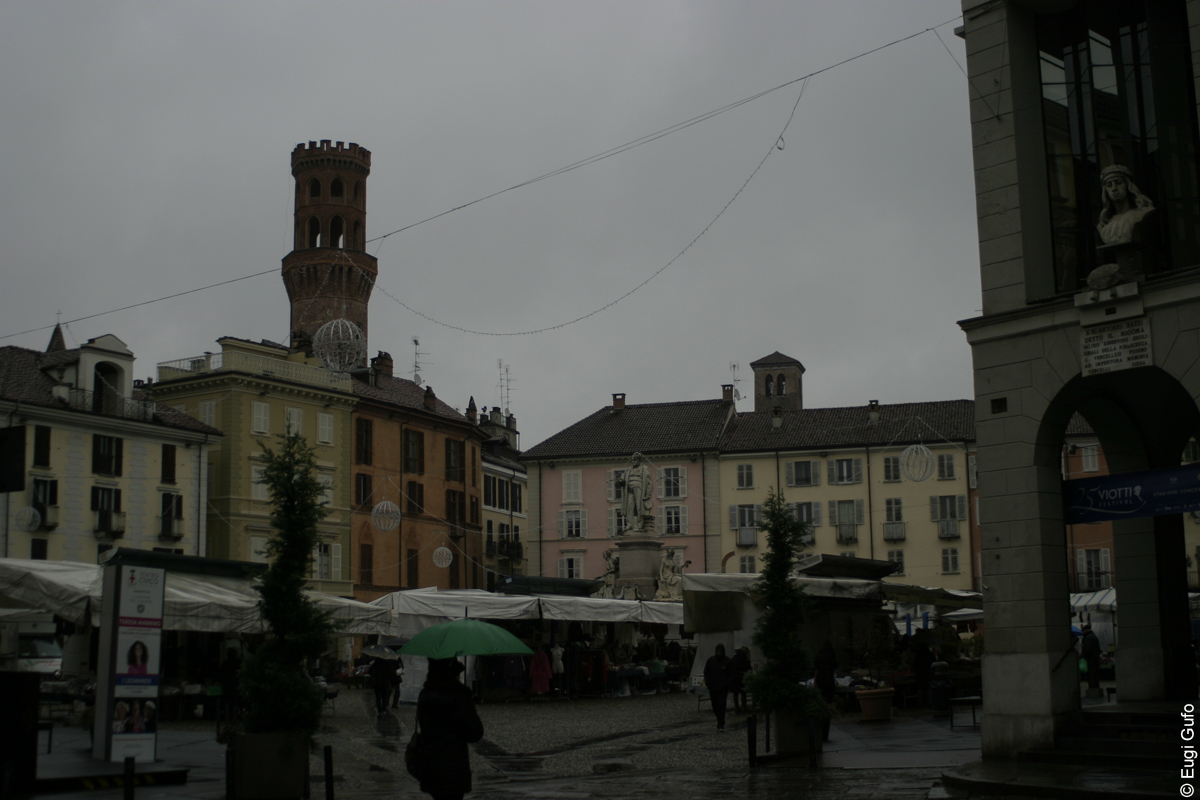
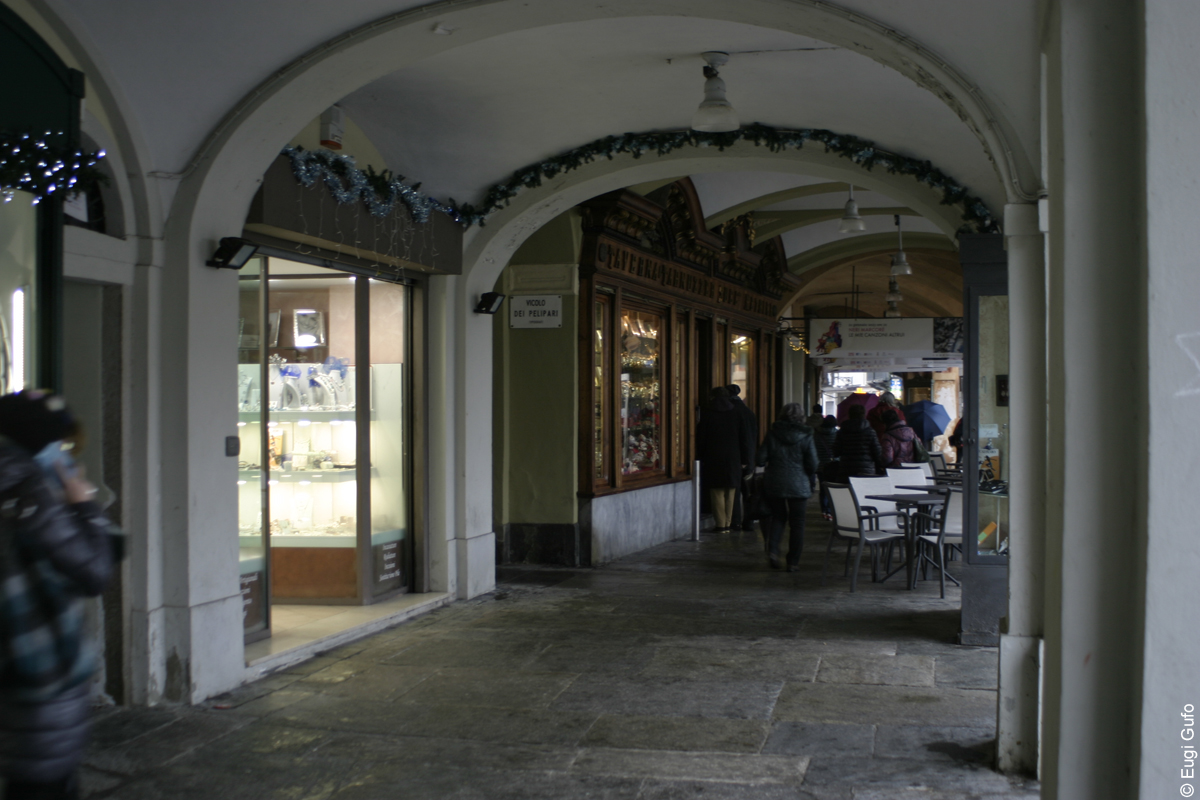
Like many central squares in old Italian (and European) cities, Vercelli’s main square is surrounded by shops, some more ancient than others.
One might ask the locals — if one ever manages to catch them — whether at some point even the market traders worked under a roof. My curiosity arises from the existence of the former Church of San Marco: a 13th-century Gothic building converted to secular purposes (with a modified façade) following the Napoleonic suppressions, and used as a public market from 1883 onward. According to Wikipedia, the market remained there until 2001, though it does not specify who — after nearly two millennia — decided to leave the poor merchants roofless again (especially considering the less-than-tropical climate). This time, however, the «purified» space was transformed into something socially useful: a cultural exhibition centre now known as ARCA. Further research is recommended for the interested reader.

Meanwhile, I shall continue informing you about Vercelli’s general beauty. Even the minor streets are often pleasant to behold.
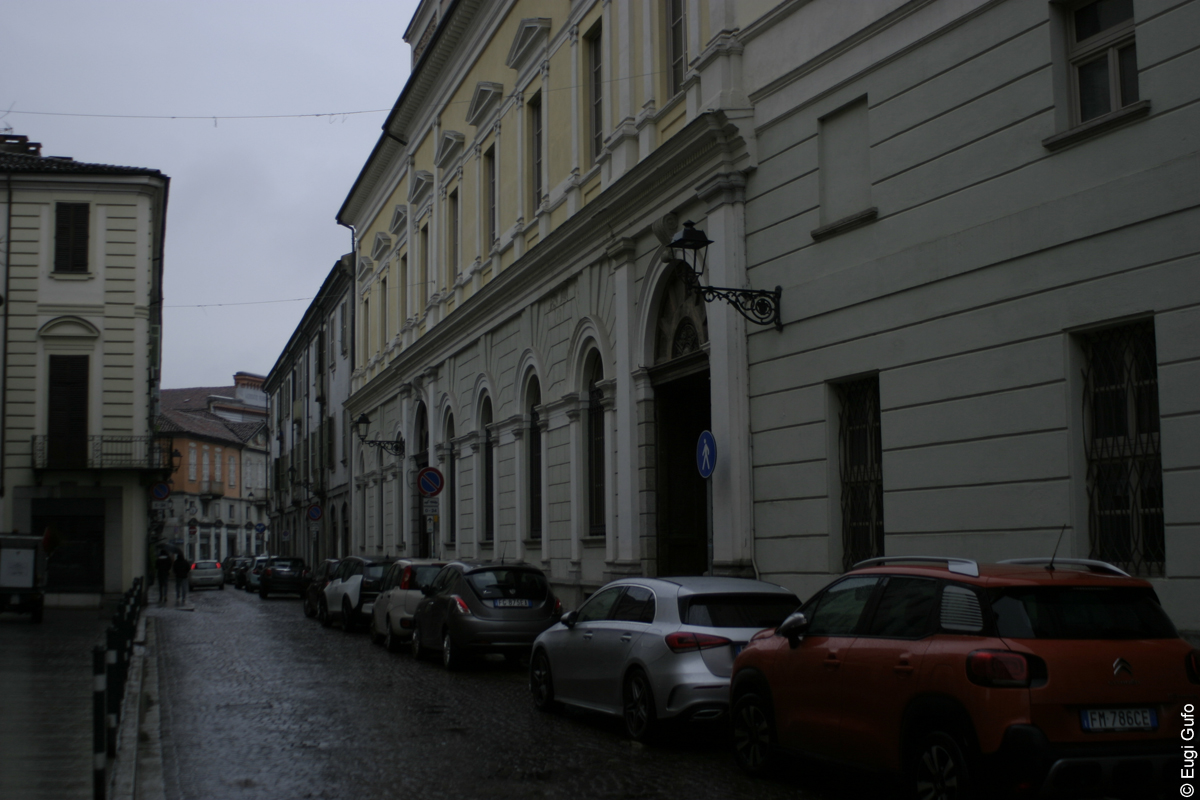
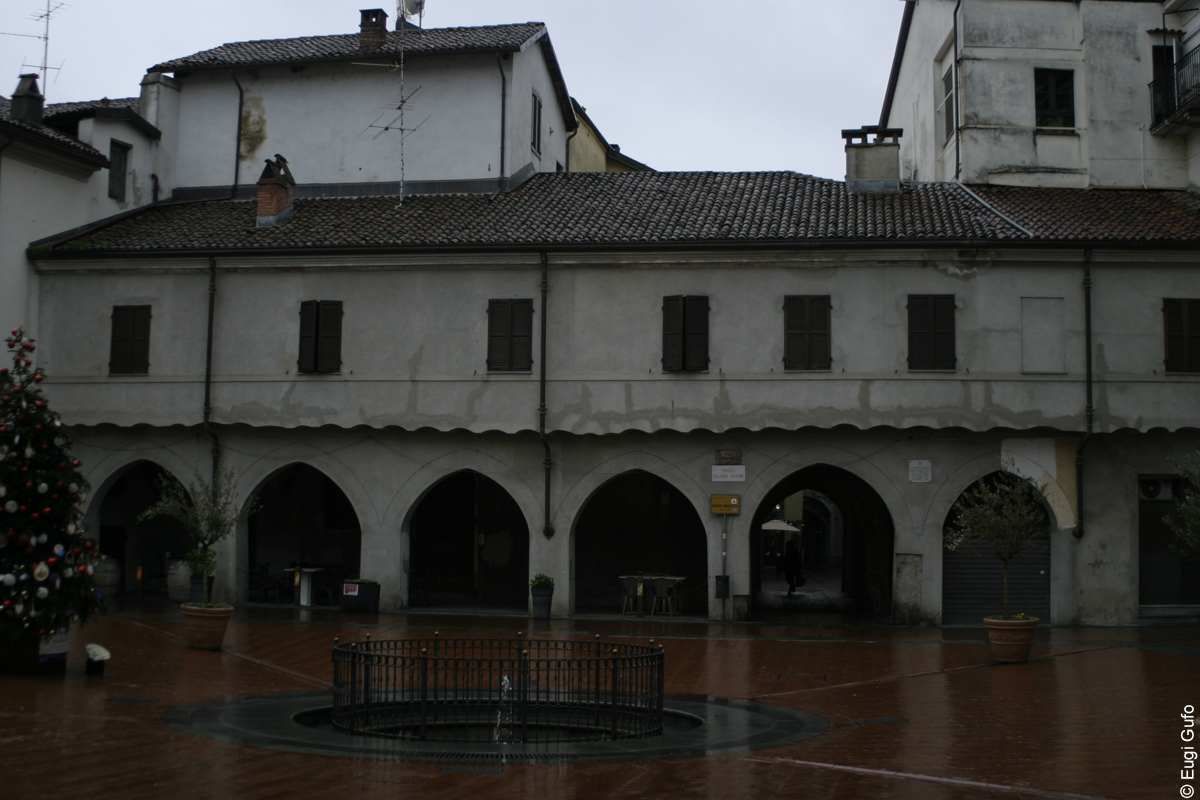
The same applies to smaller squares, some of which became «minor» only due to the city’s later development (the one below is Piazza Palazzo Vecchio, the former municipal seat).
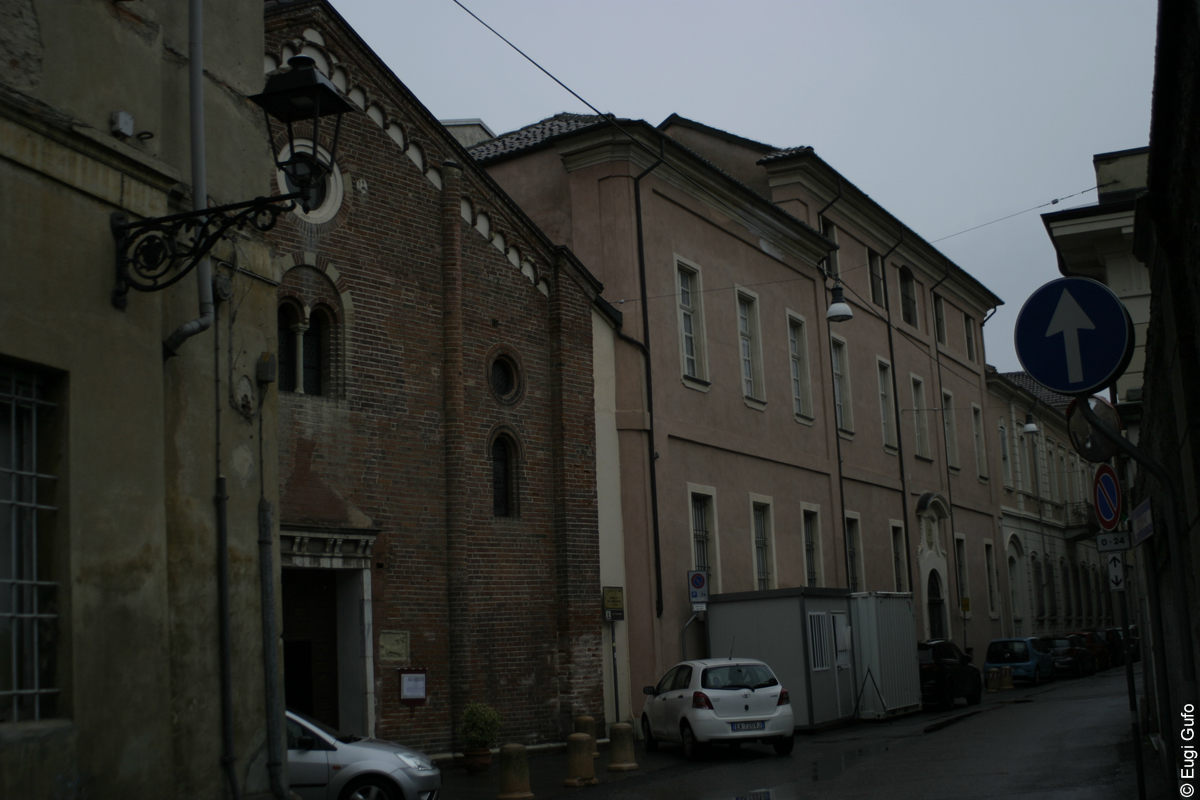
Like most Italian cities, Vercelli is extraordinarily rich in religious buildings from various eras. Not all are equally beautiful or interesting, but they are almost always well integrated into the urban fabric. I do not mean that in other places they are poorly integrated — but in Vercelli I frequently found them appearing in seemingly unexpected locations. To describe all the churches would require a small encyclopaedia, so I shall recommend only a few.
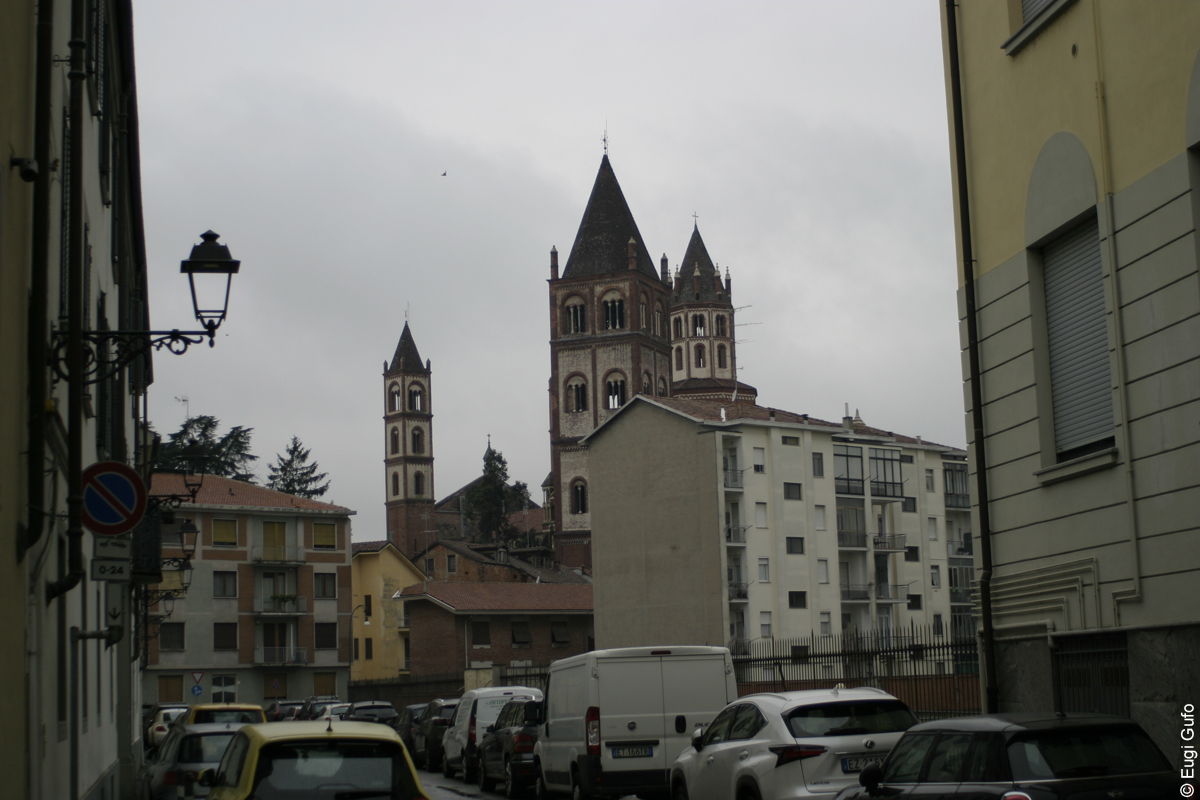
For example, special attention should be given to the Abbey of Sant’Andrea, built between 1219 and 1227. It combines French Gothic style with elements of Lombard Romanesque. Its interior beauty is guaranteed by what I — an architectural illiterate — call «Gothic minimalism»: the building is not overloaded with ostentatious richness or excessive artworks, and therefore does not cause vertigo to those attempting careful observation. It is a «minimalism» that invites calm and thoughtful study.
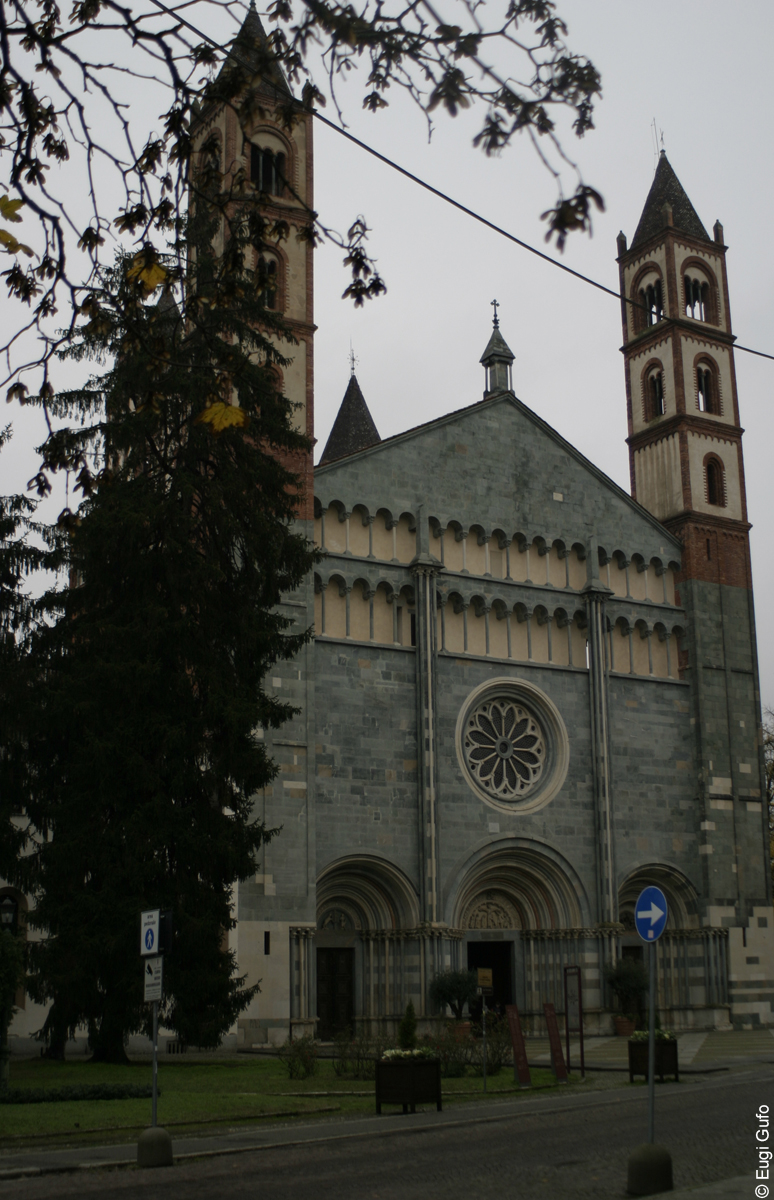
Failing to find the abbey is nearly impossible: its bell towers are visible from several points in the city (and it stands very close to the railway station).
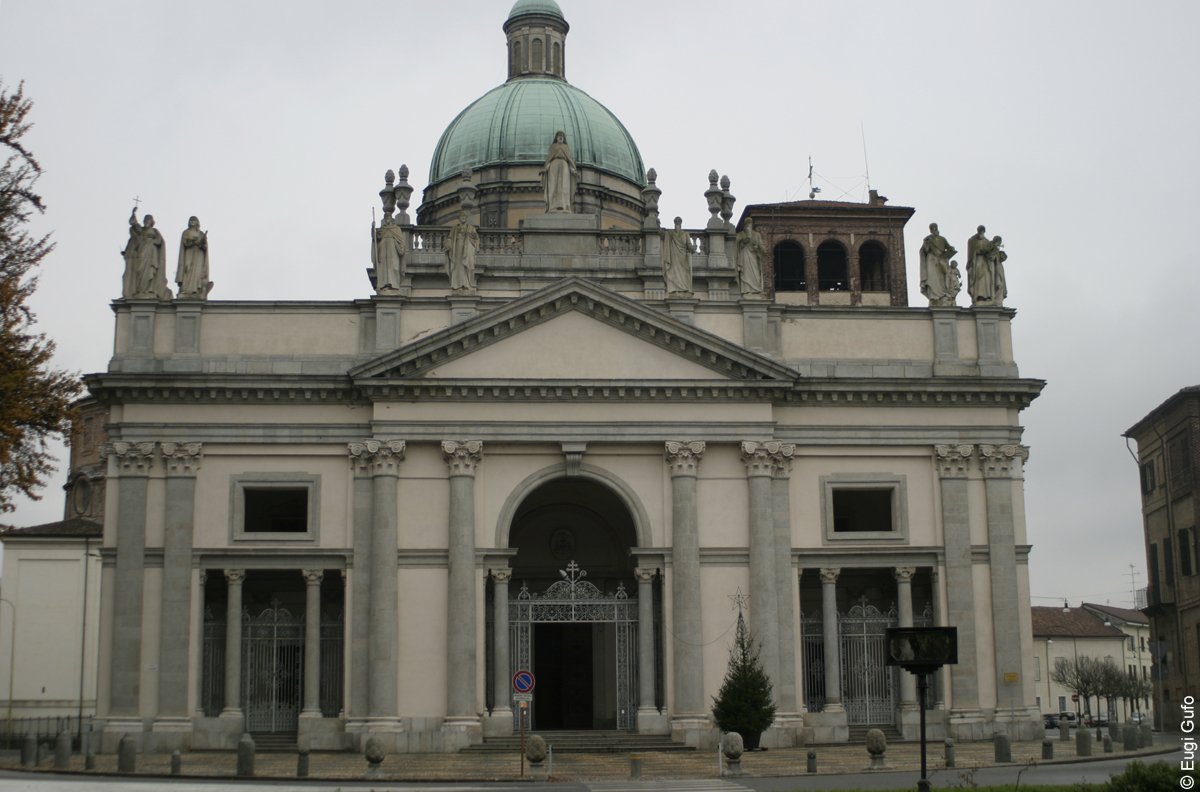
The Cathedral of Vercelli, dedicated to Saint Eusebius — the first bishop of Piedmont — is worth visiting for those who appreciate churches rich in high-quality artistic works. Monarchists may also find it interesting, as several members of the House of Savoy are buried inside.
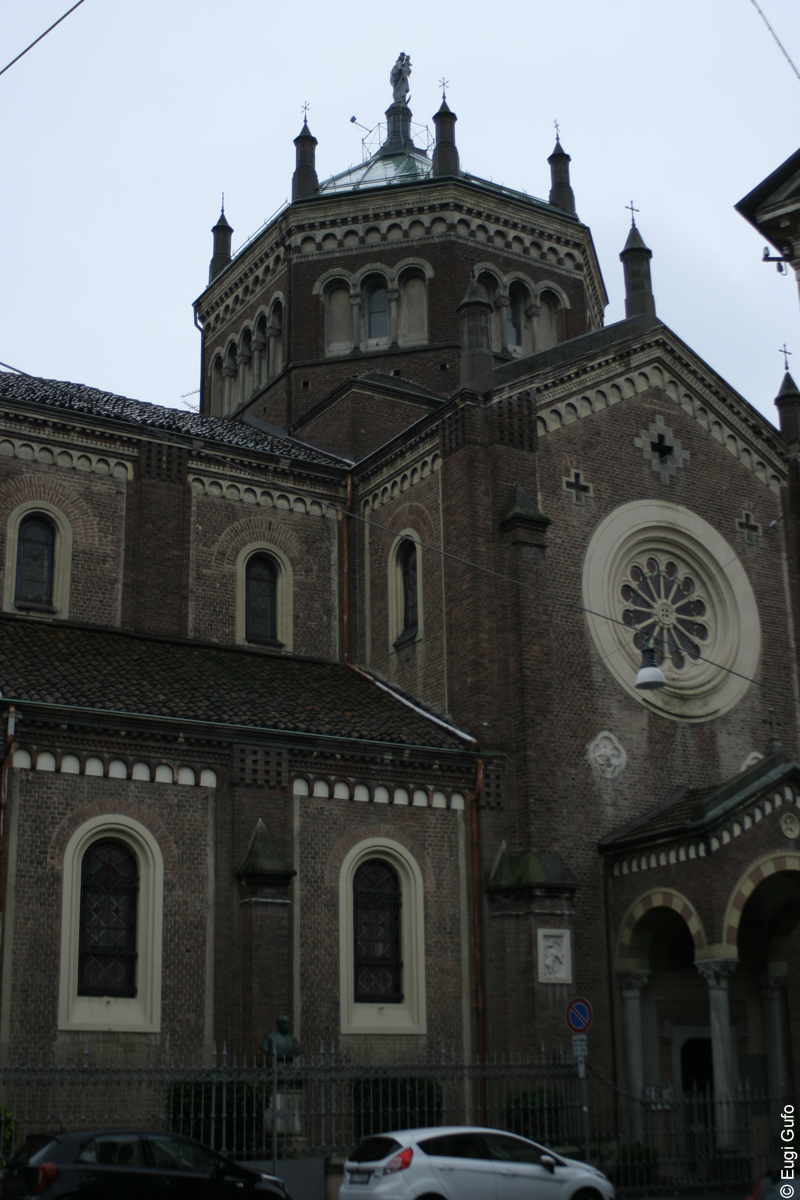
Nor should one skip the Church of San Bernardo, the oldest in the city, built between 1151 and 1168.
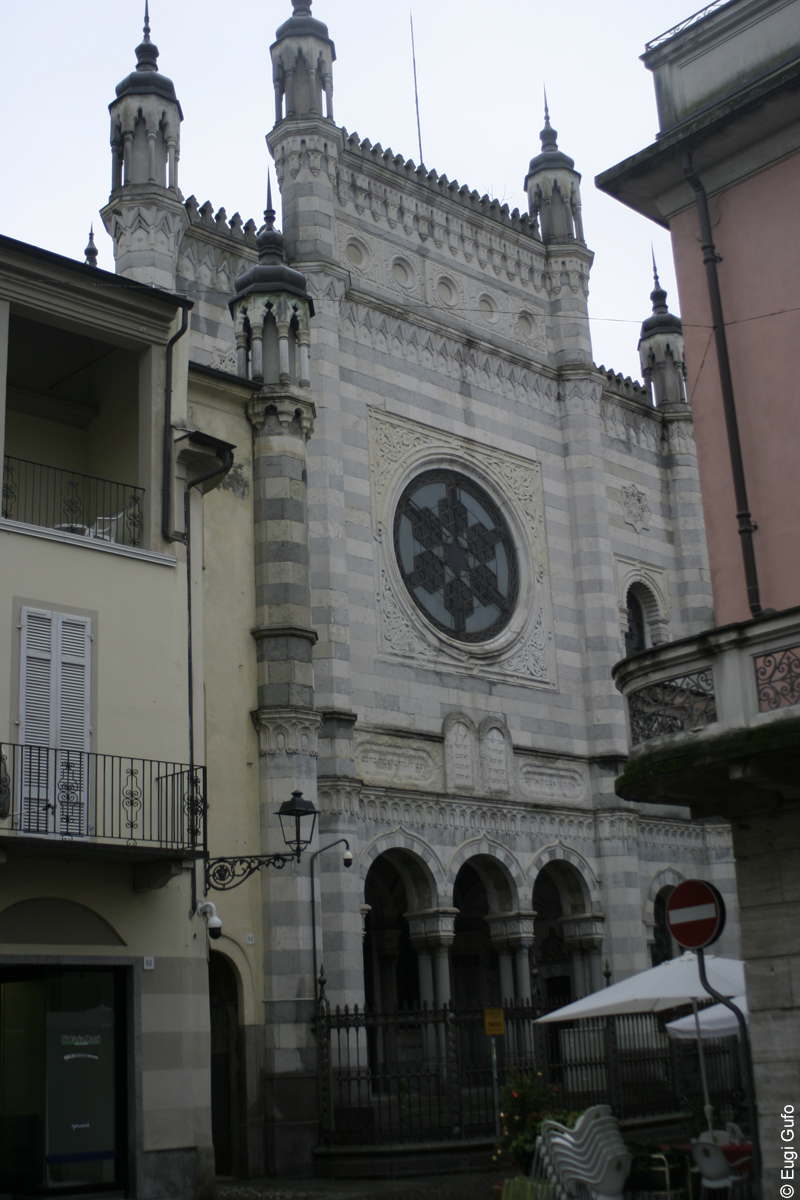
In Vercelli I also encountered one of the largest synagogues I have seen in Italy: the Vercelli Synagogue, constructed between 1874 and 1878, later degraded and closed after the Second World War (the diplomatic explanation being «the demographic decline of the Jewish community»), and restored beginning in 2003.
I cannot, however, clearly recommend or discourage a visit to that ancient «large building» which resembles a deconsecrated church. It is in fact the former Ospedale Maggiore, founded in the first half of the 13th century and abandoned in the 1960s. There are general plans for restoration, but the current state of works remains unclear.
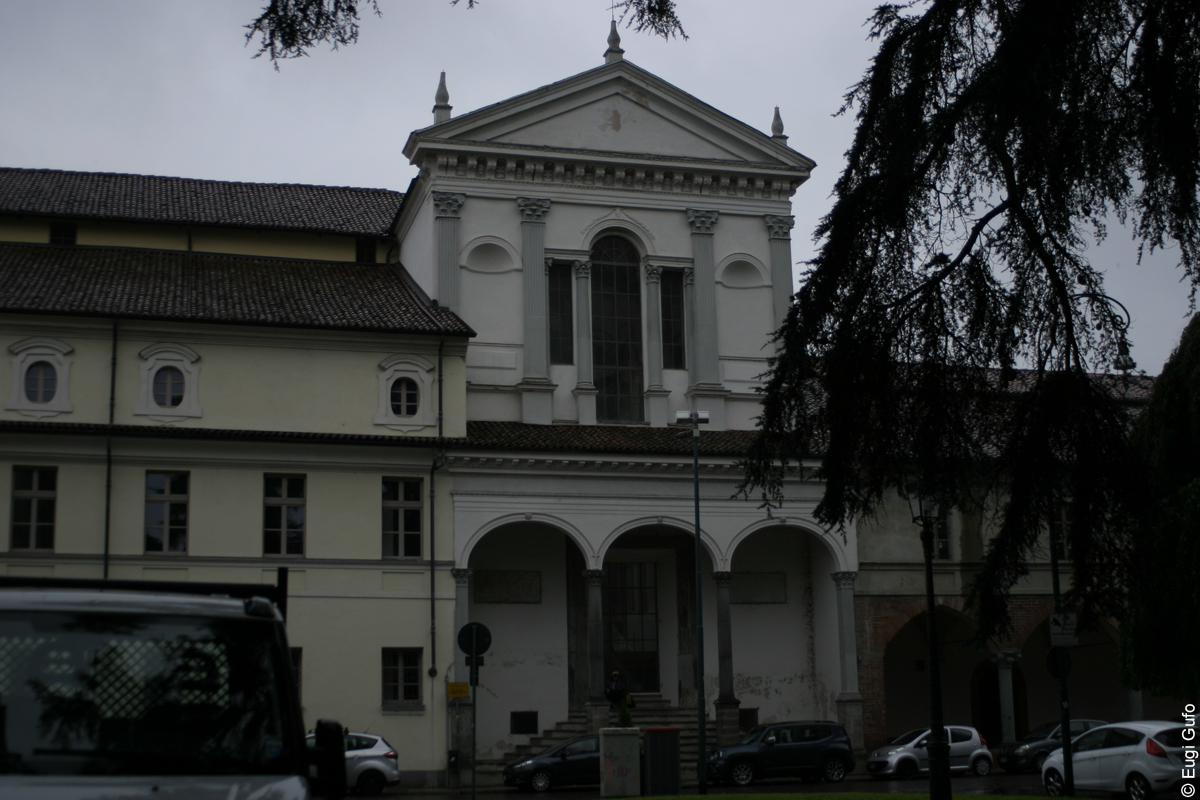
Fortunately, Vercelli offers more than religious architecture. For instance, there is the Castello Visconteo, built around 1290 with a square plan. Over the centuries it served as barracks during the Napoleonic era, then as a prison for much of the 19th century, and eventually became the seat of the Tribunal (apparently in 1926, though other dates circulate). Given its current function, I hope never to have «reasons» to explore its interior.

In the historic centre there are also several defensive-type towers.
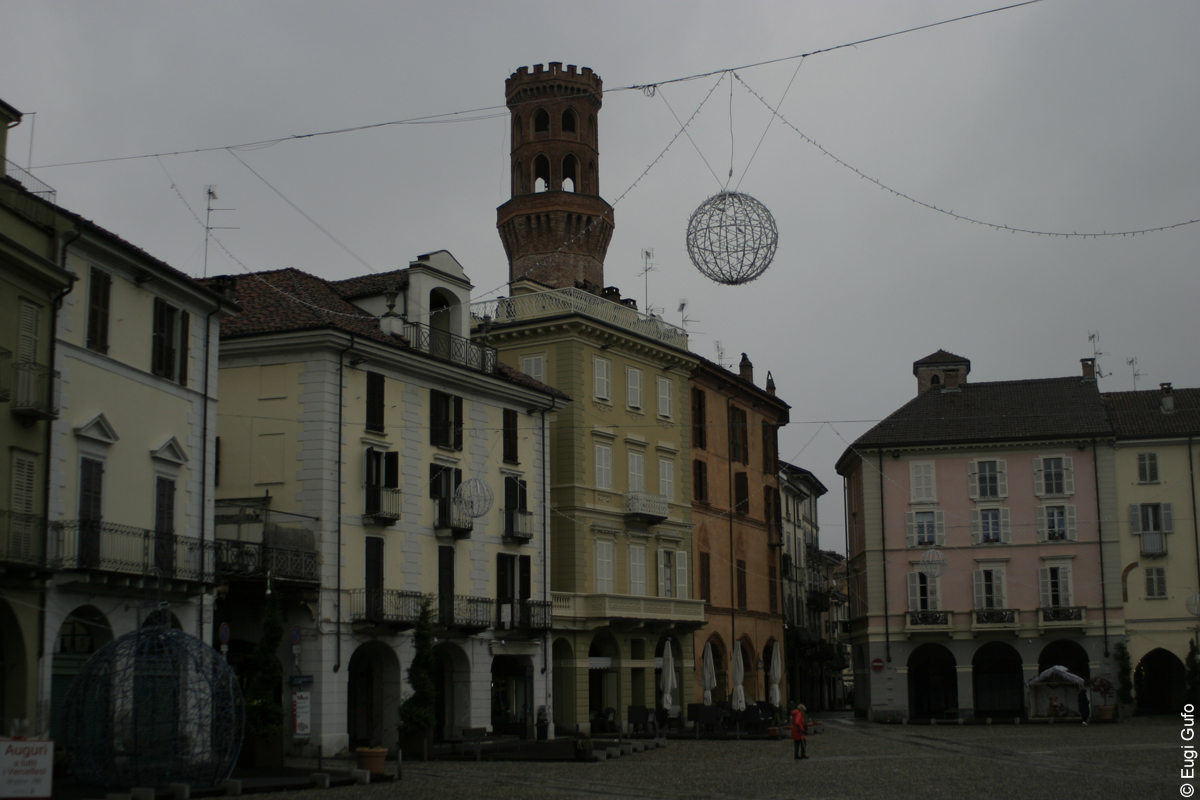
Among them, the Torre dei Tizzoni, built in the 15th century, now appears slightly alien due to 19th- and 20th-century restorations that were less than respectful of historical authenticity.
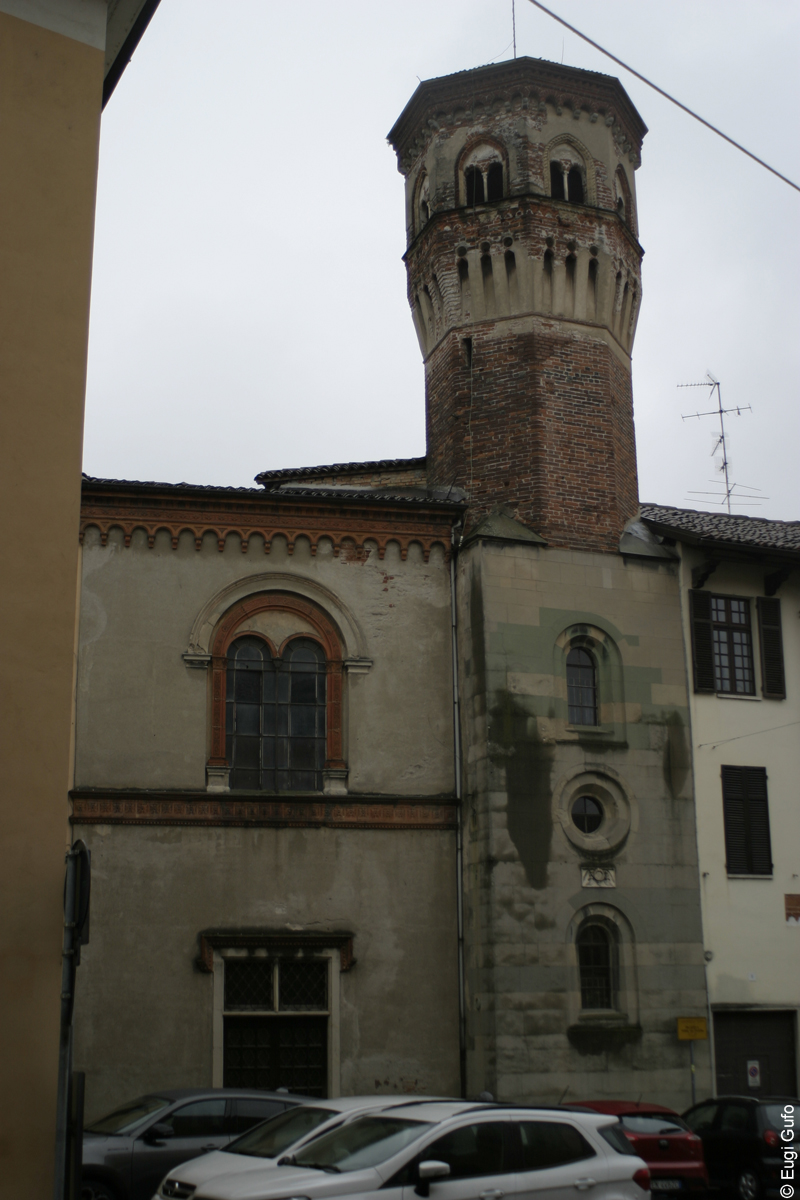
The Torre di San Marco, also known as Torre degli Avogadro, supposedly built in the 13th century as part of the Avogadro family castle and later converted into a bell tower, remains unaltered. The fate of the rest of the original castle, however, remains a mystery.
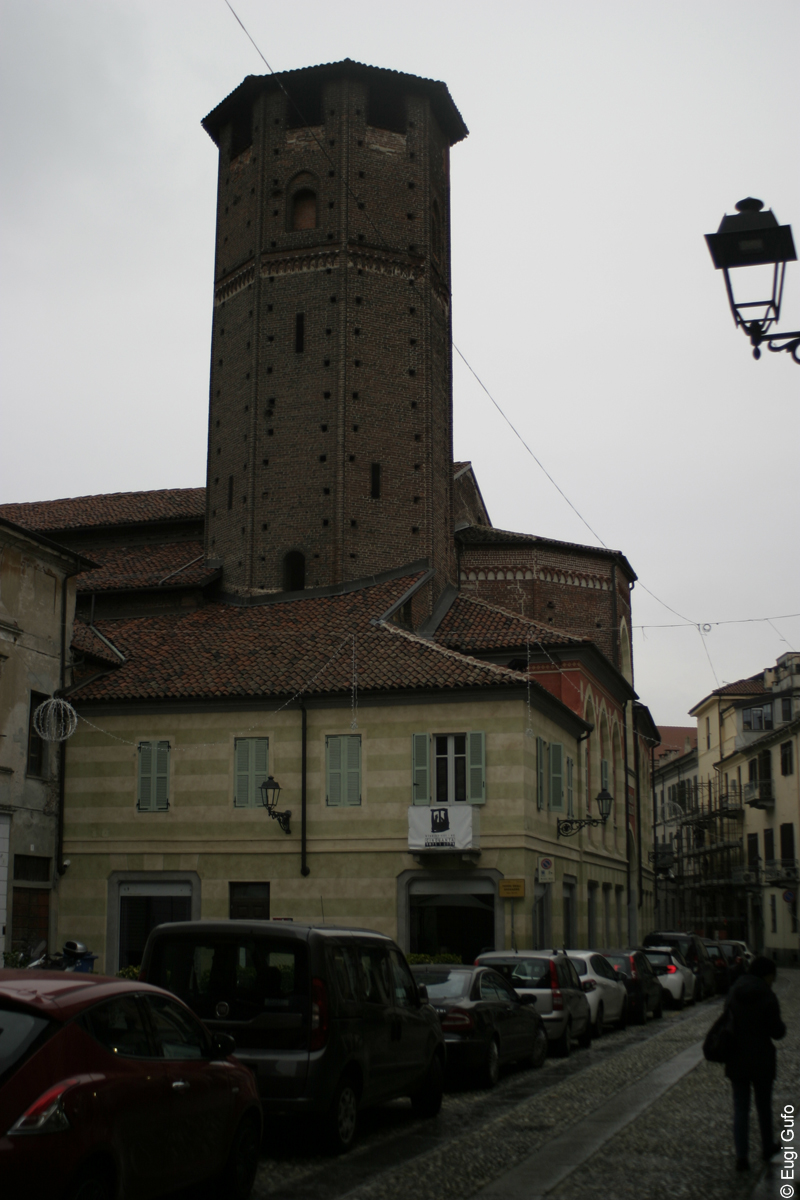
The strangest tower in Vercelli may be that of Palazzo Cantono di Ceva (also called Palazzo Allario Caresana), an 18th-century building whose «modern castle» aspirations resulted in a compromise that has seemed slightly ridiculous for about three centuries.

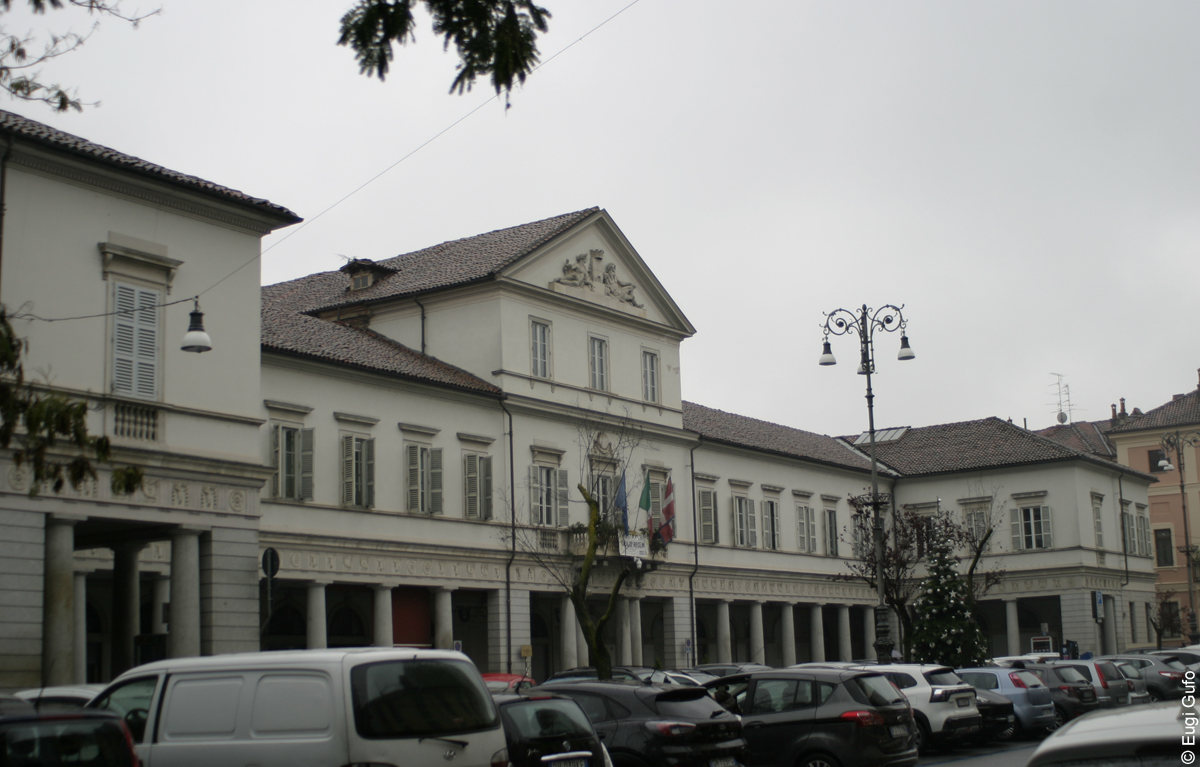
The current City Hall, designed in the 1820s, is stylistically more traditional.
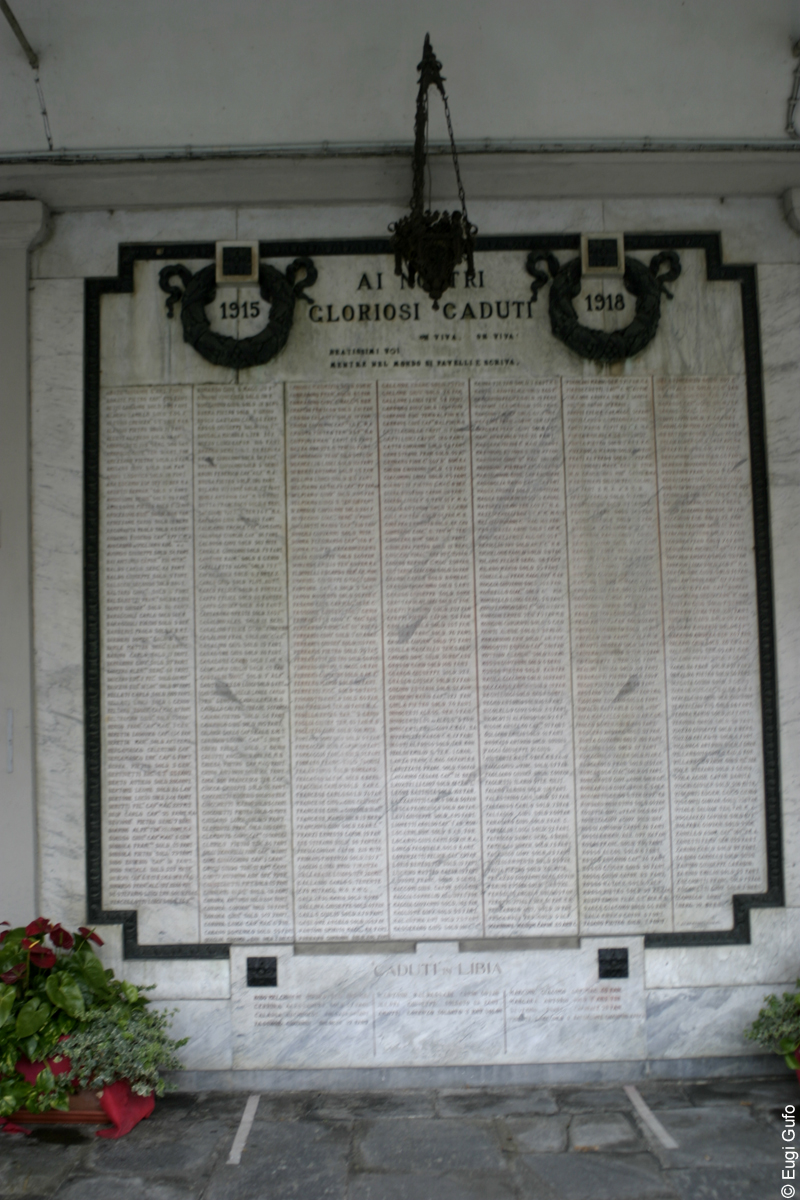
Under its porticoes one finds commemorative plaques: lists of those fallen in the World Wars (with the First World War tragically predominant)…
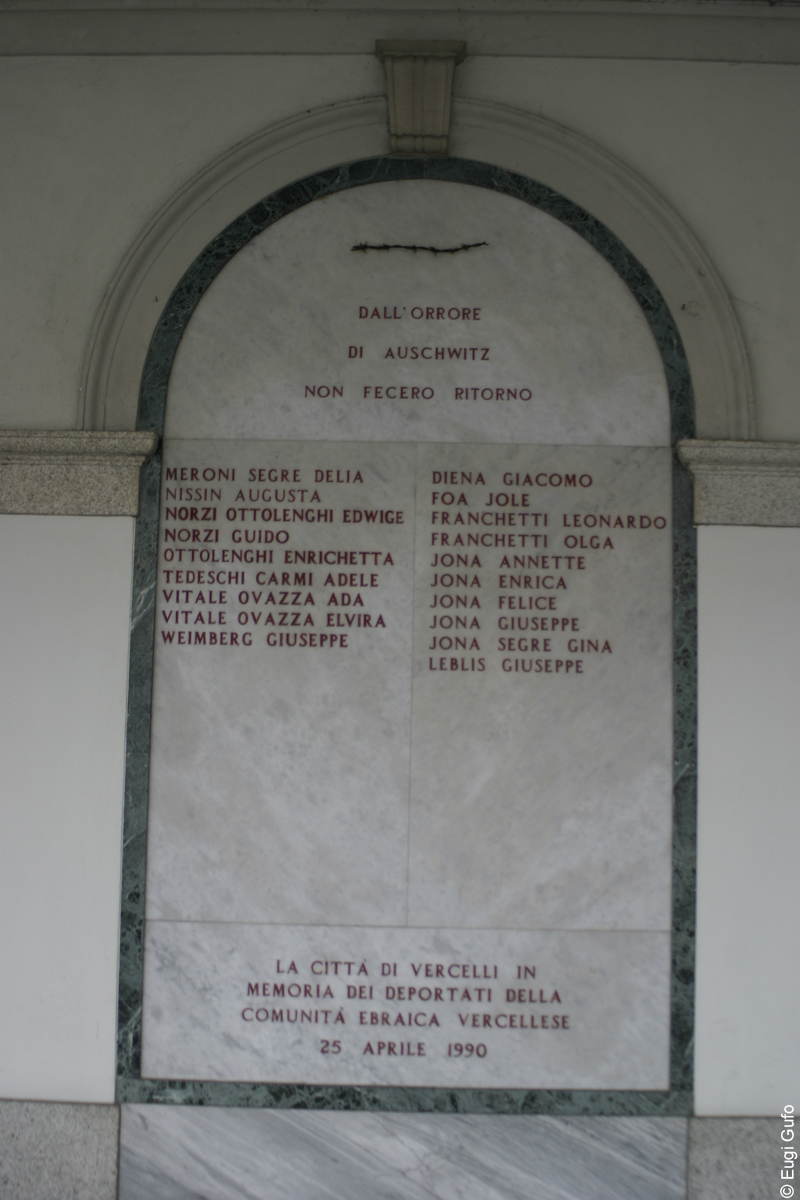
… plaques listing Vercelli citizens murdered at Auschwitz and civilian victims of the Second World War — rare and profoundly human details…
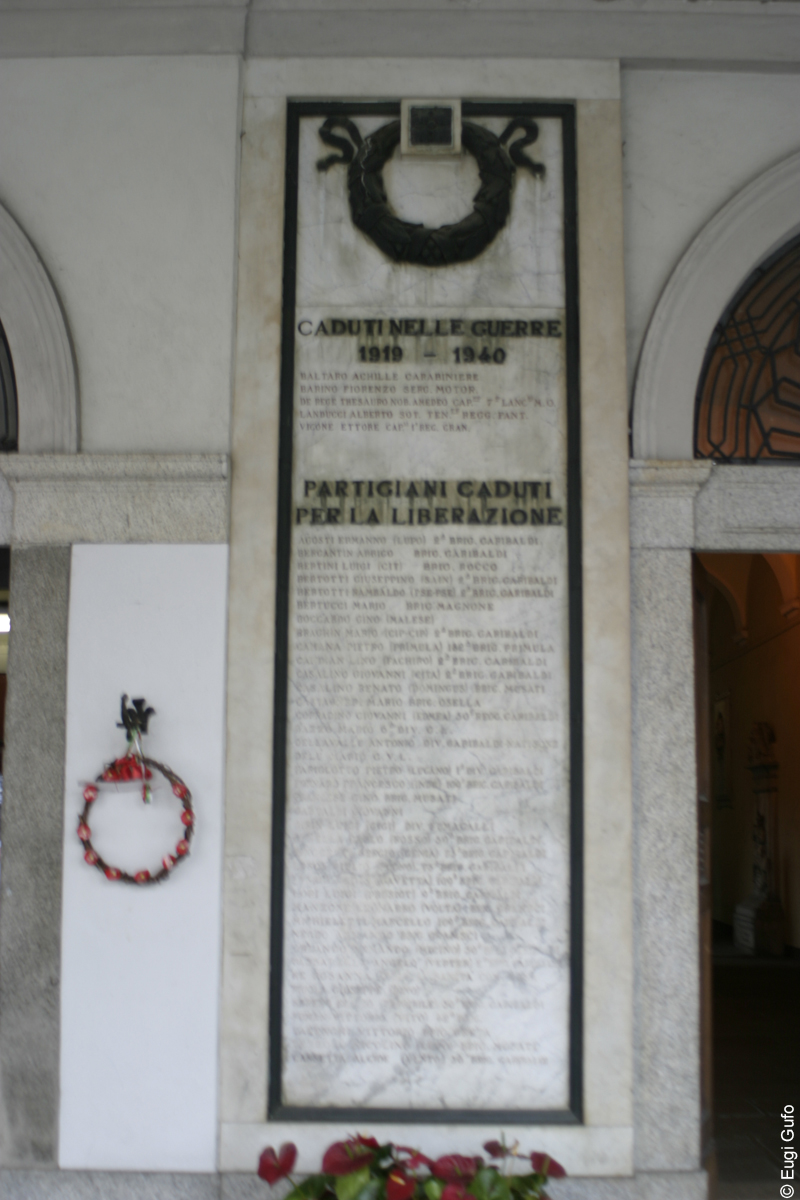
… and a plaque commemorating fallen partisans.
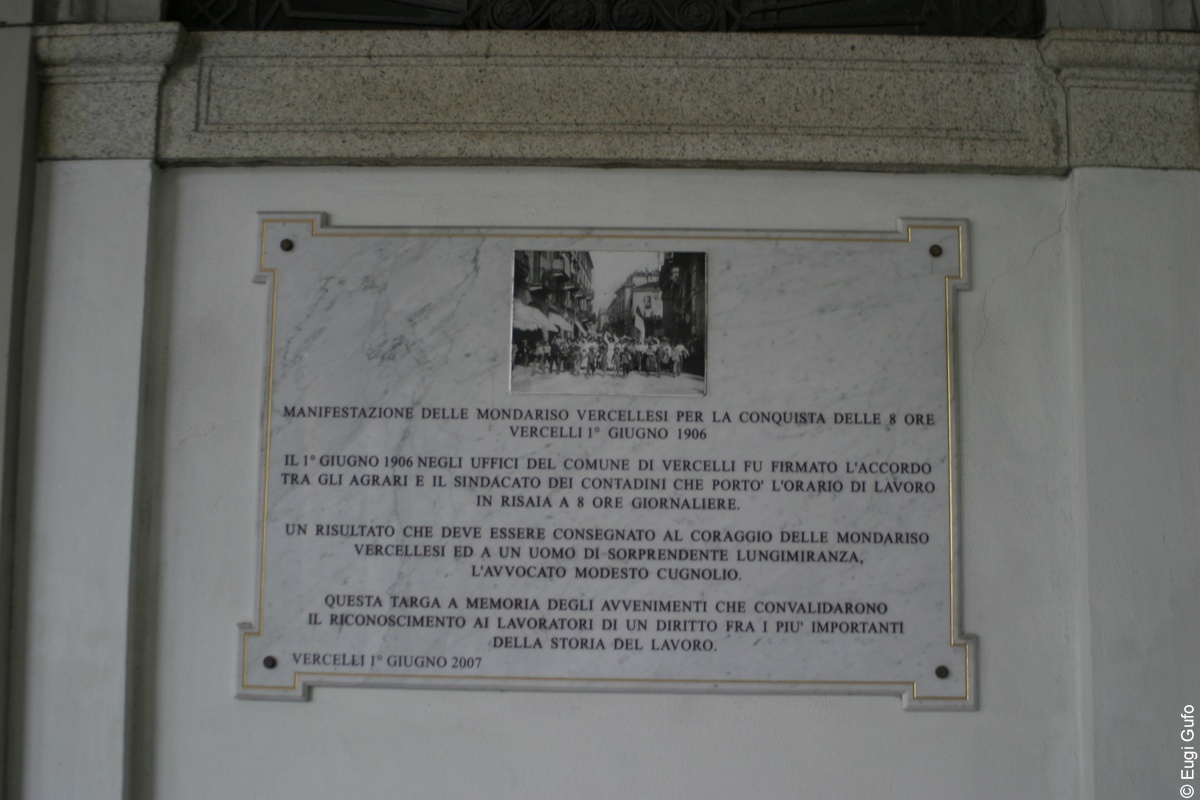
Another curious plaque recalls the achievement of the eight-hour workday by local rice workers (mondine) on 1 June 1906 — years before the internationally recognised Women’s Day of 8 March. Historical nuances aside, the memory of those workers deserves respect.
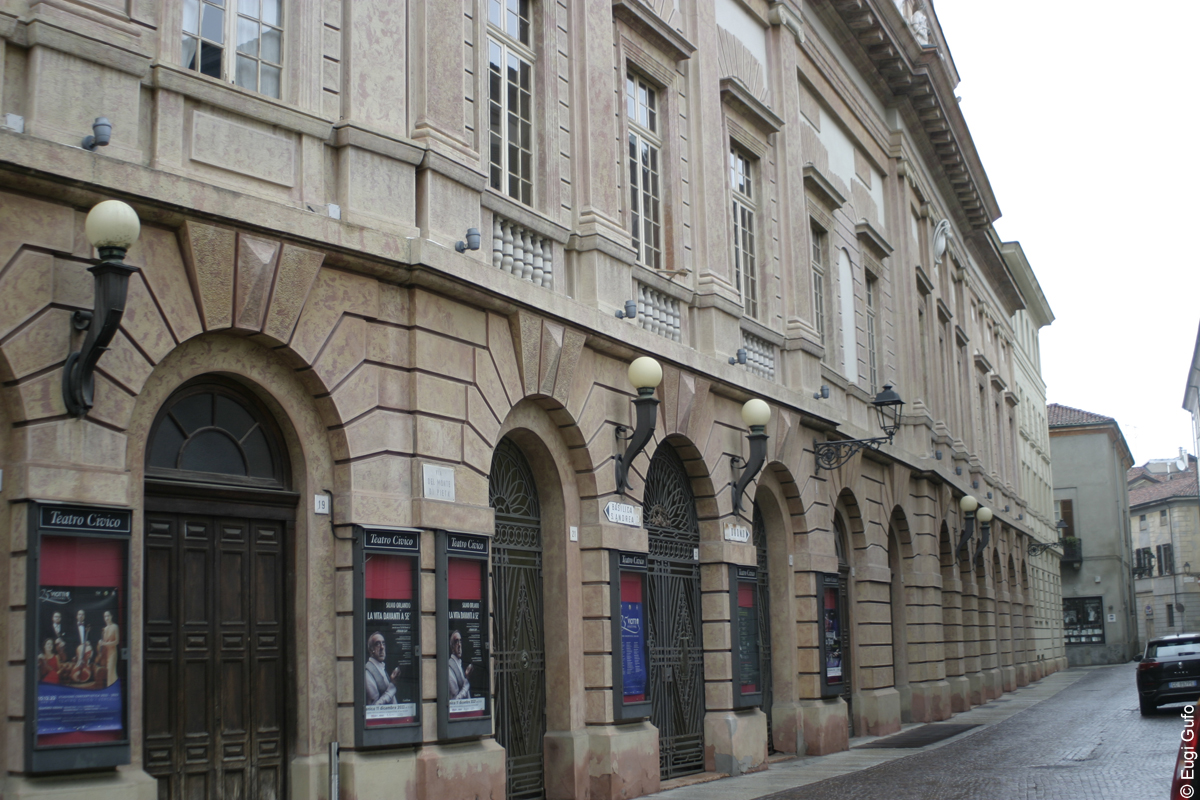
The Teatro Civico building is far grander than I would have expected in a city of this size. One day I may verify its artistic quality personally.
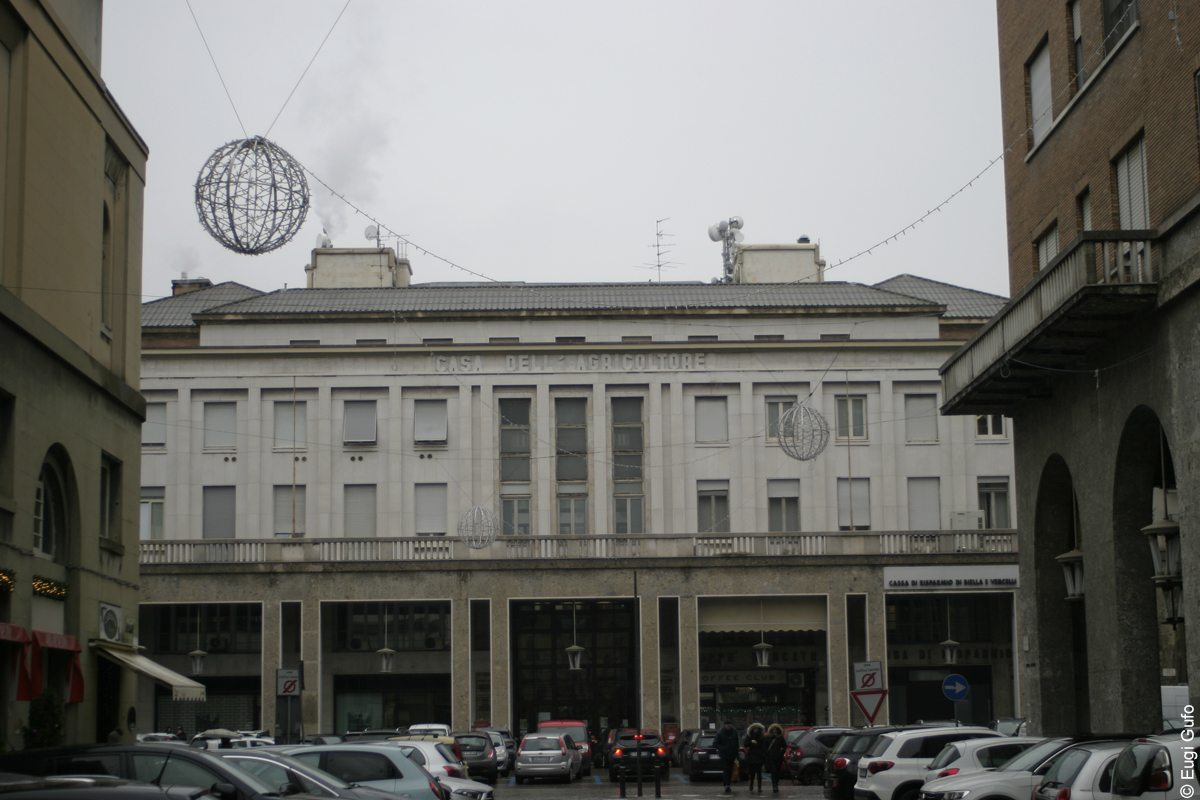
The former Casa dell’Agricoltore — clearly Fascist-era in style — now belongs to the Ente Nazionale Risi. Its original purpose remains somewhat obscure to me.
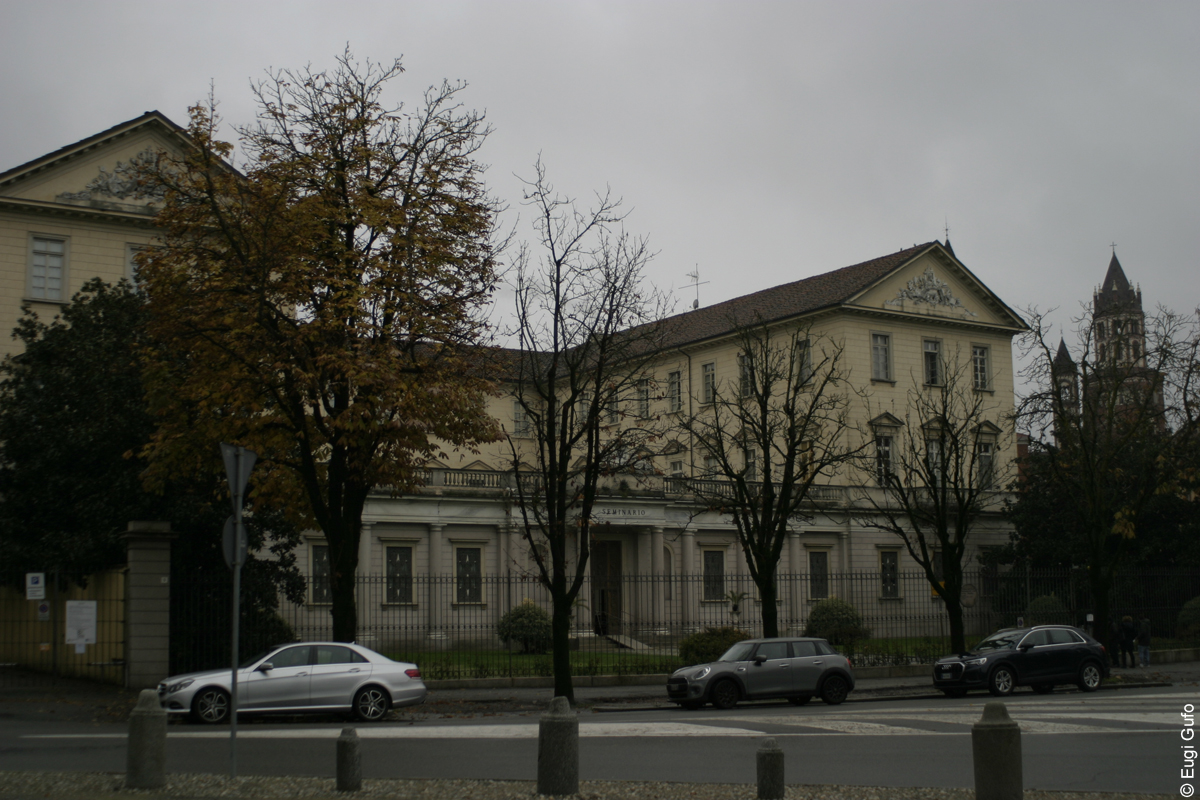
Much of Piazza S. Eusebio, in front of the cathedral, also deserves attention; most of its buildings belong to the Church.
Palazzo Berzetti di Murazzano (late 17th century) is interesting though not open to visitors; it is now the headquarters of the Sisters of Loreto.
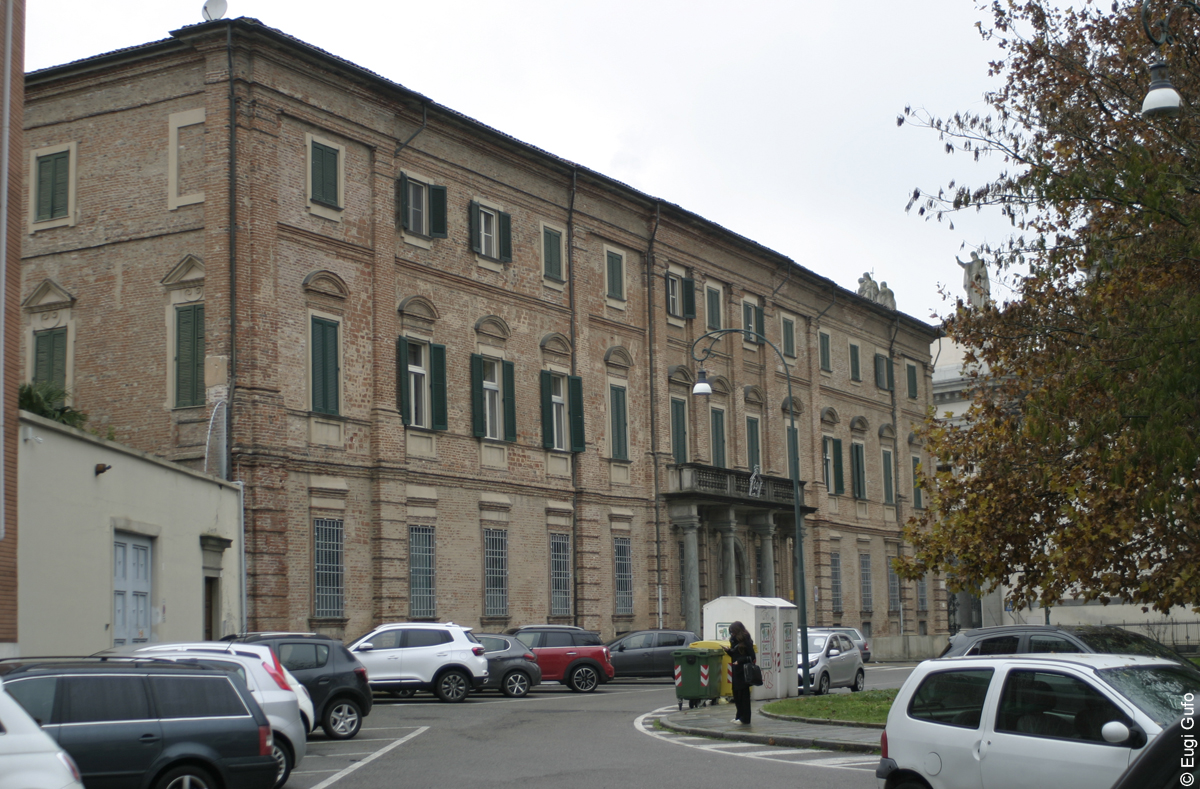
Palazzo Avogadro della Motta, built at the end of the 18th century, once hosted Napoleon (in 1800 and 1805) and Victor Emmanuel II (in 1859). Donated in 1832 to a charitable institution and later acquired by the municipality, its aesthetic condition suggests that its luck diminished somewhat thereafter.
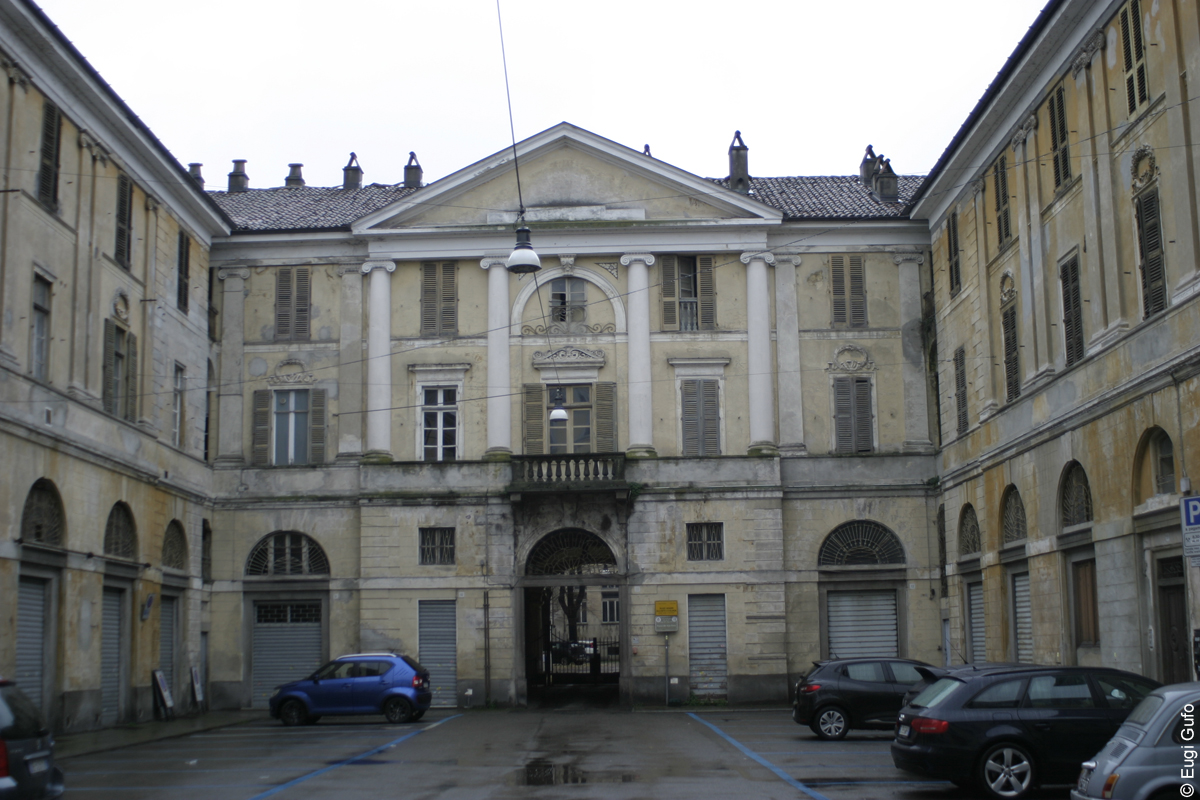
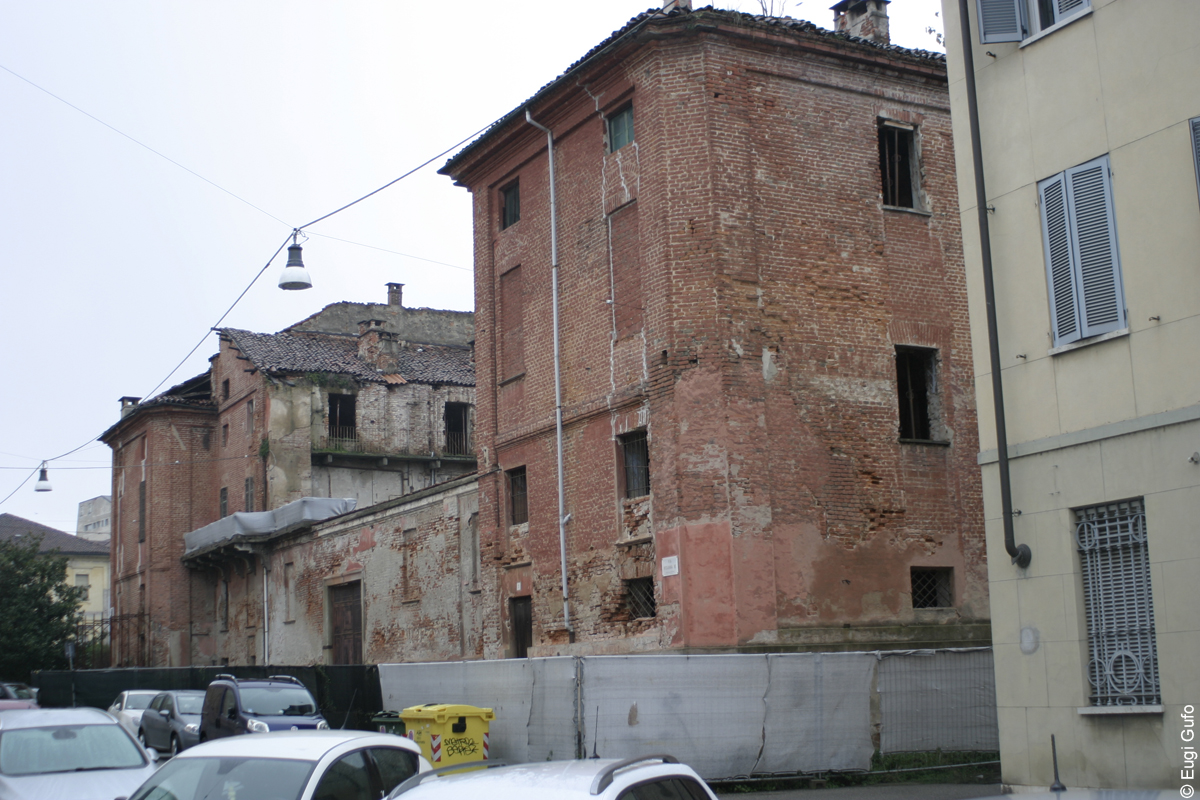
Some historic buildings are in even worse condition…
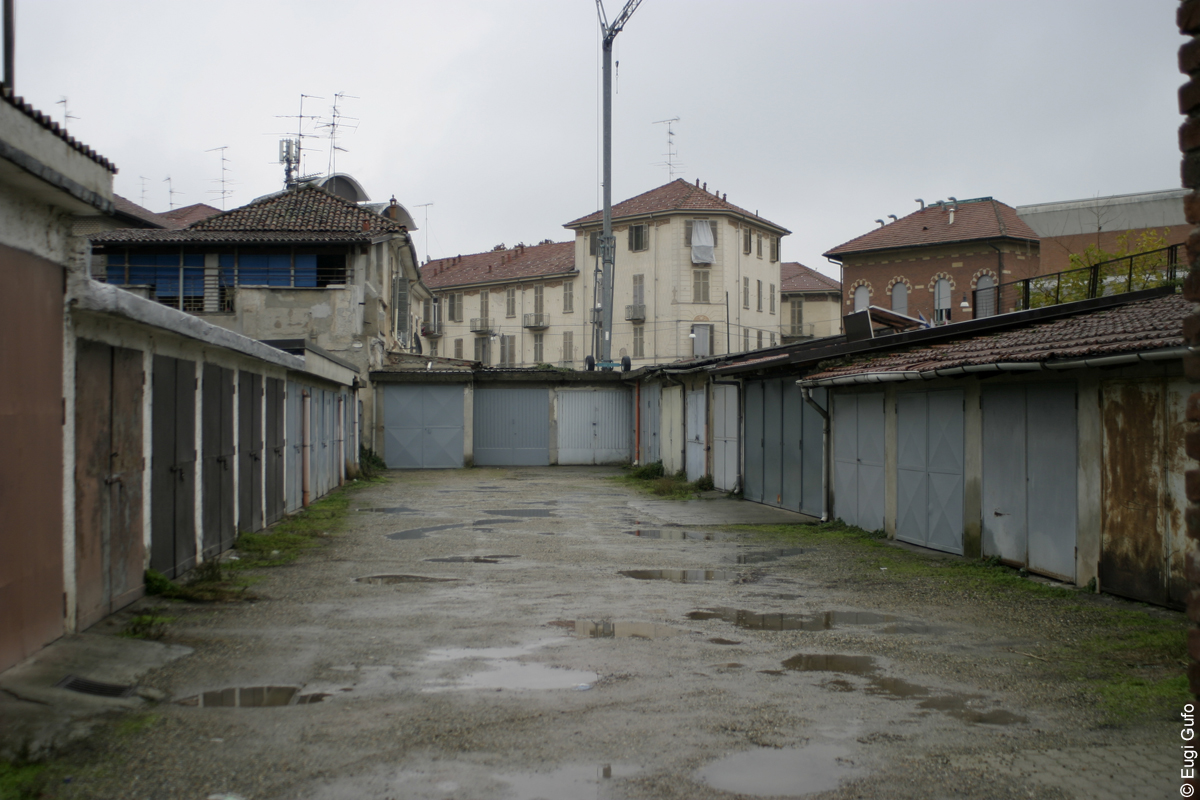
Yet Vercelli also gave me an unexpected flashback to Russia: a courtyard of dilapidated garages arranged around an unpaved road. In the 1990s such places existed even in central Moscow; now they survive mostly in the suburbs. Childhood memories resurfaced instantly.
Fine modern architecture does exist in Vercelli, though it did not seem widespread.
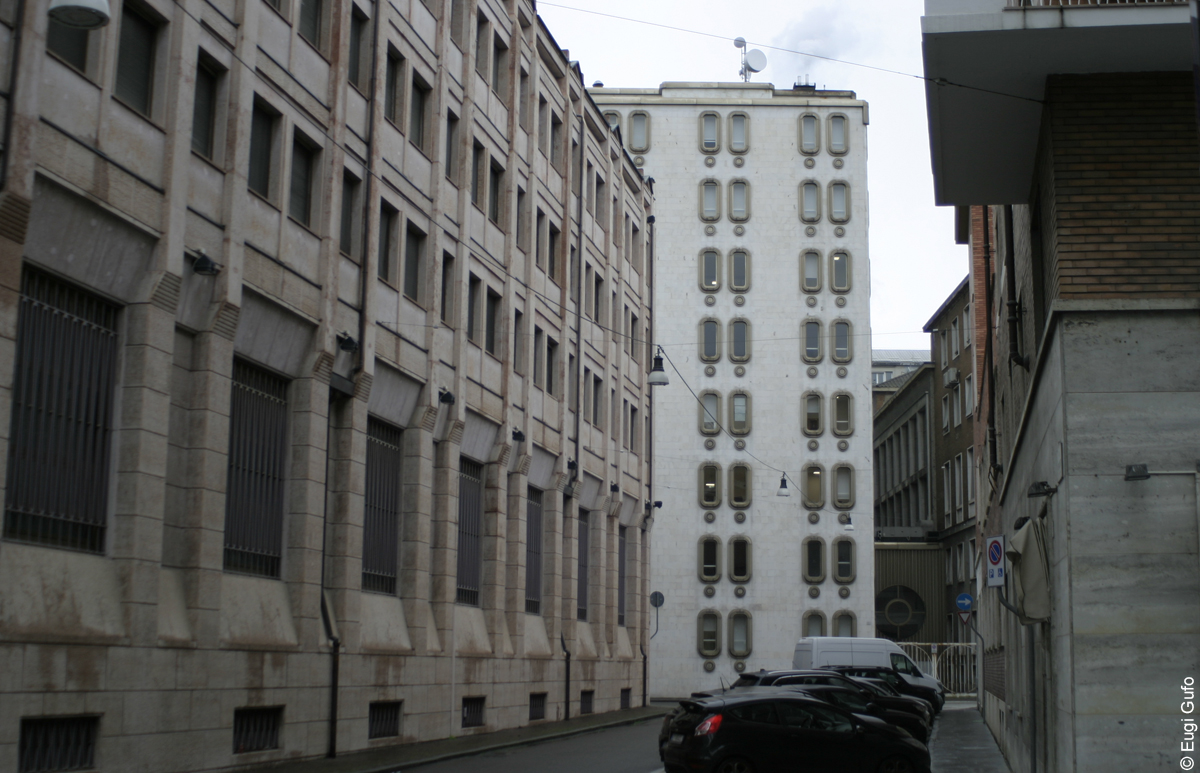
And some «renovations» appear to have been carried out by individuals who were perhaps expelled from architecture faculties for excessive enthusiasm toward primitive 3D modelling software.
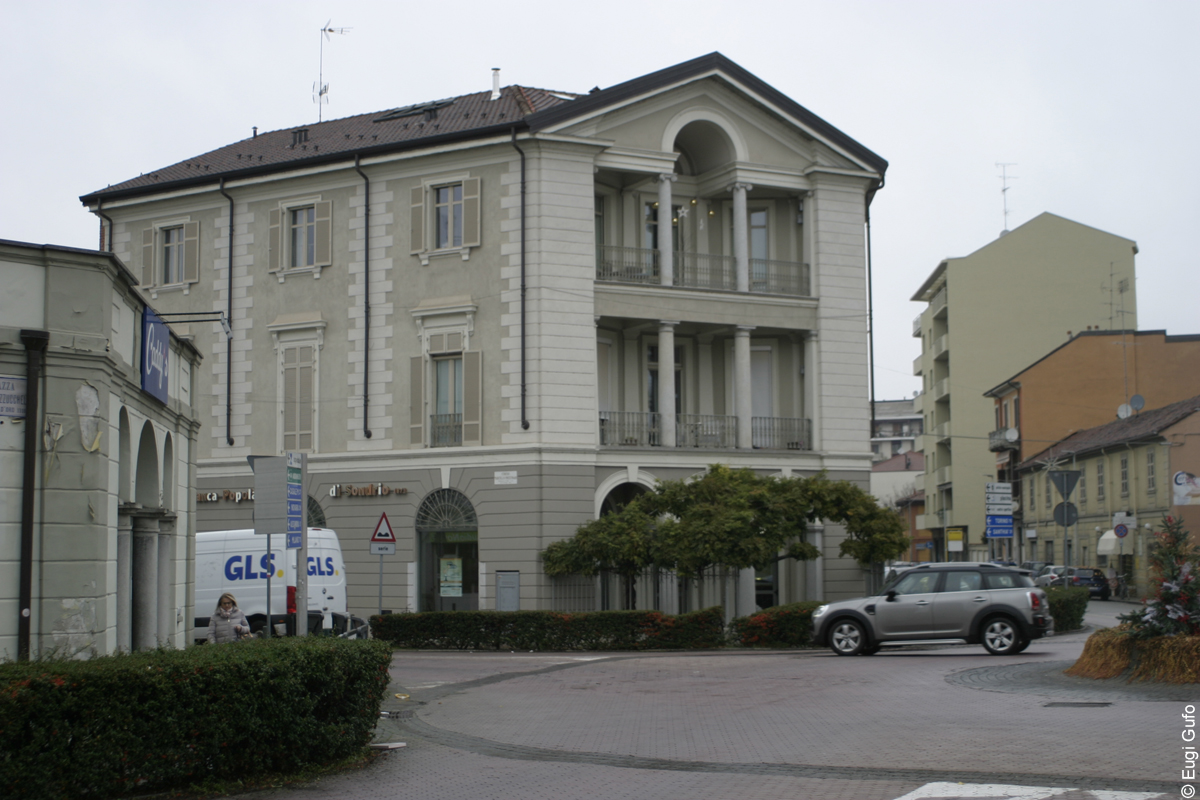
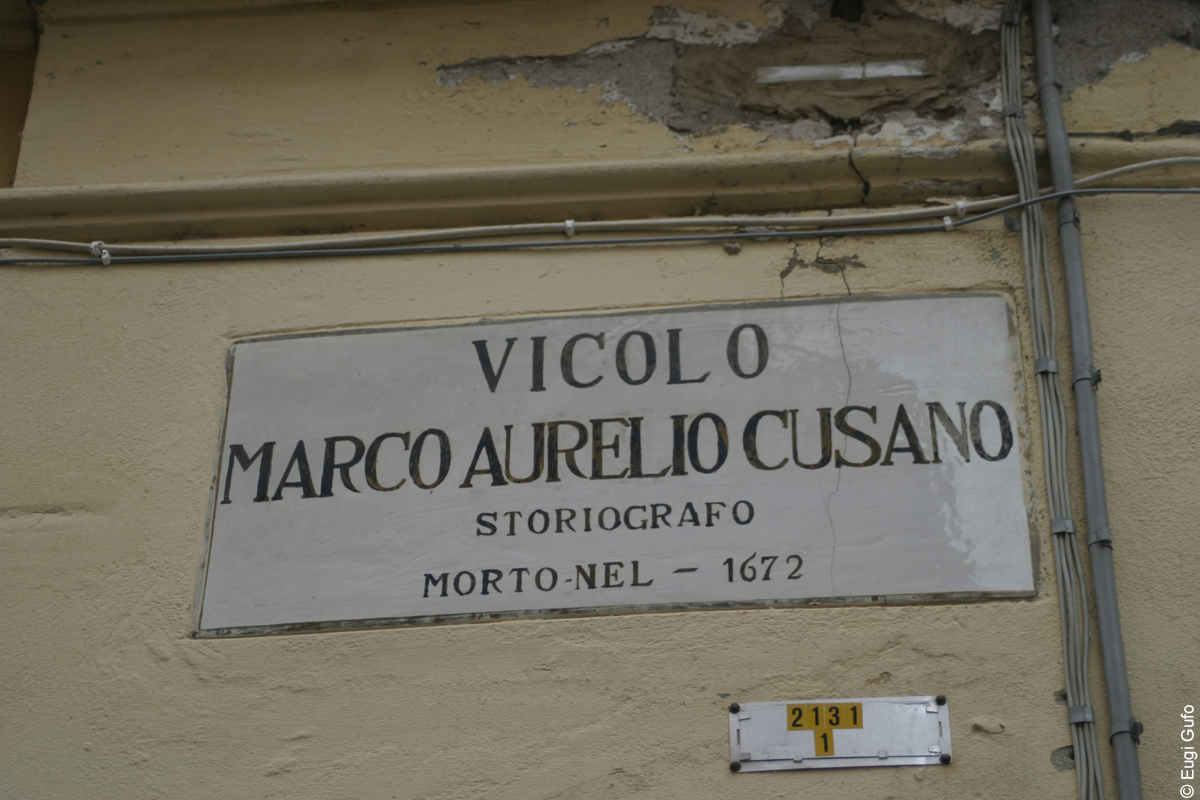
On the positive side, attentive visitors will discover many charming details. For example, ceramic street name plaques — one of which commemorates a historian apparently remembered chiefly for having died.
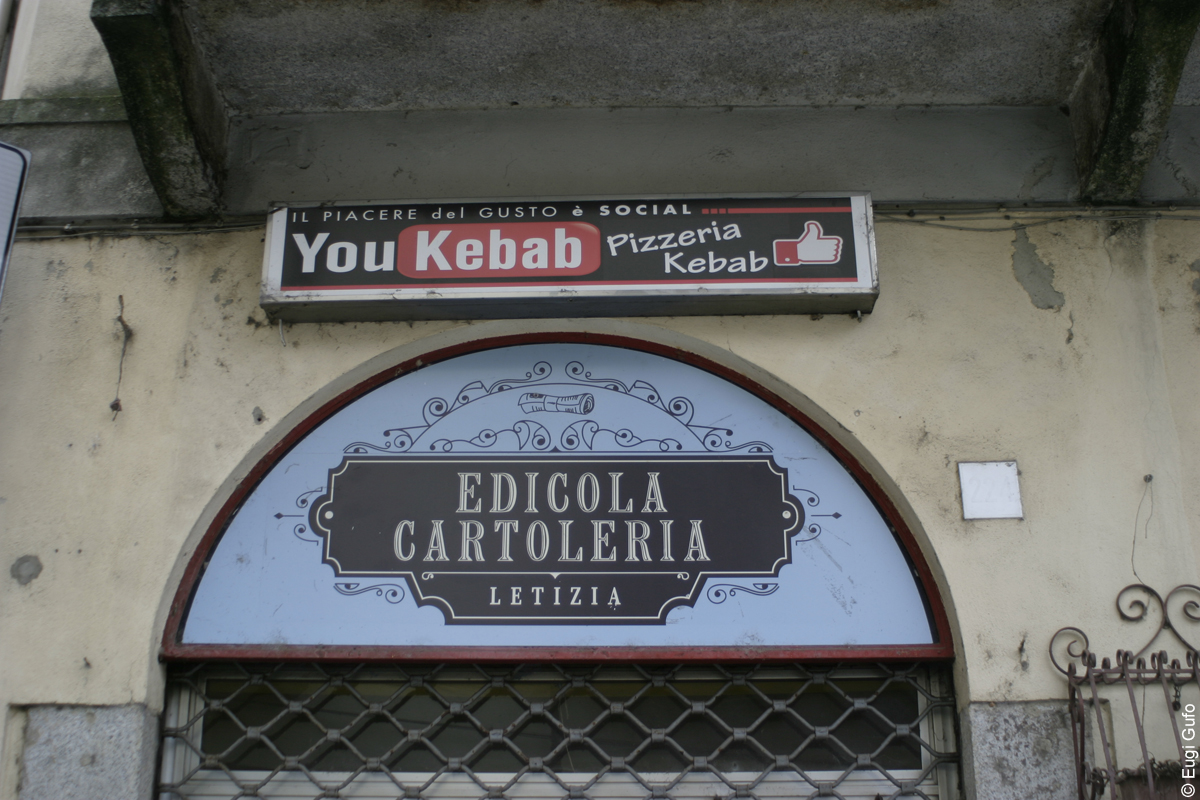
A local entrepreneur once created one of the least boring shop signs I have ever seen. The business may no longer exist, but the sign deserves cultural protection.
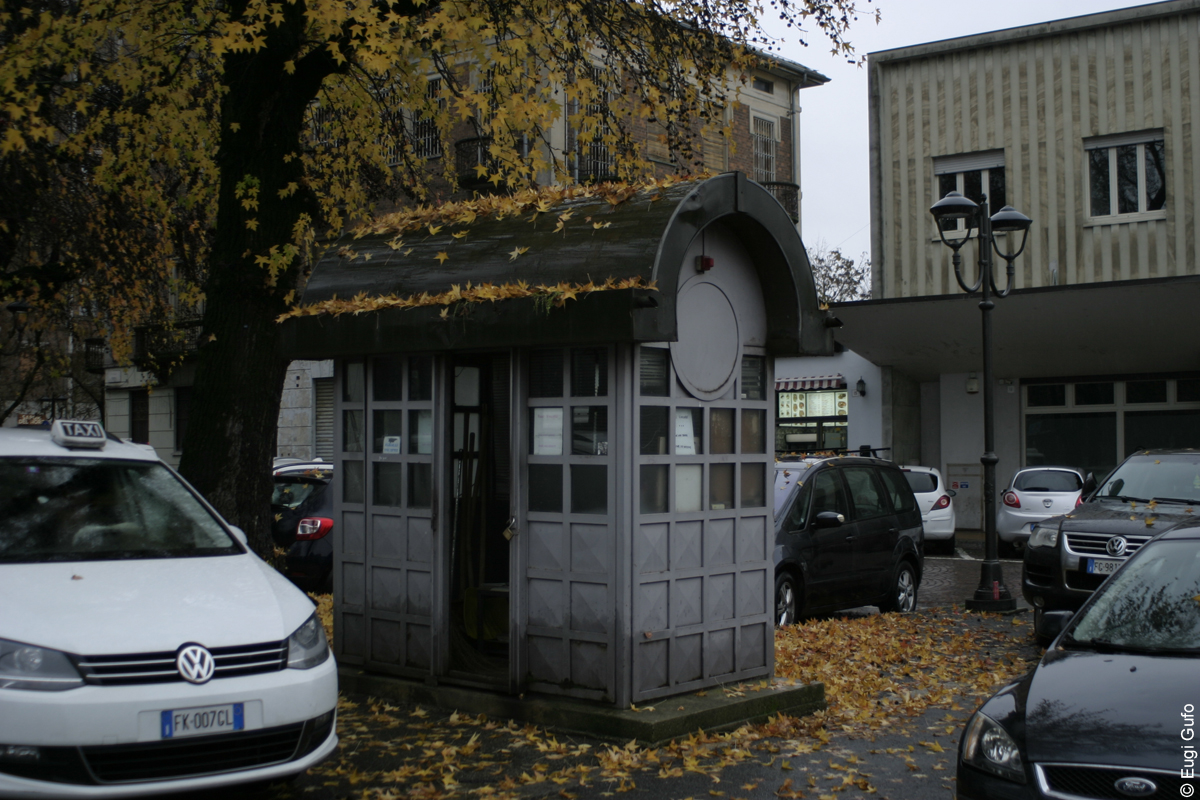
Near the railway station stands a small and curious taxi shelter — not something I recall seeing elsewhere in Italy.
Urban public transport often consists of very small buses. To someone accustomed to big-city vehicles they may appear amusing, yet rational energy use sometimes means simply matching vehicle size to passenger numbers.

At this point, I believe I have shown you the most beautiful things I discovered during my first visit to Vercelli. I sincerely hope to return one day — preferably under clear skies — to explore and appreciate certain areas even more thoroughly.
Vercelli, 9 December 2022
↓ Show comments ↓


