


 Long live Ukraine! Fuck the war!
 RSS of site articles
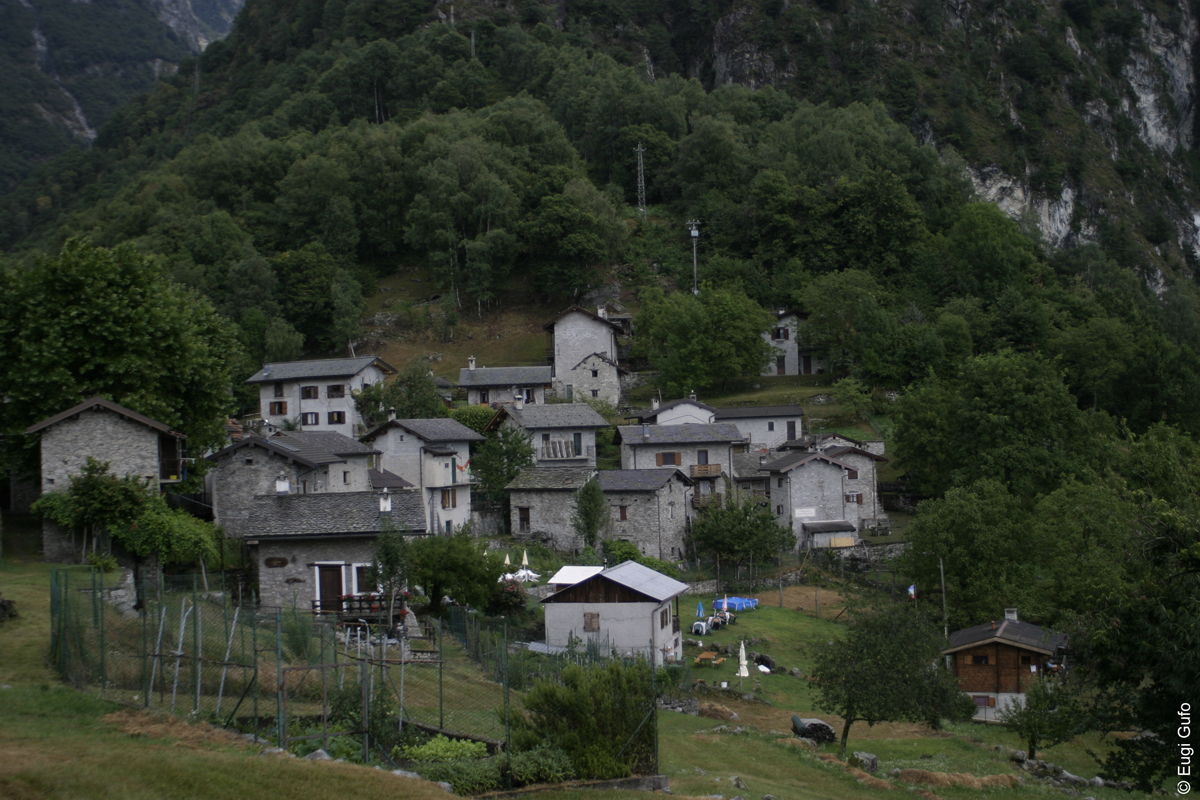
Anyone who decides — as I did in August 2024 — to walk one (any one, in any direction) of the mountain trails in Val Codera will find it remarkably difficult not to pass through San Giorgio, one of the valley’s ten villages accessible only on foot or by helicopter. And fortunately so. Even those primarily interested in hiking or contemplating natural landscapes will have the opportunity to notice this beautiful place — arguably one of the loveliest in the valley — if only in passing. It is not an «urban» location awkwardly inserted into nature; it is nature with houses politely cooperating. That tends to please everyone.
Let us proceed in order.
Personally, I can testify to two ways of reaching San Giorgio: starting from Novate Mezzola, or continuing along the path that already allowed us to visit Avedée and the valley’s only permanently inhabited village, Codera. Which route shall I describe first? The one «for the lazy,» naturally — that is, from Novate Mezzola.
First, one must walk to the end of Via del Castello in Novate Mezzola to reach the starting point for Val Codera. Eventually, the familiar brown mountain signs begin to appear. We are interested in those explicitly indicating San Giorgio.
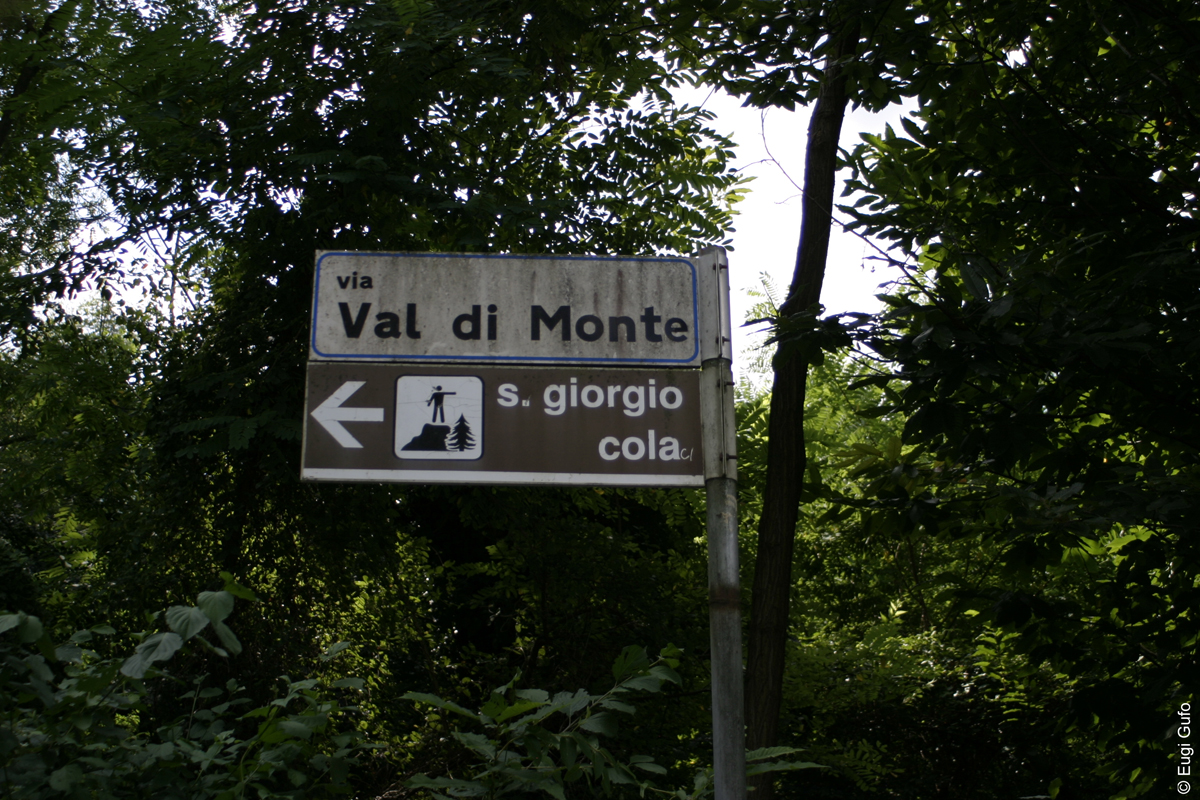
The first signs are still along the asphalt road (turn right), while the sign marking the beginning of the ascent appears shortly after a metal cross on the left-hand side of the road.

Once you take the gravel road that appears to be the start of the trail, you will likely encounter this junction. Remember to turn right.
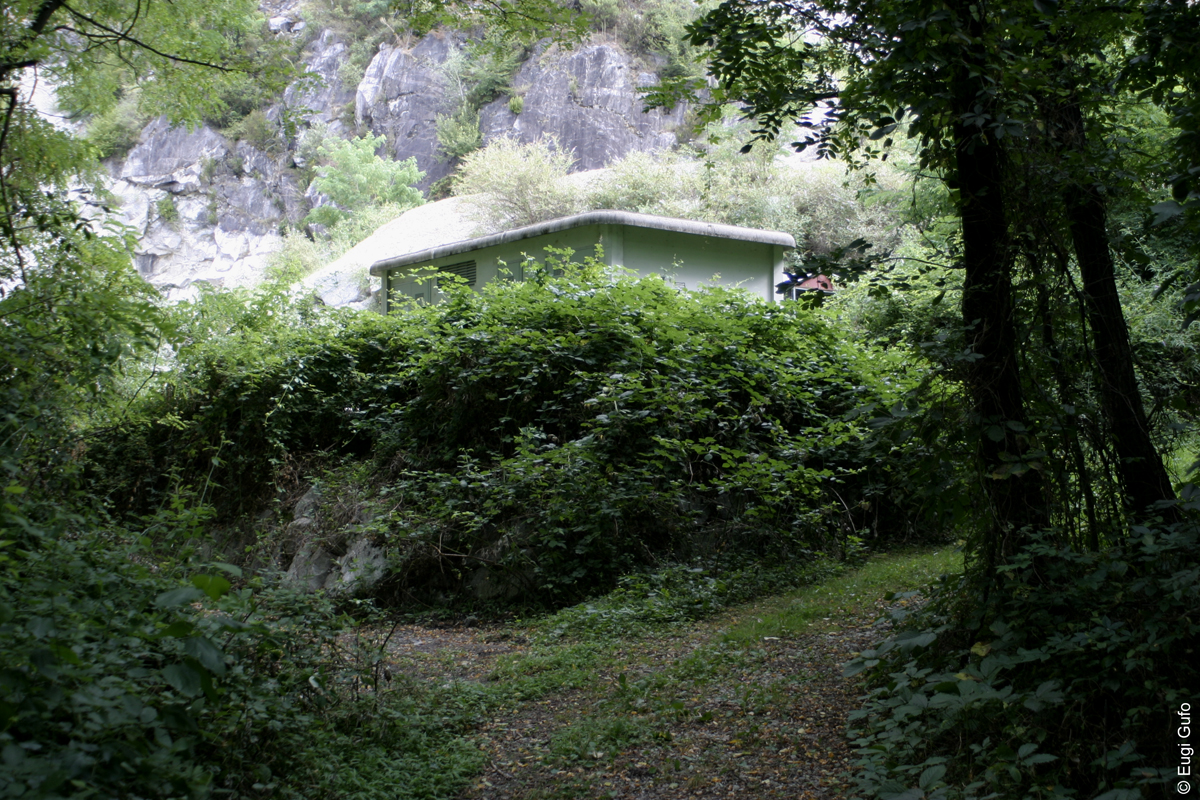
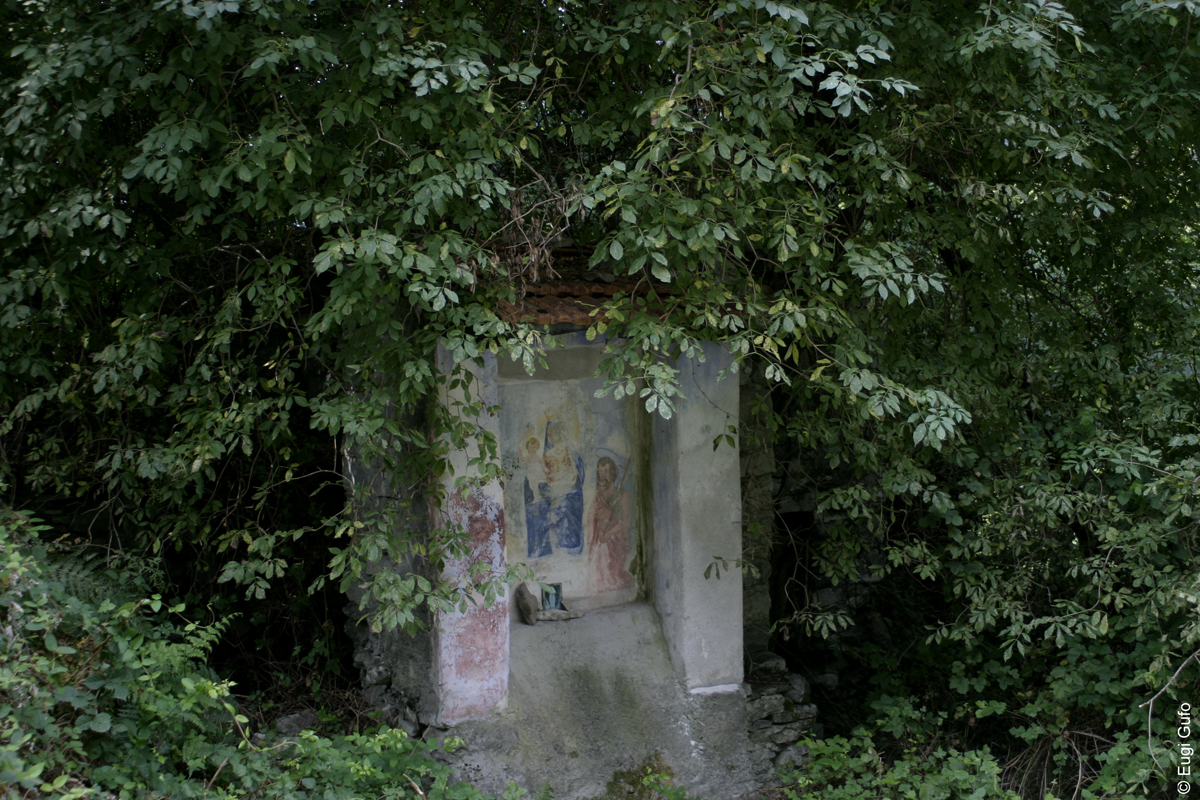
To the left there is nothing of particular interest — merely a small chapel designed to deceive you and waste your valuable time.
The correct direction, to the right, can be followed either along the gravel road itself…
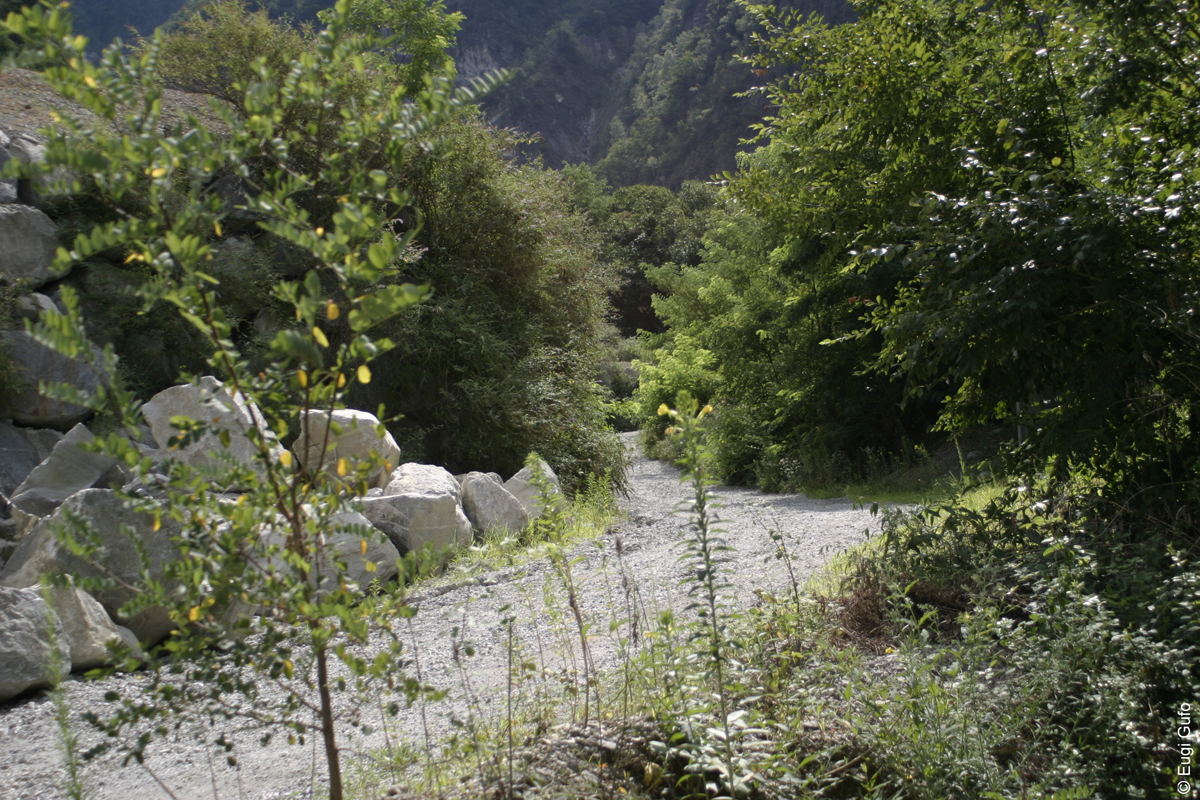
… or along the marked trail running parallel to it.
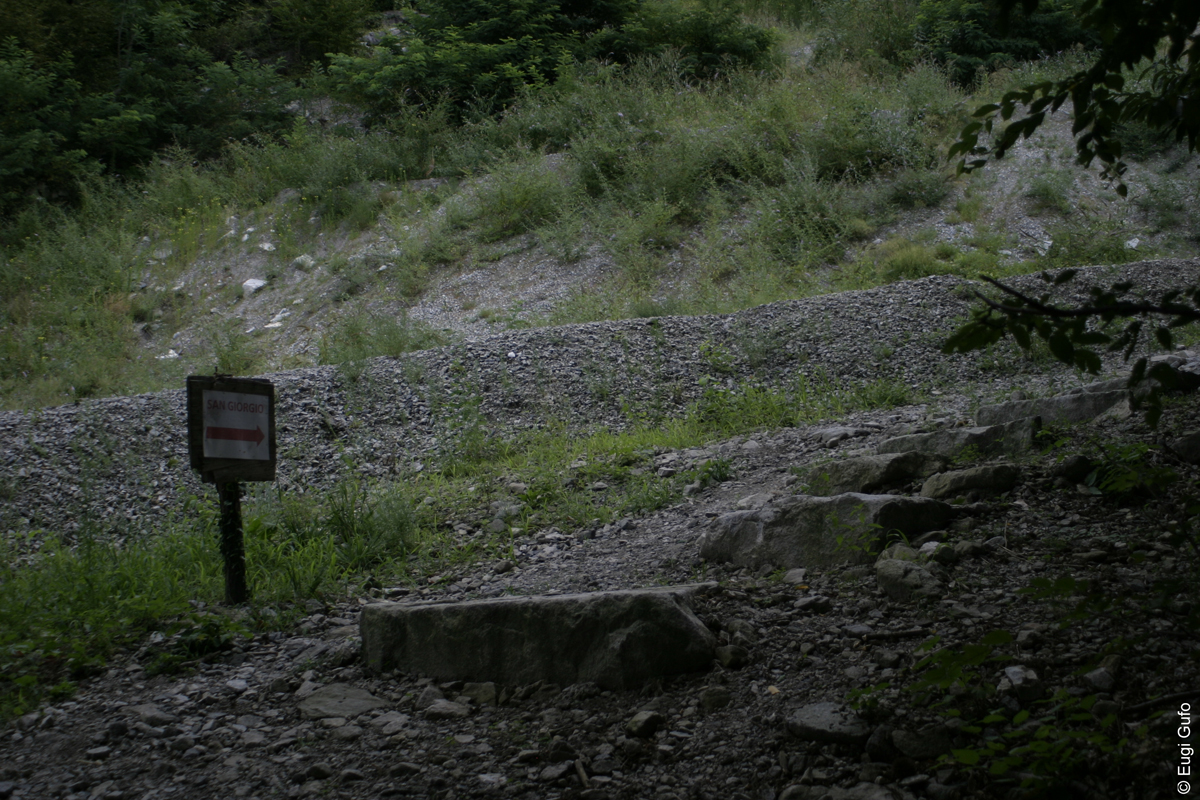
Soon the signs become more visible — and somewhat more amusing. The prohibition of motorcycles is technically unnecessary. No off-road motorcycle yet invented is capable of comfortably navigating what lies ahead (you will soon understand why).
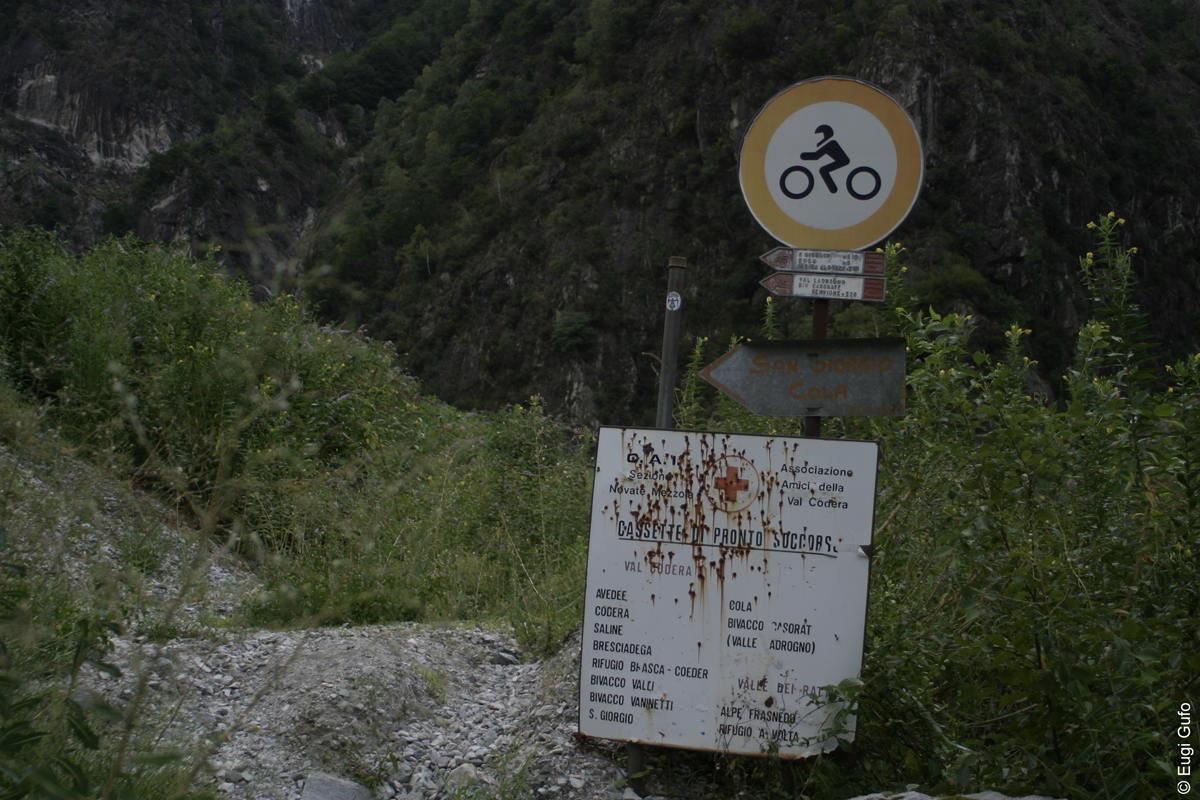
A few metres later, the trail crosses a small quarry — modest in width and not particularly dangerous (you may not even notice any activity), since the crossing is official and therefore known to those who work there.
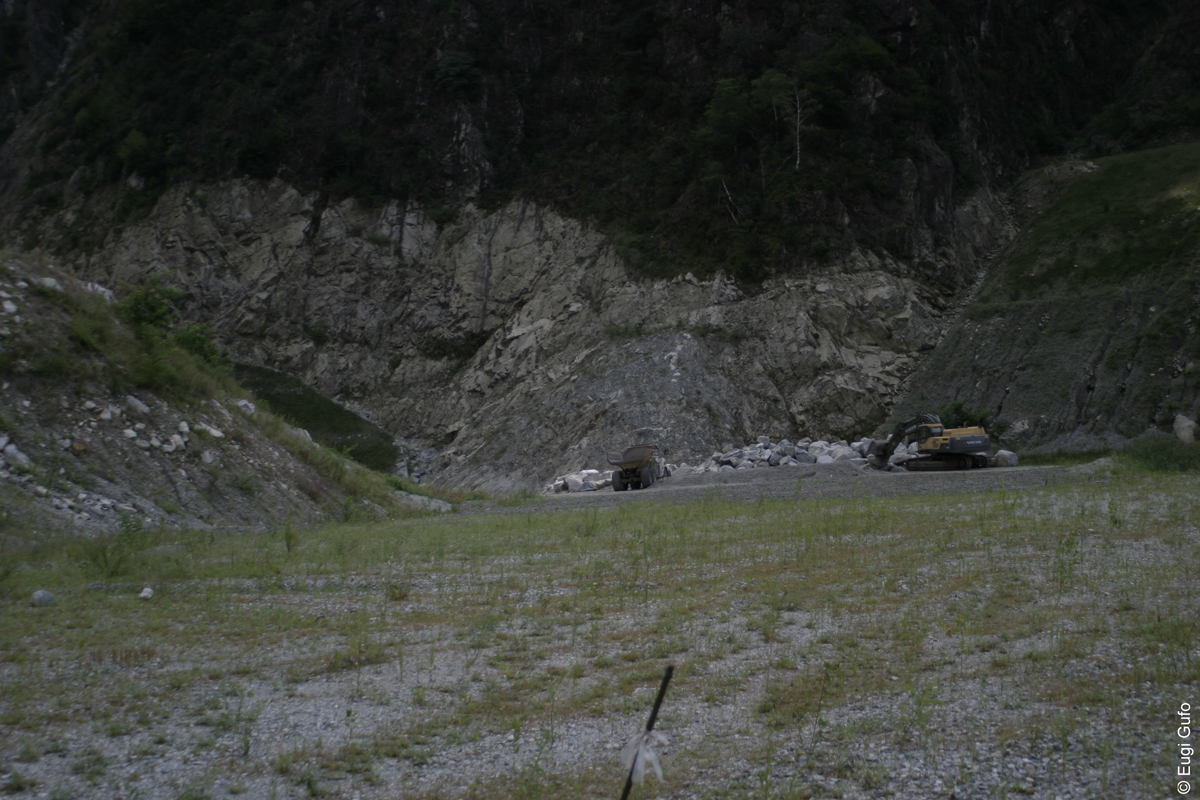
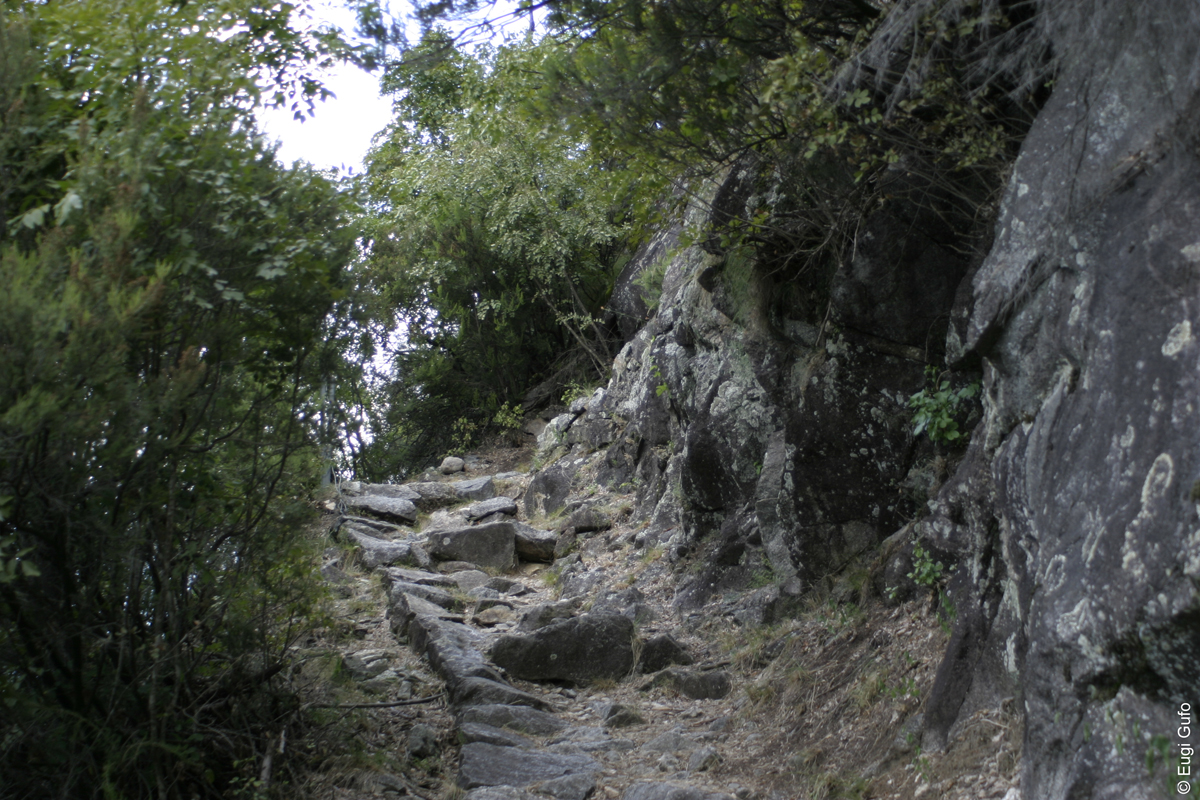
Then the true mountain path begins: steep, stone-paved, often in the form of steps. Fortunately, much of the ascent is shaded by trees — mainly pines and chestnuts.
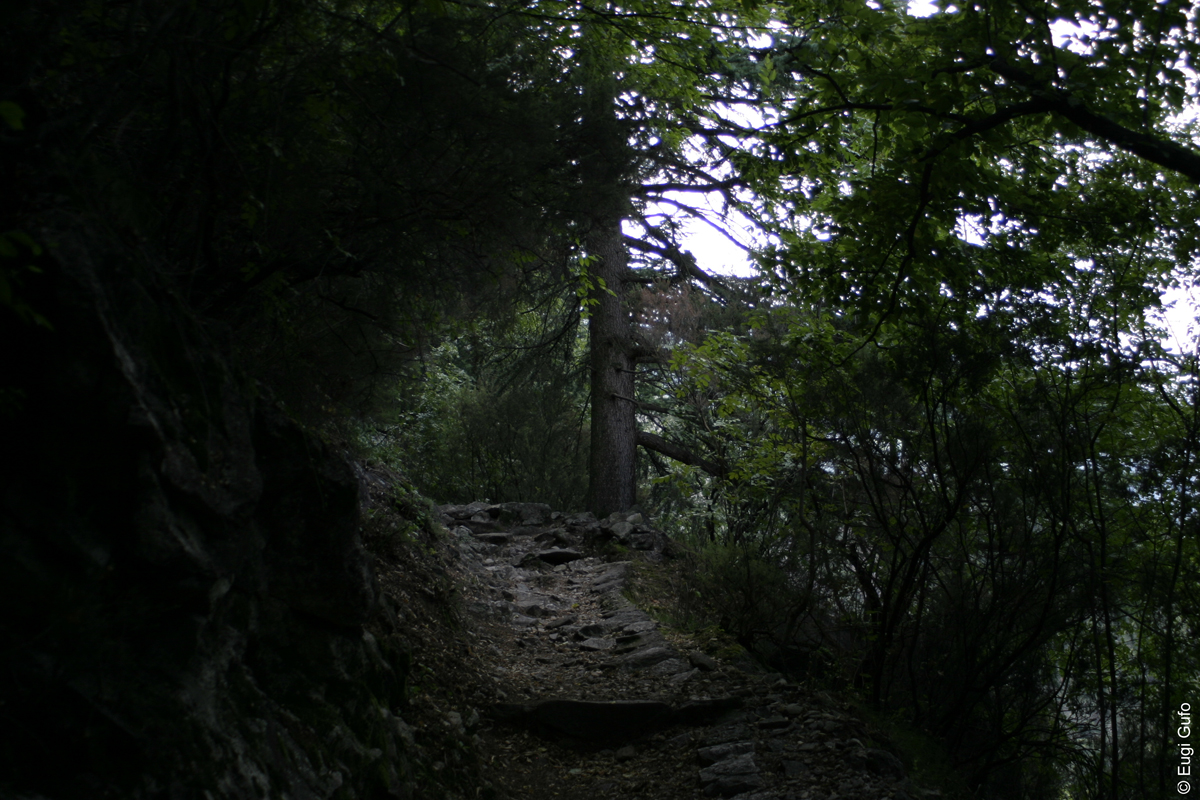
The higher one climbs, however, the more the bare rock asserts itself.
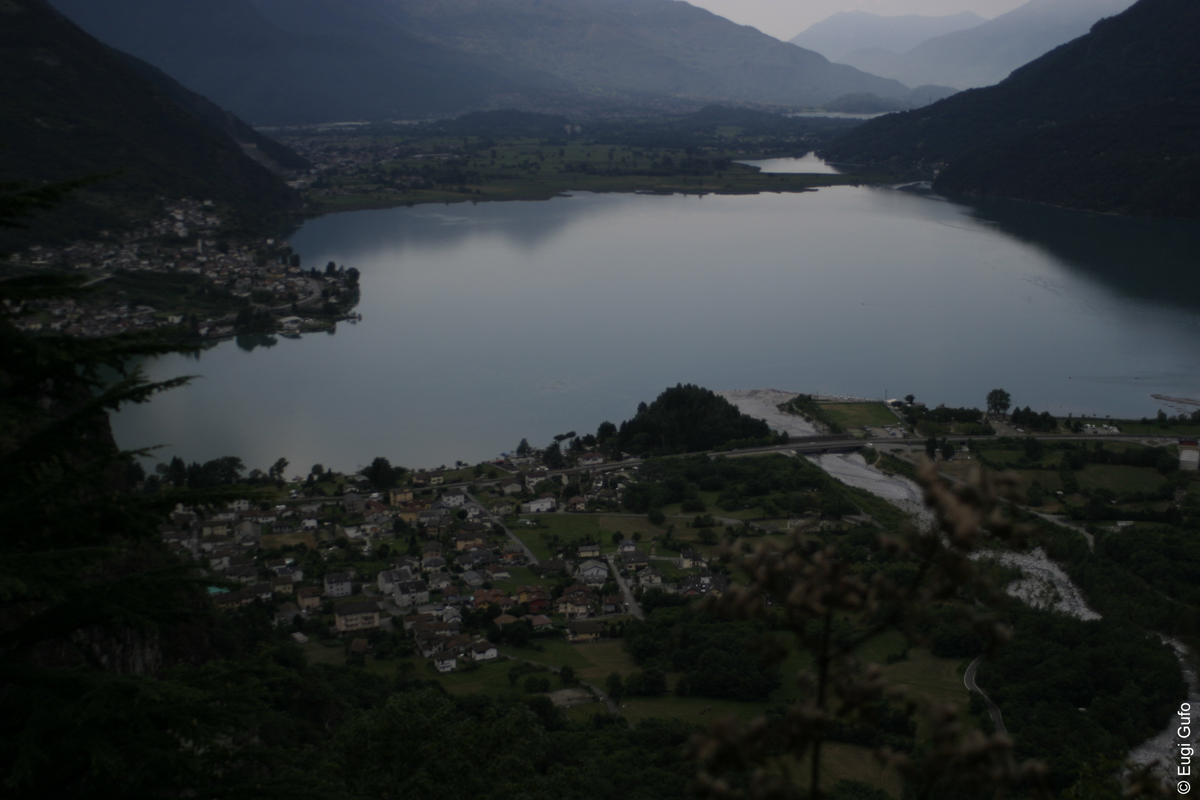
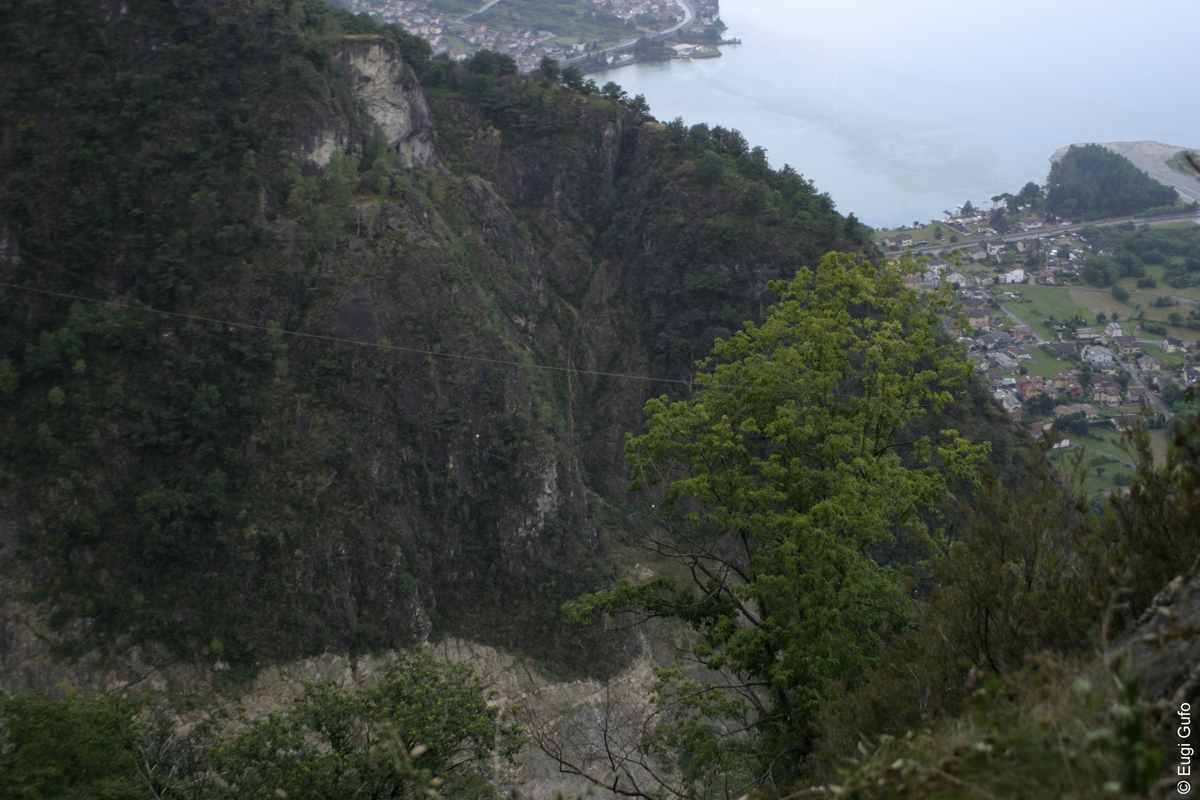
The view over Lake Mezzola grows steadily more interesting.
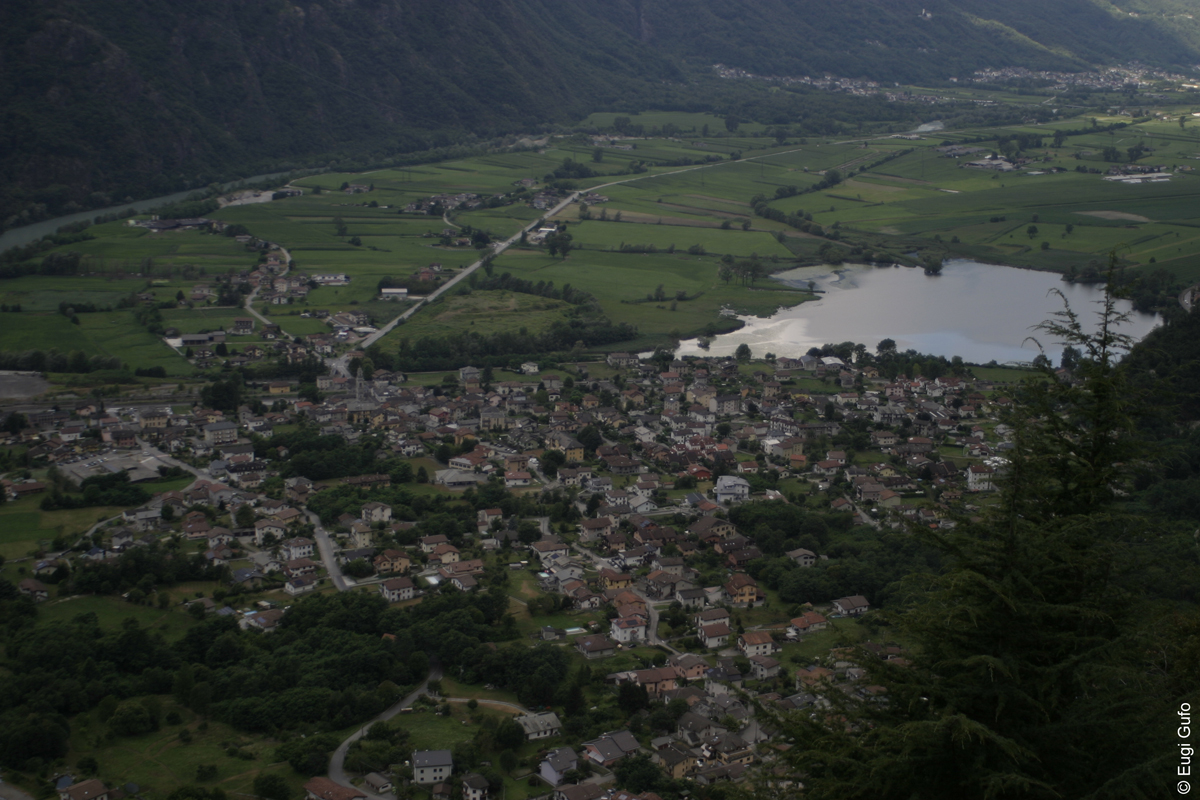
As does the view over the plain in general.
The trail becomes increasingly beautiful from an aesthetic standpoint.
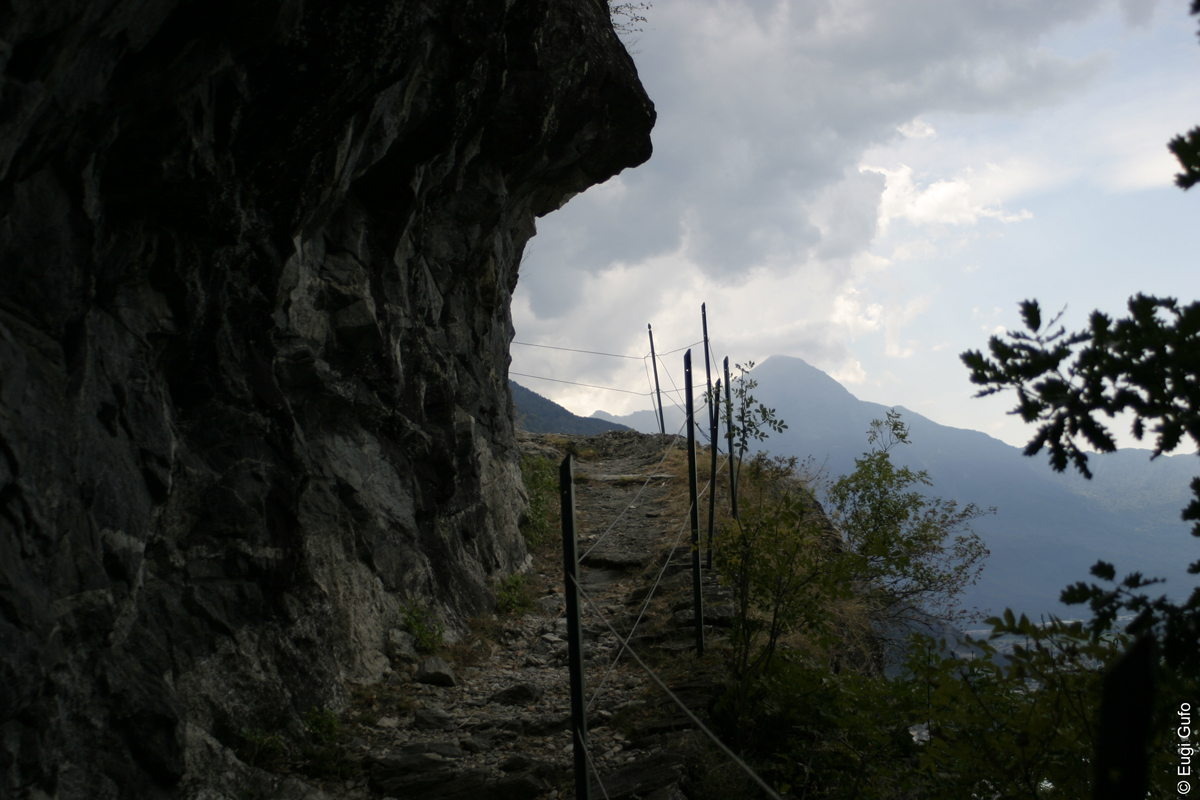
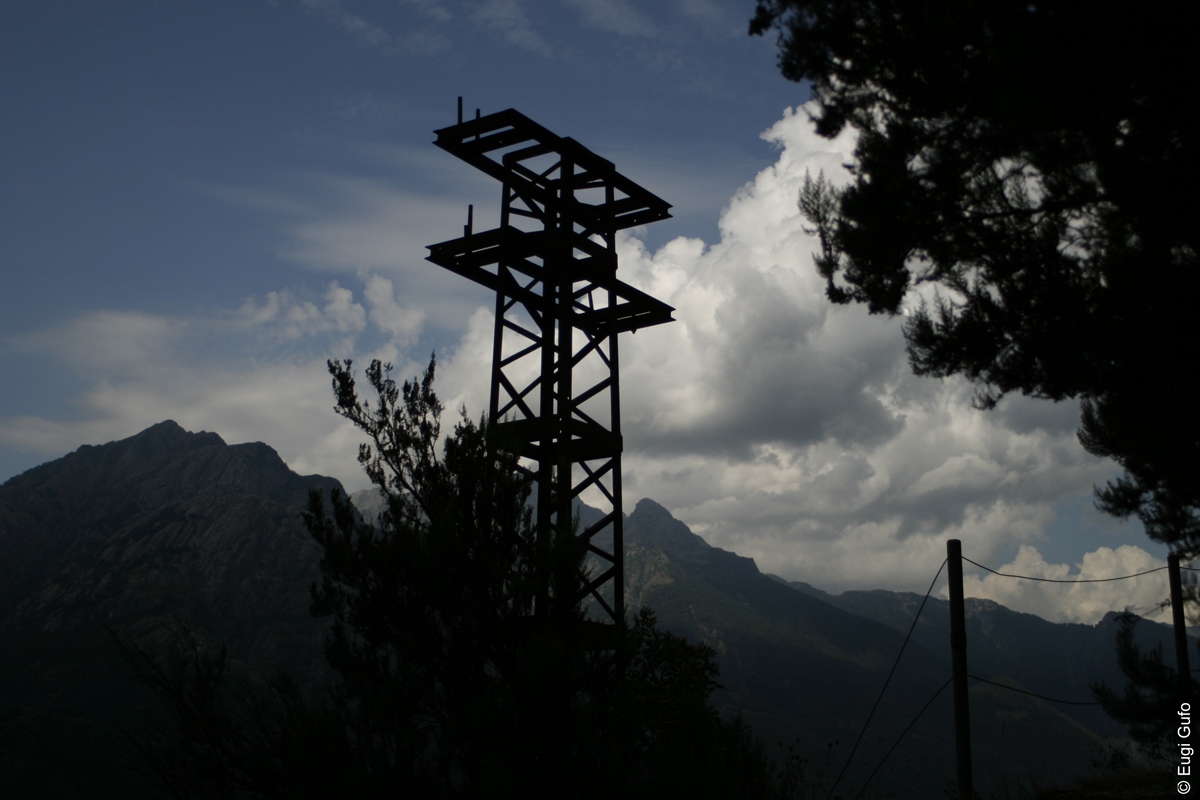
Ruins of old pylons begin to appear — a discreet sign that one may be approaching a former human settlement.
A stone cross, built or restored not terribly long ago.

The landscapes remain those of the plain…
And then, suddenly, the ruins of the first houses appear — an ideal location for a short and dignified pause.
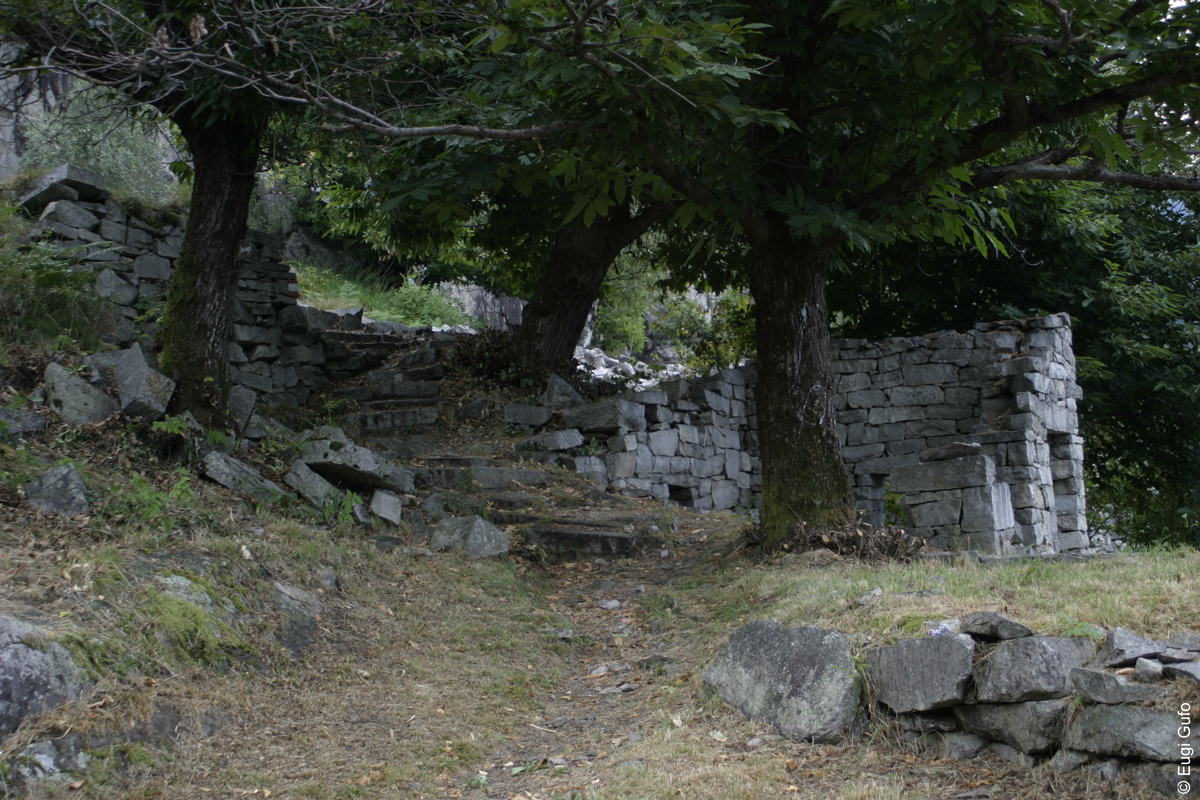
Resuming the path, which passes directly through these ruins, one soon reaches a point where a decision must be made: continue straight ahead or turn right? The correct choice is to proceed straight on, as the right-hand branch quickly proves impassable — apparently due to a landslide.
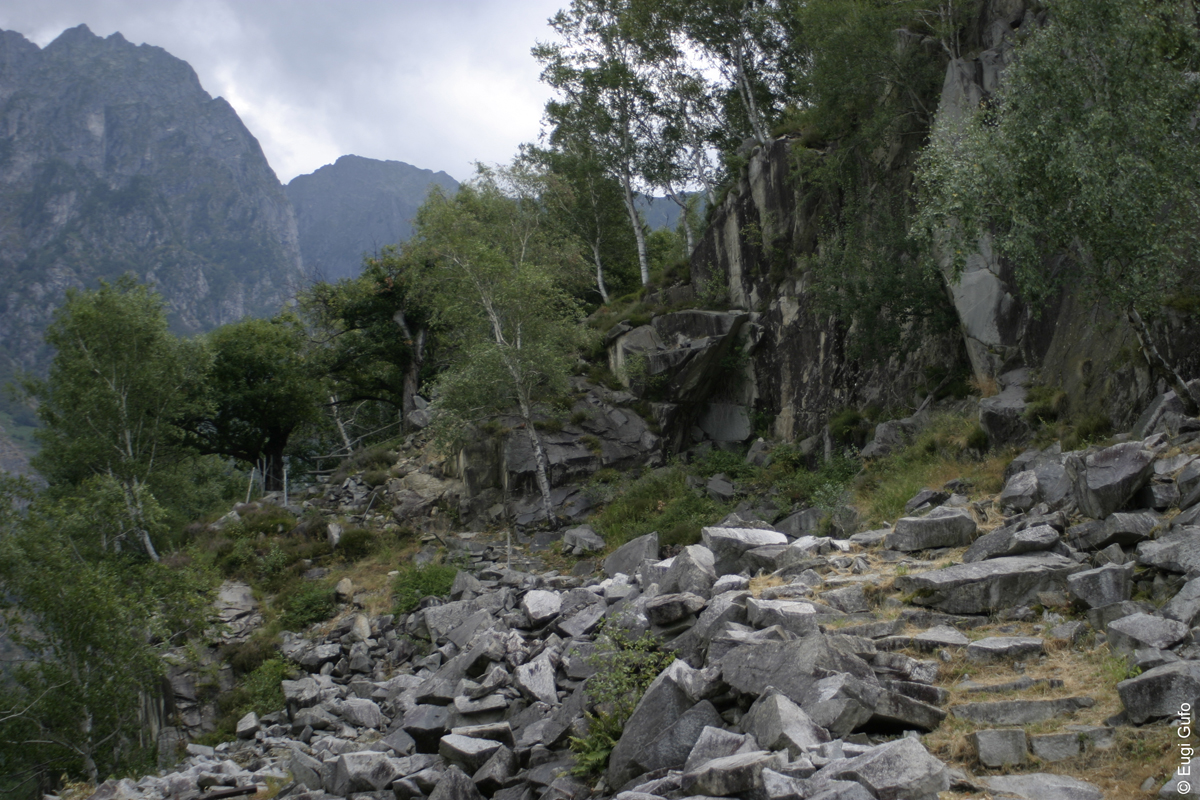
Continuing onward, one soon arrives at San Giorgio. At last, the first house!
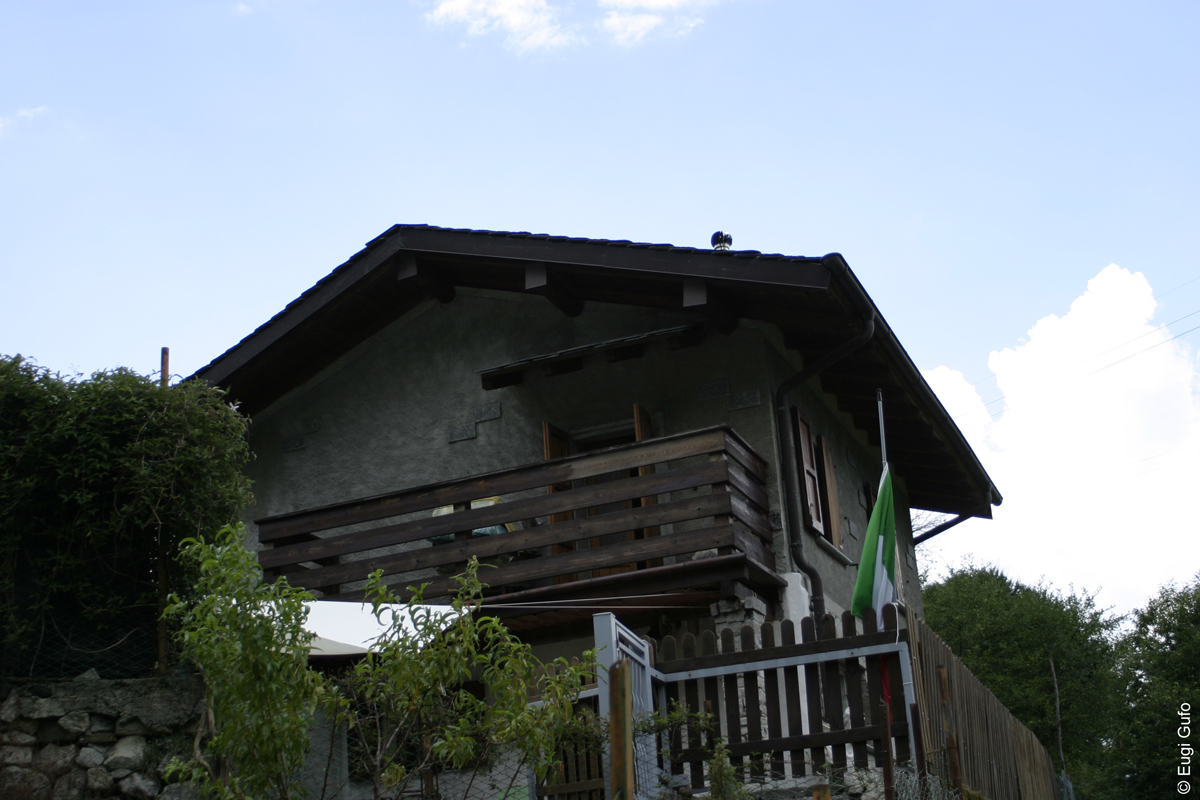
At first glance, San Giorgio might seem little more than a scattering of houses in a meadow.
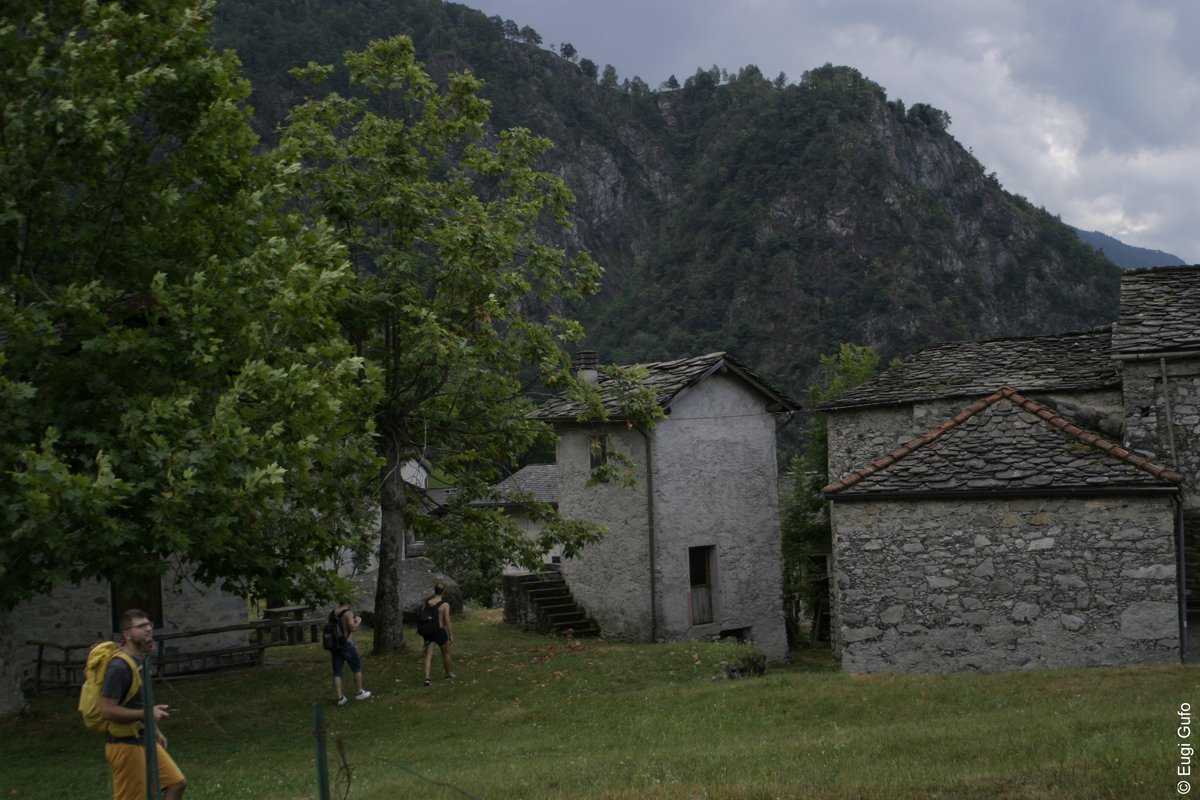
In reality, it is very much a proper village, with its own denser «centre,» a looser periphery, several services, a cultural space, and a church.
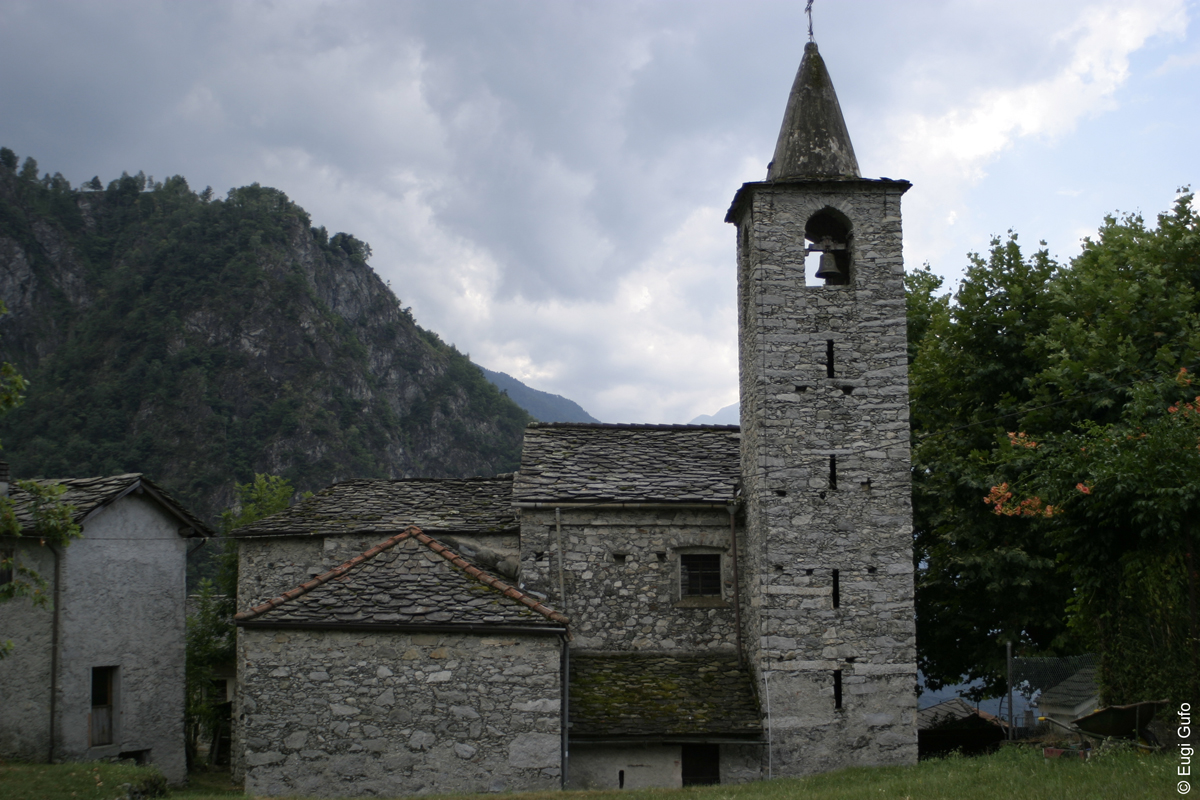
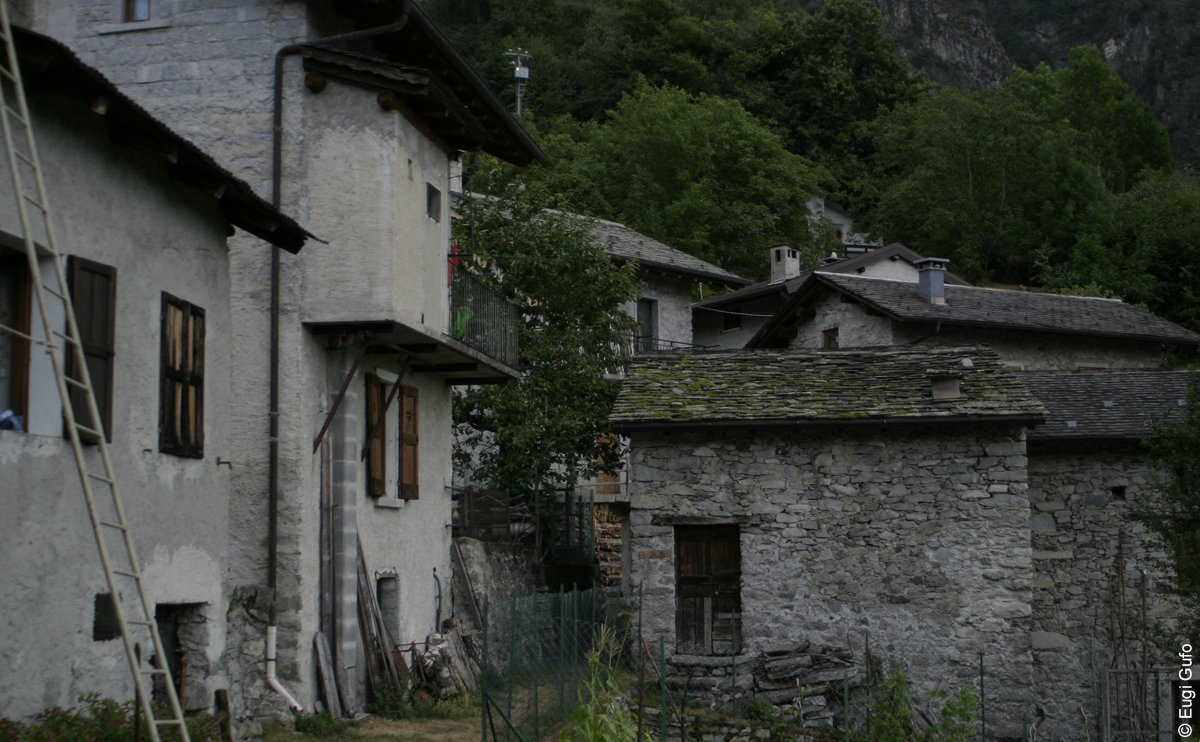
The most built-up area lies on three sides of the church.
The small village church — dedicated, as one might guess, to Saint George — was originally Romanesque (thus dating to the 11th or 12th century), but was entirely rebuilt in 1780 and decorated in 1852. The bell tower was added later still, in 1880.
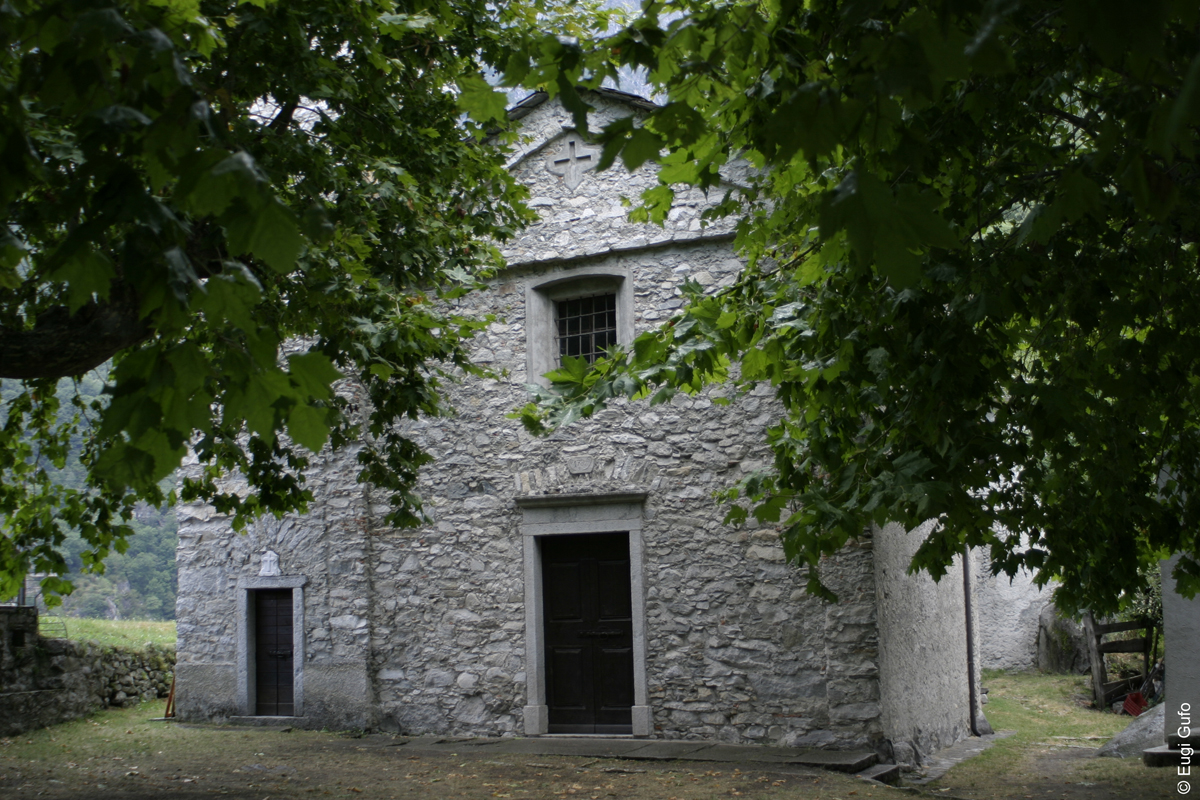
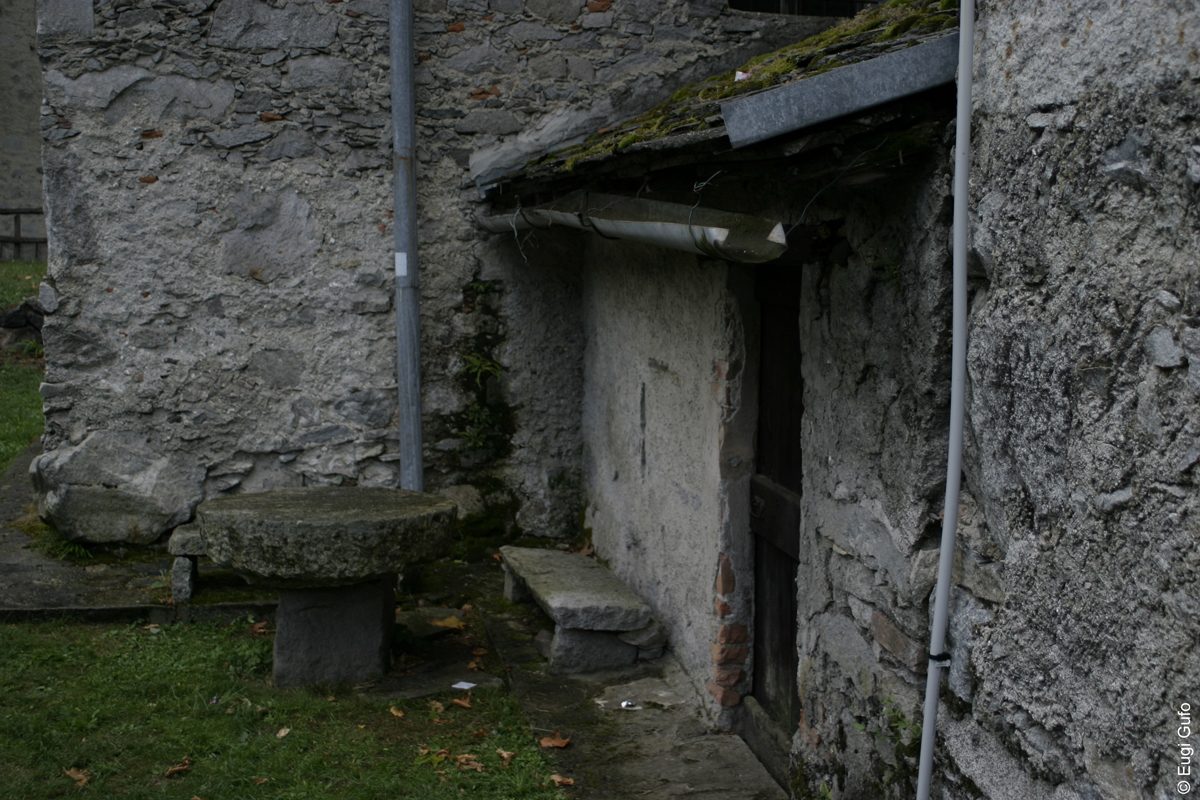
One of the most charming exterior details is a stone table flanked by two small benches. At first, I suspected the adjacent door might lead to the former priest’s residence — until I noticed the absence of both window and chimney.
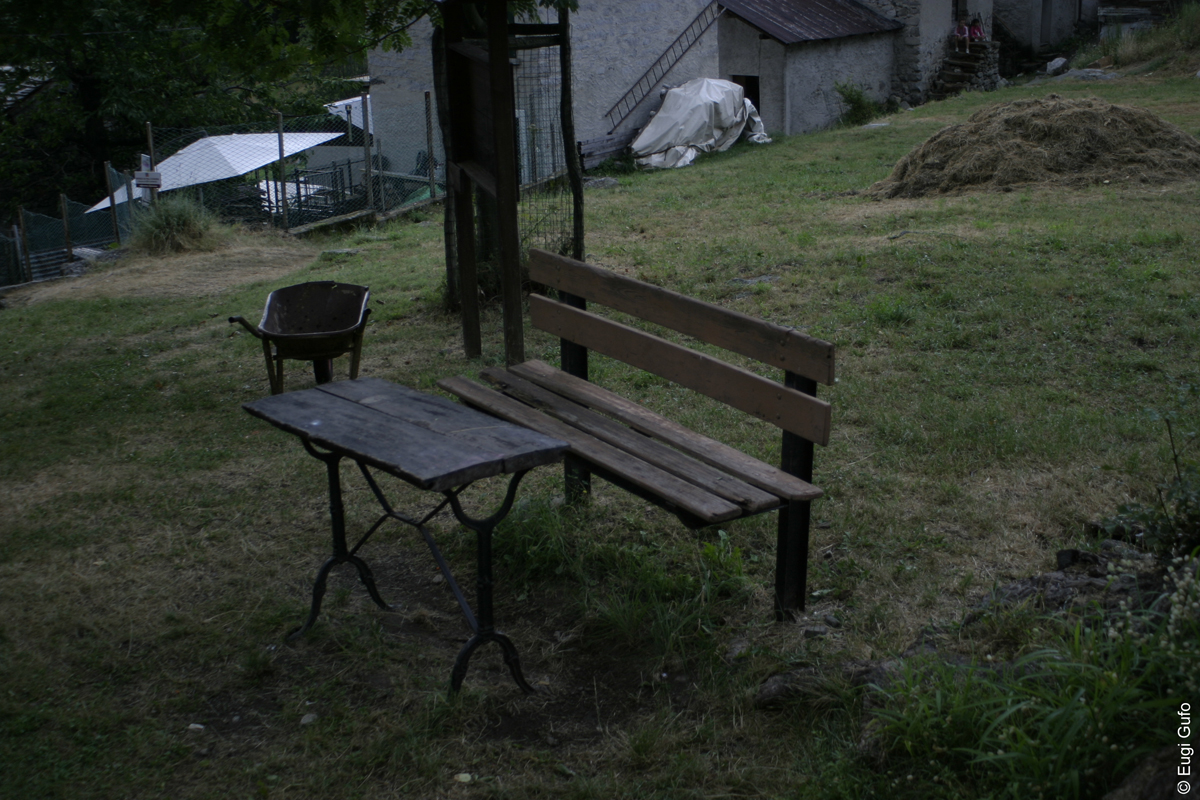
More generally, several benches with tables are scattered throughout San Giorgio, though it is not always clear whether they are public or belong discreetly to nearby houses.
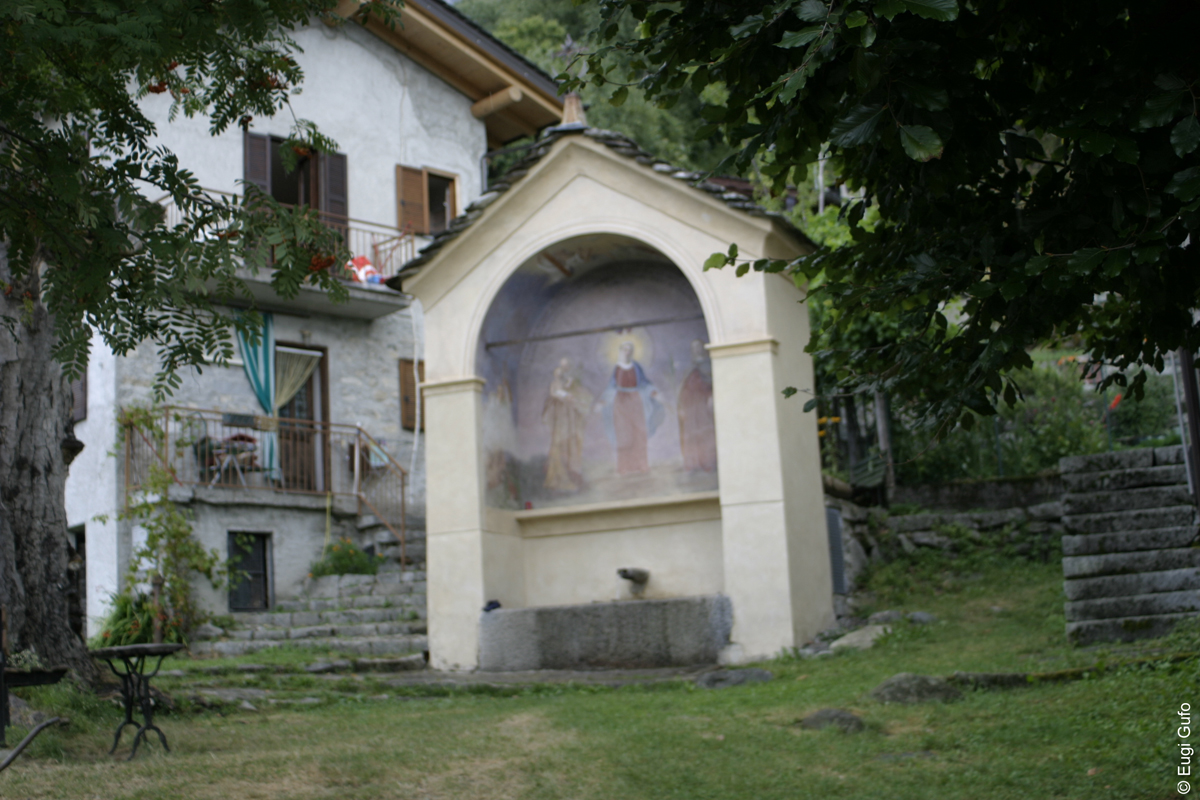
The church is not the only religious structure in the village; there is also this small shrine:
Beyond sacred spaces, San Giorgio also boasts a cultural one: a museum displaying the tools once used by local quarry workers and farmers. According to Wikipedia and Facebook, its official name is «I Noss Regòord.»

There are no paintings in the museum — but any landscape of San Giorgio functions, in its own way, as a work of art.
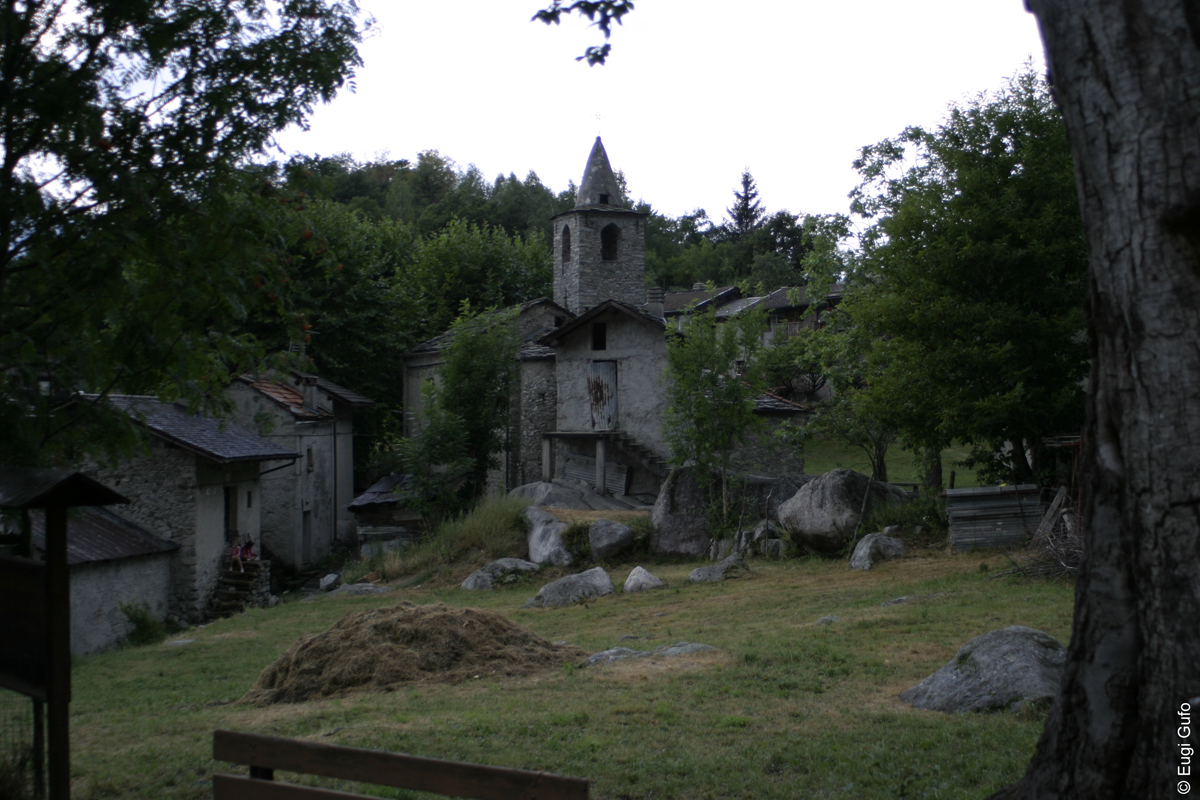
Many individual houses are equally picturesque.
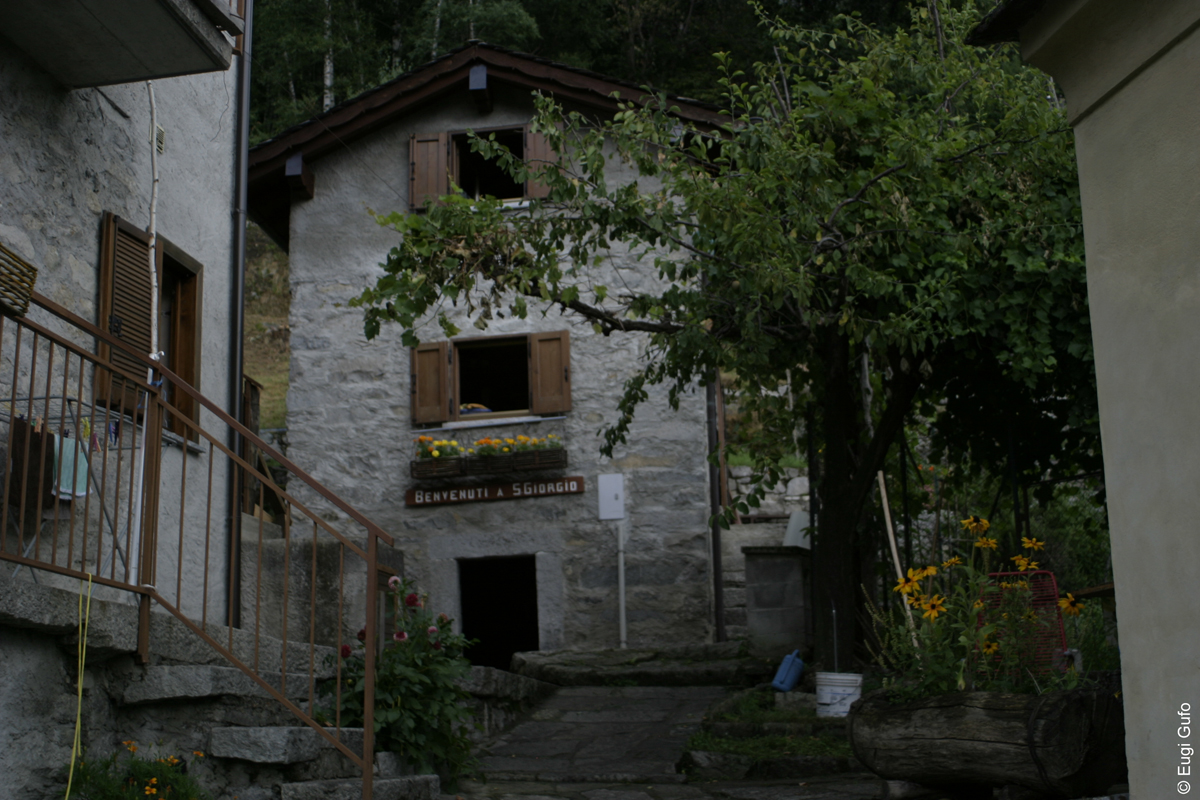
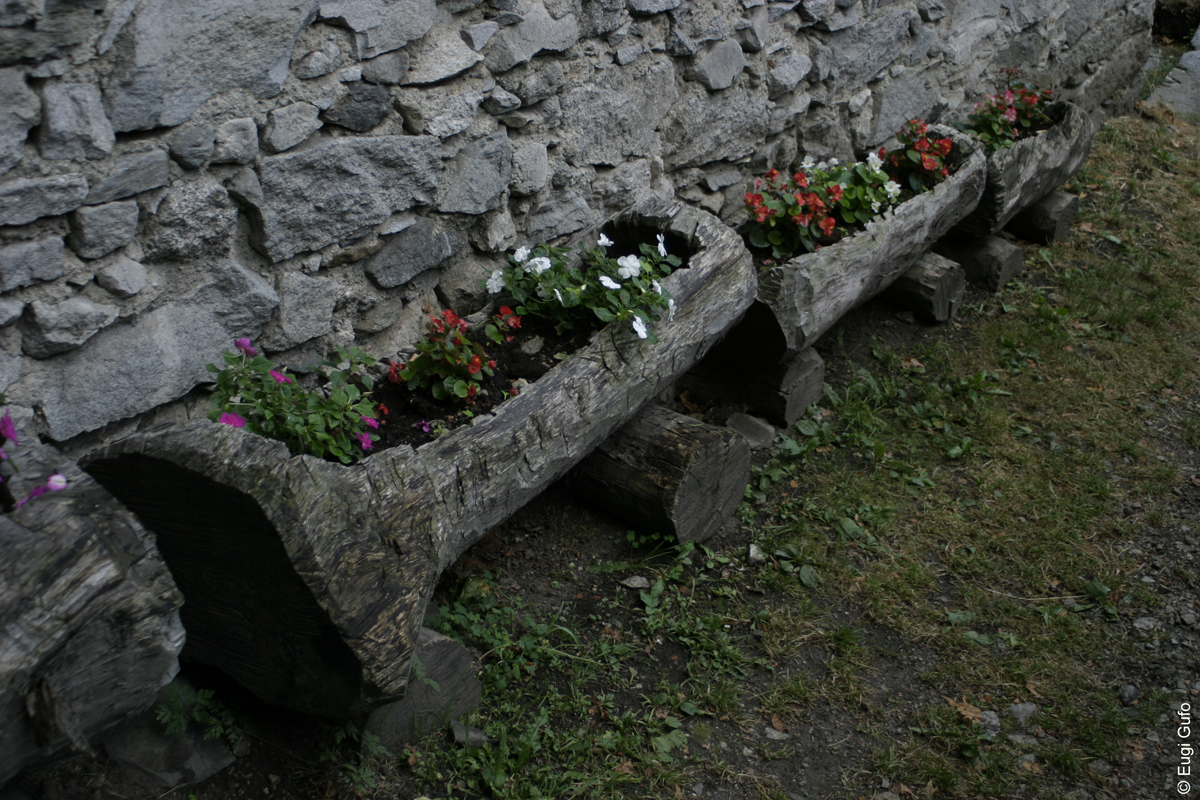
Aesthetically pleasing details abound — including, for example, outdoor flower pots.
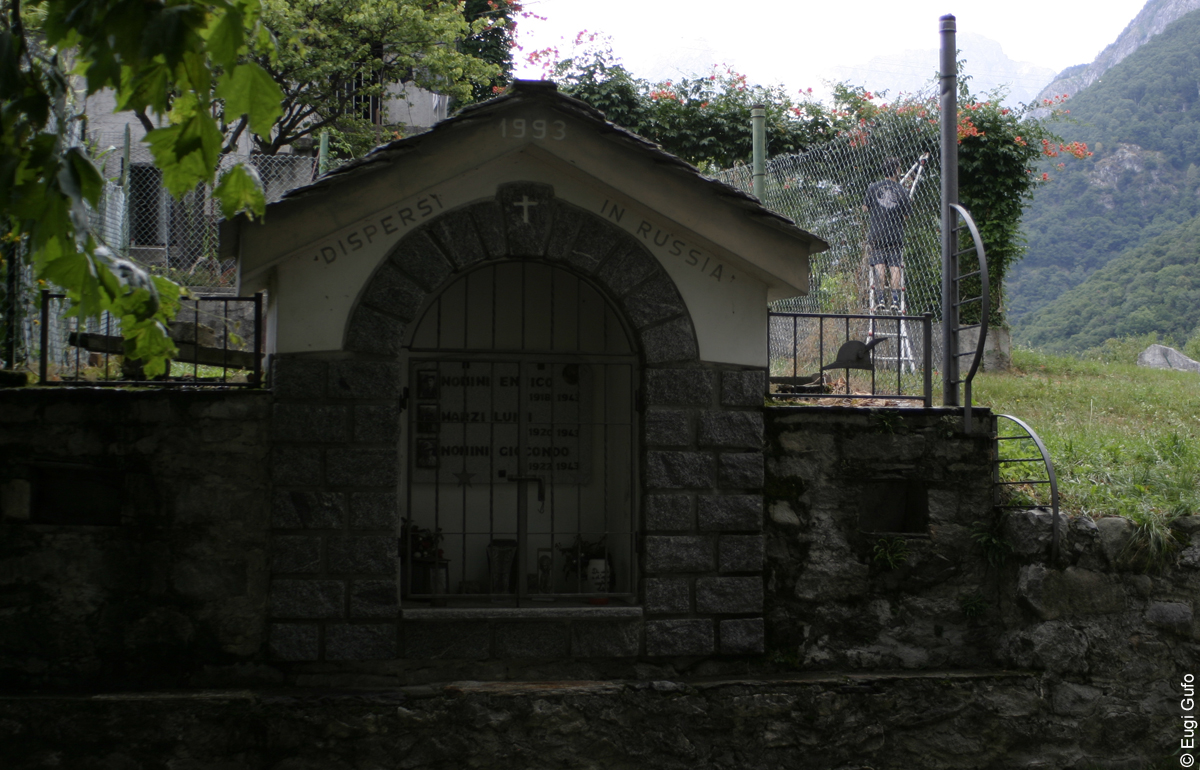
The monument to three Alpini from San Giorgio who disappeared in Russia (all in 1943) takes — somewhat unexpectedly — the form of a small shrine. I suspect that until 1993 only the commemorative plaque existed.
Official data indicate that San Giorgio currently has no permanent residents (the valley’s fifteen inhabitants live in Codera). This means all the houses we have seen — all in good, often excellent condition — are used exclusively as holiday homes (and perhaps occasionally for discreet episodes of remote working; at least mobile internet functions perfectly). I did, in fact, see and hear people moving about in houses and gardens with doors and windows open.
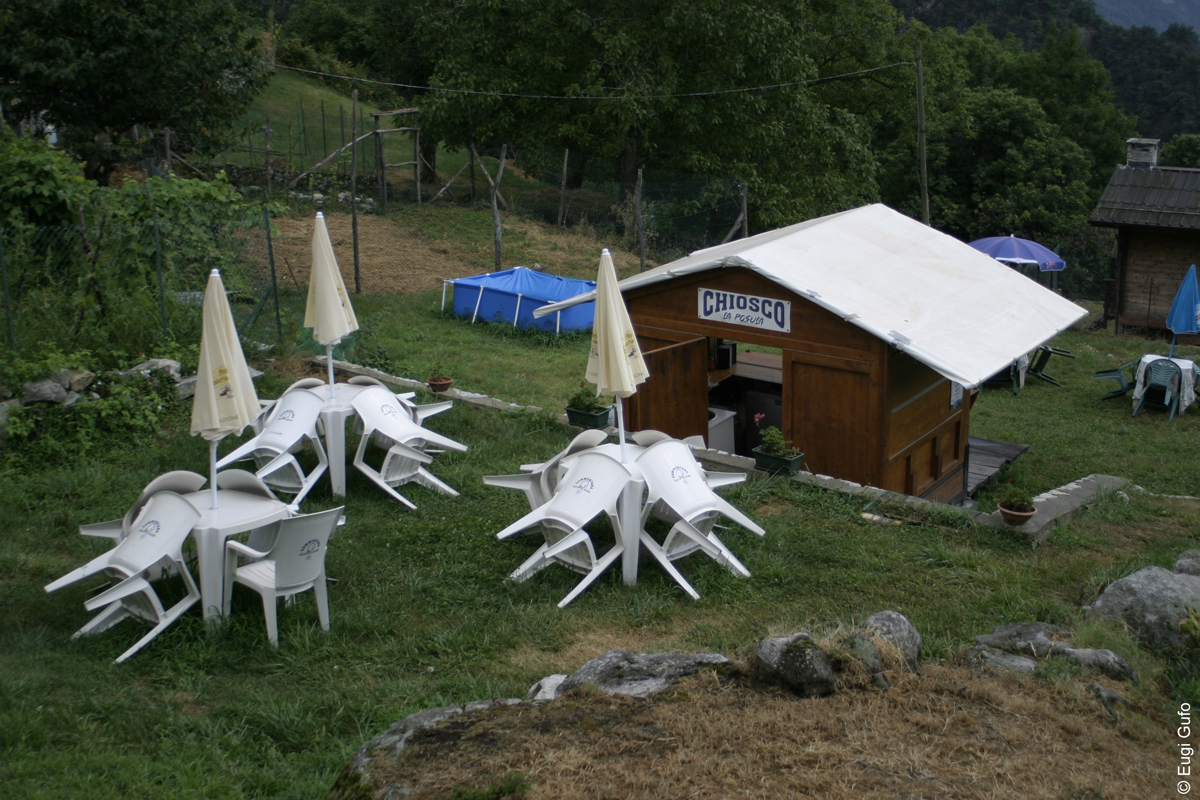
And since we are in Italy, even a village without residents cannot be deprived of a bar. It is called «Chiosco la Posula» and apparently offers ice cream, soft drinks, espresso, and perhaps other essentials of civilisation. I cannot say how frequently local property owners visit, but for certain hikers it may prove a welcome service.
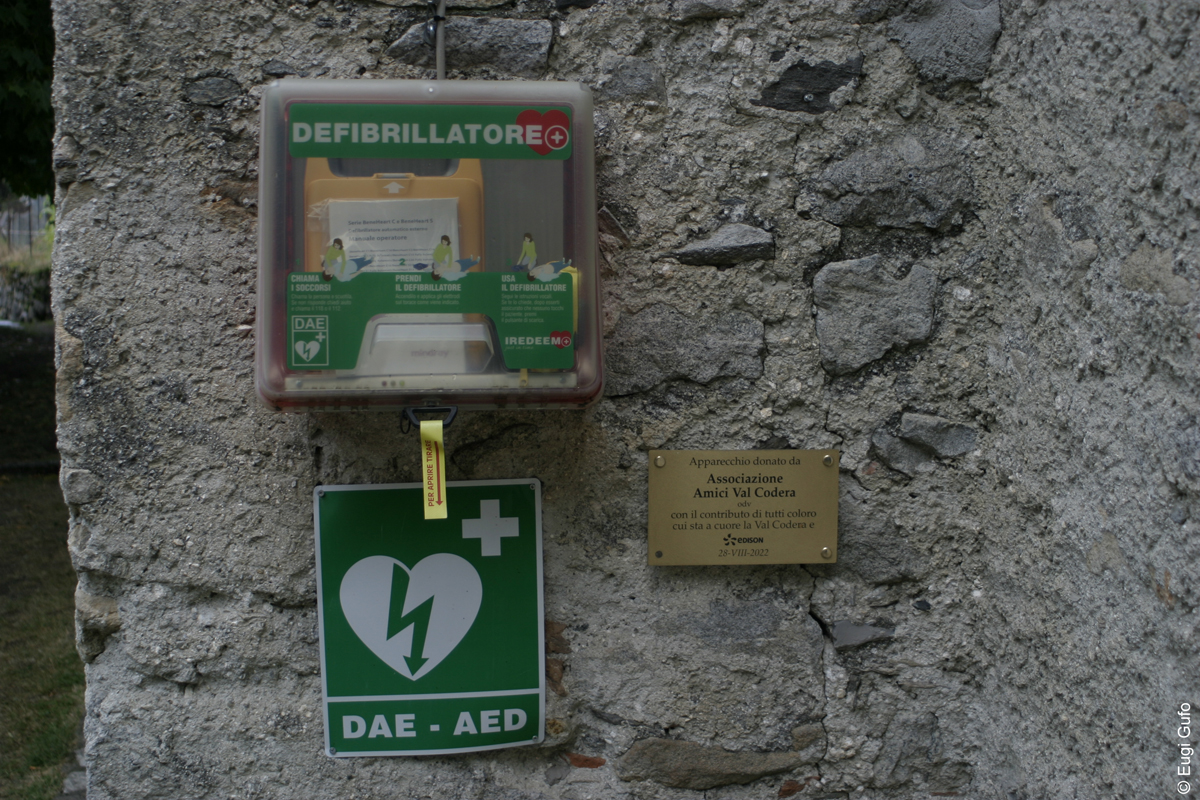
Another «service» — potentially useful in less cheerful circumstances — is the defibrillator (installed in August 2022).
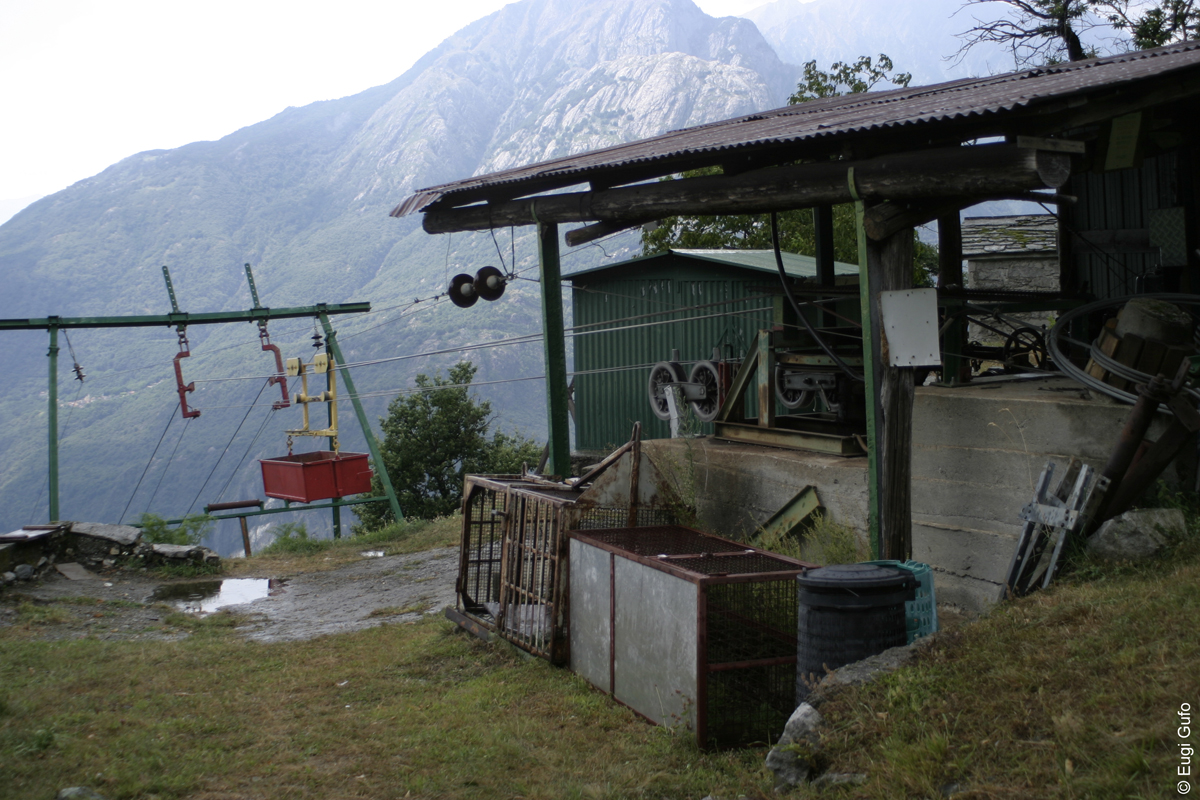
Extremely useful for homeowners is the cable-transport station — part of a ropeway system linking several villages of Val Codera to Novate Mezzola. Since all villages (San Giorgio included) are reachable only on foot (over an hour’s climb) or by helicopter (€40 per person, €160 for up to 900 kg of cargo), an economical and physically undemanding method for transporting heavy goods is not merely convenient but essential. Imagine spending a week in your mountain house while carrying on your back every item necessary for daily life: clothes, food, maintenance materials.
That said, clandestinely smuggling up or down a lazy but cunning individual via this system would appear somewhat difficult — and risky.
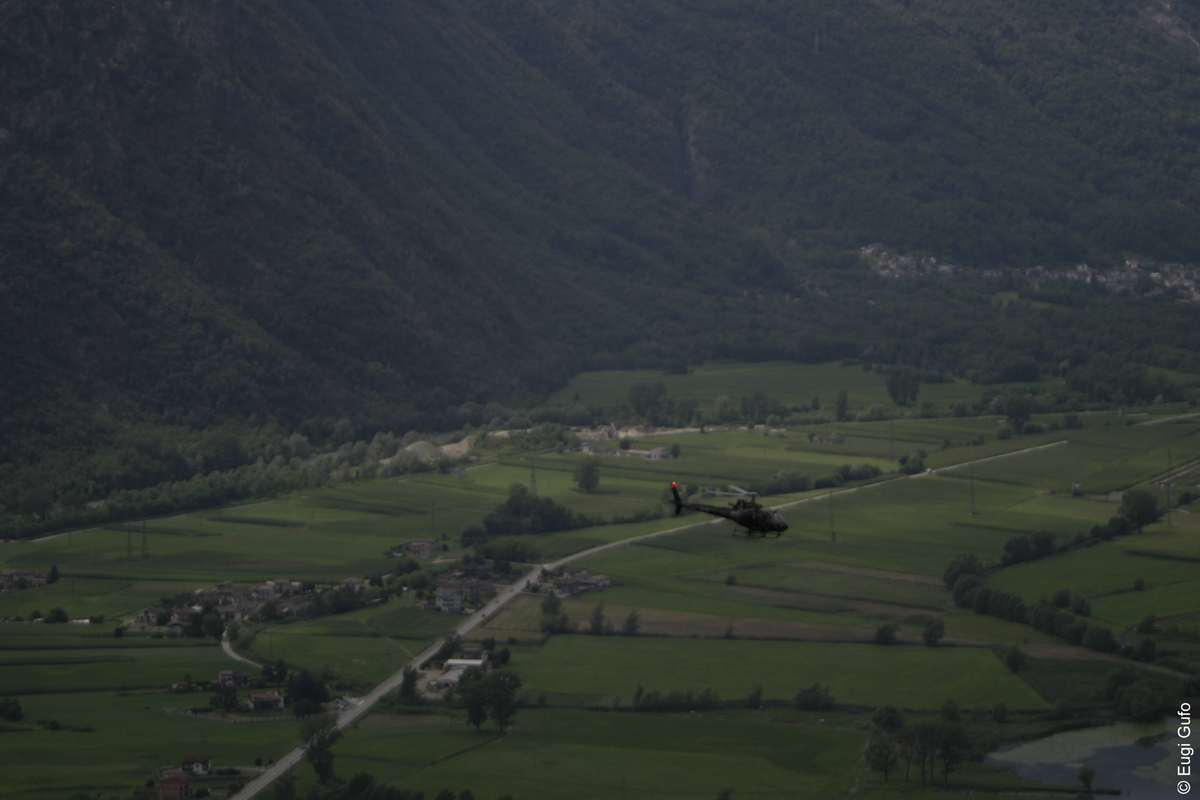
The helicopter serving the valley does not appear particularly large. I observed it only in flight and at a distance; it completed three or four return journeys while I was on the trail (you may spot the small black aircraft in the photograph).
And now it is time to resume the path — for I have shown you the essential features of San Giorgio.
One may return to Novate Mezzola in three ways: retracing the ascent route, continuing toward other villages (thus forming a long but magnificent circular walk), or following the Tracciolino trail (an excellent subject for another day). Each option offers generous landscapes.
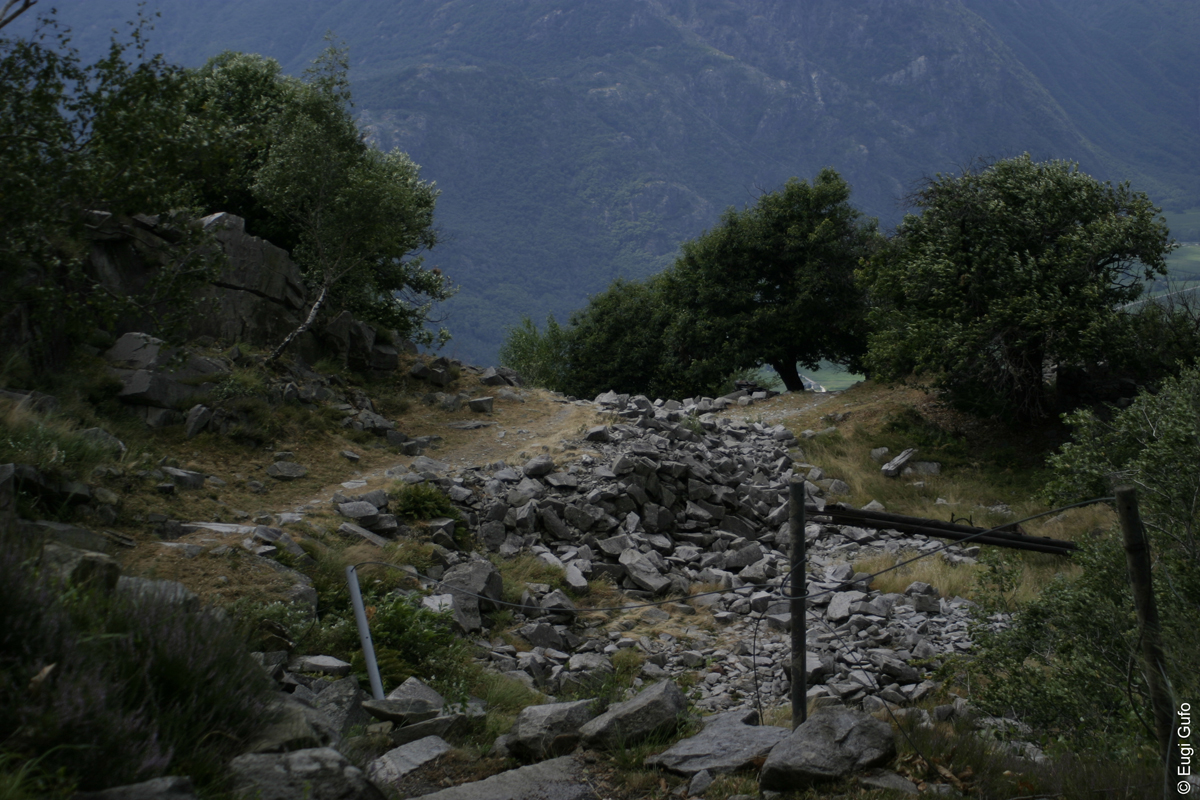
Do remember, however, that mountain trail conditions may change temporarily — usually due to meteorological enthusiasm — until the next maintenance intervention.
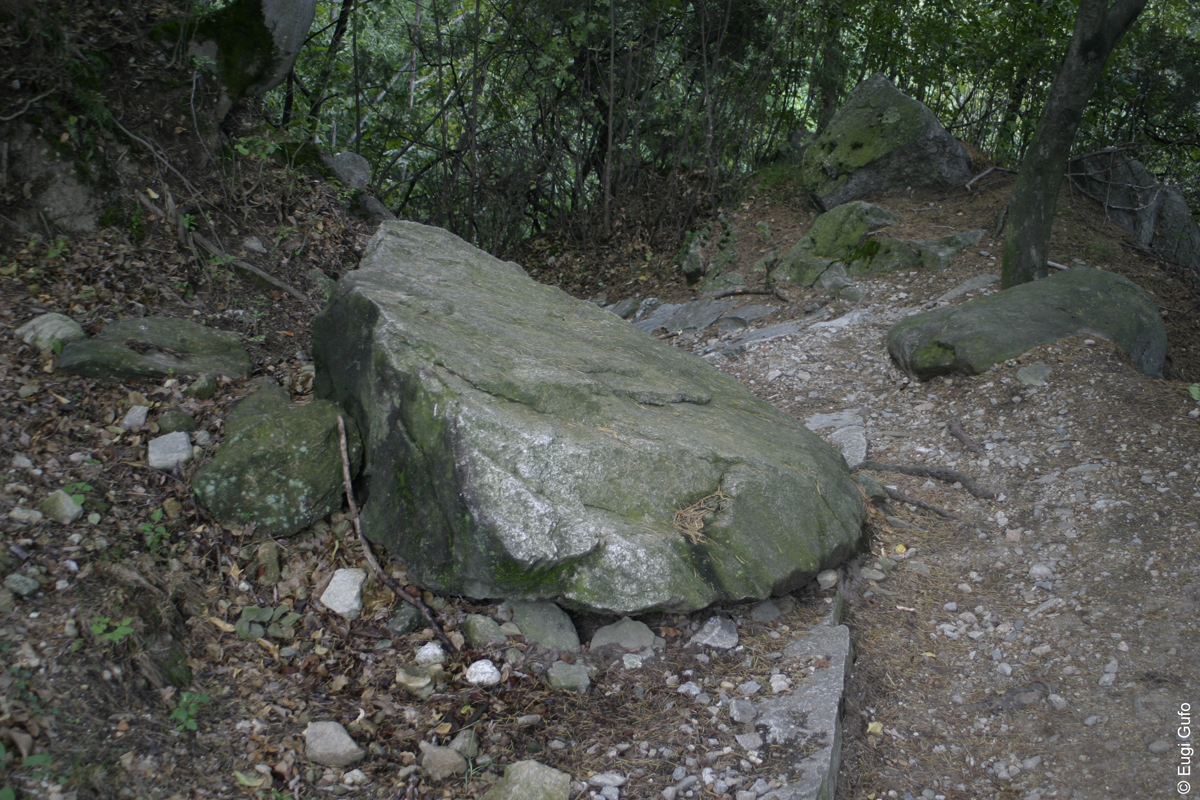
I can nonetheless testify that the trails of Val Codera are well maintained. On clear days, you may walk them with complete serenity — provided, naturally, that you wear appropriate footwear.
At this point I shall conclude, before burdening the narrative with excessive digressions and exhausting your patience.
Until next time.
San Giorgio, 14 August 2024
↓ Show comments ↓


