


 Long live Ukraine! Fuck the war!
 RSS of site articles
Piacenza is a strange city: beautiful, more decadent than thriving, often original… having never heard it mentioned in tourist terms, I did not expect to find anything particularly interesting. Judging by the total absence of tourists on the last Sunday of February — marked by the long-awaited improvement in the weather — I am clearly not the only one to be so ignorant.
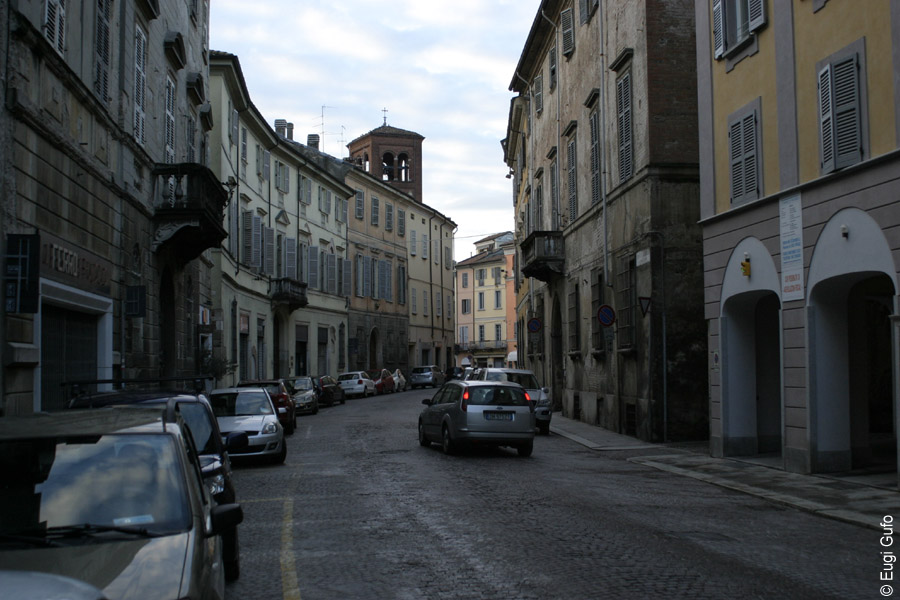
One of Piacenza’s most distinctive features is the surprisingly high number of exposed-brick buildings (especially religious ones). I cannot recall having seen so many in a single other city.

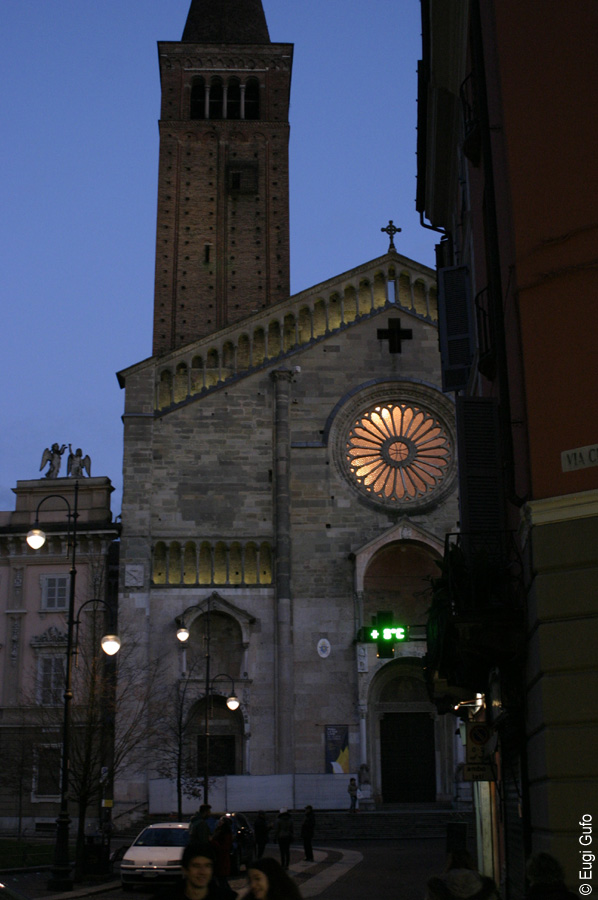
In this context, Piacenza Cathedral, with its pink marble façade, appears almost like an alien structure. I would like to emphasise that in the evening the external lighting and the glow from the rose window make this church (not the largest in the city) truly magical.
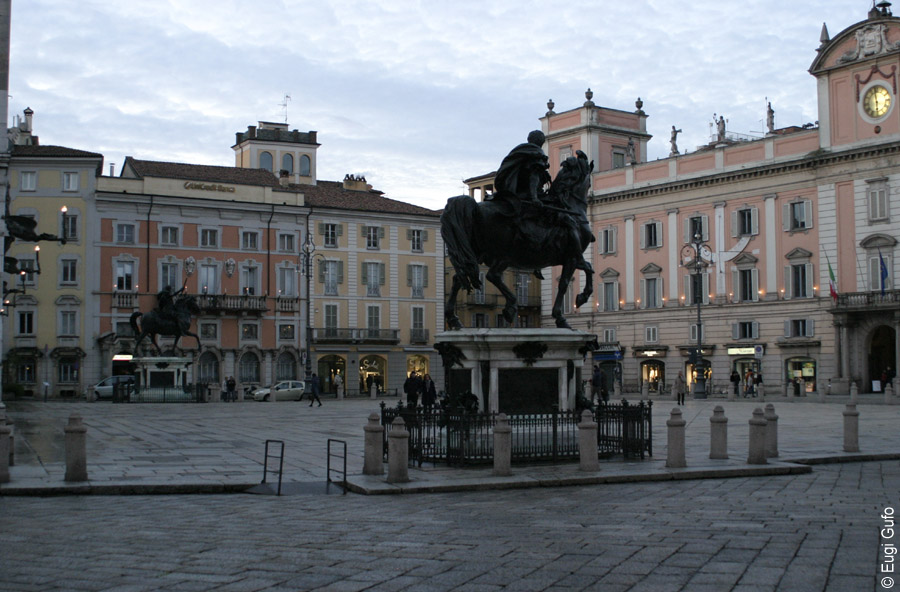
After the great mass of brickwork, the central Piazza Cavalli seems the most cheerful place in the historic centre. One must admit that it is not unattractive at all.
The Town Hall (late 13th century) is interesting but gives a rather peculiar impression. The pseudo-ancient Gothic-style chandeliers are in fact made of prefabricated elements that do not sit particularly well together.

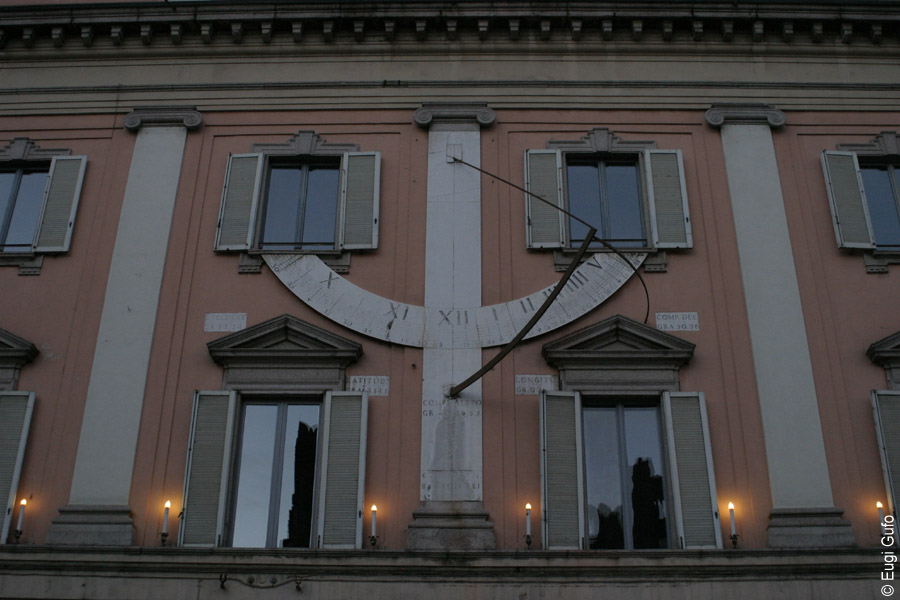
The sundial on the building opposite appears to have been designed by an anchor enthusiast.
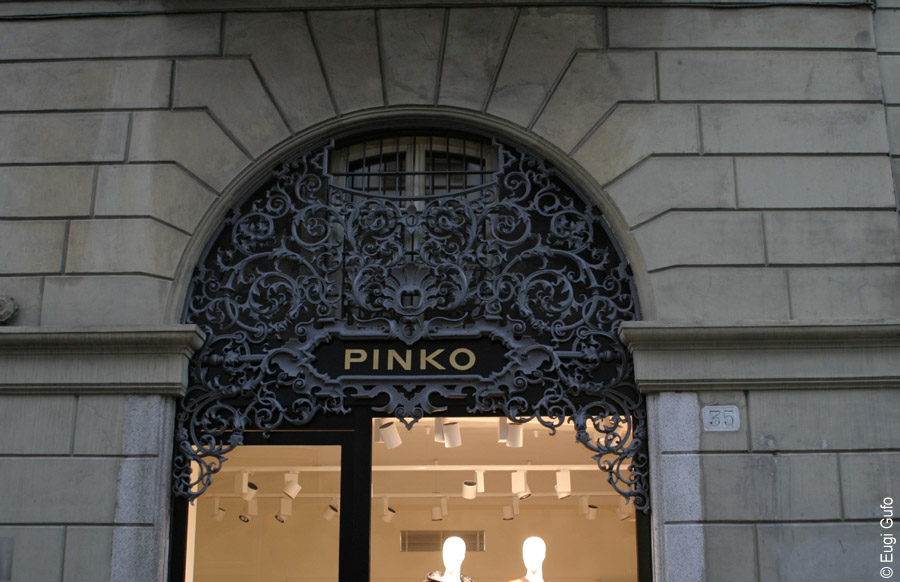
Not all shops in the historic centre follow, unfortunately, the few simple rules regarding signage. Here we see the «good», the «bad», and the «more or less acceptable» versions.
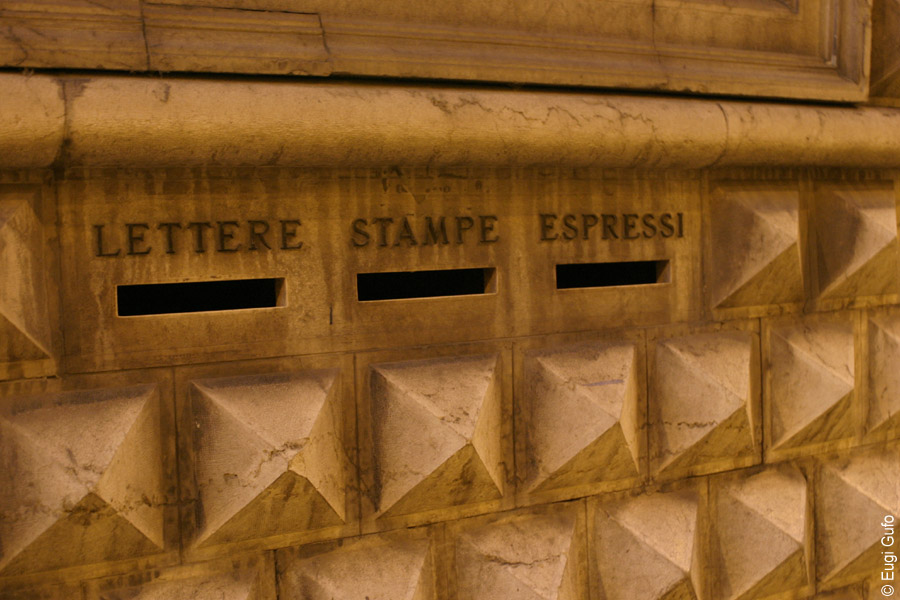
Piacenza’s central post office has a perforated wall. By looking through the three slits in the following photograph, it is possible to see the lights of the underground rooms.
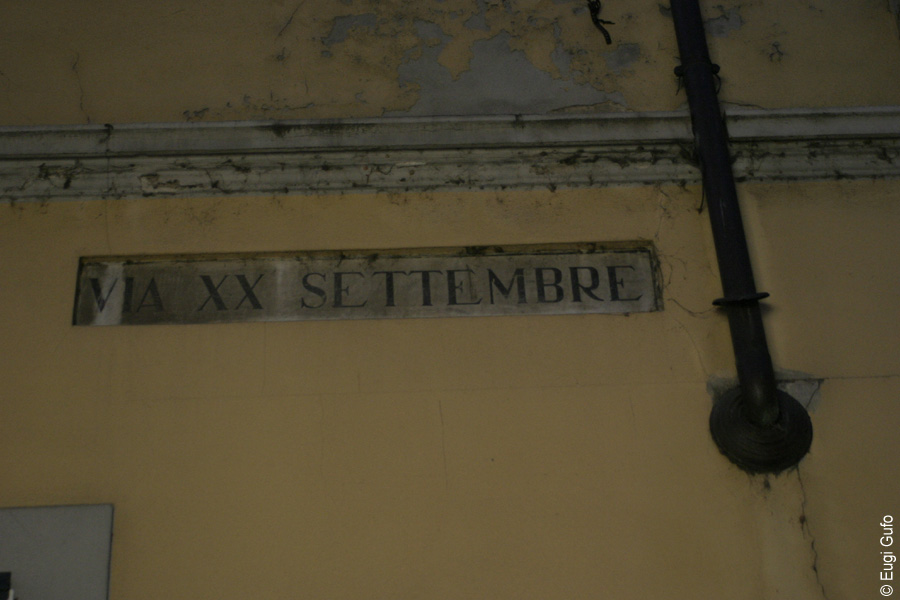
The street-name signs are almost all made in this way: of the minimum necessary height. However, I do like the typeface.
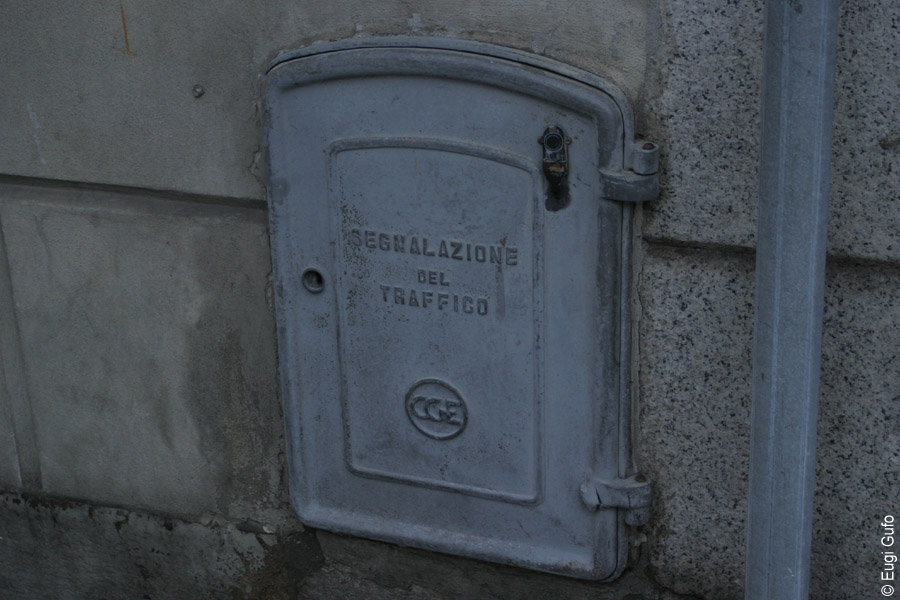
I had never noticed a hatch like this before. In Russian cities there are small doors behind which the traffic-light switches are hidden (used to regulate their various operating modes): could this be something similar?
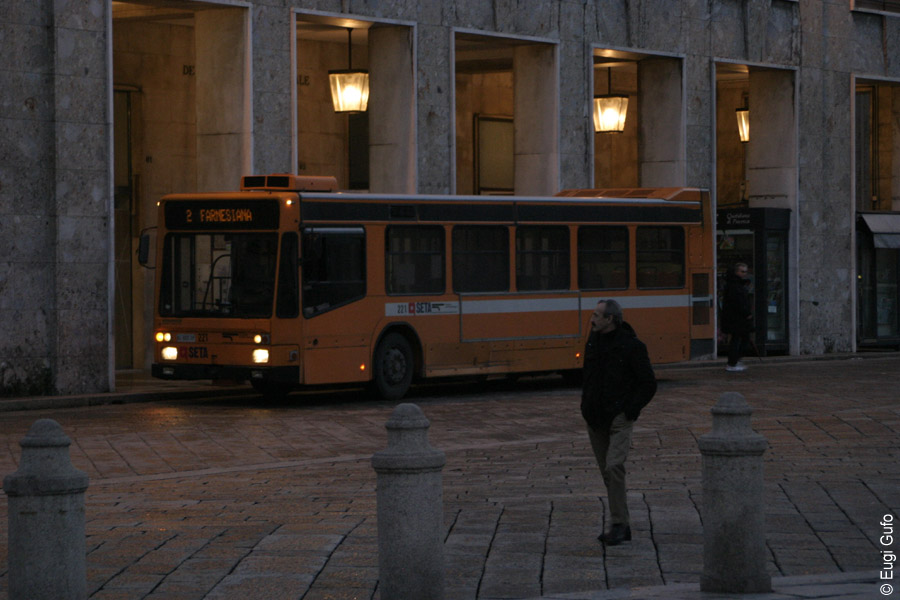
Piacenza’s public transport vehicles seem somewhat dated, but widespread.
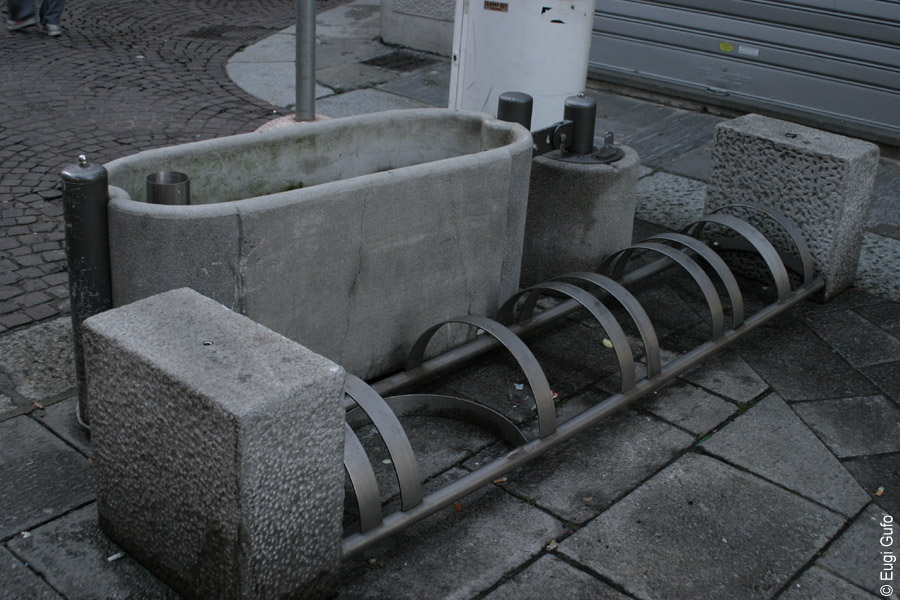
The racks for private bicycles are almost all of the same model and, in the historic centre, always placed next to oval-shaped planters. The latter, however, are used by people as litter bins.
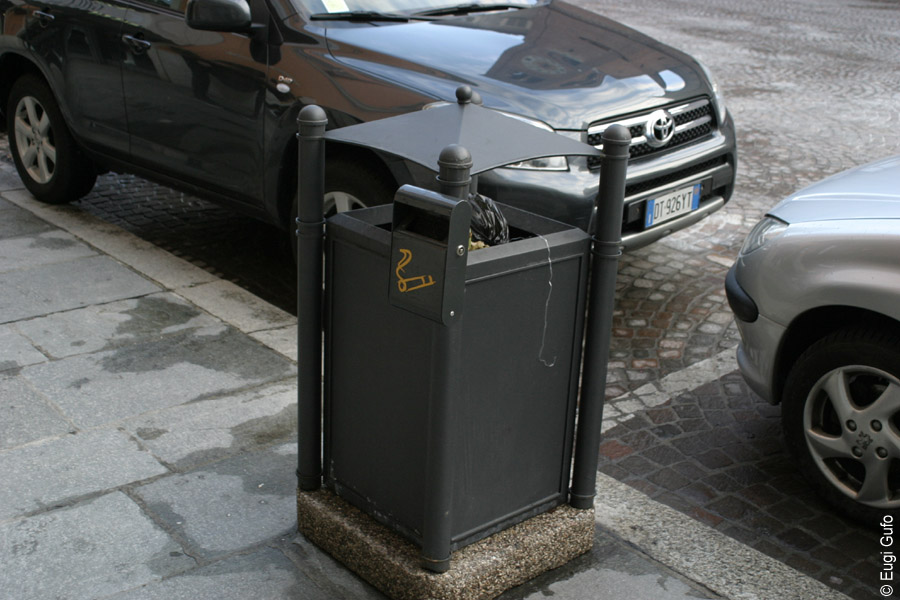
Piacenza’s litter bins (the real ones) are among the best in Italy. Indeed, whether large or small, they are almost always equipped with ashtrays. At last I have found an Italian city that understands their importance!
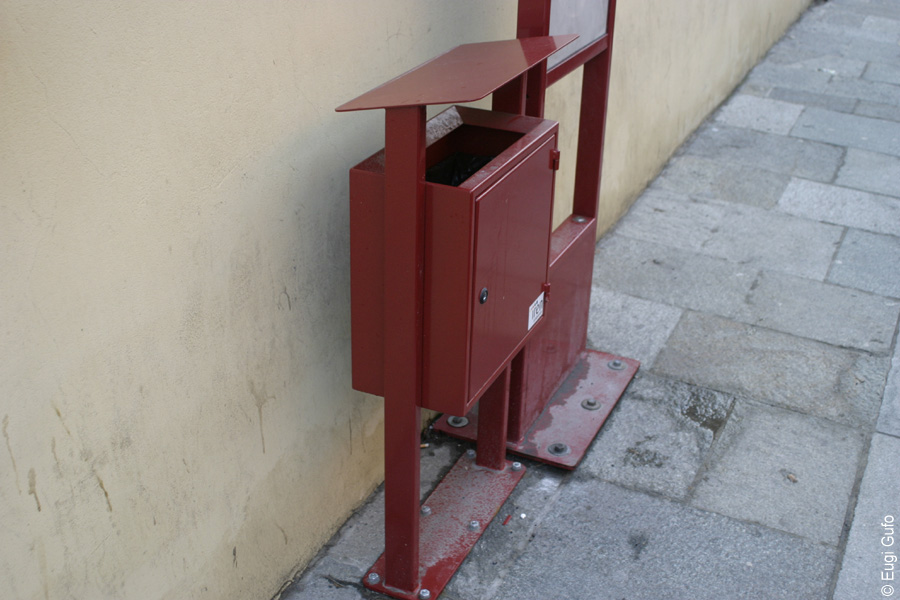
The only exceptions, strangely enough, are the bins installed at public transport stops — precisely the places where people smoke while waiting for the bus. I would also point out that the bins at the stops imitate the style of low-cost post boxes.
Here is one of the most unusual doorways I have seen in recent years. The subject has intrigued me: I might begin collecting photographs of doorways as well.
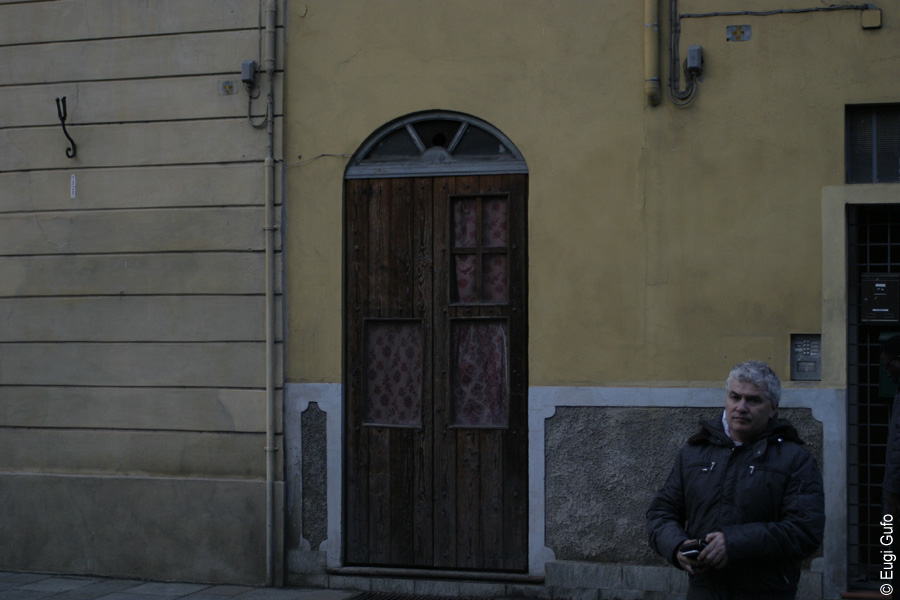
Meanwhile, evening descended upon the city of Piacenza. The native Piacentini began to take to the streets for their evening stroll. I, on the other hand, got into my car to return home.
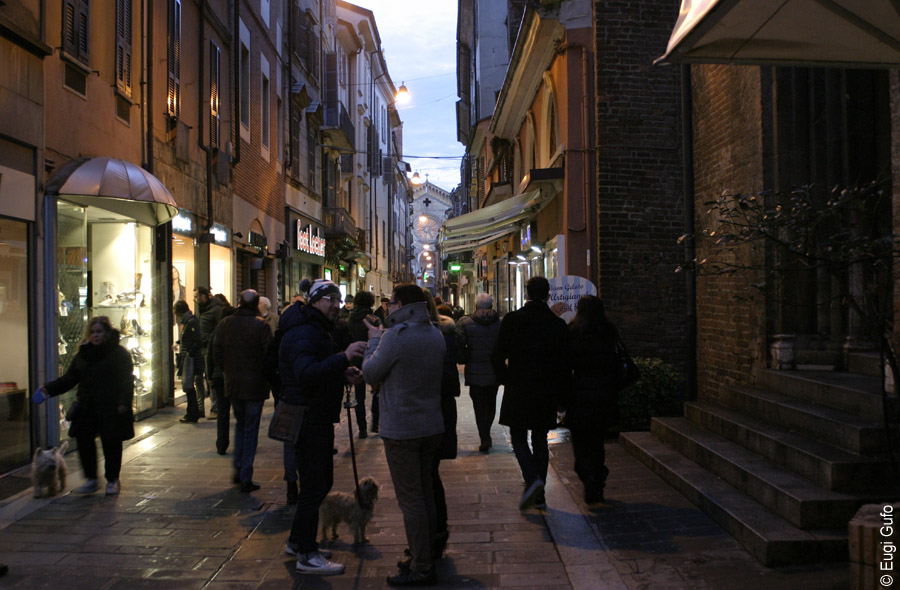
One day, most likely, I shall return to Piacenza to study it a little more carefully.
Piacenza, 22 February 2015
↓ Show comments ↓


