


 Long live Ukraine! Fuck the war!
 RSS of site articles
Peschiera del Garda, the westernmost municipality of Veneto, is — according to my strictly personal observation — one of Italy’s greatest victims of statistics. Even Wikipedia proudly reports that, with 2.4 million annual overnight stays, it ranks twenty-eighth among Italian tourist destinations.
And yet, having seen it with my own eyes, I feel compelled to invoke Mark Twain and his celebrated remark: «There are three kinds of lies: lies, damned lies, and statistics.»
My testimony is admittedly based on a single experience — but it was experienced in the first person. On a non-working day that appeared on my calendar almost by surprise (Good Friday), I boarded an early regional train from Milan bound for Verona. The train was crammed with tourists: we were packed together like commuters on the Milan underground at 8:30 a.m. on a pre-pandemic weekday — possibly worse.
Roughly 80% of the passengers (myself included) alighted at Peschiera del Garda. But at least 90% of those promptly stopped in the square outside the station, waiting for the free shuttle buses to nearby Gardaland.
I, meanwhile, serenely walked towards the historic centre.
One of the decisive factors behind Peschiera’s beauty and appeal is its location on the shores of — surprise! — Lake Garda. Consequently, the waters of the lake and of the River Mincio (its sole outflow) may be admired from a variety of perspectives.
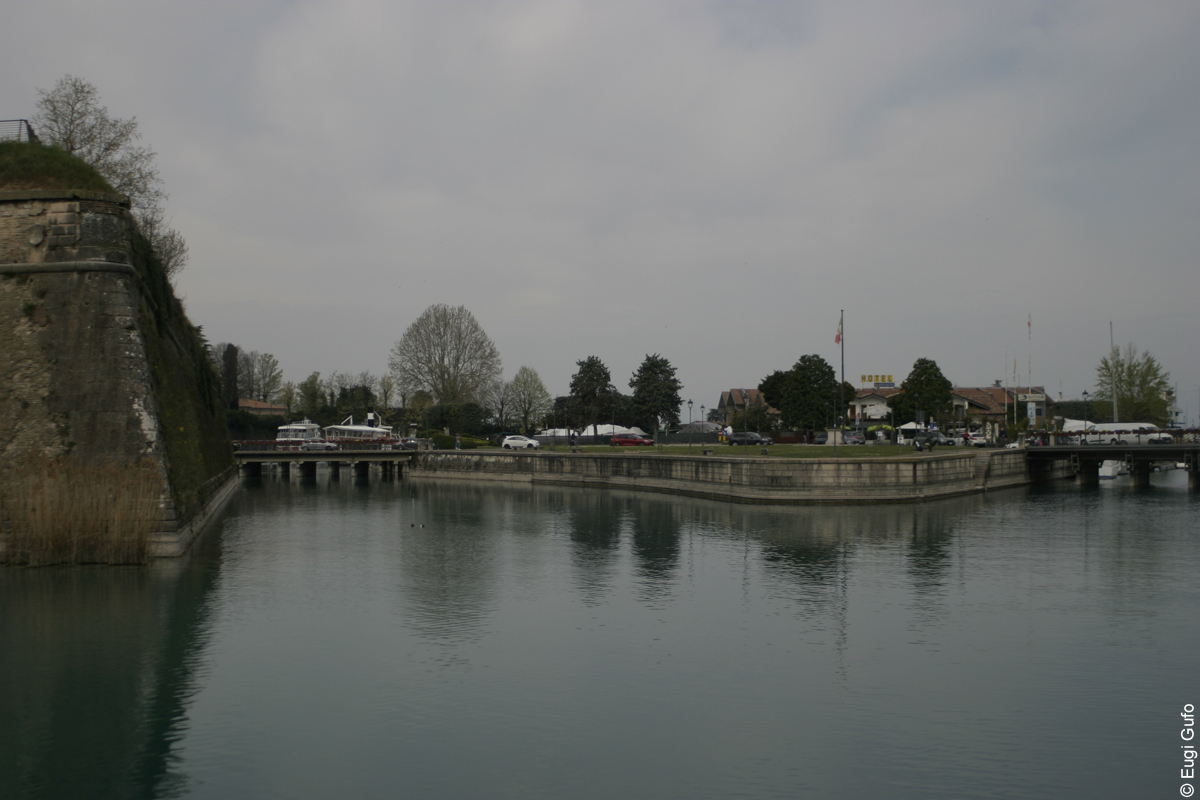
For instance, water forms part of the defensive system of the 16th-century fortress that encloses most of what we now call the «historic centre».
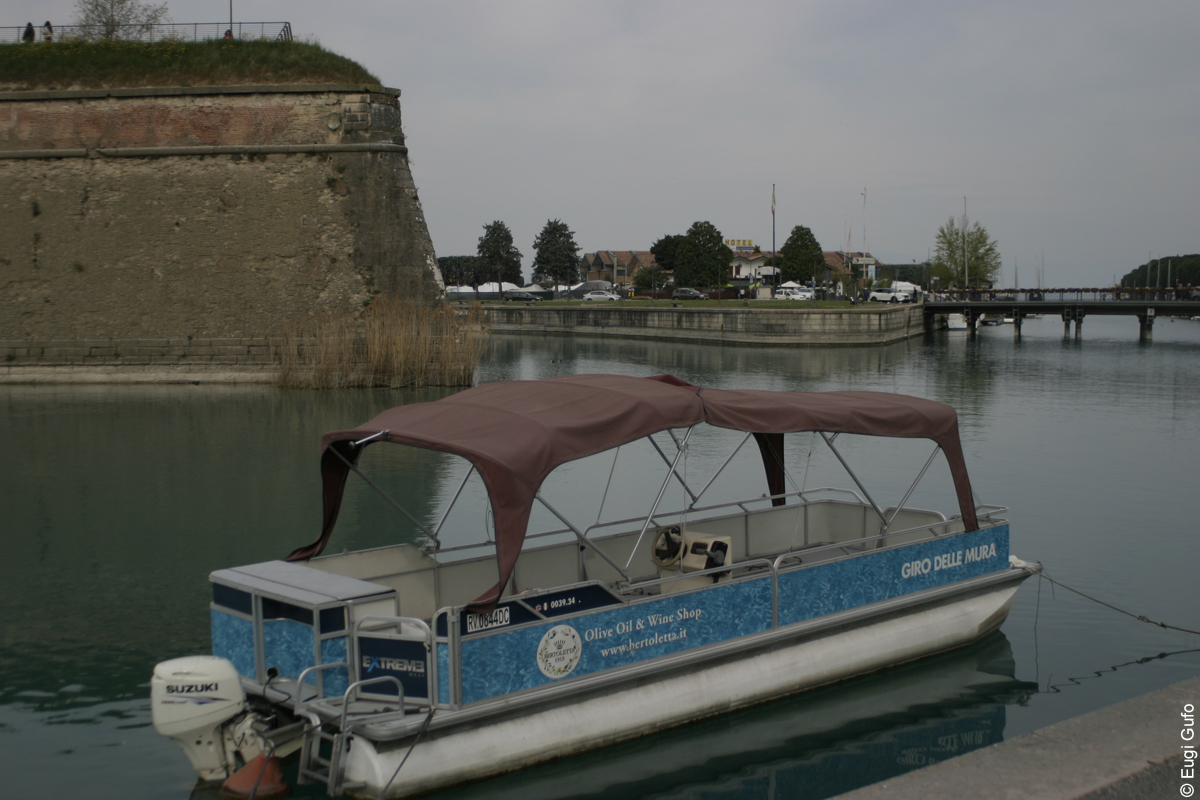
The same waters also host the tourist service «Giro delle mura»: from March to October one may circumnavigate the fortifications aboard pontoon boats — essentially floating platforms with benches and boat engines. I did not personally test the experience, but I investigated: the entire tour lasts about thirty minutes.
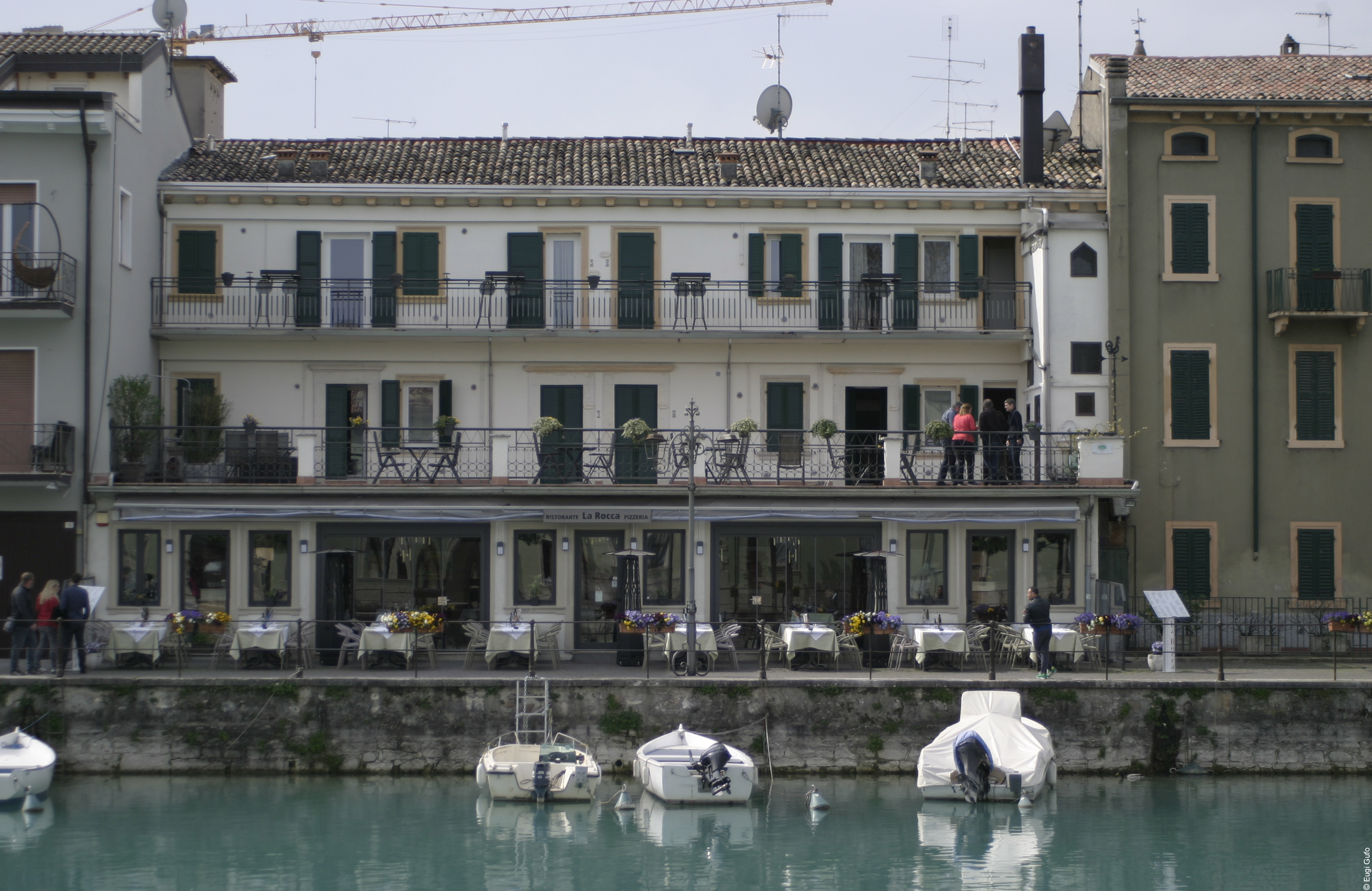
Several residential buildings of the centre overlook these same rivers and canals. Whatever their architectural merit, they project an air faintly reminiscent of Venetian prestige — albeit at a fraction of the price.
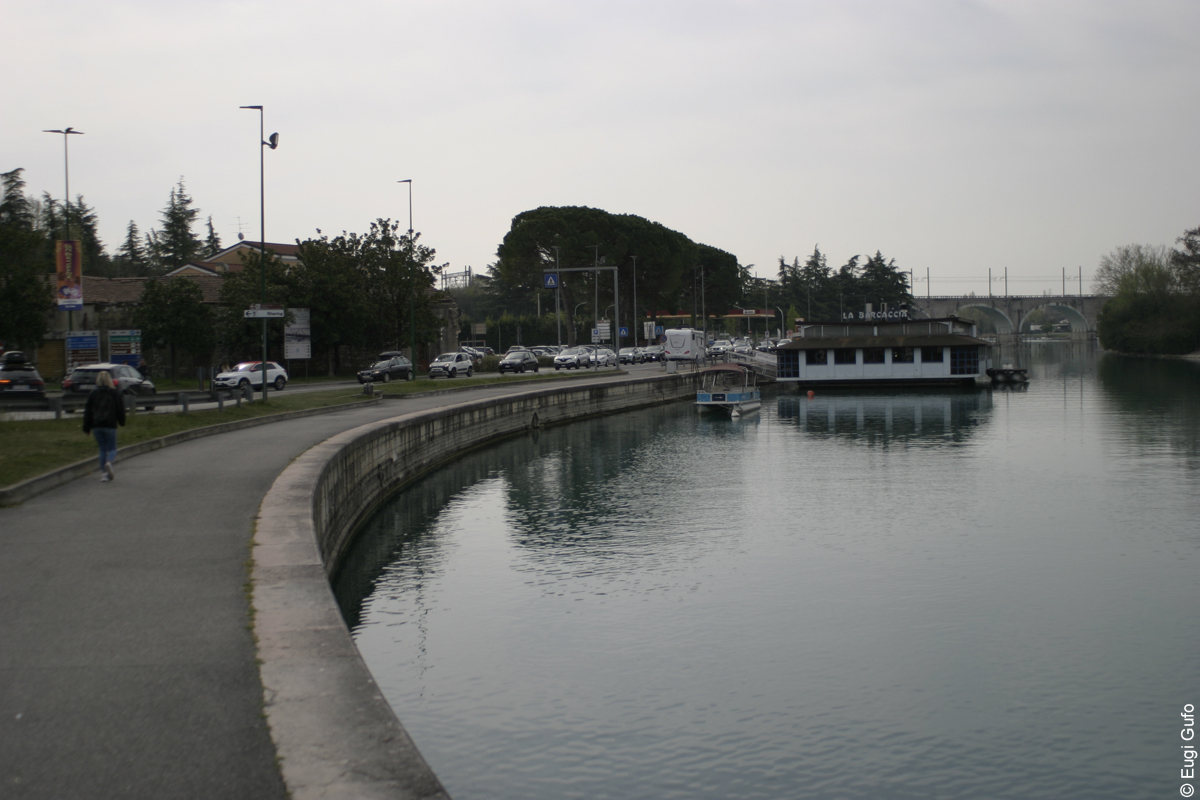
For the pedestrian tourist, the lakefront and riverbanks are almost always beautiful. At the same time, one must note that they are often unfenced — sometimes alarmingly so.
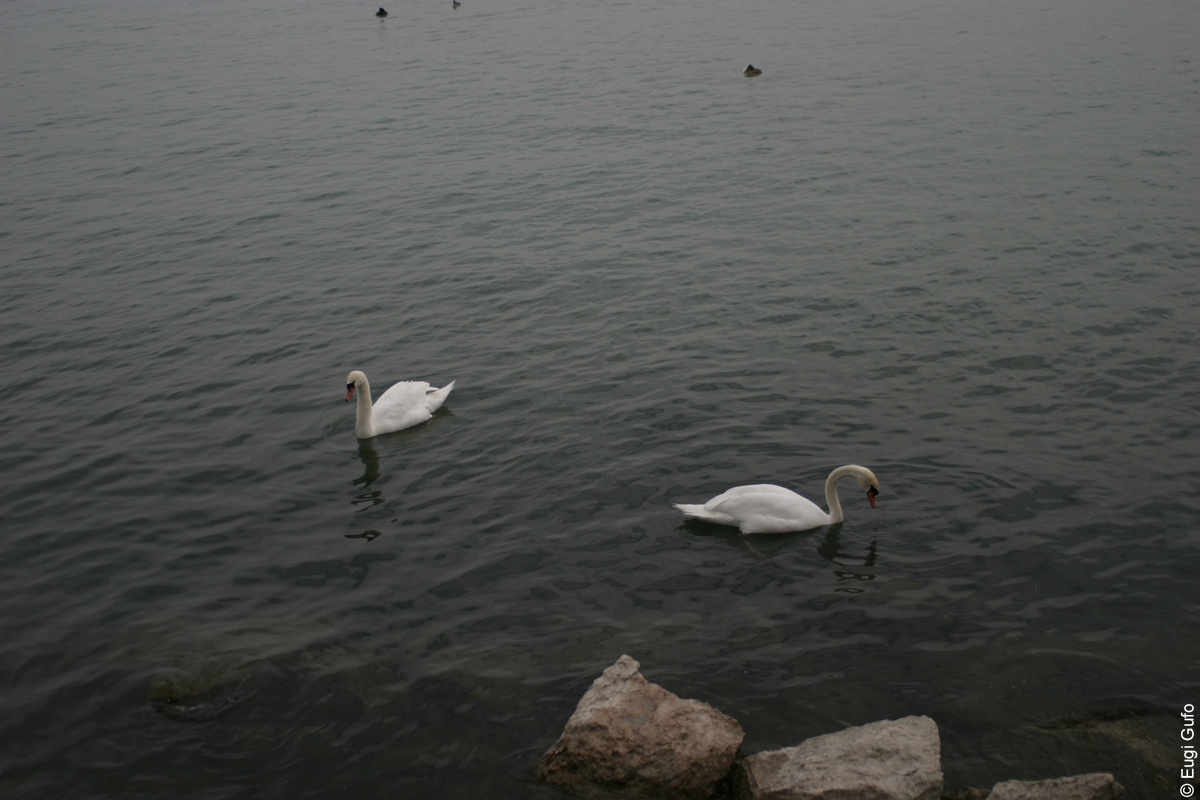
This, however, allows one to approach certain non-human inhabitants of the lake rather closely.
Human inhabitants, meanwhile, may cross the lake by numerous public boats: ferries depart from Peschiera towards destinations all around Lake Garda.

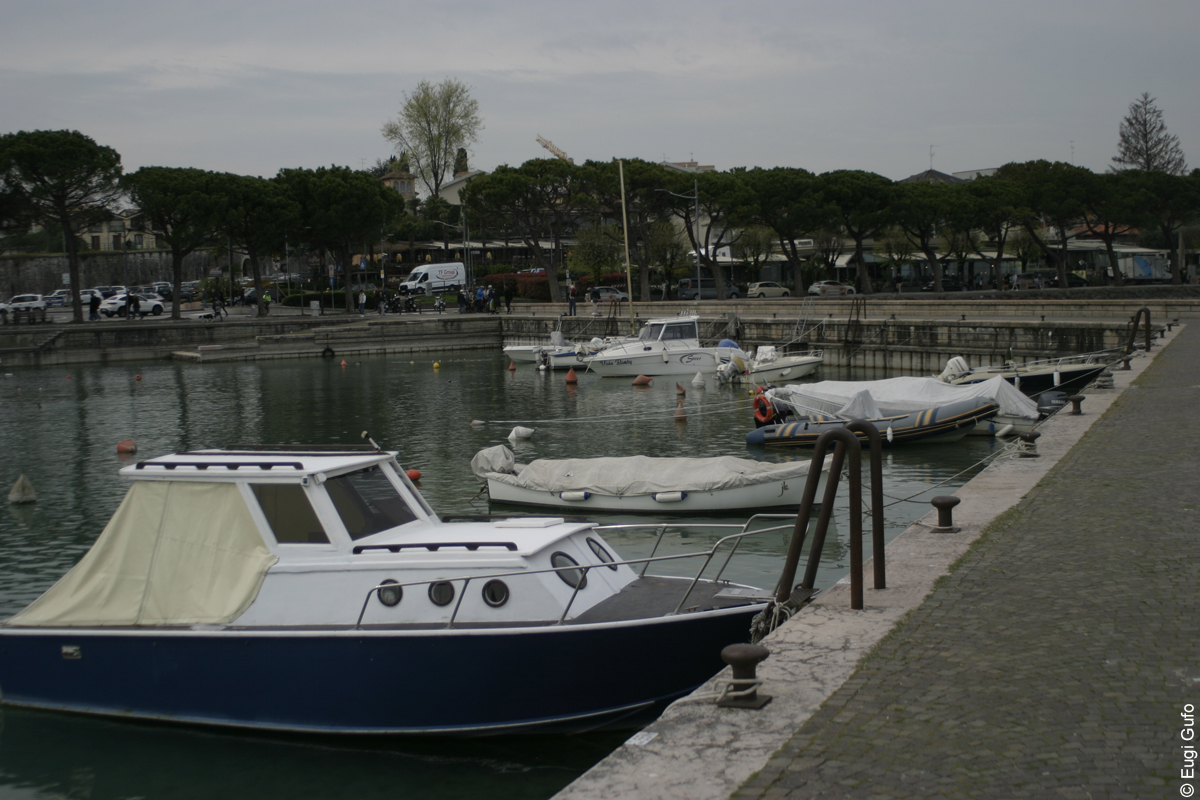
Private boats are legion. In my impression, they are moored not only in proper harbours but along nearly every canal and riverside — like cars along the pavements of a large city. Whether this indicates local prosperity or simply a geographically convenient preference for aquatic transport, I cannot say.
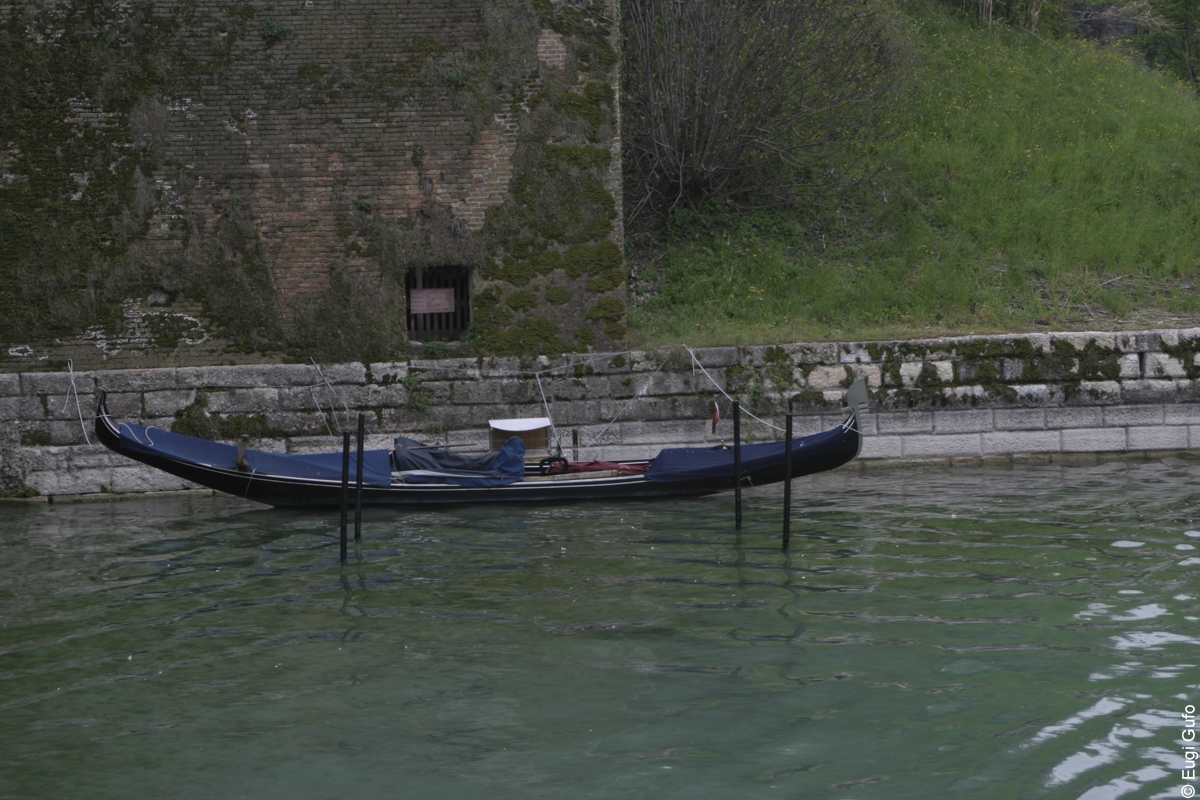
And then, evidently, some arrive by boat from rather far away.
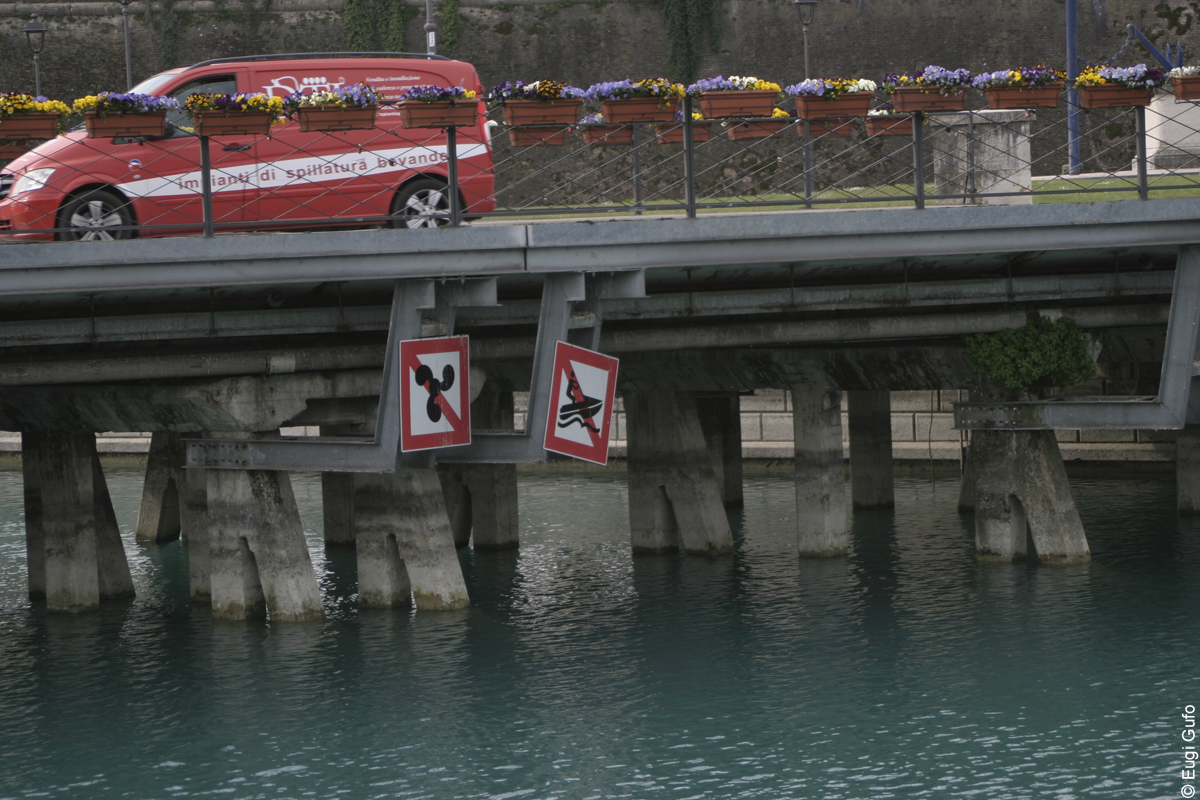
Given the centrality of waterborne transport, it is entirely normal to encounter the appropriate «road» signs — for boats.
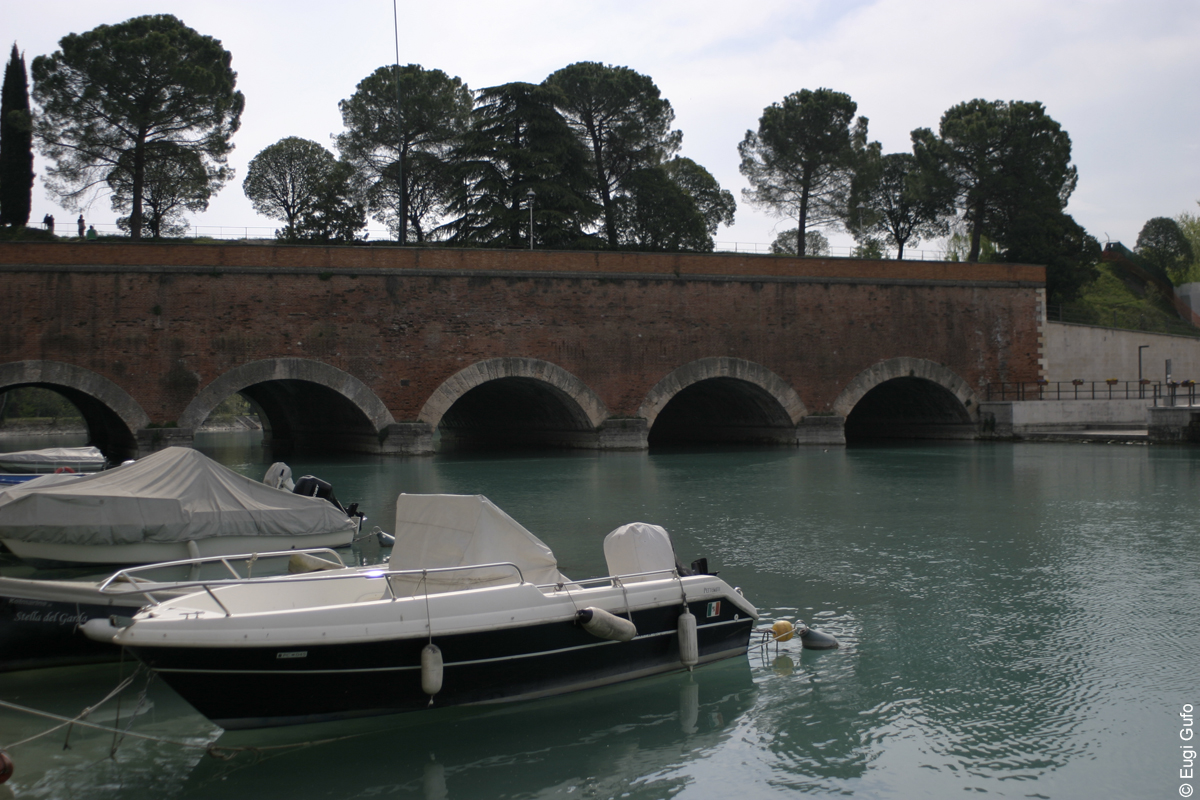
The most important bridge in town is the Ponte dei Voltoni, built in 1556 immediately after the completion of the fortress. It does not lead to anything particularly spectacular, yet its proportions afford some charming views and help identify points worth exploring.
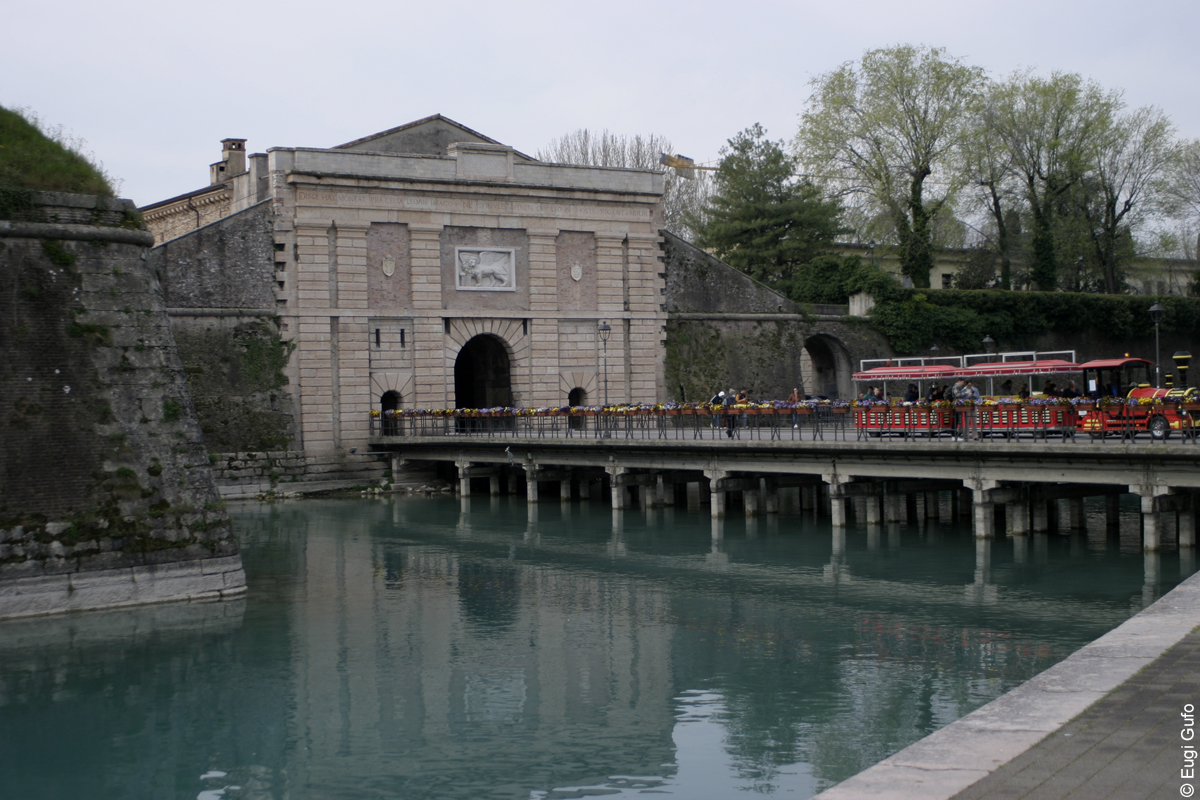
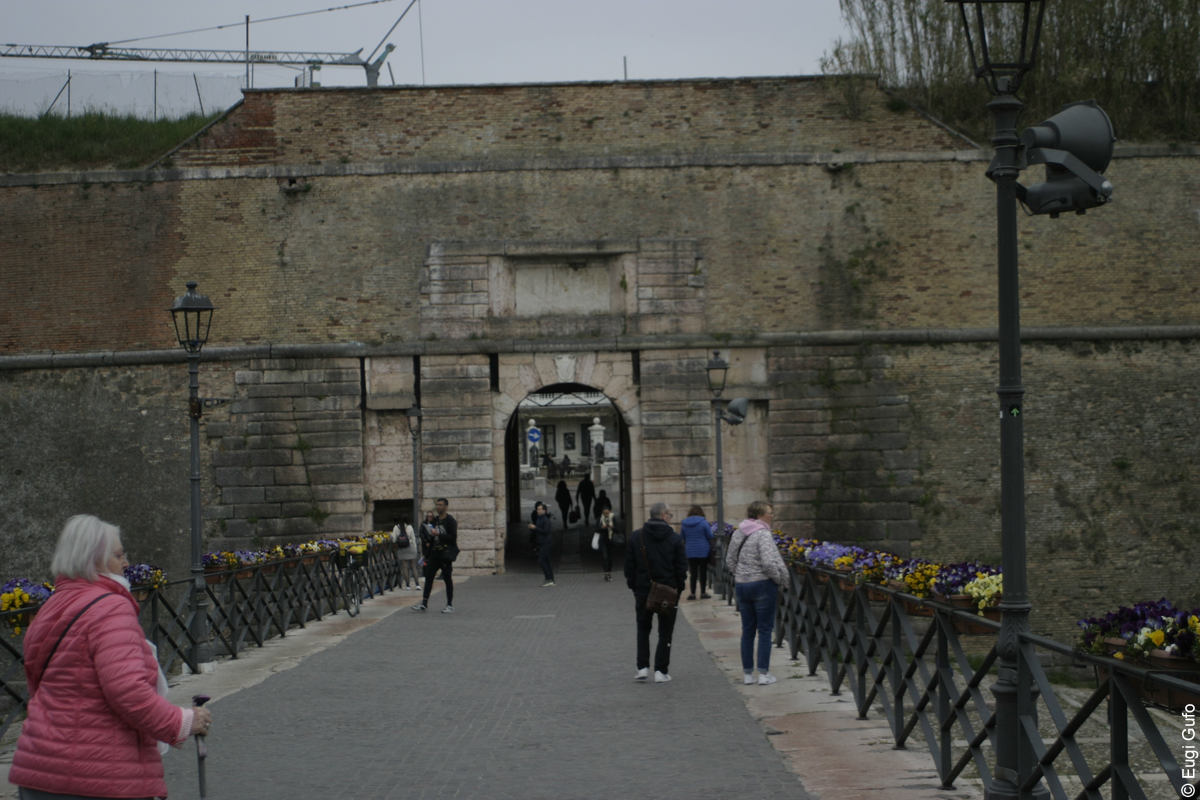
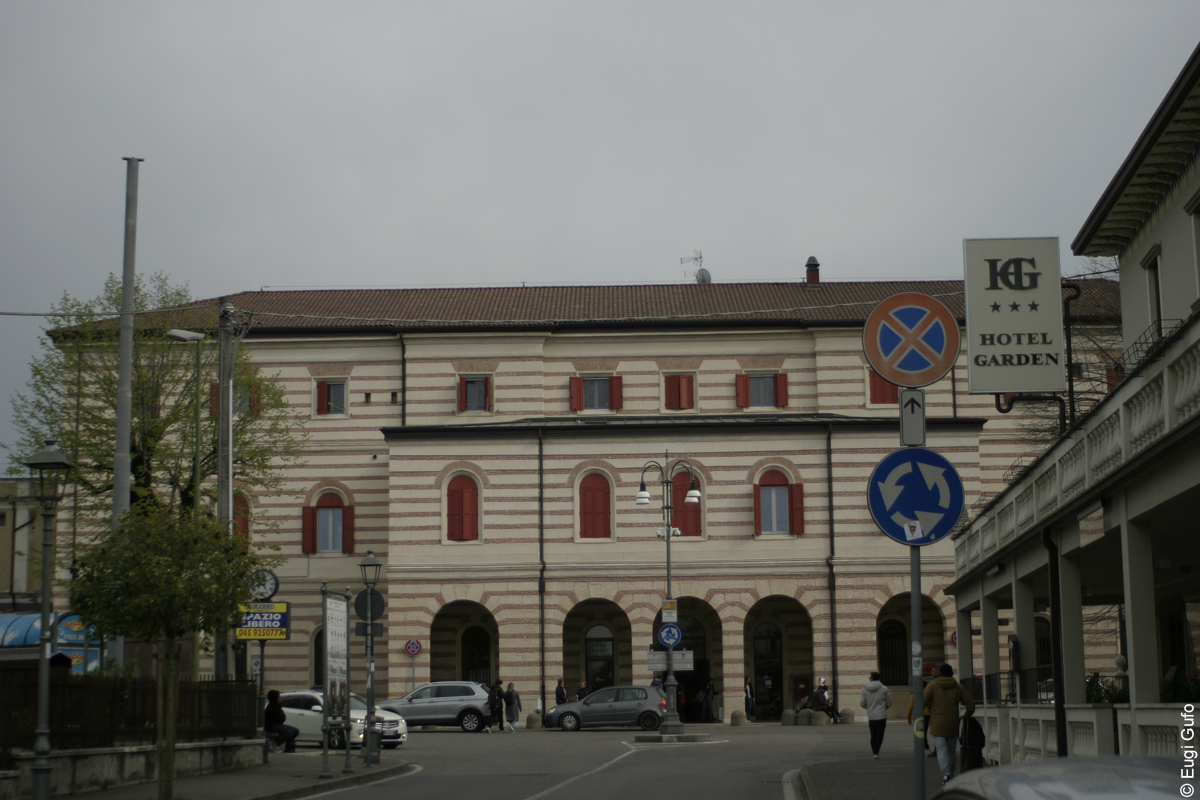
More difficult to miss are the fortress gates. Walking the obvious route from the railway station to the centre, one cannot fail to encounter Porta Verona — positioned, naturally, in the direction of the road to Verona.
Inside the gate are two structures resembling oversized chimneys. In reality, they are former stairway entrances leading to the upper level (closed to tourists).
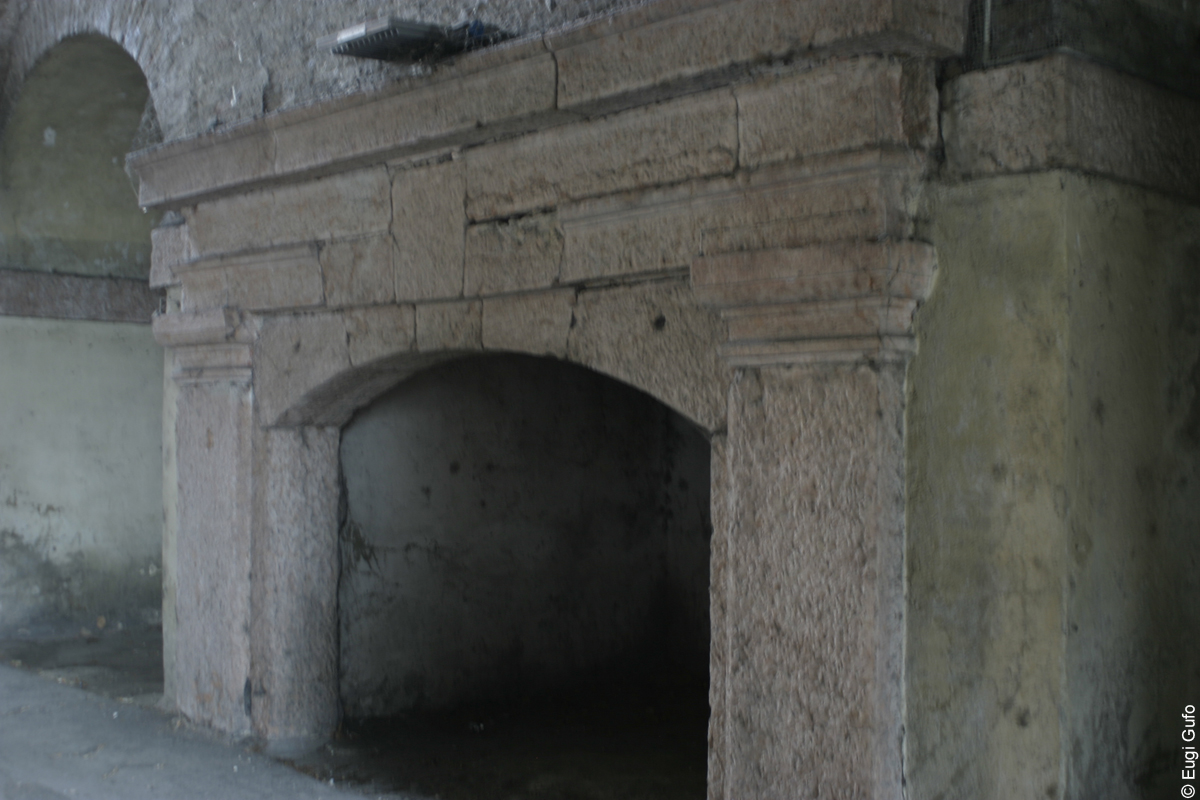
One of these «chimneys» has been converted into a display case for boat engines. Why? I do not know.
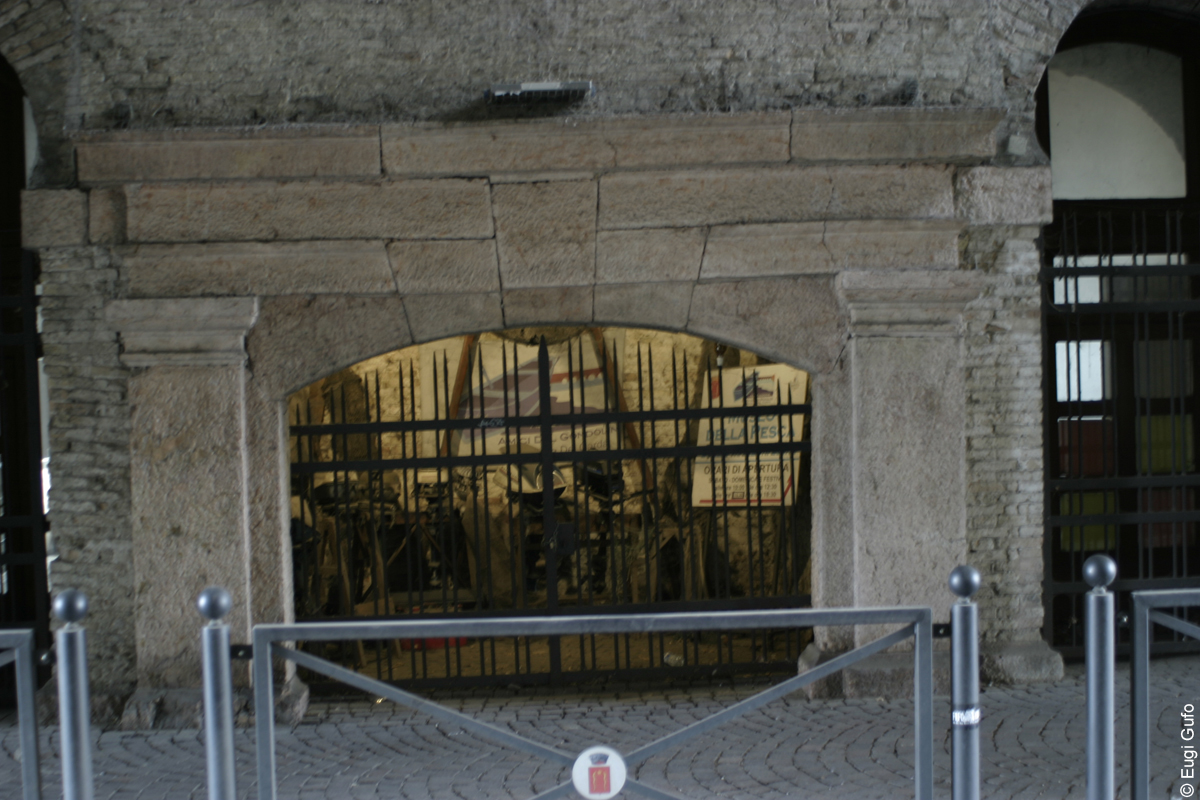
On the opposite side stands Porta Brescia — positioned, predictably, towards Brescia. Smaller, perhaps, but only apparently less interesting.
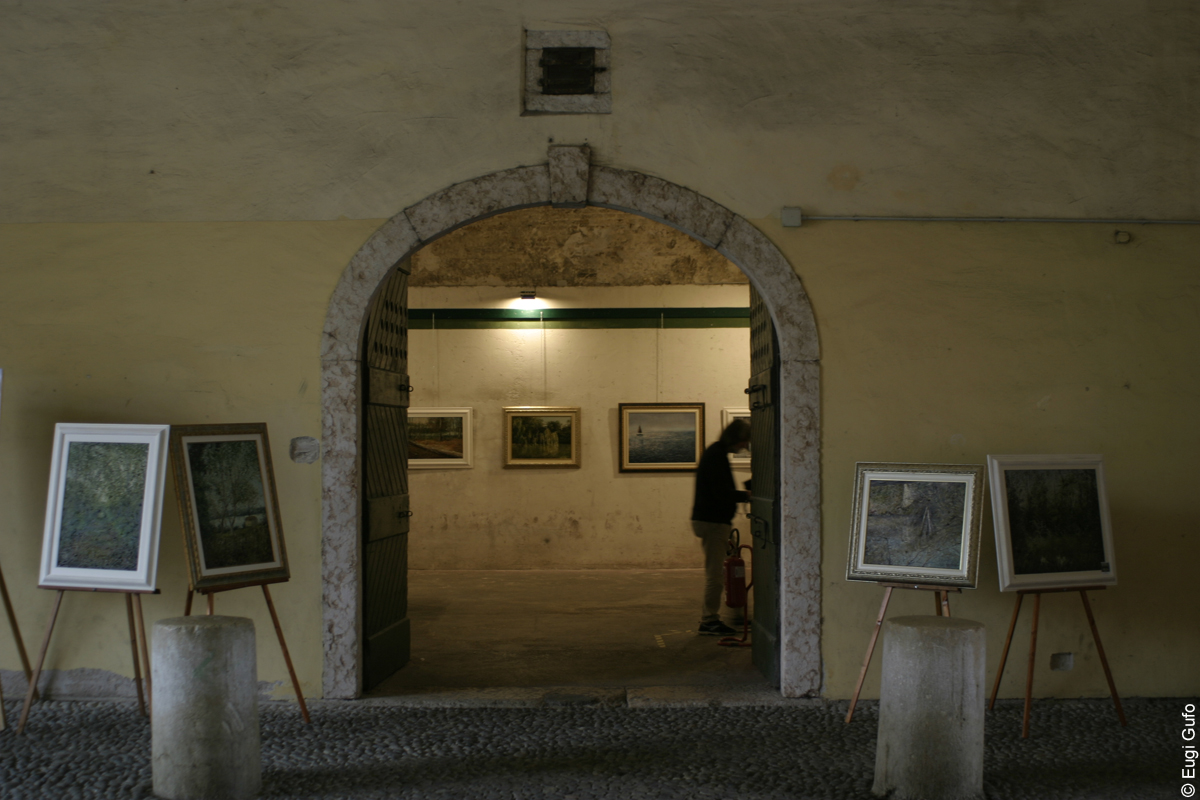
Within it I found two large rooms. One of them — roughly a hundred square metres — hosted a temporary exhibition by the contemporary Venetian painter Claudio Marangoni. I am no great connoisseur of painting and generally favour other genres, yet it was an interesting experience nonetheless.
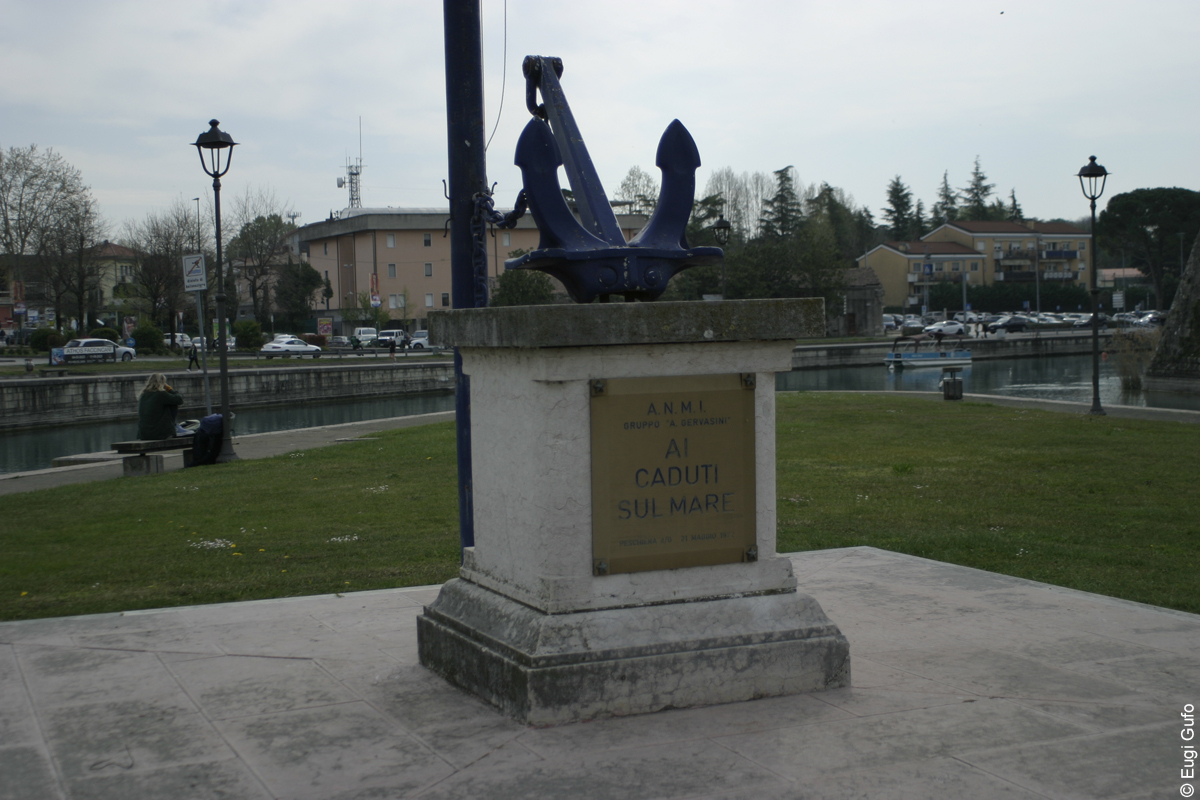
Among the permanent sculptural presences in Peschiera, one may mention the monument «Ai caduti sul mare». After seeing it, I finally resolved that one day — when I have nothing better to do — I shall research why inland Italian towns feel compelled to erect monuments to those fallen «at sea».
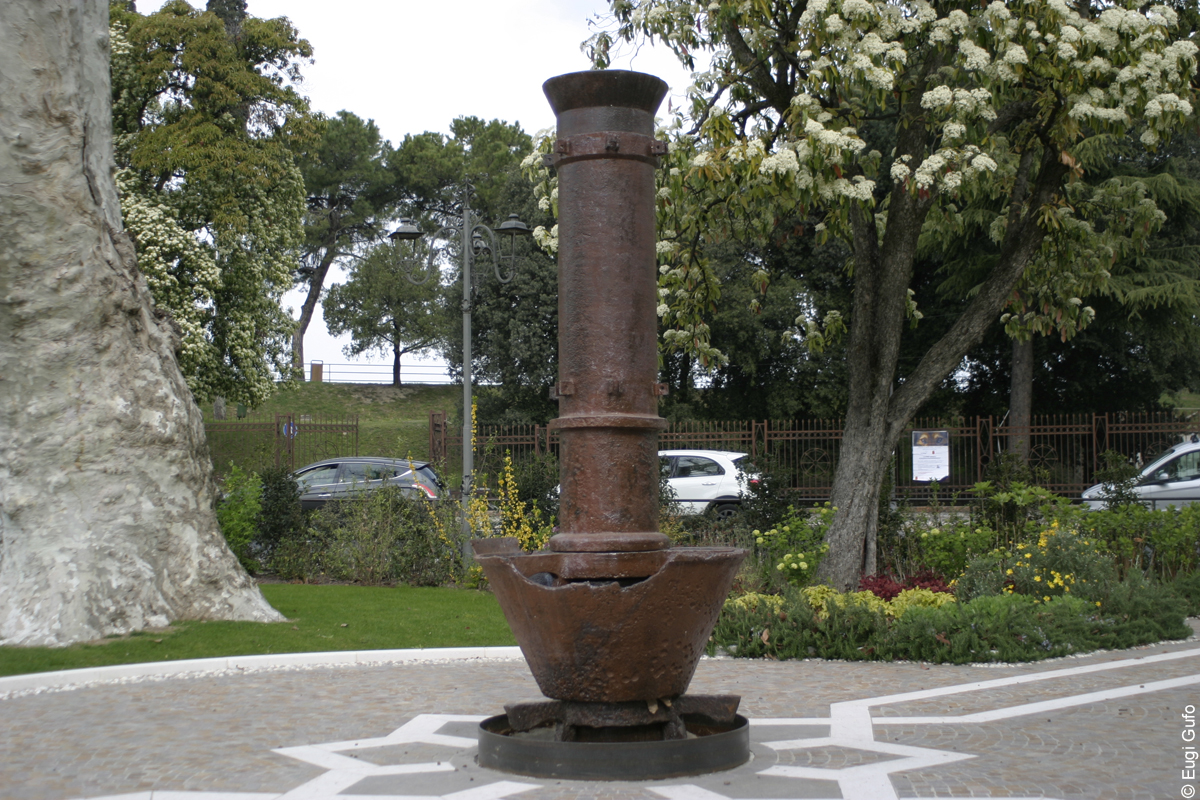
Near the artillery depot of Porta Verona stands an old cannon displayed vertically. To me, this seems a curious waste of historical material.
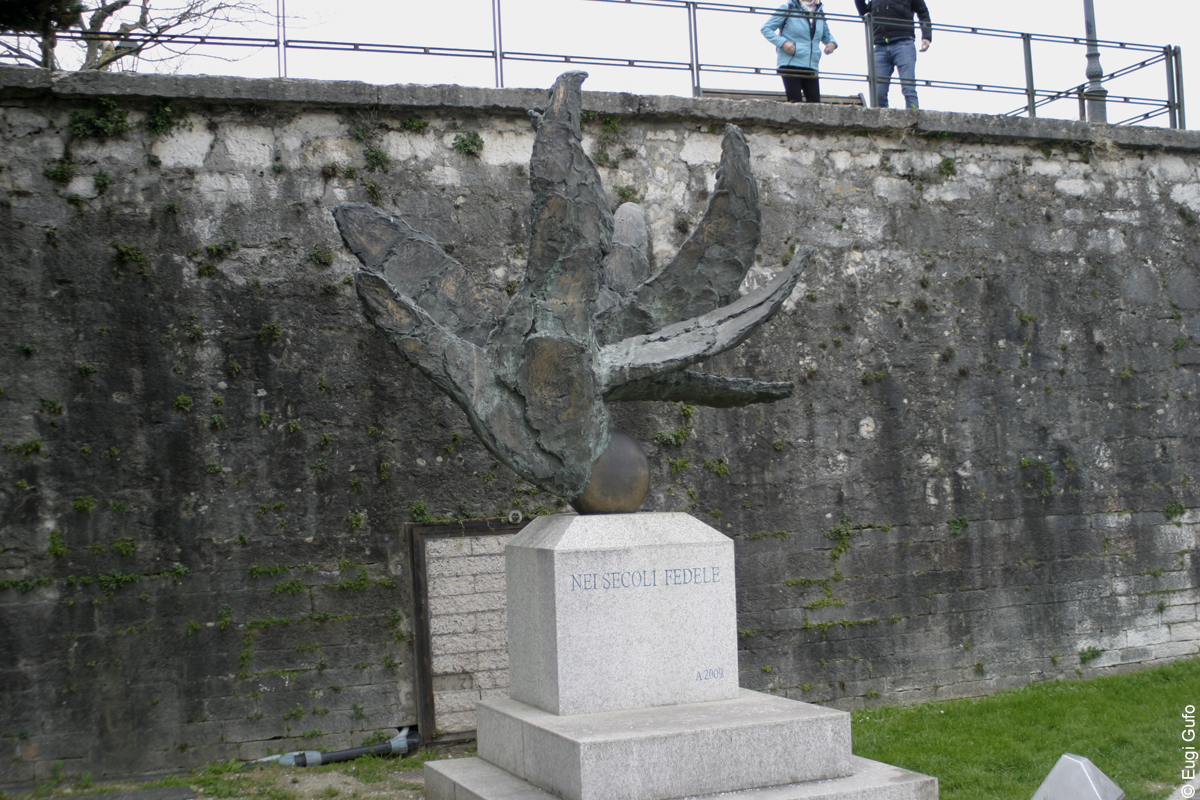
The monument entitled «Nei secoli fedele a 2009» remained entirely incomprehensible.
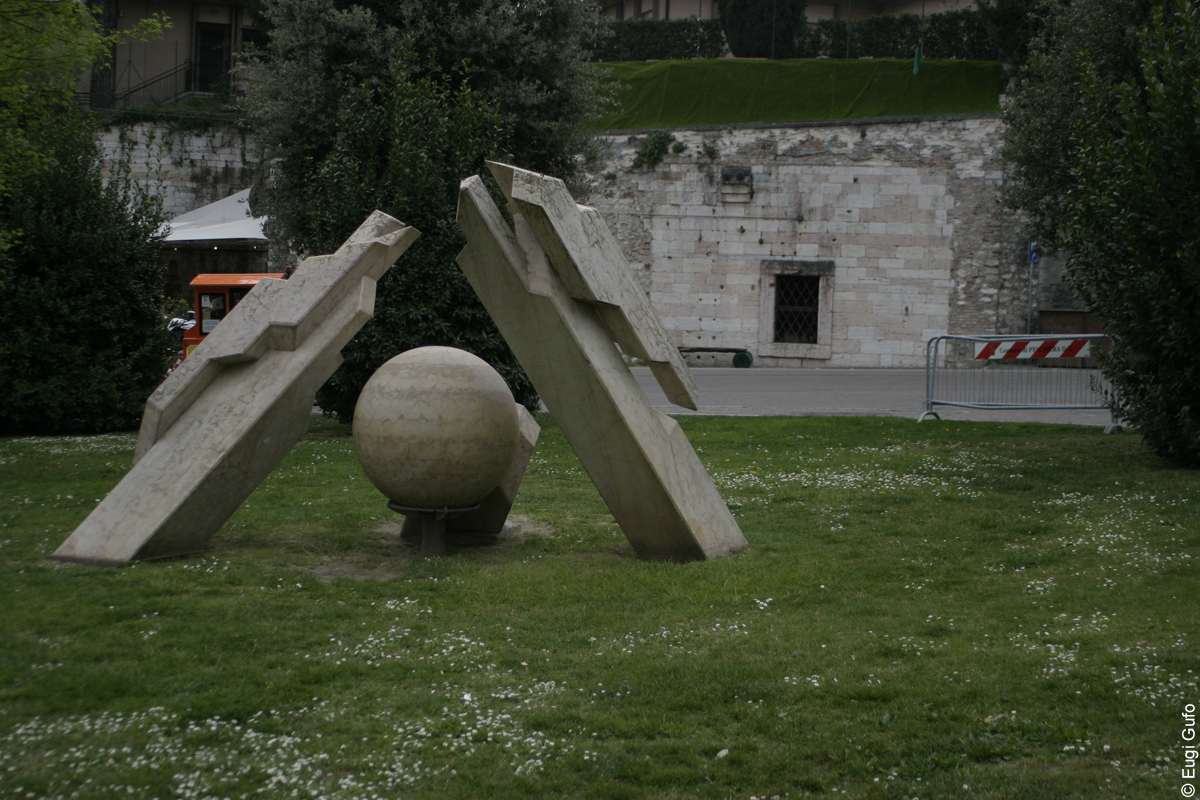
More surprising was the monument to the turner — if I interpreted correctly the sculptor’s vision of two milling cutters and a freshly produced sphere.
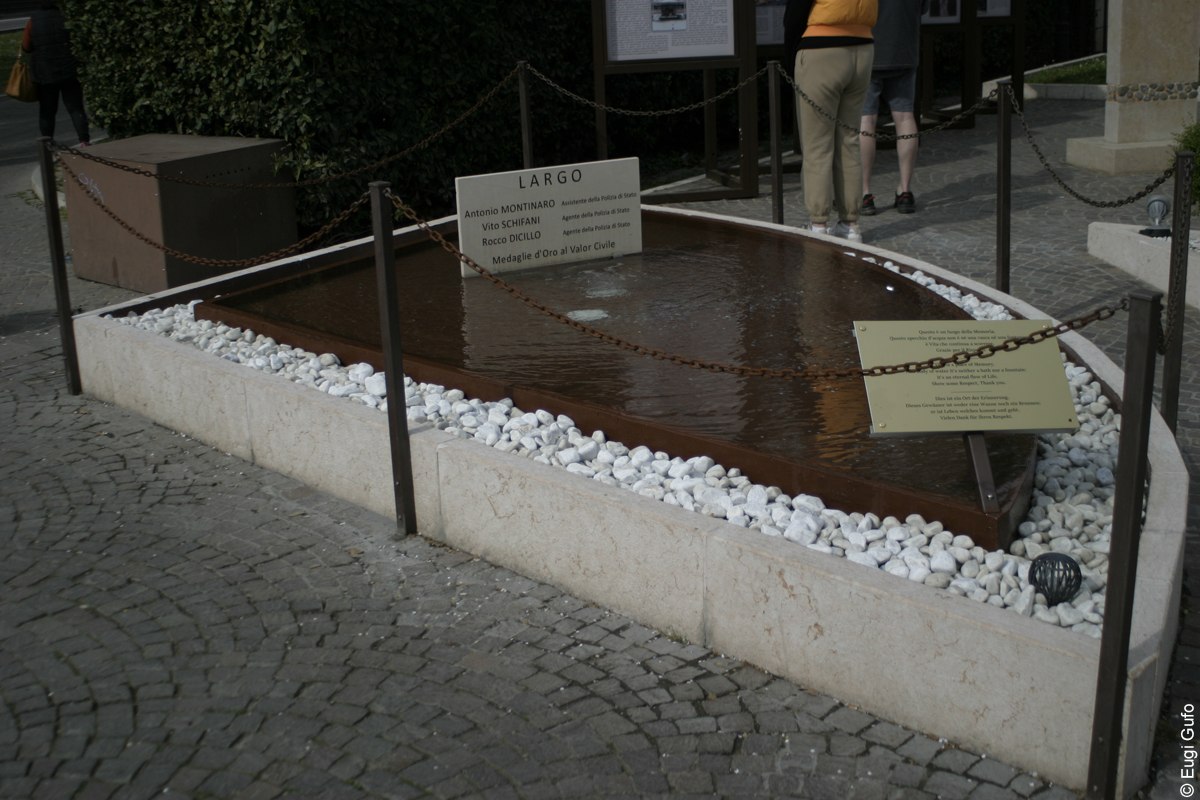
The highest concentration of monuments stands beside the entrance of the Scuola Allievi Agenti della Polizia di Stato — a name that sounds as though generated by a malfunctioning electronic dictionary, yet is perfectly real. The complex commemorates the Capaci bombing.
The first element is a basin (a basin? not quite a fountain) dedicated to the three police officers who preceded Judge Falcone’s car. The inner edge bears the same brown colour as the vehicle.
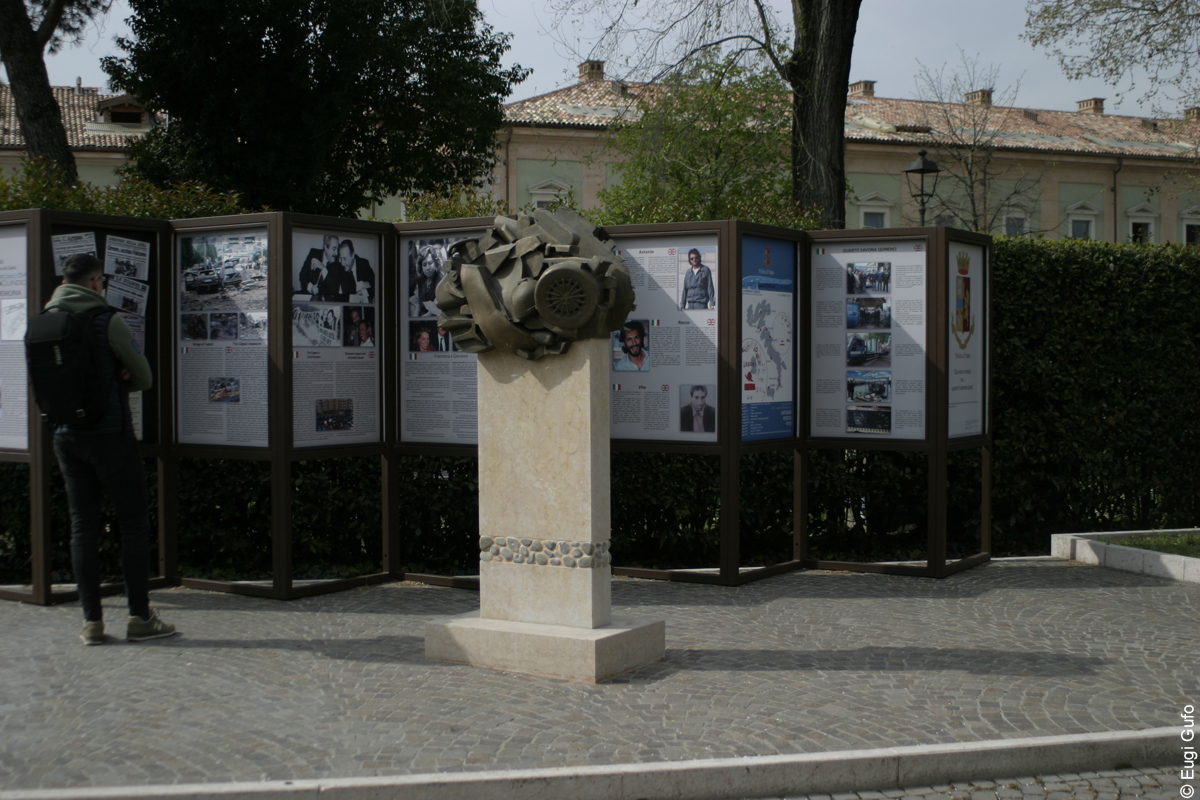
The second element is an almost abstract representation of the twisted metal of a first-generation Fiat Croma — the model used by the victims. The third consists of an information stand in Italian and English. I observed tourists genuinely reading it, so it does serve a purpose.
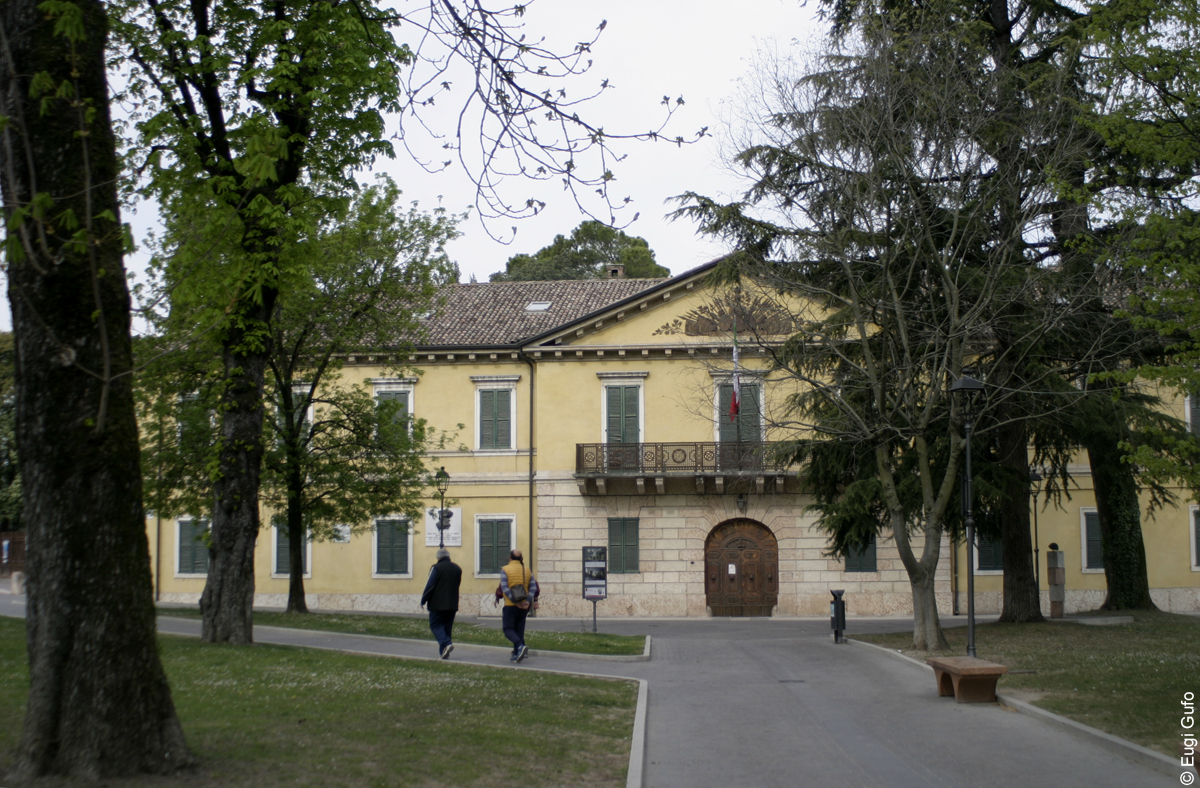
The so-called Palazzina Storica (1853), once housing the fortress commander and officers, now hosts exhibitions. It was closed during my visit.
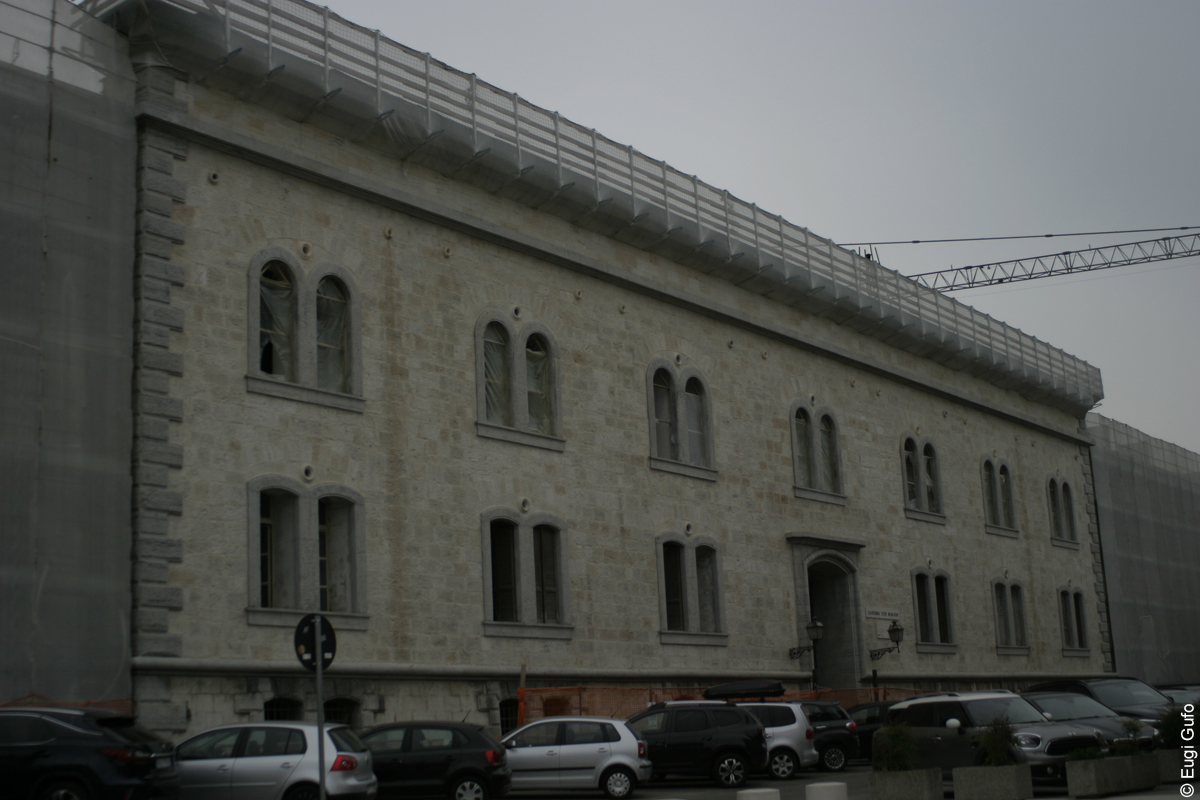
Much of the historic centre still visibly reflects its military origins. The most imposing building is the Caserma XXX Maggio, constructed during the Austrian period (though sources disagree on its precise function over time: hospital, barracks, prison — possibly in various sequences). Decommissioned in 2004, it stood unused for years; works began in 2022 to transform it — allegedly — into a luxury hotel (others speak vaguely of «commercial spaces»).
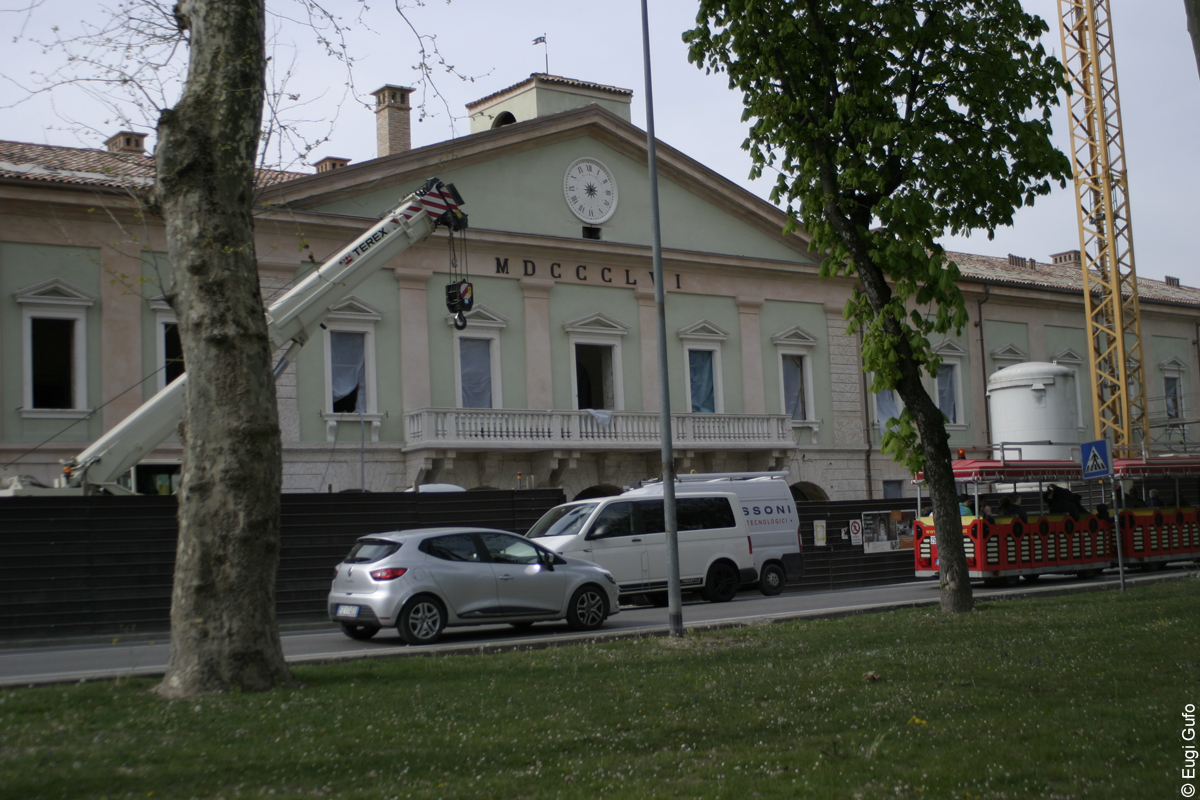
Similarly, the former Officers’ Pavilion (from 1856) is being «restored» into luxury apartments. From what I glimpsed, «restoration» appears to mean preserving little beyond the structural shell.
Religious architecture is present, though not in excessive abundance. The principal church within the fortress is dedicated to San Martino, built between 1820 and 1822 and modified in the 1930s. Architecturally, its proportions are somewhat unusual.
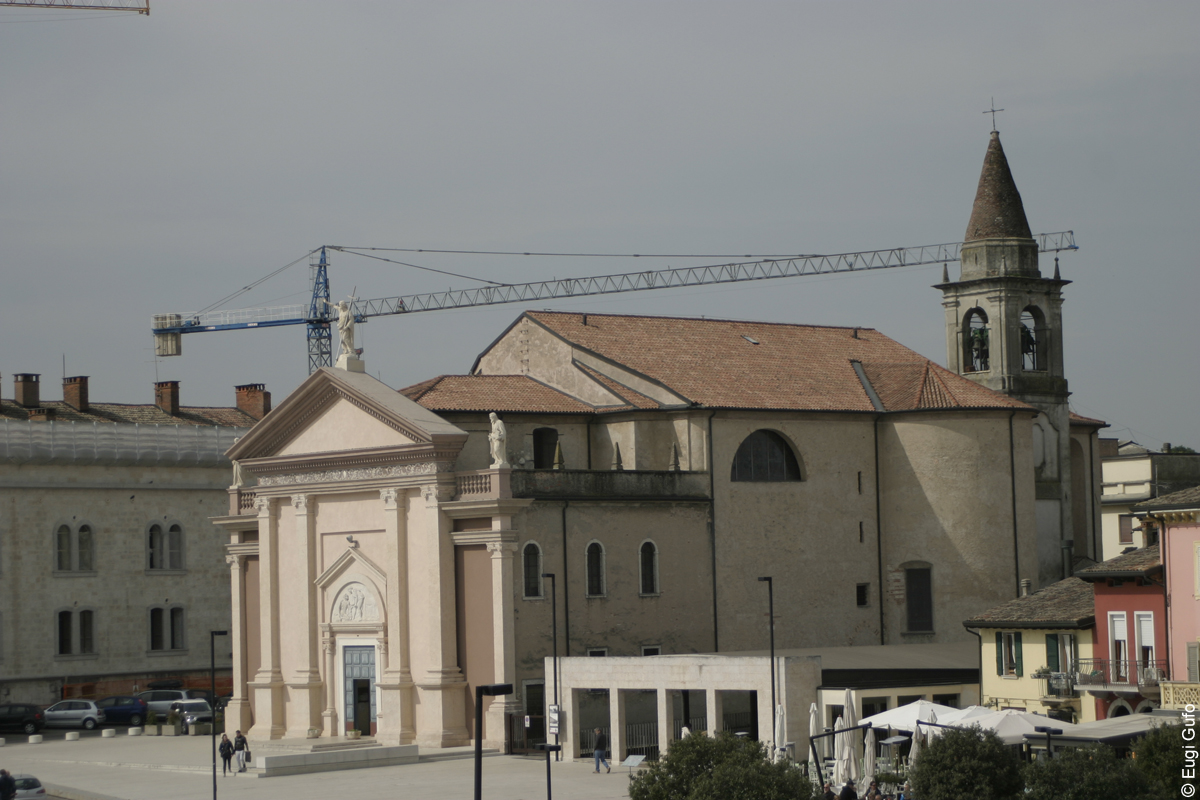
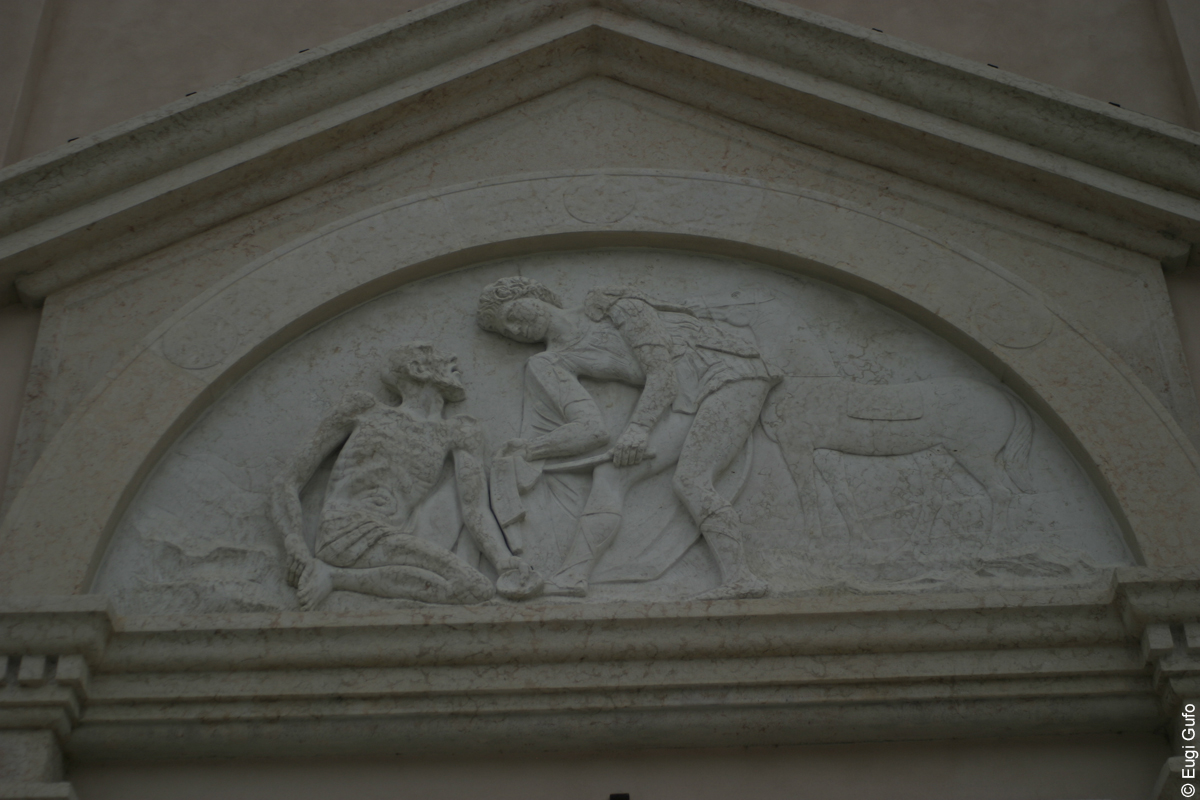
Its bas-reliefs and stained glass did not particularly captivate me.
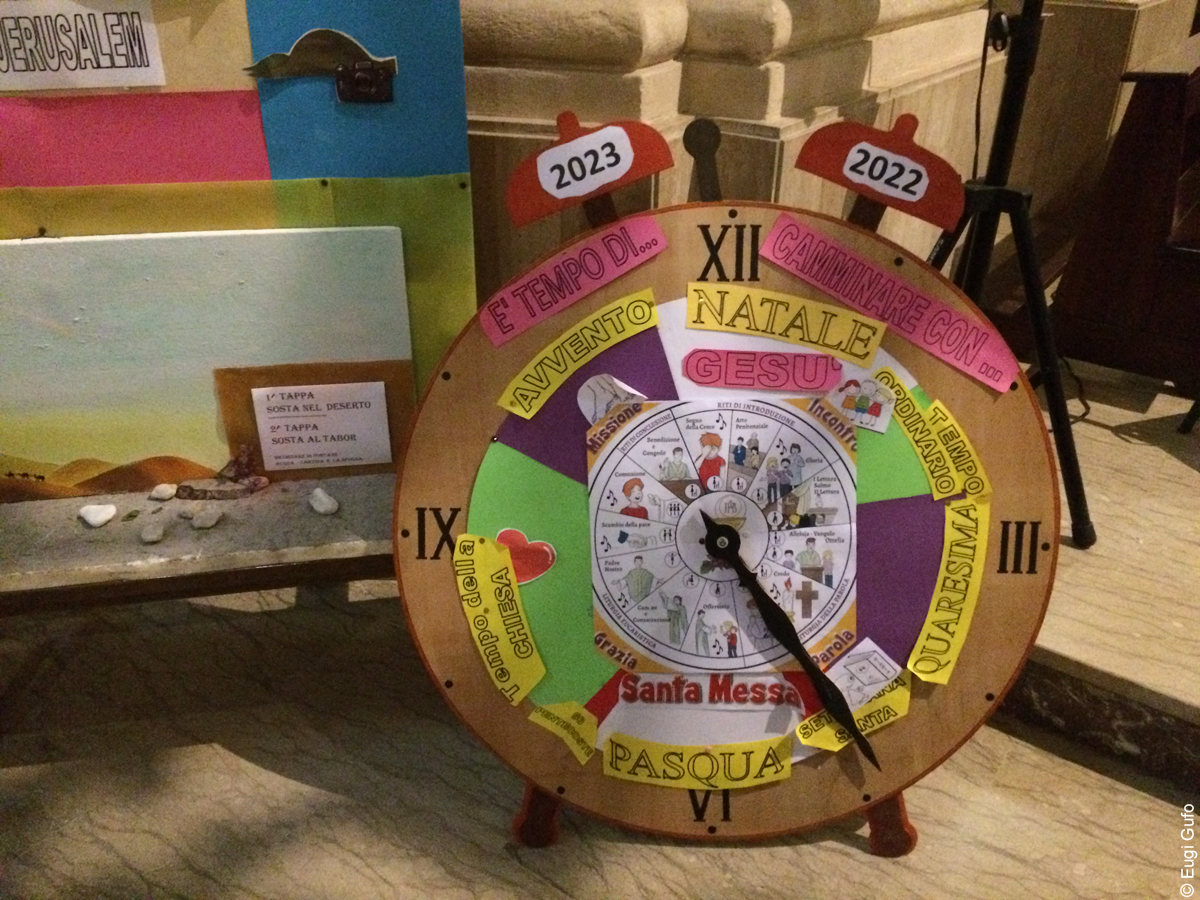
Unexpectedly, however, I found myself thinking that the beauty of a place sometimes depends on its people. The parish priest appears to approach his role with creativity — he has even authorised electronic musical instruments: a digital piano and an electronic drum kit. (Highly recommended for musicians wishing not to terrorise their neighbours.)
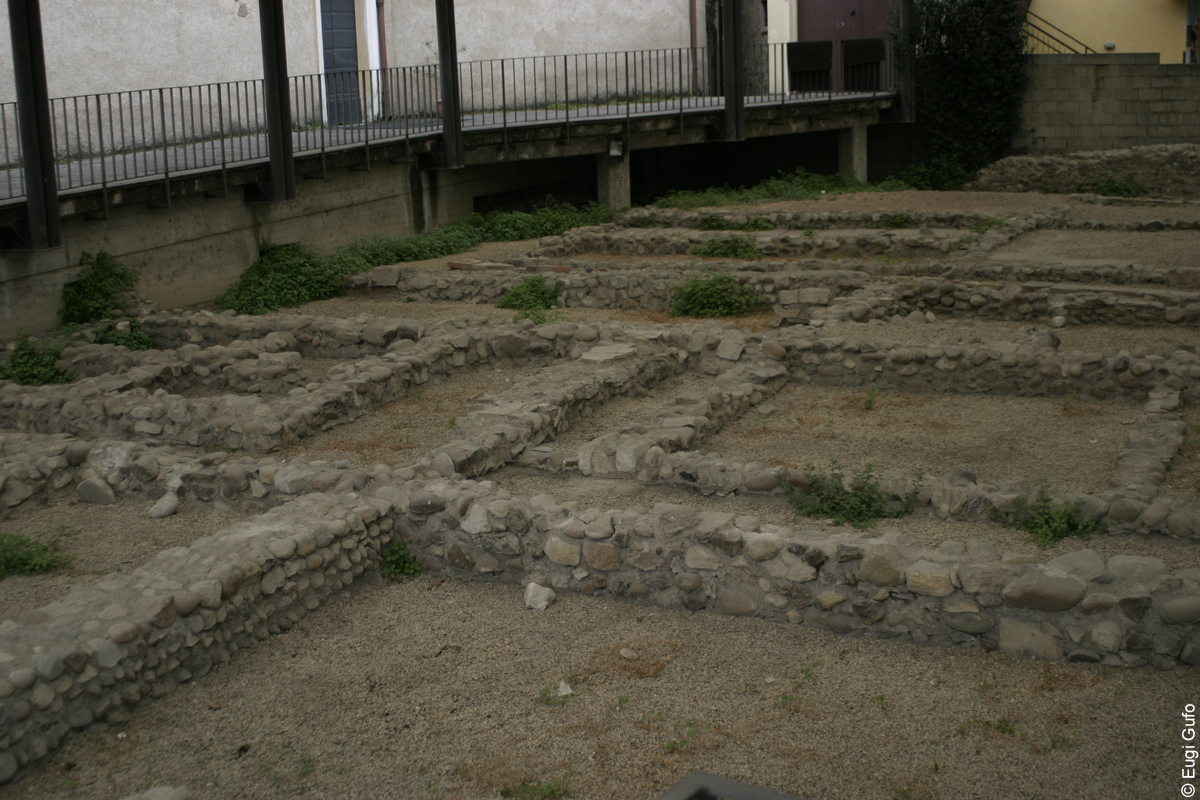
Nearby stand the remains of a Roman building of unknown — but presumably non-religious — function.
The most traditionally interesting religious building is the Santuario della Madonna del Frassino, slightly outside the centre yet easily reachable on foot. Founded in 1511 following yet another alleged miraculous apparition and entrusted to the Franciscan Friars Minor in 1514, it later gained a cloistered convent active until the Napoleonic era.
Unfortunately, during my visit the sanctuary and its adjoining structures were closed — not even a timetable was displayed. Thus I could not study the many artworks said to be inside.
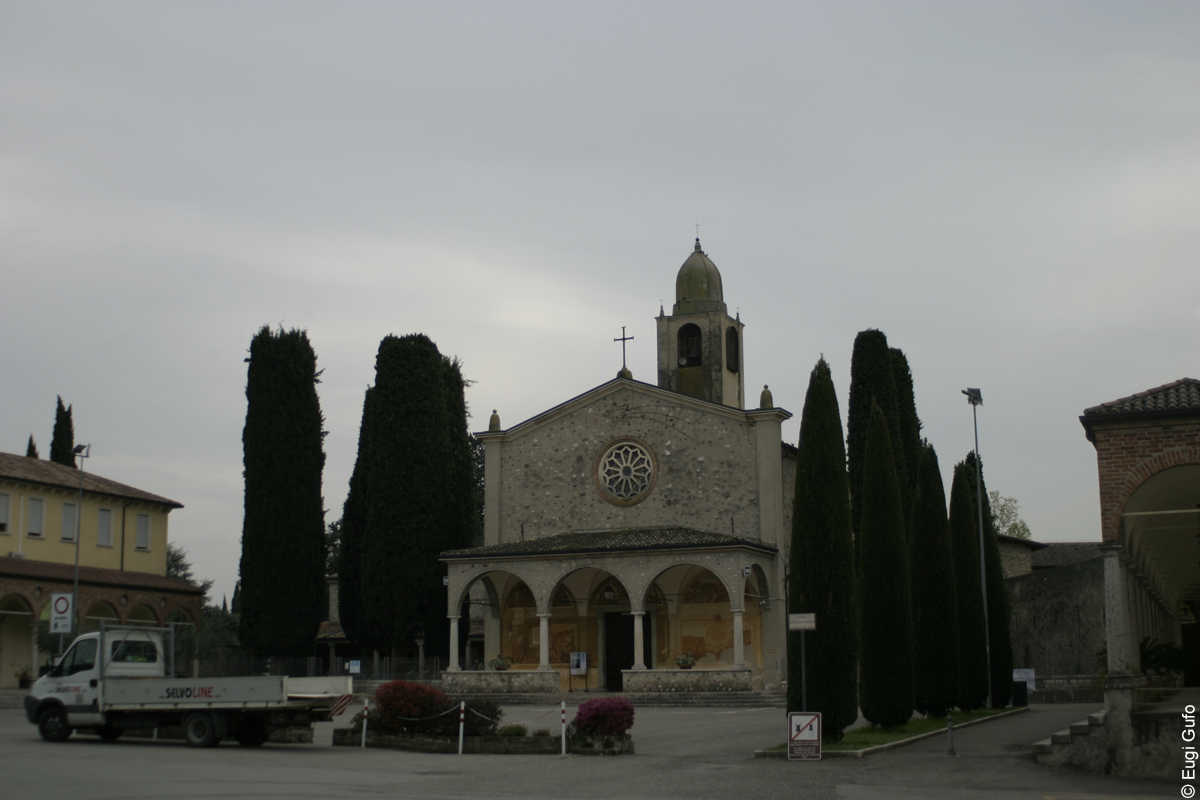
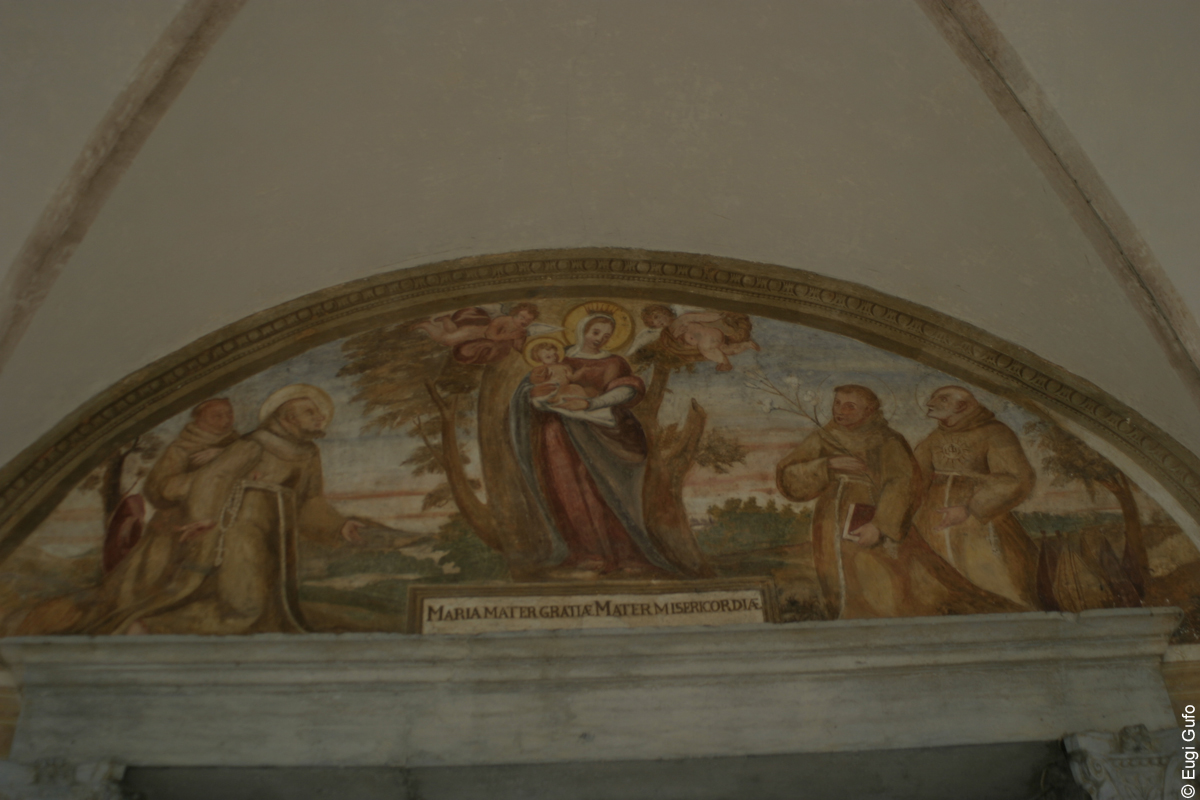
I saw only the entrance frescoes…
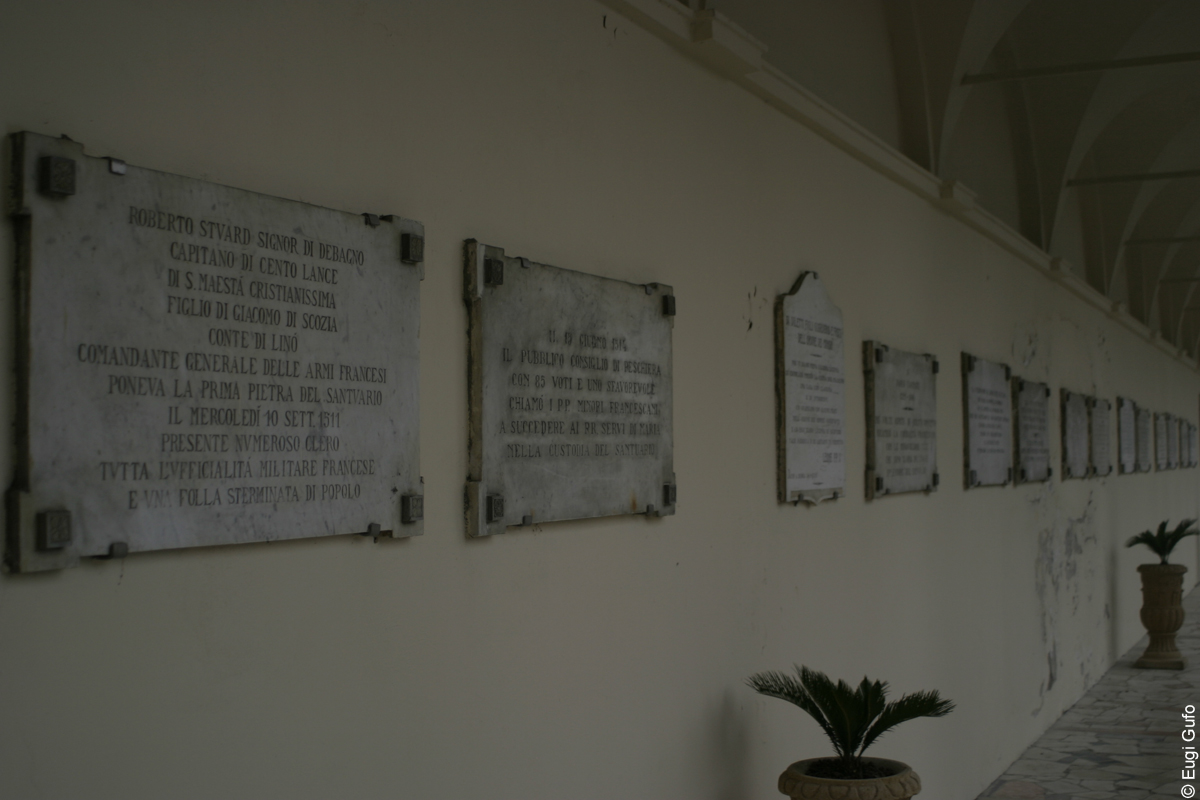
… and the numerous commemorative plaques beneath a lateral portico (some bearing visible traces of historical «corrections»).
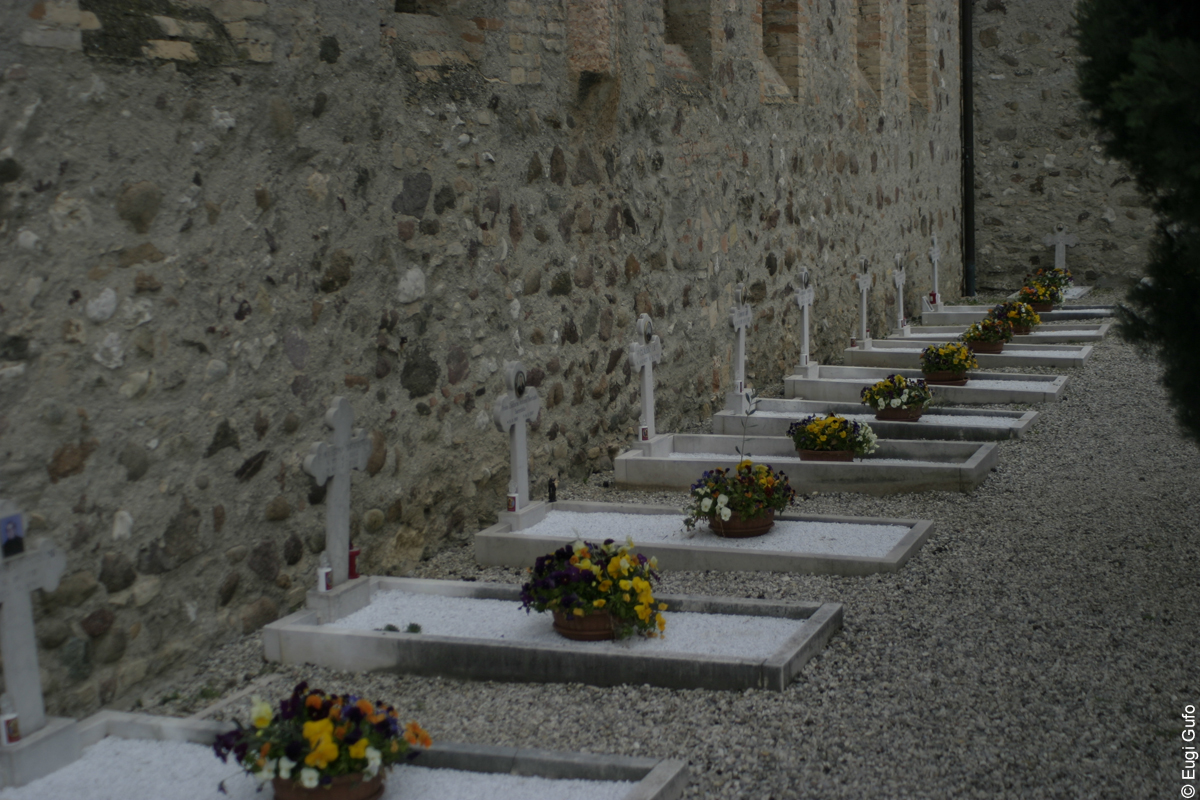
The convent cemetery was open. Curiously, certain graves bore far more flowers and candles than others.
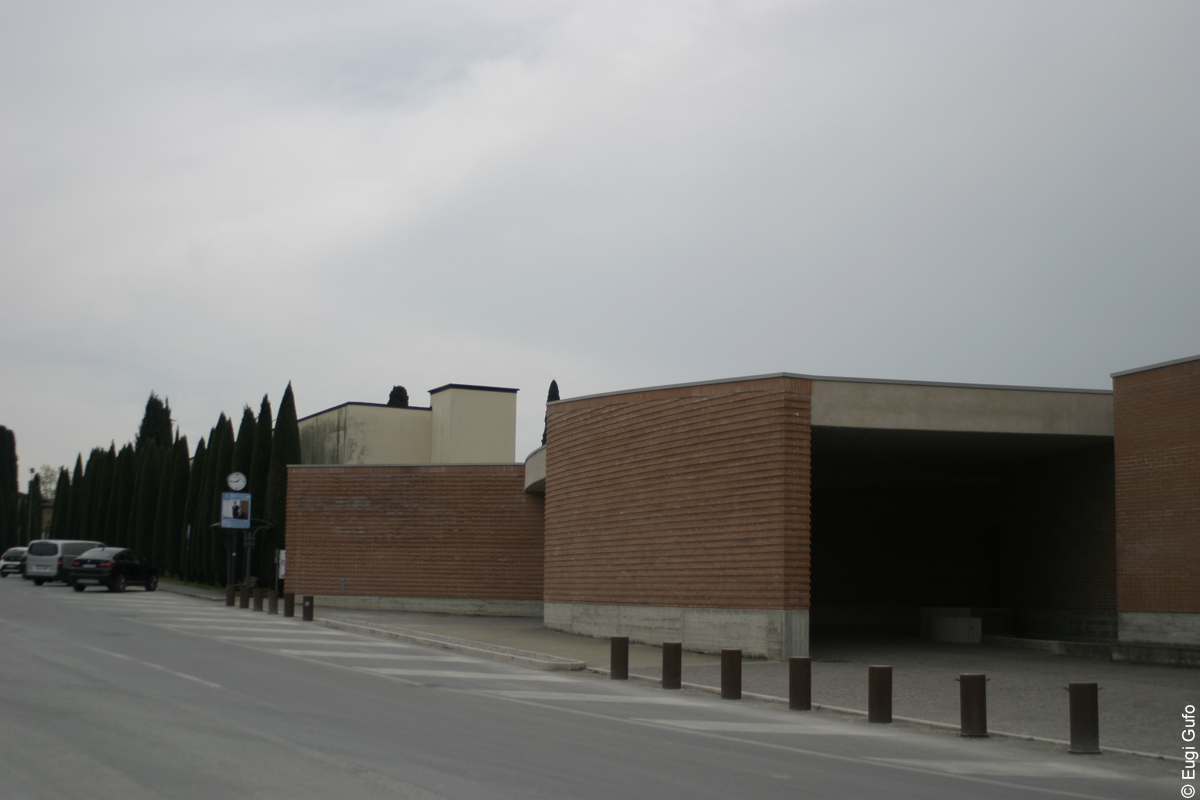
The nearby public cemetery, by contrast, is not a sculptural museum like most Italian cemeteries but a rather uninspiring accumulation of concrete, metal, and glass boxes.
Back in the centre, the streets form an overall pleasant impression, even if individual buildings rarely dazzle.
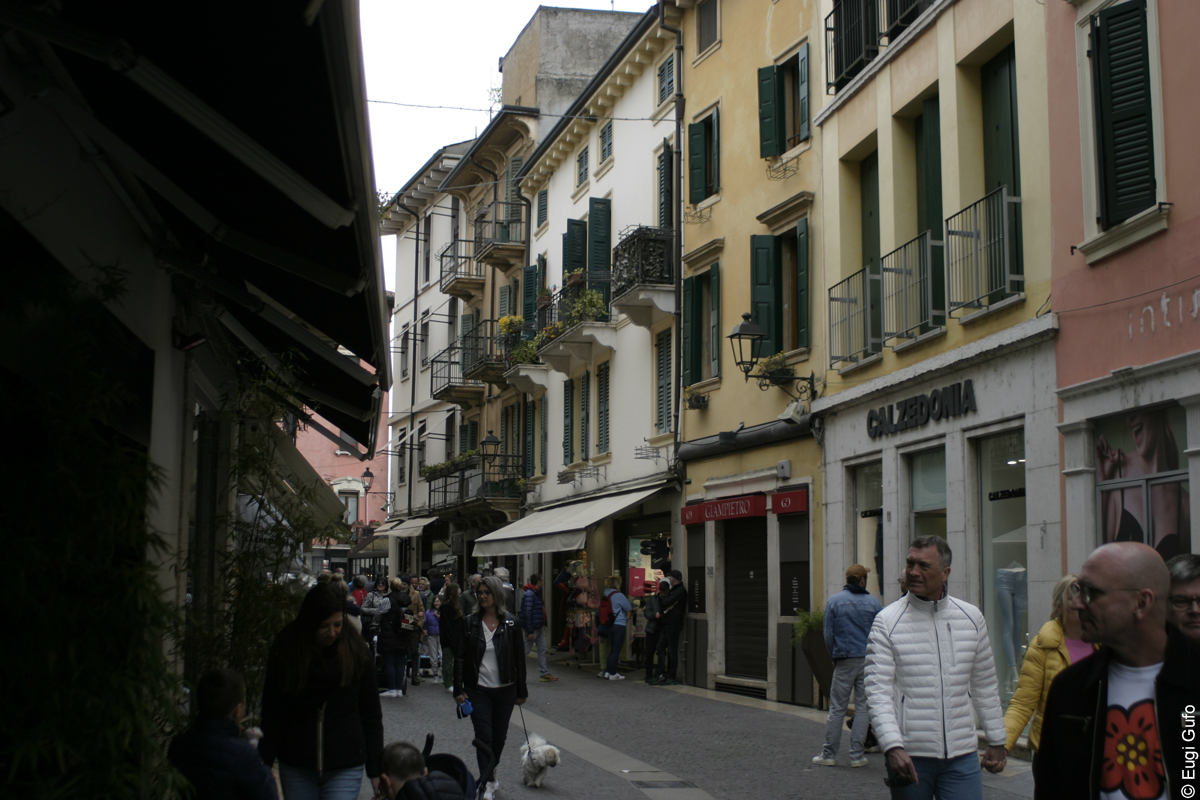
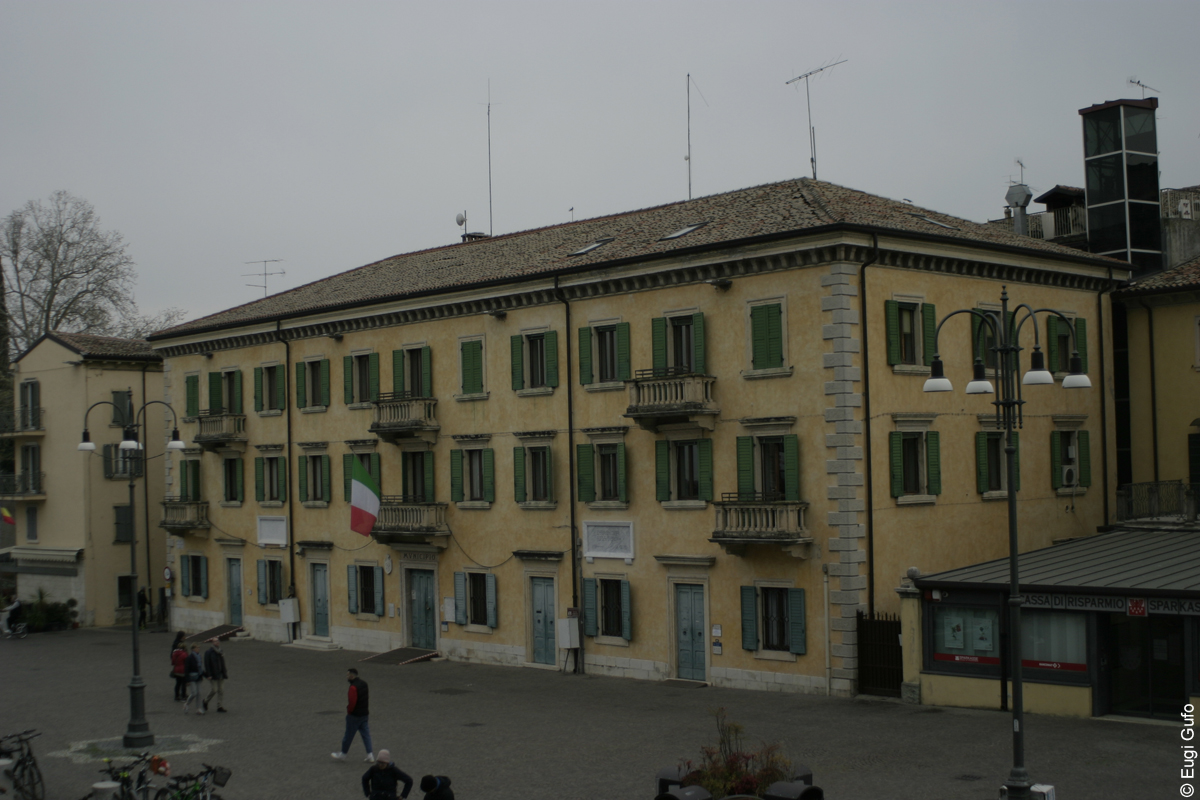
The Town Hall is among the dullest structures.
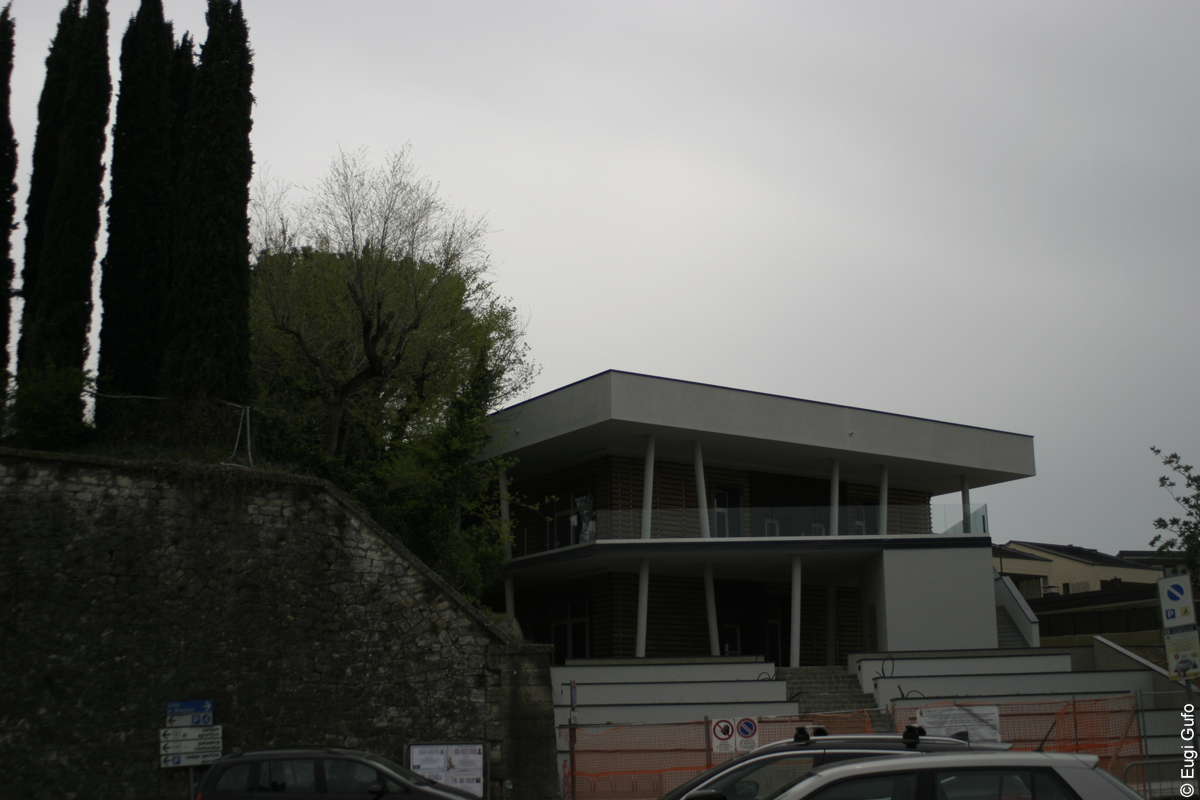
Modern architecture is limited but occasionally interesting.
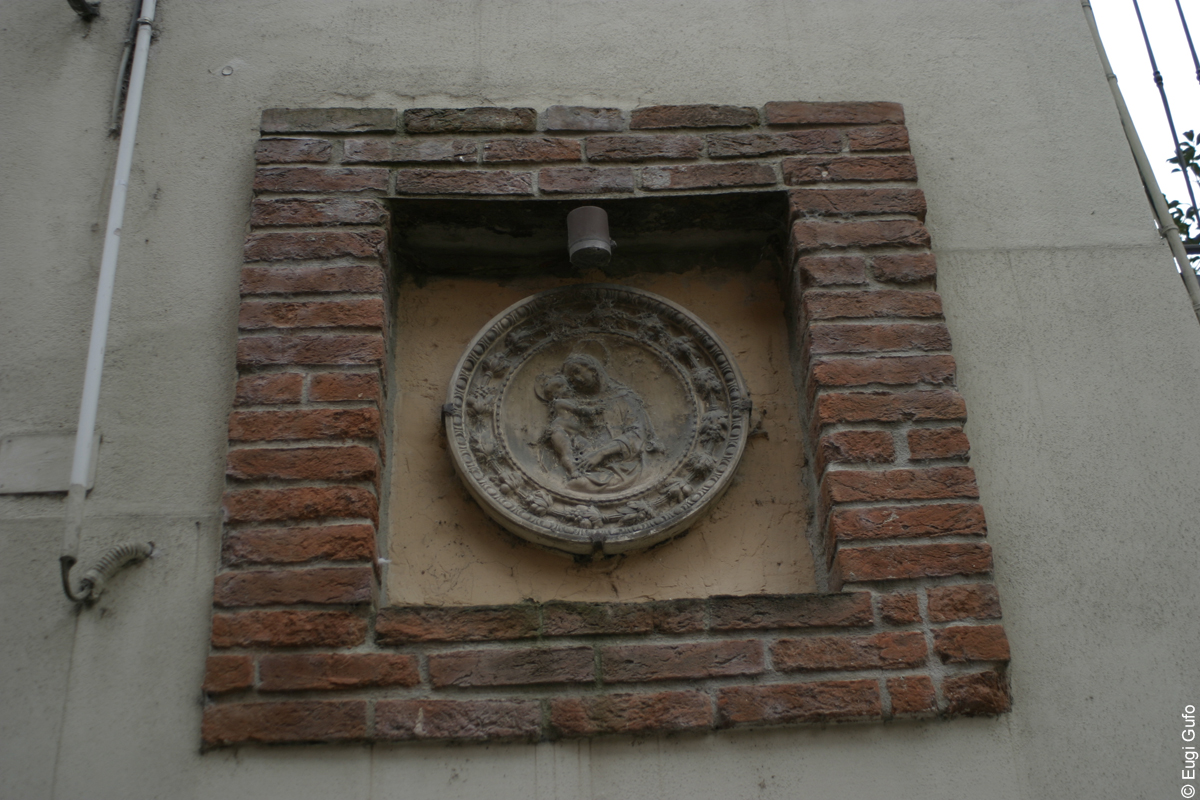
Sacred imagery embedded in civilian façades partly compensates for the relatively modest number of churches.
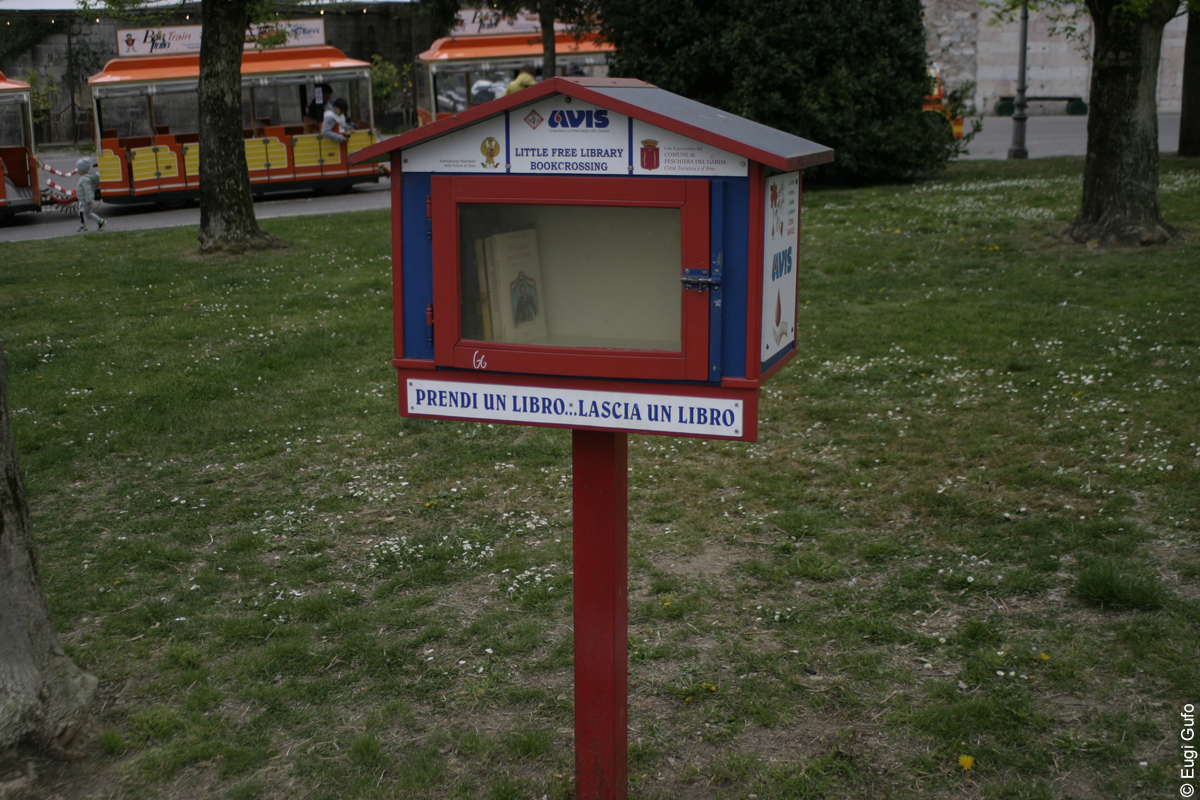
I found only one bookcrossing box — nearly empty.
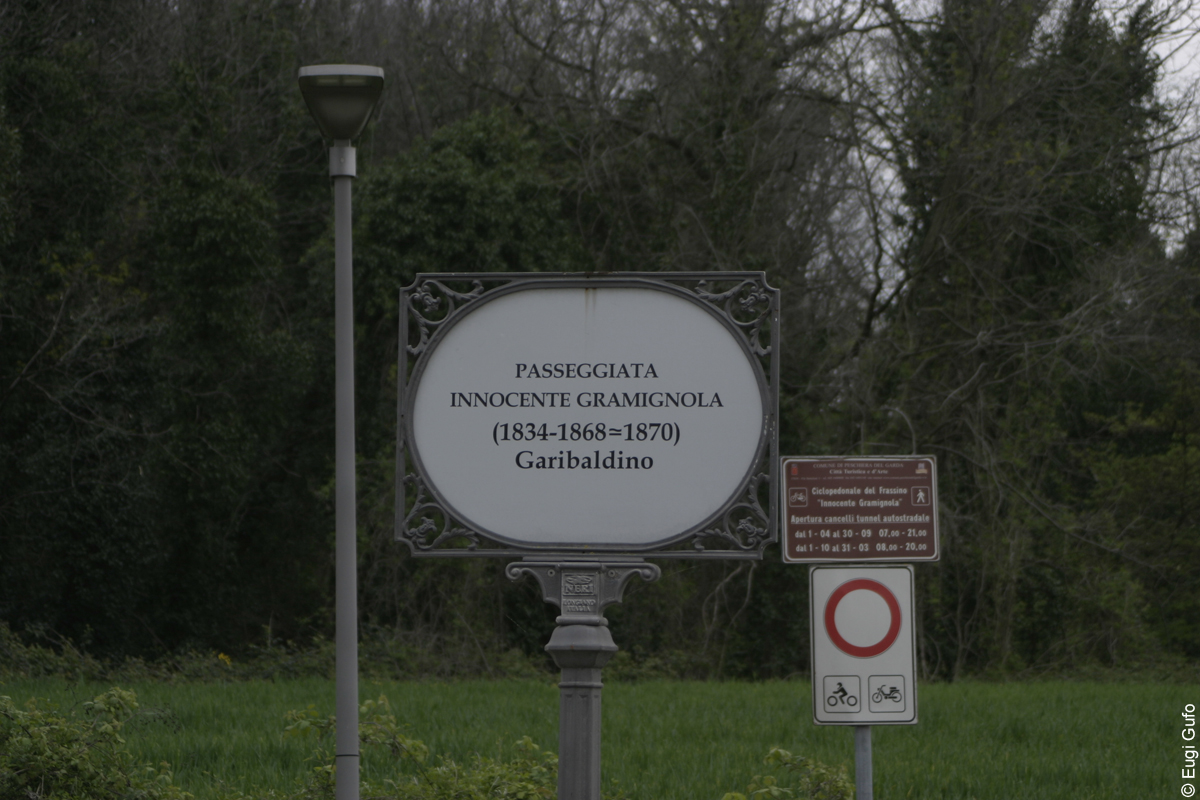
Cultural issues also surface in subtler ways: an official sign attempted to calculate «1834 minus 1868 equals approximately 1870». It failed — perhaps confusing hyphen, minus sign, and dash. A global epidemic, that one.
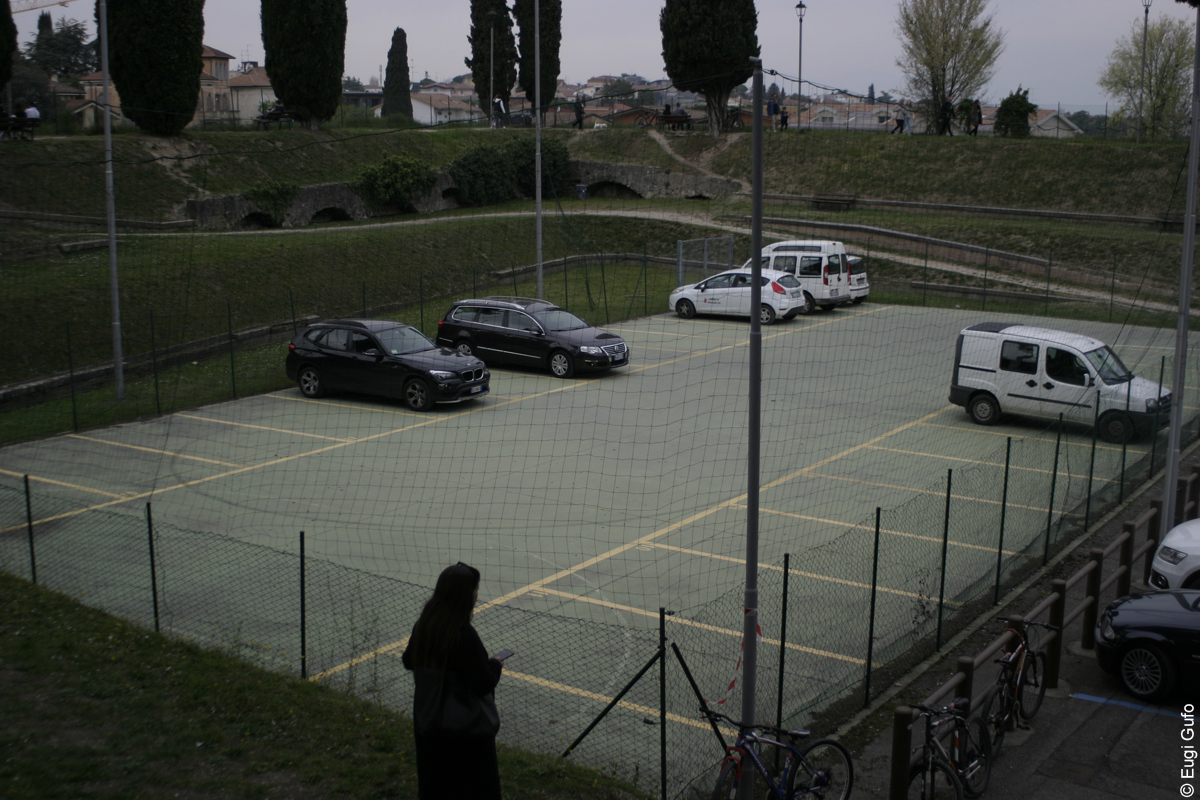
Sport, too, appears overshadowed by more popular pursuits.
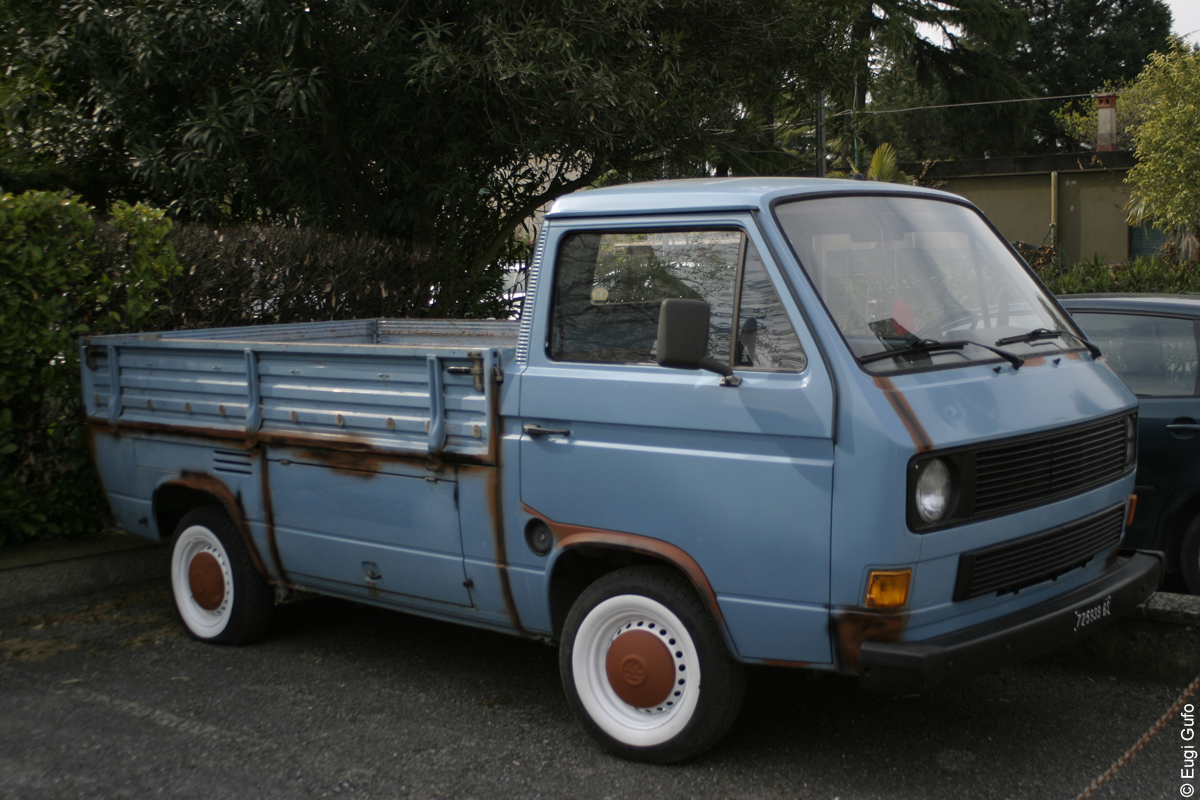
On the subject of cars: I noticed an unusually high number of Volkswagen Type 2 vans (T1, T2, T3). Some still operational, others converted into bar furniture, and some entirely fake decorative installations. My only rational explanation is an attempt to delight the numerous German tourists — for reasons still not entirely clear to me, the lakes of northern Italy are immensely popular among Germans.
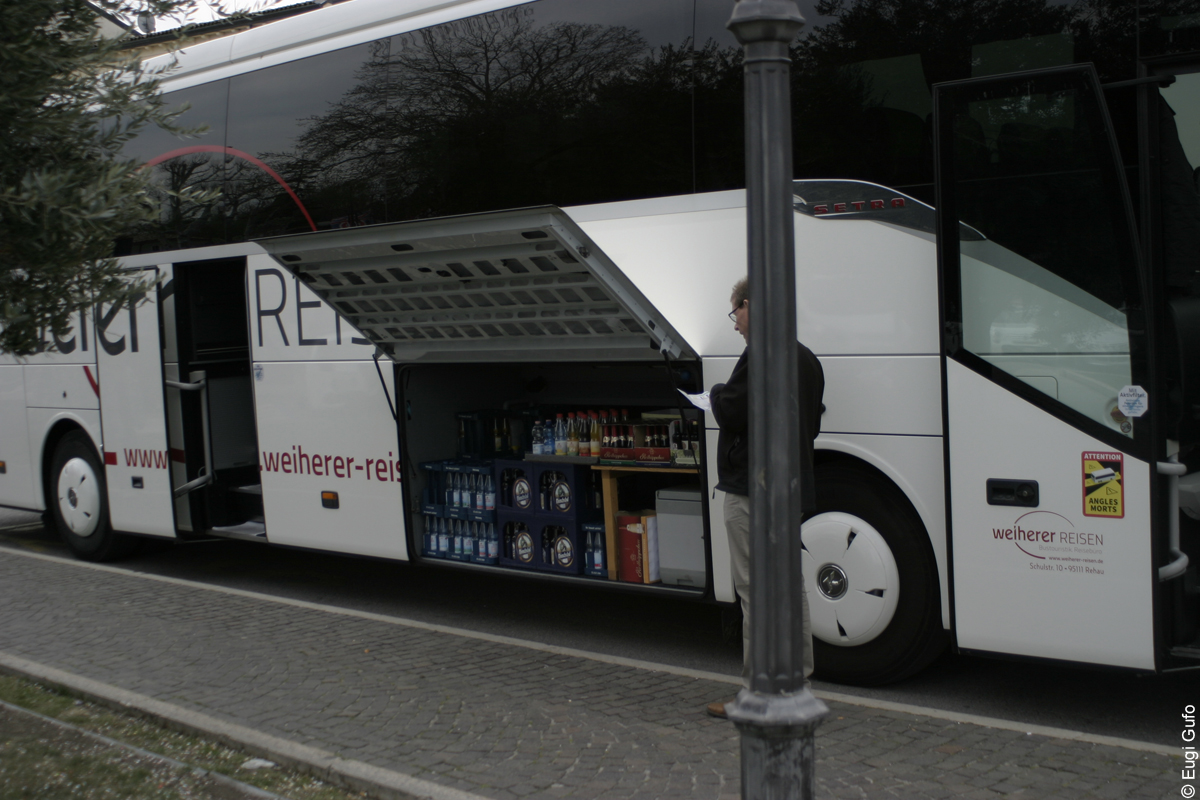
One German-plated tourist coach’s luggage compartment did its utmost to confirm certain stereotypes…
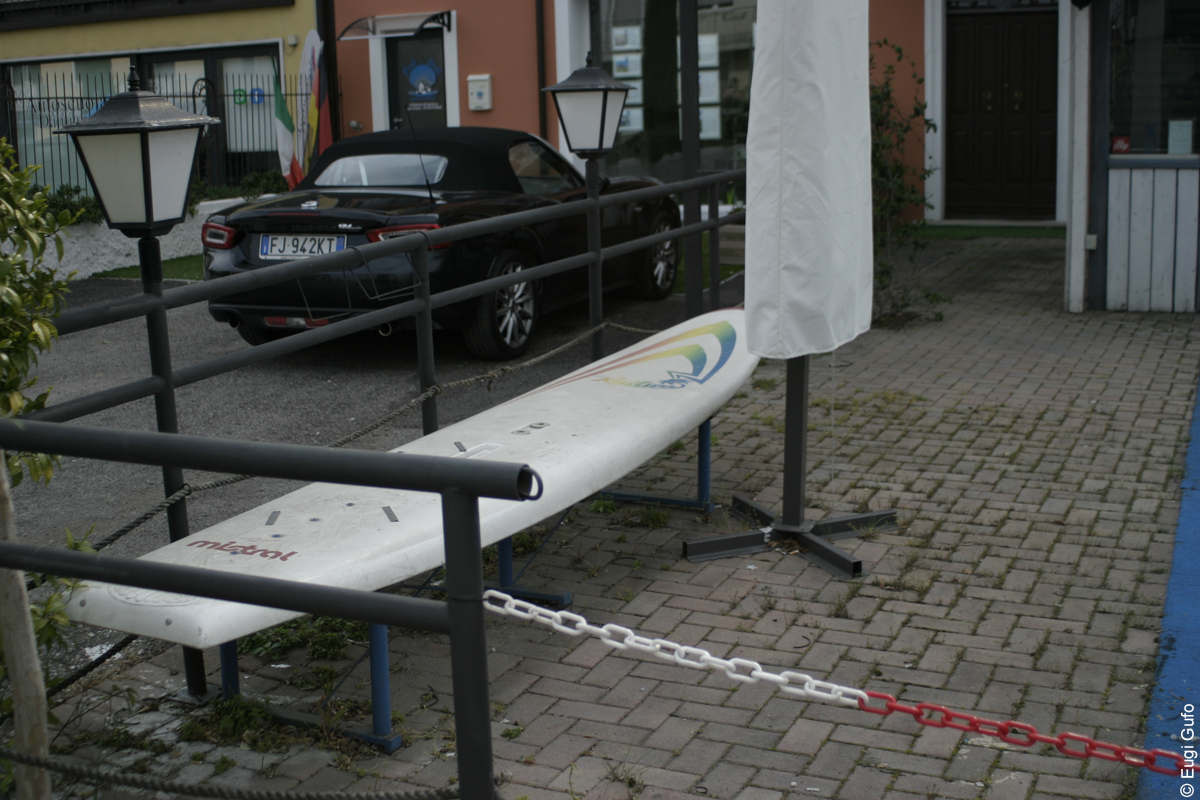
Fortunately, the typical lakeside benches are not crowded with casualties of heroic battles against bottles.
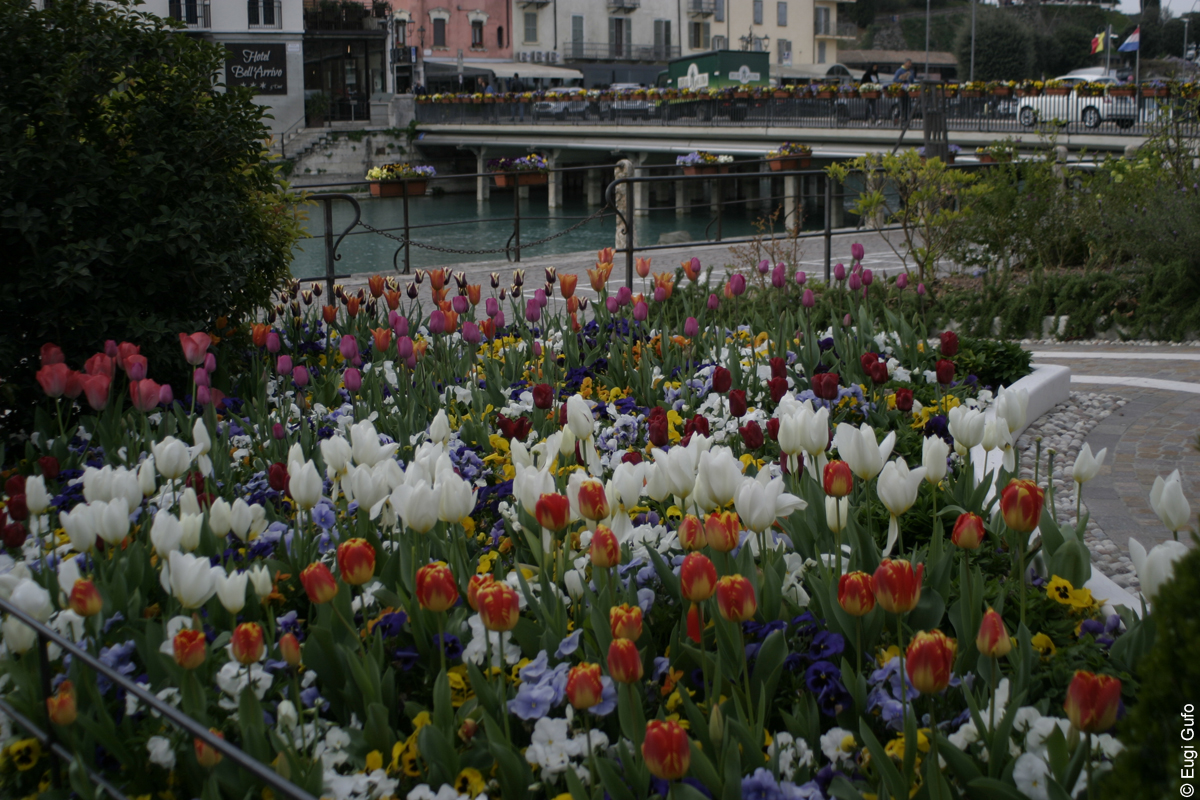
The historic centre is well maintained. Seasonal flowers abound; I noticed — perhaps for the first time in Italy — an impressive number of tulips.
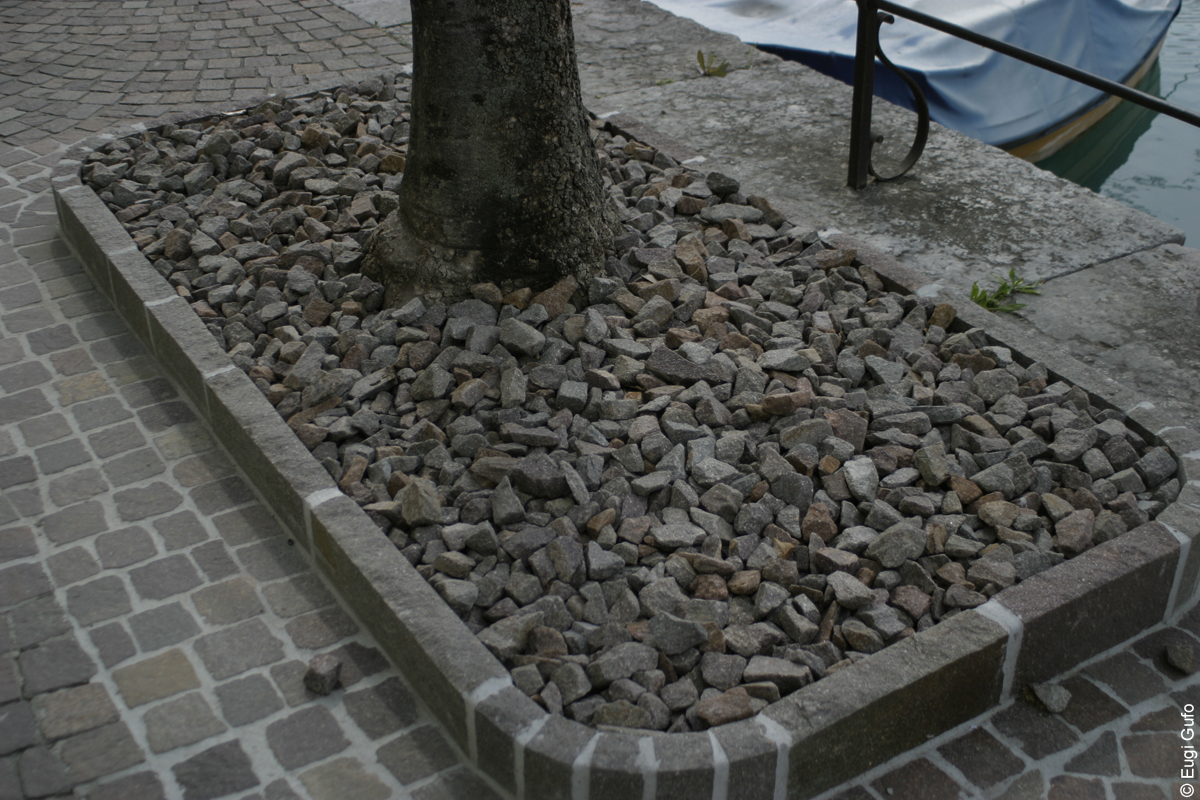
Local gardeners, however, favour radical solutions to certain problems.
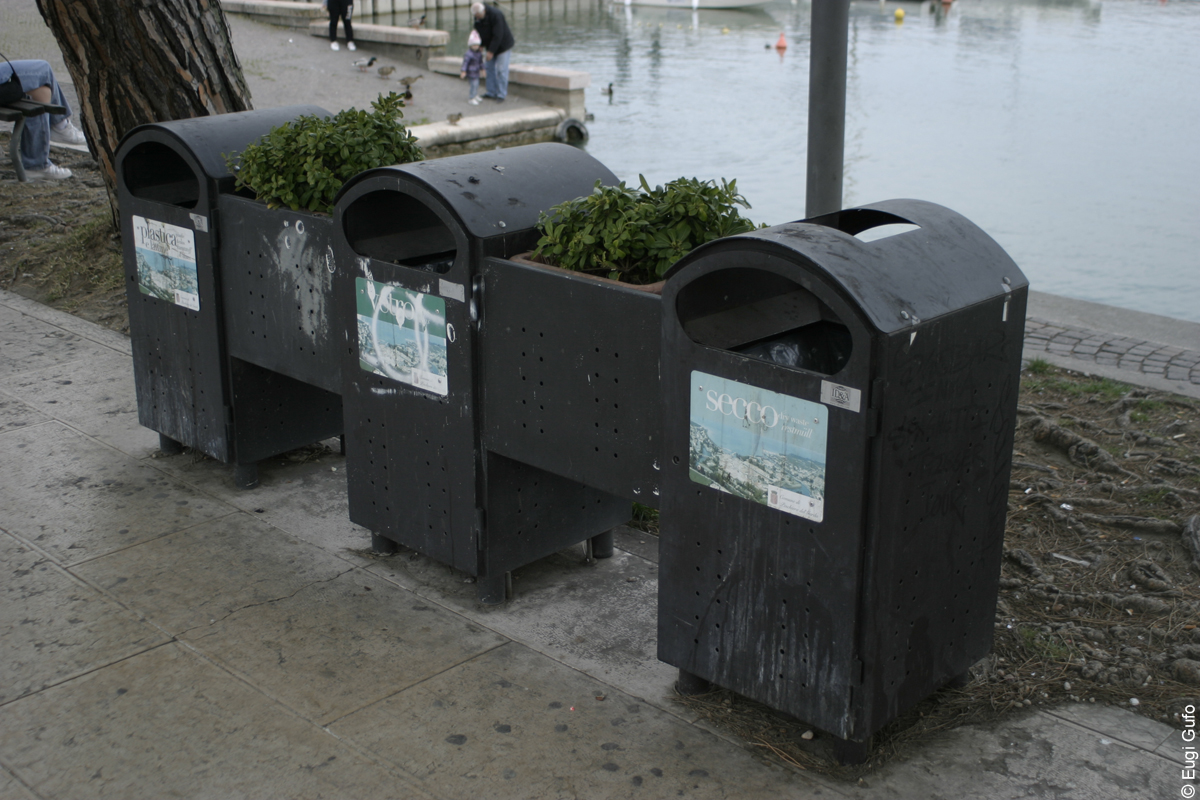
I had never previously seen litter bins combined with flowerpots.
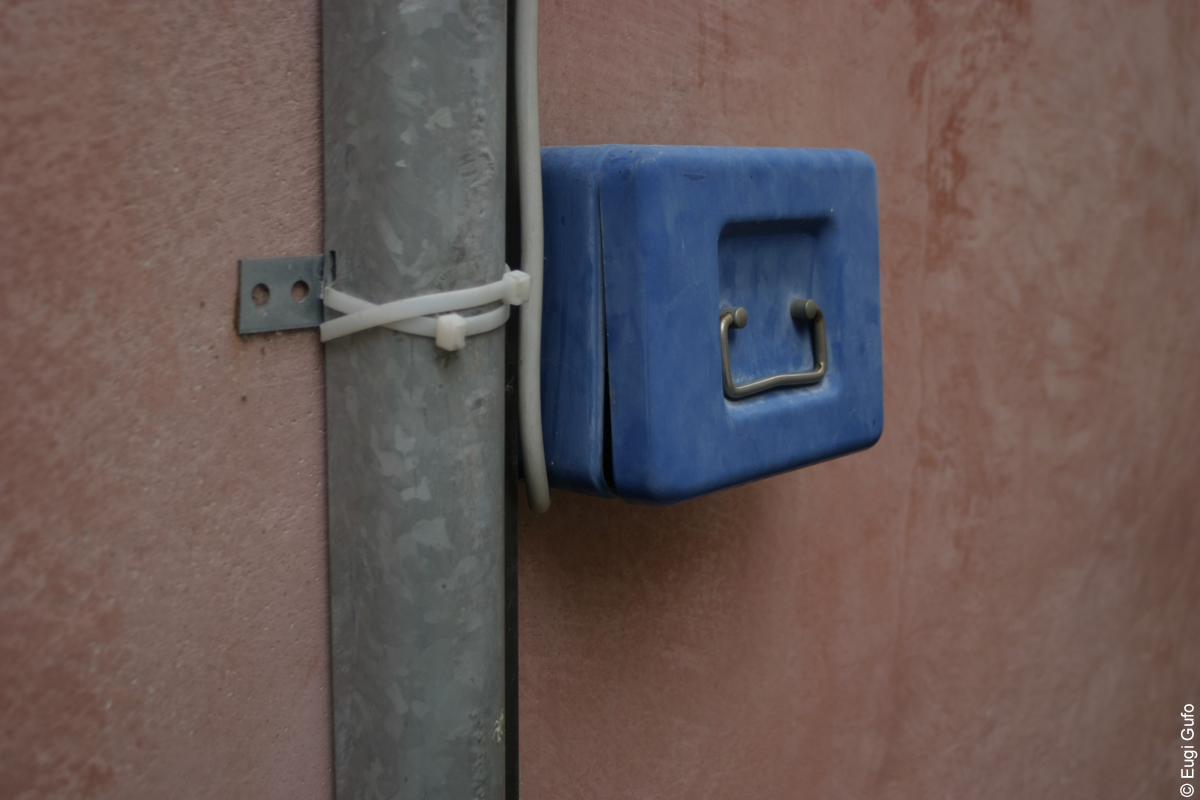
Electricians, too, have embraced creativity: at numerous cable junctions stand small metal boxes (unlocked), each containing the same green-screen device labelled «press monthly». Presumably residual-current devices serving adjacent sockets — but for what grand purpose, I cannot imagine. Electrical experts are invited to theorise.
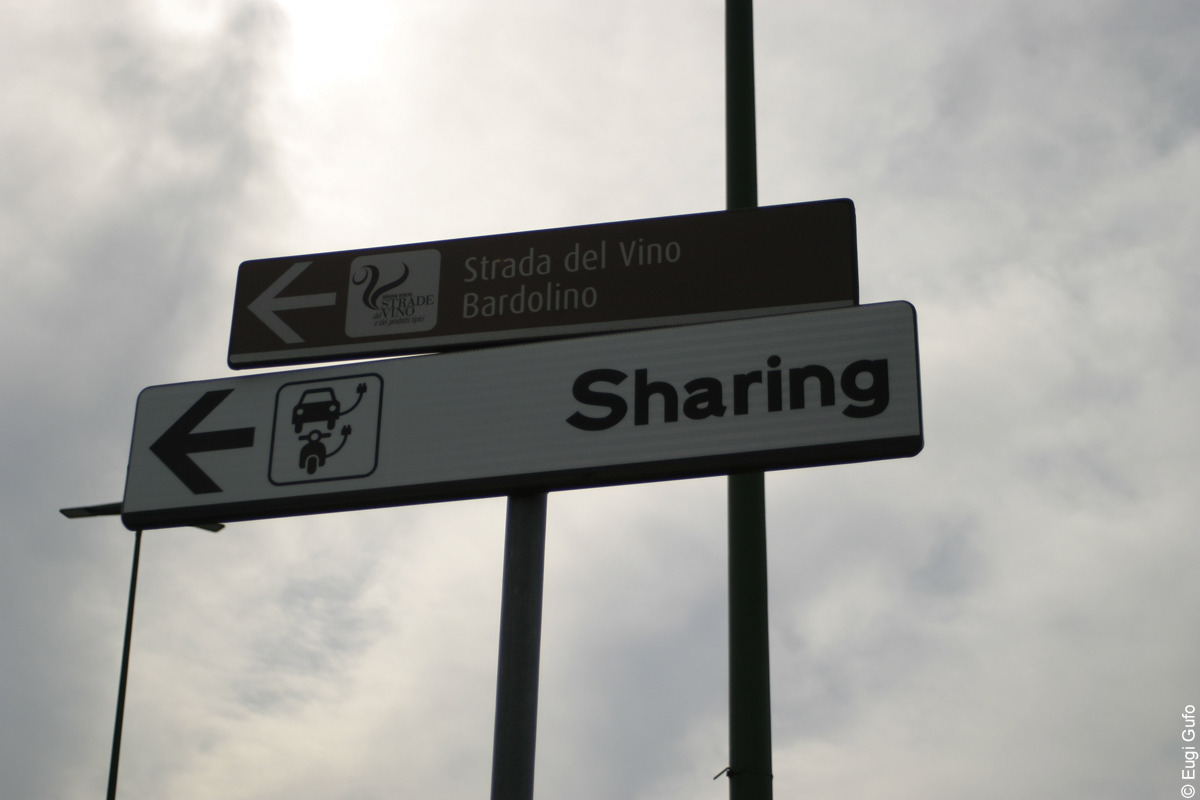
More intelligible electrical utilities are signposted with road signs I had not previously encountered in Italy.
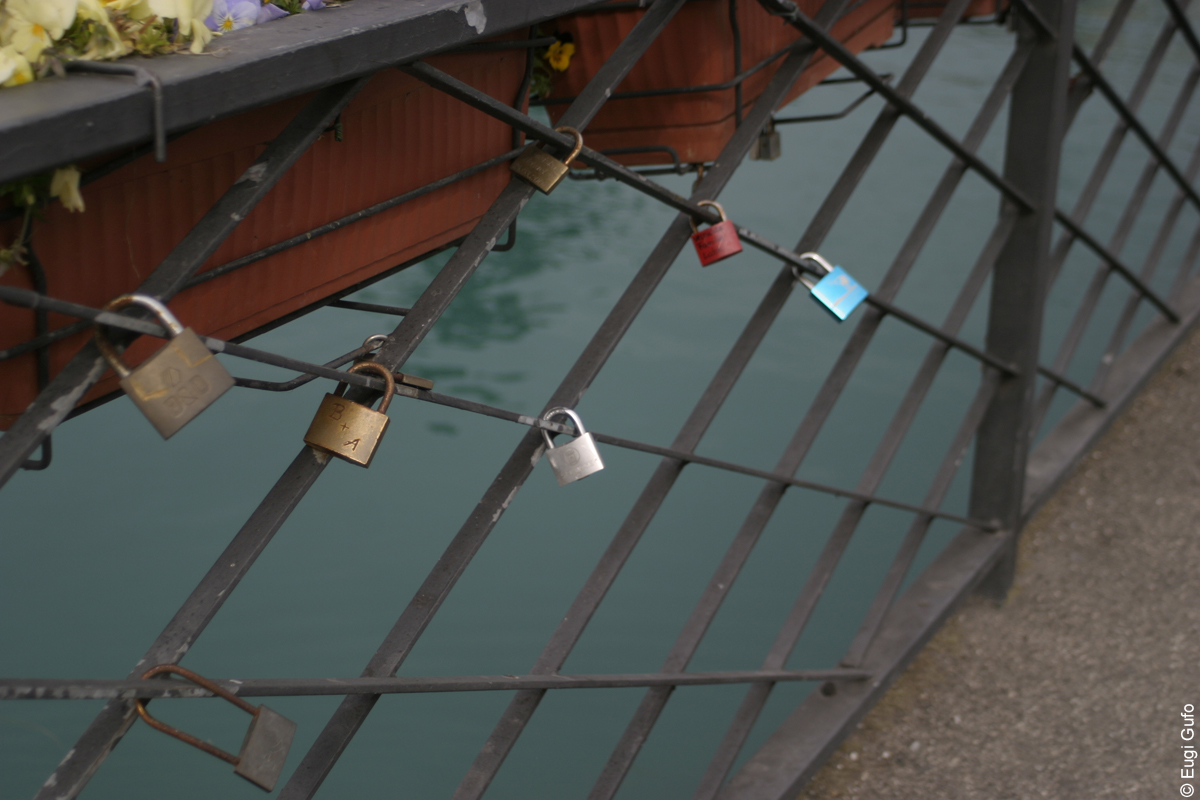
Even here, one finds a modest number of the dreaded love-locks — perhaps recently reduced?
The attractive and somewhat unusual railway station of Peschiera del Garda opened in 1854 and integrates modern services into a historic framework.
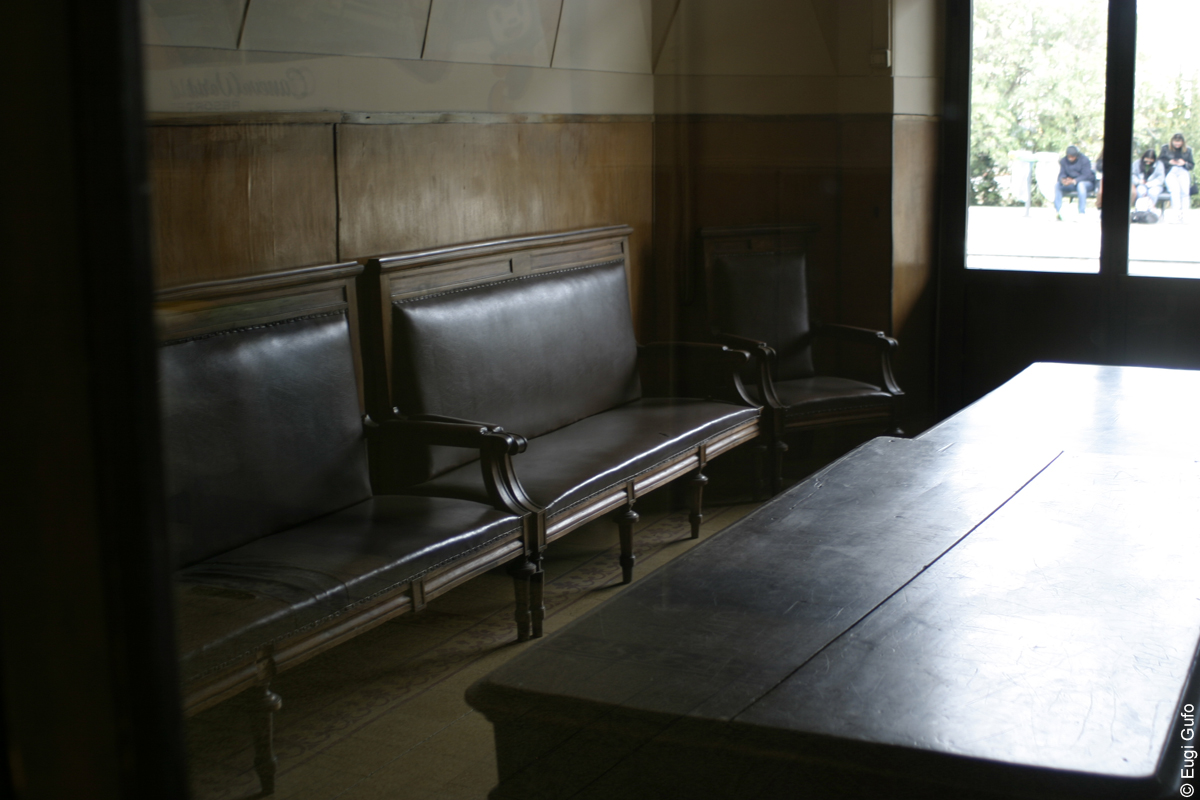
Its beautiful waiting room (also 1854) was locked — perhaps first-class passengers might be trusted with access?
The station’s most astonishing feature, however, is the lavatories: free (!) and clean (!!), and equipped with an apparently trivial yet strangely rare invention in public facilities elsewhere.
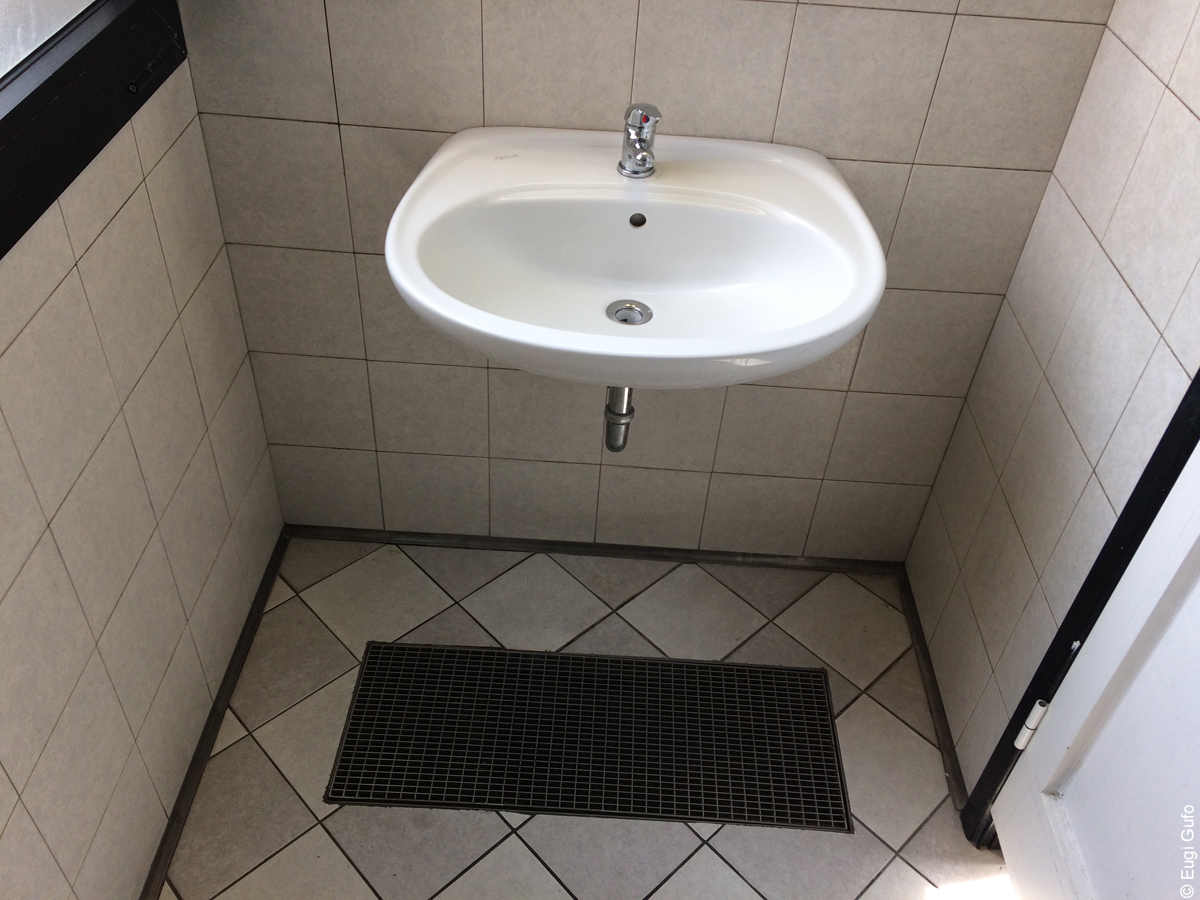
Yes — we are indeed at the station, ready to depart. To avoid concluding with images of a toilet, I shall add a few final landscapes.
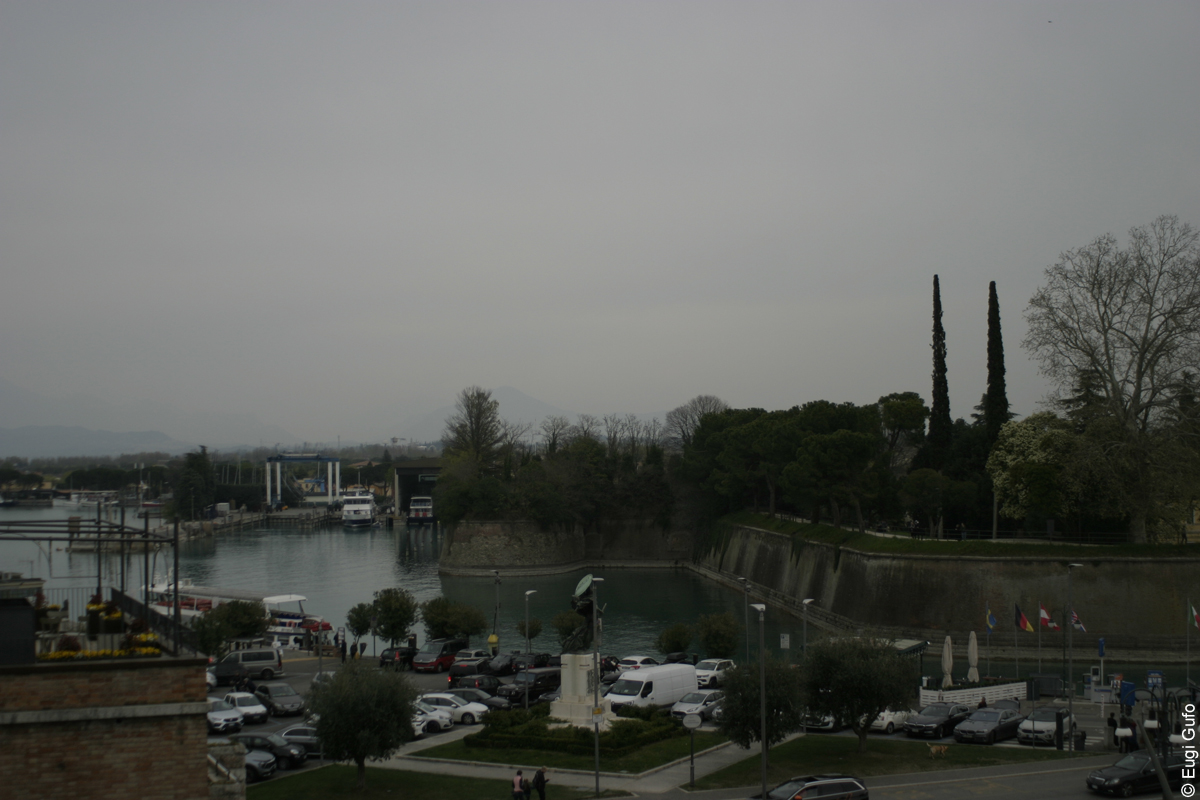
Overall, I would describe Peschiera del Garda as a beautiful place with an equally pleasant atmosphere. Tourists are present — but not oppressively so.
You may therefore visit with tranquillity.
Peschiera del Garda, 7 April 2023
↓ Show comments ↓


