


 Long live Ukraine! Fuck the war!
 RSS of site articles
On the Friday before Easter 2025, after exploring Spino d’Adda and following a pleasantly uneventful cycle-pedestrian path (via Nosadello), I made my entrance — on foot, as you may easily imagine — into Pandino. I had no clear idea what to expect, yet even before reaching the built-up area I had the impression that I was about to encounter a potentially beautiful place. Certainly just a village — but at least a beautiful one.
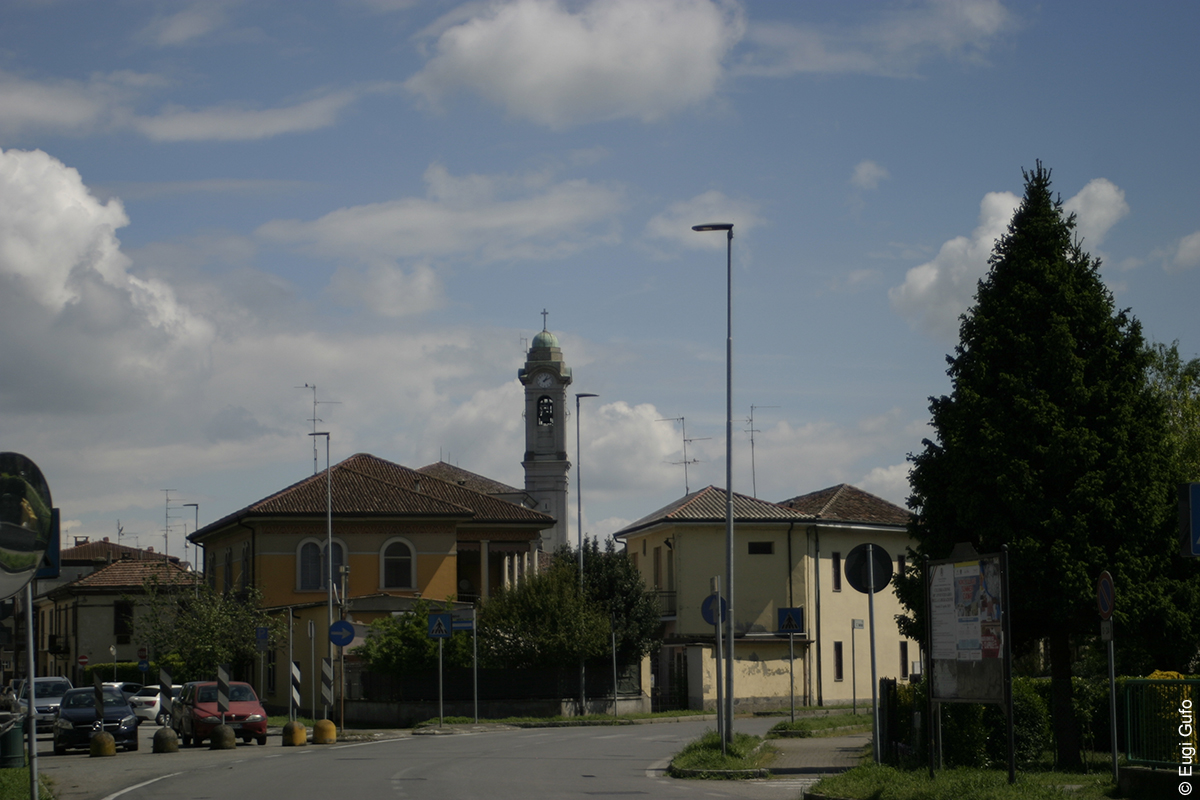
Indeed, not even in very small towns is the very centre usually built in this manner; at the same time, the urban layout feels more «city» than «village.»
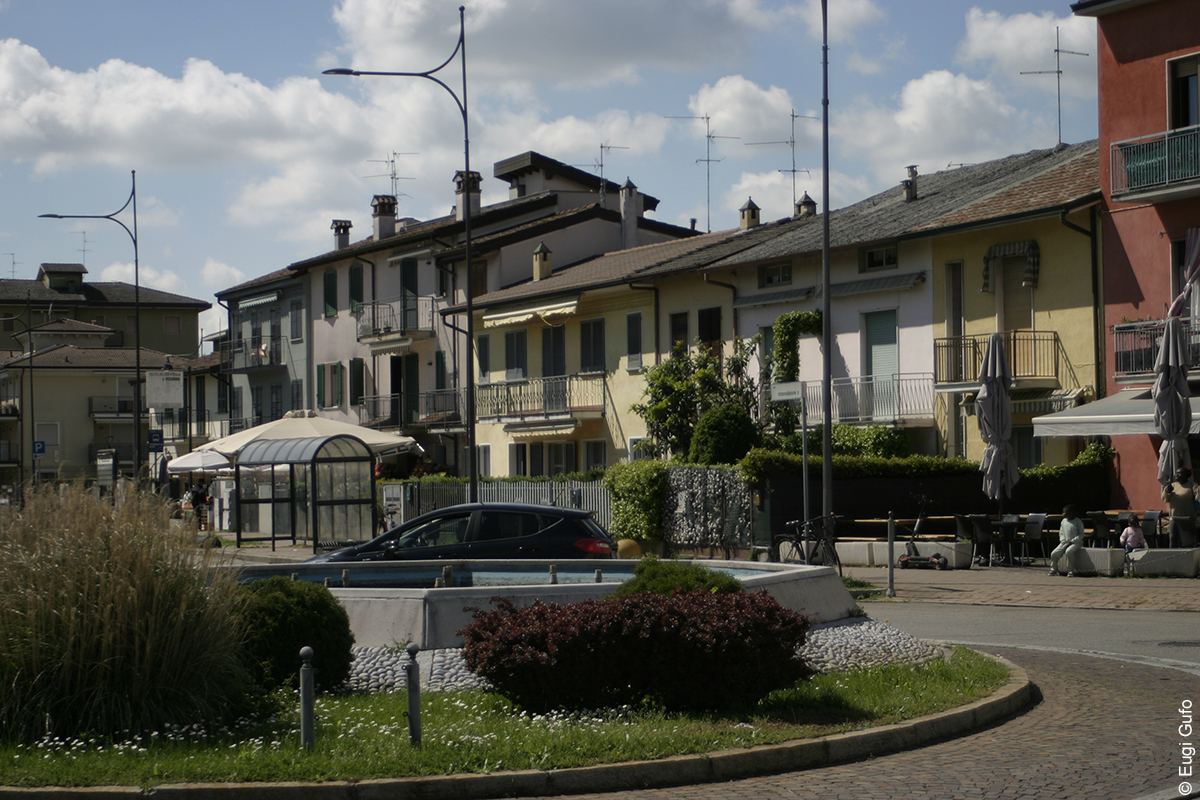
The most important street in Pandino’s historic centre is the one that best conveys the variety and architectural quality of the place (I dislike excessive quotation marks).
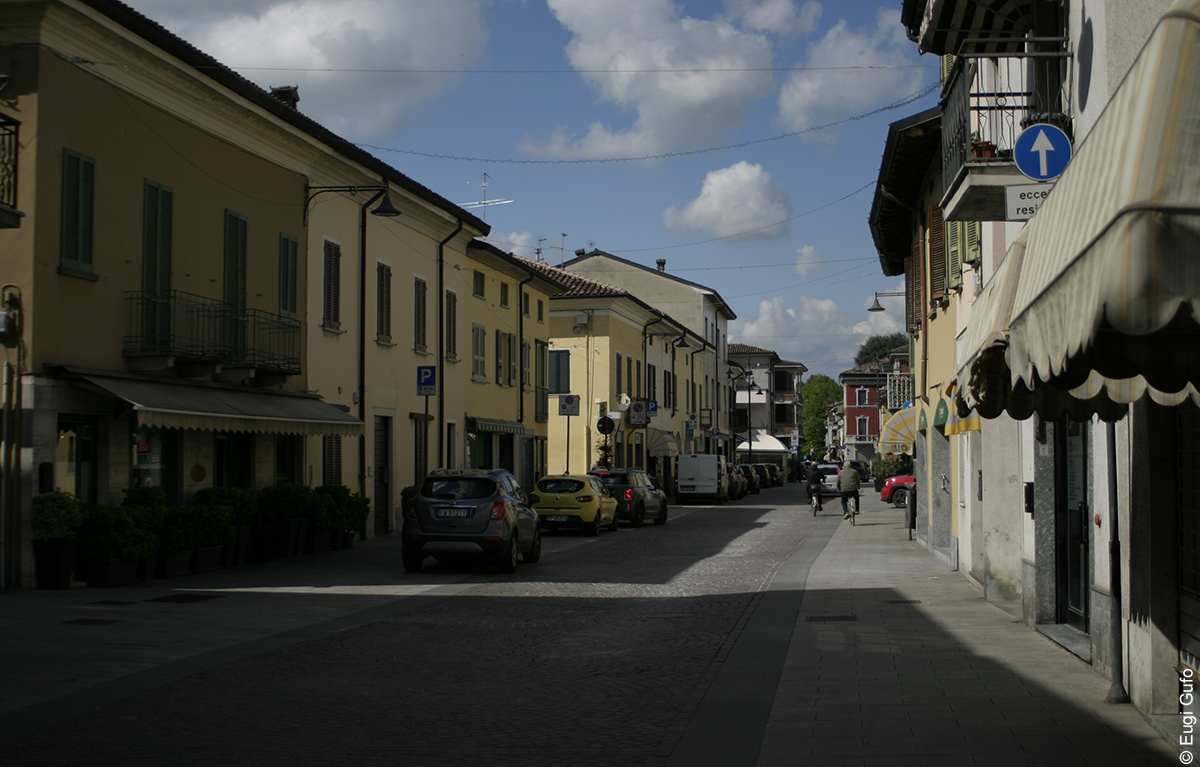
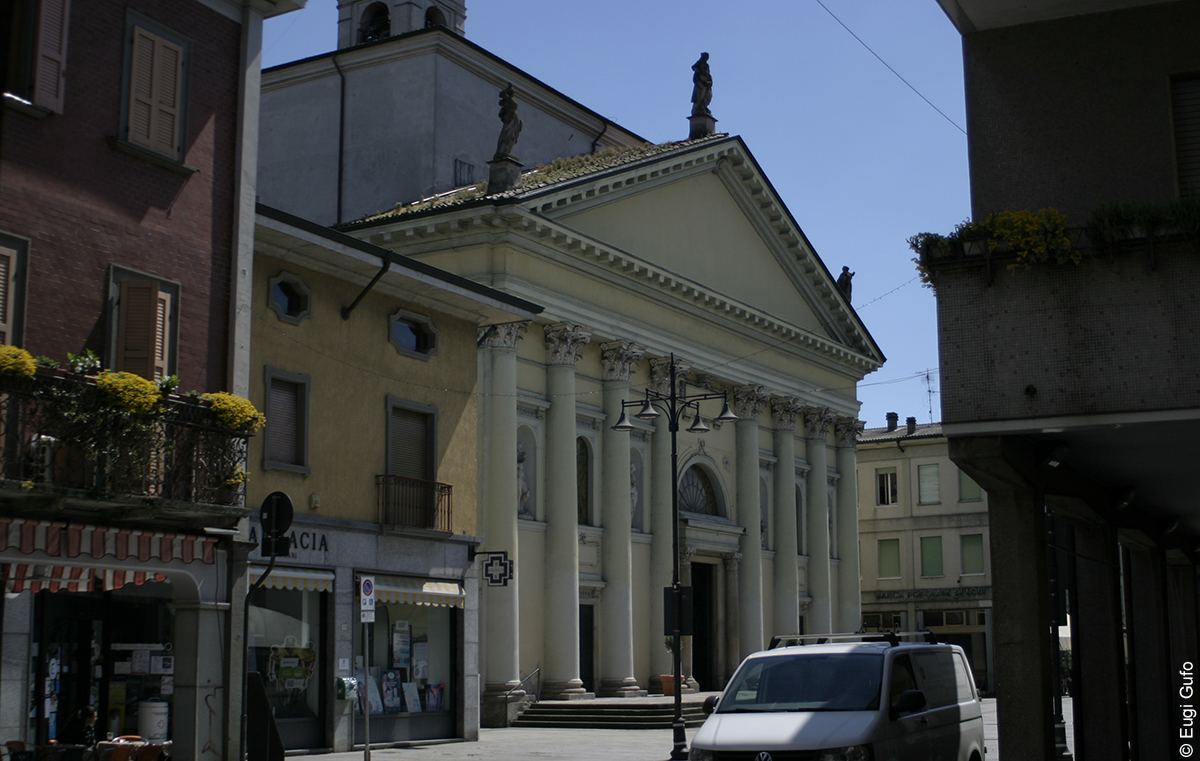
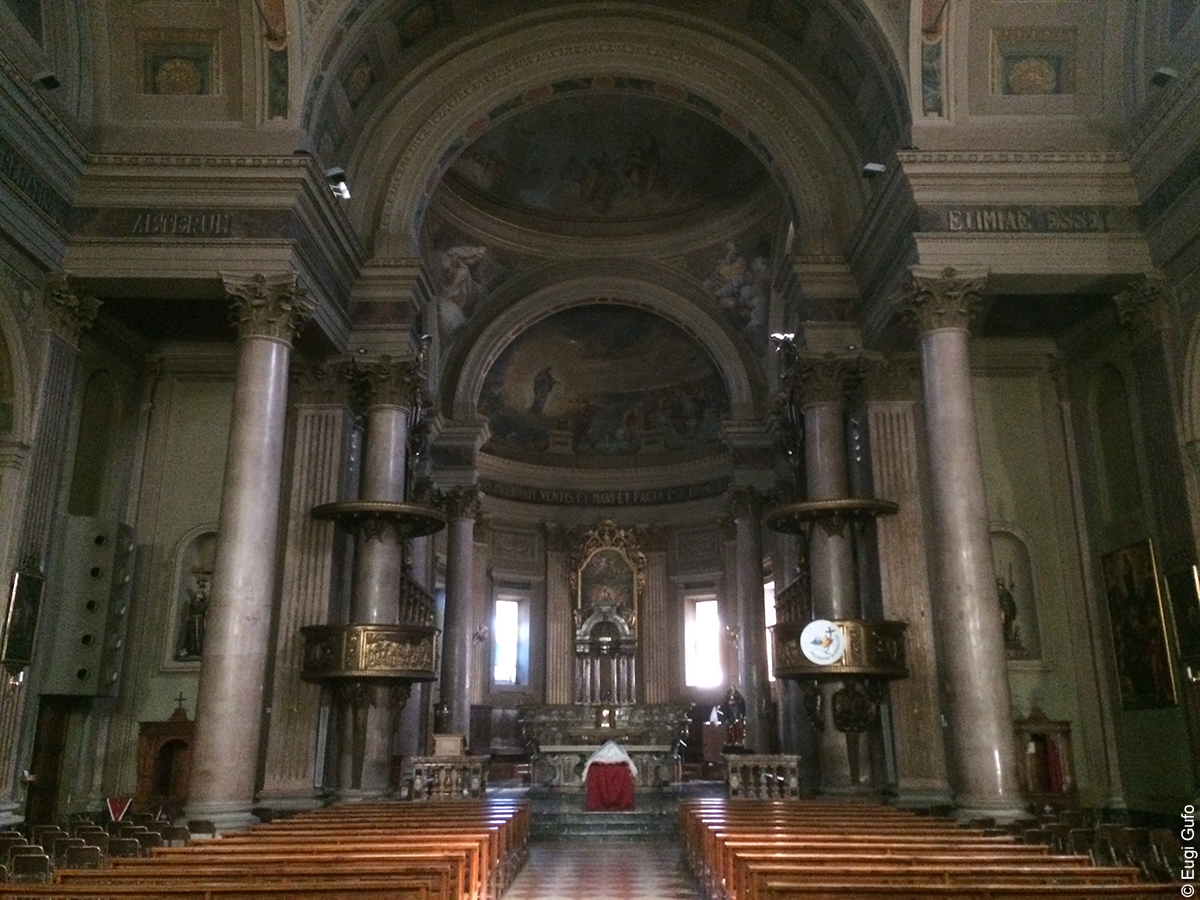
The principal church of Pandino is the parish church of Santa Margherita Vergine e Martire, built between 1783 and 1792. Some sources describe it as an important example of Italian Neoclassical architecture, but I found the façade somewhat underwhelming. Or perhaps it simply failed to charm me because Neoclassicism is not my preferred style? Who knows. In any case, I am not particularly distressed by the fact that it is practically impossible to photograph the façade frontally from the street.
The interior is somewhat more rewarding, so I would underline that it is worth stepping inside.
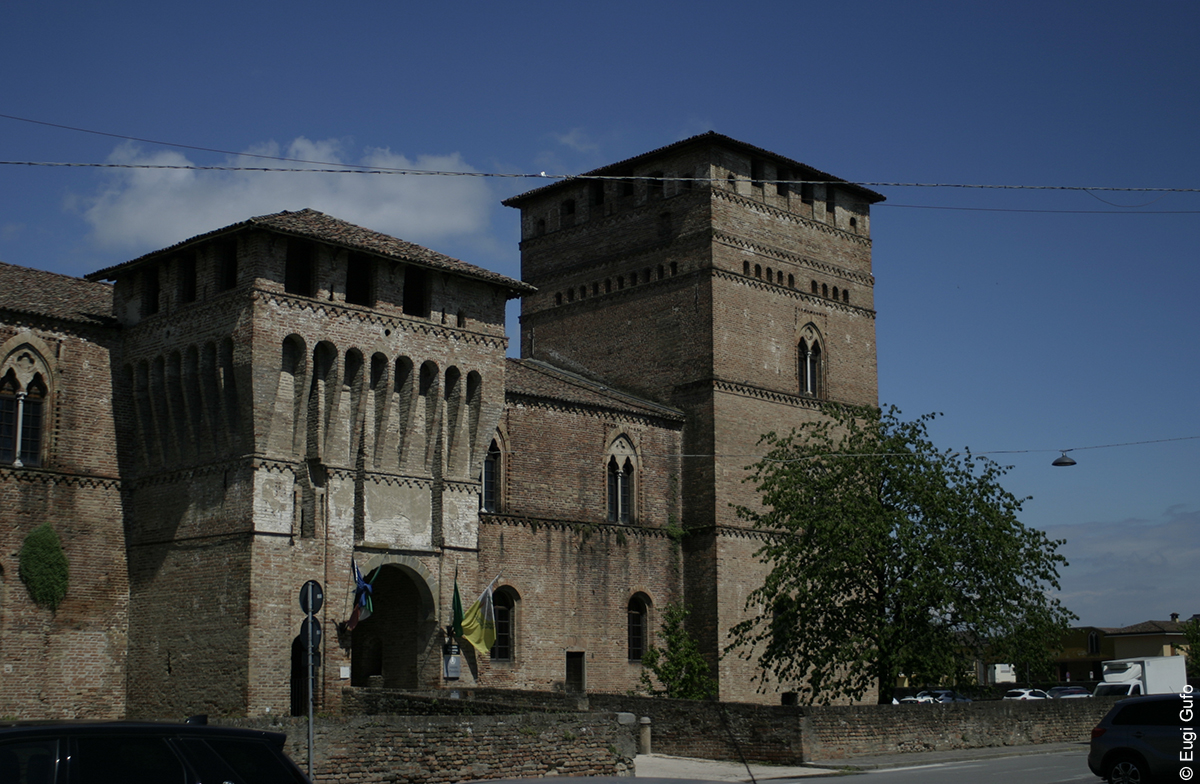
In my personal ranking, however, the most important building in Pandino is the Visconti Castle. It was commissioned by Bernabò Visconti during a period of intense fortification activity throughout the territory controlled by the Ducato di Milano. The precise years of construction are unknown, but it is generally dated to between 1355 and 1370. Technically speaking, it is a square-plan castle, approximately 66 metres per side (yes, it is genuinely small). Originally there were four towers — one at each corner — but in the nineteenth century the two western towers were reduced in height at the suggestion of the tenants then renting the building. I do not know why; my sole hypothesis might sound absurd, so I shall refrain from writing it.
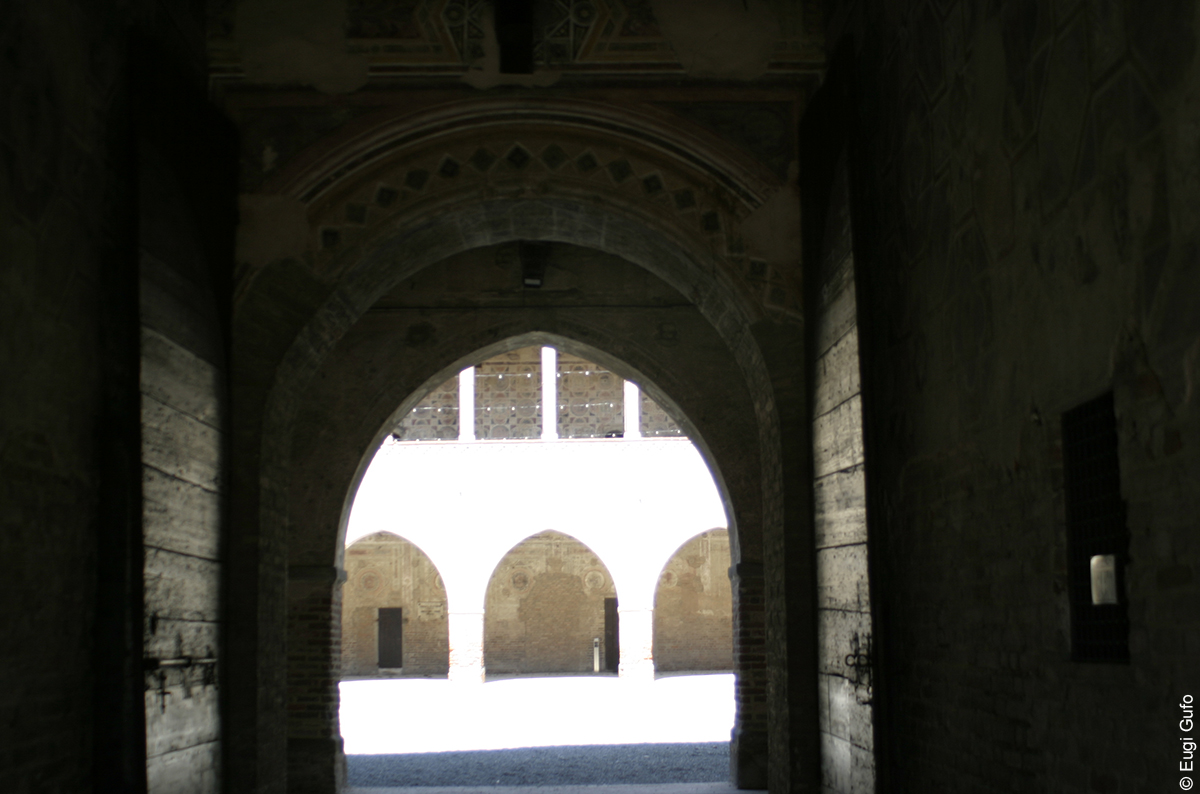
Inside, there is a single courtyard. Careful observation allows one to understand somewhat better how the castle’s defensive function was conceived — although at the time of construction it was also intended as a hunting residence, an activity much beloved by Bernabò Visconti.
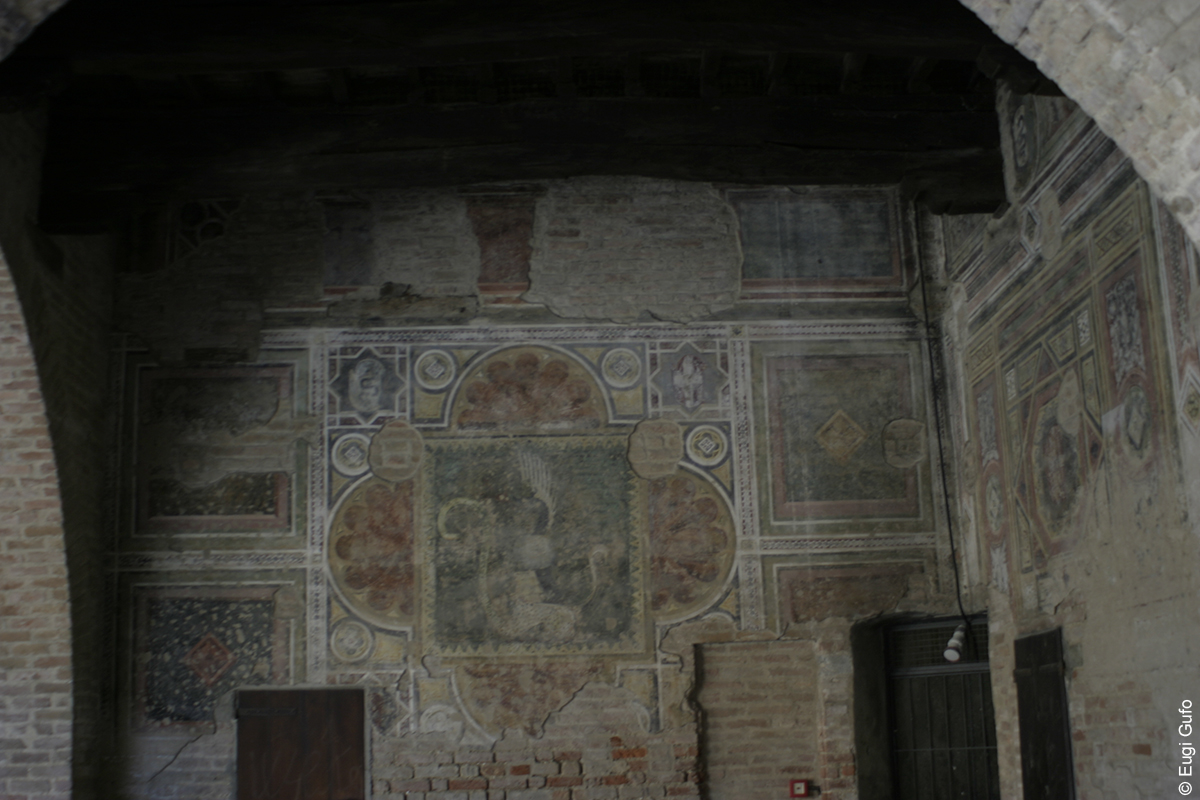
I did not have the opportunity to visit the interior rooms (it is said that many of them are richly decorated, originally intended for noble accommodation; apparently guided tours are organised), so I can show only the courtyard details. Unfortunately, the frescoes that once covered all the walls are no longer in excellent condition. Nevertheless, the numerous Visconti coats of arms remain clearly visible.
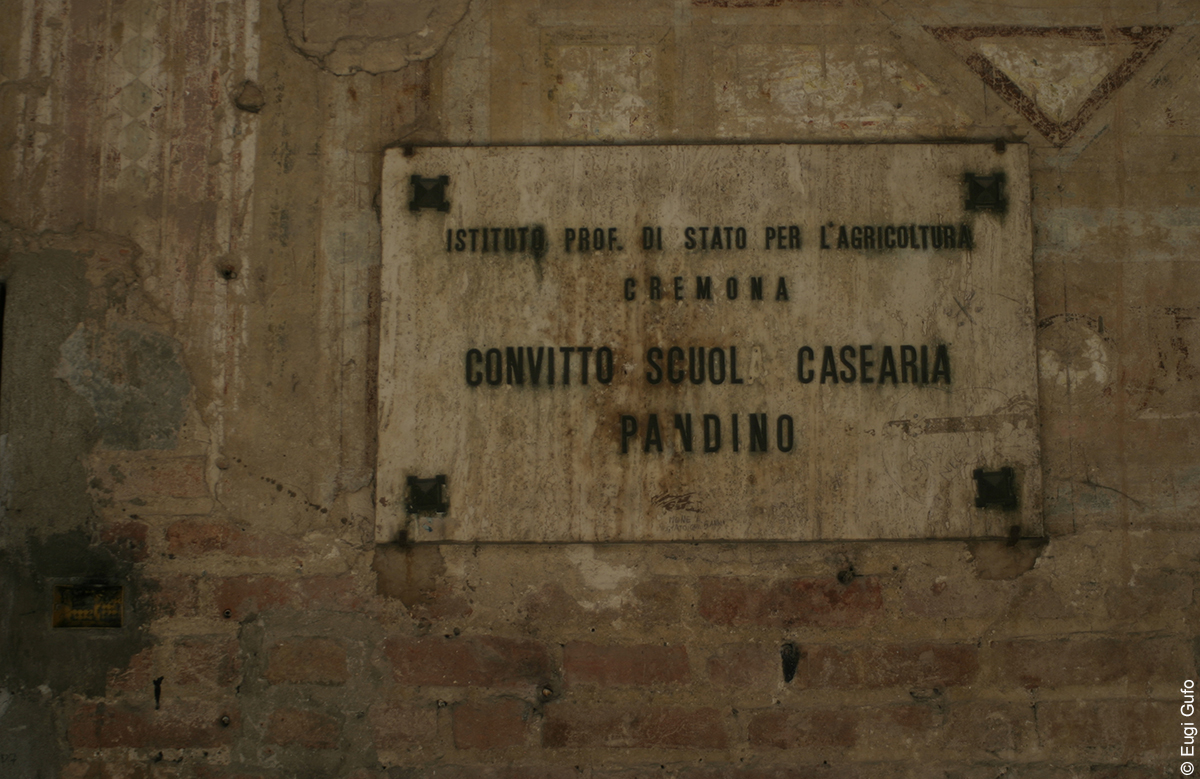
Today the castle houses the municipal offices, the local police headquarters, the public library, and presumably other offices whose presence I failed to notice. In the 1960s, if I understood correctly, a dairy school also had its premises here.
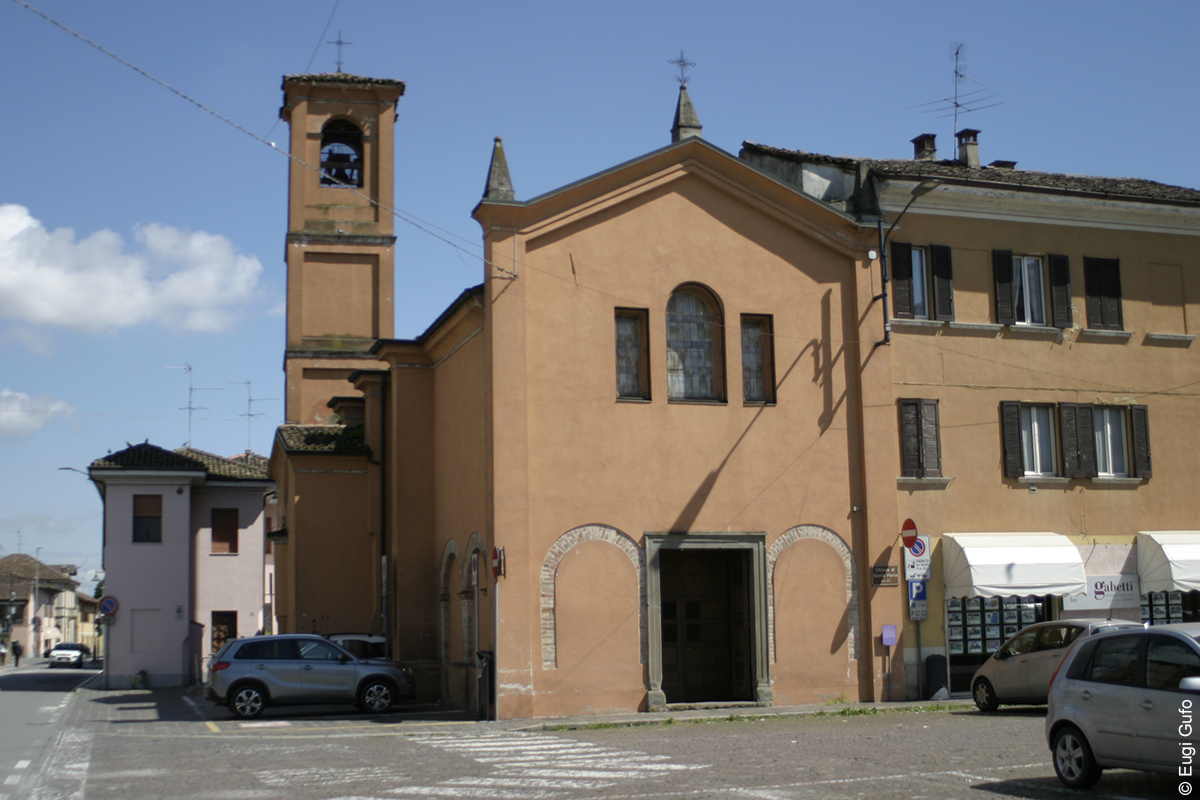
A few steps from the castle stands another of Pandino’s genuinely interesting buildings: the Oratory of Santa Marta, constructed between the late fifteenth and early sixteenth centuries. It is said to contain Renaissance frescoes, though I could not verify this personally — the oratory was closed at the time of my visit.
In the middle of the square onto which both the castle and the oratory face stands a large monument (large, at least, in proportion to the village’s overall scale) dedicated to the people of Pandino who fell in the two World Wars.
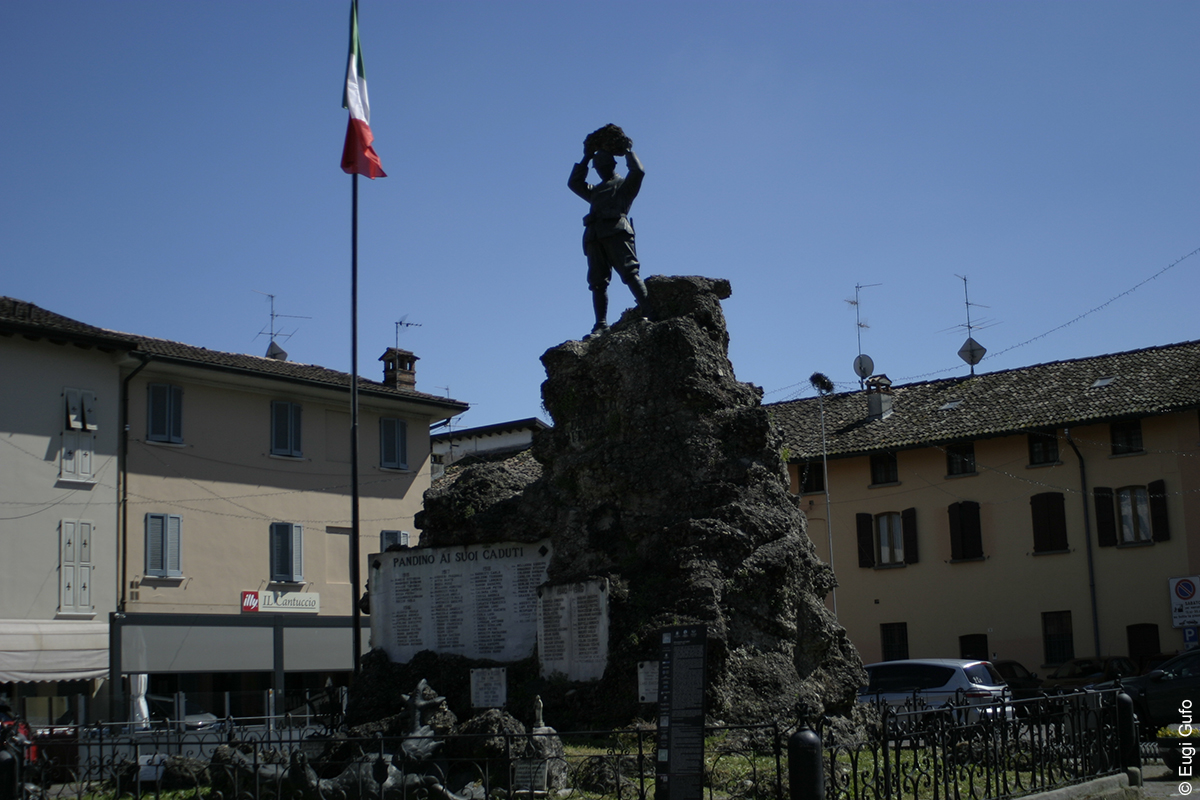
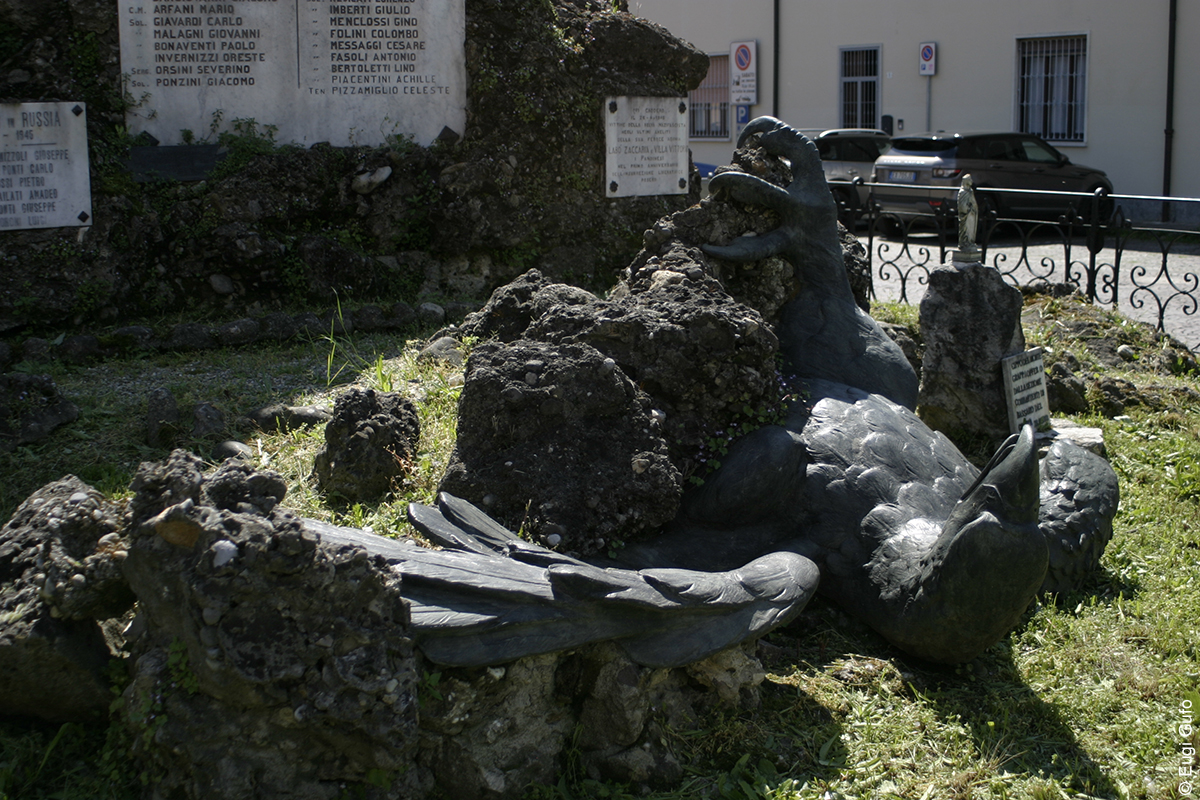
It is a somewhat peculiar monument: it appears as though the soldier atop the rock has defeated the eagle by hurling enormous stones at it — whereas, in reality, the only regime he did not fight (and fall) against was precisely the one symbolised by the eagle. On the contrary, that soldier — while he was one — fought and died for the eagle, irrespective of his personal convictions. In short, it is a remarkably fine monument to the rewriting of history.
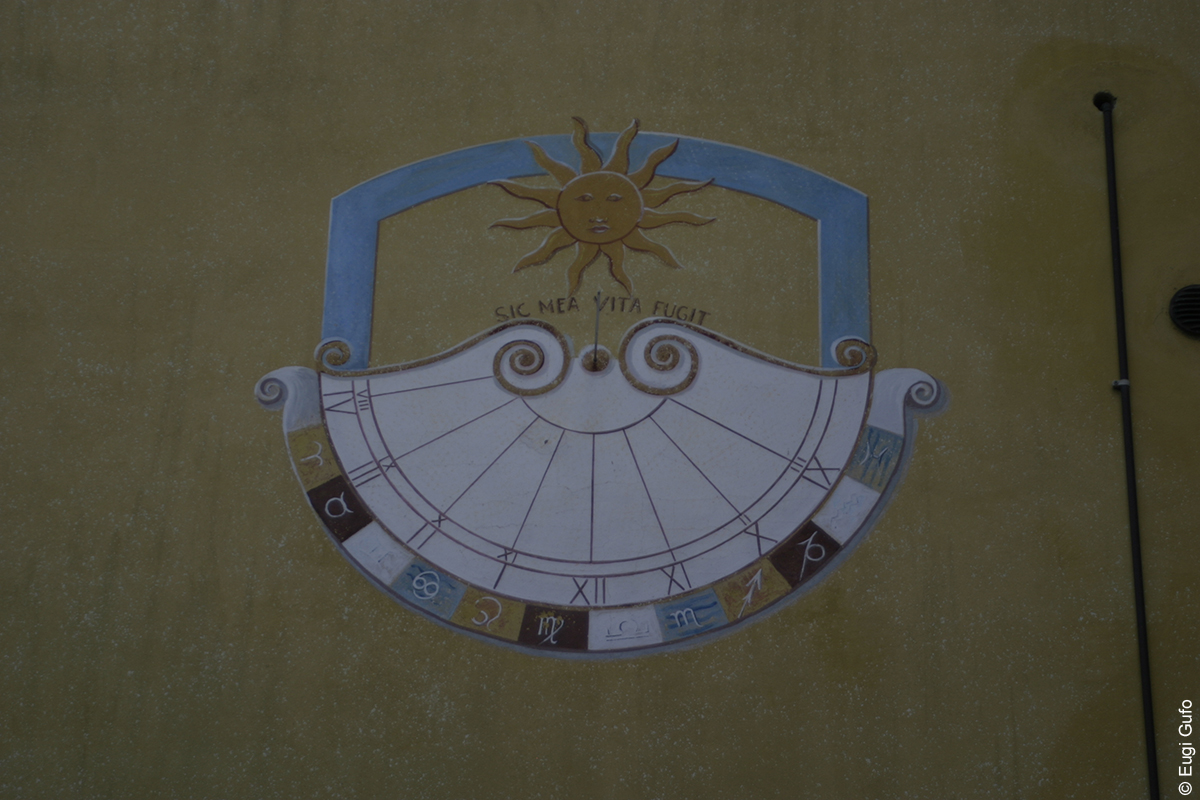
One might also consider this attractive sundial — placed in a vehicle blessed with abundant shade — as a monument. Guess which human quality I would have chosen to commemorate with such an installation.
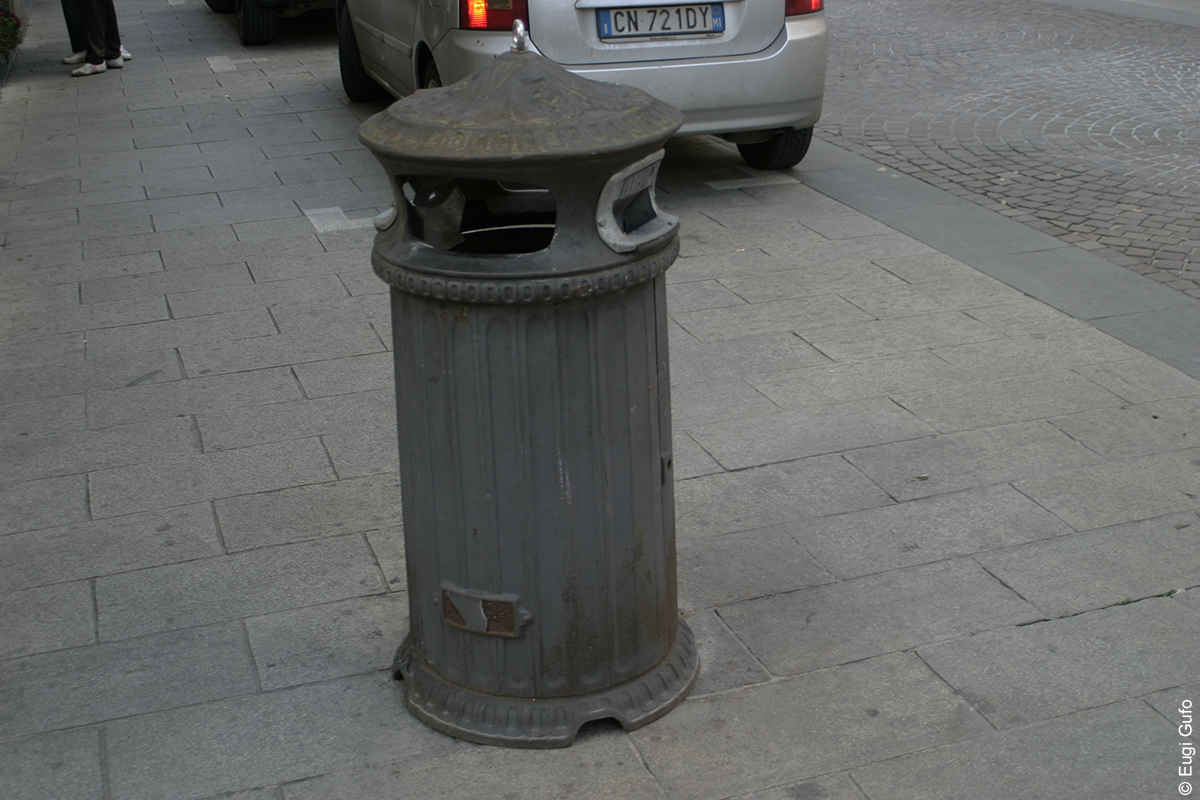
Pandino’s elegant litter bins, complete with ashtrays, are monuments to an era when humans knew how to create objects that were simple, useful, and beautiful simultaneously (nowadays at least one of these qualities is almost always missing).
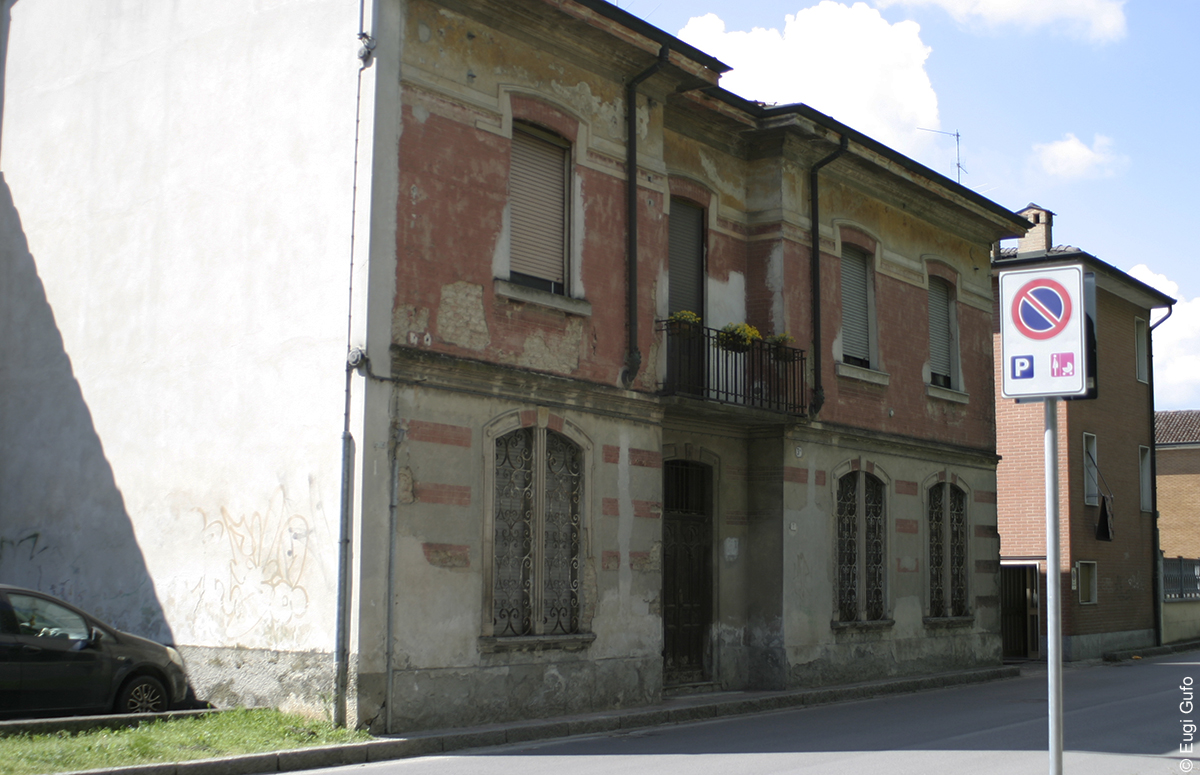
And then there are buildings which are not historical or artistic monuments, yet are nonetheless pleasant to behold.
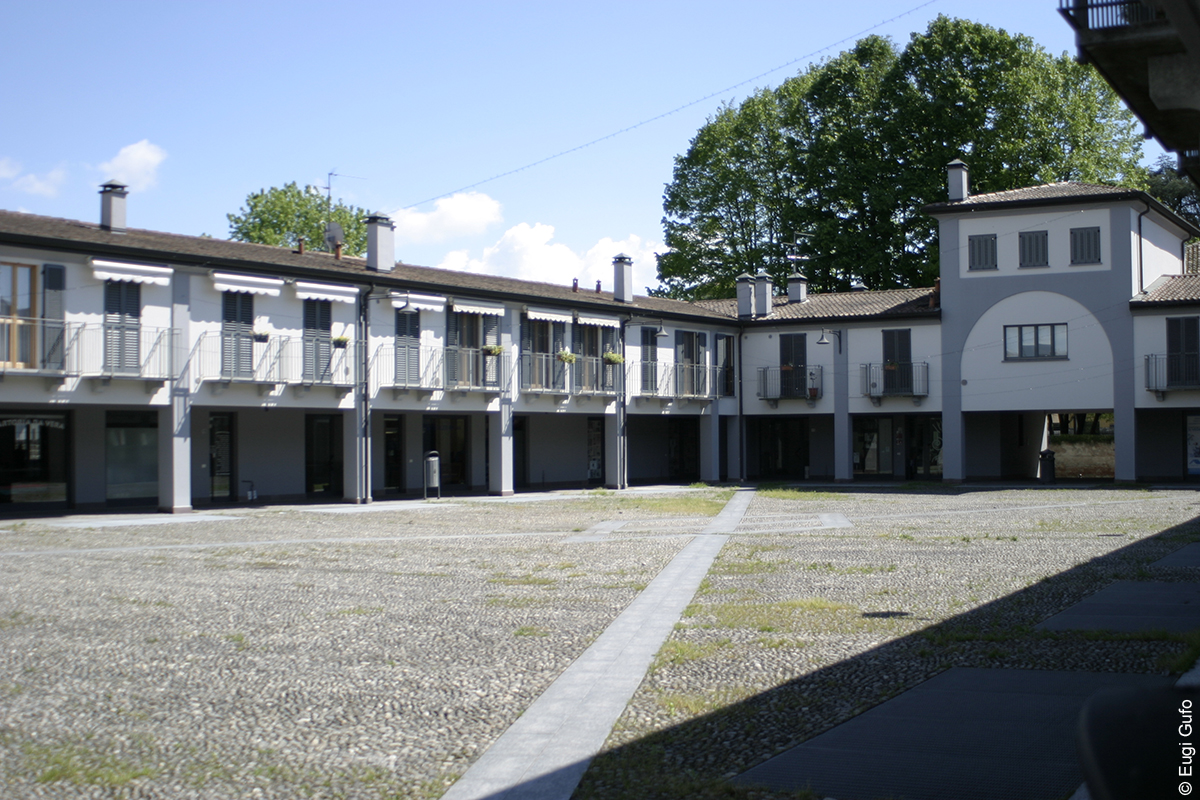
Ah, not far from the Visconti Castle a commercial building has been constructed whose structure imitates the castle — without attempting to pass itself off as genuinely historic. It was a good (or almost good) attempt.
Naturally, the historic centre also contains a number of modest little streets typical of any rural settlement.
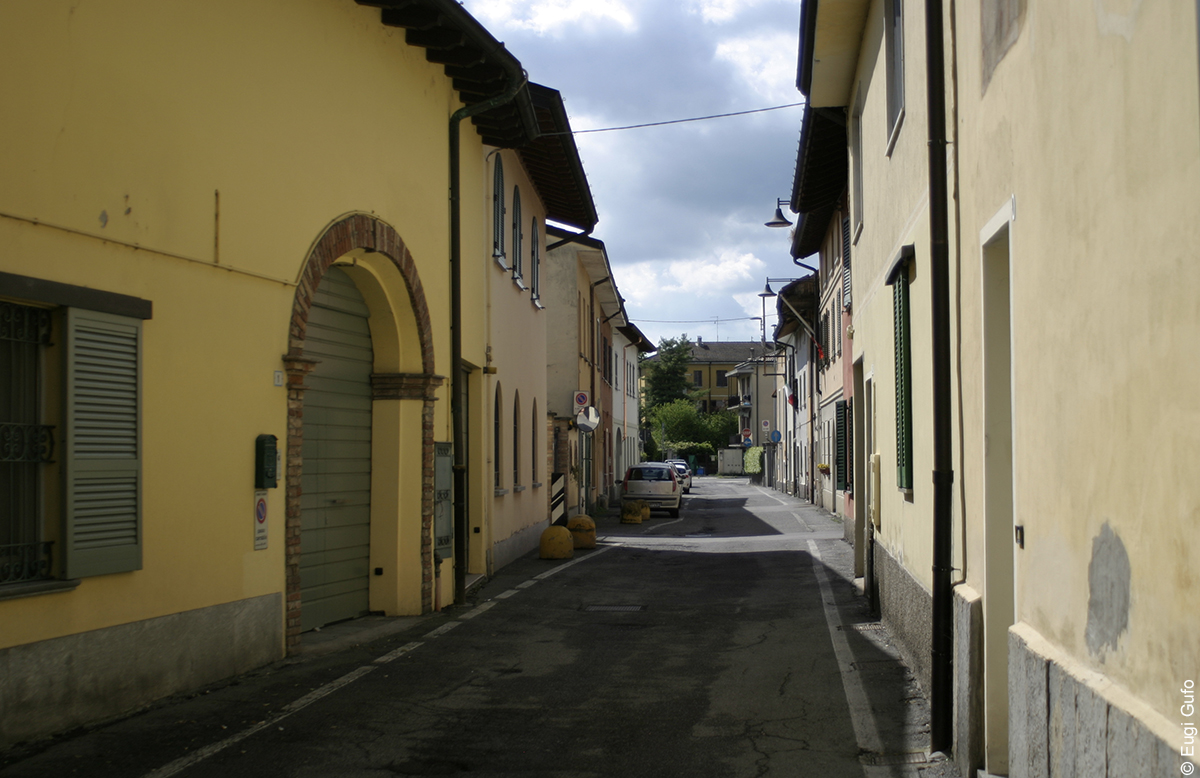
The outskirts are as monotonous as almost all outskirts in the world — even when they attempt to echo the castle motif.
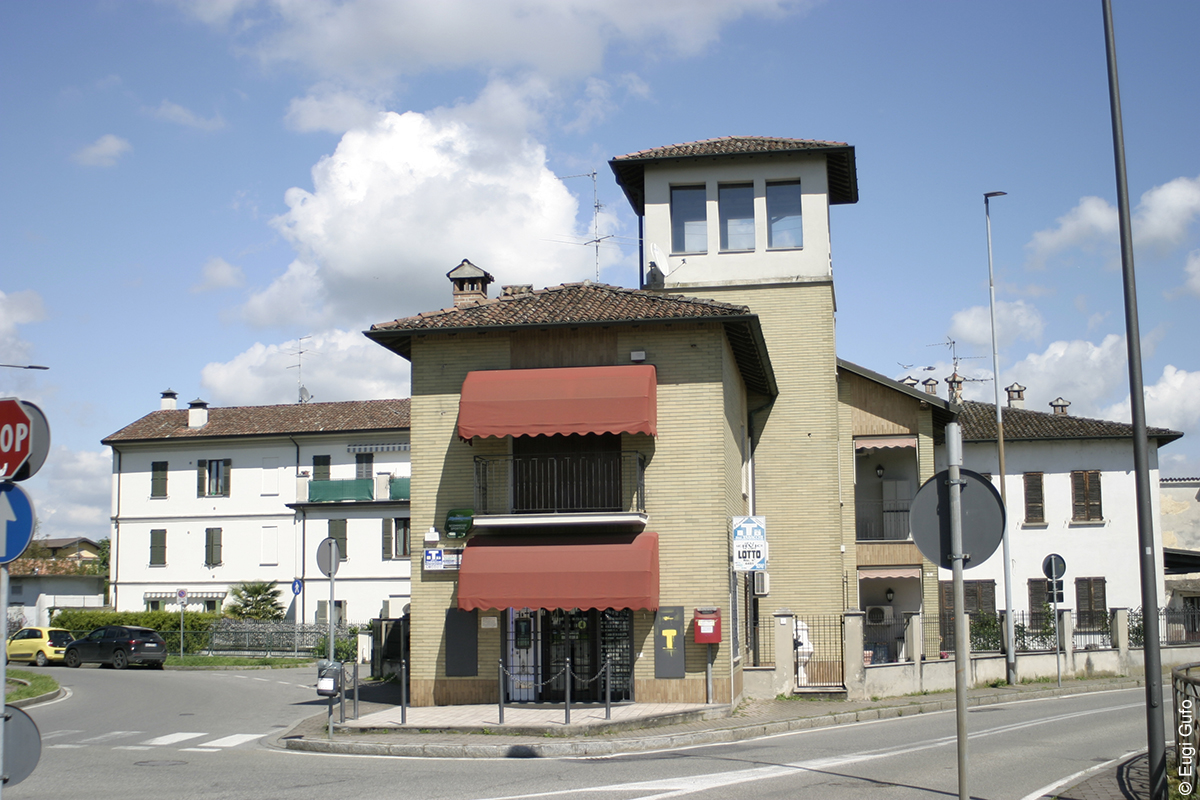
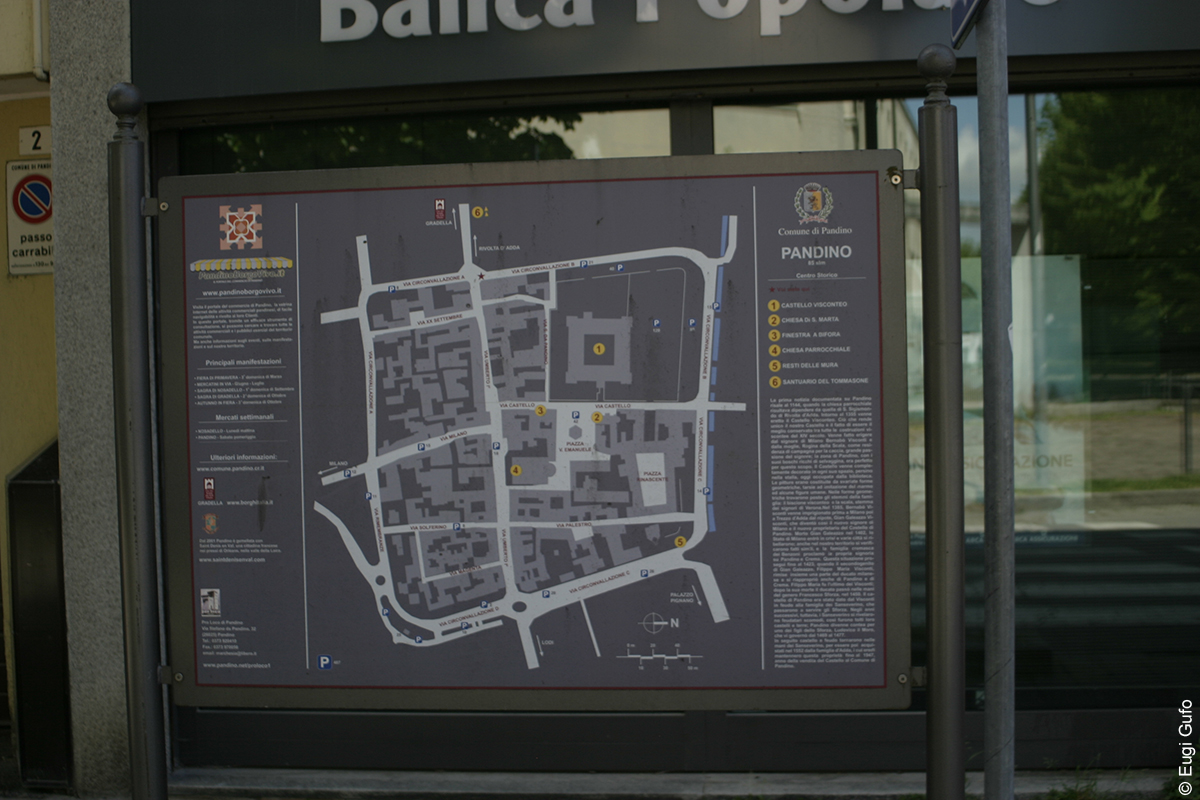
Pandino is a small village with a very small historic centre. Yet, despite lacking formal city status, in 2022 it received from the Organizzazione Nazionale Assaggiatori di Formaggi (ONAF) the title of «City of Cheese 2022.» From this historical fact (the corresponding road signs have not been removed!) I deduce that many good cheeses are produced in Pandino (logical, is it not?). Very well — I must now find some in order to verify the thesis. The problem is that I have absolutely no idea how and where one conducts thematic research of this kind.
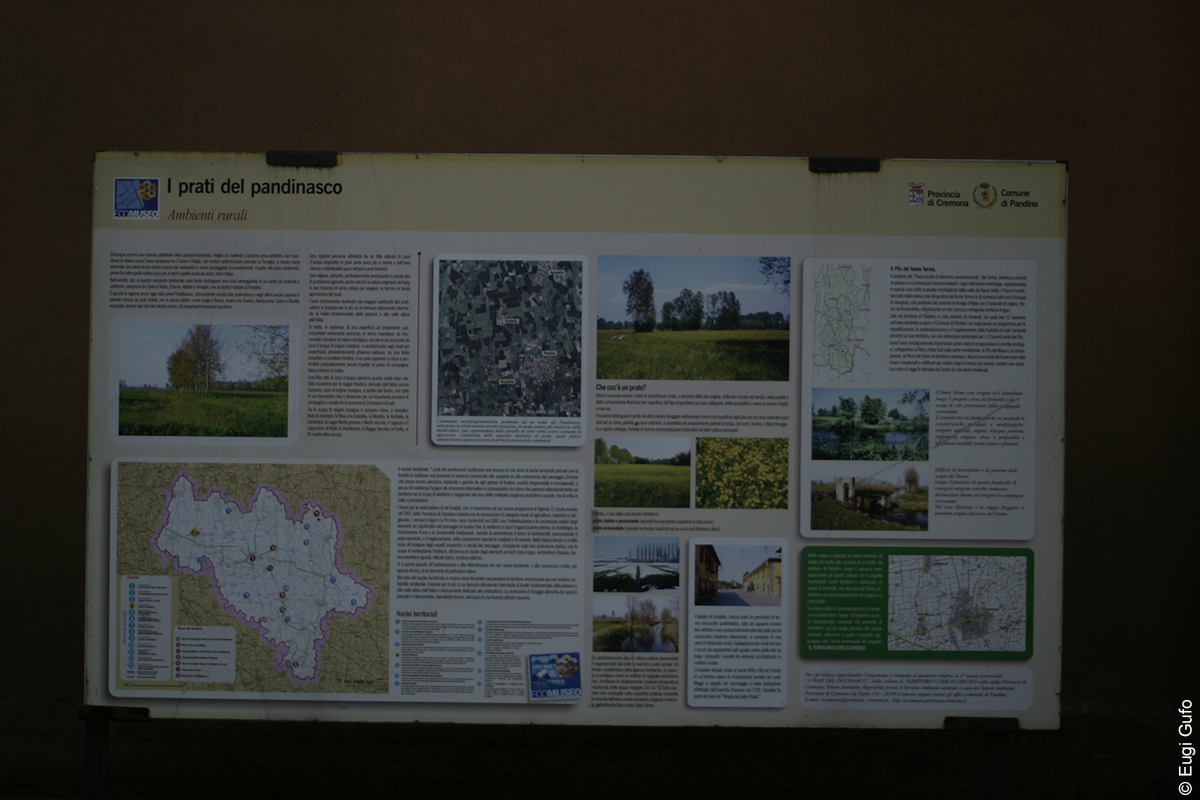
I am so old and so poorly updated on such matters that I still remember the days when good cheese was made from the milk of cows that spent their days cheerfully wandering in meadows and eating fresh grass. I presume that nowadays «the meadows of the Pandino area» signify something else entirely…
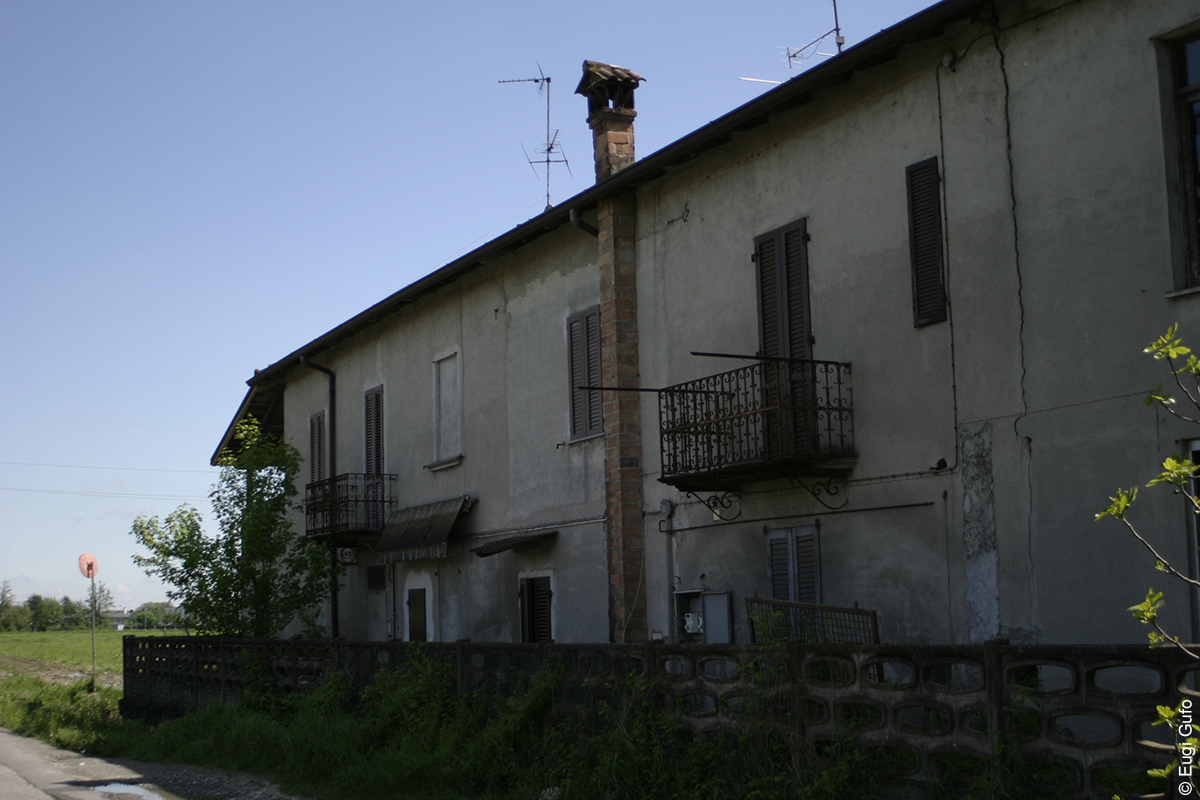
Who knows. In any case, we have already seen all the interesting sights of Pandino and have reached the end of the village: the agricultural fields reappear.
Which means that this narrative, too, now concludes. Another will begin before long.
Pandino, 18 April 2025
↓ Show comments ↓


