


 Long live Ukraine! Fuck the war!
 RSS of site articles
In December I decided to visit the town of Mortara for a single reason: I knew nothing about it. I had accidentally learned of its existence at the end of October while planning my trip to Vigevano: they are on the same railway line. Writing about it, I think I can manage to list all the things worthy of attention in this report.
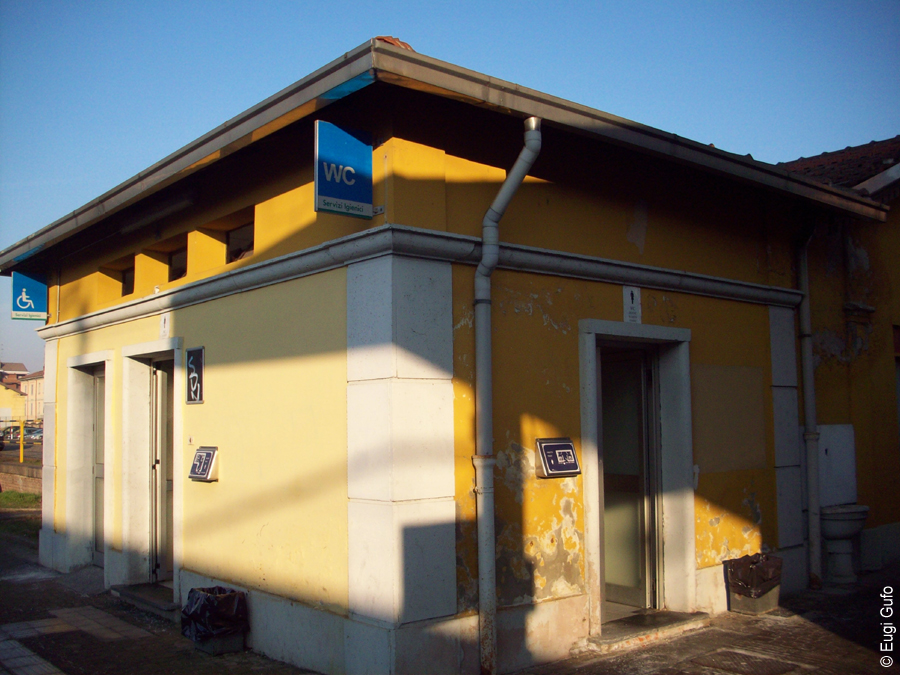
You are free to call me a maniac, but once again I repeat that the toilet of a railway station is the calling card of every city. From its condition, a traveller like me tries, immediately after getting off the train, to deduce whether the city is suitable for human life or not. The toilet at Mortara station is rather frightening, both inside and outside.
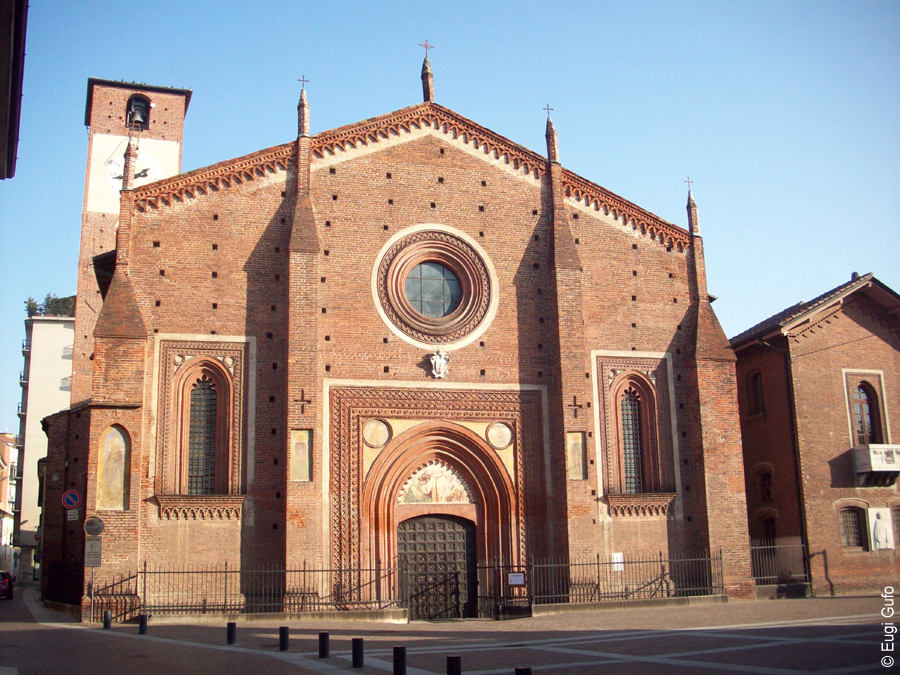
But before saying «this city is a shithole», let us go to the centre. The cathedral, built in Lombard Gothic style, is not ugly but it does not impress.
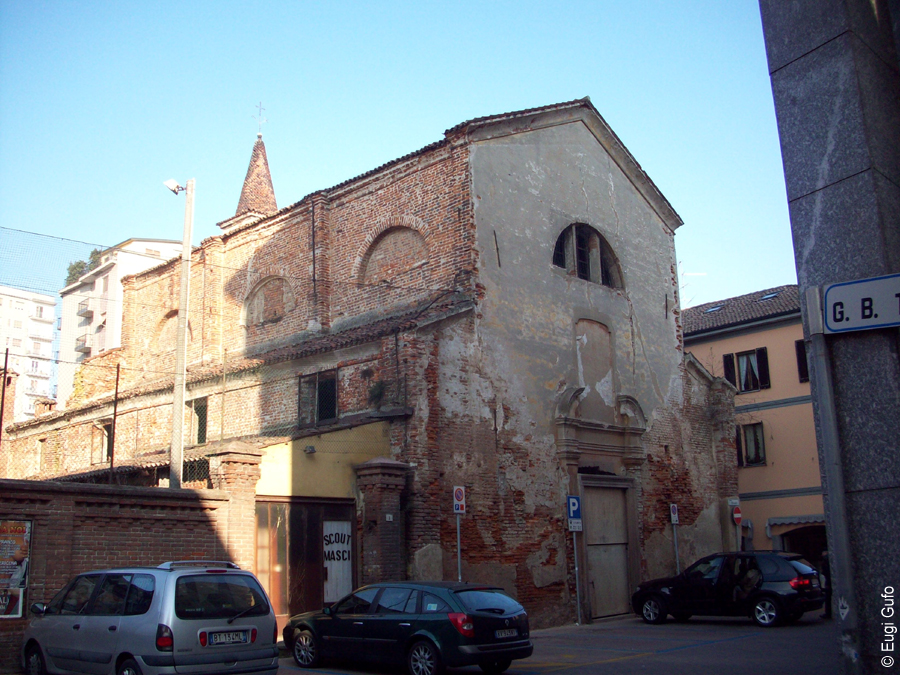
Next to it there is an anonymous, damaged and closed church (like all the most interesting things in Italy). Worth noting is the entrance to the «MASCI Scouts» club, which for some strange reason makes use of religious premises 🙂
Outside the historic centre there is a much larger (perhaps also more original) church than the cathedral.
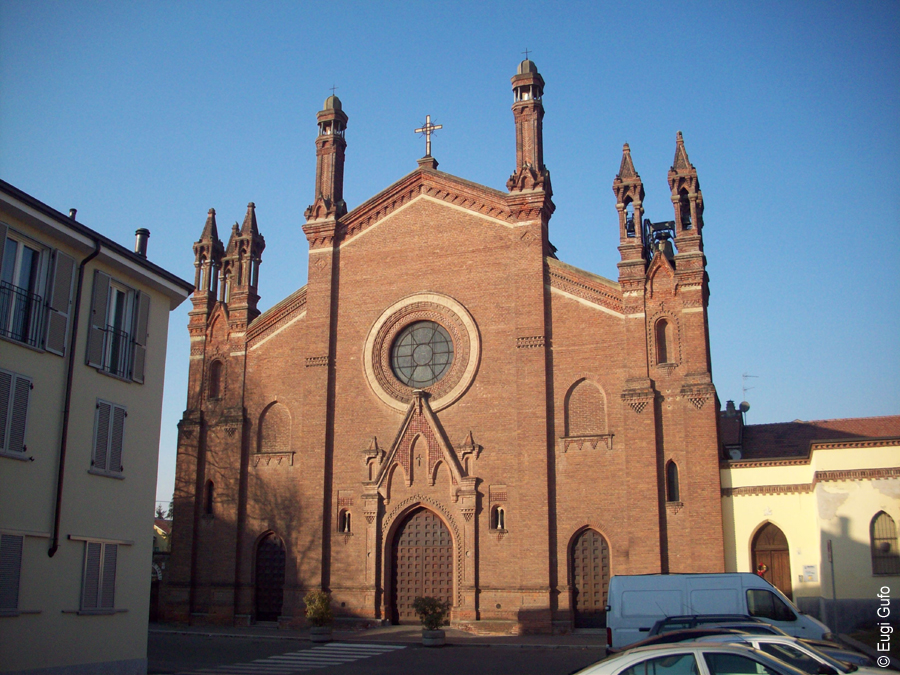
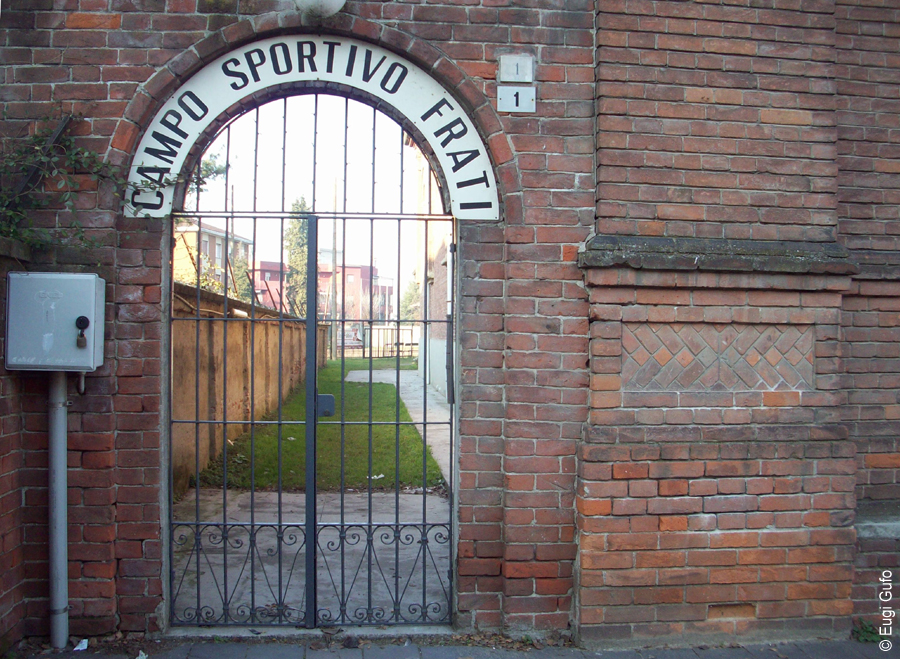
I like this church because it does not host an organisation of dubious usefulness, but a football pitch for religious footballers.
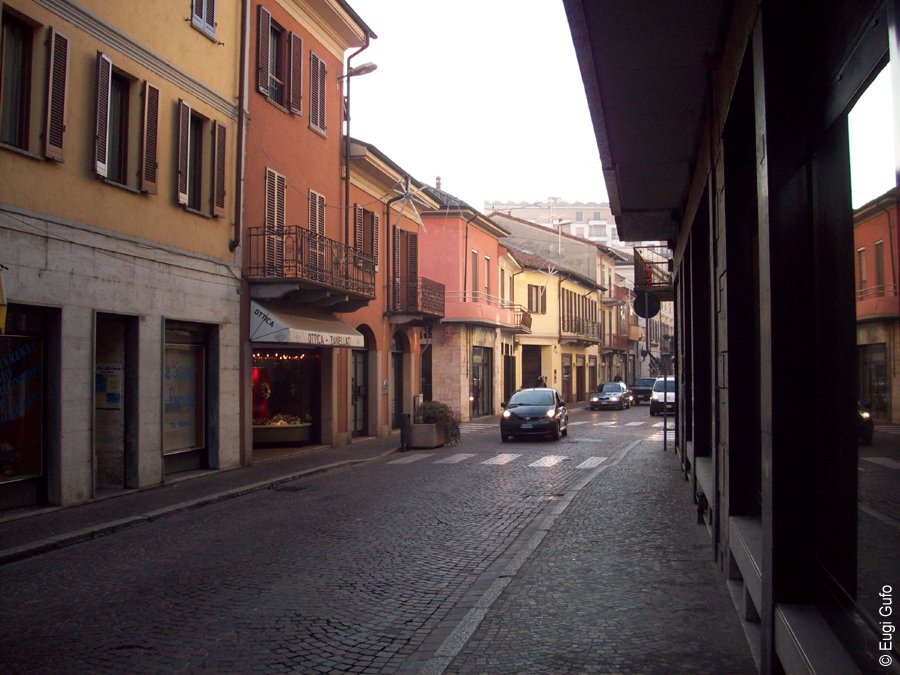
Walking around the historic centre, clean and well kept, I did not spot any other particularly interesting buildings. Almost everything is done like this:
The utterly banal building with the word «Municipio» in such a context almost looks like a work of art. In reality, it resembles a railway station.
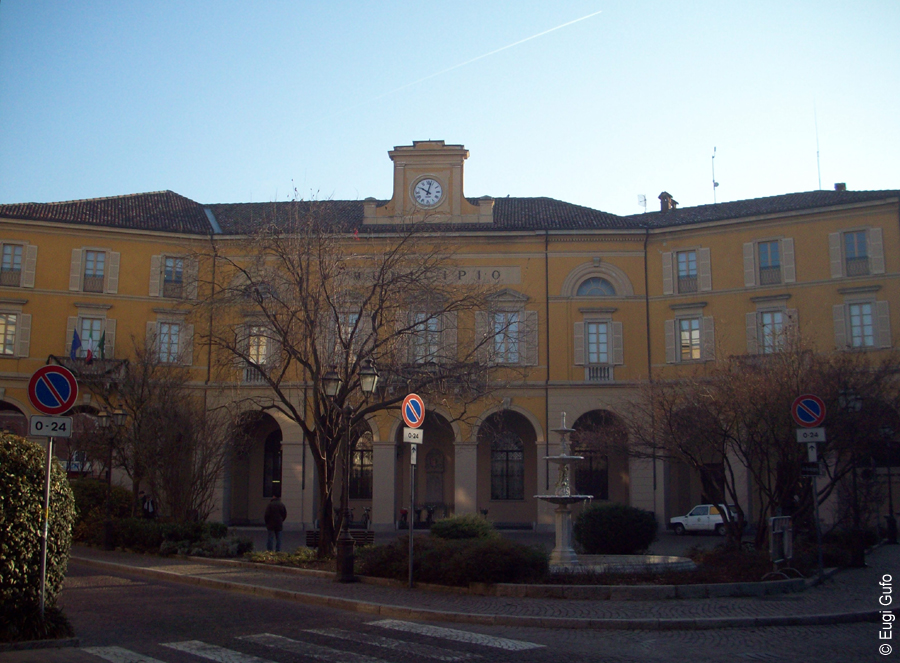
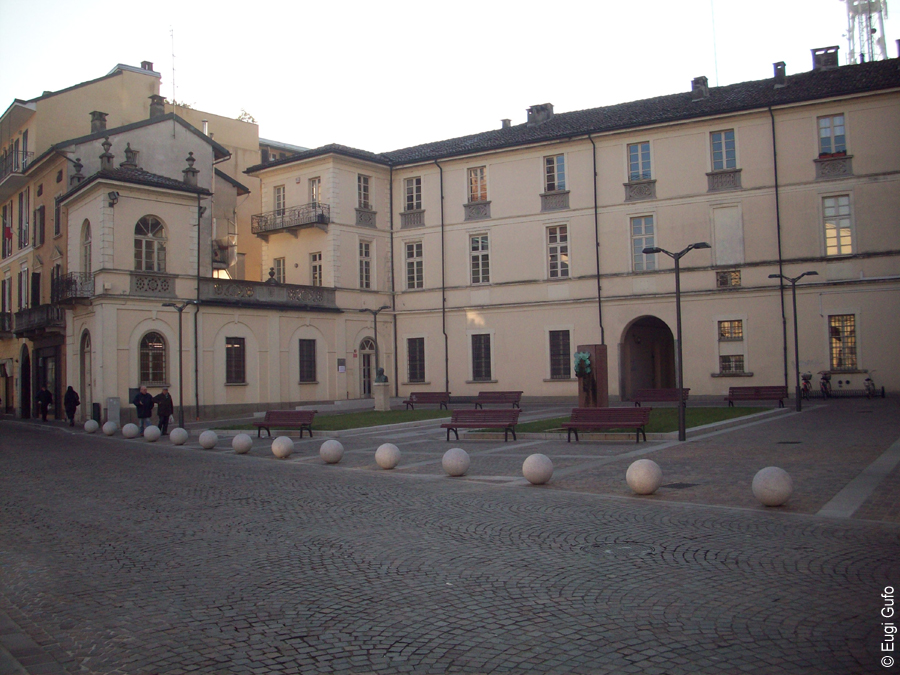
The building that hosts some public municipal services is a bit better, but the most interesting detail is the arrangement of the benches.
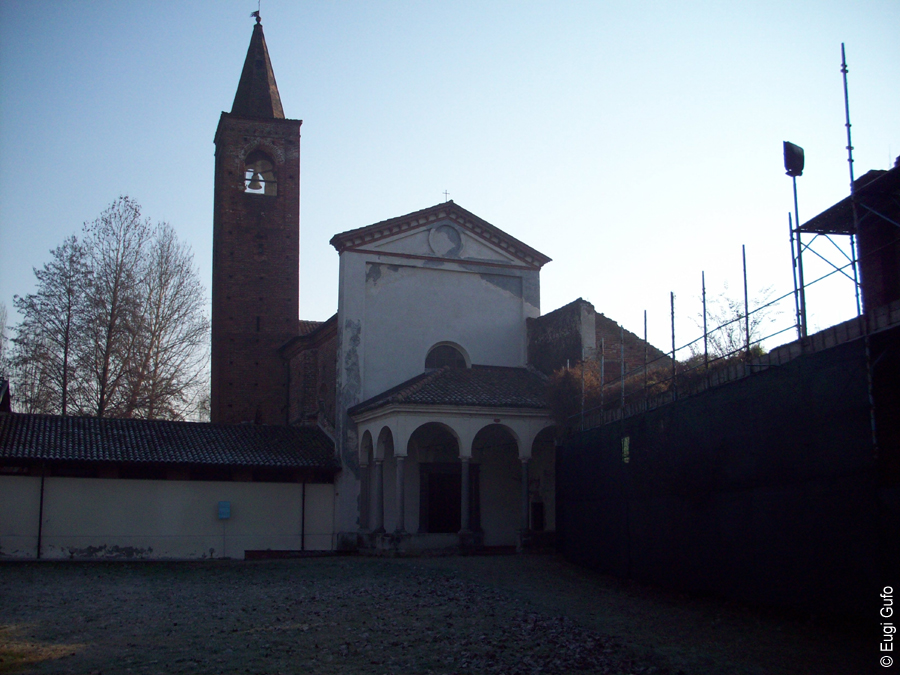
Just outside the town lies the former abbey of Sant’Albino (according to a legend founded in 773 by Charlemagne). Unfortunately, it has been almost entirely destroyed by time. Only the church (with its bell tower leaning to the left) seems to be intact for now. To enter, one has to ring the caretaker’s intercom and say that one is a pilgrim. I declined the idea…
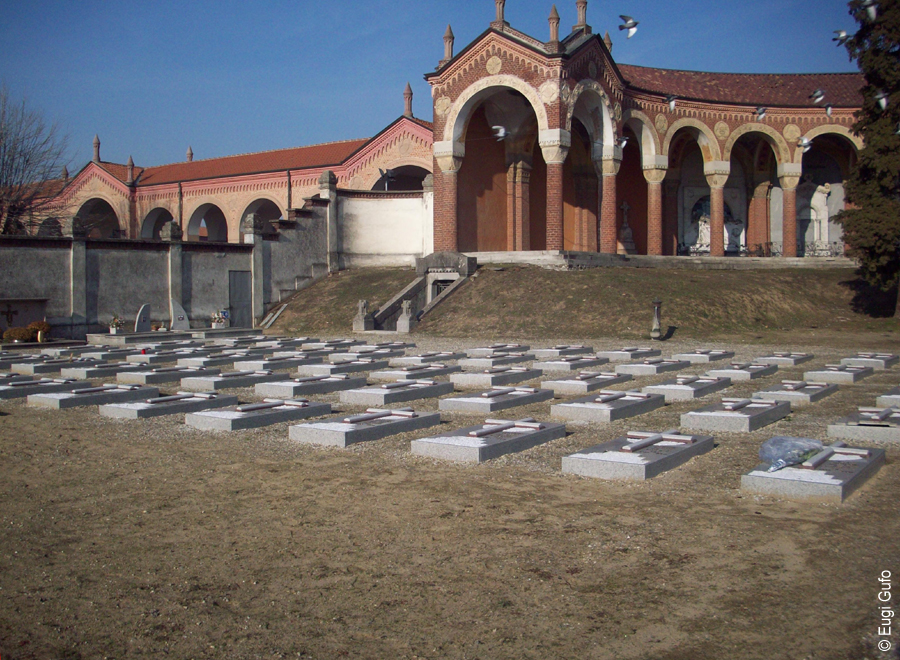
The town of Mortara currently has fewer than 16,000 inhabitants, yet it has a fairly large monumental cemetery dating from the late nineteenth century.
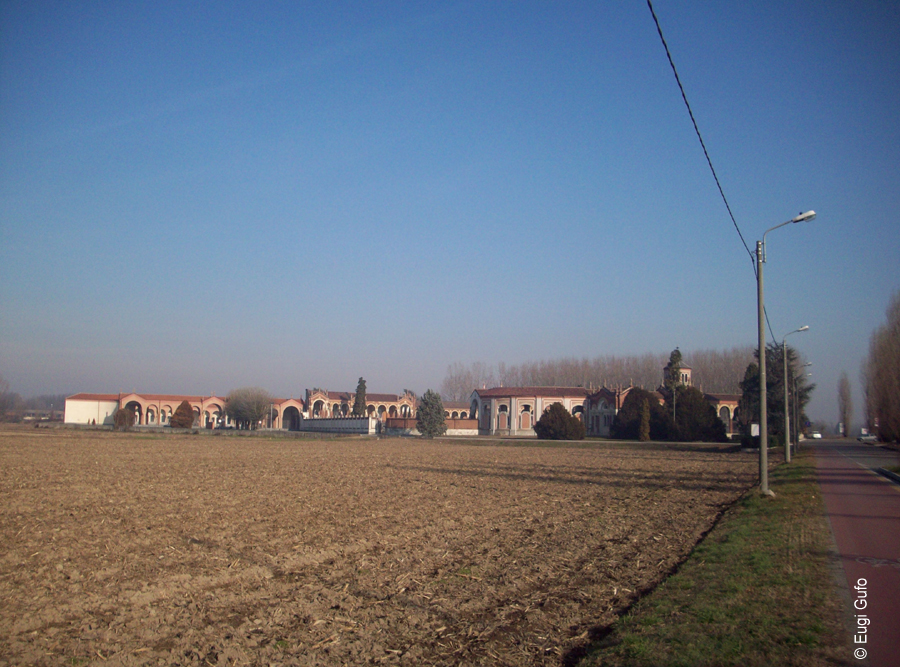
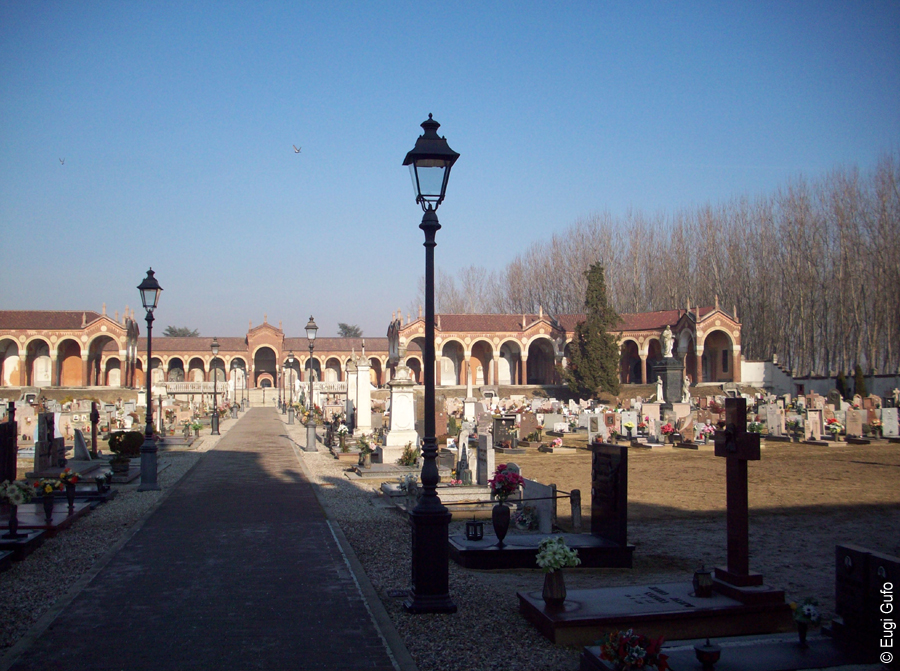
Inside it I found only two interesting things. The first is the enormous amount of empty space. But is there a rule according to which cemeteries must be periodically cleared of graves?
The second interesting thing is an area reserved for the graves of missionaries of Mortara origin: from a distance they had seemed to me like the graves of soldiers fallen in one of the world wars.
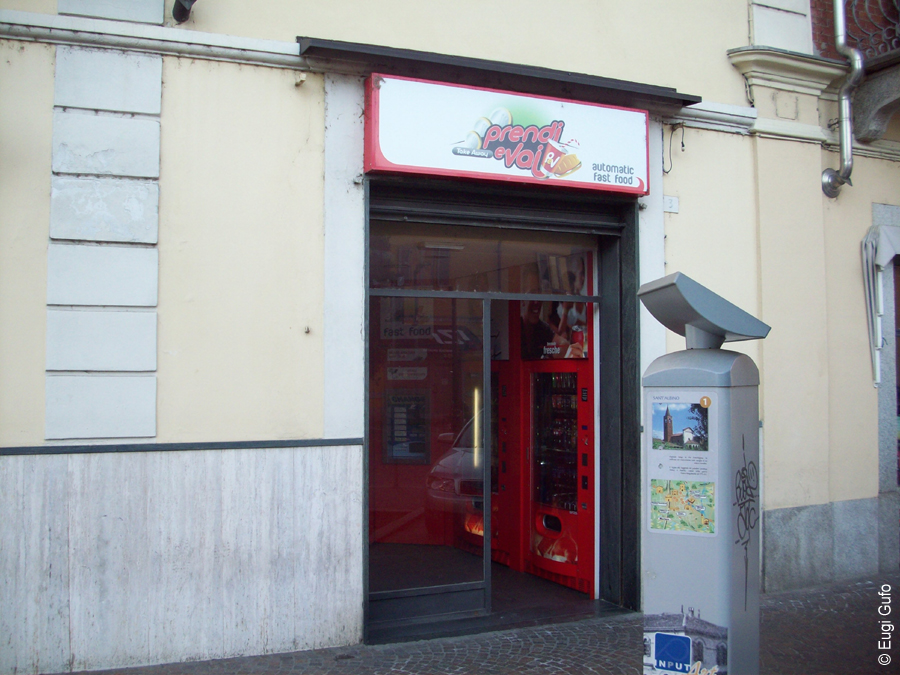
But let us return to the affairs of the living. In the town I found an automatic shop. I had already seen something like this in Vigevano (which is only 12 kilometres from Mortara).
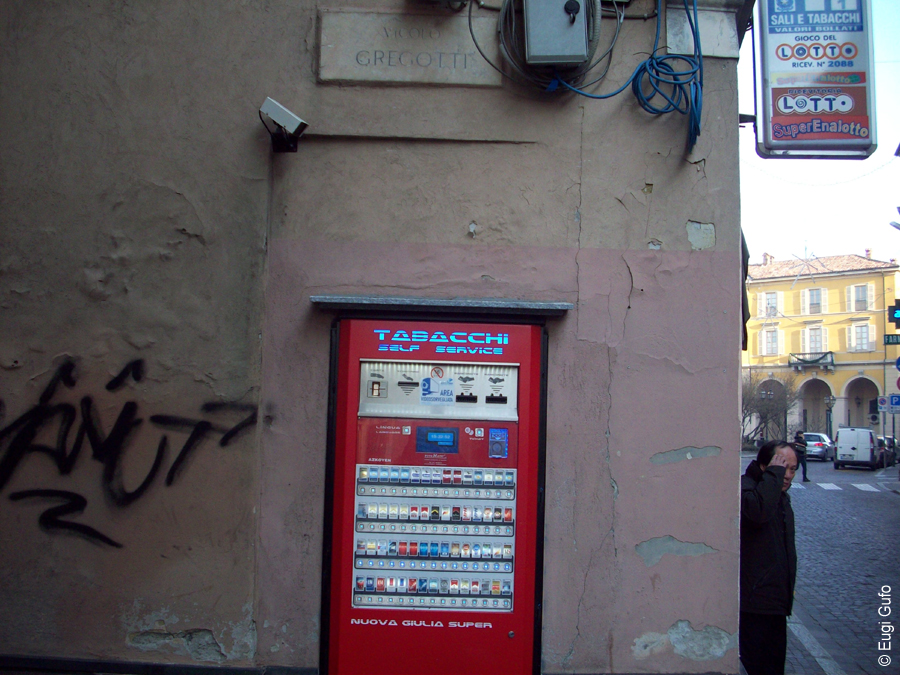
In town they love vending machines of all kinds: cigarette machines are present practically on every corner.
And then there are those for film rental… but is there still anyone who uses VHS tapes?

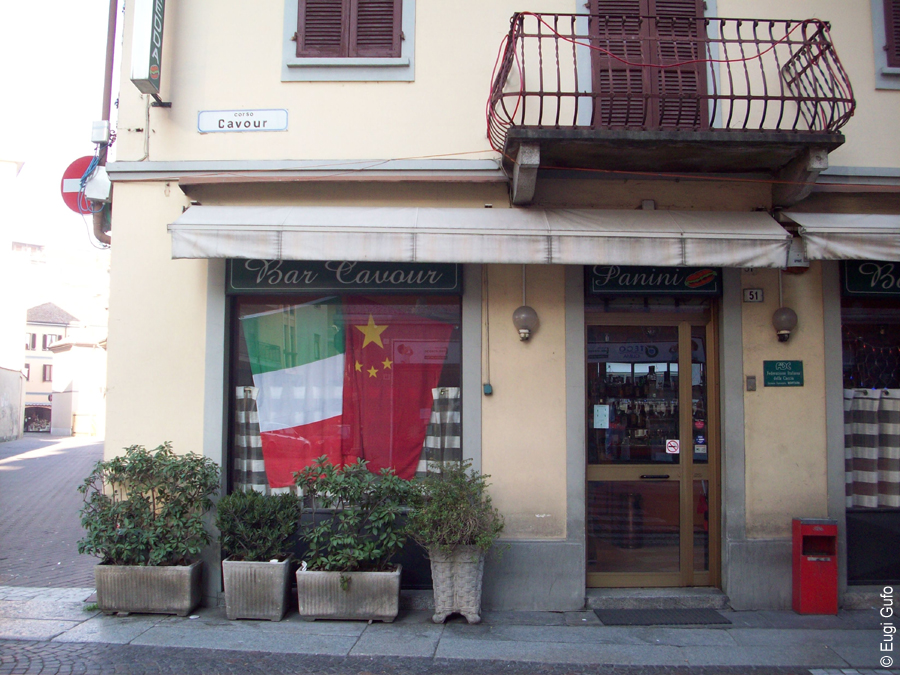
Bar «Cavour» celebrates the friendship between Italy and China.
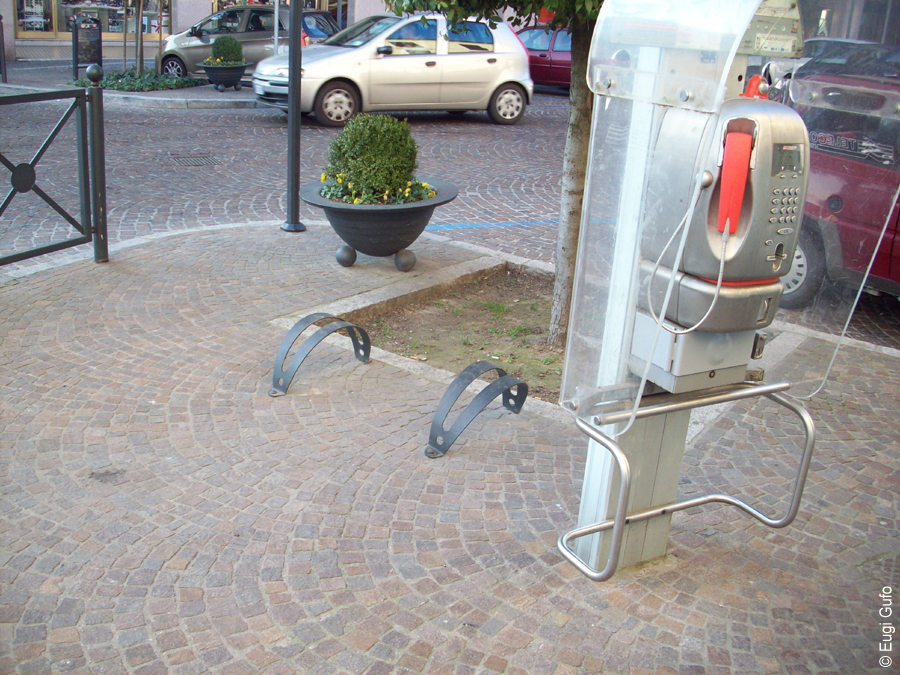
This is the first time I have seen bicycle racks of this type:
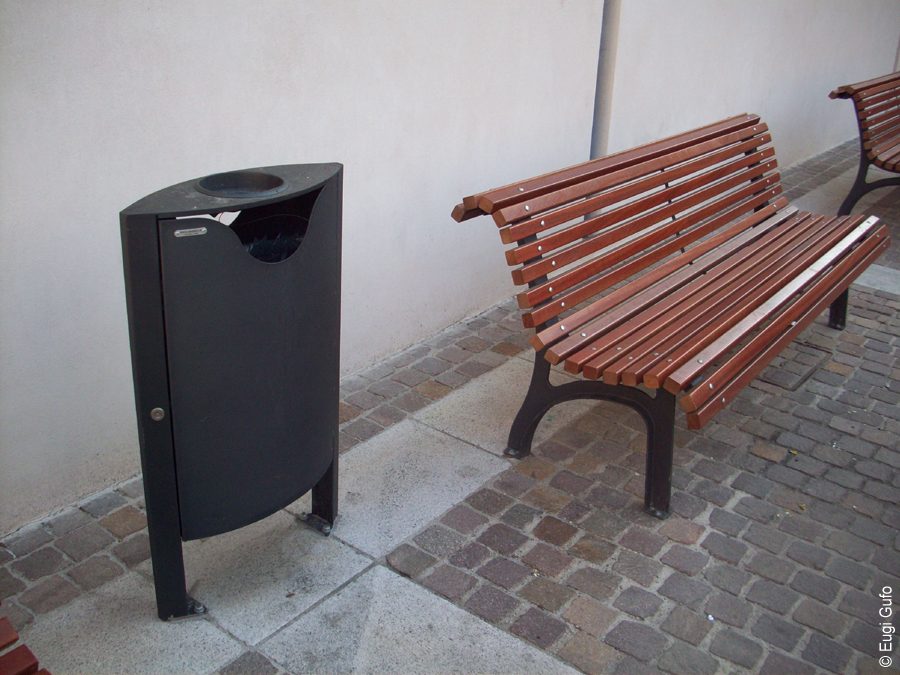
And it is the first time I have seen litter bins made in this way: flat, compact and elegant, but also with an ashtray on top. Also worth noting is the typical Mortara bench.
Another typical bin of the town: I have never seen an object like this.
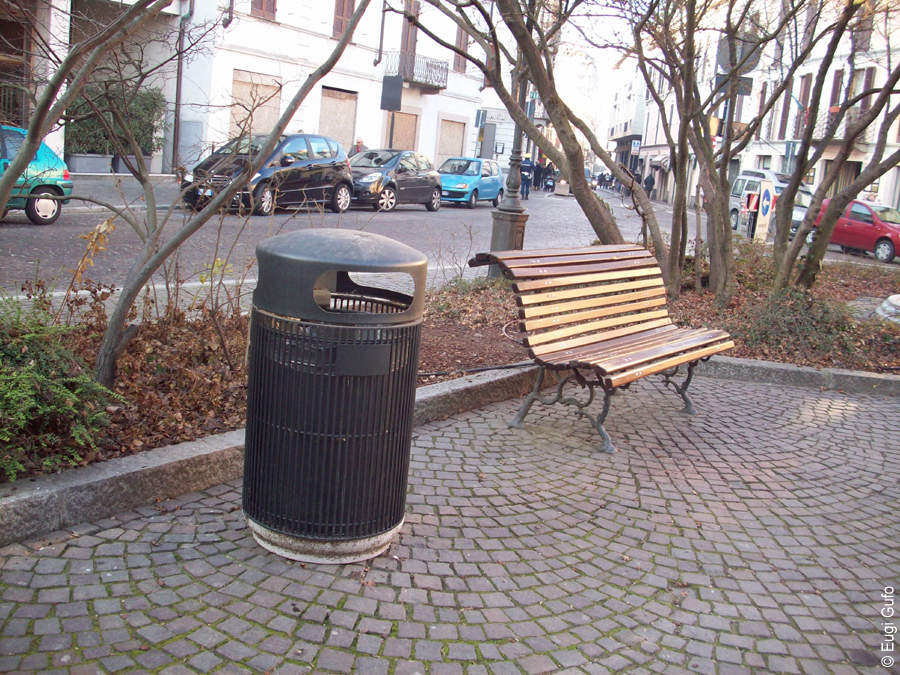
Flat bins like this one, on the other hand, are quite widespread in Italy (see, for example, Crema).

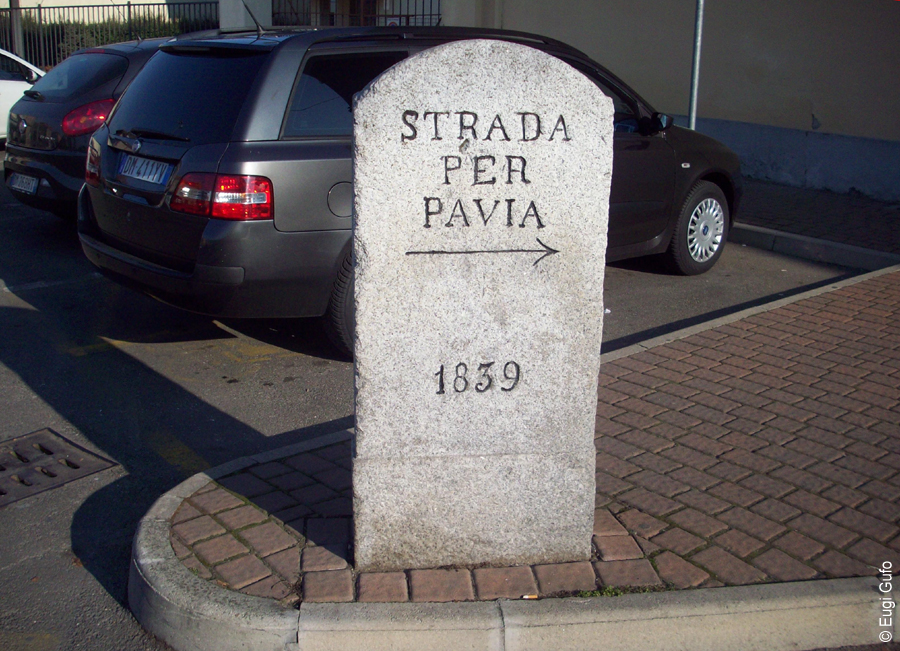
An old-fashioned road sign: the number indicates the year of registration and not the distance.
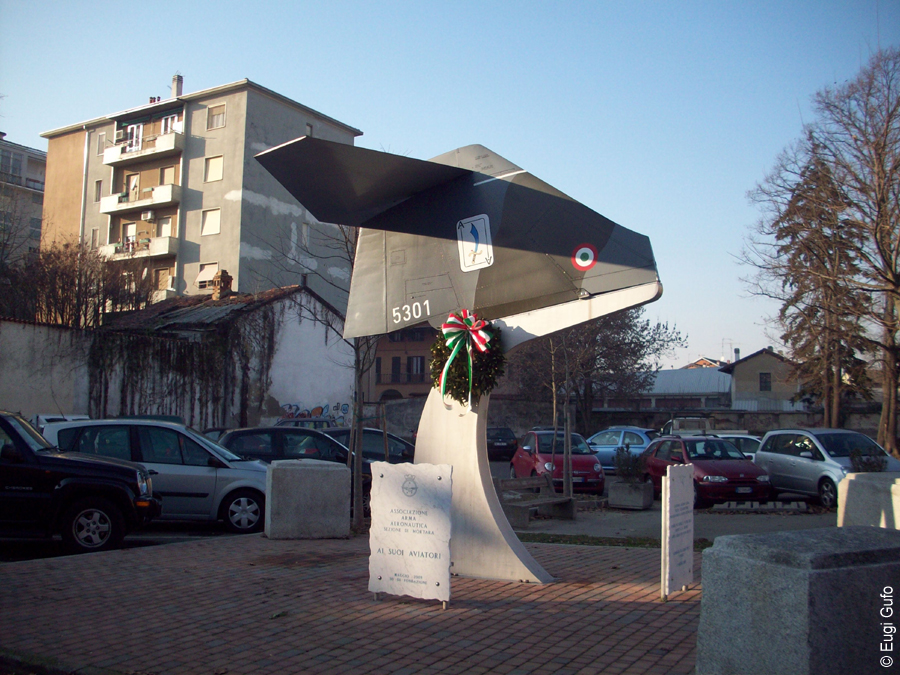
Finally, a beautiful monument: «Italian Air Force Association to its aviators. May 2009».
In this small villa lives a TV-addicted inhabitant of Mortara:
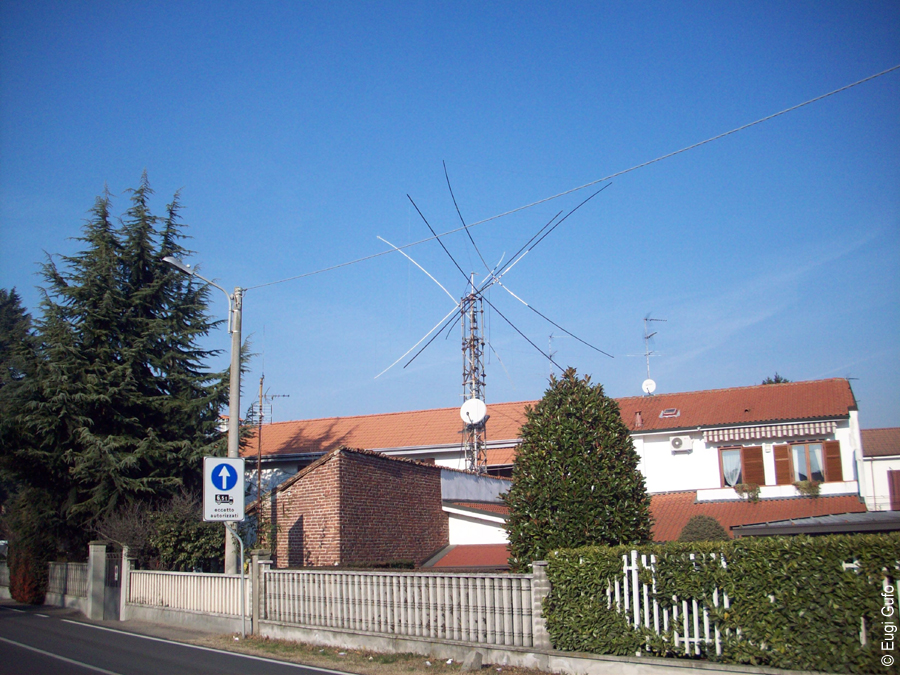
In reality, the local people are lively and friendly, and they pose for photographs without any problem.

Now you can say that you have seen everything there is to see in Mortara. Before returning to Milan, at the station I noticed the last two interesting things. First of all, a vase branded RFI:

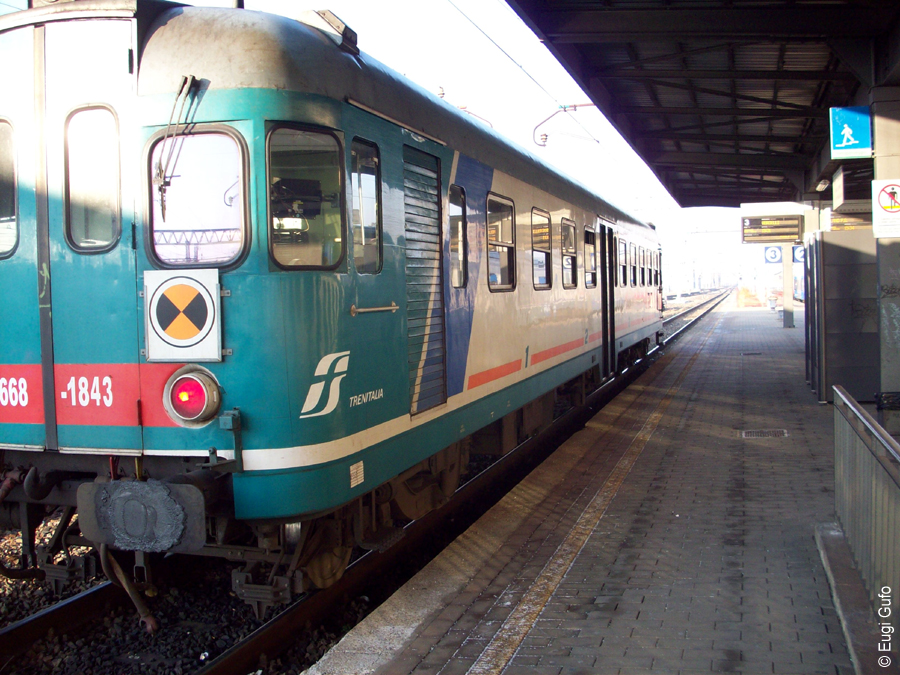
And then the Mortara—Vercelli train made up of a single carriage divided in half to create First and Second Class.
That’s it now.
Until next time.
Mortara, December 2011
↓ Show comments ↓


