


 Long live Ukraine! Fuck the war!
 RSS of site articles
Morbegno is a small town at the gateway to the Valtellina which I had long intended to visit as a tourist (I had been there before, but for reasons unlikely to interest my readers). It is not particularly large, yet it does offer several noteworthy sights.
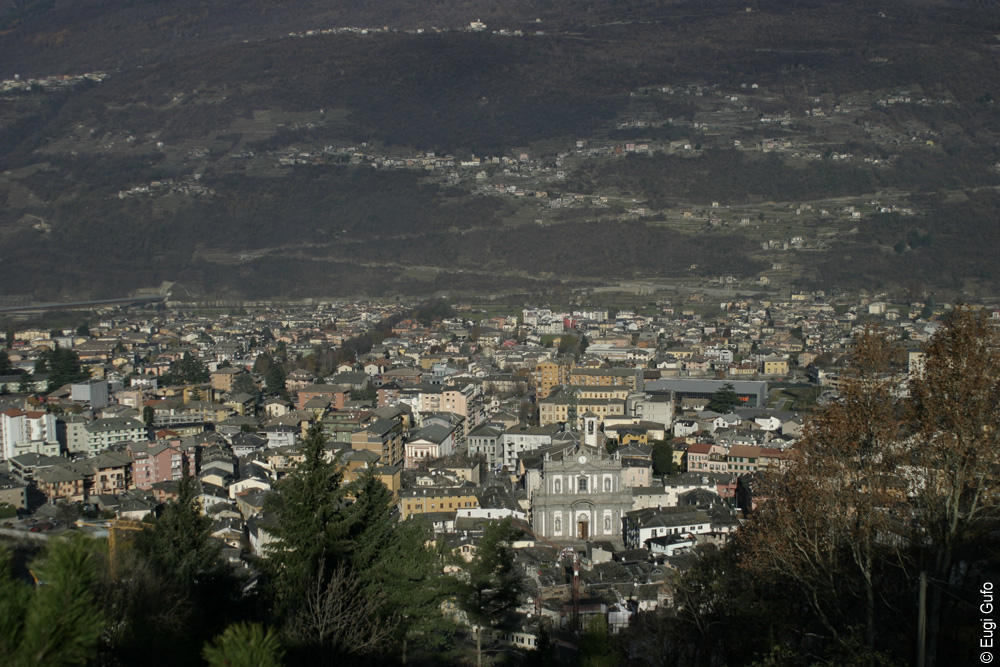
Beautiful period buildings are not concentrated in a neatly defined historic centre; rather, they are scattered throughout the town and must be sought out.
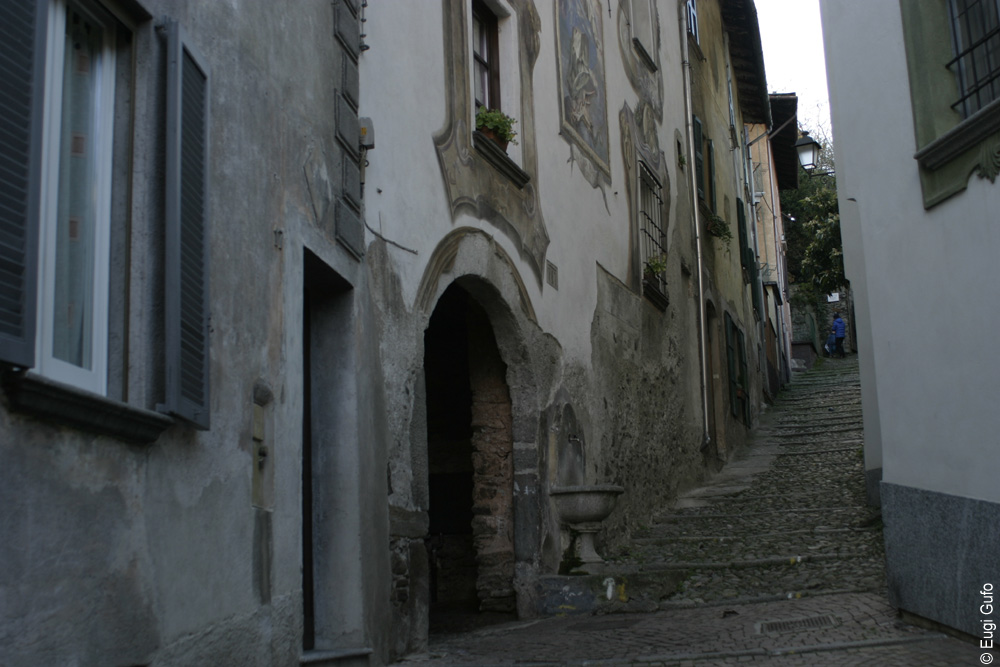
Classical architecture is frequently interwoven with elements typical of mountain settlements.
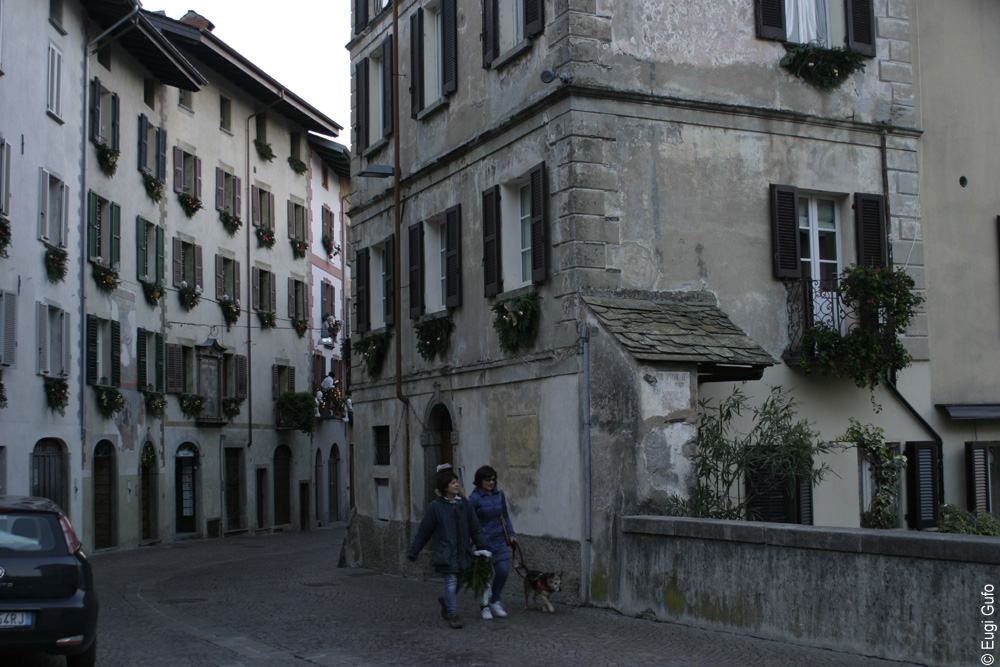
Many of the most authentic and attractive features are hidden in courtyards or small squares off secondary streets. One must therefore pay attention to minor clues during the search for beauty and not rely exclusively on the standard routes favoured by the average tourist.
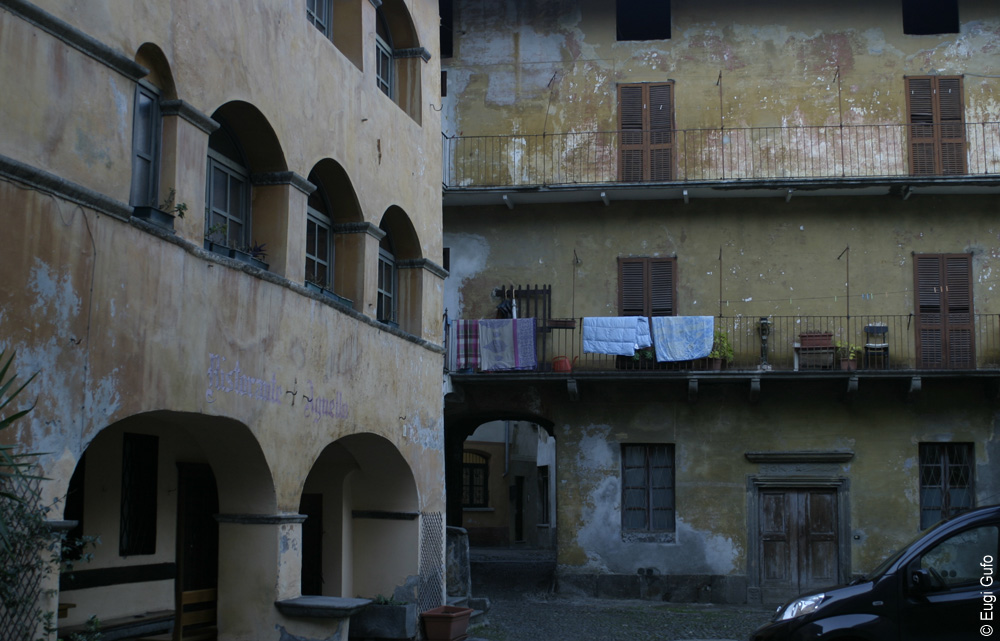
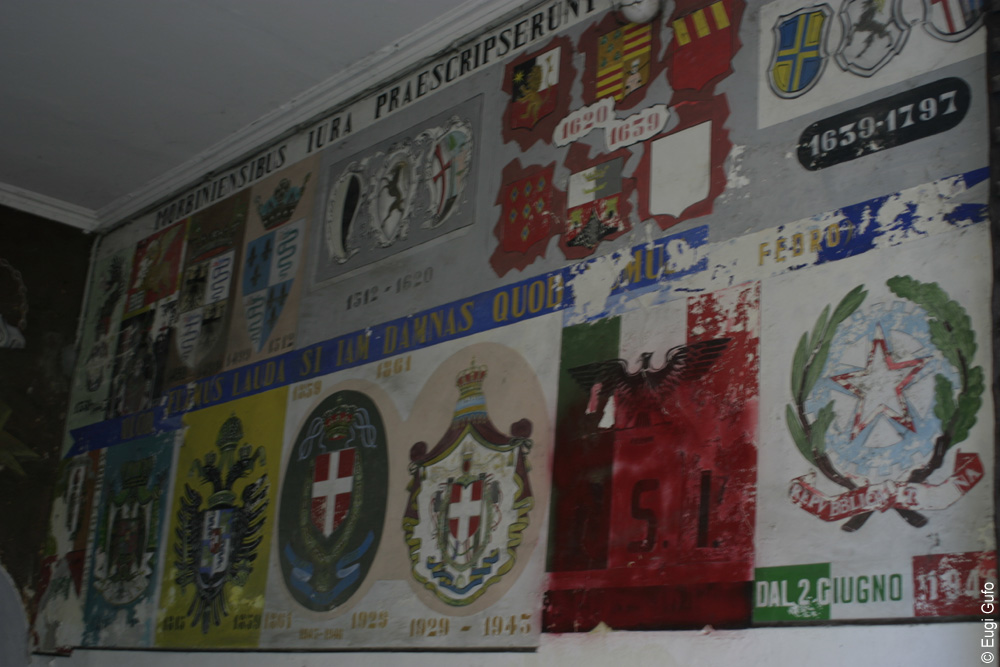
Behind apparently ordinary gateways, too, one may find objects of considerable interest. Behind one such door, for example, I discovered the coats of arms — arranged in chronological order — of all the lords and regimes that governed Morbegno throughout its history. It is undoubtedly a valid way of remembering one’s past. Yet, as you can see, someone attempted to erase a fragment of that history with red paint (it is not difficult to guess which one). Mistakes — even historical ones — ought to be corrected, not erased from memory. When this becomes universally understood, the world may celebrate its liberation from stupidity. For the moment, that remains almost utopian.
A striking peculiarity shared by many of Morbegno’s gateways is the presence of bolts, complete with padlocks, on the exterior side (facing the street). It is the first time I have encountered such a tradition. Perhaps they serve to prevent the gloomy mountain dwellers’ prisoners from escaping?
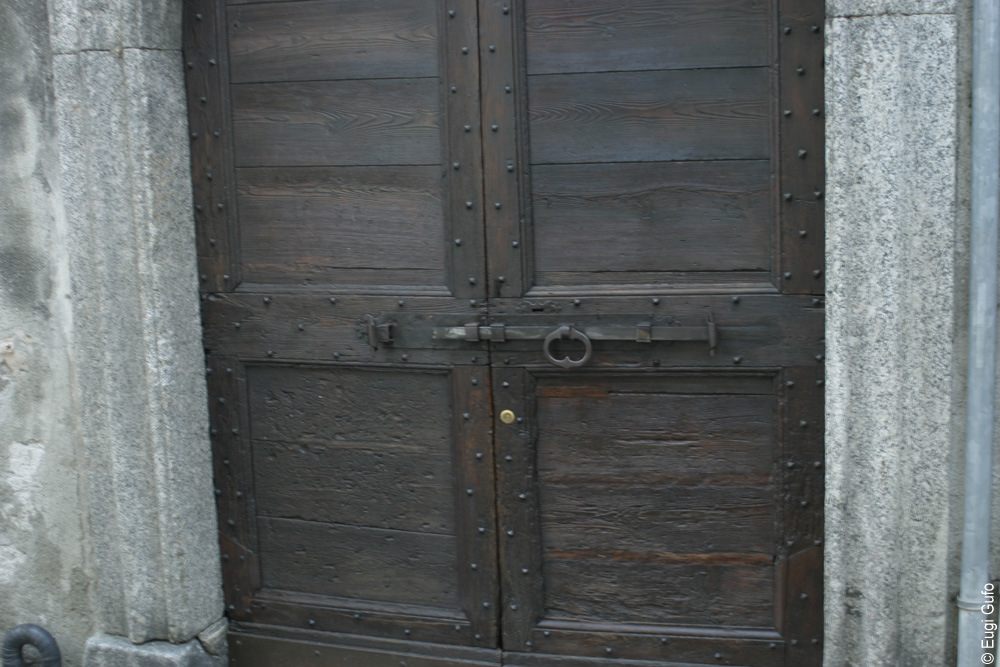
I had hoped to find an explanation at the local ethnographic museum, but it opens only by appointment.

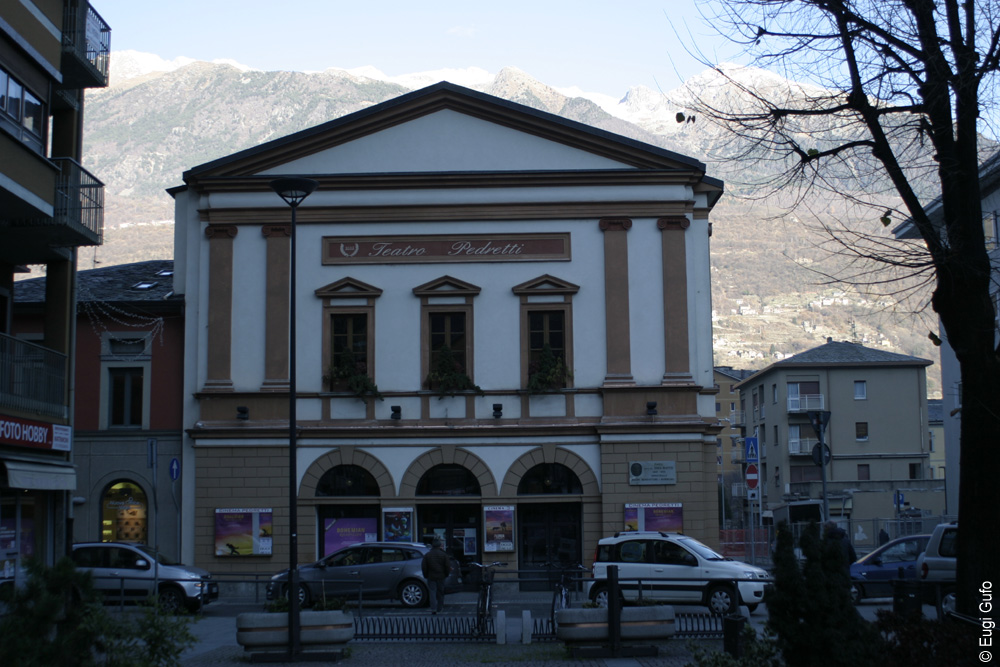
The local theatre (easily recognisable by its characteristic style) has unfortunately been converted into a cinema for many years now.
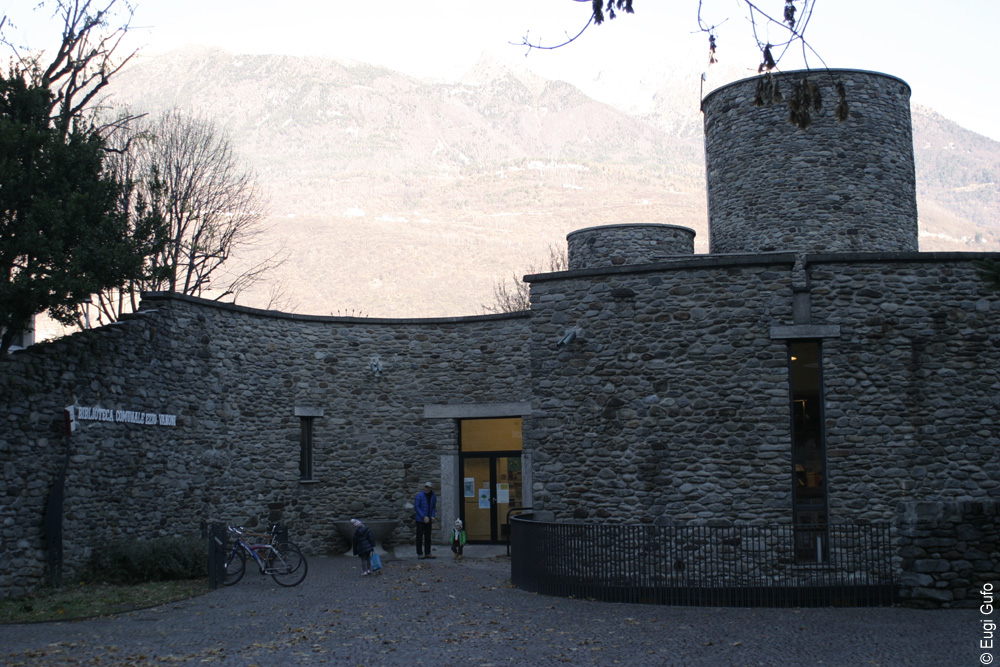
The municipal library building aspires to resemble a castle. It even possesses a moat along part of its walls.
Among the religious buildings I saw in Morbegno, the most interesting overall is the Santuario dell’Assunta. It is located somewhat on the outskirts, yet it justifies the walk.
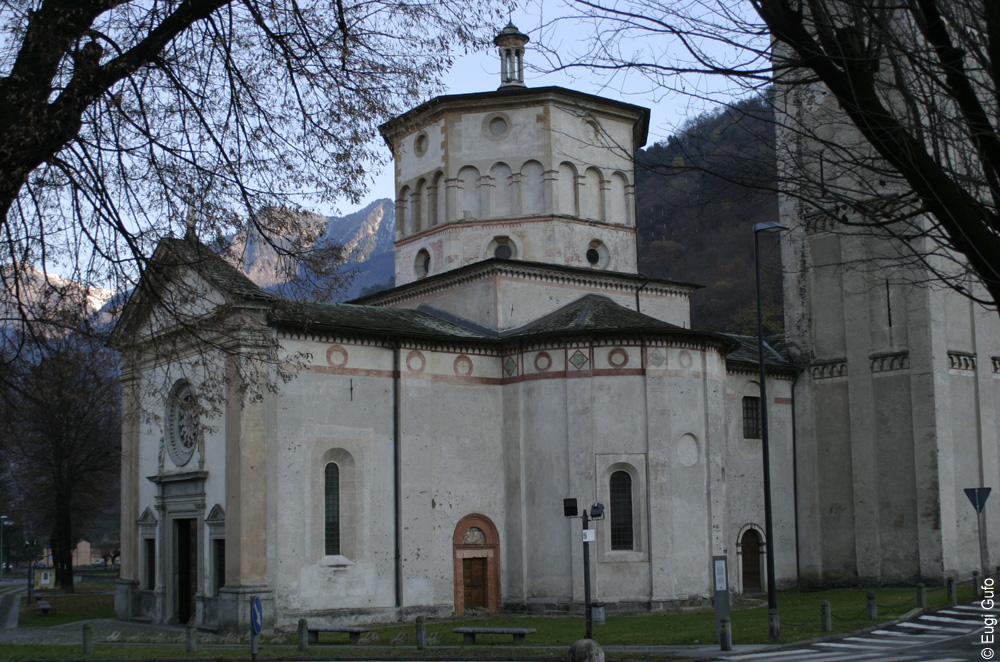
The small votive temple of the Battaglione Morbegno (of the Alpini) was constructed in the 1960s in memory of those who fell during the Russian Campaign, in the area of the village of Varvarovka. If I have understood correctly, this was the battalion that, until only a few weeks before the defeat, had been stationed in the birthplace (and initial place of residence) of my maternal grandmother. I wonder how many of the names listed on the walls of the temple my grandmother might have encountered in Valuyki… And I still hope to find the descendants of one very specific member of that battalion (for an important and entirely positive reason).

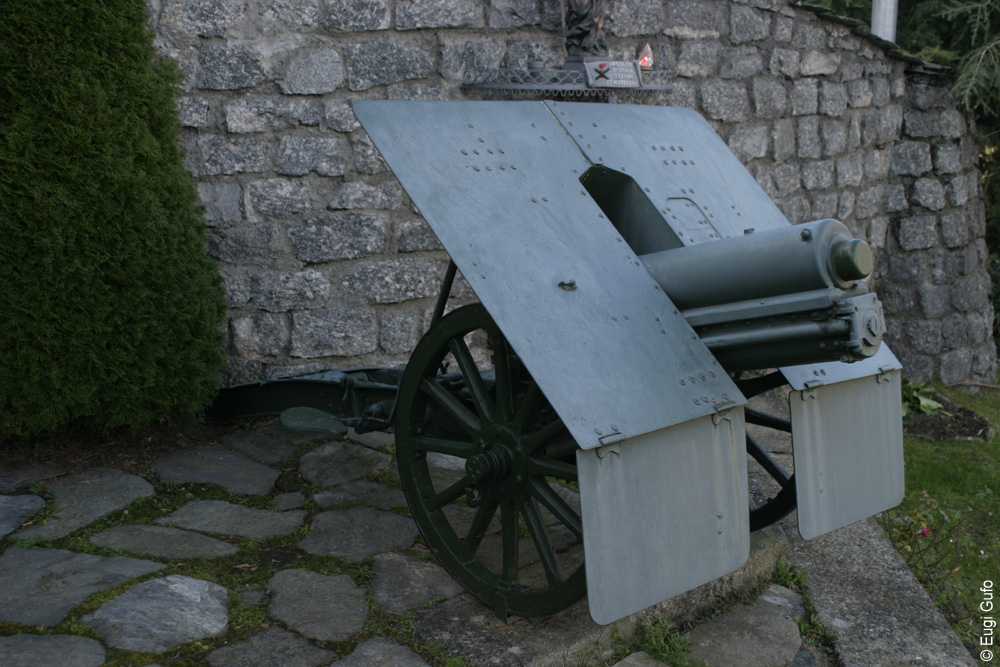
The two material components of the temple that are of particular interest are unfortunately no longer functional: some parts are missing, others welded shut.
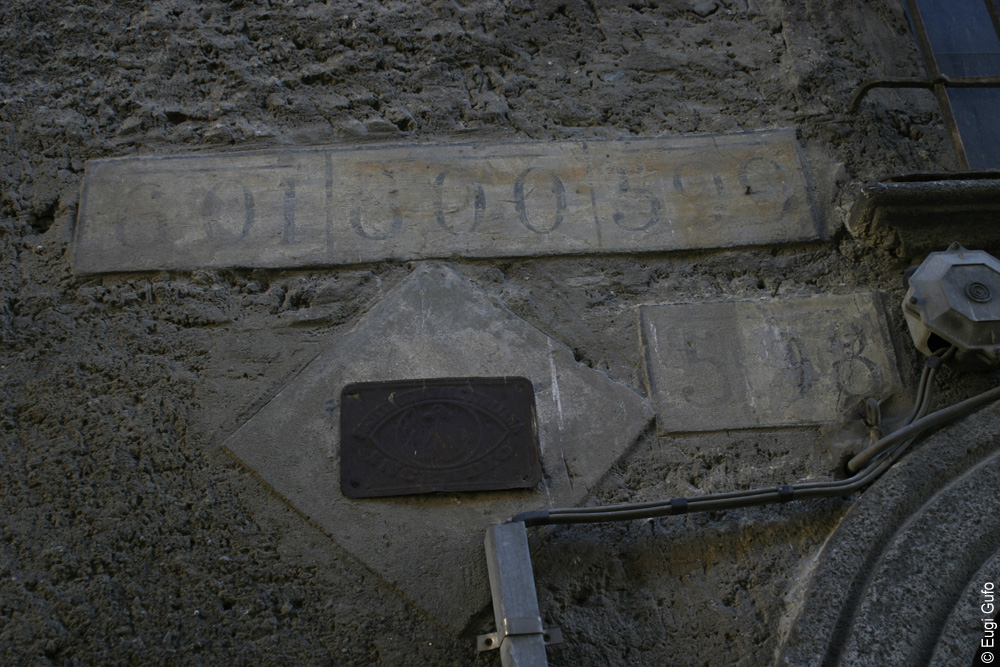
We therefore leave the temple and descend from its hill back into town. On the majority of the period buildings in the centre, the old insurance plaques have been preserved — as have the old house numbers. They are in no danger of being confused with the modern ones. What I could not determine, however, is why each number bears a horizontal line above it.
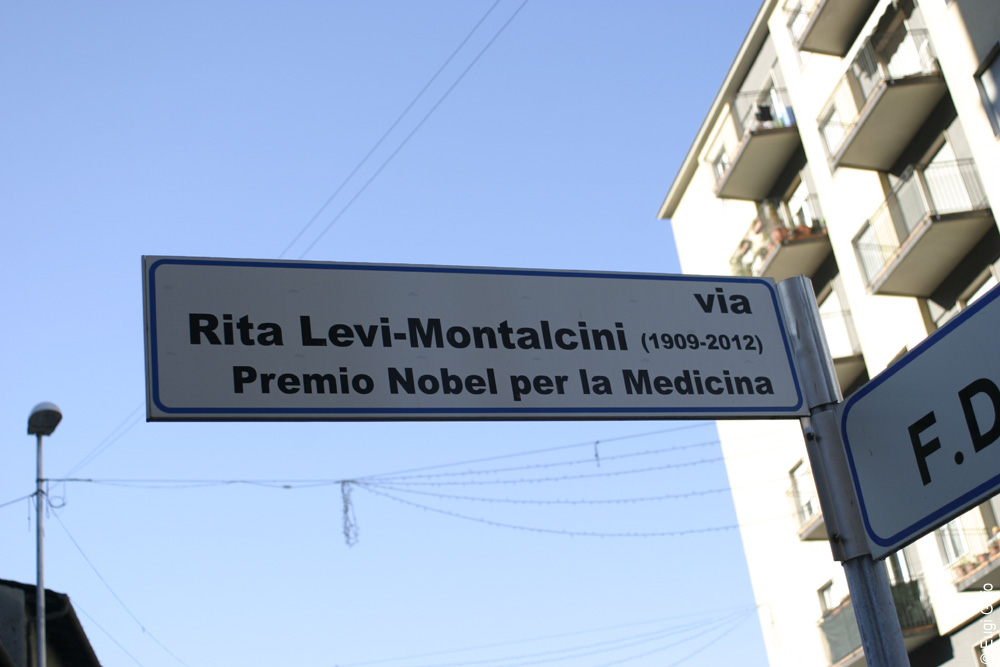
Among local street names, the most interesting example is the street dedicated to Rita Levi-Montalcini as early as the end of September 2013. It was indeed an appropriate case in which to request and grant an exemption from the law requiring a ten-year wait after a person’s death before commemorating them with a toponym. Compliments, therefore, to the local Prefecture.
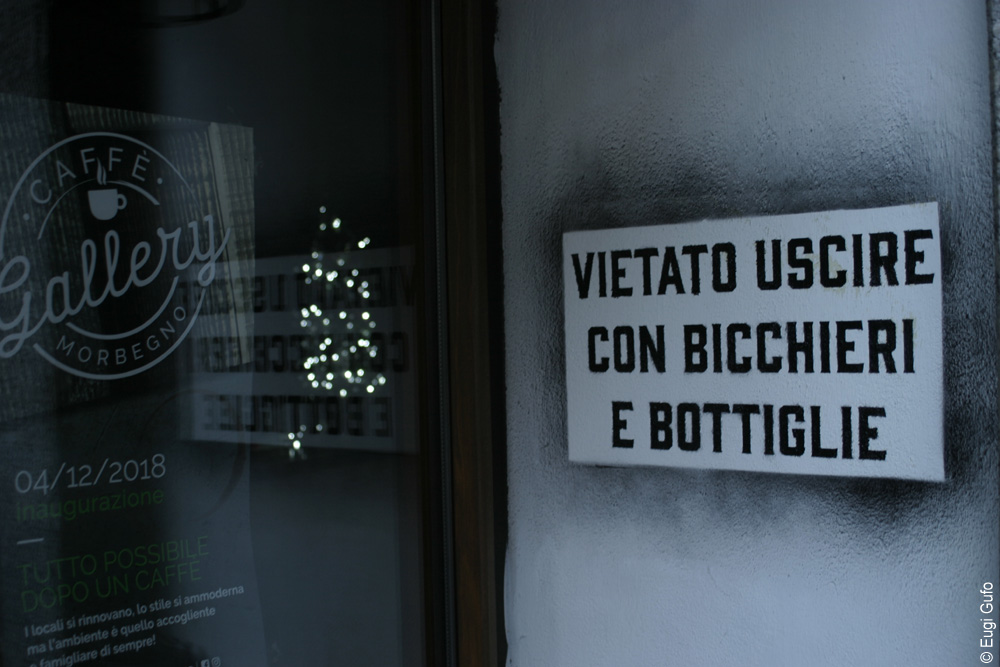
At the same time, Morbegno abounds in signs and notices unlike any I have previously encountered in other Italian towns.
It is only 7 December, yet the town is already preparing for Christmas. The nativity scenes are all original; I was unable to choose between the one made of painted stones and the one installed in the old washhouse.

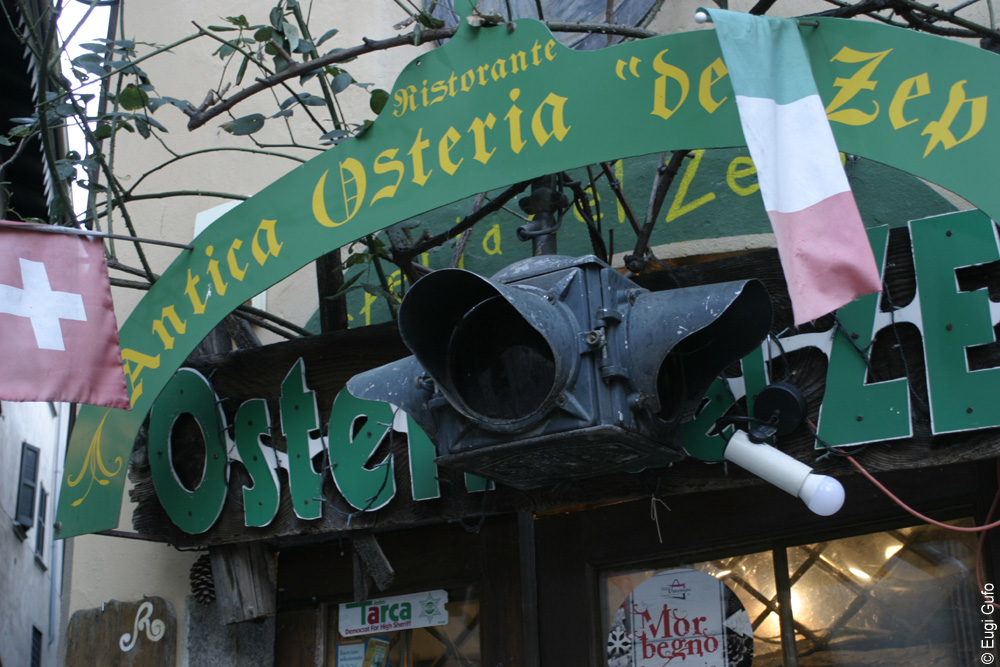
As for the finest Christmas lights, the winner is obvious to me: the Antica Osteria «del Zep». Unfortunately, I cannot comment on the quality of the food served. I only know that I would like to possess that object myself.
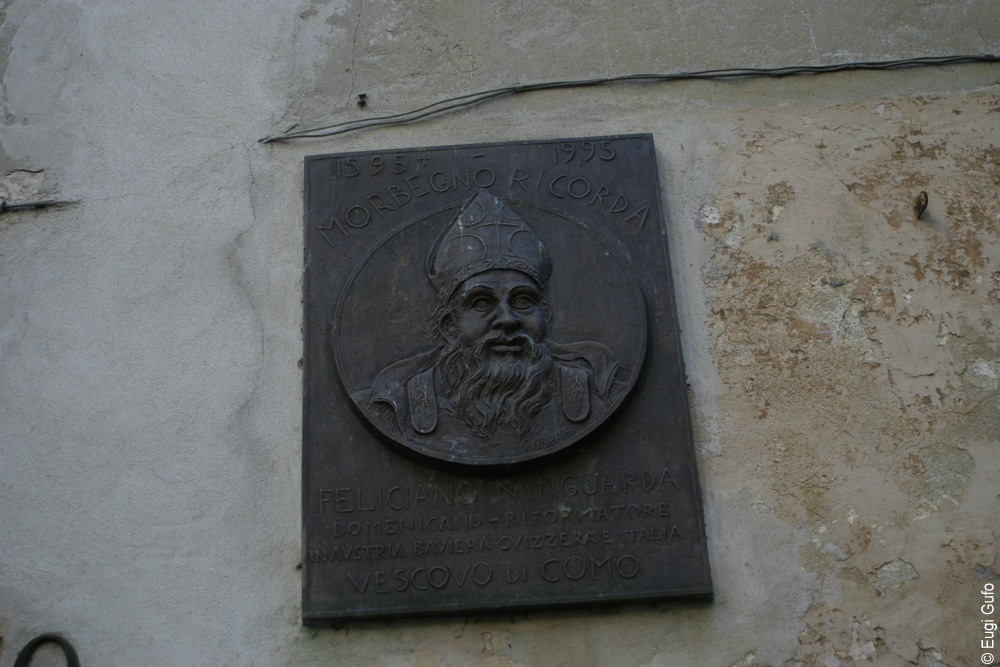
For some incomprehensible reason (one might call it an oversight), the bas-relief depicting Bishop Feliciano Ninguarda was not disguised as Father Christmas. Perhaps they ran out of time…
I must apologise to my readers: I noticed this sign too late. A climb of 15 kilometres does not frighten me, but I was unsure whether I would have sufficient time. Another occasion, perhaps.

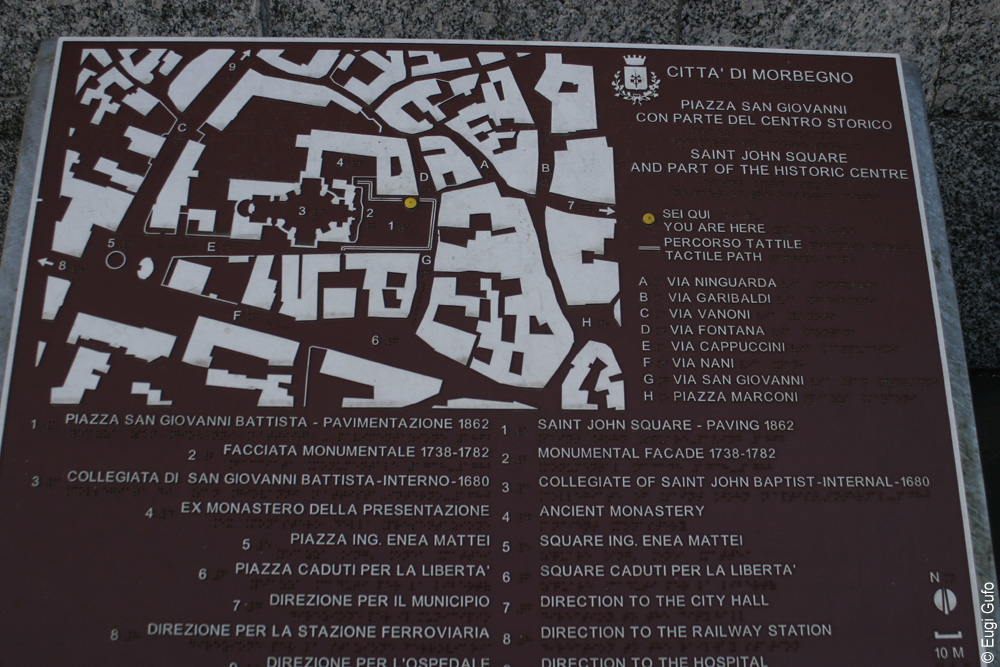
One of the few ways to discover whether something interesting has escaped our attention is to consult the tactile map (the only one I encountered), intended for the visually impaired and placed at a seemingly random point in the square of the main church. Ahem… it does not appear to be a particularly flattering summary of the town.
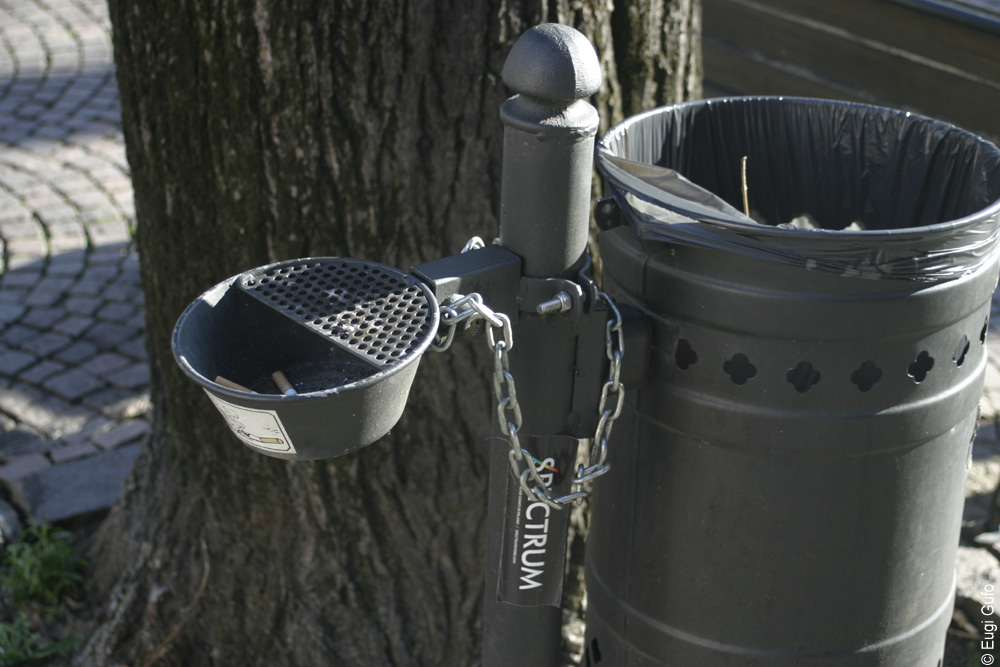
So let us seek beauty in small but intriguing details. Each litter bin has been fitted with an ashtray of curious and almost elegant shape. Every ashtray is secured by a chain of uncertain purpose: is it to prevent theft, or to prevent street cleaners from forgetting to replace it?
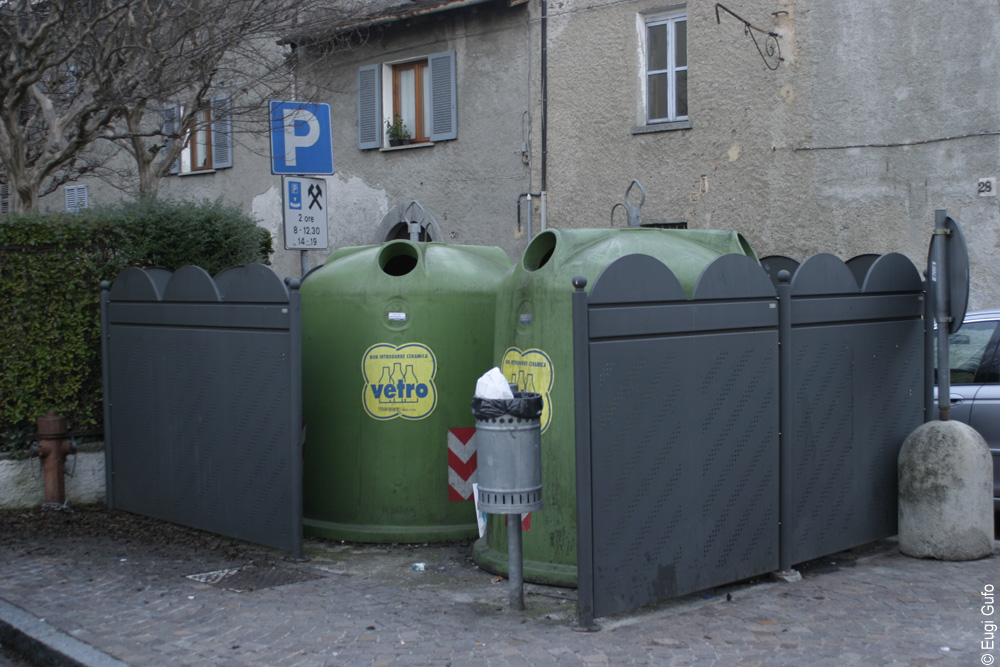
The glass recycling bells are concealed behind fences that aspire to be attractive. They are certainly more attractive than the bells themselves, yet at the same time they recall those square litter bins which you have surely seen in many Italian towns.
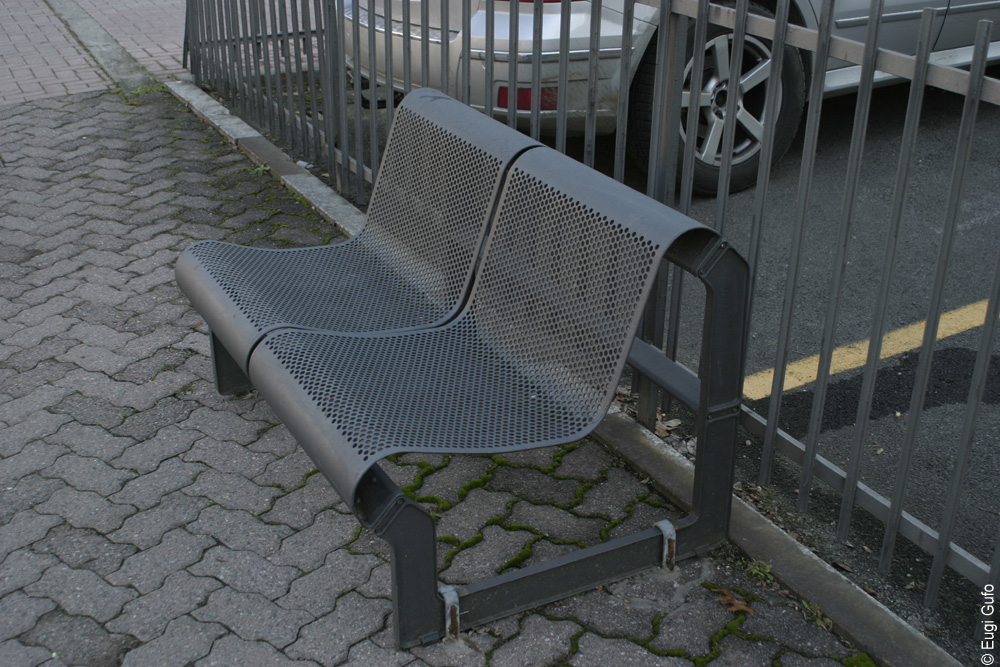
In a semi-peripheral area I encountered a bench model I had never seen before.
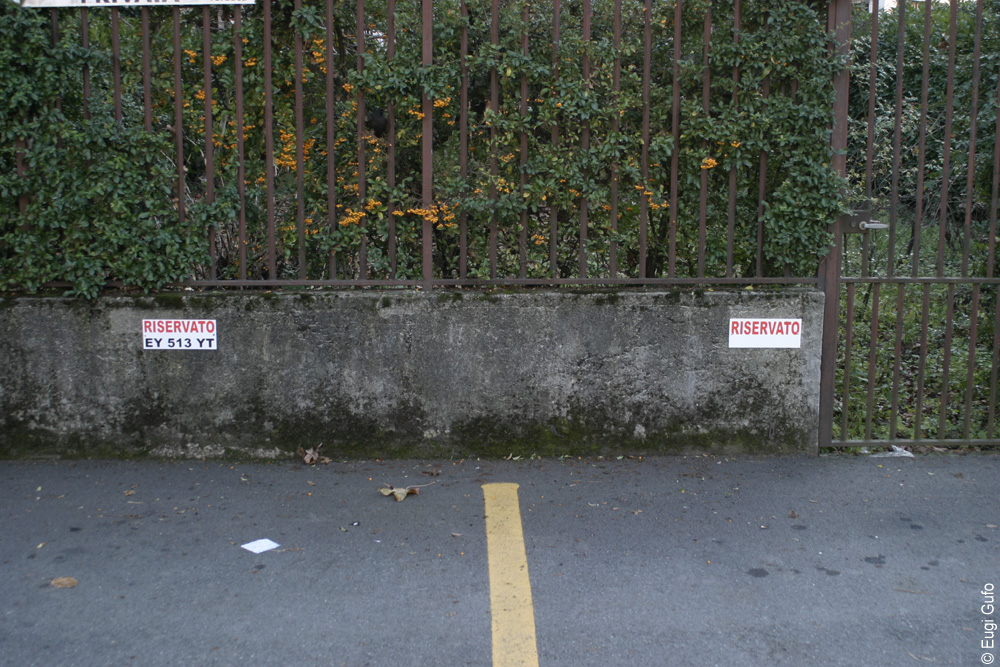
And it is the first time (in Italy) that I have seen a reserved parking space marked with the number plate corresponding to the designated section.
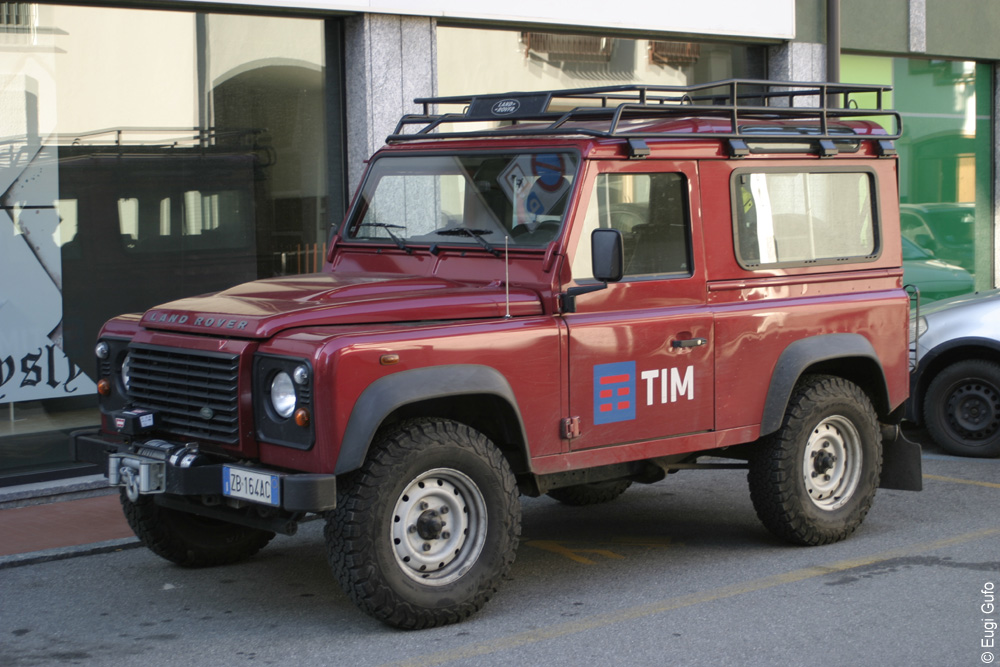
Company vehicles are suitably adapted to mountain realities.
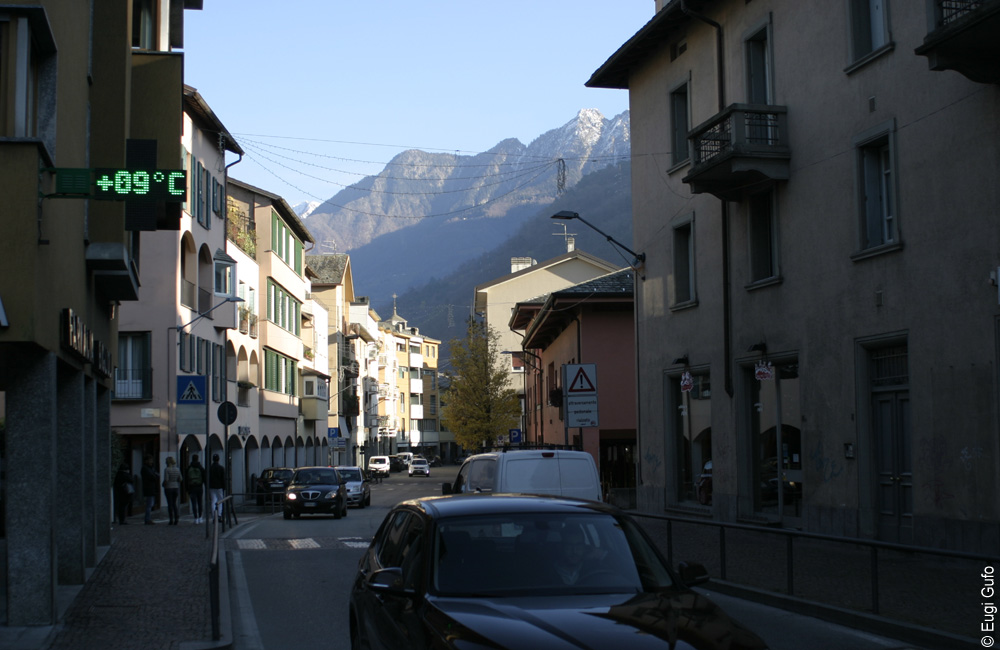
And thus I have already finished showing you all the genuinely interesting things in Morbegno — or at least those I managed to find. In summary, it is a town situated in a serene location, yet one that demands a certain effort in order to be fully appreciated.
Morbegno, 7 December 2018
↓ Show comments ↓


