


 Long live Ukraine! Fuck the war!
 RSS of site articles
Mede (in the Province of Pavia) is one of those places whose existence was entirely unknown to me until I happened to notice it on a map. The circle beside its name was sufficiently large to suggest a settlement worthy of investigation. I would never have relied on such cartographic logic had experience not already taught me that even small provincial towns are capable of producing disproportionate surprises.
For instance, I would not have expected to find, in a town of fewer than seven thousand inhabitants, monumental architecture more appropriate to a modestly sized city.
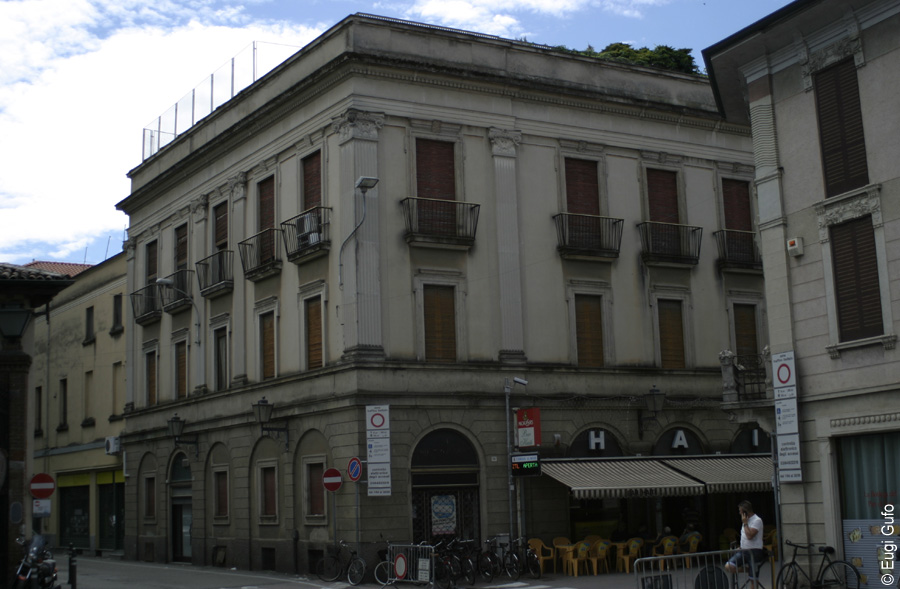
Nor would one anticipate a Town Hall of such presence. Its style faintly recalls the railway stations of smaller Lombard towns, yet the building is undeniably handsome.
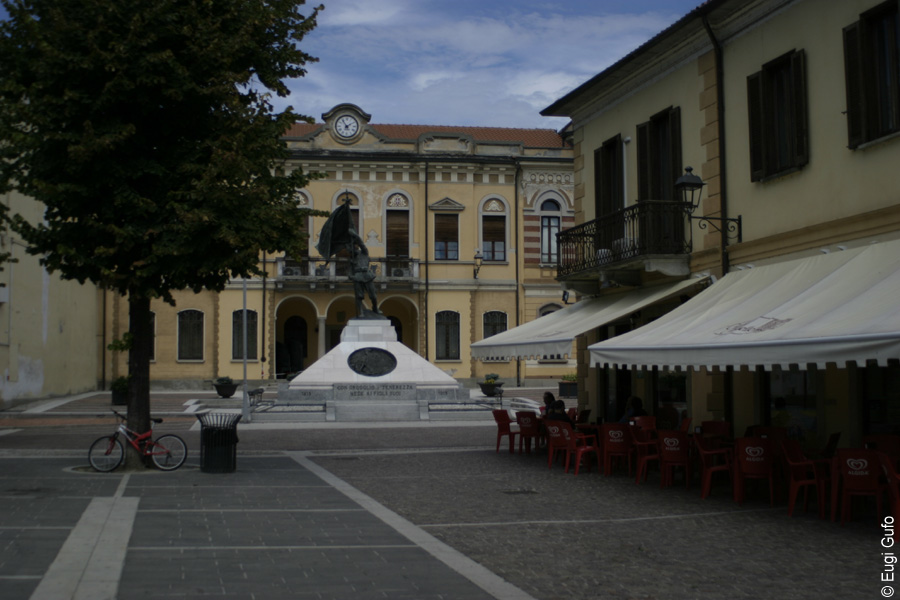
In very few cities in the world — including considerably more important ones — does the municipal library occupy premises of comparable age.
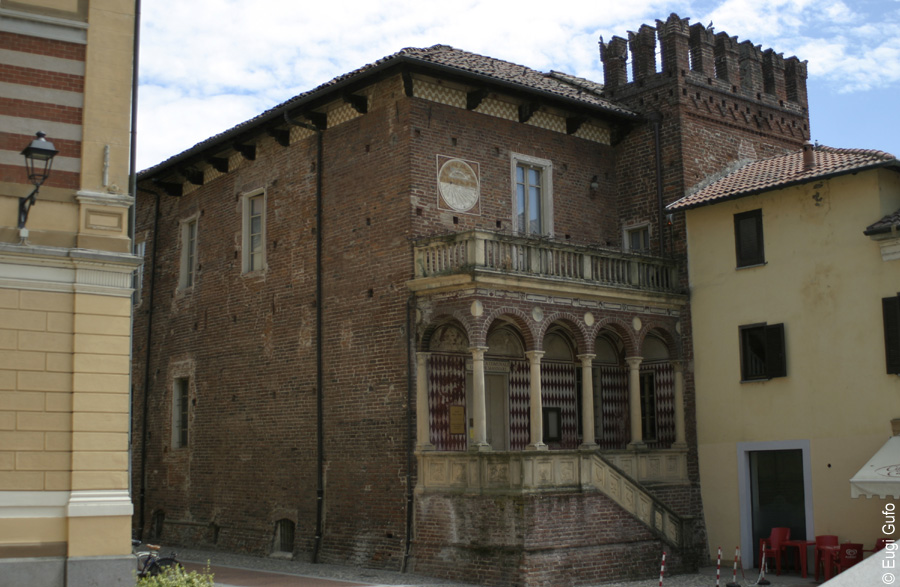
When discussing the architecture of any Italian town, one cannot omit its churches. Mede possesses several, often visually interesting from the outside and consistently inaccessible for internal examination. I can only assume that my timing was, regrettably, incorrect.
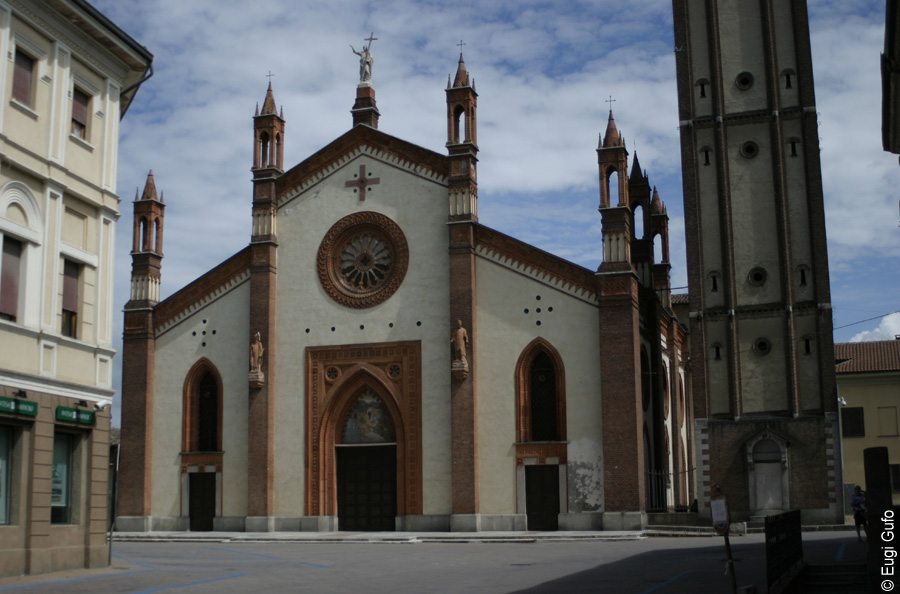
The Local Police of Mede have secured for themselves one of the finest palazzi in the historic centre — indeed, in the entire town.
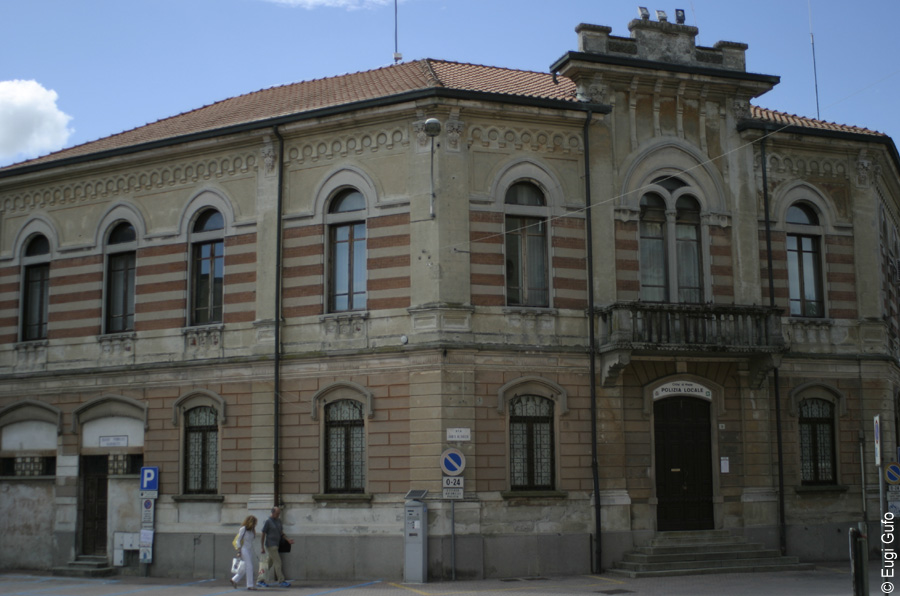
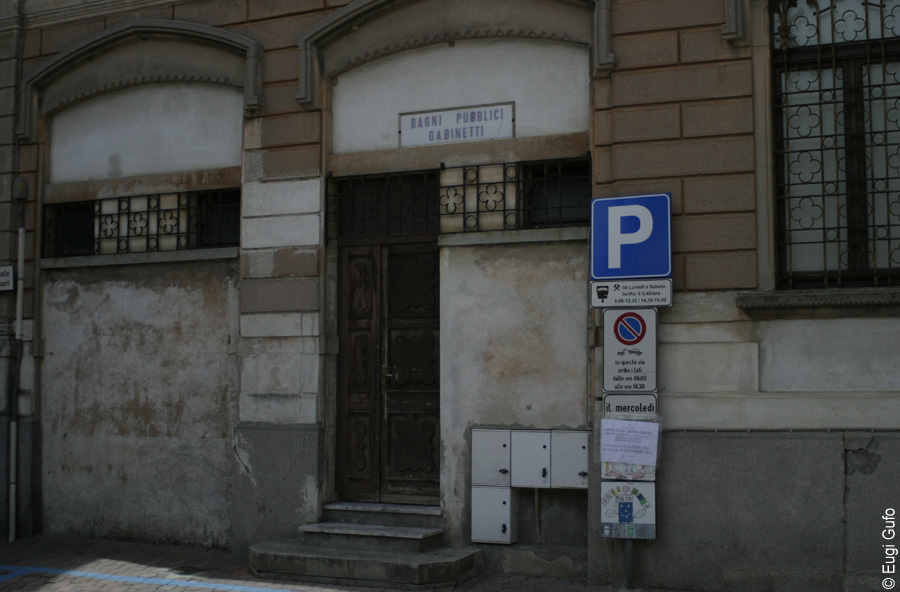
I am aware that not all of their Milanese colleagues have distinguished themselves as paragons of integrity, but one hopes that Mede has been more fortunate in this regard. I had, meanwhile, considered making discreet use of their public lavatory (located within the same building), though it was firmly locked. A pity: such facilities remain unjustifiably scarce in Italian towns.
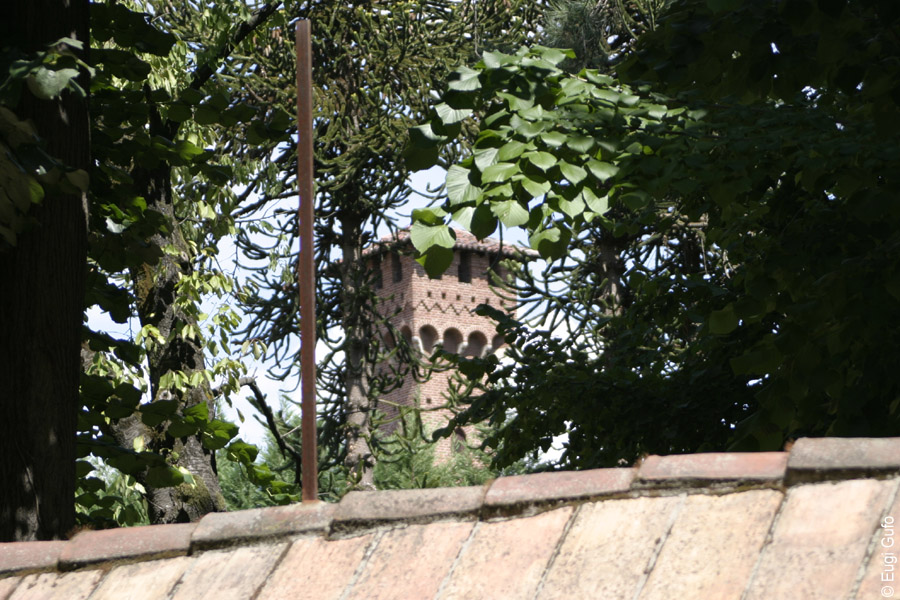
But let us return to matters of higher cultural standing. Mede once possessed a proper castle, of which only the keep now survives. Unfortunately, it is neither possible to approach it nor to observe it more closely, being surrounded by private buildings and gardens. One cannot help feeling that a monument of this nature would greatly enhance one’s own garden.
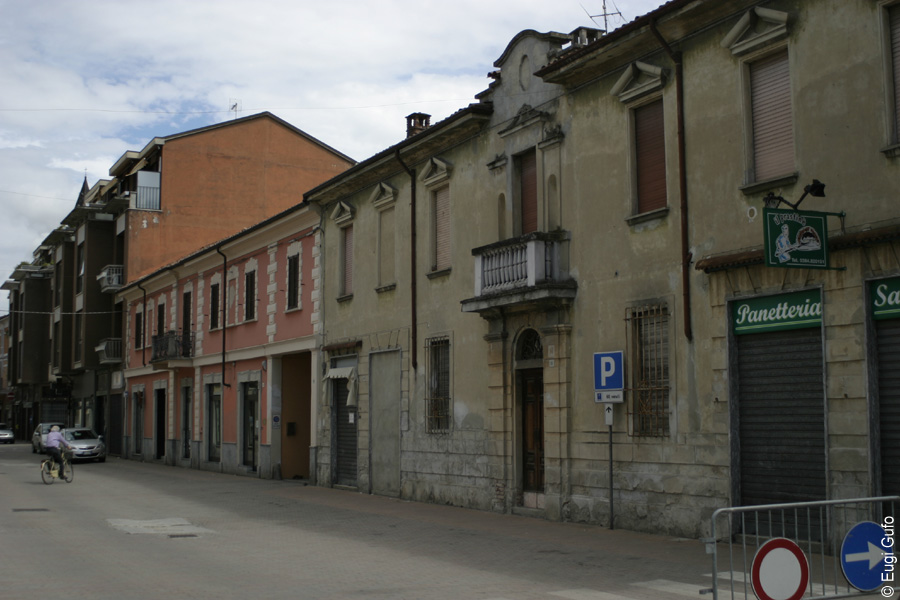
Most of the historic centre — admittedly of very modest dimensions — consists of low, compact buildings appropriate to a small town with metropolitan aspirations.
Slightly beyond the centre stand large private villas that stop just short of appearing abandoned; modest intervention on the façades would likely settle the matter.
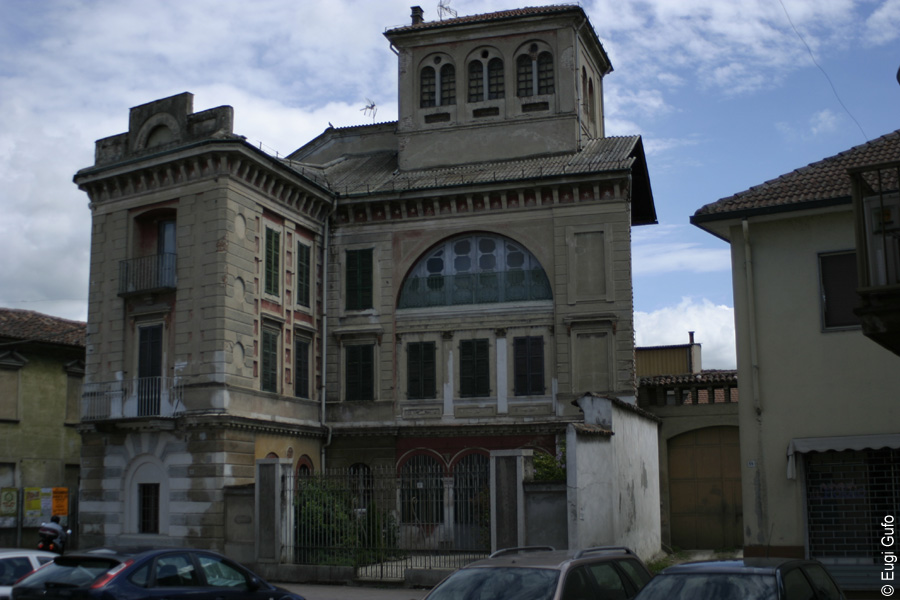
There are also villas in a state of genuine abandonment. Not many — but enough.
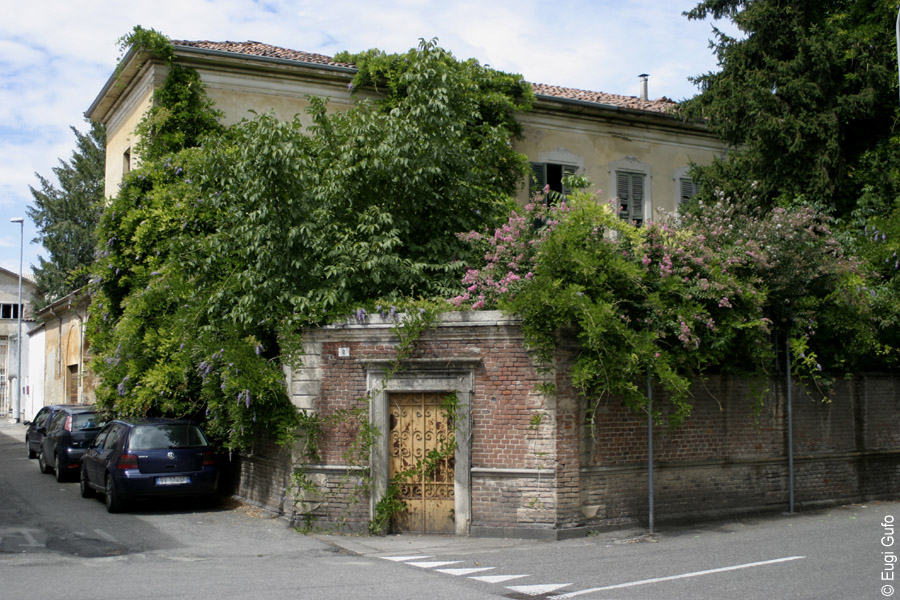
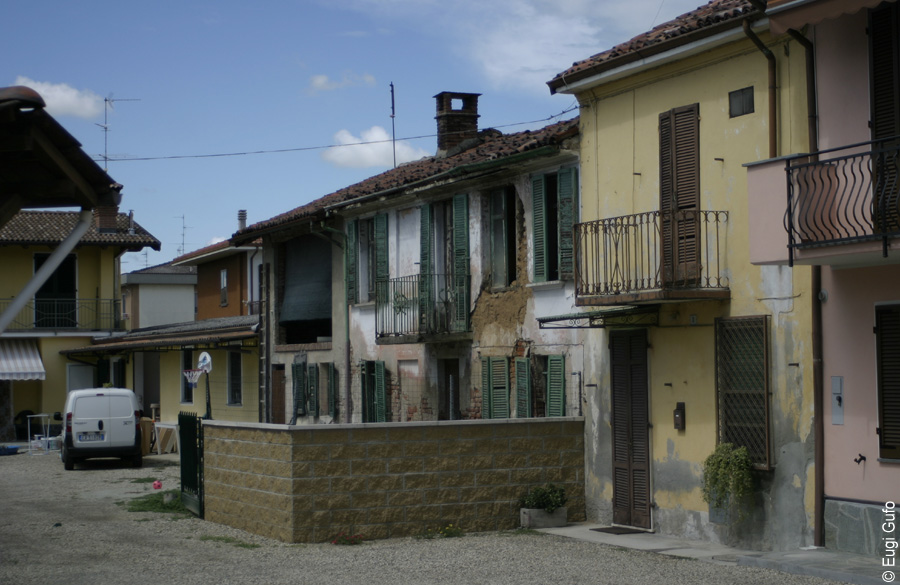
Some houses remain inhabited, though in conditions less convincing than those officially deserted.
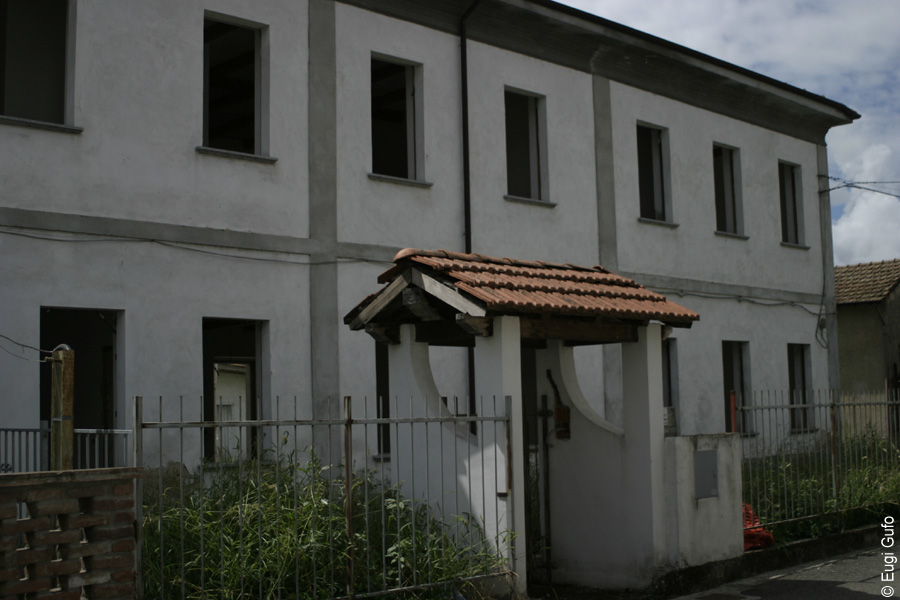
Others were never completed at all.
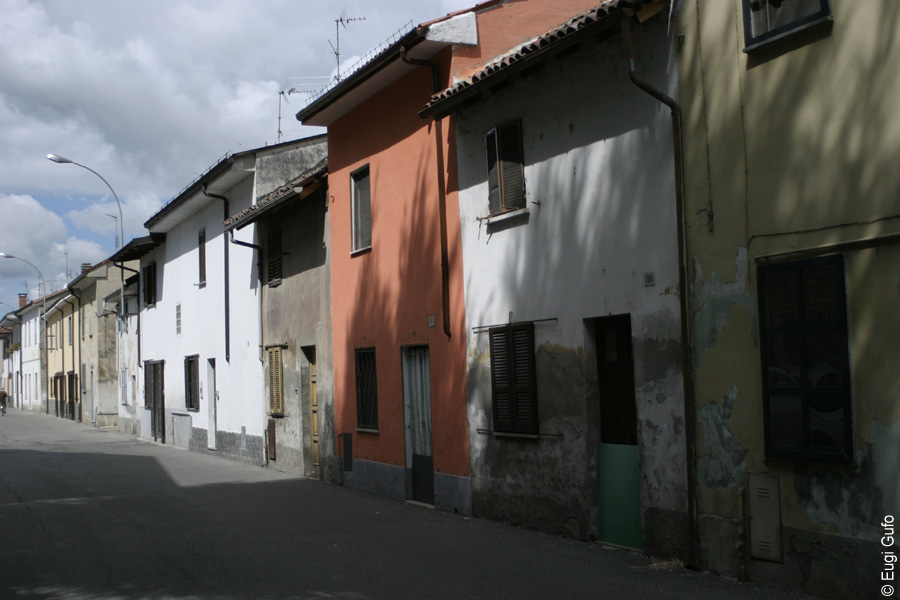
Beyond the historic core, Mede divides itself into two roughly equal halves. The slightly older section looks entirely like this:
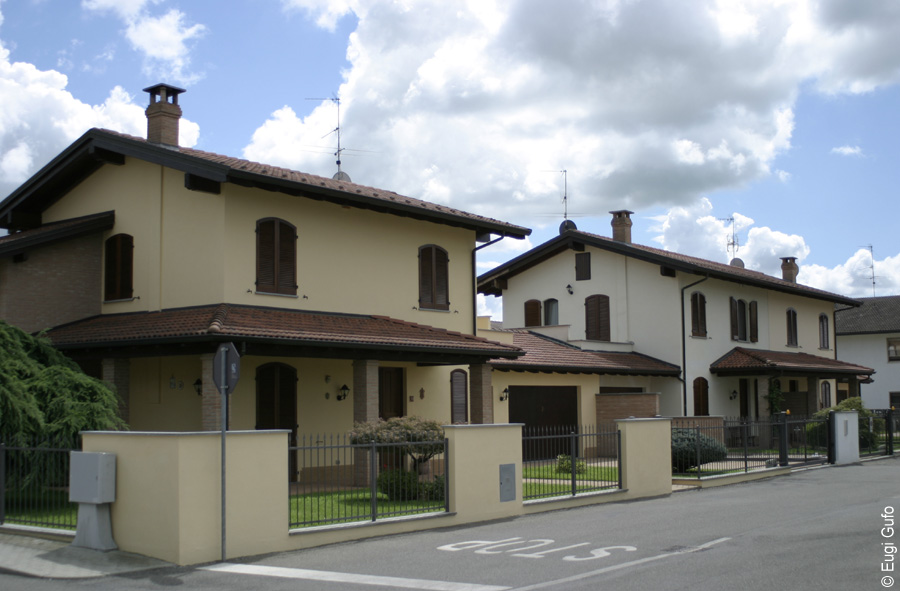
The somewhat newer half looks entirely like this:
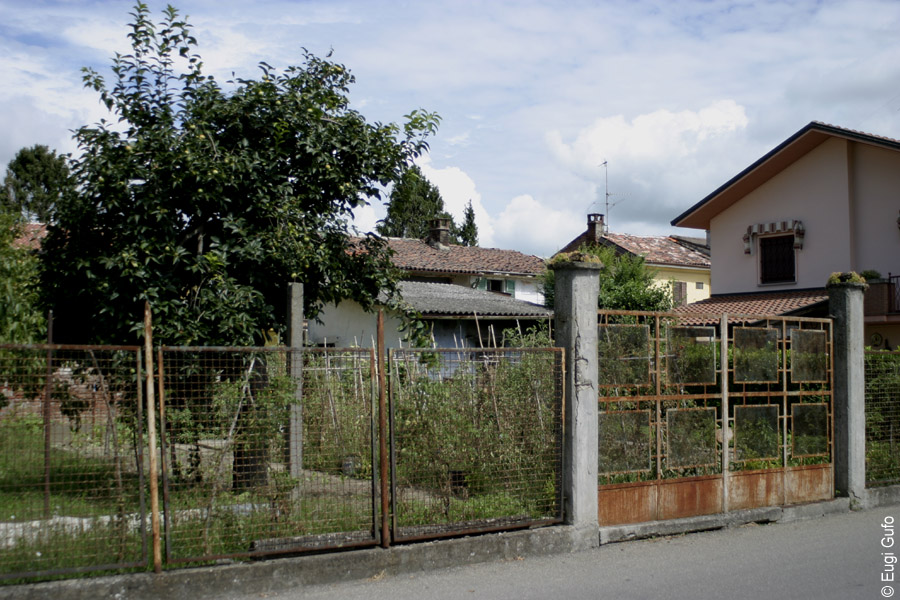
It is not, however, the size of buildings that determines whether a place feels like a town or a city. In Mede, its village status is encoded in daily life: many private houses are surrounded by vegetable plots rather than ornamental gardens.
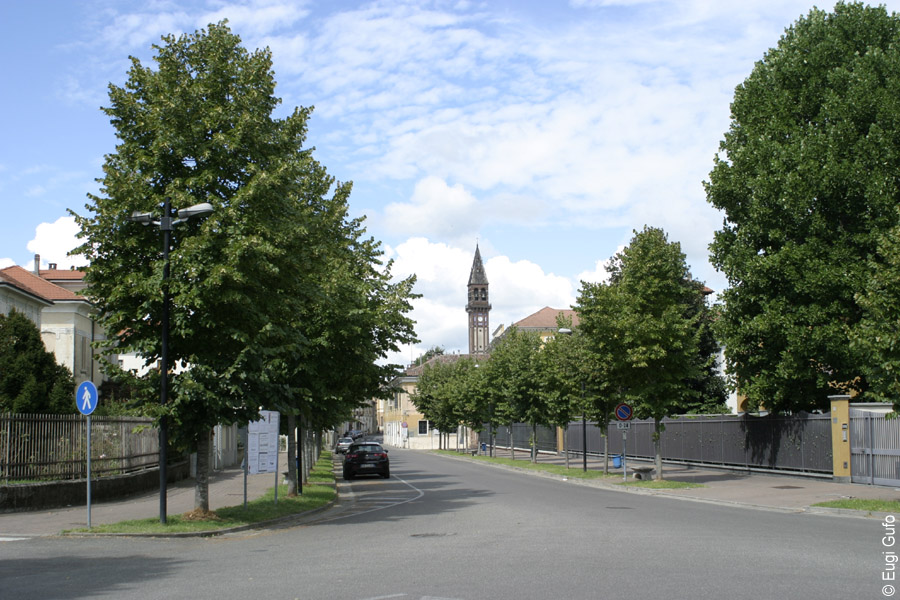
And yet Mede might easily have become a pleasant and tranquil small city rich in public greenery.
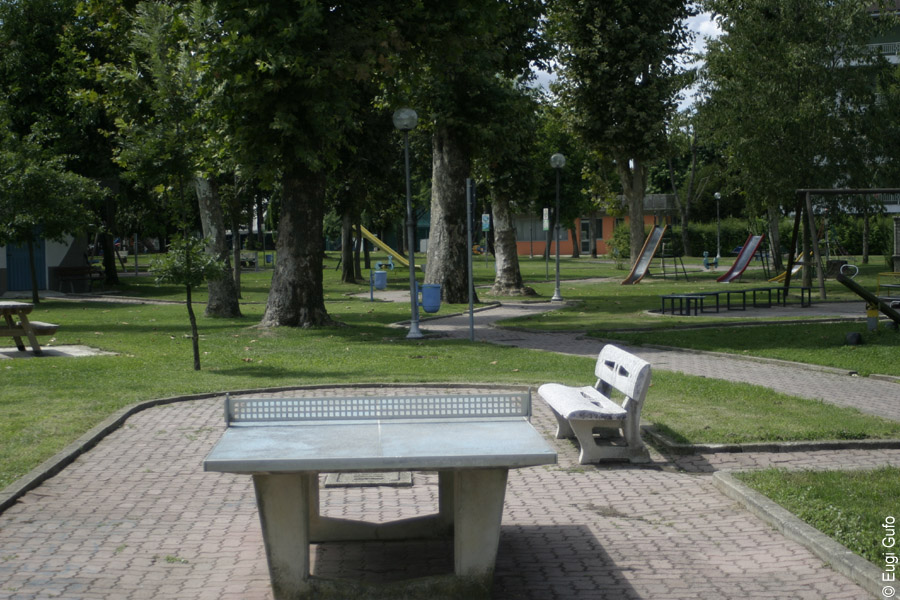
Indeed, within the municipal territory I discovered a public park that is surprisingly well maintained and equipped. Whether such quality could survive heavy usage is uncertain. It is also unclear why the park is open only from 1 March to 31 October.
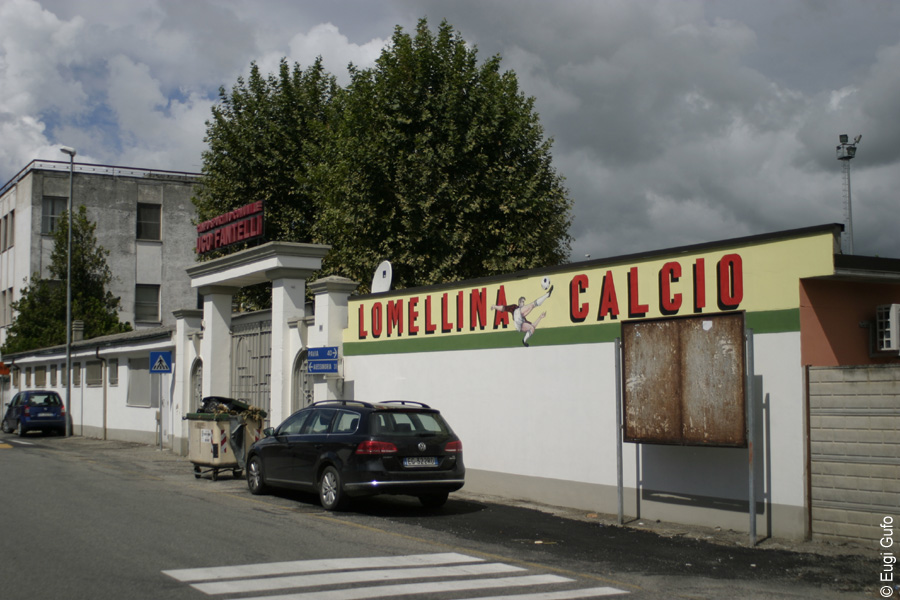
Mede’s football stadium still preserves the architectural spirit of the 1920s.
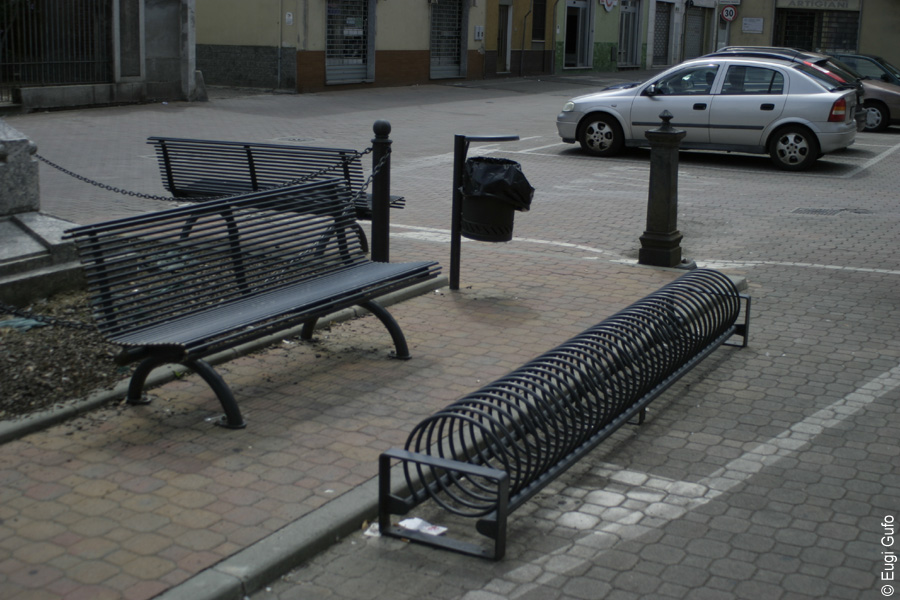
Street furniture is of decent quality but distributed in insufficient quantity; benches require deliberate searching.
Litter bins, by contrast, are plentiful and display impressive typological diversity. The most curious model — previously unknown to me and therefore a welcome addition to my collection — is this one:

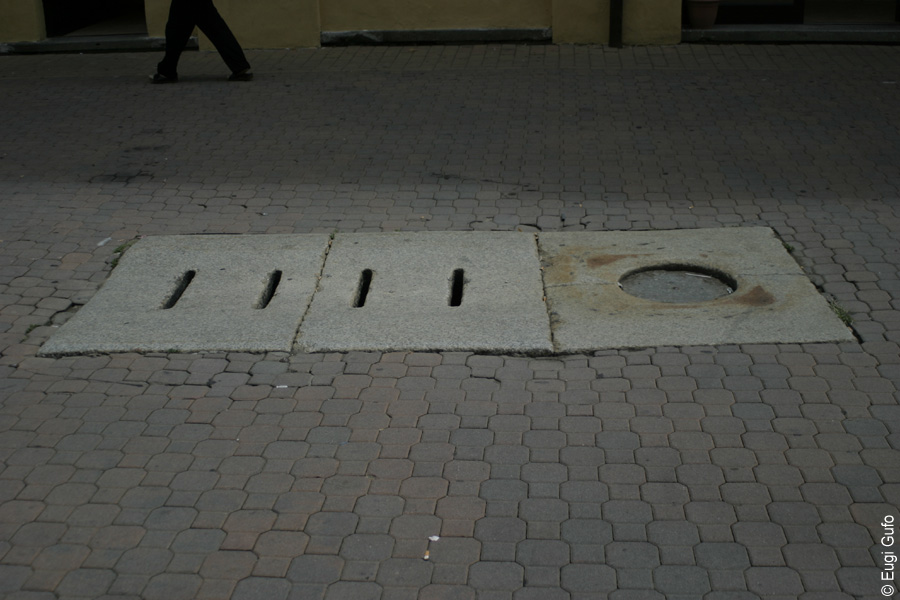
Some of the historic centre’s road gullies are monumental in scale.
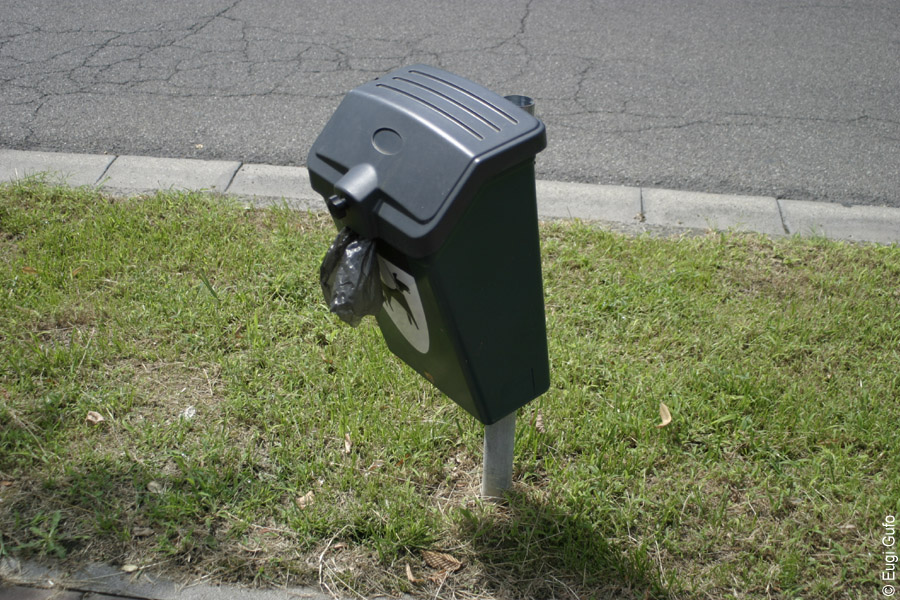
Special bins for dog waste, generally rare in Italy, are comparatively common in Mede.
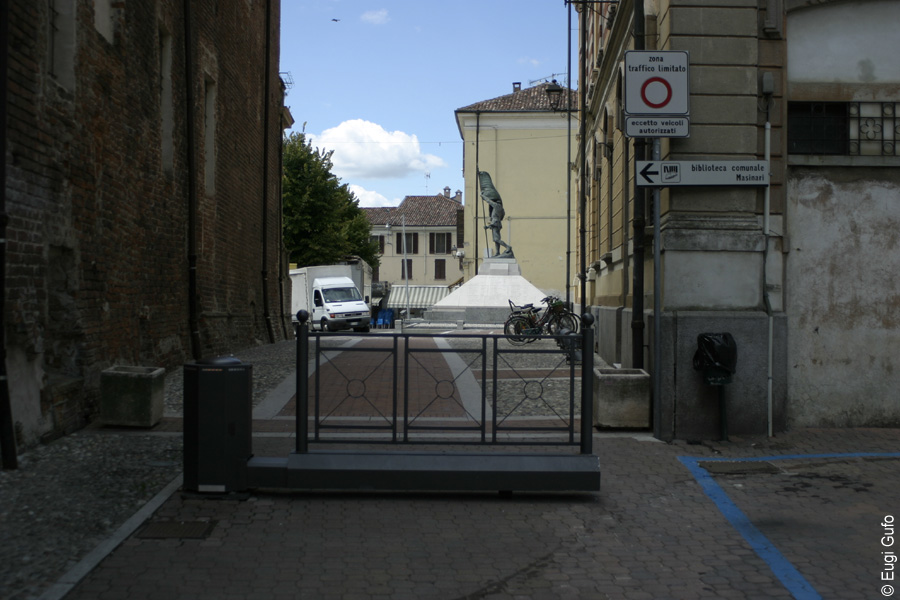
Only in Mede have I encountered an automated revolving gate regulating access to the central limited traffic zone.
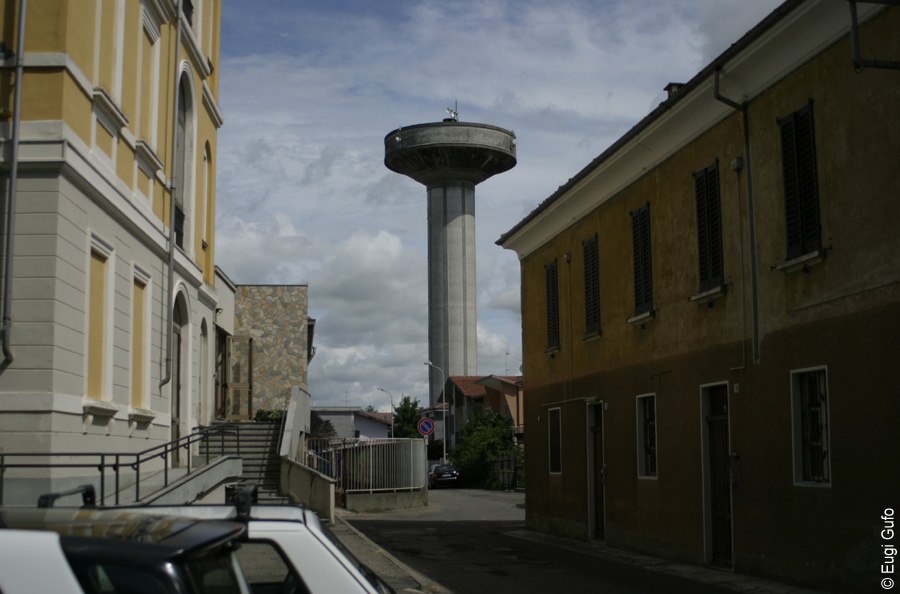
And yet, despite all the observations above, Mede ultimately conveys the impression of a worn and quietly exhausted province, where inhabitants appear to have little to do beyond remaining at home and contemplating the television. Streets and squares are nearly empty; the few pedestrians never seem hurried; one senses that some may be hoping to attract extraterrestrial assistance towards a more dynamic planet.
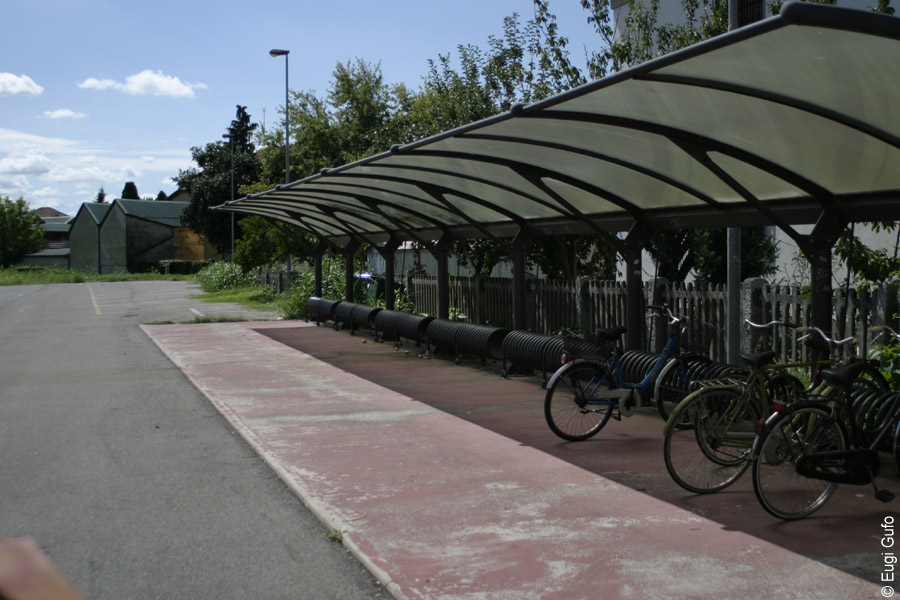
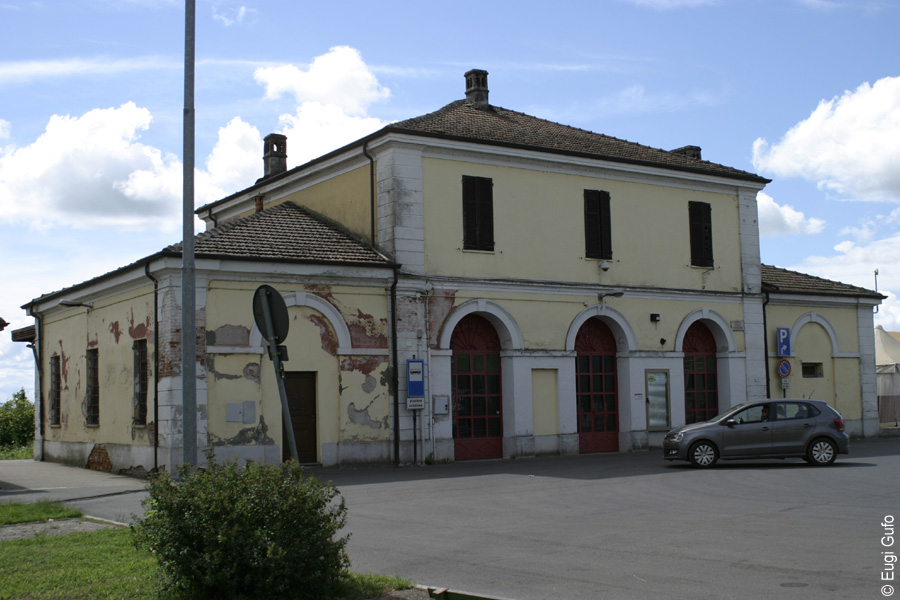
Those who prefer terrestrial departures may simply leave their bicycle beside the railway station…
…ignore the aesthetic condition of the building (it is operational), and wait on the single existing platform. For the correct train, one may wait up to an hour, as only services to Pavia and Alessandria pass through Mede.
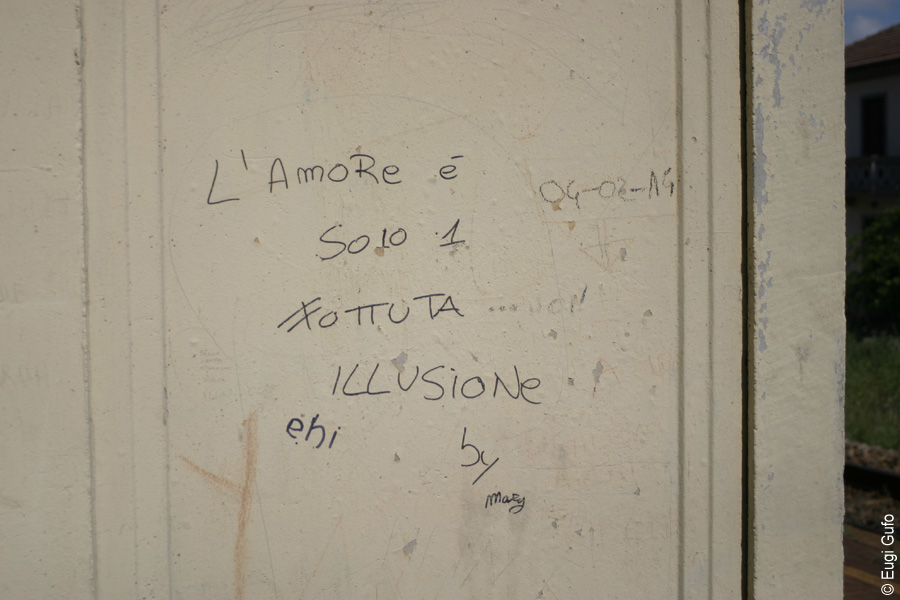
During the interval, it is possible to leave a final message to the beloved Motherland.
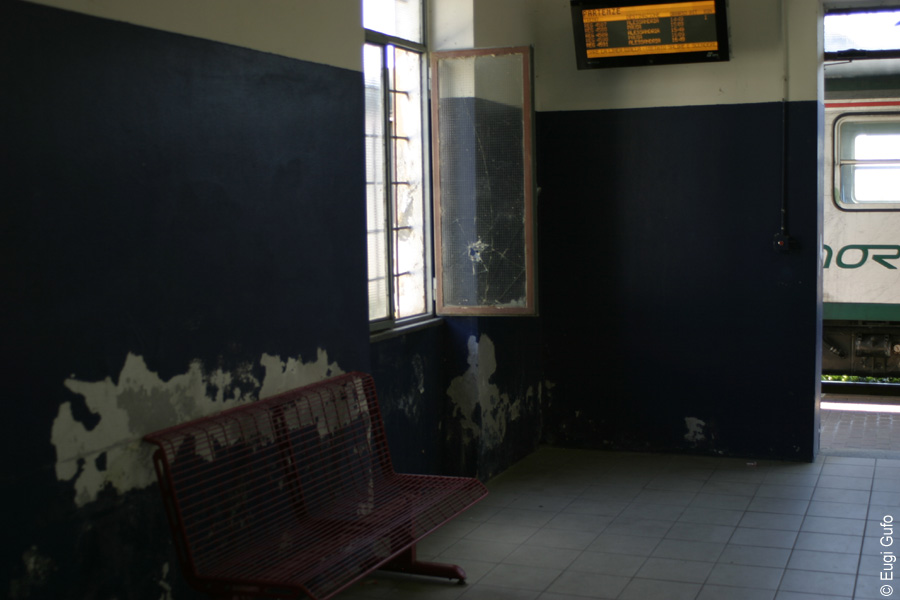
And should one wish to moderate such patriotic enthusiasm, a brief tour inside the station building generally suffices.
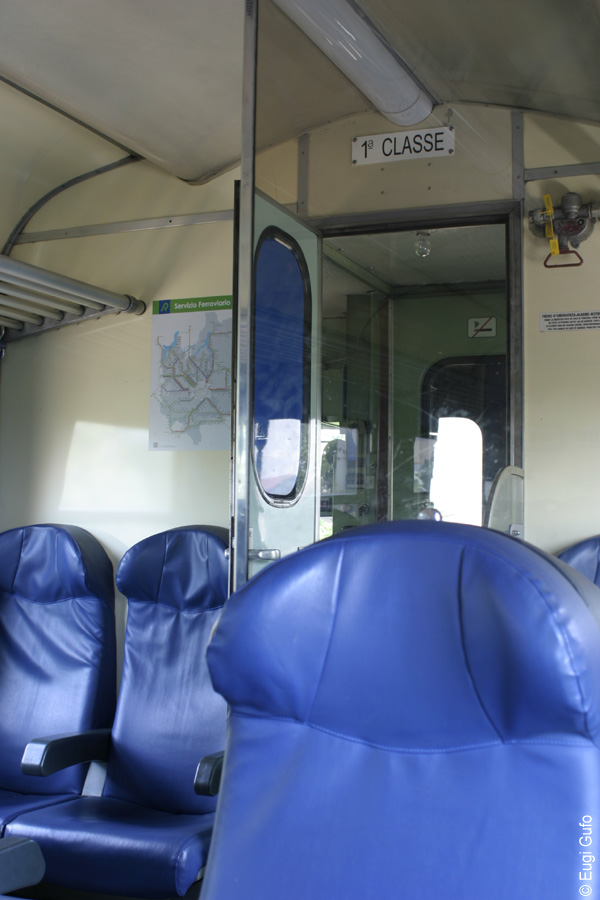
Eventually, a train of no fewer than two carriages arrives.
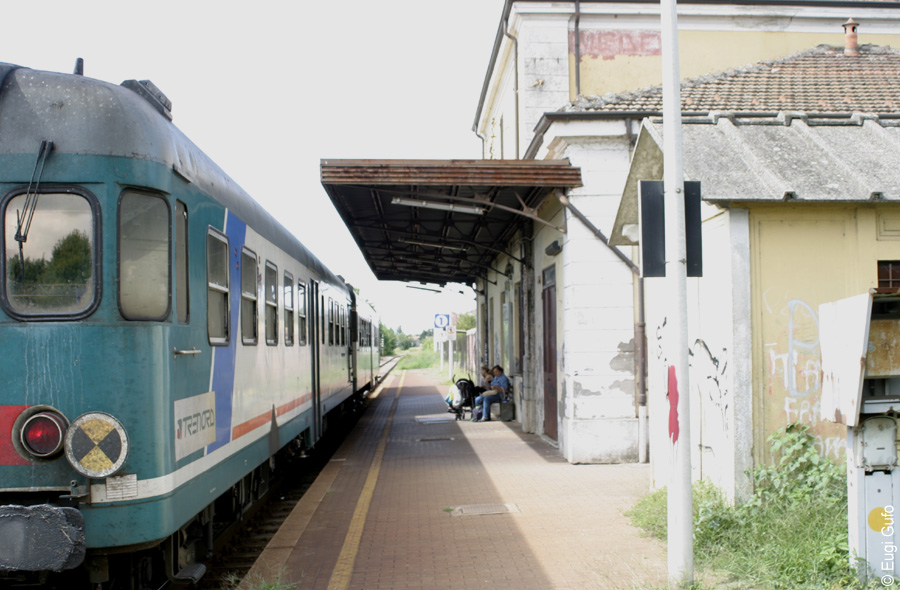
The conductor travels in the driver’s cab and, when stepping out at stops, leaves the door open. In this setting, hijackers appear not to be an operational concern.
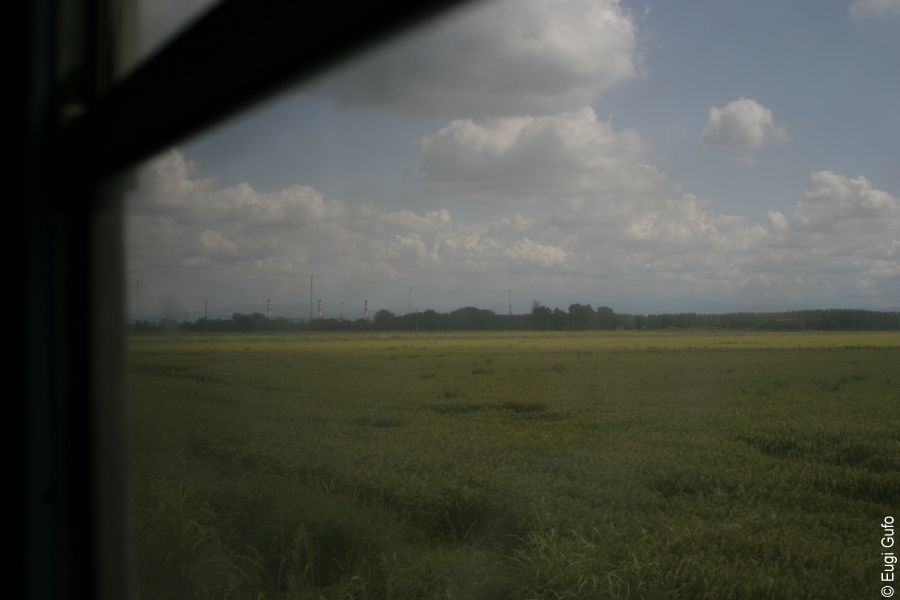
Beyond the window unfold landscapes that might comfortably serve as the cover of an unreleased Pink Floyd album.
Mede, 1 August 2015
↓ Show comments ↓


