


 Long live Ukraine! Fuck the war!
 RSS of site articles
Manerbio is a pleasant little town in the province of Brescia that I visited by chance: after noticing its name on the map, I wondered why I had never happened to hear about it before. Indeed, it is rather strange: among the tiny towns (just over 10,000 inhabitants) of Northern Italy, it is certainly one of the few that are genuinely interesting. At times, it may even be described as beautiful.

Only a few streets are neglected enough to convey that sense of unease typical of a dying and rather pointless provincial town. Yet the overall outlook remains promising.

An interesting urban anomaly of Manerbio: the largest church in the town practically has no square in front of it, only one to the side.

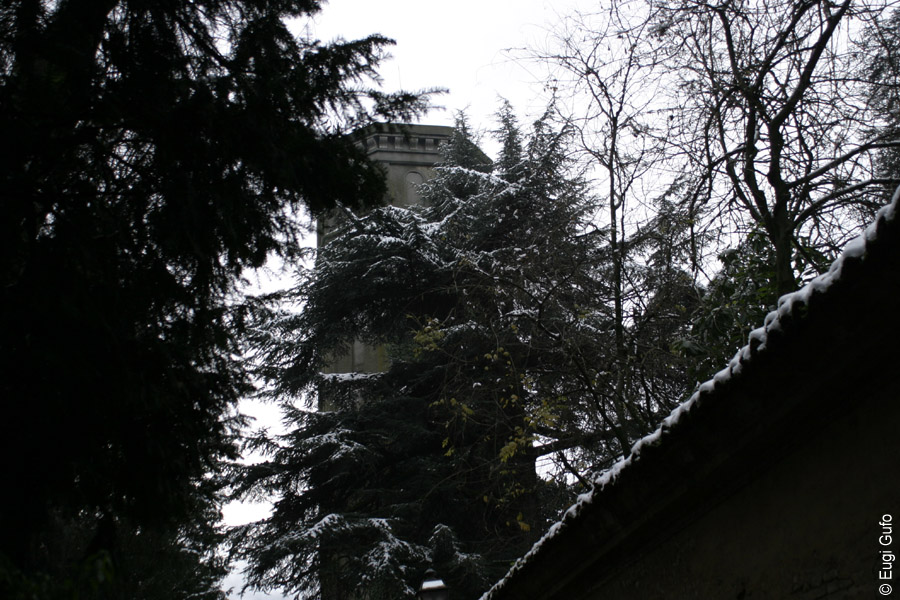
The tower located in the garden of the Town Hall is a rare example of a structure best admired from a distance: its beauty and charm are directly proportional to the distance from the observer’s eyes.
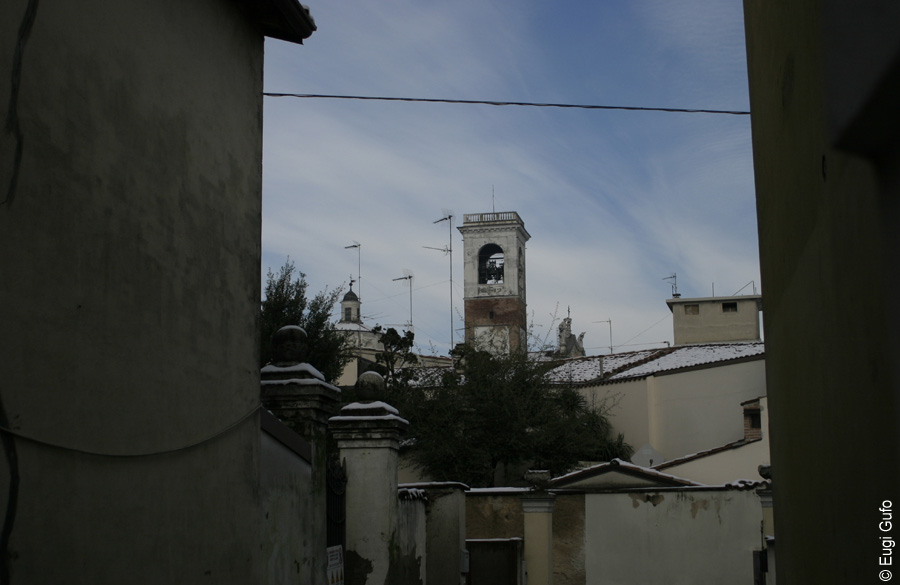
The Bell Tower (17th century), already seen in the previous photographs, is only 40 metres high, yet it is visible from almost every point in the town. I would suggest that the competent officials of the Municipality make use of this fact in promoting Manerbio (the Parisians, for instance, have spread a completely unfounded legend about the alleged universal visibility of the Eiffel Tower).
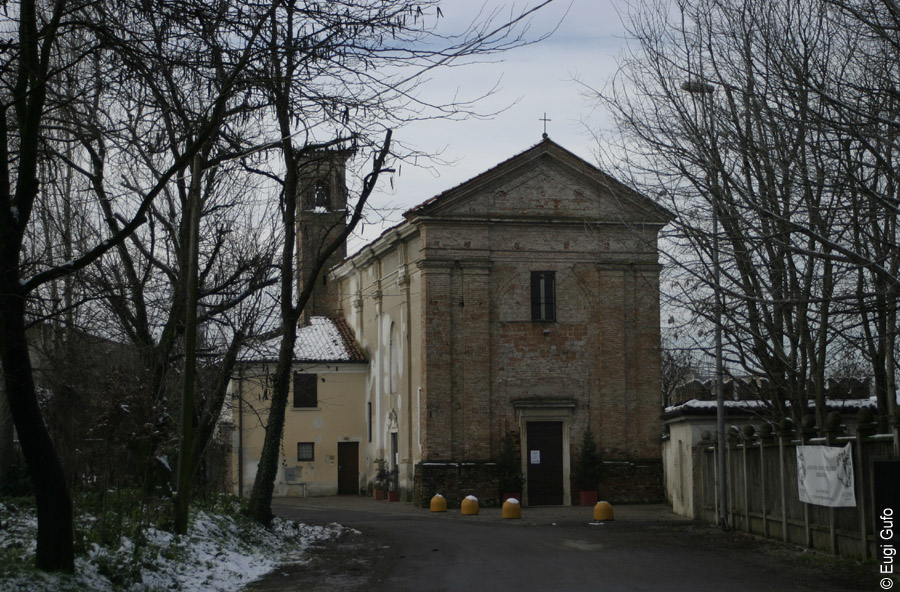
But interesting buildings can also be found on the outskirts of the town.
Churches, however, have stood in their places for centuries. And they will remain there for many more centuries. So let us go and see those things that my readers are unlikely to discover without my assistance. The nativity scene installed in one of the central squares is not a masterpiece from an aesthetic point of view, but it is highly technological: it plays music and its figures move. On the miniature bell tower (the one in a nauseating shade of pink), both the clock and the bell are functional.
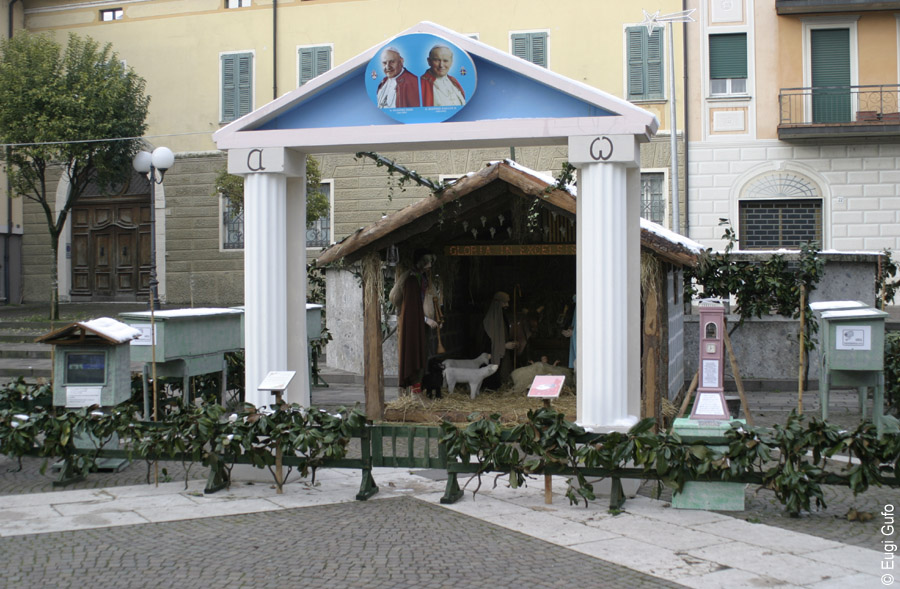
The green-grey boxes you see on either side of the nativity scene are not beehives but mechanised nativity displays: inside there are numerous figurines in constant motion. Each box represents a different biblical scene.

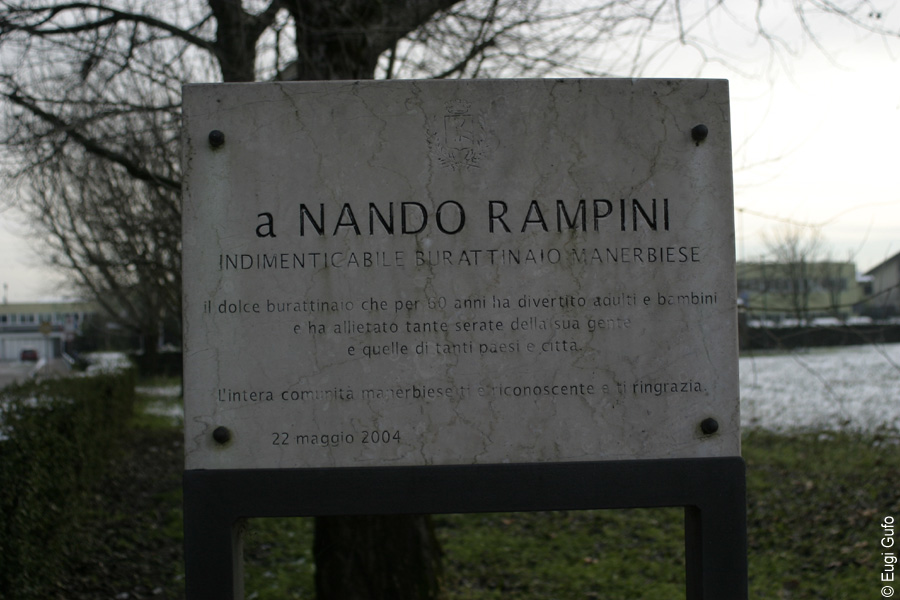
Non-mechanical yet meaningful movement, however, is often more beautiful. Indeed, one of the town’s public parks has been named after the Manerbio puppeteer Nando Rampini, who passed away in 2004. And it is one of the most humanly beautiful plaques I have ever read.
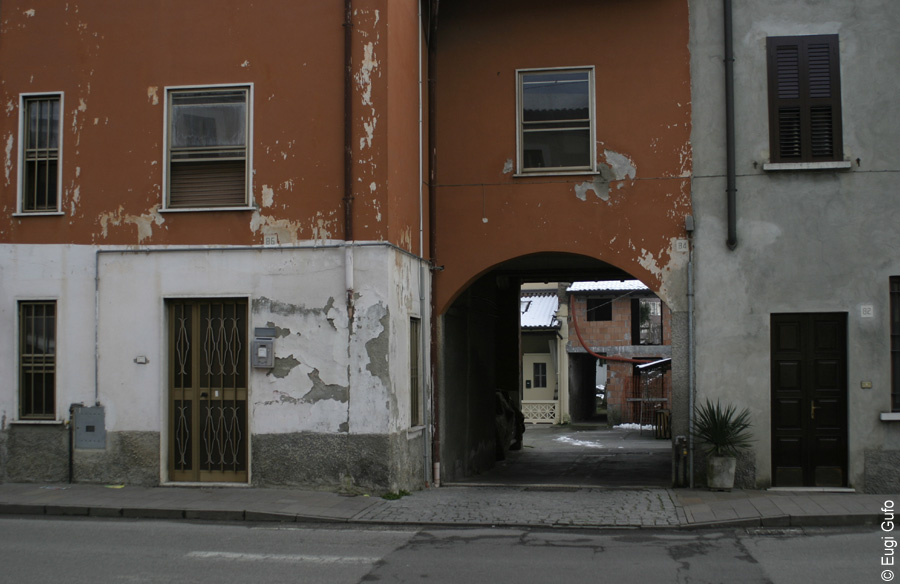
In Manerbio construction is still very active (a sign of growth), yet for some strange reason existing buildings are rarely taken care of (a sign of decline). Strange, very strange…
A rare example of a mini-balcony built for a person who is not flat.

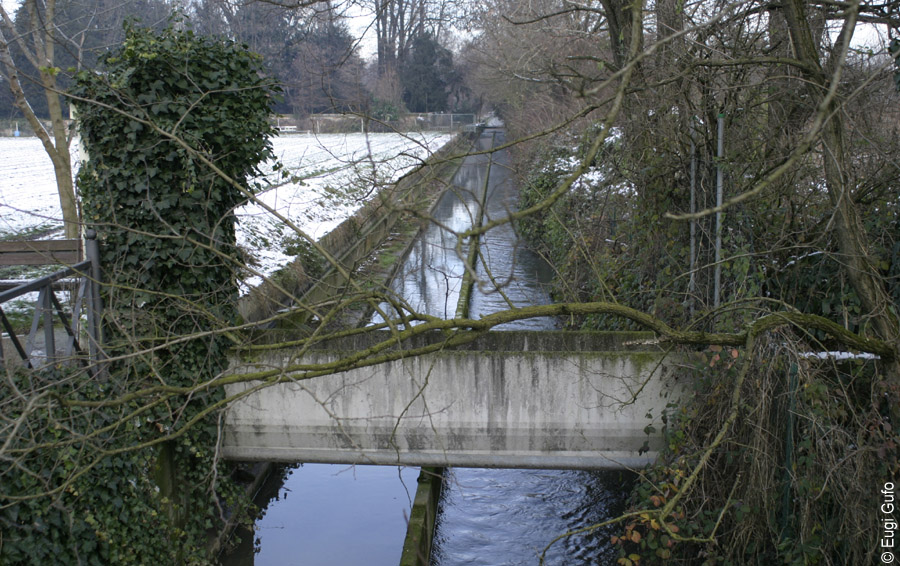
The waterways not far from the centre:
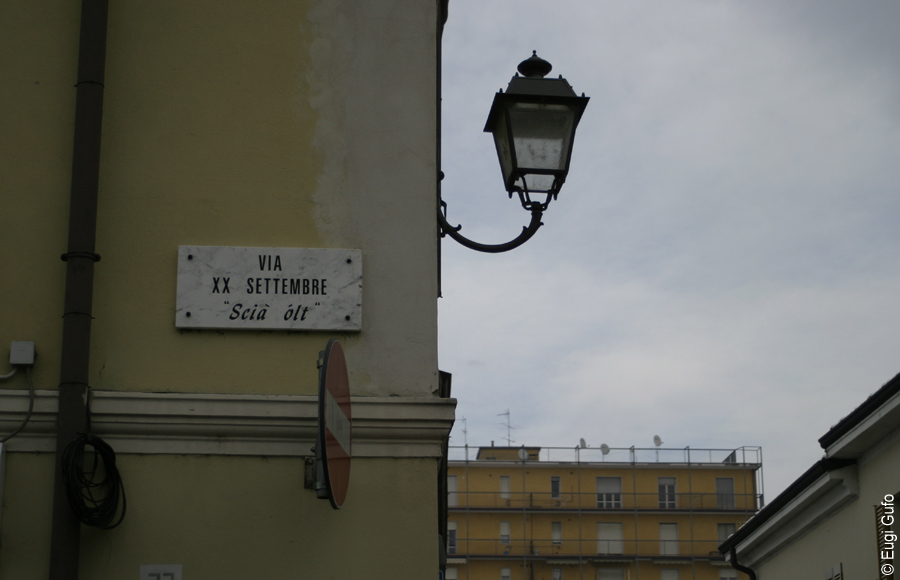
In the historic centre, beneath the street names, incomprehensible inscriptions in cursive are often added. Is this the local dialect? What purpose do these writings serve? What does «Scià òlt» mean?
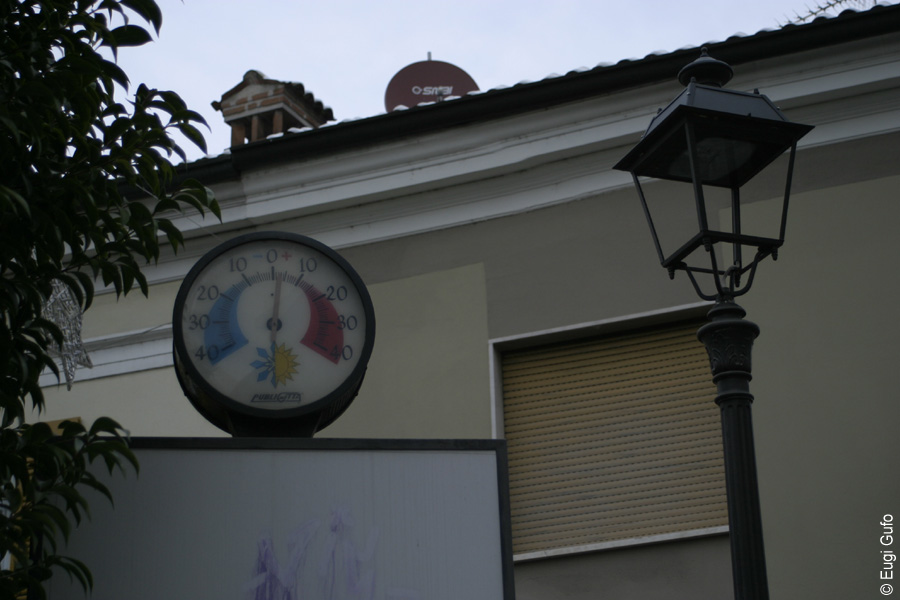
Still in the historic centre, I noticed a fine analogue thermometer. I now invite all municipal administrations around the world to take inspiration from Manerbio and install similar objects along the streets under their jurisdiction.
But the true great peculiarity of Manerbio’s urban design is the presence of four-sided advertising stands. If they remind you of something, you are quite right. But let us proceed in order. The two-sided advertising stands follow the same stylistic approach.
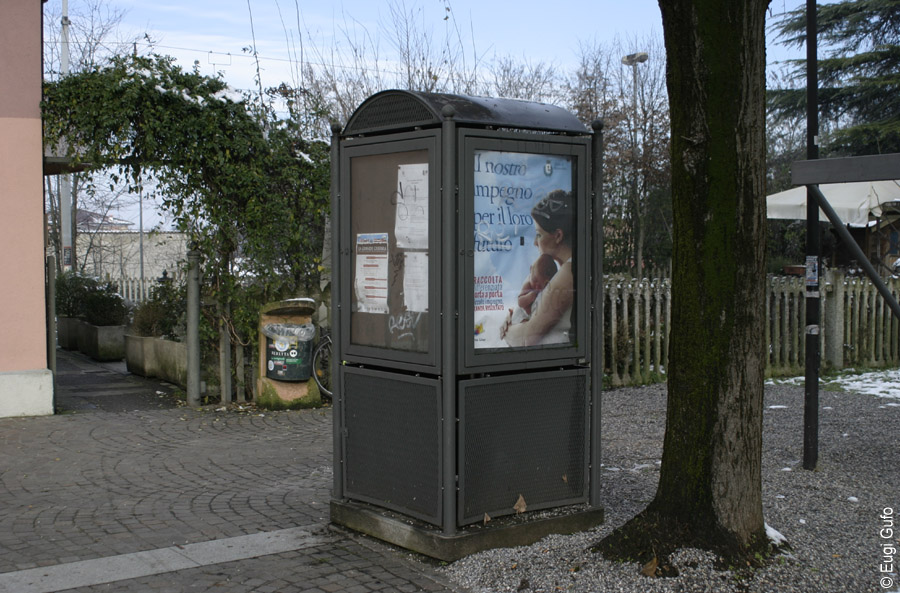
Even some planters for public greenery respect the imposed stylistic unity.

And here we are: the style has been inspired by the model of litter bins widespread in many Italian towns (let us recall, for example, Mantua and Brescia).
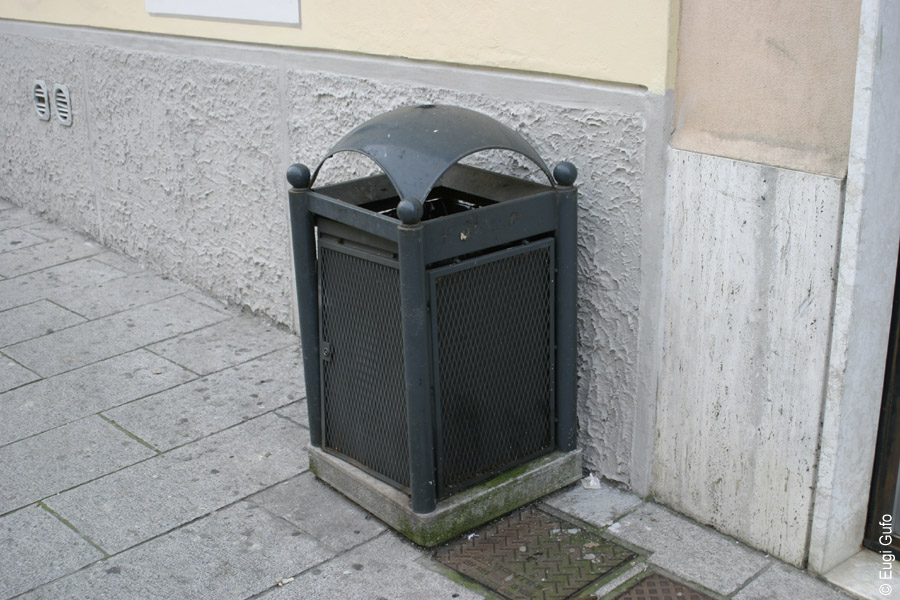
In Manerbio, however, one sees many different models of bins. There are, for instance, the enormous ones (about 1.6 metres high): they stand in groups of three and are often placed next to residents’ refuse containers.
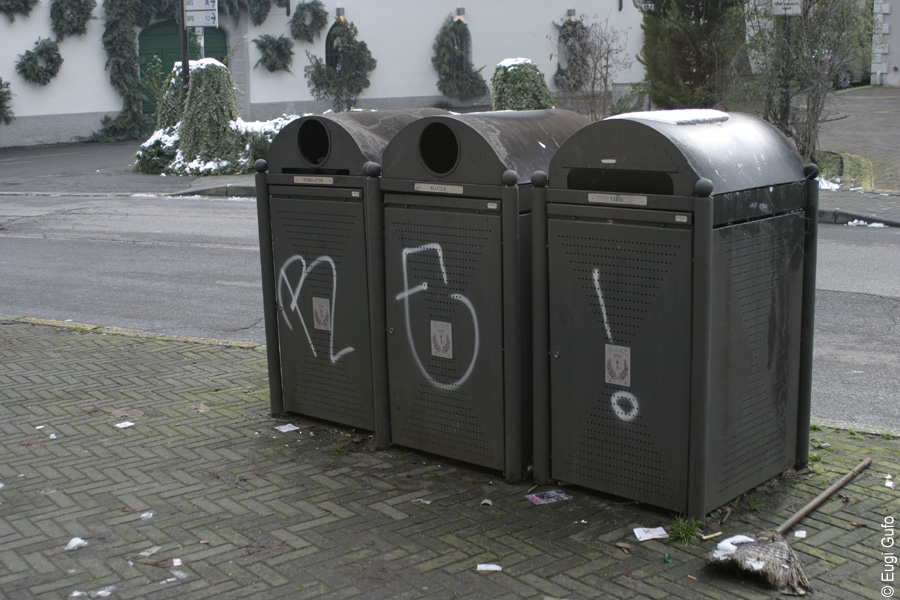
On the outskirts of the town I saw a small litter bin with a little roof (suggest a more appropriate term!). I may have seen something similar somewhere before, but I really cannot remember where.
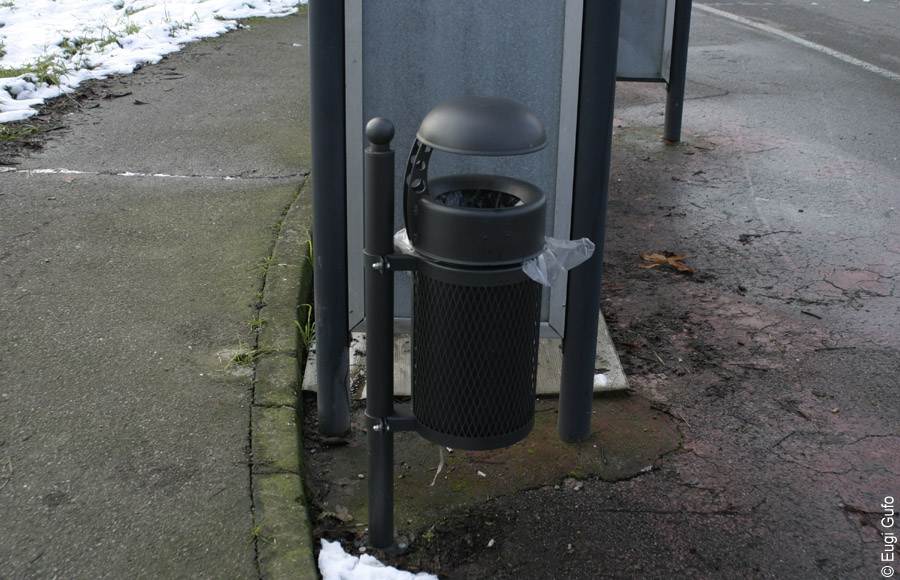
Another extremely interesting model of litter bin (and one I had never seen before) was noticed near the railway station. I suggest you look not only at the roof, but also at the curious use of two interlocking concrete elements.

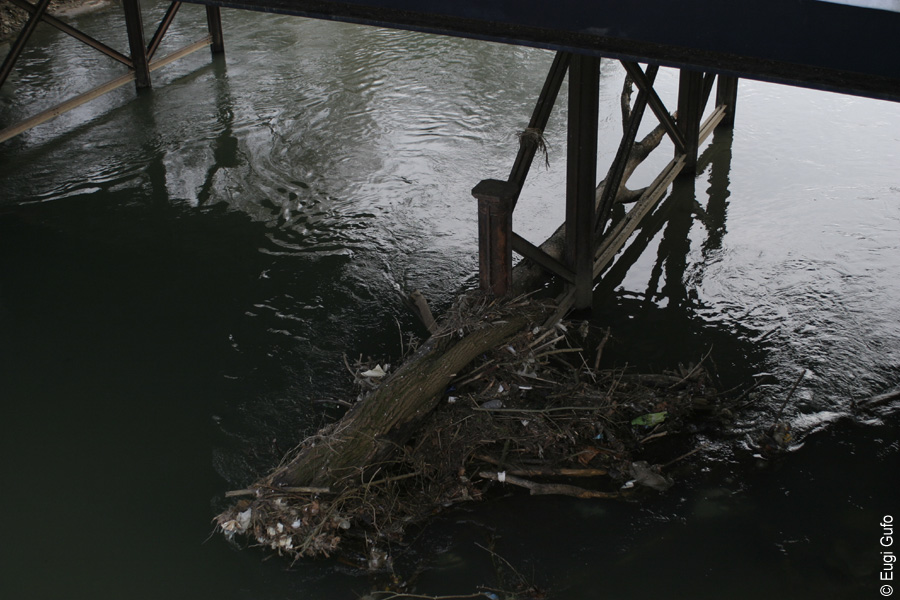
Bulky waste, however, ends up in the River Mella.
Paper letters (?!), on the other hand, end up in post boxes fixed to poles with gilded ends. Yes, it is indeed true that there is no limit to bad taste: as in Chiari, road signs in Manerbio are set in gilded frames, but the postal box version is a local invention.

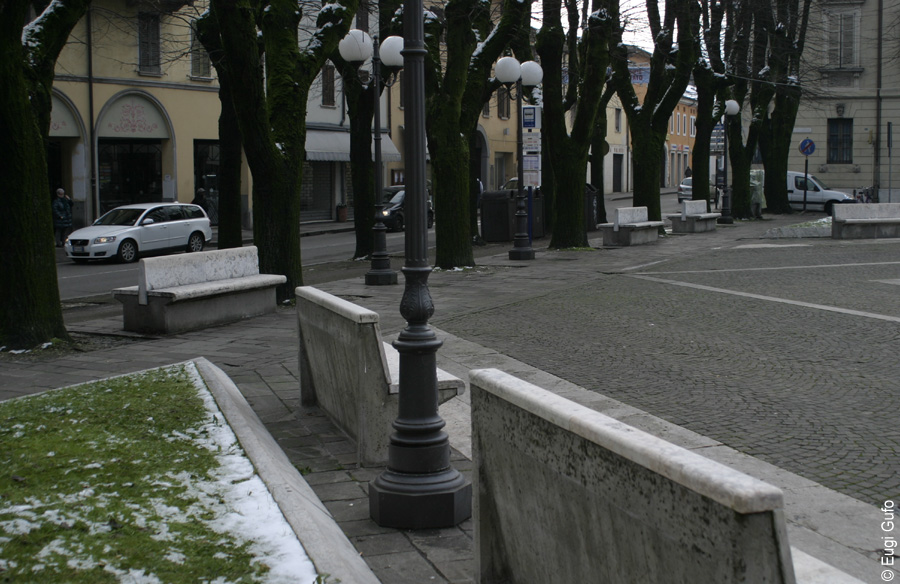
In the squares of the historic centre there is no shortage of benches, some of which are made «bilateral». Marble benches have one great advantage that saves the Municipality money (they are durable) and one great drawback that makes them almost unusable for people (they are very cold in winter and very hot in summer).
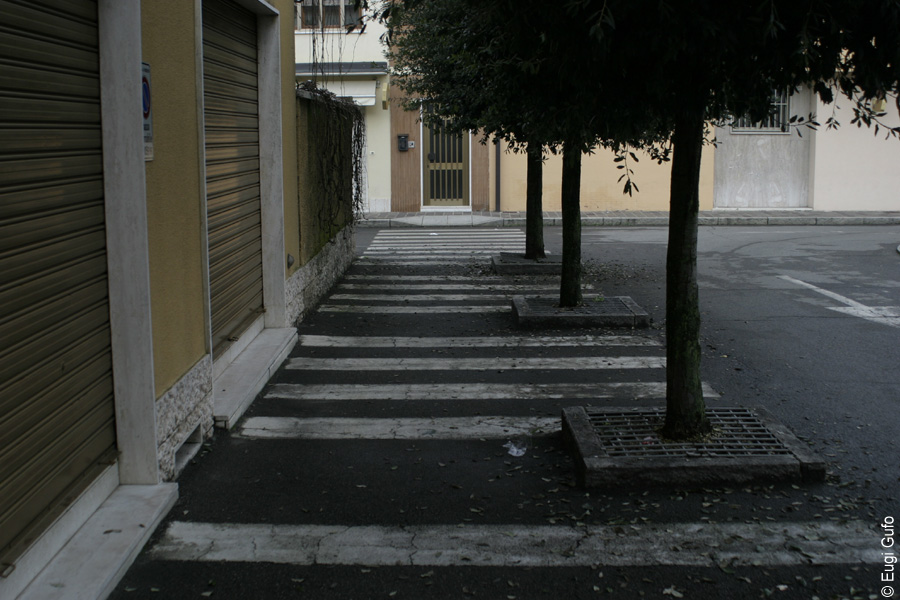
Workers passionate about their job simply could not stop painting the lines…
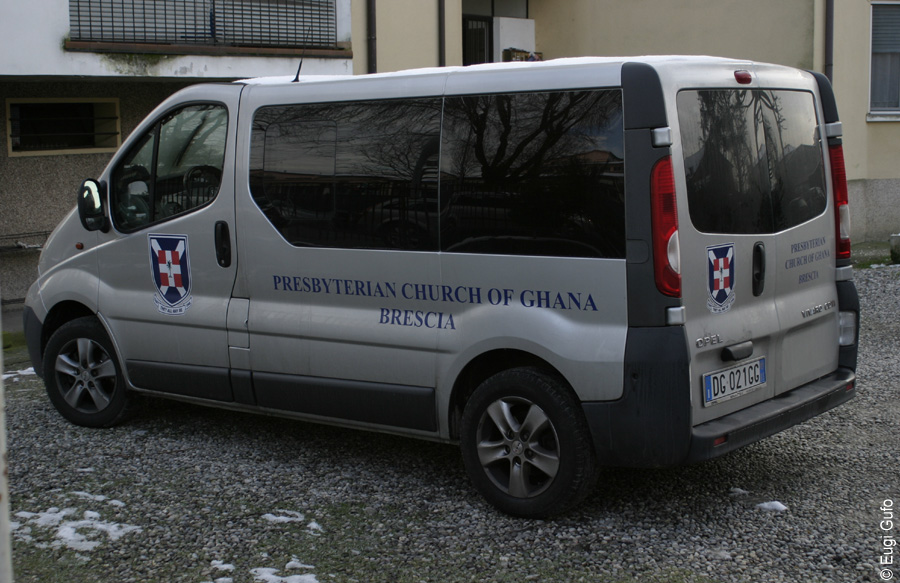
I did not know that the Presbyterian Church of Ghana was so rich in followers as to require a branch in Italy. Or have they all already relocated?
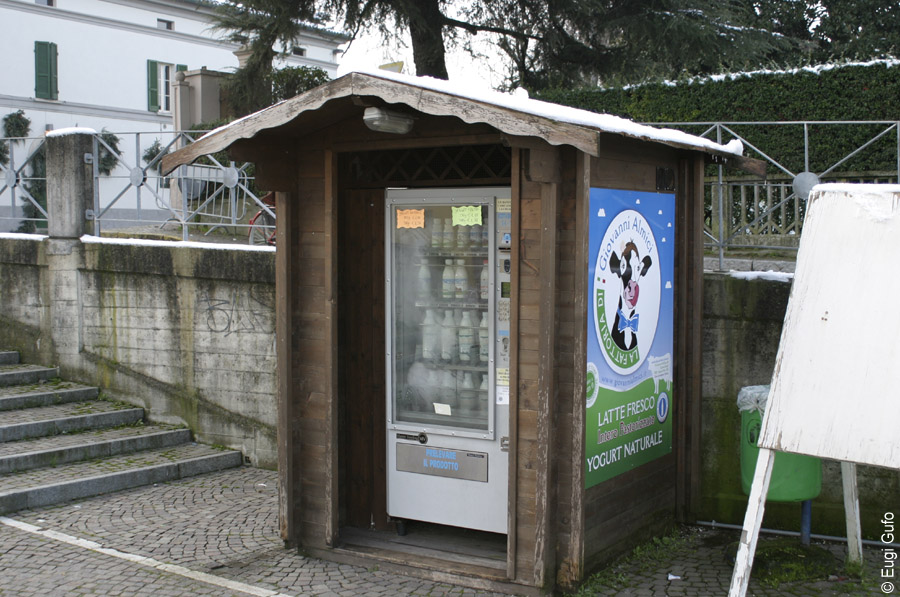
In Manerbio, as in almost all small Italian towns, it is easy to find a fresh milk vending machine (see the example of Treviglio). But this is the first time I have seen one installed inside a garden shed. Well… fair enough.
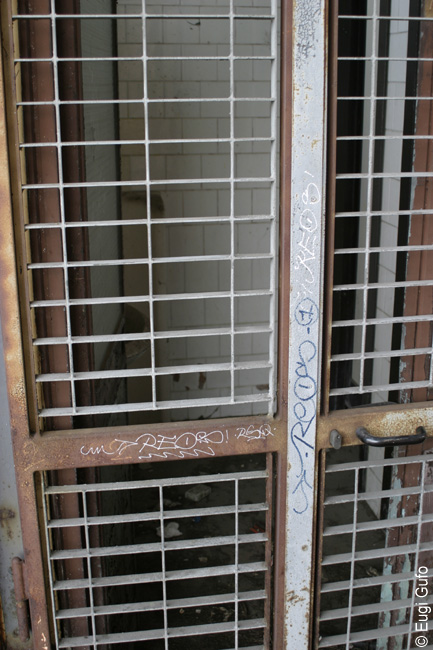
There is nothing particularly interesting left in present-day Manerbio. The last detail worthy of attention was discovered a few minutes before departure from the local railway station. It is important that you know this: the station WC is locked and appears to have been so for several decades; on the floor there is a layer of dust and small debris several centimetres thick.
Manerbio, 20 December 2015
↓ Show comments ↓


