


 Long live Ukraine! Fuck the war!
 RSS of site articles
In practice, there are relatively few situations in which one might reasonably expect something remarkable from a semi-unknown small municipality. One such situation occurs when said municipality happens to be located in an attractive natural setting. This tends to make it appealing — if not vaguely prestigious — as a holiday destination. As a result, capable and financially motivated residents arrive and make the decisive investments.
That is more or less what happened in Lierna, a town of just over two thousand inhabitants on Lake Como.
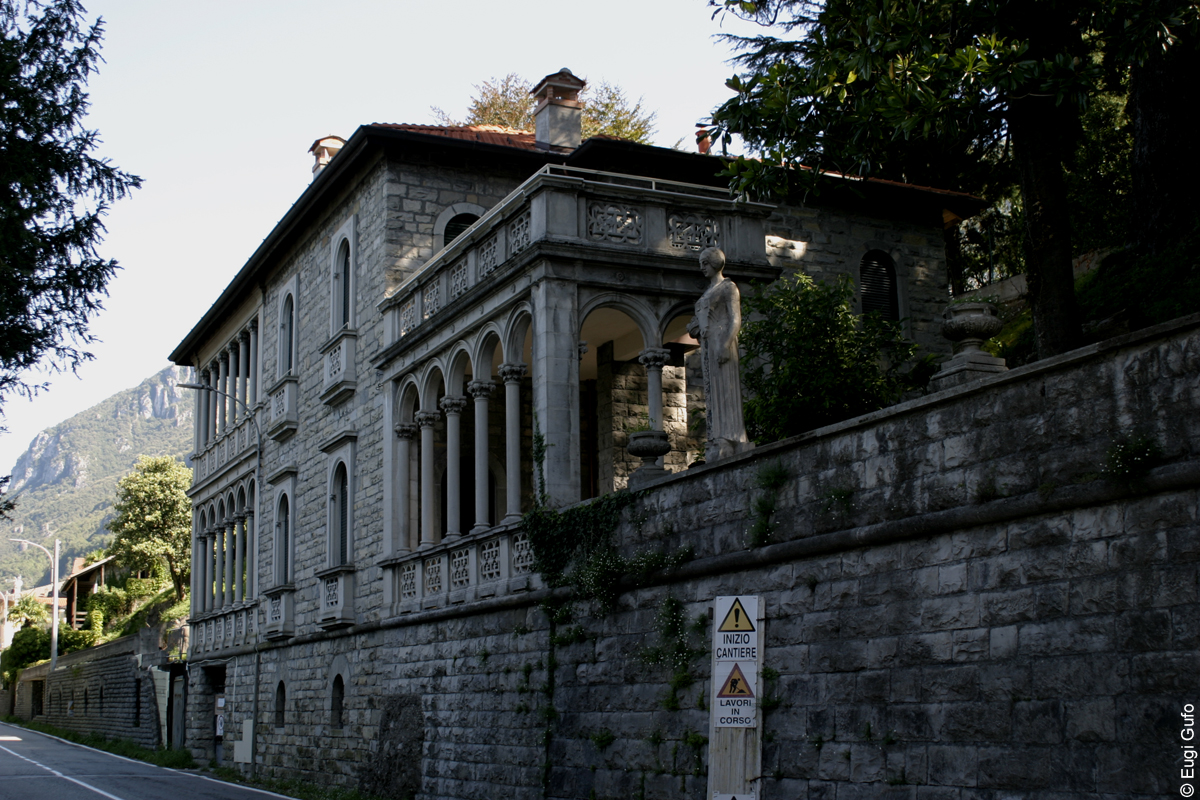
Architecturally speaking, Lierna is reasonably interesting. One finds numerous residential and commercial buildings — from various periods and in various styles — that are genuinely worth observing.
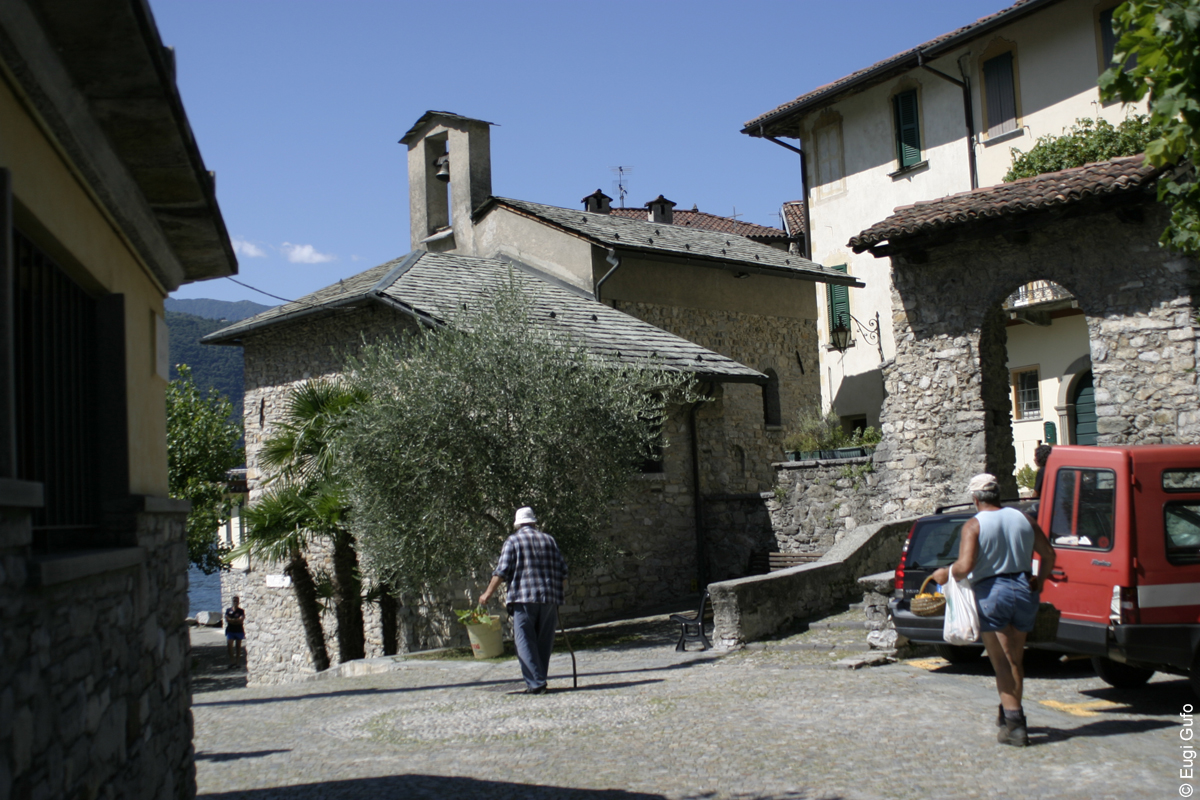
The local castle — of Romanesque origin — is nowadays almost unrecognisable as a castle. After losing its military relevance (sometime after the mid-16th century), it gradually transformed into a residential and commercial cluster. Only the most attentive visitors, approaching closely and squinting with determination, will notice the few fortified elements that have survived more or less by accident.
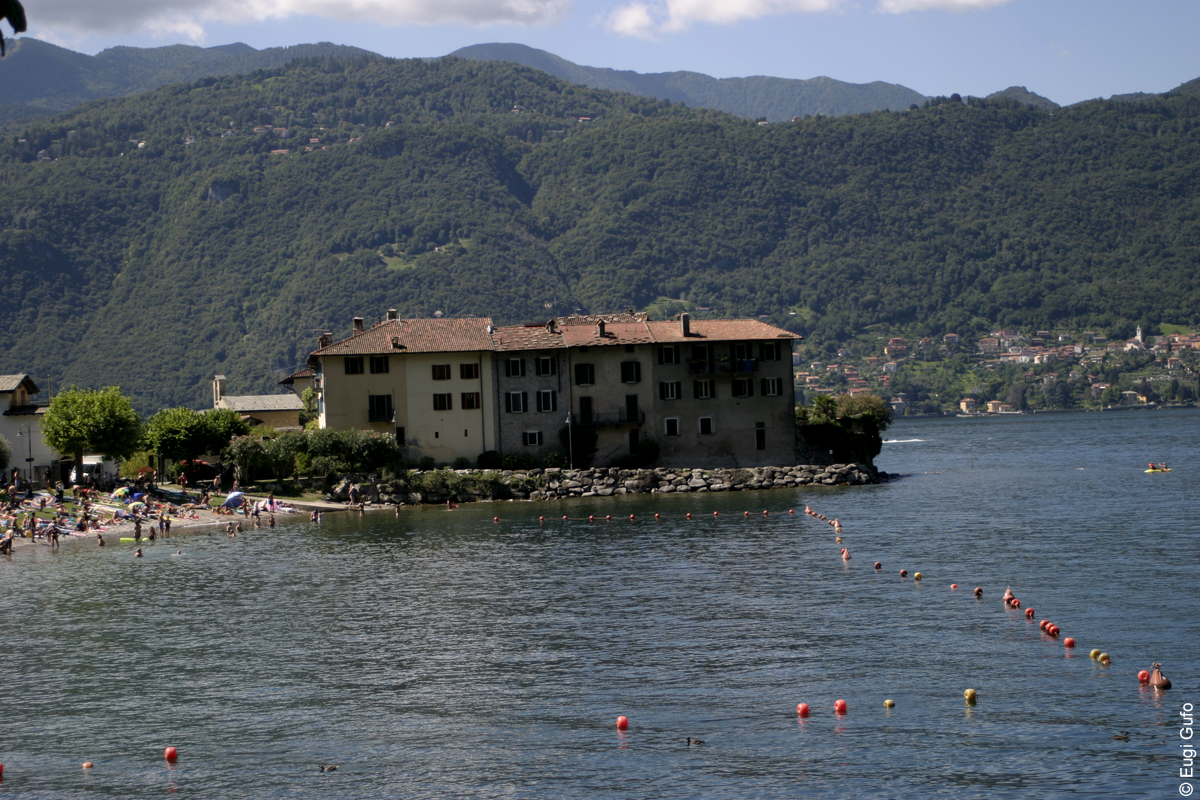
From a distance, the former castle now looks like a slightly detached section of the historic centre. Where a naval military base stood in the 15th and early 16th centuries, one now finds a rather popular public beach. History moves on.
As usual, religious architecture is well represented — both quantitatively and qualitatively. Some churches appear unremarkable at first glance (for example, the one dedicated to Saint Bernard), yet are equipped with curious technological elements. One hopes these are not used to broadcast Sunday meetings live across the entire neighbourhood.
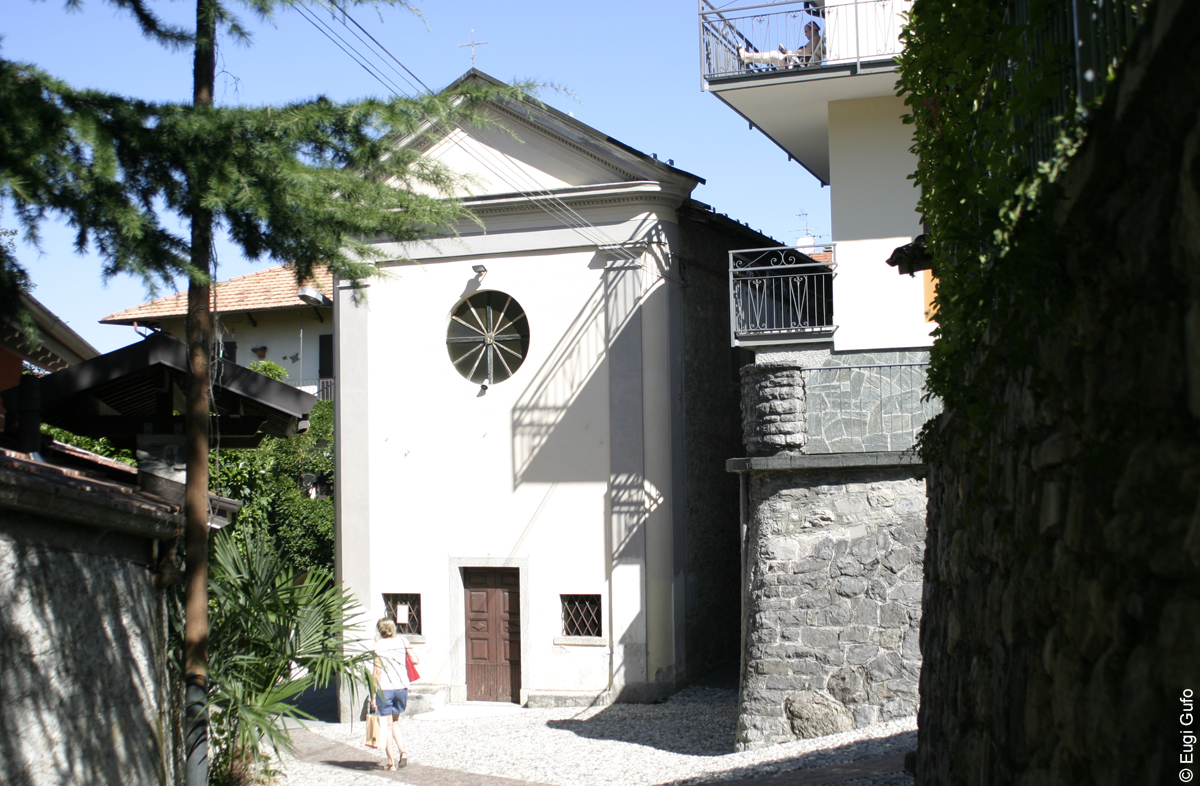
The most interesting church in Lierna — inside and outside — is the one dedicated to Saint Ambrose, built at the beginning of the 17th century on the foundations of an 11th-century religious structure. Its dedication makes sense historically: in the early Middle Ages, Lierna belonged to the Milanese monks of the Basilica of San Dionigi (now no longer in existence), and thus depended on the Archdiocese of Milan.
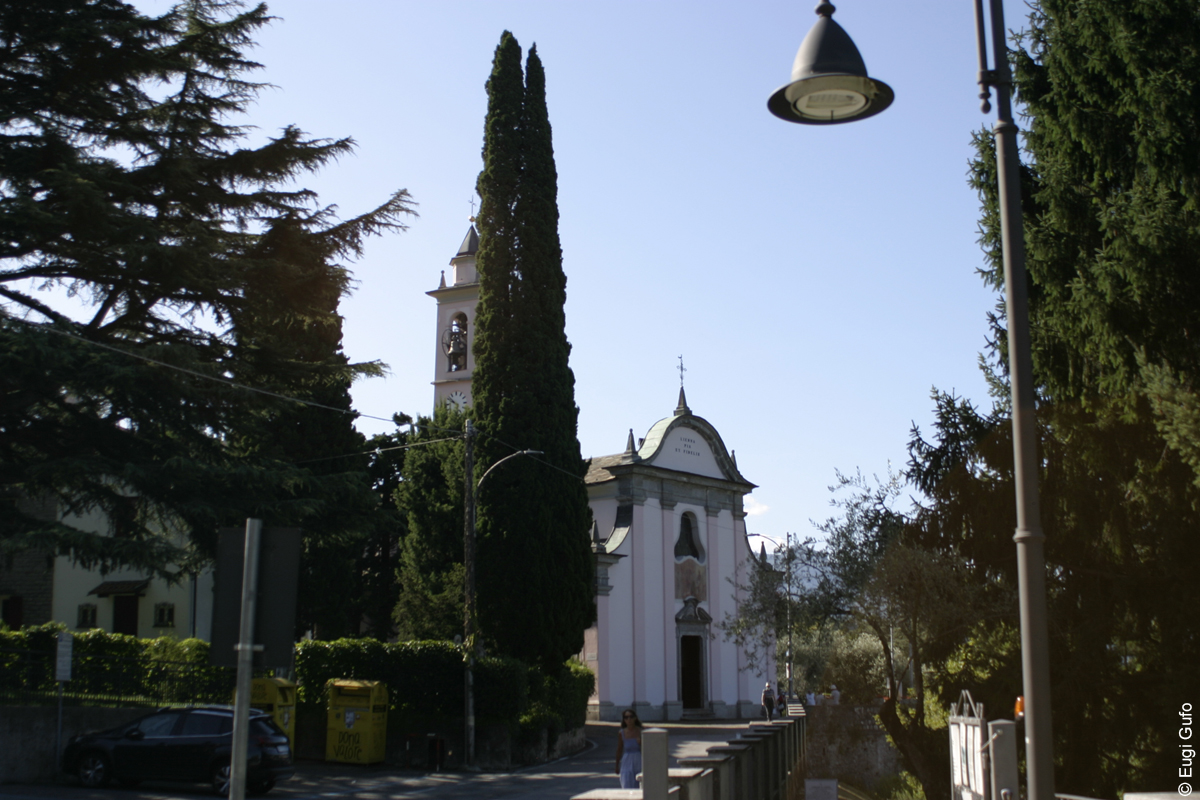
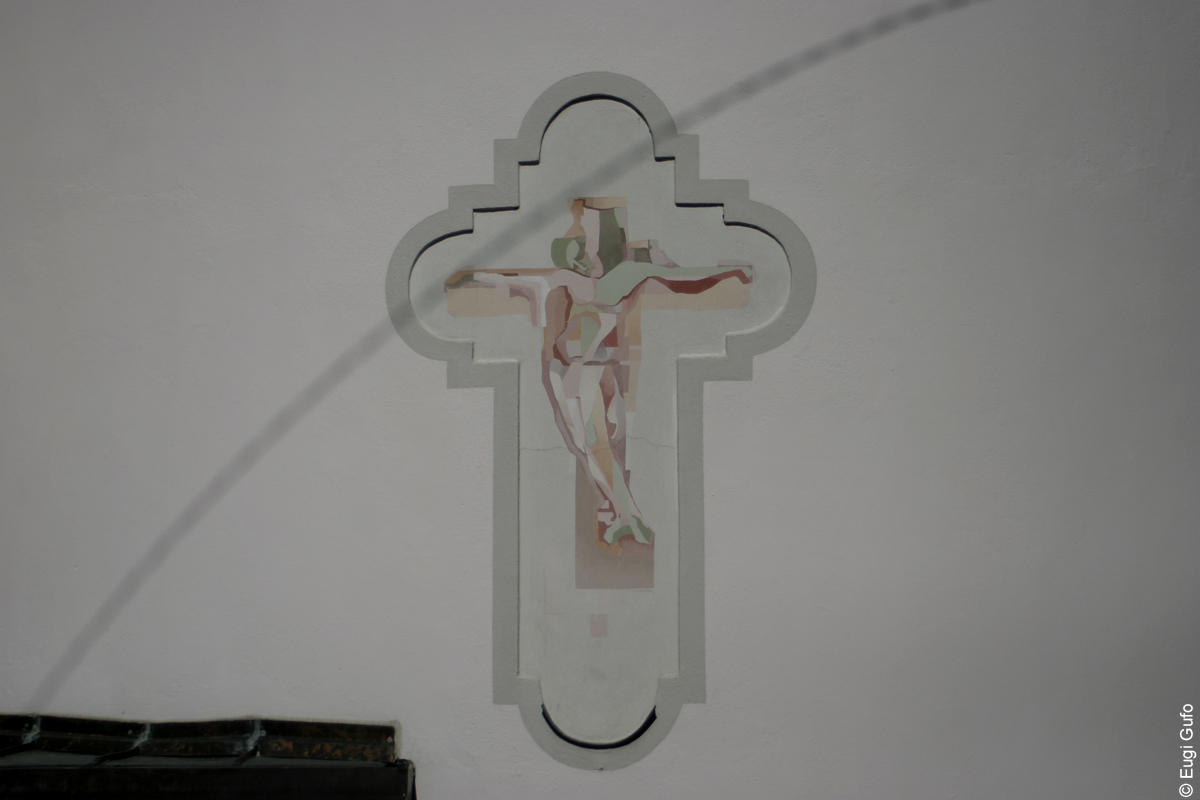
It is worth walking around the back of the building, especially the corner far from the baptistery: there you will find a surprisingly unusual fresco, stylistically speaking, for an Italian church.
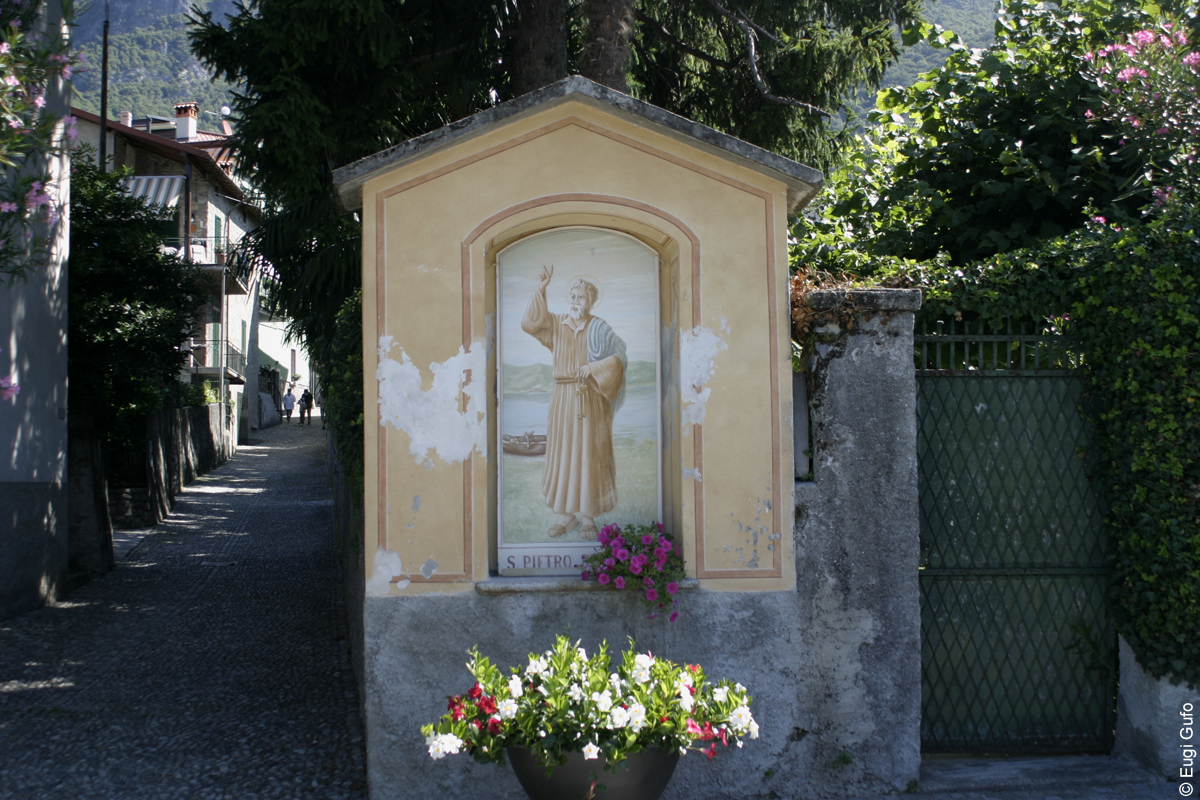
More generally, I must admit I was slightly surprised by the high number of chapels scattered around Lierna — often «incorporated» into other types of buildings. Most of them, however, did not appear to possess particularly outstanding artistic value.
The only genuinely striking chapels are the fourteen containing bronze (?) representations of the Via Crucis. They line the road that begins near the Church of Saint Ambrose and leads toward the cemetery.

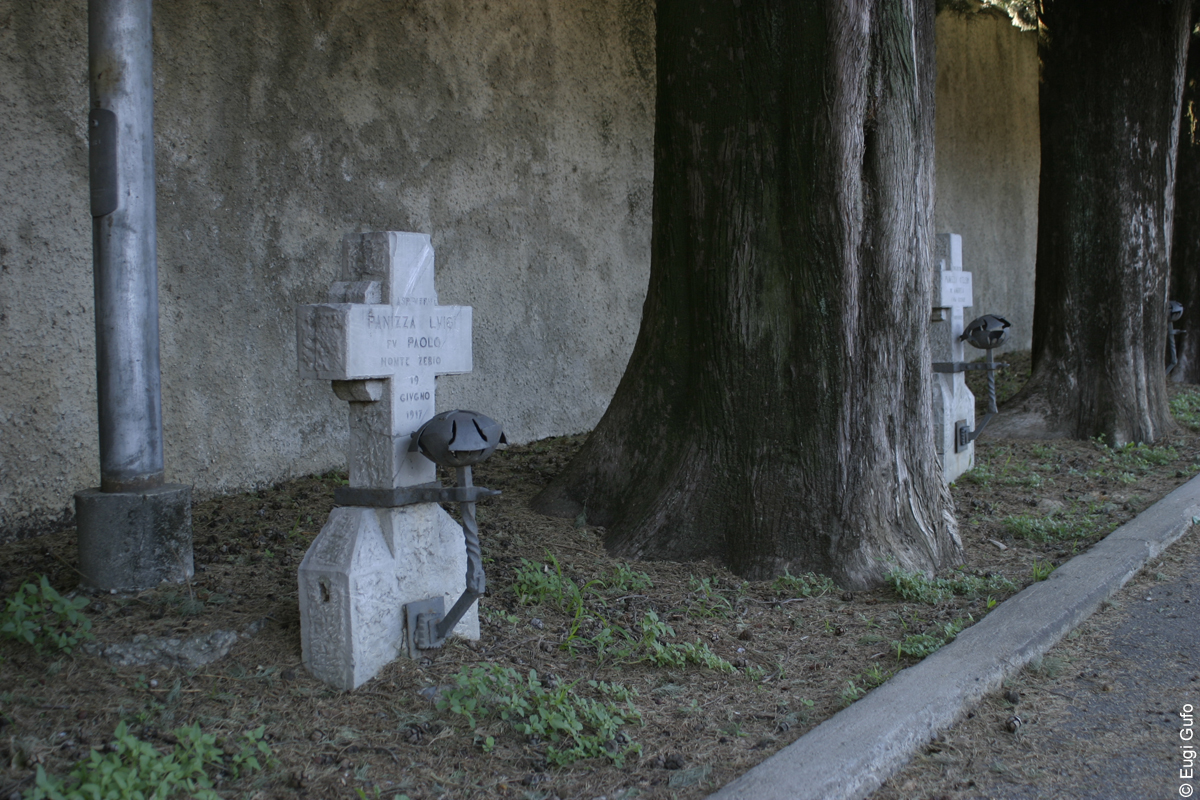
Like many Italian cemeteries, Lierna’s could easily be visited as an open-air museum of commemorative sculpture. However, I would like to point out something else. Outside the cemetery, along the perimeter wall, there is a row of tombstones dedicated to those who fell in the First World War. The stylistic coherence is unmistakable — and perhaps particularly suited to military remembrance.
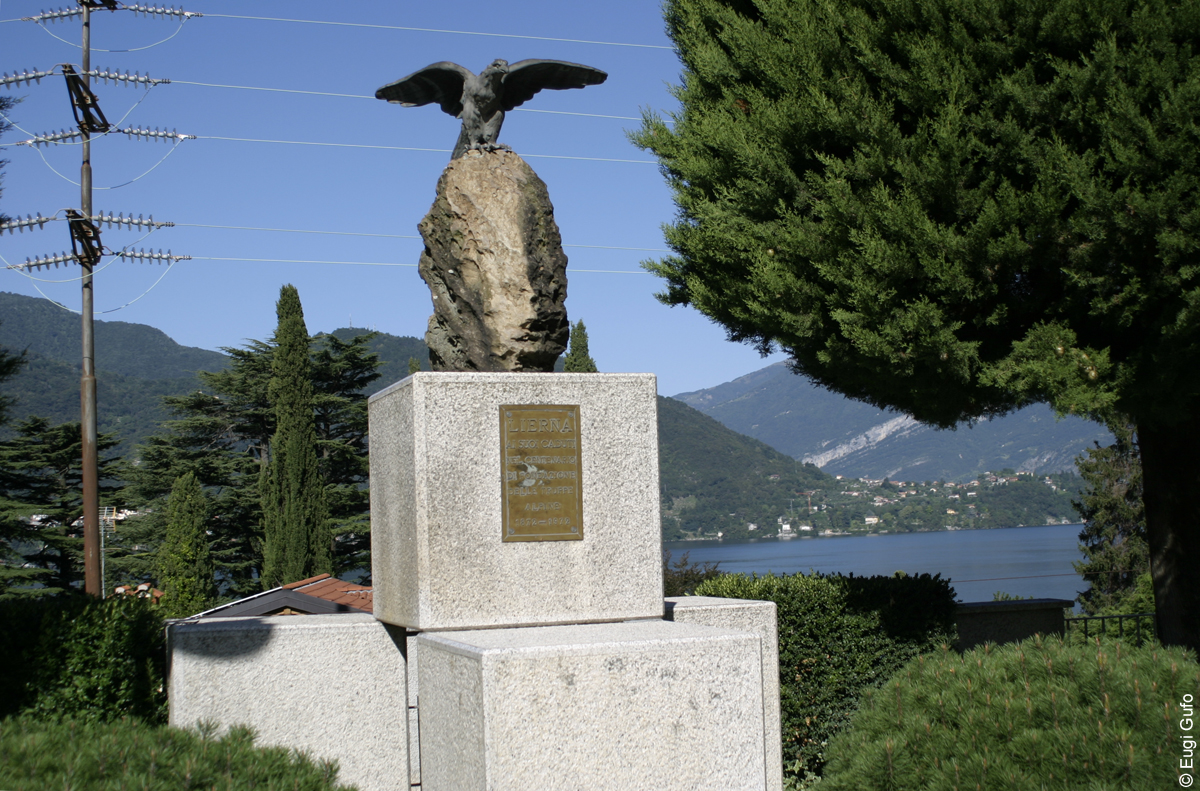
The inscription on the memorial plaque reads: «Lierna to its fallen on the centenary of the founding of the Alpine troops 1872–1972.» The monument also provides an unintended lesson in public-space planning: at present, the eagle appears somewhat entangled in electrical cables.
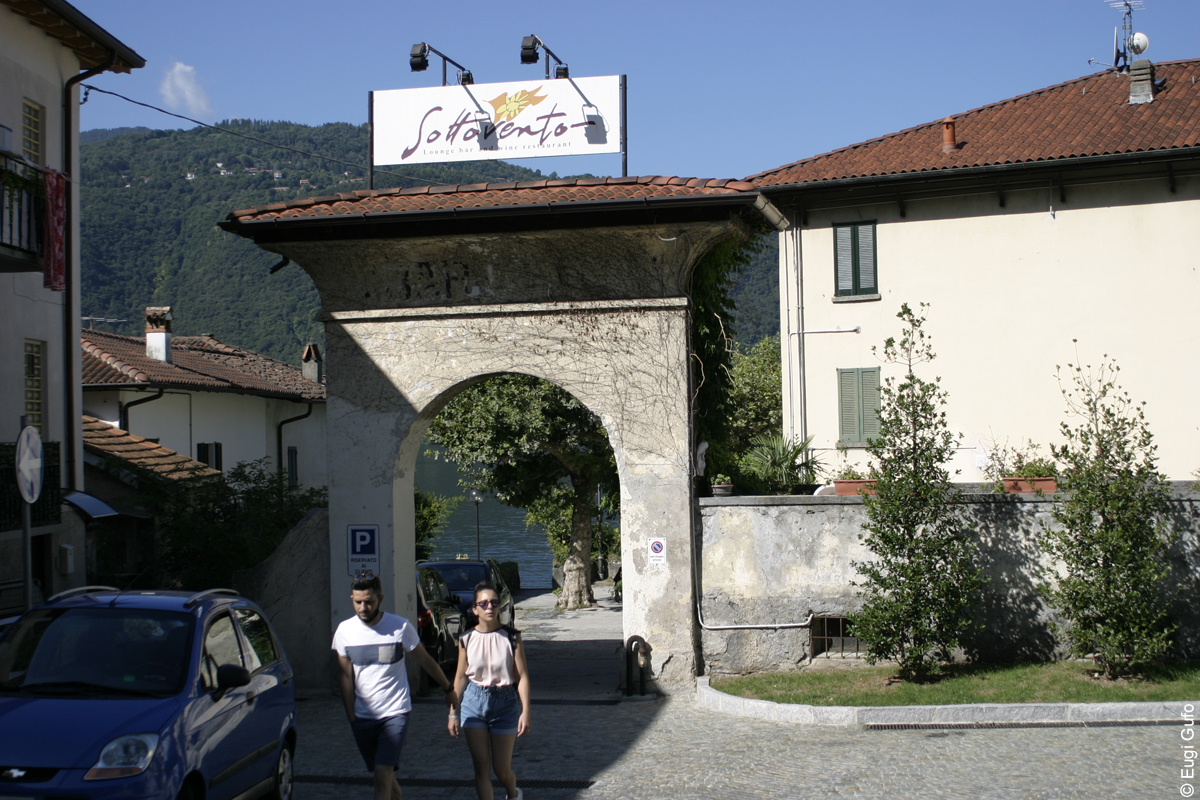
The most interesting streets and alleys in Lierna, somewhat mysteriously, always lead toward the lake. Even when, initially, they appear to be heading elsewhere.
This may be the first time I have seen a lighthouse on the shore of a lake (or at least I do not recall encountering one before). I sincerely hope it is indeed a lighthouse — albeit a rather technically modest one.
Many of the streets leading toward the lake do not end in a conventional promenade but in small beaches — often only a few metres wide — squeezed between houses and/or private fences. All the micro-beaches I encountered (by accident, of course) appeared to be public. They were generally clean and quiet, though perhaps slightly unconventional for the average Italian visitor: often pebbly or grassy. I therefore observed very few users.
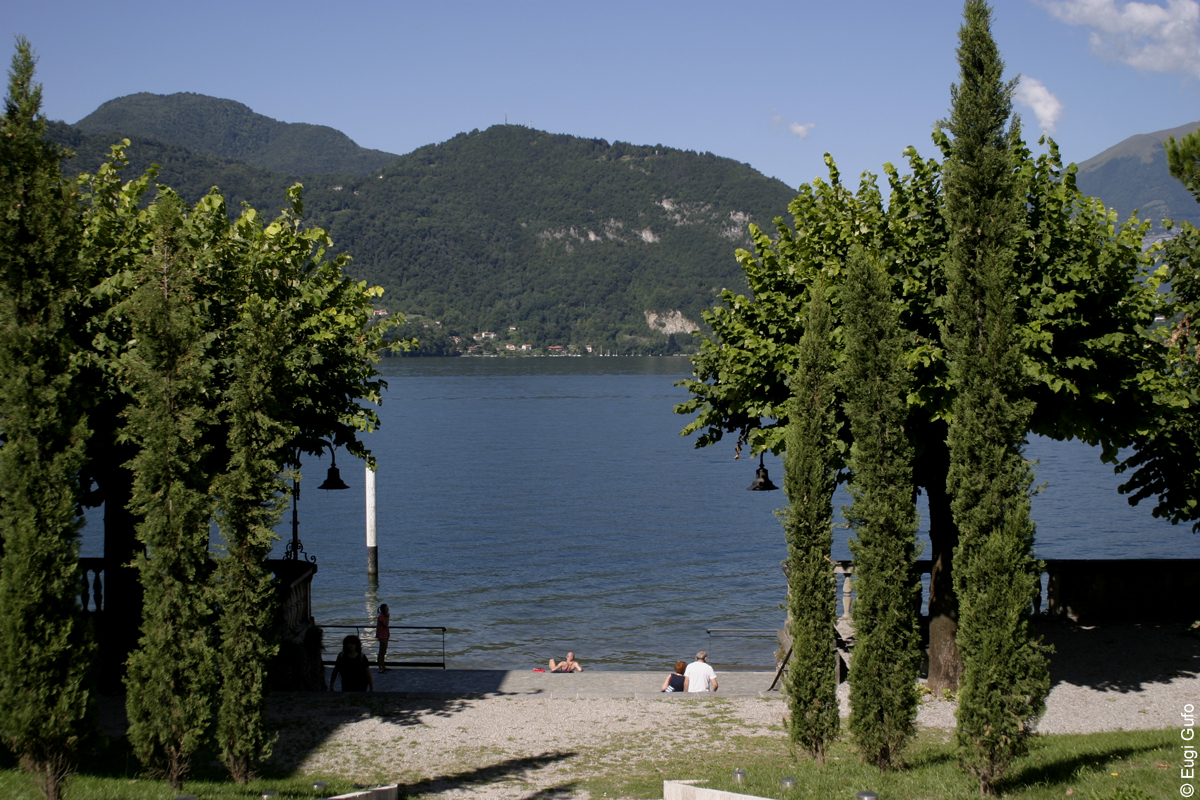
The second major peculiarity of Lierna’s lake access is the near total absence of a traditional lakeside promenade. Until now, I have mostly visited places where the waterfront consists of a long pavement lined with cafés, restaurants, shops — and frequently a road for cars. In Lierna’s historic centre, however, most of the lakeside is essentially a well-maintained linear park. Not particularly deep, not botanically adventurous, but with a respectable amount of shade and benches.
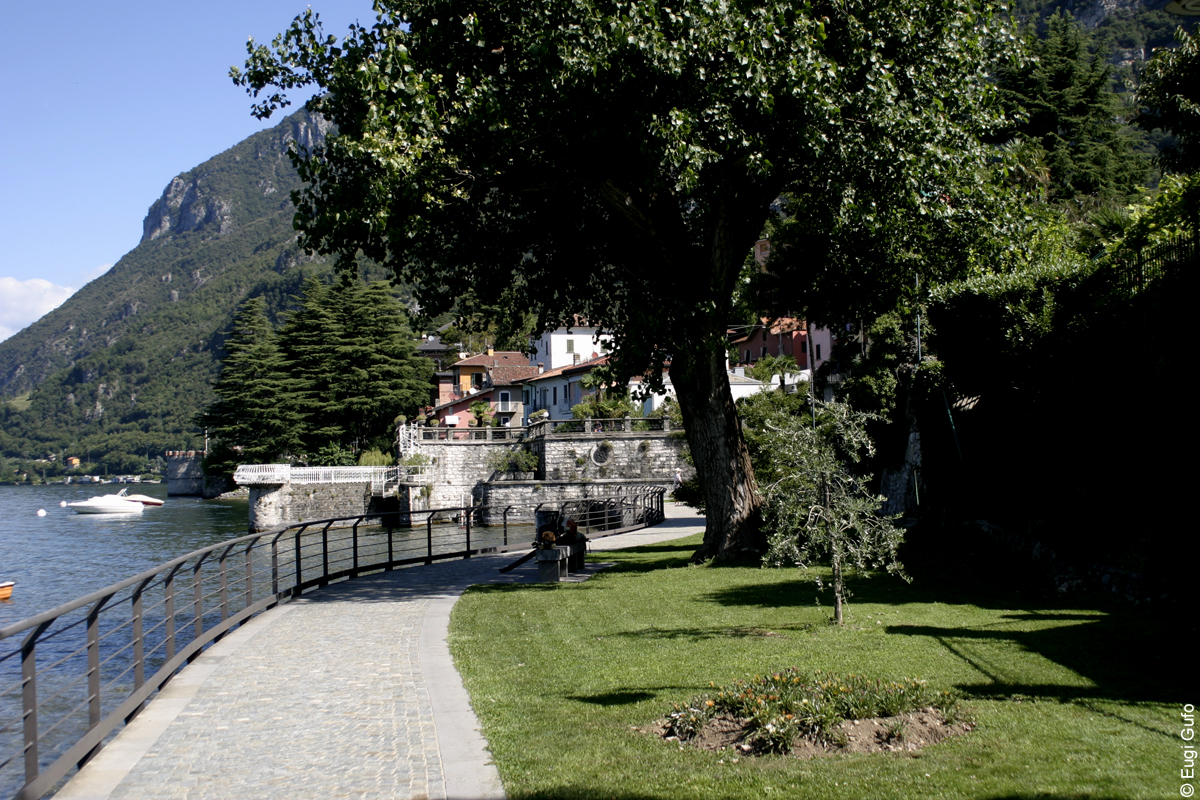
Any point along the lakeside is suitable for contemplating Lake Como.
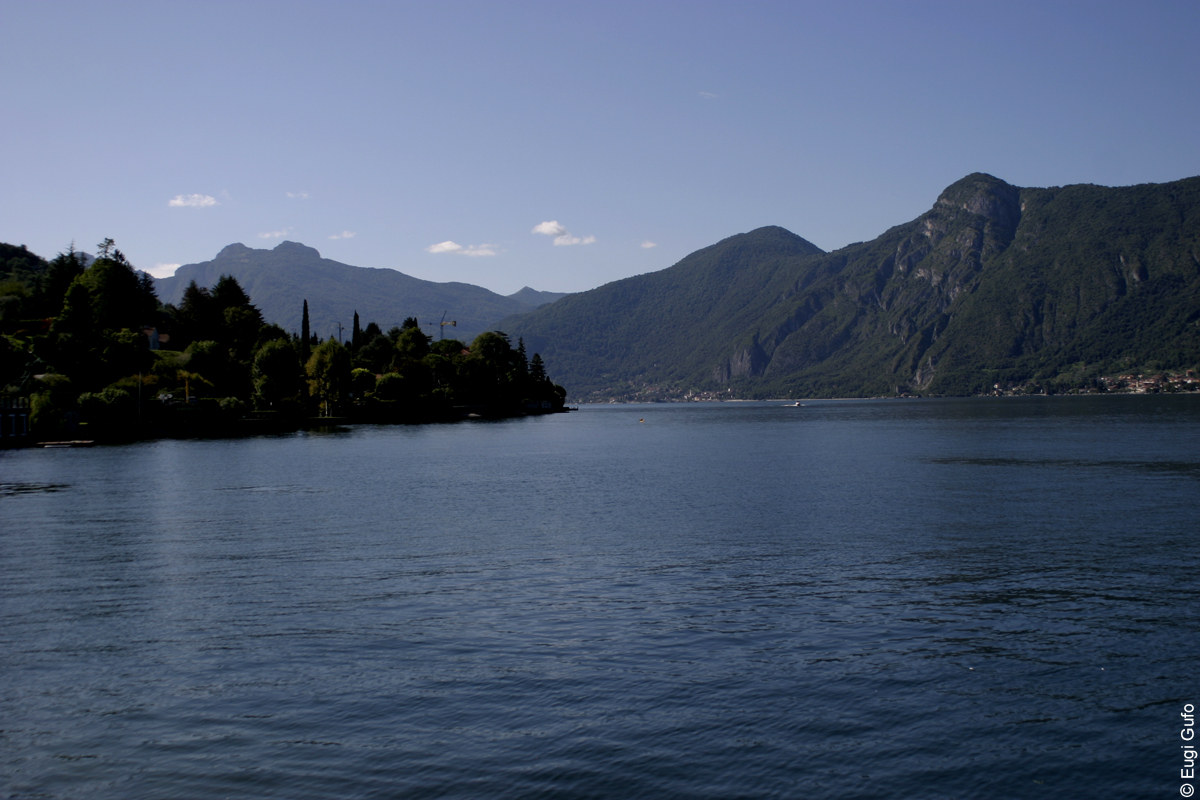
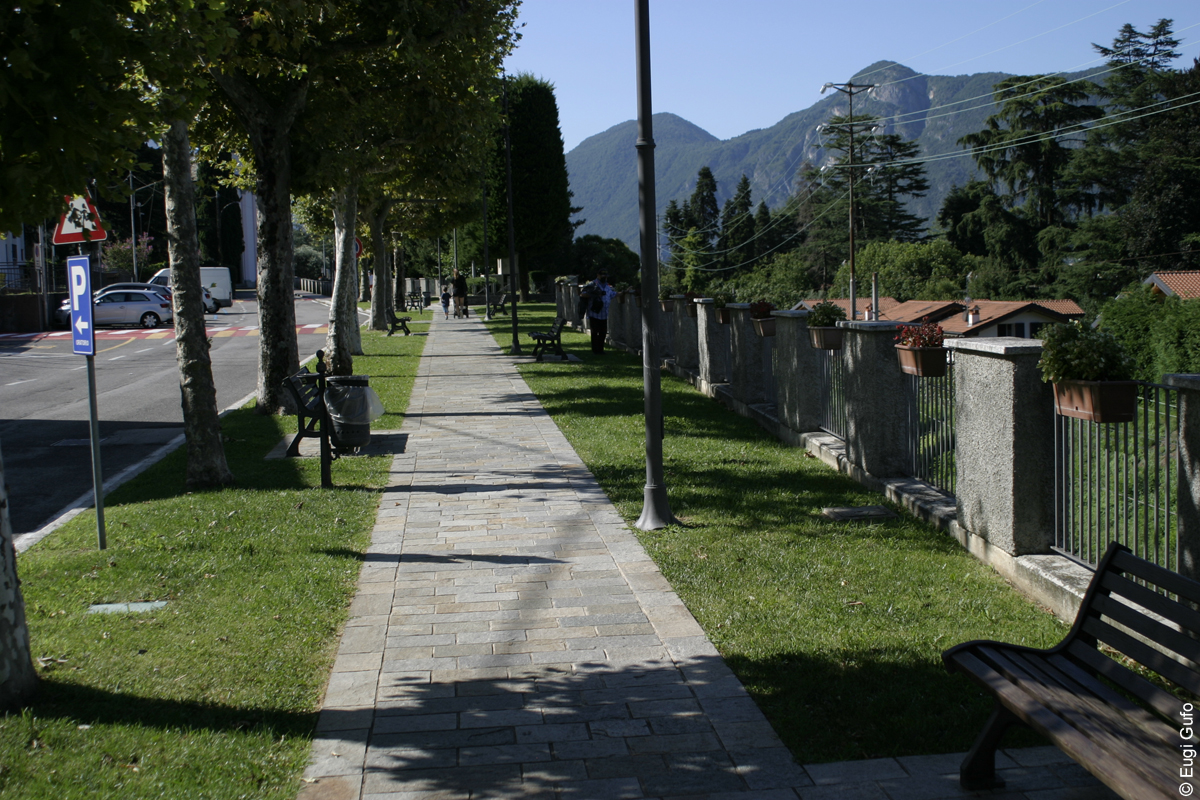
Public greenery is well maintained throughout the municipality, not just along the waterfront.
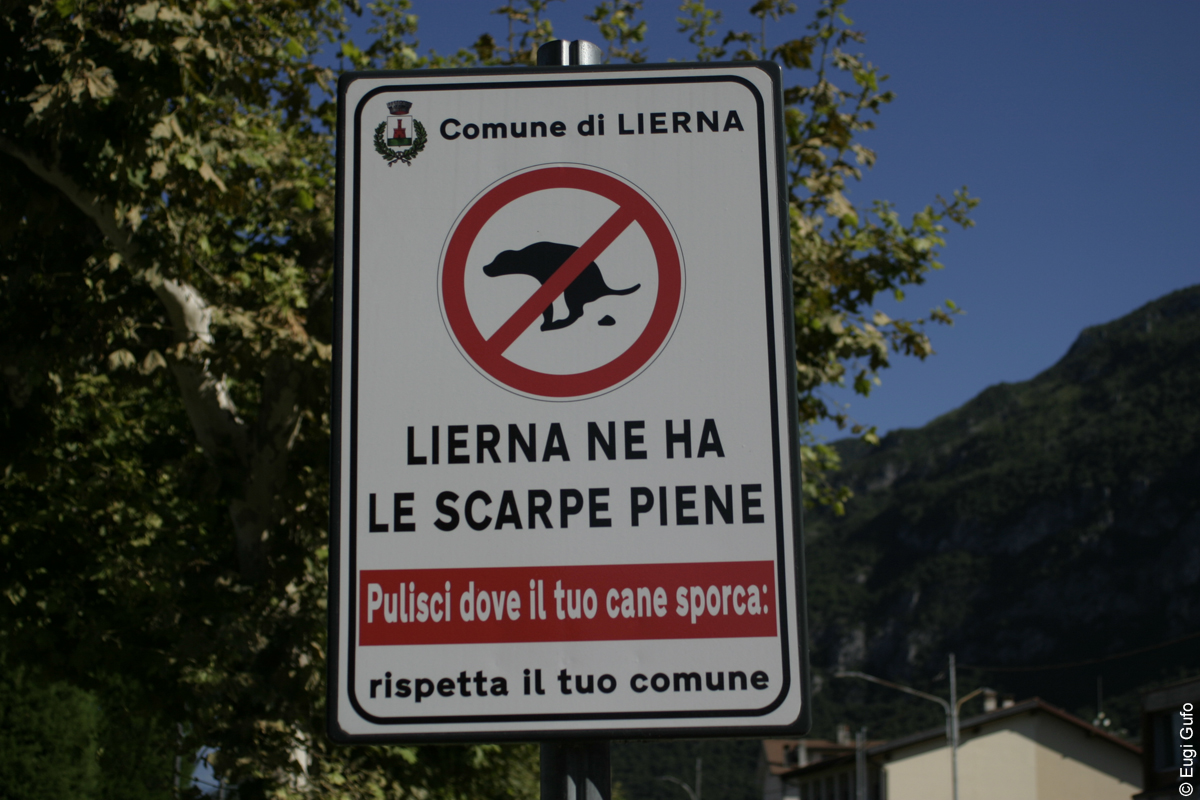
Whether this is due to the categorical (and occasionally aesthetically questionable) warning signs placed in strategic positions remains uncertain.
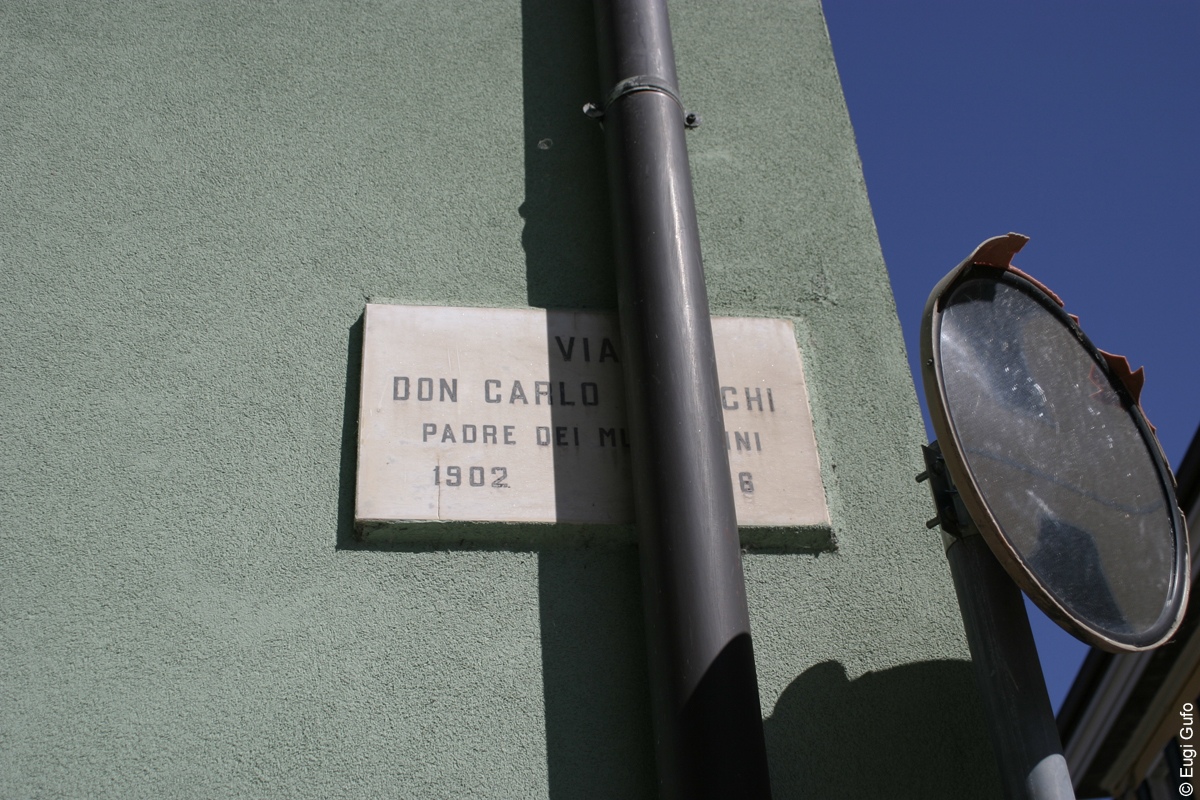
The marble street-name plaques distinguish themselves through genuine minimalism.
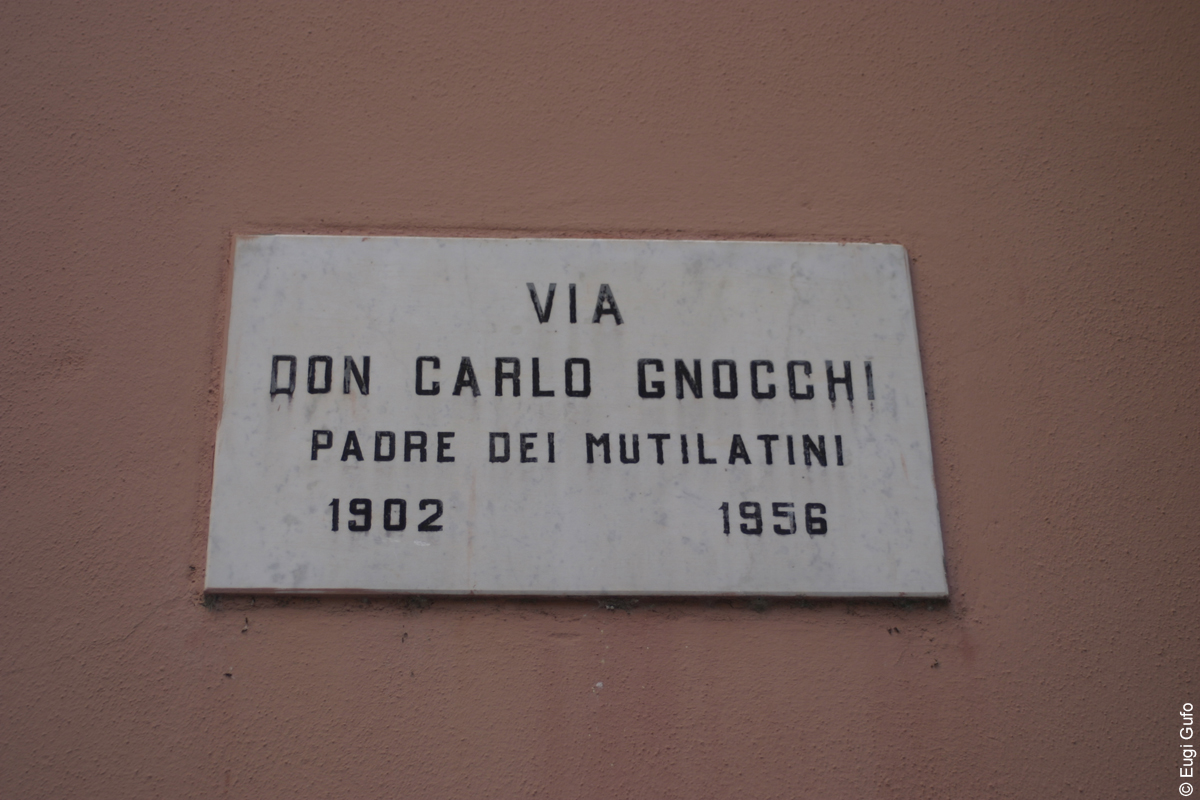
Their placement, however, is sometimes slightly unconventional.
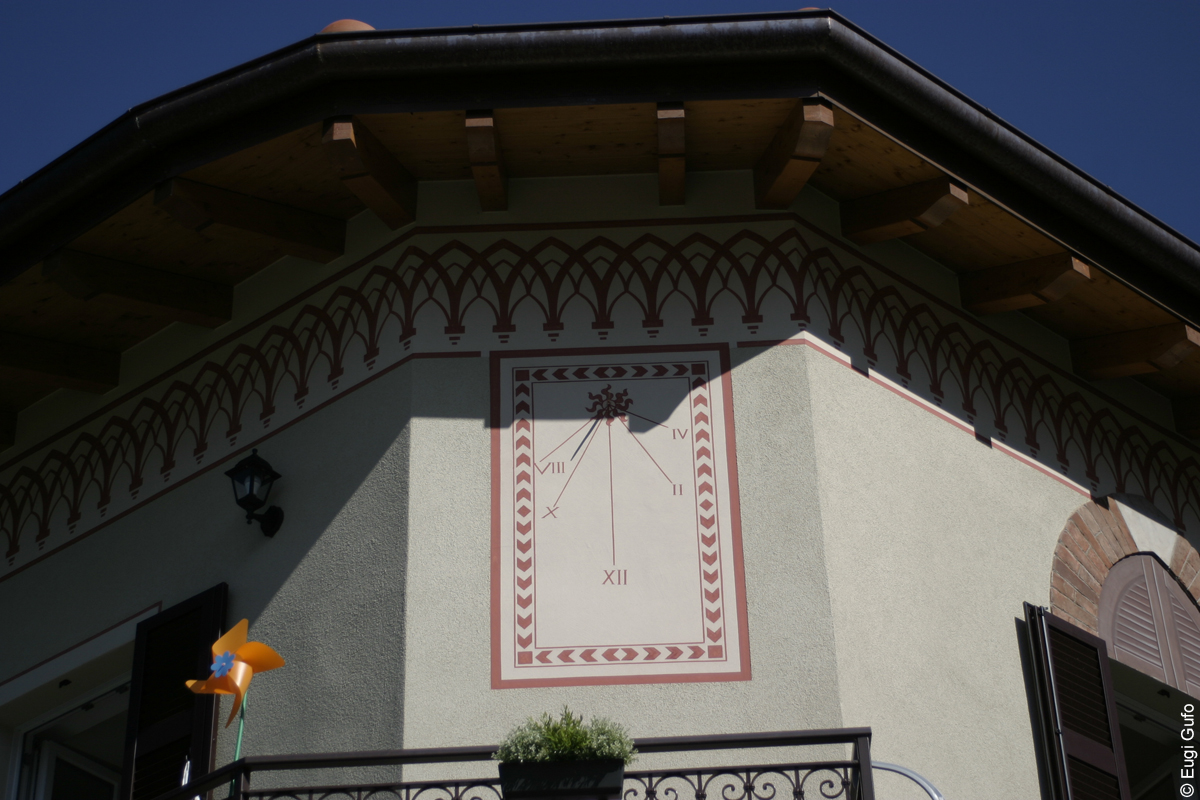
The only sundial I noticed in Lierna — on a private house — is also somewhat unusual: it functions for only eight hours a day. I understand that its limitations are due to its positioning. I do not understand why it was placed there in the first place.
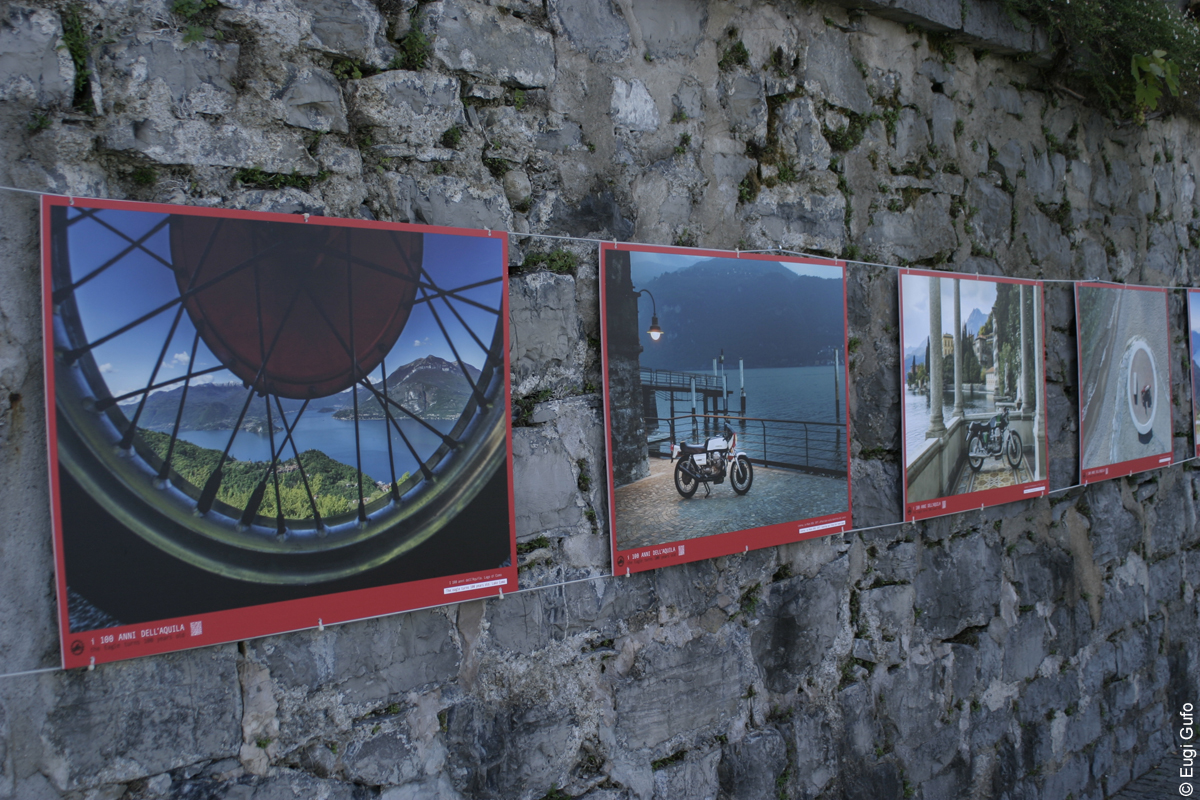
Fortunately, the imperfect execution of good ideas by some is at least temporarily balanced by the creativity of others. Along part of the lakeside there was an exhibition titled «100 Years of the Eagle,» dedicated to the centenary of Moto Guzzi, whose historic production site is located in Mandello del Lario, a neighbouring municipality. The photographs — previously displayed in several towns in the province of Lecco and later in Milan — documented various stages of the company’s history. Many were genuinely interesting from multiple perspectives.
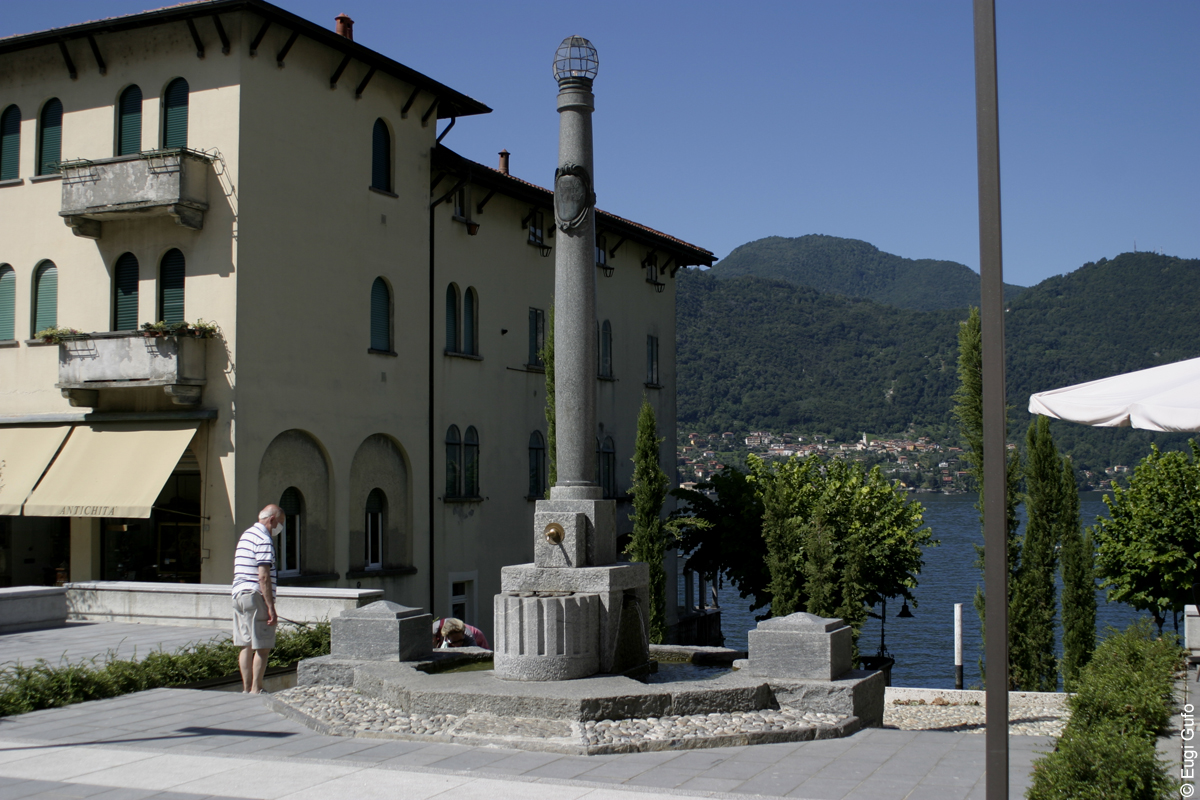
Among the permanent installations shaping daily life in Lierna, one might highlight, for instance, an interesting public fountain…

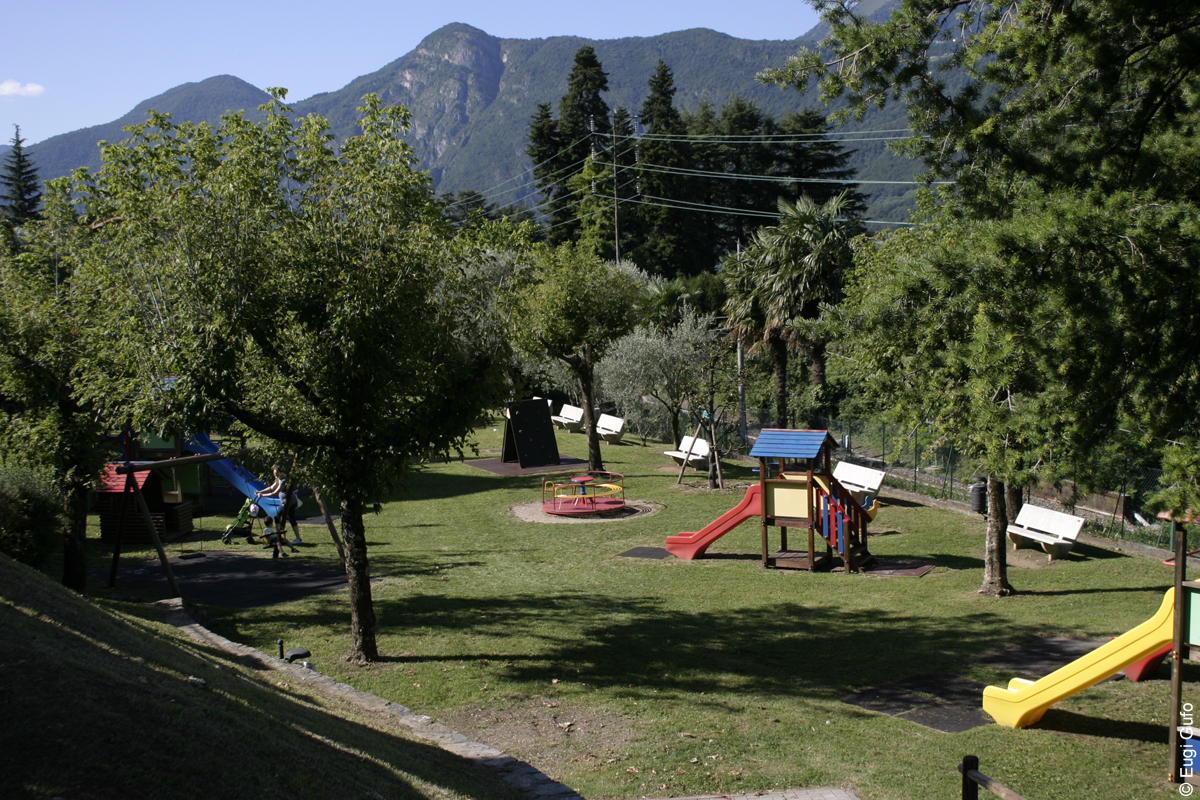
… or a relatively large — though apparently unique — playground for children.
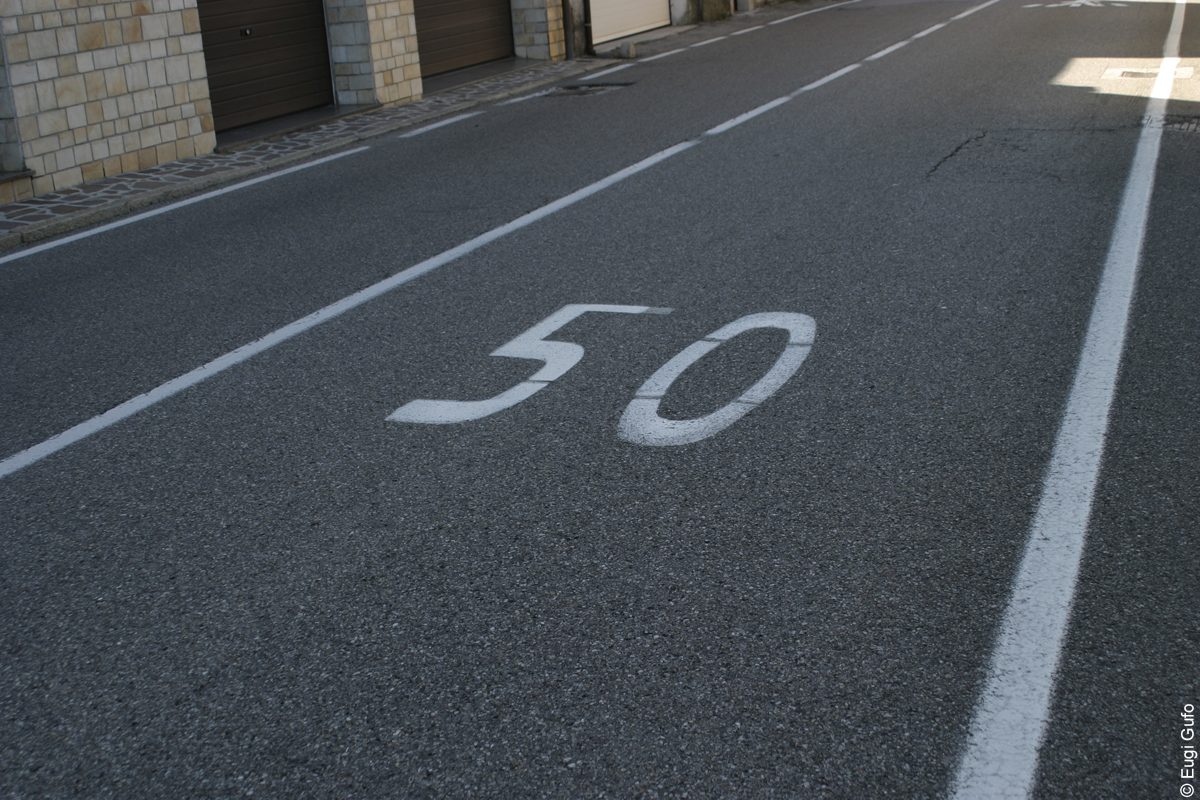
Some elements of the horizontal road markings stand out for their unusual graphic minimalism (much like the street plaques).
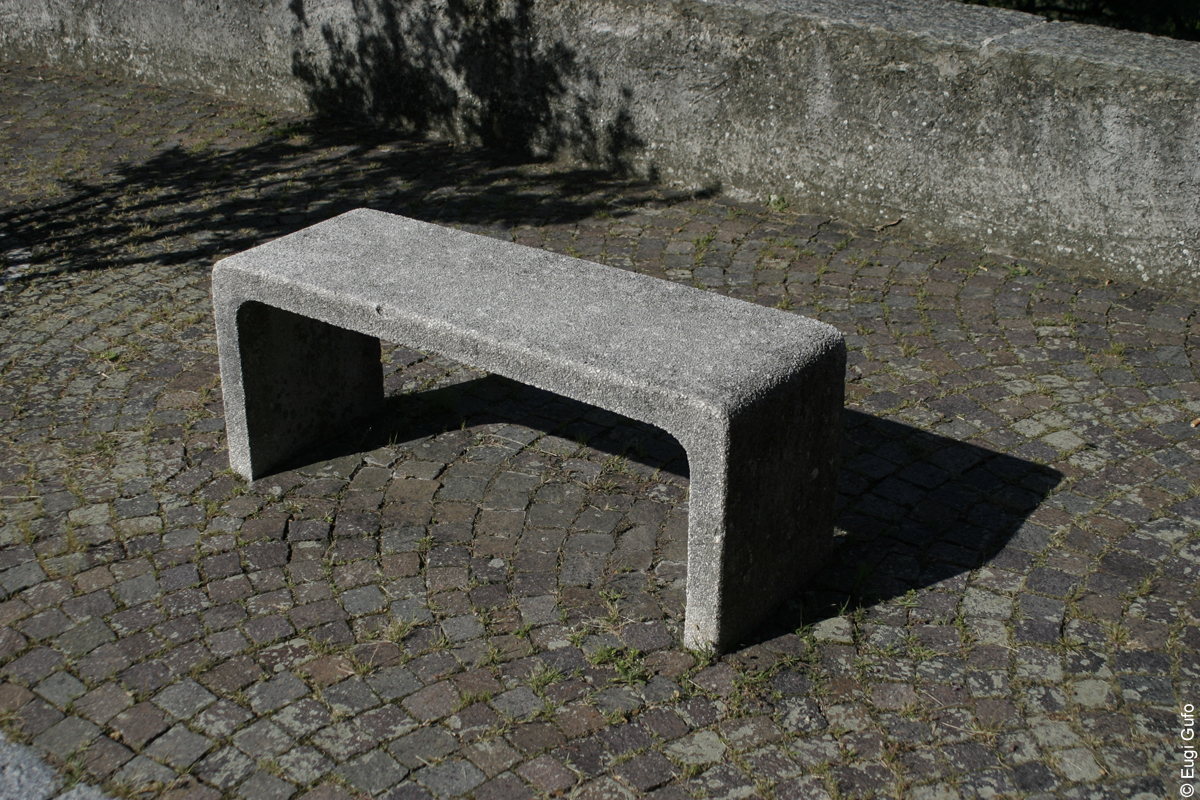
Certain benches follow the same aesthetic philosophy.
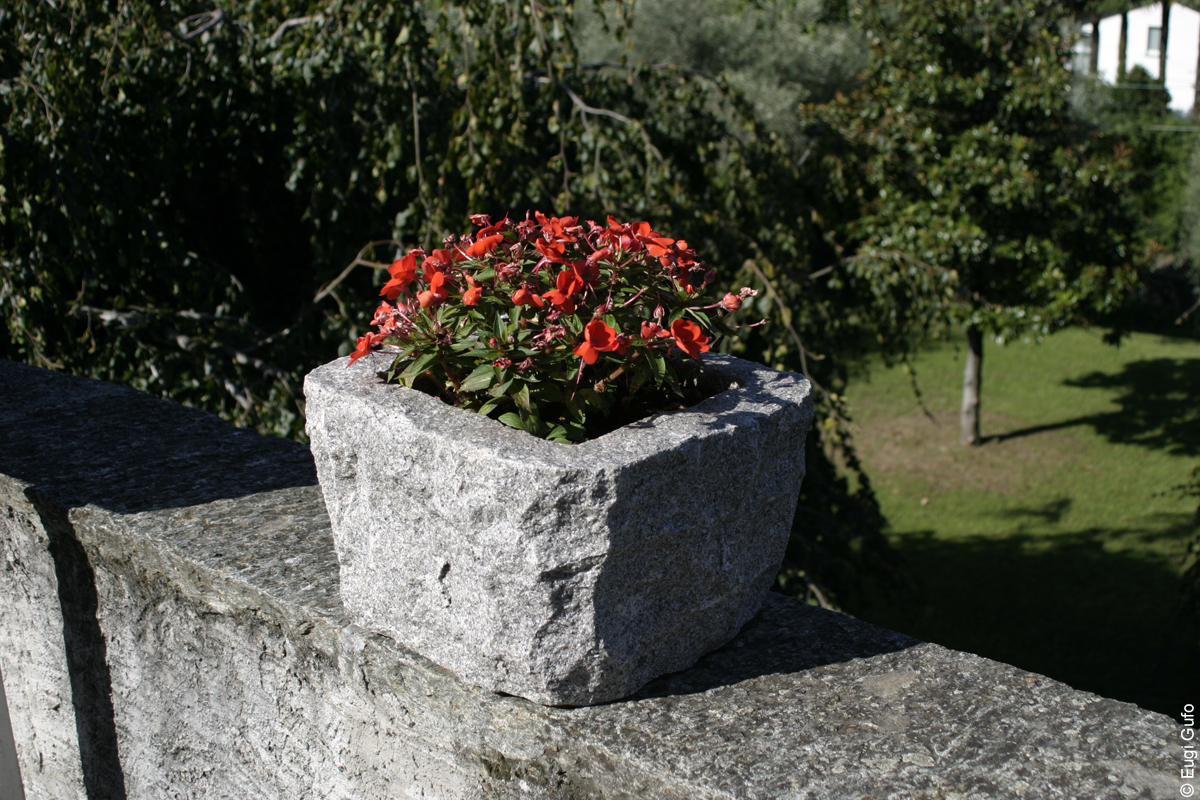
Fortunately, parts of the street furniture embrace the slightly rugged but aesthetically pleasing mountain style that the average tourist would expect to encounter here. At this point, I must note that — unlike many neighbouring municipalities — Lierna shows little enthusiasm for planting annual flowers in every conceivable public space.
Given all this, I cannot help expressing mild astonishment that in an overall attractive town like Lierna, one of the most mediocre buildings happens to be the Town Hall. It is not even located in the centre — architecturally positive, perhaps, but institutionally unconventional.
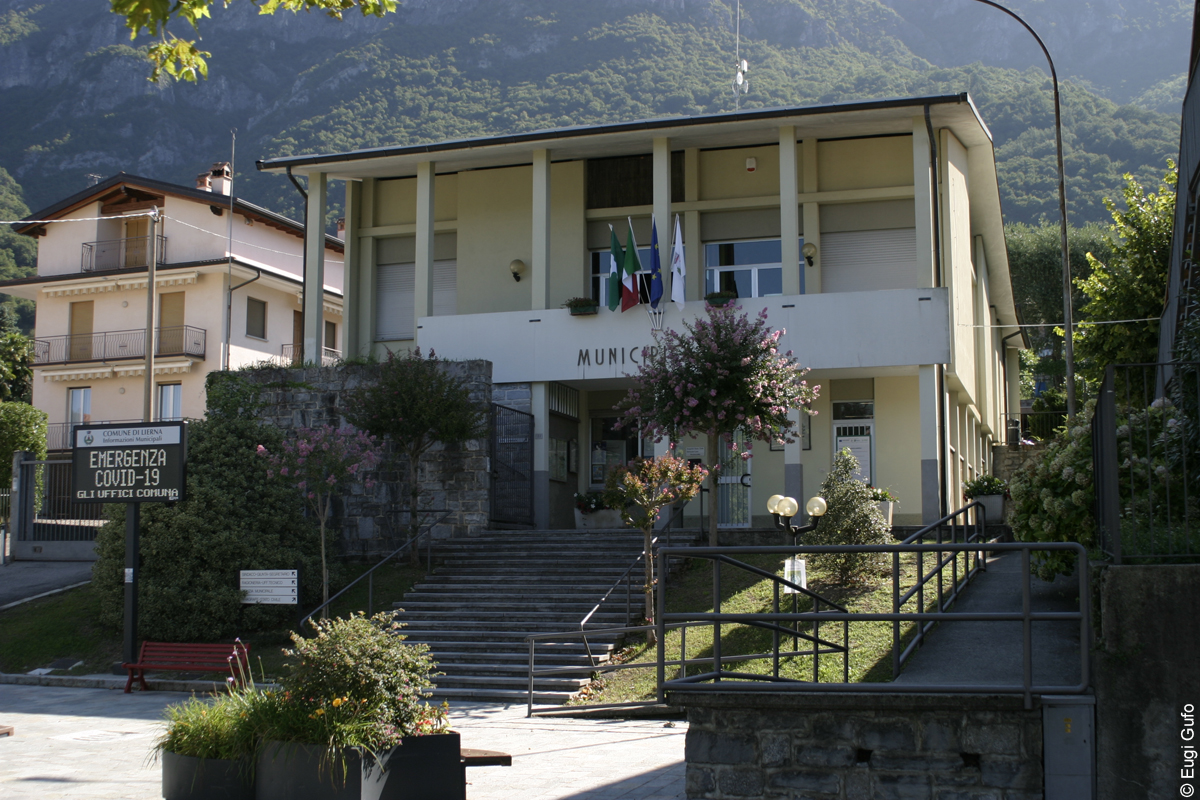
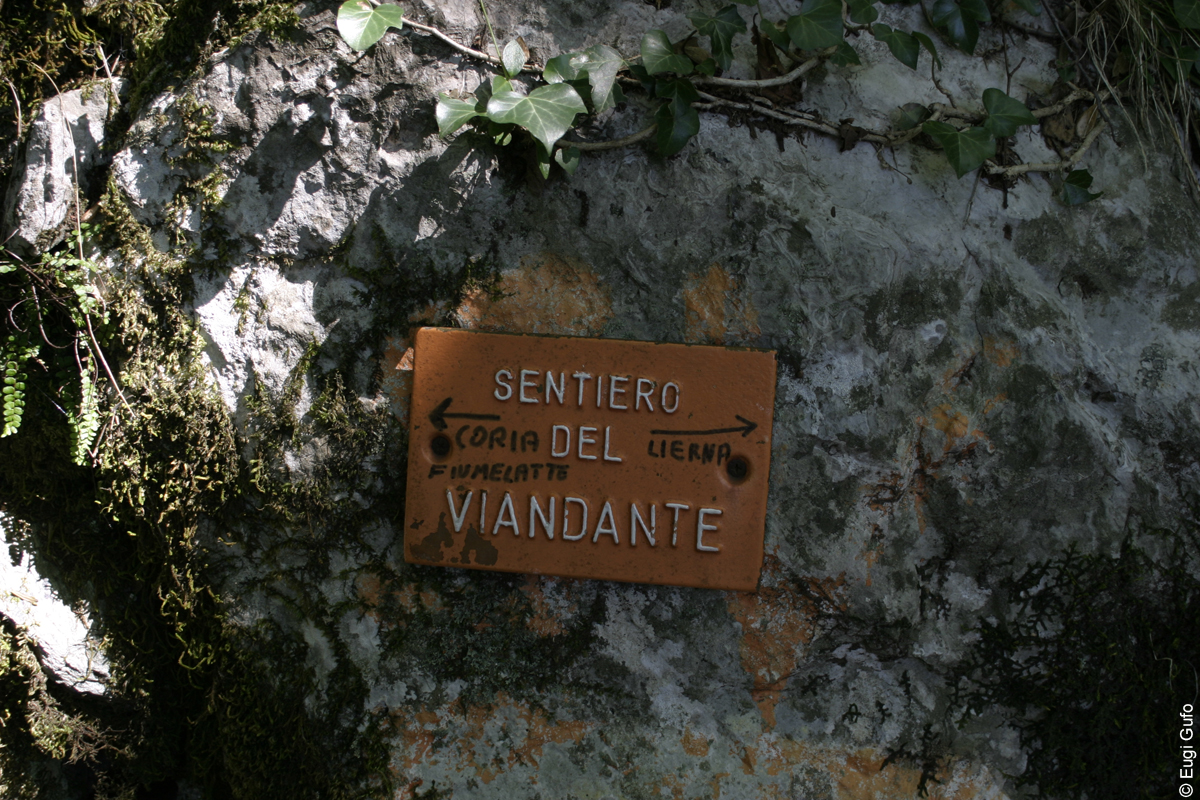
In order to reflect calmly on this phenomenon, I finally returned to the second component of my August 2021 journeys: walking part of the Sentiero del Viandante (which I have already discussed in some detail in the Bellano report). I resumed the trail toward Varenna and quickly noticed that the issue of sparse signage persists in this section. The official signs remain few and informationally modest (which is, admittedly, a remarkable achievement). At least the traditional painted trail marks on rocks have begun to appear.
At the same time, I made a surprisingly positive discovery: some experienced hikers had taken a black marker and supplemented the official signs with extremely useful additional information. On several junctions, I was saved — thanks to these anonymous kind souls — from choosing the wrong path and embarking on a long and irritating kilometre-scale return journey. Fortunately, I had studied the trail beforehand and knew that Fiumelatte (helpfully added in marker) is a hamlet of Varenna. In short, those less confident in their sense of direction would do well to bring a proper topographic map when heading into the mountains — even if strangers occasionally correct flawed planning.
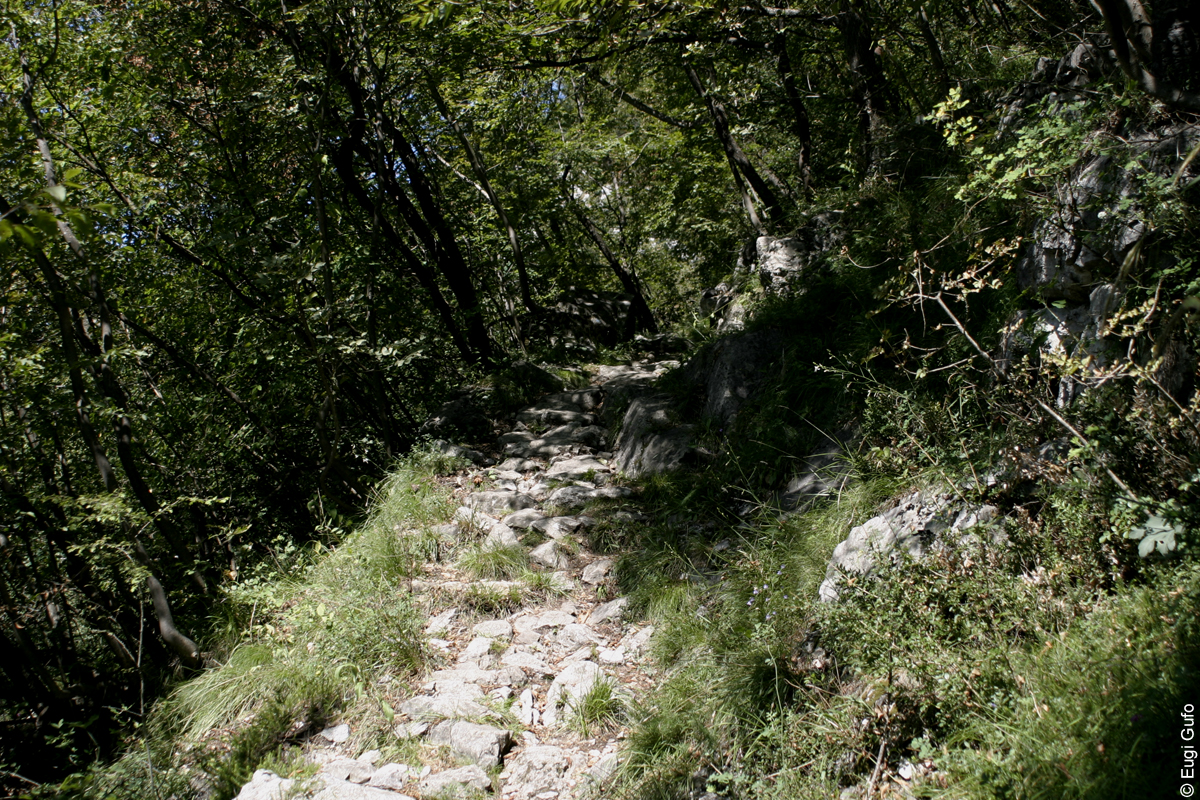
Roughly the first half of the route from Lierna to Varenna is steadily uphill, along a narrow path running over stones and rock surfaces. Sunny sections alternate frequently with shaded ones. At these elevations, thankfully, the sun is somewhat less oppressive than in the plains.
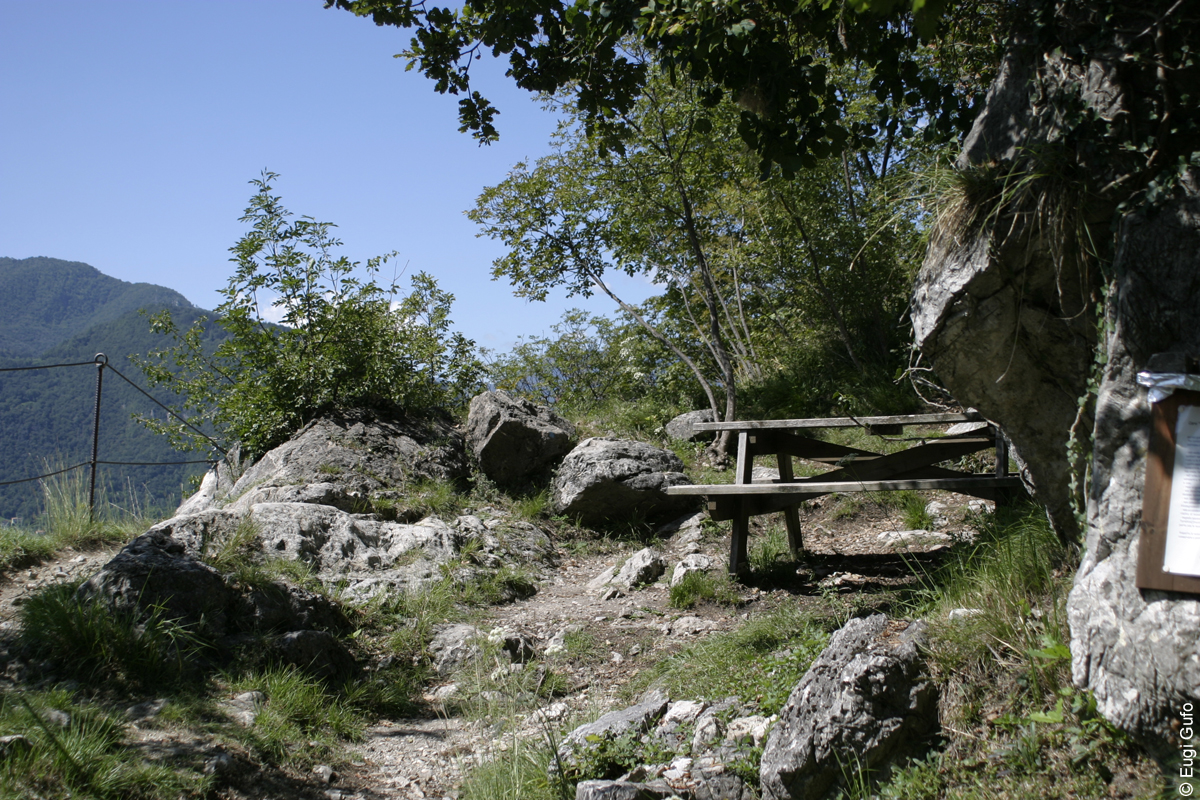
I encountered only one traditional rest area along this stretch: not far from Lierna, a wooden table stands at the only point where the path widens sufficiently to accommodate it. From here one can observe Lierna from above — including some of the places previously visited (the one on the peninsula is the former castle).
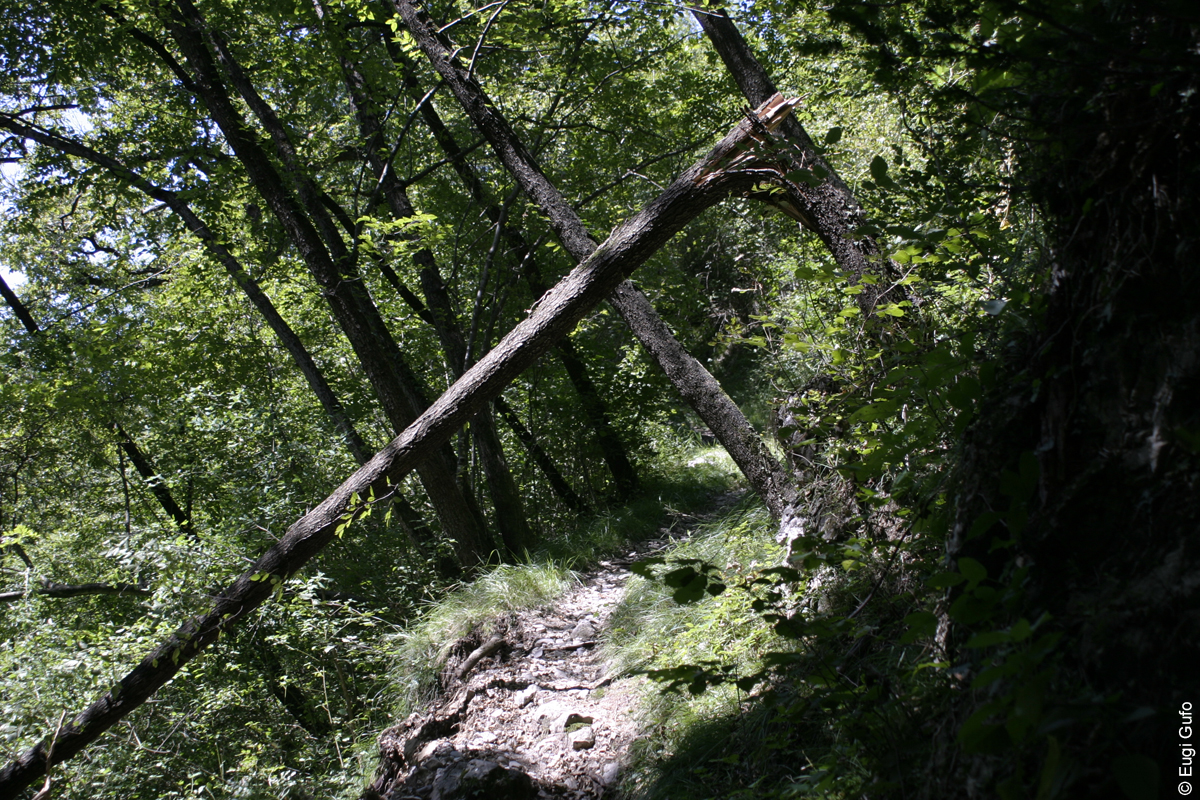
Further rest areas must be improvised. Tourists are, of course, free to sit on any convenient rock or fallen tree trunk. The path then continues through sections requiring almost elementary climbing skills before entering an increasingly wooded area, where occasional traces of long-abandoned human dwellings appear. The trail remains in good condition, though caution is advisable — not only to avoid slipping, but also to avoid missing the best views.
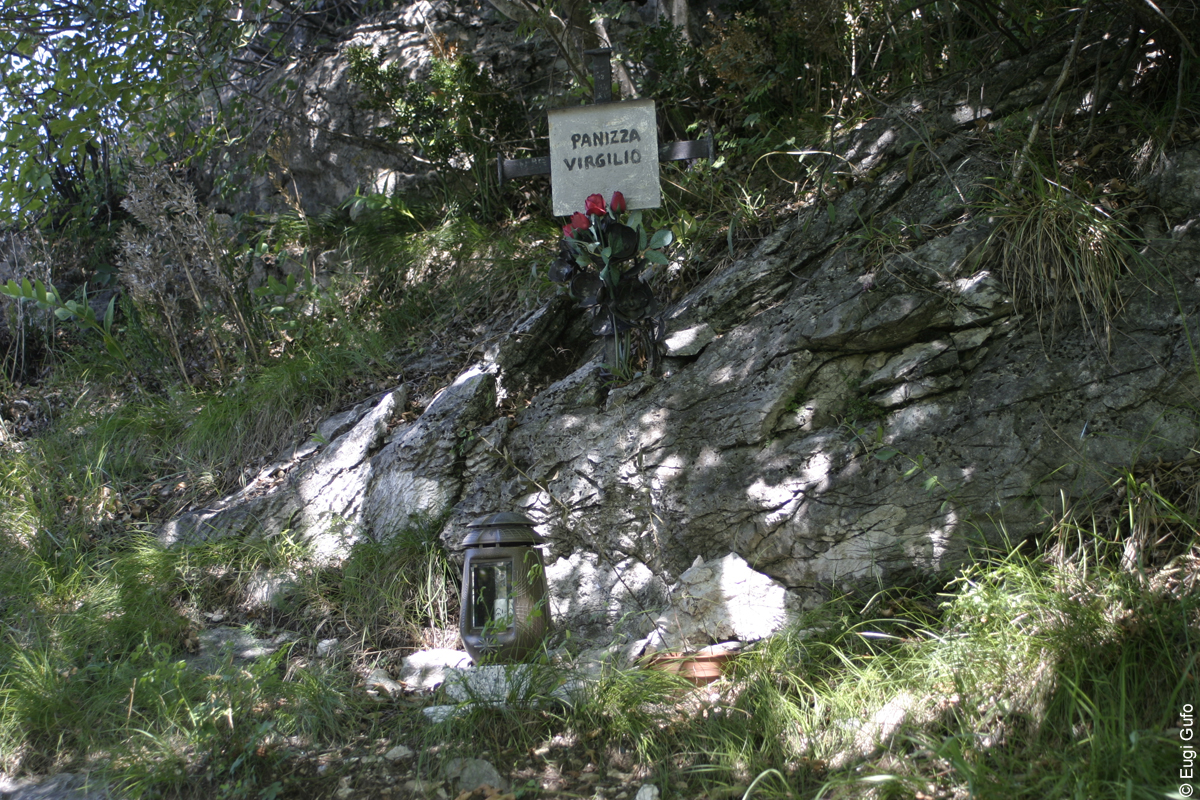
Along the trail one encounters several cenotaphs. While preparing this photo, I recalled a friendly couple — the only two people I met along the entire stretch. After exchanging views about orientation on the trail (a universally sensitive topic), they finally voiced the doubts already visible in their eyes. They asked whether the editorial team of our personal website was not afraid of venturing into the mountains in such small numbers and with evidently urban equipment. I would have liked to reply, «Let’s not exaggerate,» but I opted for diplomacy.
At one decisive point in the journey (roughly halfway, ahahaha), the path suddenly opens into a clearing dominated by a solid stone house. Its physical condition is not perfect, yet it does not appear abandoned: the windows are intact, and the metal door with a modern lock is firmly closed. At that very moment, an old idea resurfaced in my mind — acquiring an isolated mountain house accessible only on foot, as an occasional retreat from everything and everyone, to focus on personal projects. Even during the 2020 lockdown, this had not been entirely possible (in some respects, quite the opposite).
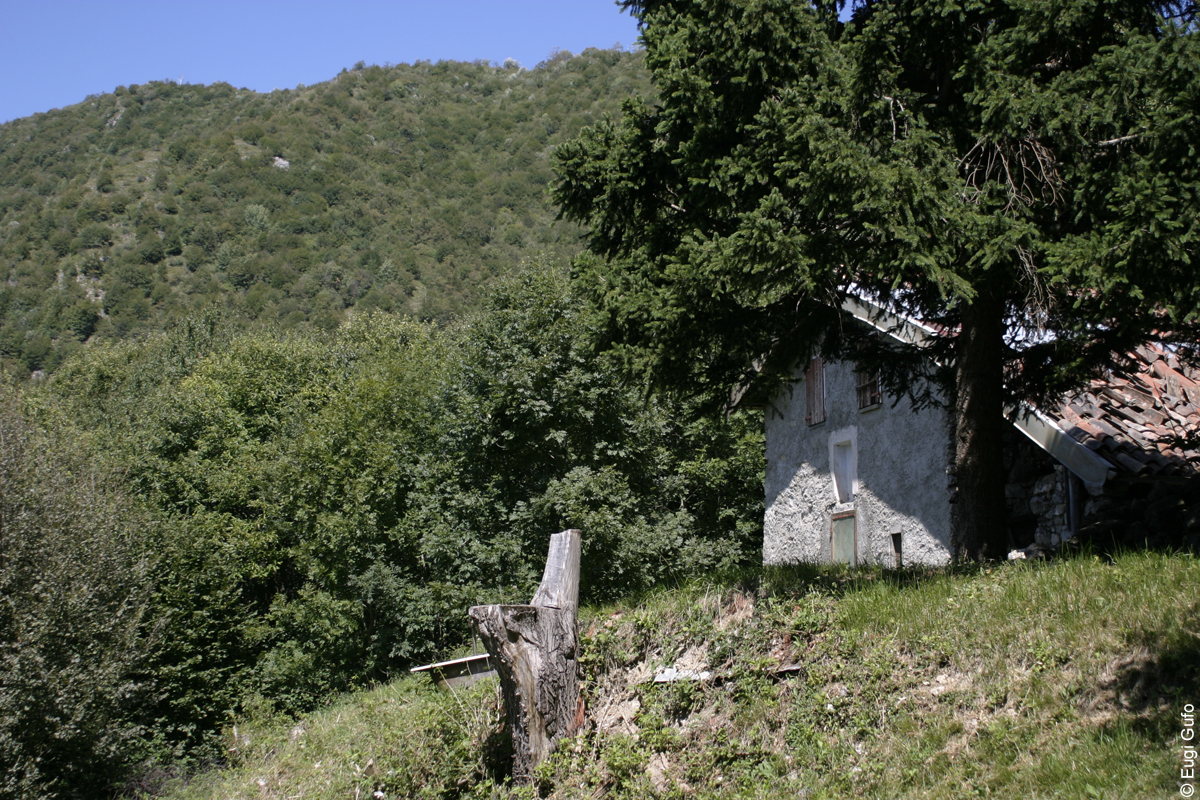
The economic aspect requires further development. Technically, however, it appears feasible: in the aforementioned case, someone has even managed to transport a bathtub up the mountain and arrange a water supply.

After the clearing, the trail becomes noticeably easier — slightly slippery but predominantly downhill. I was therefore reasonably confident of reaching my initial goal: the Castle of Vezio above Varenna. A few kilometres before the destination, however, I was finally defeated by creatively positioned signage. One arrow directed me down a descent that leads, shortly before Fiumelatte, to a provincial road. According to a local resident, many hikers have fallen victim to this organisational trap. The consolation was limited: the arrival in Varenna turned out to be considerably less picturesque.
Lierna, 18 August 2021
↓ Show comments ↓


