


 Long live Ukraine! Fuck the war!
 RSS of site articles
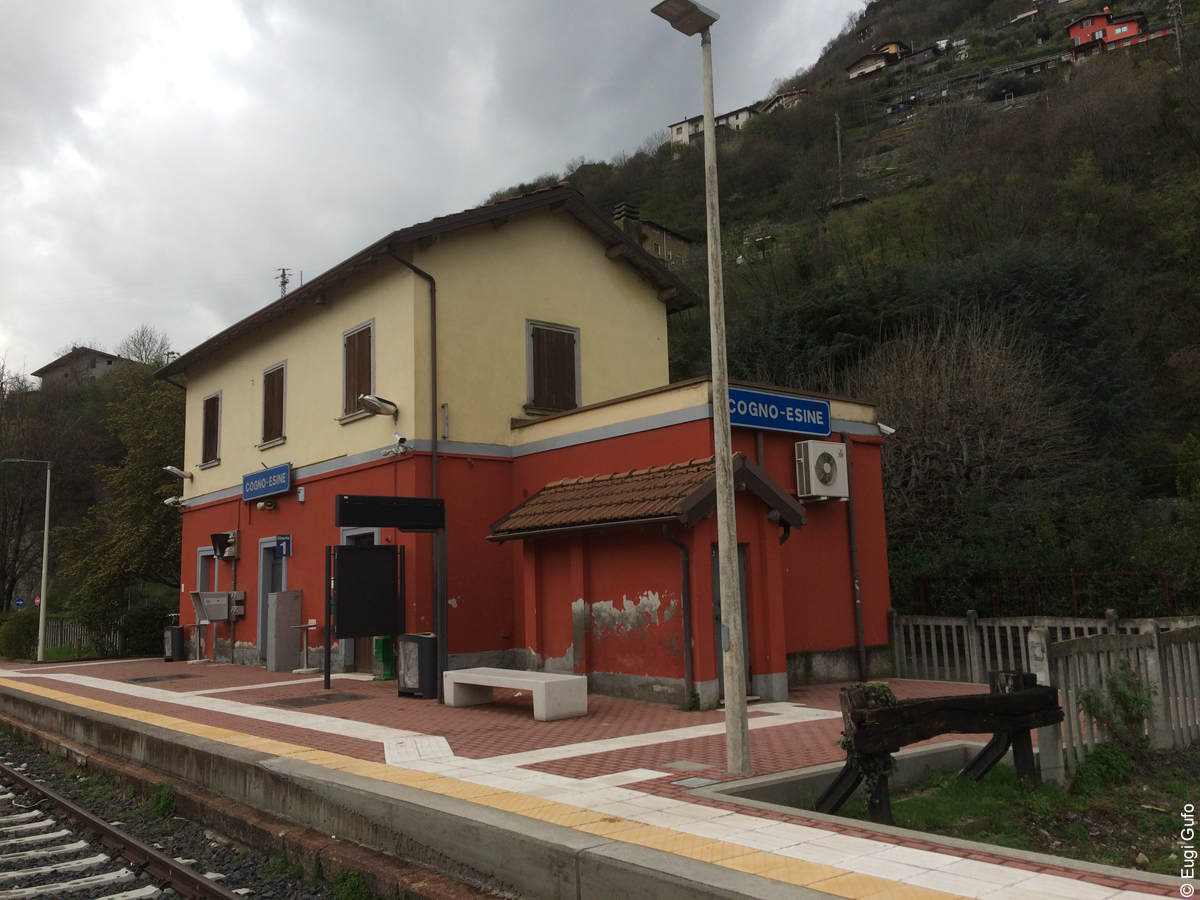
After the very brief — yet more satisfying than expected — study of Cogno, I moved on the same day to explore Esine. The two villages lie extremely close to one another; in fact, they are separated only by the Brescia—Edolo railway line and the River Oglio. The local railway station even bears the names of both settlements.
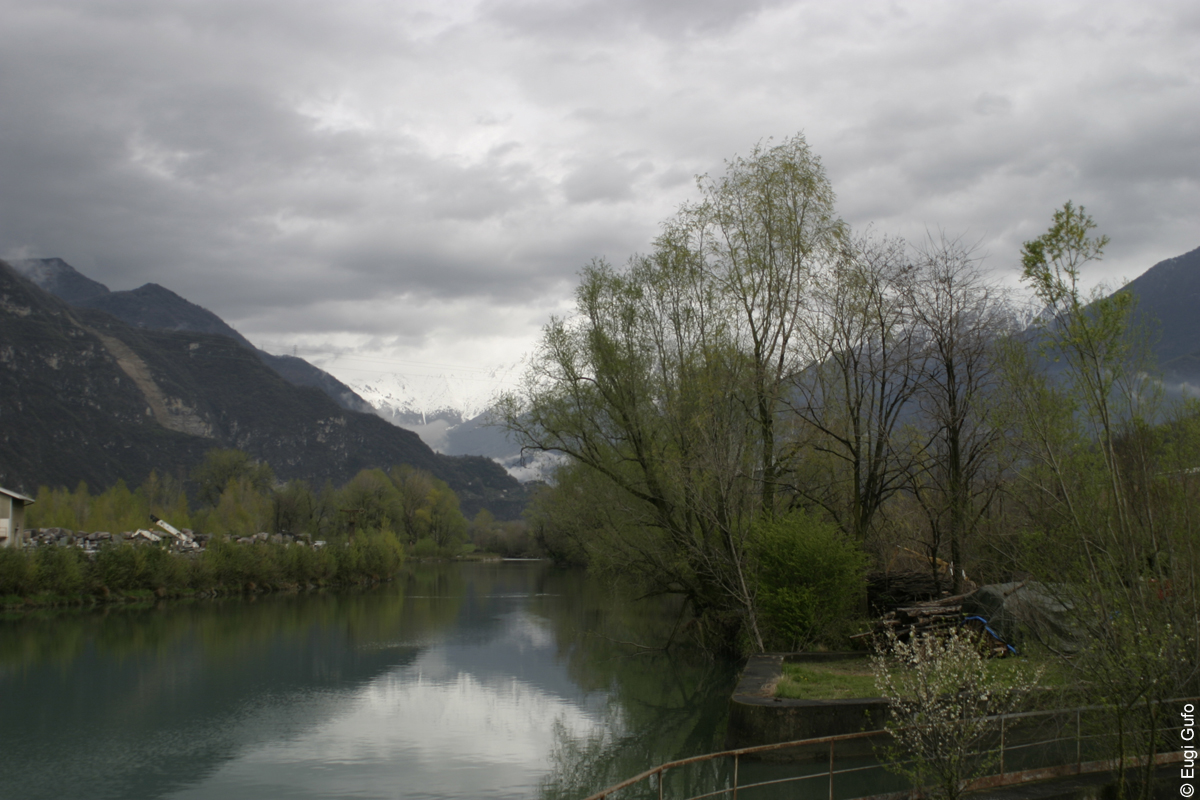
The River Oglio (and the bridge crossing it) provides soothing landscapes.
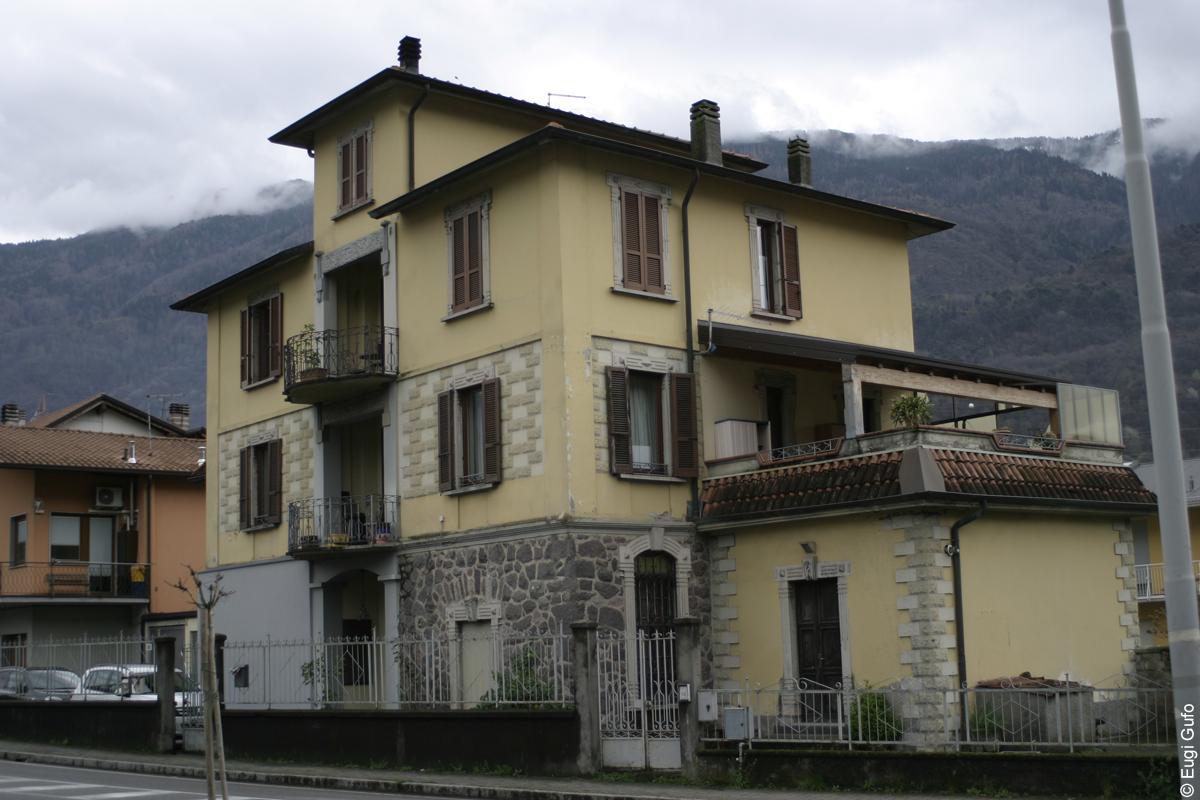
Once across the river, we proceed straight ahead (leaving it behind us) along the road leading toward the centre. The first six hundred metres or so offer nothing particularly stimulating to either eye or mind. An impatient tourist might even begin to worry at the sight of villas such as these:
But then, almost suddenly, begins the part of the village that may properly be called the historic centre.
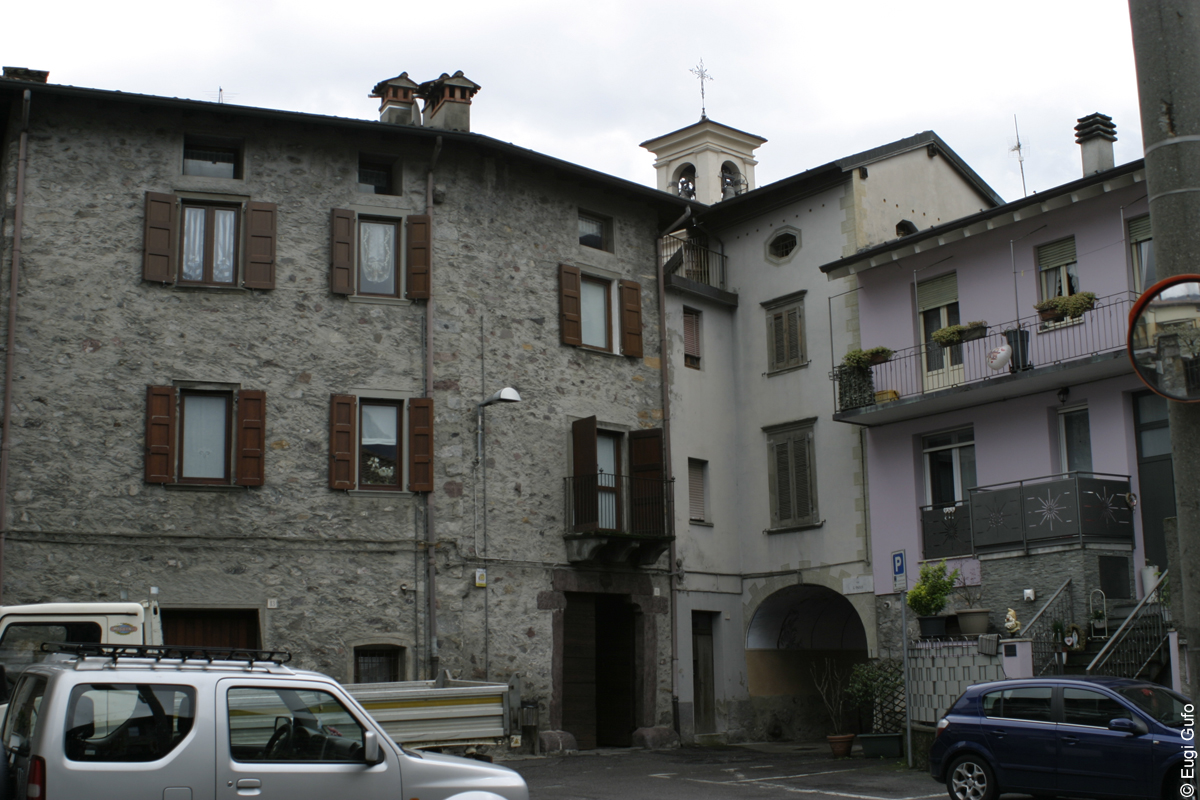
Even within the historic centre, one occasionally encounters buildings of less venerable age.
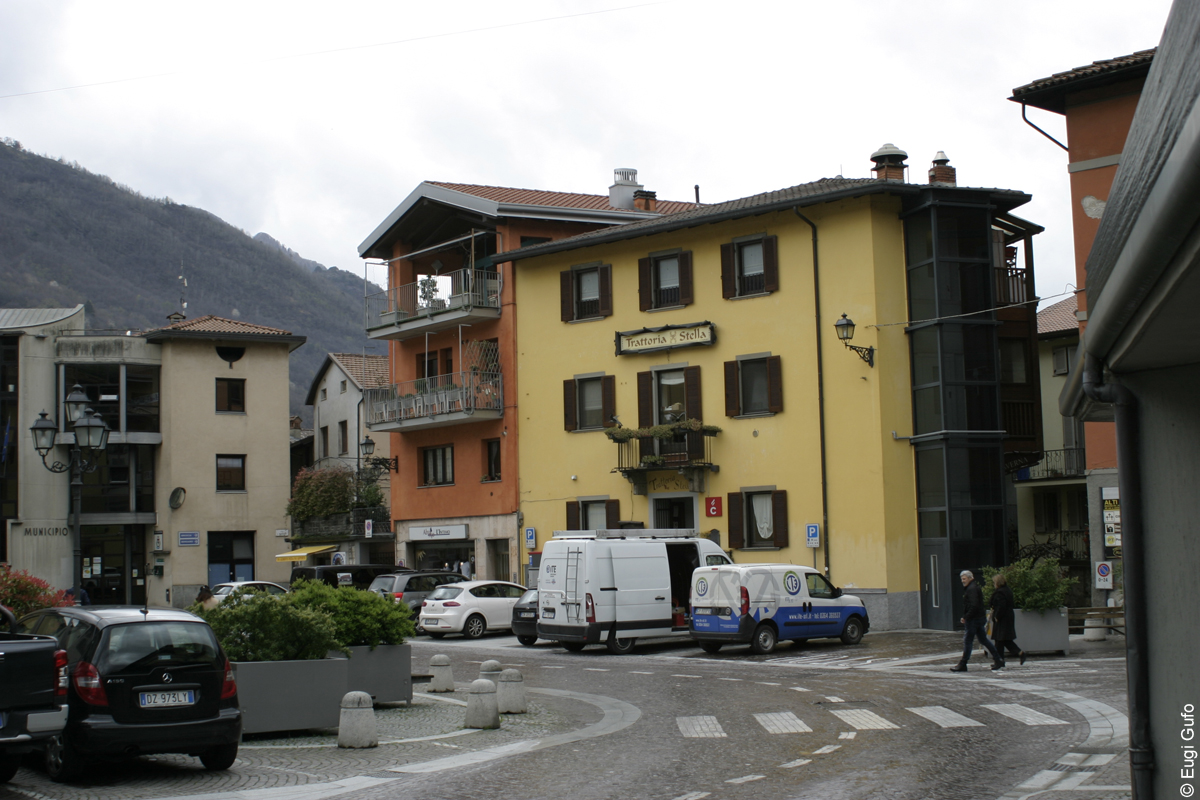
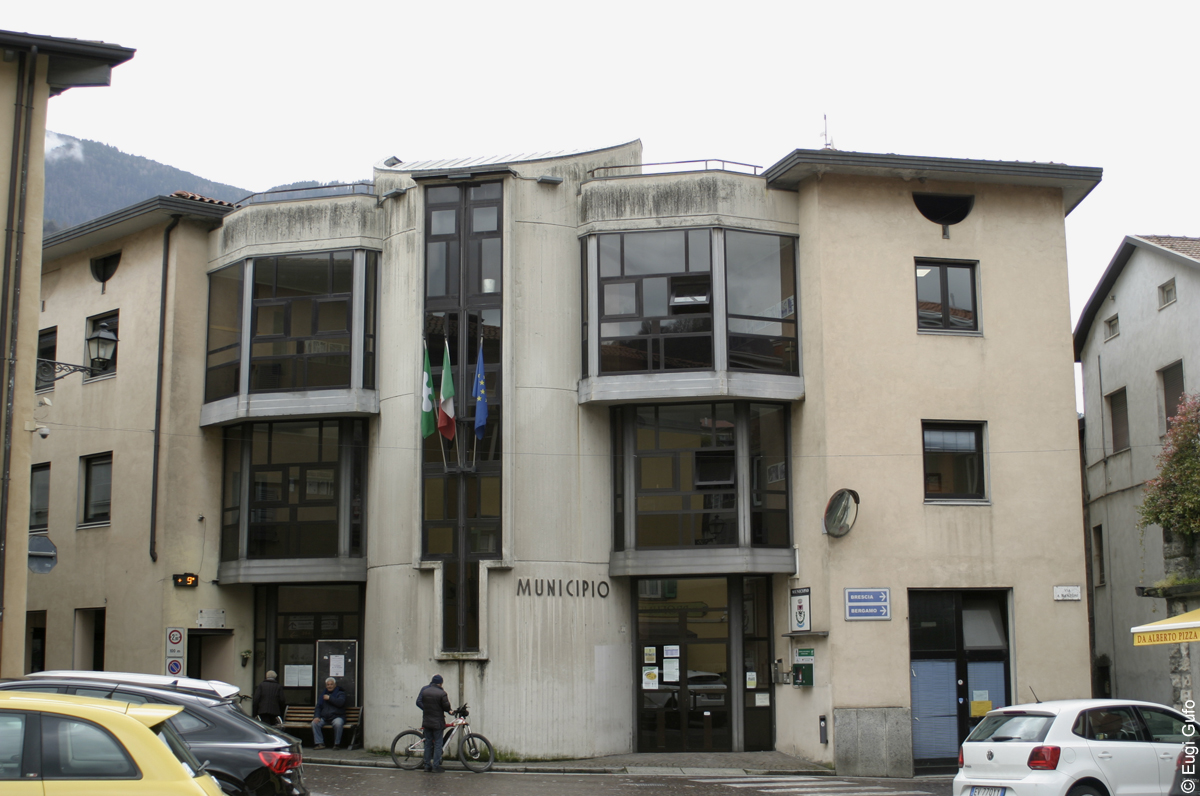
The most modern structure I noticed there was the Town Hall.
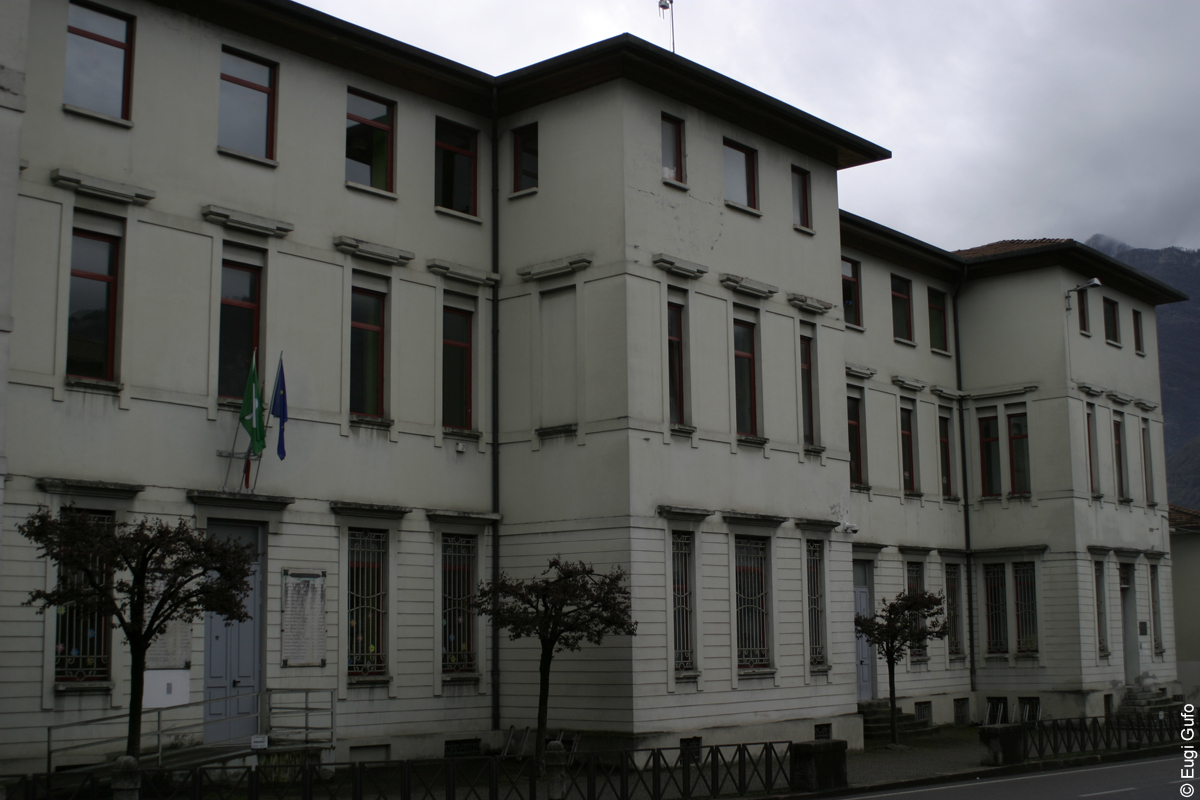
The most monumental, meanwhile, is the local comprehensive school.
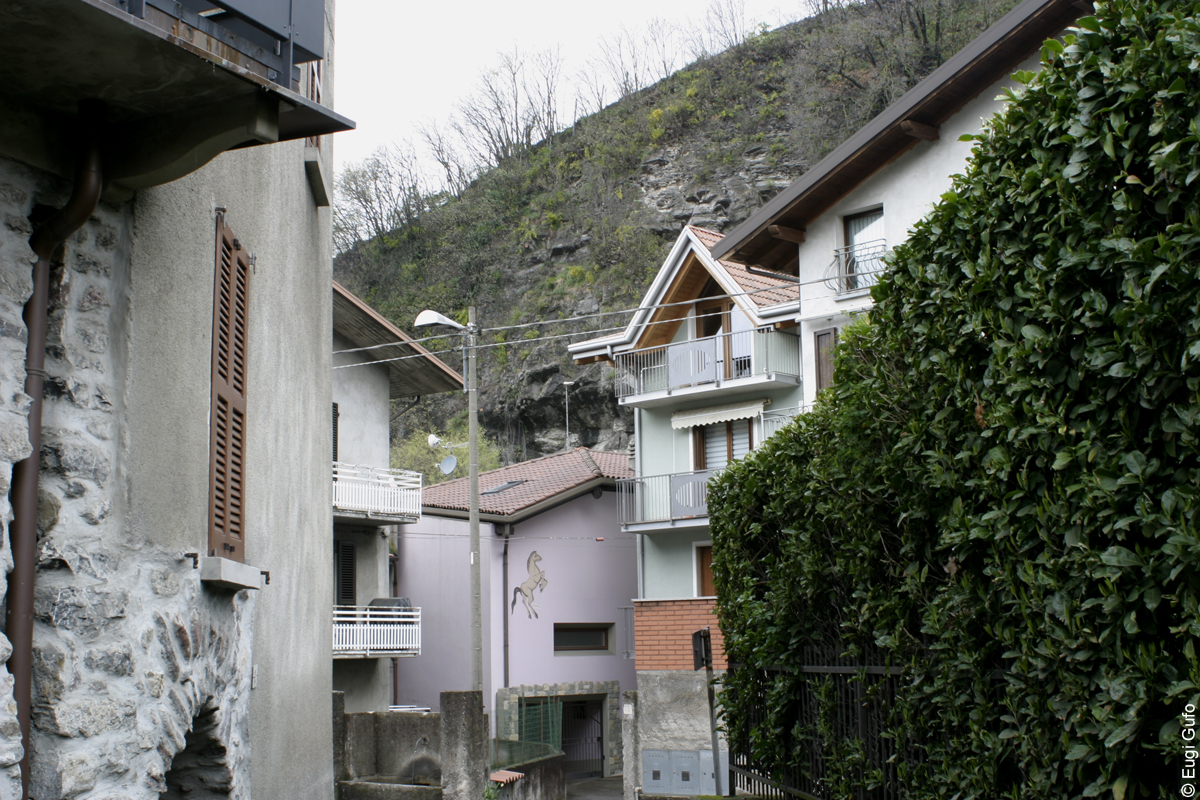
Yet my primary interest lay in the local architecture — the mountain style.
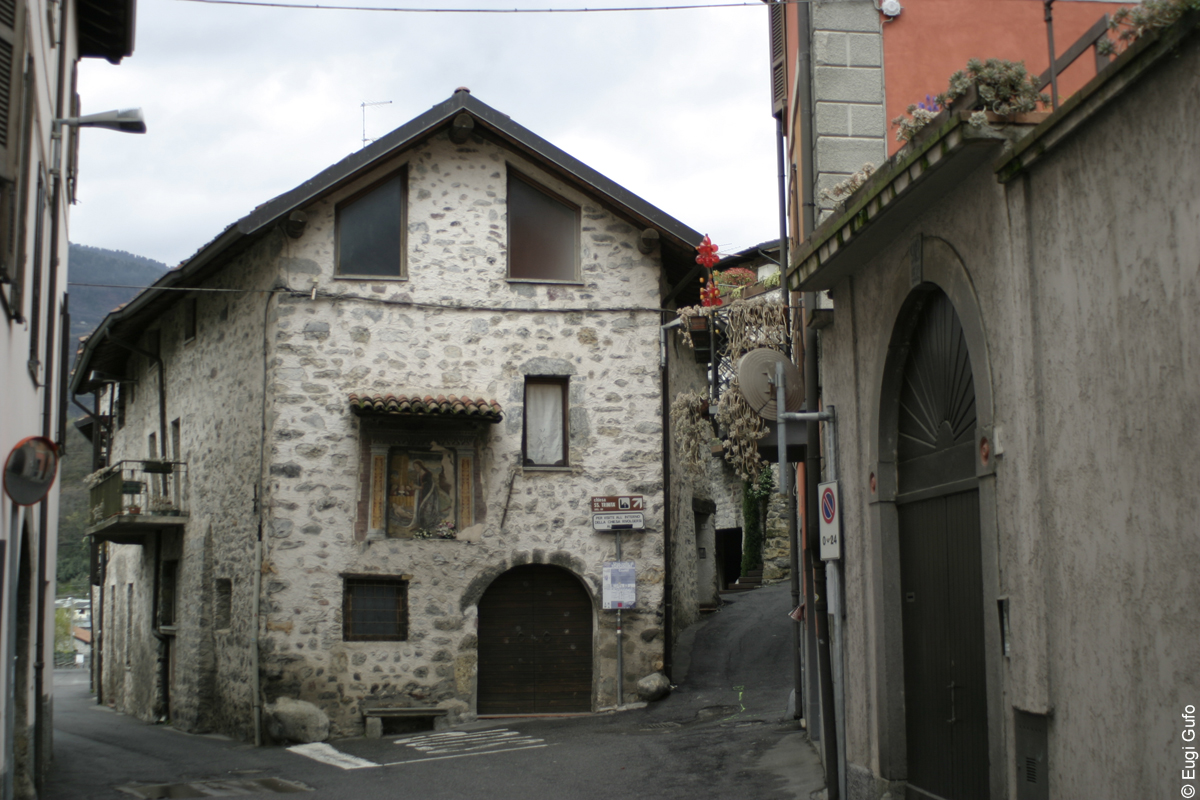
For the village is indeed pressed against the flank of a mountain…
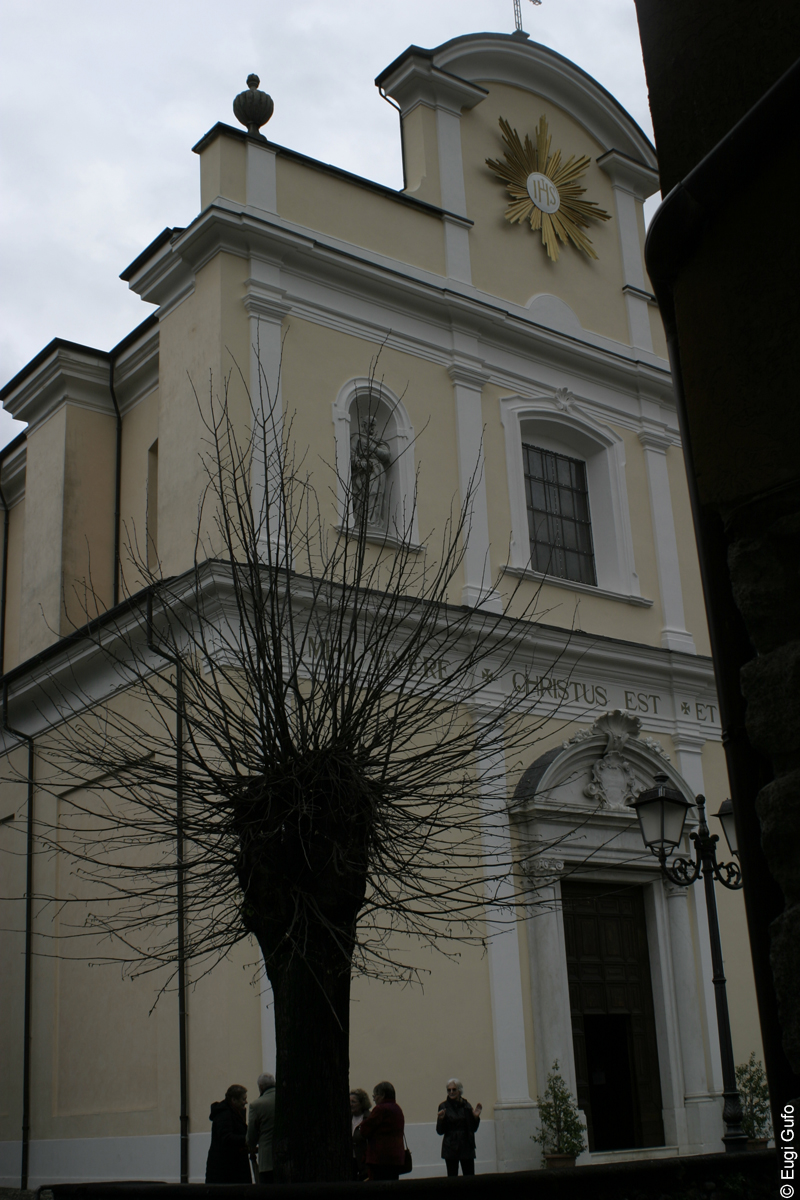
Several churches stand within the municipal territory, though none could be described as typically alpine in character. Some, moreover, were closed at the time of my visit — for example, the parish church of San Paolo (whose construction, in effect, lasted from 1691 to 1833). In addition, a group of somewhat elderly individuals dressed in dark clothing, with suitably solemn expressions, was gathering before the entrance. I suspected that waiting for the doors to open might not have been appropriate…
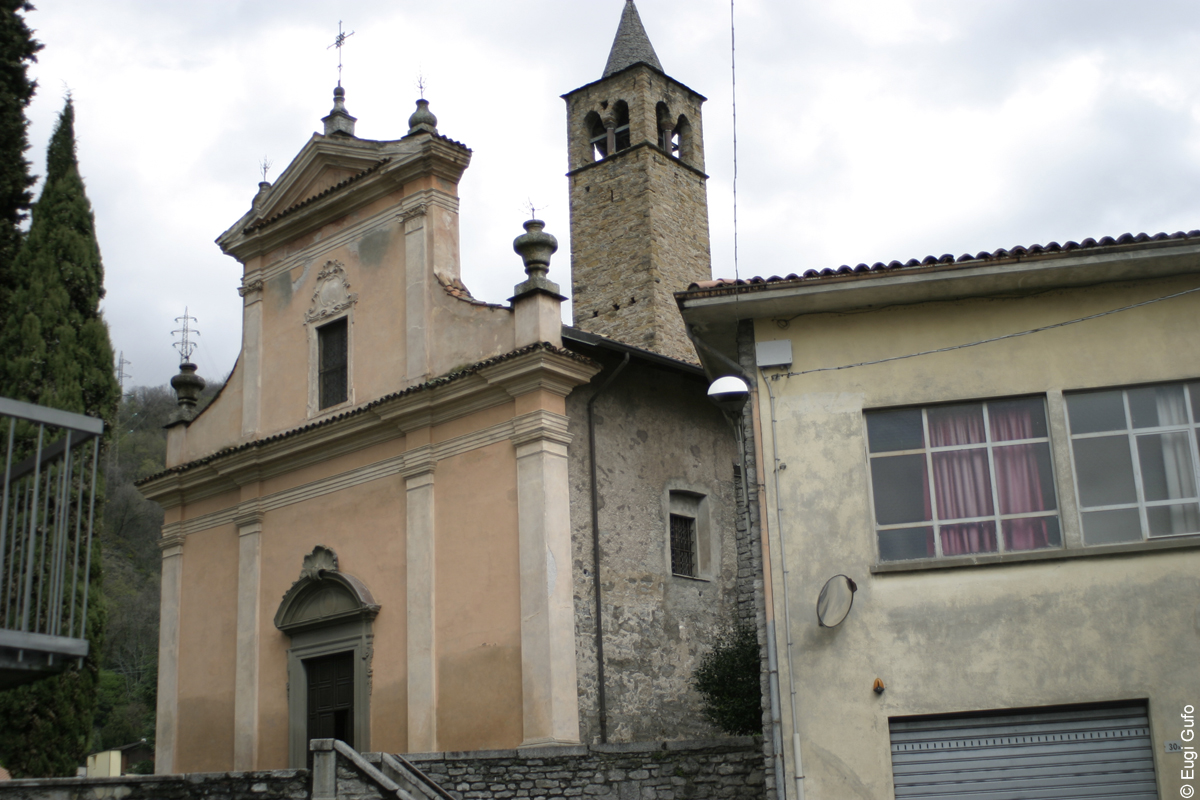
On the same square stands the small church of San Carlo (built in the second half of the seventeenth century). I was unable to appreciate this one either: it too was closed.

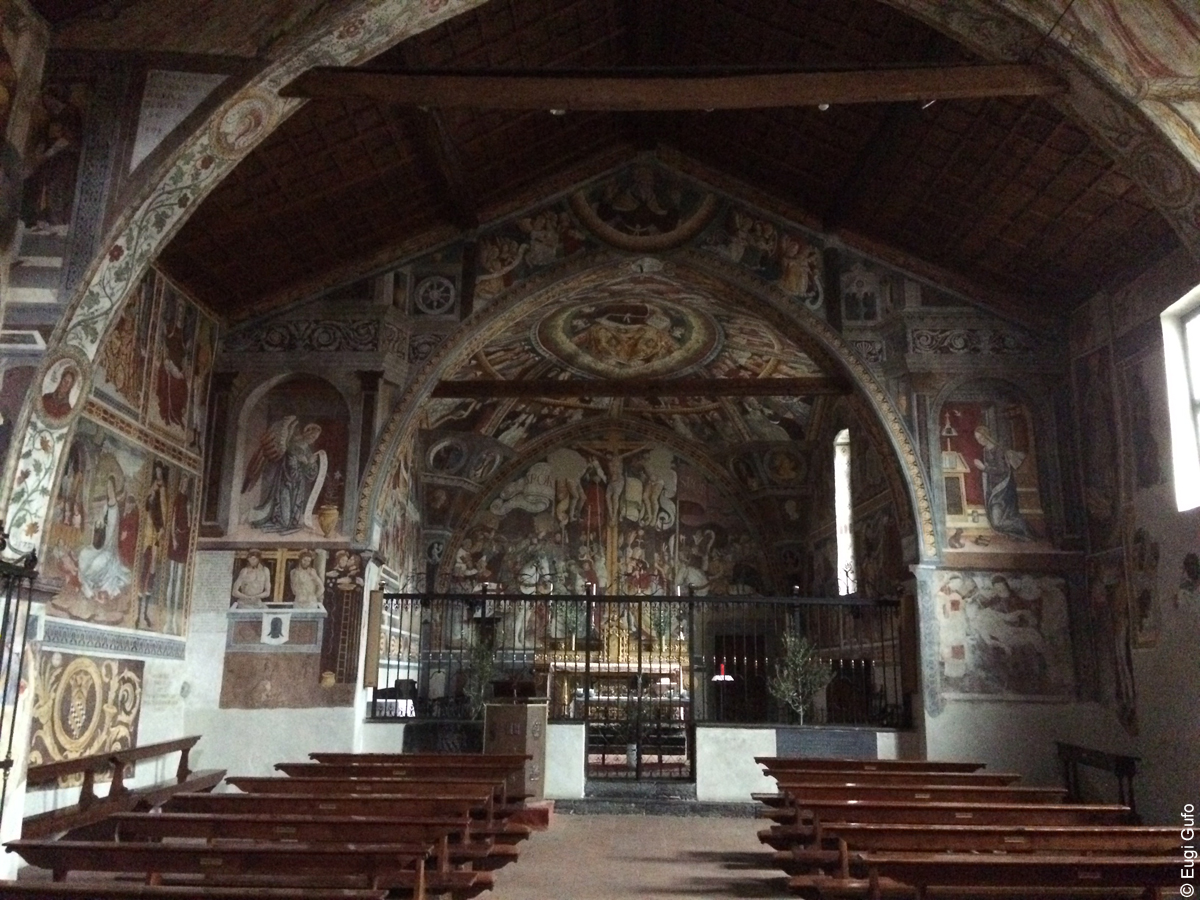
However, I was amply rewarded by the opportunity to visit the Church of Santa Maria Assunta, whose present form dates to the fifteenth century.
The façade promises little; the interior, by contrast, explains on its own — even to a non-expert — why this church has been declared a national monument. Absolutely worth seeing, even for those indifferent to official recognitions.
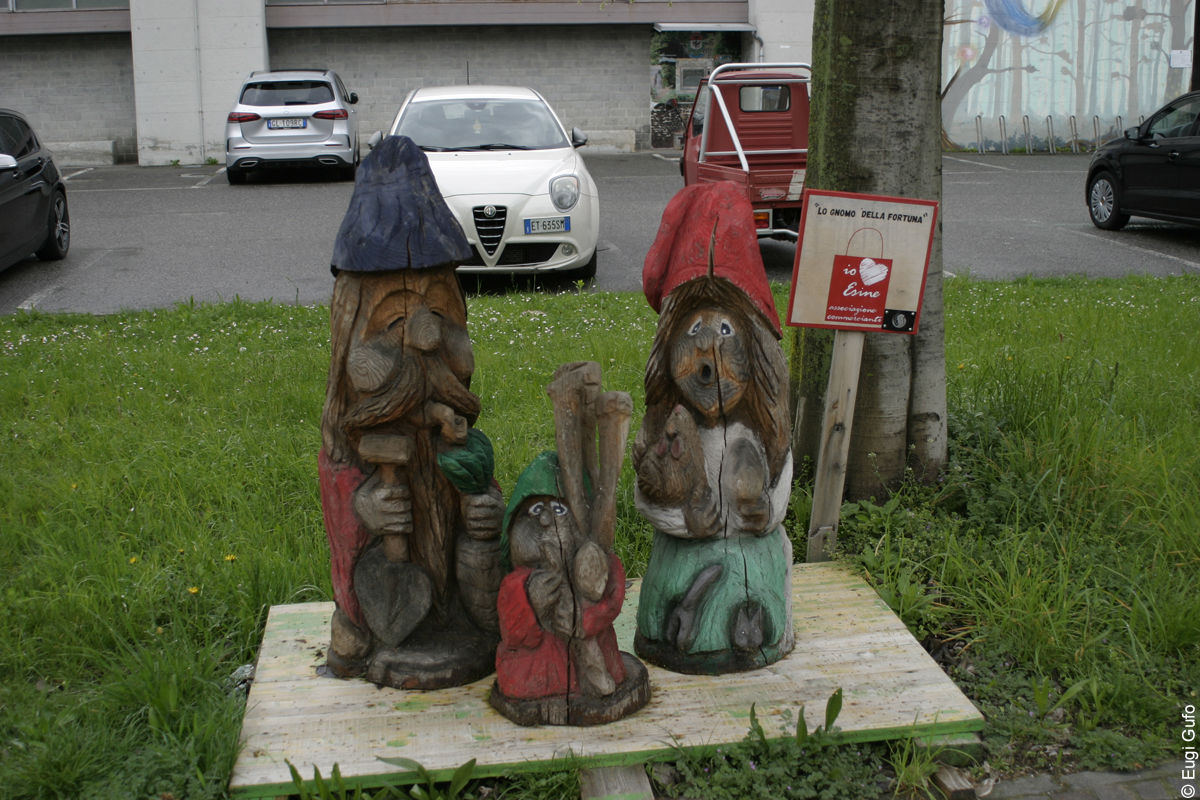
In addition to Christianity, another cult appears to flourish in Esine: that of the «gnomes of fortune.» Throughout the municipal territory I noticed several wooden representations of the Fortunate Family of Gnomes, though I was unable to discover how precisely this cult is practised. Must one descend into a picturesque mine to pray? Or pronounce a curse against elves, humans, and dragons? And in either case, what are the appropriate words? I do not claim I would be prepared to attempt it — this is merely anthropological curiosity.
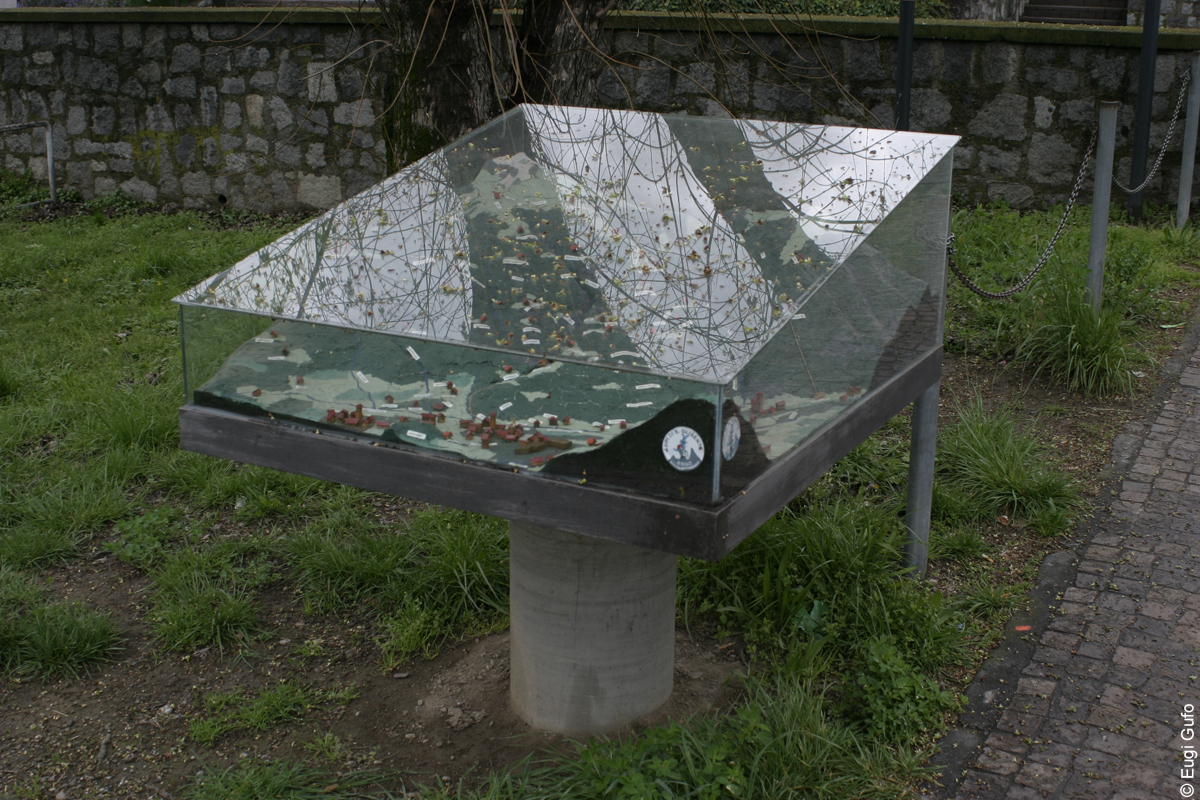
Is there anything else of interest in Esine? Let us attempt, despite the unfortunate reflections, to examine the 3D map… Ah, no: it merely lists the surrounding settlements.
Then let us try viewing the village from above:
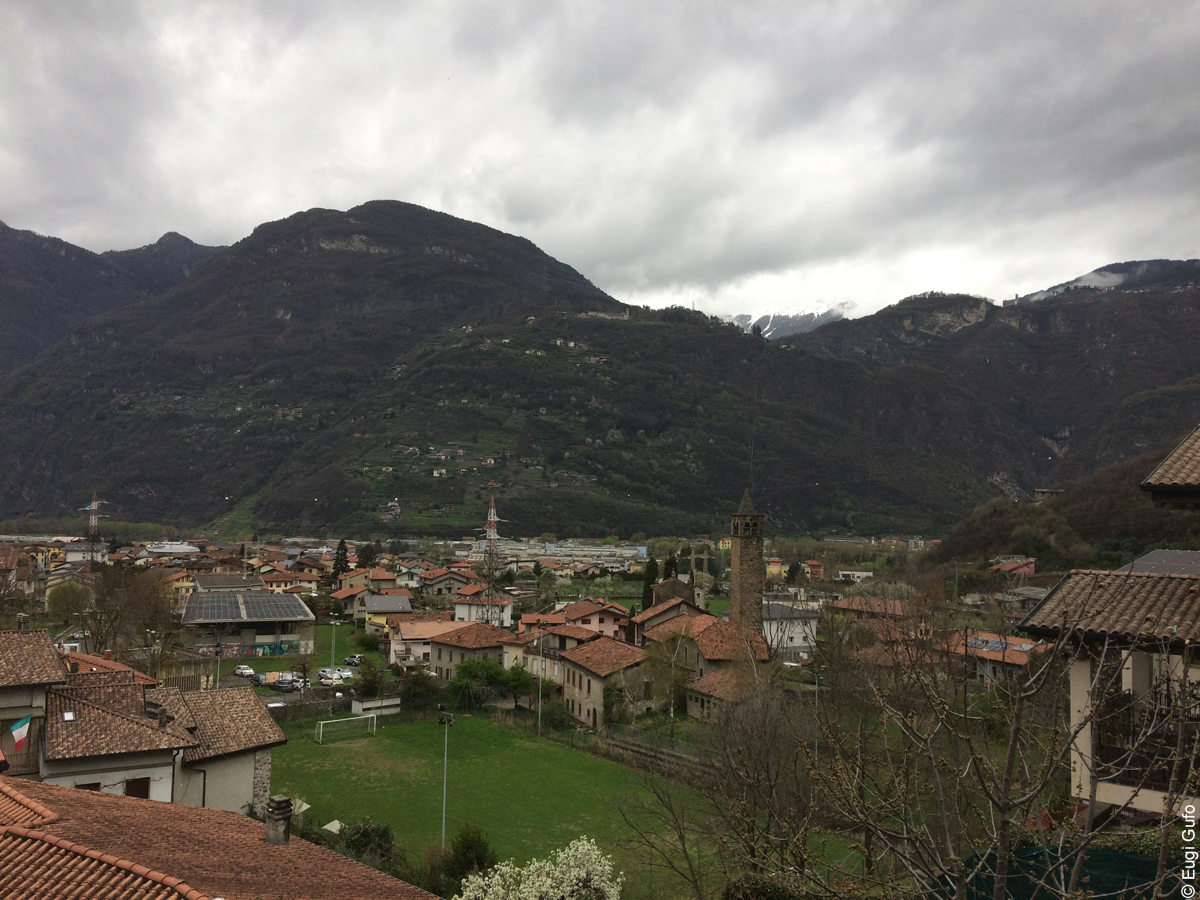
Very well — it appears that the principal sights have been covered. A minor distraction prevented me from taking a few additional photographs, but I believe I have nevertheless conveyed the general impression of the place. We may now bid farewell to Esine and continue onward.
Although the visit proved somewhat less interesting than I had anticipated (based on what I had read online), I would still suggest that you might stop for a brief stroll should Esine one day happen to lie along your route.
Esine, 29 March 2024
↓ Show comments ↓


