


 Long live Ukraine! Fuck the war!
 RSS of site articles
«Tell me whether you know Erve, and I’ll tell you what kind of tourist you are.»
So declared a wise old man who preferred to remain anonymous. After firmly prohibiting any photographs of himself, he clarified that the statement applies mainly — perhaps exclusively — to those who at least occasionally practise or take an interest in tourism in Lombardy.
Indeed, the village of Erve appears on countless hiking websites as the optimal place to leave one’s car before setting off toward the summit of Resegone or other nearby peaks. Many people follow that advice — unless they choose to begin the ascent from a different side. In short, you too, prisoners of the plain, now understand what the old sage meant.
Allow me to add a few practical details. Those who park in Erve (there is even a free car park near the trailhead) are either planning a circular route or belong to the lazier category of hikers. The rest enjoy the privilege of arriving by public transport at point A, walking the route they desire, and catching another bus or train from point B to return home.
I, for example, belong to the less indolent category: I reached Erve neither by car nor by bus, but on foot. The village lies at just 560 metres above sea level, so climbing from the railway station of Calolziocorte (241 m) served as a necessary and not particularly exhausting warm-up before the proper mountain walk I had planned.
After crossing Calolziocorte rather briskly (having explored it already in 2016), I followed a lightly trafficked road, paused briefly in Rossino, and soon spotted the road sign announcing Erve.
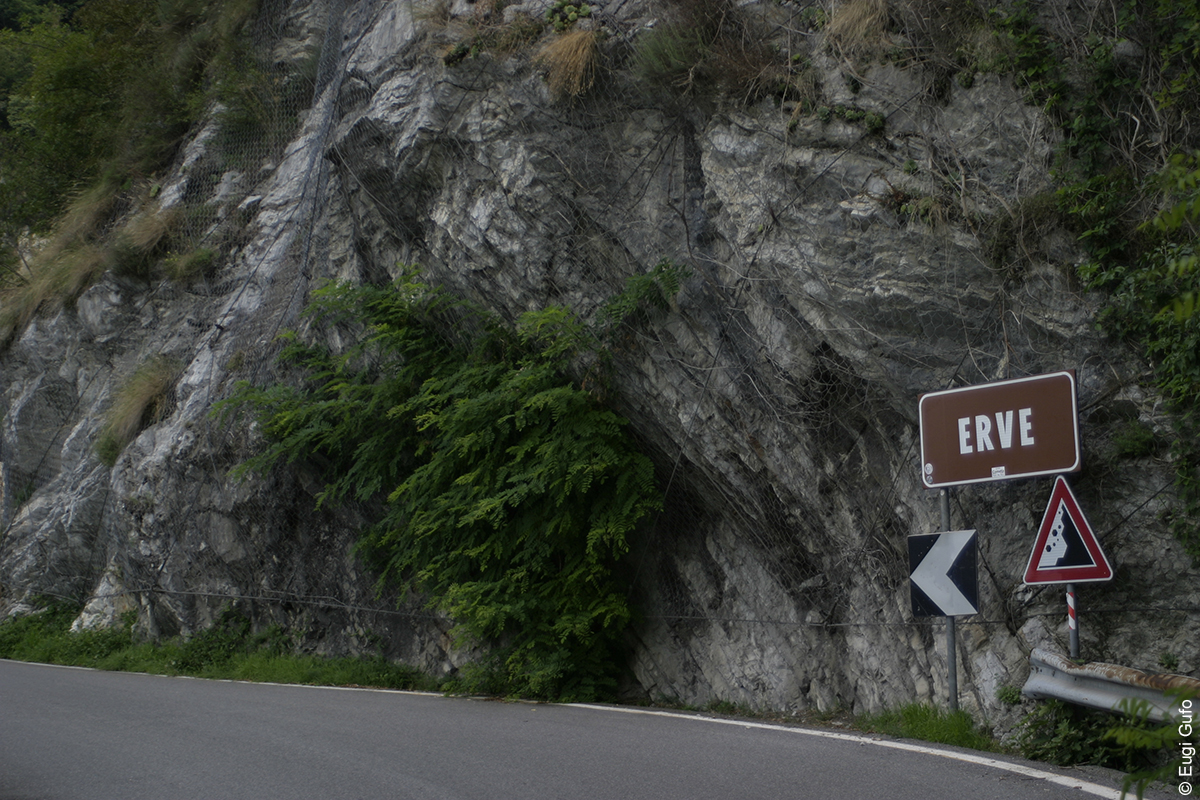
A few dozen metres before that sign, however, stands a pole bearing two far more important signs. Do not miss them.
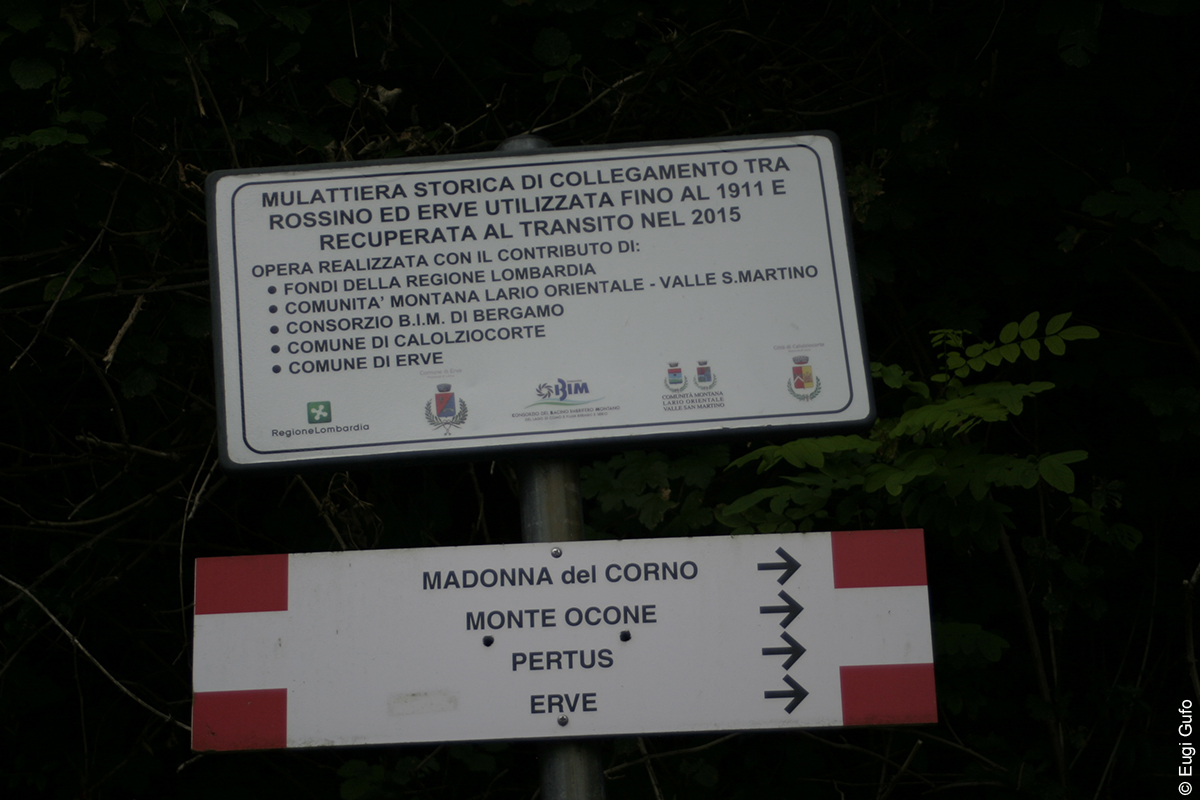
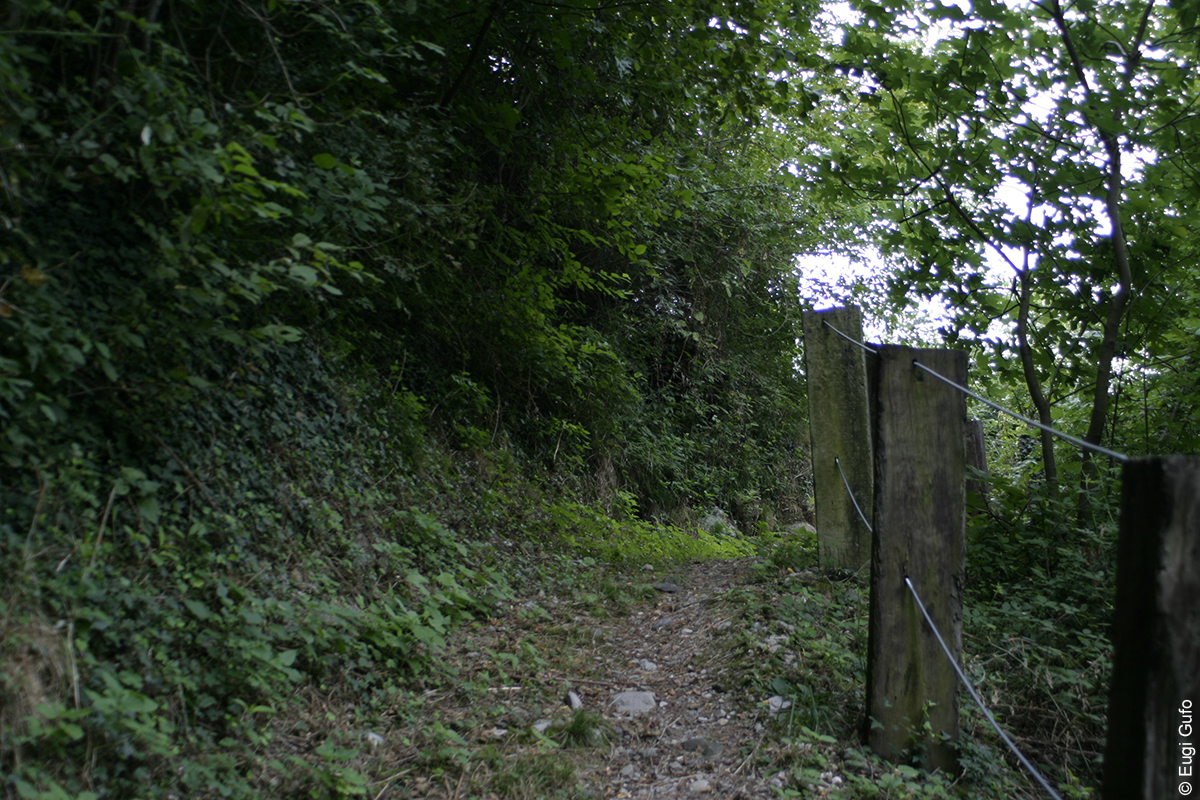
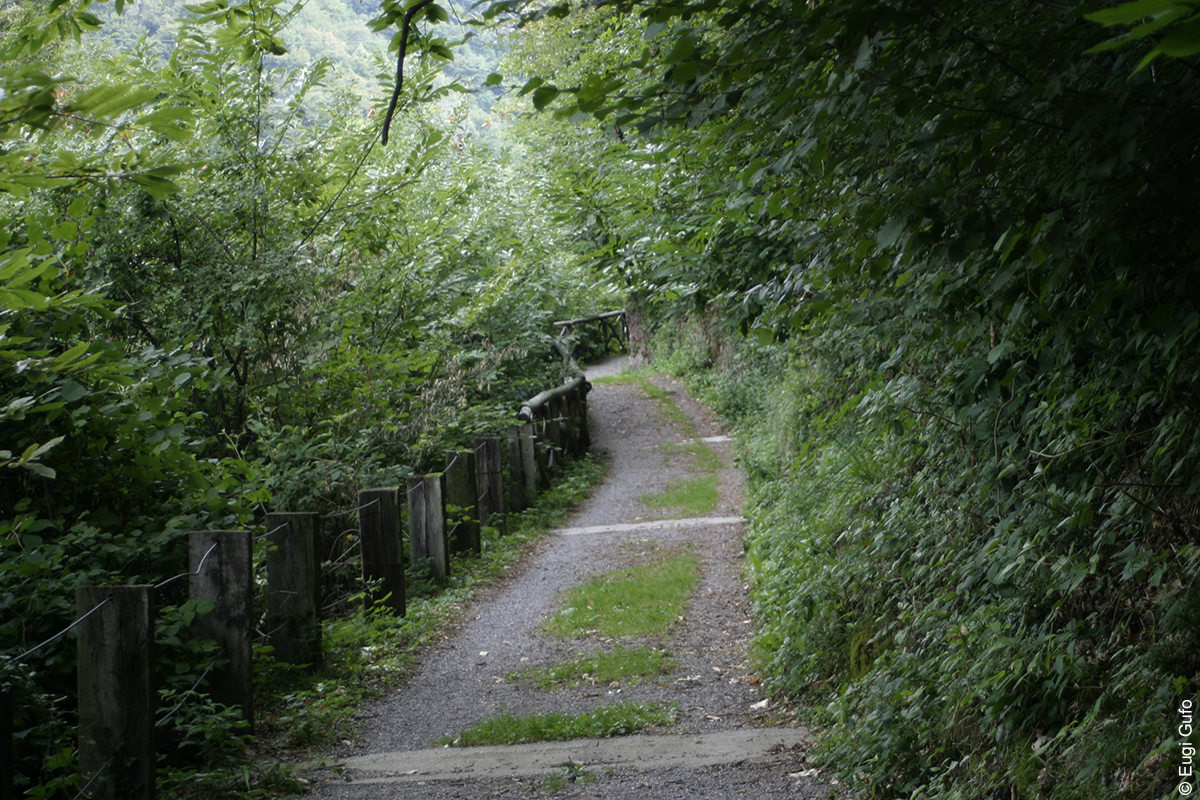
They indicate the first mountain path of this journey. Slightly longer and more demanding than the asphalt road — built centuries ago with the technology of its time — it is nevertheless far more beautiful. And after all, one does not go to the mountains to avoid effort. The gradient is moderate, the paving largely uniform, and the path well fenced.
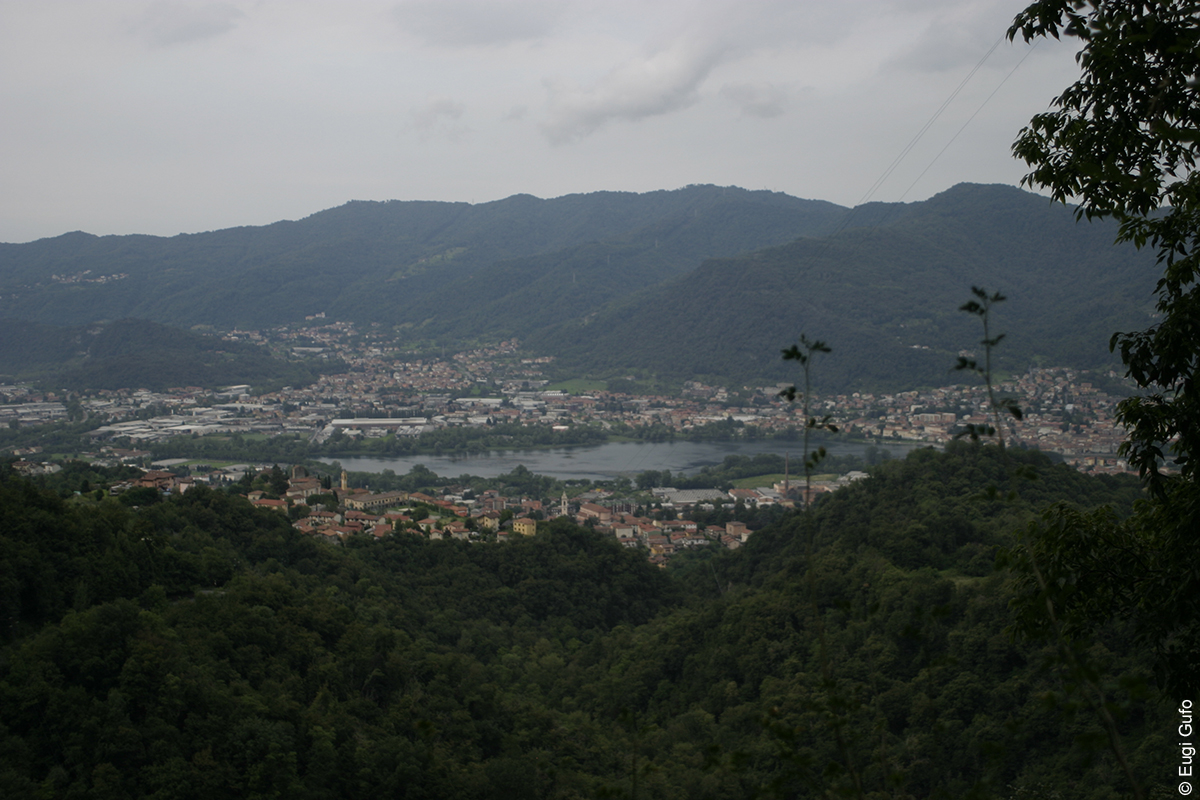
It also offers a pleasing view over Calolziocorte and the surrounding mountains.
At one point, a junction appears, offering a detour toward other destinations. Without forgetting my main objective, I decided to inspect the nearest one: «Madonna del Corno,» located shortly before Pertus. It is a rocky terrace with a splendid panorama. On one side stands a chapel dedicated to the Assumption of the Virgin Mary; on the others, wooden benches and even seats carved directly into the rock.
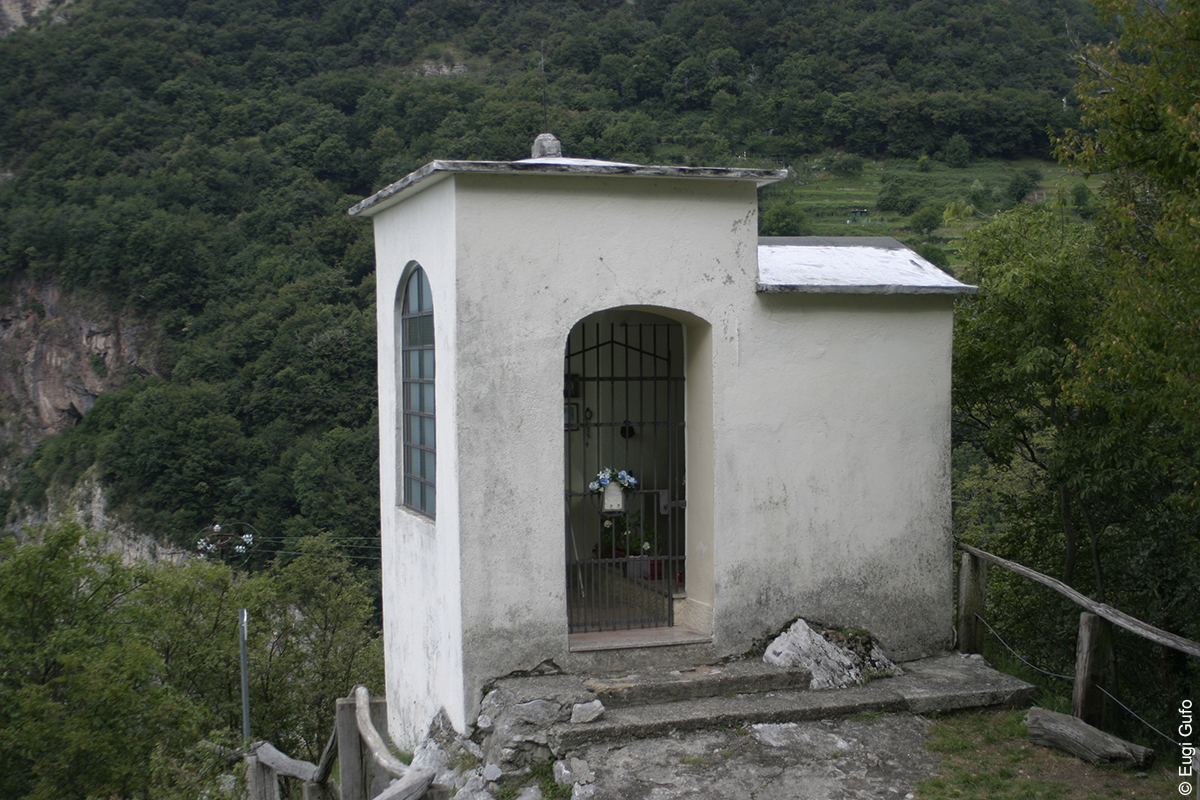
There is also a large crucifix that appears to have been constructed from the remains of an old electricity pylon — perhaps by devotees of the Church of Recycling. I must admit, however, that it is well executed and does not feel entirely out of place.
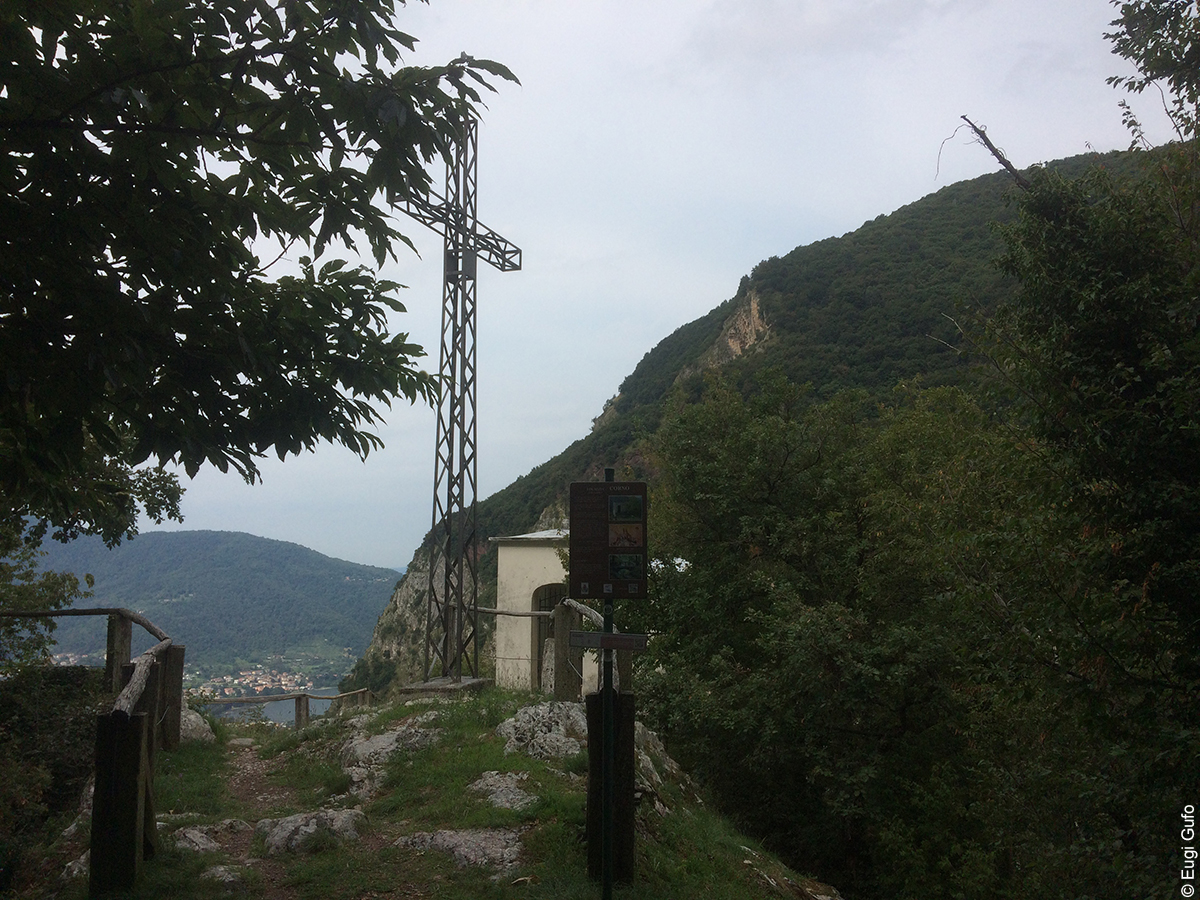
Beyond the terrace, the branch continues toward other locations, but for now our aim remains Erve.
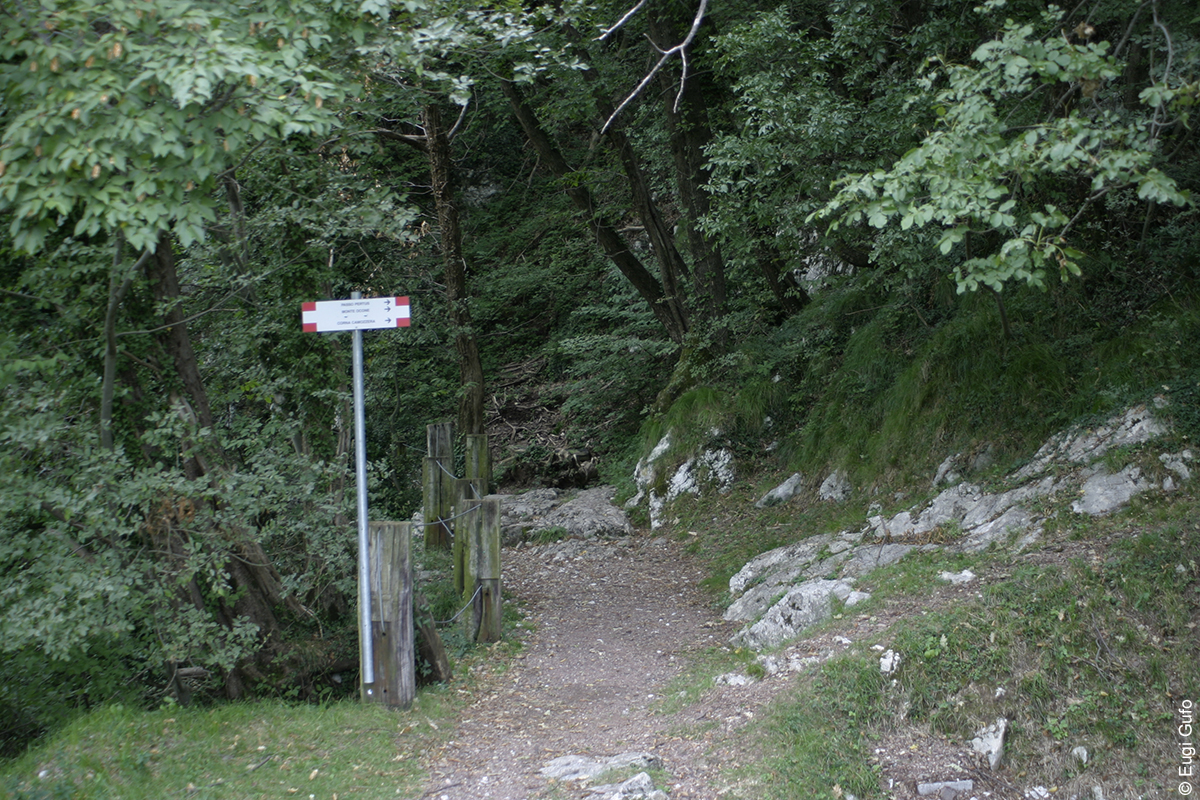
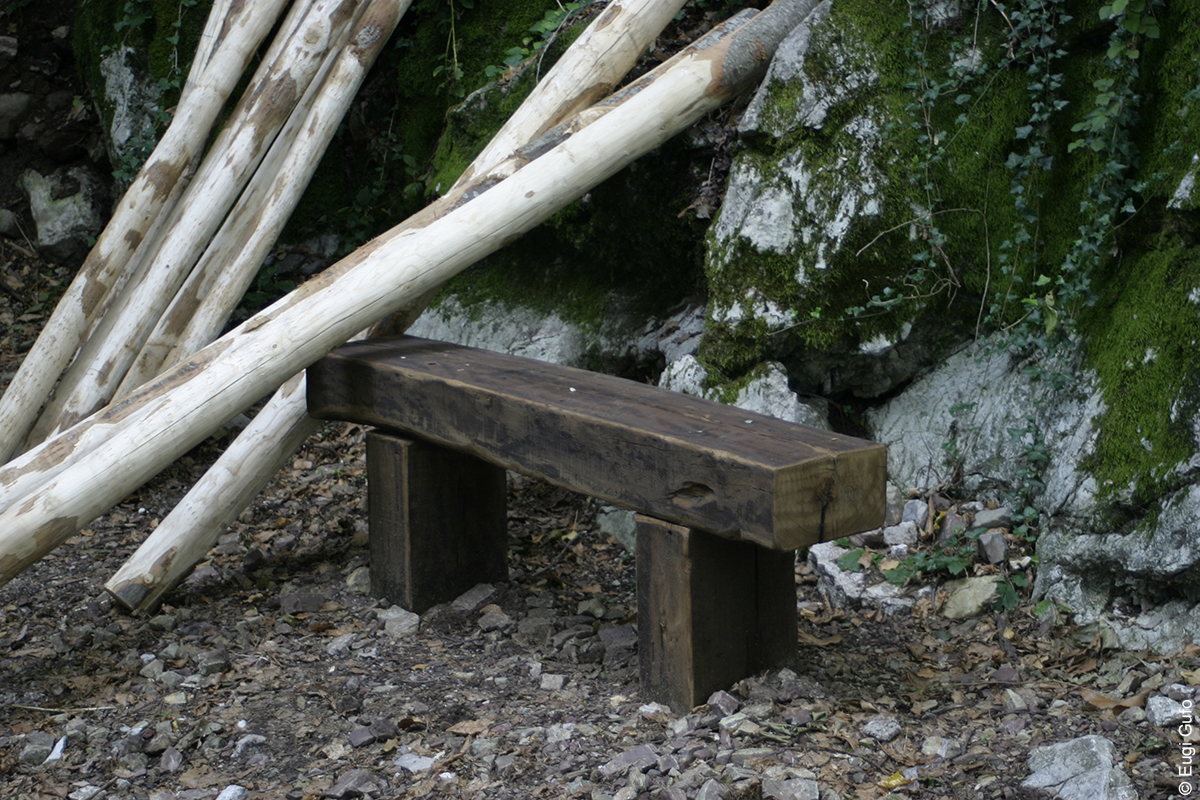
Returning to the main path, we proceed. Until 1911 this was the only human-made access route to Erve. Those who feel less robust than the mountaineers of former times will find opportunities to rest along the way.
Suddenly the path becomes a proper mule track, officially classified as an agro-silvo-pastoral road. Within a few dozen metres, the first houses appear — reassuring confirmation that we are on the right track.
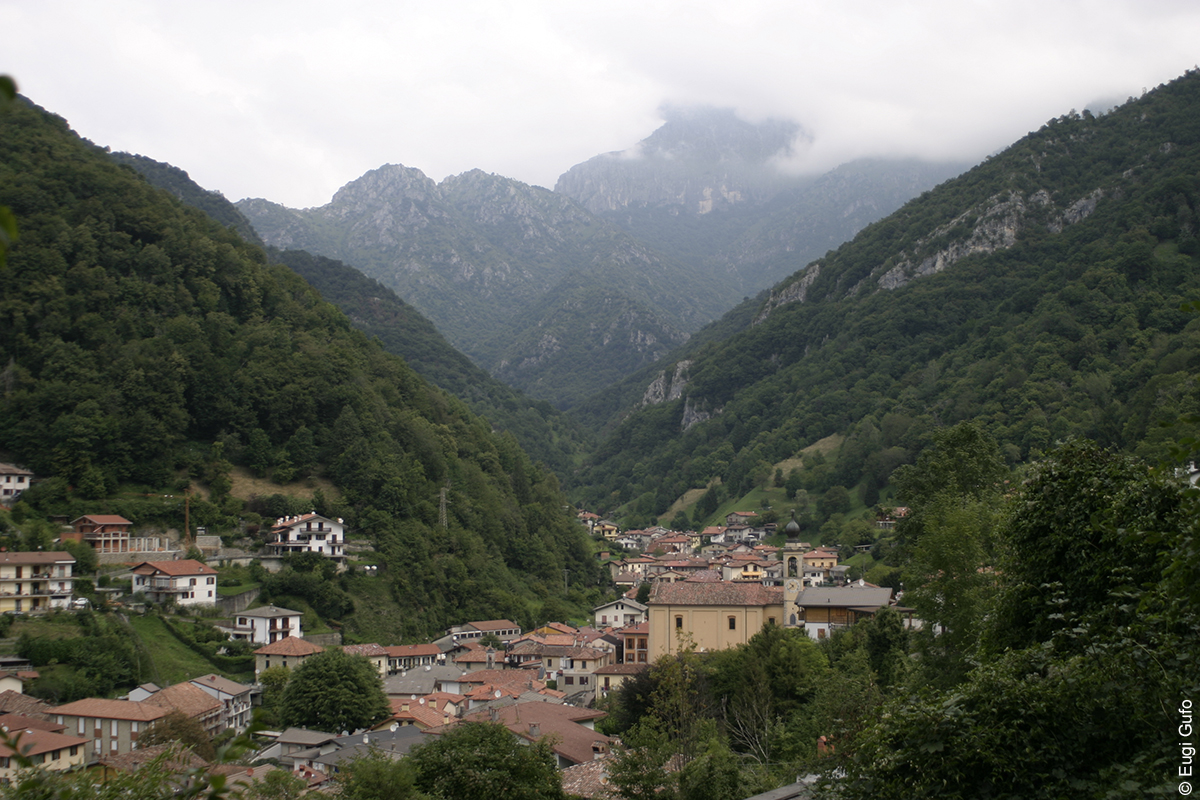
Soon a valley opens before us, with a village nestled inside: Valle Erve, with the homonymous settlement — the objective of this stage.
By a curious twist of geography (or urban planning), one of the first structures encountered is the cemetery. And yet the route has hardly been lethal. The cemetery itself is small and unremarkable.
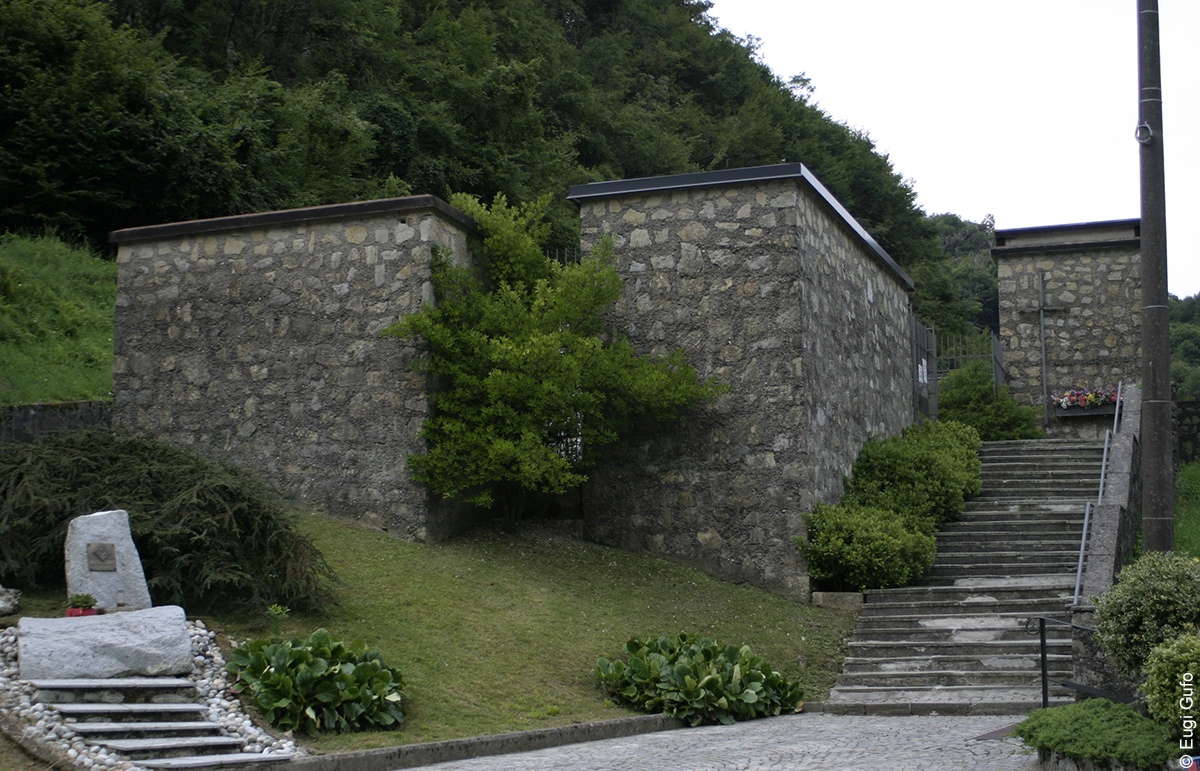
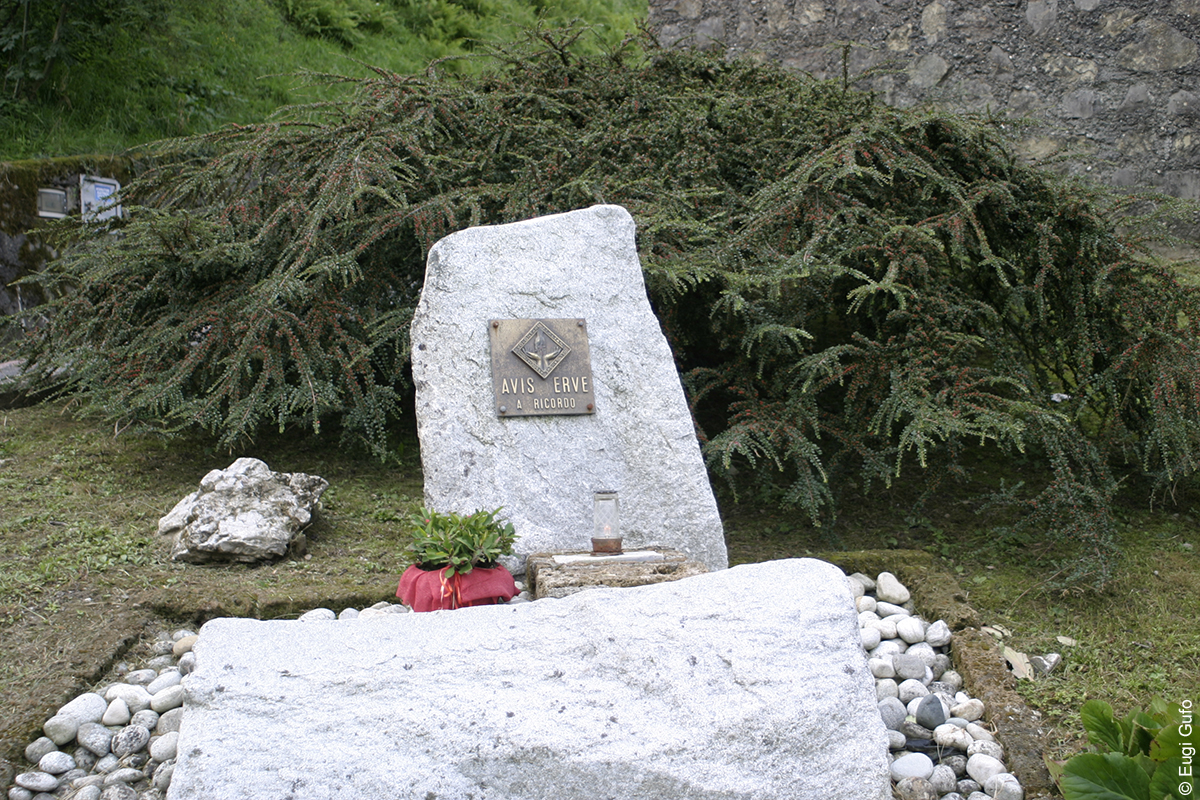
In front of its entrance stand two monuments devoted, paradoxically, to sustaining life: one of AVIS (blood donors) and one of AIDO, the Italian association for organ, tissue and cell donation, founded in Bergamo in 1973.
At first glance, the local architecture appears typically Alpine — though this impression rests on only a handful of examples.
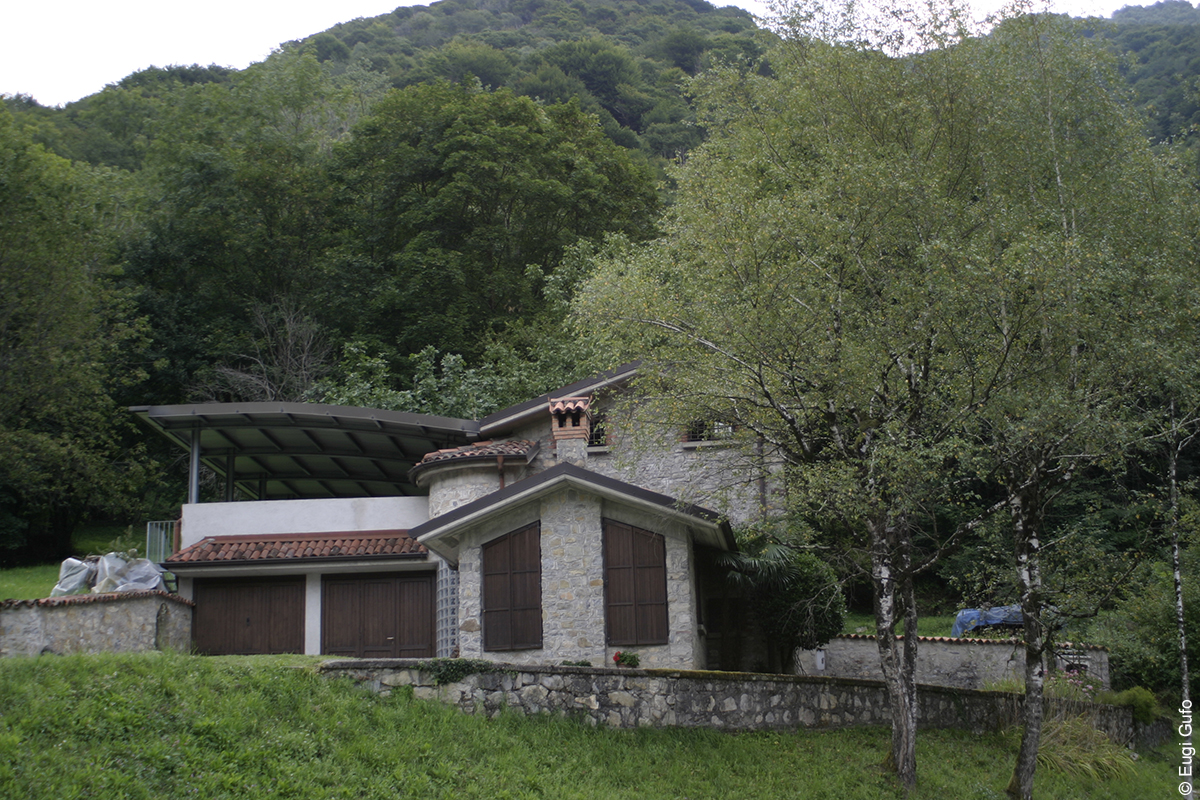
Most peripheral buildings are rather ordinary, indistinguishable from houses in many other Italian towns.
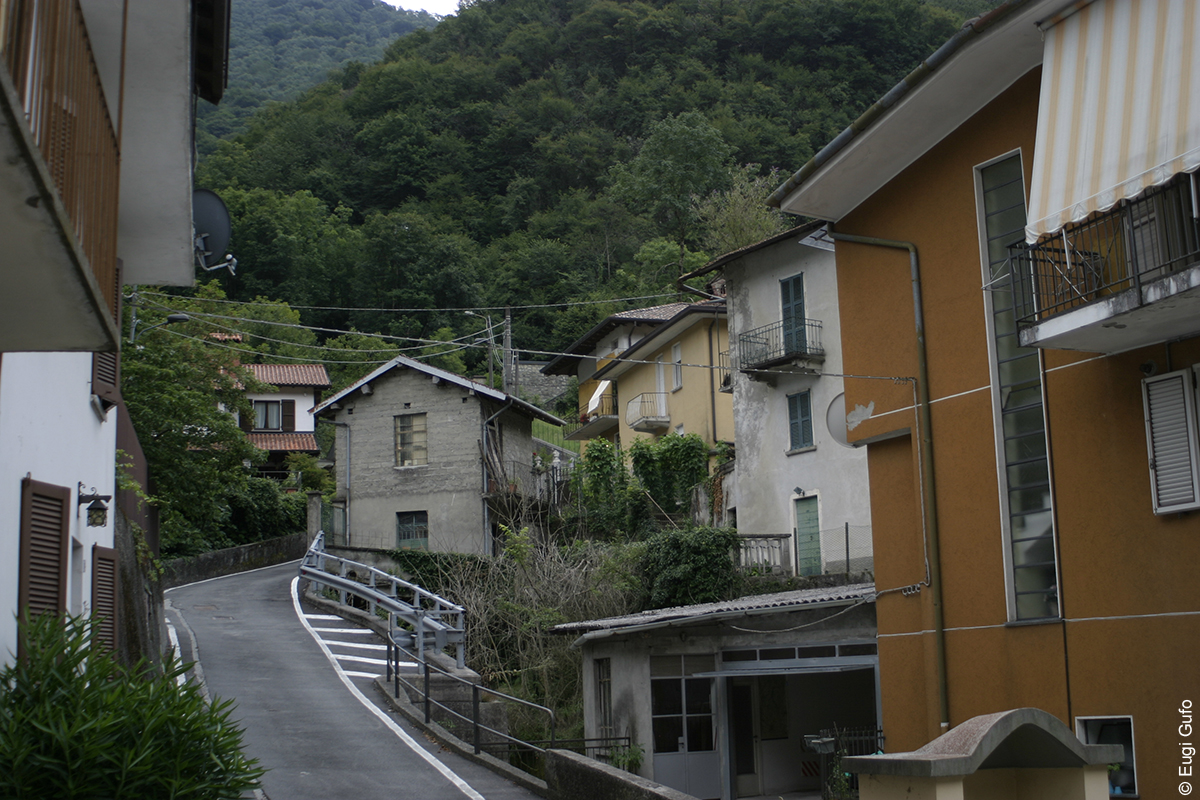
Their main advantage is the view beyond the built-up area.
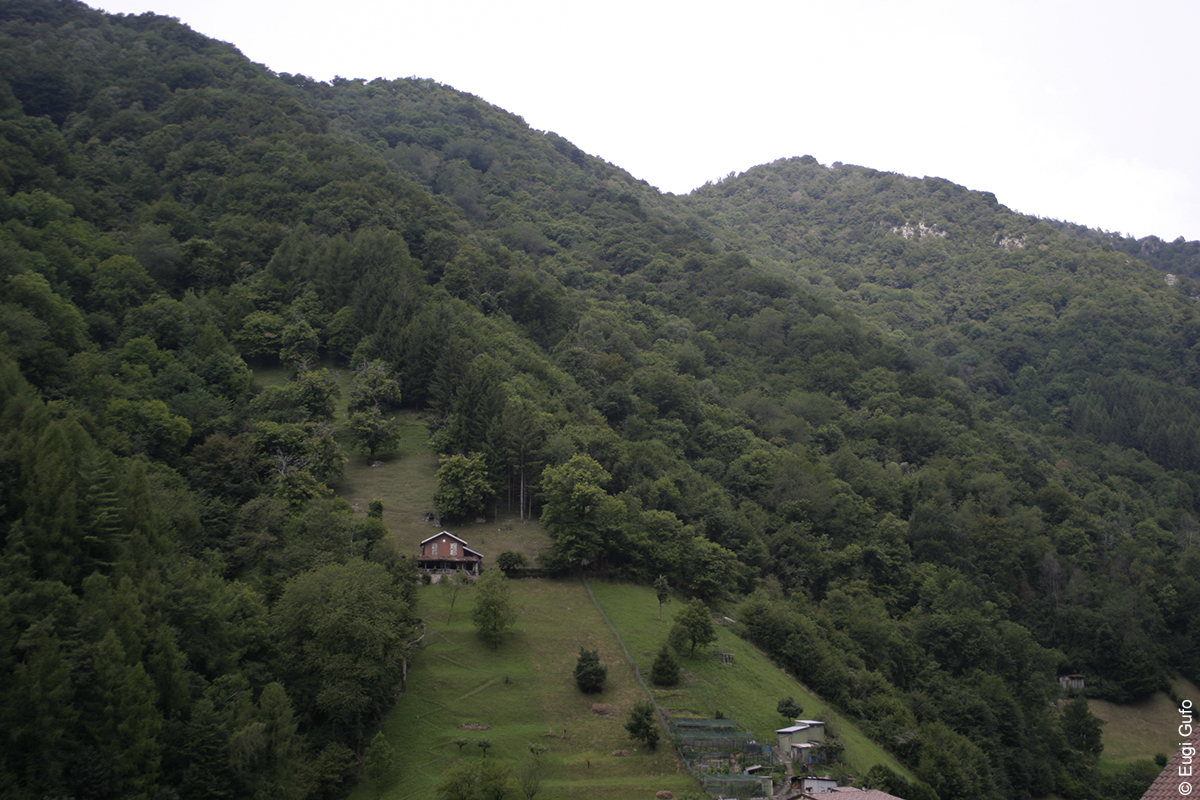
Closer to the centre — if that designation is appropriate — the architecture improves slightly, though not spectacularly. I have seen more attractive isolated mountain villages.
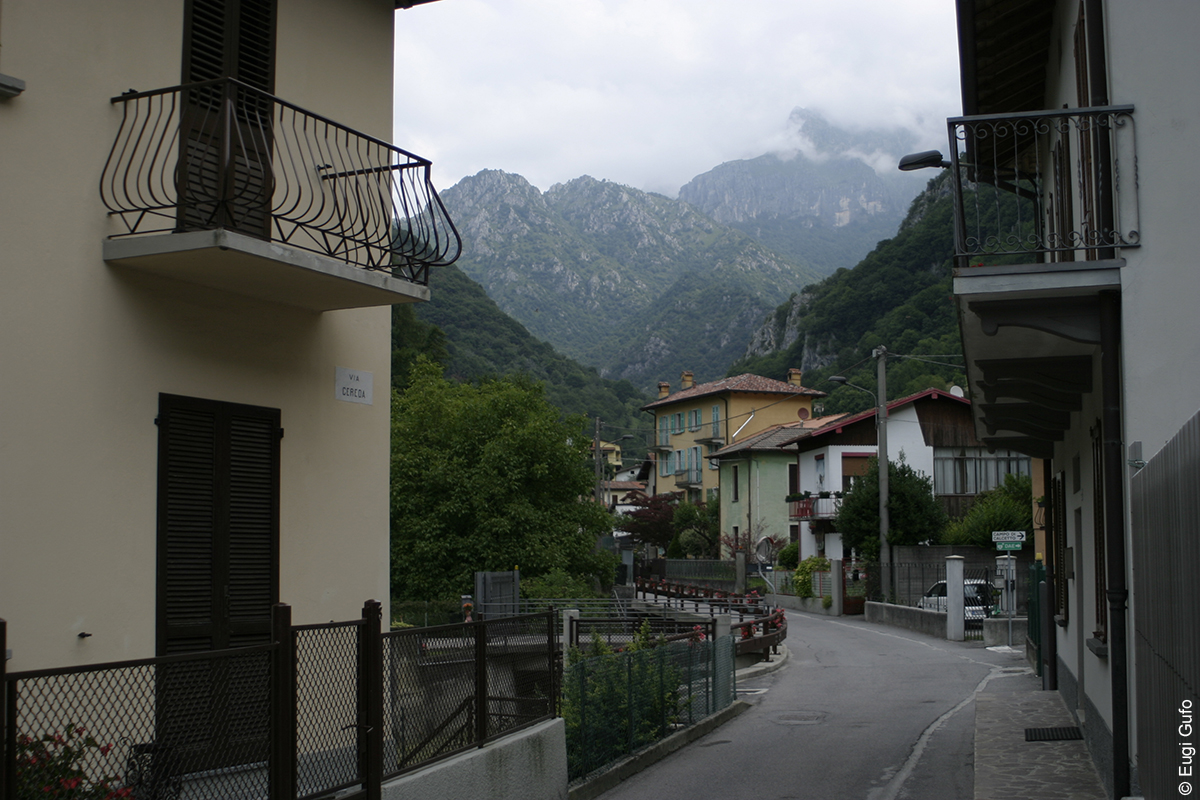
The most interesting building in the historic core is the Church of Santa Maria Assunta, constructed between 1773 and 1778.
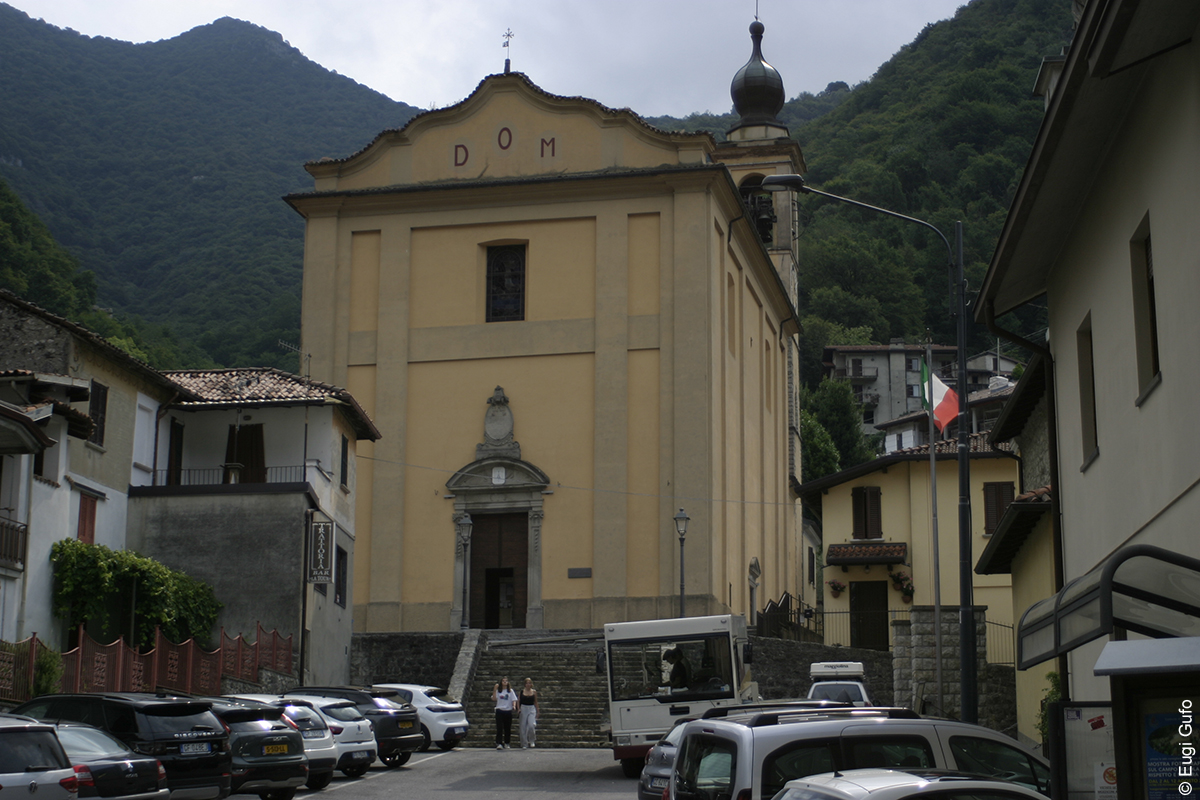
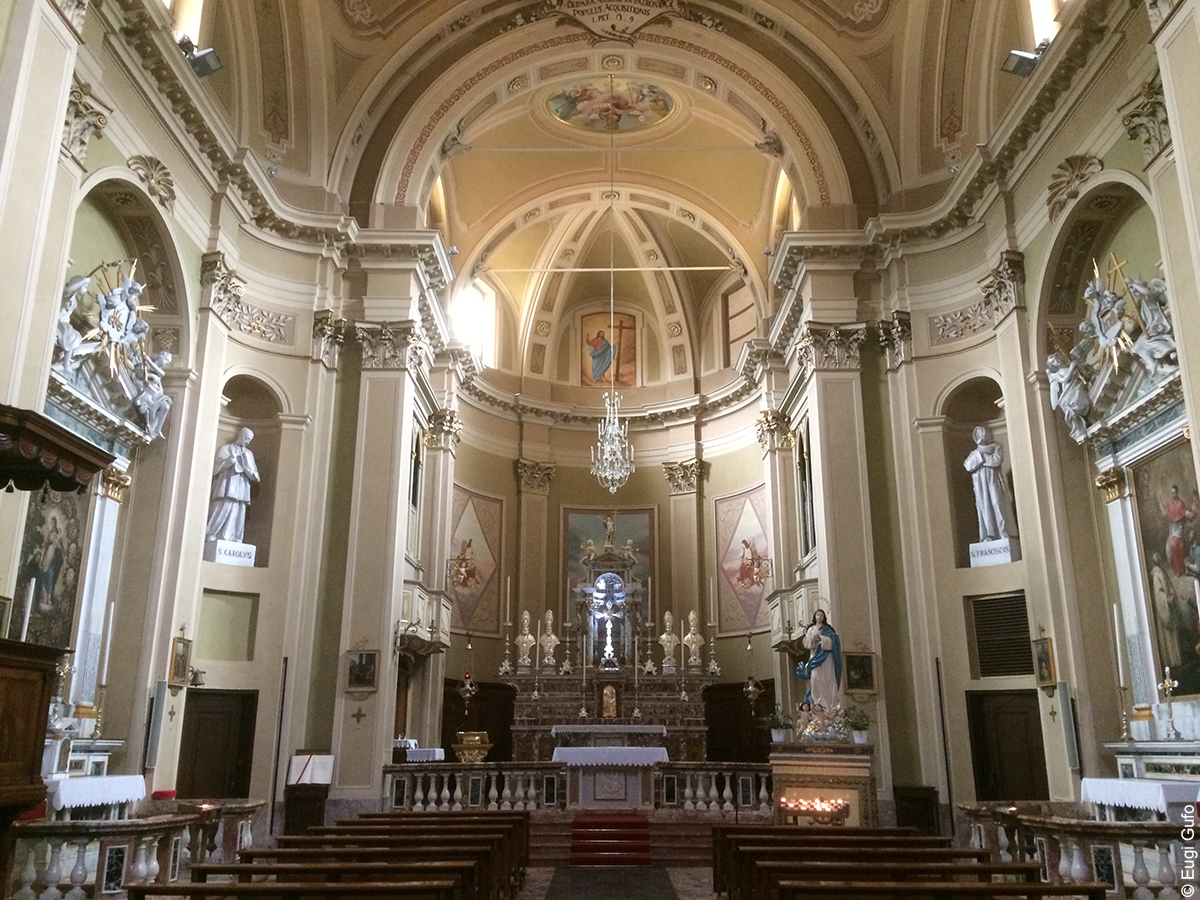
Its interior is decidedly superior to its exterior.
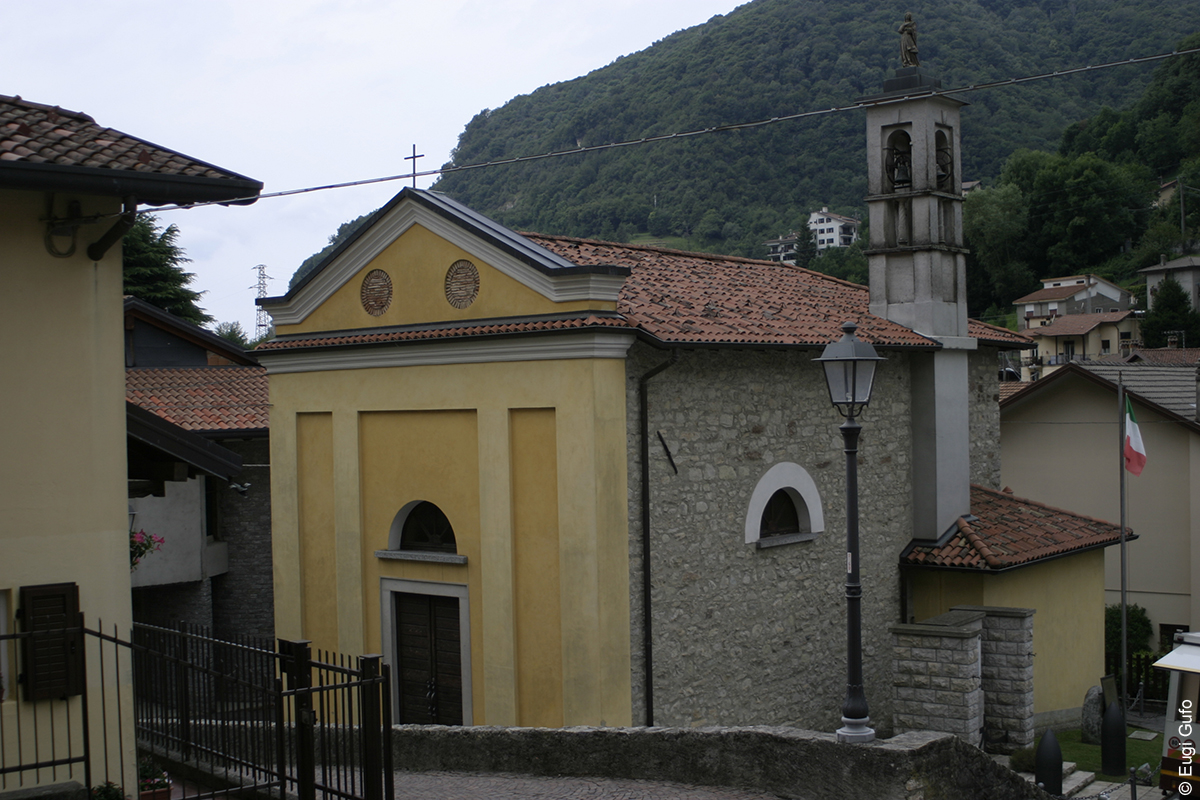
Across the square diagonally stands another church: the Church of the Beata Vergine di Lourdes, built in the second half of the nineteenth century. Unfortunately, it was closed during my visit.
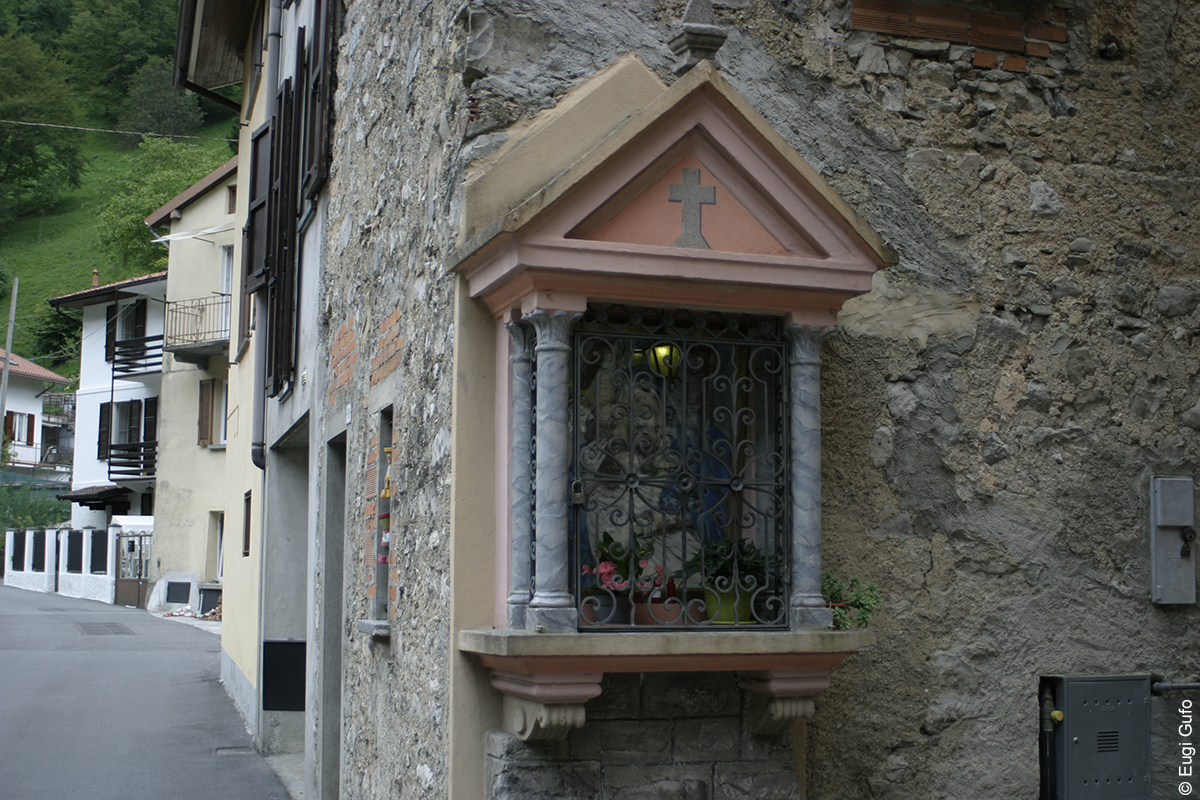
More aesthetically pleasing are many of the small religious shrines embedded in old walls.
Religious symbolism appears in unexpected contexts. For example, a road sign that seems to warn of «young saints» crossing. Personally, I have not encountered such saints along Italian roads in twenty years — perhaps they have all relocated to Erve.
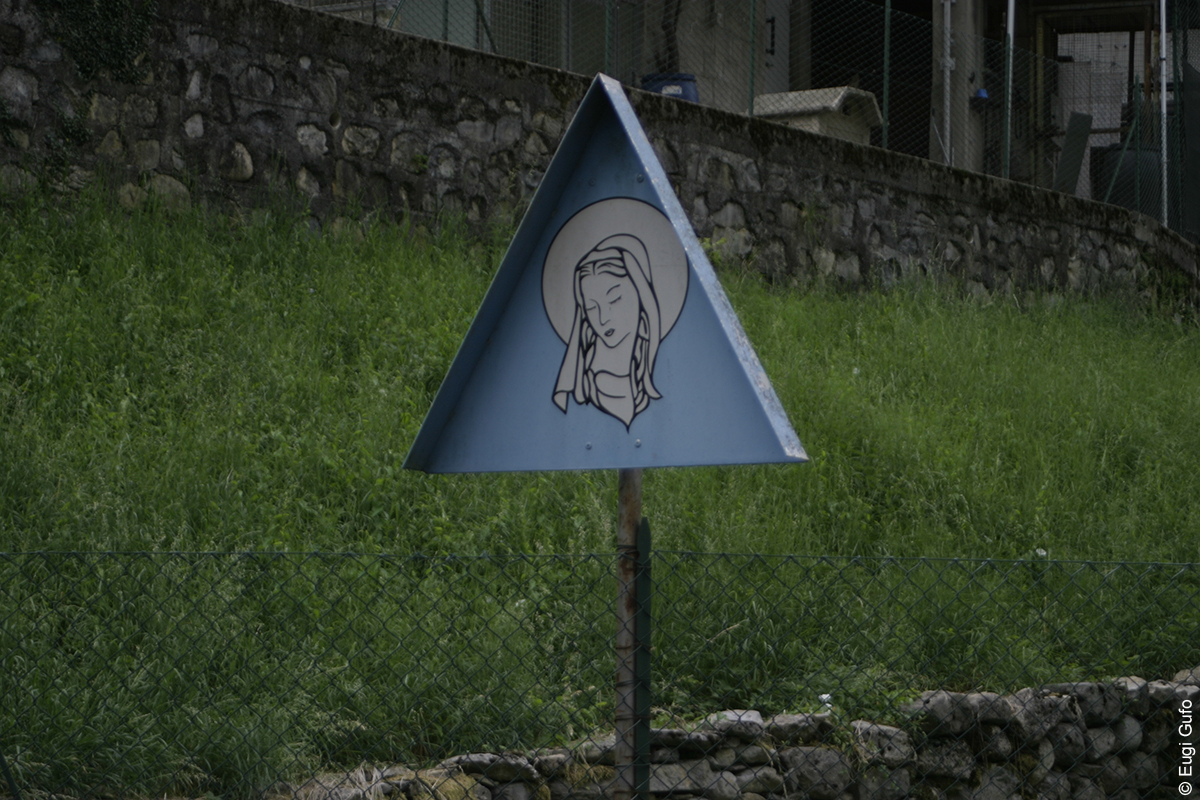
On a more serious note, Erve demonstrates pluralism of worship; some shrines depict non-Catholic saints.
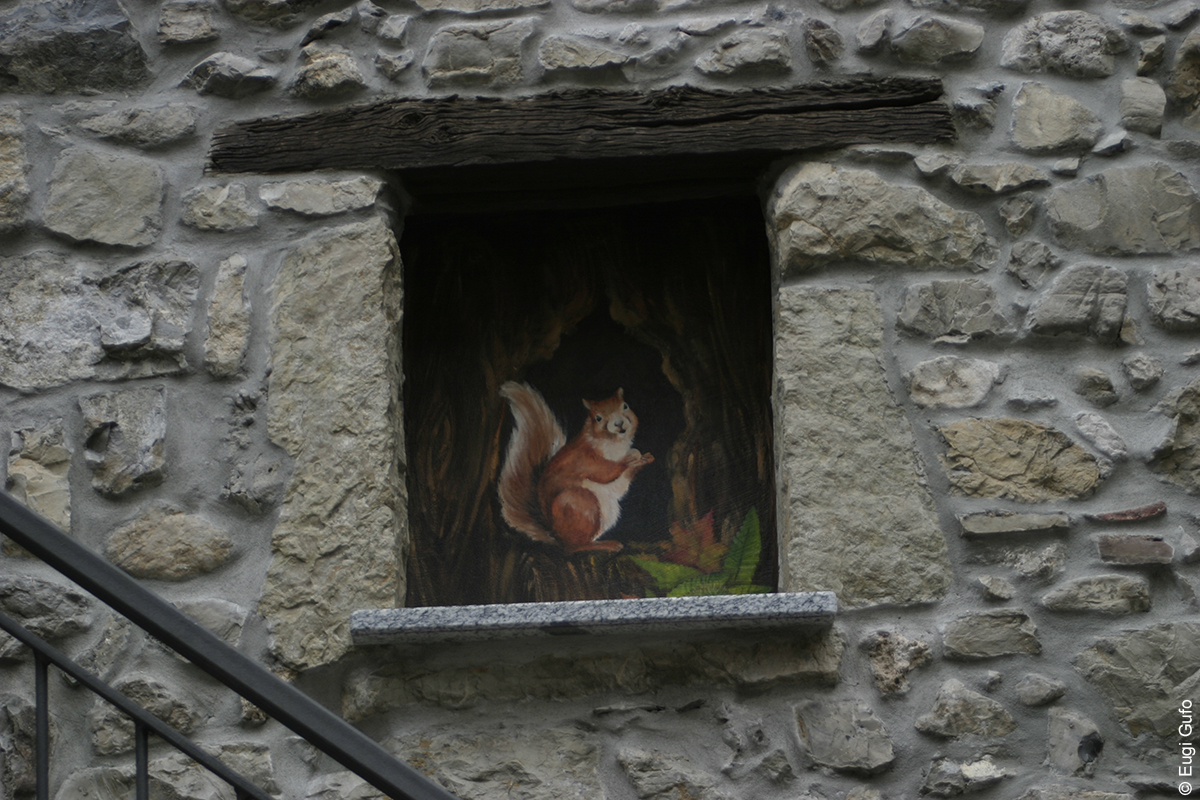
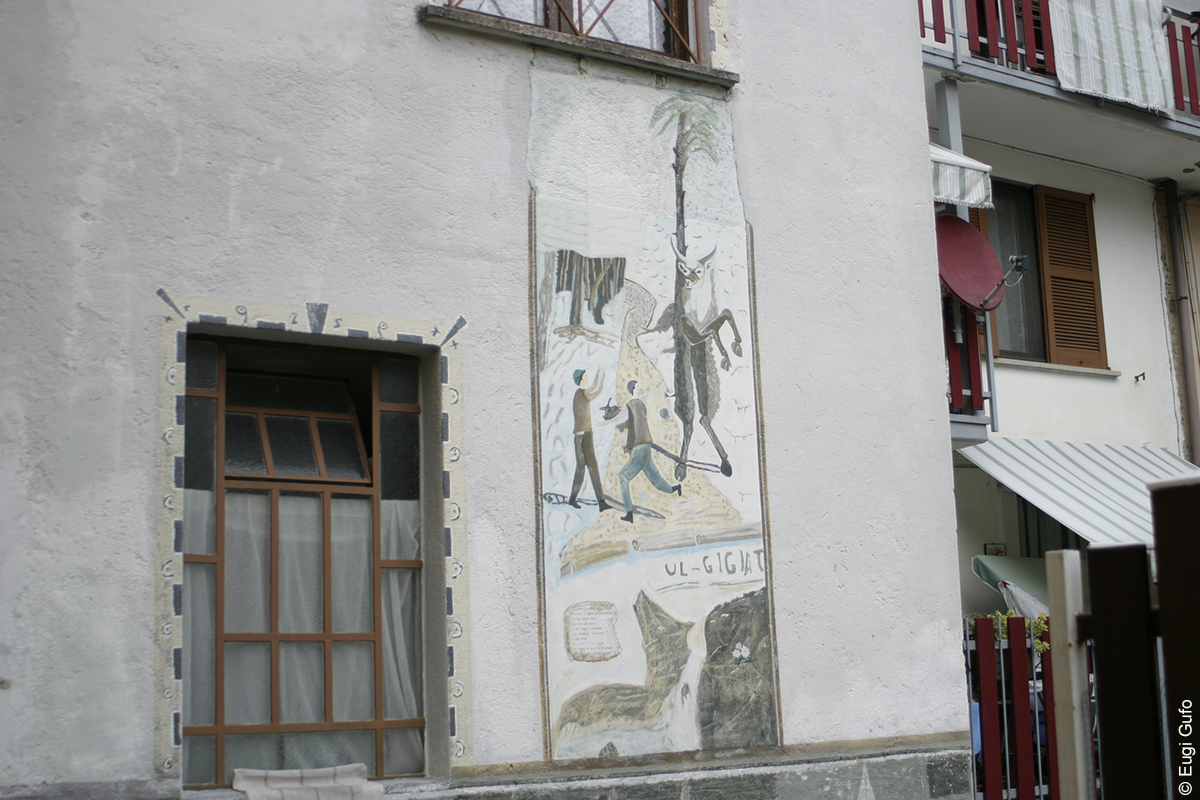
Returning to earthly matters: Erve offers commendable examples of street art.
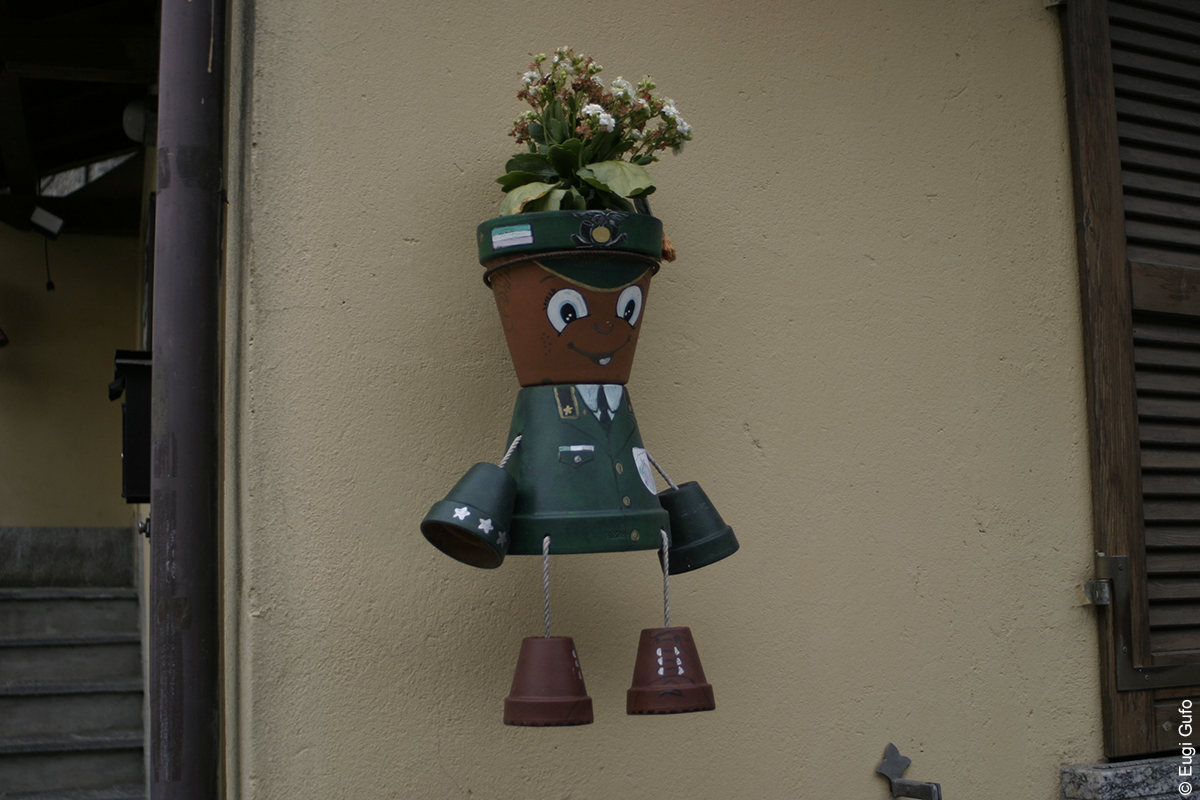
Even more distinctive are the «cocci solidali» — flower-pot figures painted like cartoon characters and attached to countless façades. Initially I assumed they were the whimsical invention of a local artisan; in fact, they are a project of the volunteer organisation «I cocci solidali di Erve,» founded in 2021 to raise funds for charitable causes. I display only a selection.
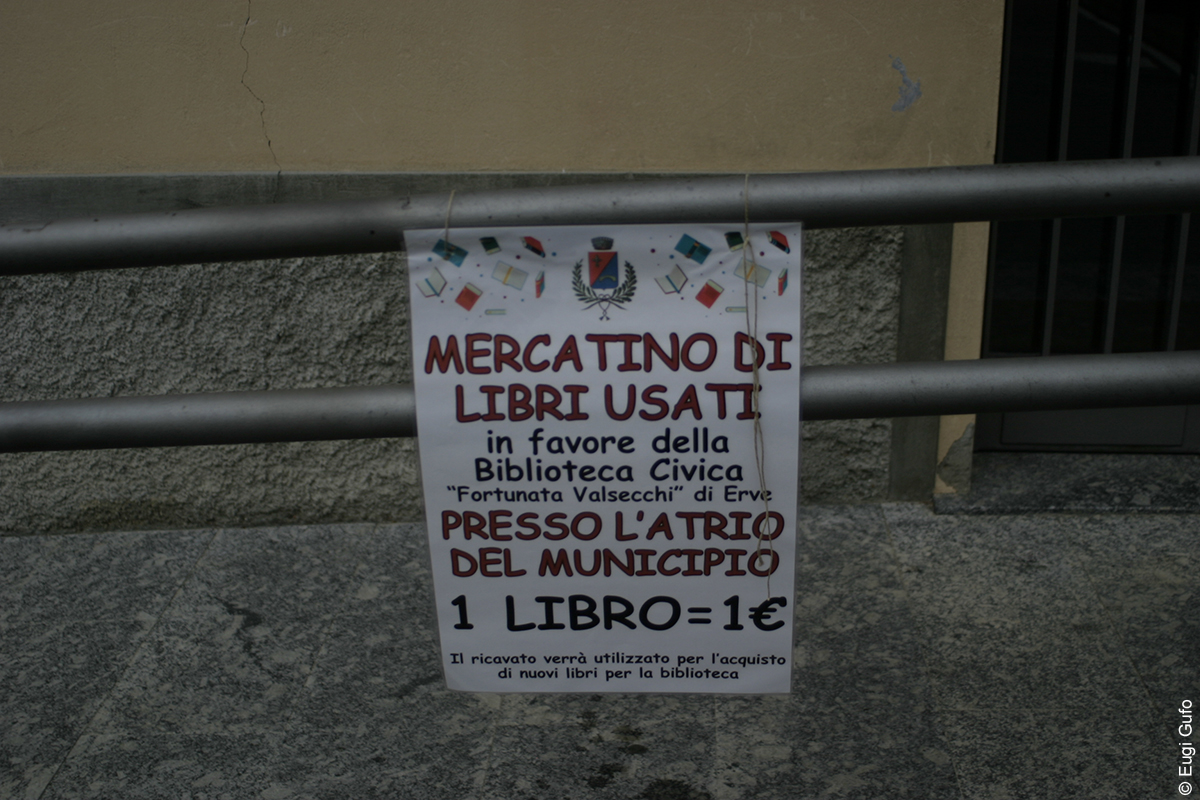
Inside the town hall, a used-book market raises money for the municipal library. Payment is simple: €1 per book, cash in a box. The selection was modest but promising.
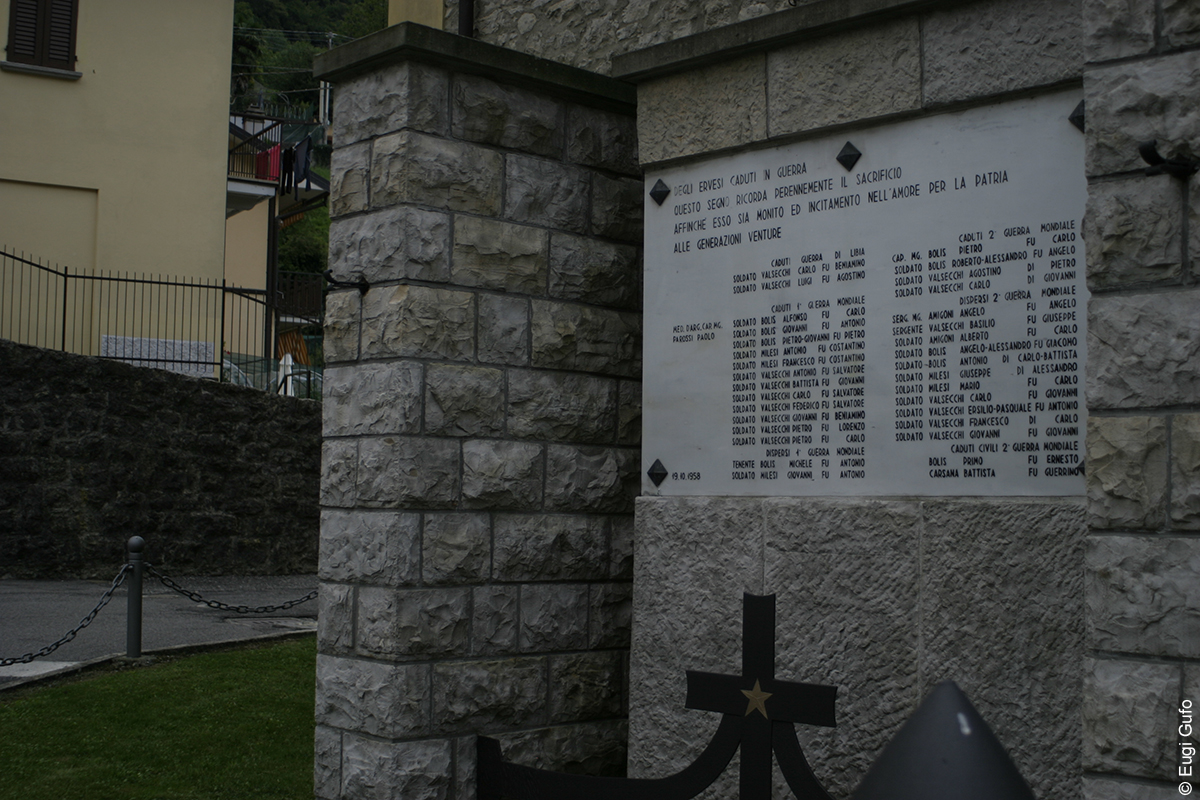
History is present as well: the war memorial to those fallen in the two World Wars — partly obscured, during my visit, by a strategically parked food truck.
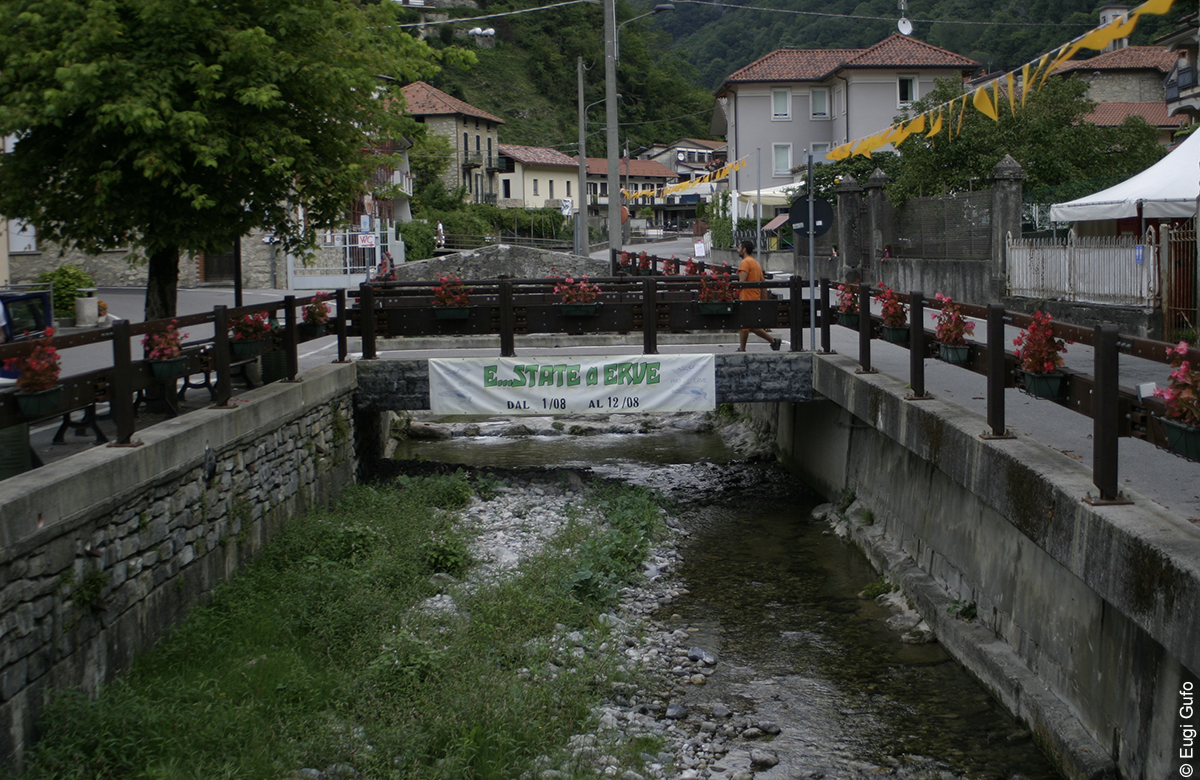
Urbanistically, Erve is peculiar not only for its once-remote valley location but also because the built-up area is split lengthwise by the Galavesa stream. Several bridges connect the two halves, some pedestrian only.
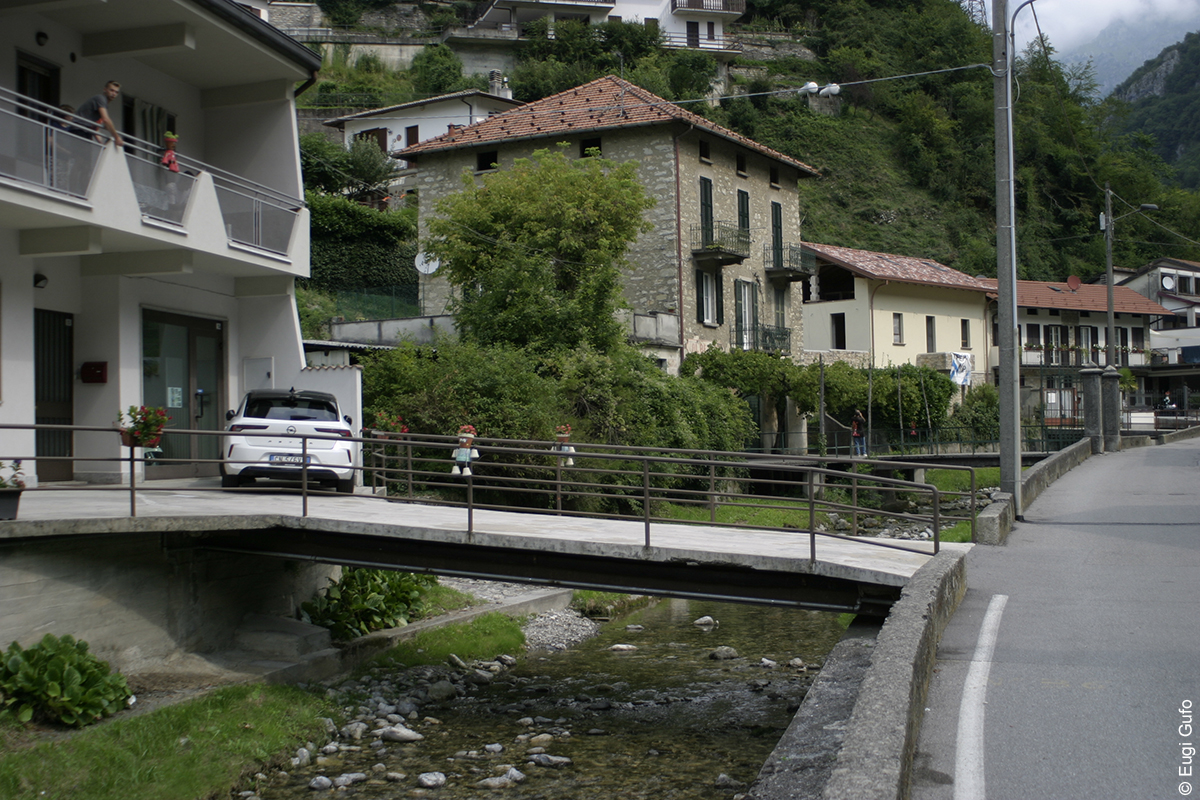
Numerous private bridges link riverside houses to the road — rather like Venice, but automobile-friendly.
The mountain tradition of adorning roadside barriers with seasonal flower pots is respected here too.
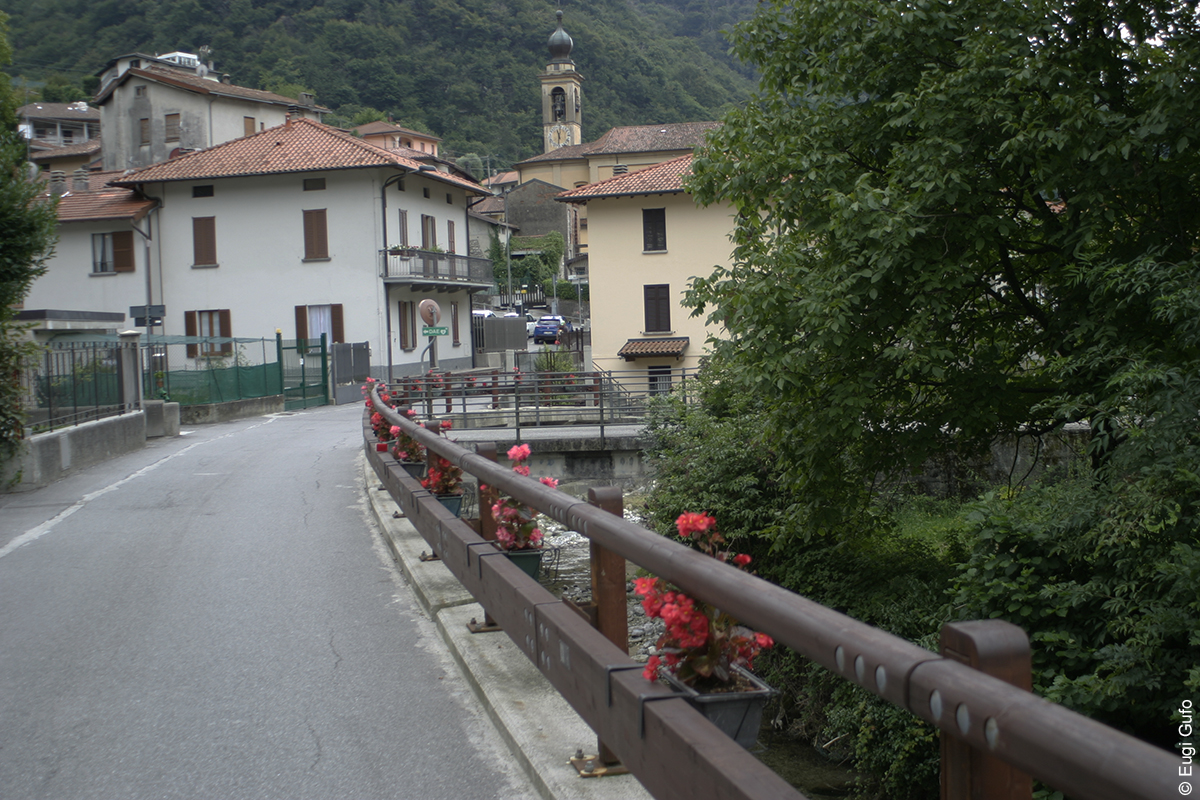
The Galavesa, only eight kilometres long, forms numerous picturesque spots. One could simply walk along its course and remain satisfied.
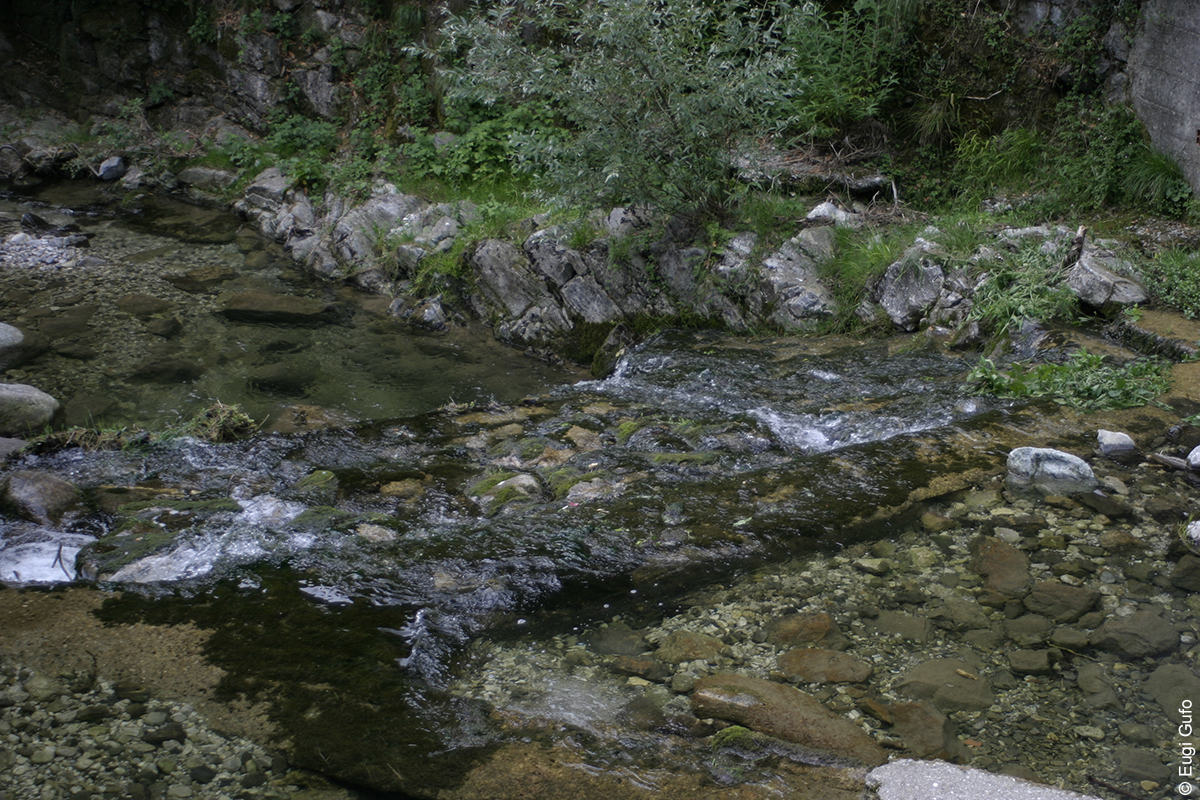
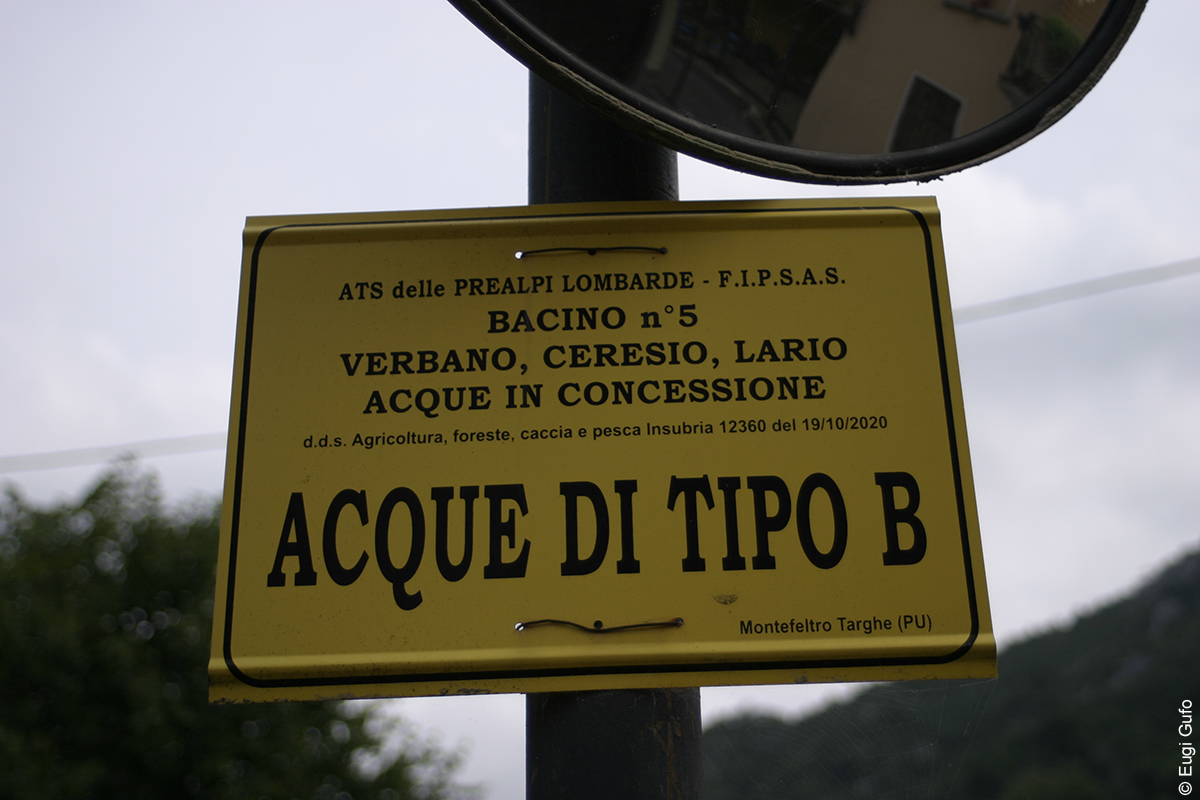
Despite crystal-clear water, I saw no fish — though amateur fishing is permitted with a licence.
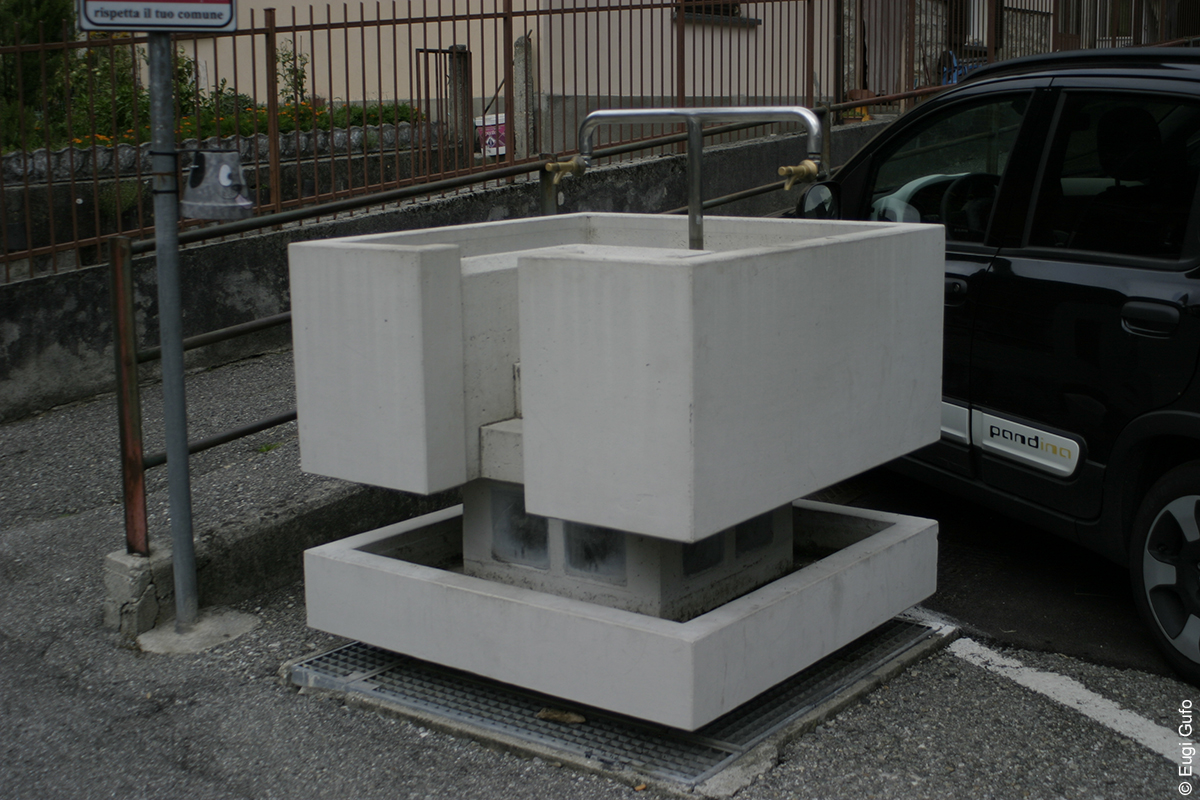
The most curious water-related object is a column built in 2020 by the Bergamo section of the Associazione Nazionale Alpini. Aesthetically intriguing, practically puzzling.
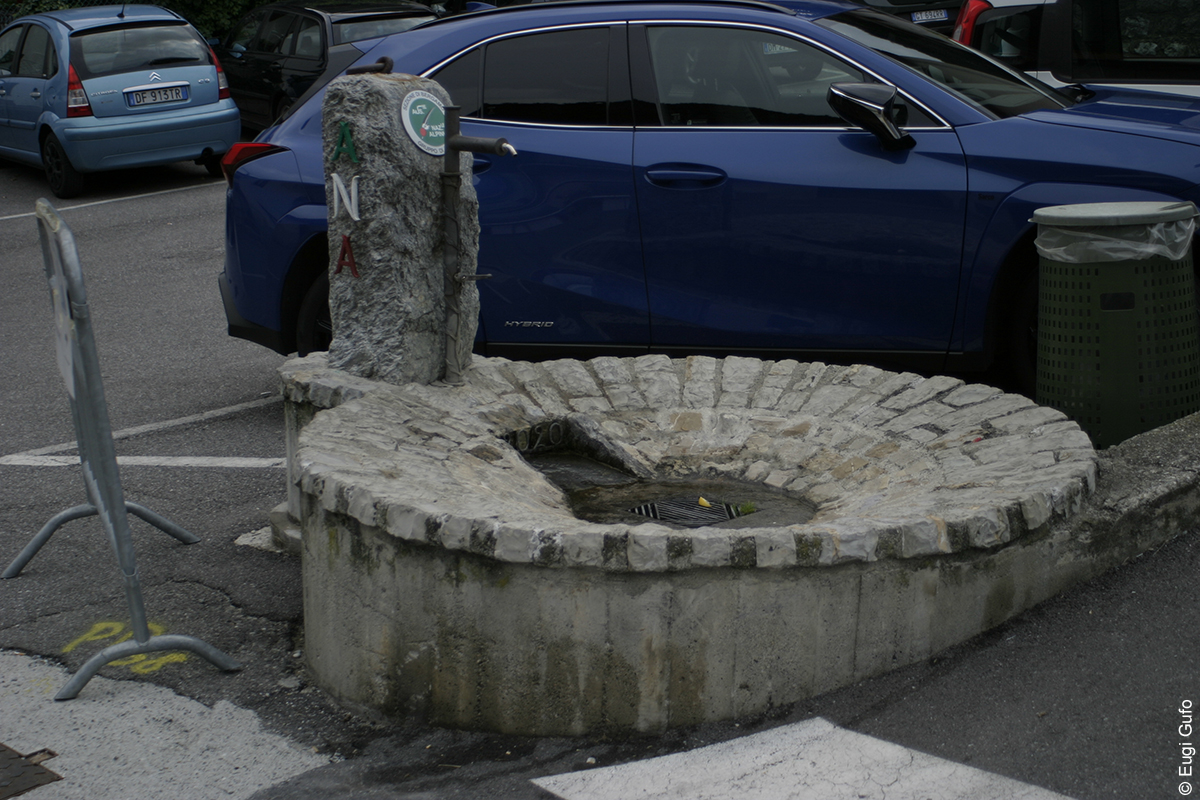
This one, however, is more user-friendly.
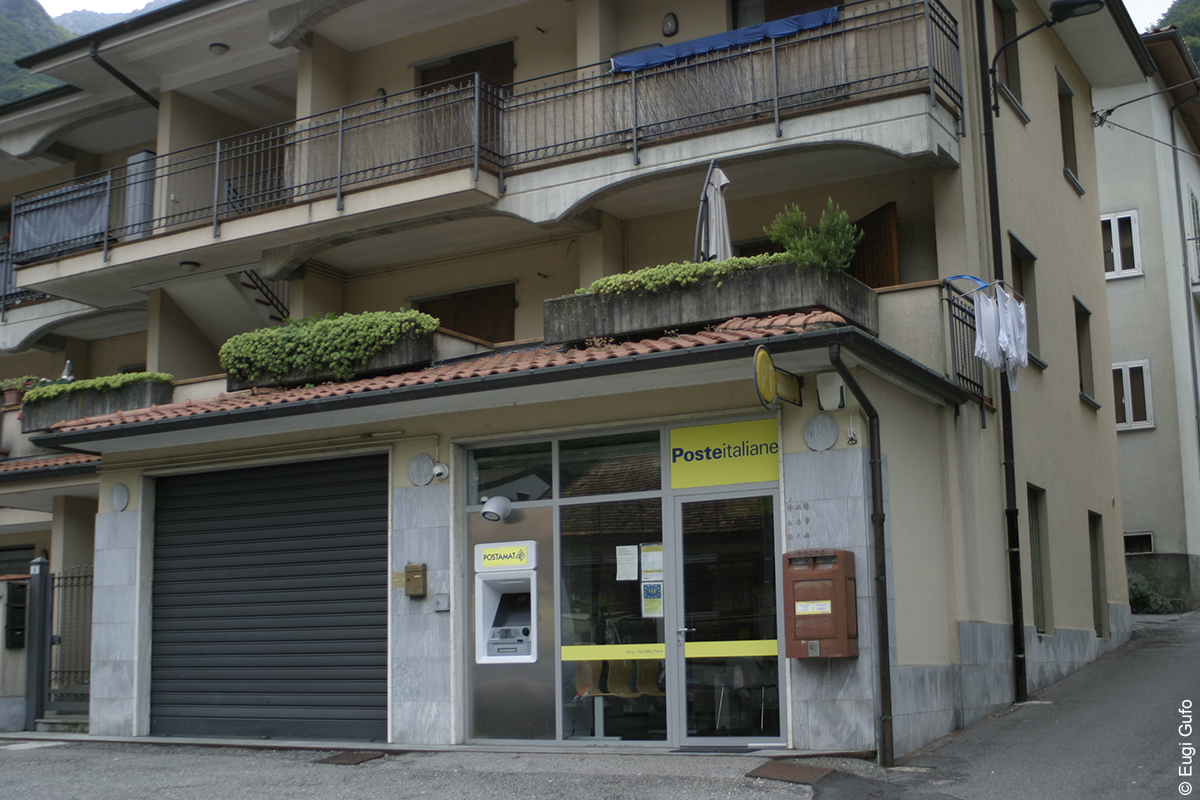
Other useful services include a very small post office.
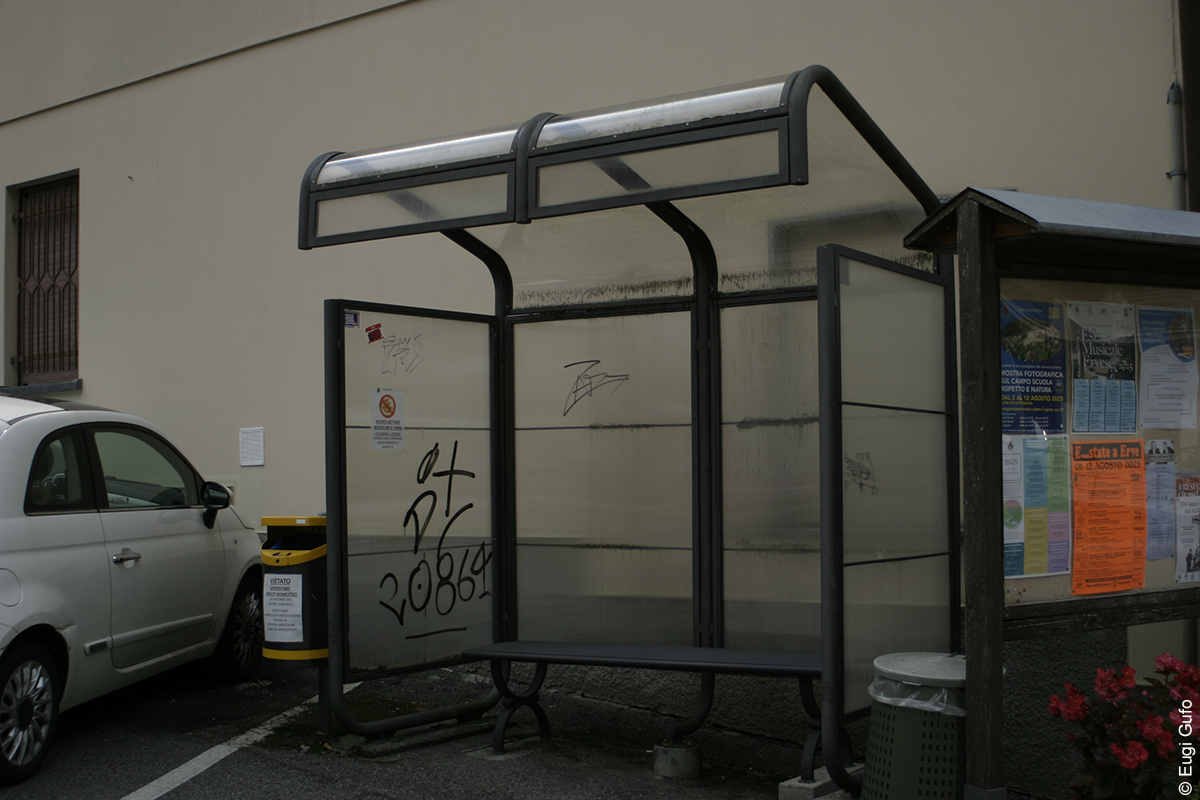
And an aesthetically questionable bus stop.
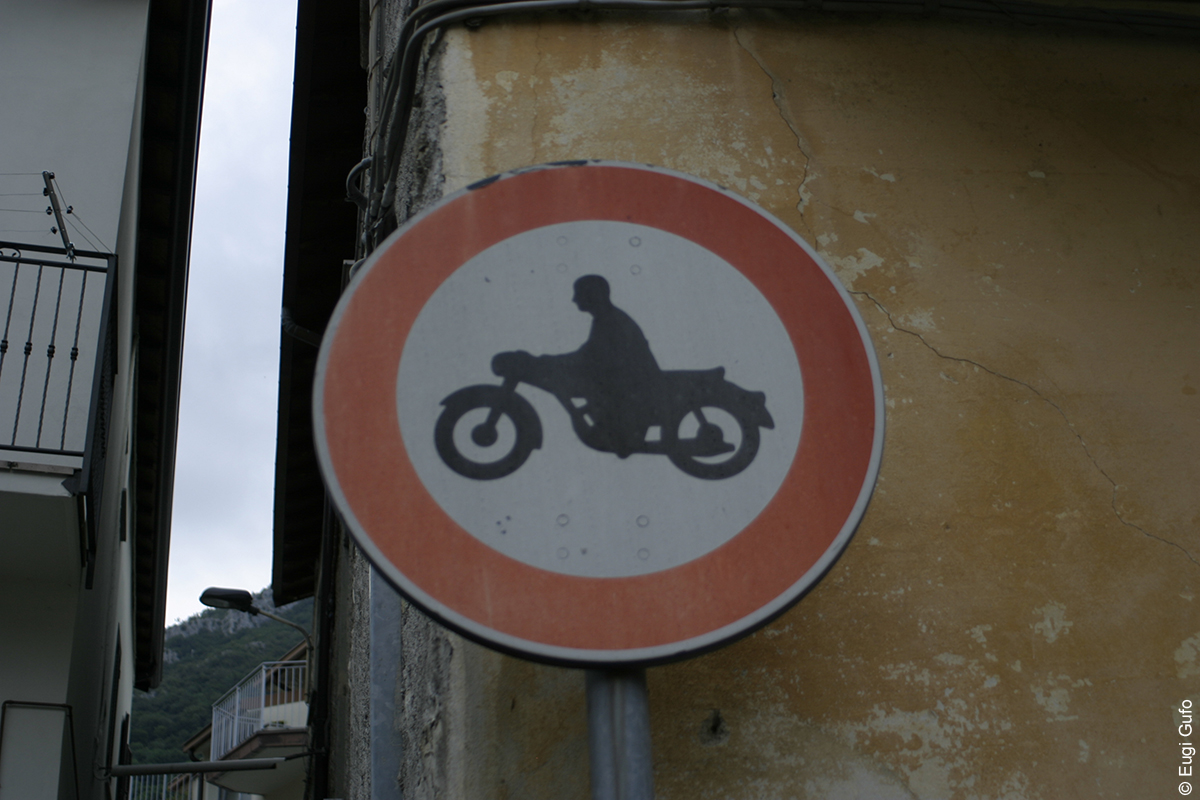
In a narrow street I encountered, for the first time in person, the 1959–1992 version of the «no motorcycles» road sign. It now serves less as regulation and more as museum piece.
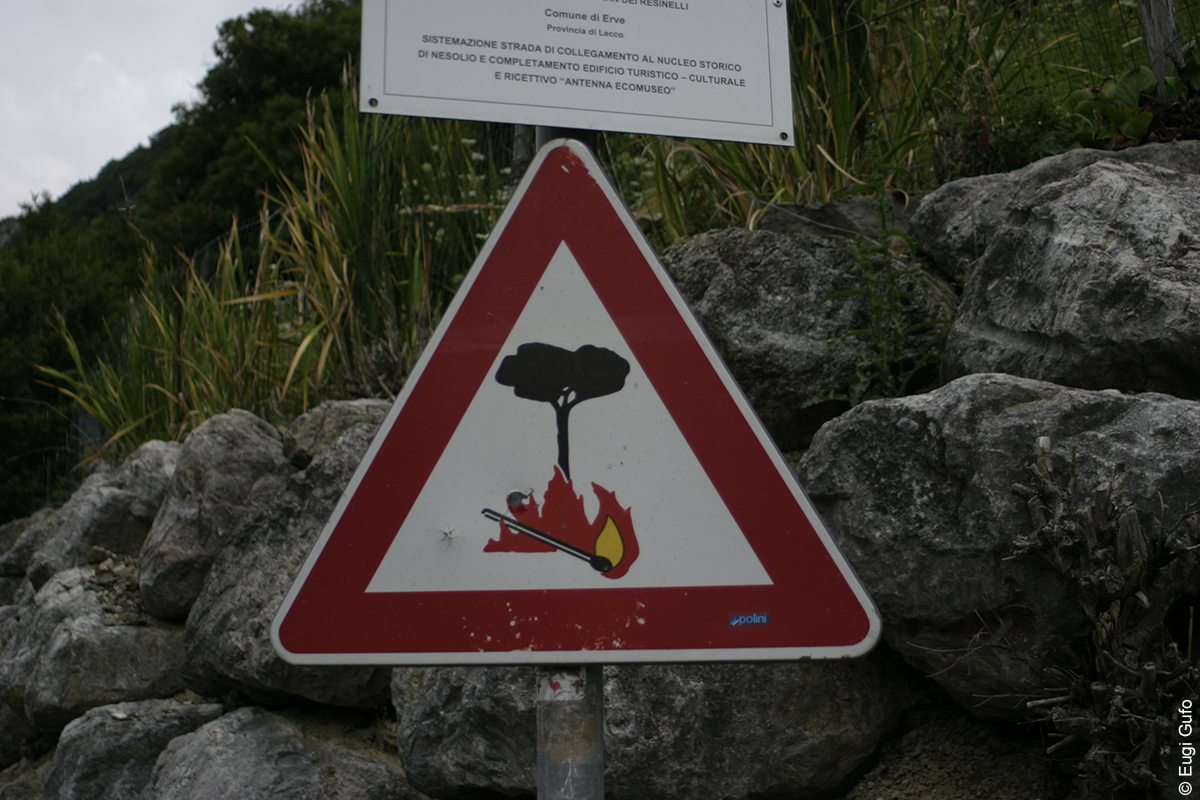
Likewise new to me was the «fire hazard» sign — though I interpret it as «beware of arsonists.»
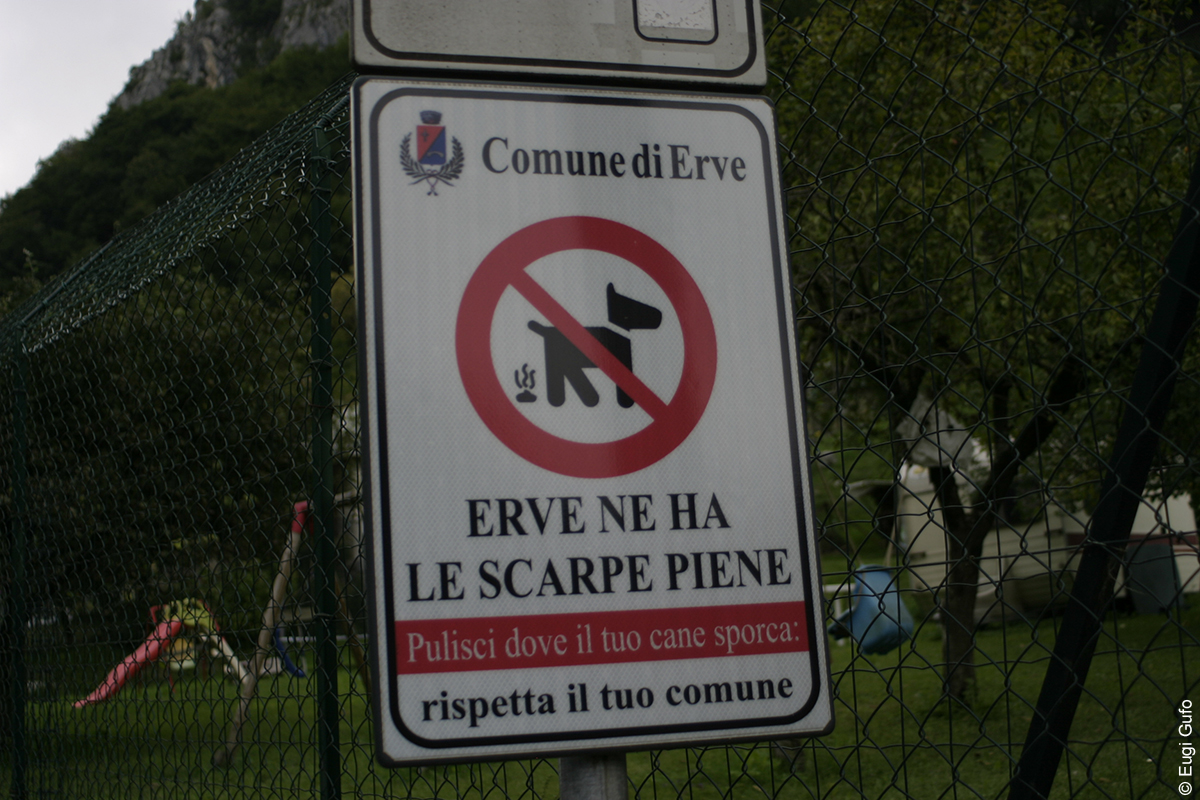
There is also the local variant of a genuinely useful sign.
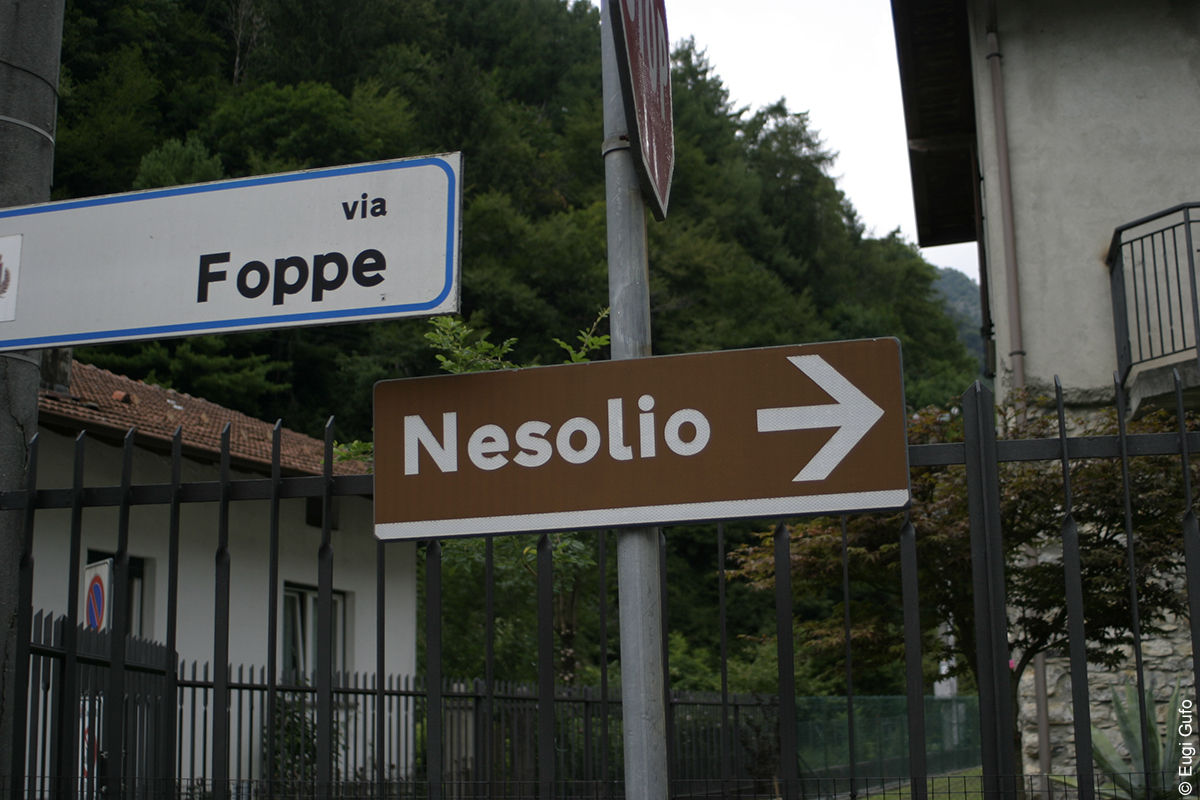
More important for us is the sign pointing toward Nesolio, a hamlet about 150 metres higher. It deserves its own account. Do not be deceived by the apparent dead end of Via Foppe; follow the sign and you will soon see you are correct.
After exploring Nesolio (in a future story), we return to Erve’s centre and proceed toward the final sign of this excursion.
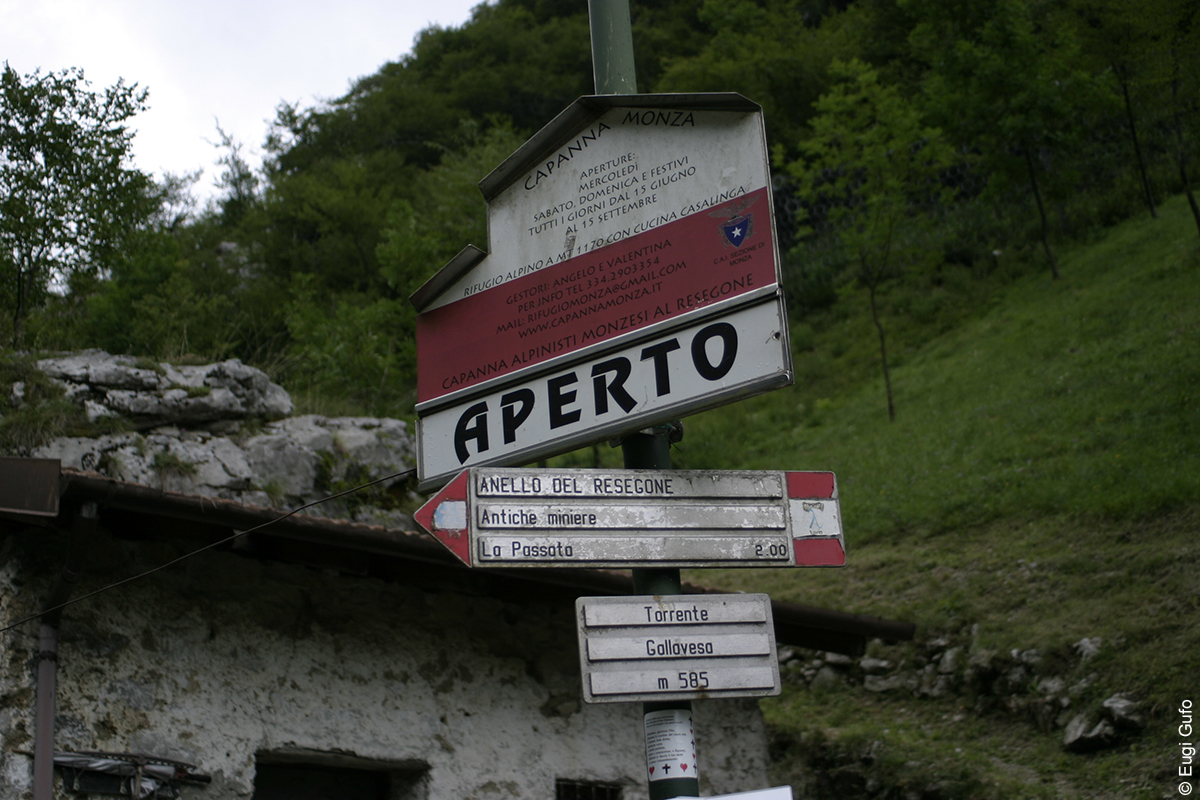
Yes… we bid farewell to the last building of Erve…
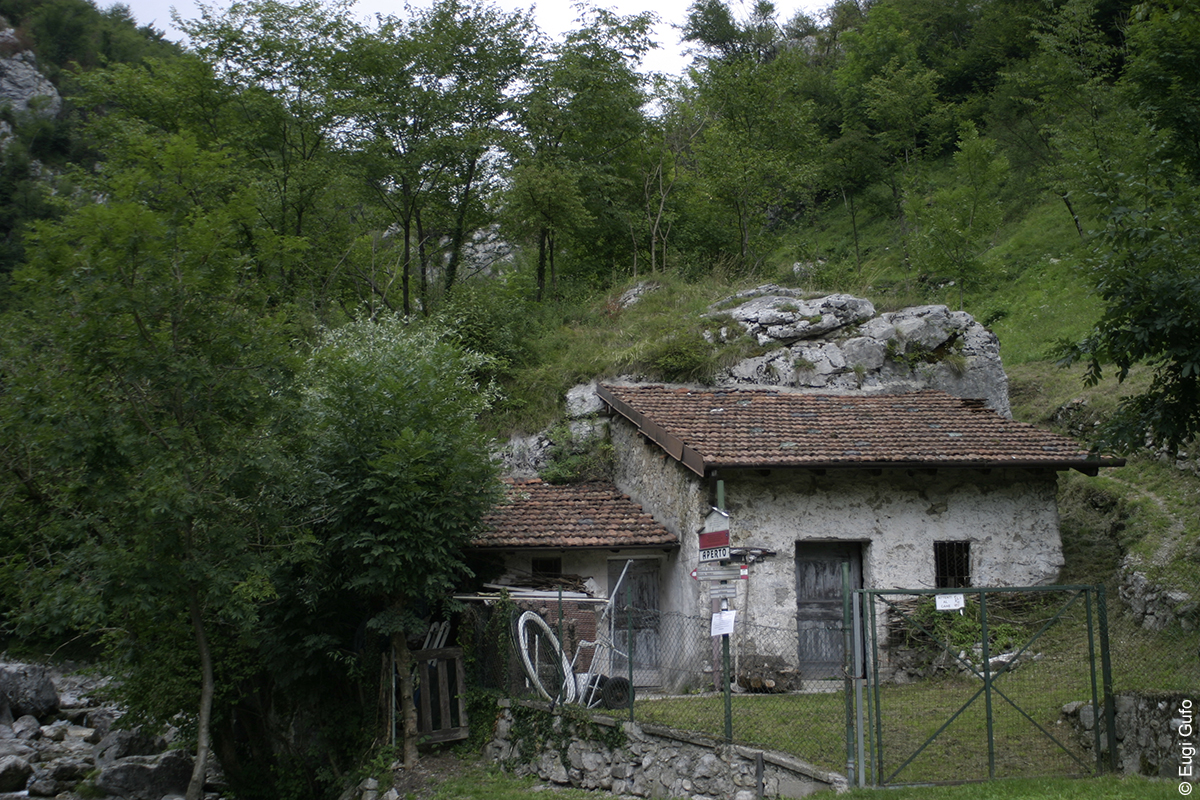
… and take the mountain path that brought us here.
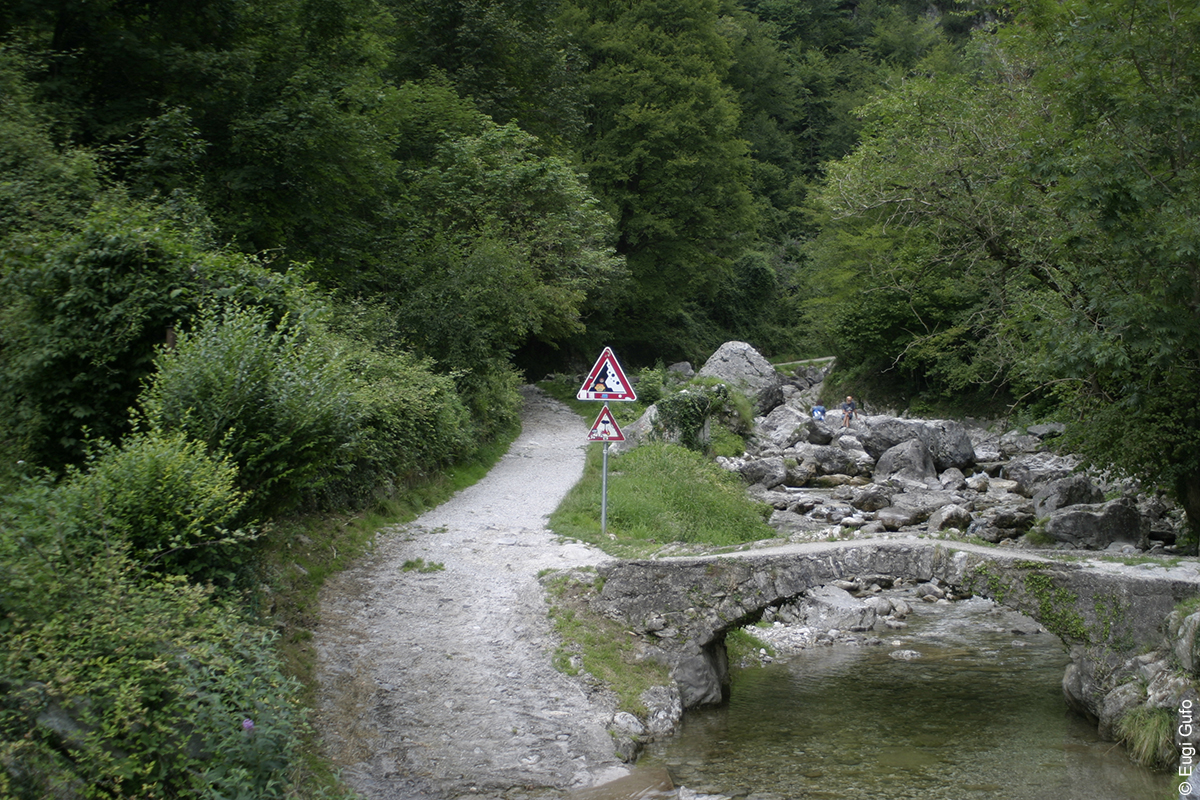
We shall meet again higher up.
Erve, 6 August 2025
↓ Show comments ↓


