


 Long live Ukraine! Fuck the war!
 RSS of site articles
At the end of December 2025, I had time and energy for only one destination — small, manageable, and unlikely to demand heroic effort. The reasons behind this limitation are of no real historical importance: in the long run, it is the result of the journey that matters.
But I can at least explain the selection criteria — otherwise, even in a hundred years, someone will still be asking me: «What on earth were you doing in a hole like that?!»
Well then: I chose Edolo for my «easy» trip because I had noticed that several potentially interesting mountain trails either begin there or pass through it. In summer, I enjoy combining mountain walks with the study of small towns encountered along the way — preferably very small towns, so that there is still enough daylight left to walk a respectable stretch of trail.
In winter, however, I avoid mountain paths. They are often slippery, covered with dry leaves that may conceal unpleasant surprises beneath one’s feet. Therefore, I concluded that a December visit to a medium-sized town — without climbing any mountains — would be strategically useful. One future summer, I may pass through Edolo without stopping, my urban curiosity already satisfied.
Edolo is small — small enough that many of you may never have heard of it.
Surface area: 88.9 km².
Population (2025): 4,434.
Density: 49.88 inhabitants per km².
Altitude: 720 metres above sea level.
And yet, officially, its name is accompanied by the word «city.» Since 1950, it even has its own coat of arms.
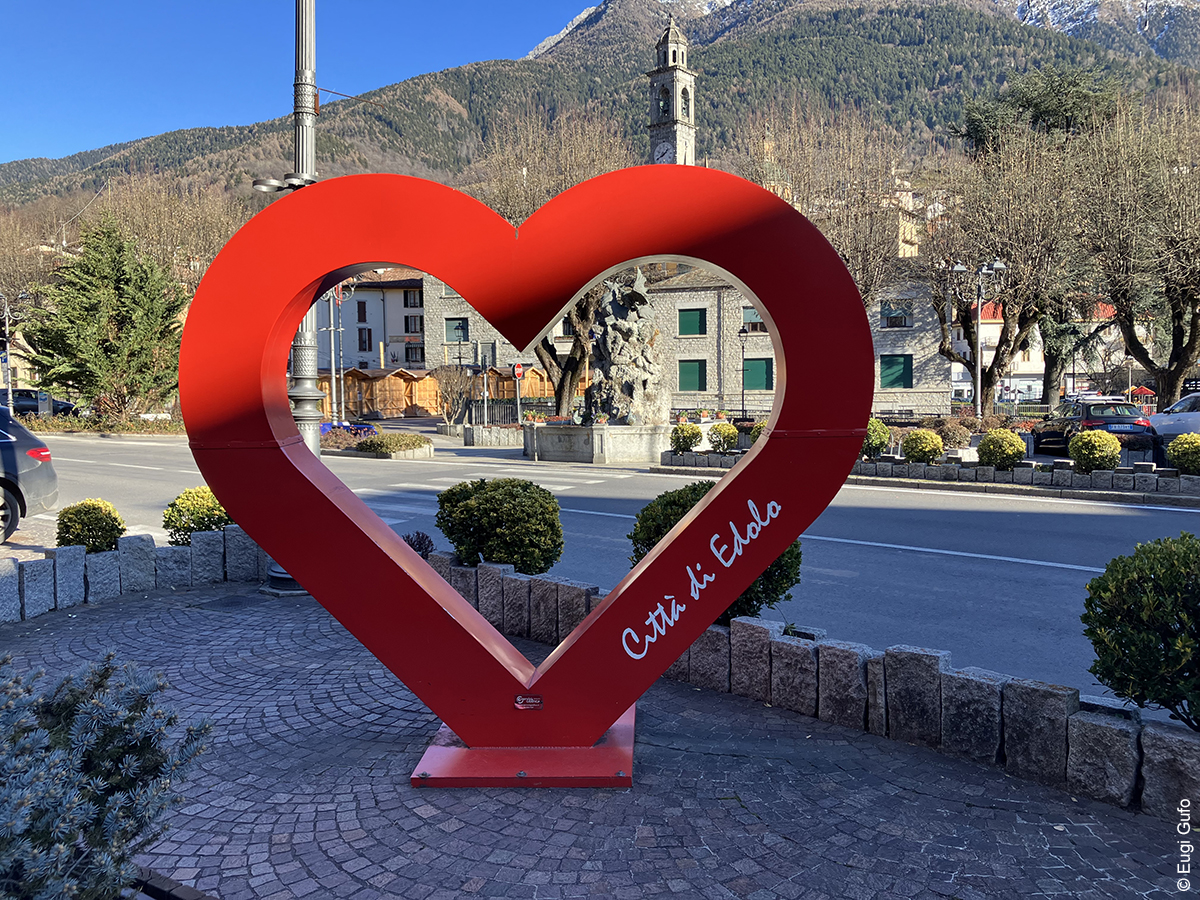
Curiously, however, the municipality promotes primarily the nature trails outside town rather than the attractions within it.
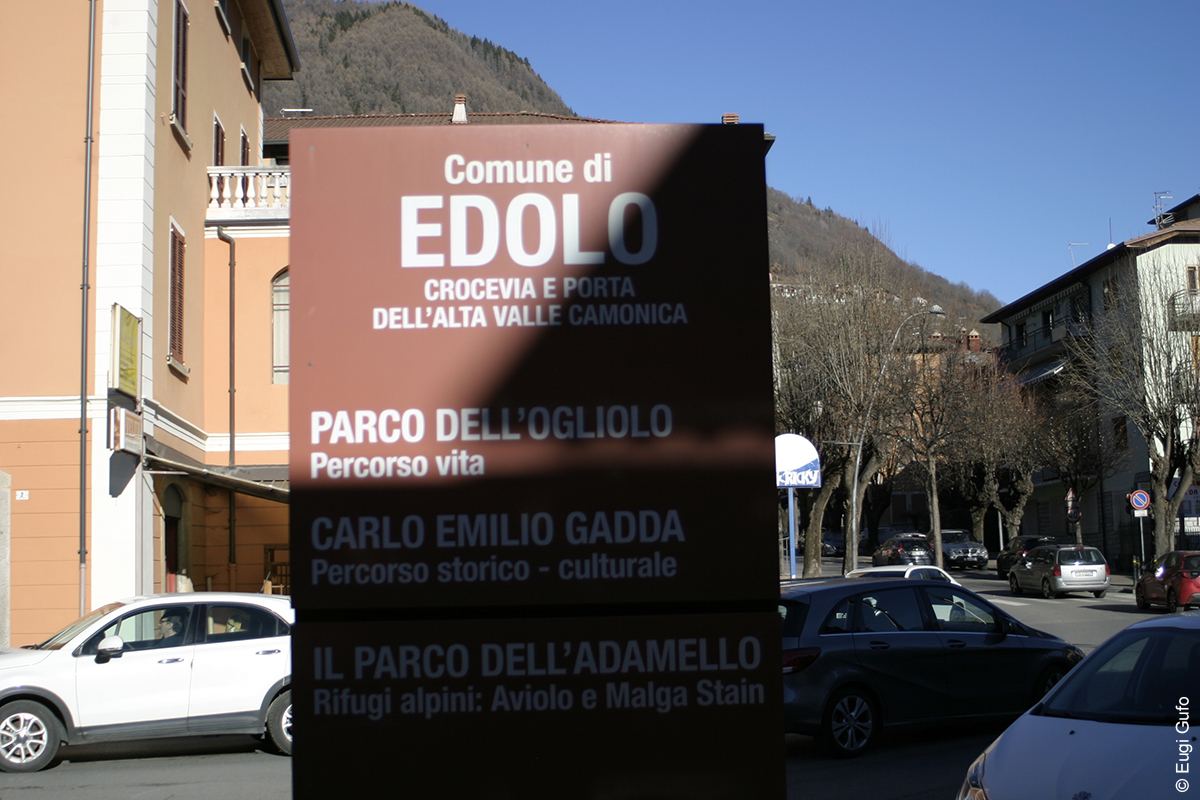
I do not consider this entirely fair — and I shall attempt to demonstrate why.
From an architectural perspective, Edolo left me with a generally positive impression. It is visibly provincial, not especially wealthy, and devoid of singular architectural masterpieces — yet the overall style and atmosphere are genuinely pleasant.
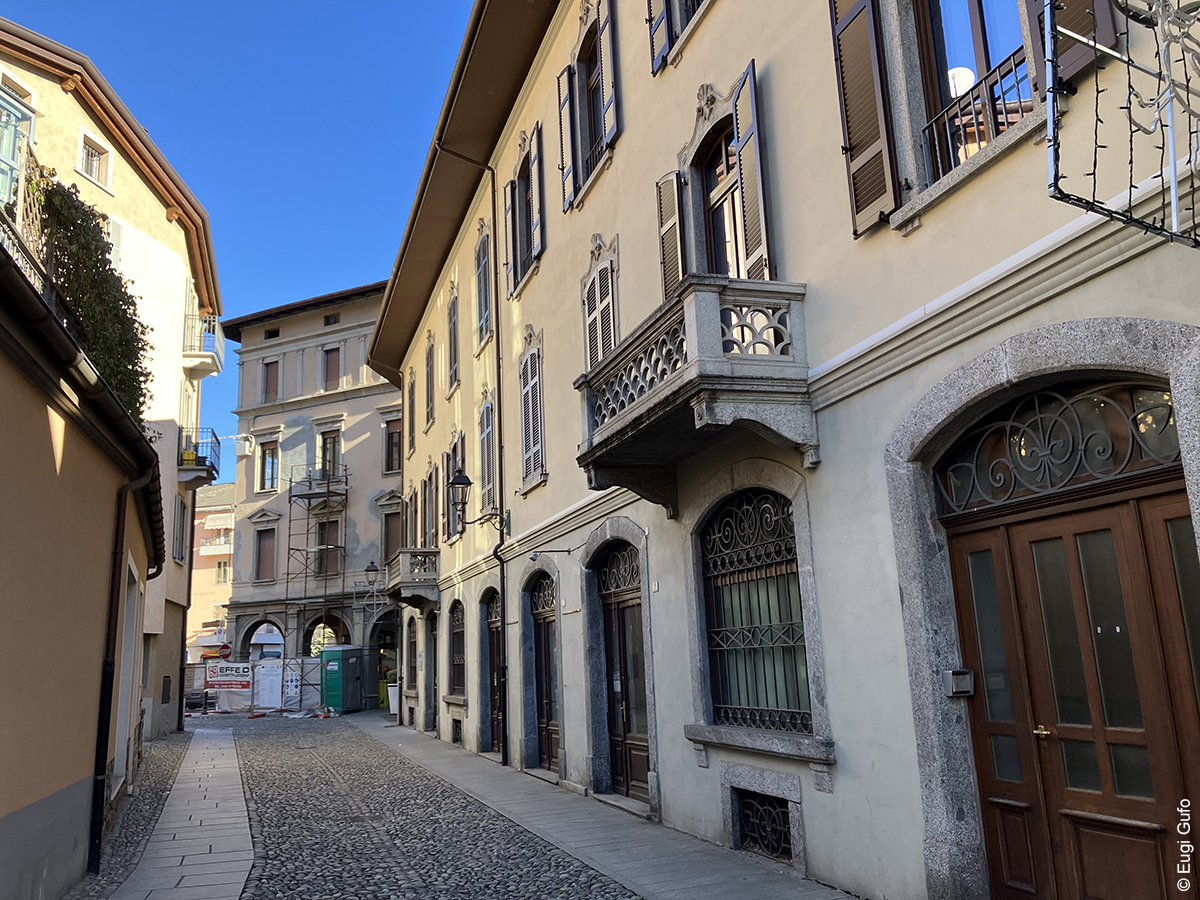
As in almost every Italian locality, there are a few buildings whose renovations appear to have been paused since the Renaissance. Fortunately, they are rare and do not significantly damage the town’s overall image.
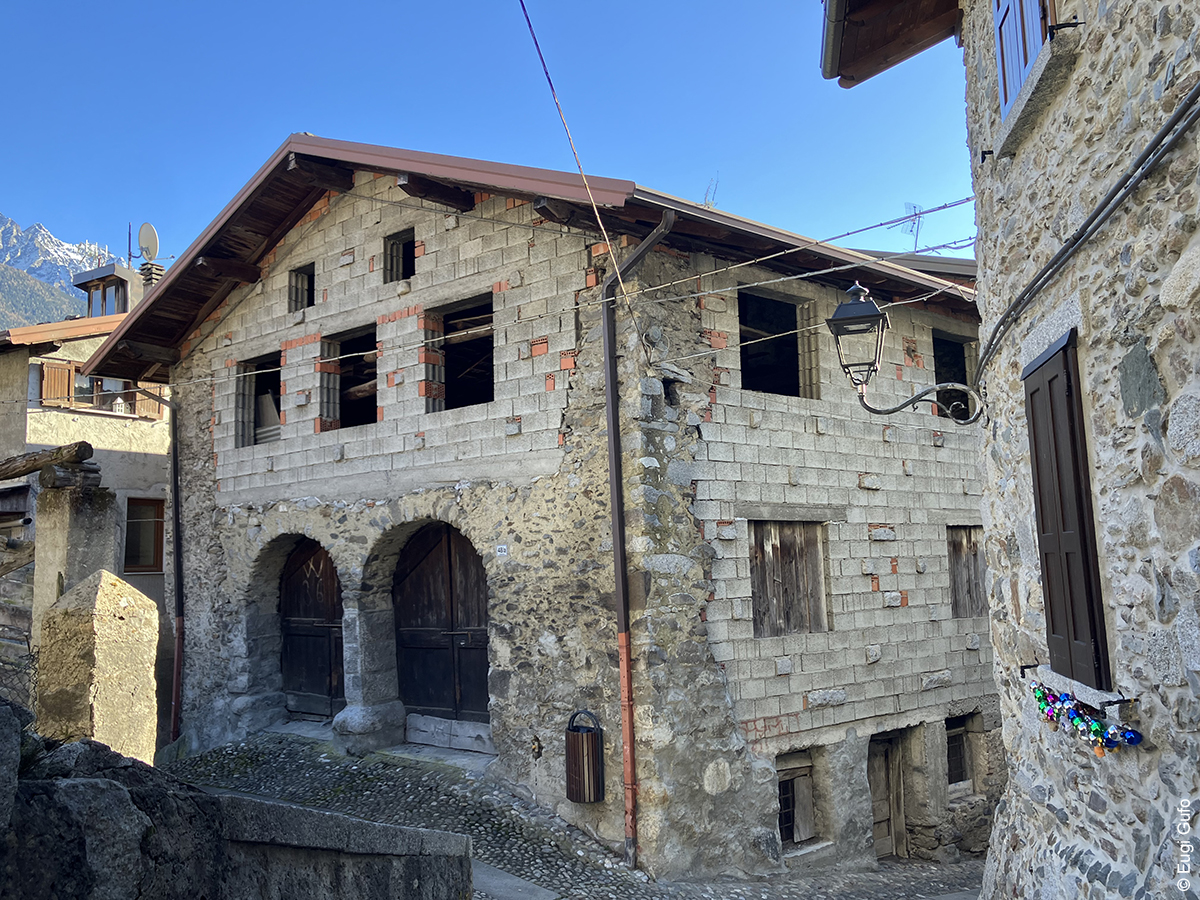
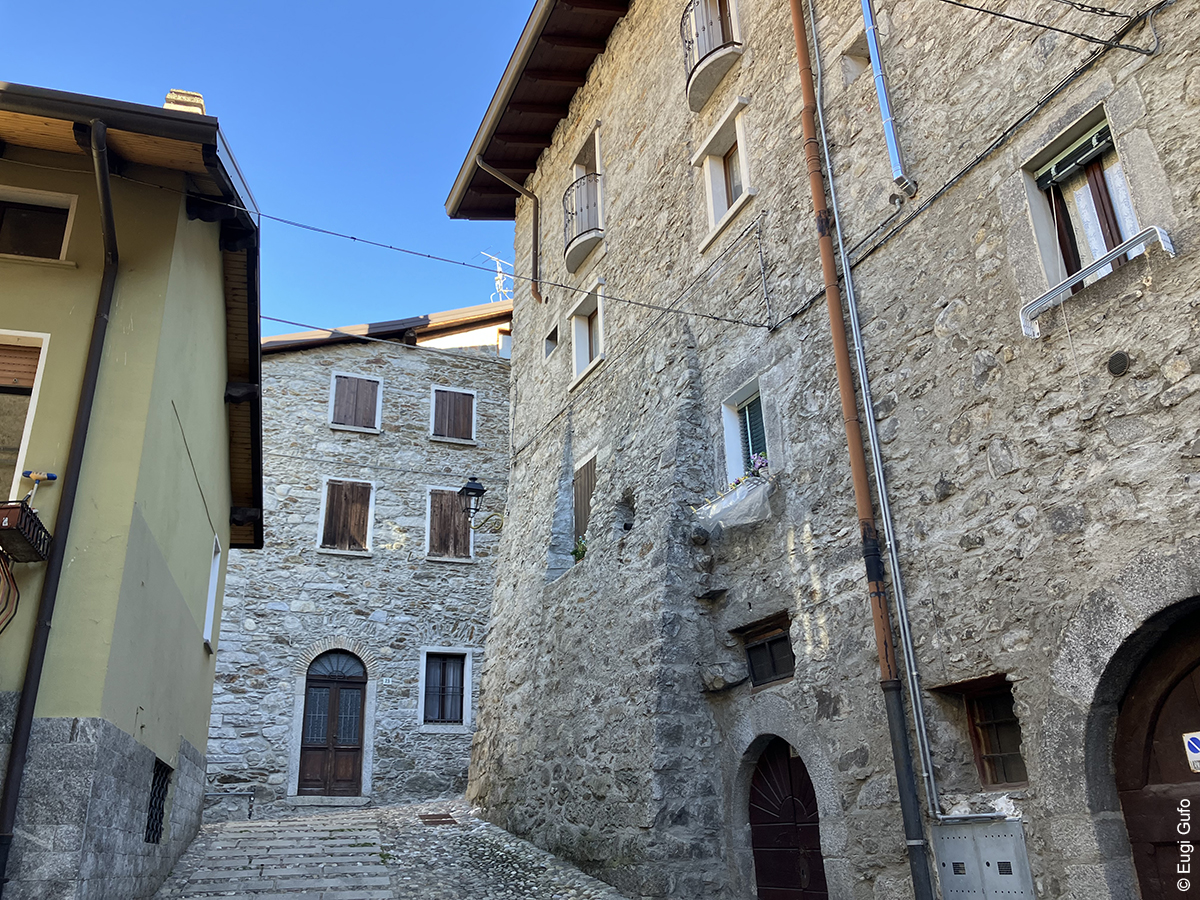
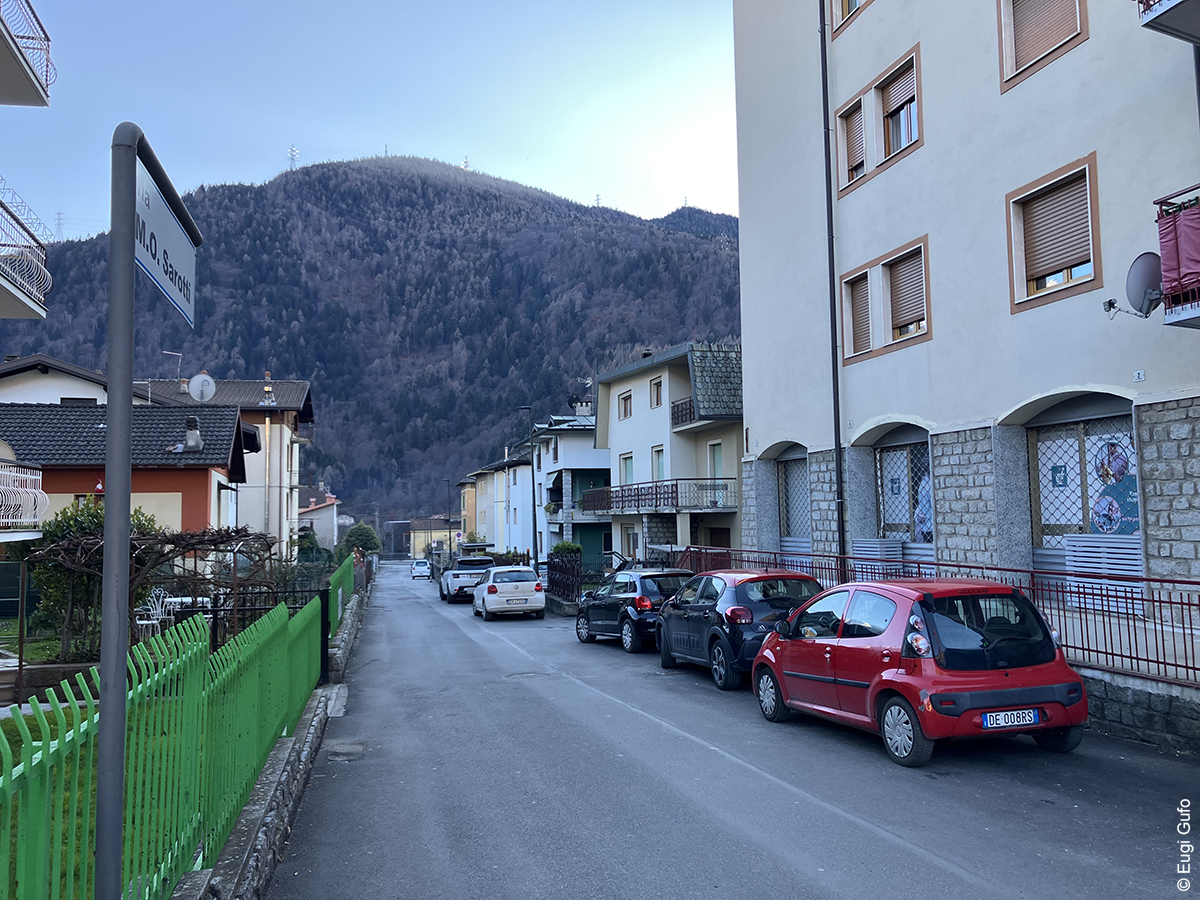
From a more «scientific» perspective, Edolo is interesting because several distinct architectural styles coexist here. Alongside the typical Lombard style already mentioned, there is also unmistakable mountain architecture. After all, Edolo lies halfway between the plains and the Alps.
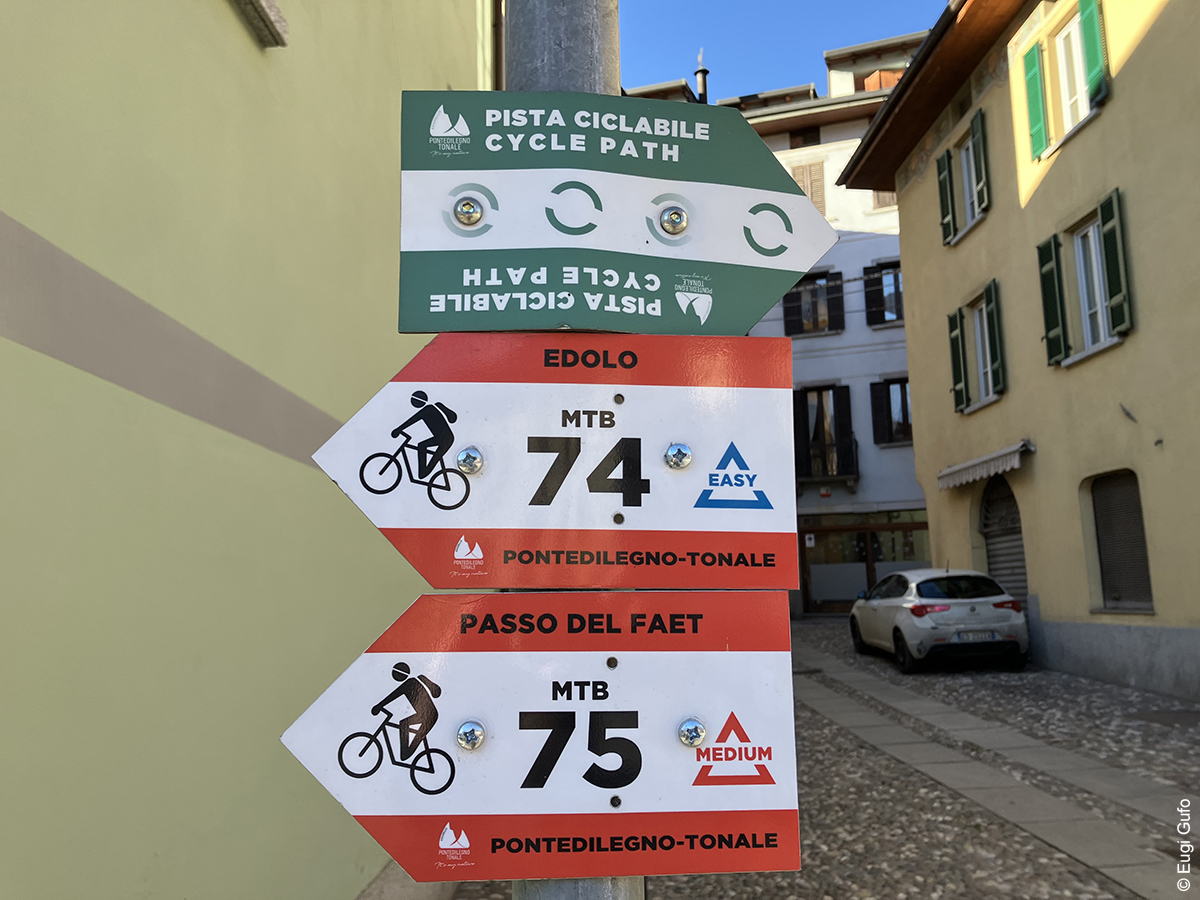
This intermediate position also explains the presence of certain very specific road signs.
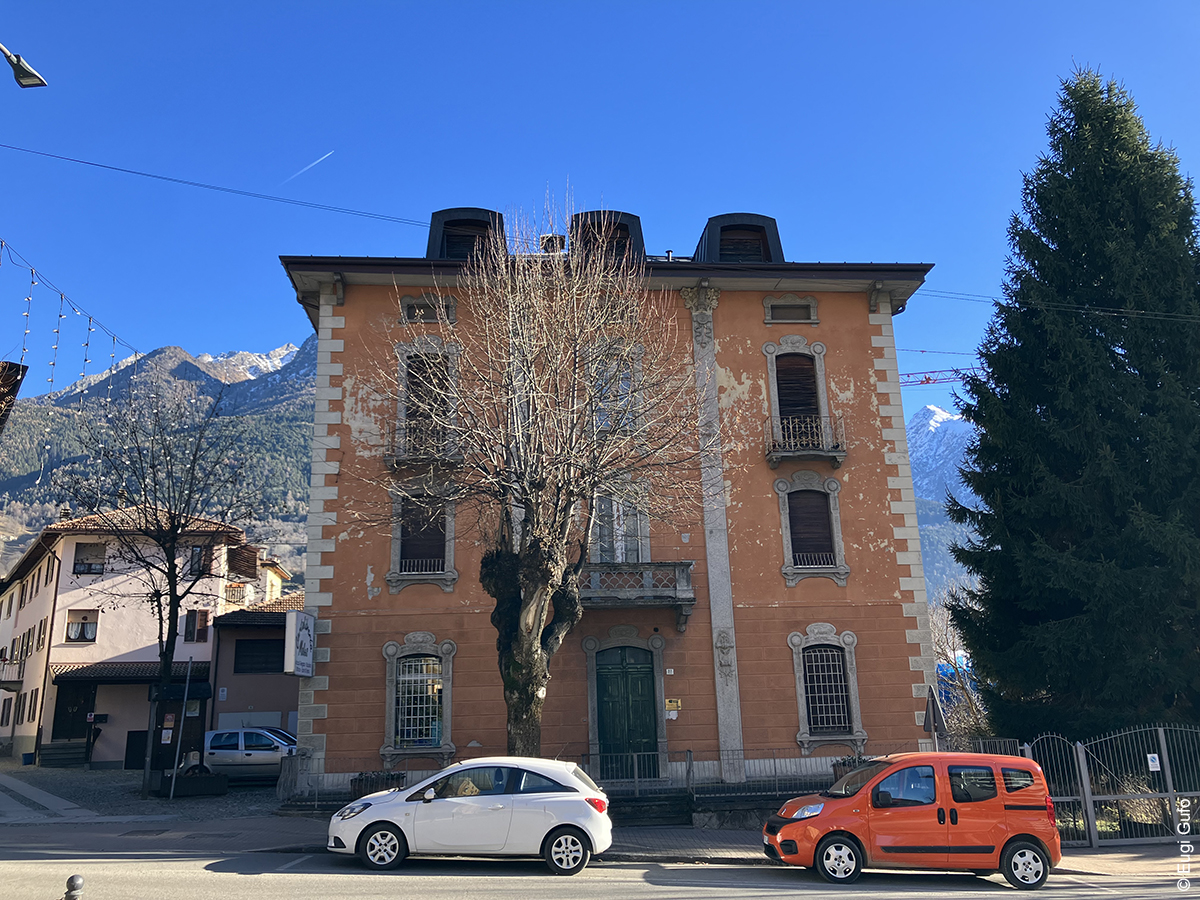
Among the buildings of the historic centre, one even encounters isolated examples of more «serious city» architecture. I regret to report that the tiny Liberty-style building is completely gutted inside and shows no visible sign of restoration. I sincerely hope this condition is temporary.
One of Edolo’s most beautiful classical buildings is the local primary school. As so often happens, its elegance is balanced by bureaucratic absurdity: above the pedestrian crossing leading to the entrance stands an illuminated sign with a microscopic inscription reading «school.»
According to bureaucratic logic, every motorist should notice the tiny word, interpret it correctly, and think: «Ah yes, since there is a school here, today I shall refrain from running over pedestrians.»
Or perhaps one is allowed to run over only adults? Or only children not currently heading to or from school? I confess confusion.
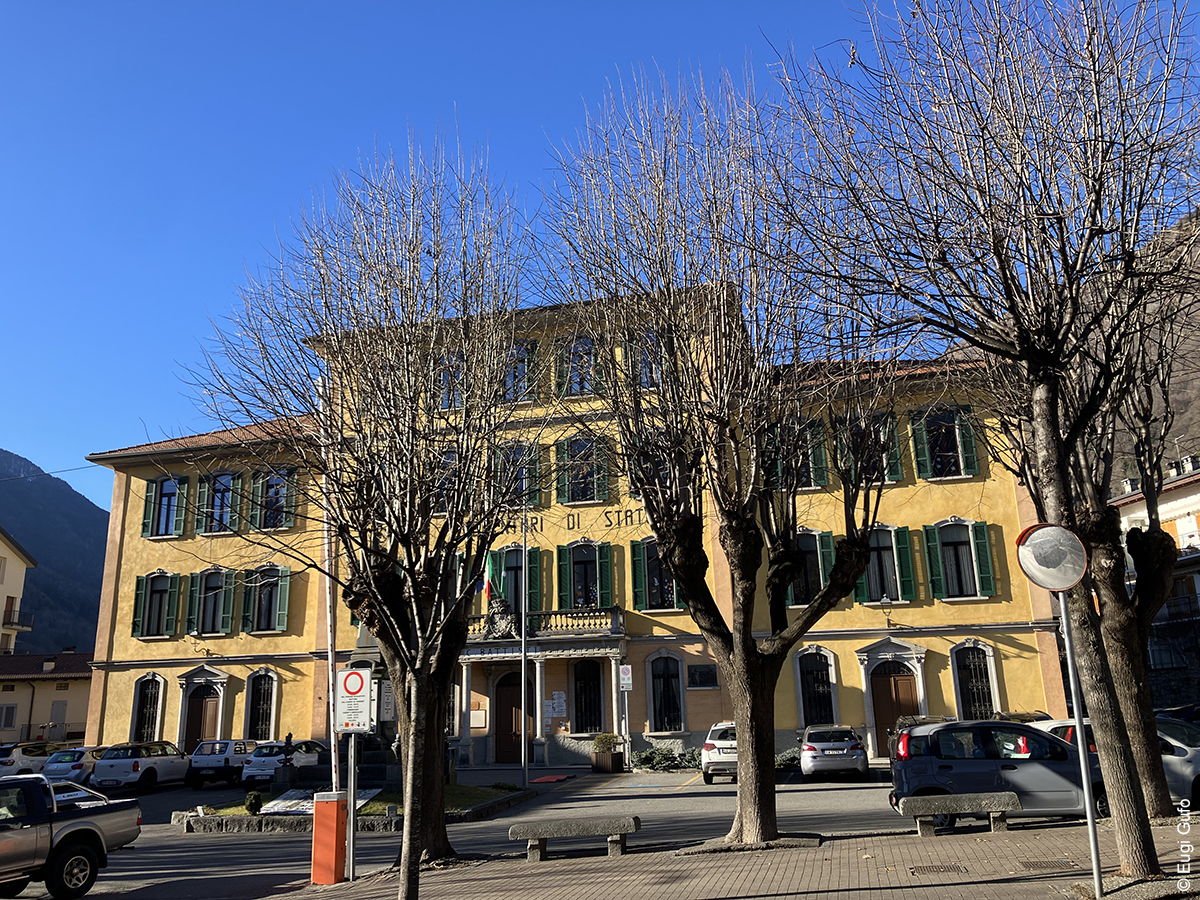
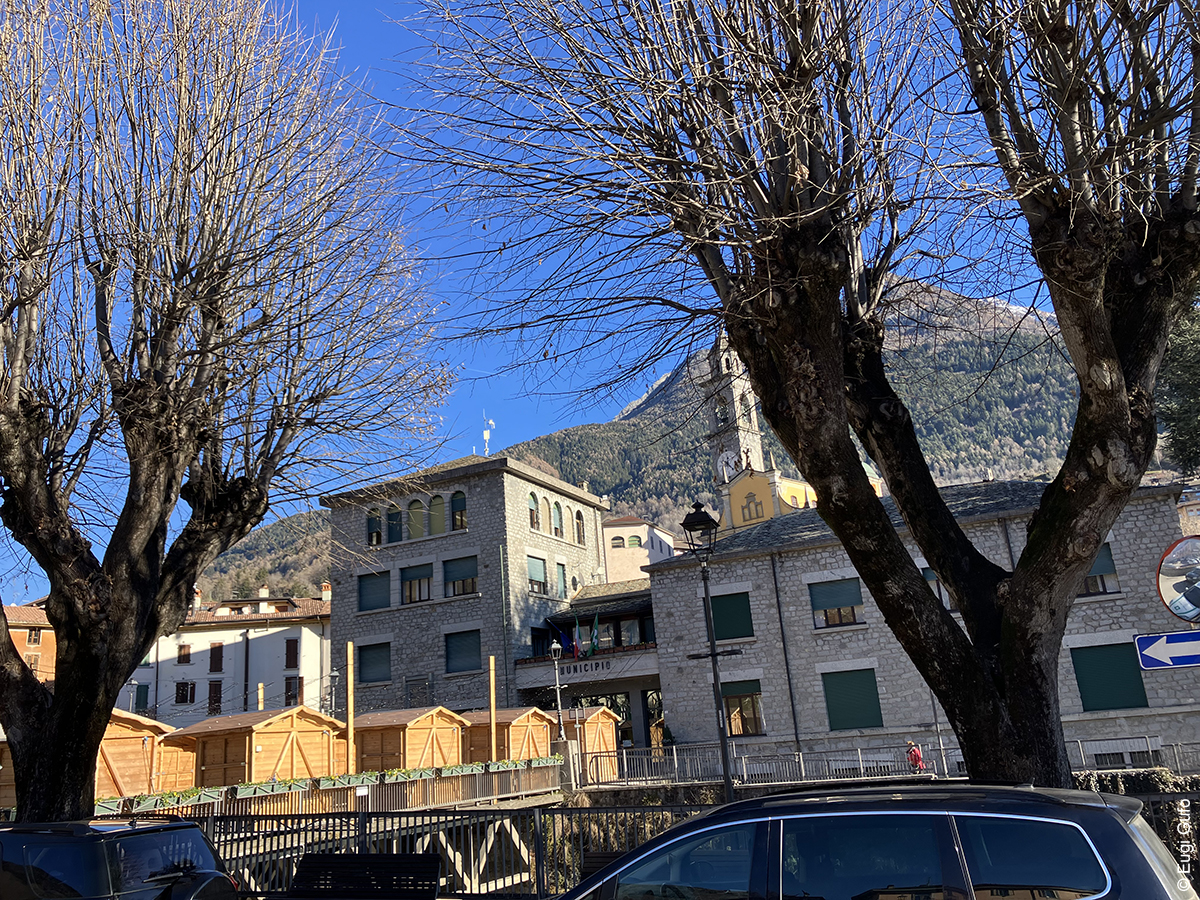
The most boring building in the centre is the Town Hall (one suspects this is where certain ideas originate). It is executed in a pseudo-mountain style.
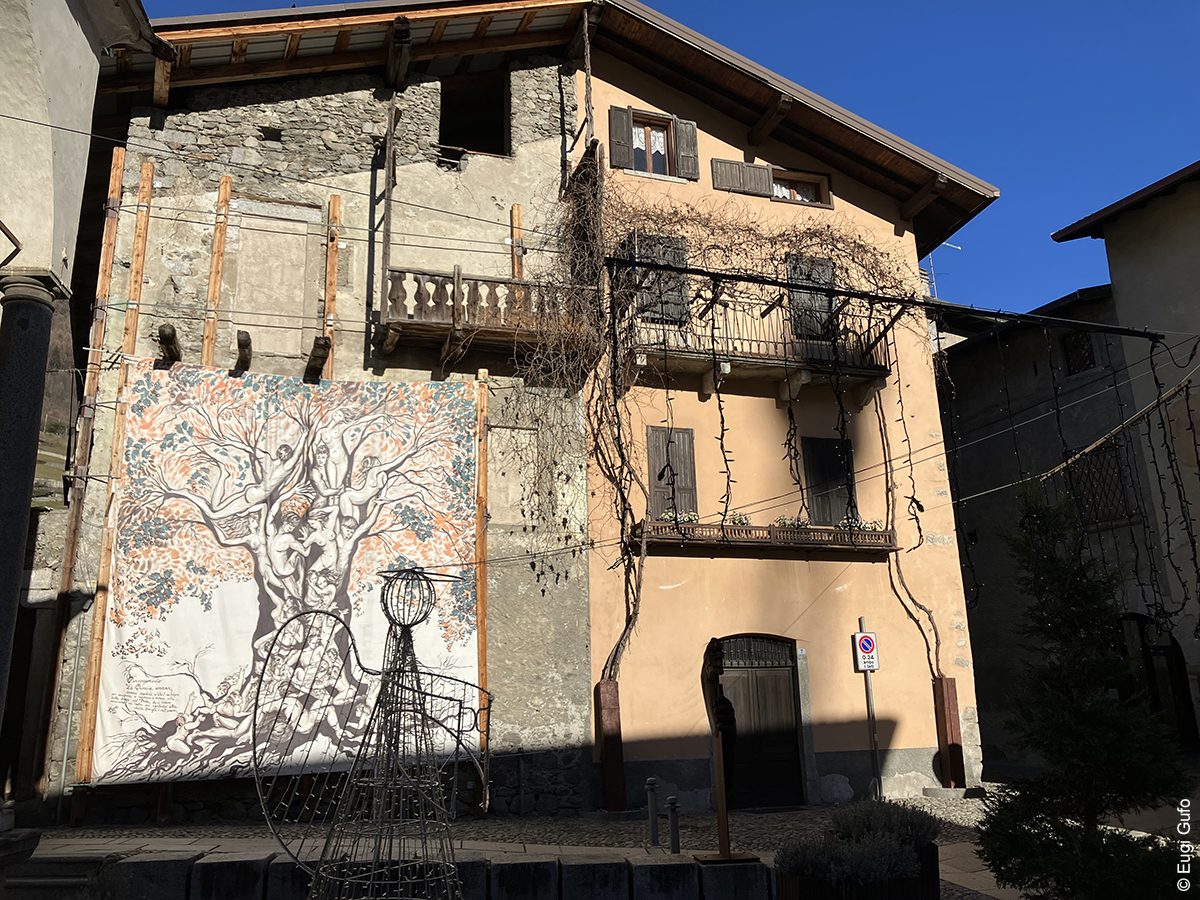
On the positive side, Edolo’s streets and squares are filled with works of art. Painted works are relatively few…
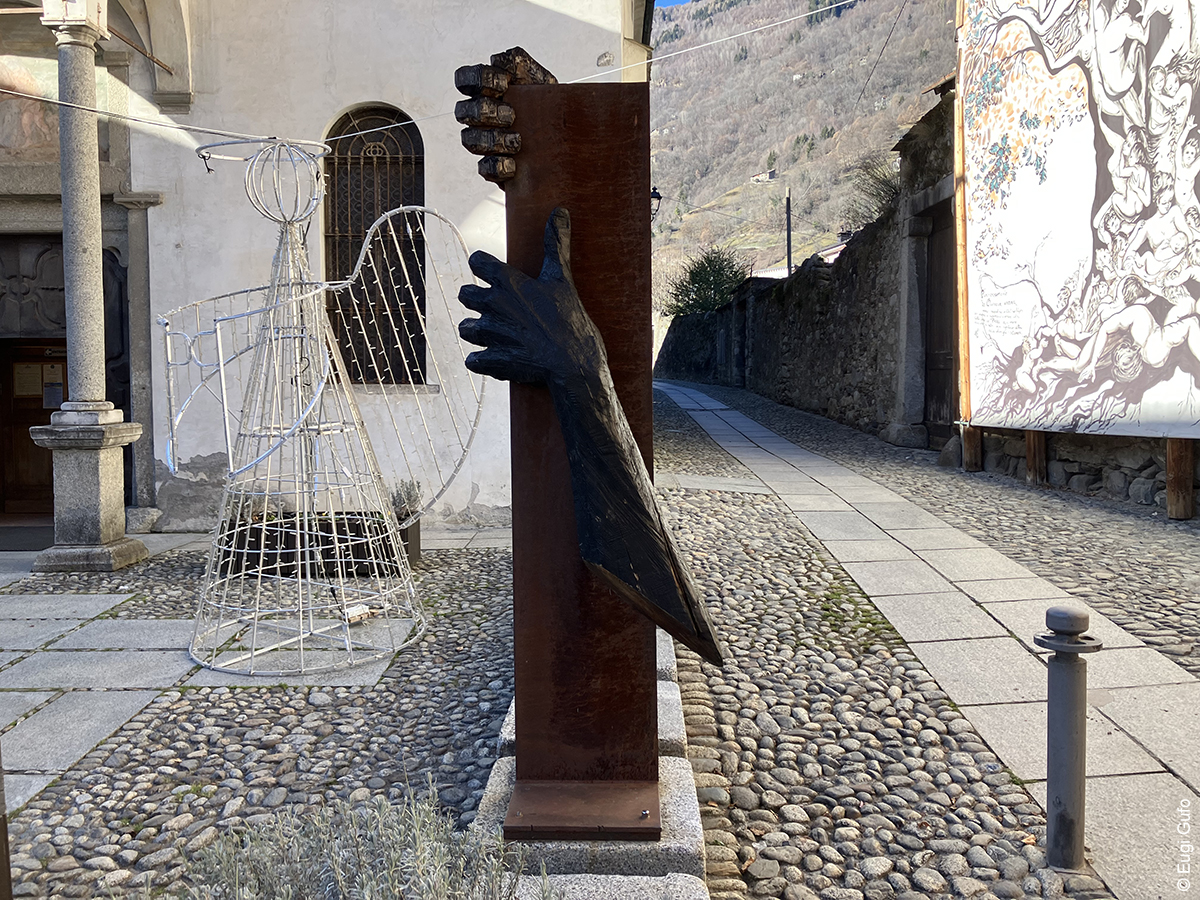
… but sculptural works are abundant — especially wooden sculptures, many of them artistically impressive. I will show only a few examples.
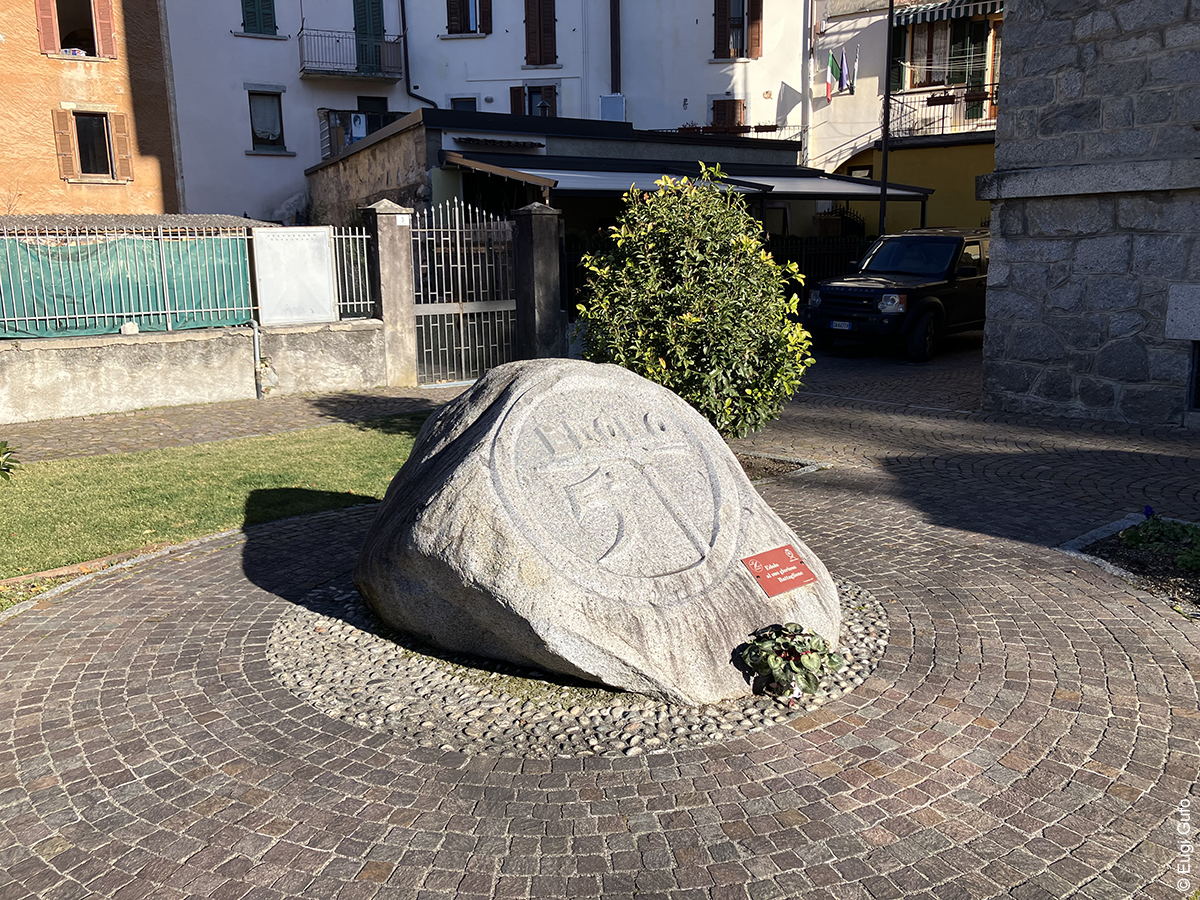
Naturally, there are also more traditional monuments. For example, the monument to the Alpini Battalion «Edolo,» located near the Town Hall. The battalion existed in two separate historical periods: from 1886 to 1943 (disbanded after returning from the USSR), and again from 1 January 1946 to 30 September 2004, when compulsory military service ended.
In front of the railway station stands another Alpini monument, donated by «generous Milan,» as the inscription proudly states.
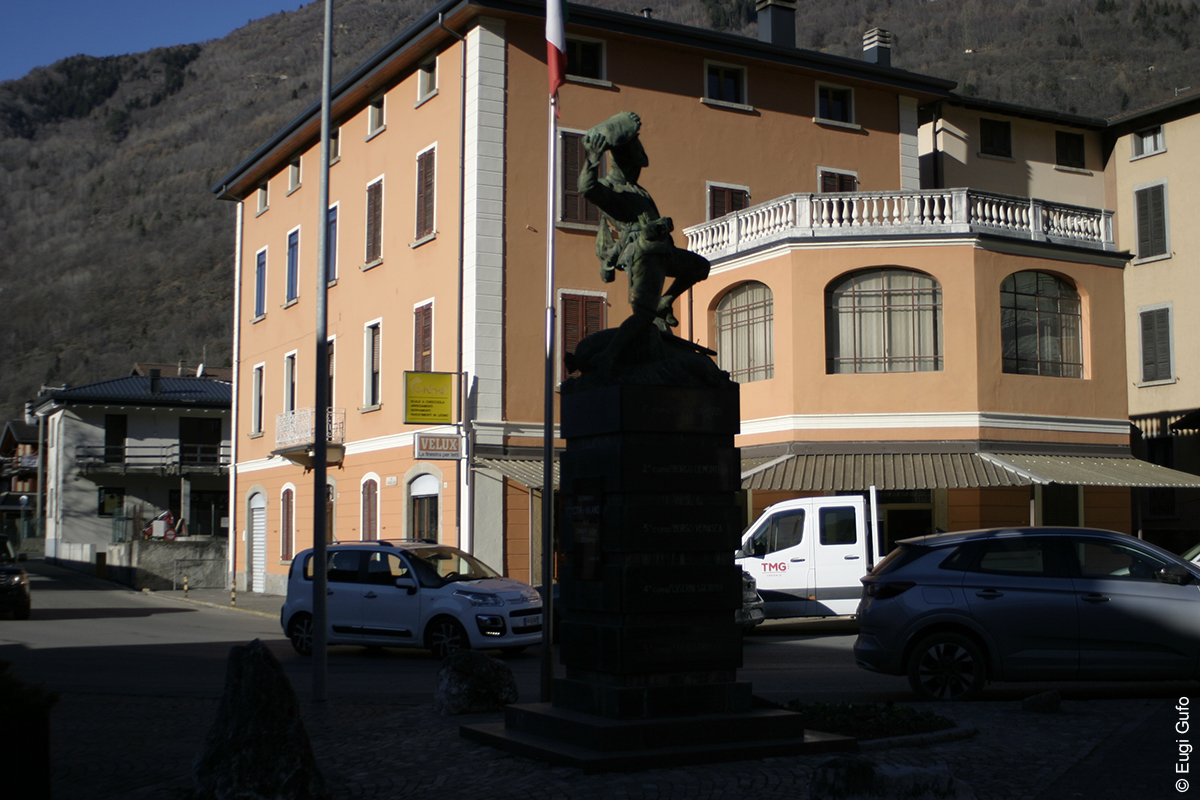
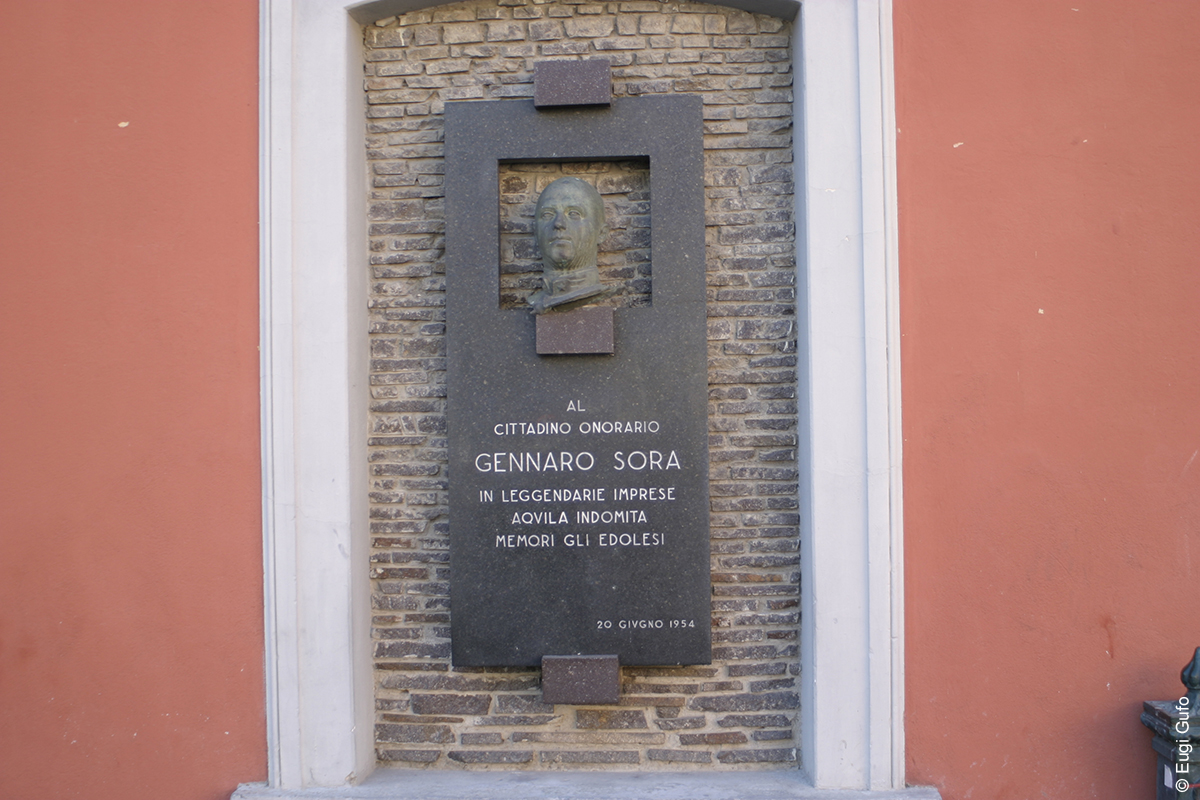
There are also monuments dedicated to specific individuals. For example, the bust of Alpini officer Gennaro Sora, who served from 1913 to 1945 and — judging from his Wikipedia page — led a professionally eventful life.
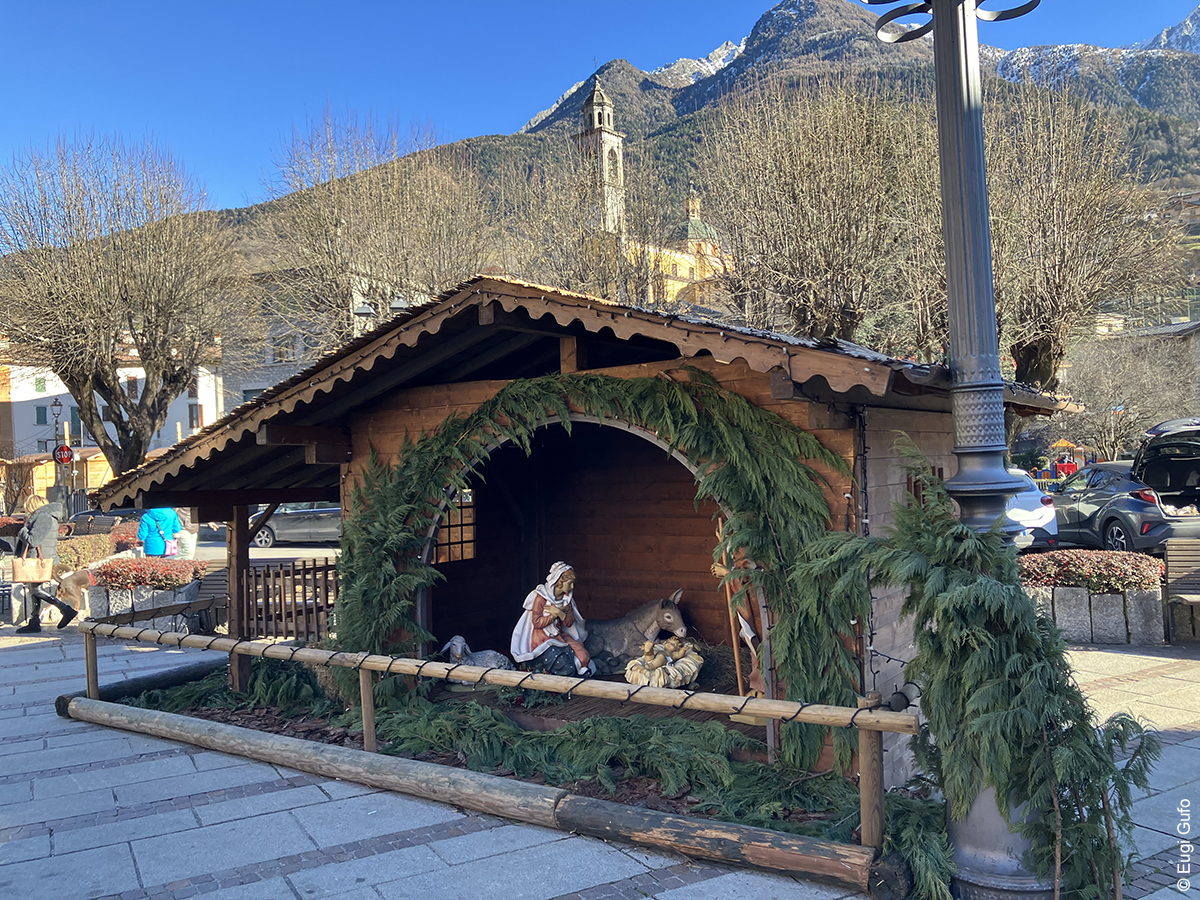
Since my visit took place in late December, I also encountered several temporary thematic monuments: nativity scenes. The most uninspiring one was located on the central square, a short distance from the Town Hall.
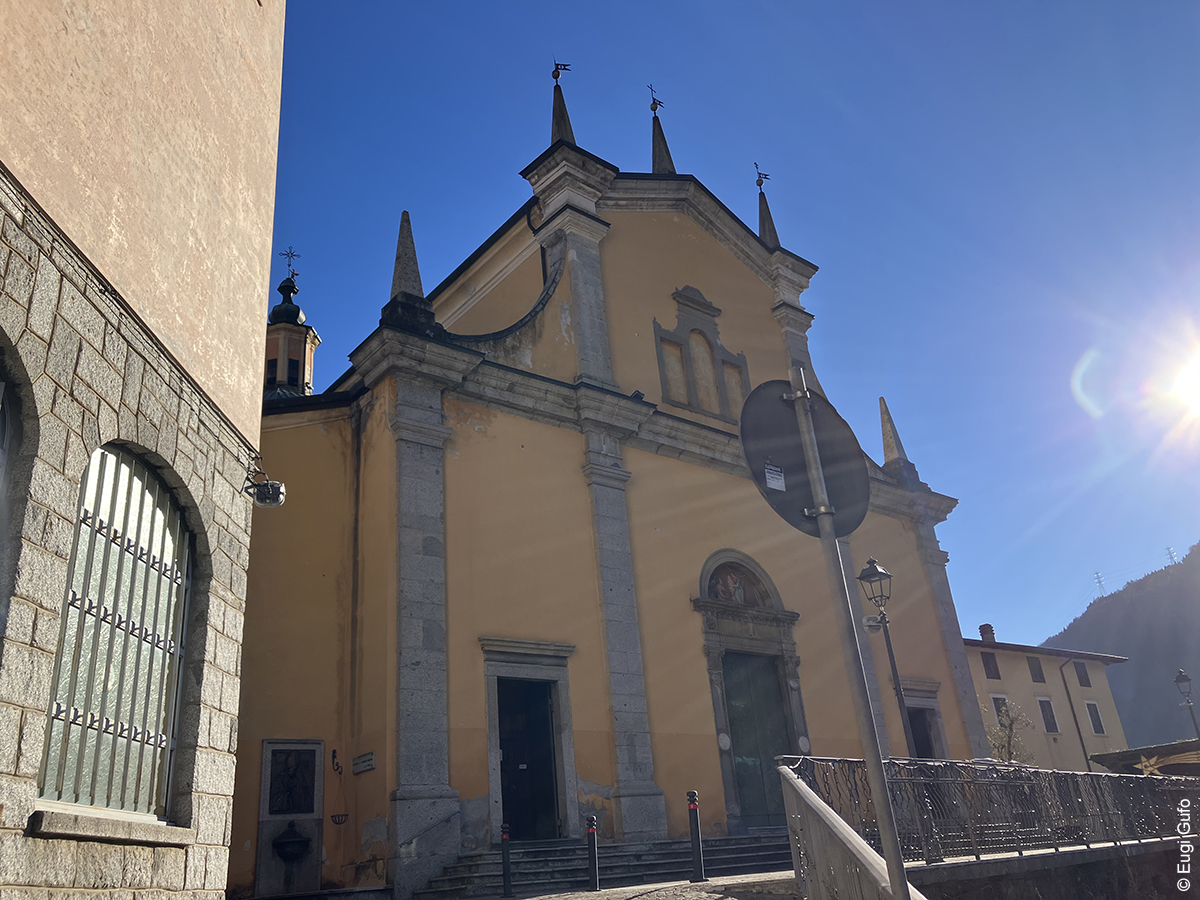
Far more interesting — though not exactly a masterpiece of global importance — was the nativity scene in front of the parish church of Santa Maria Nascente.
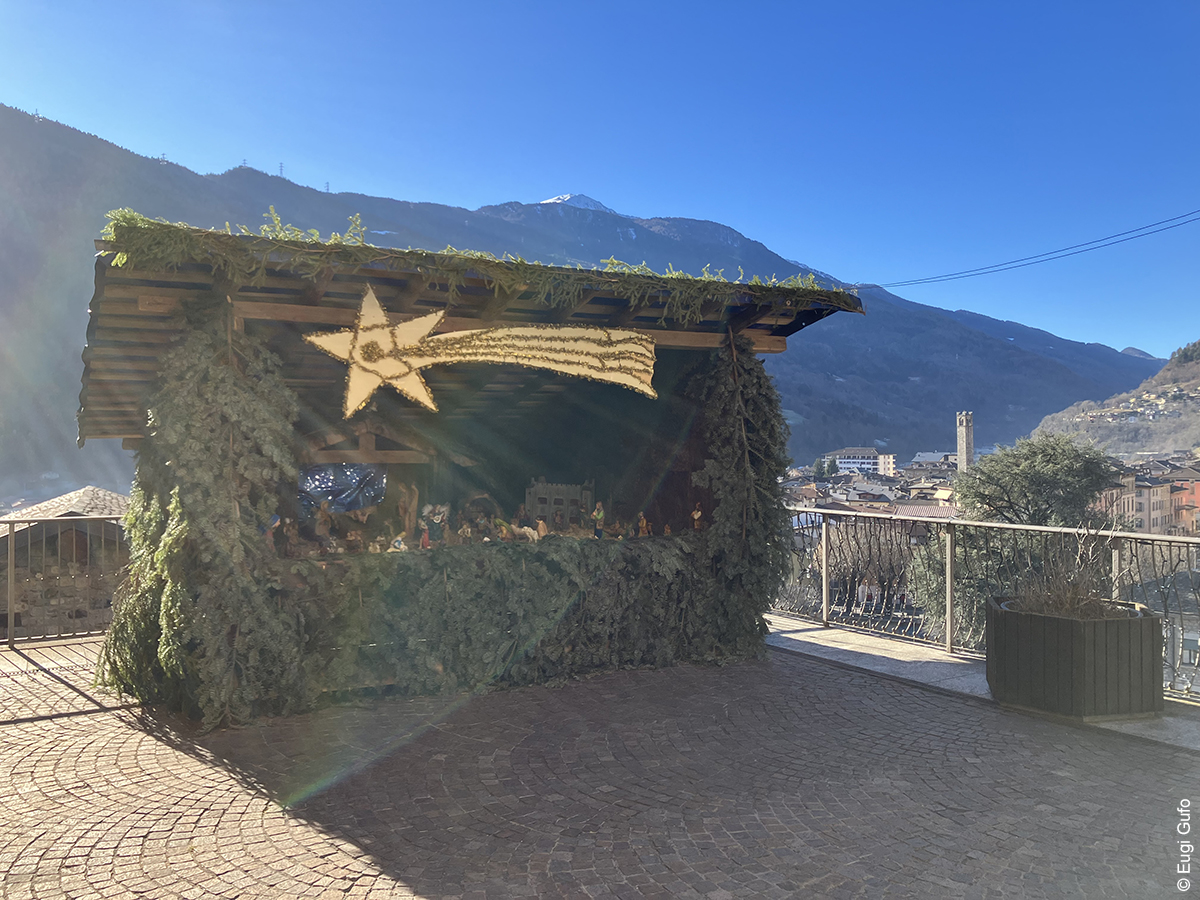
The aforementioned church stands on a hill and is visible from several (though not all) parts of town. Its exterior offers little of note — except perhaps the fact that its bell tower, at 68 metres, is the tallest in the Val Camonica.
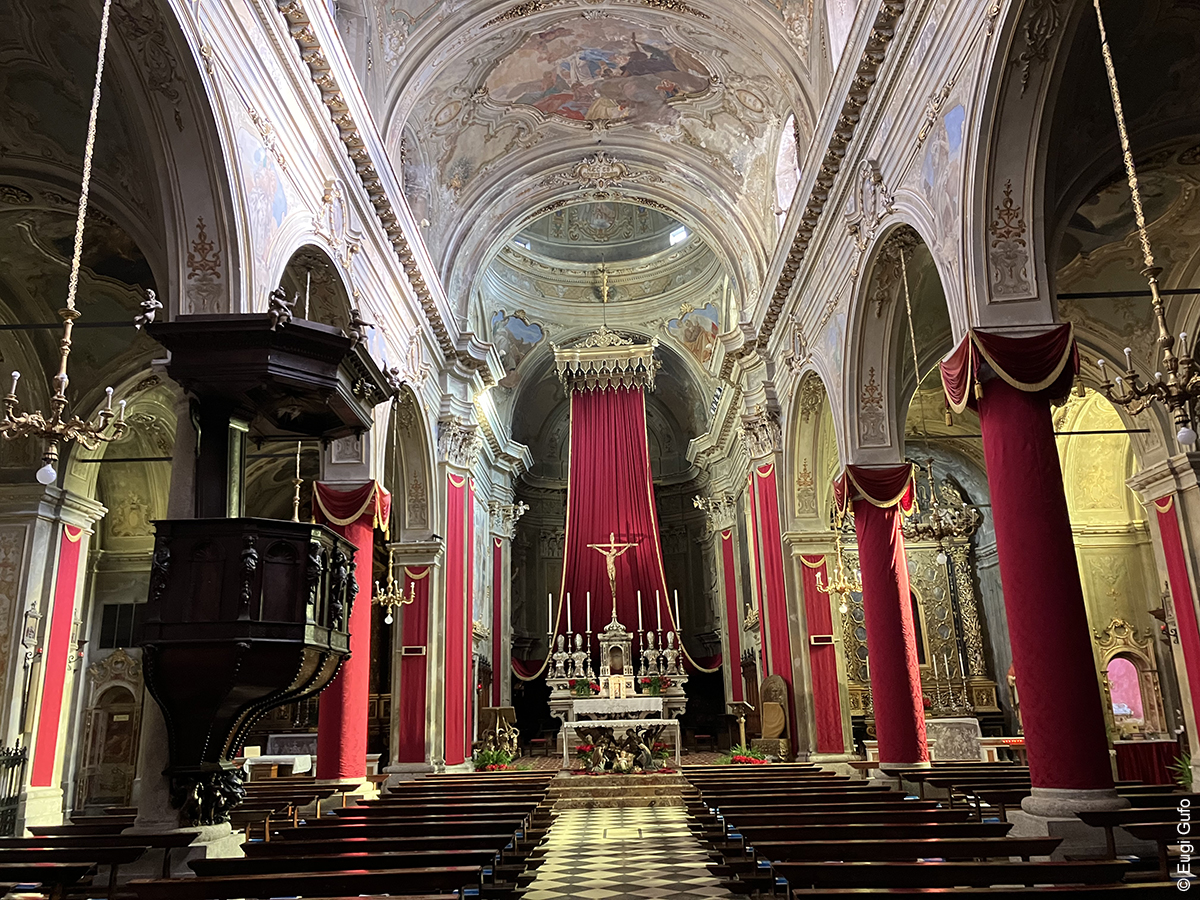
The interior of Santa Maria Nascente is far more impressive. I was particularly intrigued by the red velvet covering on the columns. It does not strike me as typical Christmas decoration — nor, judging by online photographs, is it permanent. I shall have to consult liturgical experts.
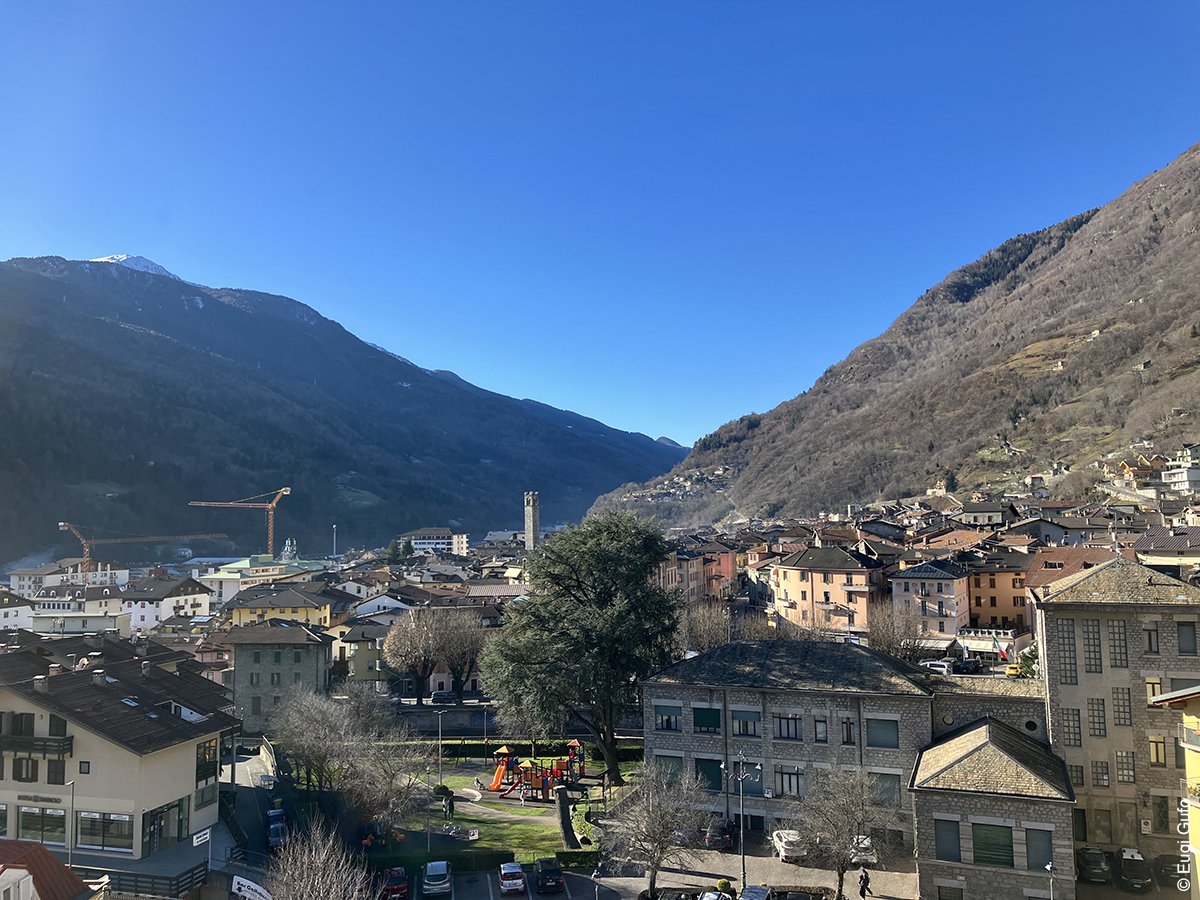
From the small square in front of the church, one enjoys a view over almost all of Edolo — useful for identifying sites not yet visited.
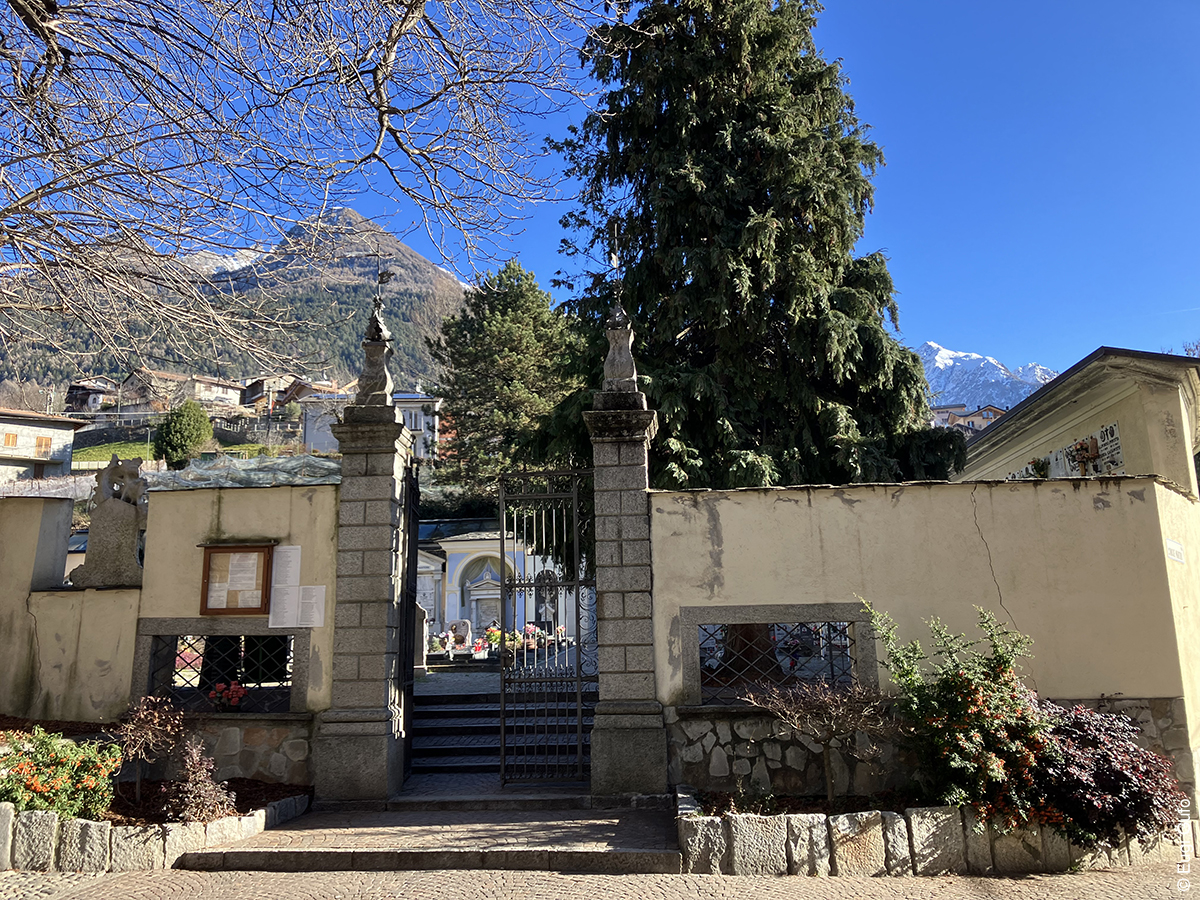
Behind the church lies the local cemetery. Strangely, it contains nothing remarkable — unlike most Italian cemeteries, which resemble open-air sculpture museums.
Another church worth seeing is dedicated to Saint John the Baptist. Somewhat hidden among houses, it can nonetheless be identified from afar thanks to its «traitorous» bell tower. The exterior does not promise much…
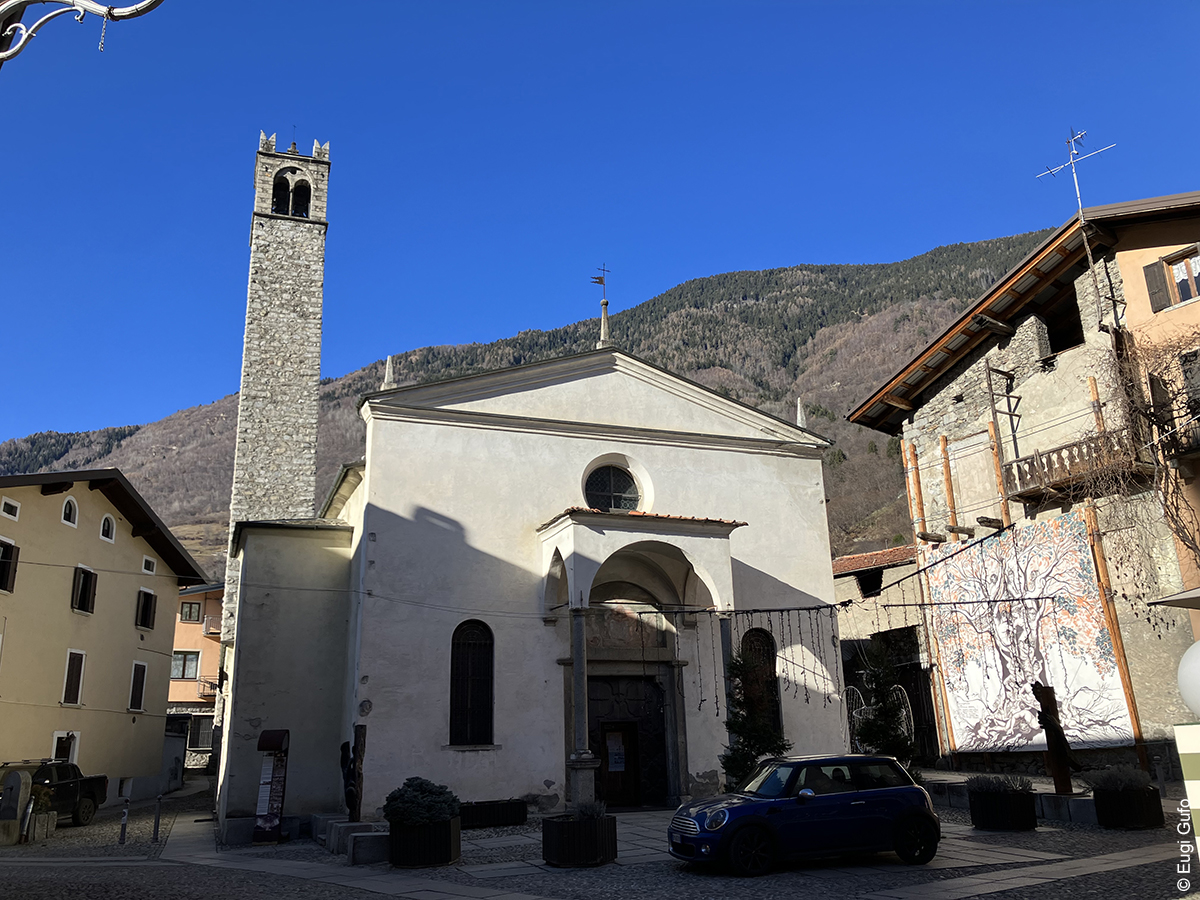
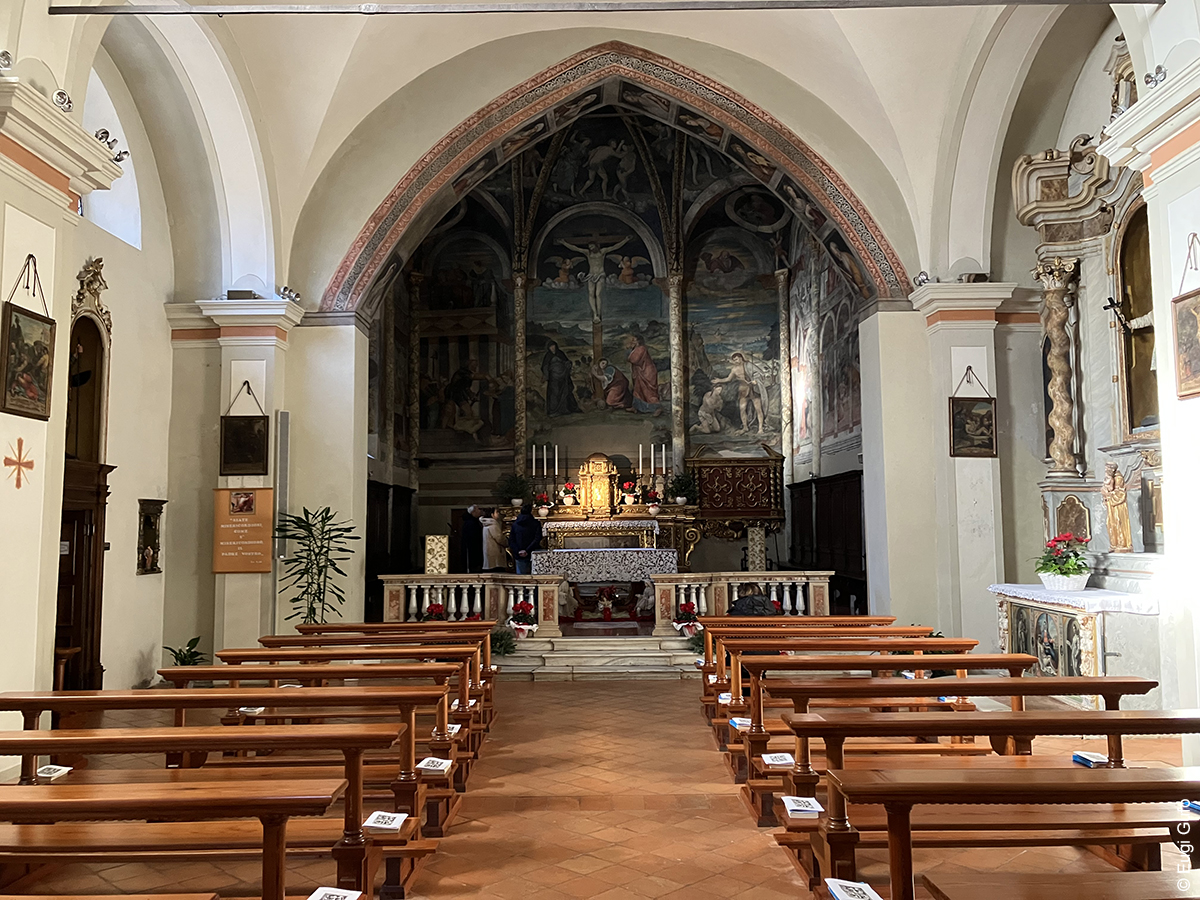
… yet the interior is surprisingly fascinating, particularly the beautifully restored frescoes in the presbytery.
On the surrounding hills and mountains there are other relatively interesting churches, but I was especially intrigued by one reached via a short «mountain Stations of the Cross.»
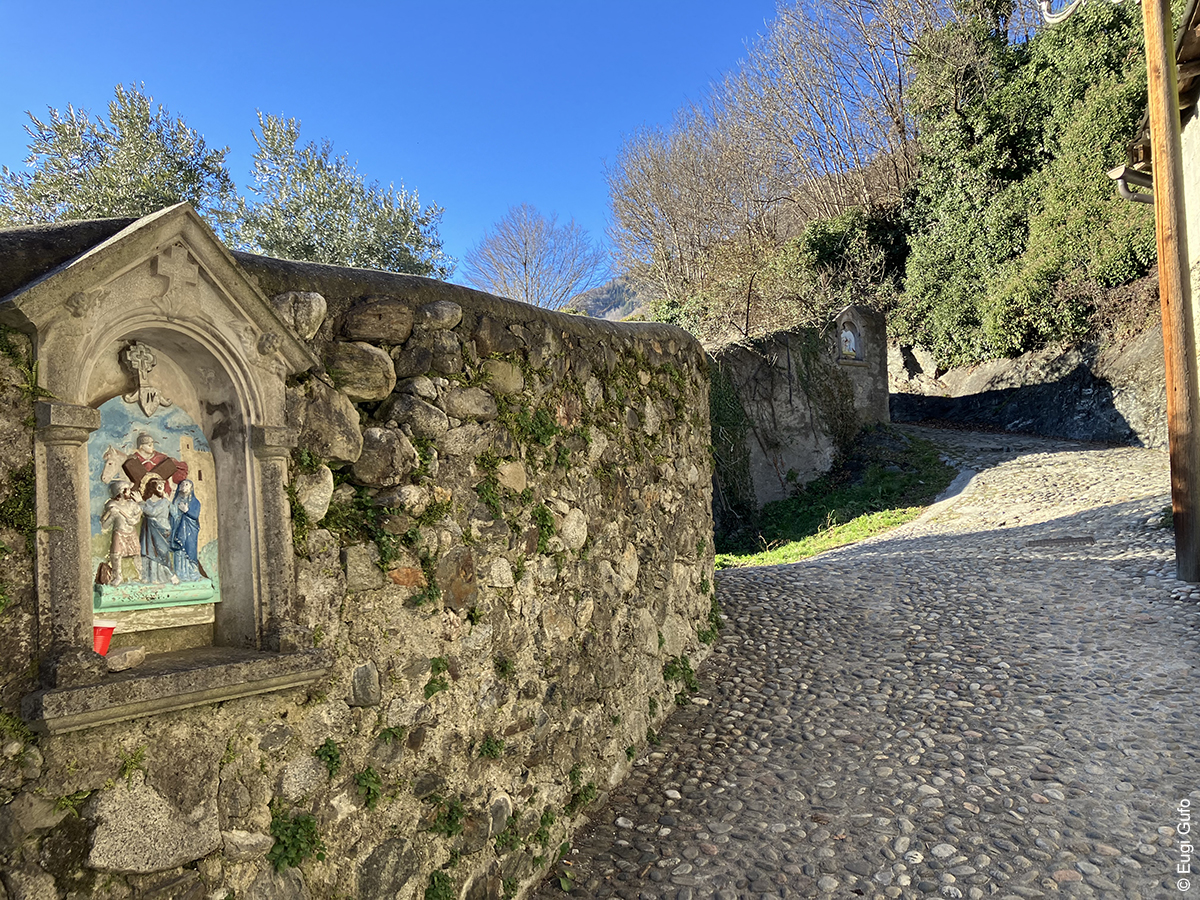
The path is well built and maintained; the building at the top, however, is closed and appears abandoned. Or perhaps it is not even a church? I found no reference to it in local lists of religious buildings.
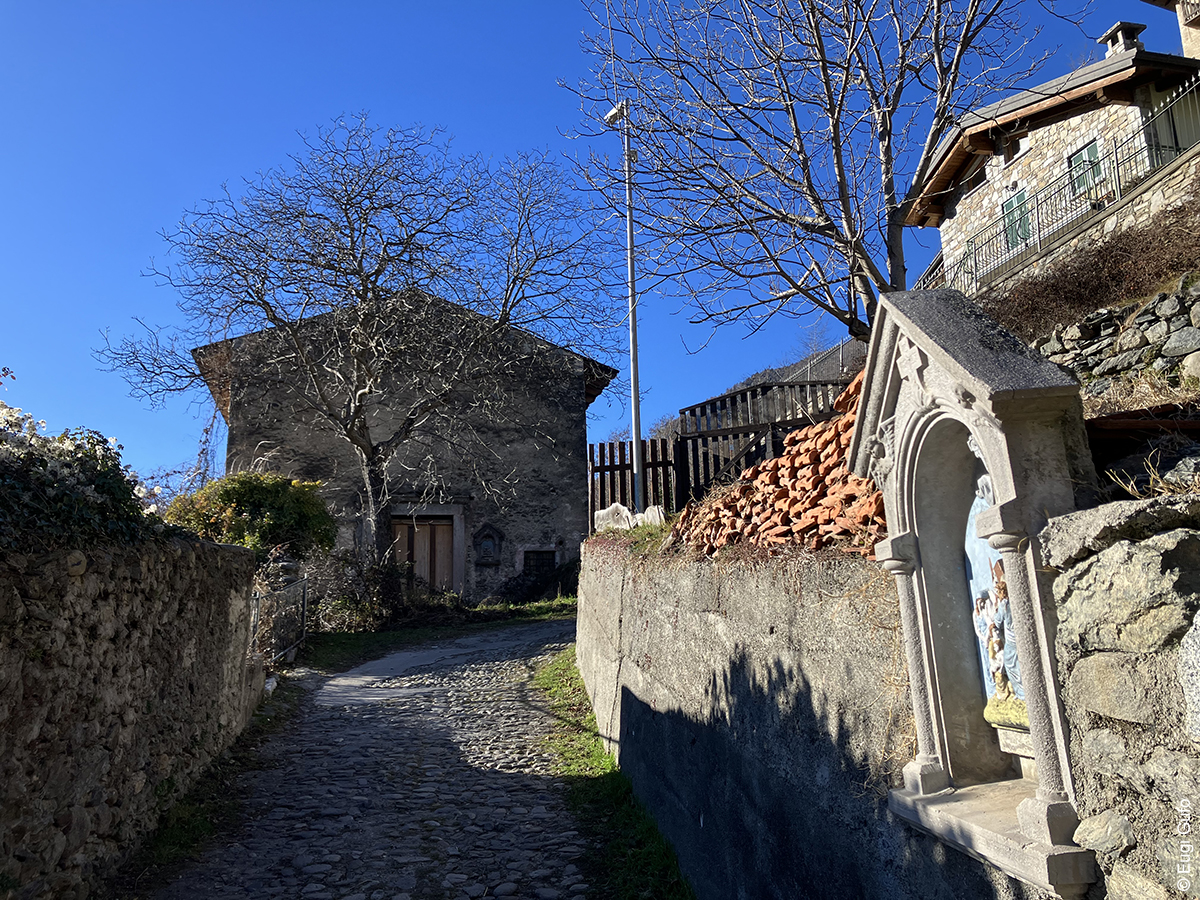
At least the space in front of it provides another panoramic view of Edolo. Let us verify whether I have forgotten anything important.
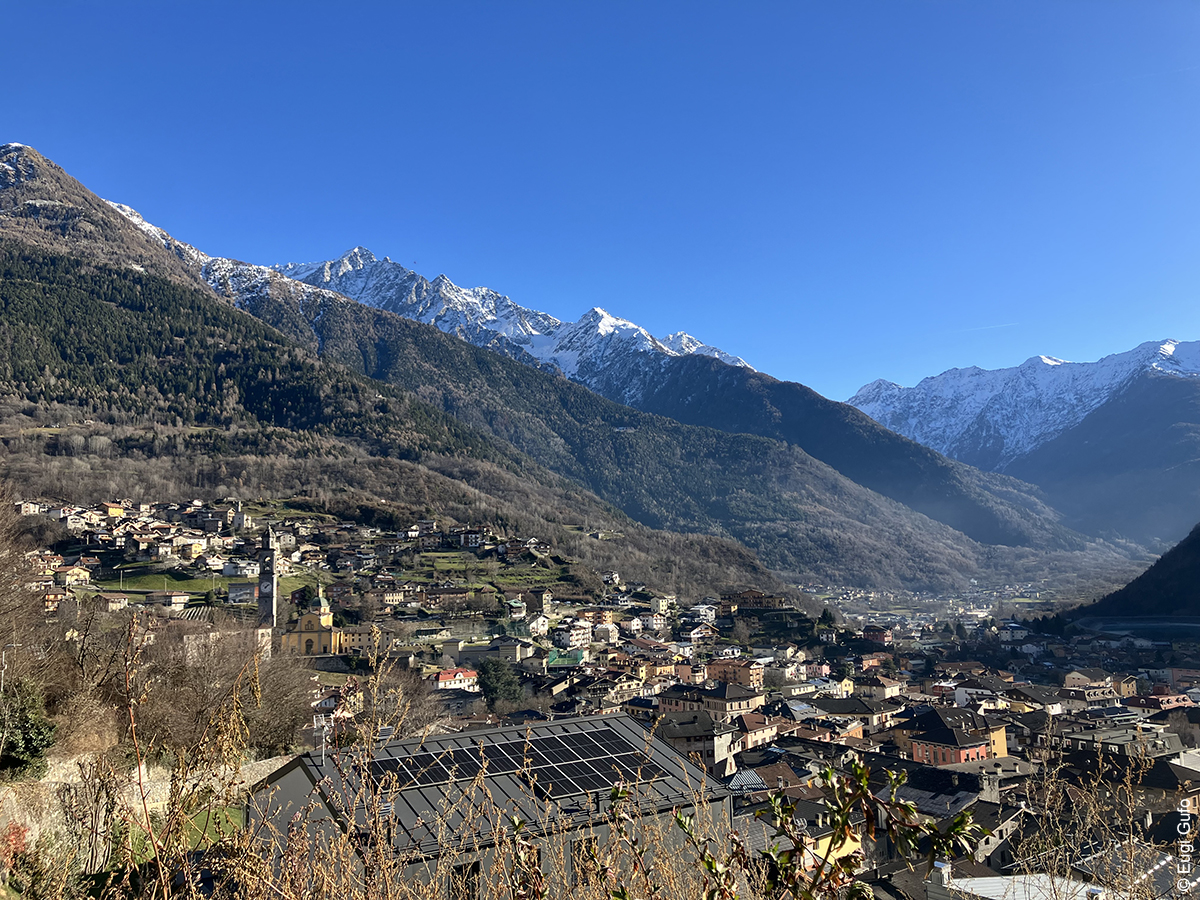
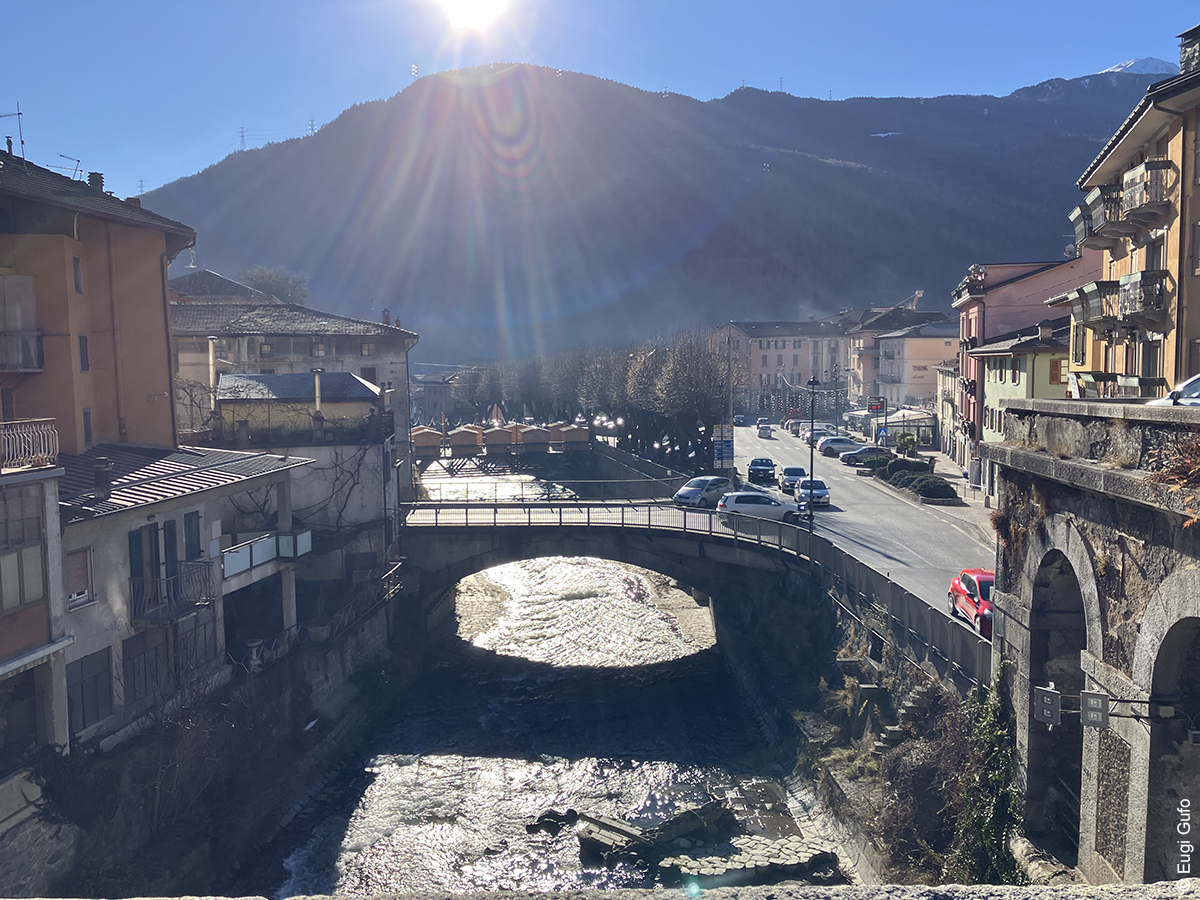
Ah yes — Edolo is crossed by the River Oglio. The bridges, however, are not particularly scenic.
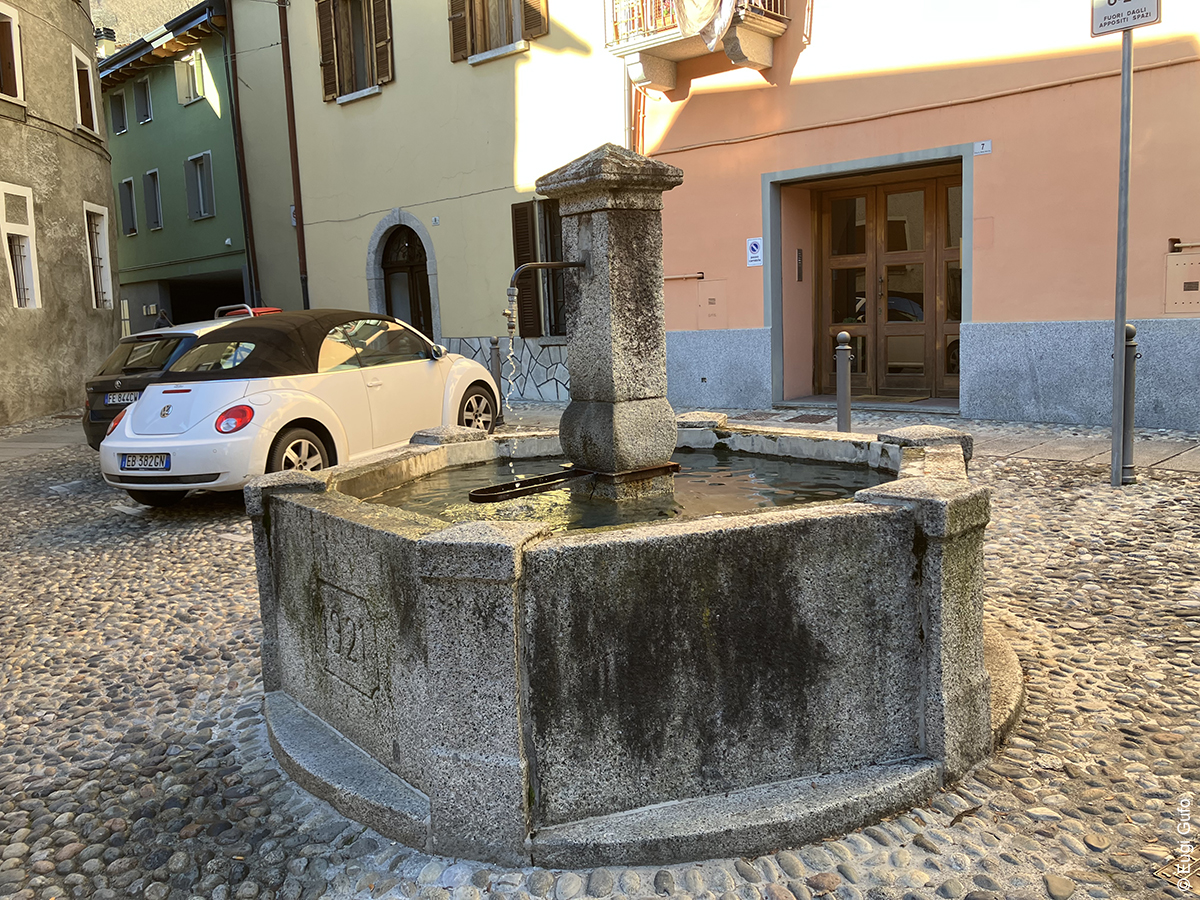
Wikipedia claims that Edolo is rich in fountains. I must clarify: the majority are not especially interesting.
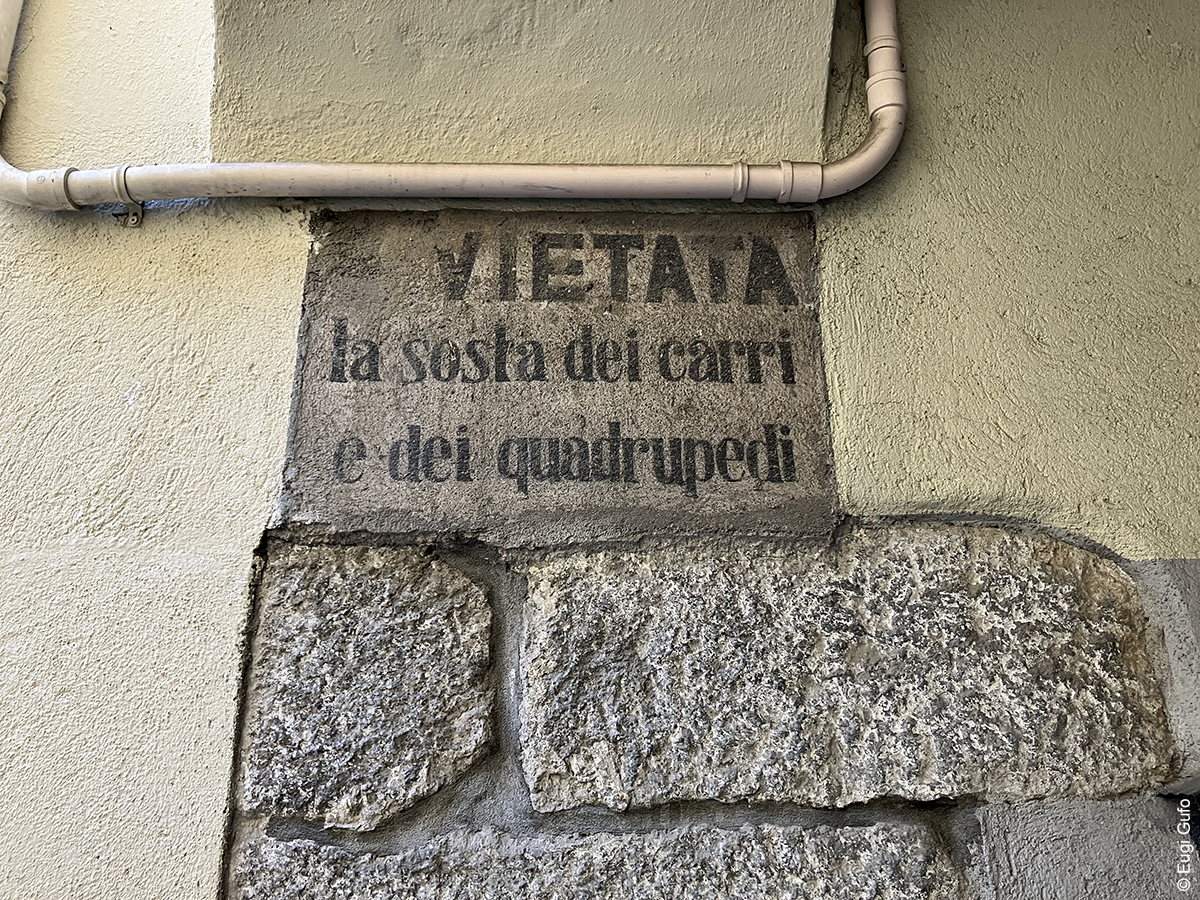
Much more fascinating is an ancient «road sign» discovered beneath one of the arches in the historic centre. I have never seen anything like it before. Considering that road signage was not standardised in earlier centuries, I hope it is authentic.
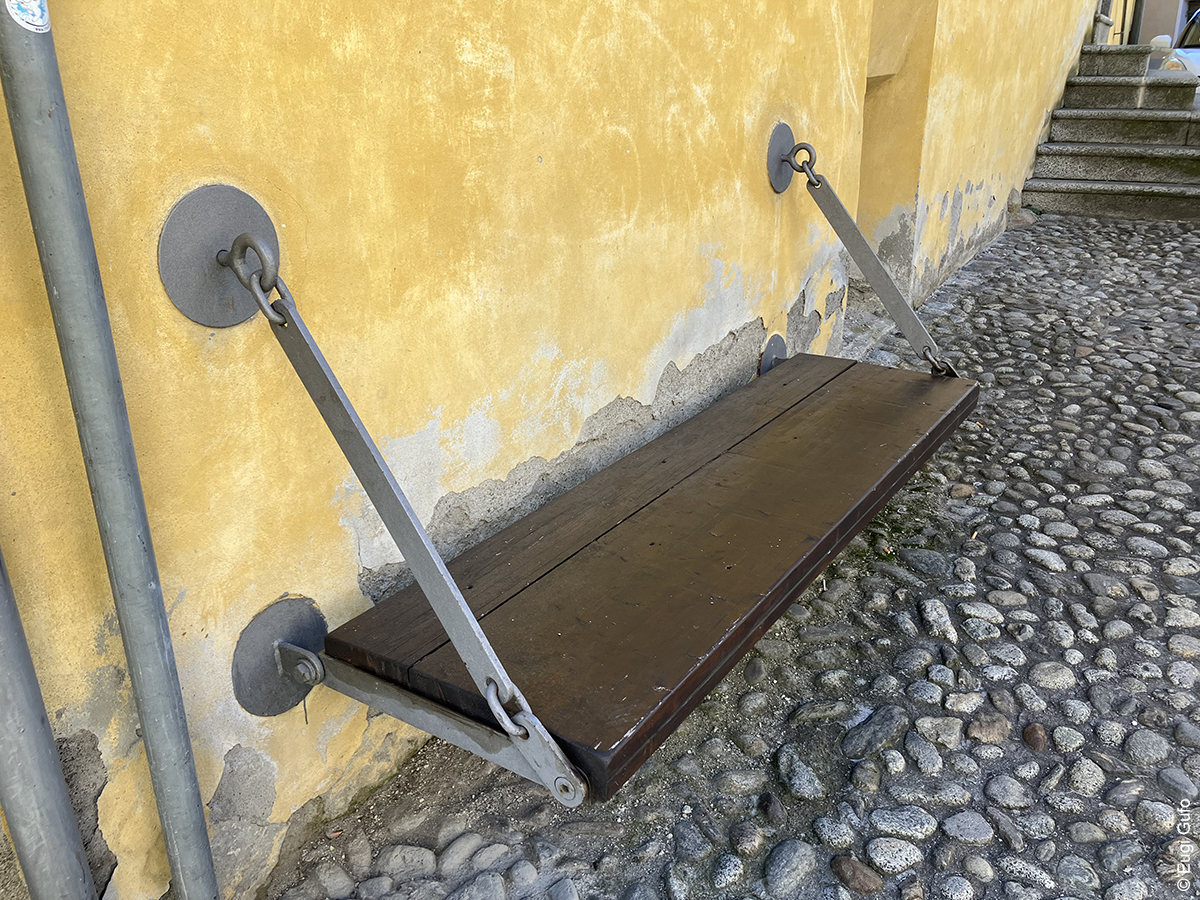
Some benches in the historic centre can be «closed» by locking them in a vertical position. I do not know the technical reasoning behind this choice, but I can imagine its usefulness in large, wealthy, heavily frequented cities — where certain nocturnal characters might otherwise use them as beds.
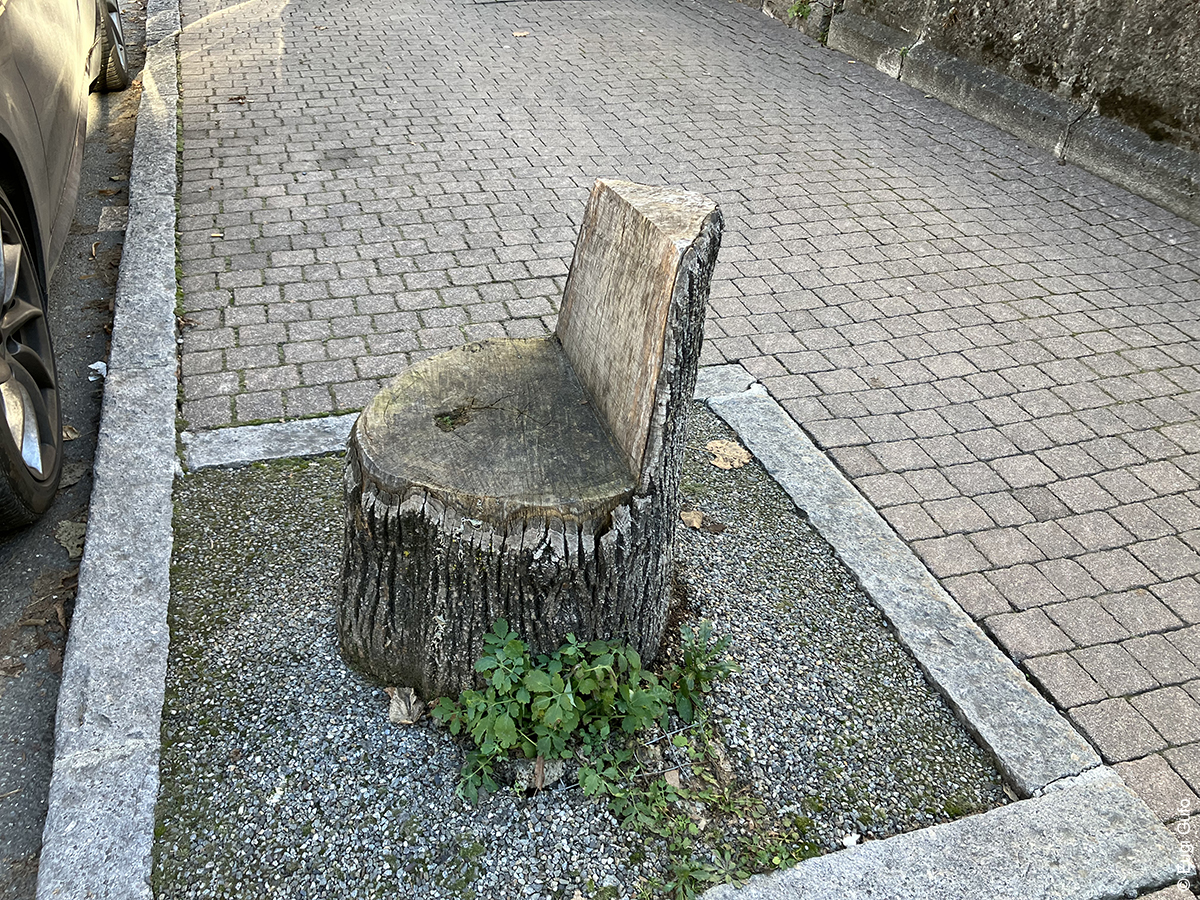
I also encountered an extremely ecological single bench — both in material and in its «zero kilometre» philosophy.
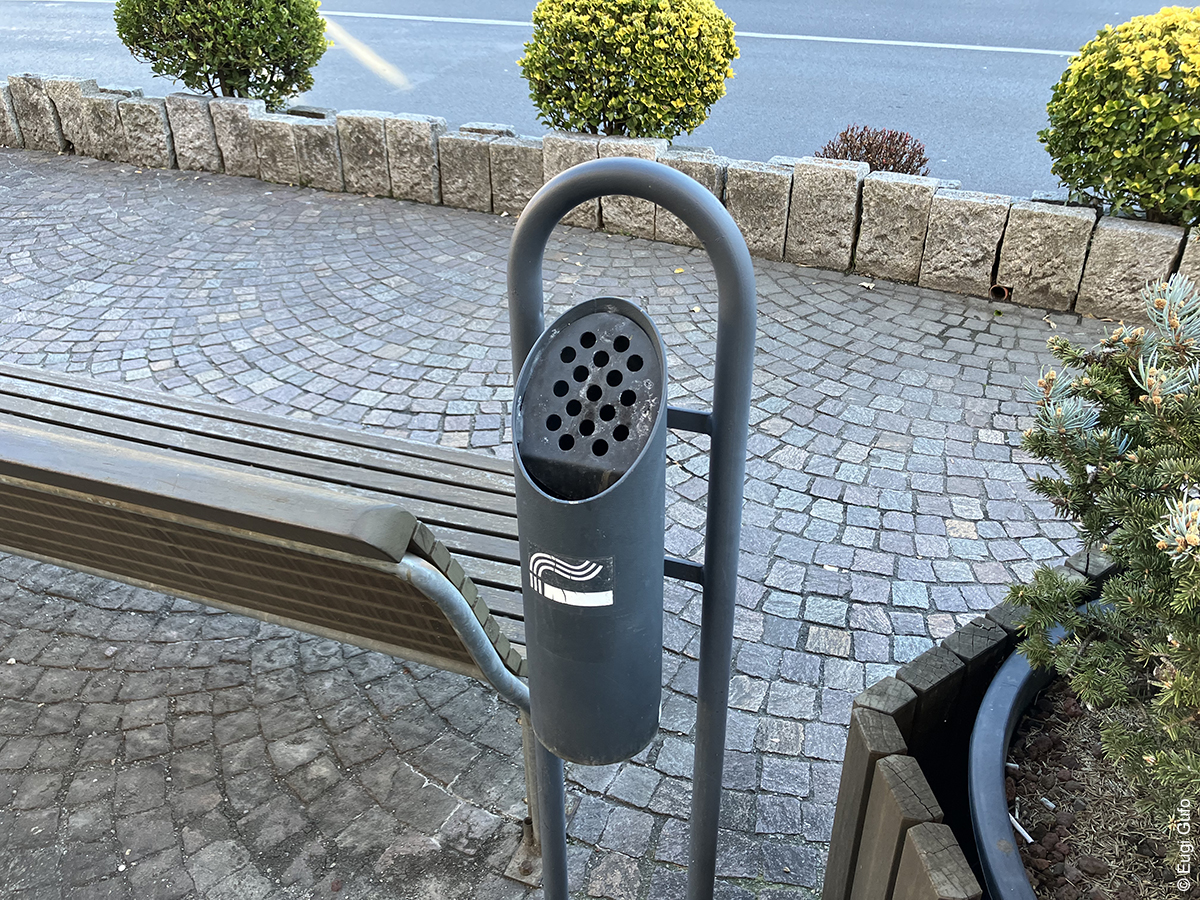
Another urban feature I greatly appreciated is the widespread presence of ashtrays. In some areas they are more frequent than rubbish bins. It is rare to encounter a town administration that actively assists citizens in remaining civilised.
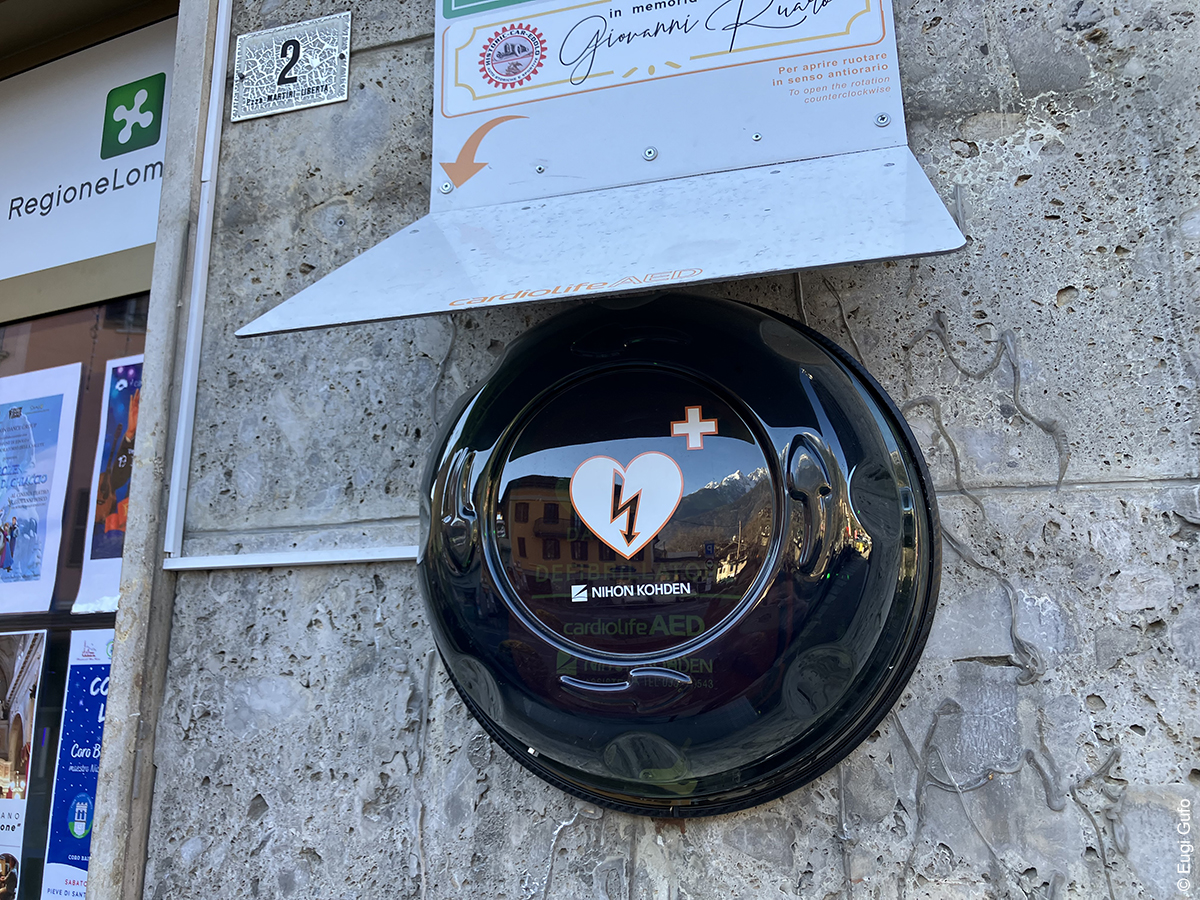
I noticed only one public defibrillator in the centre (perhaps I was inattentive), and its design was new to me.
And that is essentially all. Beyond the centre, the peripheral zones I saw are as monotonous as the peripheries of most places on earth.
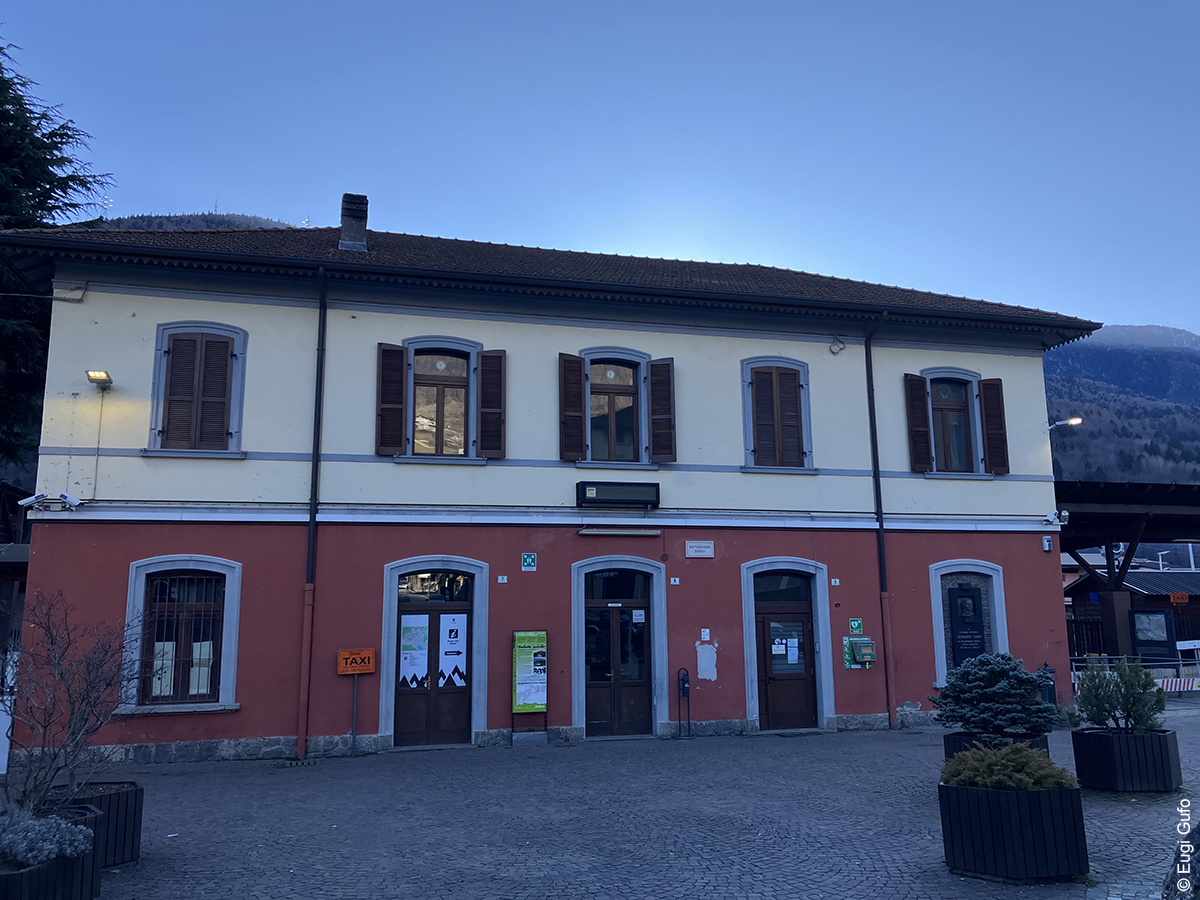
We return, therefore, to Edolo’s small railway station (two tracks only) to await the train home.
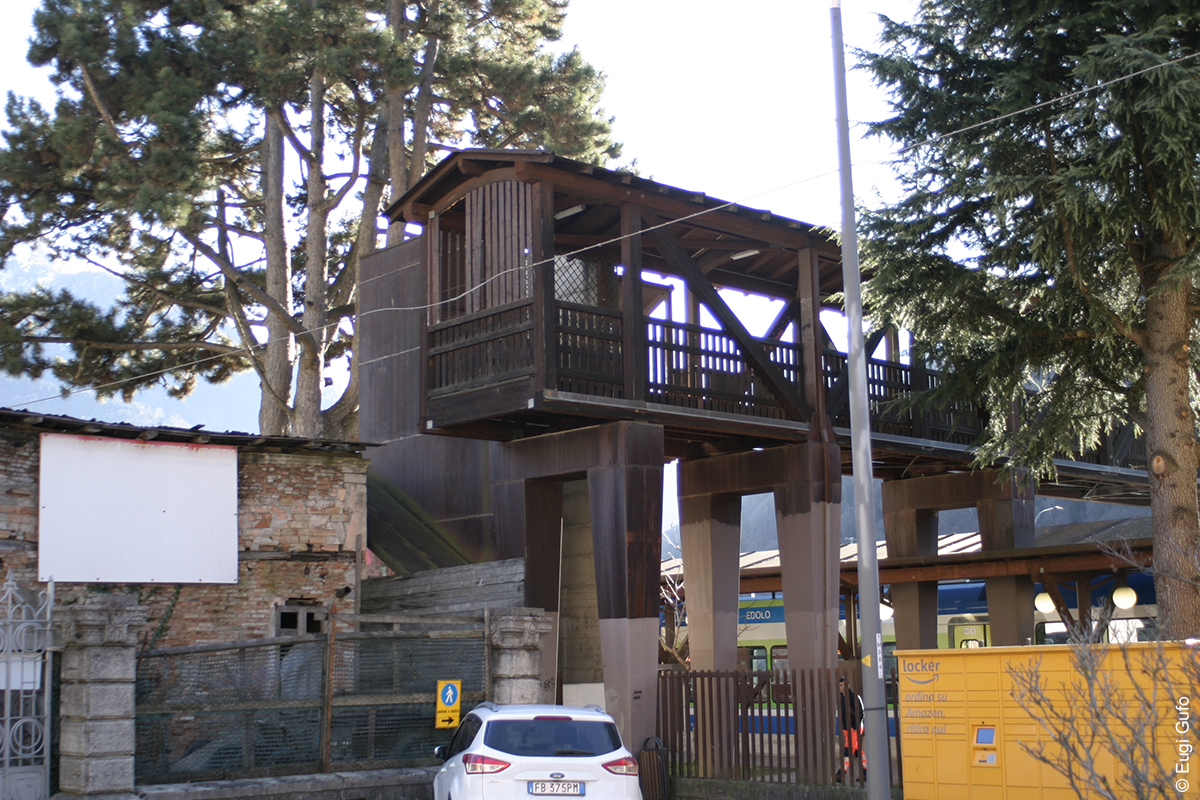
While waiting, we may contemplate the curious pedestrian bridge of metal and wood above the tracks. Its modern-design steps are attached on one side only and bounce perceptibly under the weight of a tourist of approximately 90 kilograms.
No — better to depart and preserve within one’s still-intact skull the generally positive memories of Edolo.
I do not know whether this photo narrative has successfully conveyed my view, so I shall summarise plainly: if you happen to be passing through the area, you may well devote two or three hours to exploring Edolo. You will find a number of pleasant and interesting things.
Edolo, 29 December 2025
↓ Show comments ↓


