


 Long live Ukraine! Fuck the war!
 RSS of site articles
In August 2023 I decided to tackle another stretch of the mountain route known as the Sentiero del Viandante — this time starting from Dervio, a town I had not managed to examine with sufficient seriousness on my previous visit. Having finally repaid my modest tourist debt to Dervio, I resumed the trail towards Colico and soon discovered that it passes by a small settlement rather unfairly neglected by the majority of guidebooks.
In some descriptions of the Dervio—Colico stage, the village of Corenno Plinio is indeed mentioned — though merely as a landmark one ought to pass in order not to lose one’s way. Presumably, those guides are written for people who intend to work only with their legs, and not with their eyes or their minds.
I, however — even in the mountains — do not walk merely for the sake of walking. I try to incorporate a few inhabited places into my itinerary for proper inspection. I had therefore planned to «study» Corenno Plinio as well. Yet the moment I arrived, I realised that the study would be far more attentive — and far more interesting — than anticipated.
I can now say that I understood perfectly well: the place is extremely small, but extremely beautiful. It is probably too small to appear on any official list of Italy’s Most Beautiful Villages — whether national or Lombard — yet it certainly deserves an article of its own.
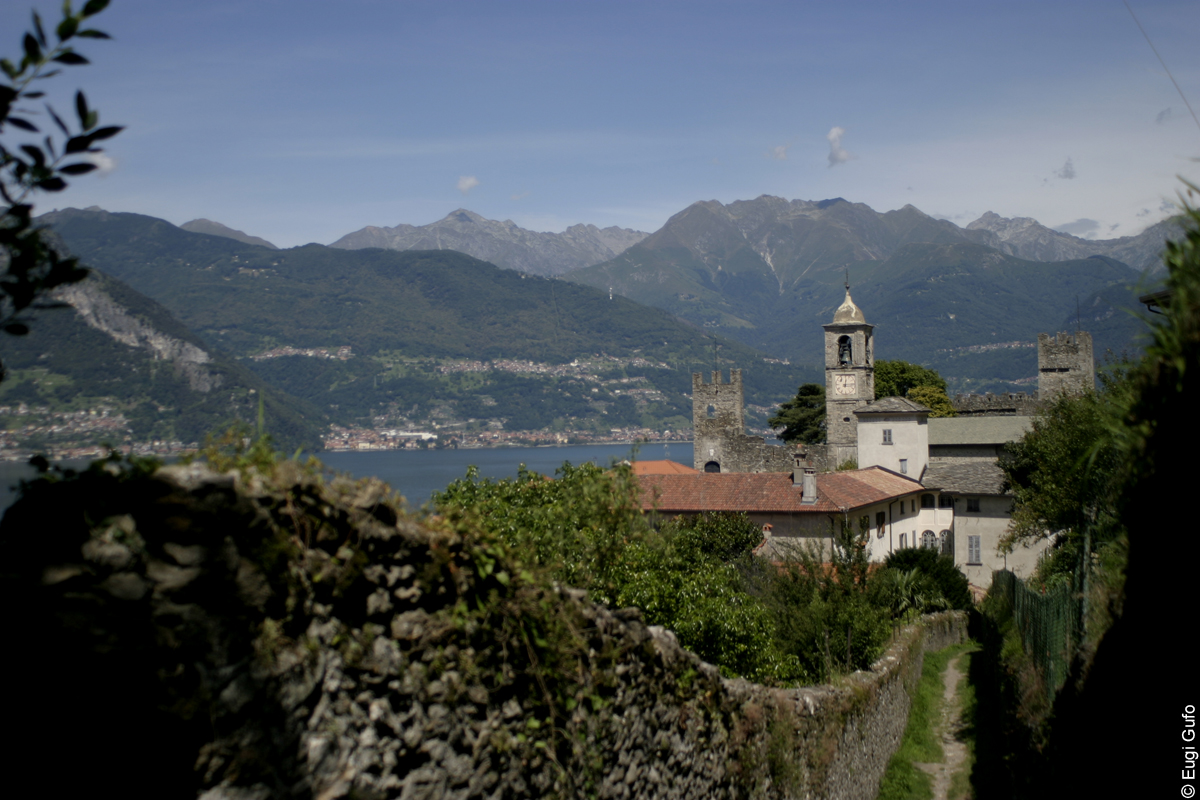
Formally, Corenno Plinio is a hamlet of Dervio, though physically the two are separated by just over a kilometre. Like Dervio, it lies on the shores of Lake Como. The settlement dates back at least to Roman times, although the name «Corenno» itself may be medieval. The word «Plinio» was added in 1861, when it was decided to commemorate — or perhaps tactically capitalise upon — Pliny the Younger, a magistrate of the Roman Empire who supposedly owned a villa in the area.
The oldest surviving building today is the Andreani Castle, first mentioned in 1040. It now bears the surname of the feudal family to whom it was granted at the end of the fourteenth century. The castle remains privately owned (apparently still by descendants of the historical Andreani family), though guided visits are occasionally organised. I am not entirely convinced I missed very much: the structure is, in essence, an enclosure with two diagonal corner towers.
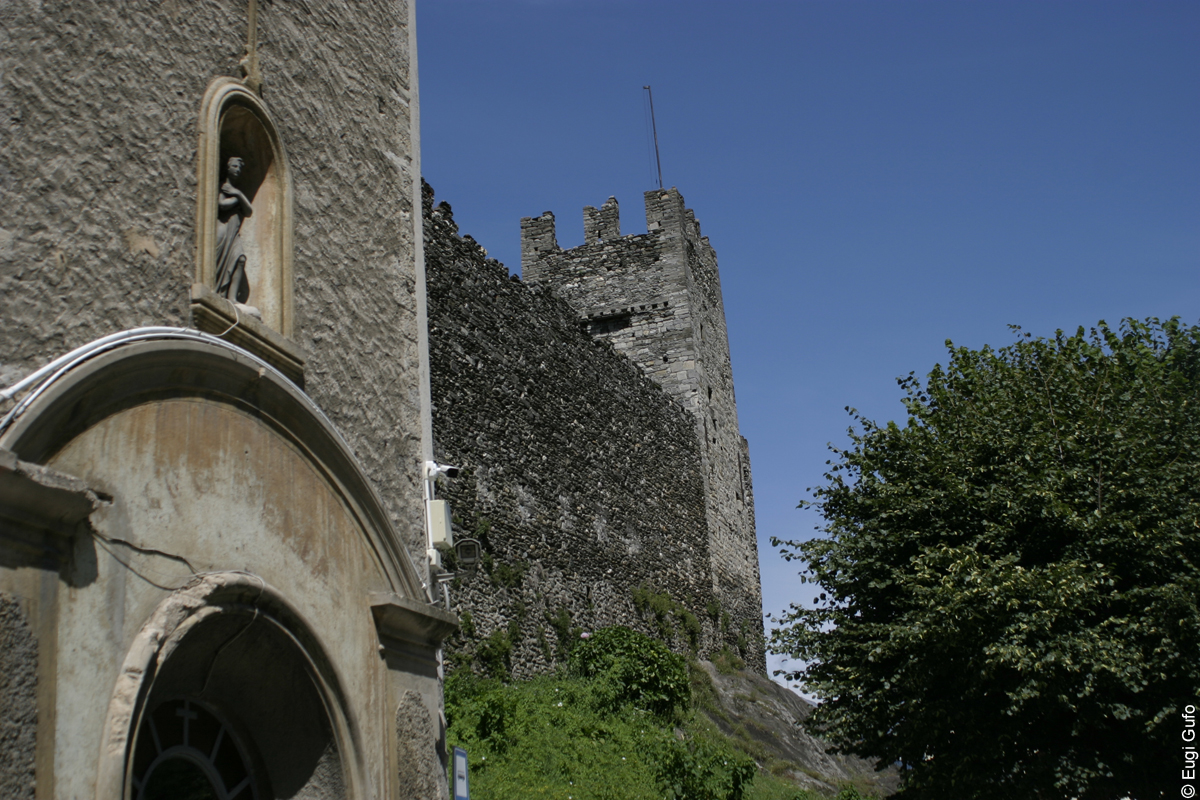
Far more accessible — and arguably more rewarding — is the nearby Church of St Thomas Becket, built at the end of the thirteenth century.

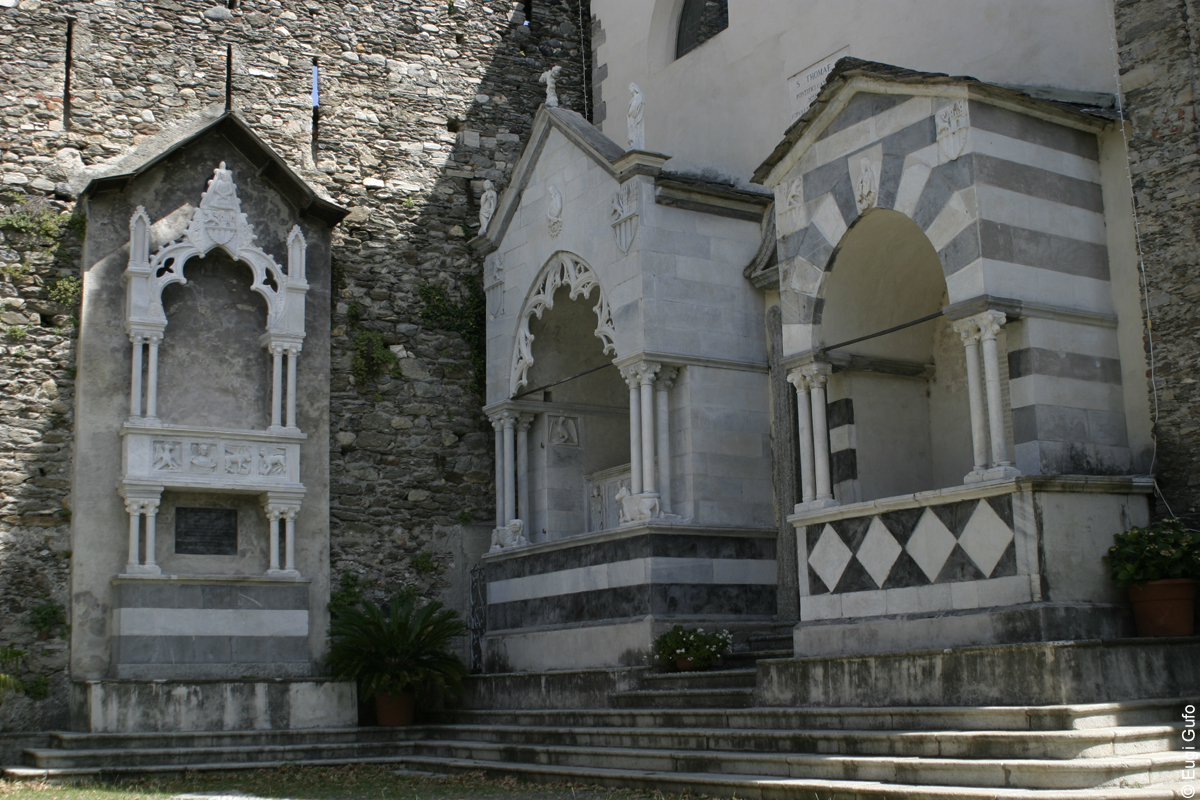
On the church forecourt stand three marble funerary monuments known as the Andriani Arches — an alternative spelling of «Andreani» — dating to the fourteenth century. Artistically interesting in themselves, they are made even more intriguing by the discovery that before the church was enlarged in 1820 the forecourt functioned as a cemetery. Where that cemetery was subsequently relocated remains unclear: there is no visible trace of it nearby.
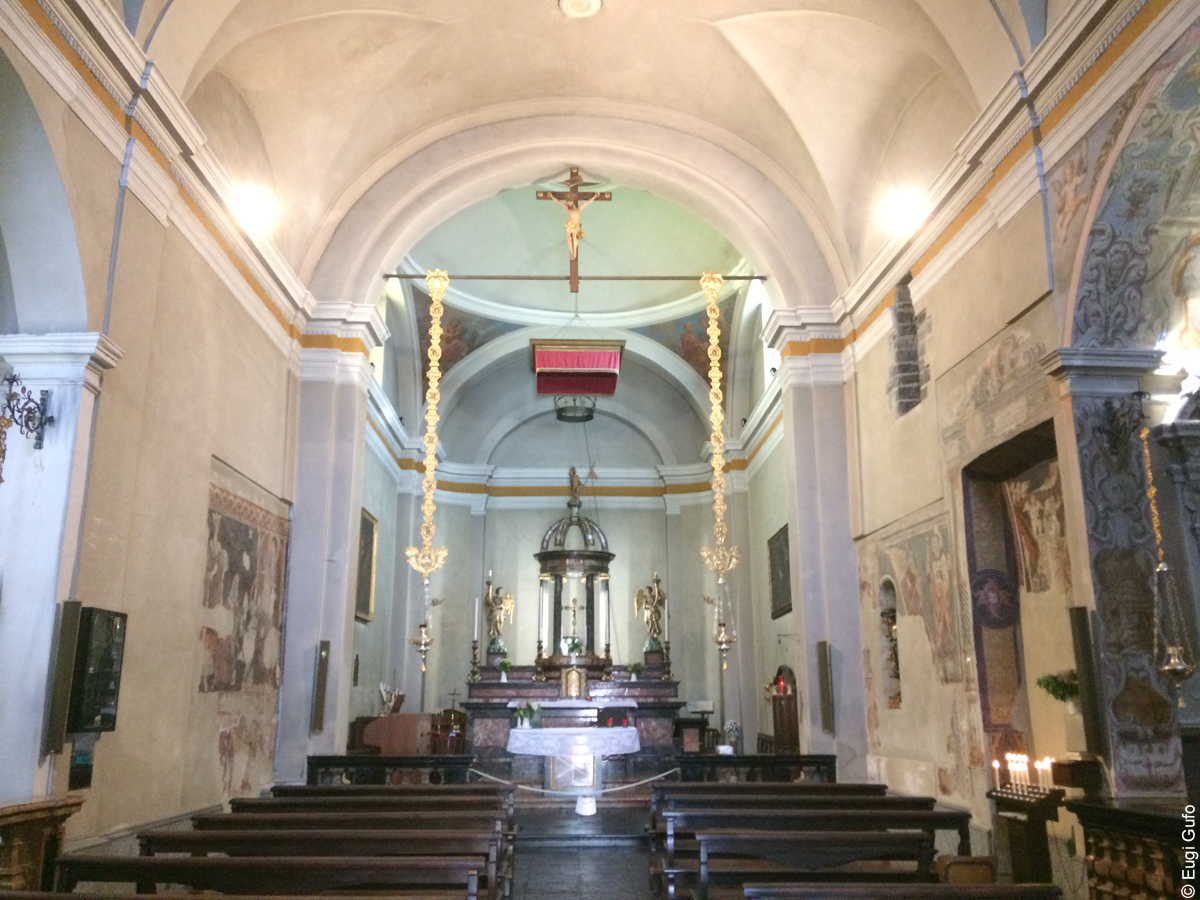
The church interior is notable primarily for its frescoes, executed between the 1330s and 1350s.
Now let us examine any map of Corenno Plinio. We have already, in effect, seen the castle and the church. Everything else — from the left perimeter of the castle down towards the lake (and slightly beyond to the south) — is accessible only upon purchasing a ticket, priced at four euros per adult. Each ticket holder receives, somewhat charmingly, a printed paper map of the village.
Access to the ticketed area is via one of three streets that all depart from the same square in front of the church. There are no turnstiles or physical barriers. Instead, on the square — where the ticket kiosk and assorted merchandise stand — circulate discreet individuals in civilian clothing whose task is to inform visitors that entry requires payment. Within the village itself I encountered a gentleman wearing an orange vest and holding a portable card machine: if I understood correctly, he was responsible for identifying any visitors who had infiltrated the paid zone with excessive optimism.
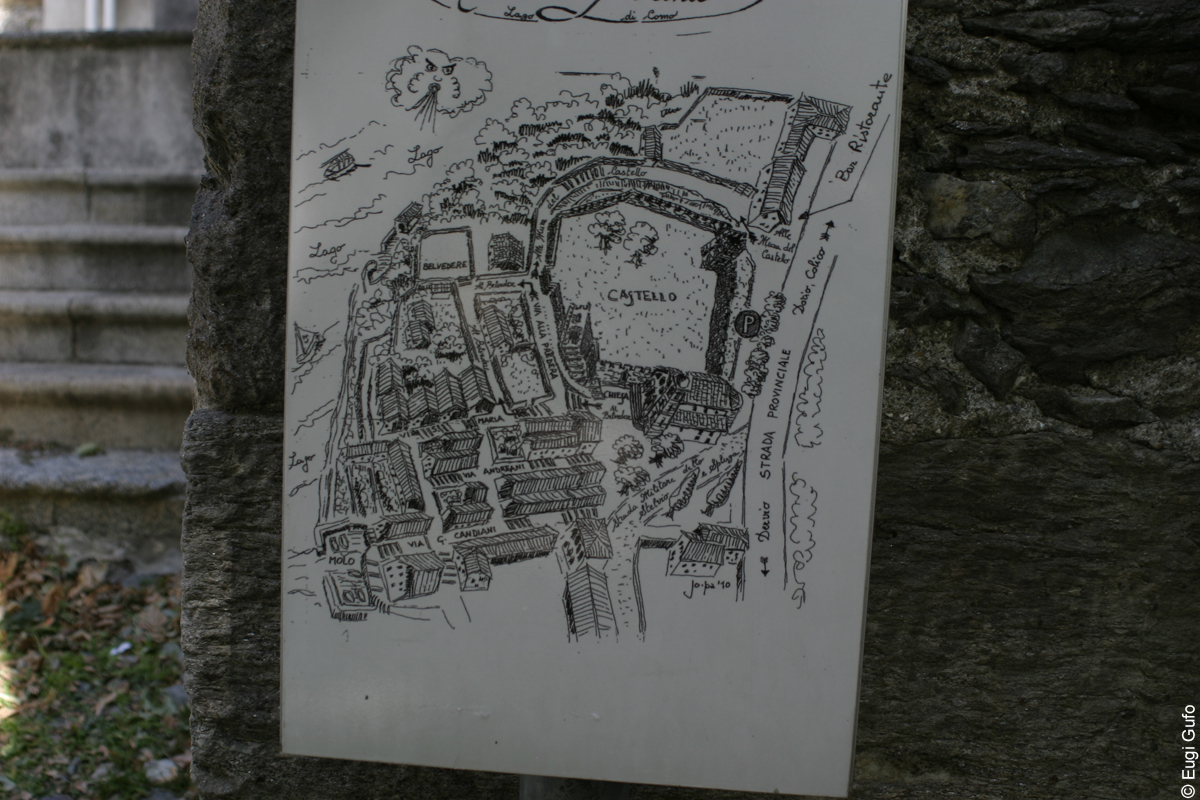
Unfortunately, one crucial warning is missing at the entrance: before purchasing a ticket — or attempting to outmanoeuvre the controller — assess the condition of your legs. The village is tiny, almost miniature, yet approximately ninety per cent of its streets consist of staircases or steep ascents and descents. For the less mobile, the visit may prove moderately demanding.

During my short stay I happened to meet some of the village’s sixteen official residents. Even the elderly move up and down the steps with admirable agility — and, it must be said, with consistent friendliness towards visitors. Both within the internal streets and along the very short lakeside promenade, benches are thoughtfully provided for rest.
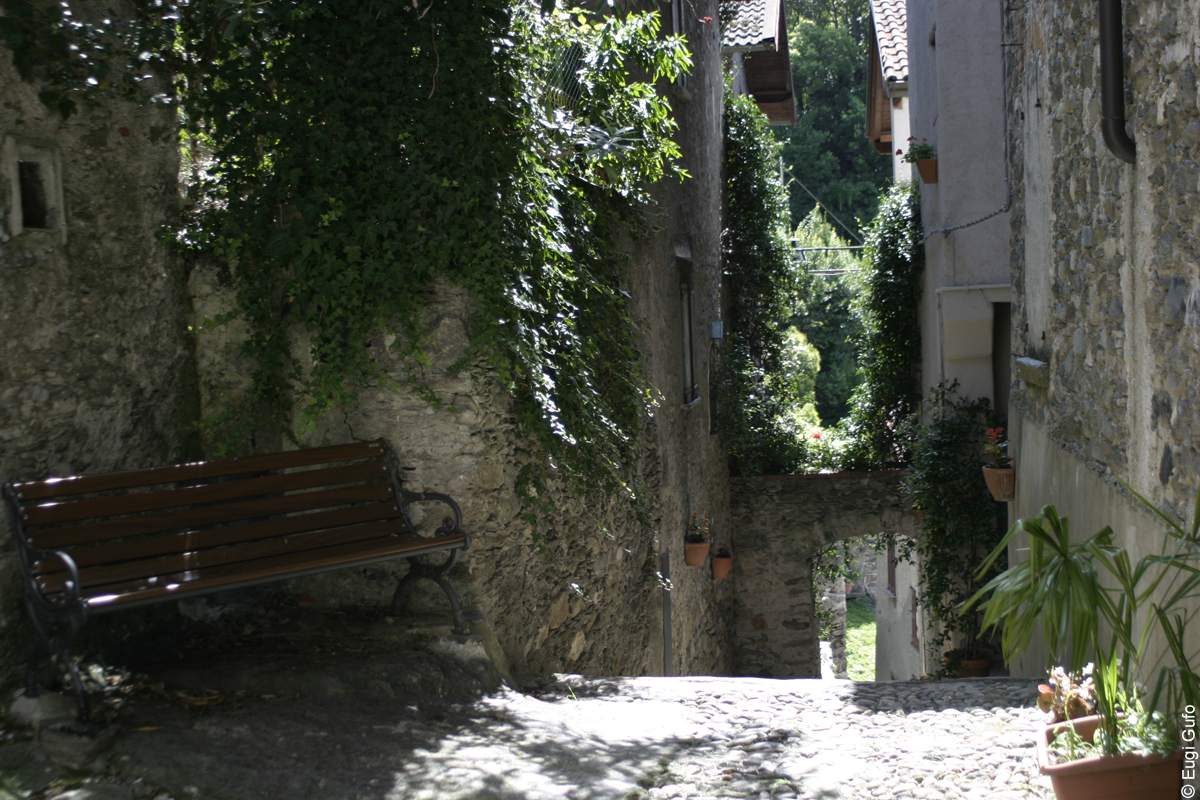
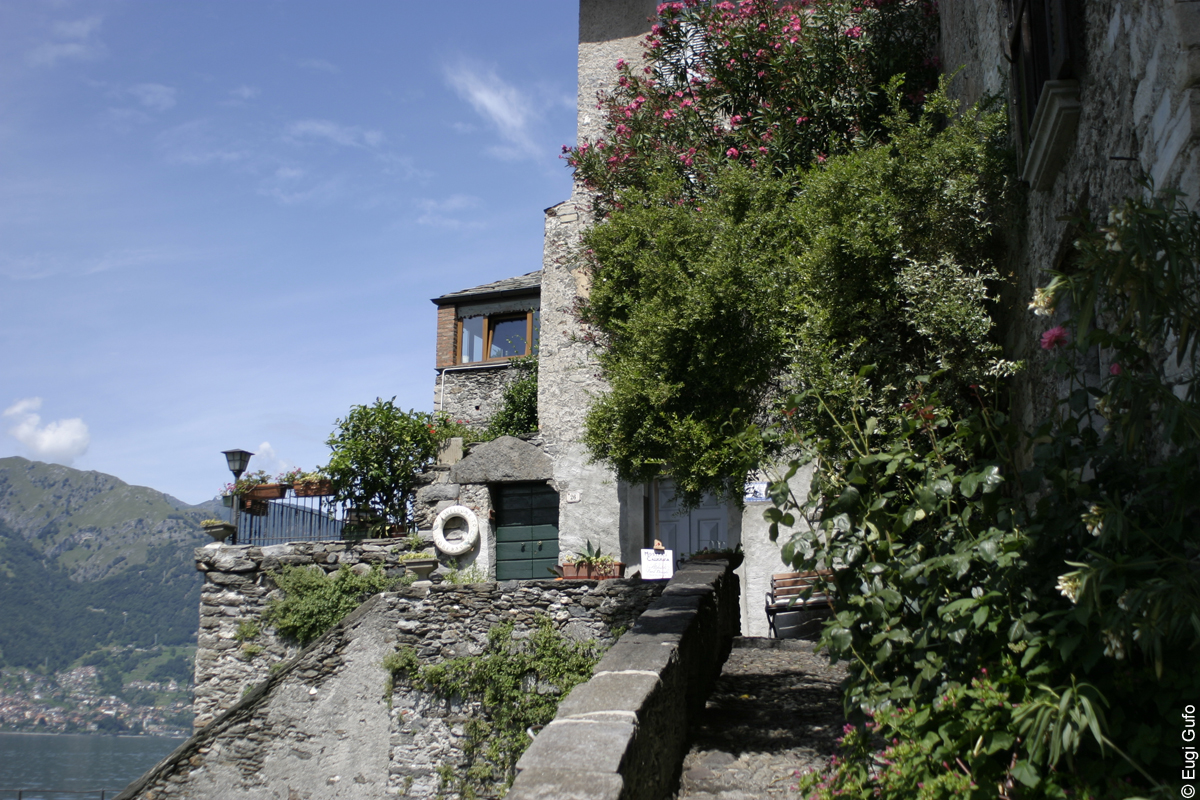
One might logically assume that the lakeside is the most beautiful part of the village. A curious — slightly surprising yet entirely logical — historical fact complicates this assumption: after the castle, it was the lakeside houses that suffered most during medieval conflicts, since attacks frequently arrived by water. Consequently, the closer a building stands to the lake, the more often it has been rebuilt throughout history. Whether this process has contributed to their aesthetic appeal remains open to debate.
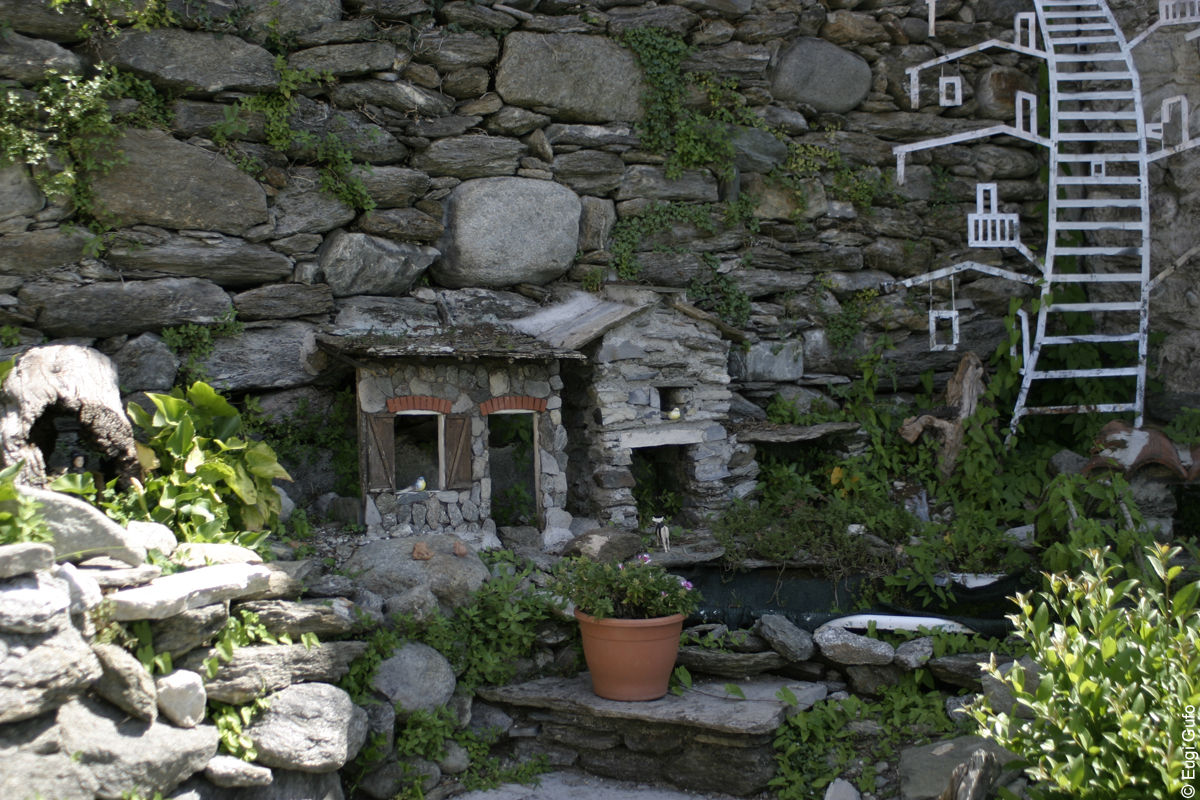
Today, however, Corenno Plinio has been peaceful for centuries. At one point I noticed what appeared to be a permanent nativity scene on the lakeside. Or perhaps it is an installation unrelated to religion. Interpretation is left to the viewer.
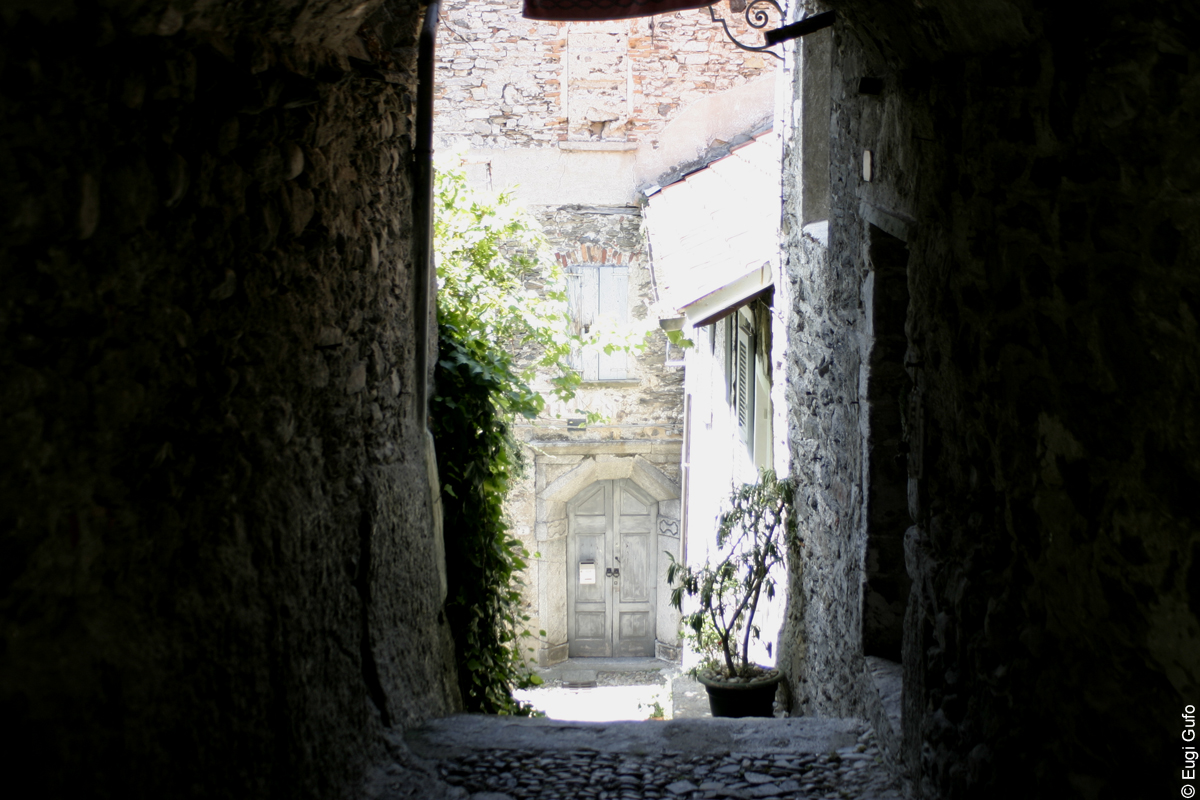
And that, essentially, is all. We have already seen nearly everything there is to see in Corenno Plinio. A few rare horizontal (or nearly horizontal) streets remain…
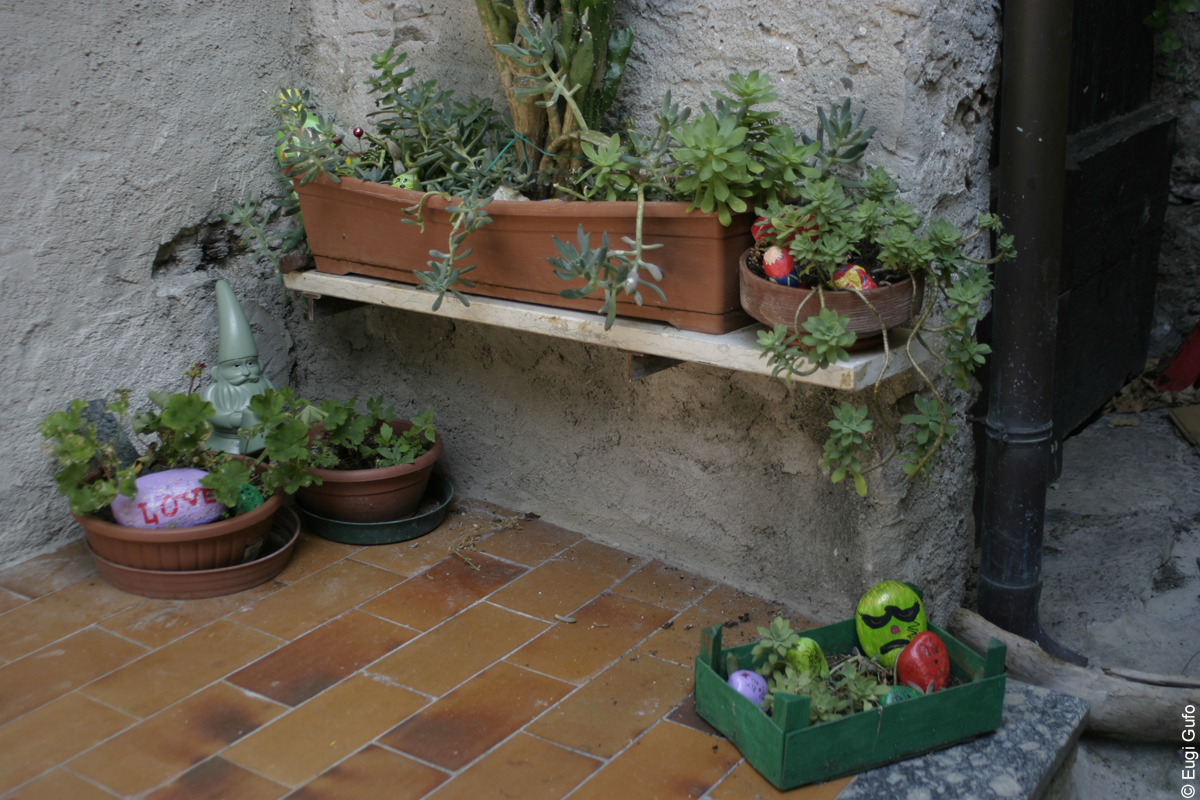
… along with the charming ways in which residents decorate the spaces in front of their homes.
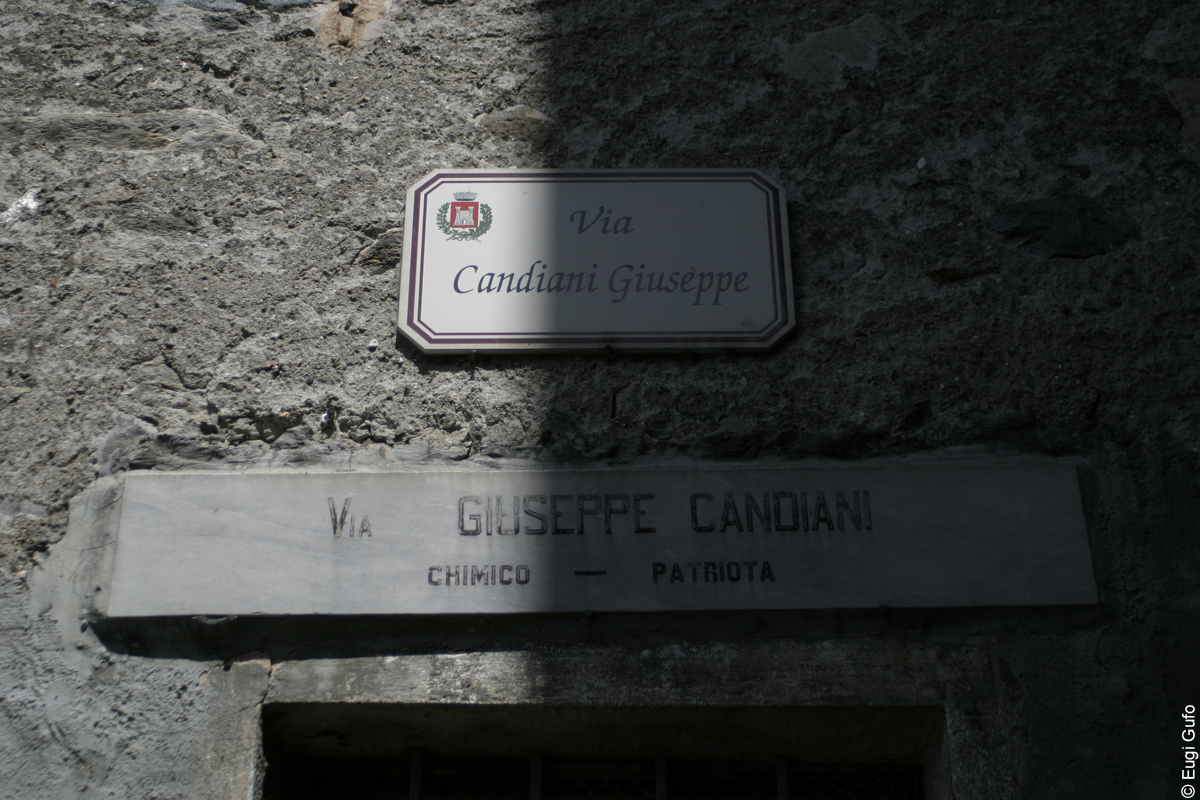
The only detail I did not appreciate was the transition from human language to bureaucratic language on the street-name signs. Word order matters.
In short: if you happen to pass through the area, do visit Corenno Plinio. It is a very beautiful place — compact, slightly theatrical, faintly strategic, and entirely worth the effort of both legs and mind.
Corenno Plinio, 9 August 2023
↓ Show comments ↓


