


 Long live Ukraine! Fuck the war!
 RSS of site articles
Of Cantù — the largest municipality in the Province of Como after the capital — I knew exactly one thing before visiting: a well-known Italian basketball team is based there.
I am entirely uninterested in professional sport in general and team sport in particular, so I did not even know that Cantù’s team plays its home matches in Desio (in the Province of Monza and Brianza, as Wikipedia helpfully informs me).
I decided to visit Cantù precisely because of this informational deficit. I wished to determine whether the municipality had any additional reasons for recognition. Given its not-insignificant size, a positive answer seemed statistically likely. It was.
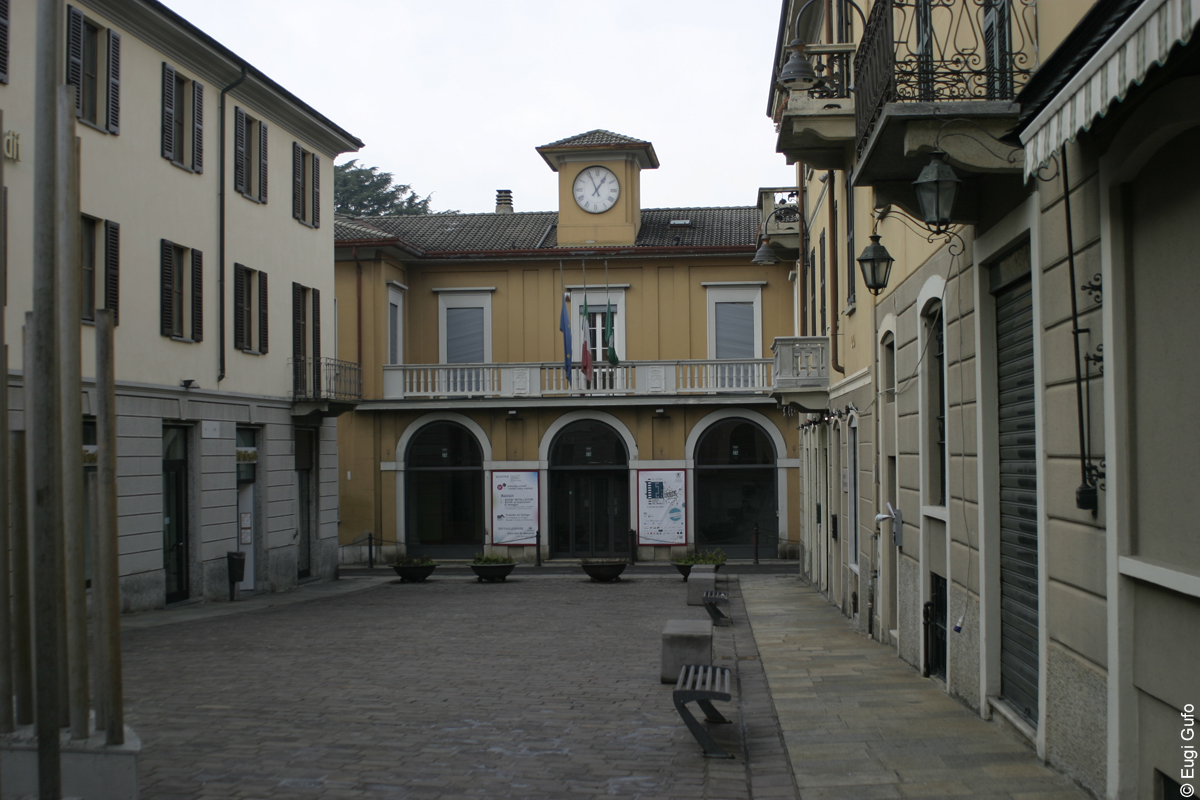
The historic centre of Cantù, while not enormous, is handsome and imposing. Structurally and stylistically, it resembles the centre of a small-to-medium-sized city rather than that of a large provincial town.
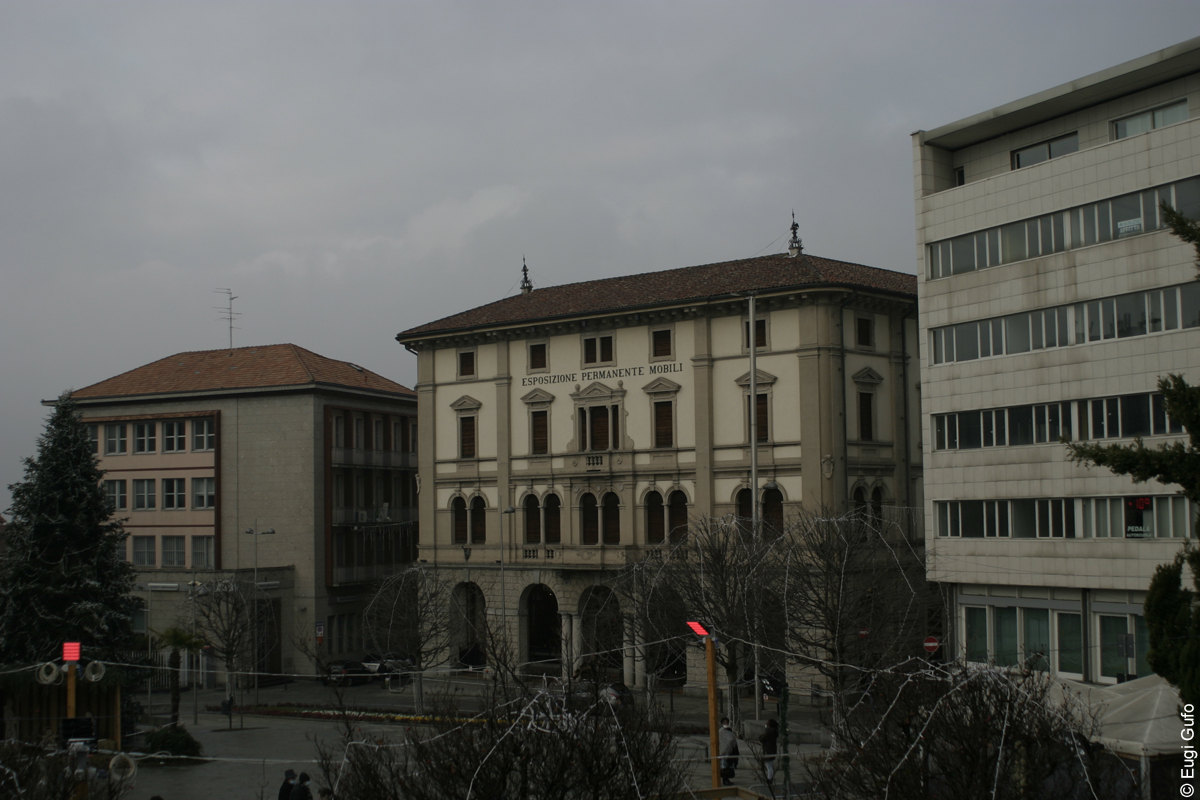
Modern architecture is also well represented in the centre. I cannot claim that proximity to historic buildings is always fortunate (especially for the latter), but considered individually, many modern structures are interesting.
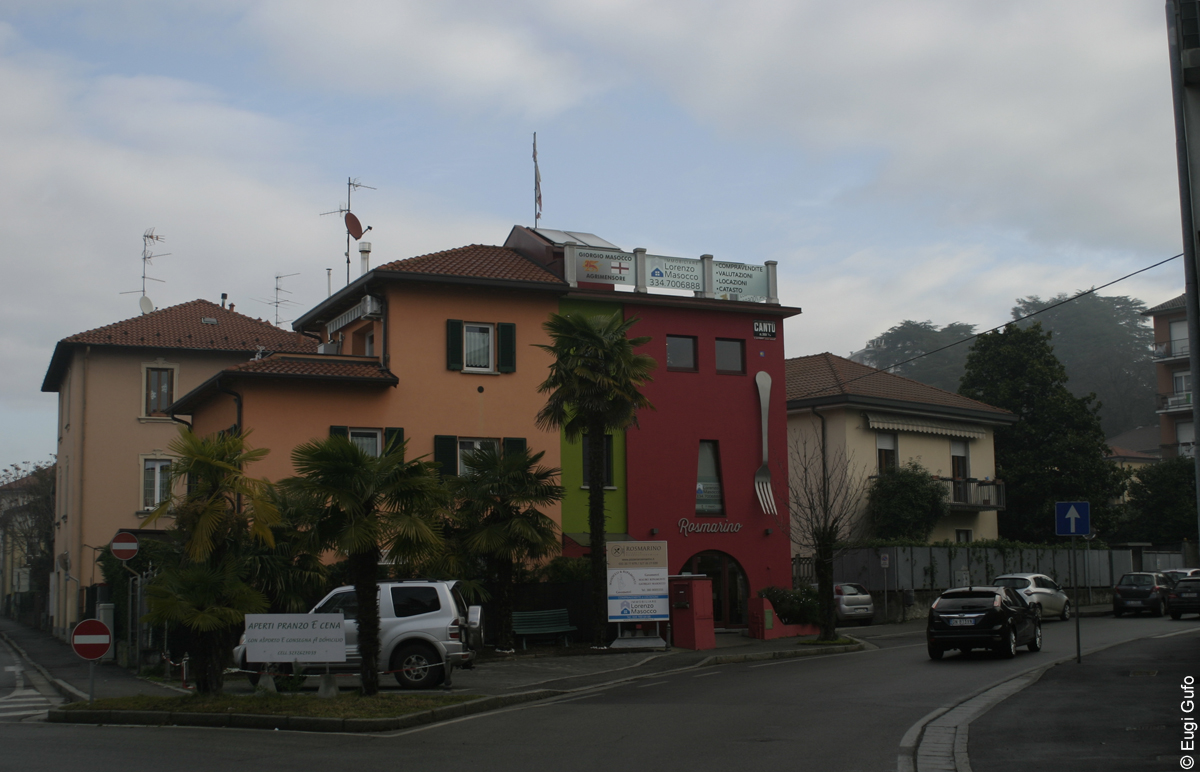
Lower-rise, more traditional buildings — typical of provincial settlements — are also present and often form visually calming ensembles (if such a description may reasonably be applied to architecture).
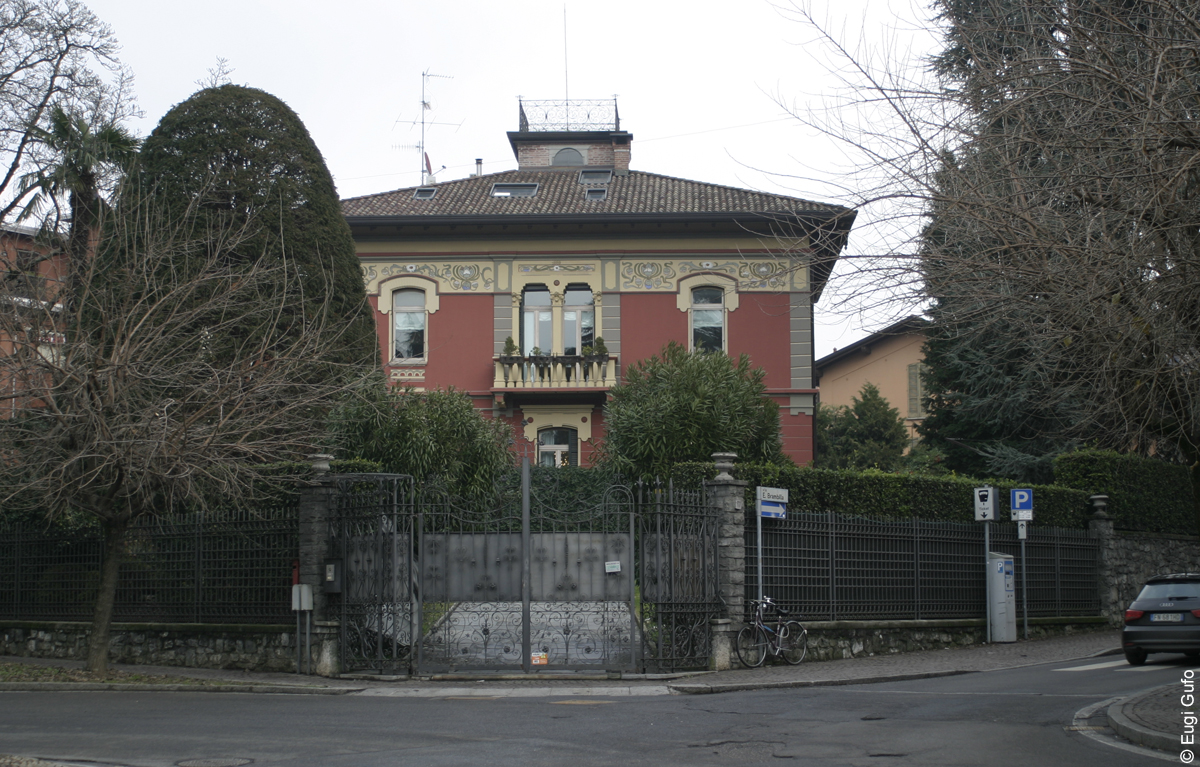
There is no shortage of large private villas within the historic centre either.
Among the religious buildings, one may highlight the Basilica dei Santi Teodoro e Bartolomeo, built between the late 11th and early 12th centuries and modified in the 18th century. It is a fine specimen of Romanesque architecture partially converted — though never fully — to Baroque. One wonders what became of the sponsor responsible for the redesigned portal.
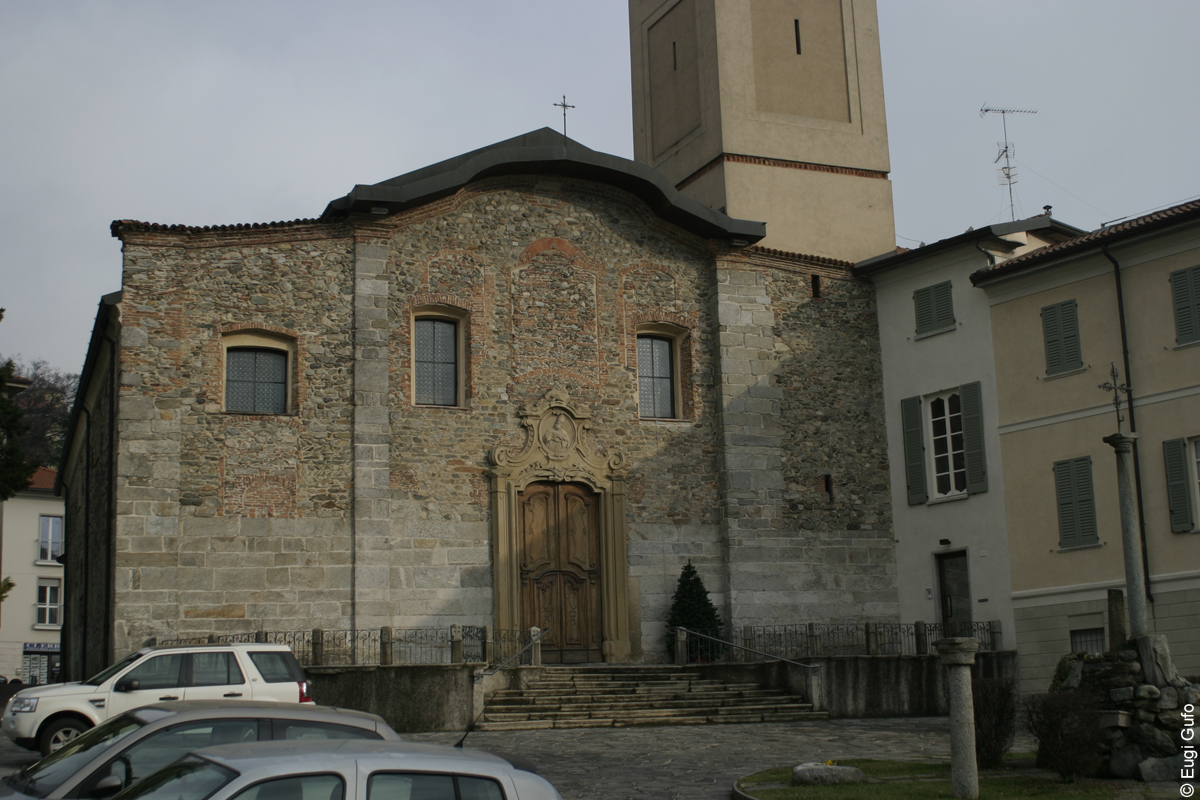
I was particularly interested in studying the monumental complex of Galliano (including its early 11th-century basilica), but I found it closed despite officially favourable opening hours. Presumably the now-standard Covid-19 justification applied. I therefore limited myself to examining the surrounding area.
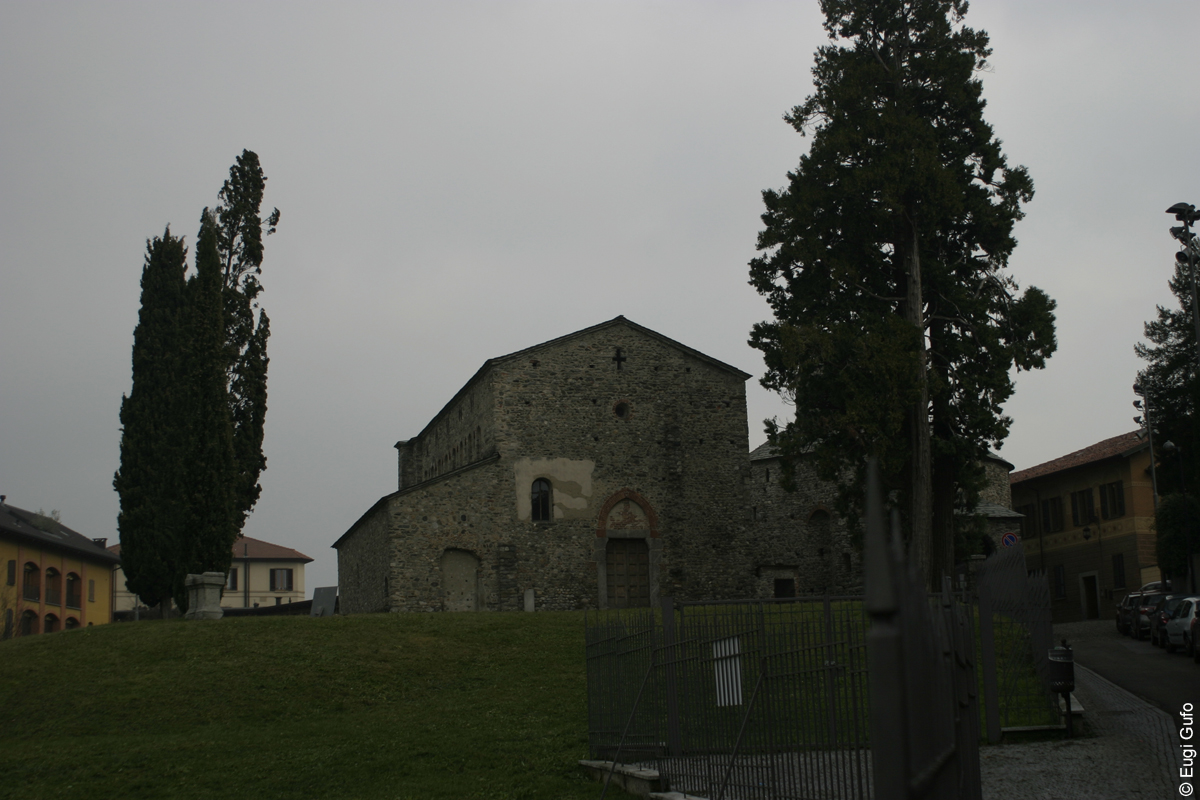
The Church of San Paolo, also dating from the late 11th century, has undergone multiple modifications over the centuries. The most significant interventions occurred at the end of the 16th century, when parts of the former Castello di Pietrasanta were incorporated into the structure. The castle tower, for example, was transformed into the bell tower.
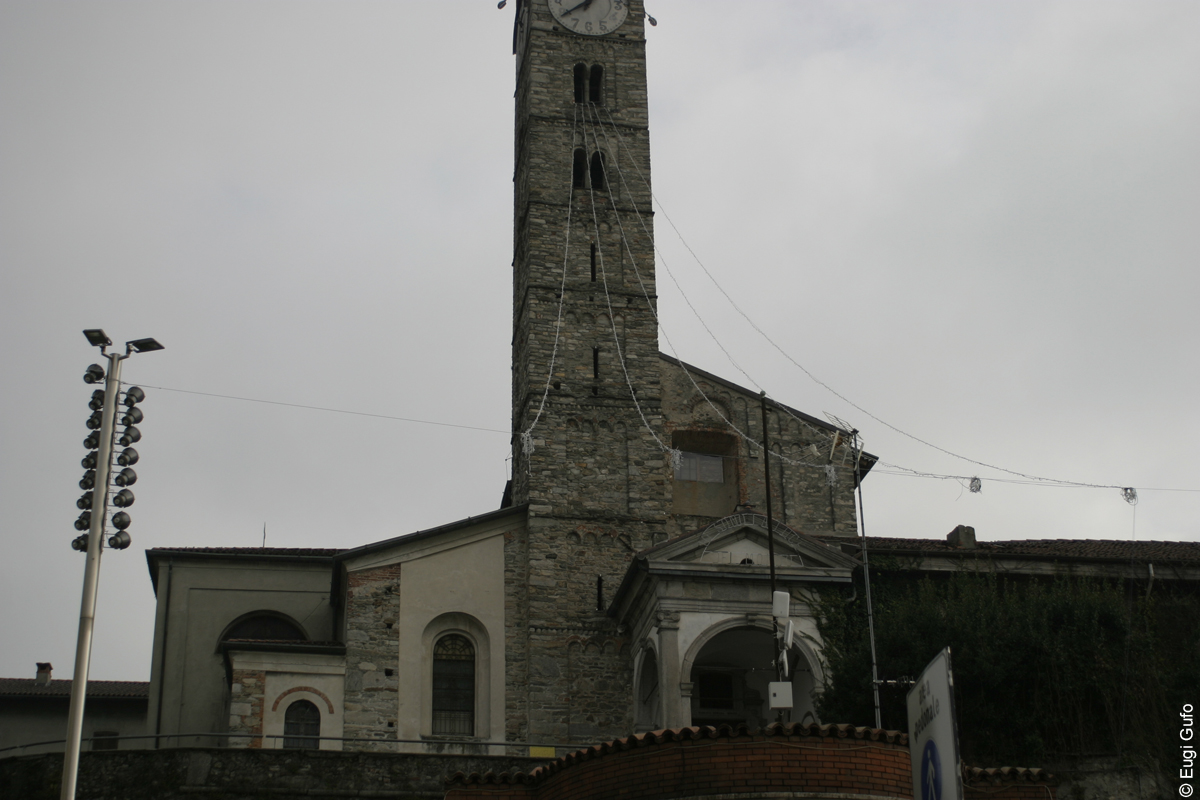
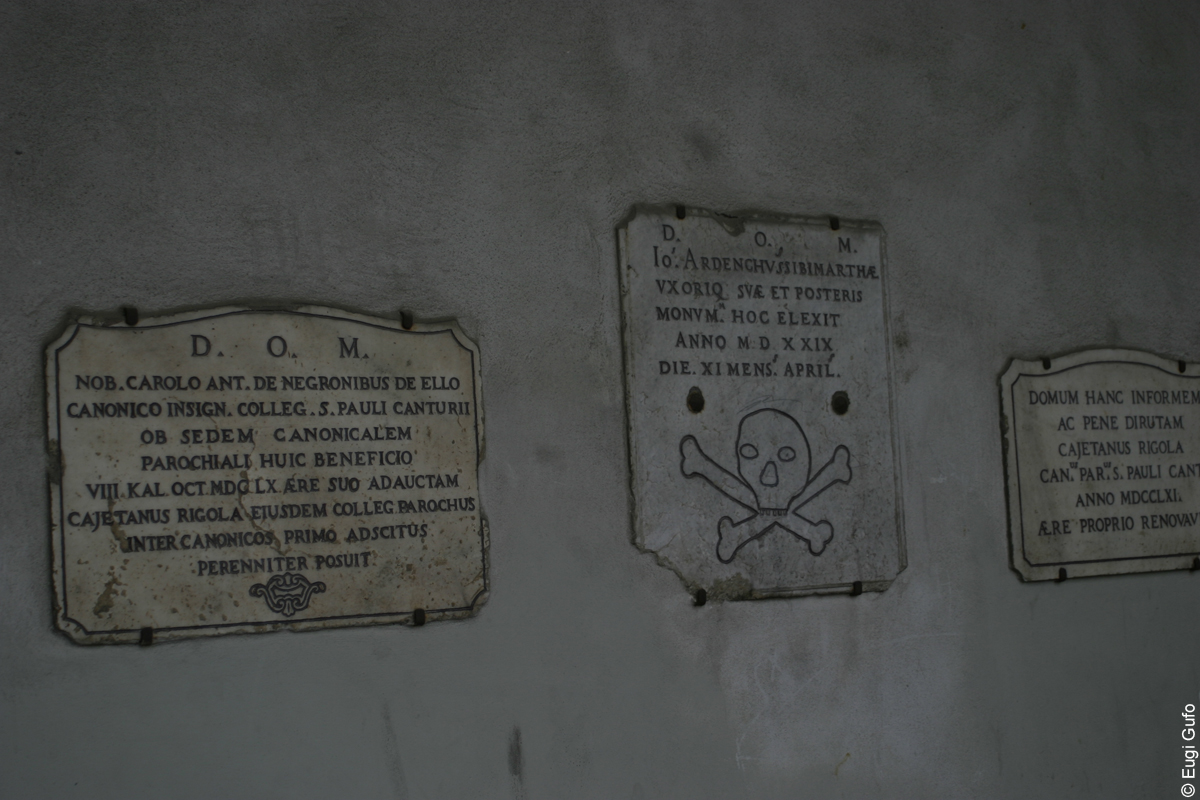
The castle itself was destroyed in 1527, later rebuilt as a residential building, and today is in such poor condition that it is scarcely recognisable as a former military structure. The church of San Paolo, however, contains numerous small details worthy of careful study — not least to reflect on how humanity’s relationship with death has evolved over time.
Listing all of Cantù’s traditionally beautiful churches would be unnecessary; interested visitors will find them easily, either in person or online. They are numerous, and I am not an art historian. I therefore recommend turning attention also to some of the chapels.
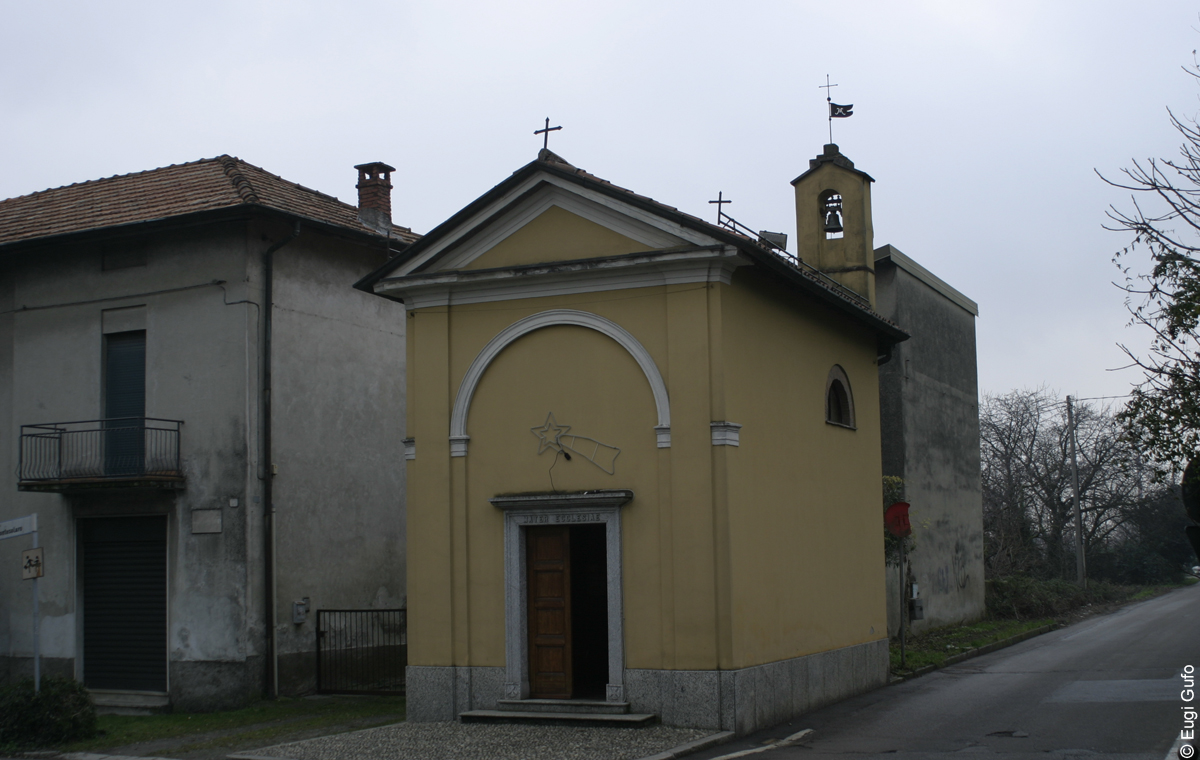
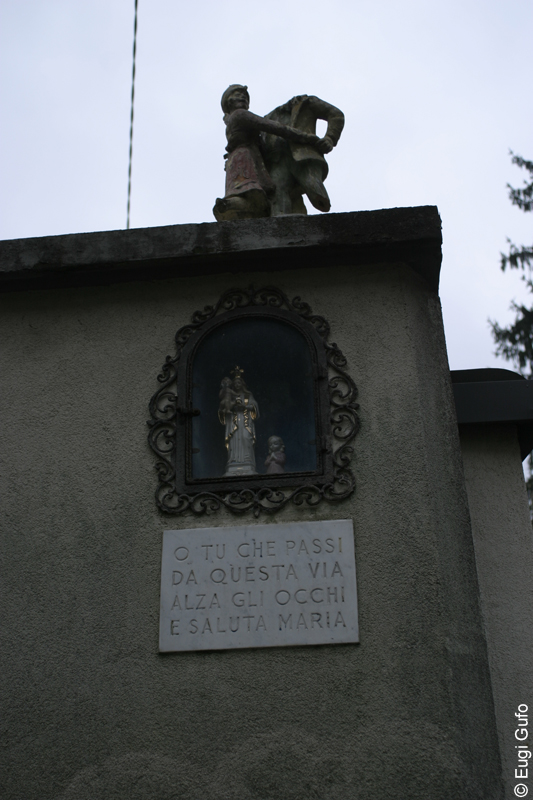
At the very least, the Chapel of the Madonna, which is not only attractive but remarkably well integrated into the surrounding landscape.
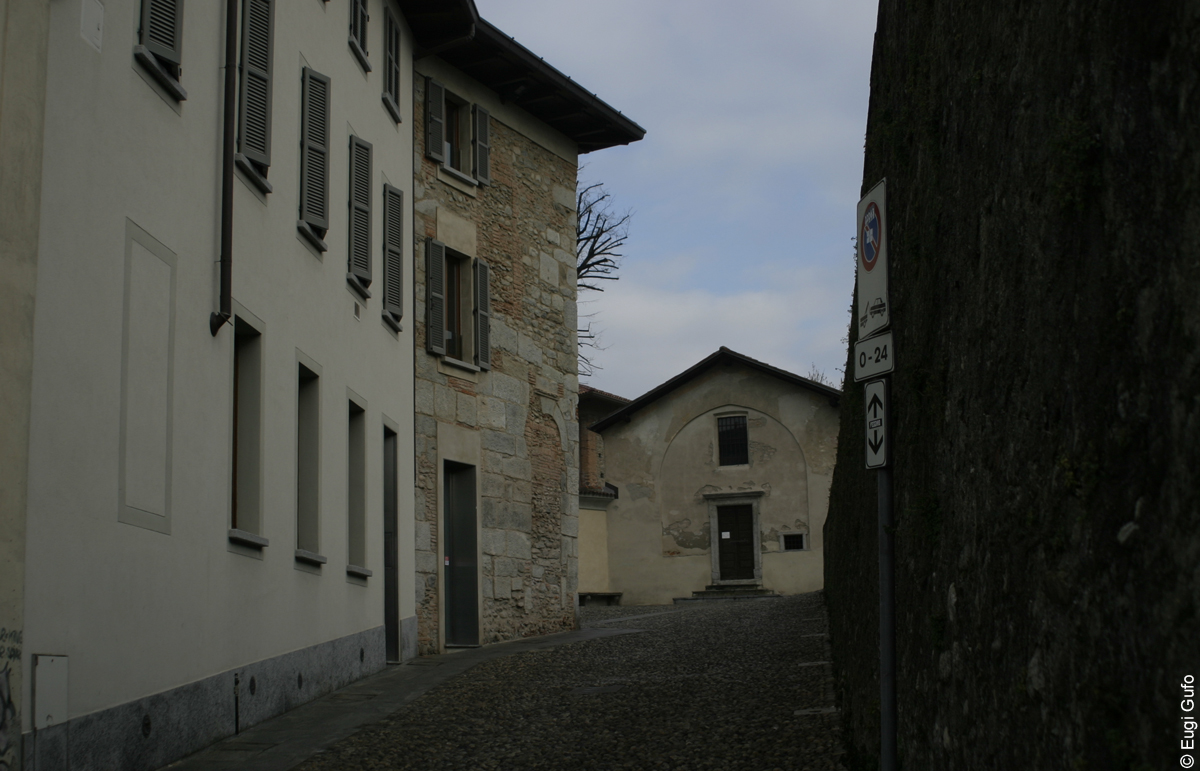
Some religious buildings, meanwhile, have been restored in ways that are… unusual. It is not entirely clear whether they remain operational.
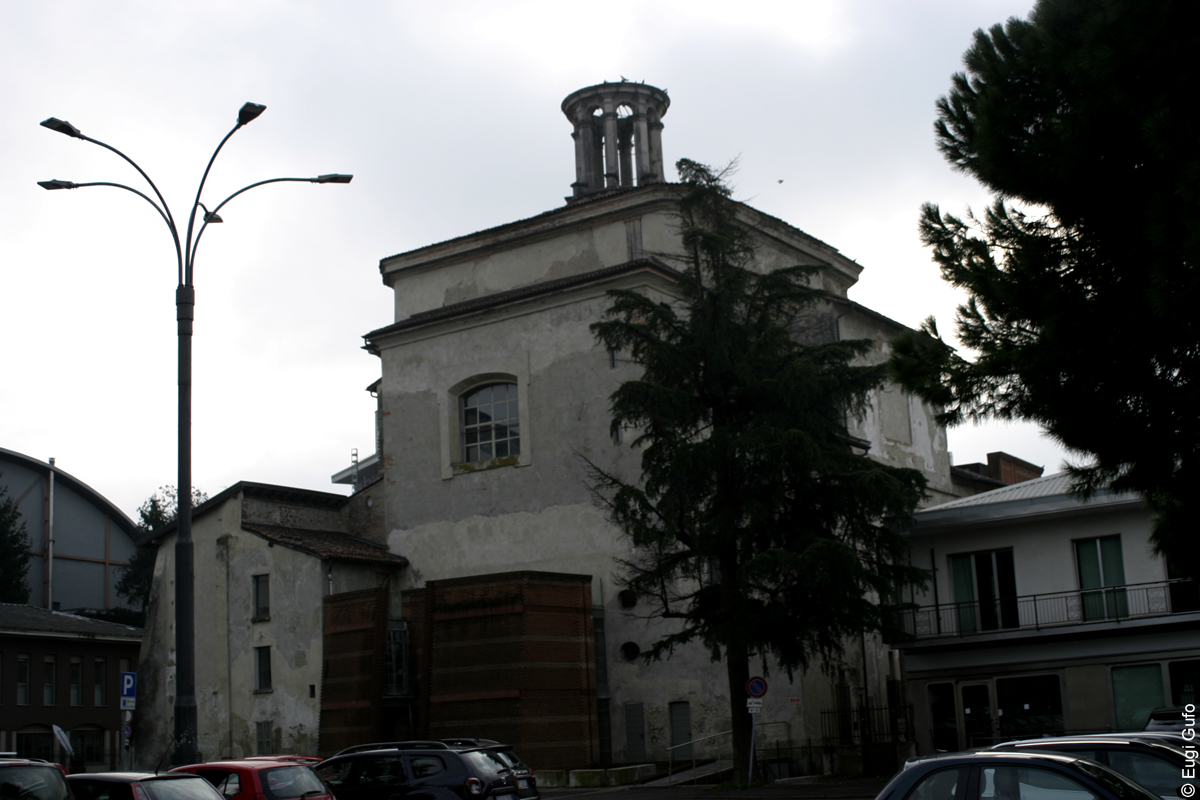
The relatively modern Oratory of San Giovanni Bosco initially struck me as resembling a power station. It is undeniably anomalous.
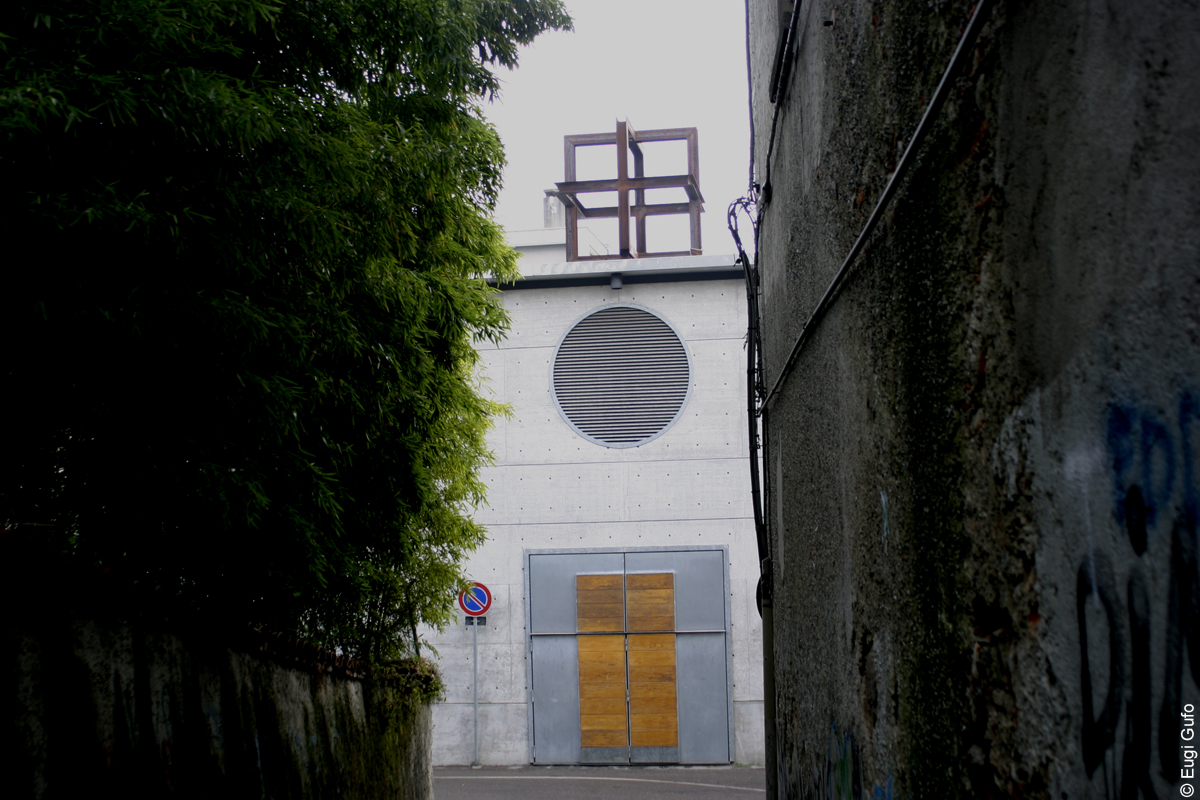
One should also see the neo-Gothic Chiesa dei Santi Michele e Biagio, built between 1923 and 1932.
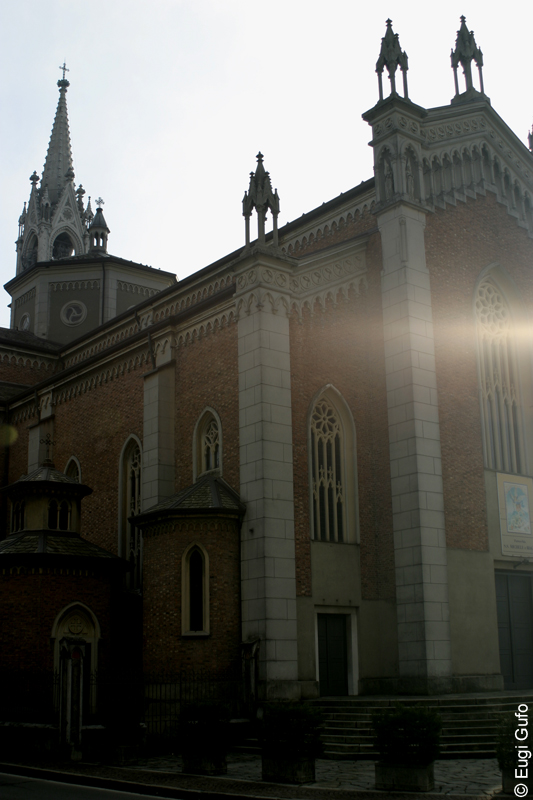
Although neo-Gothic, to my eye, occasionally borders on the chaotic.
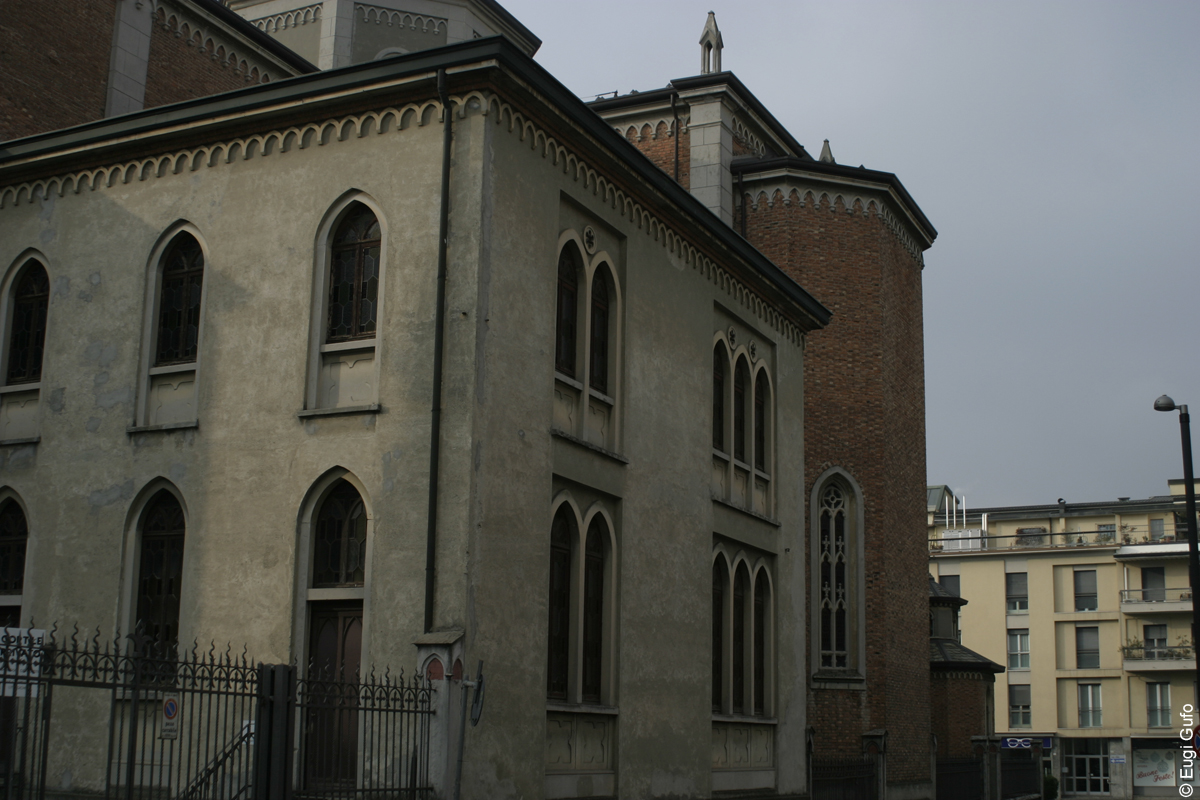
I am unsure whether this was an intended visual effect, but the Sanctuary of the Madonna dei Miracoli appears almost integrated into the adjacent cemetery.
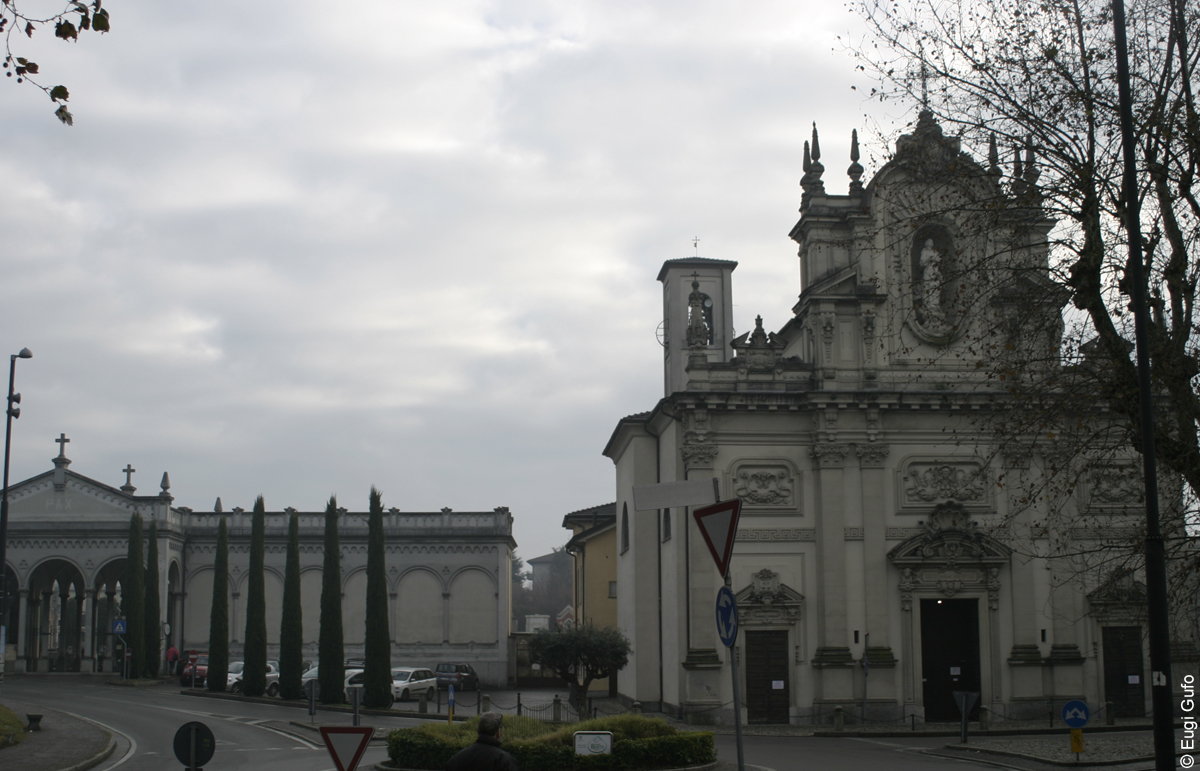
An unknown individual, whom I would like to greet here, has demonstrated admirable humour: two cannons from the monument «To the Artillerymen Fallen for the Fatherland» are aimed directly at the façade of the aforementioned sanctuary (which once collapsed in 1837). The cannons are in almost perfect condition.
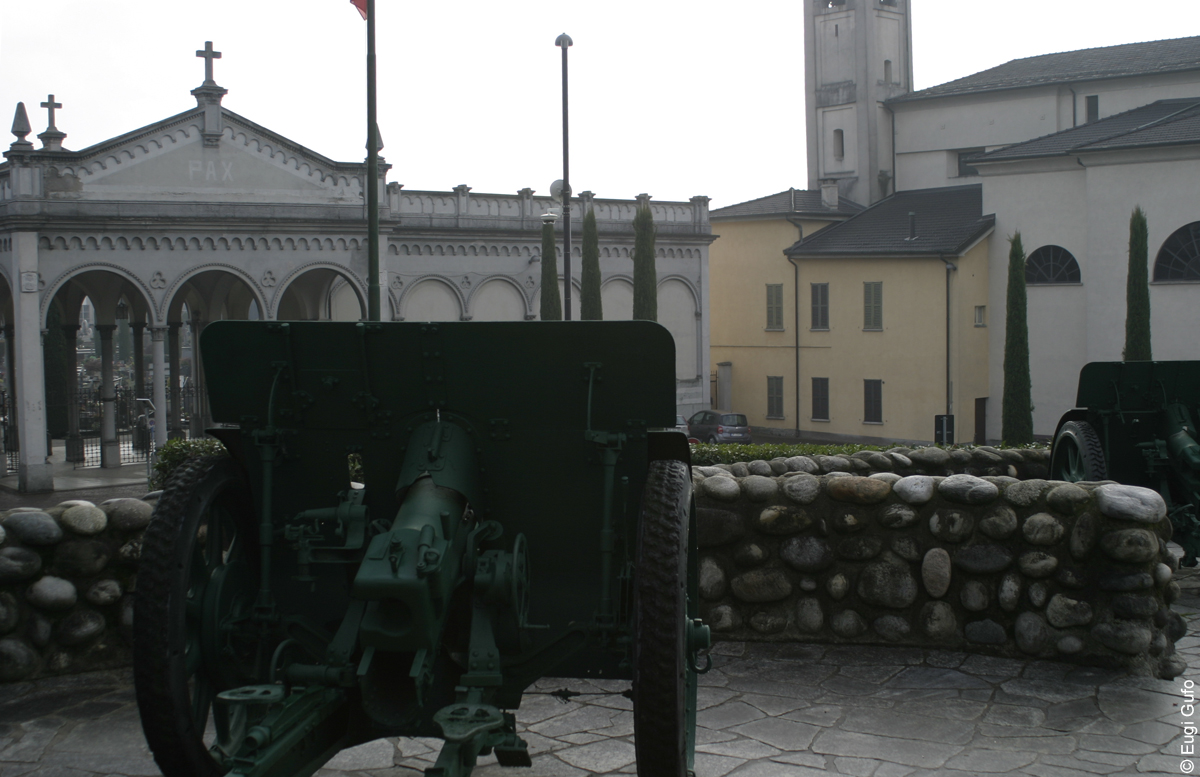
But let us not become overly absorbed in religious architecture.
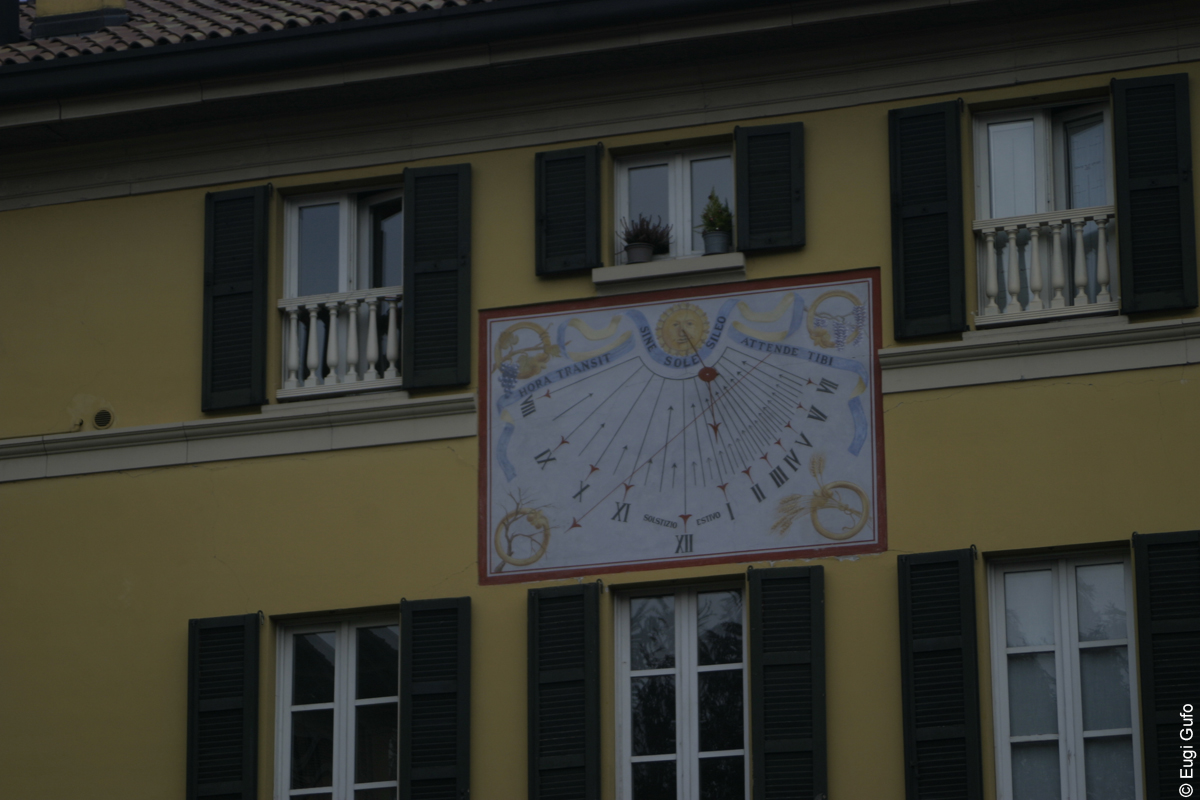
On the façade of a branch of a well-known bank one finds a detailed and somewhat over-decorated sundial.
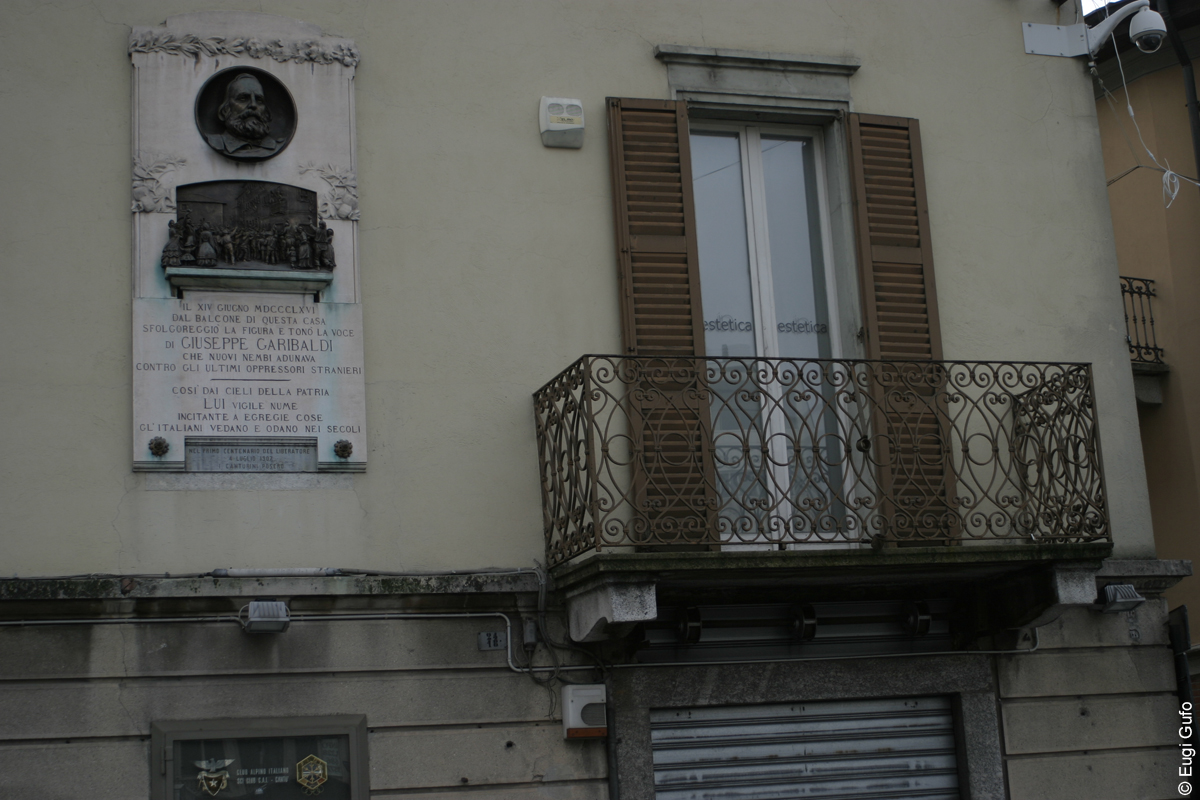
In every Italian municipality there must exist — by a supreme law of higher rank than the Constitution itself — a Via Roma, a Piazza della Libertà, and a balcony of Giuseppe Garibaldi. From this balcony in Cantù, Garibaldi reportedly delivered a speech on 14 June 1866. I cannot say whether it was as rhetorical as the inscription that now commemorates it.
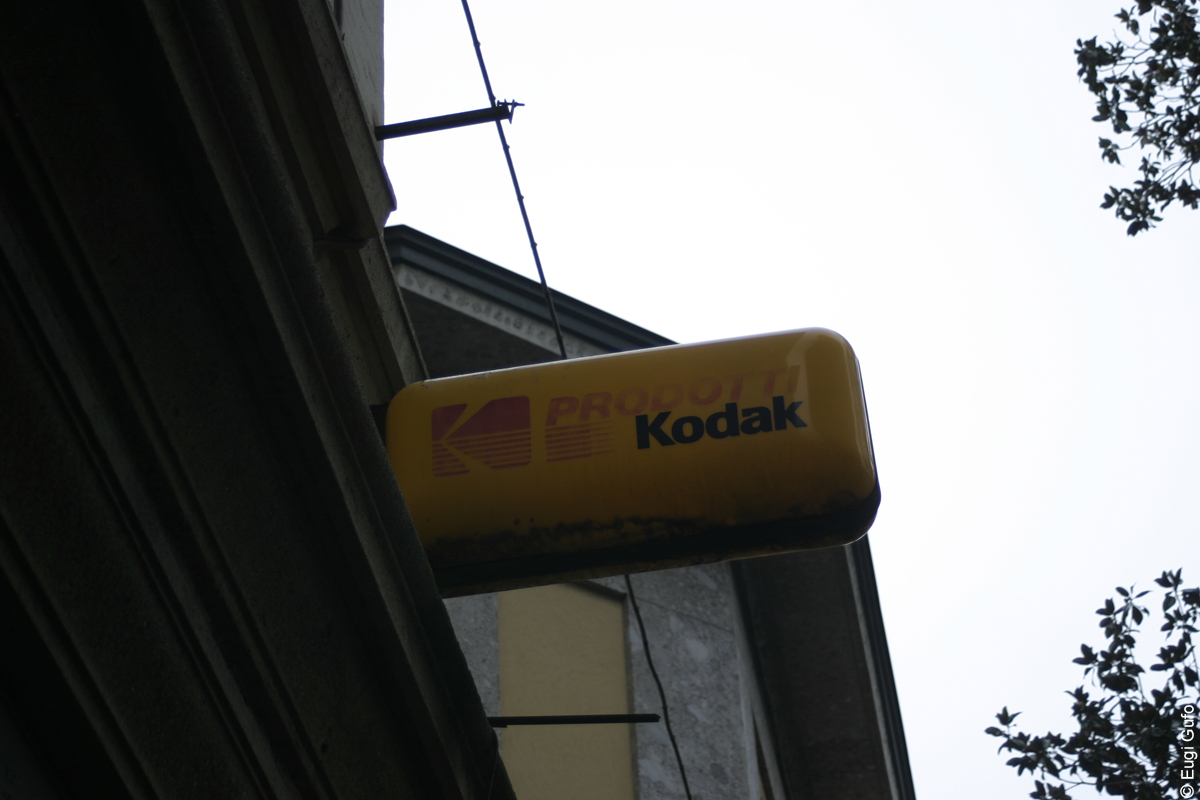
In one of the smaller streets I noticed another historic shop sign and was unexpectedly moved. Younger generations will not understand the former importance of the activity advertised in this manner — nor are they likely to encounter it in history books. I had, however, grown fond of such workshops in the 1990s and 2000s. I hope that at least one survives (or its technological heir) until the day I become sufficiently wealthy to return to analogue photography.
Cantù’s historic districts are marked with dedicated signage — a relatively rare urban choice.
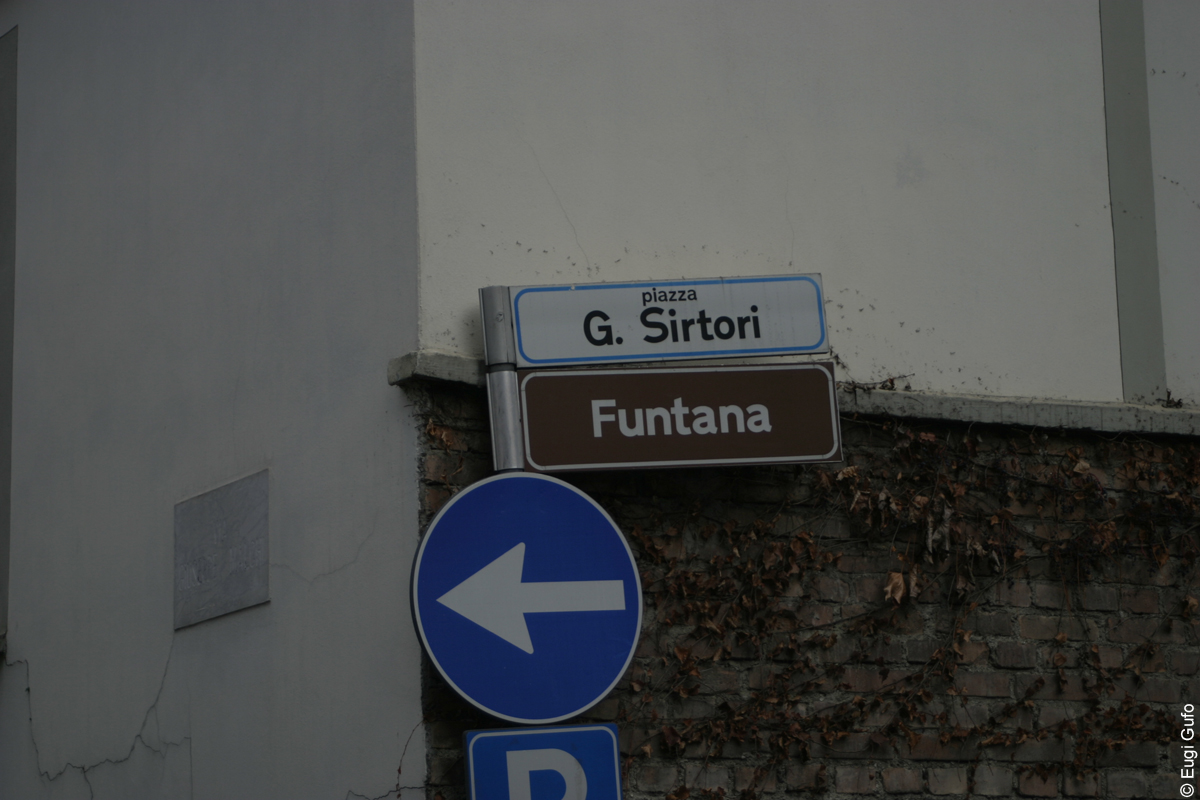
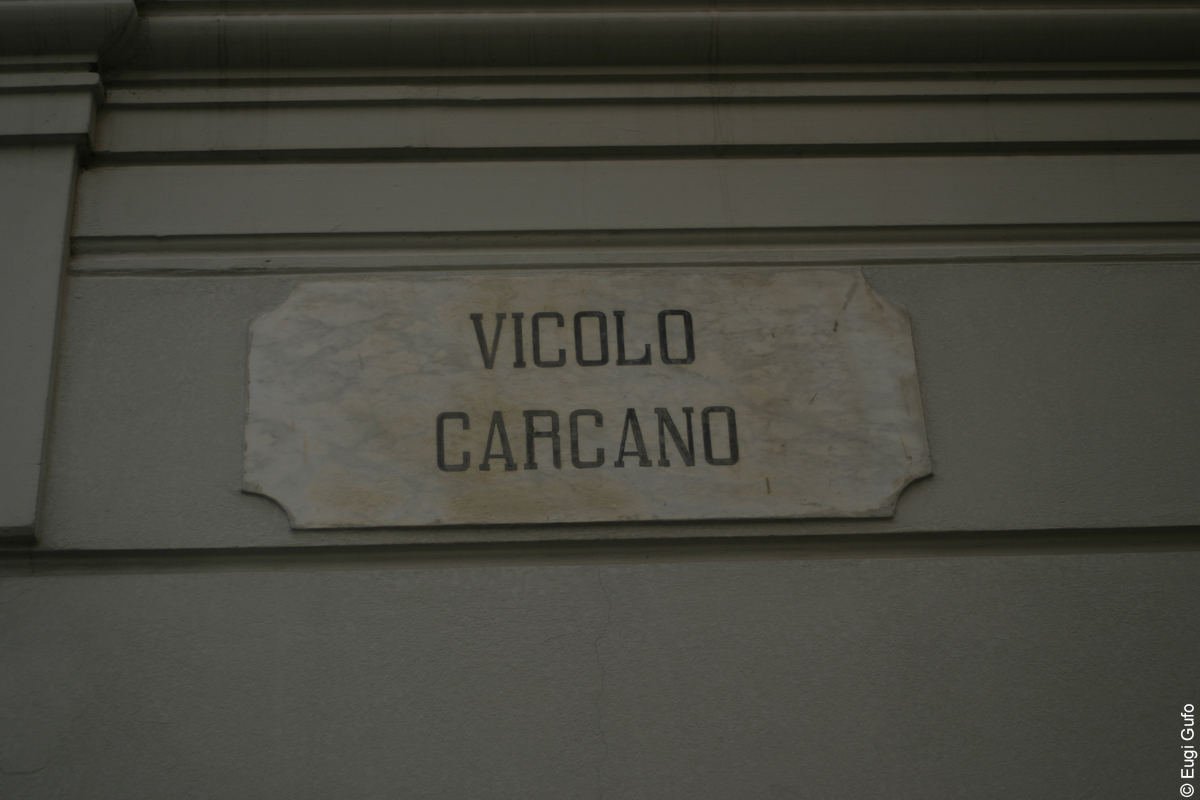
Within the historic centre, marble street name plaques follow a consistent local standard.
The plaques indicating fire hydrant coordinates are of a type I do not recall seeing elsewhere.

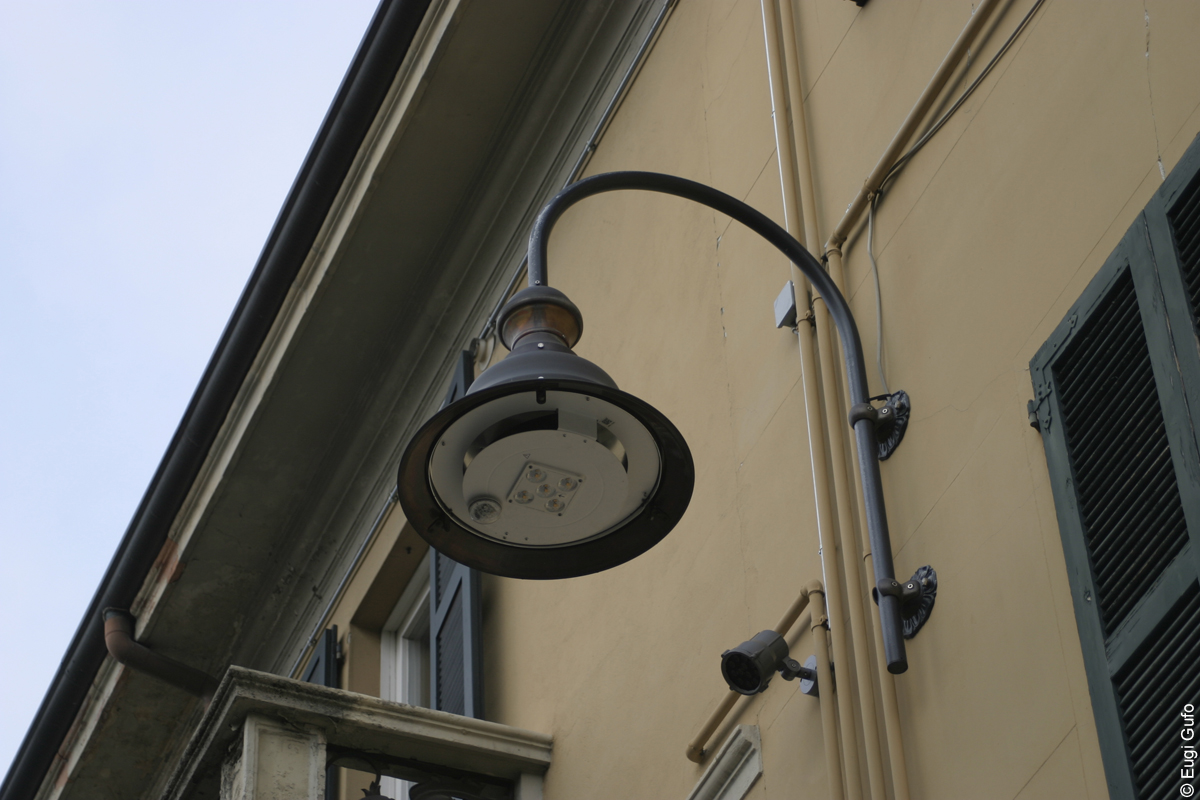
Many street lamps in the centre now appear to function with LED technology (if my observation is correct).
The numbering of motorcycle parking spaces near the Town Hall is executed using a metal sign. An impressive commitment to material expenditure.
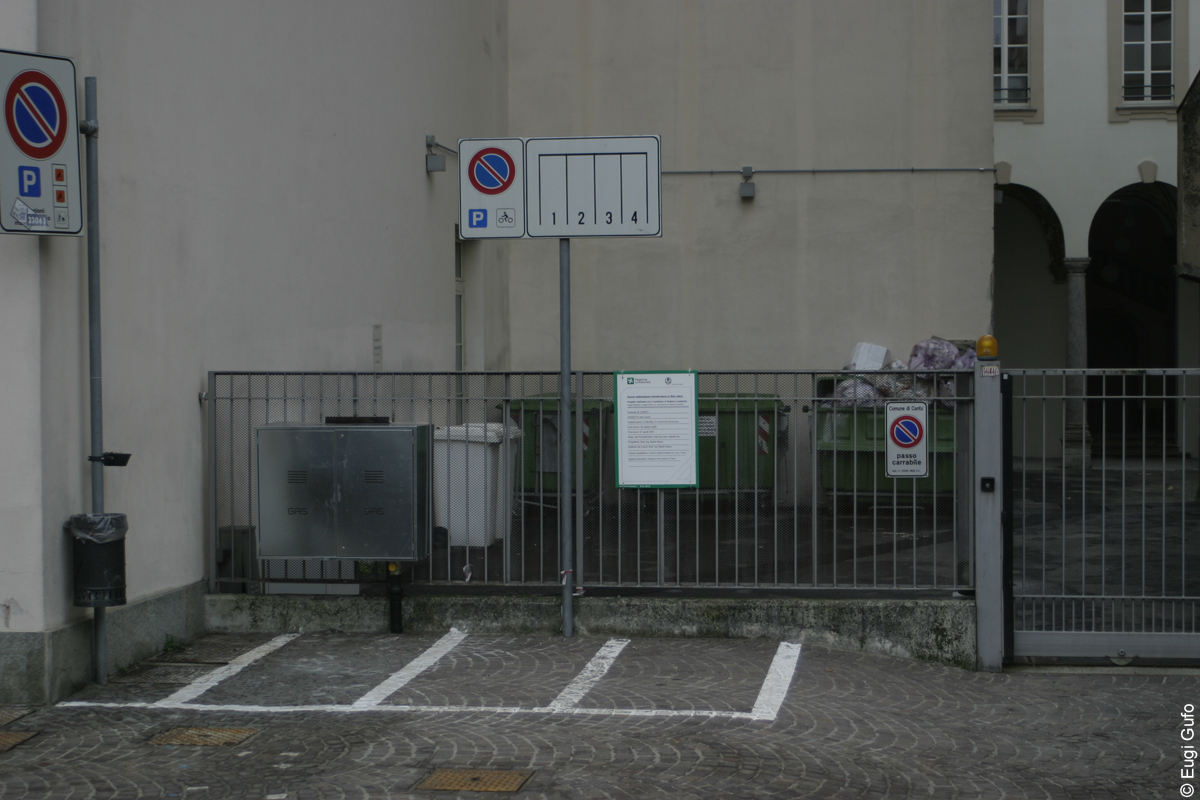
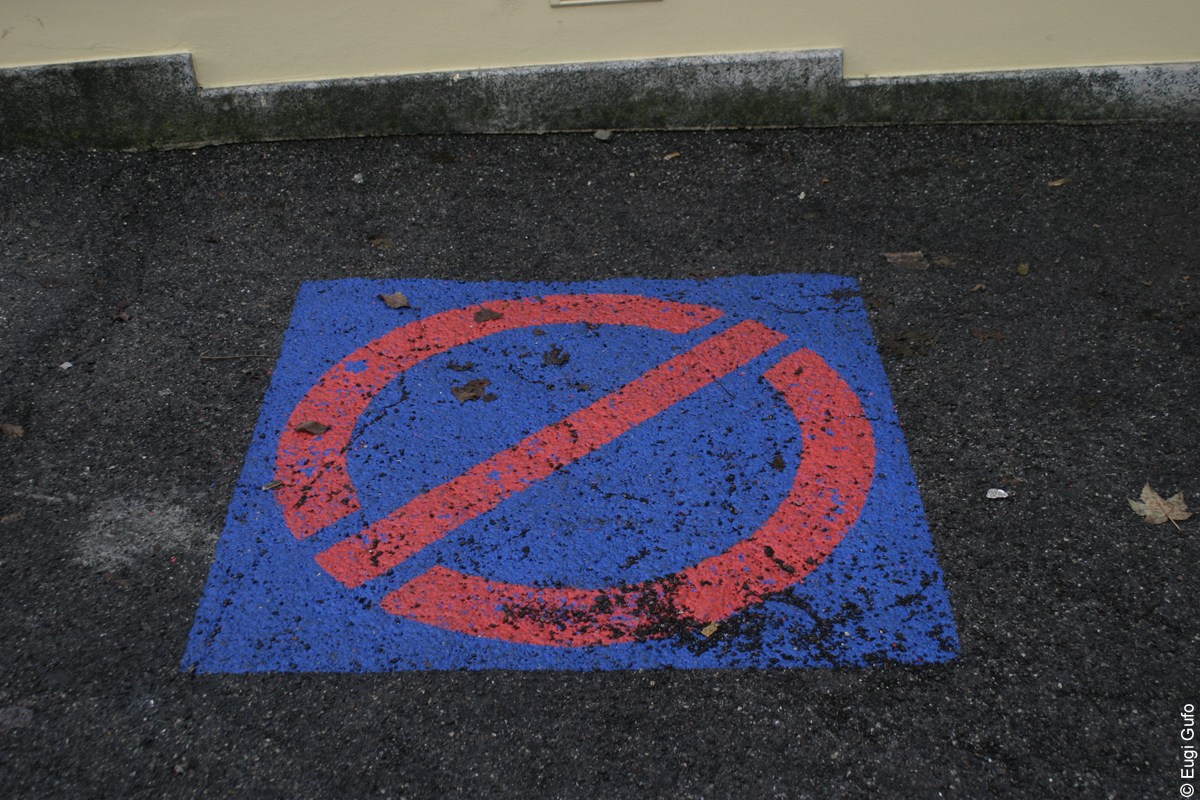
This particular type of horizontal road marking is entirely new to me:
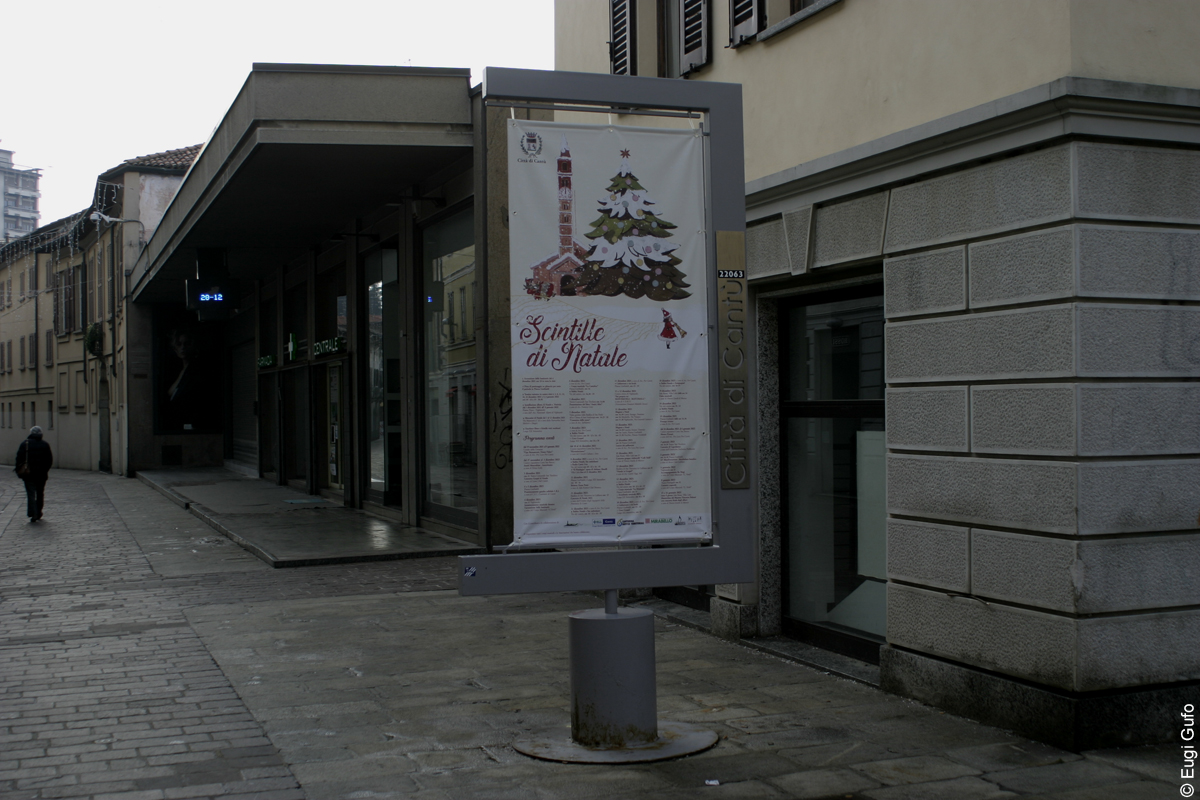
I may have been inattentive, but I noticed only one poster stand in the historic centre — near the entrance of the municipal theatre. It stood alone, but elegantly.
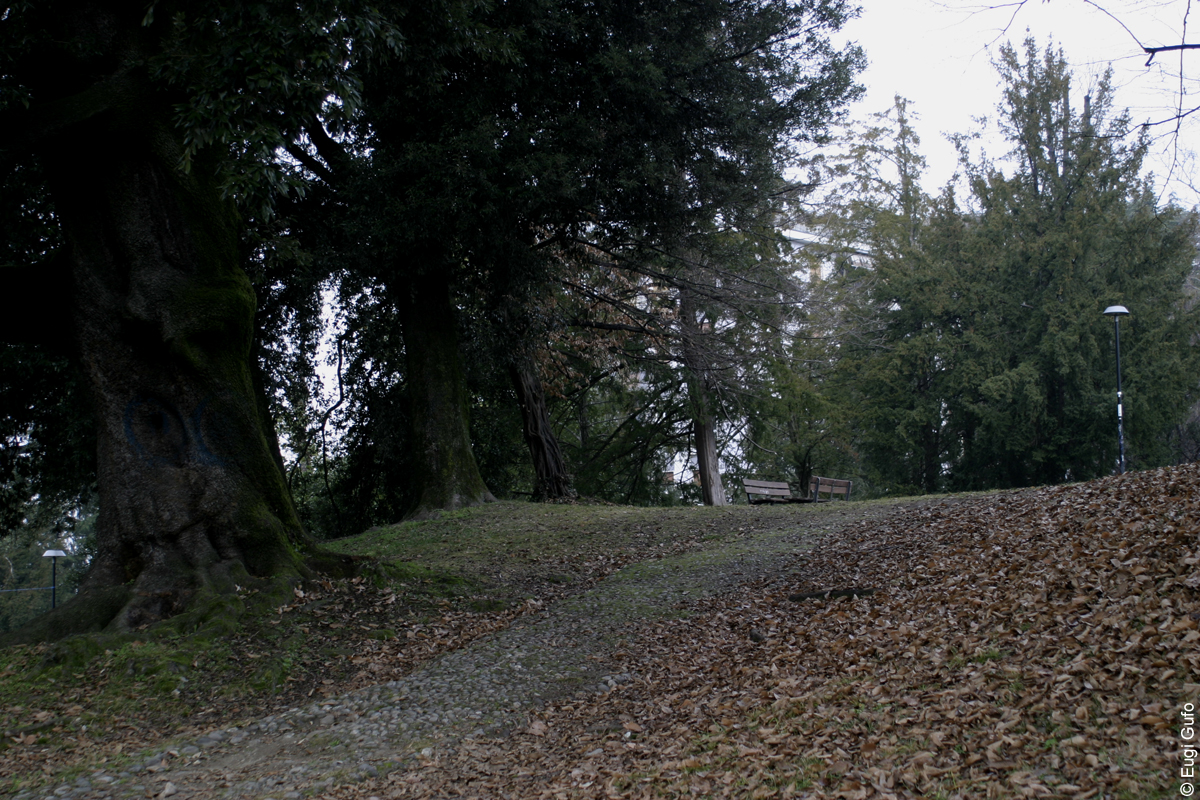
Several small public parks exist within the municipality, though I had the opportunity to explore only one. Essentially, it was a modest hill with trees and a few benches.
The benches within the park are attractive and thoughtfully designed.
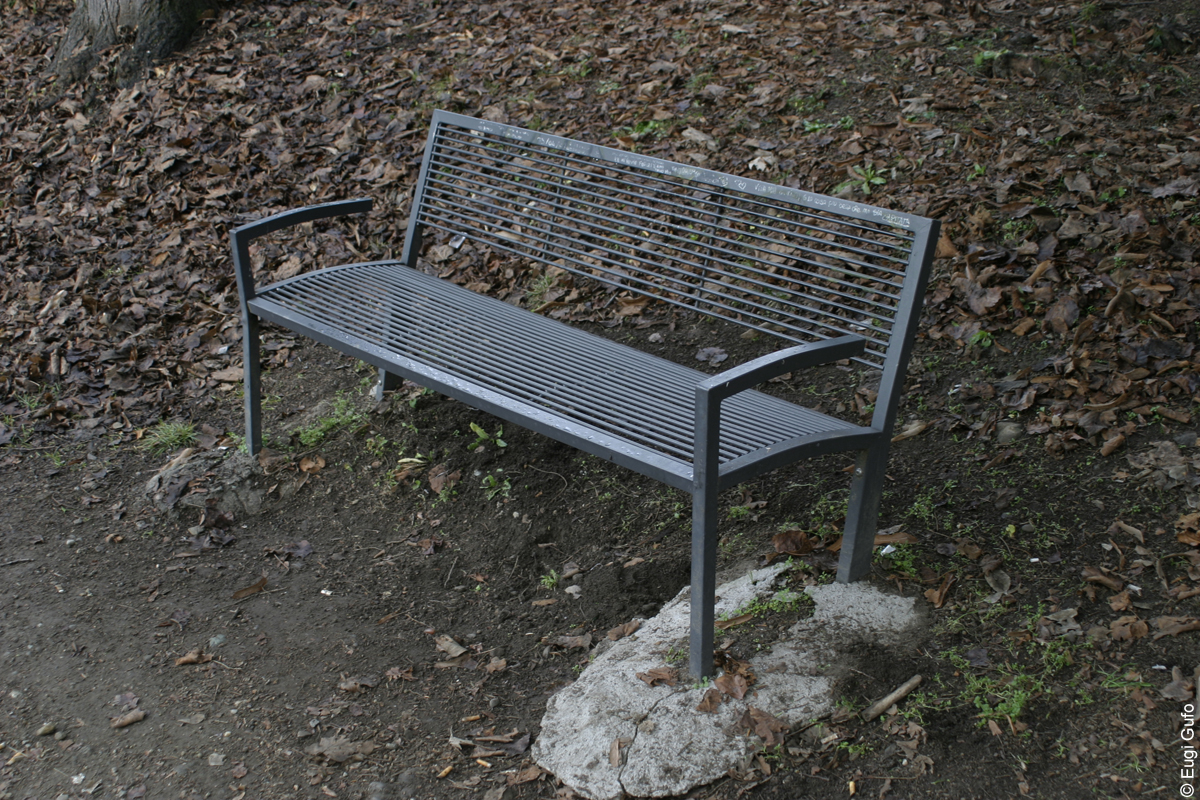
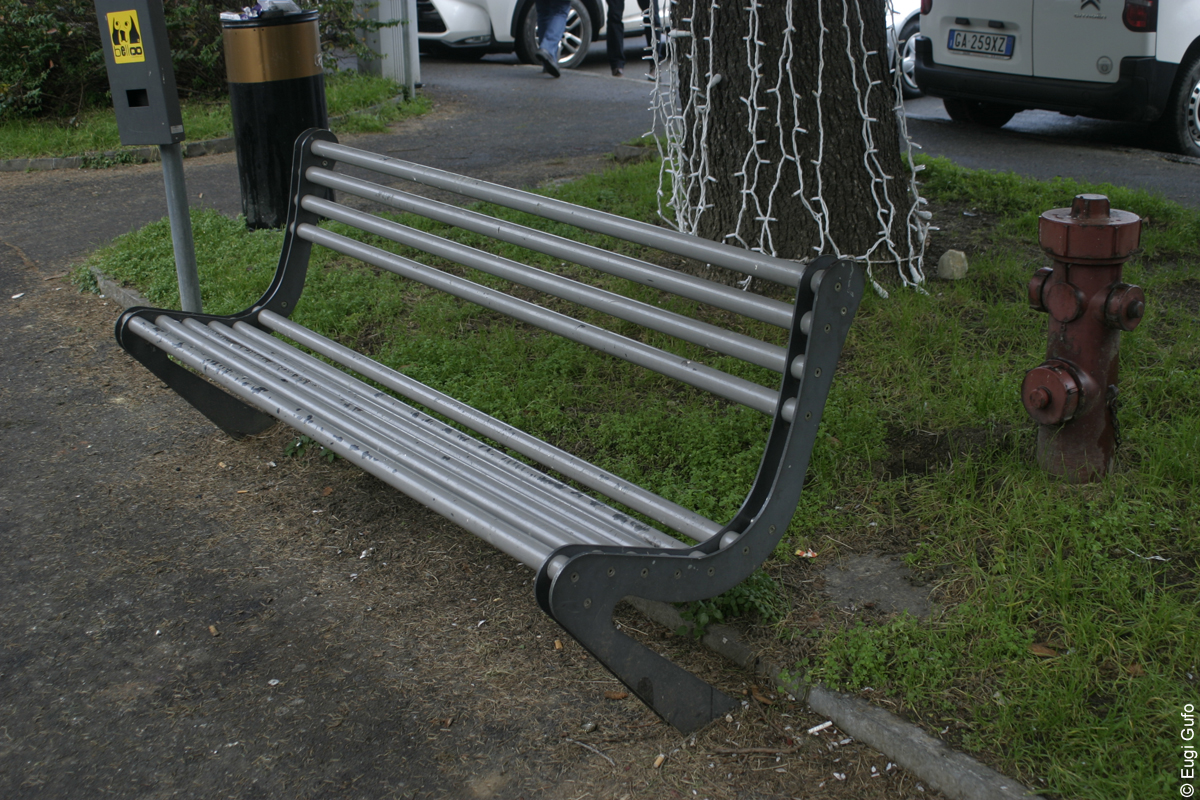
Along the streets and squares, too, one finds beautiful benches of a model I had not previously encountered.
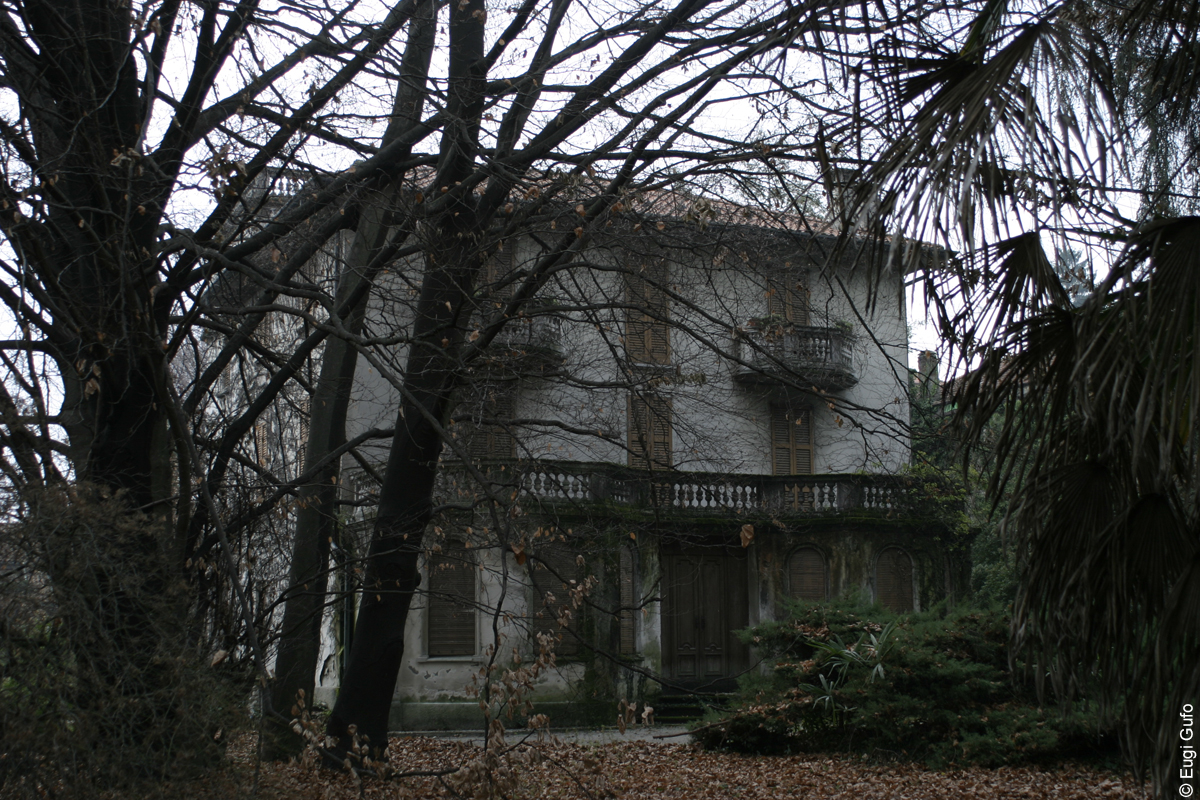
If you have formed a positive impression of Cantù, you might consider purchasing one of the small houses currently for sale in one of the almost-central districts.
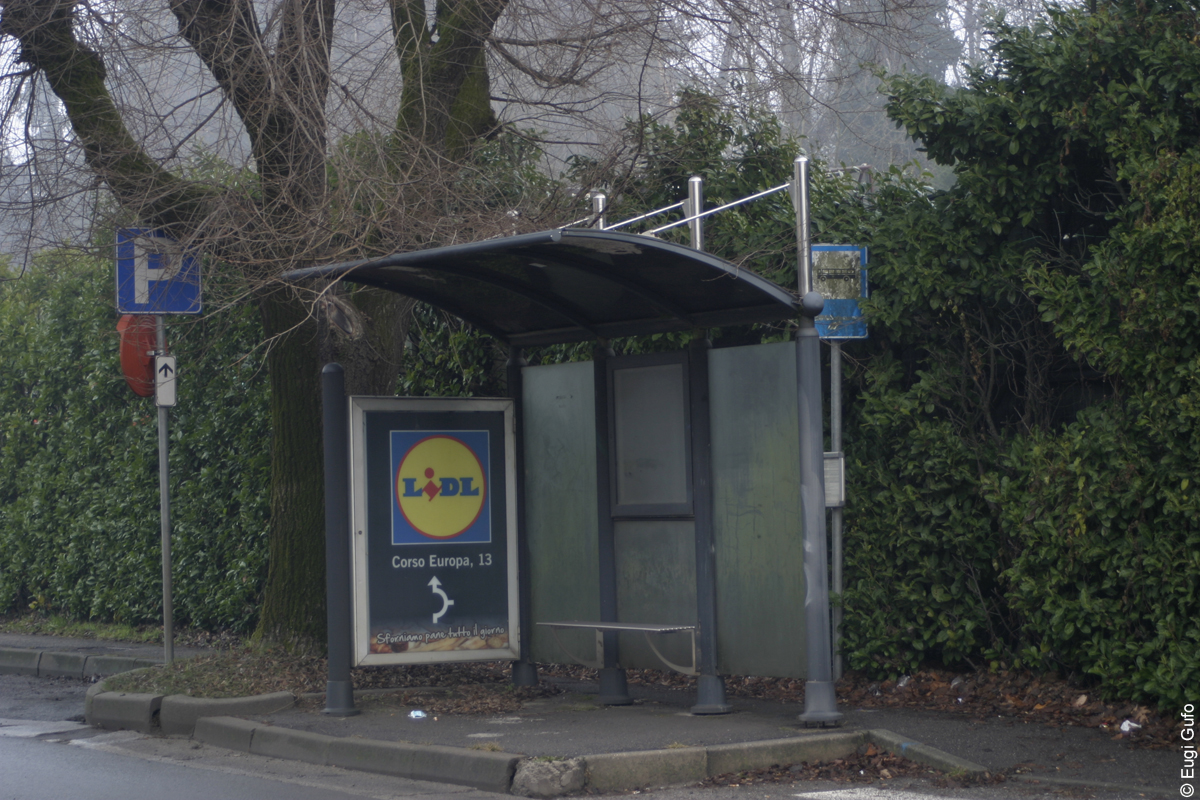
To eliminate any remaining doubt: Cantù is easily accessible by public transport. One may take a train from Milan to Cantù-Cermenate (approximately 45 minutes), then reach the town centre by bus from the station. Alternatively, one may forgo the bus and enjoy a healthy thirty-minute walk (including a brief stretch along the edge of a provincial road).
In any case, Cantù seems to me a settlement worth visiting — and not exclusively from a sporting perspective.
Cantù, 28 December 2021
↓ Show comments ↓


