


 Long live Ukraine! Fuck the war!
 RSS of site articles
By tradition — not an ancient one, yet by now very dear to me — in 2024 I once again devoted my summer travels to the study of the mountains. It is an excellent way to escape the heat, to see many beautiful and interesting things, to spend time in nature, to engage in a modest amount of physical activity (something urban daily life rarely provides), and — often — to meet people refreshingly free from behavioural clichés (those who do not feel morally obliged to go to the seaside in summer despite a total lack of interest in it).
In particular, part of my 2024 summer holidays was dedicated to exploring the Val Codera: an area I had never visited before, yet one that allows — like many others, admittedly — all the aforementioned pleasures, while also offering a few intriguing settlements to observe. After all, I have always travelled in order to «spy» on what humans invent in places different from my own, and to take the best of it — either to use it myself or to report it to you.
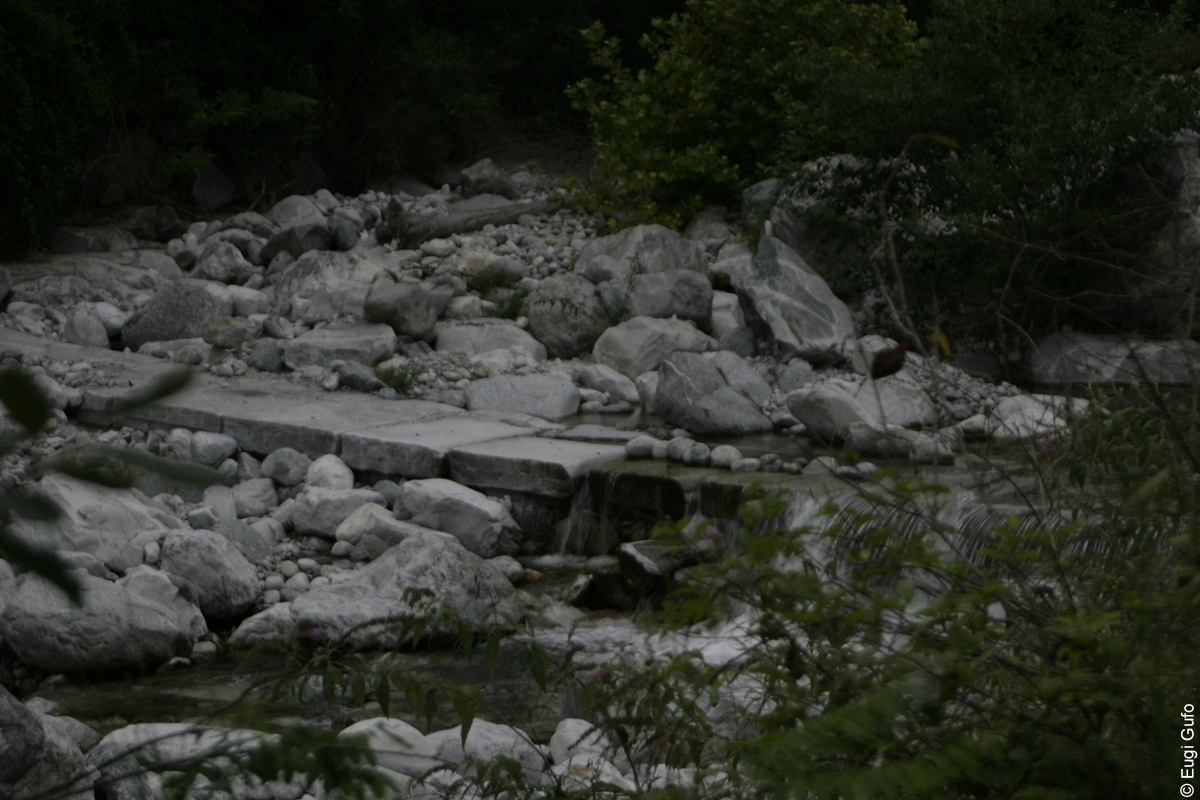
In my opinion, the most convenient starting point for reaching the finest parts of Val Codera — for someone travelling by public transport (though perhaps not only) — is Novate Mezzola. After disembarking from the train (or stepping out of one’s car) and, if one wishes, exploring this not particularly large village, one must head towards the mountain trail. Finding it is fairly straightforward: starting from the historic centre (or the railway station) of Novate Mezzola, walk to the Codera stream — its wide, white bed is unmistakable — cross the bridge and immediately turn left. In truth, one may also walk along the bank beforehand; the essential thing is to spot the first signs for Codera (laminated paper, naturally — ahahaha) and reach the end of Via del Castello.
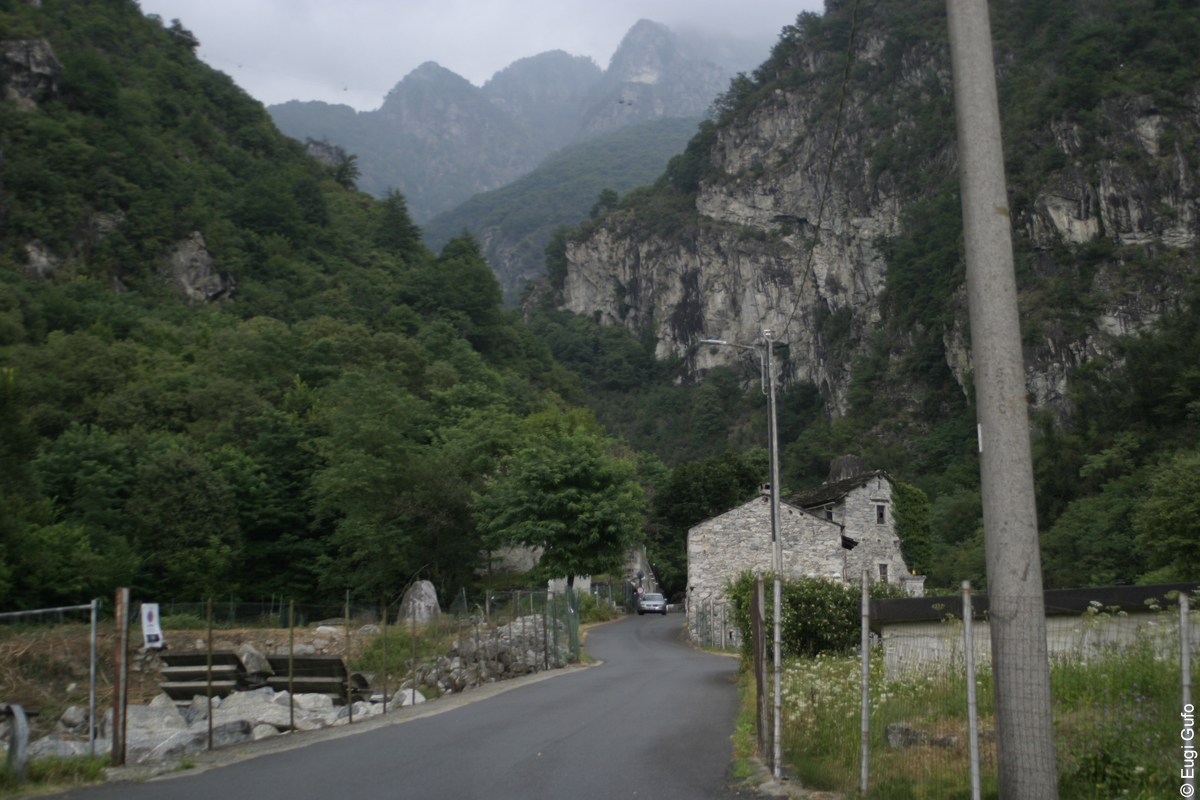
For now, the road remains largely paved and almost flat. One must begin paying attention to the brown signs and decide which Val Codera circuit to undertake: either passing first through the settlements of Avedée and Codera, or via San Giorgio (in both cases it is possible to complete a circular route of varying length and return to Novate Mezzola).
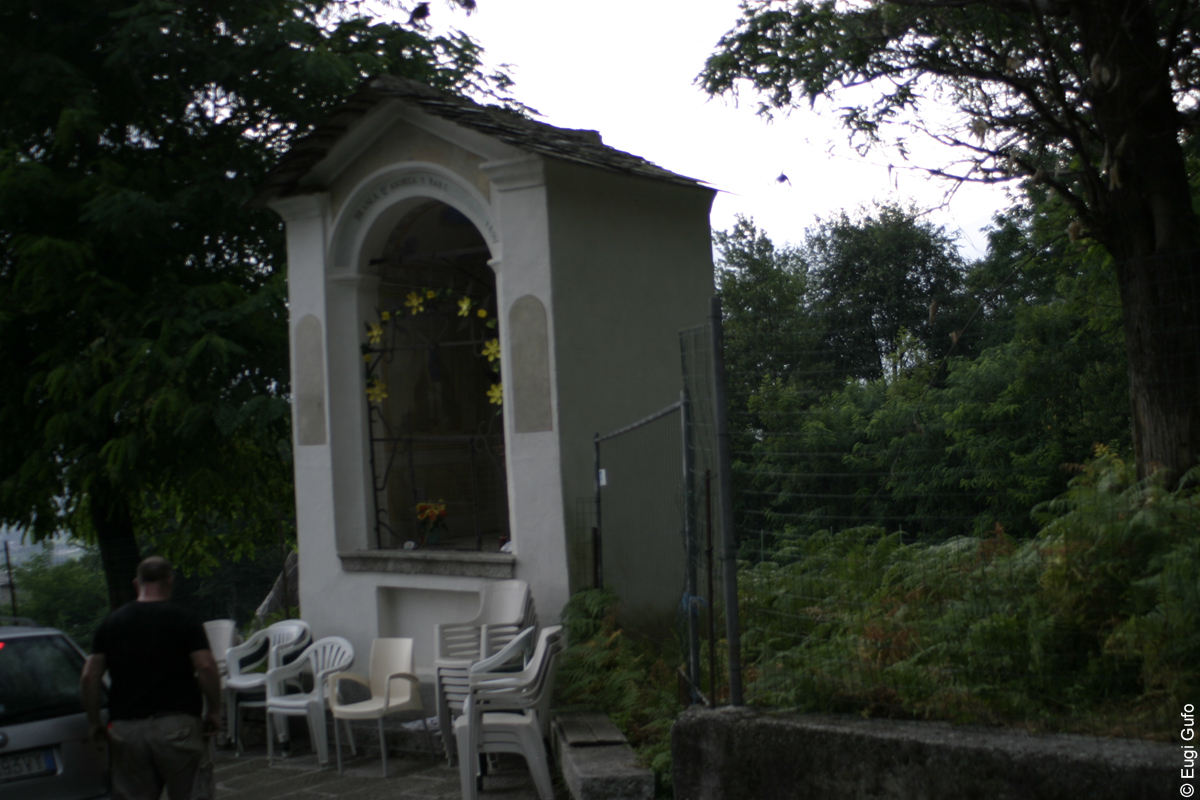
I chose the first option. My ascent began shortly after this chapel, where there is a small square-cum-car park (at the time of my visit they were repaving it, so I cannot say precisely how it now appears).
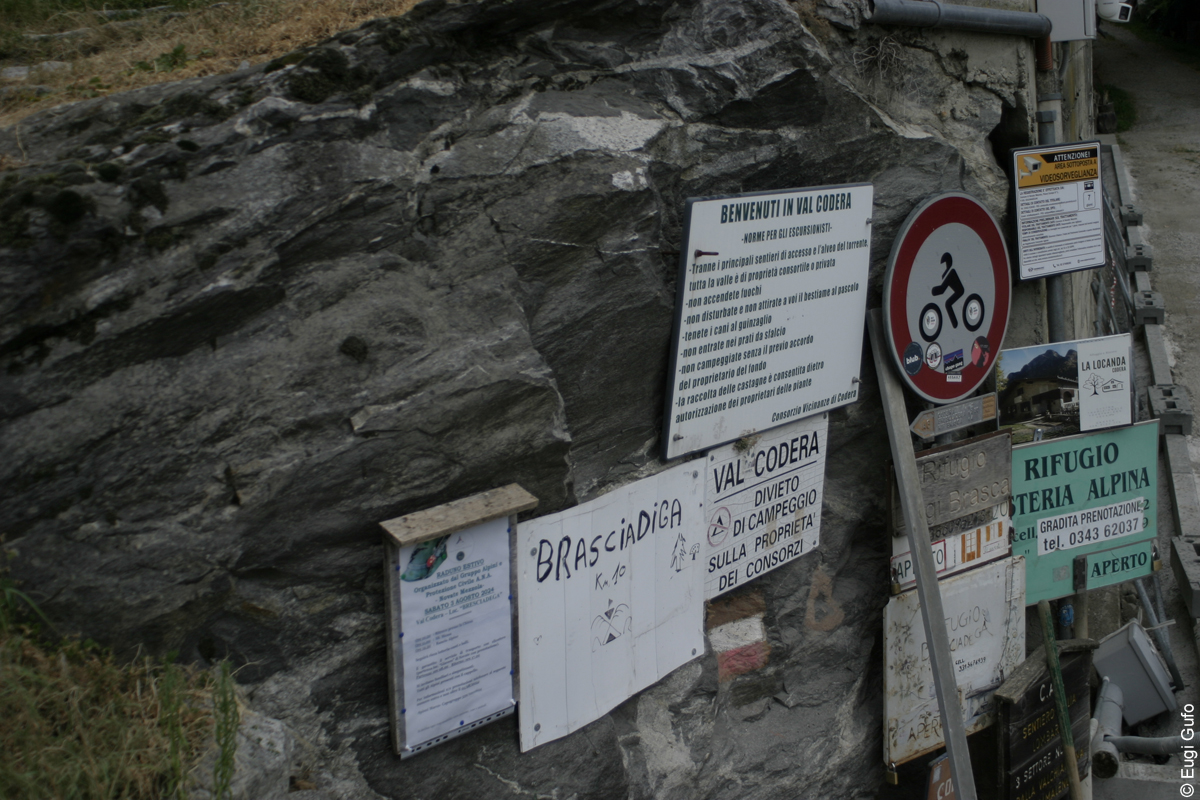
From that little square begins the staircase of the trail: you will recognise it by the clustering of signs.
A significant portion of the trail — especially roughly the first 70% — is made of stone: either steps (of highly variable height, depth, and inclination) or cobbled path (with stones of equally variable shapes). Consequently, a certain confidence of movement and suitable footwear are required: your feet — including your ankles — will be grateful.
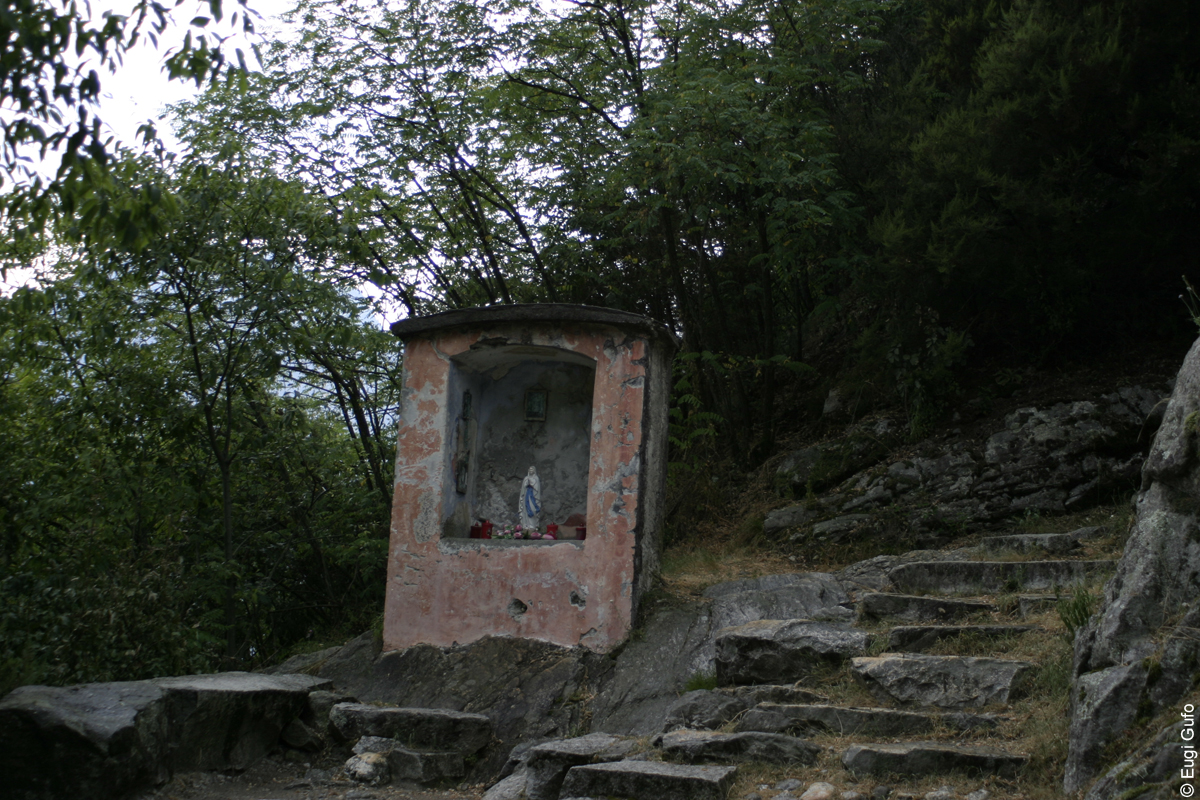
During the ascent there are several opportunities to contemplate beautiful landscapes: the mountain peaks drawing nearer, Lake Mezzola receding ever lower…

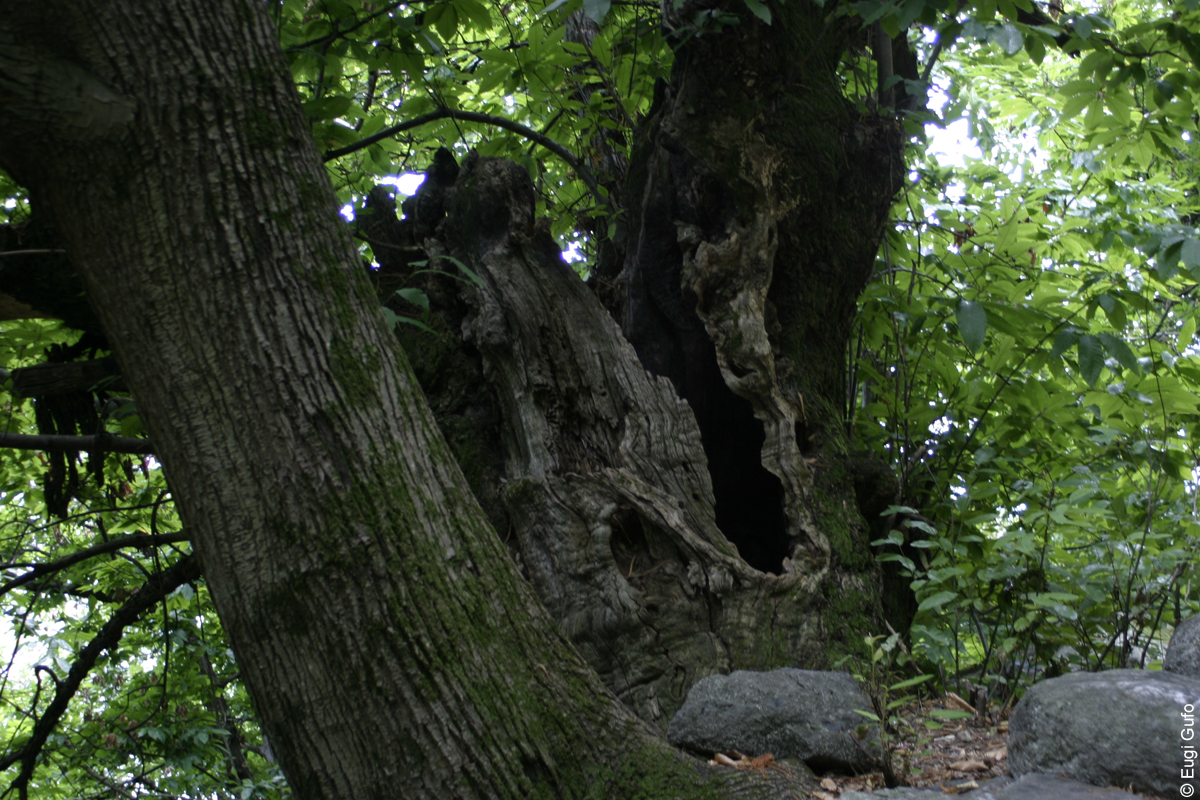
Fortunately, the initial section of the trail offers abundant shade from chestnut trees, often very large ones. Thanks to this, one can reach higher altitudes — where summer temperatures are far, far less atrocious — with somewhat less suffering.
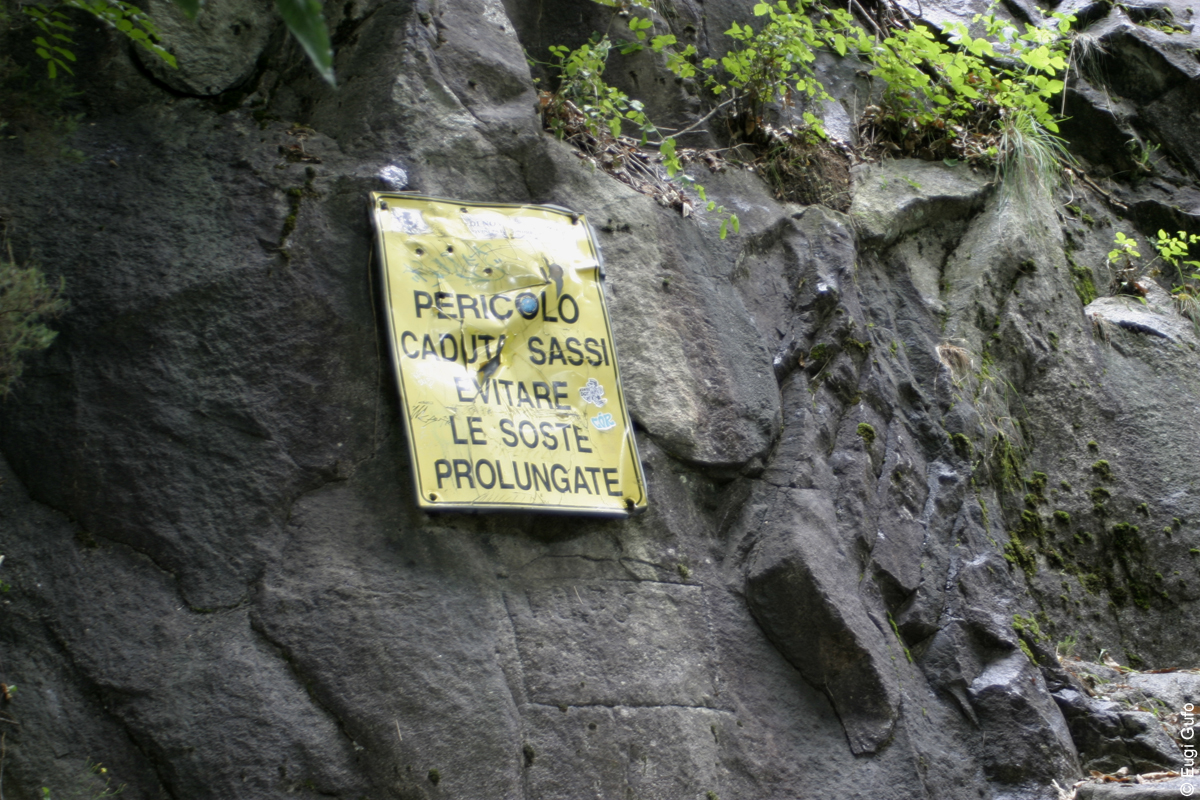
Well beyond the halfway point, the surrounding environment begins to grow less wooded and more rocky. Important warnings begin to appear (spoiler: I did not witness a single falling stone, though there was little wind and only a few minutes of rain during my passage).
Yet the trail remains beautiful.
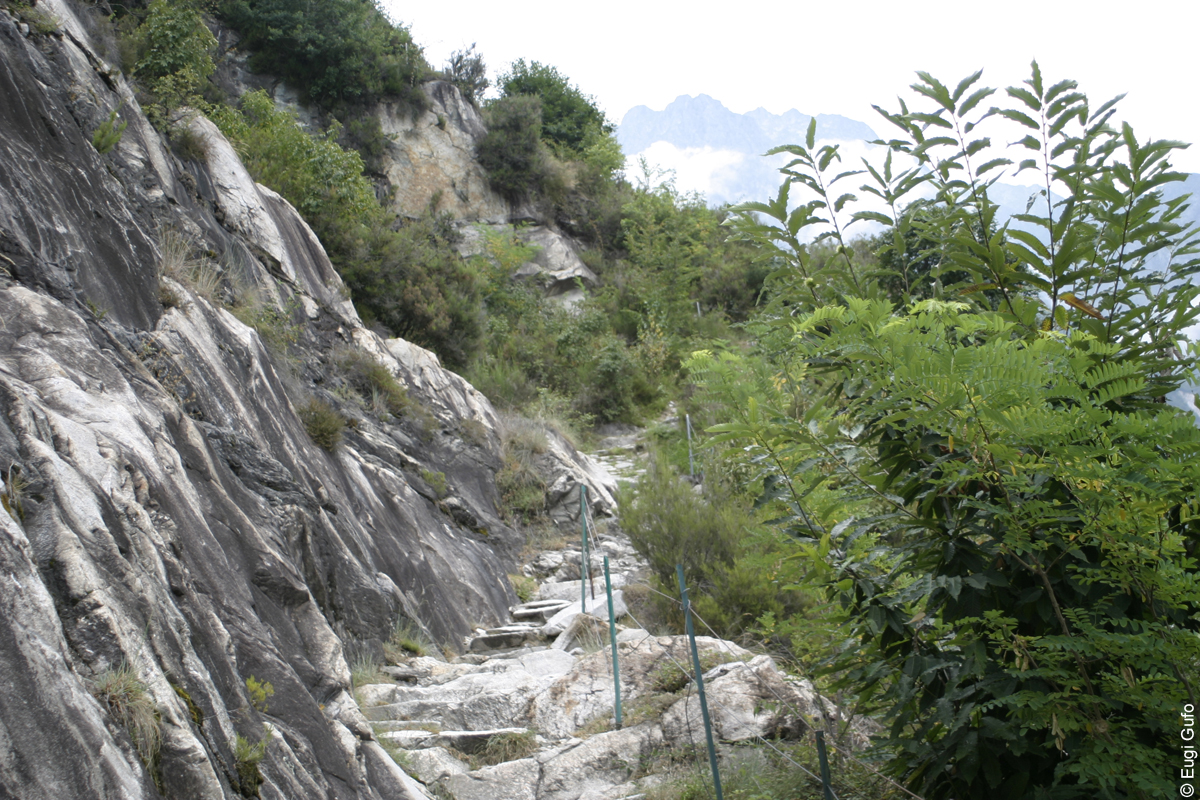
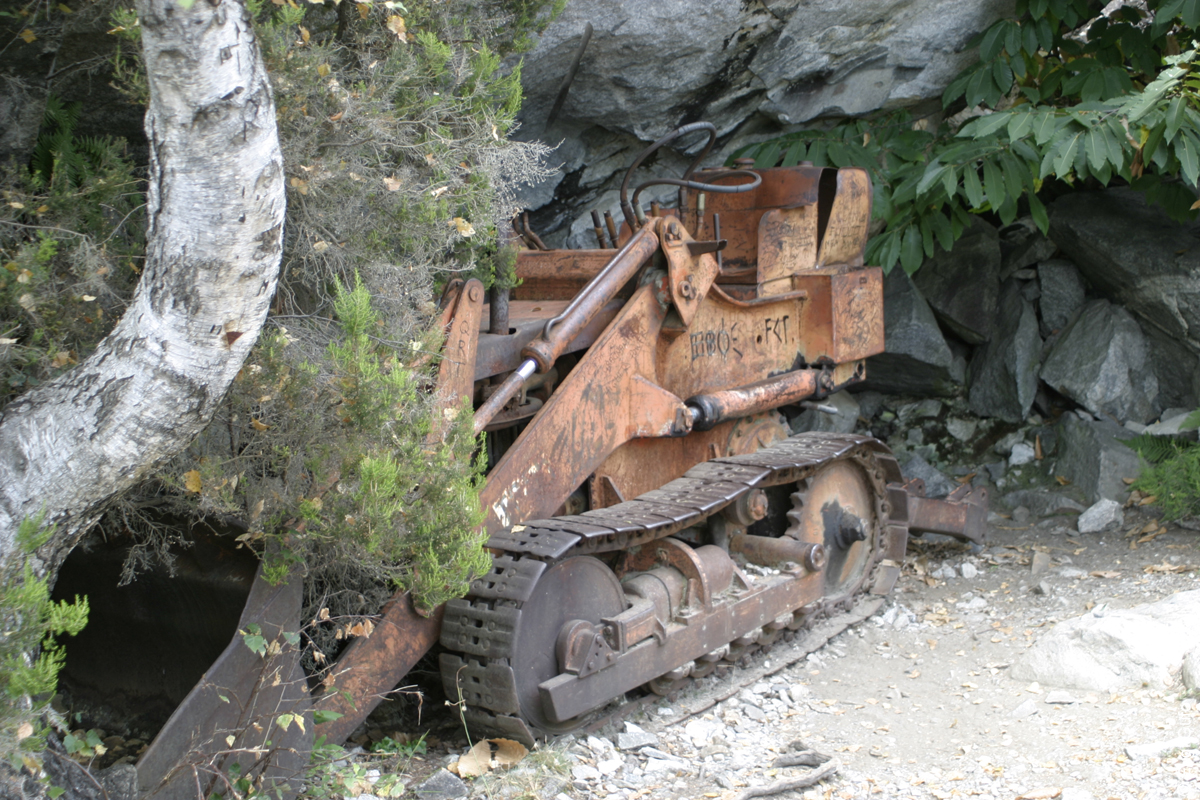
At a certain point along the now entirely rocky path, one encounters — to the side — an old bulldozer. Judging by its condition, it must have stood there for several decades, yet I cannot comprehend how or why it arrived at this location (the trail is much as you see in the previous photograph). The only hypothesis my mind produced was this: perhaps the machine was once used in a quarry now invisible due to some major landslide. I am curious to learn its true story! And, naturally, it would be delightful to know the model name. Meanwhile, I can report that the bulldozer still smells faintly of oil and metal.
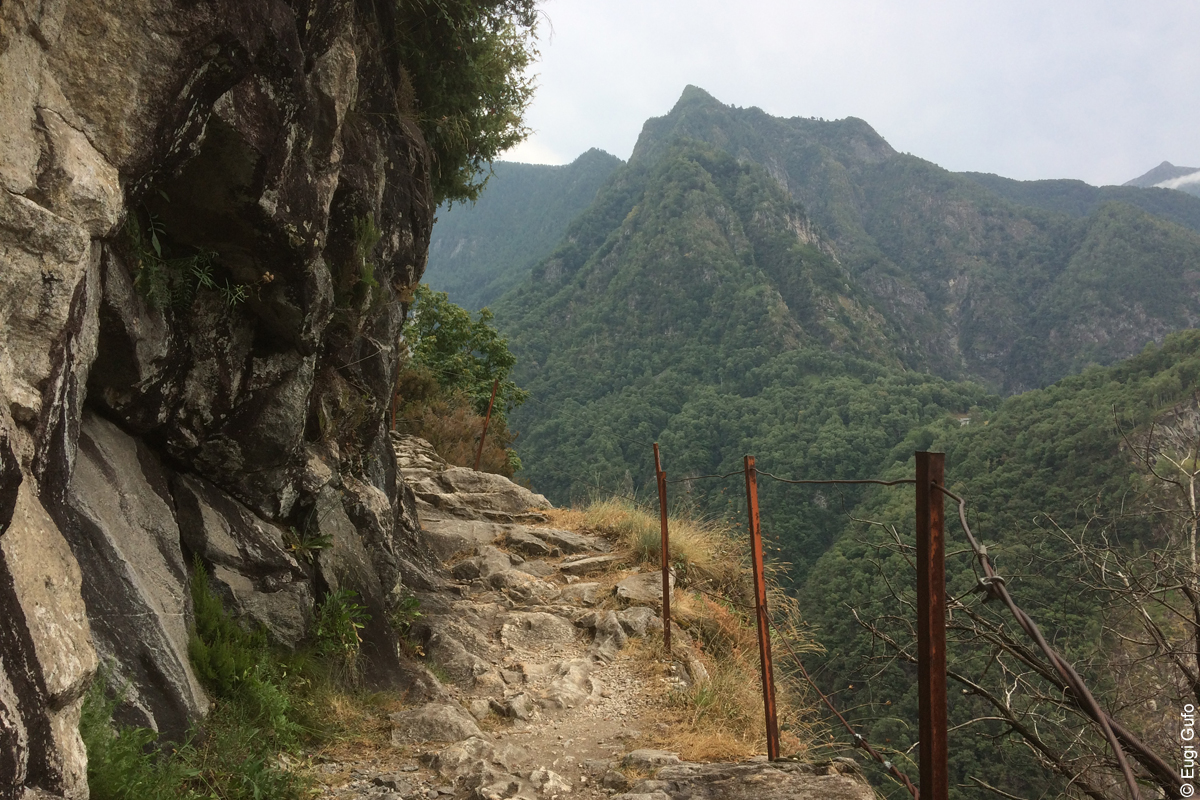
The ascent continues. On either side of the trail are near-vertical cliffs: one rising upward, the other plunging downward.
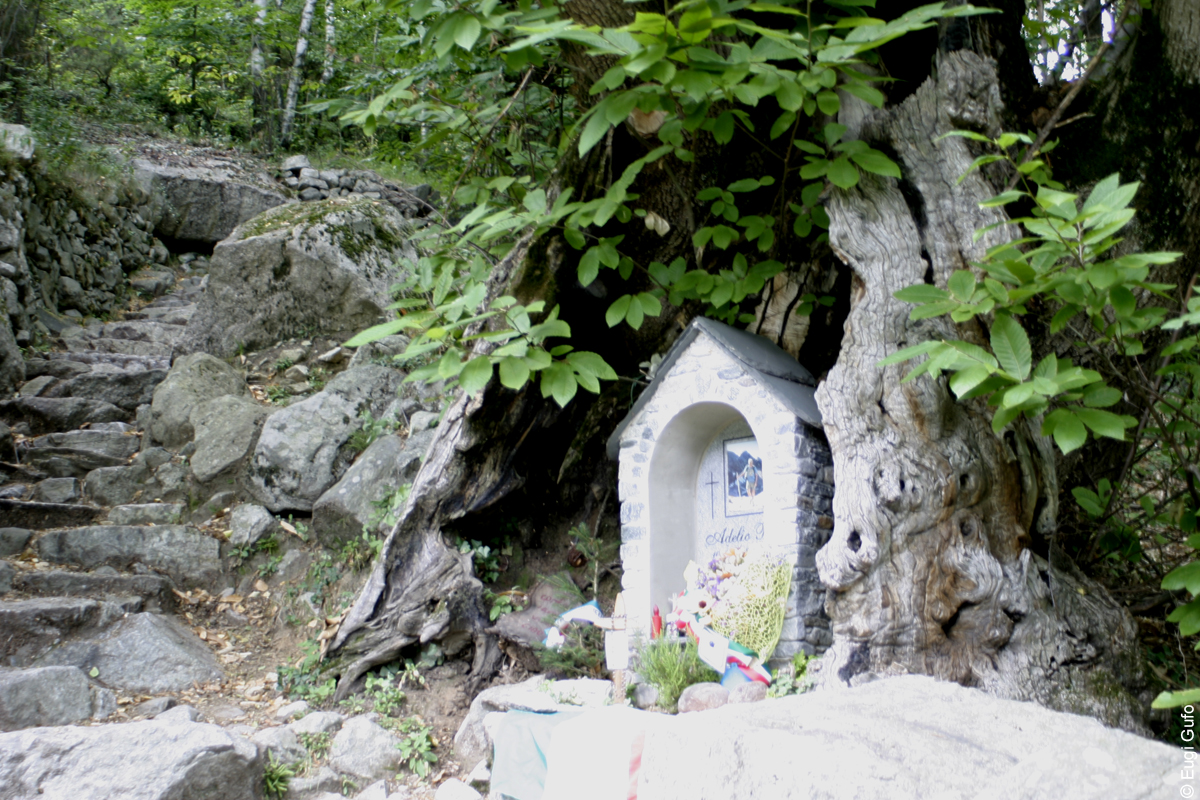
One of the most informative photographs I took turned out, for some mysterious reason, to be dreadful (and for an even more mysterious reason I failed to notice at the time). Nevertheless, the small chapel with a little wooden plaque in the upper right corner marks the end of the most strenuous section. After it, the trail no longer presents steep or prolonged ascents, and the surface becomes (on average) considerably more comfortable for the sensitive feet of a person who spends eleven months a year behind a desk.
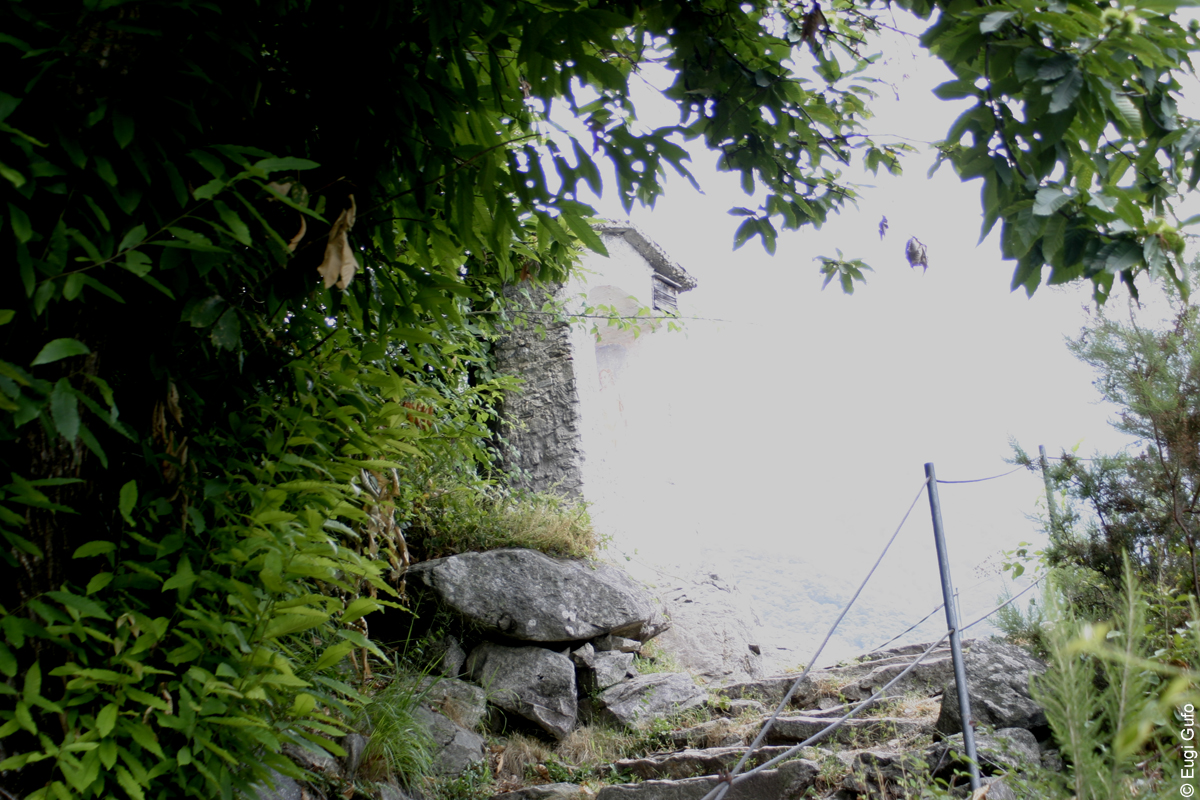
Moreover, that chapel occupies an ideal spot for a pause: one may sit upon large flat stones, rest without fear of a falling rock to the head, and contemplate the lake below.
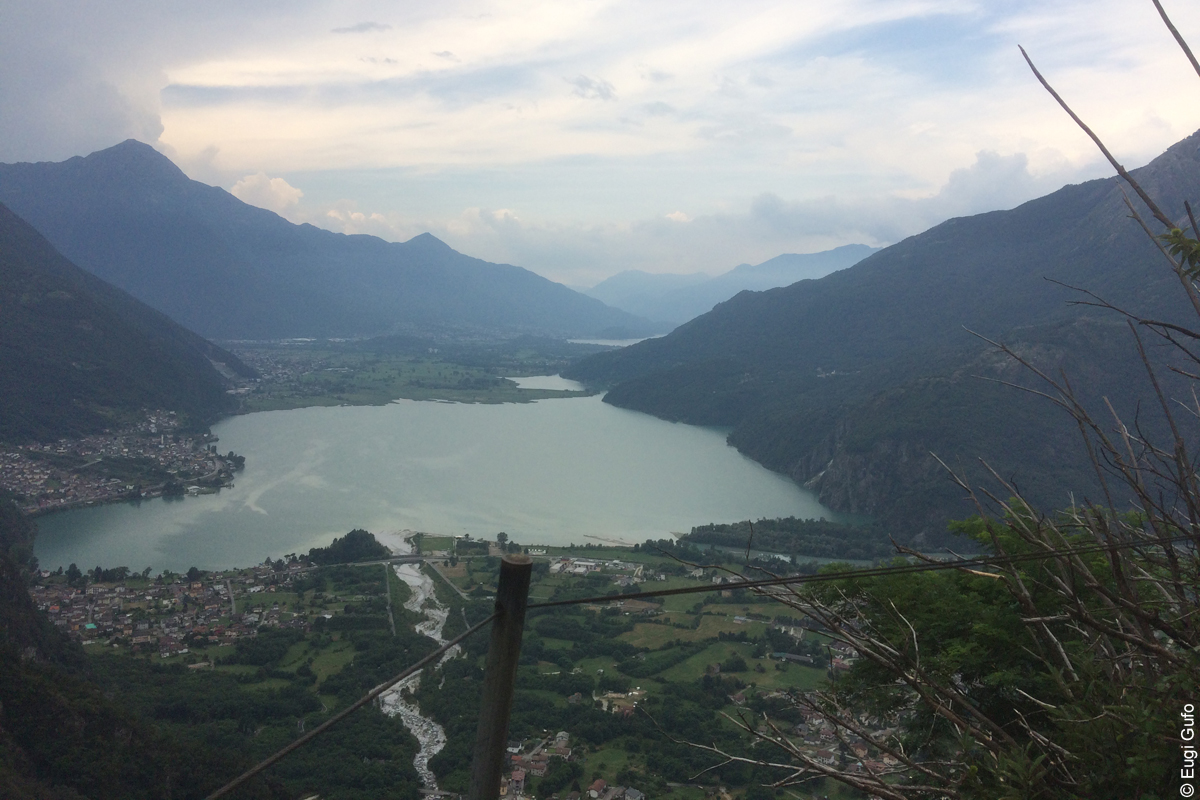
After a well-earned rest — or even without one — we proceed. In some places there are still stone steps, but very few. Curiously, precisely now that the path has become much easier, cenotaphs begin to appear marking the places where unfortunate hikers lost their lives. Why? Most likely, in each case the cause was distraction («now that the path is simple, I can walk as though in town») and/or bad weather (rain begins, the person slips on wet leaves or stones).
Allow me therefore to offer some banal yet valuable advice:
1) On mountain trails, one must never lose concentration.
2) If you are not an experienced hiker, avoid the mountains in uncertain or bad weather.
3) On trails of high (or medium-high) difficulty, go only in the company of an experienced person — if you are not experienced yourself — and, in any case, avoid going alone.
Life is not a game that can be saved and resumed at your convenience.
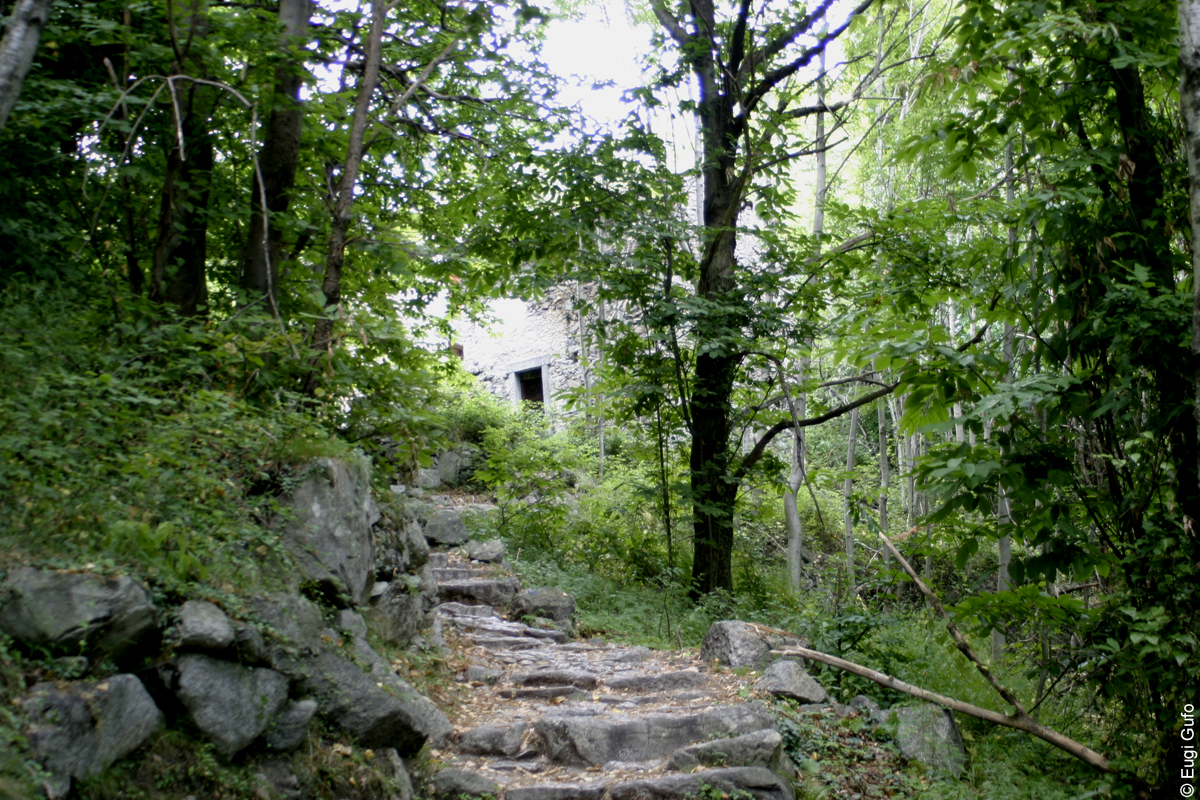
And suddenly — the first building appears!
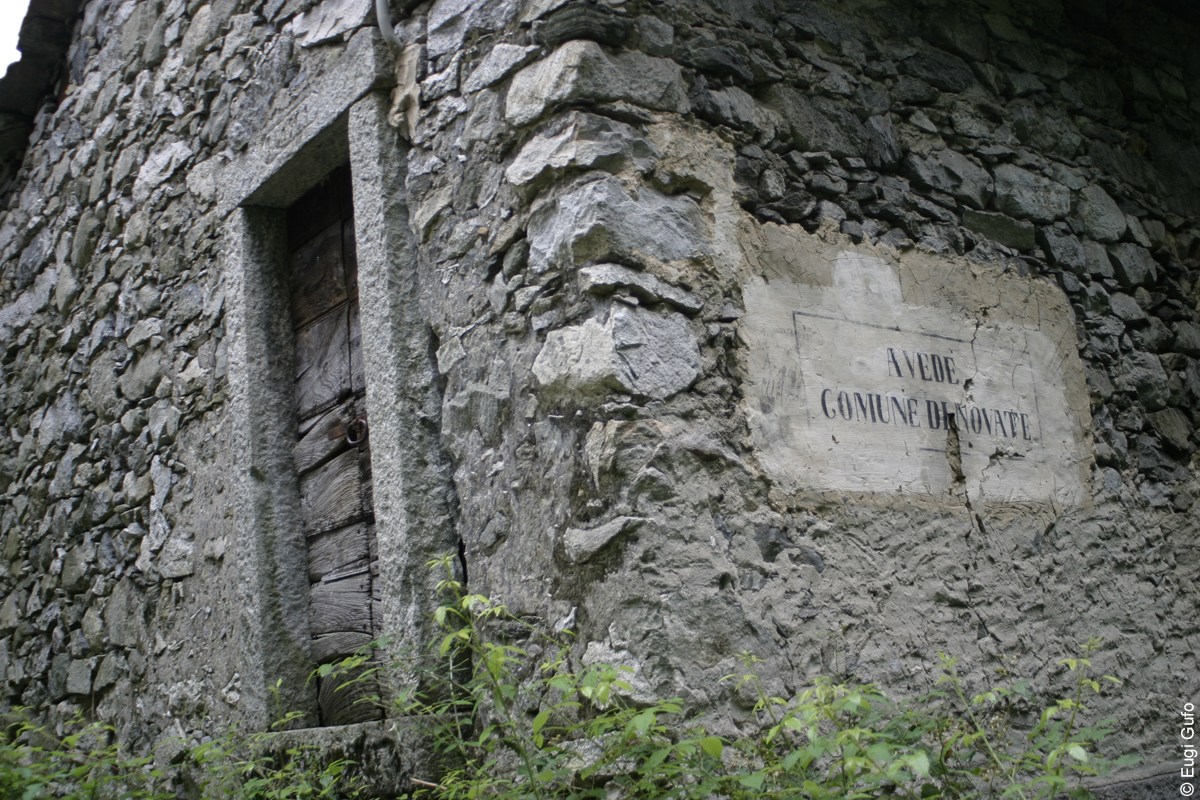
We have reached Avedée, one of the ten built-up nuclei of Val Codera. Administratively, all these nuclei belong to the municipality of Novate Mezzola, hence the «sign» is constructed accordingly.
According to the 2021 census, the entire Val Codera — of which Avedée forms part, but not Novate Mezzola — has just fifteen (15) residents. Avedée, one of the smallest villages in the valley, appears to have no permanent inhabitants: the seven houses I observed were intact and not abandoned, yet closed and seemingly unused in any regular daily manner.
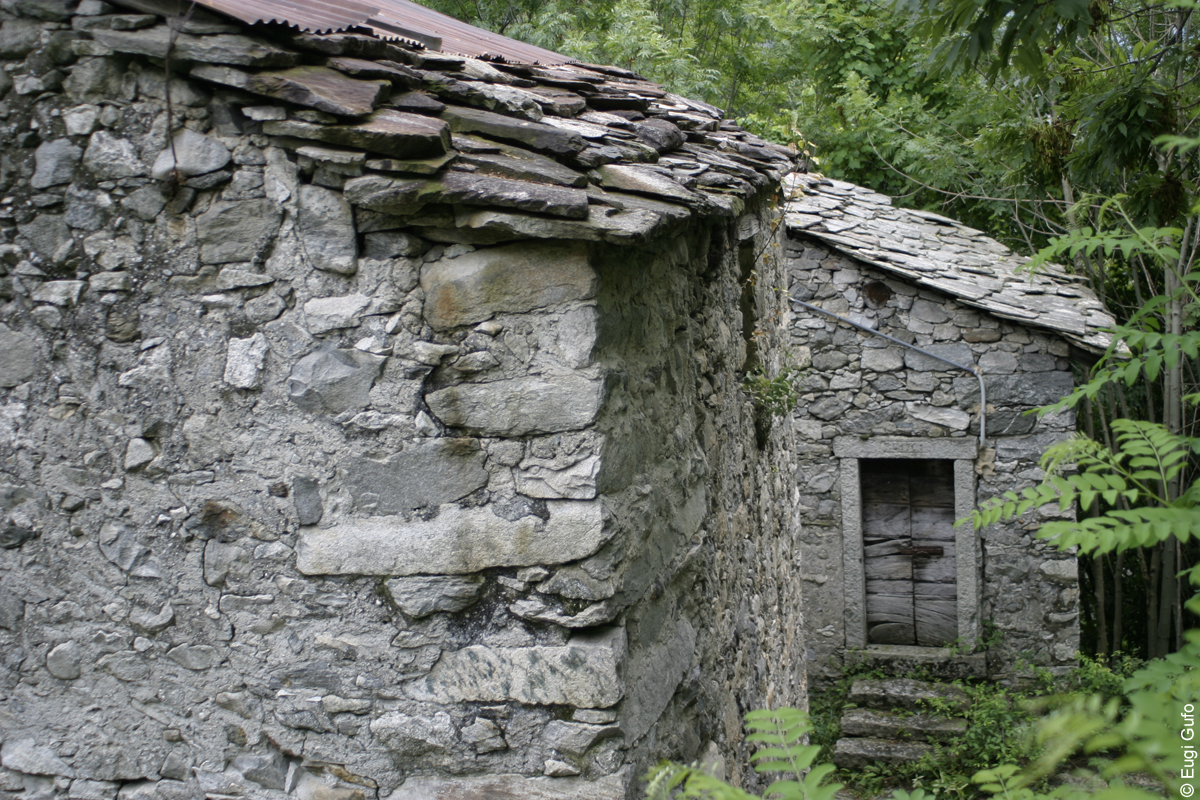
I noticed that all are connected to electricity in a proper, non-improvised fashion: the meter boxes are present.

Modern rainwater drainage systems are also almost always visible. However, I had no opportunity to determine whether there is a domestic water supply.
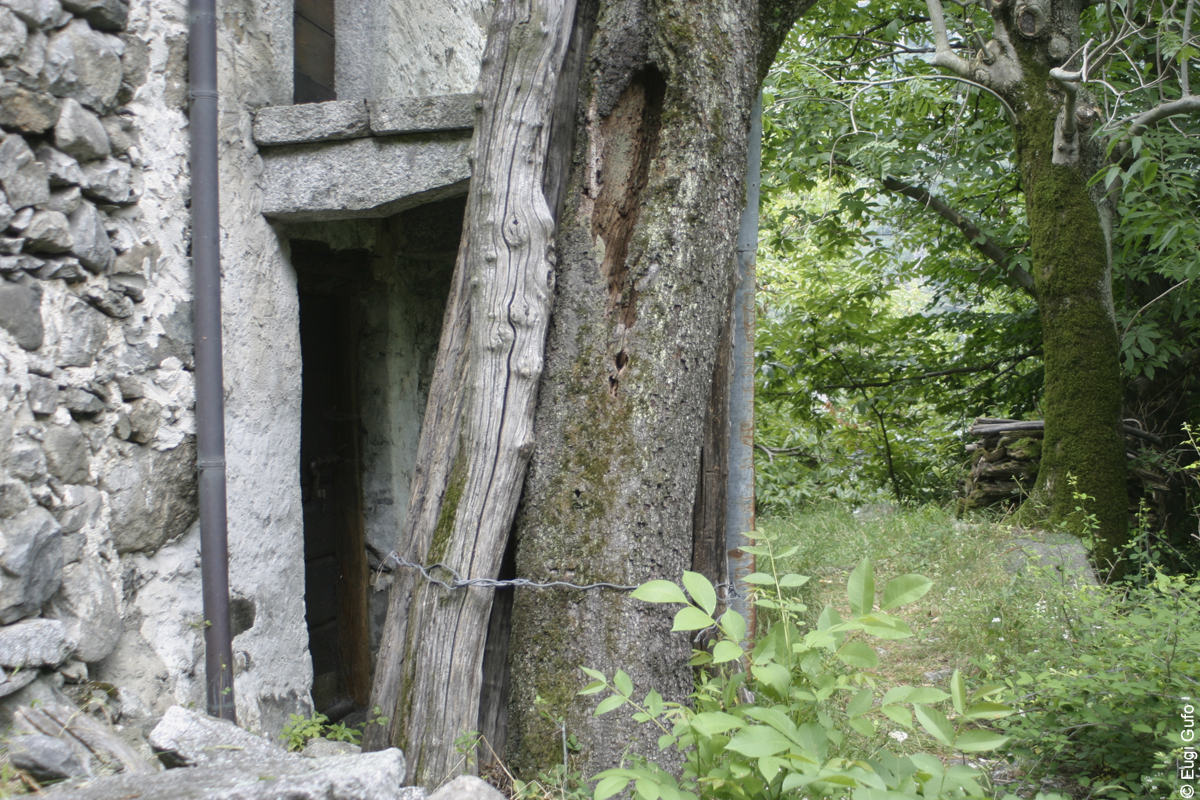
I also noticed the typical hatch used for other meters… if gas is present as well, these would be perfect holiday houses! Though in such a place it would seem more logical and authentic to use a fireplace and/or stove for cooking, heating water, and warming the house.
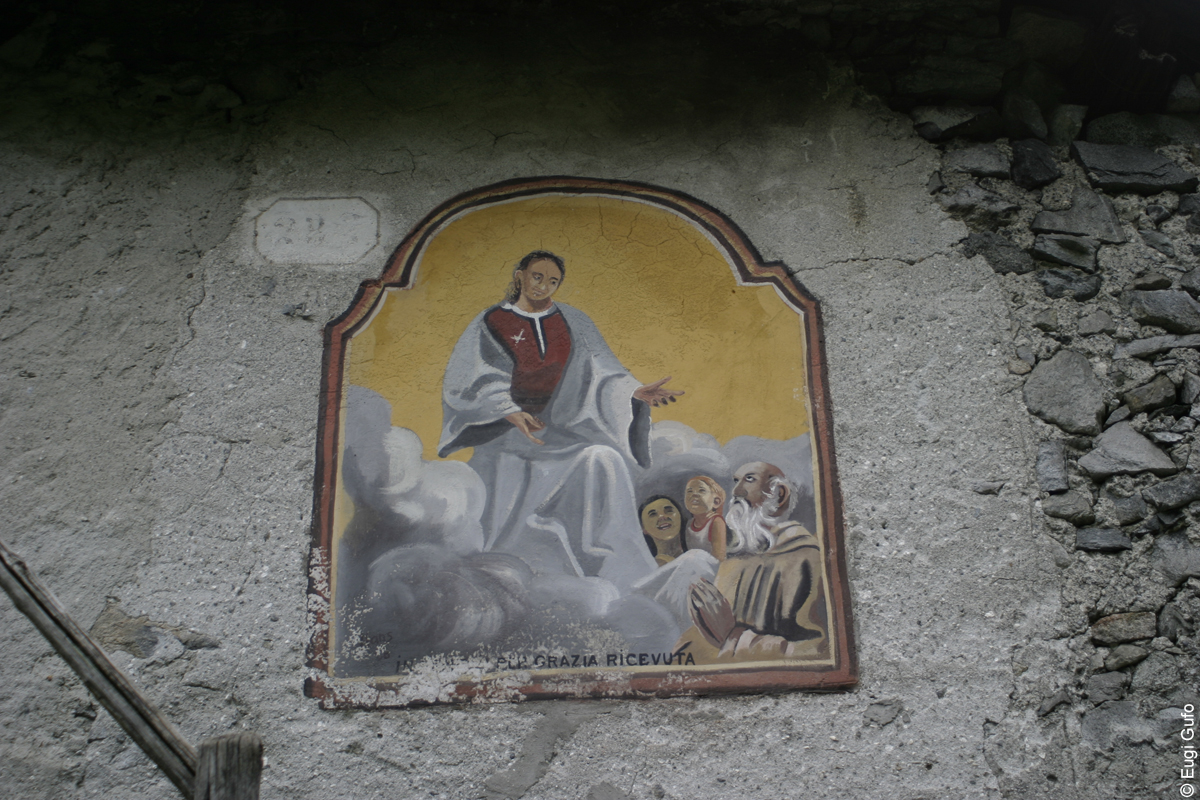
One house is so carefully maintained as to display a work of art on its façade. Unfortunately, I was unable to decipher the inscription…
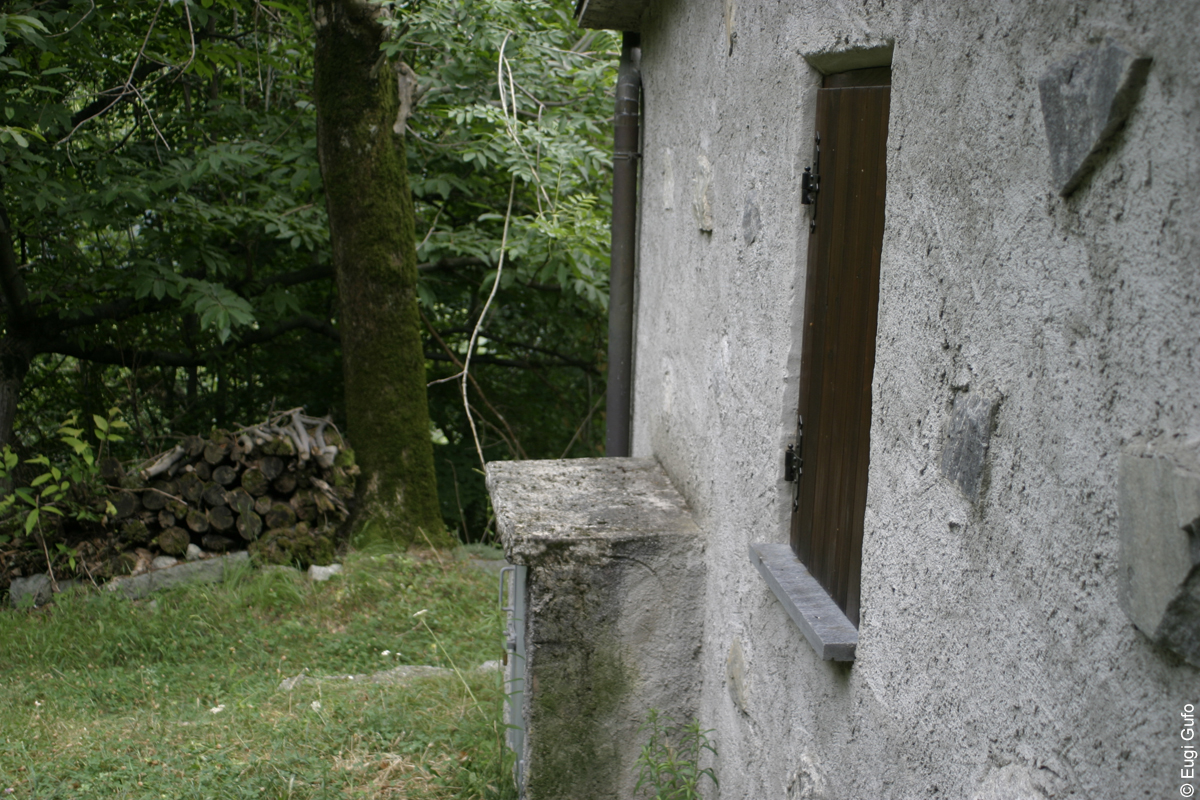
It is clearly well restored — and not very long ago. I appreciate that houses of this kind are being preserved.
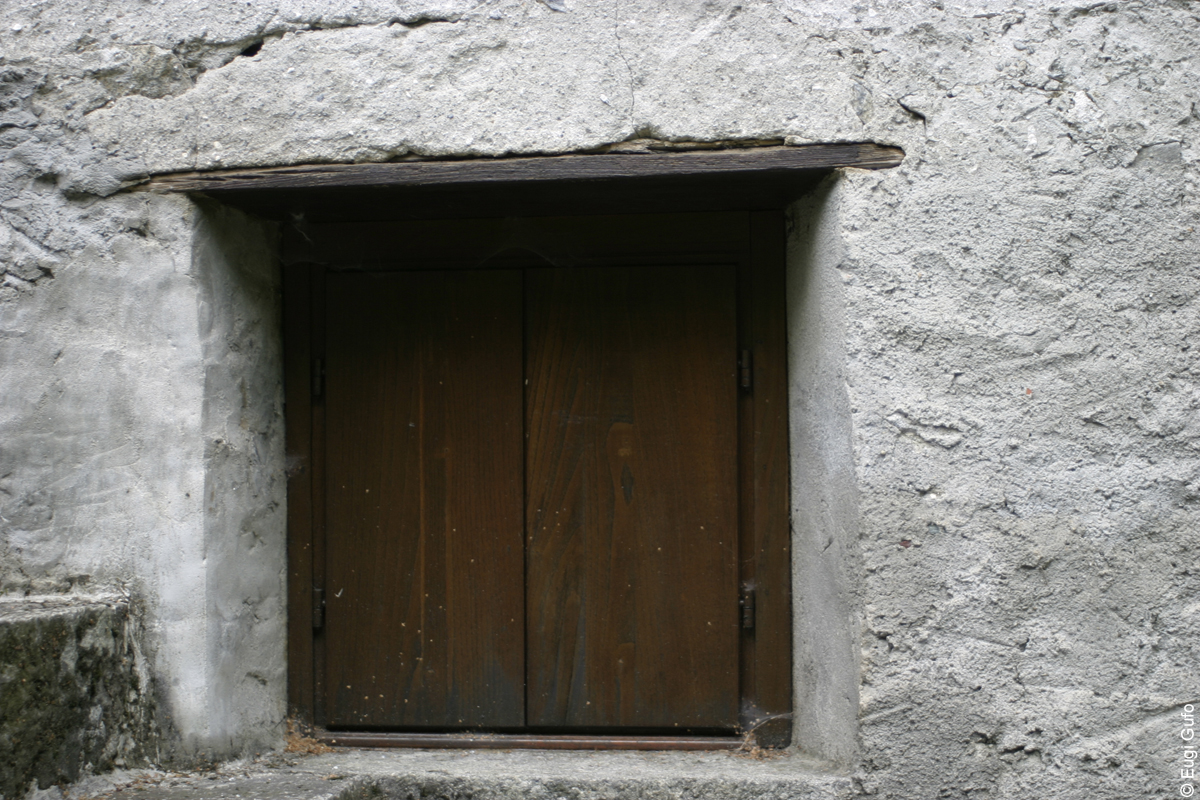
Some doors are closed in a rather primitive fashion… I was reminded of certain Russian taiga hunters who never lock their forest huts, leaving them available for people who might find themselves in extreme difficulty (injuries, snowmobile breakdowns, sudden weather changes, etc.). I do not know whether such a custom exists anywhere in the European mountains (perhaps not), yet extreme situations may occur to anyone, anywhere. Consequently, I pass on the hunters’ advice: do not touch what you do not need for survival; leave everything as you found it; and before departing, replenish the firewood supply if you have consumed it.
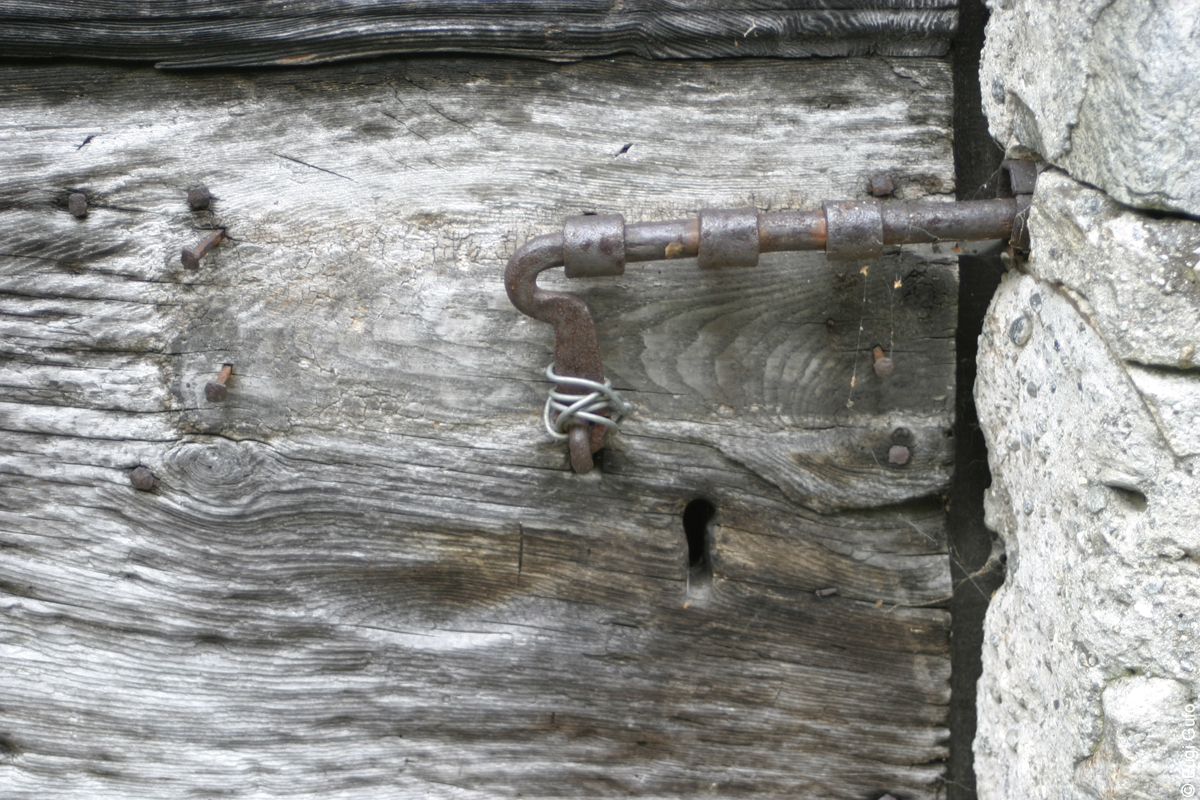
And thus we have already seen everything in Avedée: given its size, it did not require much time. We resume the trail. Trees gradually become rarer; the first meadows appear. On the left side of the path stands a small church.
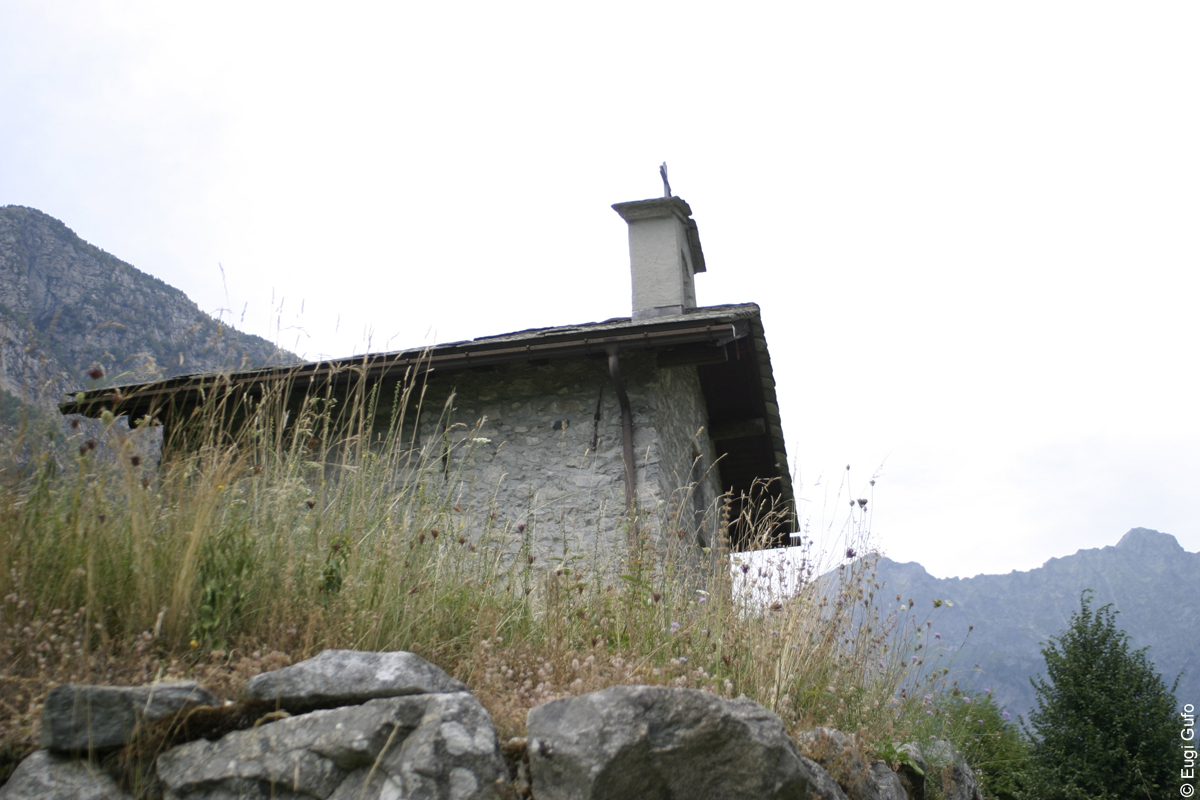
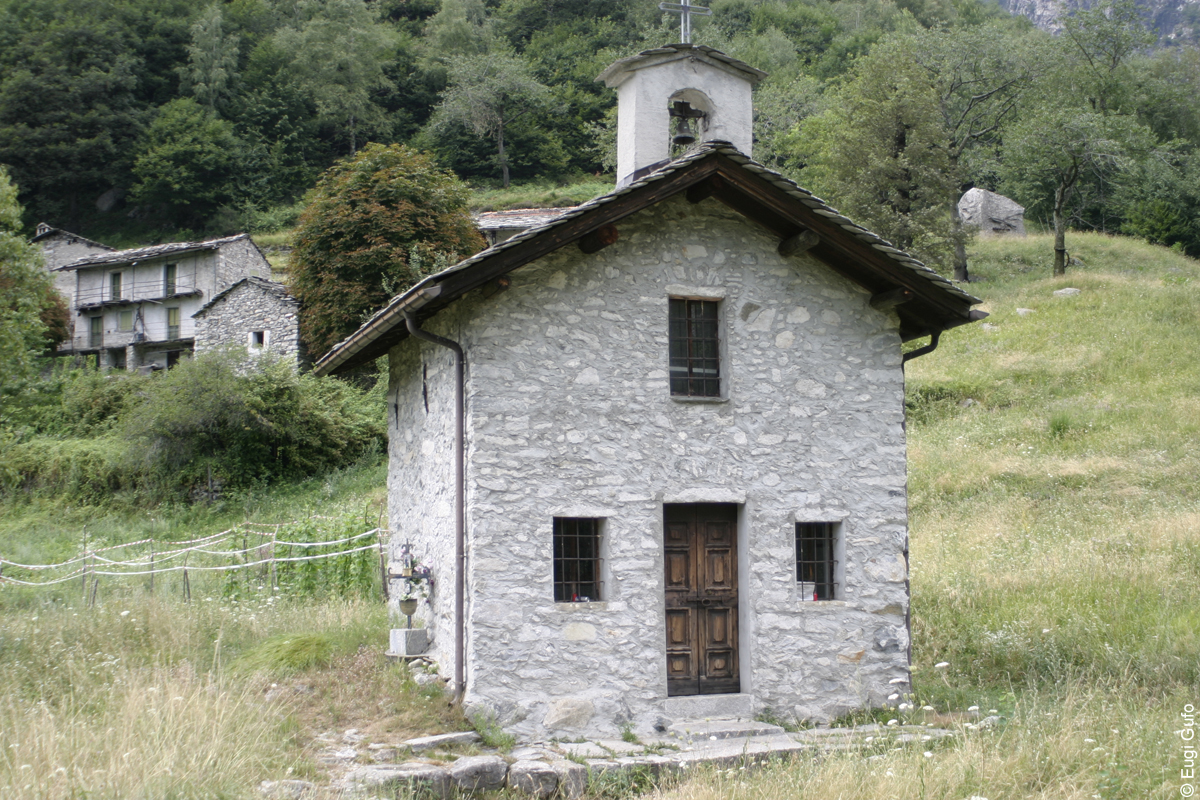
It is the tiny church of St Anthony of Padua (formally part of Avedée). Unfortunately, at the time of my visit it was closed; I do not know whether or when it may be viewed inside (through the dark windows I could discern nothing). Nor are there indications of its construction date.
Near the church are two cenotaphs. The first is attached directly to the church and dedicated to two individuals who died in very different years: 1987 and 2019. Judging by the photographs and data displayed, both were locals, perhaps even close relatives.
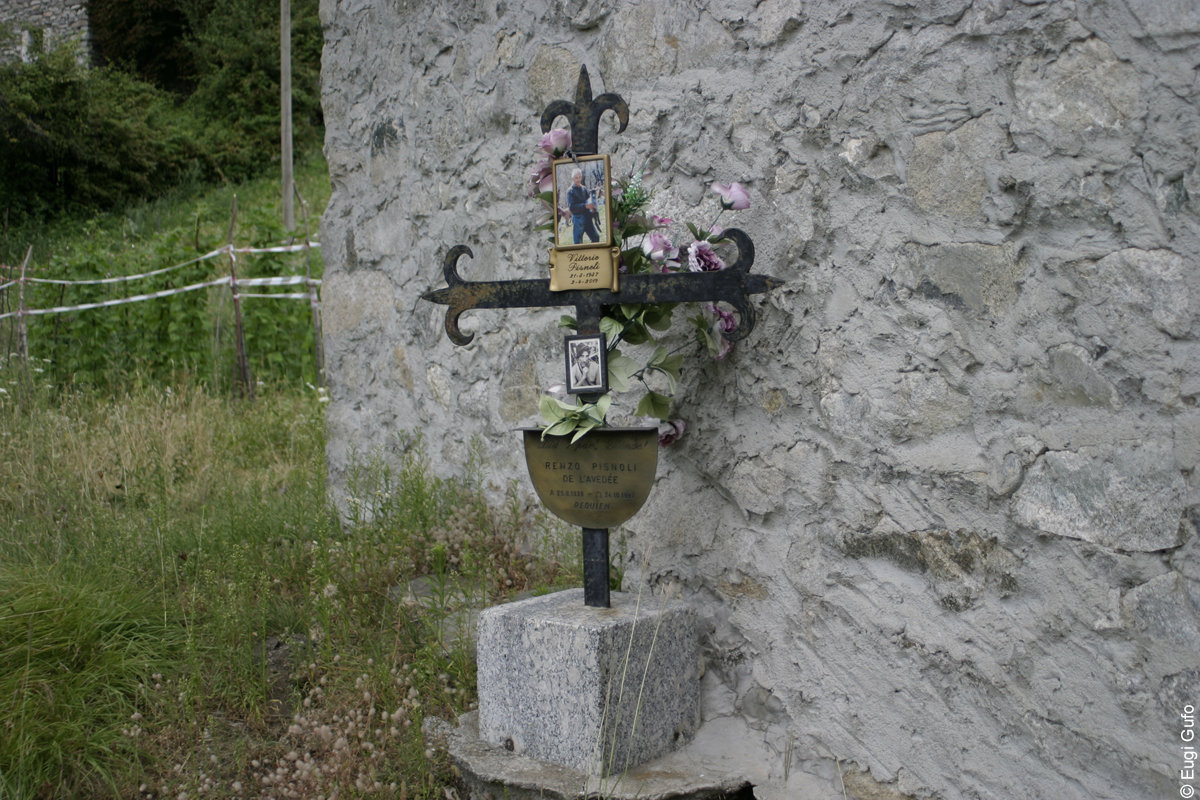
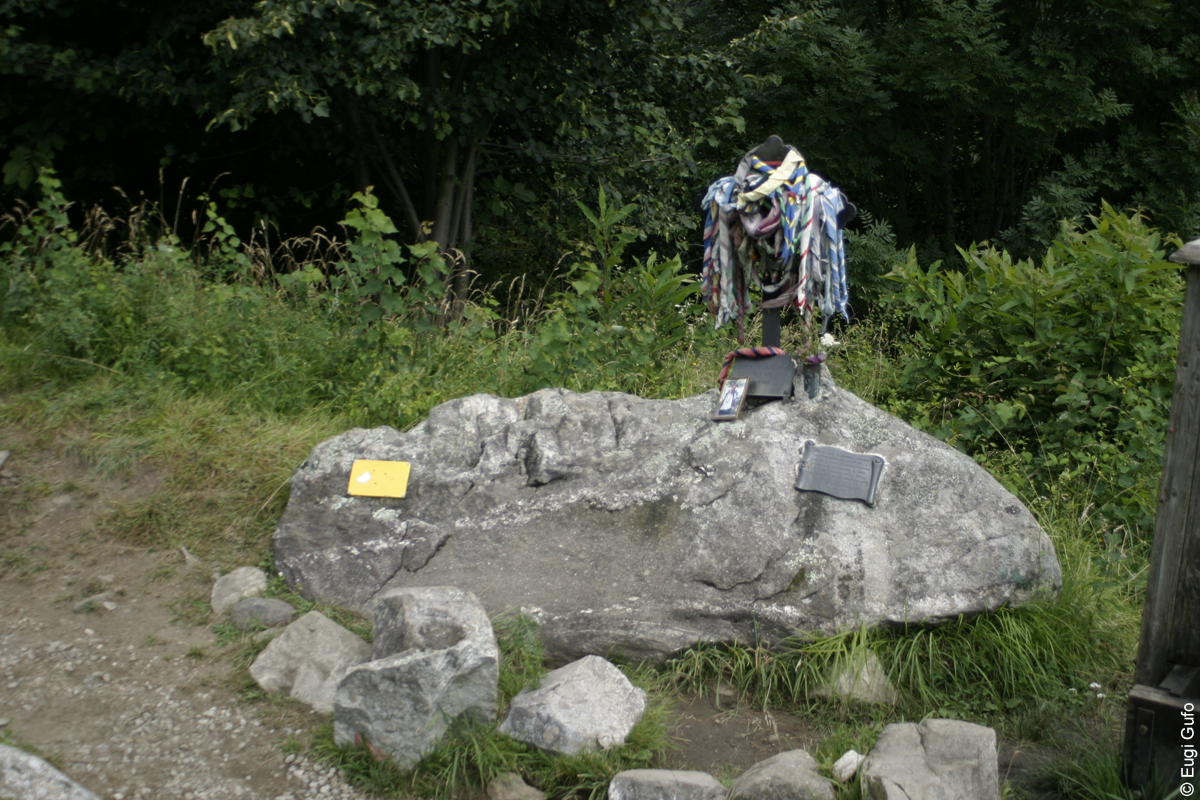
The second cenotaph stands near the potable water fountain (so the sign claims; I did not taste it, having my own supply) and the information board.
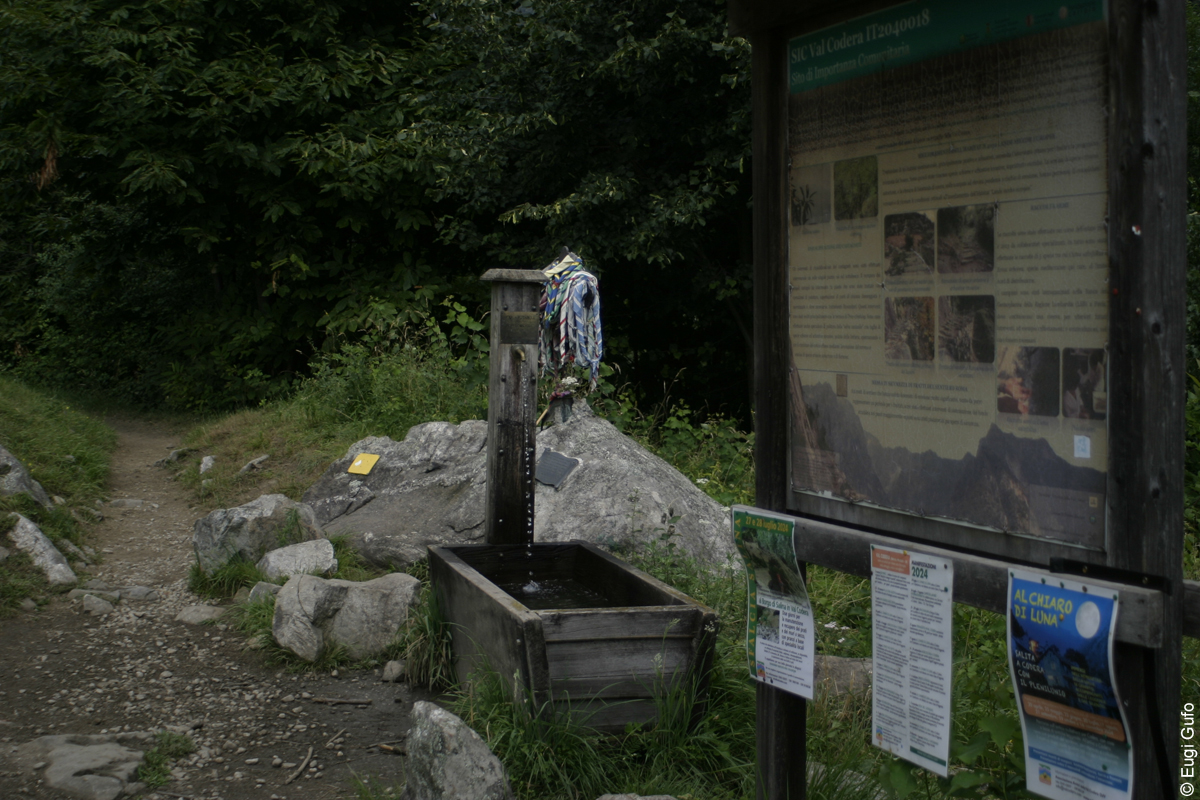
It is dedicated to a scout. Later I noticed that along the trail there are several other cenotaphs dedicated to scouts — a «density» (or coincidence?) I cannot yet explain.
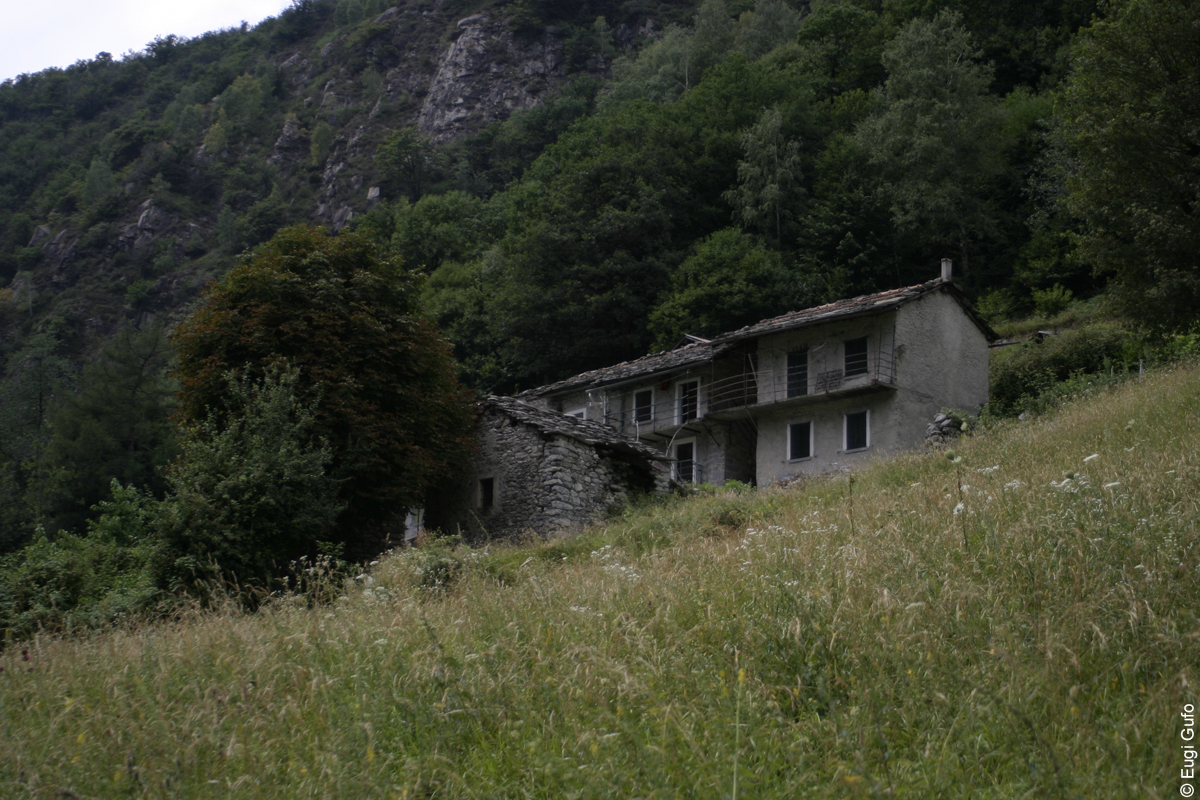
The two houses a few metres above the church do not appear regularly inhabited.
A few metres below the church runs one branch of the cable transport system for materials — but not people! — serving the valley’s villages. Indeed, all these settlements can be reached only on foot (and not everyone possesses sherpa-like abilities) or by helicopter (hardly the most economical option), so it is useful to have a mechanism facilitating at least the transport of heavy or bulky goods.

We, however, are not objects, so we proceed on our own legs toward the next stage of our journey. Along the trail we encounter further chapels of highly variable size and artistic quality.
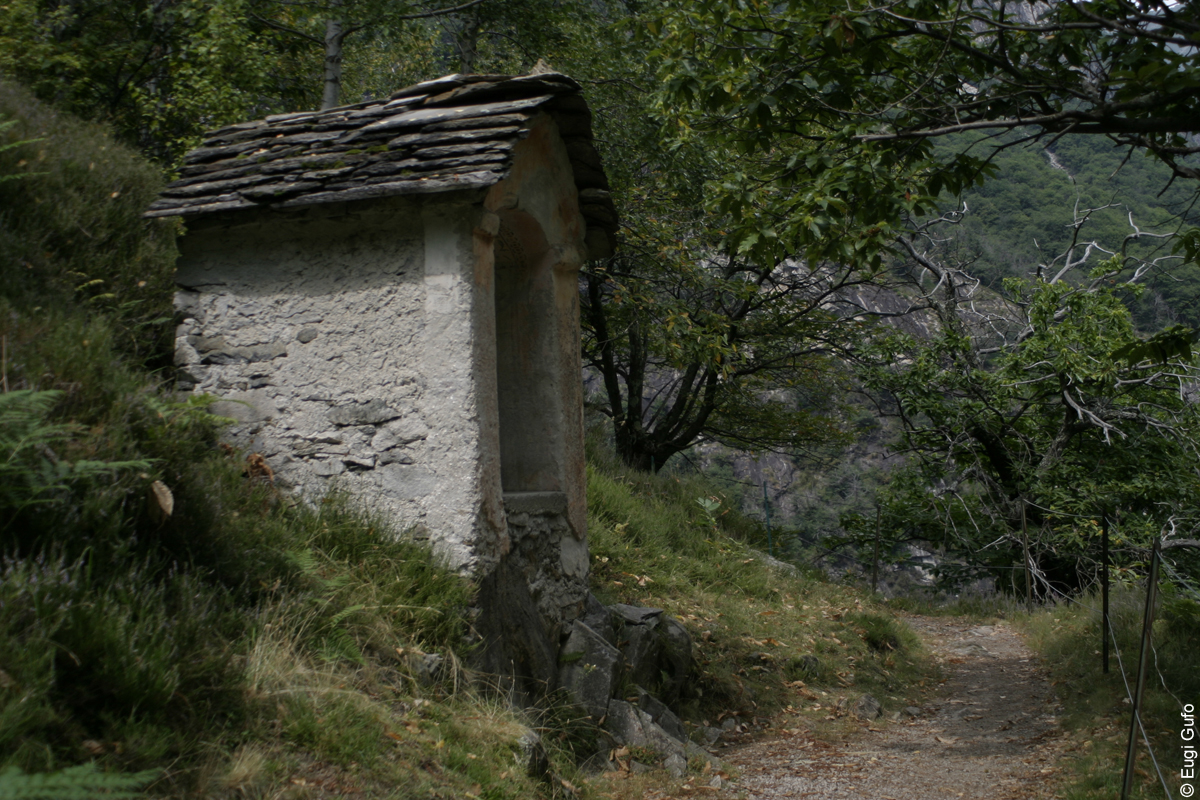
The path remains easy, yet we remember that distraction is among our worst enemies.
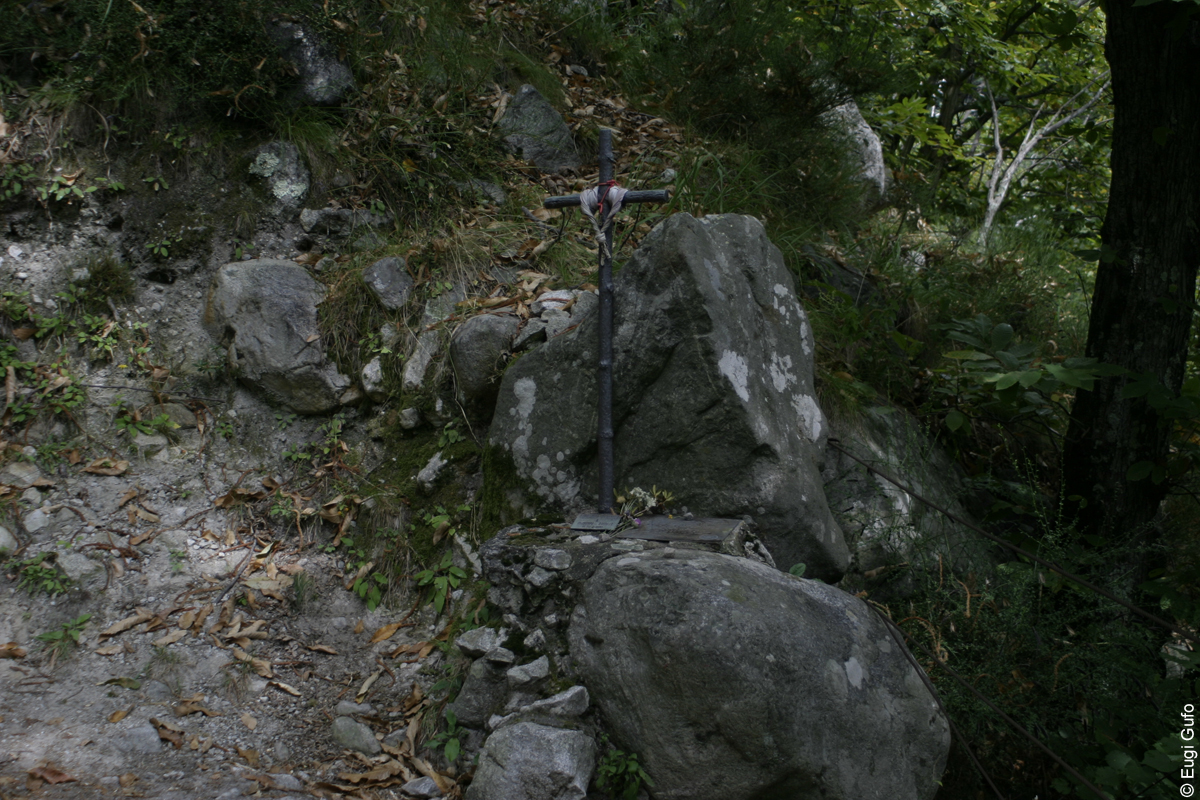
Short sections appear that have been secured in a particular manner — not always unnecessarily (observe the upper part of the ledge in the first photograph) and not always by human hands (nor by a character invented by humans, ahahaha).
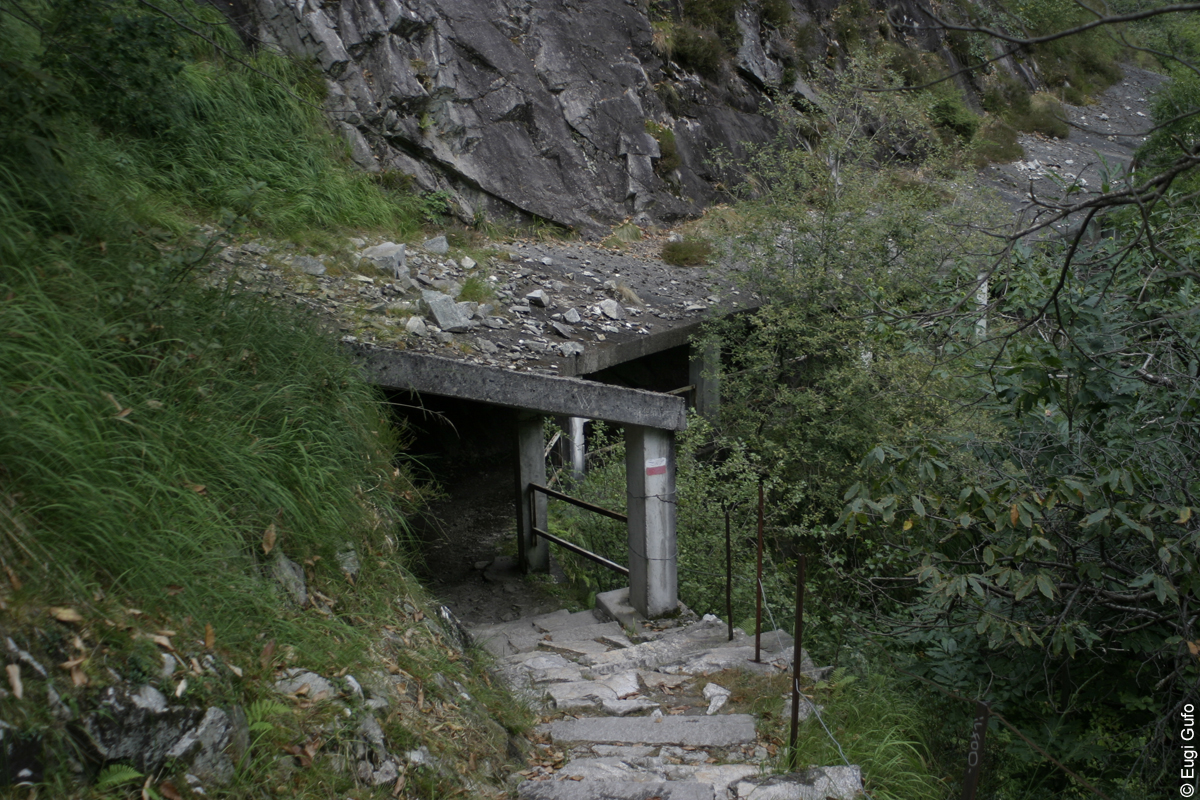
Then, suddenly, the trail once again becomes entirely un-rocky and rather gentle in appearance…

A sign that we are nearly at the next significant stage of our walk: the village of Codera.
To avoid exhausting you, however, I shall devote a separate account to it.
Avedée, 7 August 2024
↓ Show comments ↓


