


 Long live Ukraine! Fuck the war!
 RSS of site articles
This may come as a great and rather unbecoming surprise, but I shall confess it anyway: until a few months before my trip, I was blissfully unaware of the very existence of Valenza.
Yes, I had occasionally noticed shops belonging to the well-known jewellery company Valenza Gioielli, but it had never occurred to me that the name referred to an actual, physical town inhabited by actual, physical humans. I cannot adequately explain this curious malfunction of my anomalous brain.
In any case, I eventually corrected the oversight: I discovered that Valenza is a city in the Province of Alessandria, in Piedmont, and that it can be conveniently reached from Milan. Naturally, I resolved to inspect it with my own eyes at the earliest opportunity — purely in the interest of consolidating my cultural development, you understand.
While preparing for my expedition, I repeatedly encountered the claim that Valenza is nicknamed the «world / European capital of goldsmithing and jewellery,» owing to the impressive concentration of companies in the sector within its municipal territory.
A city of just 18,000 inhabitants contributes roughly one third of the entire commercial export of the Province of Alessandria — approximately €1.3 billion.
Given these statistics and this rather glittering specialisation, I expected a city that was elegant, prosperous, and perhaps even literally radiant.
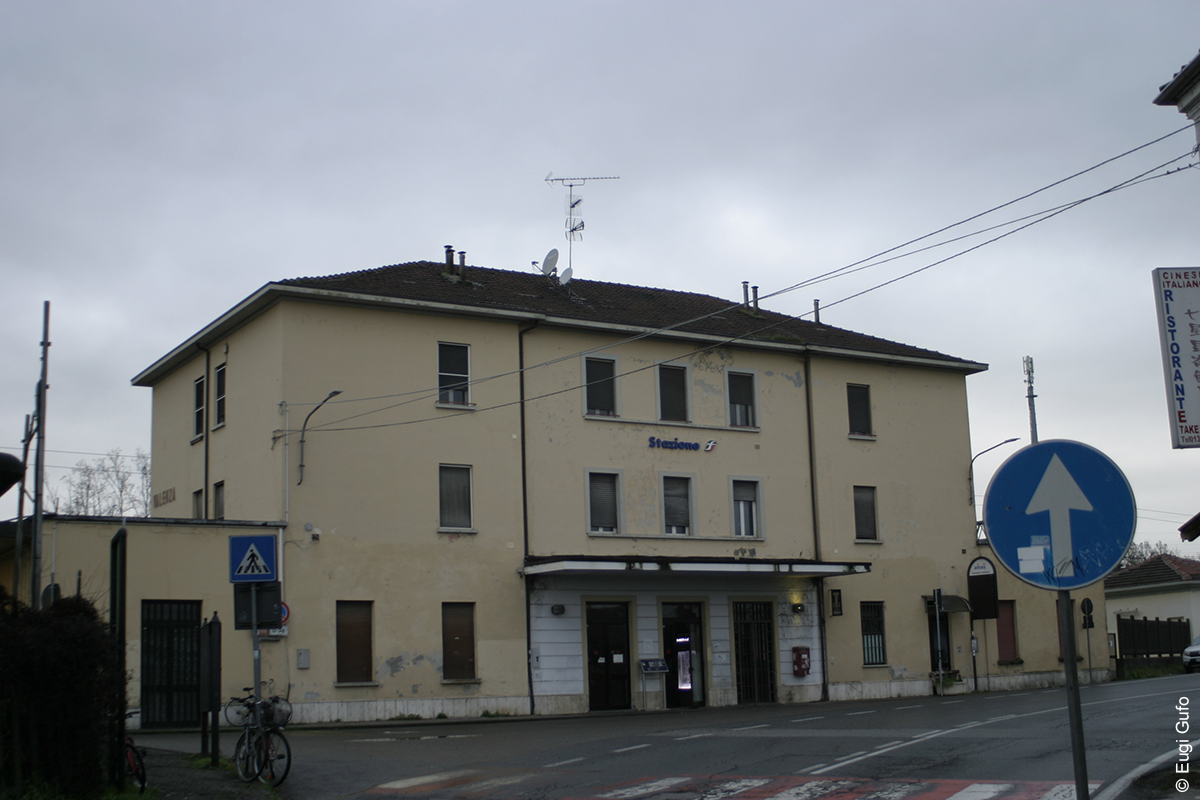
Instead, the first thing I saw upon exiting the railway station was this:
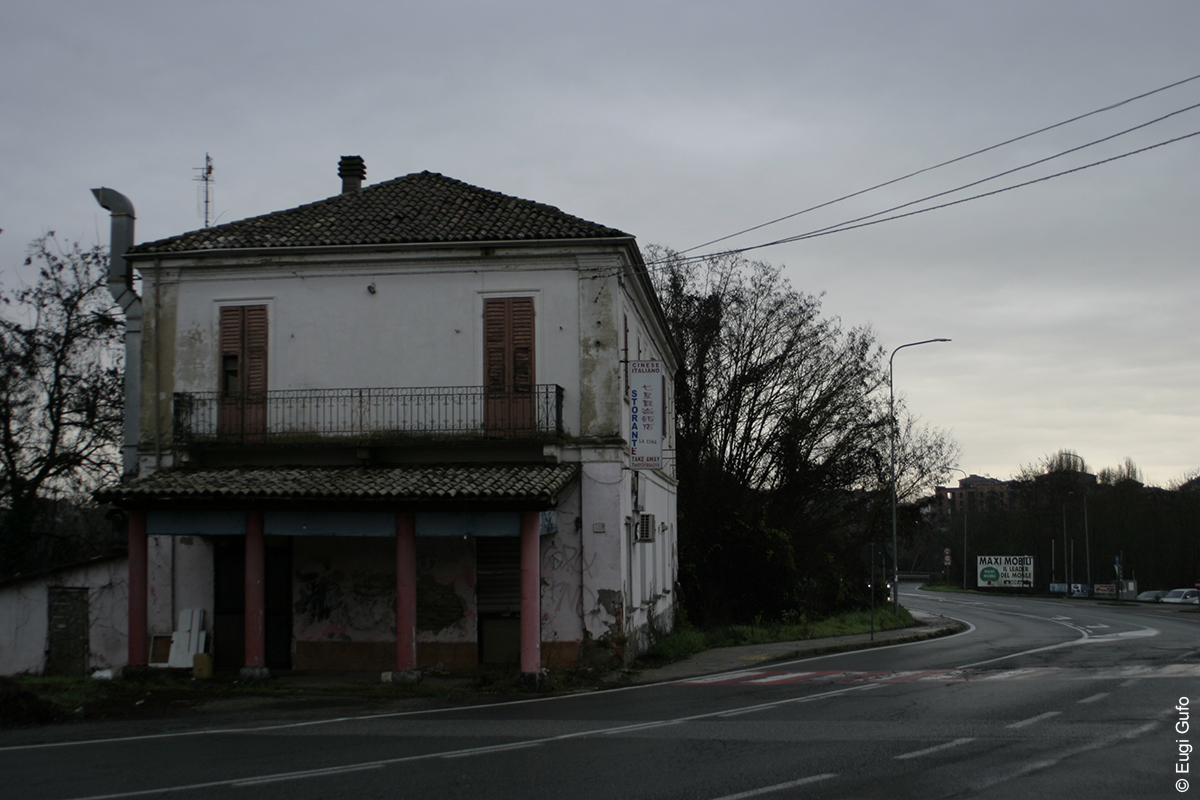
Admittedly, the overcast sky may have contributed to the mood — but a building in the early stages of ruin does not immediately scream «opulence,» particularly when the last visible tenant appears to have been a Chinese restaurant.
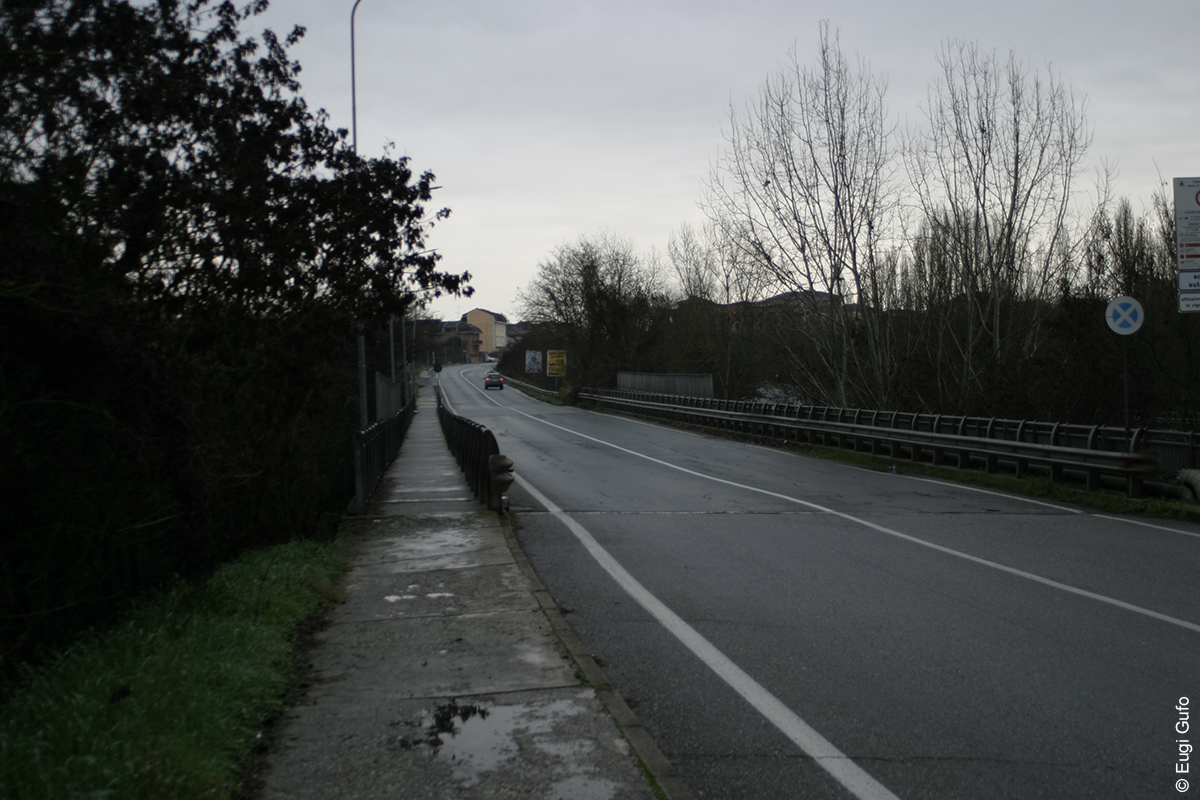
The pedestrian path from the station to the city centre — a matter of a few hundred metres — is not an architectural hymn to prosperity either. It is narrow, constructed from concrete slabs of indeterminate vintage, fenced only briefly where it passes above a state road… but, in fairness, it exists.
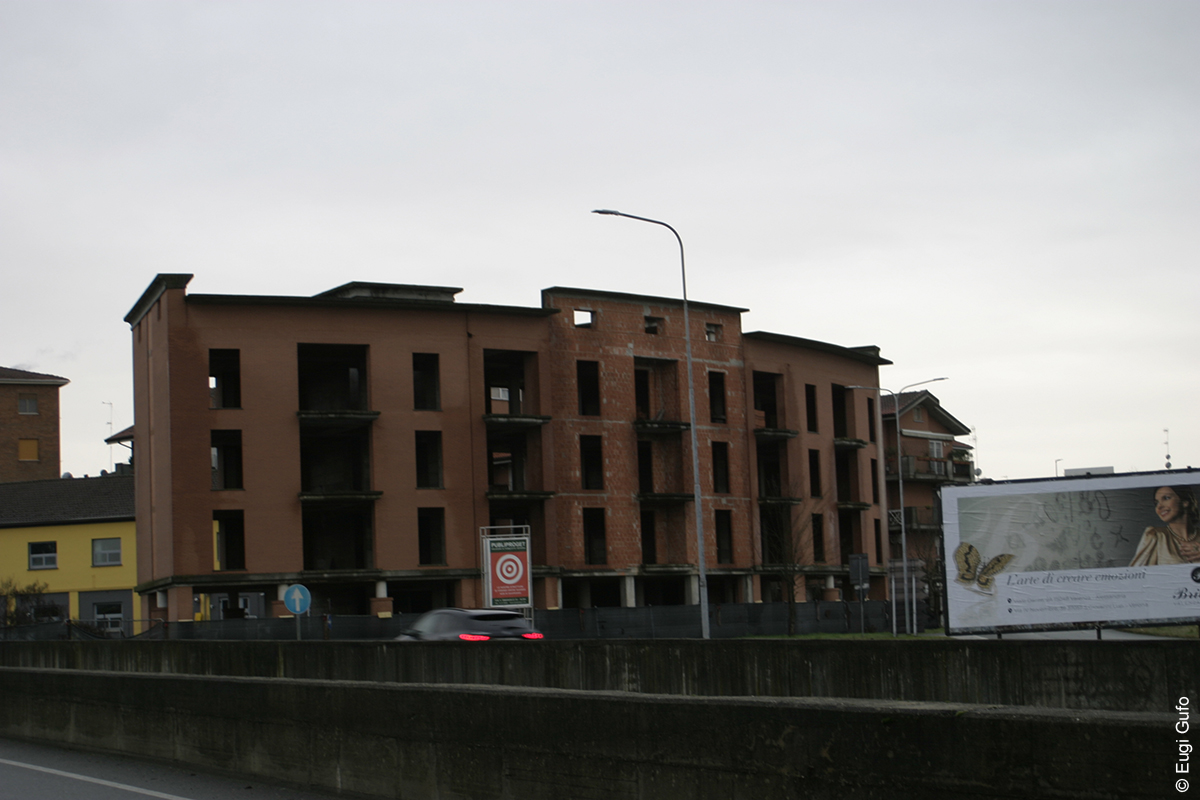
Within minutes one reaches the outskirts, where the city greets visitors with a structure that might be an abandoned construction site — or, with equal probability, a building in the process of being euthanised. The image is, in any case, mildly unsettling.
I remain undeterred and proceed. At worst, if the city turns out to be inhabited by zombies, I shall attempt to disguise myself in a cloud of smoke and flee.
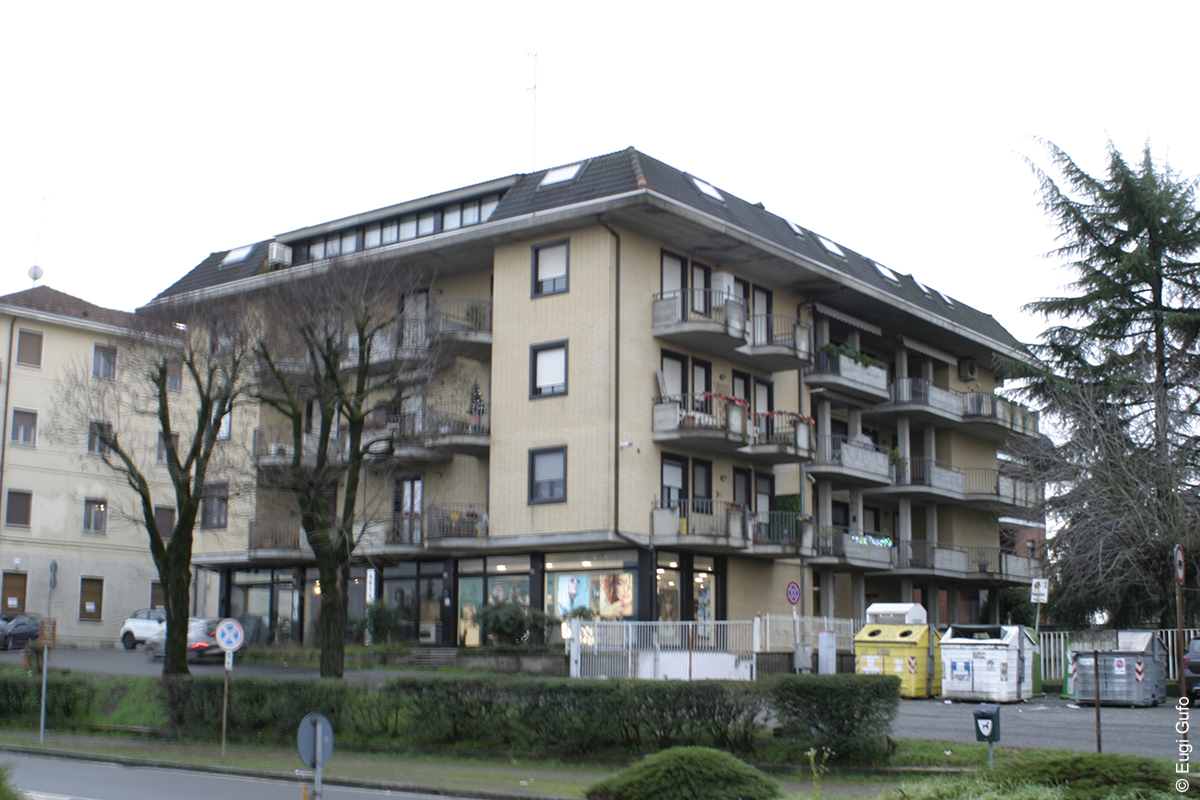
Ah — no. It is not a ghost town. The real suburbs begin: modern, slightly dull buildings that are unmistakably inhabited by humans.
Gradually, the first historic buildings appear. Some, once moderately handsome, are now in visible decline — though perhaps still salvageable.
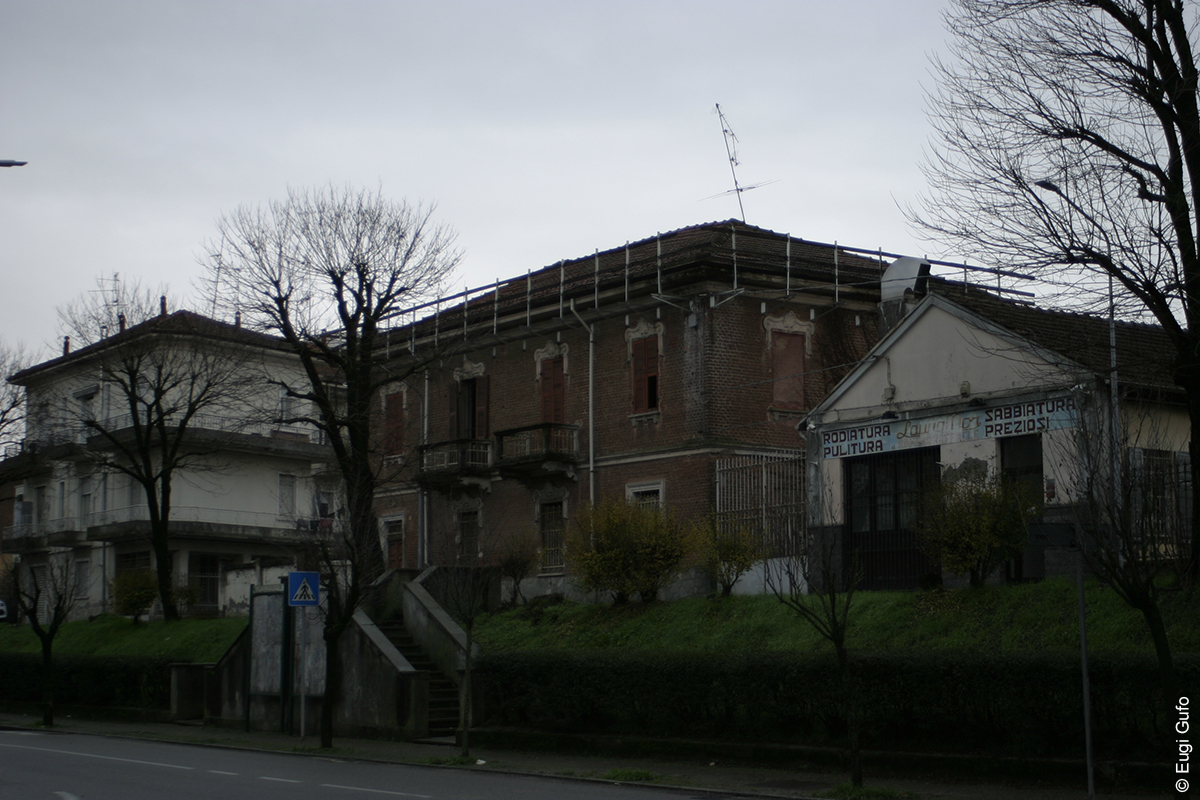
Then the pendulum swings again: a beautiful period courtyard house, aesthetically almost immaculate.
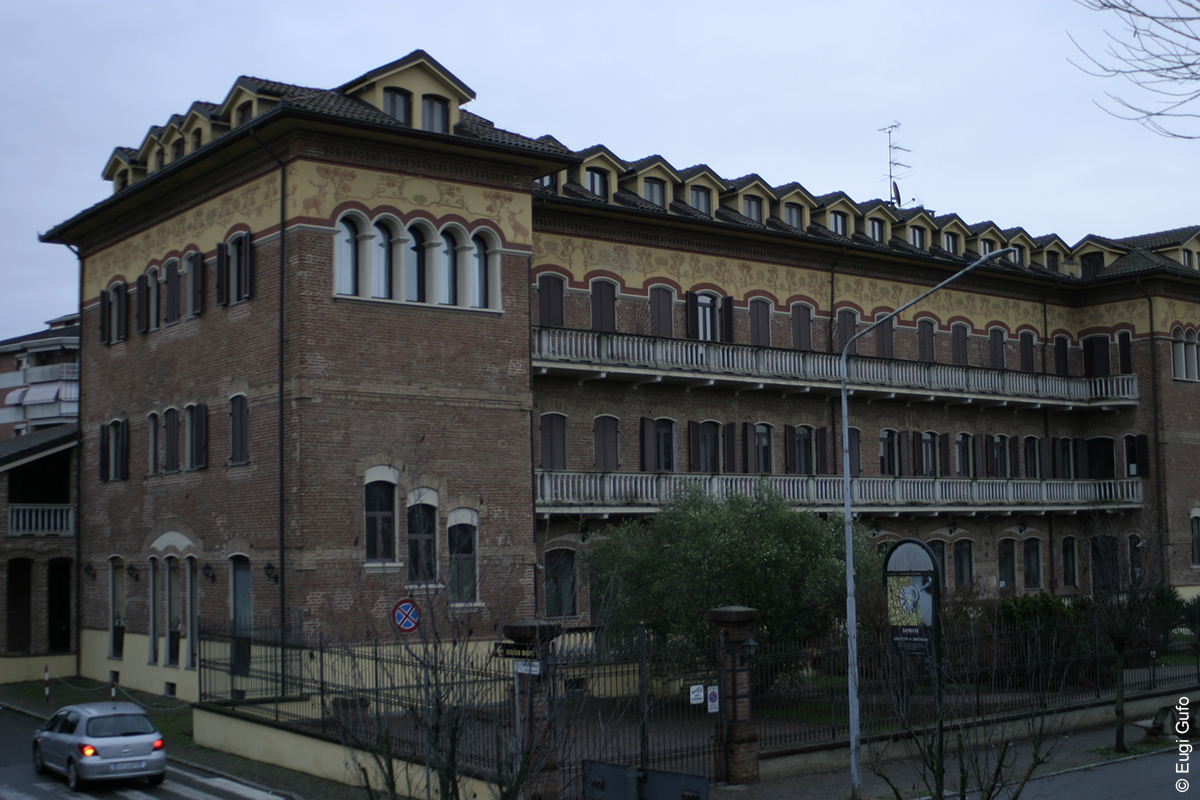
There is even a large former barracks-like structure, built in Liberty style and preserved in near-excellent condition — with the exception of the first-floor windows, which have been replaced by that aggressively white modern abomination entirely out of harmony with the historic façade.
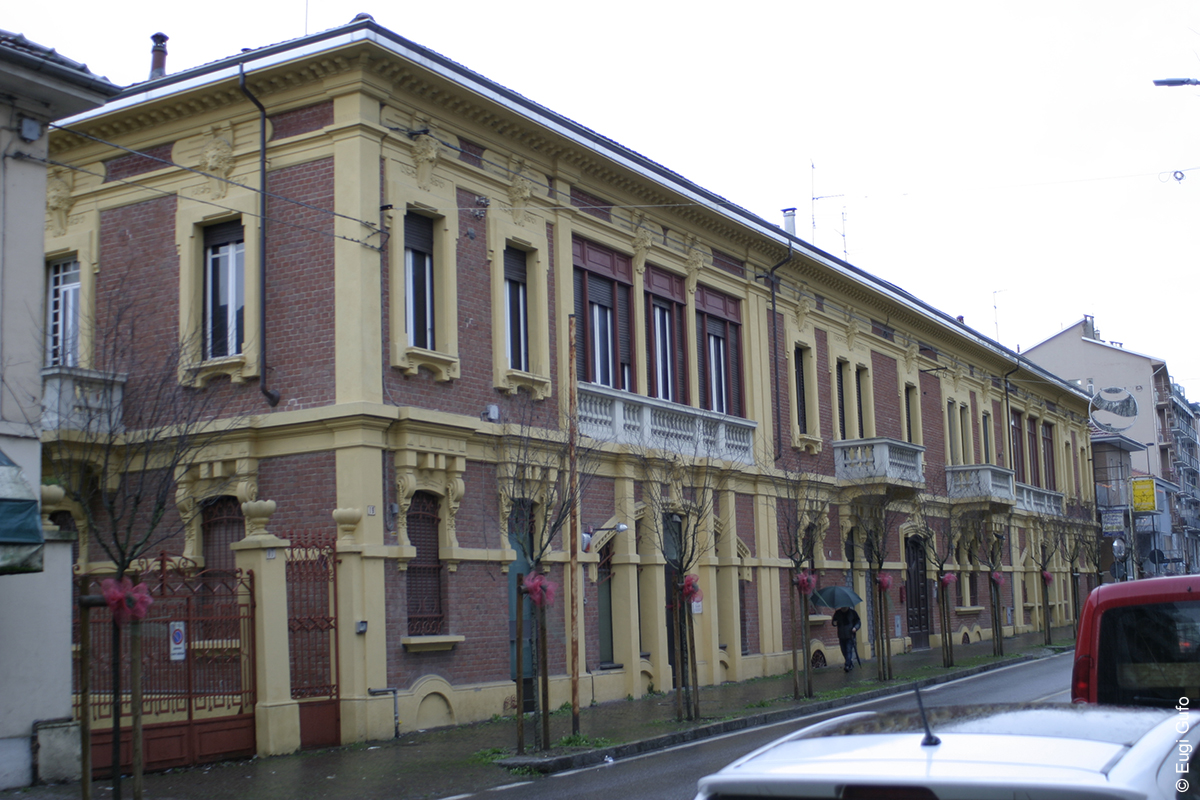
Several other historic buildings are in almost perfect condition. I find this deeply reassuring.
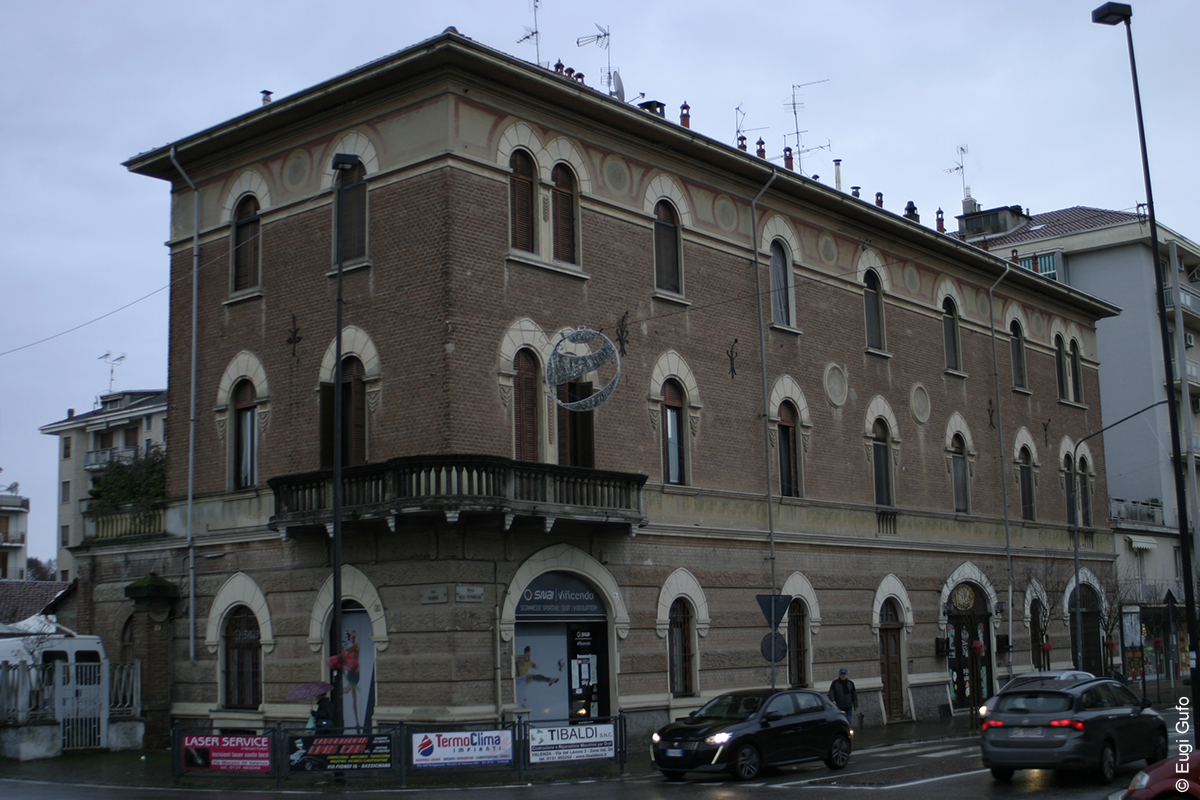
Historic architecture is often paired rather gracefully with modern additions — the latter not extraordinary, perhaps, but certainly less dreadful than one might have feared upon entering the city.
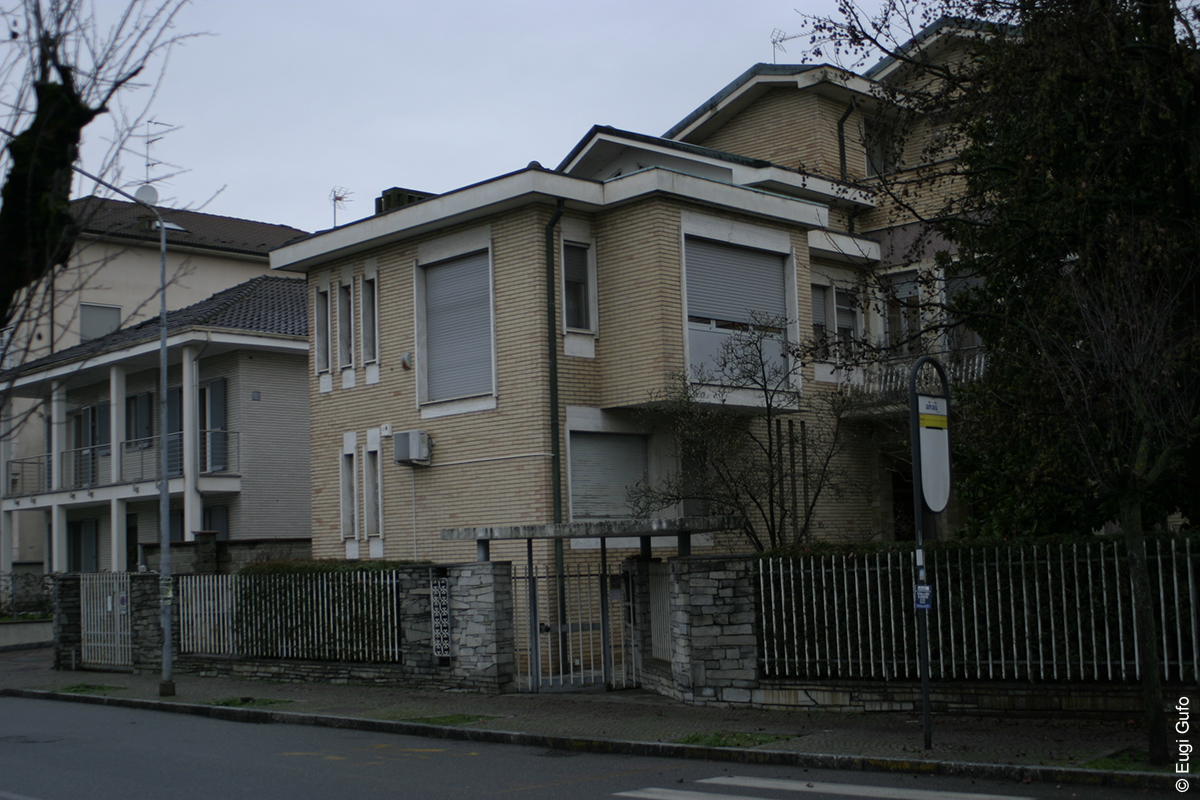
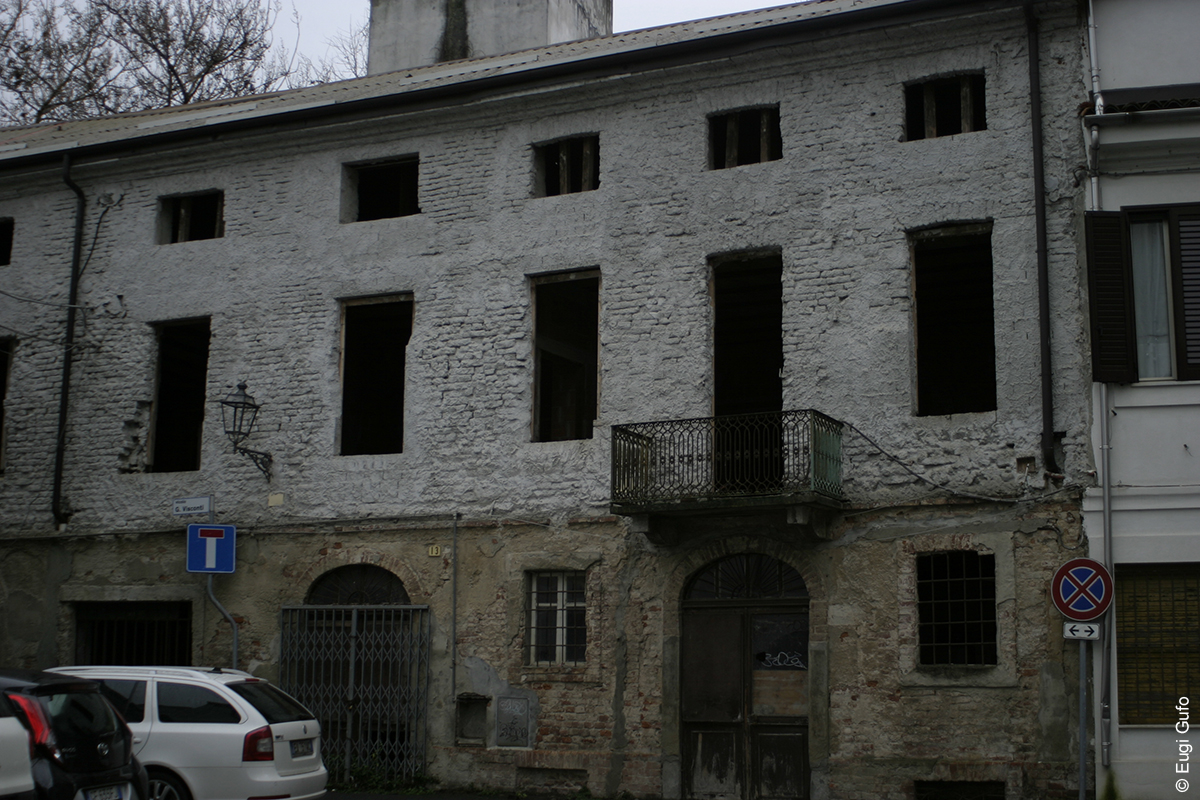
And yet I encountered several large, historically significant palazzi now in advanced stages of decay. No plaques indicate their names, construction dates, or architects — the sort of civic courtesy I have grown accustomed to in Milan and other larger cities. Despite their anonymity and their placement in a small provincial town, it saddened me considerably to see them in such a state.
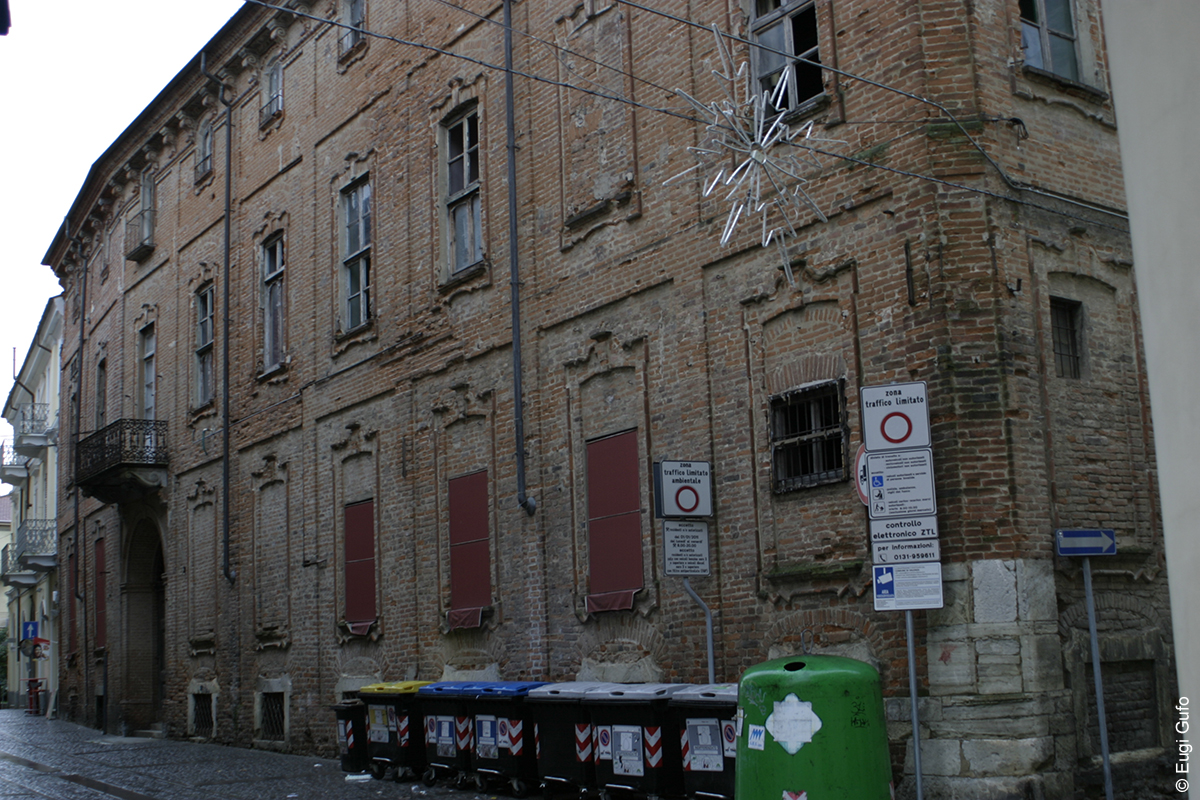
Among Valenza’s largest and oldest buildings, only a few remain physically intact.
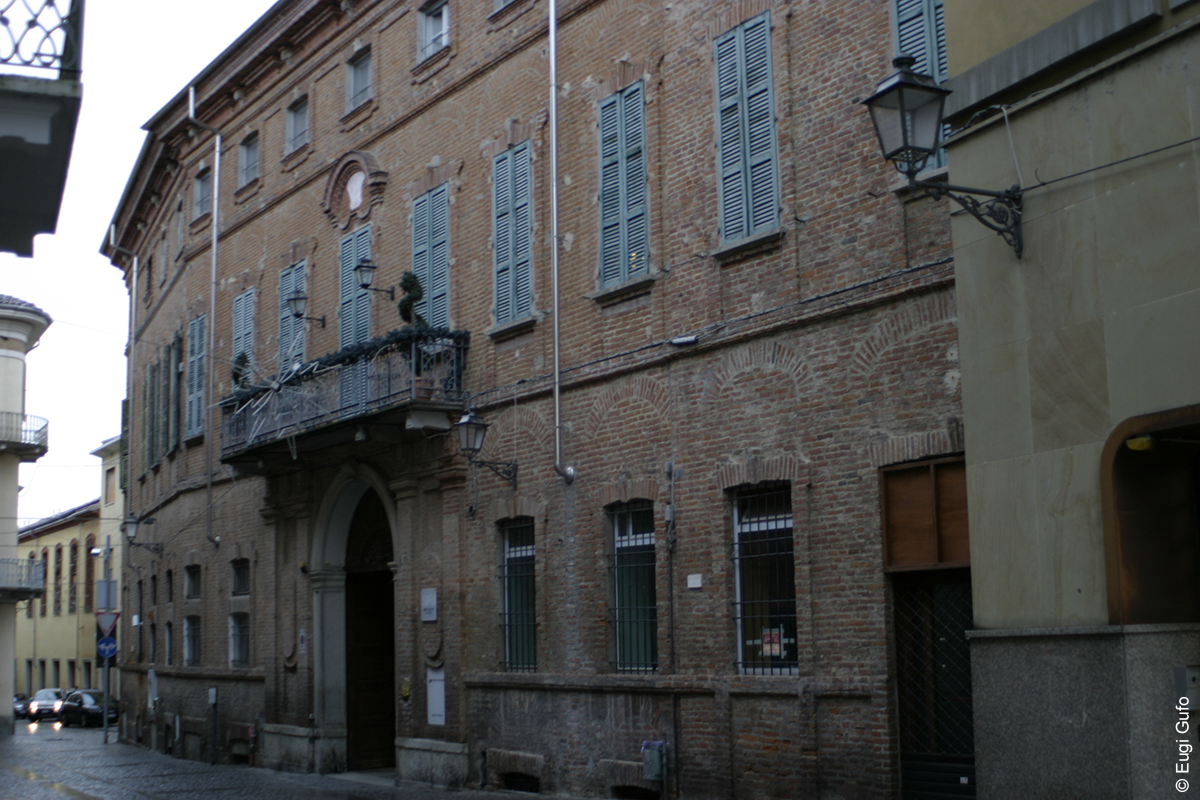
Some mid-sized historic buildings appear to have been abandoned halfway through renovation: roofs repaired, perhaps ceilings restored — and then, mysteriously, the scaffolding removed and the project forgotten. One can clearly distinguish the corrected portions from those untouched, as well as the absence of the usual yellow construction notices.
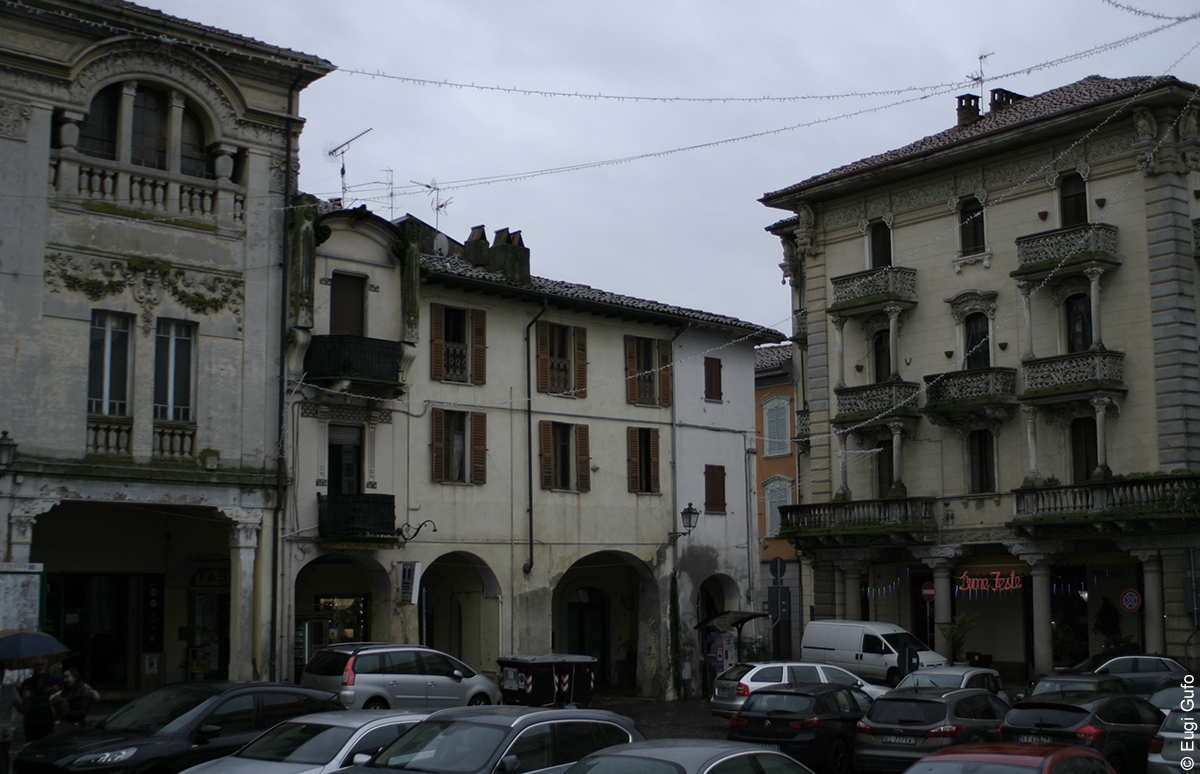
The best-maintained section of the historic centre is Piazza 31 Martiri — the square one might confidently call central. I realised I had grown unaccustomed to seeing parking spaces in the middle of such piazzas. Yet real life requires cars, and cars require somewhere to sleep. If the municipal administration cannot provide alternative solutions, we shall admire the architecture between bumpers.
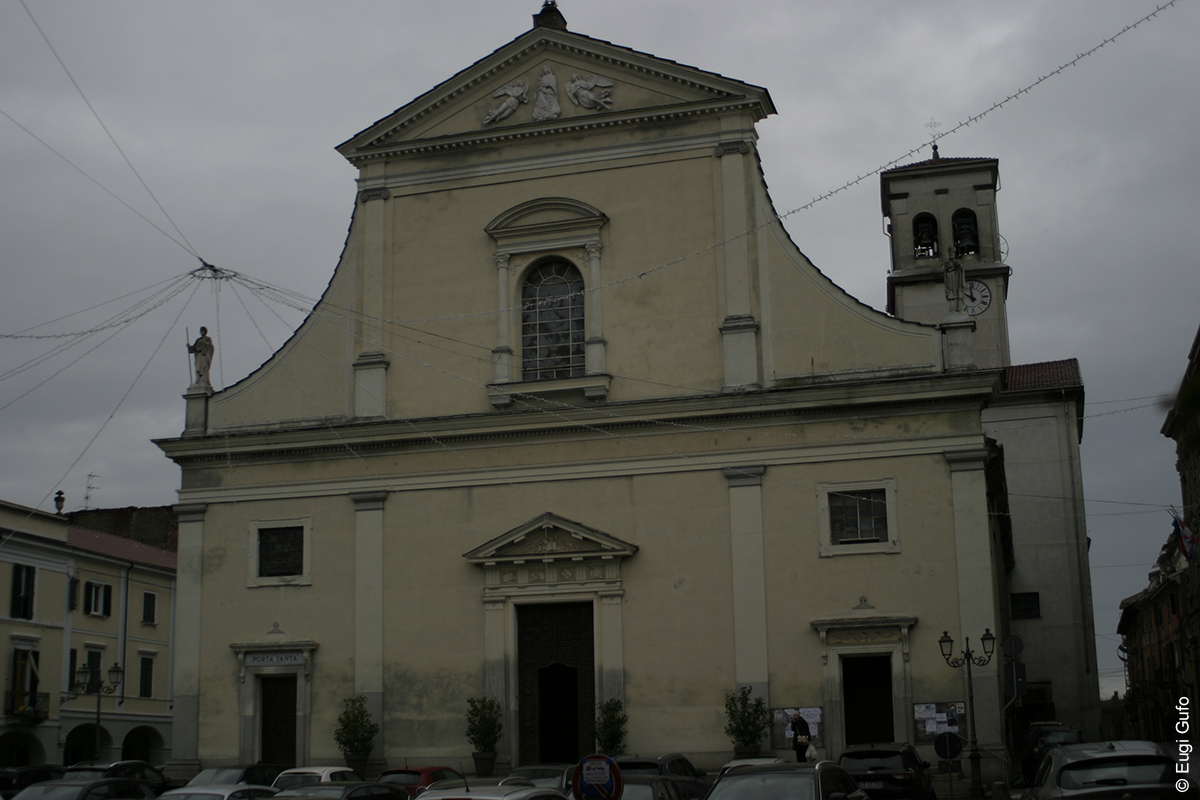
Overlooking the square stands the local cathedral, the 17th-century Church of Santa Maria Maggiore. Its Baroque façade is respectable but not particularly memorable.
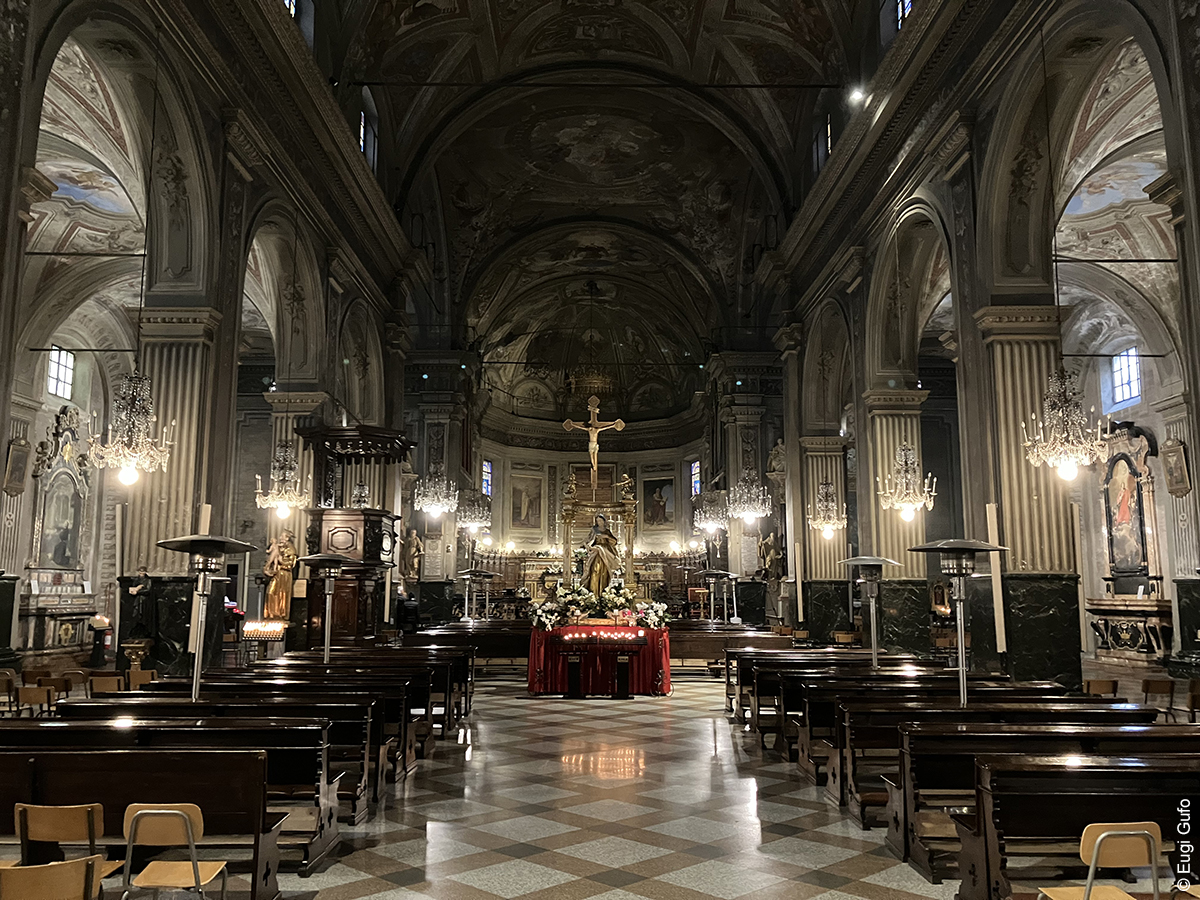
The interior, with frescoes from the second half of the 19th century and paintings from the 17th, is decidedly more rewarding.
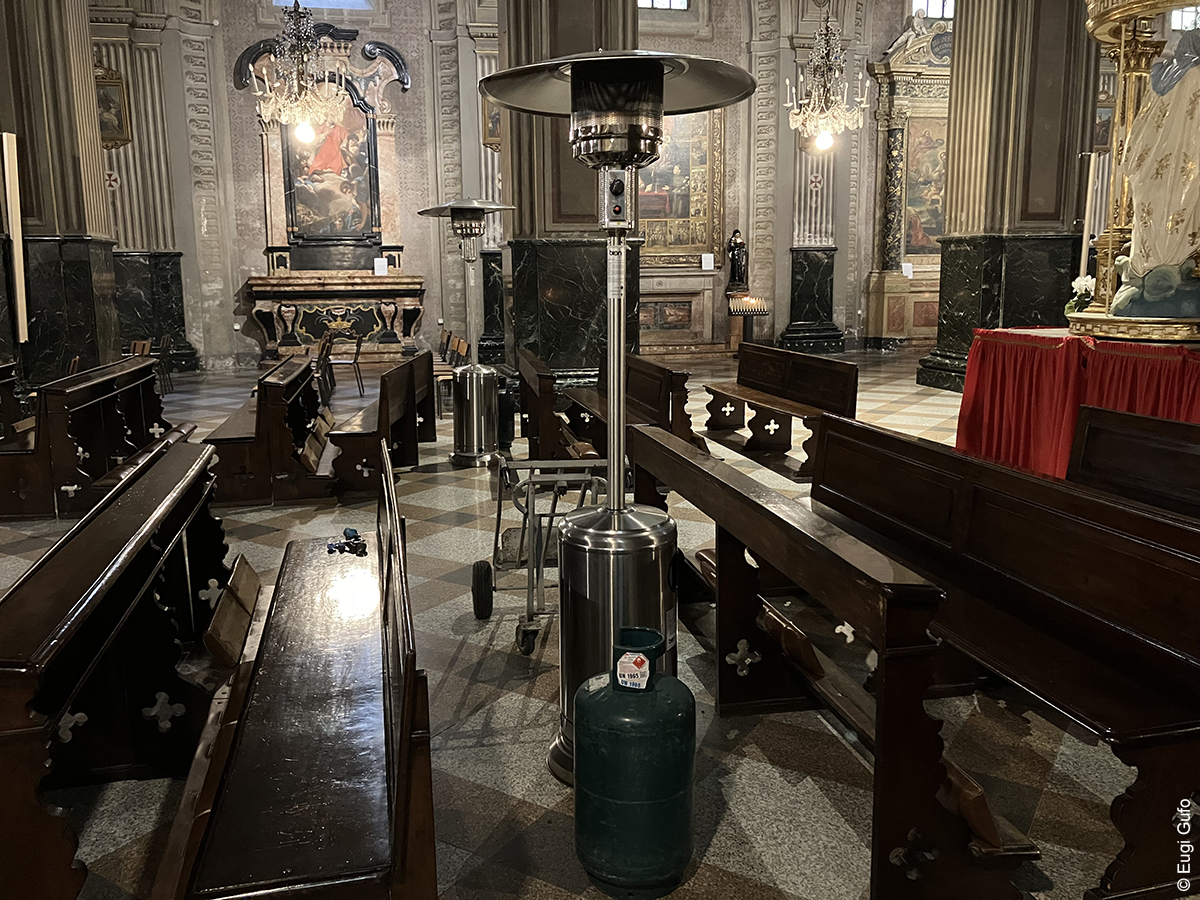
I have always appreciated the presence of pews in Catholic churches — an act of practical humanity on the Church’s part. In the cathedral of Valenza, however, they have ascended to a higher level: gas heaters. Perhaps this is common elsewhere? My winter tourism statistics are insufficient to confirm.
Naturally, at the end of December one expects a nativity scene. It was not bad:
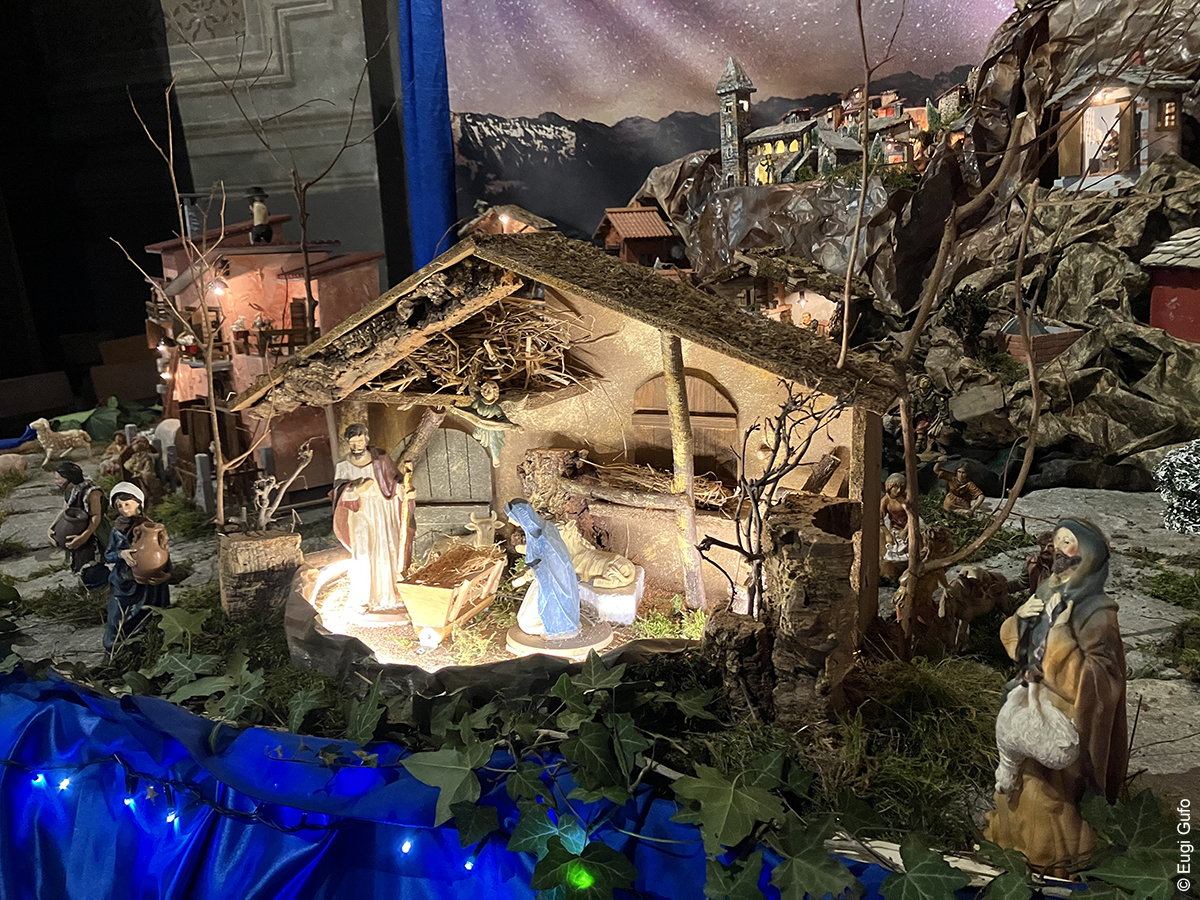
Moreover, it was animated — though perhaps «animated» risks theological controversy. As an apatheist, I should remain indifferent, but for safety I shall rephrase: it was motorised.
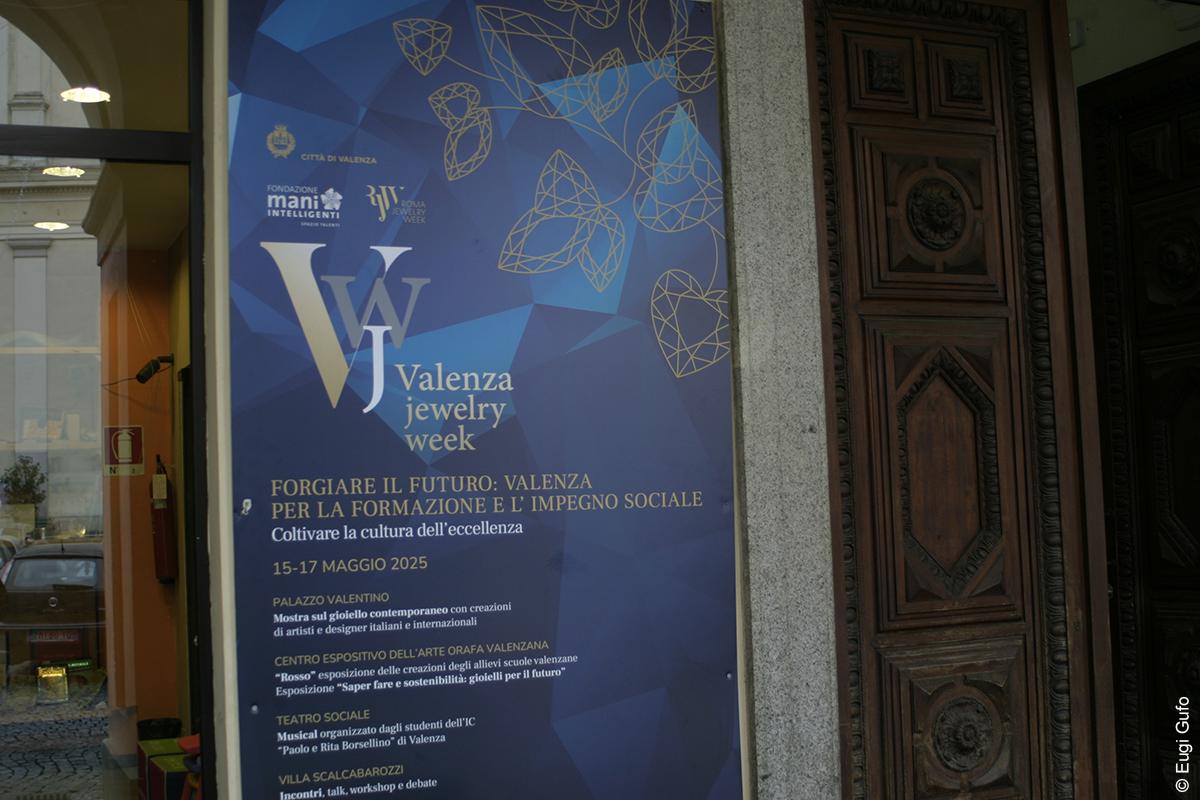
Emerging from the cathedral in search of further wonders, one finds opposite it the true temple of knowledge: the public library. Near its entrance, a sign advertising «Valenza Jewelry Week» in mid-May remains proudly displayed — despite my visit taking place on 24 December. This speaks volumes about the city’s event calendar.
On the same square, a few metres away, one encounters the entrance to the mysterious company «Ora & Oro S.r.l.» Its door is adorned not with gold but with mould and non-gilded cobwebs — a slightly odd aesthetic choice for a city styled as the jewellery capital of Europe.
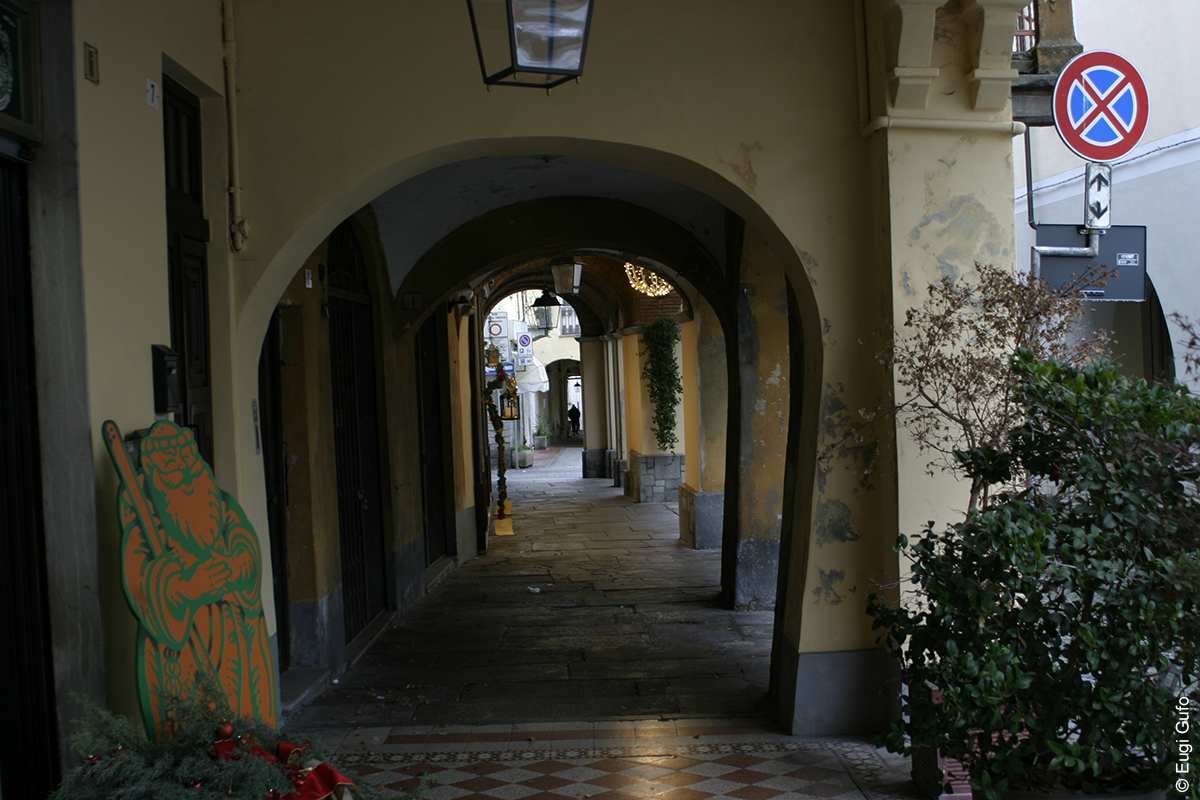
It is historic architecture that rescues Valenza’s image for the visitor. On another side of the square, elegant arcades boast paving that other cities might envy.
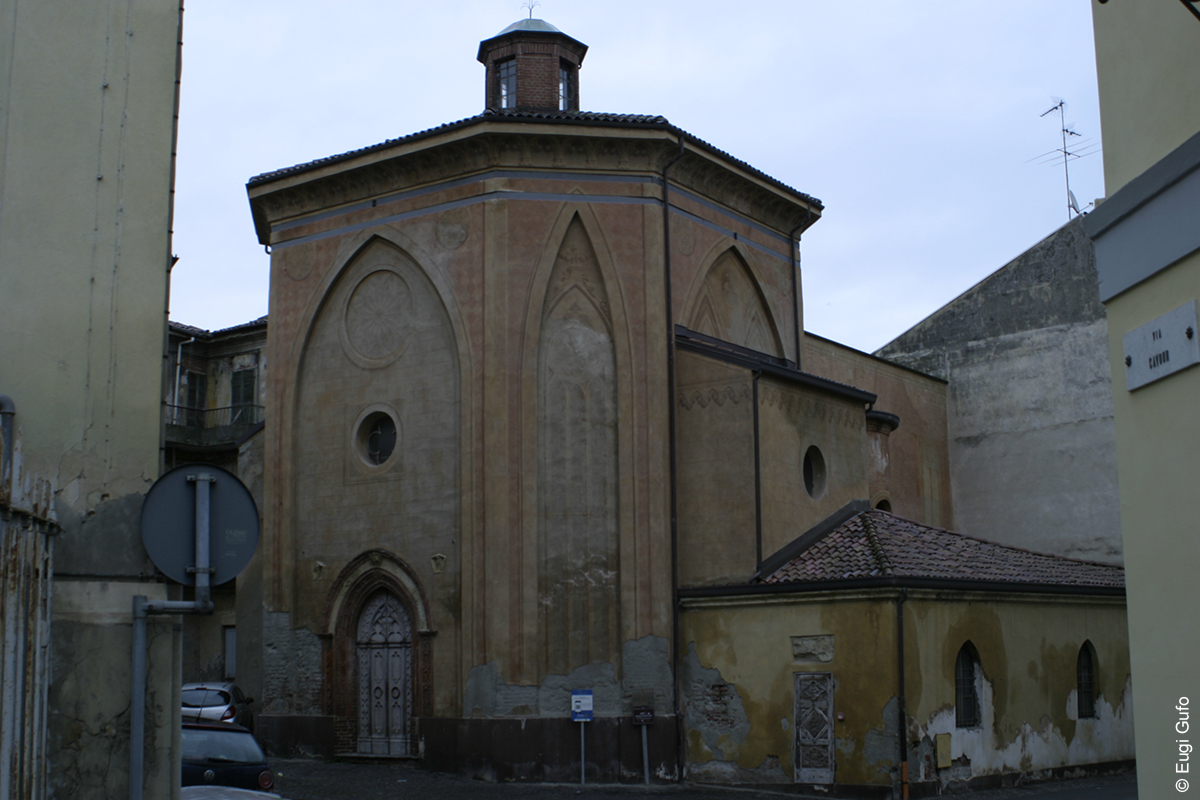
Let us wander further — for instance, to the Oratory of San Bartolomeo, built in 1584, considered by the municipal website the oldest surviving building of medieval Valenza. Connected originally to a Benedictine convent, converted into a warehouse during the Napoleonic era, reconsecrated in 1835, and last restored in the early 21st century.
I cannot report on the interior (closed), but the exterior is not in particularly triumphant condition.
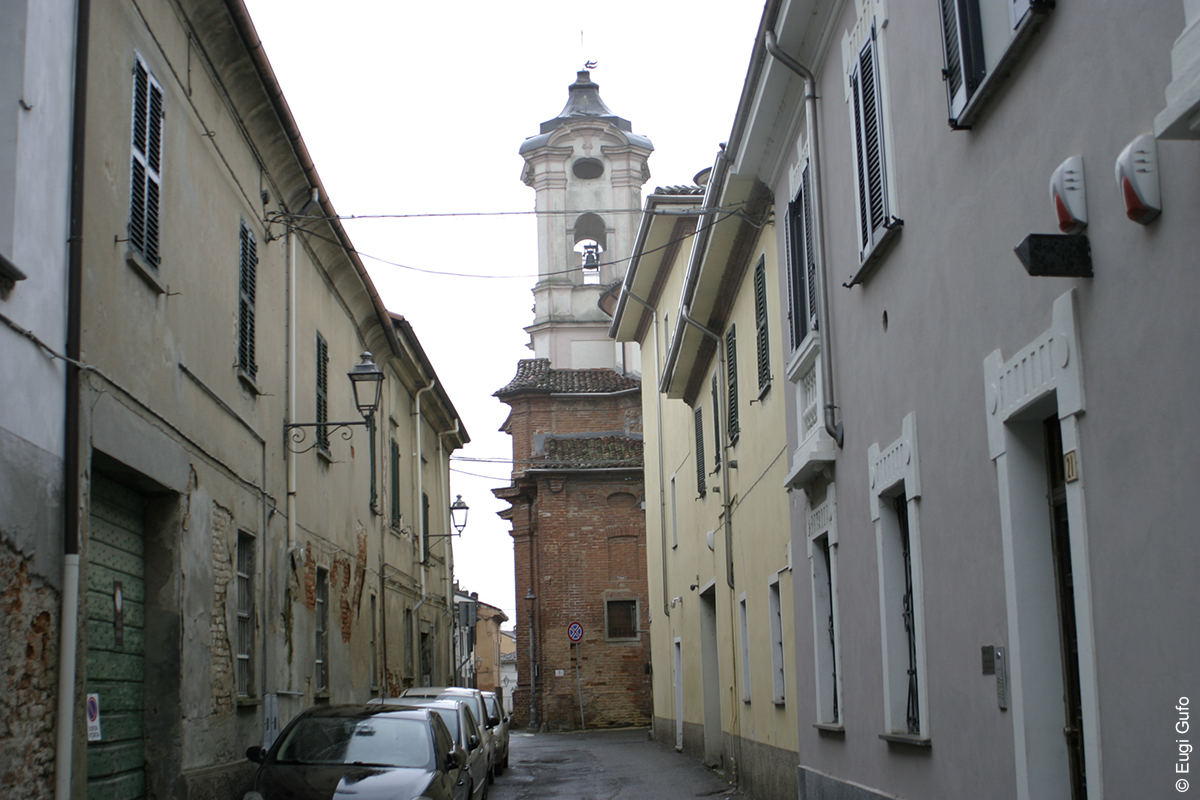
Valenza has many churches — as do most Italian cities — which statistically increases the probability of encountering something interesting. Narrow streets, however, often make it difficult to photograph façades properly.
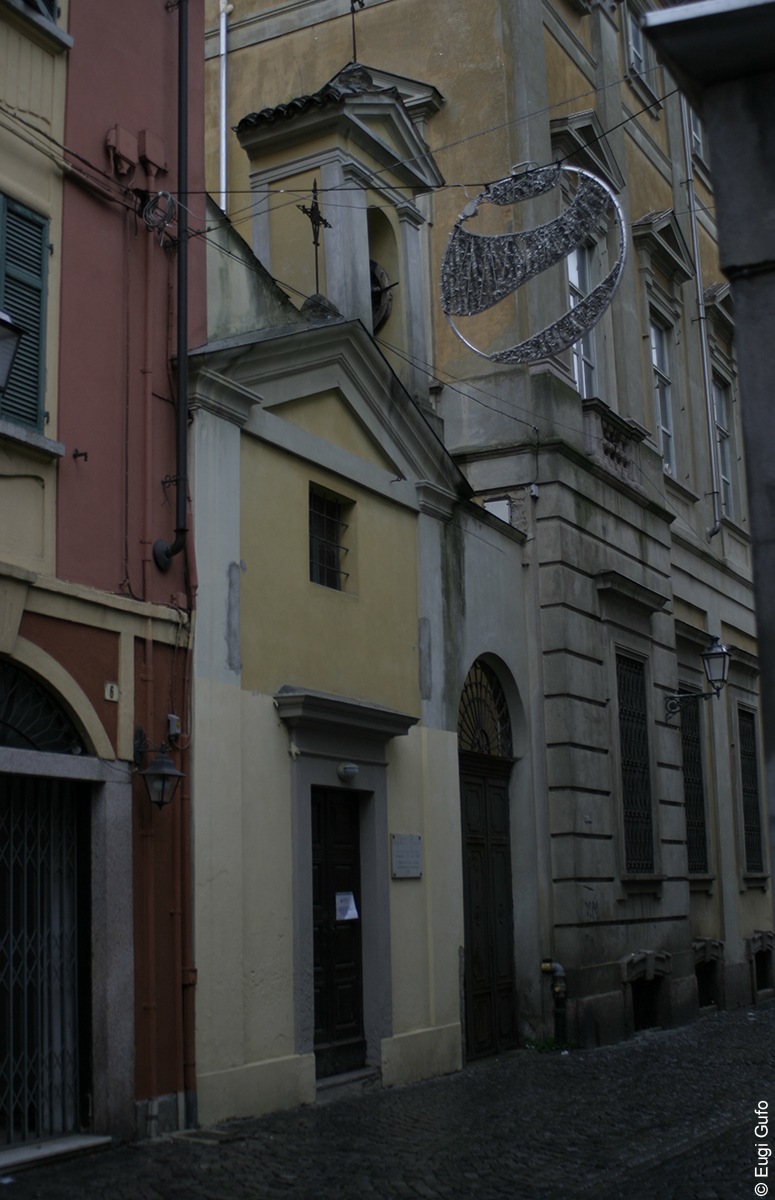
This applies to the Church of the Santissima Annunziata, rebuilt in 1699, with its fine Piedmontese Baroque façade.
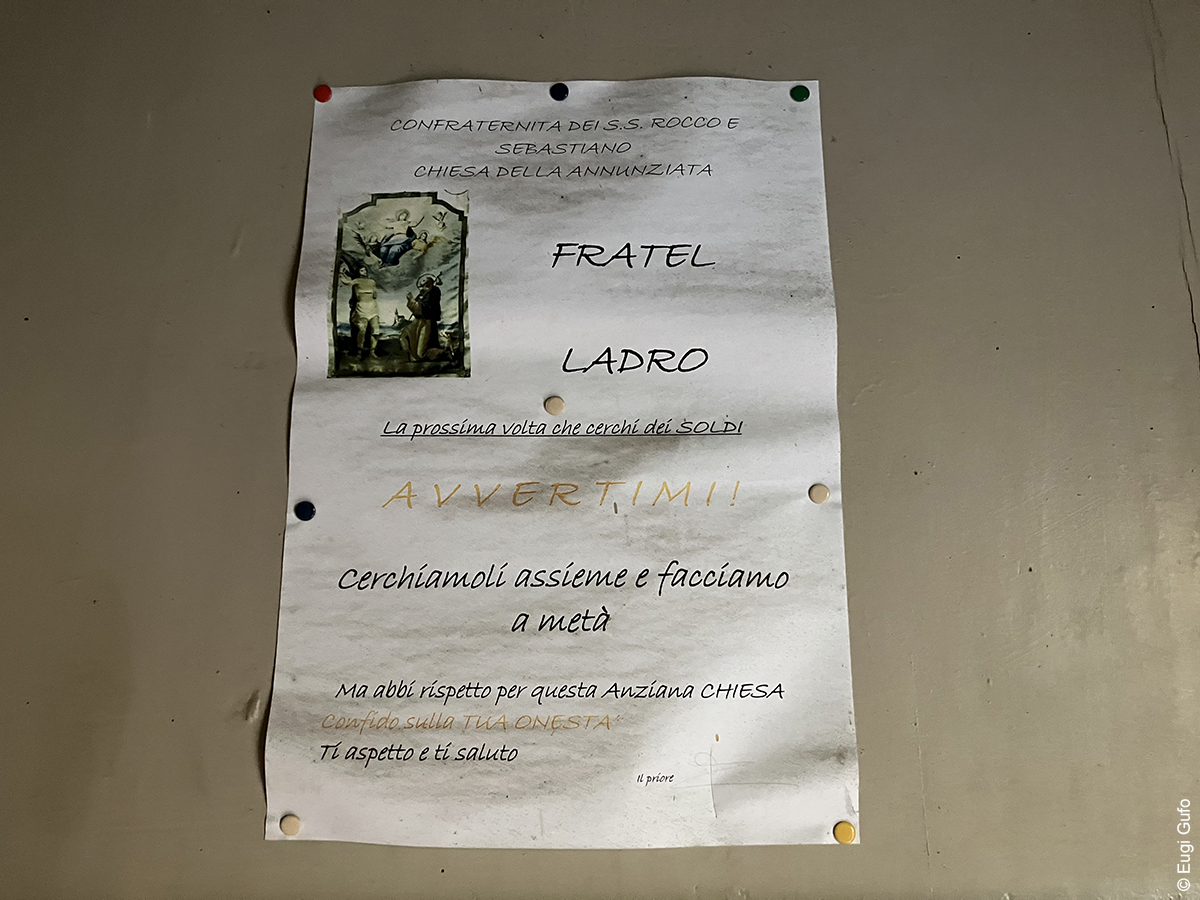
Just inside the entrance hangs an honest and rather charming notice from the prior. I was tempted to add my own signature in solidarity.
The interior is small, Greek-cross in plan, simple yet harmonious.
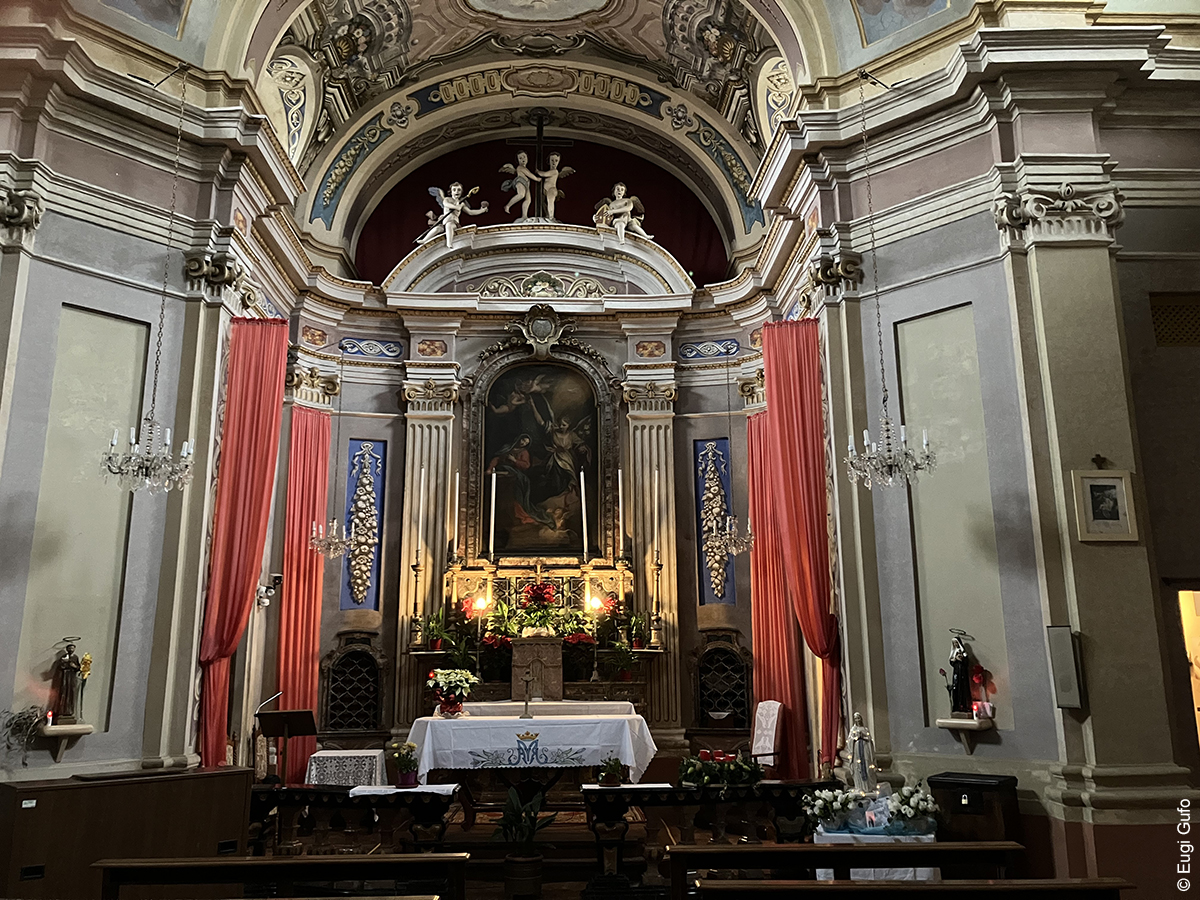
Heating here is executed in a far more professional — and permanent — manner than in the cathedral.
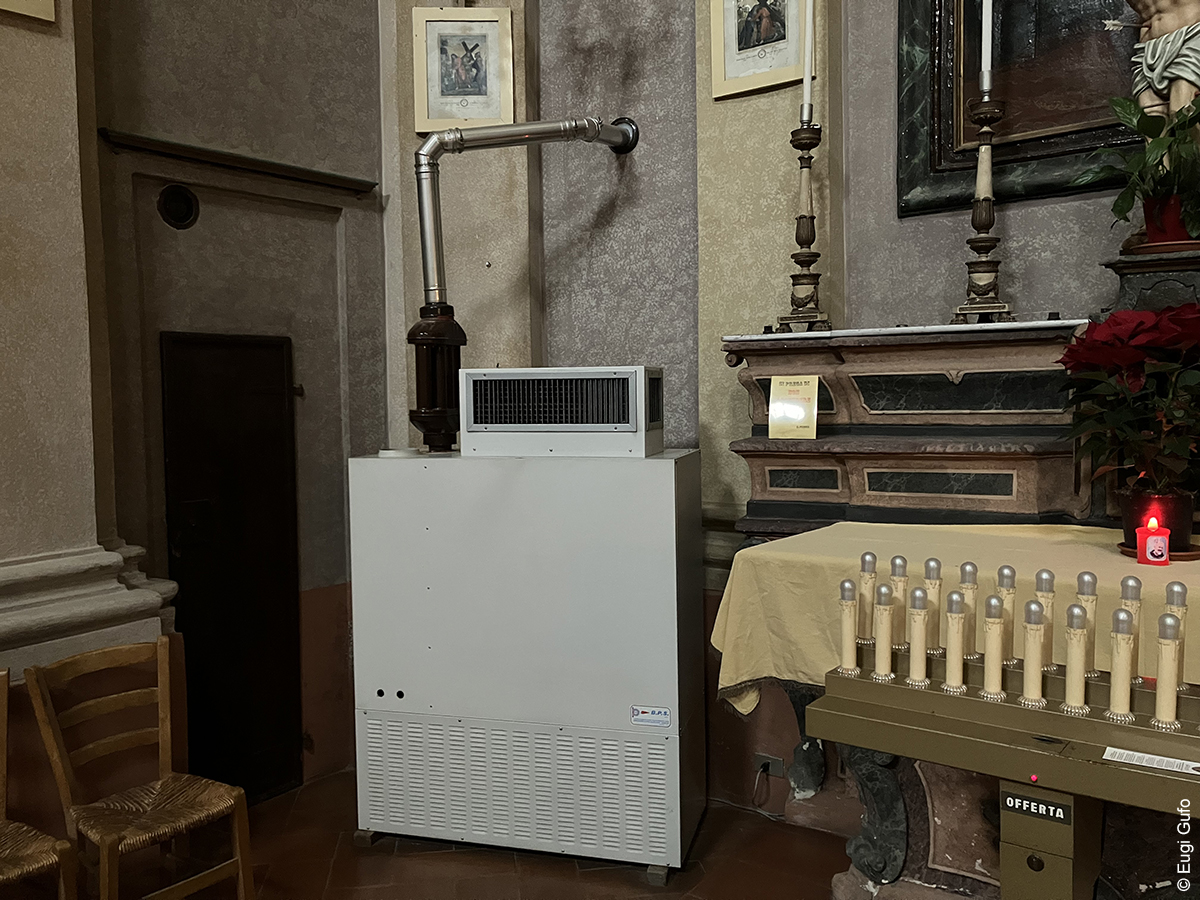
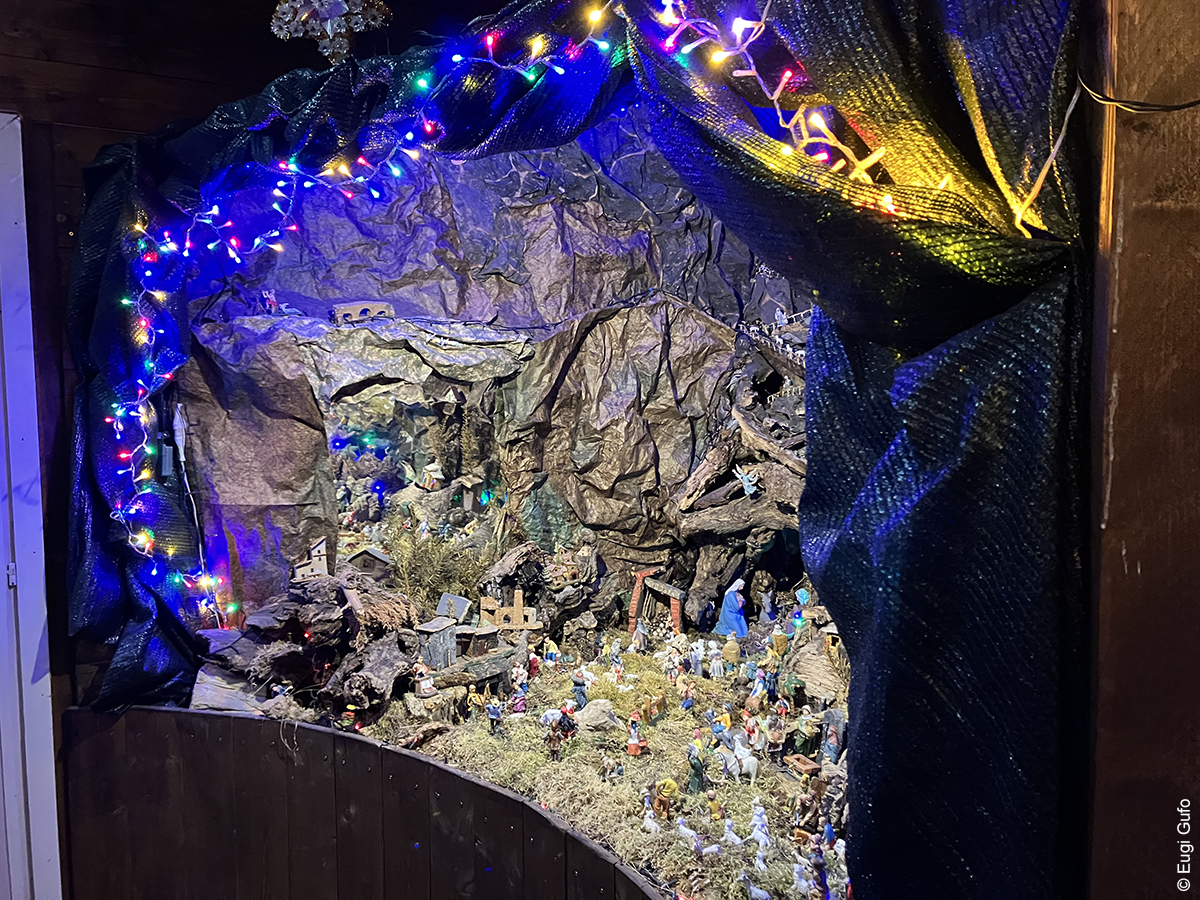
The nativity scene is modest, tucked into a corner, composed of very small figurines — but charming nonetheless.
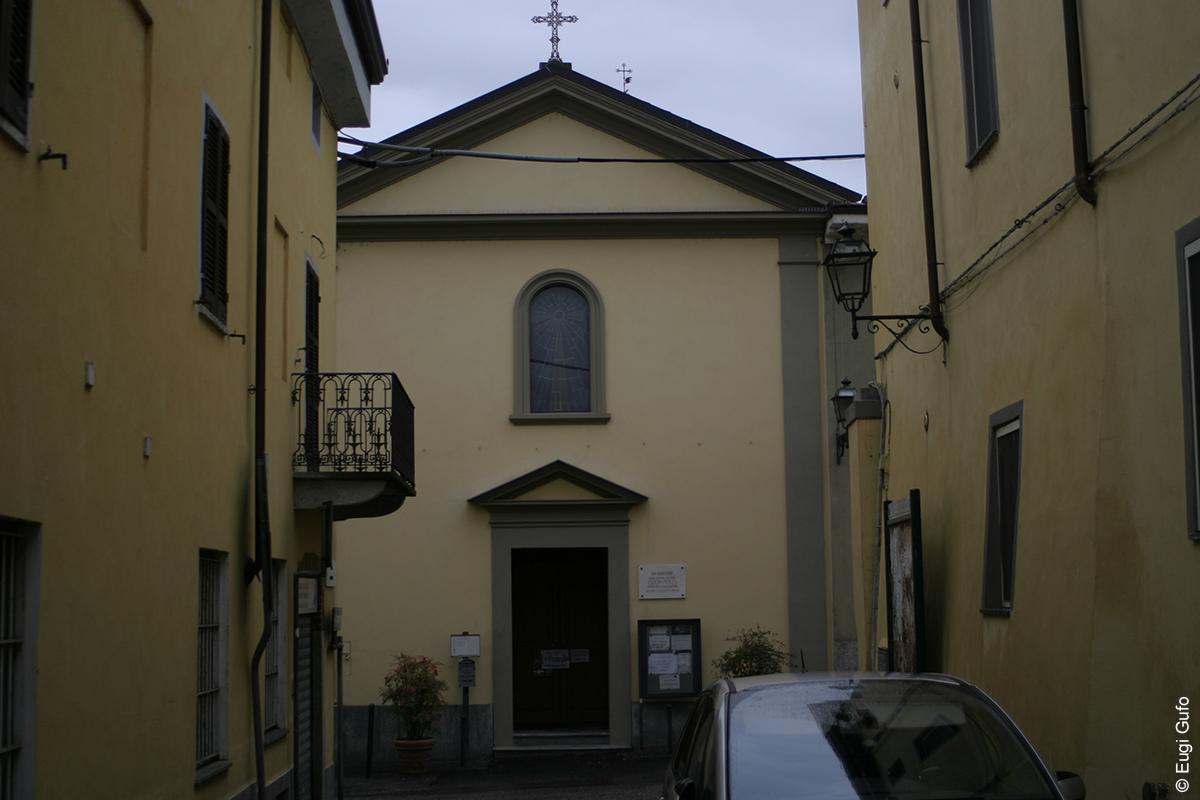
The final church I managed to enter was dedicated to San Bernardino. For a 16th-century church, the façade is breathtakingly dull.
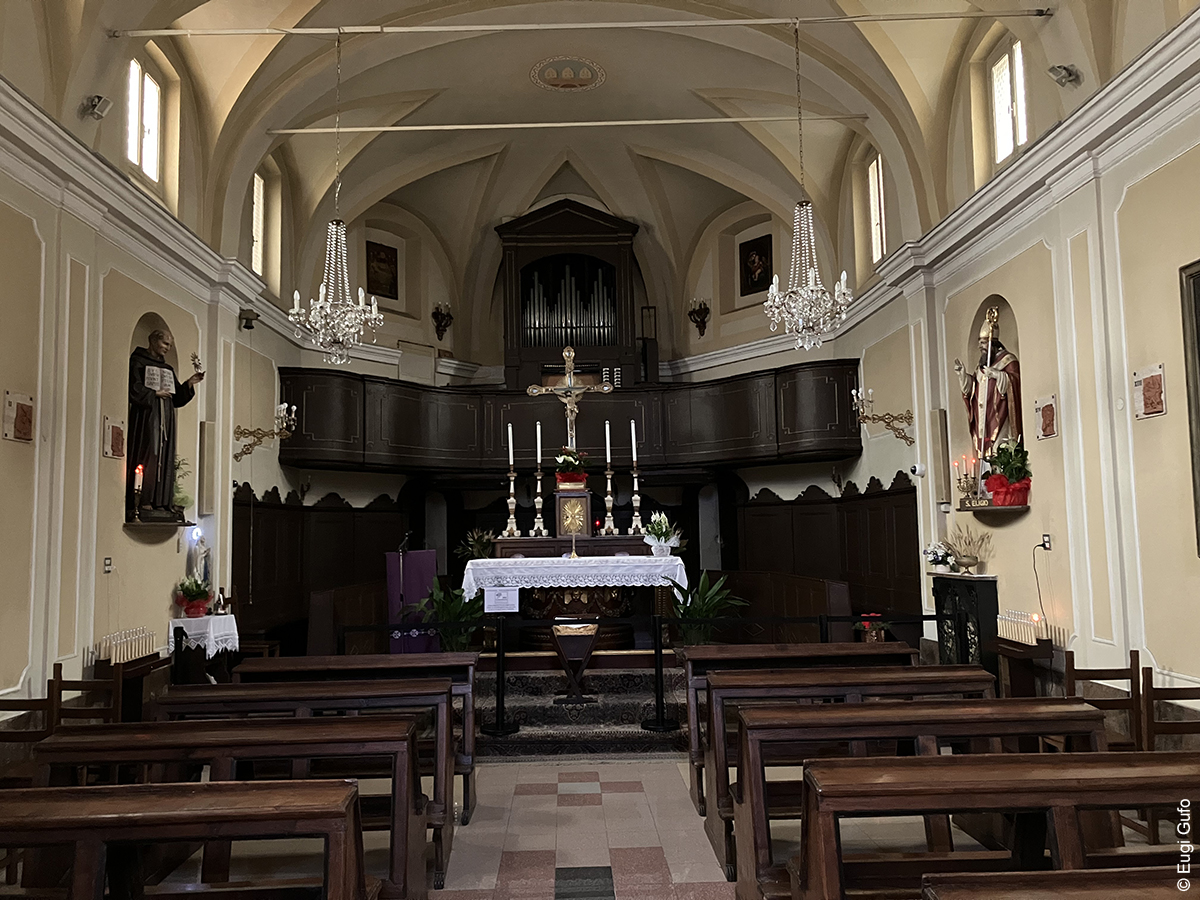
The interior corresponds. In my amateur opinion, minimalism flatters other architectural styles more convincingly.
Let us move on. The local Teatro Sociale is in good condition and situated within an attractive urban context. It is evidently in regular use — undeniably positive. The artistic quality of the performances remains, of course, an open question.
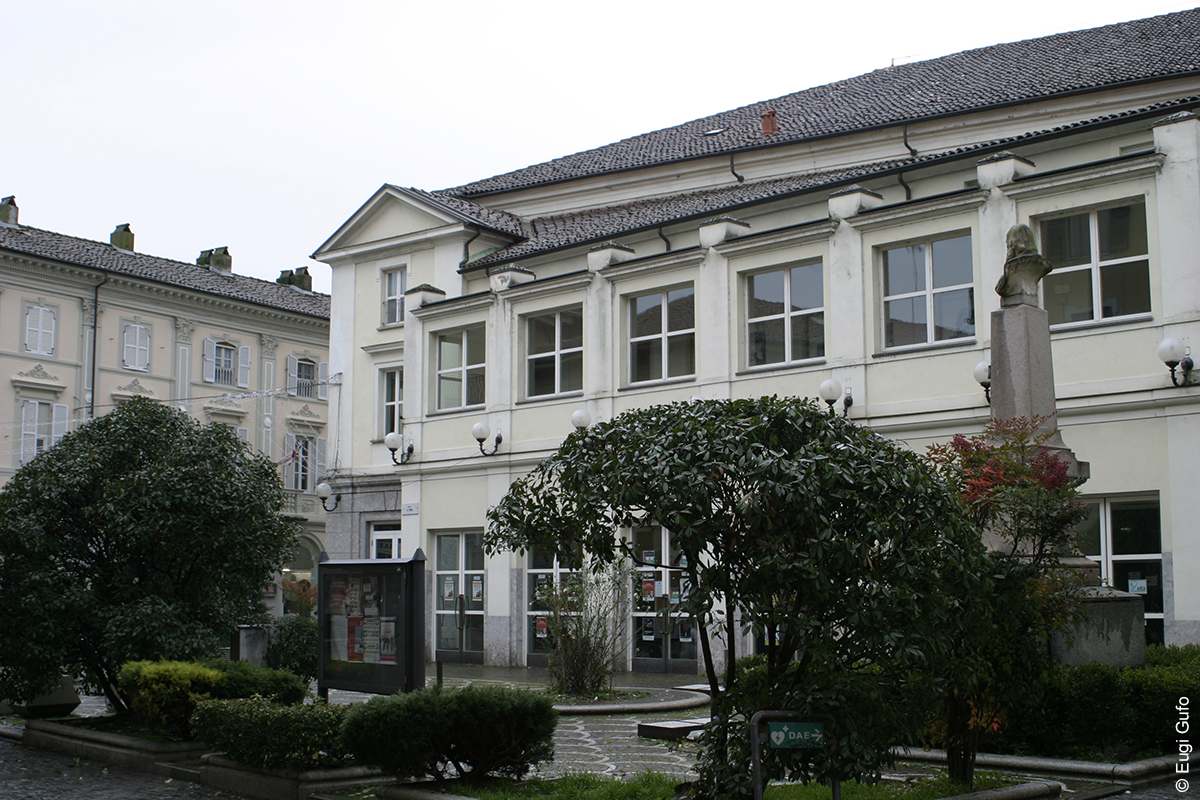
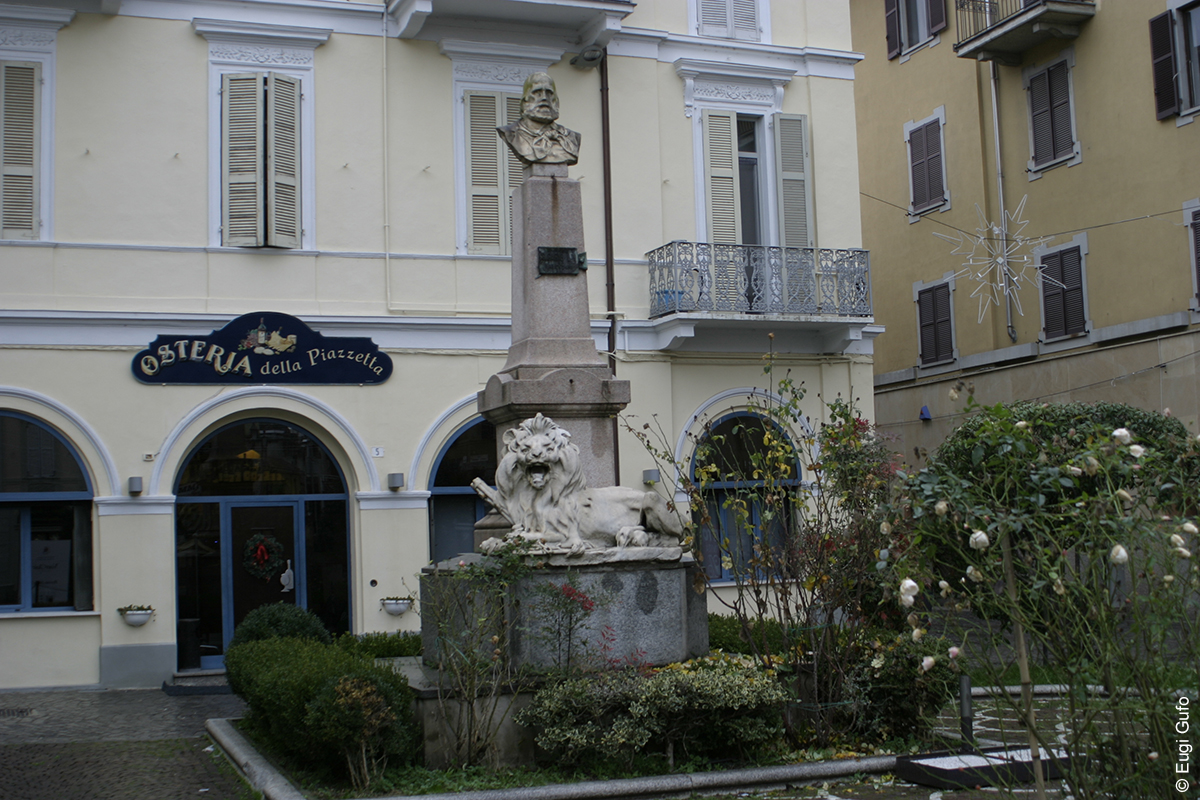
The bust in front of the theatre depicts Giuseppe Garibaldi — neither original nor surprising.
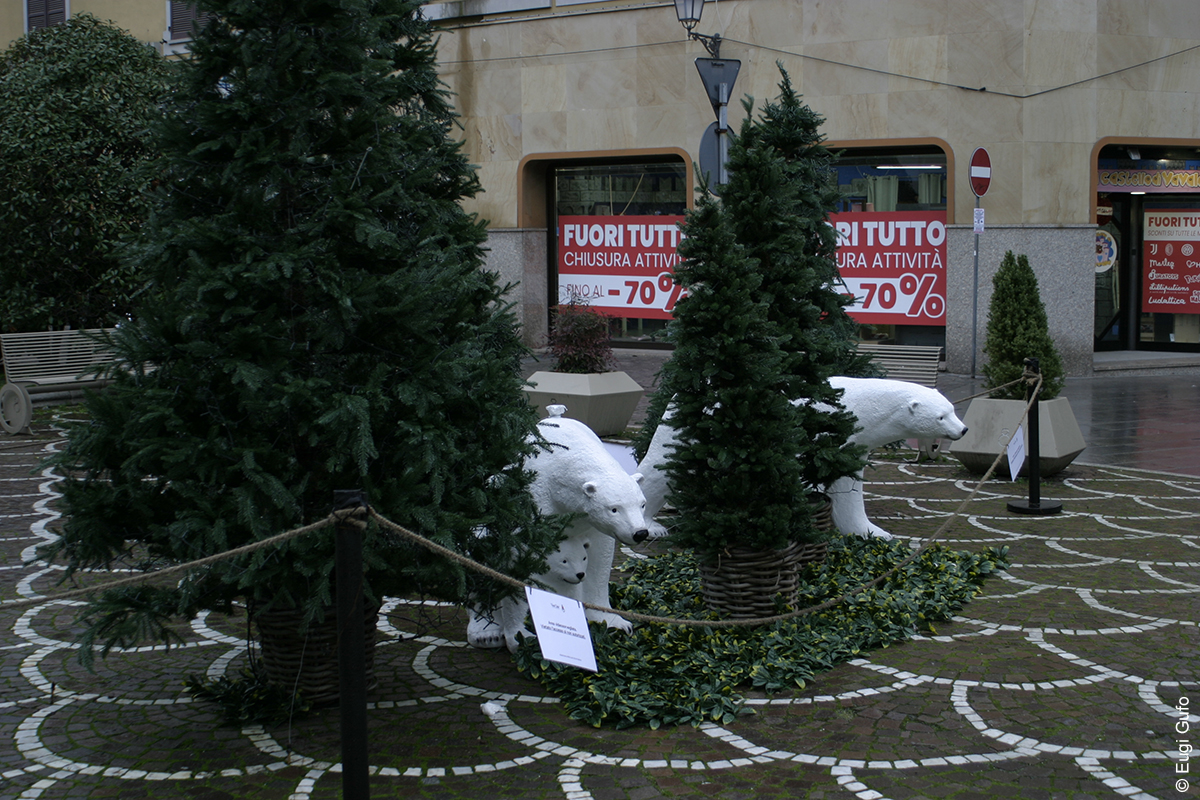
Far more intriguing are the Christmas trees on the same square, accompanied not by Santa Claus or reindeer but by a family of polar bears. Refreshingly unconventional.
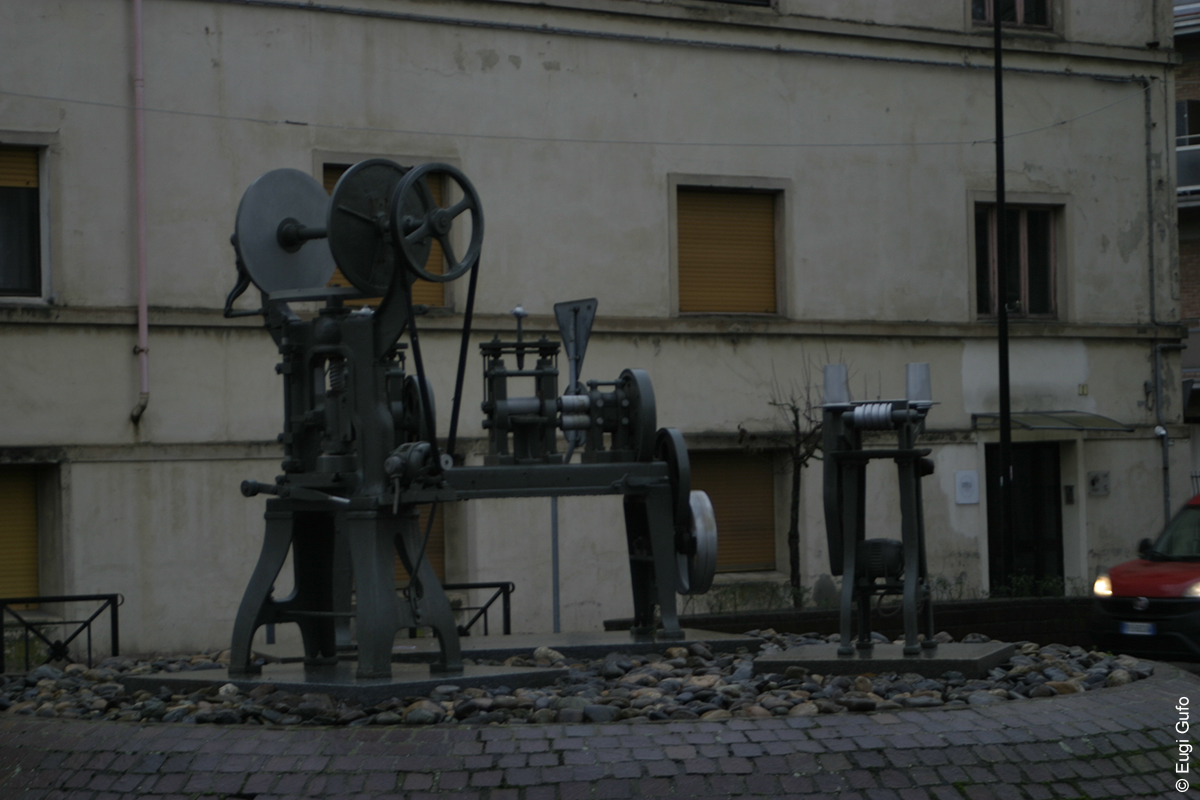
Among permanent public installations, one finds a monument consisting of three industrial machines whose precise function eludes me. Presumably linked to precious metal or stone processing — though two resemble textile machinery suspiciously closely.
Continuing through the centre, I find several pleasant streets typical of a small provincial town.
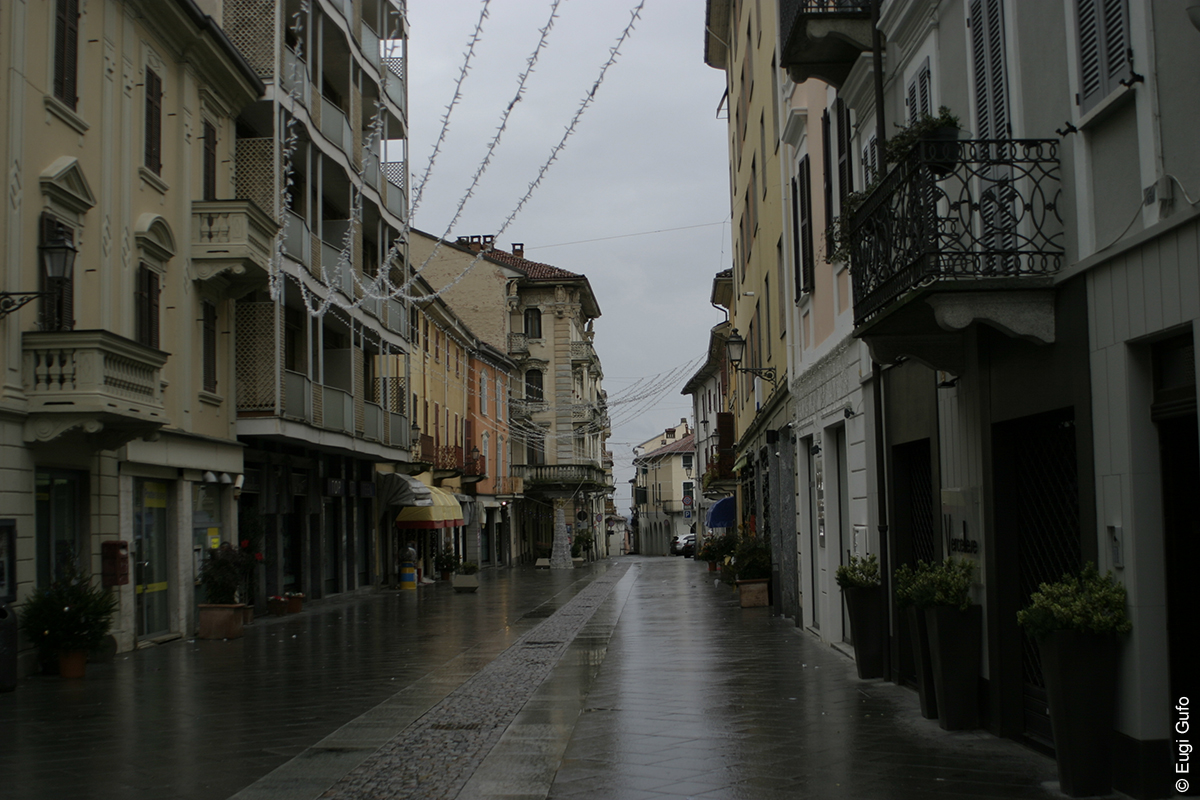
Often, even in the very centre, one encounters well-maintained private houses.
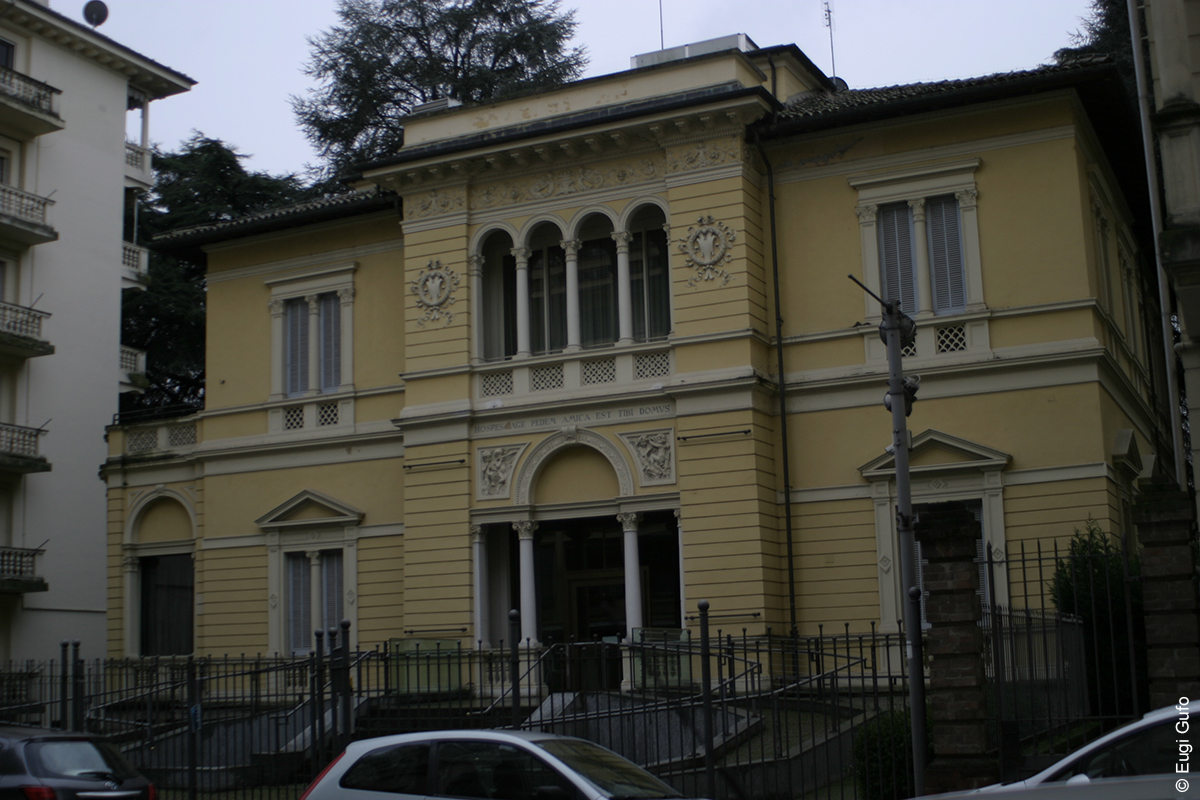
Equally often, one encounters peculiar and somewhat neglected structures that nevertheless possess potential — and which, in my humble view, deserve rescue.
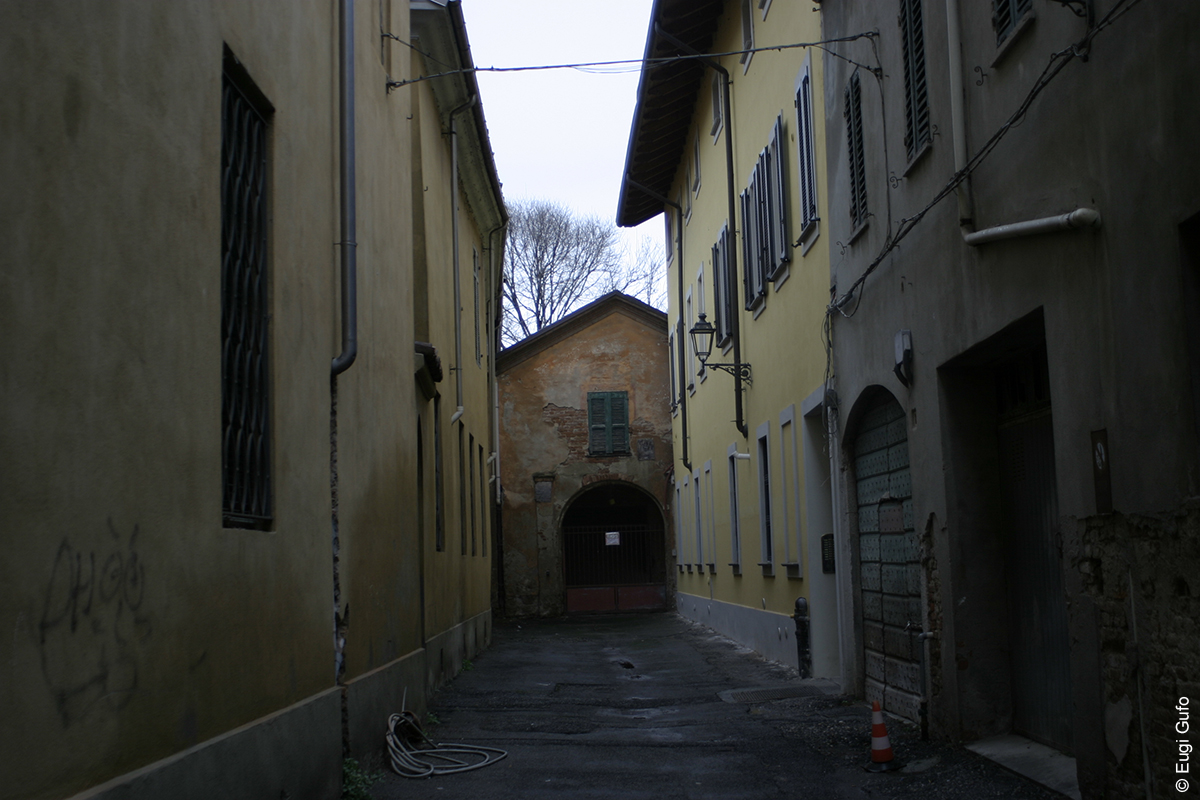
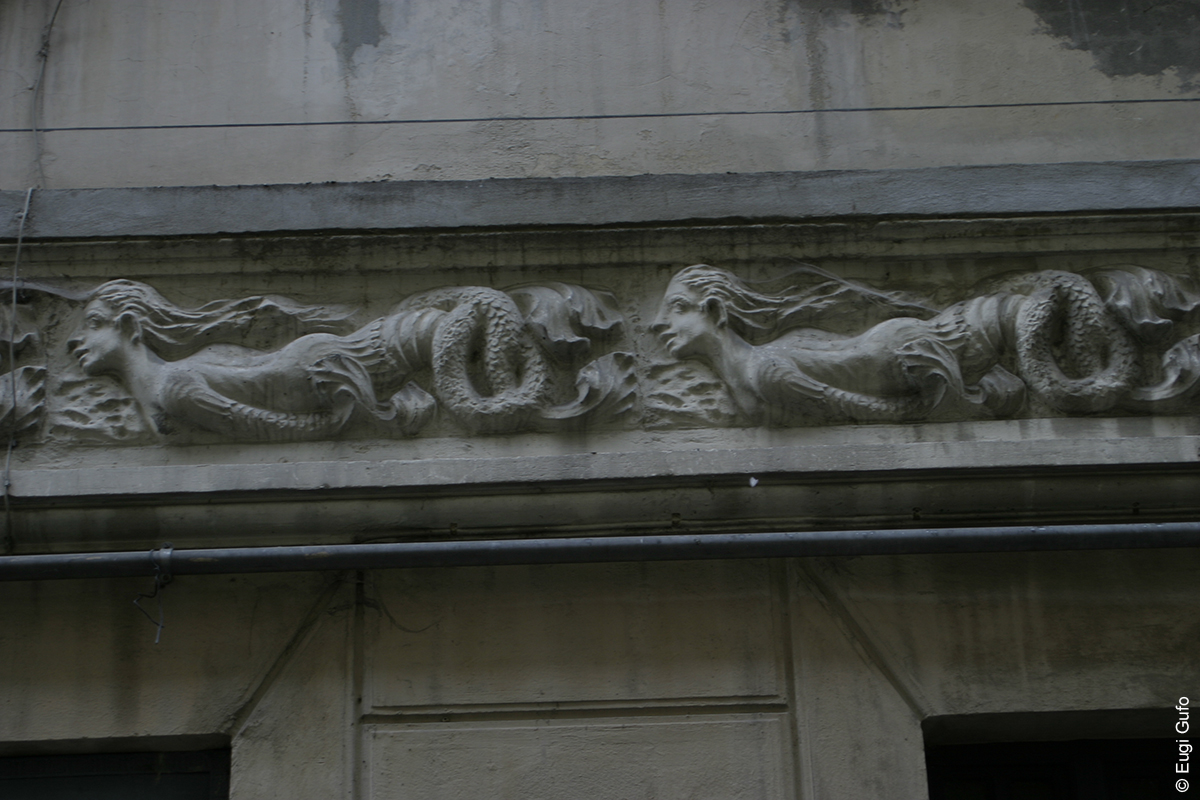
It pays to observe small details.
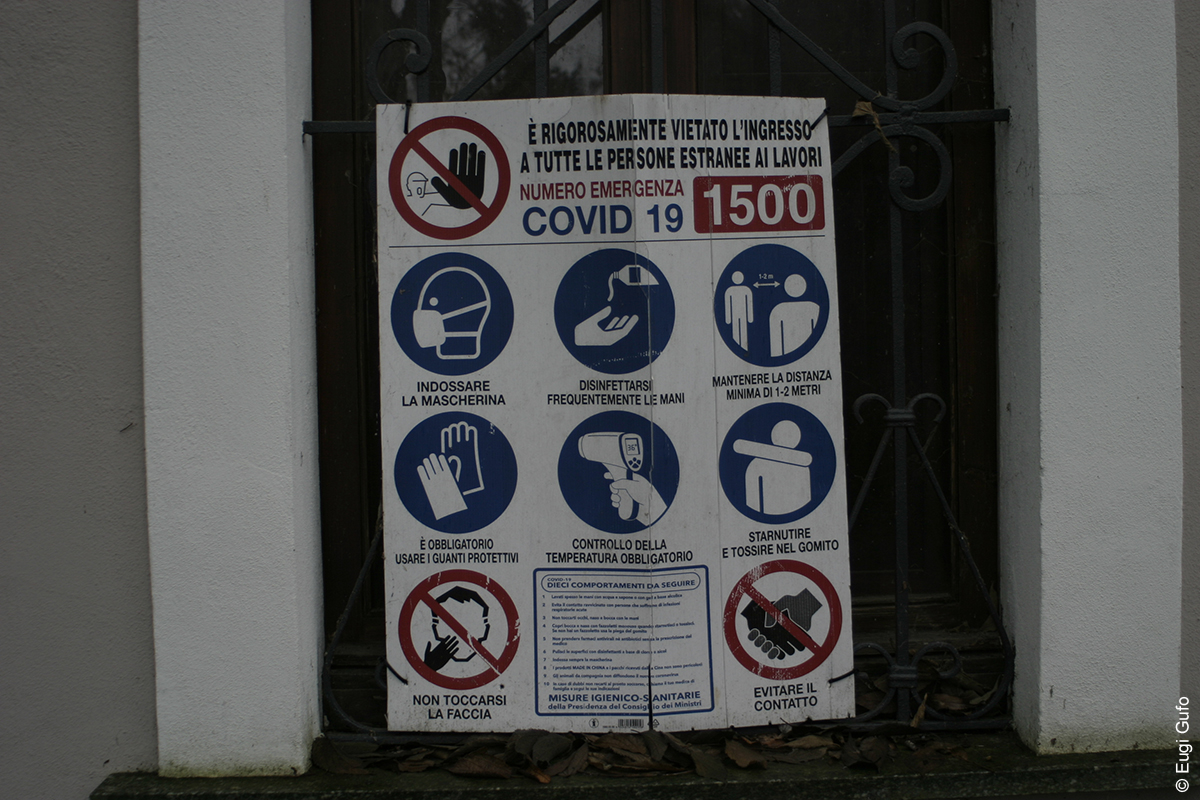
Some details are modern rather than architectural. For example, what appears from afar to be a routine safety notice at a construction site turns out to be a historical anti-Covid instruction panel. In just four years it has become an echo of once-immense anxieties now largely forgotten. I felt a fleeting nostalgia.
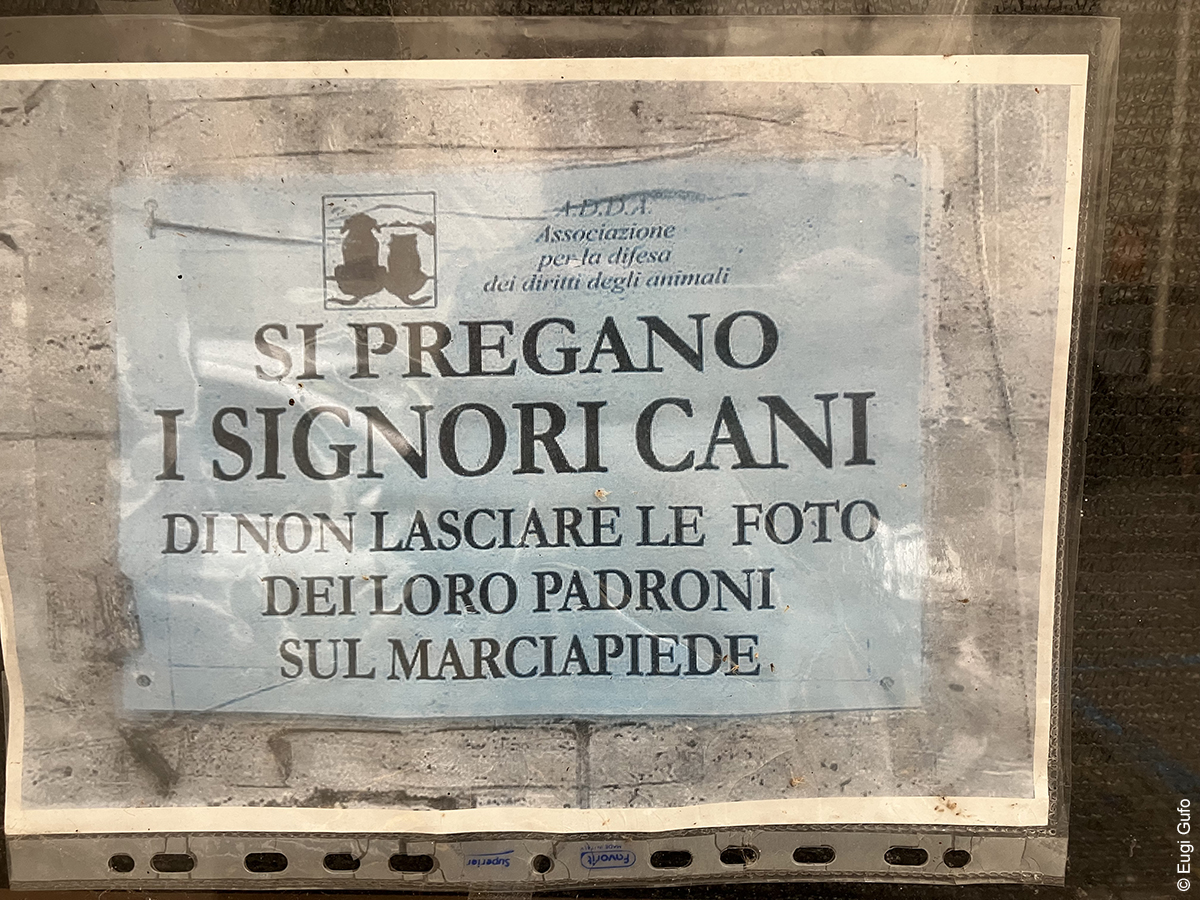
A sign that remains regrettably current hangs outside the local branch of A.D.D.A. — the Associazione per la Difesa dei Diritti degli Animali, headquartered in Latina. I suggest we ignore copyright and disseminate its message globally.
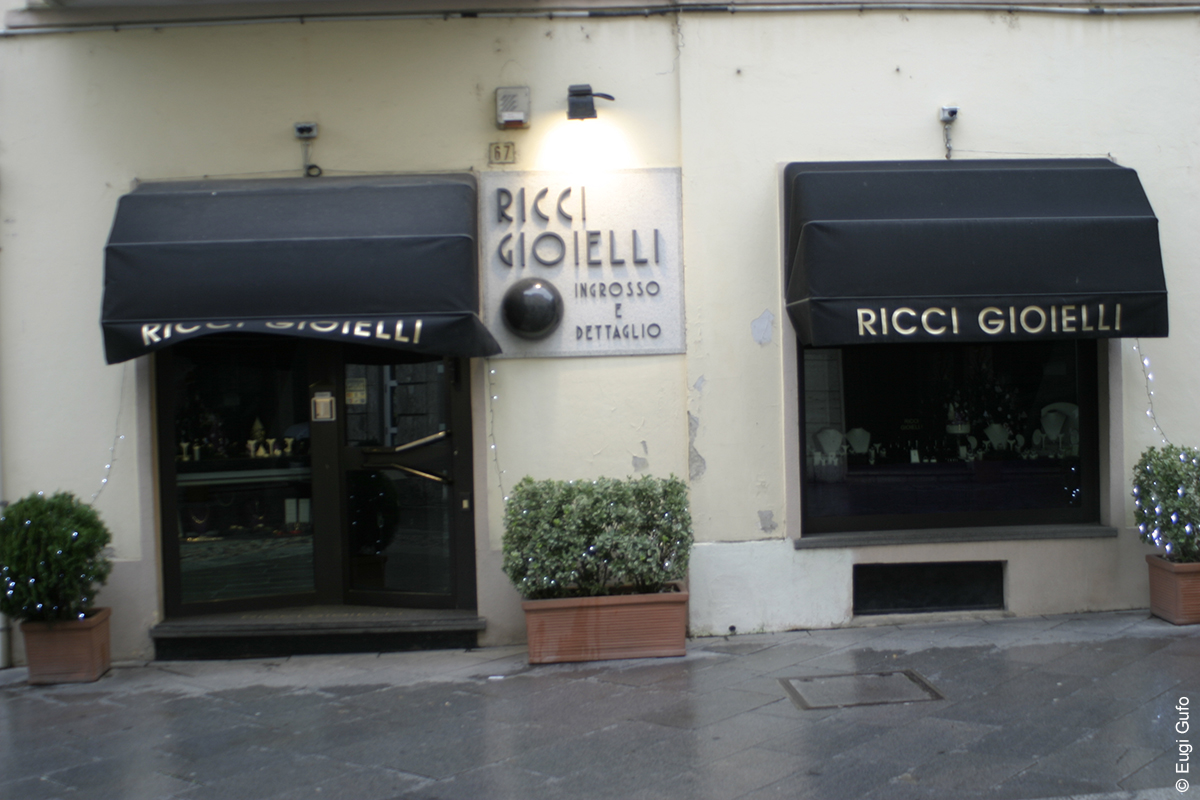
We have seen nearly everything in Valenza — yet where are the jewels? Surprisingly few. Even jewellery shops seem less numerous than in other Italian cities. This puzzled me greatly.
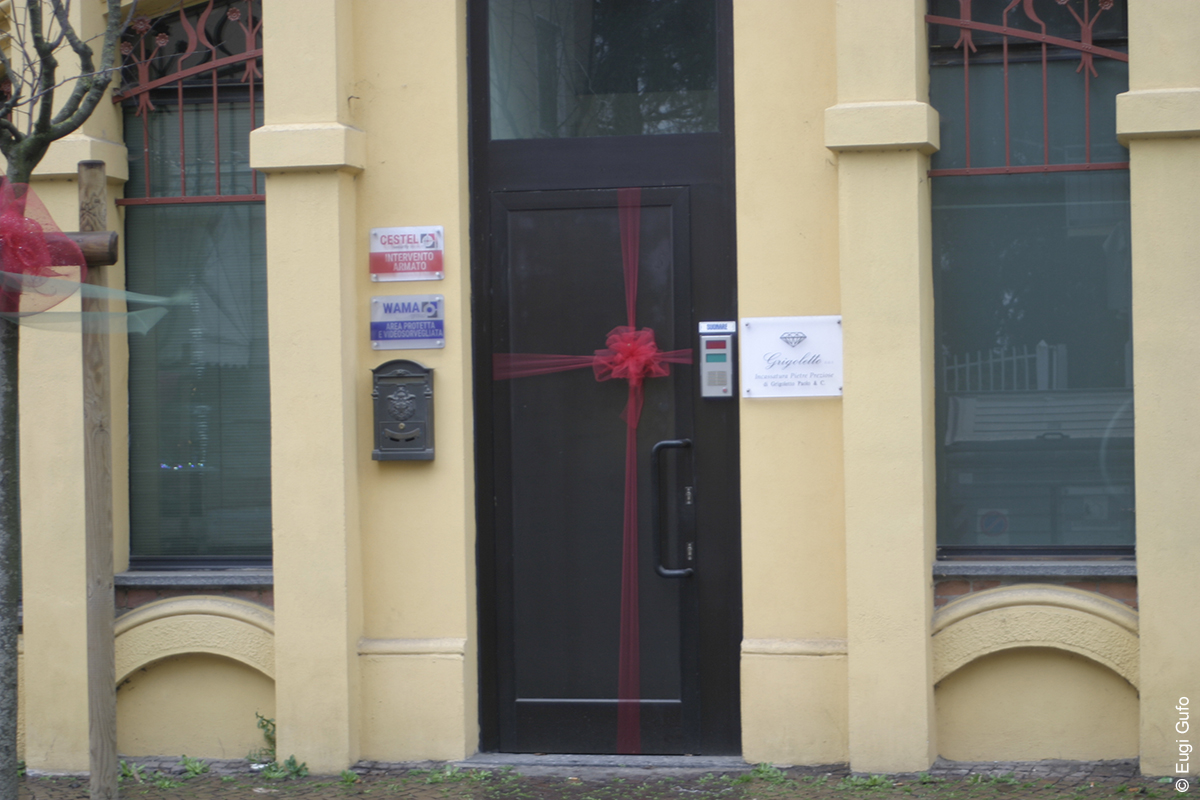
Still, I found at least one unmistakable sign of extravagant prosperity: certain shop doors are decorated like enormous Christmas presents. The ability to gift someone an entire shop, according to my logic, is a reliable indicator of wealth.
At this point, I declare the exploration complete. We return to the station: it is cold, raining, and the wind is strengthening.
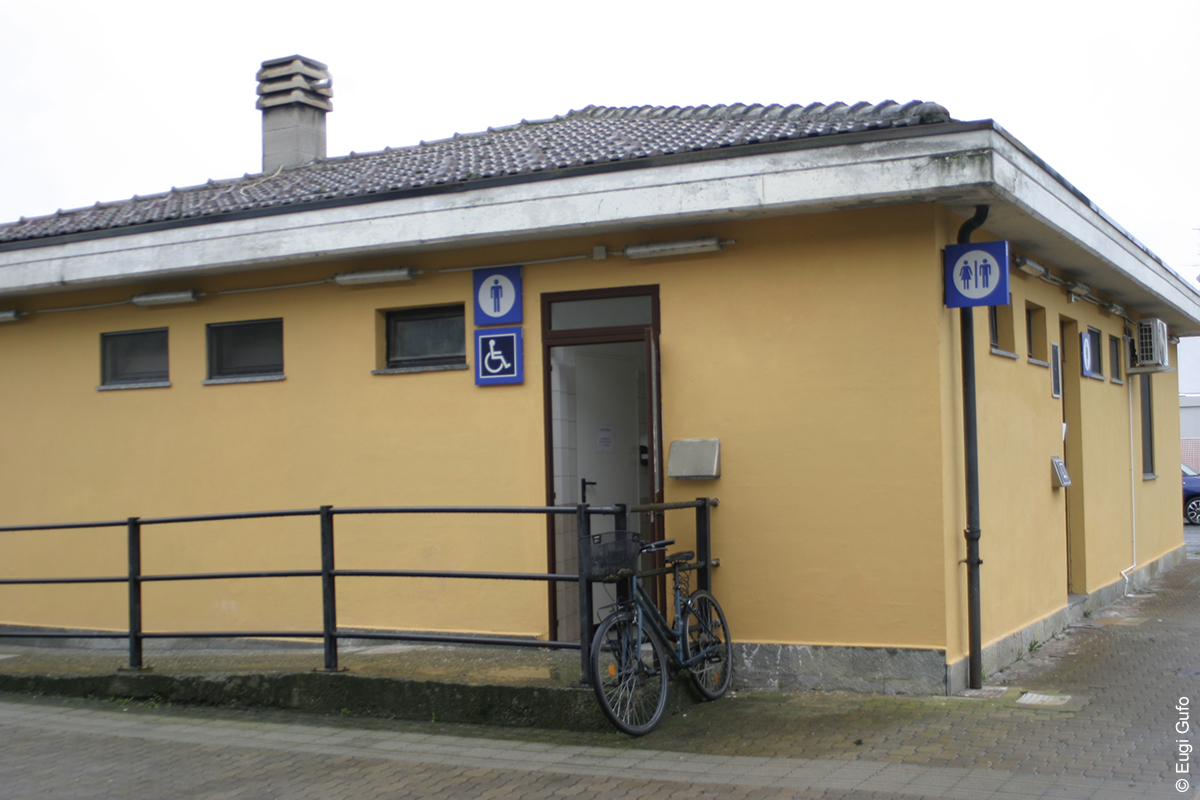
The only detail of Valenza’s modest five-track station that I can genuinely praise is the free, clean, unlocked toilet. Those who do not travel frequently by train in Italy cannot appreciate how rare it is to encounter a station lavatory fulfilling even two of these three criteria. I am merely irritated; every non-Italian I have escorted around the country has considered the situation proof of collective madness.
In any case, Valenza’s supposed wealth has evidently solved at least one major problem.
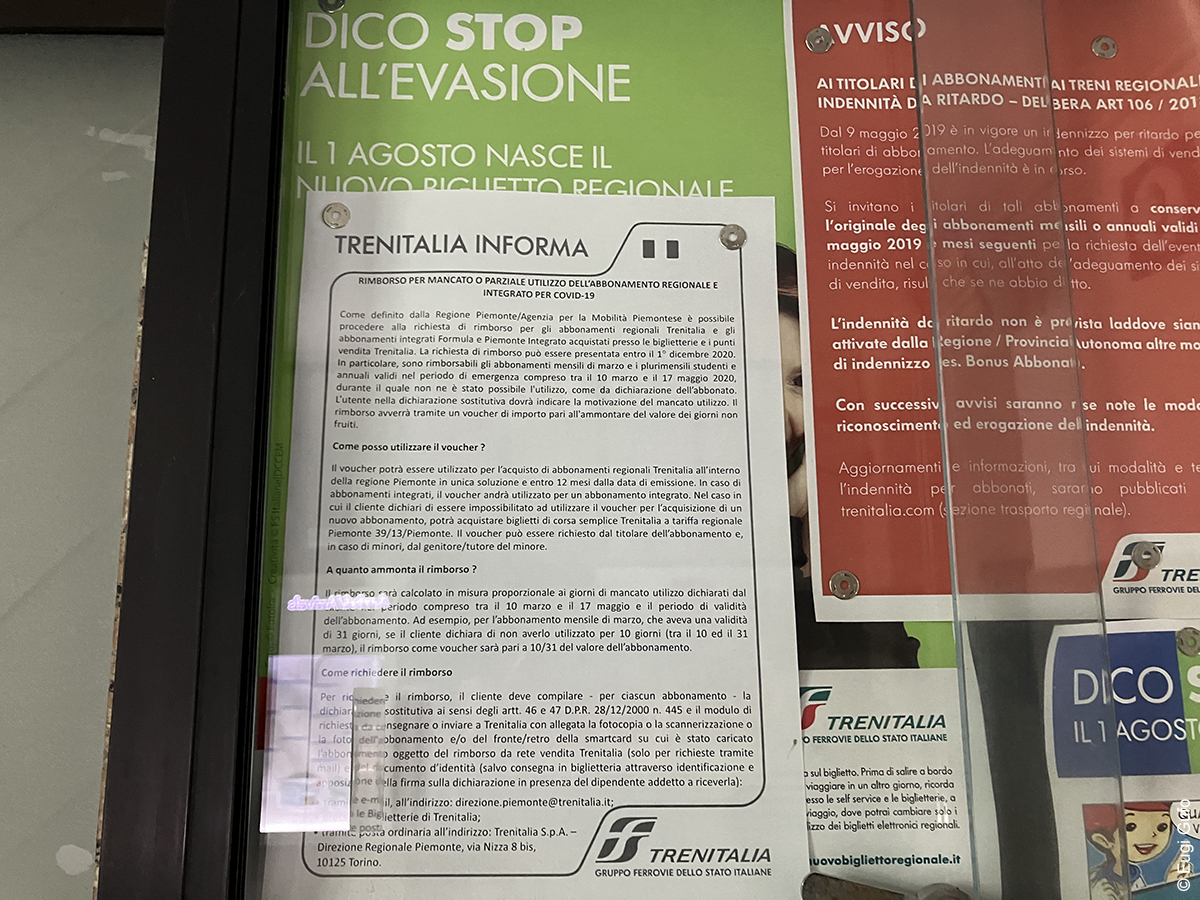
While waiting for the train to Milan, I examined the paper notices posted inside the station. The most recent date from late 2020 and explain how to obtain reimbursement for unused season tickets due to lockdown. The ticket office, its glass broken, appears to have been closed for years.
Farewell, Valenza. Or perhaps goodbye. Possibly without the «perhaps.»
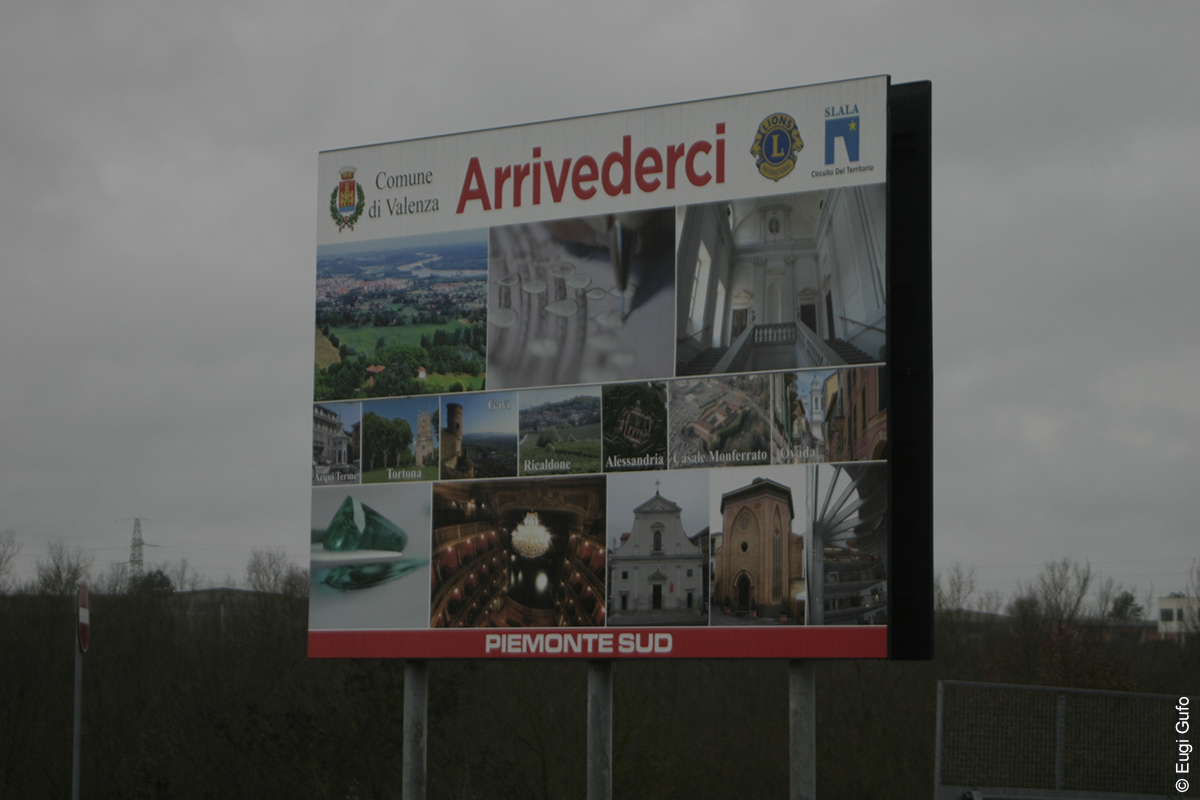
I cannot honestly say that Valenza is a jewel — but it does contain something interesting. At least now I know.
Valenza, 24 December 2025
↓ Show comments ↓

