


 Long live Ukraine! Fuck the war!
 RSS of site articles
During one of those August 2025 days devoted to mountain wandering — the sort of days that make one briefly forgive civilisation — I decided, after exploring Erve, to visit what is potentially its most interesting hamlet: Nesolio. I had come across it by chance while planning an «efficient» mountain route (efficient, of course, meaning one that would allow me to admire not only nature but also a respectable number of human settlements). Its history — and the description of a village with a destiny not exactly upholstered in comfort — had intrigued me.
Strangely — and unjustly — Erve offers only one (1) road sign pointing toward Nesolio. It stands almost at the far edge of the village, on the side closest to mountains of the Resegone persuasion. If you are navigating by GPS (lazy!), search for Via Foppe and do not be deceived by its apparent status as a dead end. It bends discreetly at the end, and the road to Nesolio continues in a manner so intuitive that even technology is rendered slightly superfluous.
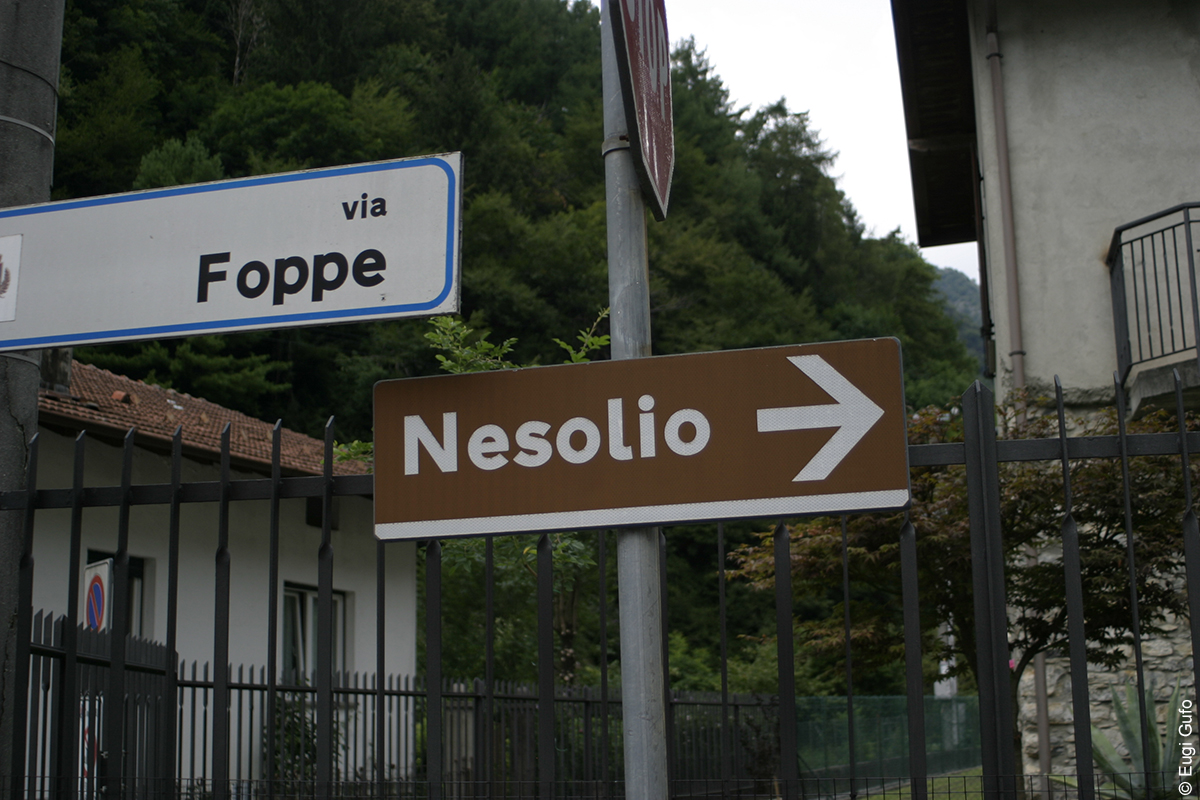
Once you follow the aforementioned sign, the instructions are refreshingly simple: always choose the widest and most logical road. Within minutes it leads you out of Erve and onto a drivable forest road. And let us not be intimidated by a certain text-heavy sign which may look, to the more anxious traveller, like a prohibition of entry. It is not. Breathe.
The surface varies charmingly between earth and concrete applied in several historical moods, but it remains consistently comfortable for walking uphill or down. Should you encounter a car, consider purchasing a lottery ticket.
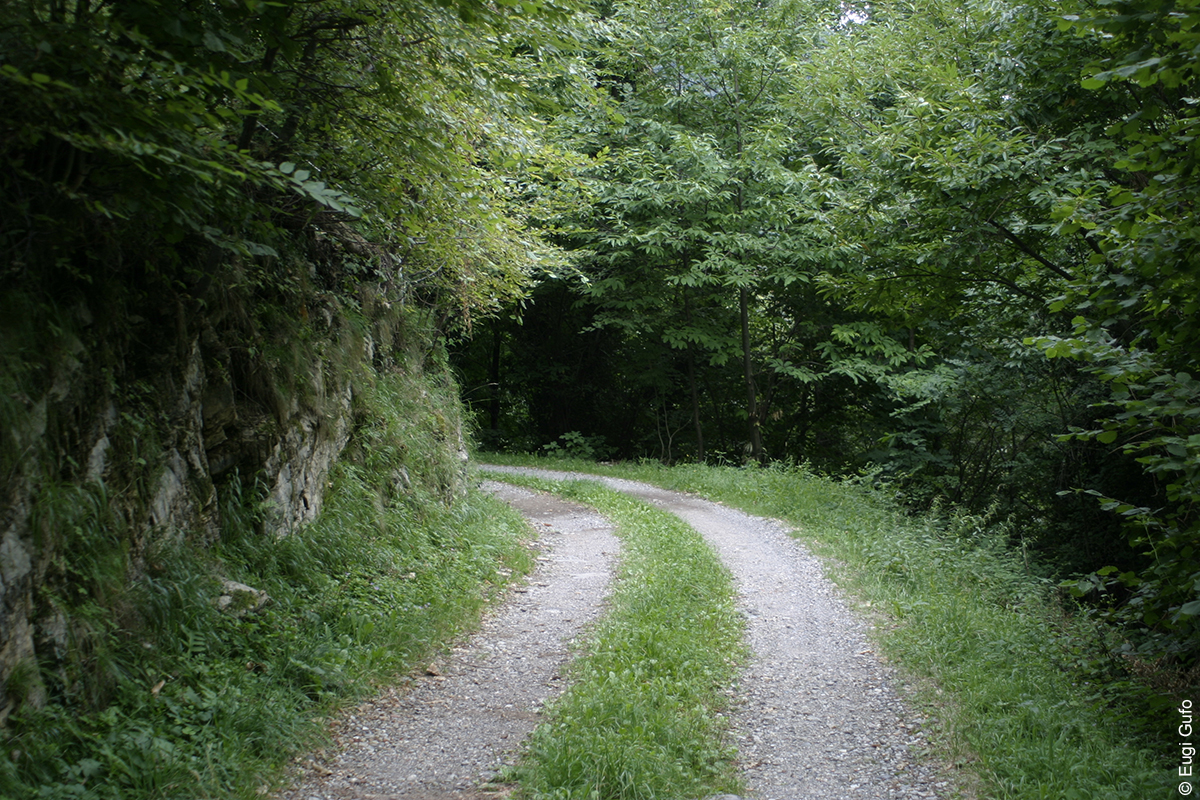
In any case, anxiety about having taken the wrong route is futile. The destination is not shy.
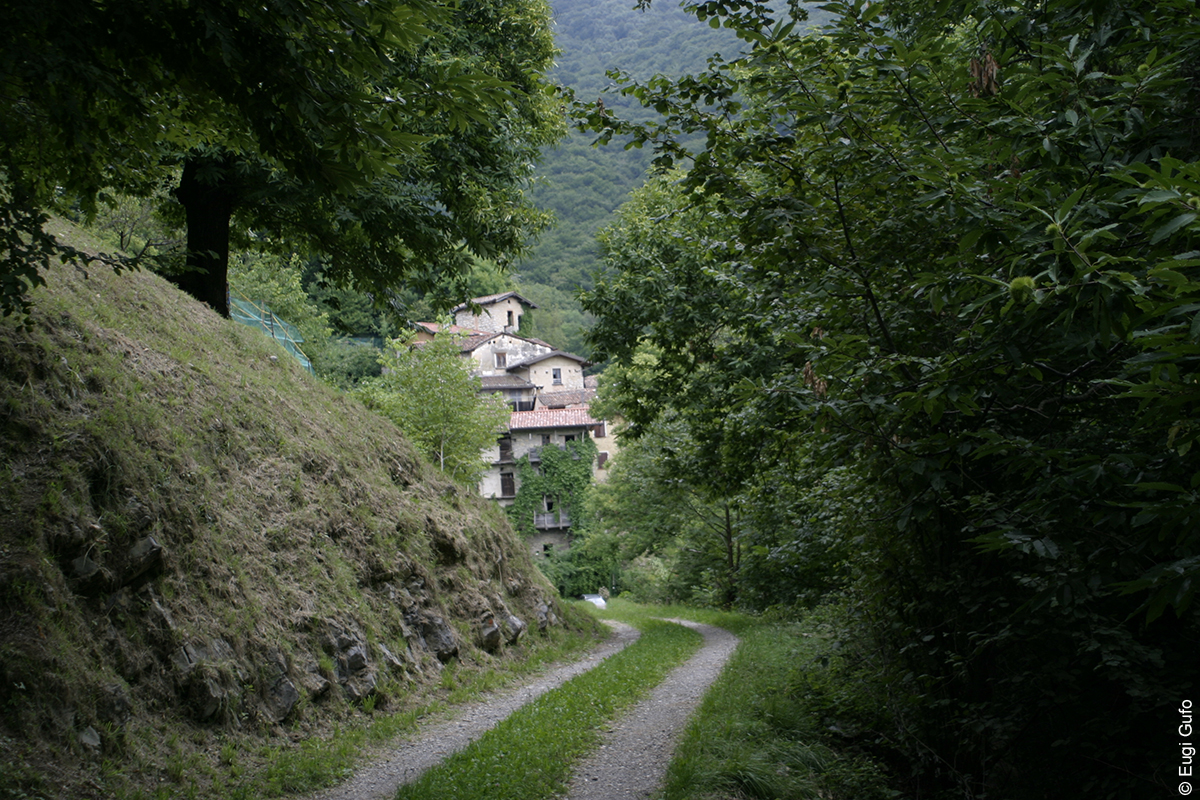
The road ends precisely in Nesolio.
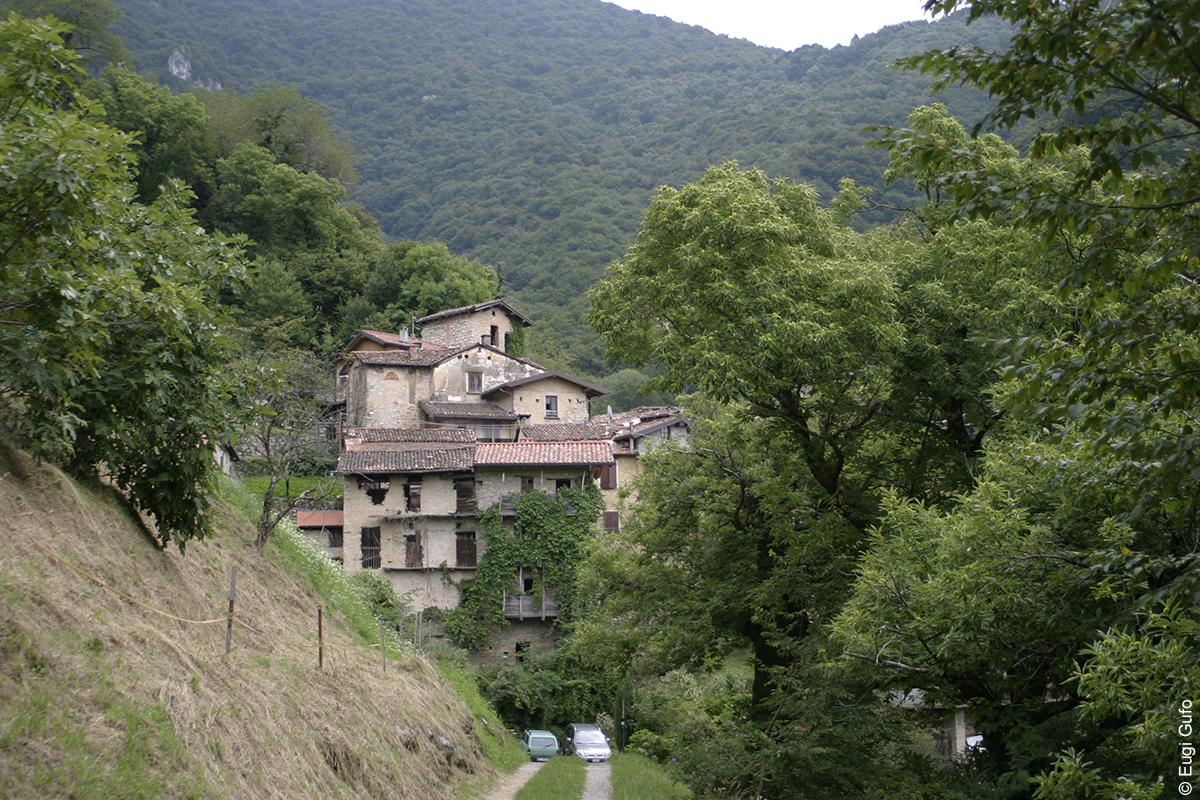
A well-known online encyclopaedia reports that at the beginning of the twentieth century, some 170 people lived in roughly twenty houses here, divided into about as many families. By the 1950s there were still 17 resident families — but it was precisely then that the village began its gradual abandonment. One suspects as much from the striking variety in the houses’ states of preservation.
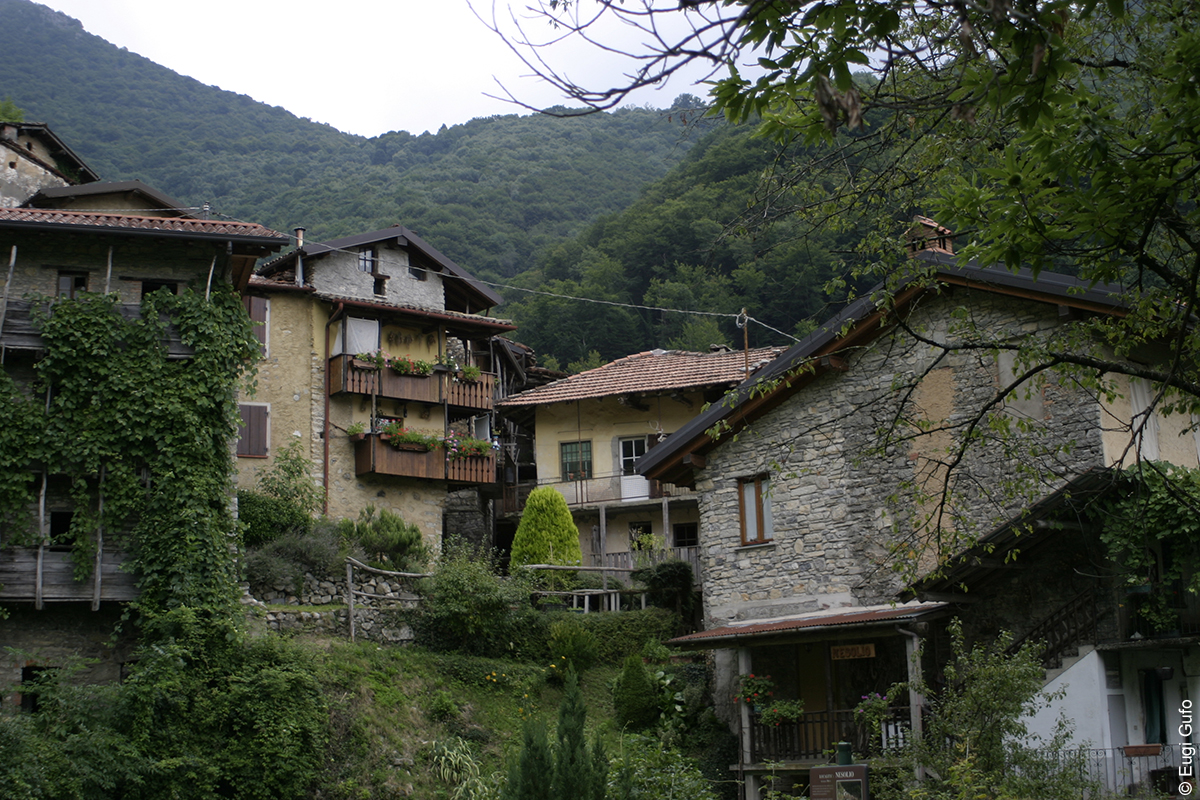
The only person I encountered in Nesolio — a remarkably kind and forthcoming gentleman — informed me that today only one family resides here permanently, while a Milanese family uses another house as a holiday retreat. Visually, I would have sworn that more than two houses appeared restored or at least not entirely surrendered to entropy. Logical explanations suggest themselves: perhaps one family owns several buildings; perhaps someone is quietly determined not to let the village disappear «of natural causes» and performs maintenance as resources permit.
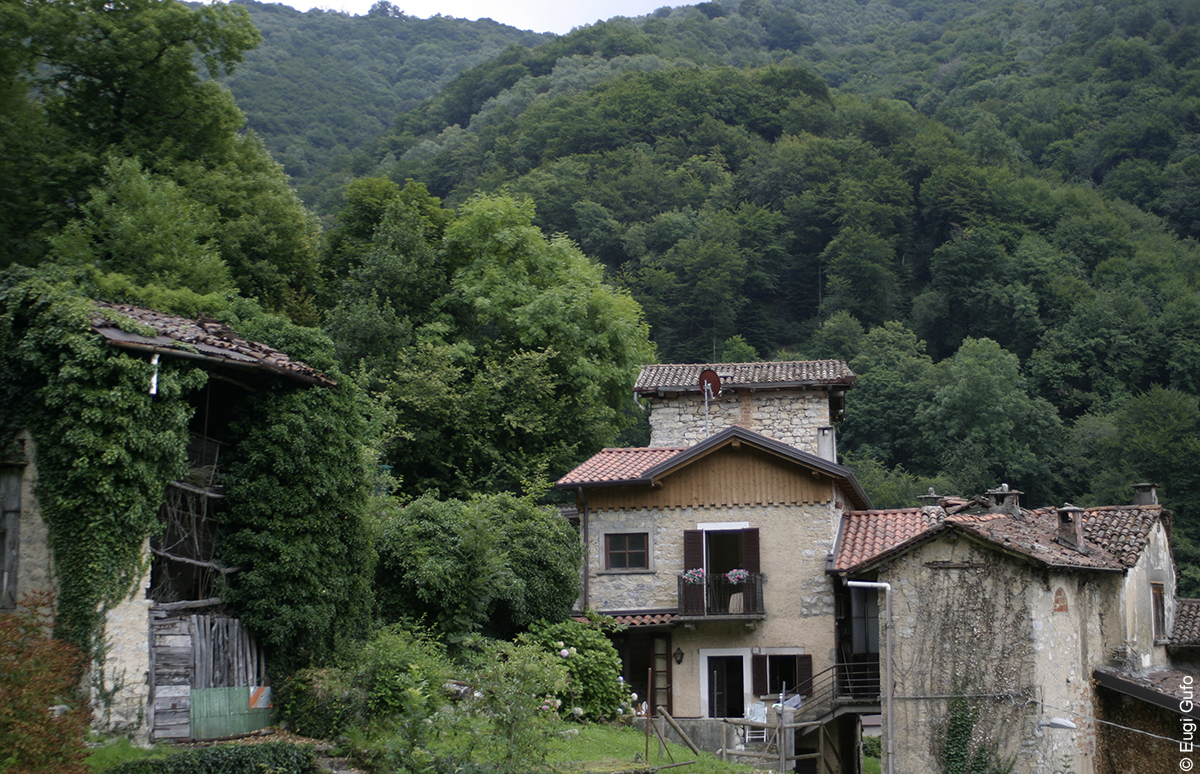
There is certainly no shortage of work to be done, as the gentleman confirmed (at that moment I had not yet devised a suitably diplomatic way to ask whether he possessed any particularly intimate connection to Nesolio). Officially, the village has only one «street»…
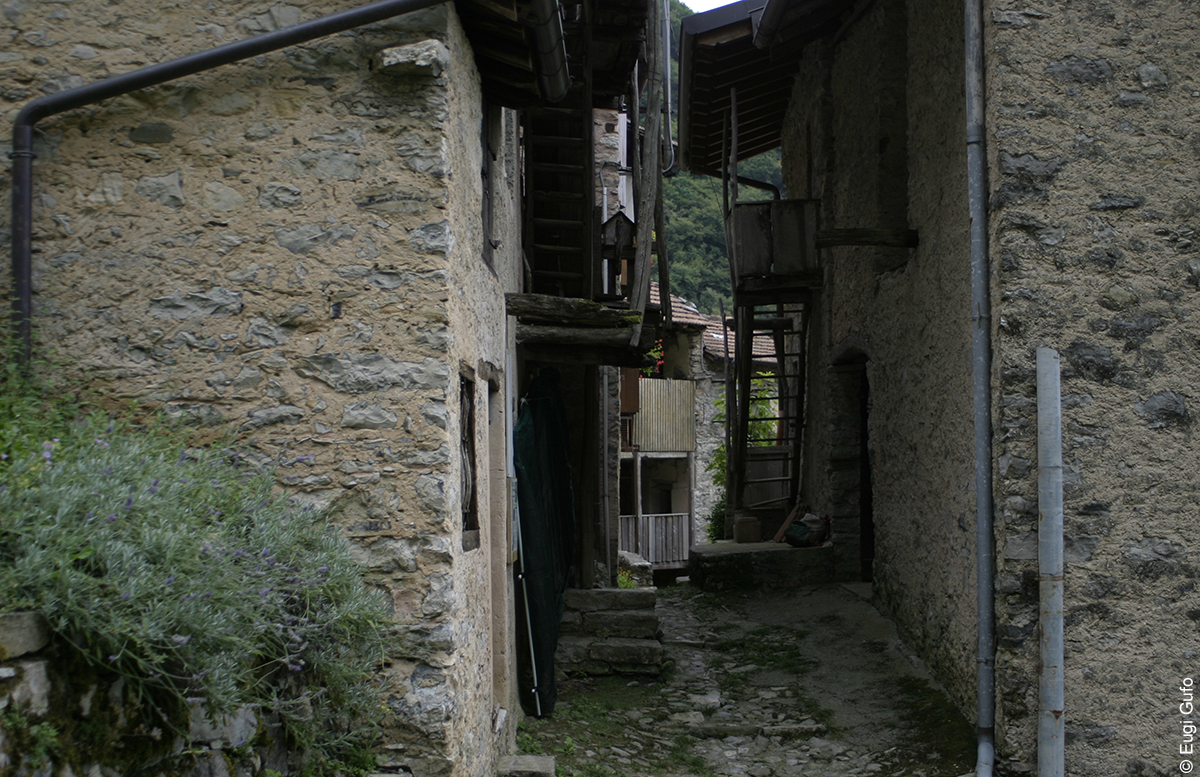
… but then there are steps climbing toward houses that do not open directly onto it.
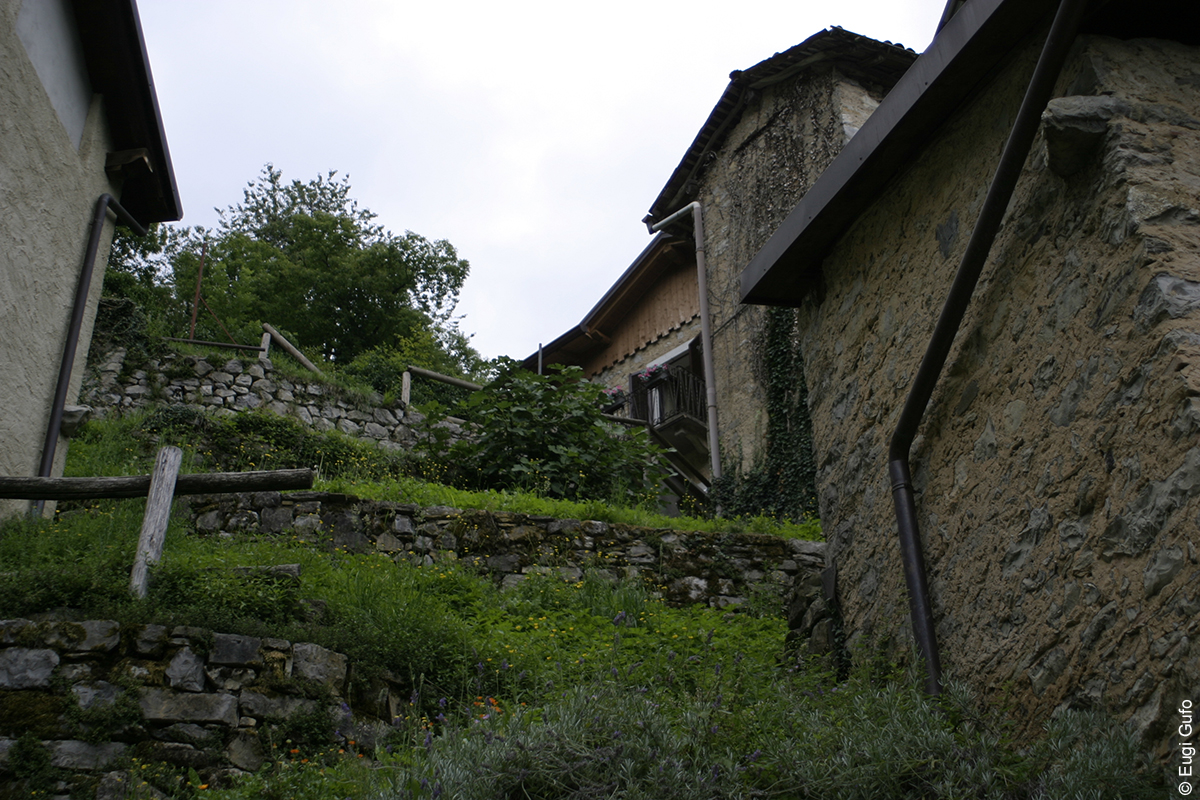
And then there are paths: the genuine ones leading into the woods (and to places such as Erve), and the counterfeit ones that abruptly dissolve into stones and grass, as if reconsidering their own ambition.
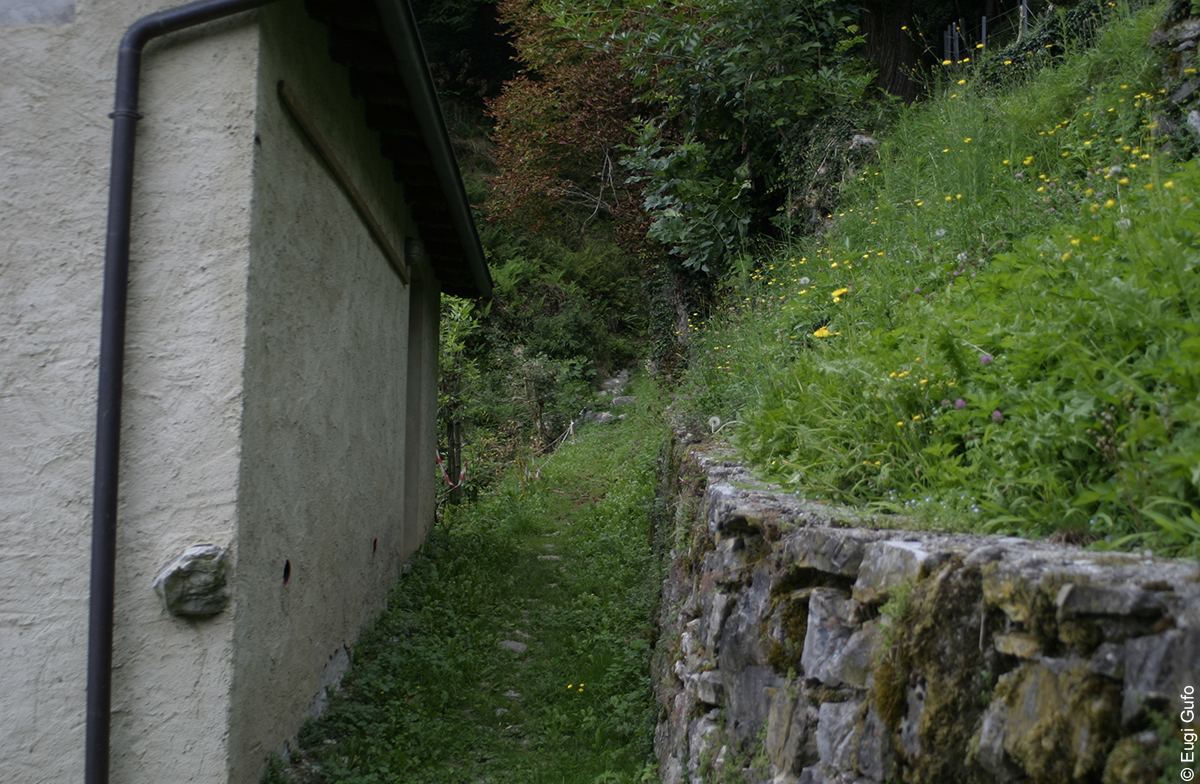
Some spaces that appear to be paths from afar are, in fact, private areas surrounding individual houses — fenced in a manner so aesthetically discreet that one almost applauds the effort.
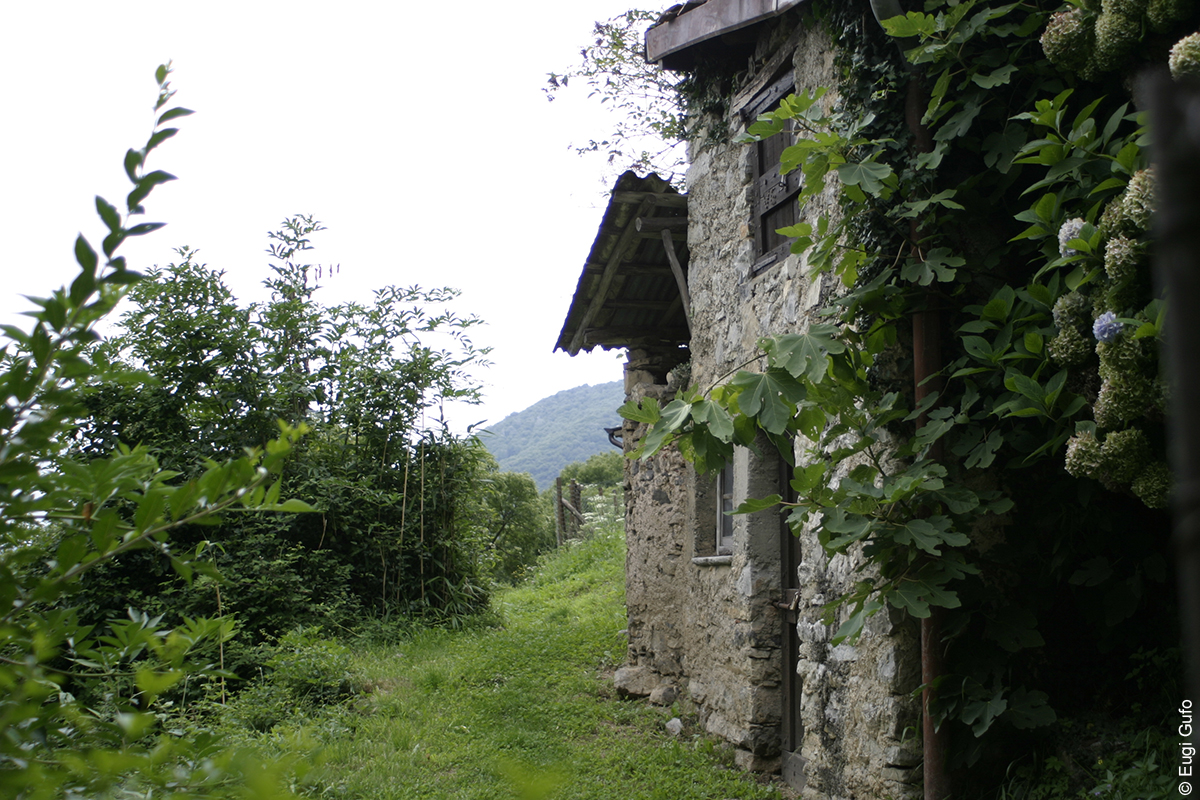
In villages of this kind, I find nearly every detail beautiful. It was particularly curious to learn that in the seventeenth century Nesolio was considered more important than nearby Erve — which is now considerably larger and more populous.
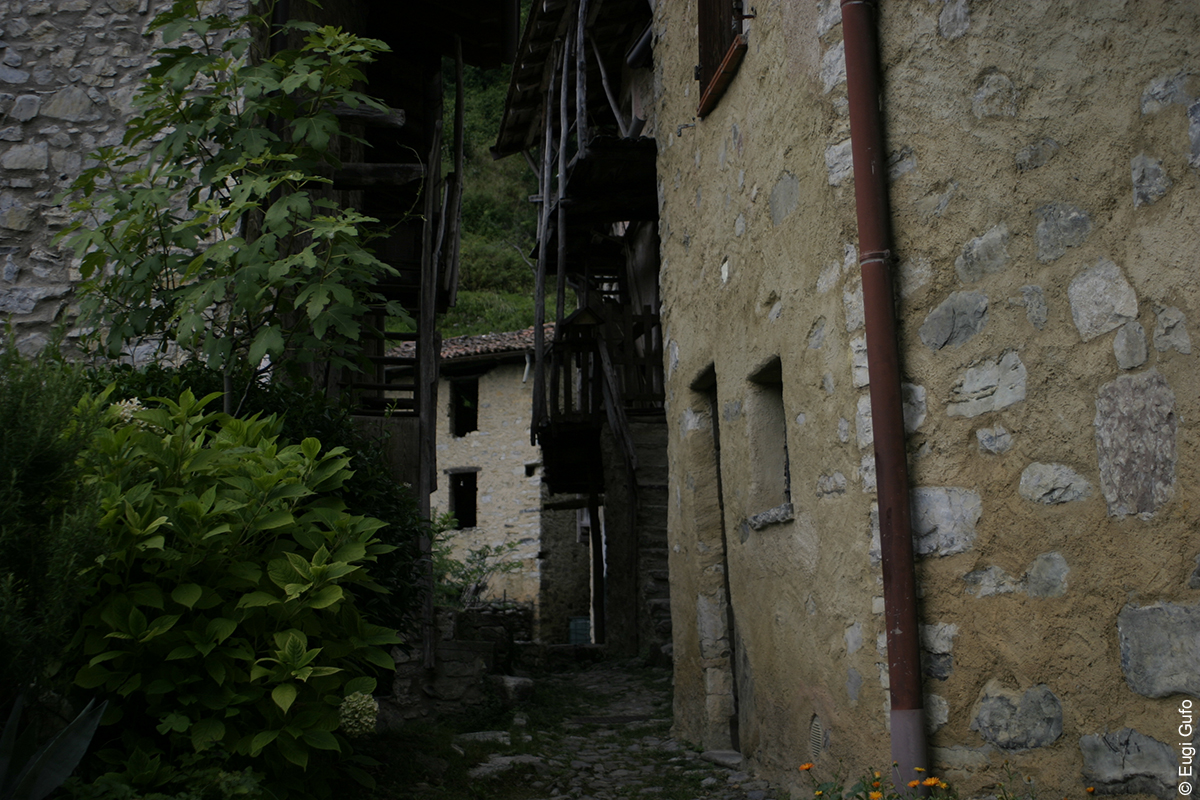
Today, however, a few steps through the «centre» of Nesolio will deposit you firmly in its «periphery.»
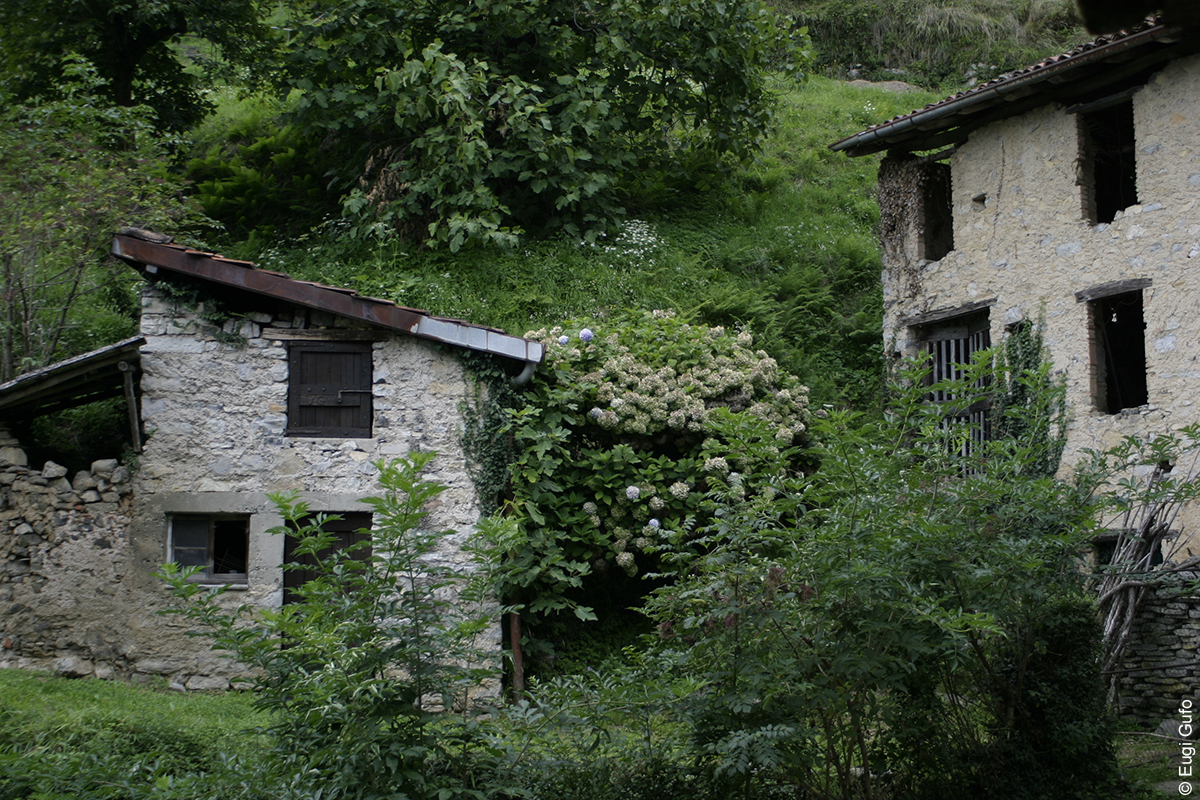
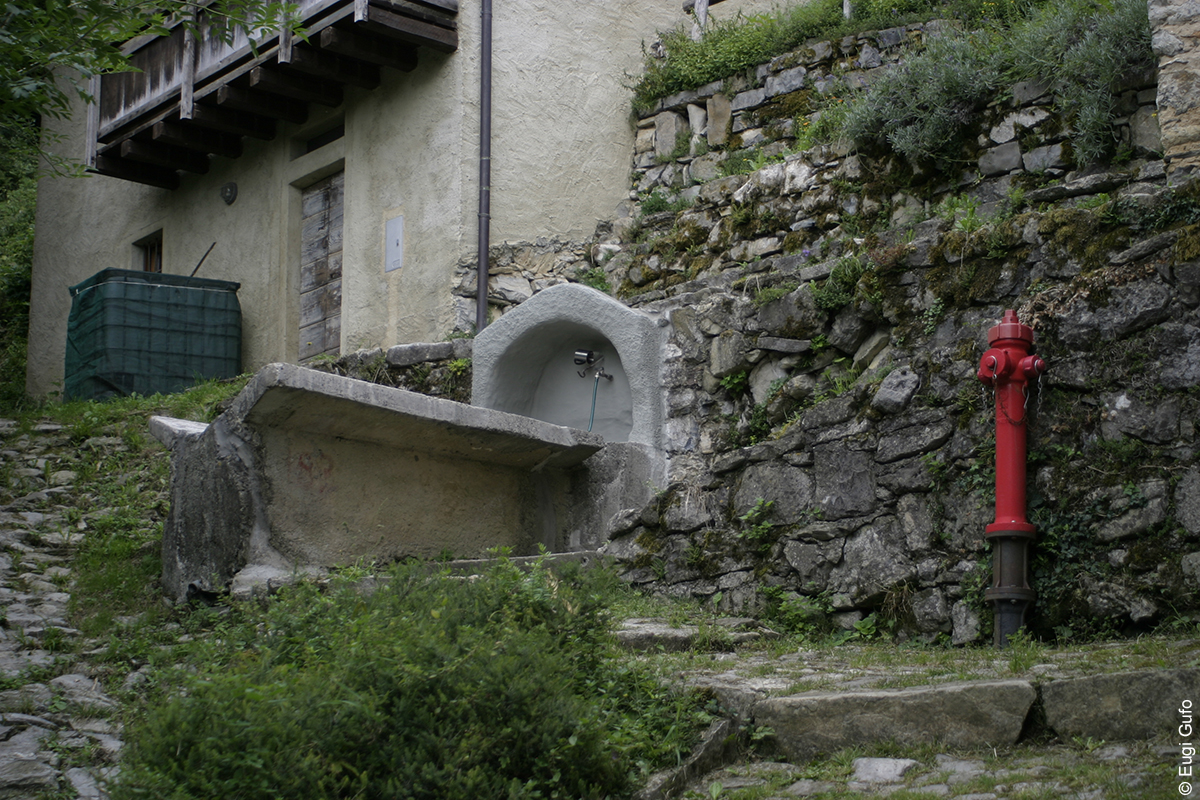
But does this «centre» distinguish itself by anything beyond geometric centrality? Indeed it does. It boasts two precious water sources: a fire hydrant column and a small washhouse with a metal cup hanging from the tap. I did not test the potability of the water (at that moment I still possessed a reliable personal supply), but the anti-fire apparatus is undeniably useful — particularly since a fire engine cannot approach every house. The hydrant connection also serves as indirect evidence of a respectable aqueduct system.
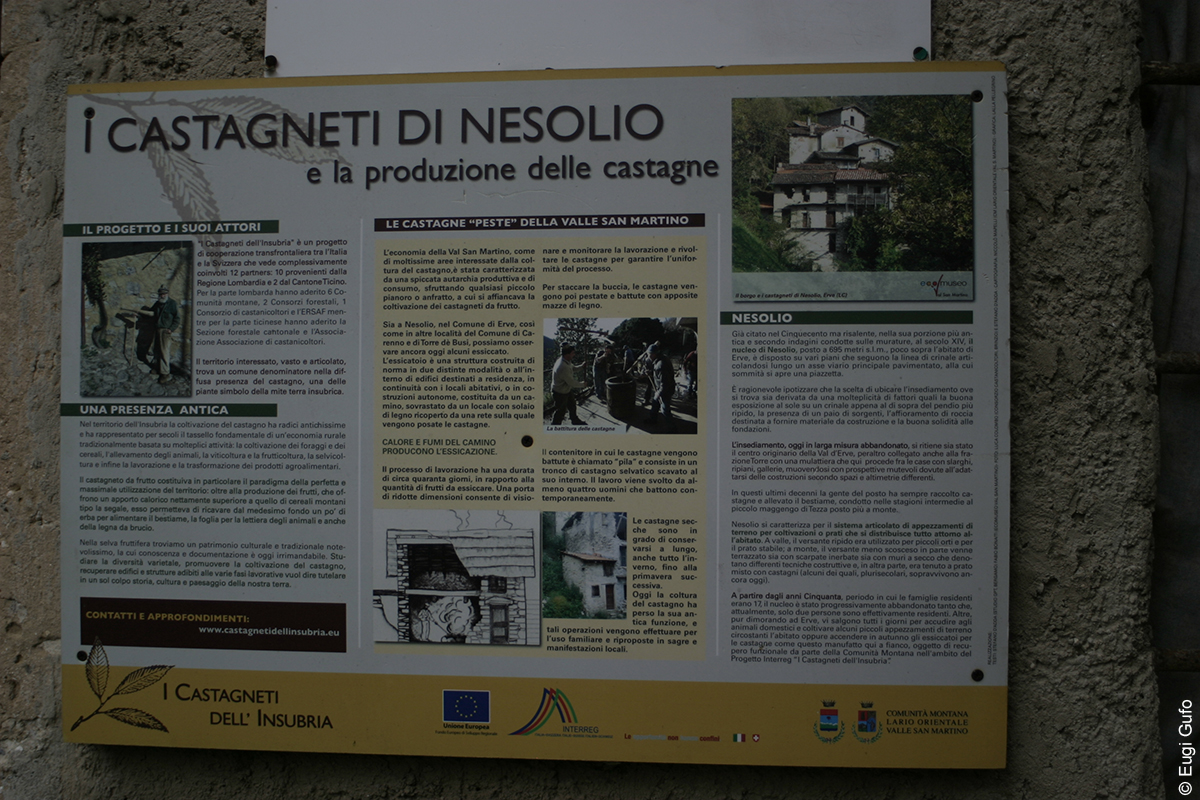
When the village was alive with people, its economic life was not centred in this modest core but rather in its outer edges: chestnut gathering, wheat and vine cultivation, the raising of goats, sheep and chickens, the crafting of wooden tools. In short, an economy composed of activities not renowned for spectacular profitability. I am therefore mildly astonished that abandonment did not begin even earlier than the mid-twentieth century.
And yet — we now inhabit the twenty-first century, blessed with the miracle of «smart working,» also known as remote work for those who prefer less fashionable terminology. Consequently, there are fewer reasons to abandon beautiful or familiar places. The internet functions perfectly well in Nesolio. One could, in principle, repopulate it without sacrificing one’s beloved career.
If the village stood at a slightly higher altitude than its officially measured 695 metres above sea level, I might even have considered the experiment myself.
Nesolio, 6 August 2025
↓ Show comments ↓

