


 Long live Ukraine! Fuck the war!
 RSS of site articles
The decision to visit Rossino — a small hillside frazione of Calolziocorte — might appear puzzling to certain residents or connoisseurs of that particular corner of the Province of Lecco, a few kilometres south of Lecco. In reality, however, it was neither a deliberate choice nor in the least peculiar.
While planning my mountain walks for August 2025, I had devised a scheme: arrive by train in Calolziocorte and then proceed on foot toward the mountains of interest. The selected ascent route, in its initial stretch, passes through (or near) several settlements. This does not trouble me; I travel not only for peaks and panoramas, but also to observe — discreetly, of course — the organisation of human life. Nor was I displeased that the first settlement encountered (I had already visited Calolziocorte in 2016 and therefore did not linger) happened to be Rossino: a small village, yet not without certain agreeable features.
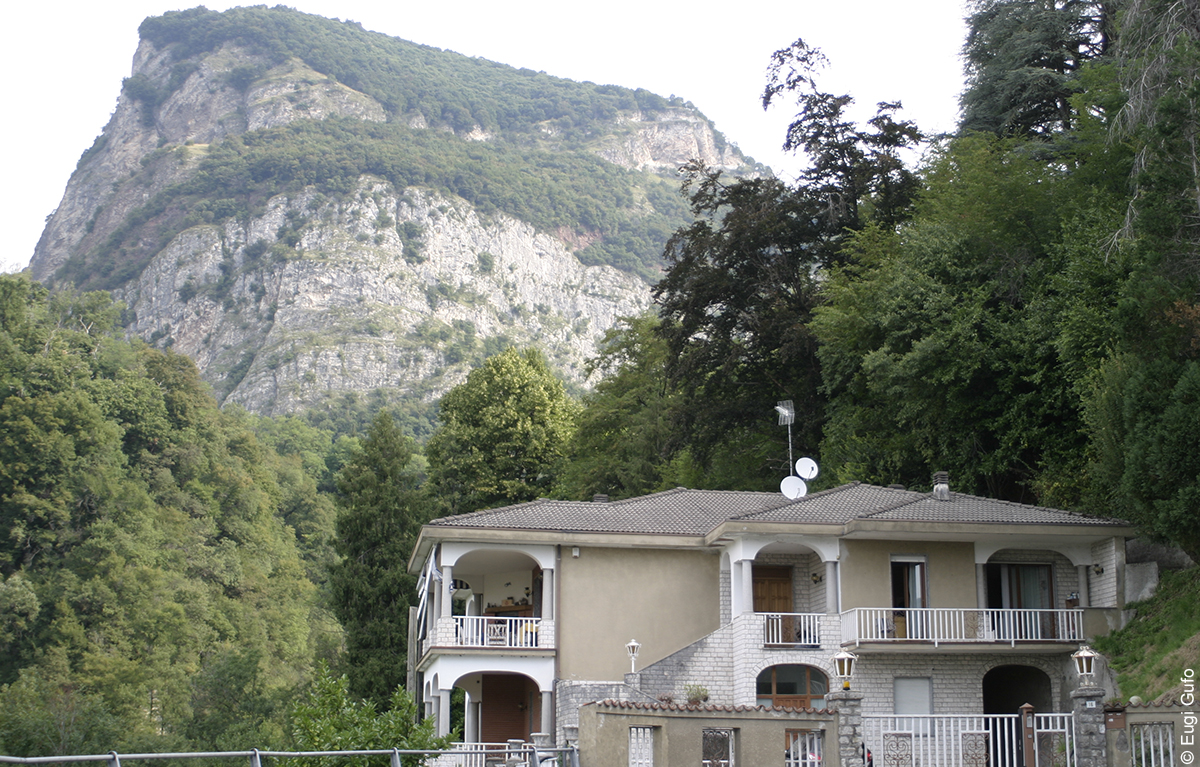
The road from Calolziocorte to Rossino — and indeed beyond — is a series of bends with a gradient not particularly taxing for anyone accustomed to walking for more than two minutes a day. For considerable stretches one walks along the roadside rather than on a traditional pavement; still, traffic is light and the verge sufficiently wide for an adult pedestrian. At a certain point, isolated private houses begin to appear. Seeing only these, I briefly suspected that the entire village might consist exclusively of such dwellings.
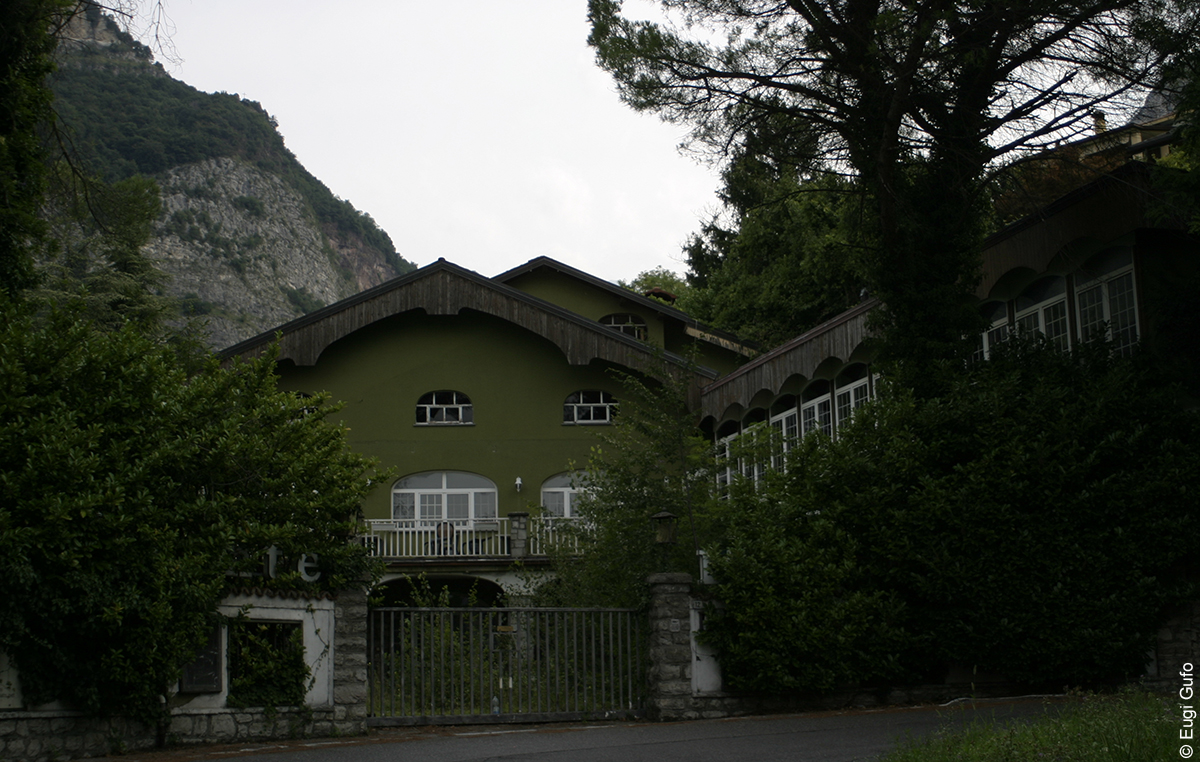
At yet another curve, an evidently abandoned building emerges — though not abandoned for long, as it has not yet suffered aesthetic or structural ruin. A swift internet search revealed it to be the former restaurant/hotel «L’Innominato,» currently for sale for the modest sum of €250,000 (cleaning and interior refurbishment required). One wonders about the potential clientele: the not overly numerous local residents, or motorists en route to mountain trailheads? The market analysis remains elusive.
Why was the establishment called «L’Innominato»? Because the entire area — not merely Rossino — abounds in references to the novel I promessi sposi. Upon reaching the actual centre of the village, this becomes quickly apparent. Rossino even hosts one of the buildings proposed as the «castle of the Unnamed,» though it is privately owned and not visitable. Alessandro Manzoni, despite situating parts of his masterpiece in this geographical region, did not consistently provide precise geotags for future visitors.
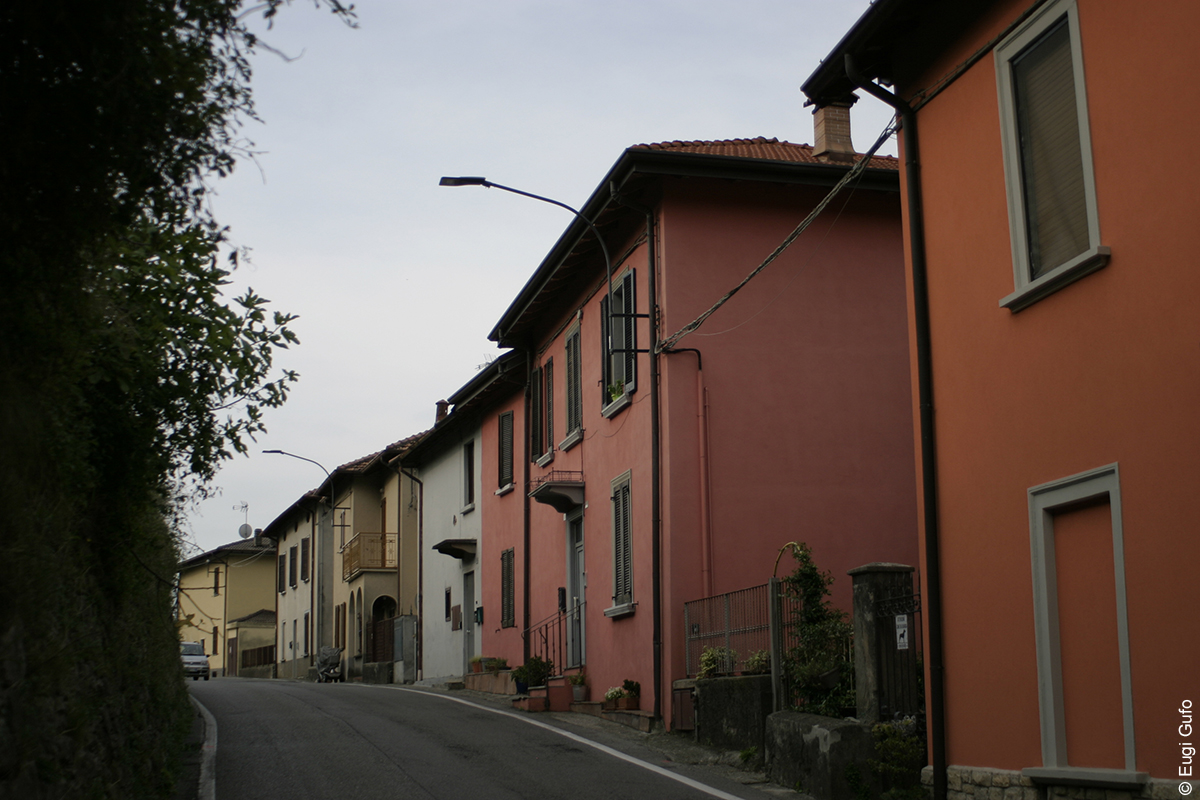
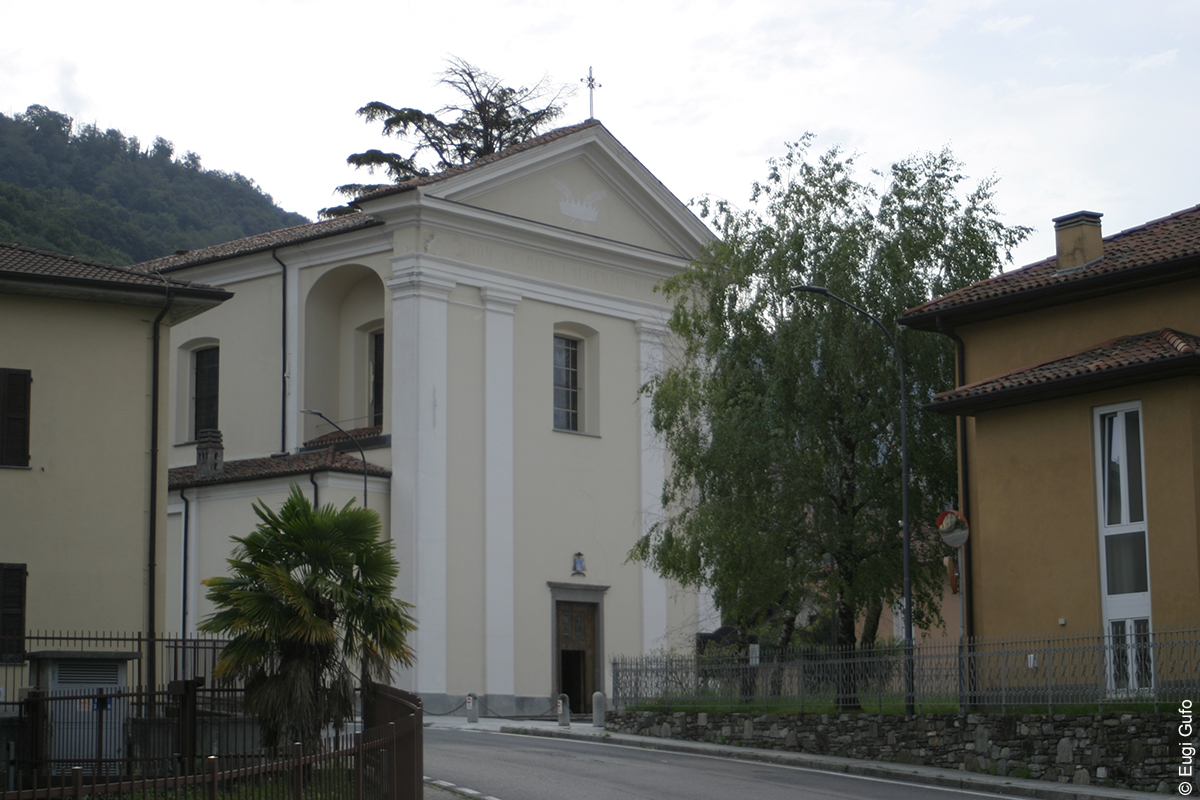
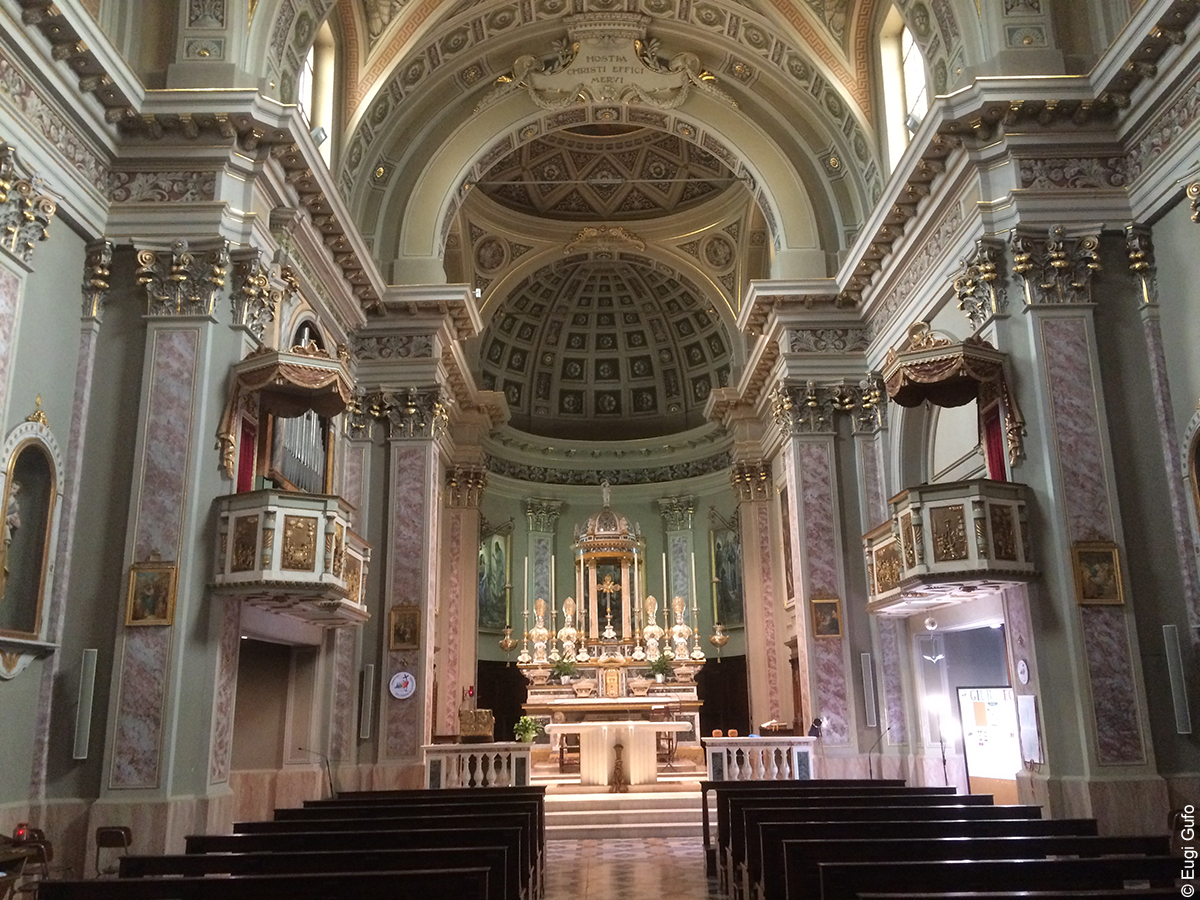
Finding the civil architecture unremarkable and the military architecture inaccessible, we may content ourselves with the religious. Rossino boasts two churches. The first encountered when arriving from Calolziocorte is most likely the Church of San Lorenzo Martire (constructed at the end of the eighteenth century on the site of an early seventeenth-century predecessor). Externally, it offers little of note.
The interior, however, is decidedly more rewarding.
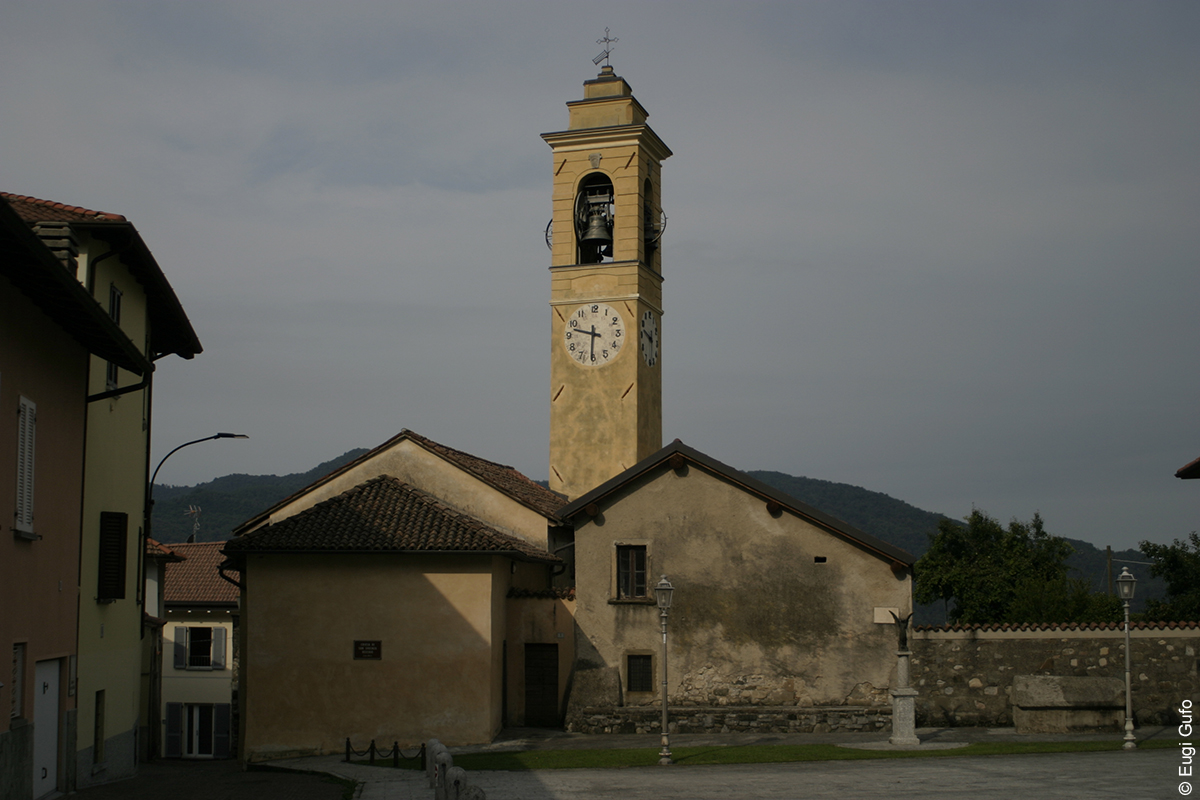
Opposite stands the ancient Church of San Lorenzo Vecchio. I have read that its form is typical of the first half of the twelfth century, though the earliest documented references date from the fourteenth. My own eyes observe that the church lacks a conventional façade and that its entrance is surprisingly difficult to locate. Only the position of the (clearly more recent) bell tower indicates where one ought to search.
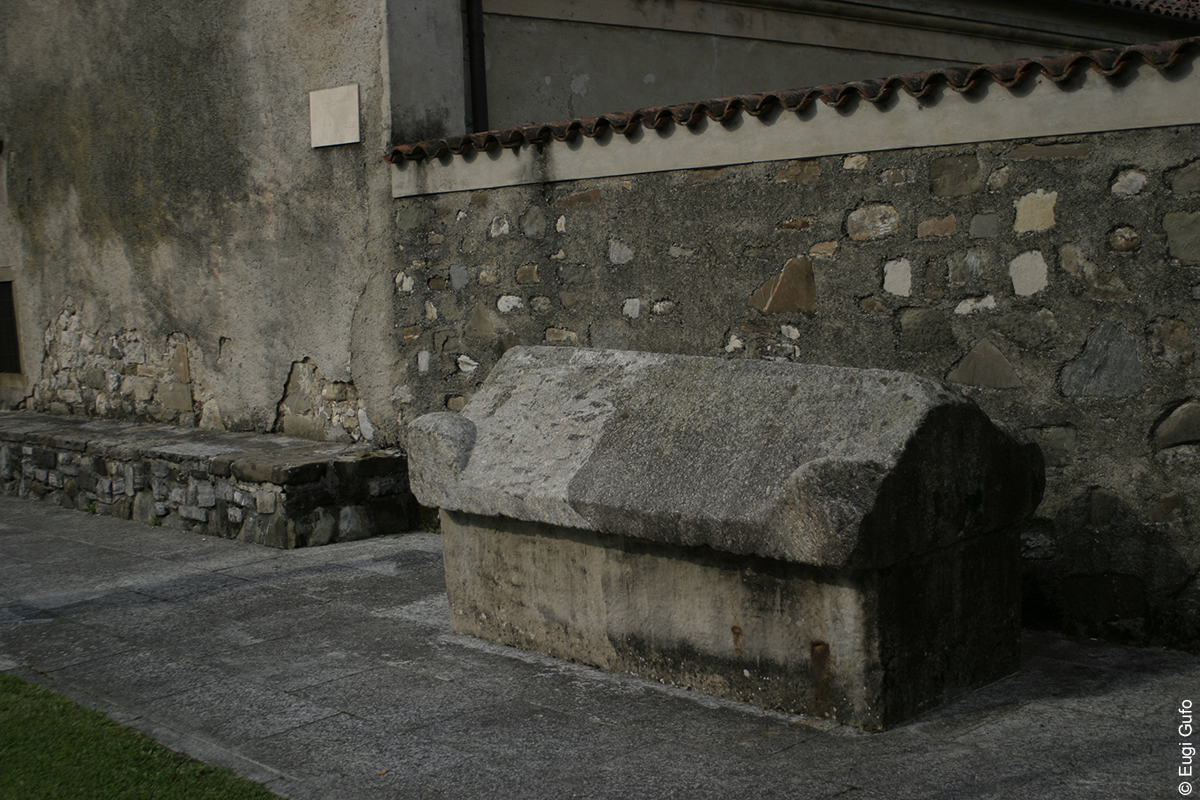
I cannot report on the interior, as it was closed at the time of my visit — a pity, for I suspect it would have been interesting. Instead, I present an anonymous sarcophagus placed near the entrance.
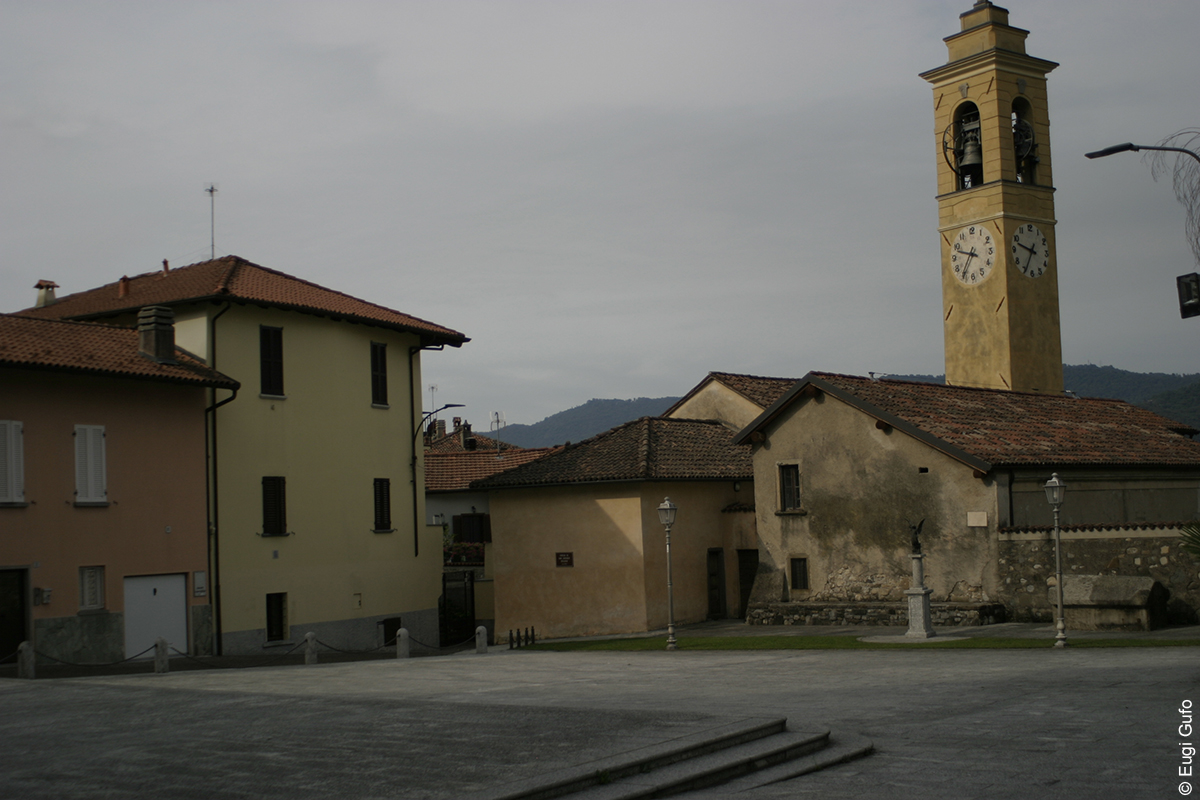
One large and curious peculiarity of Rossino: the square situated between the two aforementioned churches is privately owned. Fortunately, I was neither expelled nor arrested for infiltration — though one wonders how regular churchgoers navigate the matter.
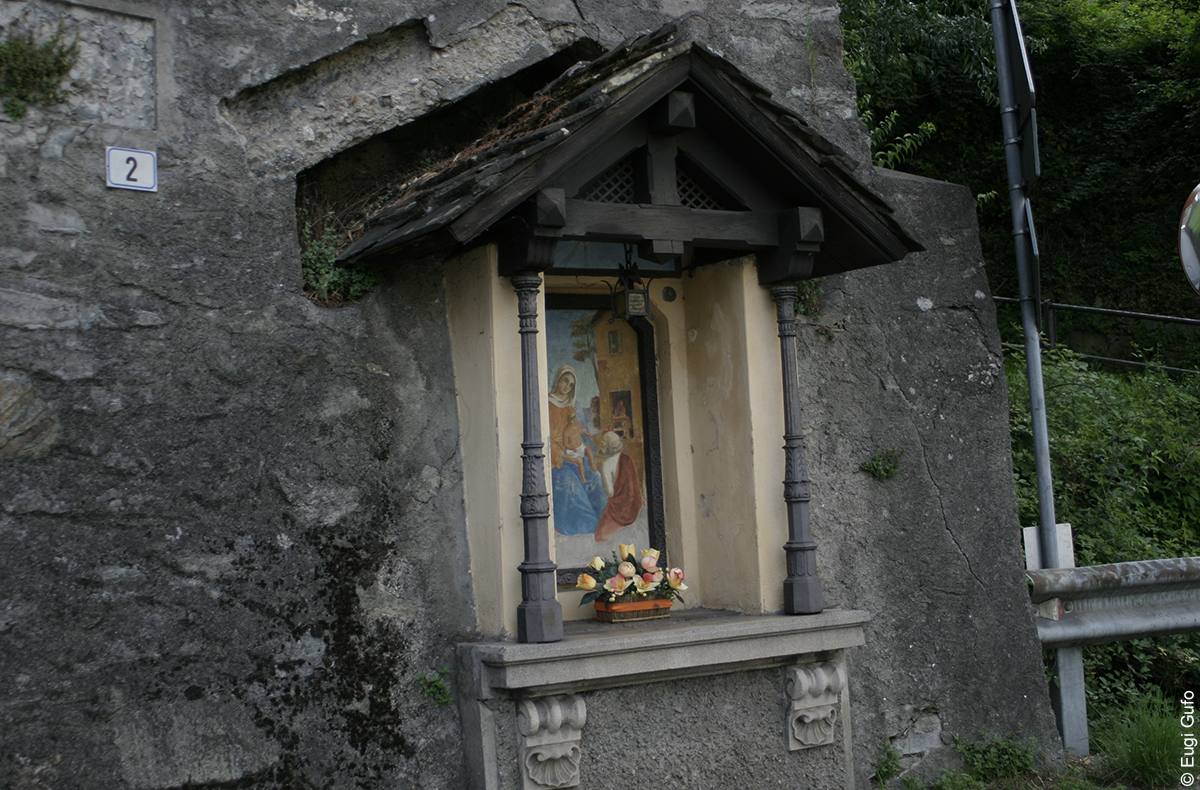
Another small religious curiosity in the village is this roadside shrine:
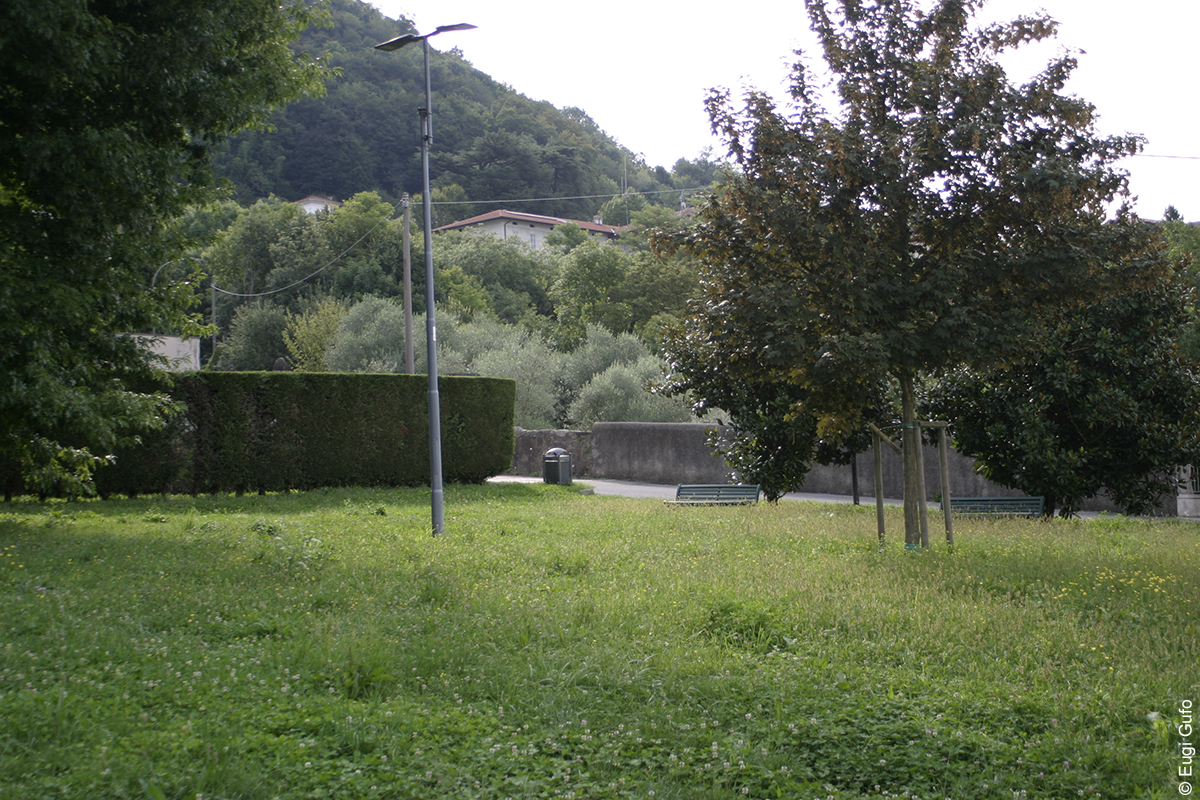
The remaining points of interest in Rossino are two. One is the local park, ninety per cent of which is captured in the following photograph.
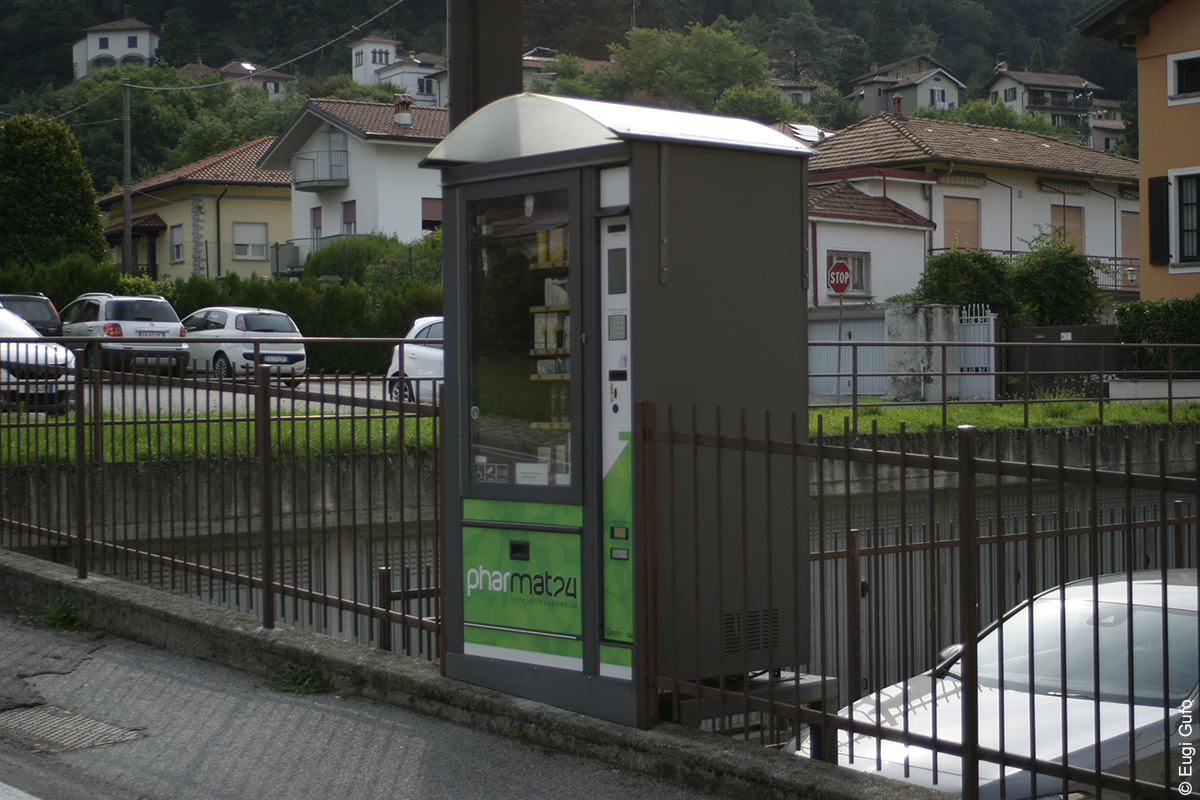
And then there is the truly automated pharmacy: a vending machine selling not merely condoms but a variety of pharmaceutical items. For reasons unclear to me, such machines are remarkably rare in Italy; thus I was rather surprised to encounter one in a small pre-Alpine village.
And that, essentially, concludes Rossino. My walk continued toward the next intermediate destination: the village of Erve. It seems more logical to address it in a separate account.
Rossino, 6 August 2025
↓ Show comments ↓

