


 Long live Ukraine! Fuck the war!
 RSS of site articles
At the end of 2024 — or perhaps at the beginning of 2025 — I happened, quite by chance, to see several attractive photographs of the medieval centre of Ubiale Clanezzo on a well-known social network. Intrigued, I promptly scheduled a journey to that area for the first available long weekend.
Regular readers already know that the trip proved useful not only for admiring certain historical and touristic beauties with my own eyes, but also for exploring other small municipalities nearby — namely Zogno and Sedrina. In the present account, however, I must inform you of another significant benefit of that excursion: thanks to it, I discovered (and can now warn you) that Ubiale Clanezzo is, in fact, a comune diffuso. The two settlements that compose it — Ubiale and Clanezzo — lie more than three kilometres apart.
More importantly for the time-conscious traveller, all historically and aesthetically more compelling attractions are located in (or near) Clanezzo, not Ubiale. Those wishing to conserve time and energy may therefore proceed directly there. True explorers, however — like myself, and, I trust, the majority of you — seek interesting things not only in the obvious places and/or where everyone else has already looked. For that reason, this photographic article concerns the village of Ubiale.
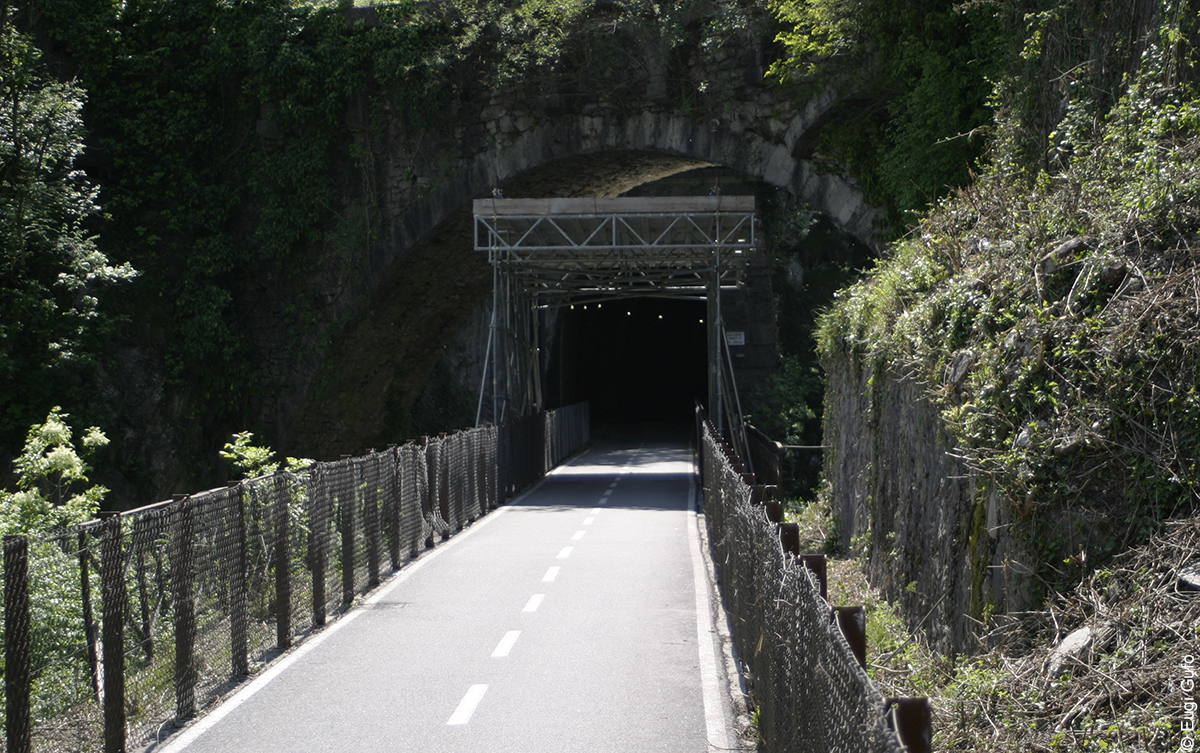
I personally arrived in Ubiale on foot, having set out from Zogno and followed part of the cycle-pedestrian path constructed along the route of the former Valle Brembana railway: an easy, well-equipped path and, in places, even aesthetically pleasing.
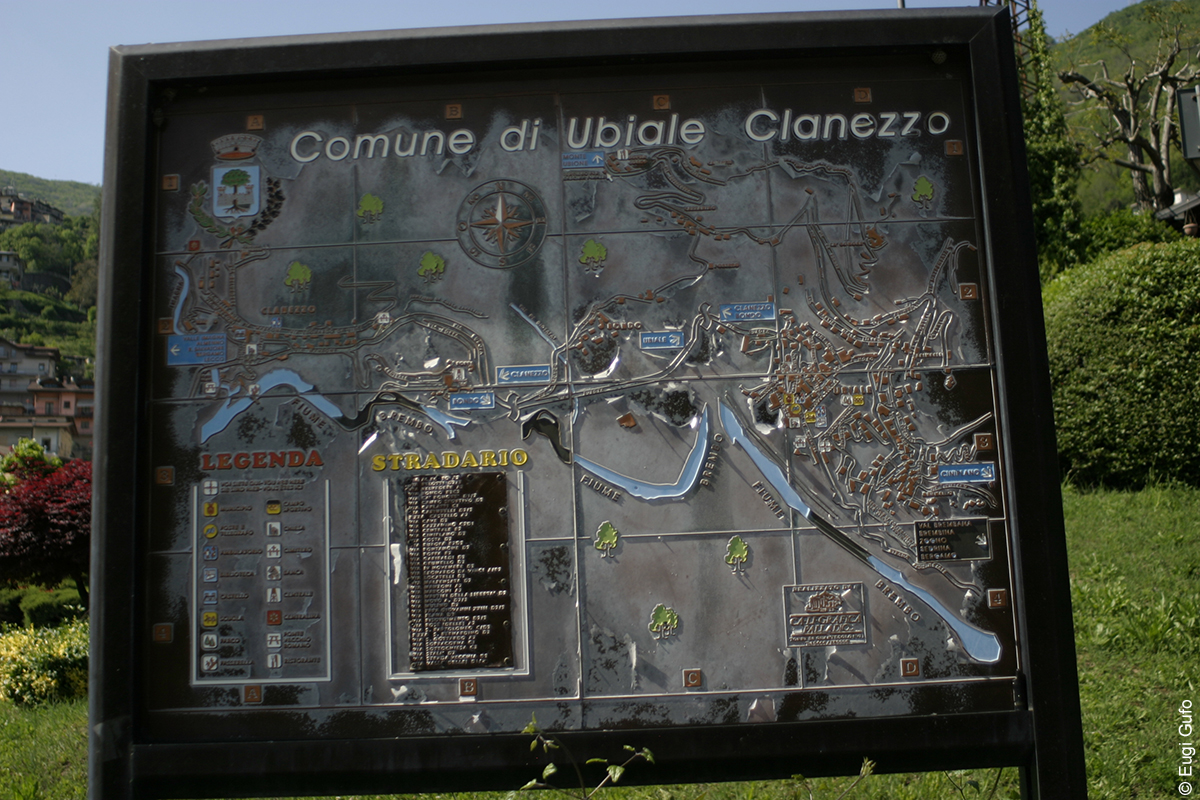
Upon reaching the settlement, one soon encounters an analogue map of the municipal territory: for many individual historical details it proves clearer and more precise than the one displayed on my telephone.
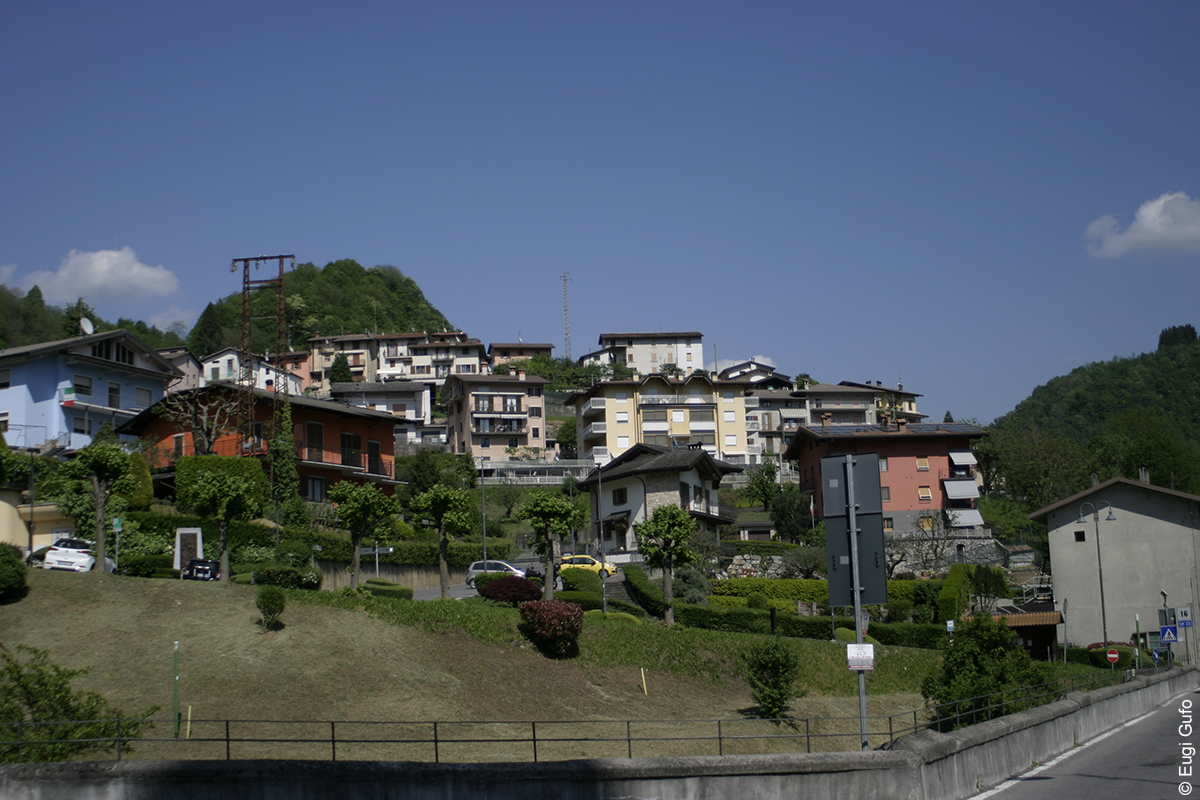
Walking through the village, one might reasonably — though not entirely unfairly — presume that Ubiale is merely a somewhat tedious cluster of small residential buildings, distinguishable from the outskirts of any large city chiefly by its hillside location.
The historic centre, composed of older buildings of varying degrees of interest, is minuscule — summarised in only a handful of photographs.
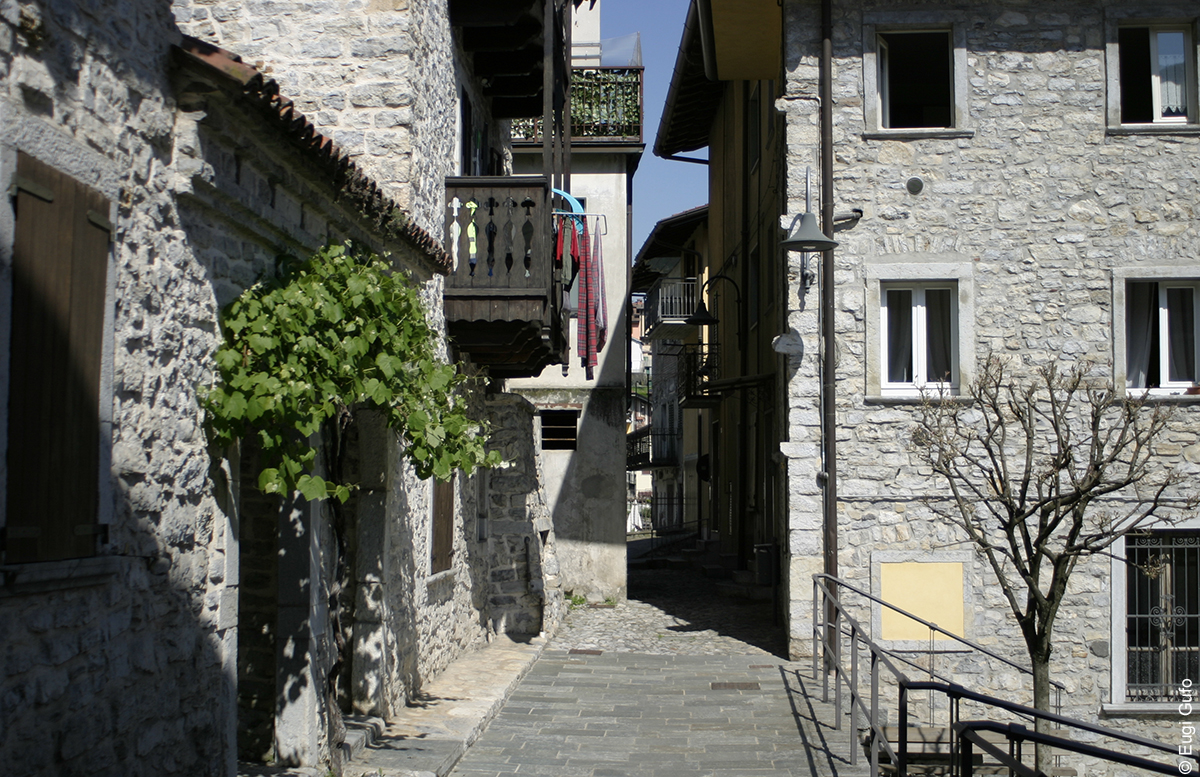
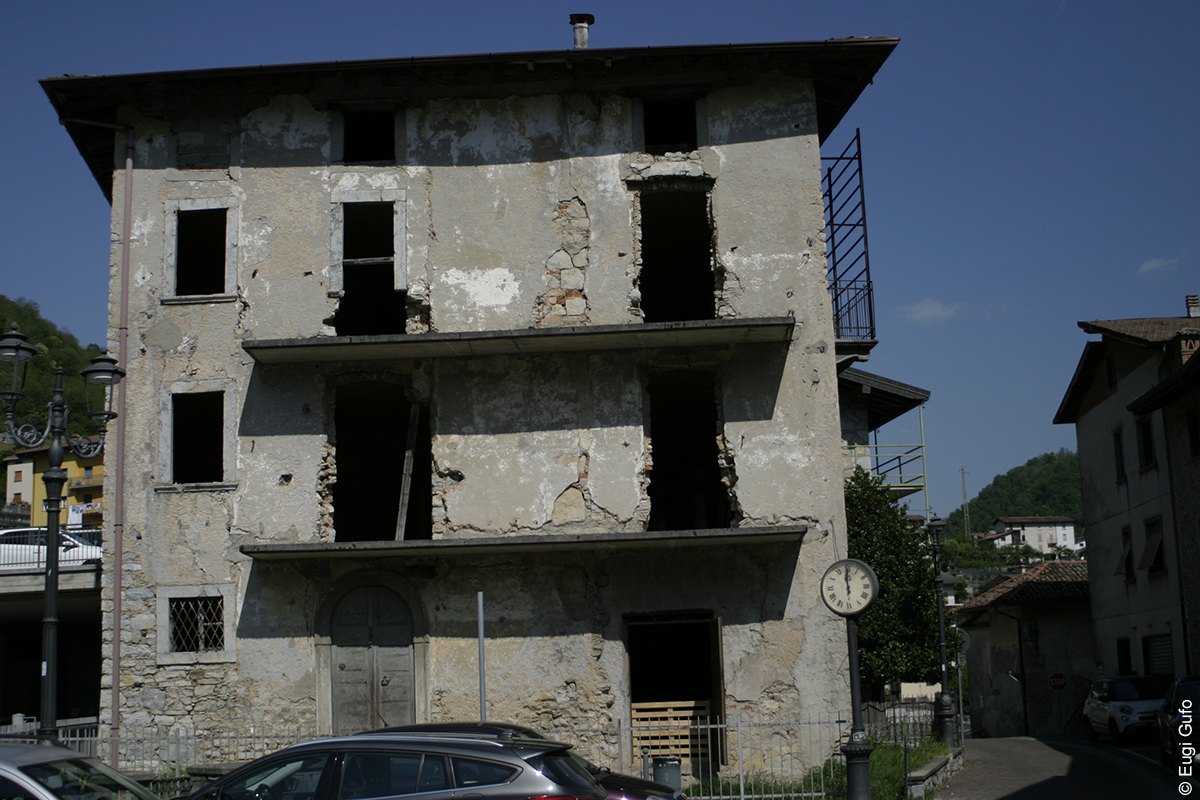
Moreover, some of these ancient structures are in rather compromised condition (though perhaps still salvageable).
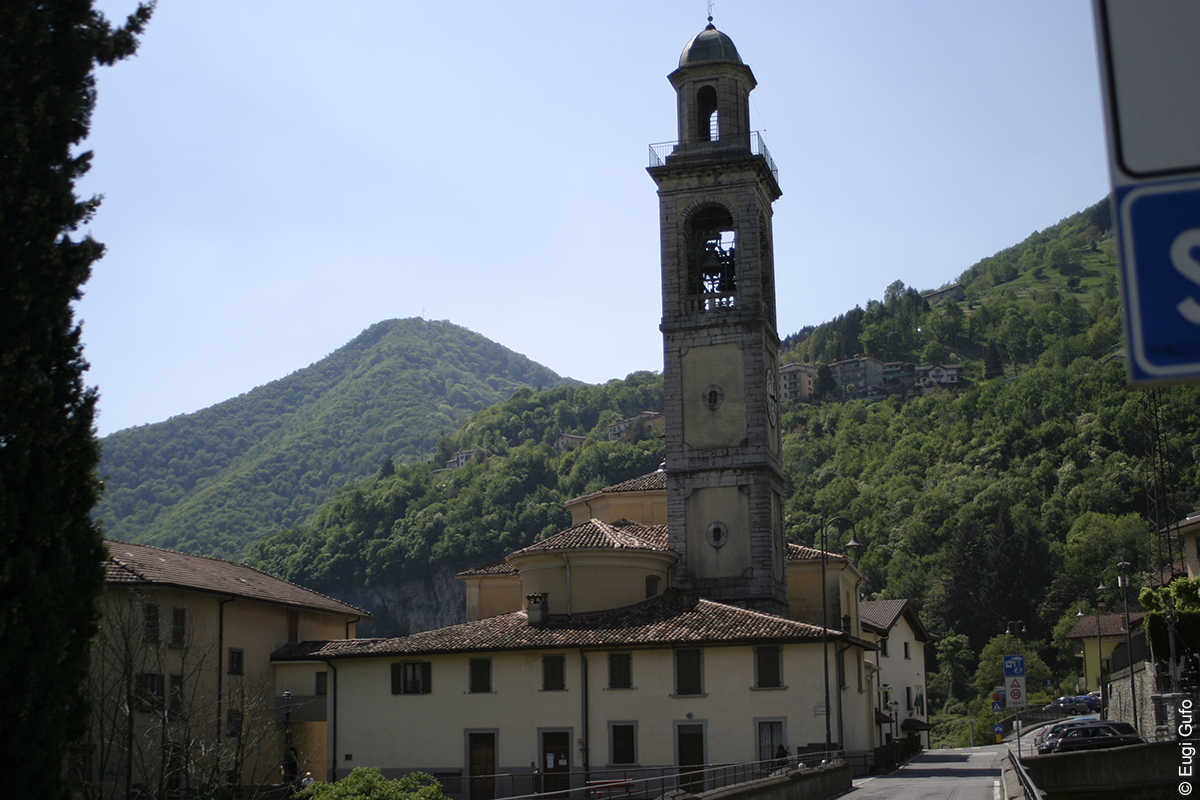
The best-preserved historic building is the local church: constructed in the fourteenth century, rebuilt in the first half of the eighteenth, and dedicated to Saints Bartholomew and Bernardino in 1900. As you may observe, a good state of preservation does not invariably coincide with beauty.
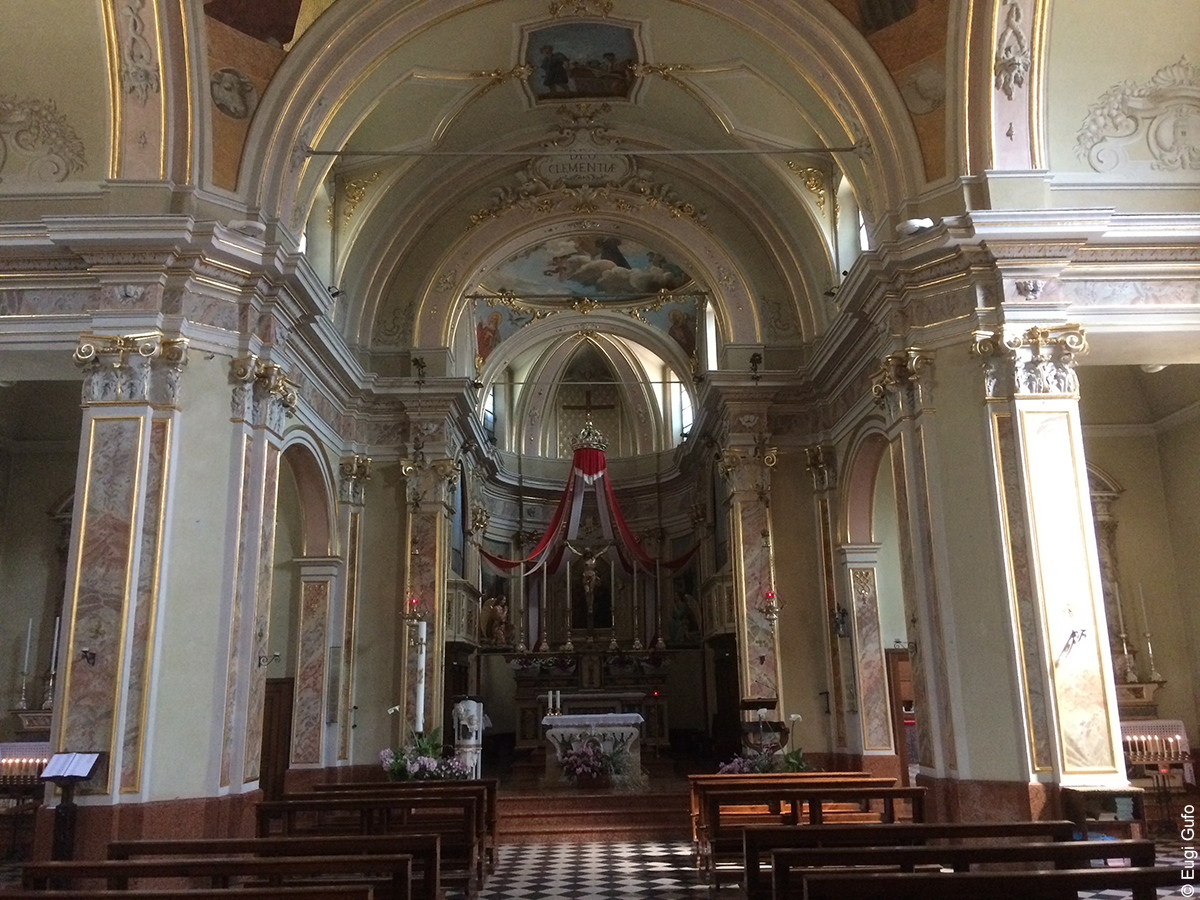
Many interior decorations (as well as the bell tower) date from the twentieth century; overall, they create a respectable impression and do not clash dramatically with the eighteenth-century elements.
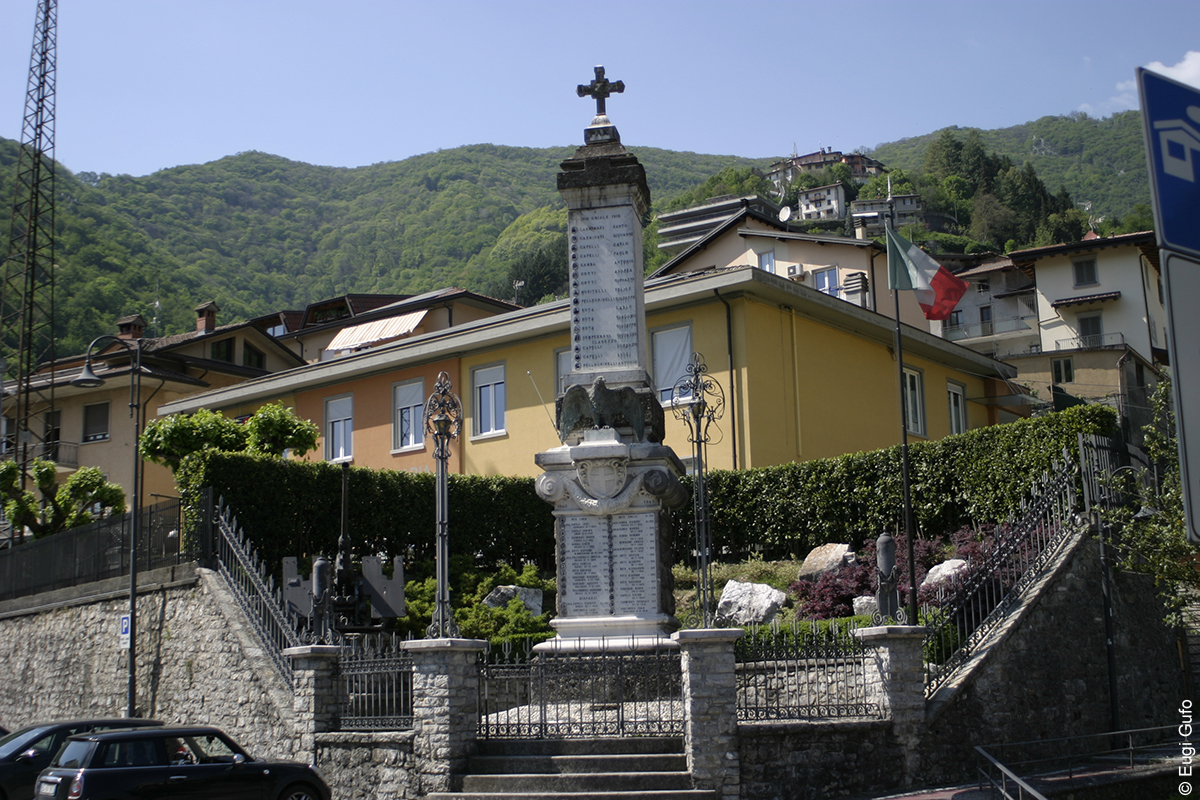
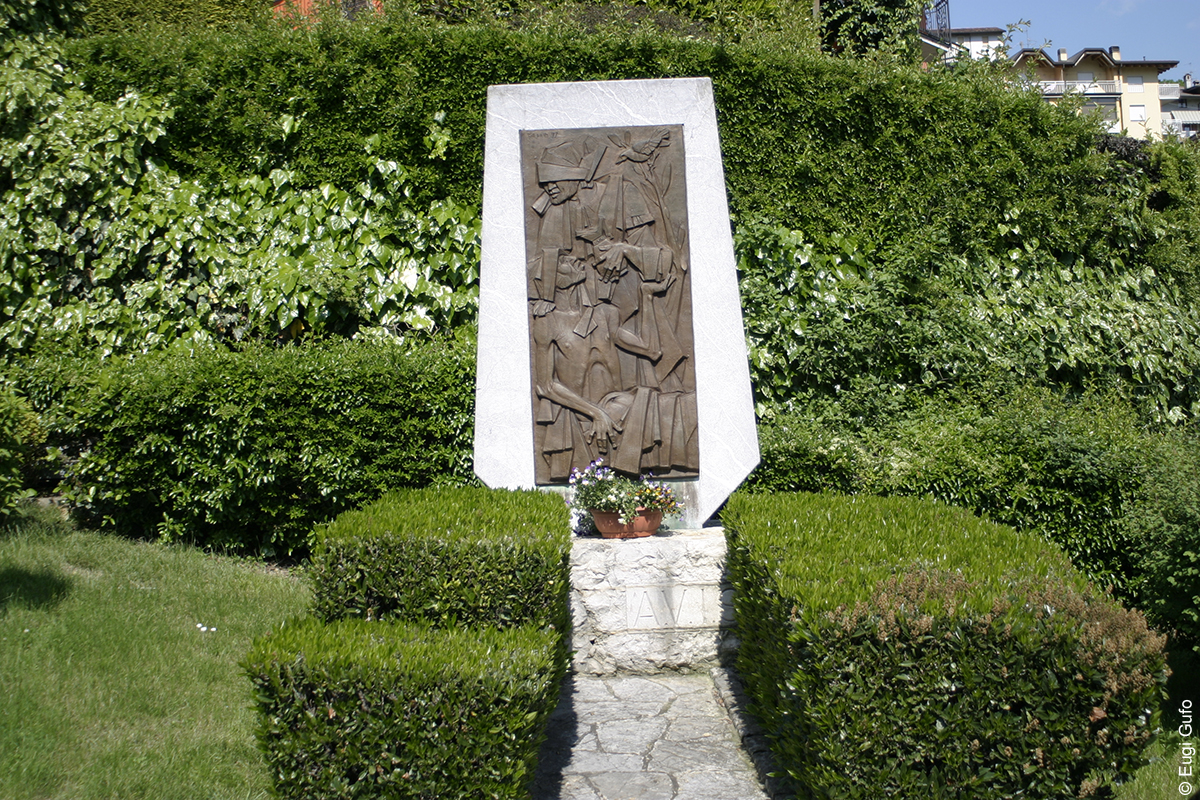
As for older commemorative monuments, I found only one: the memorial to those fallen in the two World Wars. At least it is well maintained.
I was unable to determine what this elegant modern monument represents (though I suspect it refers to something unfortunate). I do not know the author either. Artistically, however, it is sufficiently striking to appear almost out of place in a village of this sort.
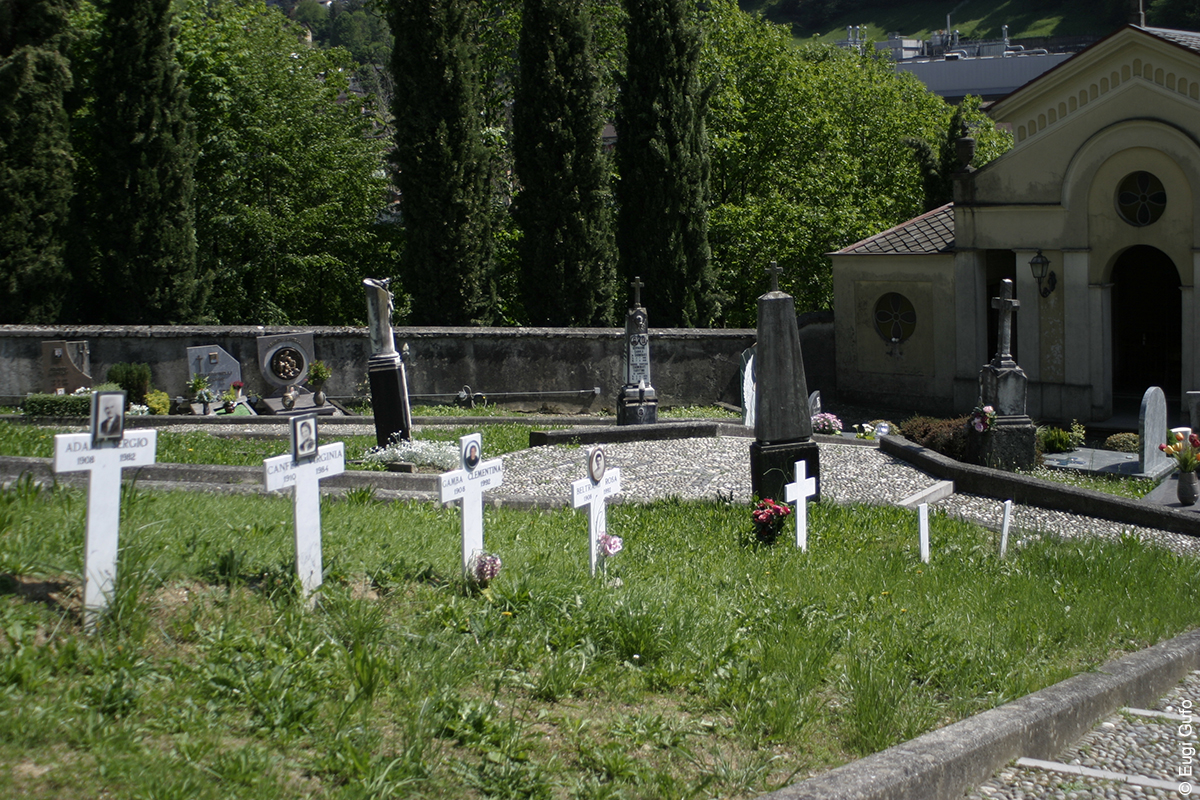
The small cemetery of Ubiale is also somewhat anomalous: besides its rather minimalist style, it appears sparsely «populated» despite its apparent age.
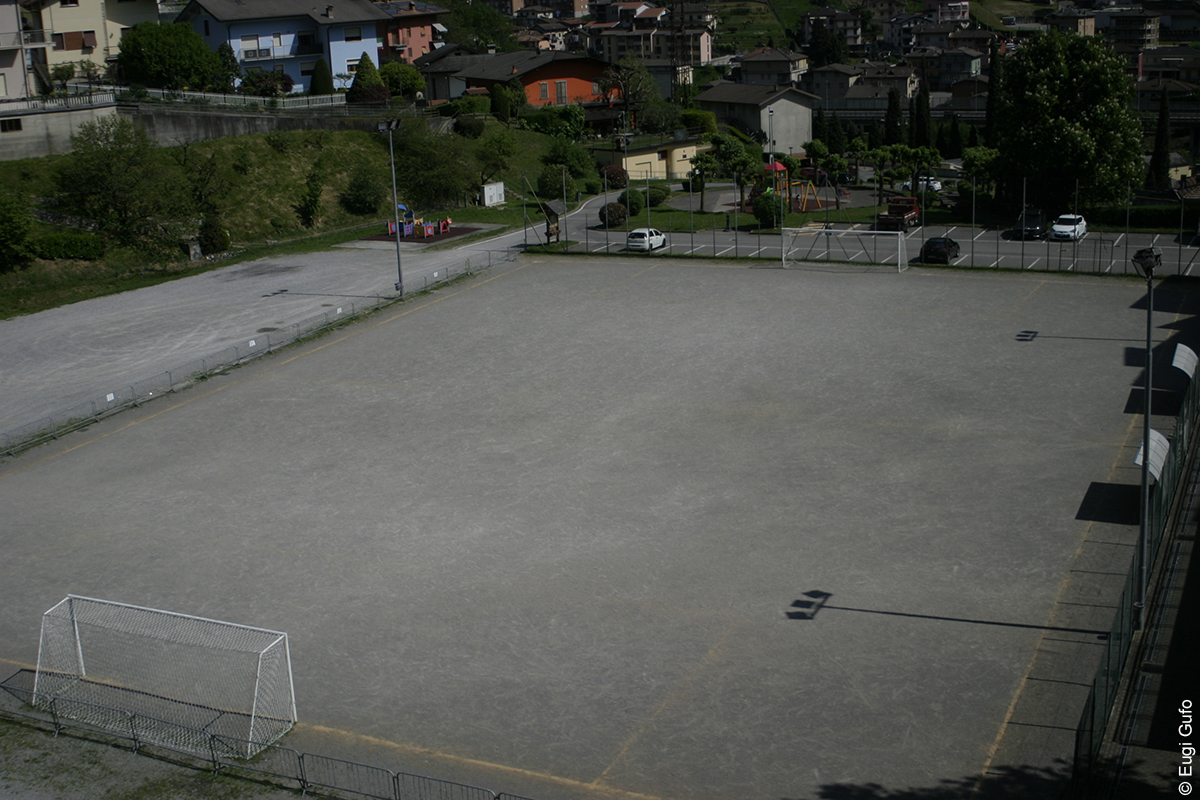
At this point you might be forgiven for concluding that Ubiale is a mildly depressing place where spaces dedicated to the afterlife — or to spirituality — prevail both quantitatively and qualitatively. In reality, amenities for the living are not entirely absent. Here, for example, is the cheerful local football pitch.
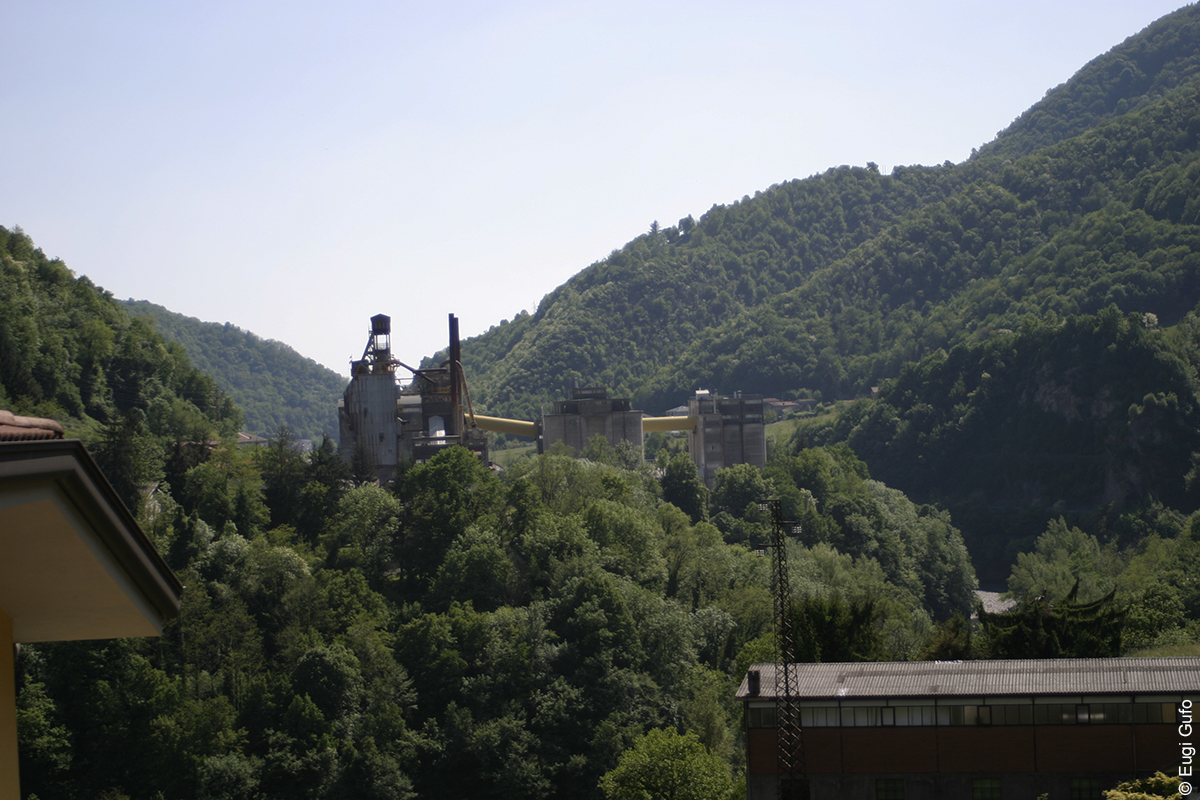
Very well, I shall attempt a different approach. One positive aspect of Ubiale is the absence of industrial pollution. The dead, after all, emit no emissions.
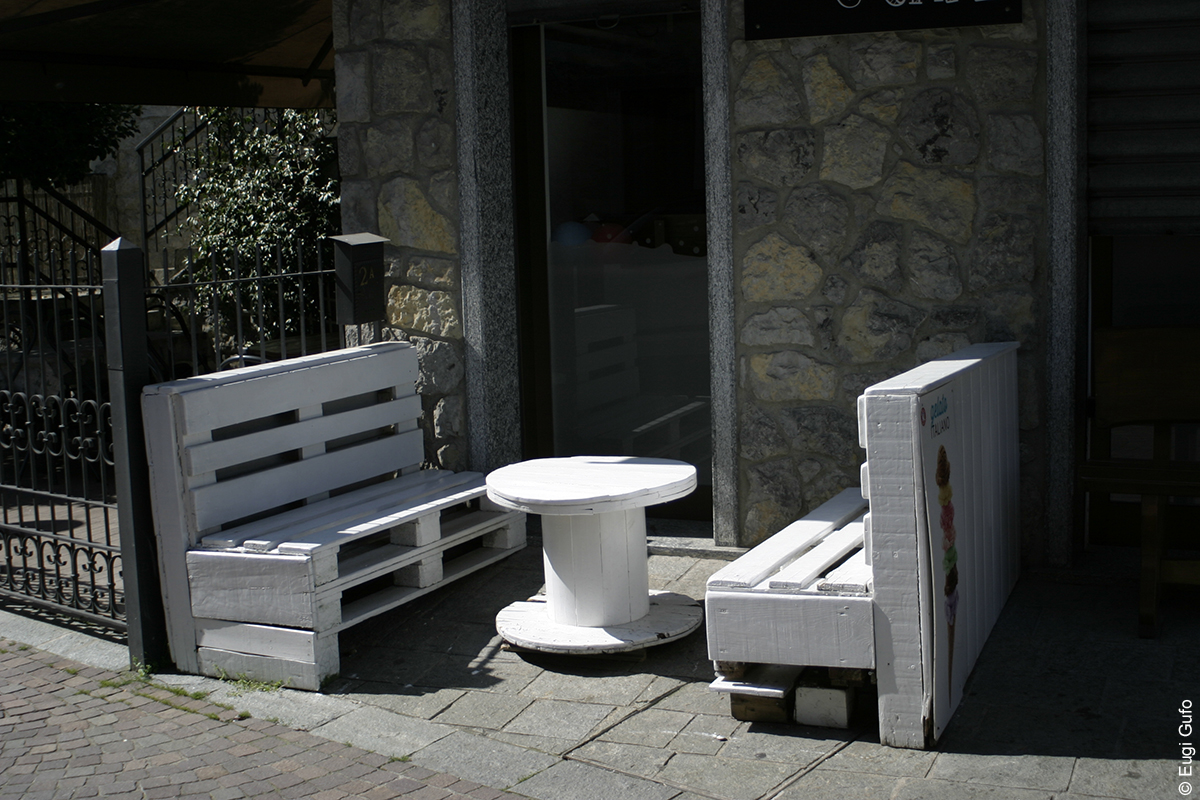
Still insufficiently uplifting? I refuse to surrender and instead offer a valuable practical recommendation: to feel well in Ubiale, simply visit the sole bar, sit upon its fashionable benches, and intoxicate yourself.
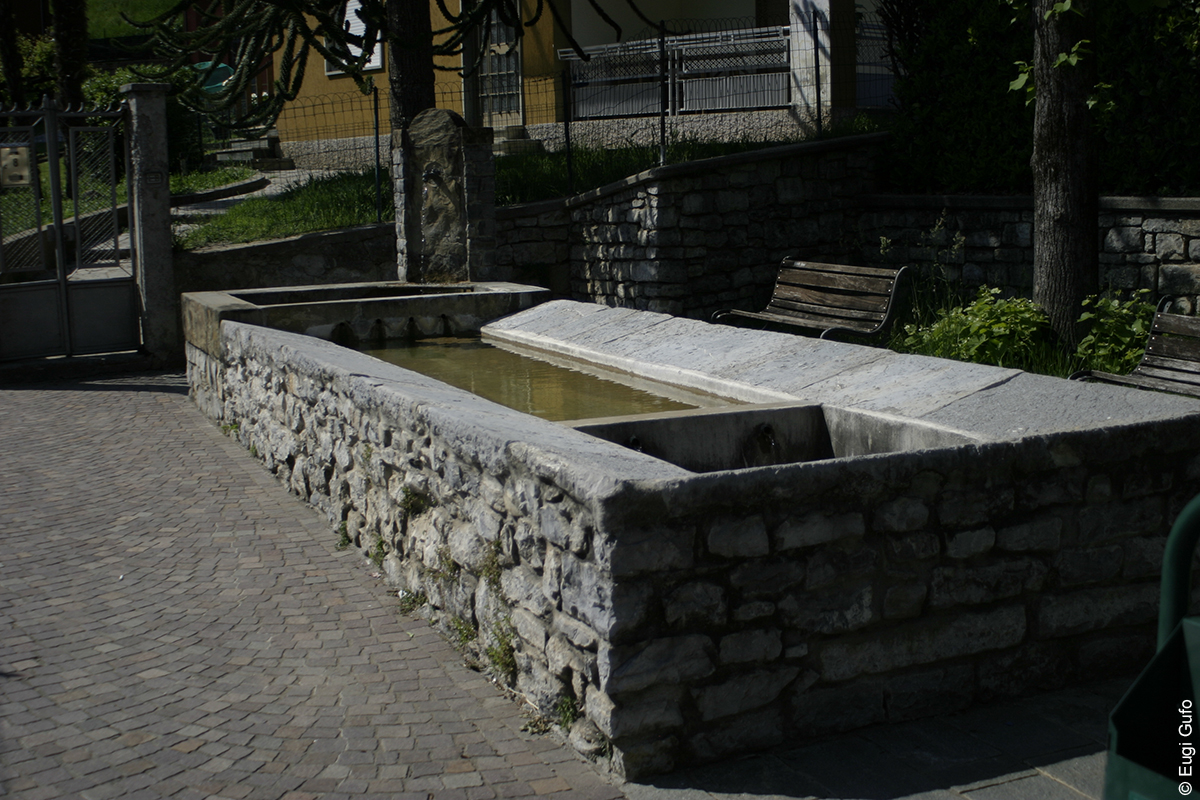
If alcohol fails to appeal, we may turn to other liquids — for instance, the renovated public washhouse, which can be contemplated with sobriety intact.
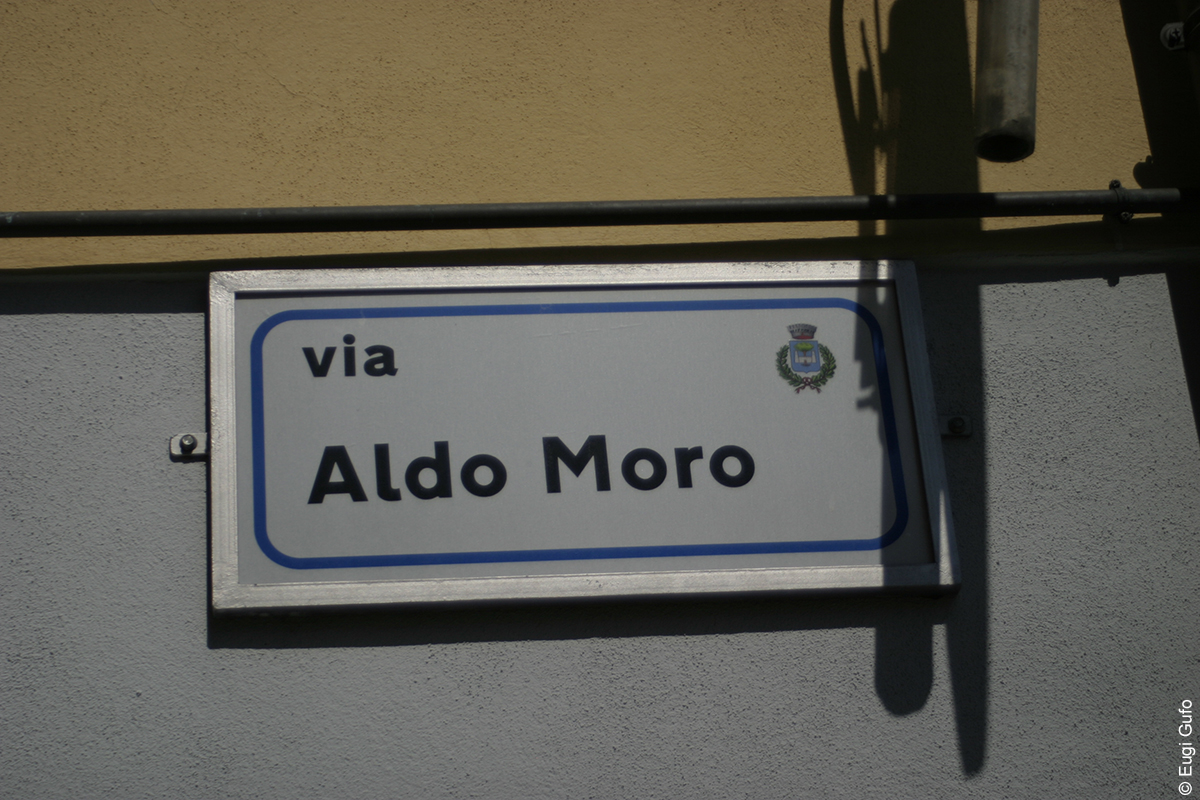
Or we might ponder why Ubiale has chosen to mount this otherwise widespread model of street-name signage in such an anomalous fashion (elsewhere in Italy I have seen them affixed to vertical poles, not framed like paintings).
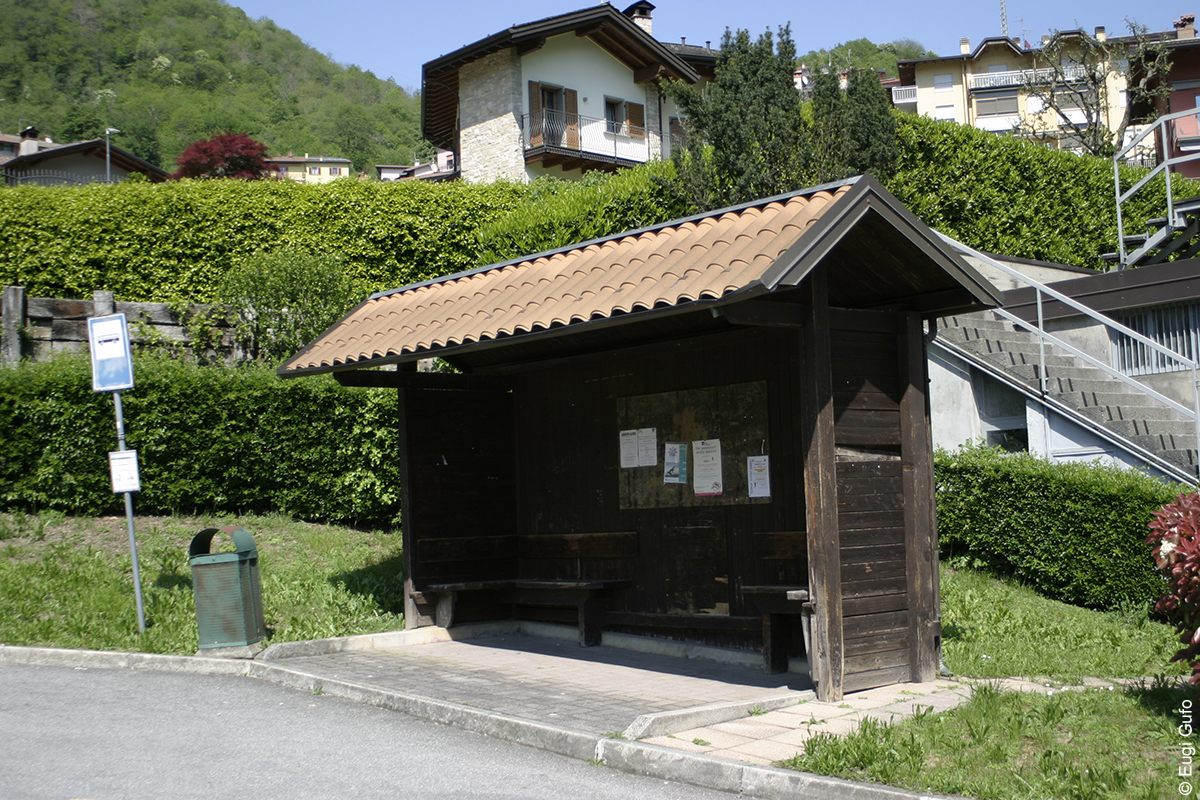
And with that, even the minimally interesting elements of Ubiale are exhausted. The final decision concerns whether to await the bus at this ecologically constructed shelter or to depart by some alternative means.
At least we leave with one valuable lesson firmly learned: the study of the beauties of Ubiale Clanezzo may not require — or perhaps should not require — a detailed study of Ubiale itself.
Ubiale, 2 May 2025
↓ Show comments ↓

