


 Long live Ukraine! Fuck the war!
 RSS of site articles
In the photographic account devoted to my visit to Spino d’Adda, I had already mentioned one of the broader objectives of that journey: to explore several small municipalities in the area which I previously knew only by name, but not by «content.» It was precisely for that reason that, once my exploration of Spino d’Adda was complete, I set off in the direction of Pandino (a municipality whose name I had heard no less frequently than the former).
The two villages lie only a few kilometres apart, so I seized the opportunity to enjoy a walk through the fields and recover some physical activity that tends to be neglected during the «normal» part of the year.
The walk between Spino d’Adda and Pandino (or vice versa) is made possible by a cycle-pedestrian path built alongside Provincial Road 91 (the former Via Pandina of the second half of the fourteenth century). On the Friday afternoon before Easter, the road did not appear particularly busy, while on the path itself I encountered only two or three joggers and perhaps four or five cyclists. Thanks also to the absence of blazing summer sun, I remained thoroughly satisfied with the walk.
I was even amused by the distinctly Italian habit of imposing — through the appropriate road signs — the end and subsequent resumption of a cycle path at every single intersection, however minuscule. A two-metre-wide tractor track crossing the path and used, on average, once a month? Naturally: end-of-cycle-lane sign, then start-of-cycle-lane sign.
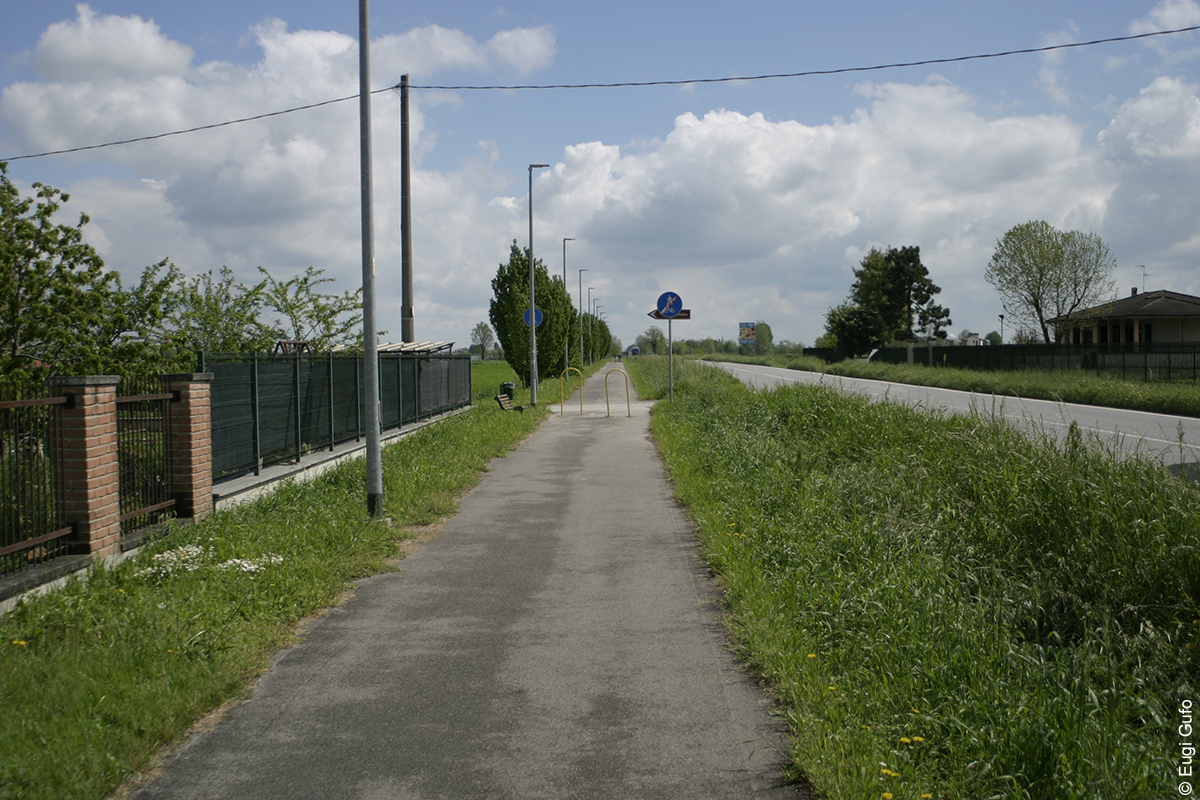
The numerous lampposts are also worth noting: the path should therefore be convenient at all hours and in all seasons. But daylight makes it easier to contemplate soothing rural landscapes.
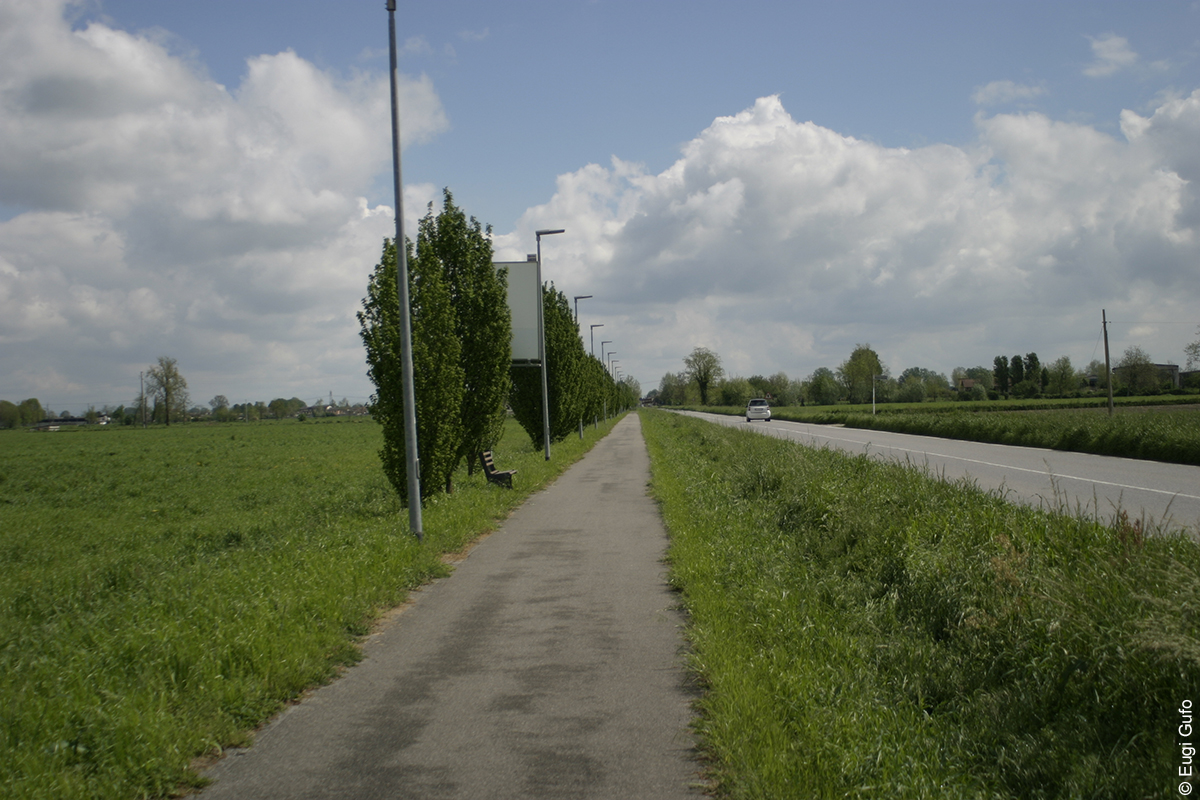
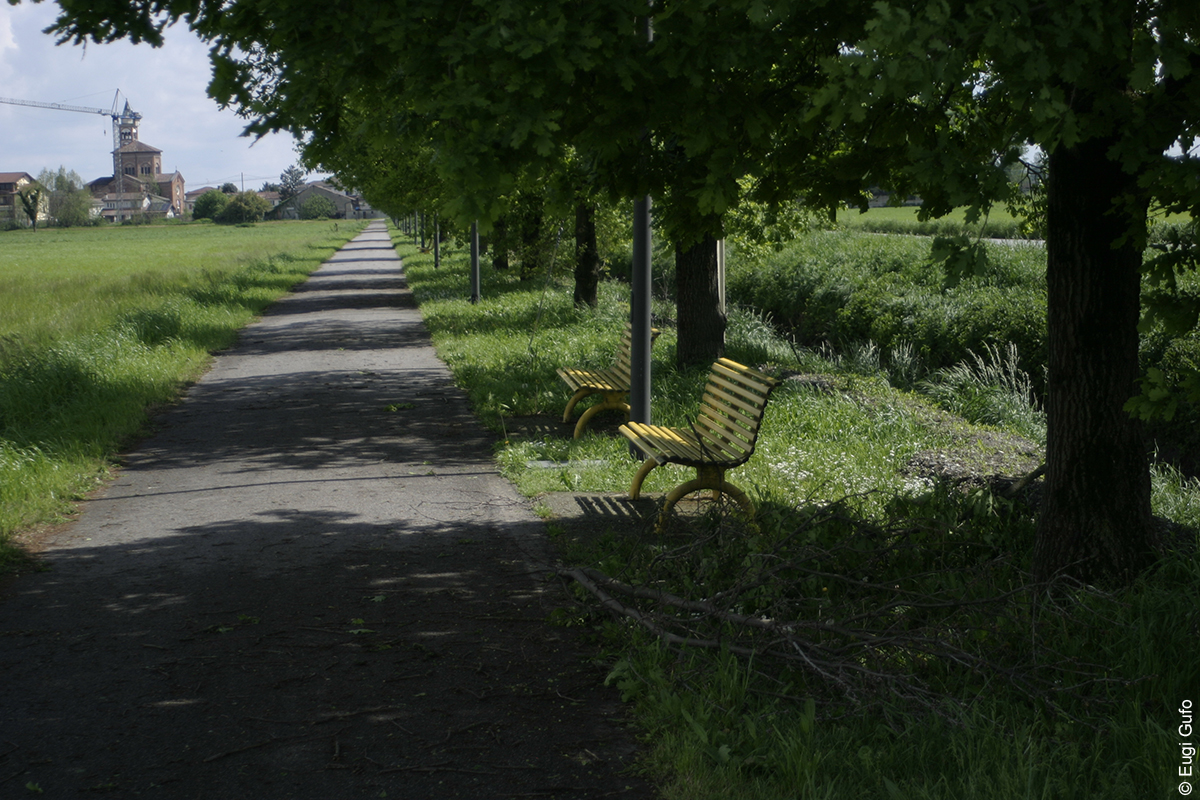
In some of the previous photographs you may have noticed benches. Unfortunately, most of them are fully exposed to the sun and thus of limited utility during the summer months. The shaded benches — under large trees — are located roughly halfway between Spino d’Adda and Pandino, near the settlement of Nosadello (a frazione of Pandino). Remember this, should you decide to replicate the journey, ahahaha.
Nosadello itself is impossible to miss: it lies directly along our route.
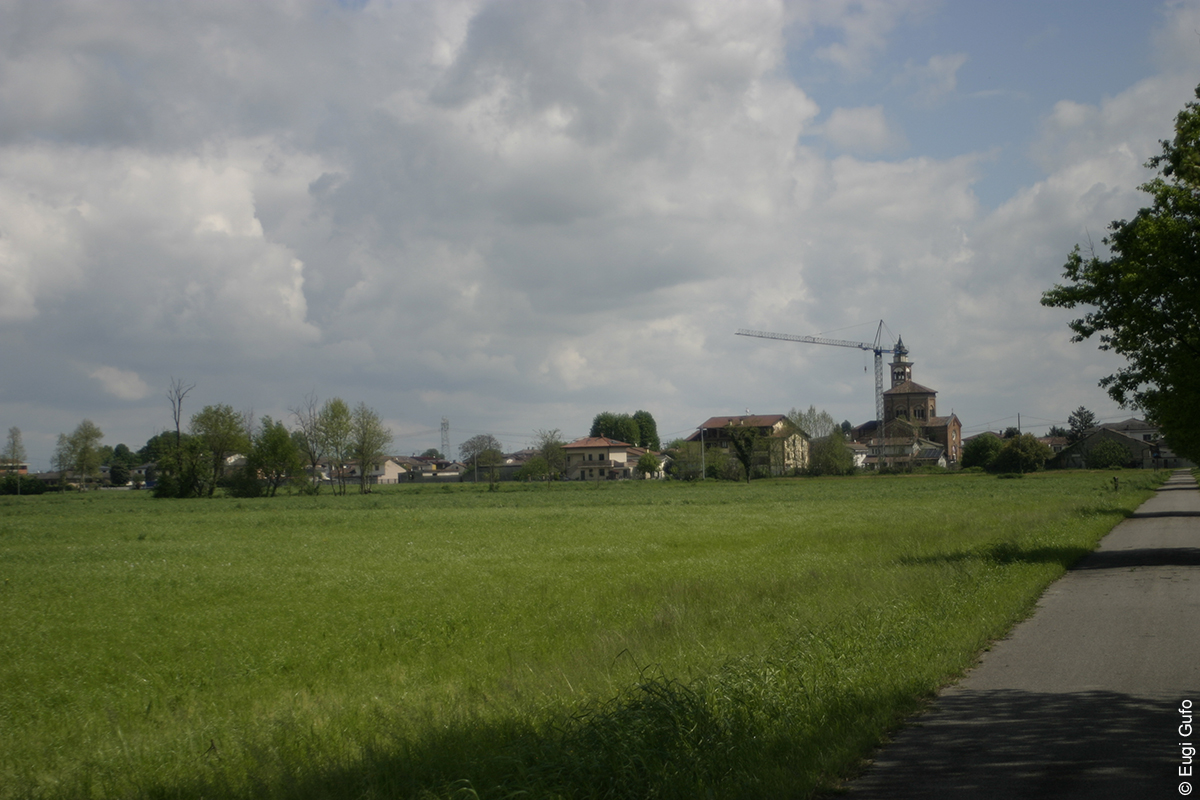
Since we are here, let us explore it. It will surely not require much time. Besides, who knows if or when I shall pass through this area again? The village begins with something not entirely banal — promising that the time invested will not be wasted.
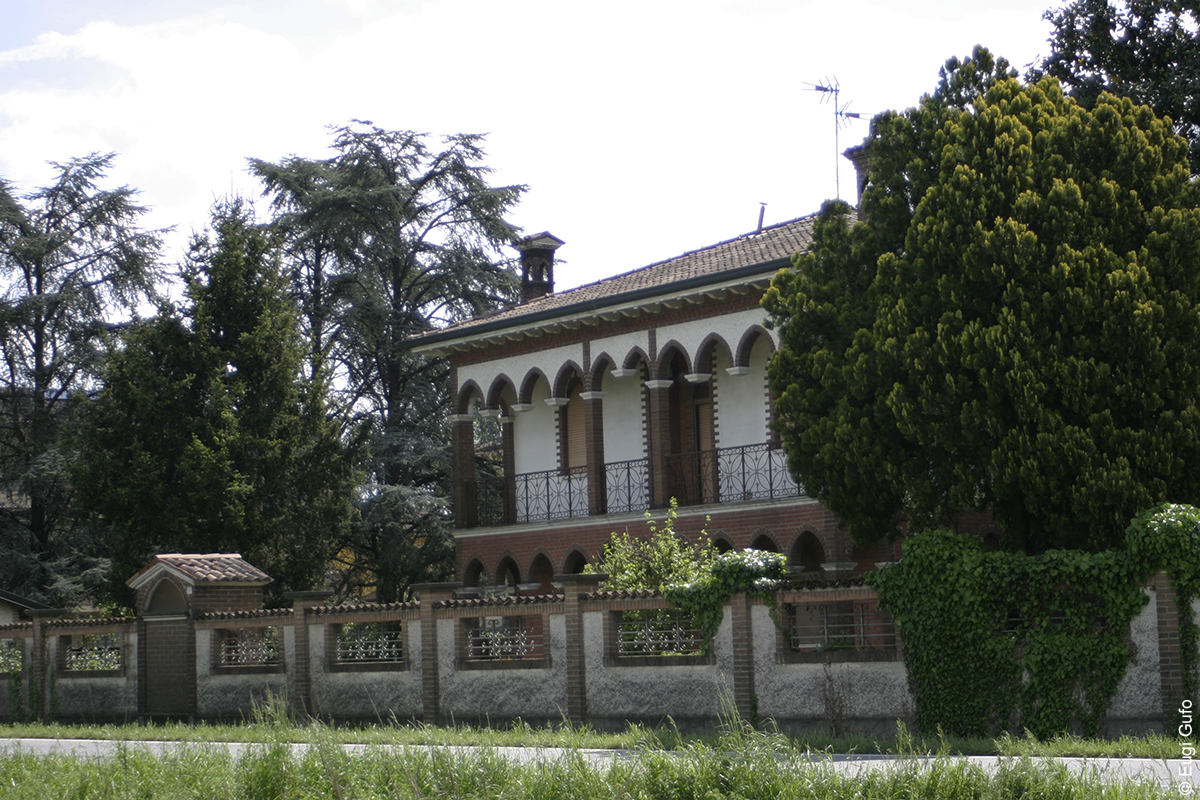
For a short stretch, however, it transforms into an utterly ordinary rural hamlet. But this should not alarm us.
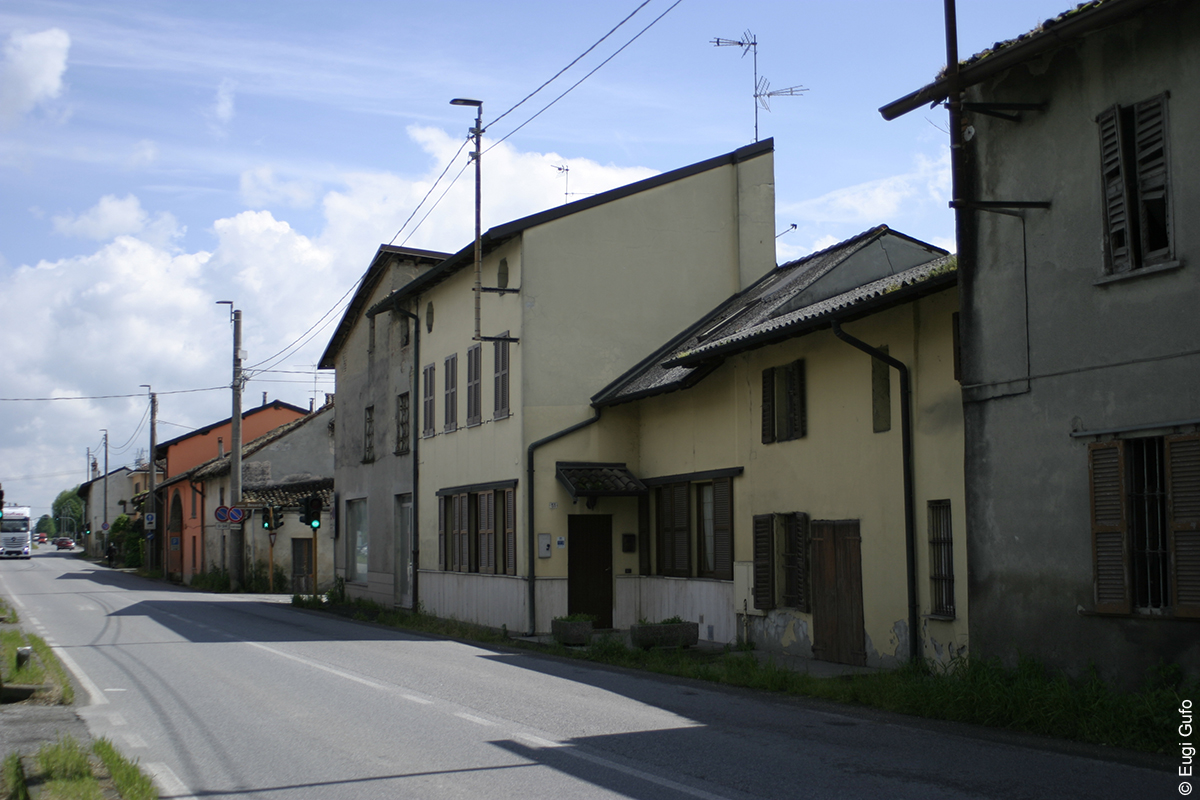
A little determination in one’s search soon reveals some examples of older rural architecture.
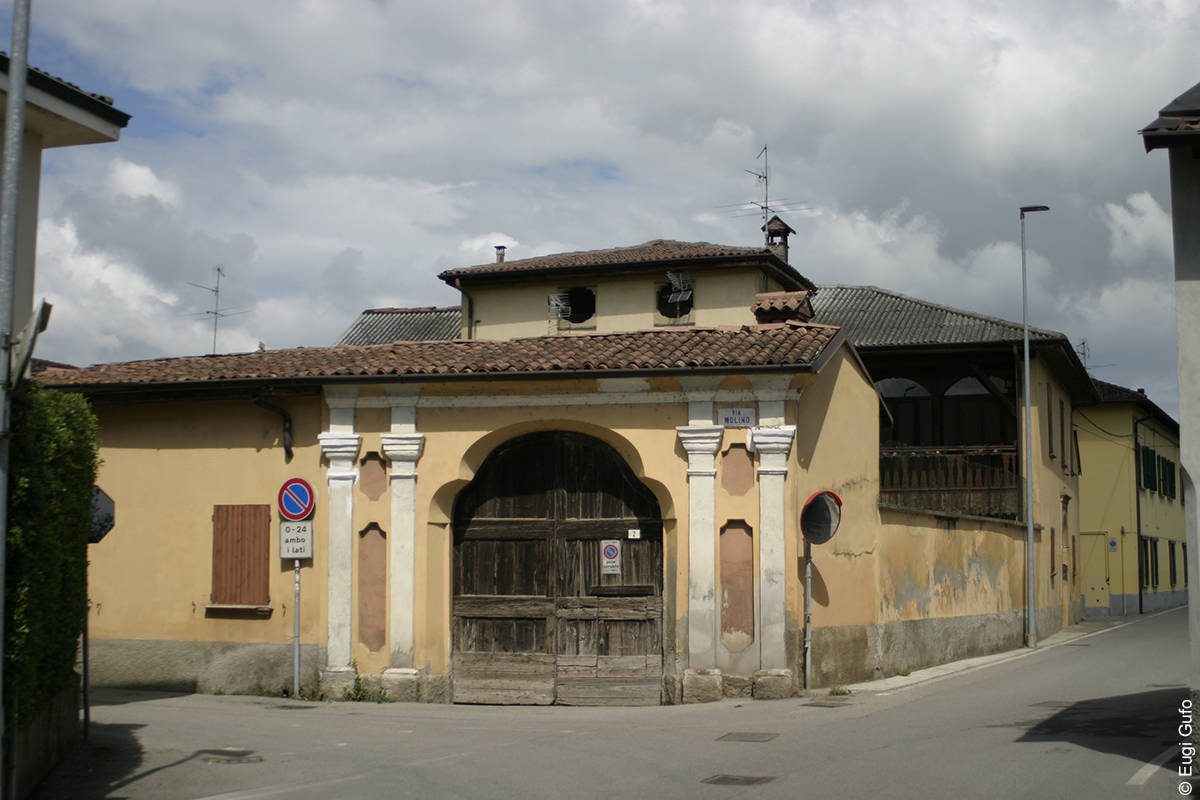
One of the less obvious peculiarities of villages of this type — a fact not always evident to many observers — is that their historic centre consists precisely of this old rural architecture, while the outskirts contain the larger, more modern buildings, often apartment blocks.
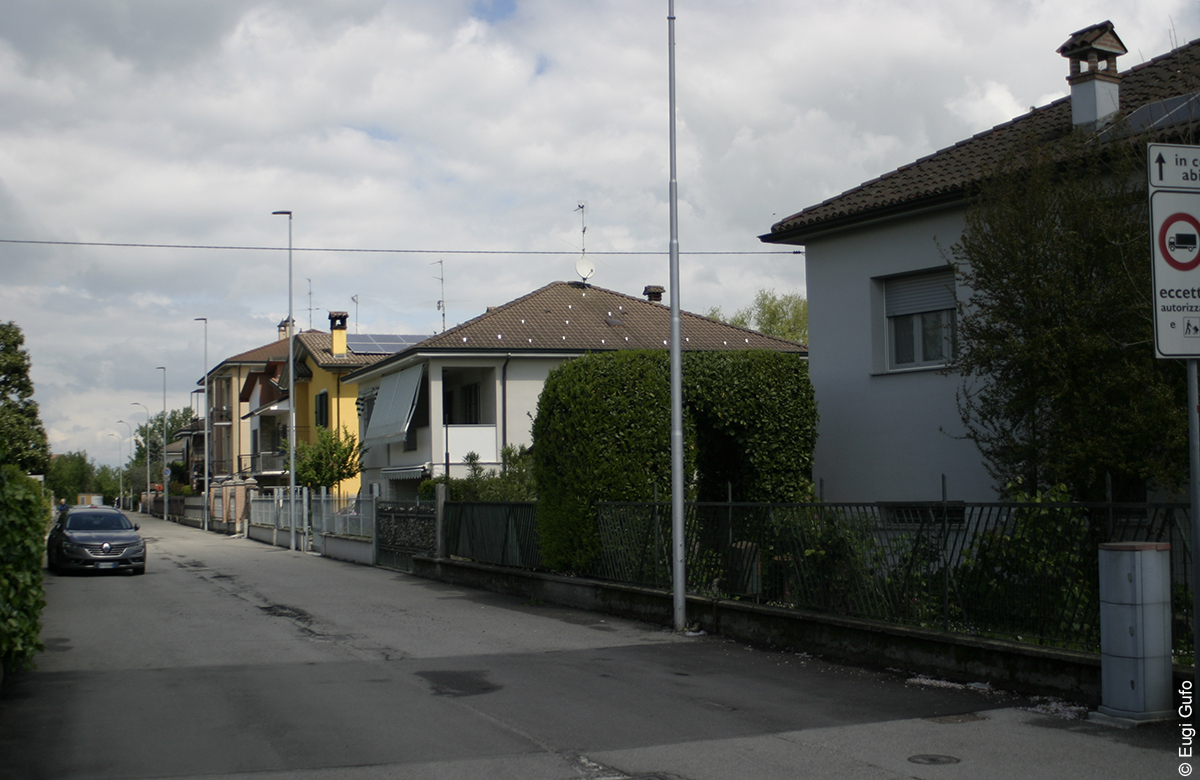
Naturally, single-family houses predominate. The style of some of them lies somewhere between pseudo-antique and modern.
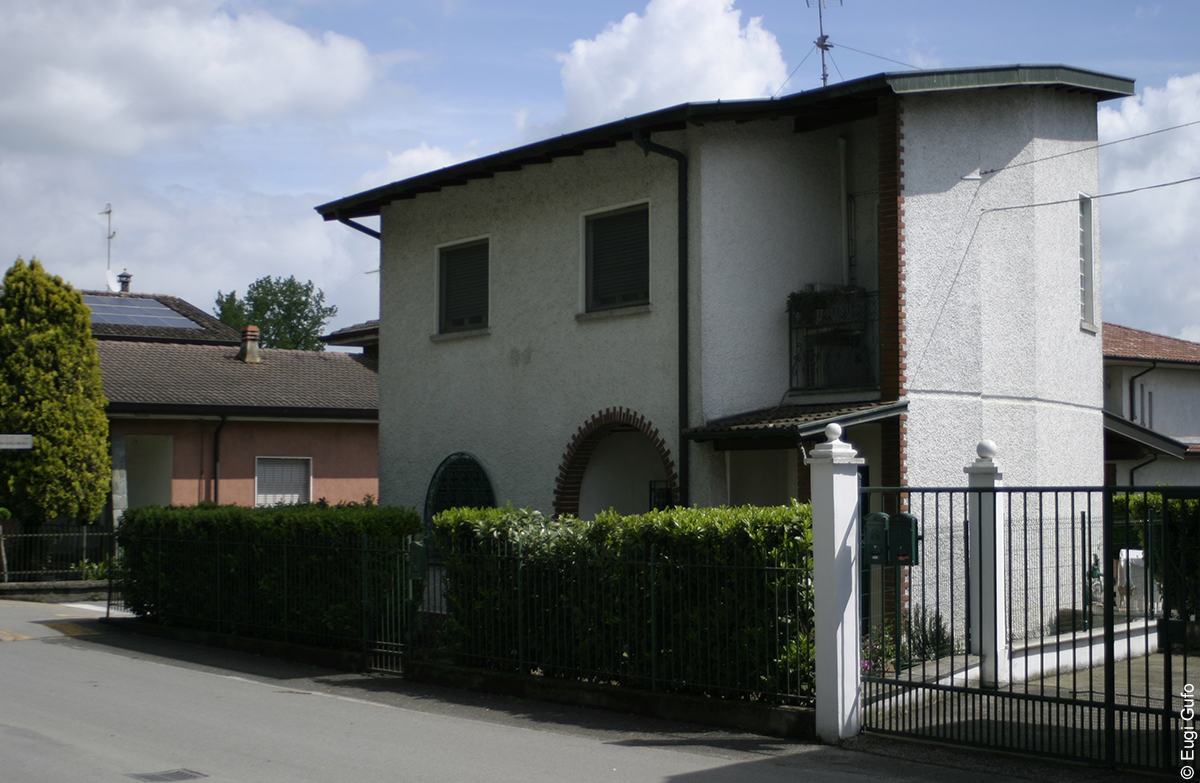
But let us return to what is genuinely attractive and interesting. Nosadello, a village of approximately 1,200 inhabitants (fewer than 300 at the time of Italian unification), possesses an unexpectedly large and by no means unattractive church: the Church of San Pantaleone Martire, rebuilt between 1920 and 1929.
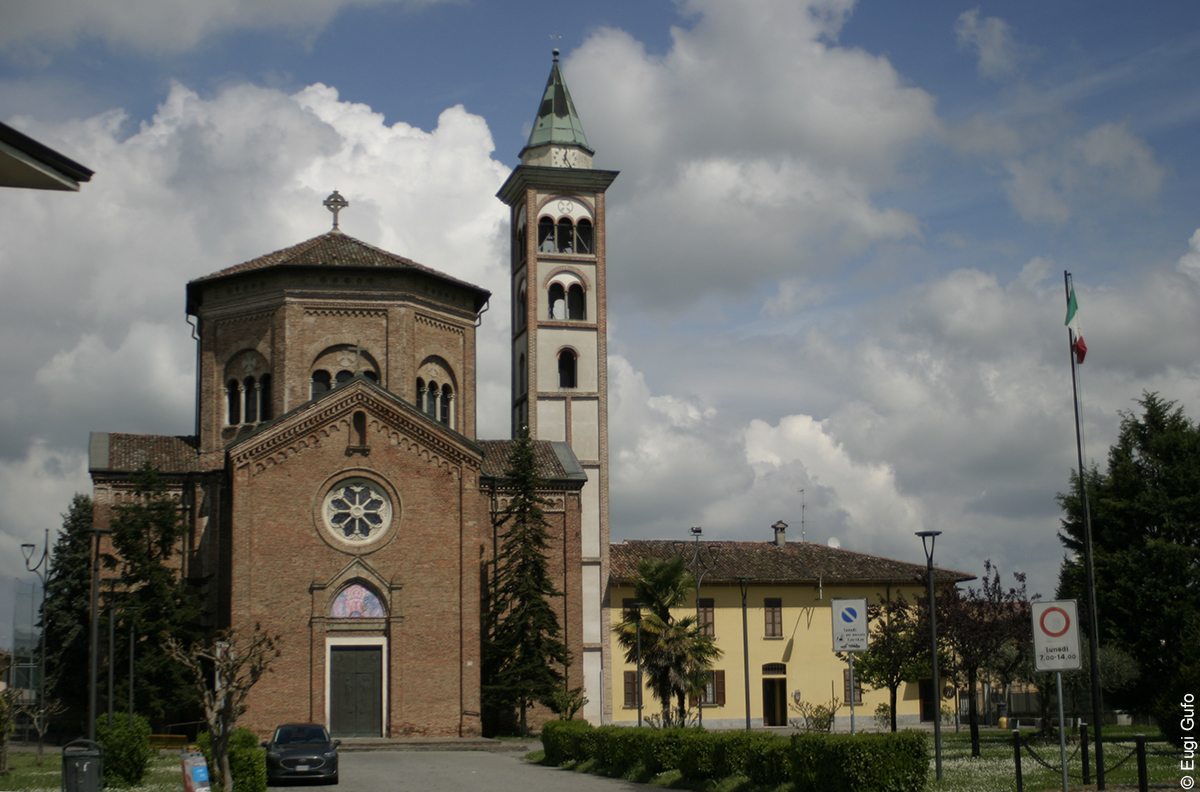
Unfortunately, I was unable to discover what the earlier version of the church — known since the mid-thirteenth century — looked like.
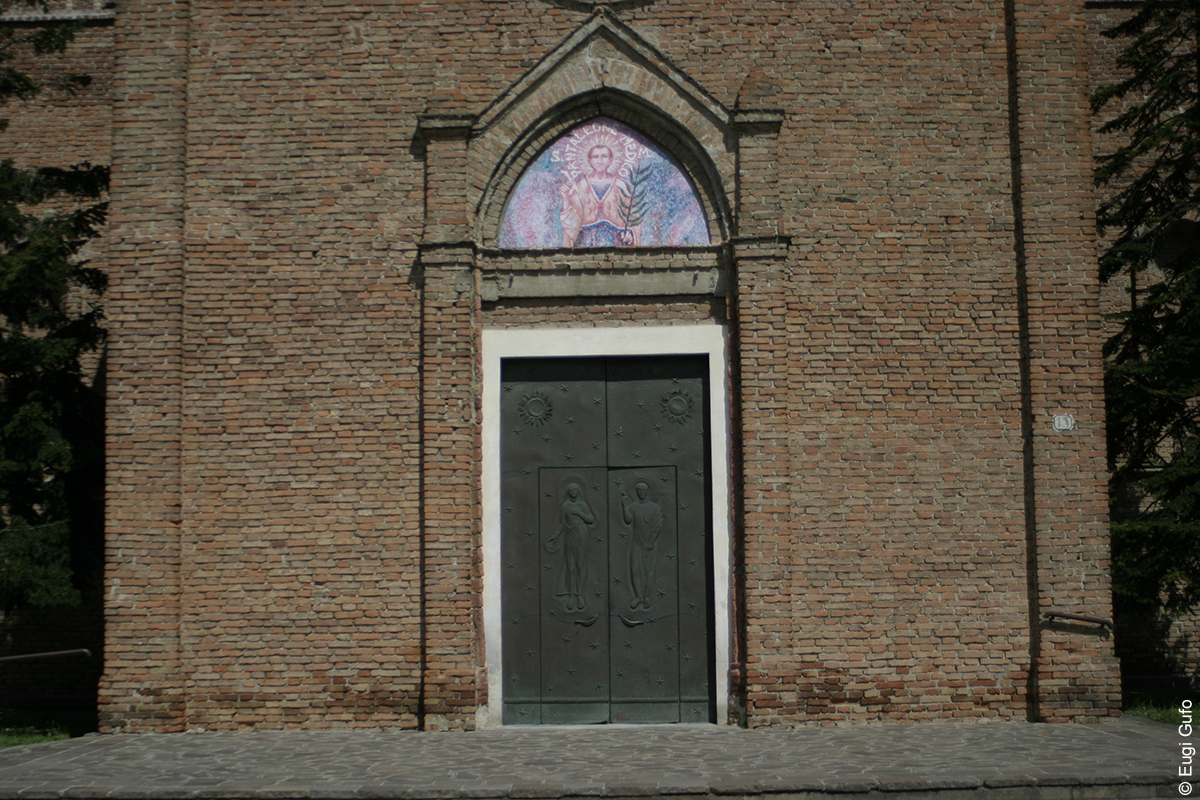
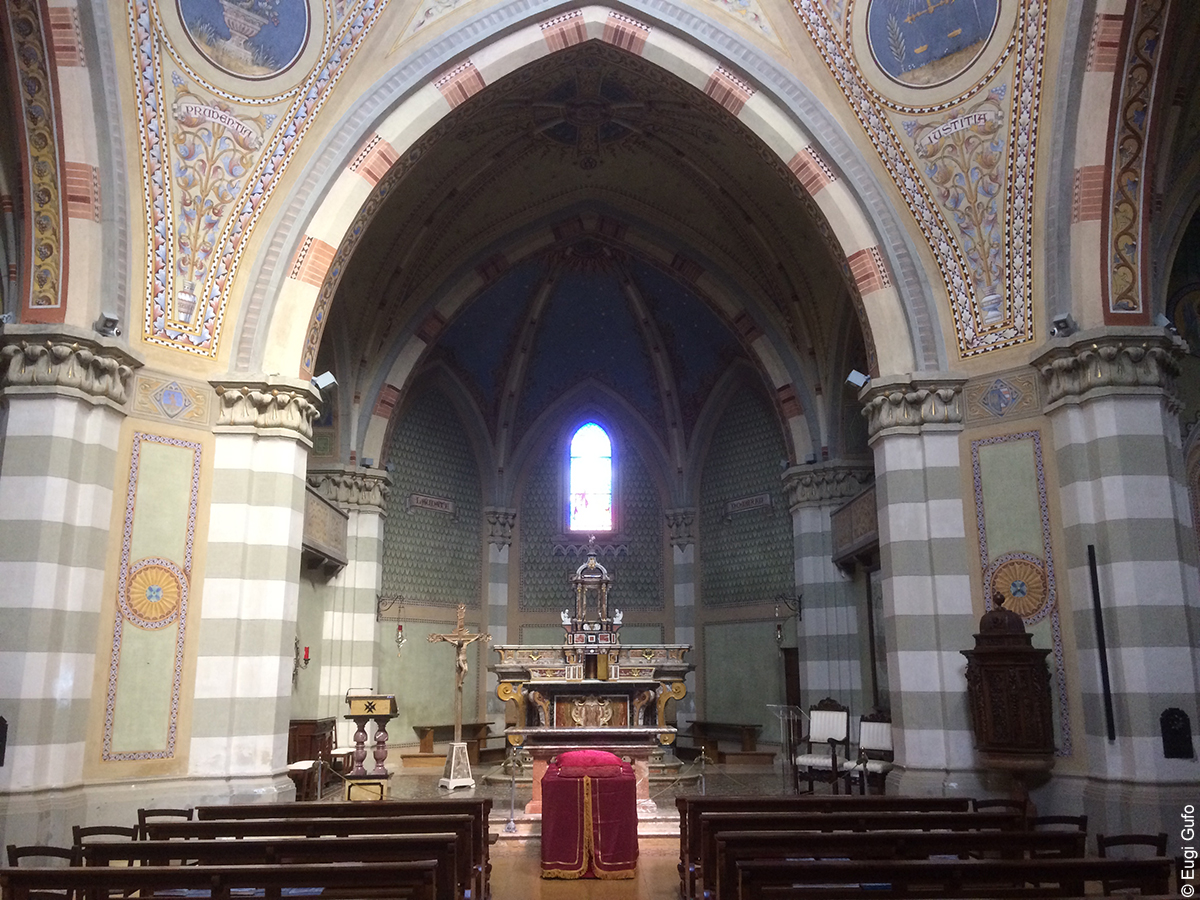
The present church, however, is certainly worth entering, if open.
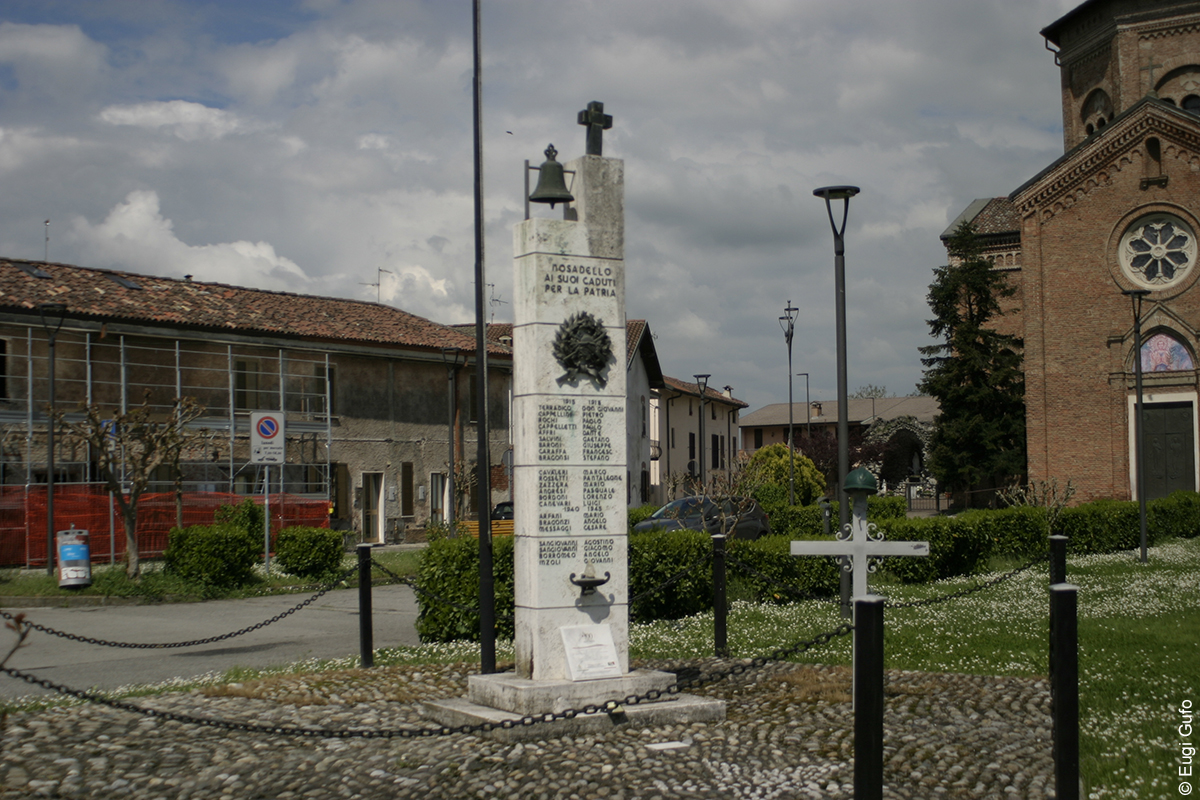
In front of the church stands a simple yet elegant monument dedicated to the local citizens who fell in the two World Wars. In particular, the cross with a helmet (to the right), reminiscent of a grave marker, struck me as a rather rare element — at least in my tourist experience.
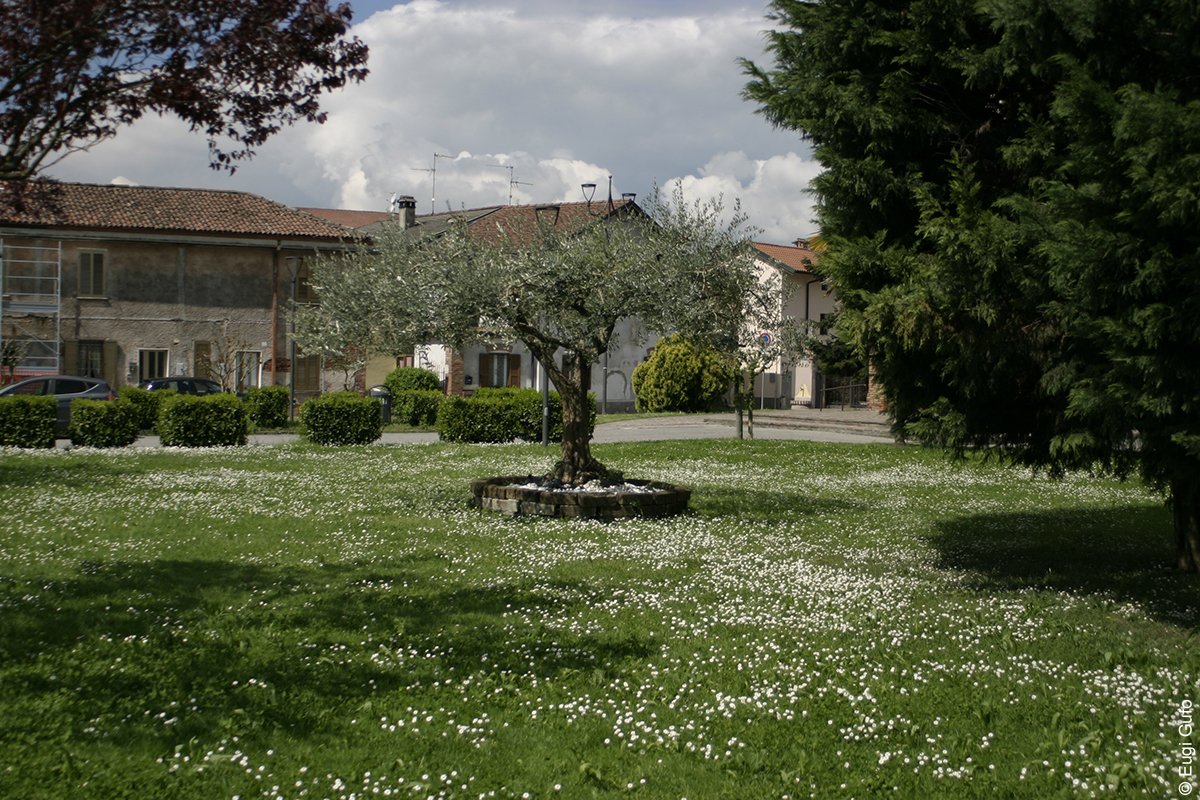
The adjacent lawn, with its flowers and trees, is also delightful: it feels far more natural than the manicured green spaces we usually encounter in cities.
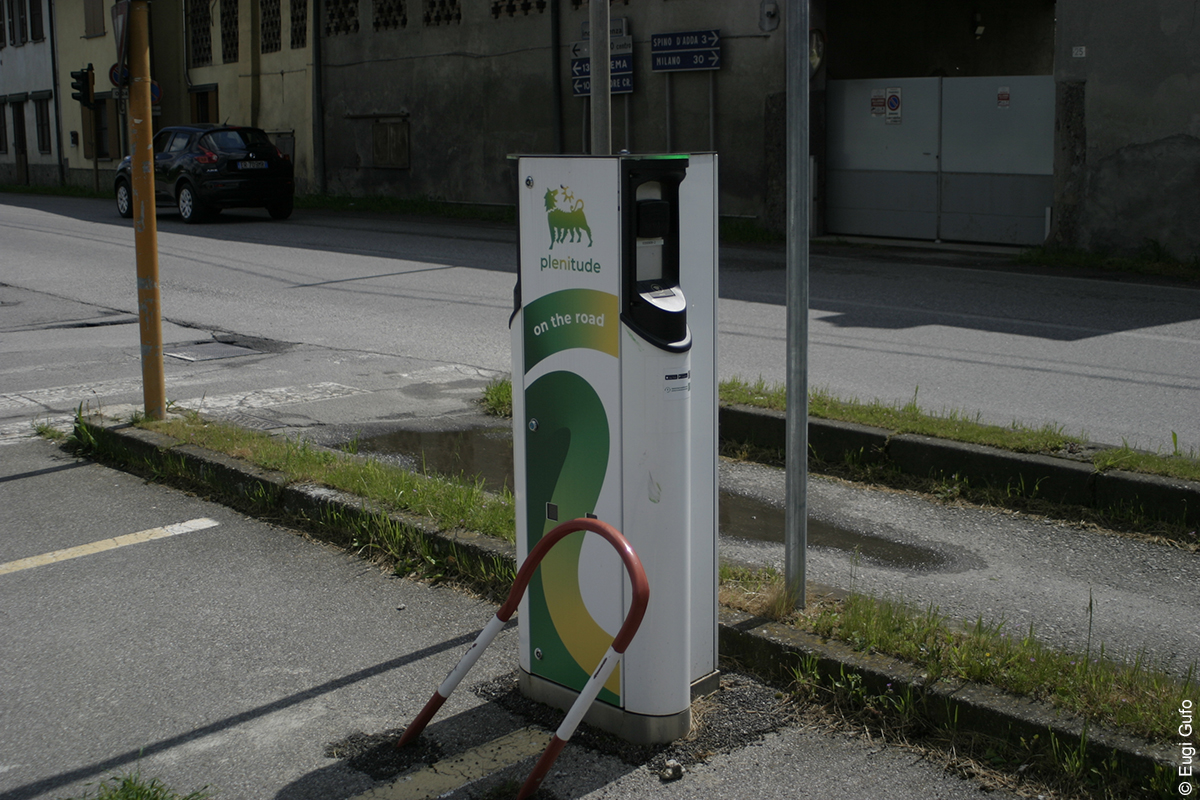
Yet antiquity and nature are not the only features of this little village. There is also technological progress: an electric vehicle charging station (with two connectors, no less). Outside urban centres, electric infrastructure remains sparse; thus such a facility is particularly valuable.
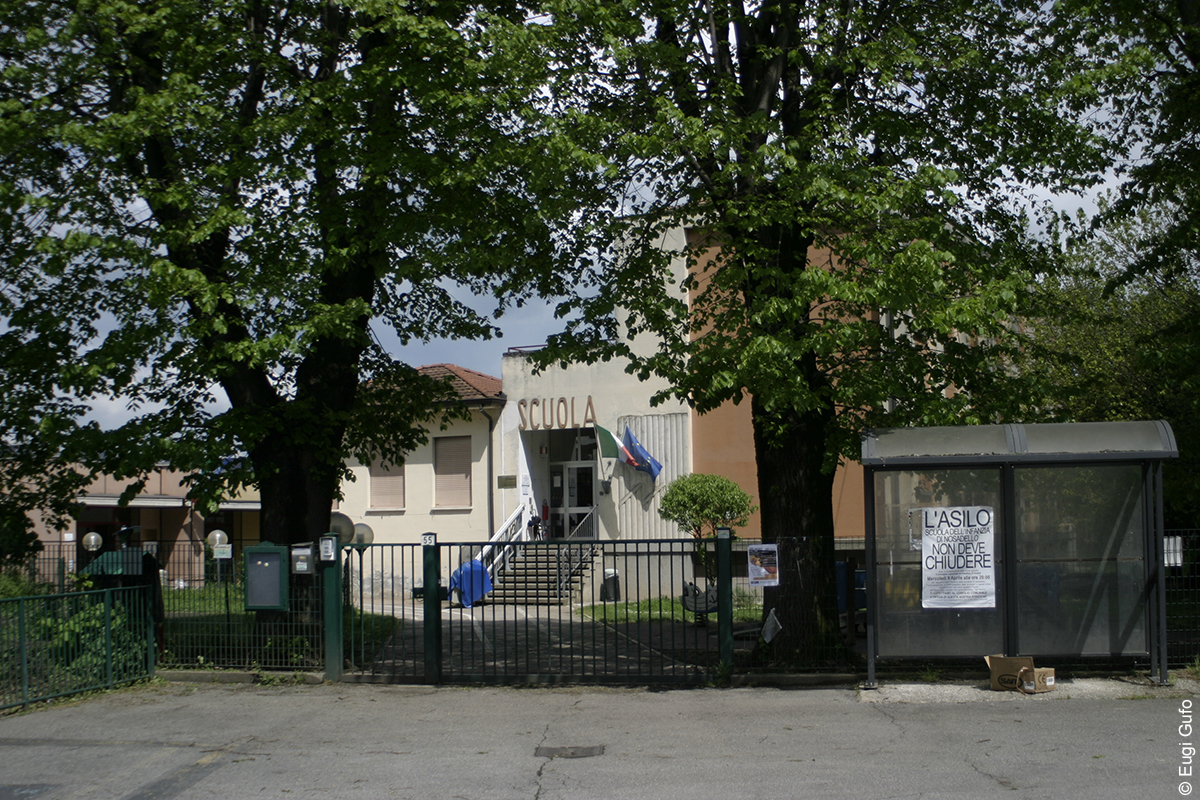
Nosadello even has a nursery school. Apparently, however, it is at risk of closure: in a locality so small, not enough children are born each year. At the same time, one can understand the protesting parents — transporting their children to a location two or three kilometres farther away would constitute a notable inconvenience (at least by local standards).
Meanwhile, we suddenly discover that we have already seen everything Nosadello has to offer. We reach its outermost edge and find ourselves once again in open countryside.
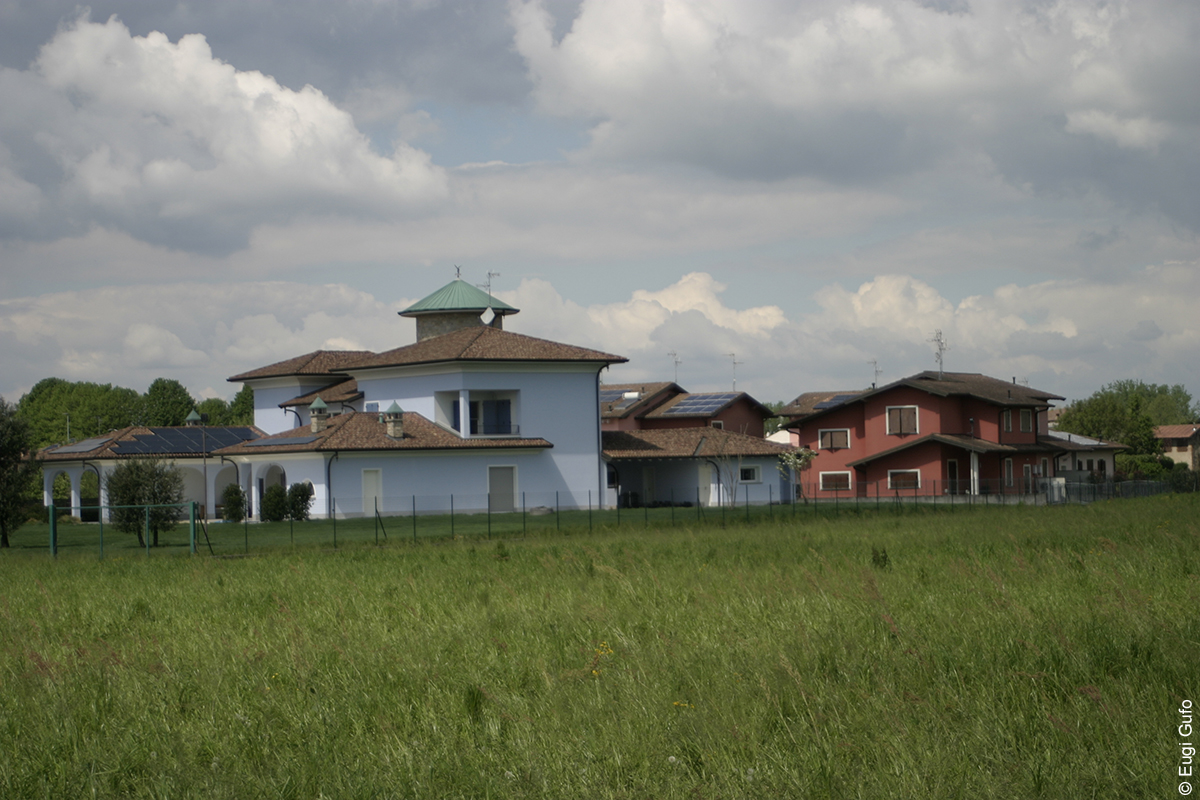
Let us therefore continue our walk toward Pandino… But that, as you already know, is another story.
Nosadello, 18 April 2025
↓ Show comments ↓

