


 Long live Ukraine! Fuck the war!
 RSS of site articles
As part of my «scientific» investigation of that stretch of quasi-plain from which one most conveniently ascends to Val Codera, I first conducted a brisk reconnaissance of Verceia and then set off on foot toward one of its nearest neighbours: Dubino.
The pedestrian route I selected was mercifully short — only a few kilometres — passing first near Lake Mezzola and then through an agricultural (or almost agricultural) landscape.

Upon entering what appears to be the built-up centre, the well-intentioned explorer is transformed into a 21st-century Christopher Columbus — minus the inconvenient delusions of grandeur. One walks in, traverses the settlement in every direction until reaching the visibly obvious edge of construction, forms a respectable personal impression, and departs with the honest conviction of having visited and «studied» Dubino.
Then, one day, one sits down at one’s computer to prepare a photographic report, opens Google Maps to verify a few factual details… and discovers that one has in fact explored only a fraction of Dubino — a secondary section connected to the formally main part of the municipality by a provincial road (SP) running discreetly through the fields.
Indigenous people! Aborigines! Could you not have erected a modest sign warning visitors of this geographical peculiarity?
Alas, by the time of this disconcerting discovery, the expedition was long concluded. I do not know if or when I shall return for a more comprehensive survey. Consequently, I must now describe the secondary portion I actually saw — and, with quiet audacity, present it as Dubino in its entirety.
Stylistically, the outskirts resemble a hybrid between a rural village and a mountain settlement. Only part of the building stock is minimally attractive and/or renovated.
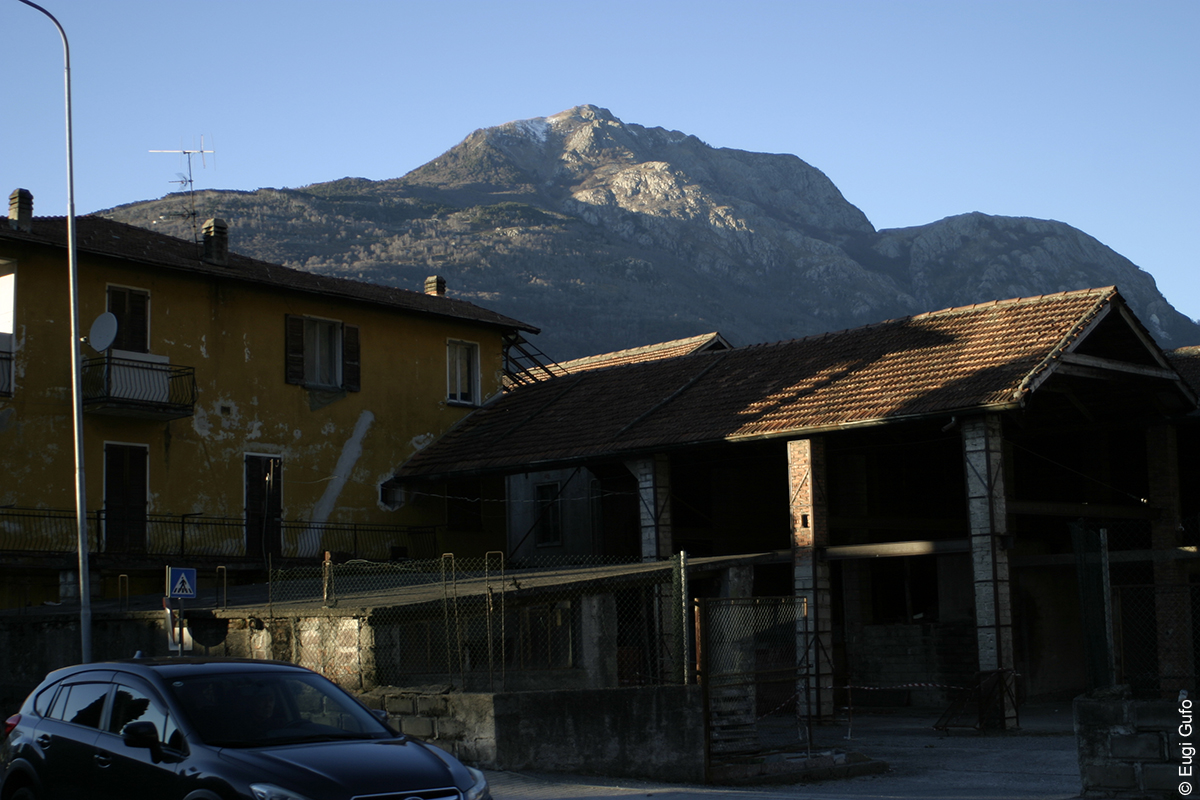
Modern architecture is widely present — and widely uninspiring. In many cases, frankly, it borders on the regrettable.
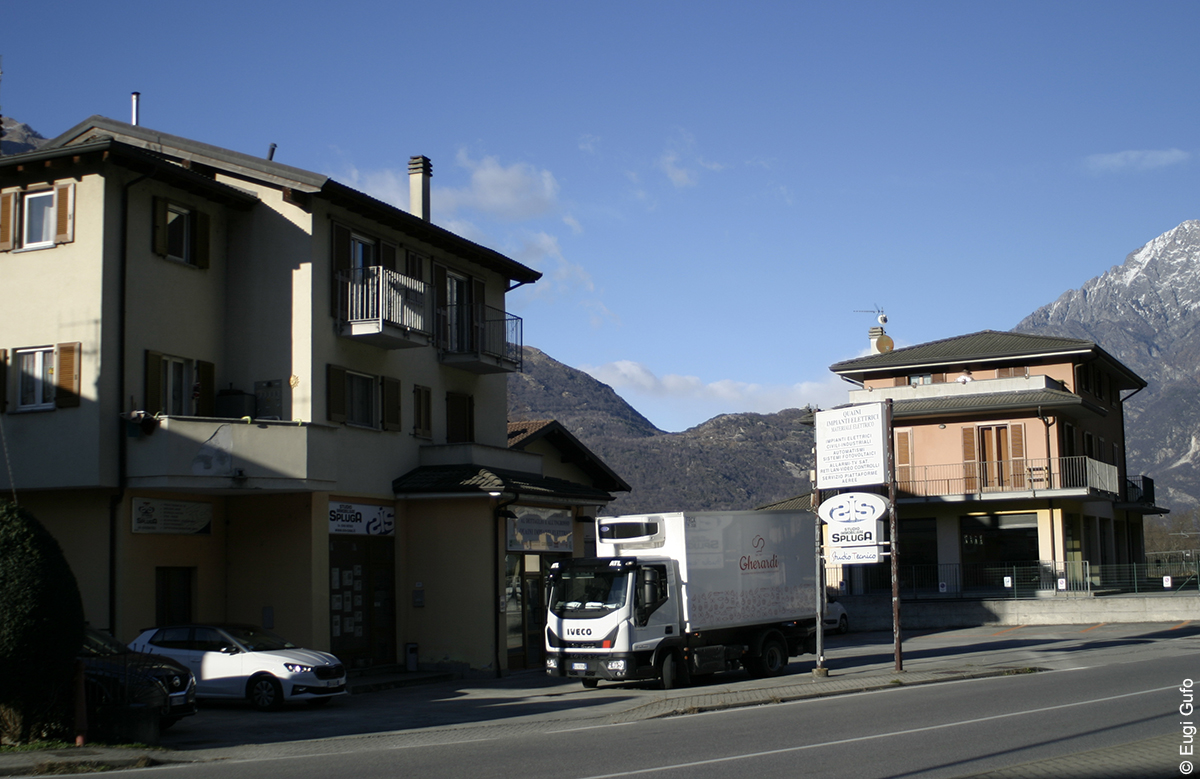
There are, to be fair, a number of genuinely attractive modern buildings — but they are usually private single-family villas. I might have photographed a few had it not been for a rather curious episode.
While capturing a small yet interesting local detail, an elderly couple emerged from one of the most beautiful villas and asked why I was taking photographs. According to them, «a few days ago someone took pictures in the village and then there were robberies in the villas.»
Thus, for the first time in my life, I encountered a demographic I had not previously imagined: Italians unaccustomed to seeing tourists with cameras. I shall add nothing further, lest I appear uncharitable toward senior citizens. At the time, however, I judged it prudent not to provoke local anxieties. There were, after all, less intrusive subjects available — such as non-private examples of modern architecture.
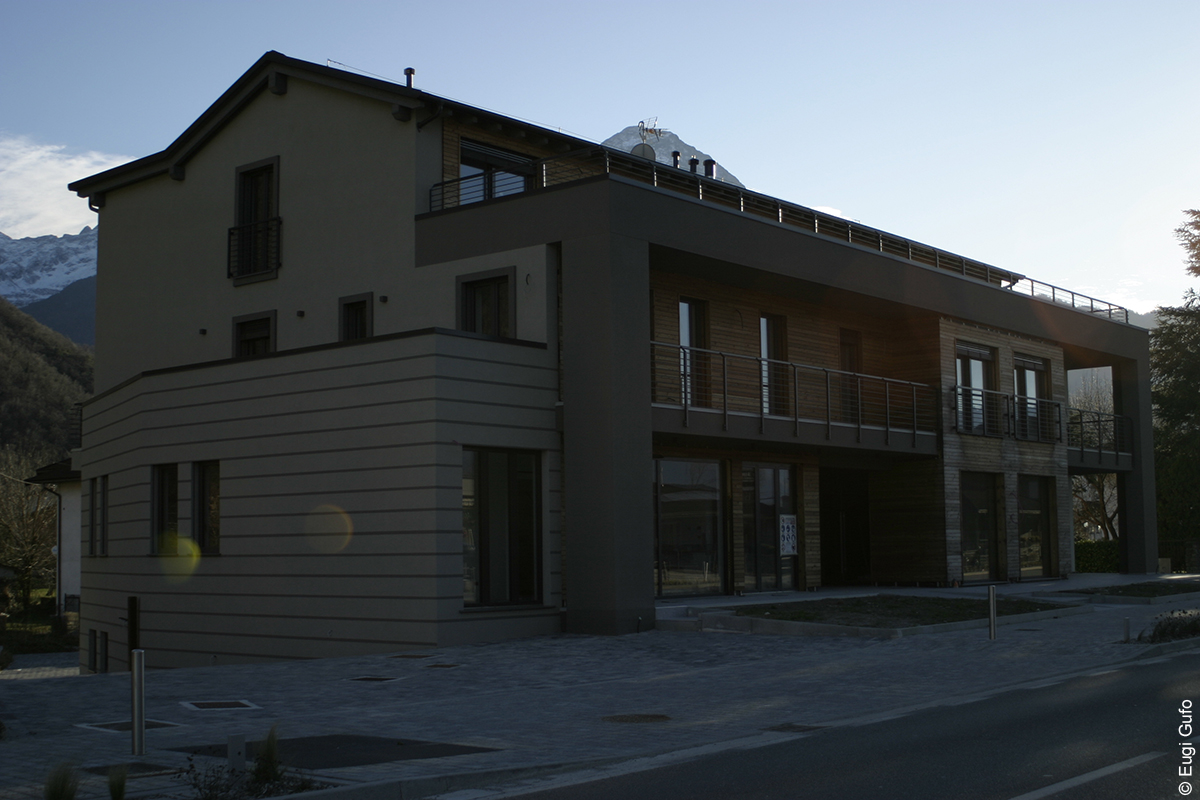
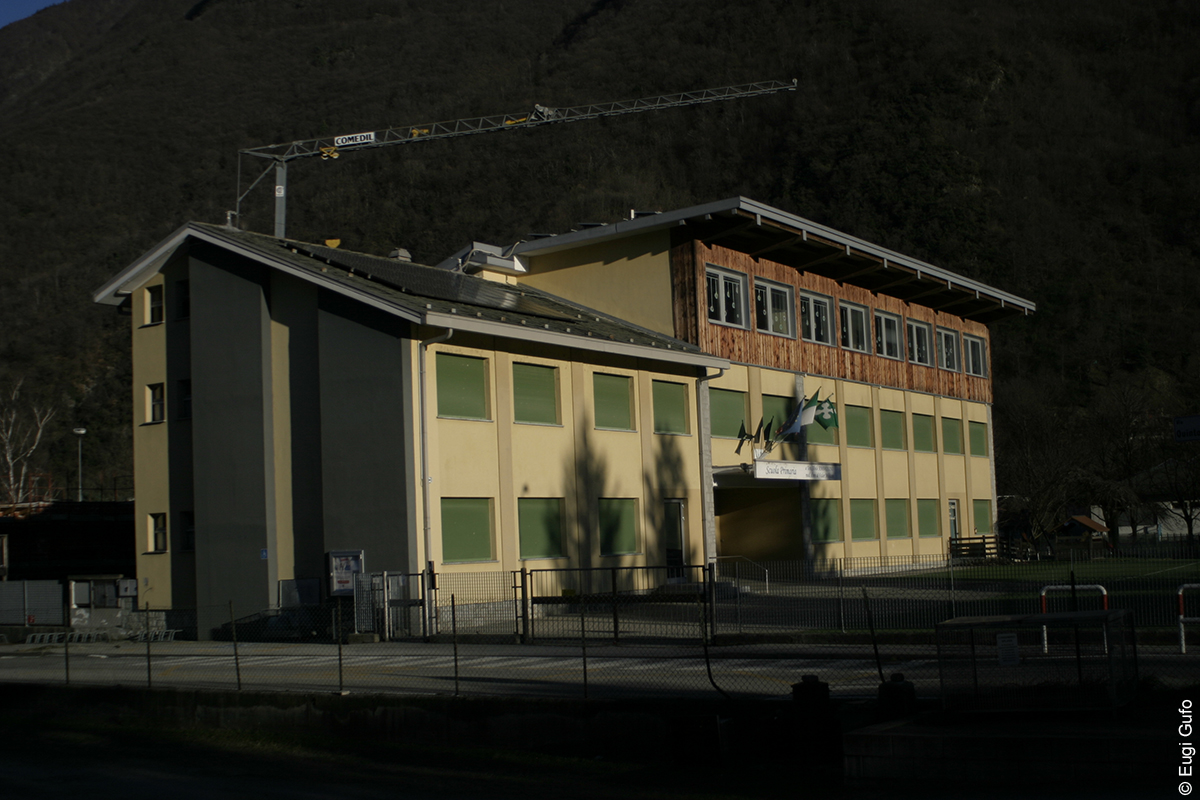
The local kindergarten is also an example of modern design — though perhaps of a somewhat primitive variety.
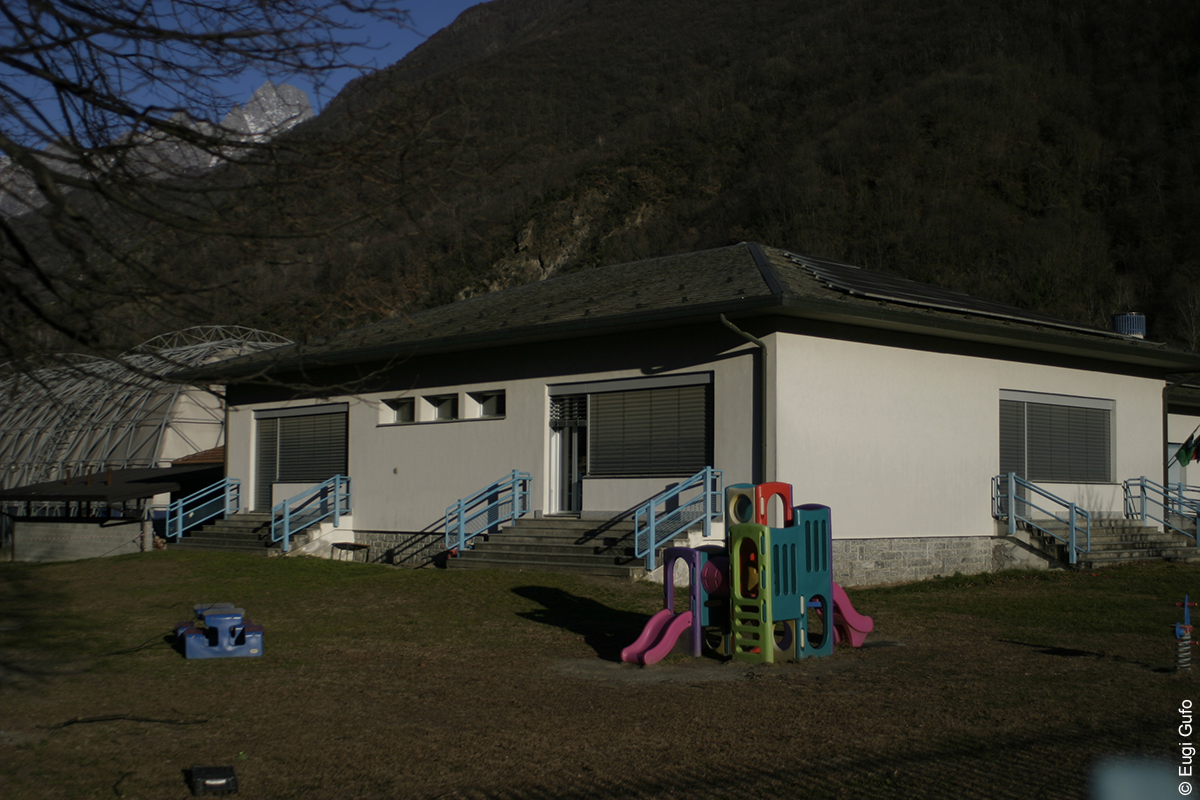
The school is already an improvement.
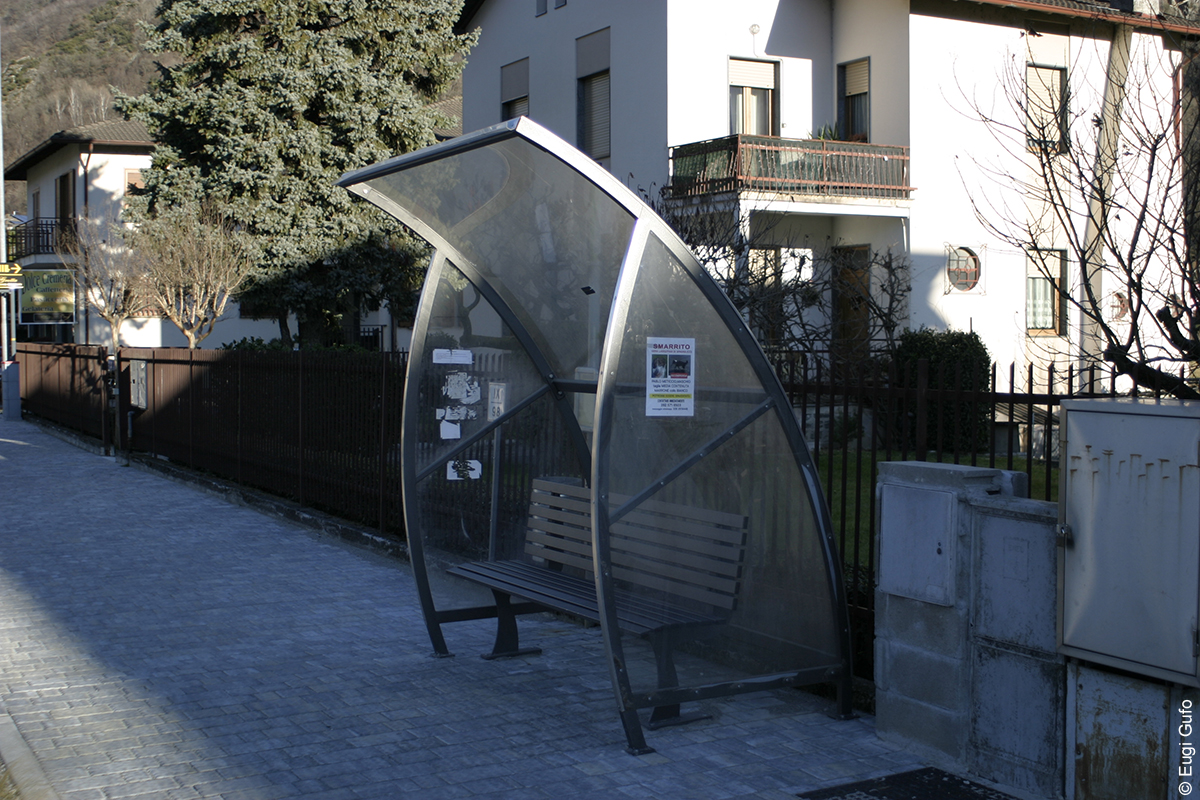
The bus stop is unexpectedly elegant: modern and minimalist — though, as so often happens, not illuminated.
I briefly wondered whether the «Casa Cantoniera» had been deliberately renamed «Antoniera» by particularly cheerful new owners.

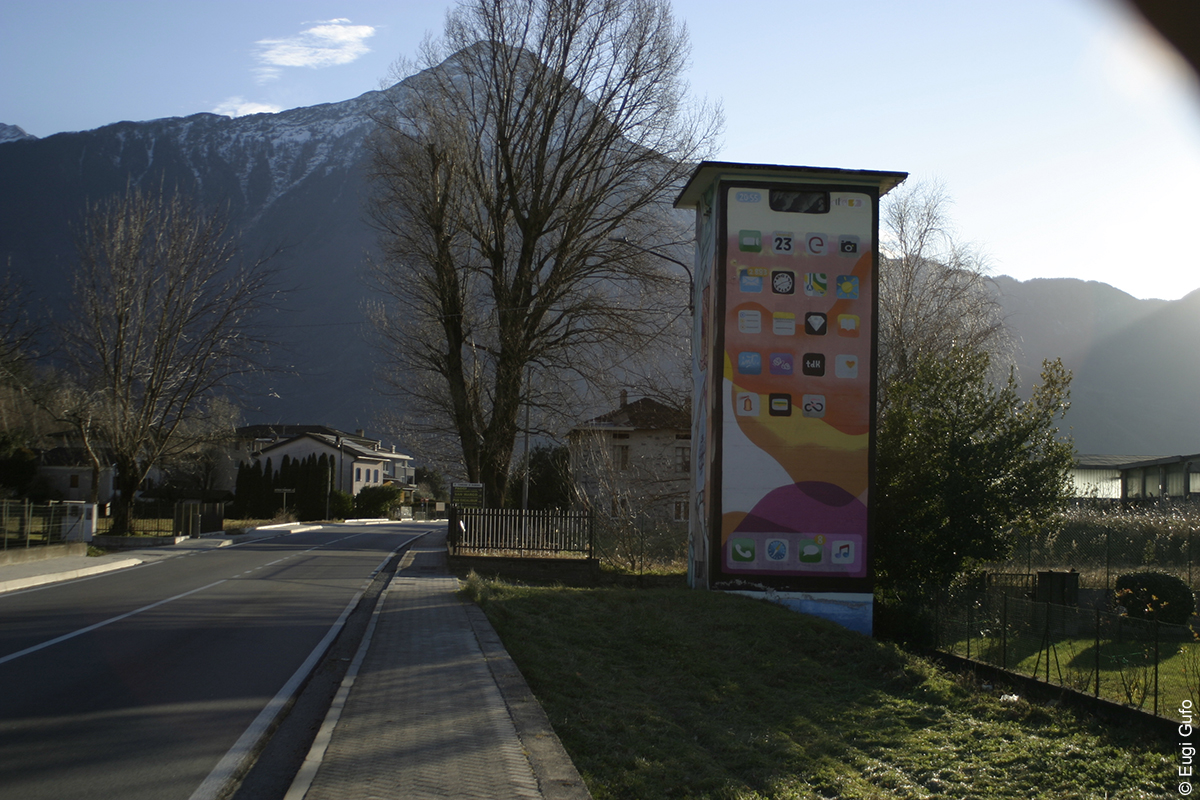
Among intentional modern artworks, mention must be made of the old electricity transformer tower, now decorated. Perhaps I am insufficiently updated, but I failed to recognise some of the app icons depicted there.
Those with a preference for more traditional artistic or architectural forms may visit the local church, dedicated to the Most Holy Saviour. From a distance it may appear venerable; in reality, it was built in 1903.
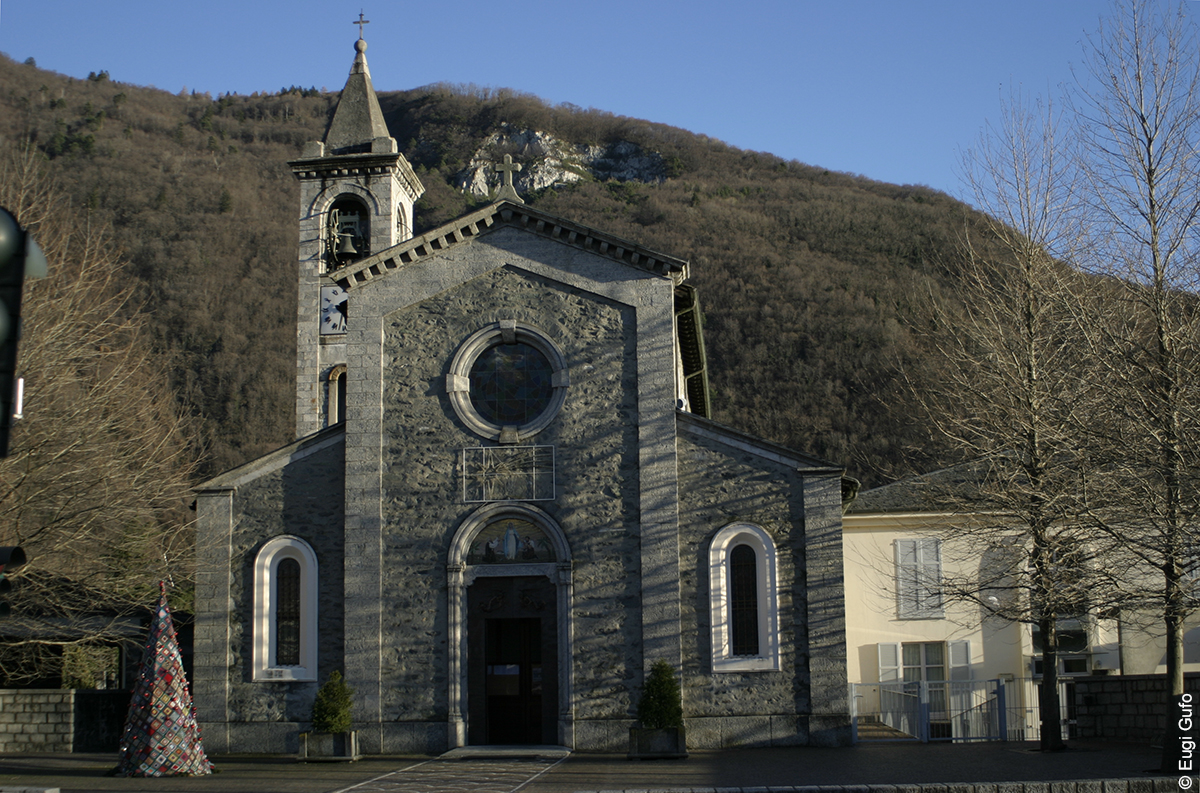
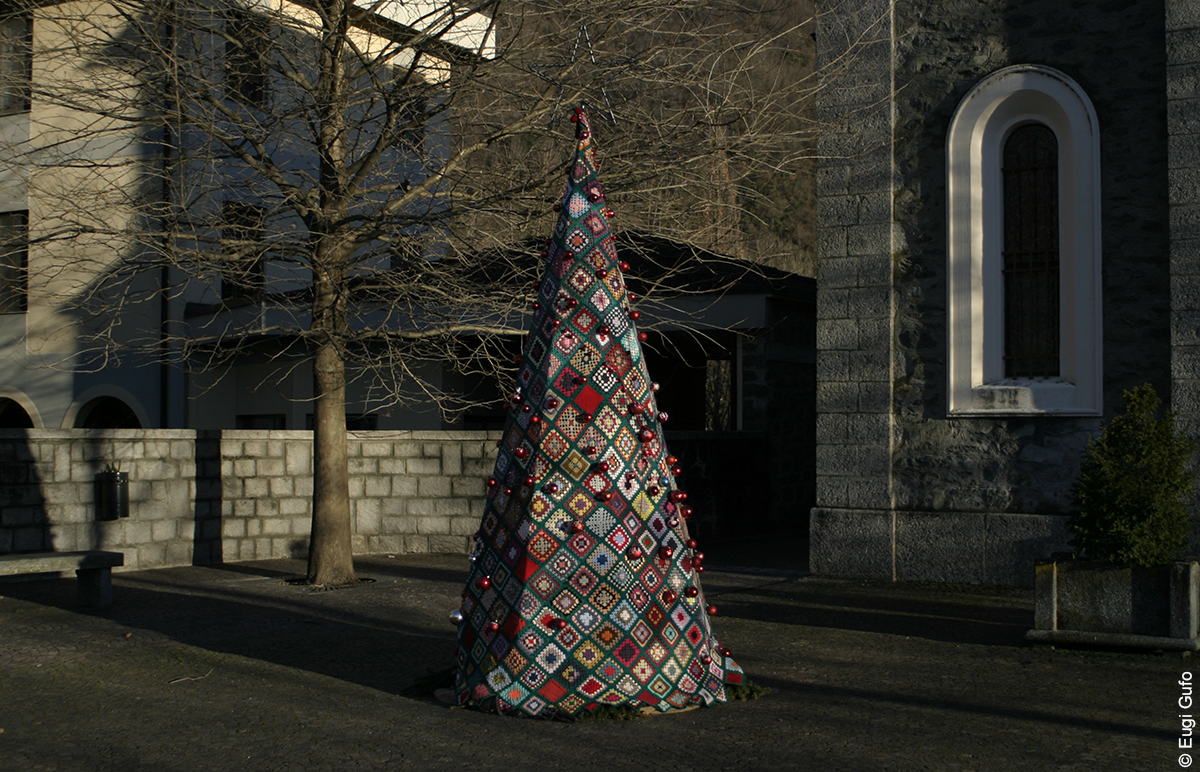
Far more intriguing is the Christmas tree placed in front of it. Observe carefully the material from which it is constructed. It was the first time I had seen such a creation — curious and rather beautiful, though I harbour doubts about its resistance to rain or snow.
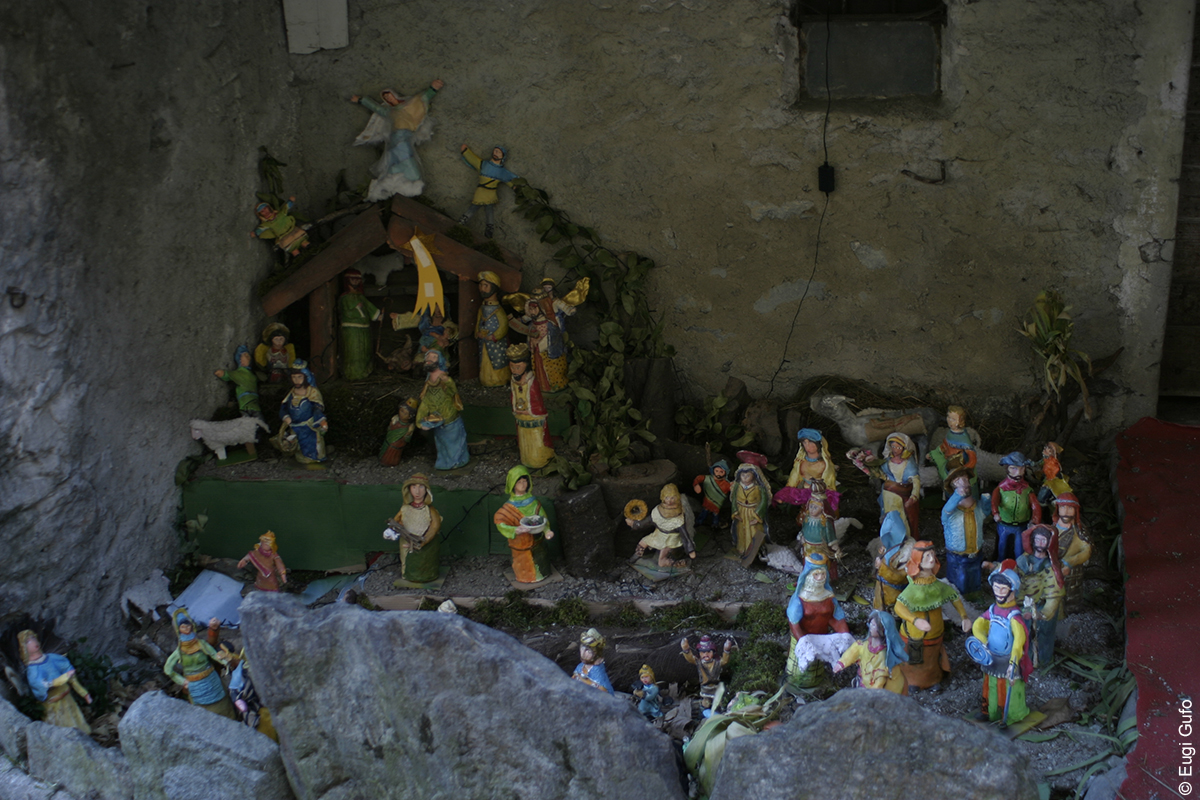
Elsewhere in the village, amid private villas, I encountered what might be described as the most crowded Nativity scene in existence. One of its characters is a man holding a pizza (attentive observers will locate him in the photograph).
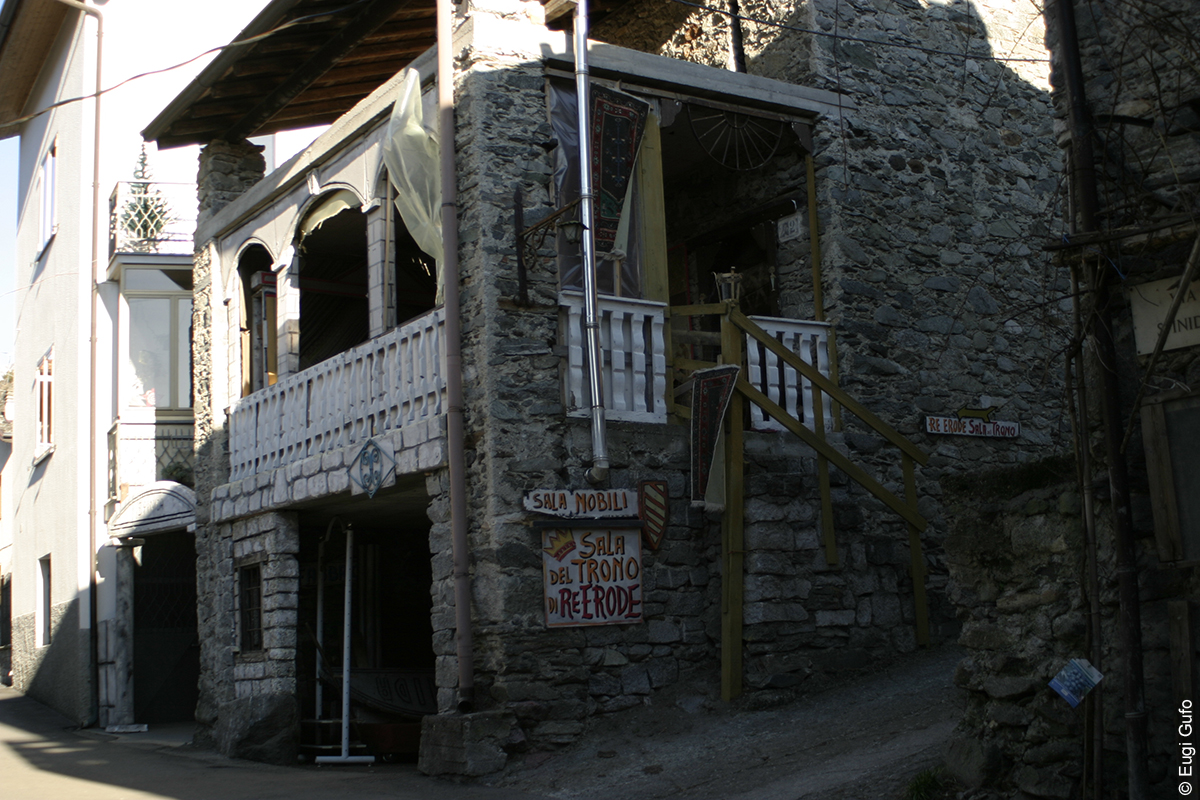
For Christmas 2024, a «Living Nativity» had also been organised locally, though I cannot say precisely how it was meant to function. A powerful wind had severely damaged several of its temporary installations scattered throughout the area. Consequently, everything appeared abandoned — as if the celebration had already concluded, leaving only its skeletal remains.
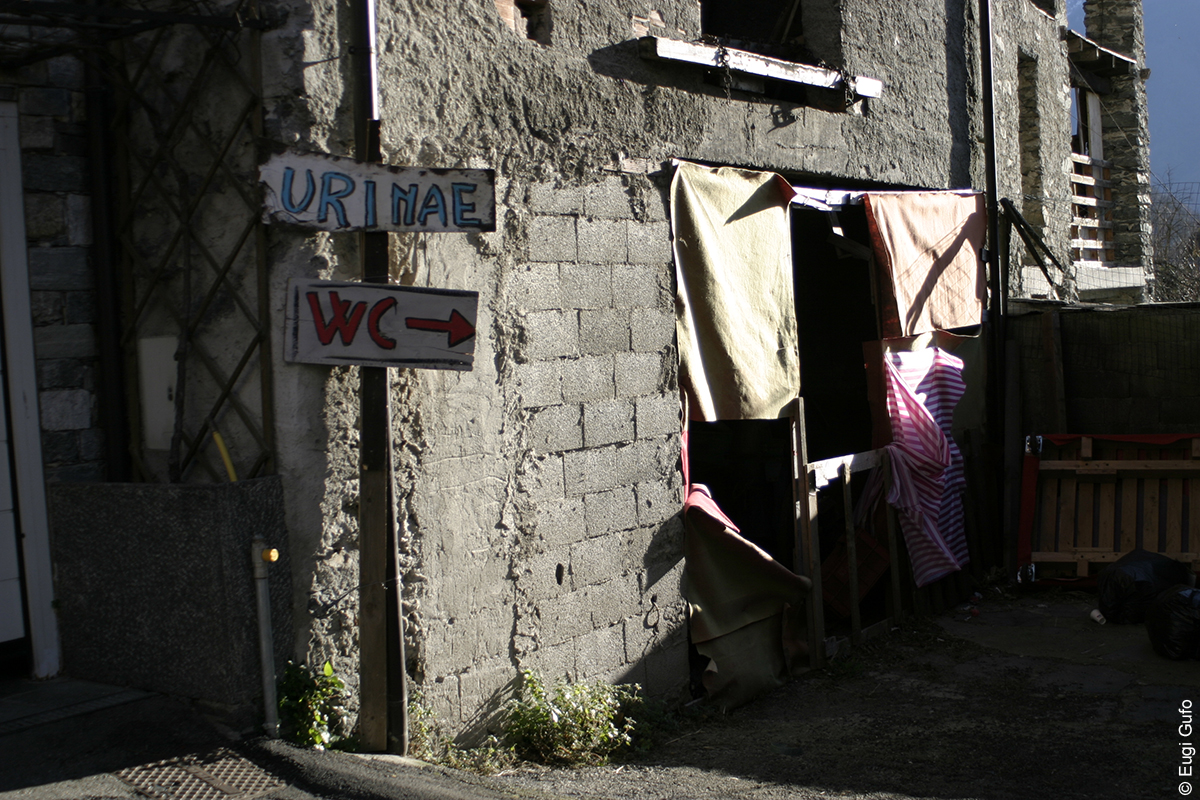
Stylistically similar to the signage of the Living Nativity are these boards indicating… something. Quite what, I cannot confidently state.
More straightforward is the monument to local citizens who fell in the wars, located opposite the church mentioned earlier.
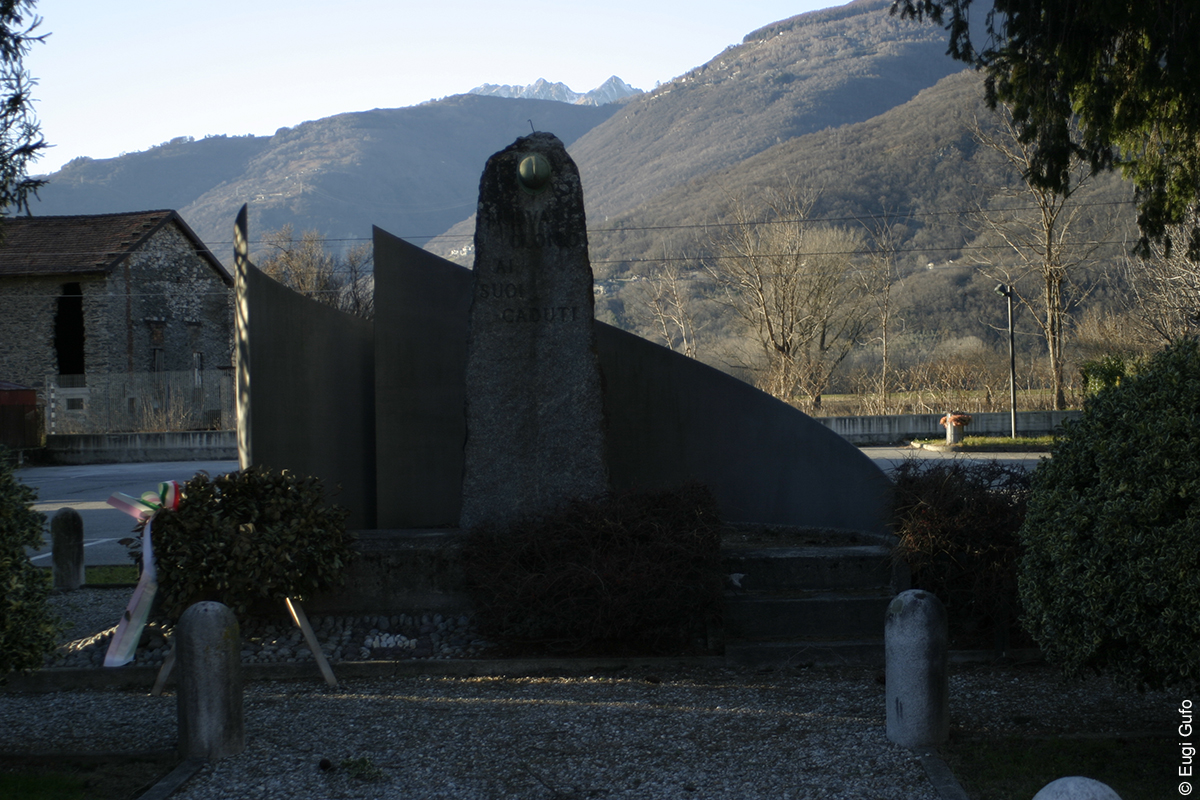
And that, more or less, concludes the list of notable sights in what had seemed to me a self-contained settlement surrounded by fields. By then the shadows were lengthening decisively; evening was approaching, and I resolved to head toward the railway station.
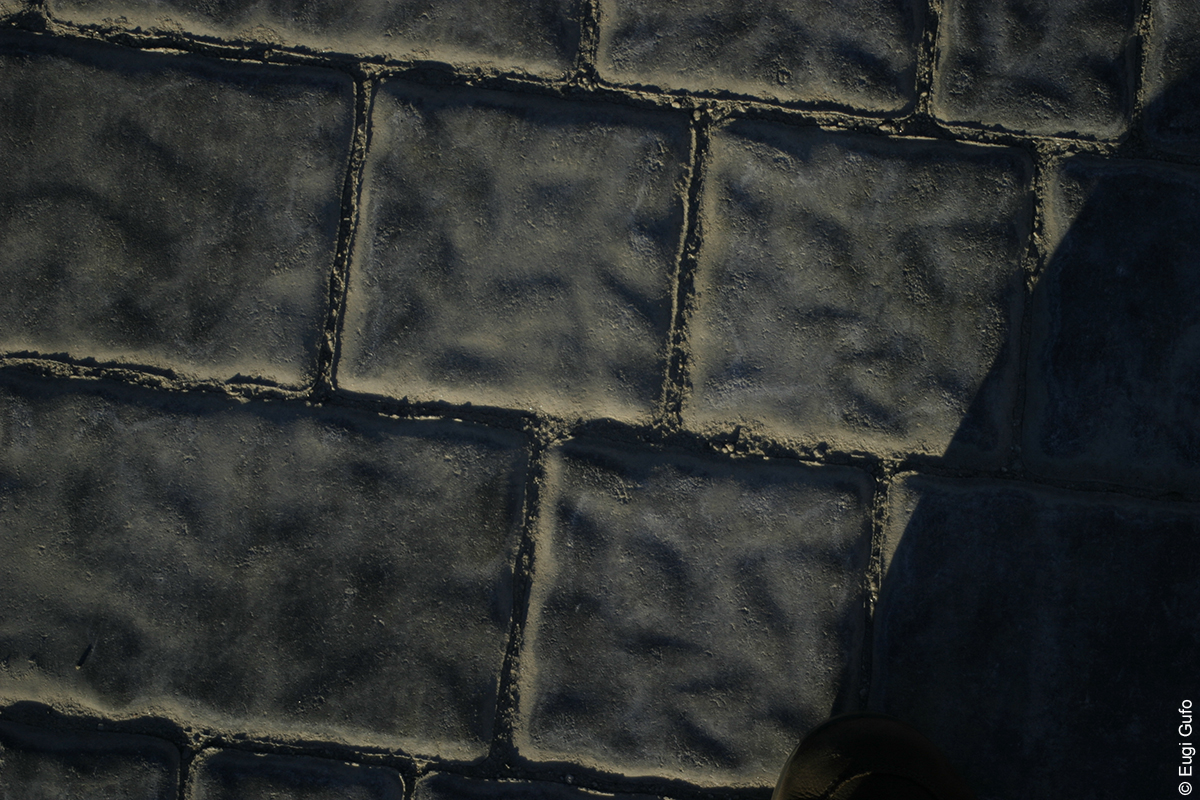
On the way, I noticed a curious anti-slip paving surface that I had previously encountered only in Colico.
Upon reaching the impressively vast railway station of Dubino (it possesses no fewer than two platforms — I have seen stations with one), I felt like a privileged passenger. It seemed almost as though the train were stopping exclusively for me.
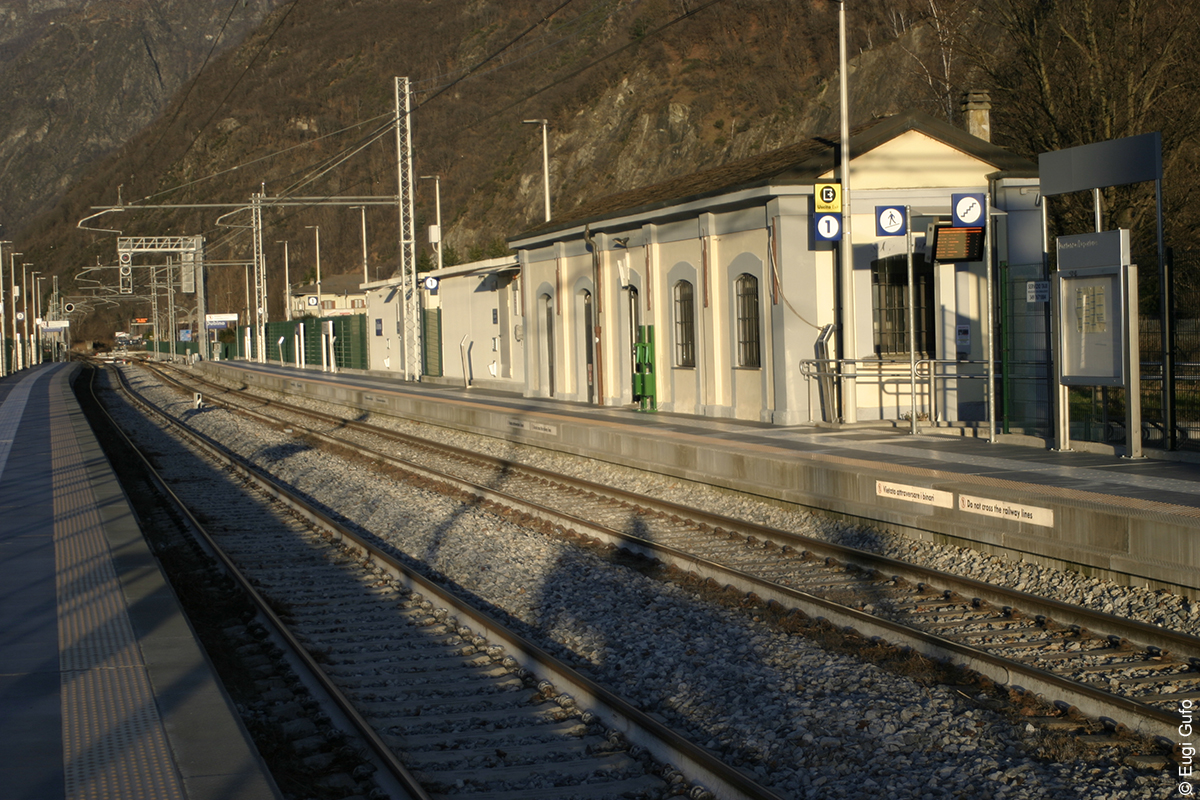
Whether I shall return to examine the entirety of Dubino — rather than a modest fraction — remains uncertain. Unless, of course, someone writes to inform me of genuinely beautiful and compelling sights awaiting discovery in its true centre or surroundings.
For now, I shall devote my attention to the numerous other places on this planet that I have not yet had the pleasure — or misfortune — of studying.
Dubino, 24 December 2024
↓ Show comments ↓

