


 Long live Ukraine! Fuck the war!
 RSS of site articles
Before beginning the account of my visit to Novate Mezzola, I must confess that I had never even heard the name of this village until the day before the trip in question. It is therefore evident that I had never had the slightest intention of going there — at least not as a tourist.
However, while planning my mountain walks for August 2024, I discovered that Novate Mezzola is one of the most convenient starting points for those wishing to reach the mountain trails of Val Codera, an area about which I had read several positive reports and to whose exploration I had decided to devote at least part of my summer journeys. And so, the exploration of Novate Mezzola became inevitable: I never waste an opportunity to discover a new settlement that happens to lie along my path!
A certain waste did occur nevertheless — but you will discover that only at the very end of this reading / viewing…
We may now begin the study of the village. Among other things, it serves as a convenient gateway to the Val Codera trails because the municipality of Novate Mezzola is served by trains: convenient not only for those who habitually prefer public transport, but also for those who would rather not drive immediately after a more or less demanding hike. The local railway station is small, with just two tracks, and has nothing particularly noteworthy except for its period benches in the tiny waiting room.

Logically, the area from which we may expect most of the interesting sights is the historic centre. To reach the historic centre of Novate Mezzola, one must exit the station from the side of the first track (as in almost all other towns) and turn left. Following the pavement along the main road and entering the village just before a supermarket, we soon realise we have not lost our way.

There stands the parish church of the Santissima Trinità. The precise period of its construction is unknown, but by 1651 it was already mentioned in an official document.
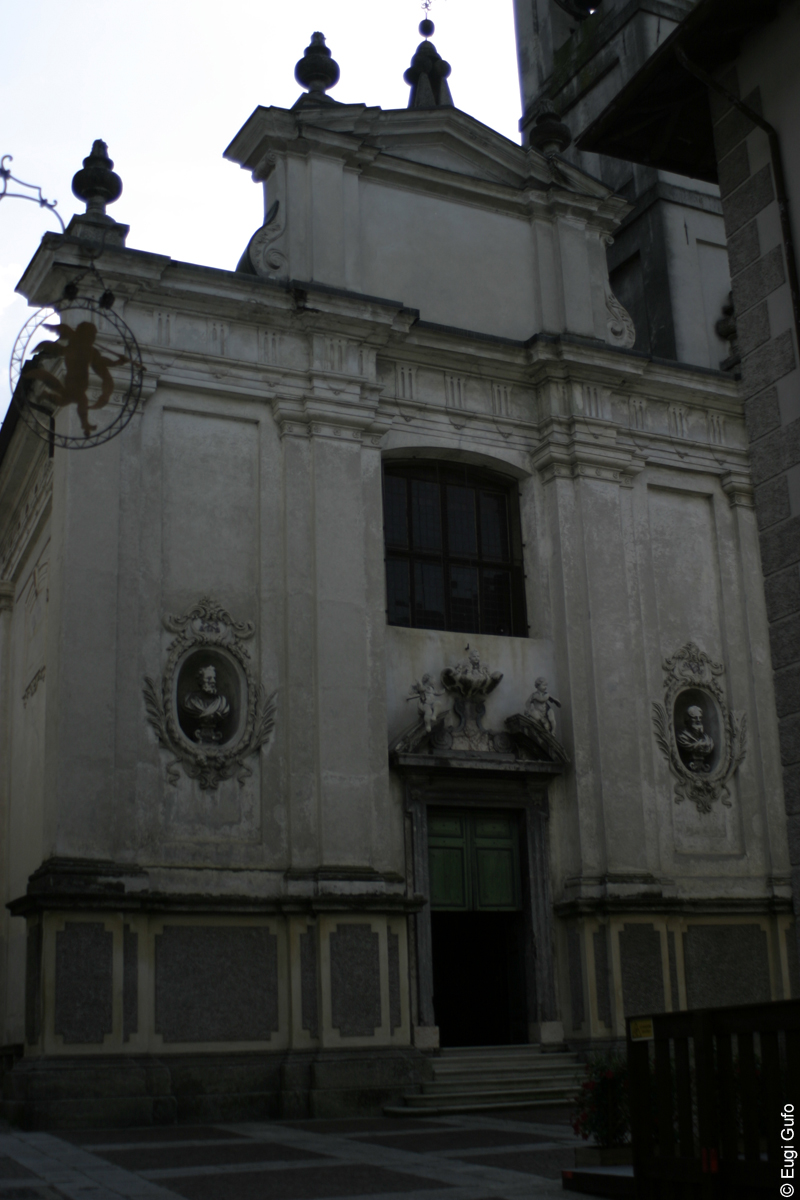
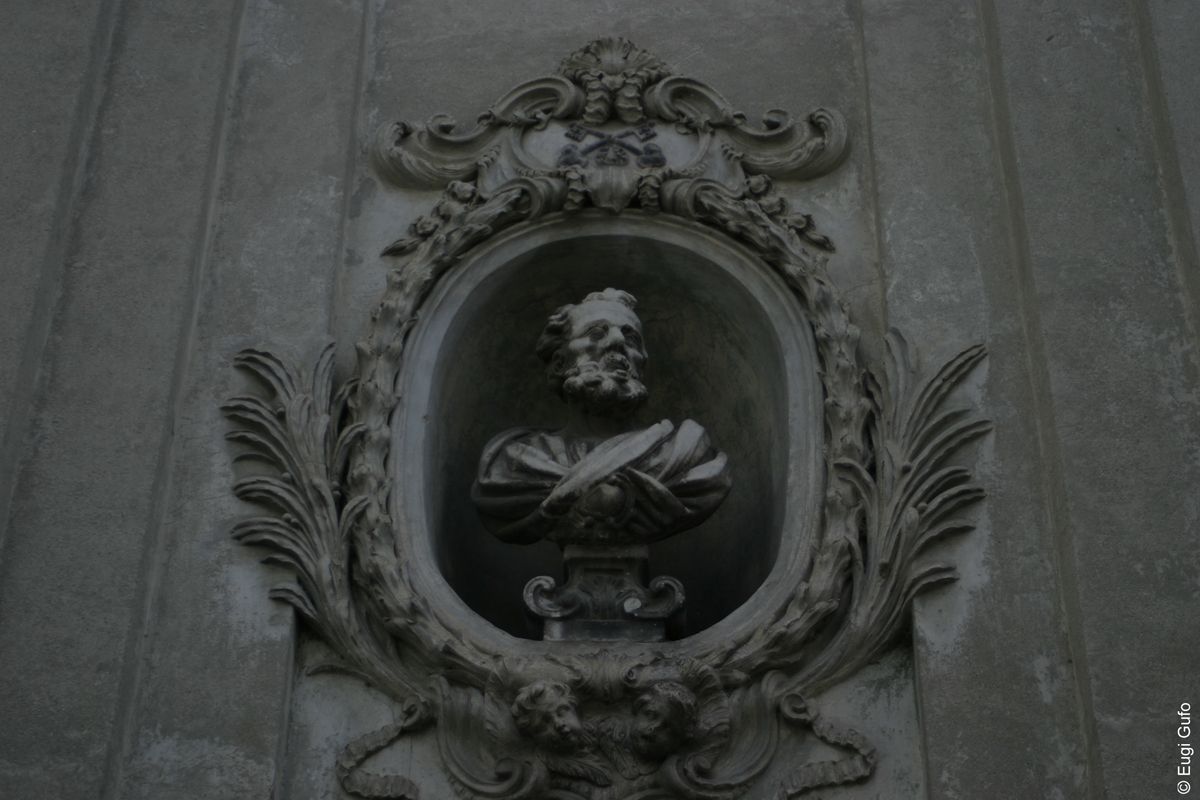
Its façade, completed in 1693–1694, has nothing particularly remarkable about it… Although at first I wondered why there was a bust of Abraham Lincoln. Then I regained my composure.
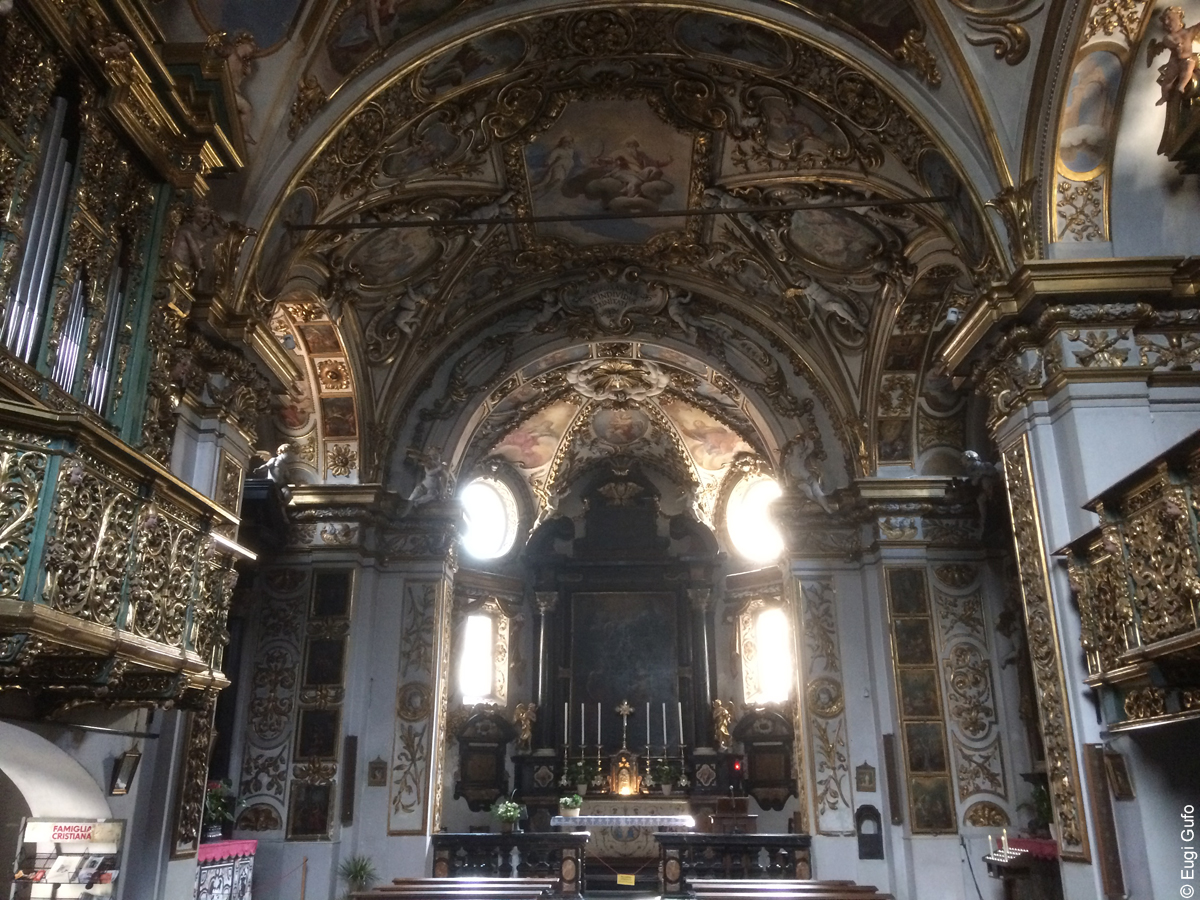
Inside, however, the church is considerably more beautiful and interesting (a friendly local gentleman made sure to inform me of this, perhaps having observed my rather sceptical contemplation of the façade). Indeed, it is a fine example of Baroque decoration; I have read that the interiors were adorned between 1685 and 1715.
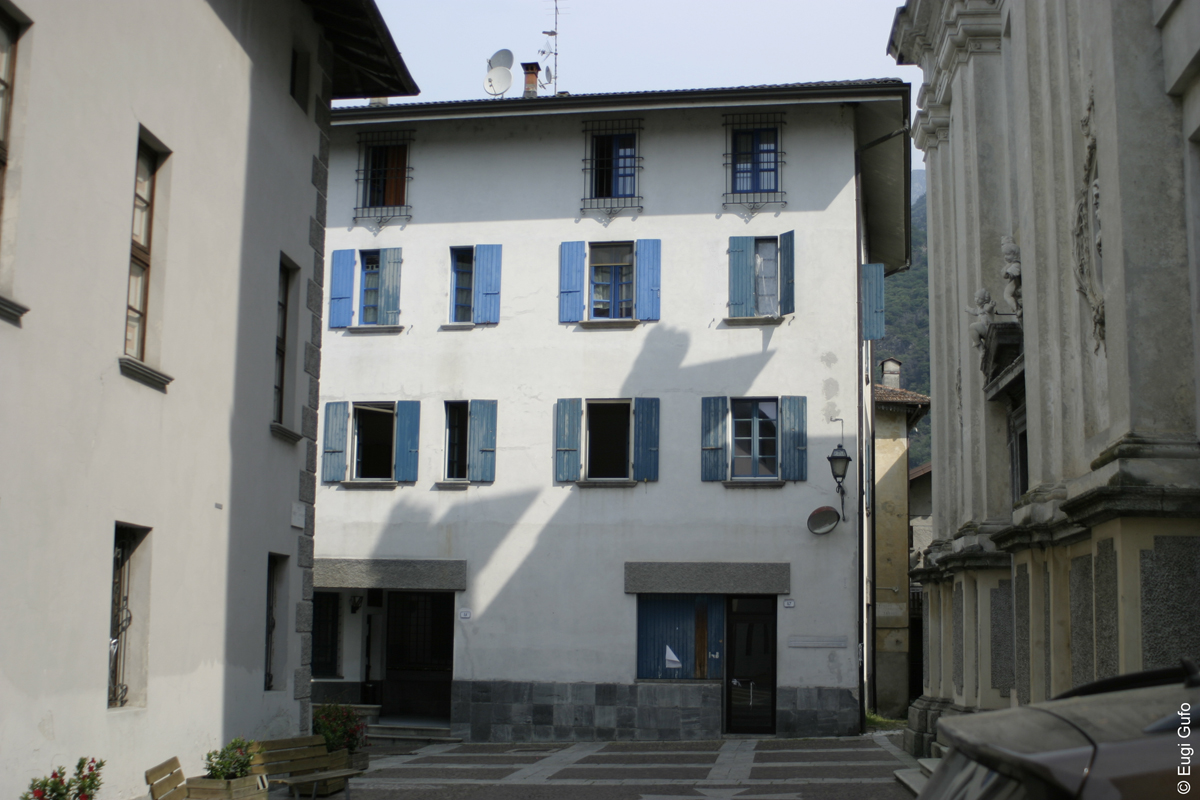
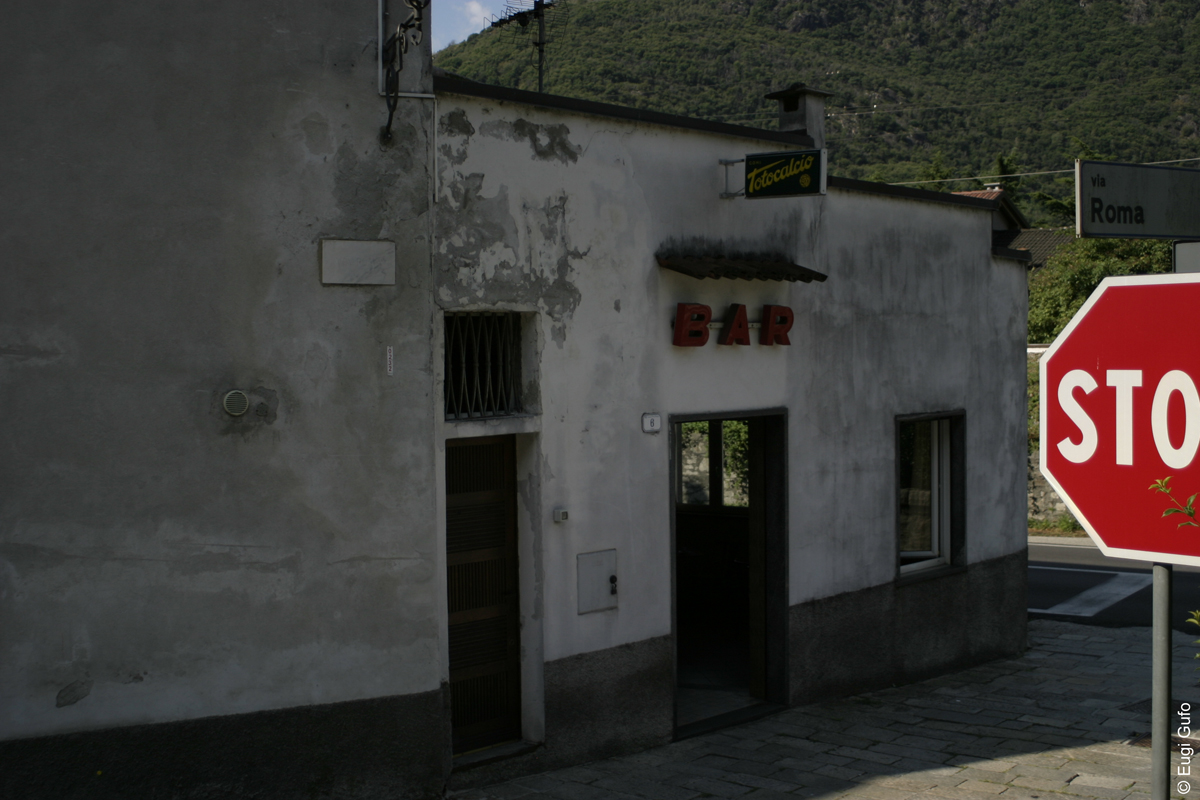
On the same square stands a building that now functions, among other things, as a monument. It rises on the site of the ancient «Osteria dell’Angelo,» where on 25 July 1793 the French ambassadors Charles-Louis Huguet de Sémonville and Hugues-Bernard Maret were arrested by the Austrians (after twenty-nine months they were released in exchange for Marie-Thérèse Charlotte, daughter of Louis XVI). The contemporary building now houses a simple bar; I do not know whether it has ever been used for arrests, kidnappings, or hostage-taking.
That late-18th-century episode, if I understood correctly, represented the peak of Novate Mezzola’s international and historical importance. Consequently, all other houses and monuments observed in the village may be judged only for their aesthetic value (well… more or less). For example, here is a 3D sign of a butcher’s shop: I could not determine whether the shop was closed for holidays or permanently, but I hope at least its external symbols will be preserved as monuments to their era — including those metal hooks, whose original function I can easily imagine.

Apparently abandoned and unfinished buildings from many years ago should not frighten us: the search for local beauties continues.

Nor should minimalist and almost dreary-looking bars cause us to form negative conclusions about the village under exploration.
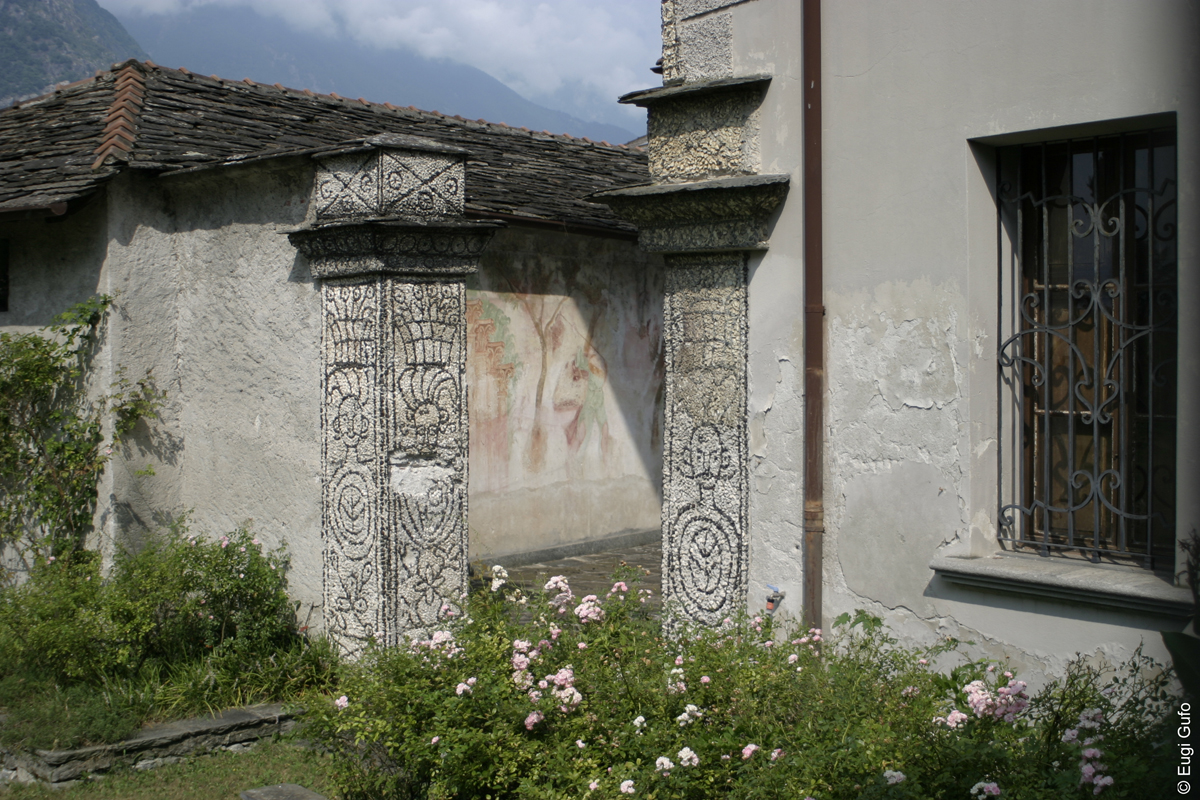
The 18th-century villa known as «Casa Giani» can only be viewed from the outside (and almost noticed by accident), yet it is not the only detail suggesting the possibility of finding something beautiful here.
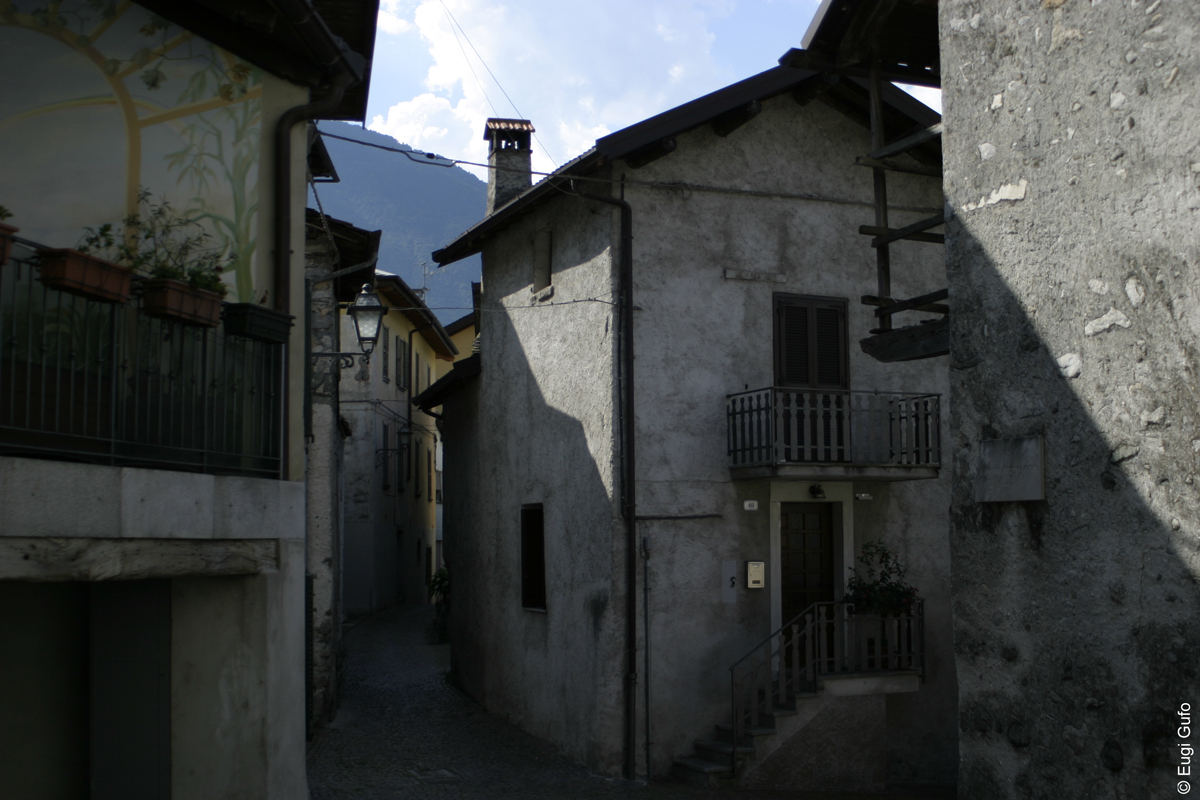
The few streets constituting the true historic centre are essentially concentrated behind the church we saw earlier. At first glance they appear unremarkable, but in reality they represent an interesting intersection between mountain and plain architecture.
Exactly in the middle stands one of the village’s rare monuments: the memorial dedicated to those who fell in the two World Wars.

An equally attractive street is Via del Lavatoio. It is advisable to walk its entire length before anxiously asking where the promised washhouse might be hiding.
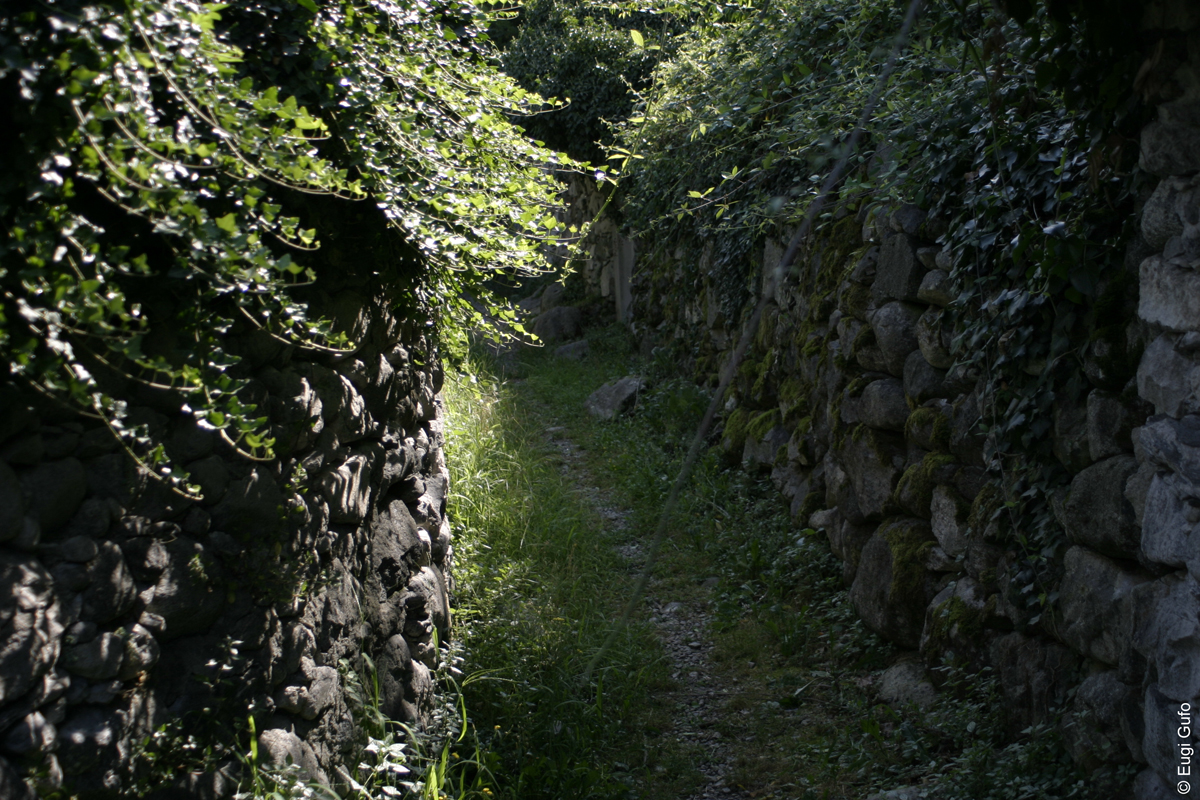
The washhouse does exist, but it lies beyond the end of the street, after the first crossroads. It does not appear particularly ancient, yet it is interesting for two reasons: its three-chamber structure and the use of water arriving via a small channel dug along the roadside (or perhaps it is a brook descending from the nearby mountains? I had no time to trace its source).

Let us return to the area where potentially interesting things are concentrated. Along the way we notice that some houses have been renovated so as to resemble artificial alpine chalets.
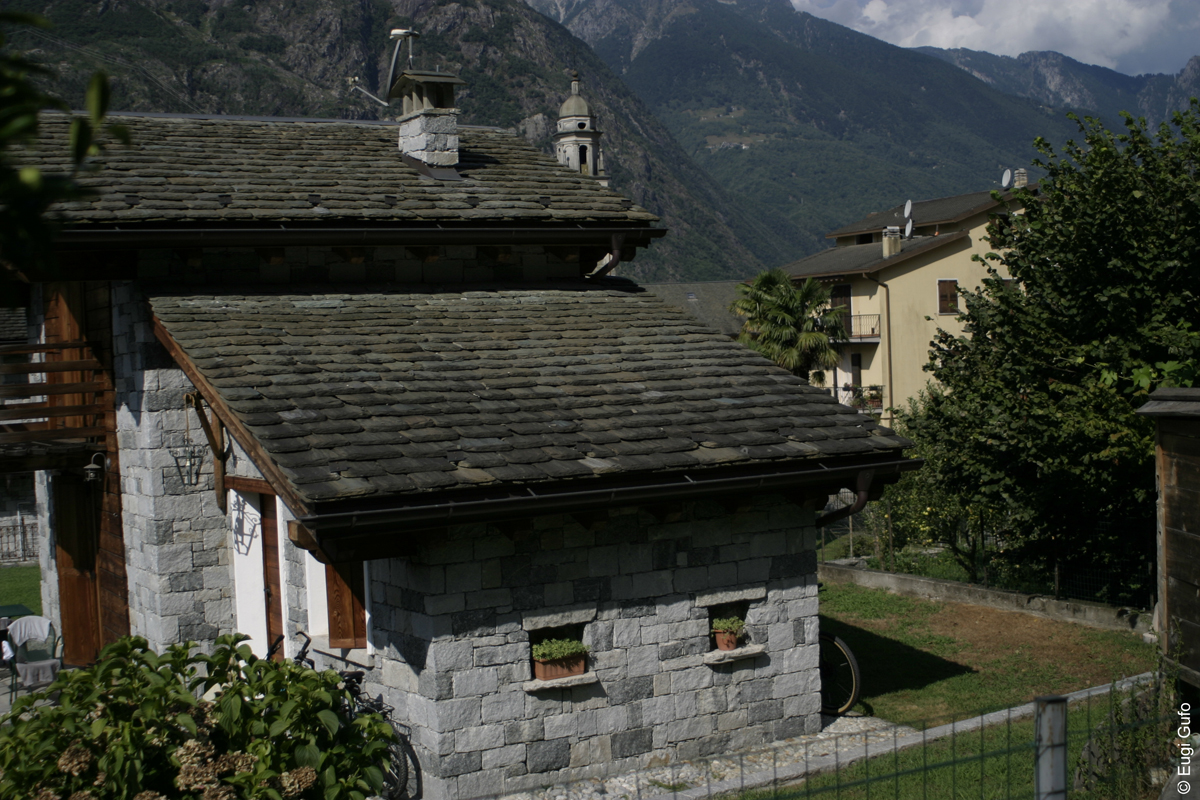
Let us try a few streets heading toward the northern outskirts.
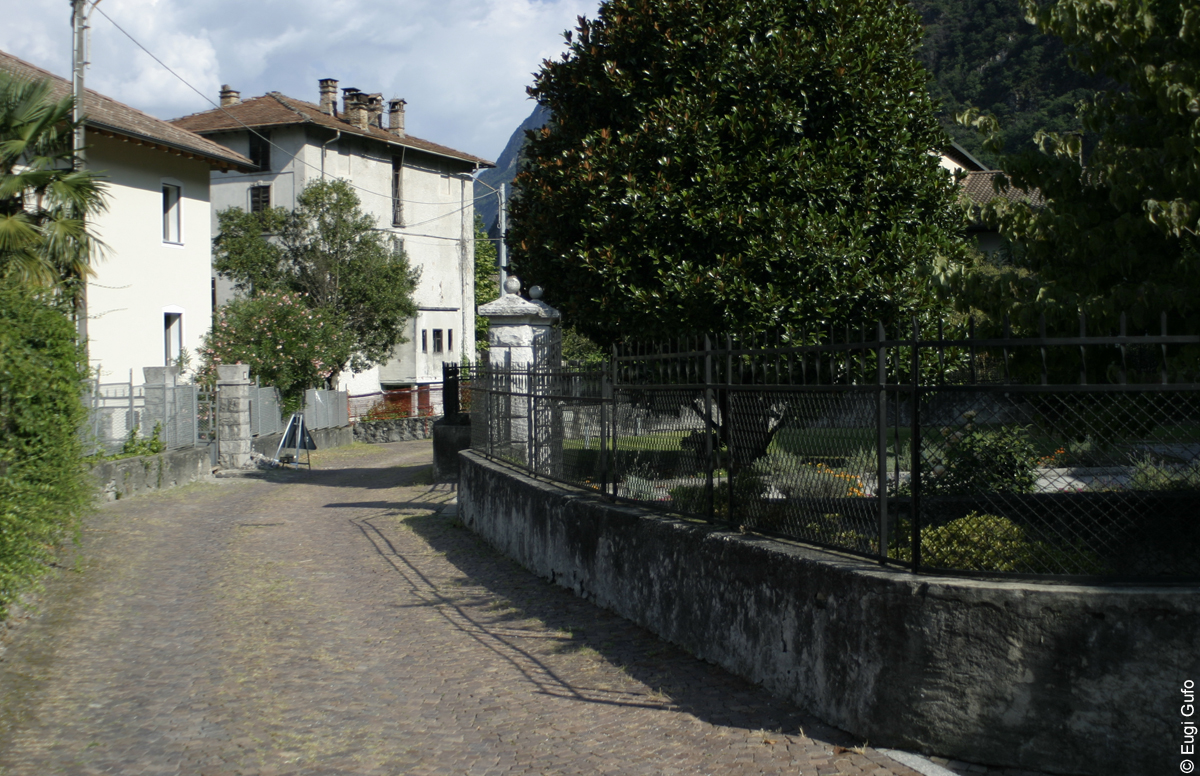
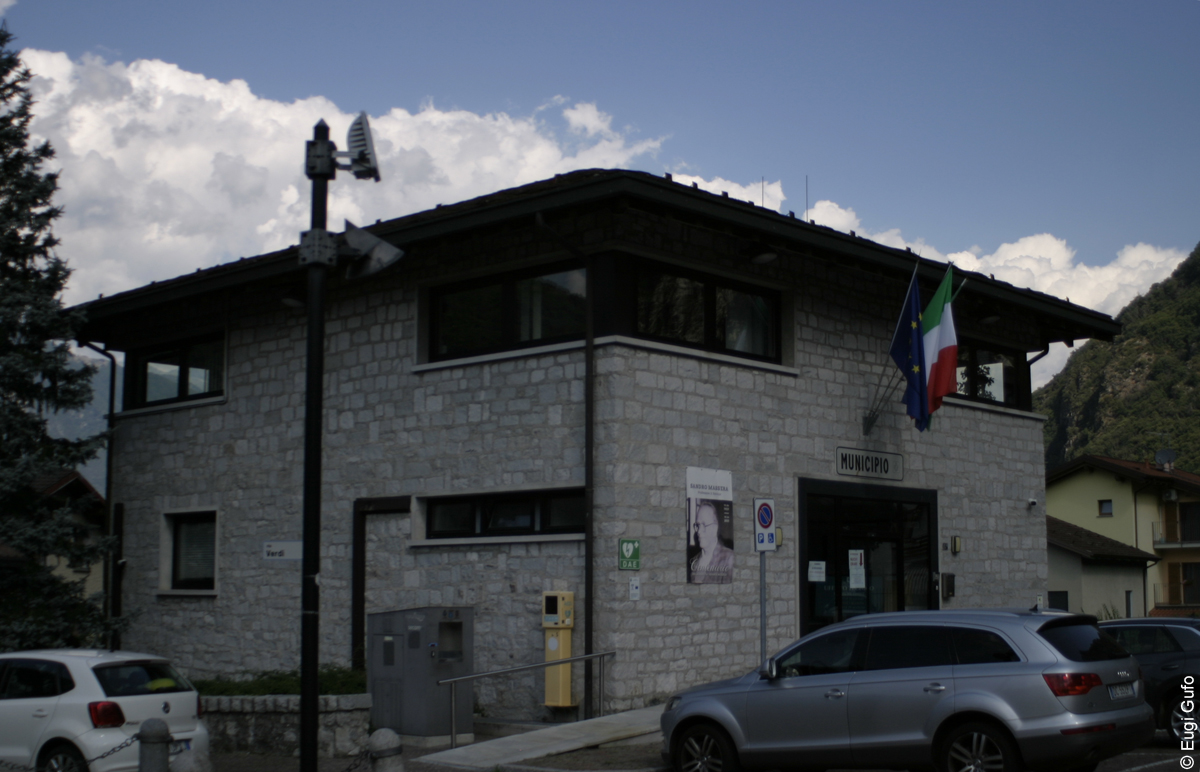
We soon arrive at the Town Hall: it does not attempt to be something it is not — it is simply a modest yet fortunate example of modern architecture.
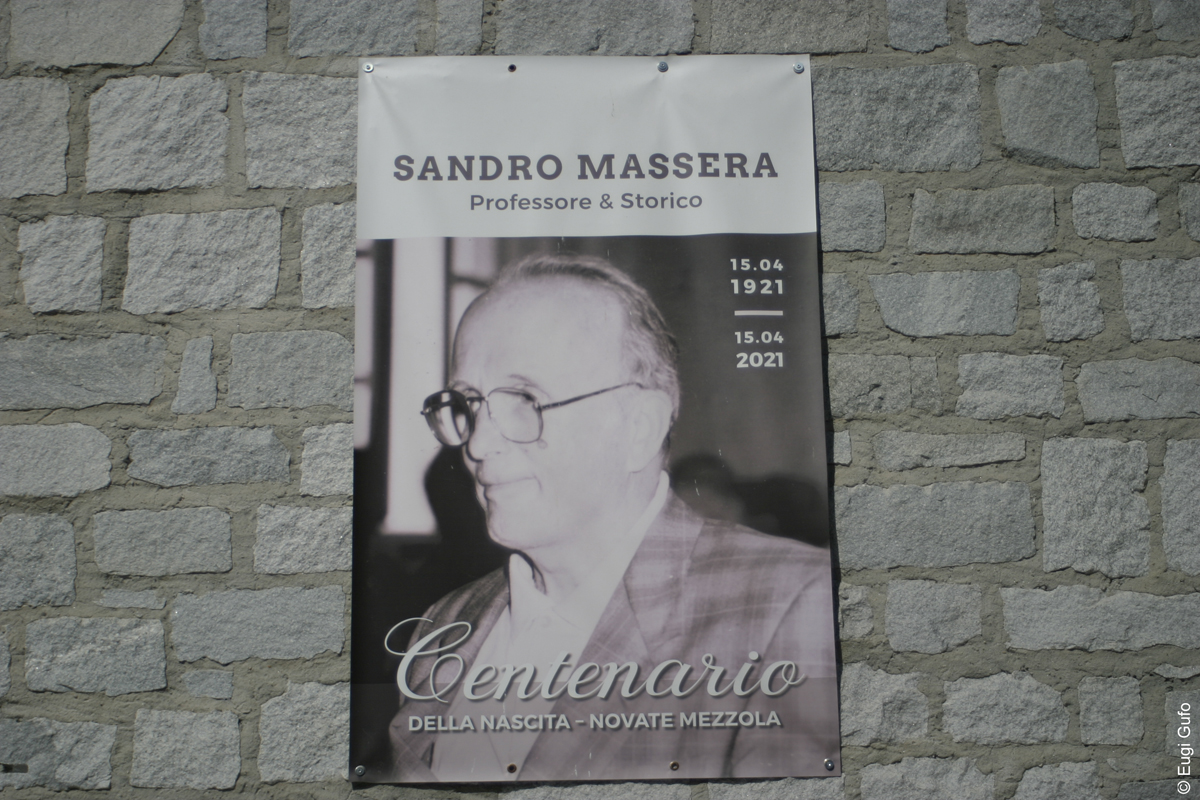
More than three years later, a banner remains displayed on its wall commemorating the centenary (15 April 2021) of the birth of the local historian Sandro Massera, a teacher of classical high schools and researcher of Valtellina history. From the way he is remembered, one sees he was not merely a compulsive writer.
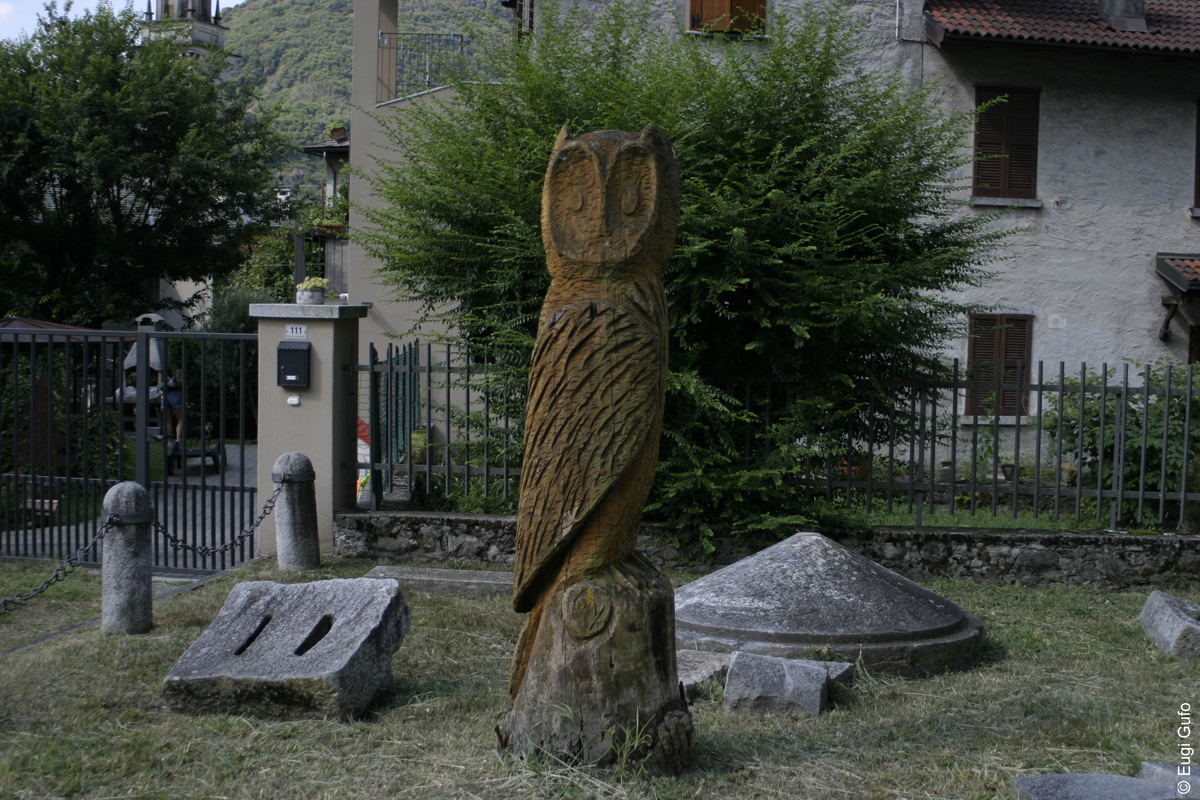
Next to the Town Hall, to my great surprise, I discovered a monument dedicated to myself. I do not know which exploits earned me this honour (no one even informed me of the inauguration), but I hope it will endure despite the material used!
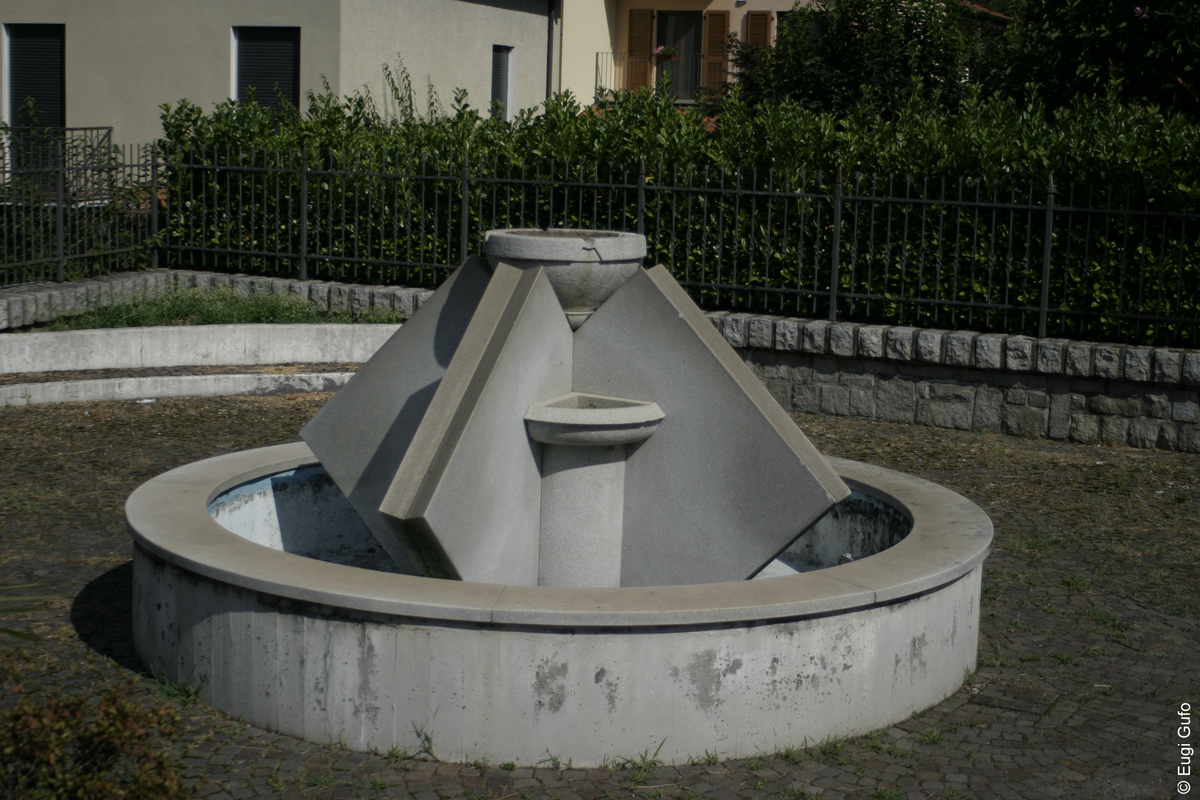
The futuristic-style fountain was unfortunately not functioning.
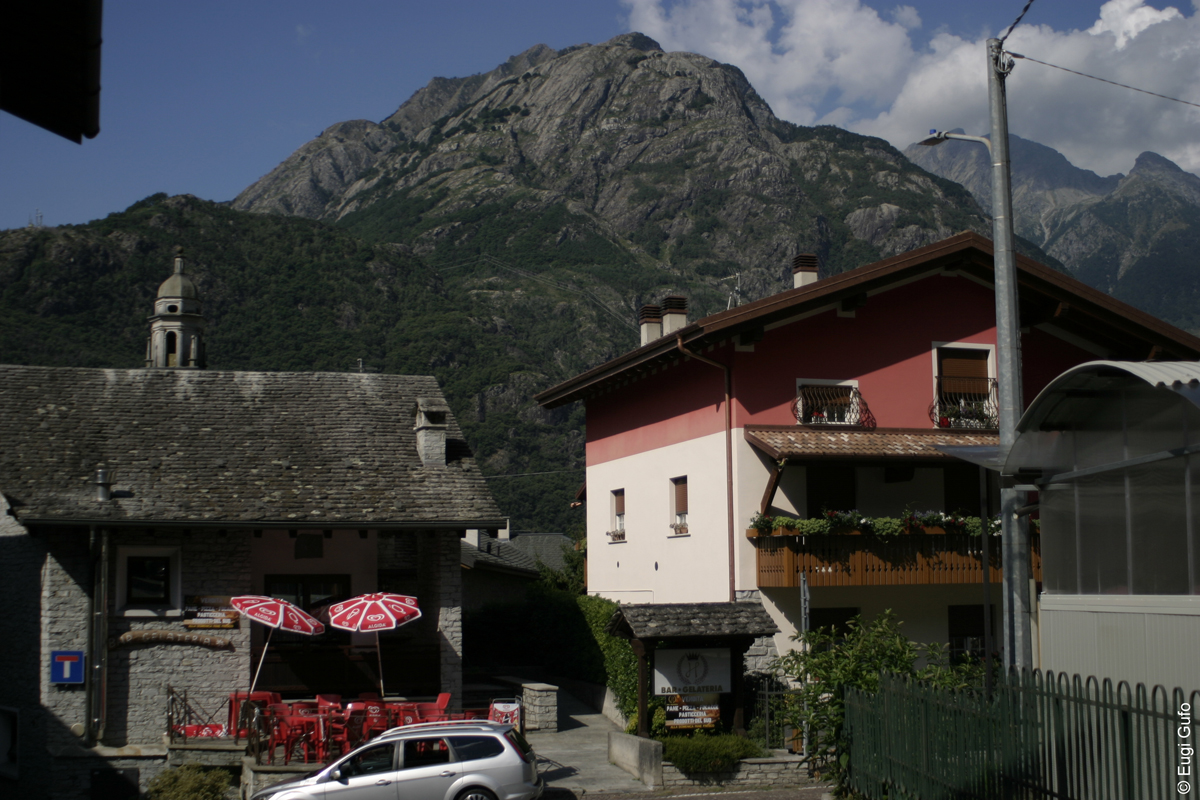
However, bars and restaurants begin to appear — open and operating despite the month of August. Strangely, they are almost all concentrated in the same area, a zone where an average tourist might arrive only by accident. The reasons behind this market choice exceed my analytical capacities.
A short distance away we discover two institutions competing for the allegiance of local children: the kindergarten and the parish oratory.

Let us then explore a few streets heading toward the eastern outskirts.
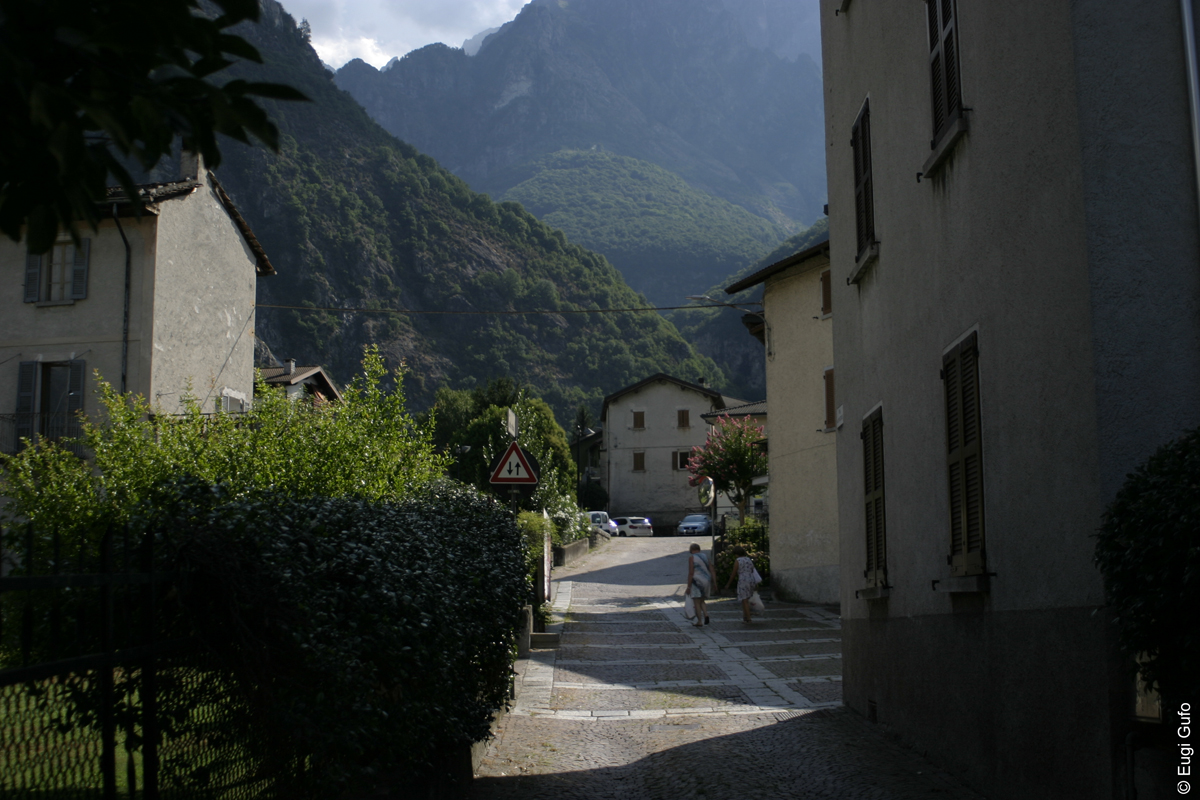
Well… only residential houses are visible — of very different ages and aesthetic conditions.
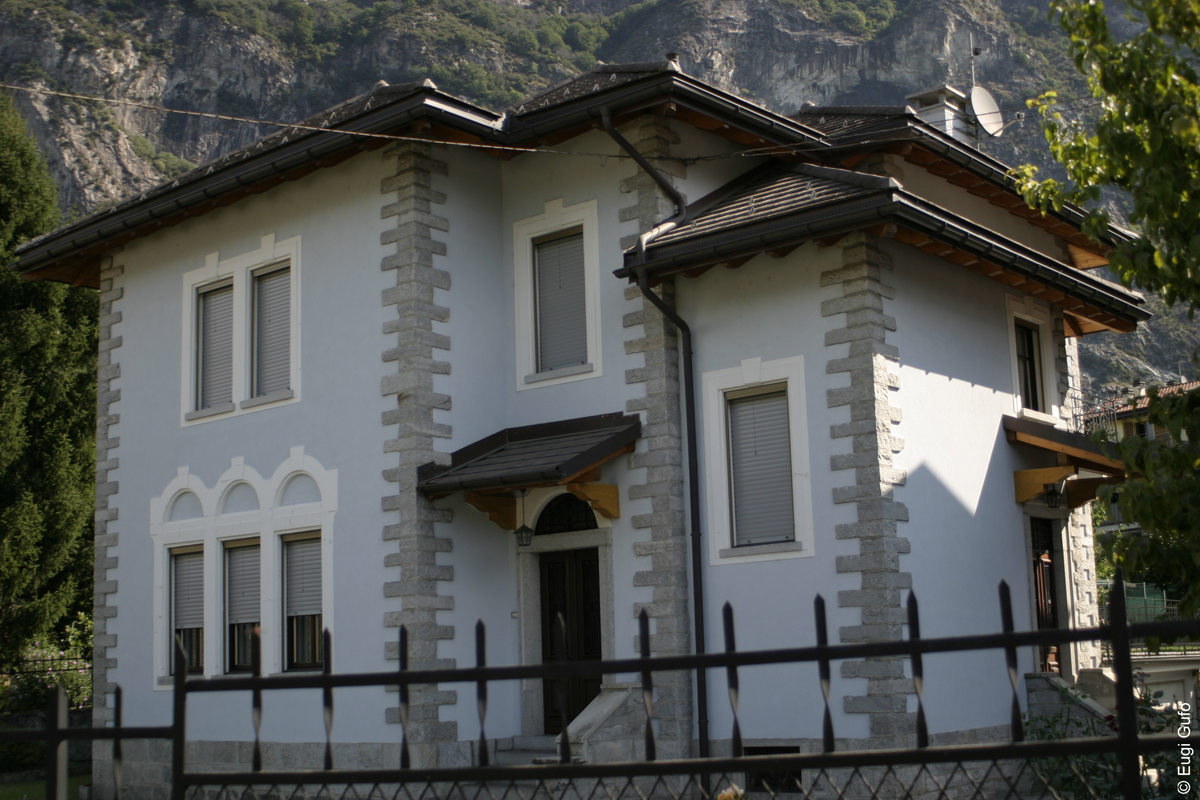
So let us head toward the most promising peripheral area: the one separated from the «main» part of Novate Mezzola by the Codera stream and closer to the mountain trails of Val Codera (the primary objective of my journey). There are two ways to reach this zone: following the lakeshore or crossing the village and proceeding along some asphalted roads. I managed to «combine» the two methods. Let us therefore take the pedestrian path crossing a small park and leading to the lakeside. Among its advantages I would highlight the shade of the trees and the opportunity to observe small characteristic details of the area.

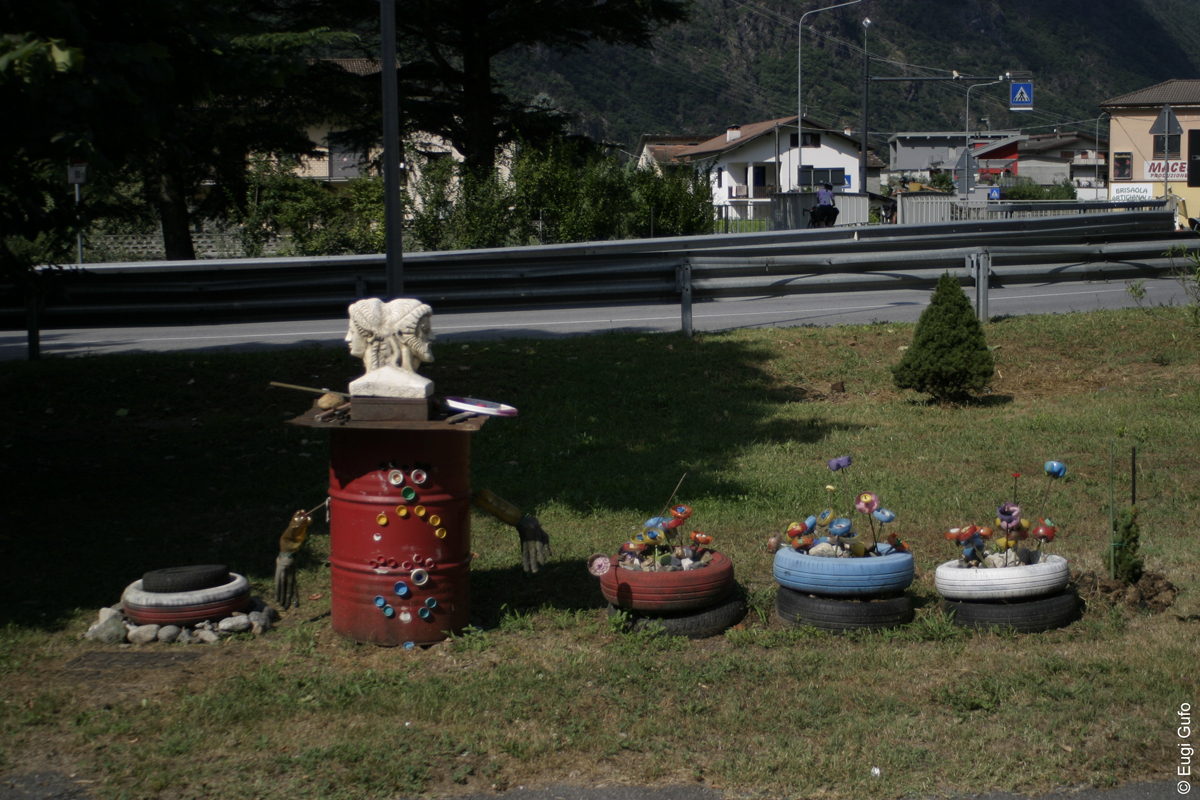
There is also the advantage of encountering works of modern art that represent (or attempt to represent) a symbiosis between tradition and contemporary ecological sensitivity… Why did I not become an art critic?
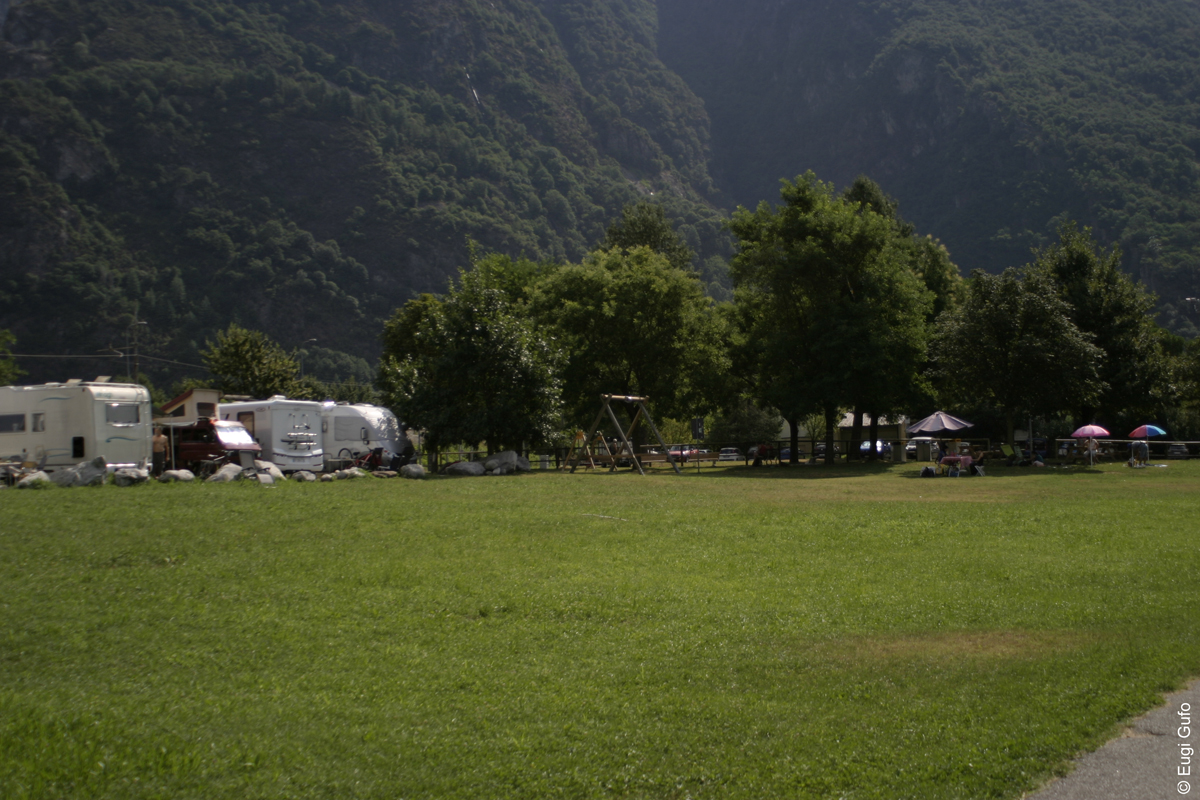
Soon enough we reach the lakeside section dedicated to the campsite. Do not worry — part of the meadow remains free.
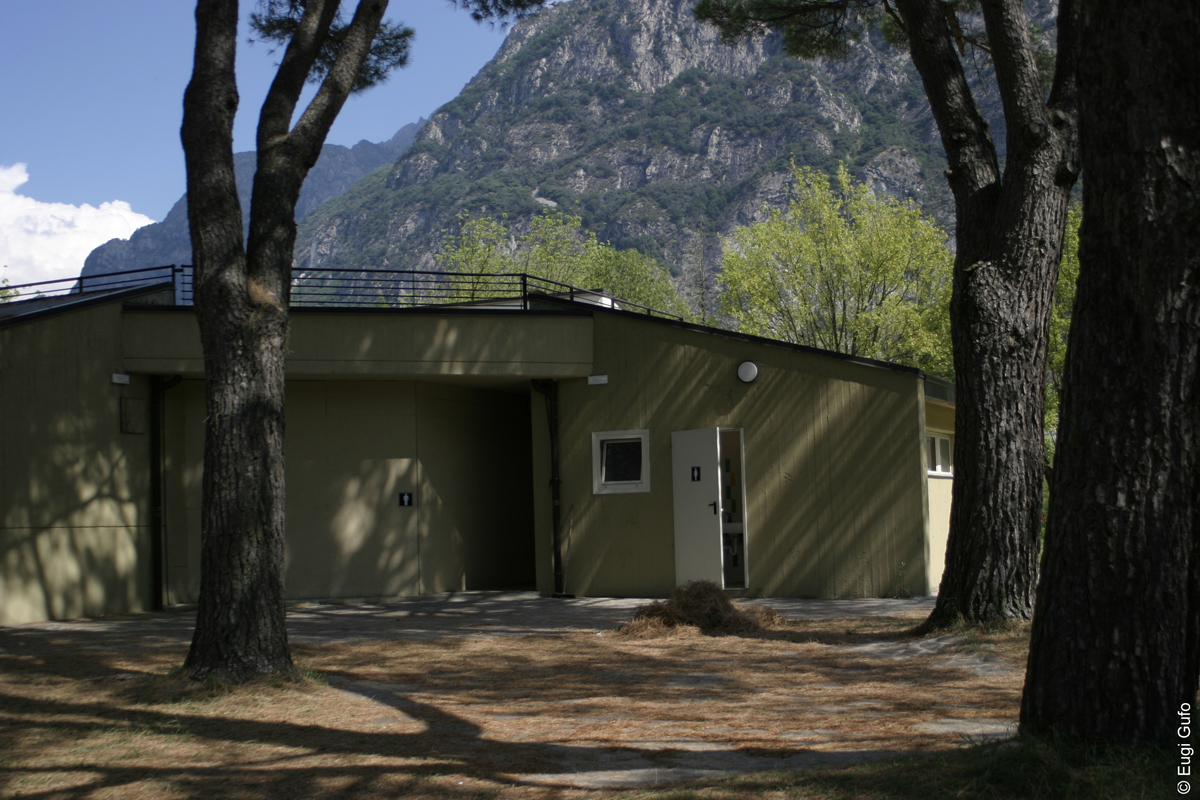
One of the most beautiful and useful tourist attractions of this area is the free public restroom — reasonably clean and physically intact. I was so astonished that I began to suspect I had inadvertently crossed into Switzerland.
The private boat dock of Novate Mezzola is, strangely, extremely small. Ninety percent of it is visible in these photographs.

At least no one spoils the view of Lake Mezzola from the camping area.
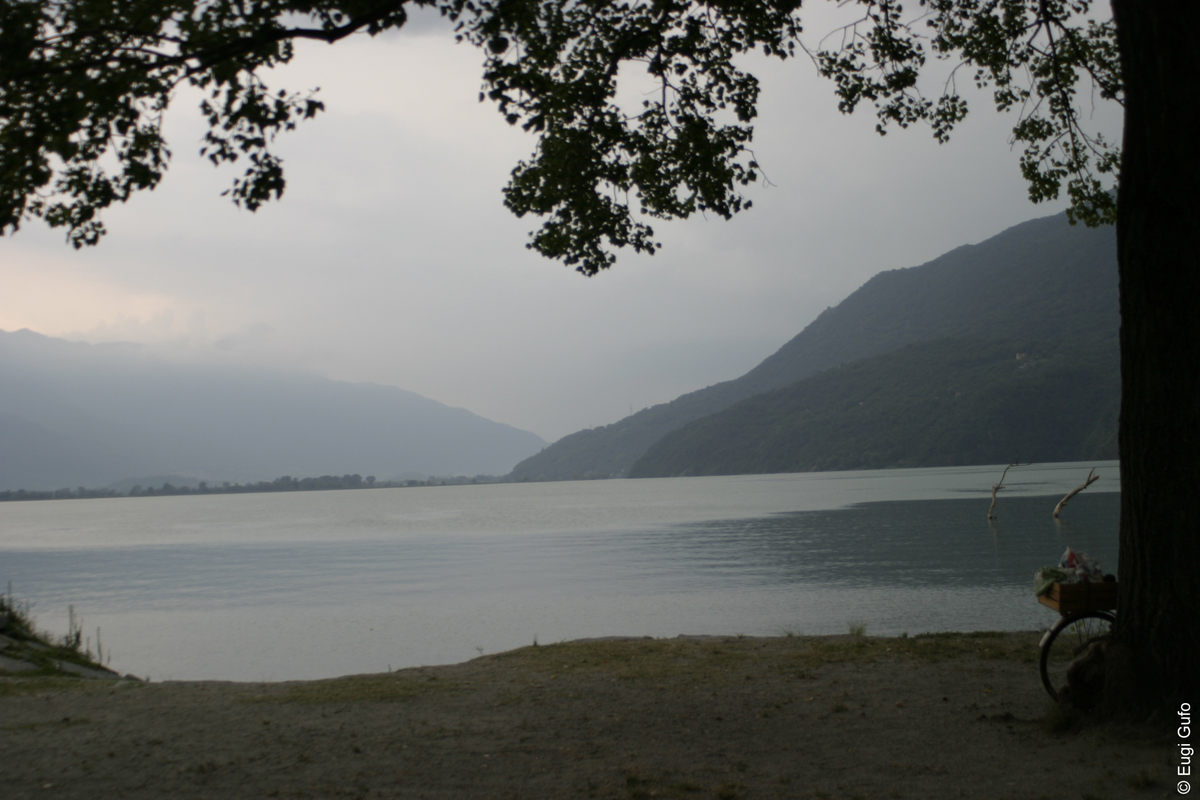
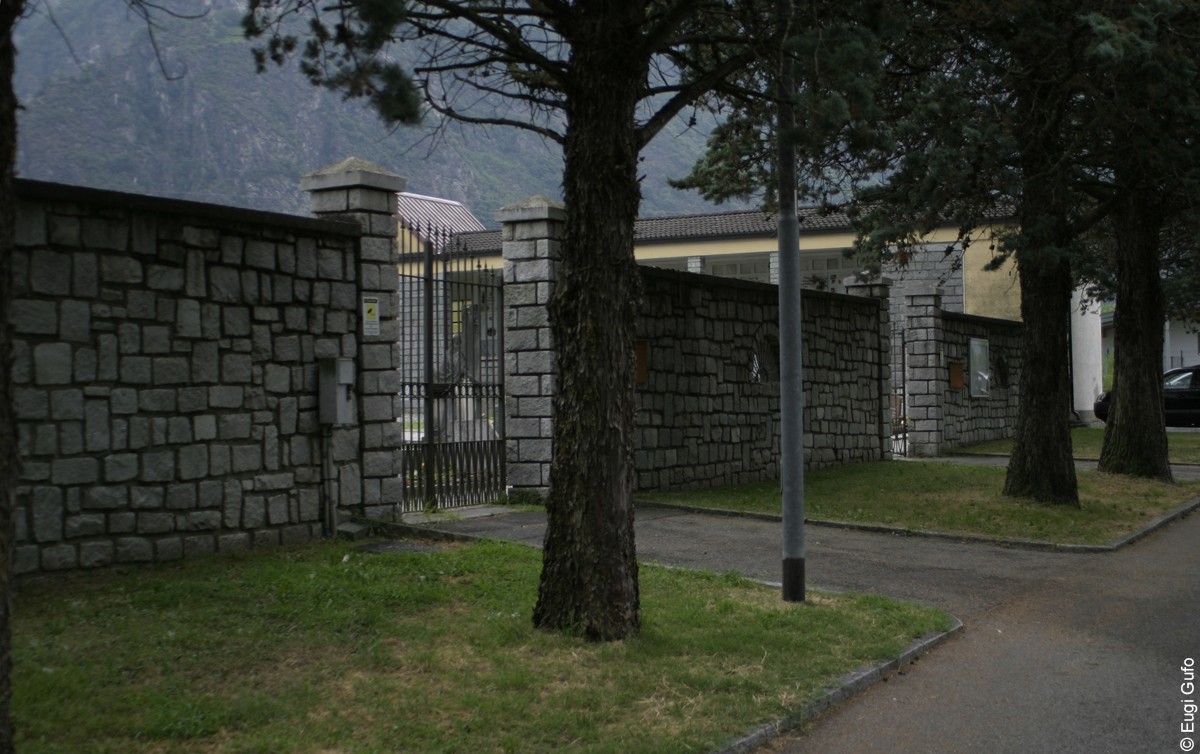
Having contemplated the lake, we proceed. We pass near the local cemetery — not very large for a village of nearly two thousand inhabitants…
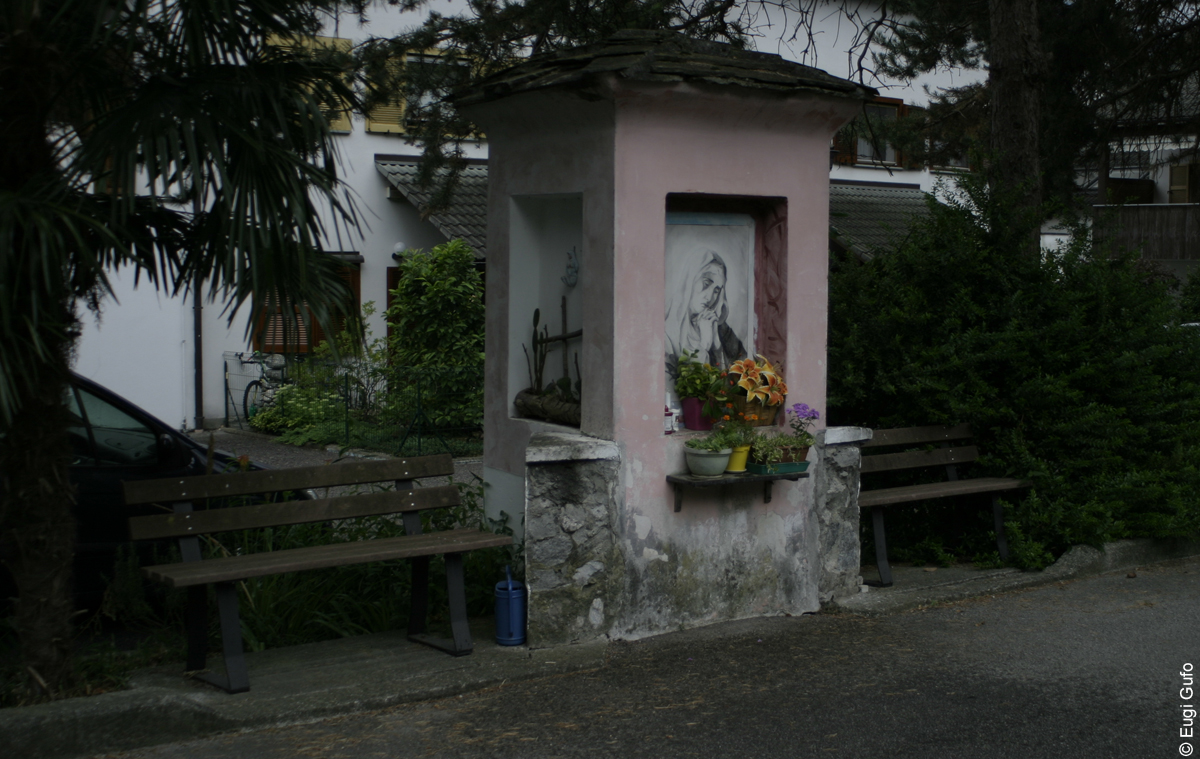
… pass near a chapel seemingly decorated in street-art style…
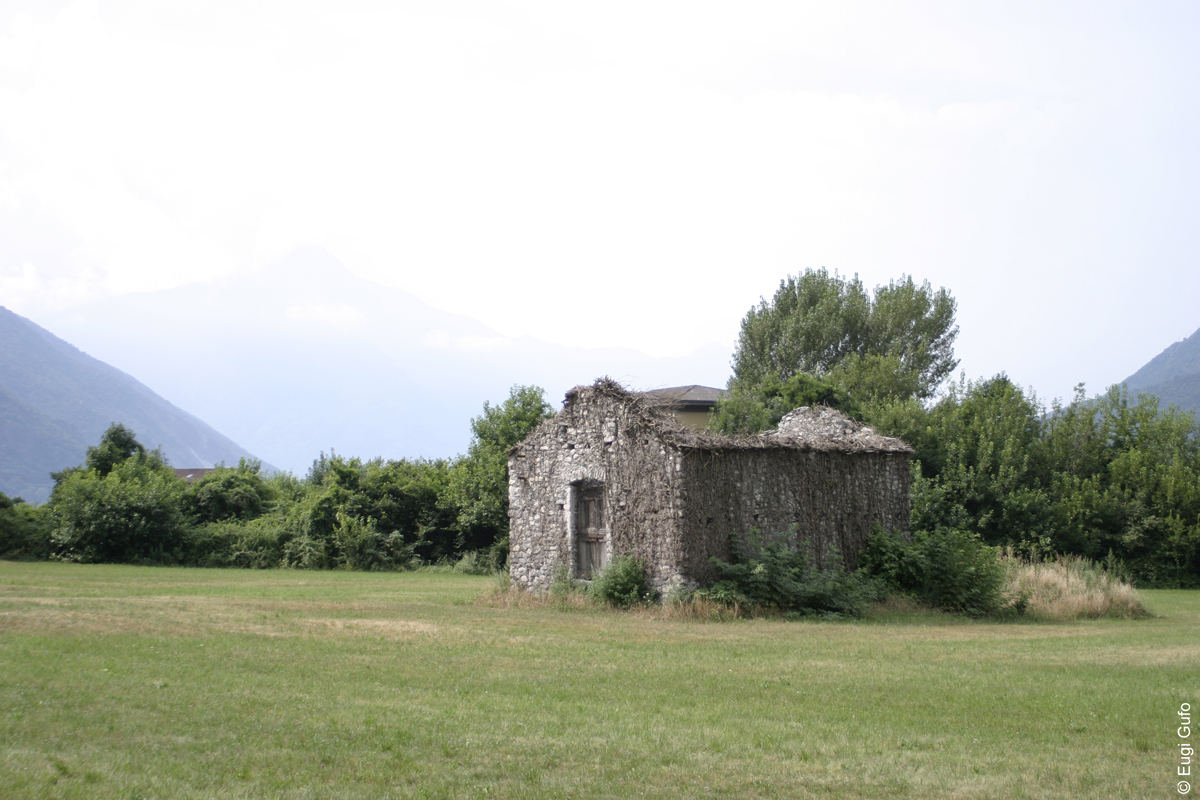
… and soon arrive in a sparsely built-up area. This should not alarm us — let us continue. I suspect this may once have been a church centuries ago:
We cross an area with some horse pastures…

… cross the bridge over the Codera stream and arrive at Campo Mezzola, a hamlet — and logical continuation — of Novate Mezzola.

We are effectively in a large peripheral zone, yet the local architecture is far more interesting and lively than that of the official historic centre.
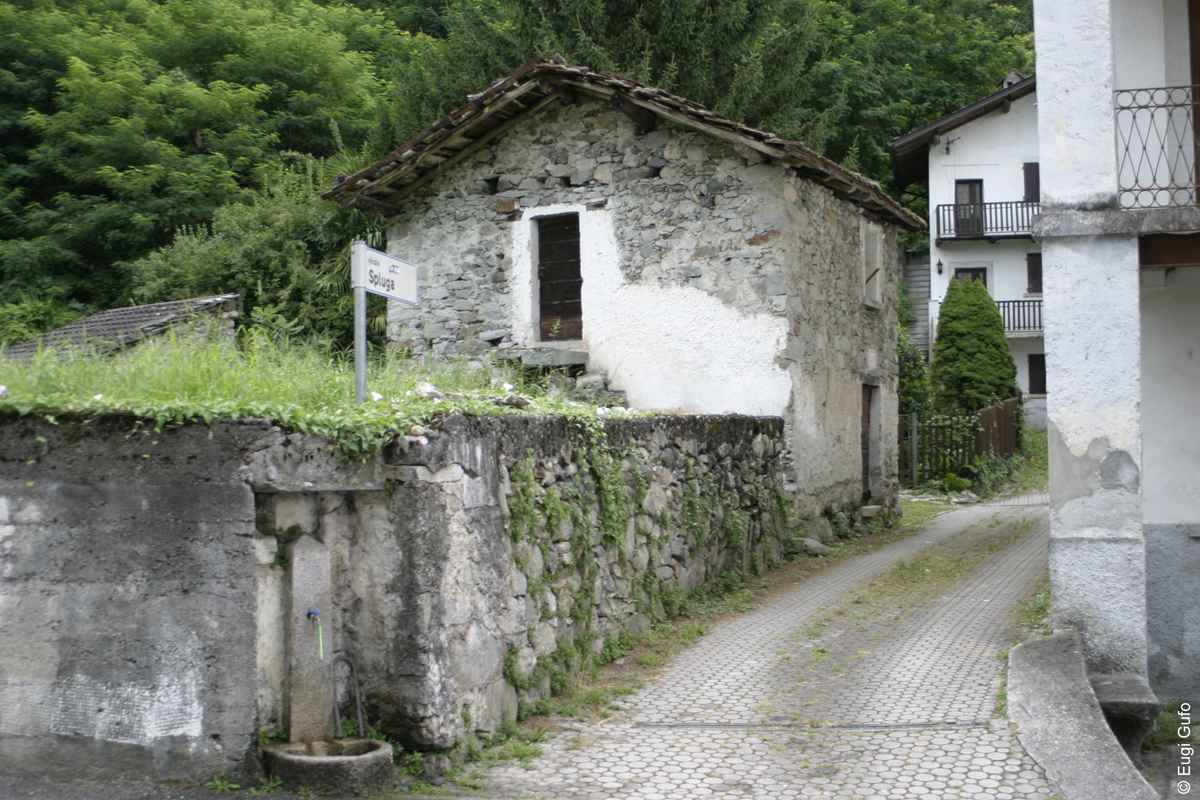
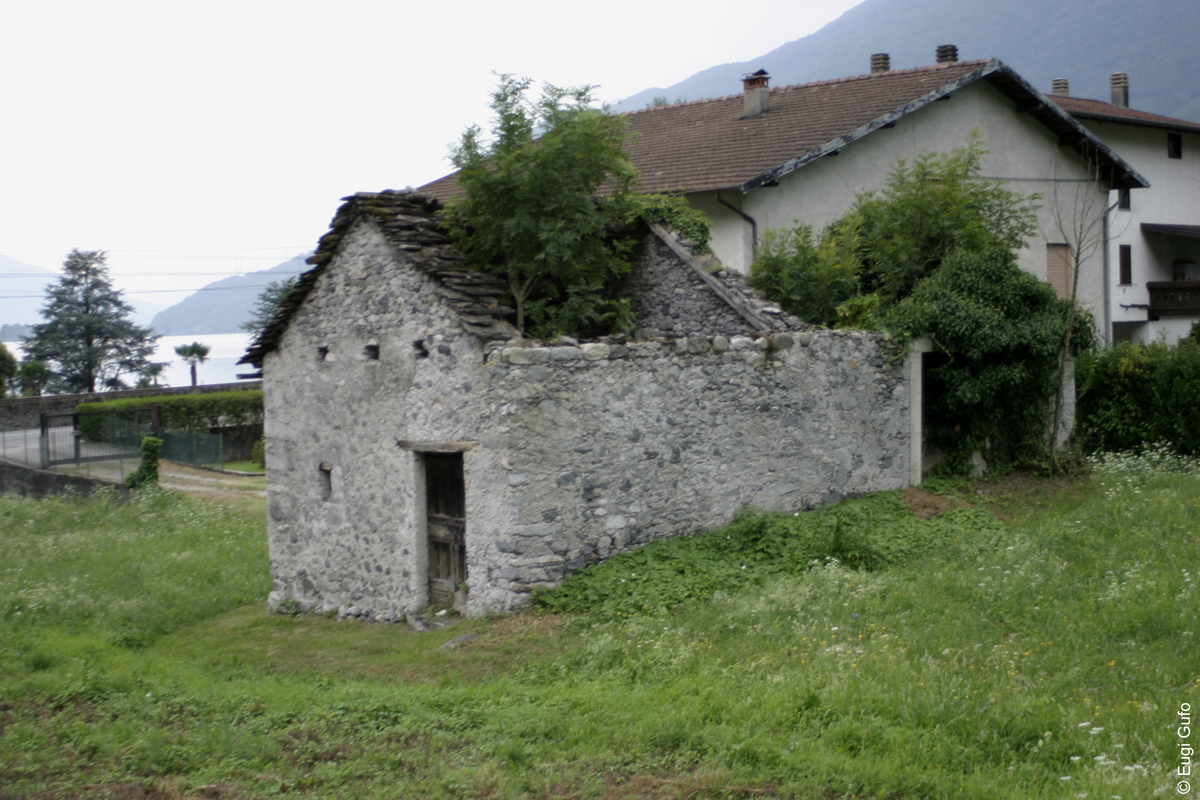
Unfortunately, some historically interesting buildings have been abandoned for decades.
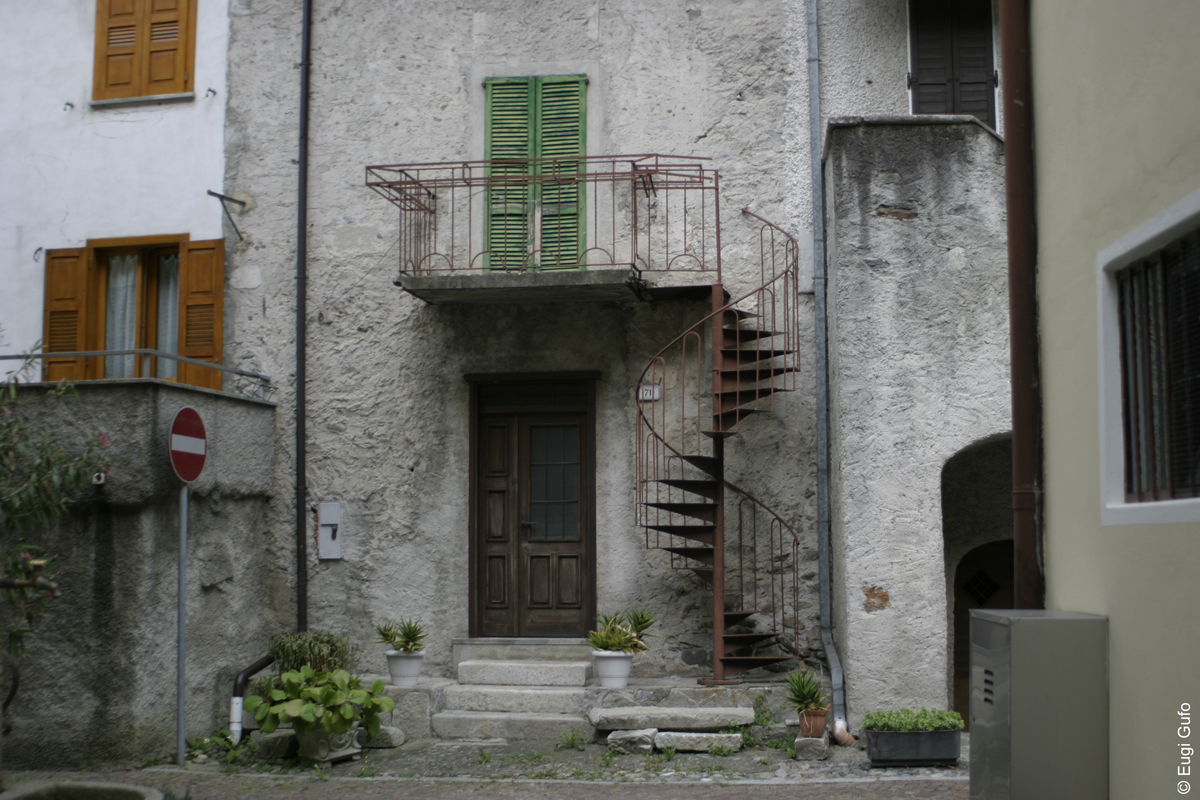
Certain historic buildings still inhabited distinguish themselves through curious details. The highlight is these separate entrances:
The local kindergarten has a very «severe» appearance; I cannot decide whether it resembles a prison or a barracks more closely. Which parents, by deliberate choice (and not necessity), would send their children to such a structure?

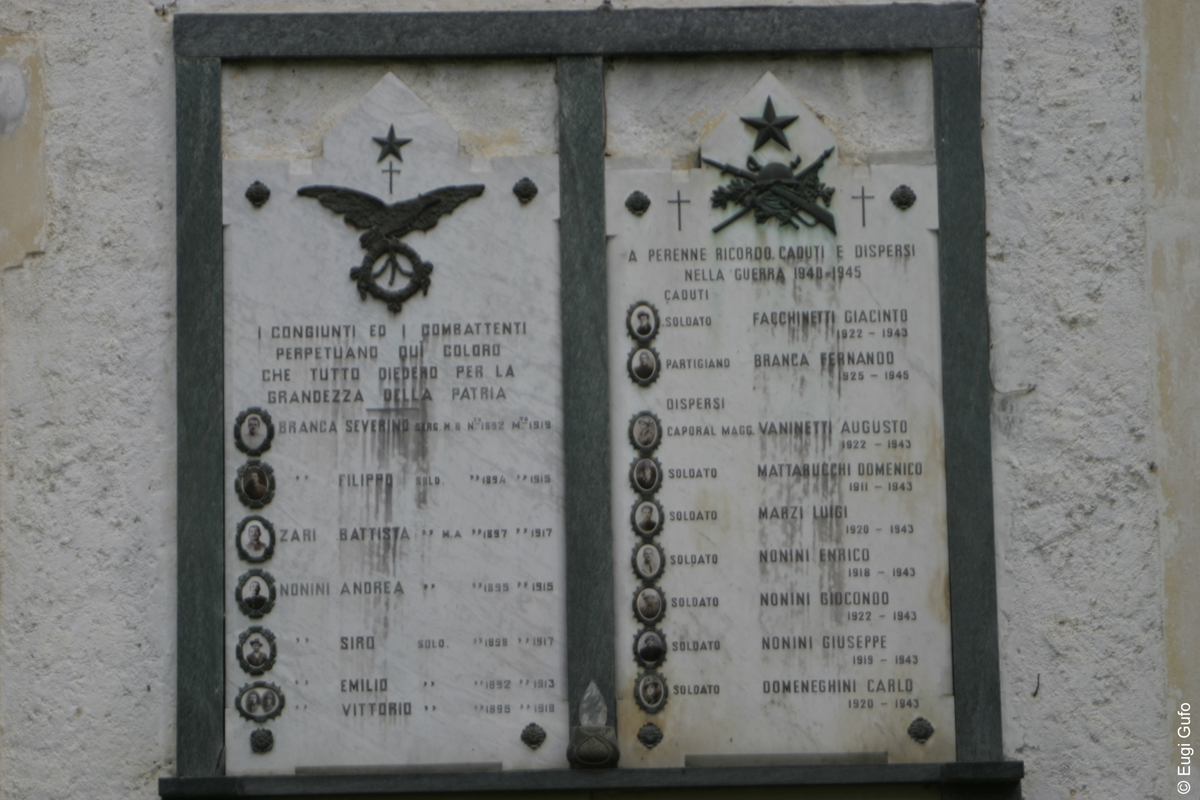
The kindergarten is dedicated to the memory of the fallen; beside its entrance stand two plaques listing local citizens who did not return from the two World Wars. As often happens, the characteristics of the two lists are noteworthy. Those fallen in the First World War «gave everything for the greatness of the fatherland.» Among the victims of the Second World War are listed the soldiers killed and missing, but also — among them — a partisan (partisans, having been killed under different circumstances and on a different «front,» are usually listed separately).
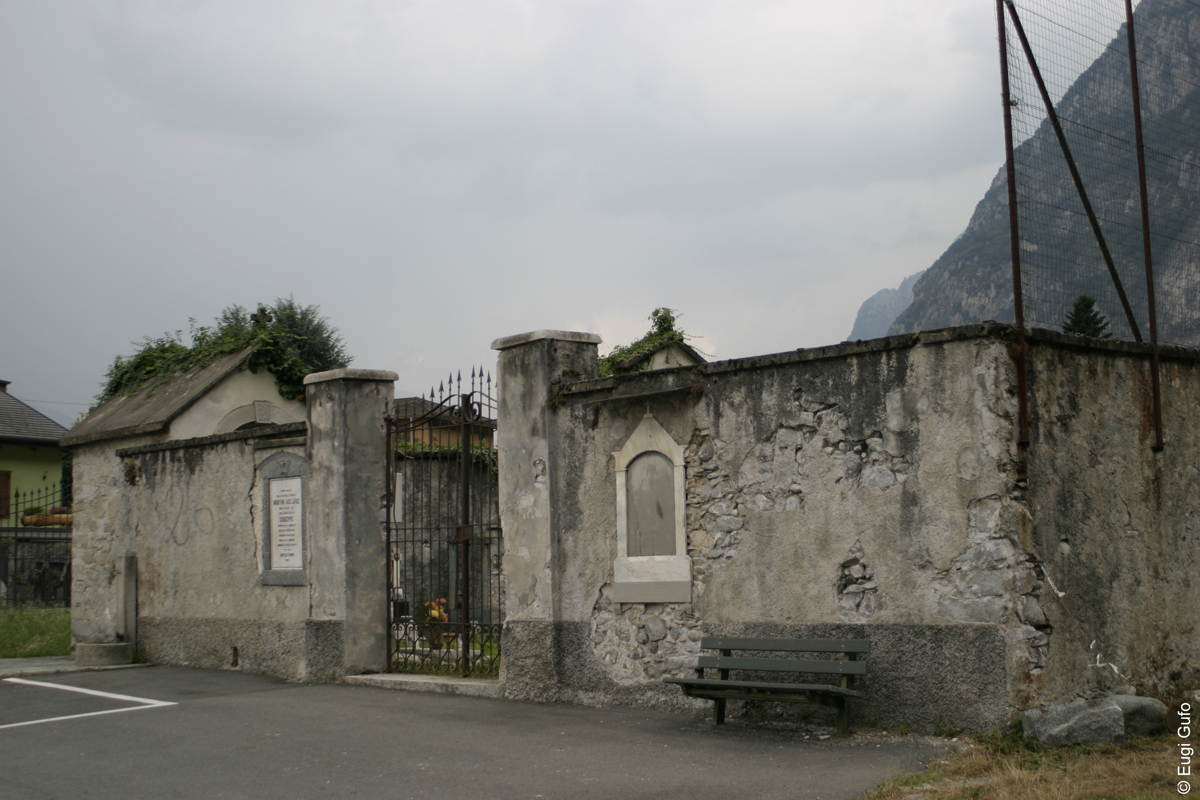
Since I have just written about war casualties, I must note that for the first time in Italy I saw a cemetery so small:
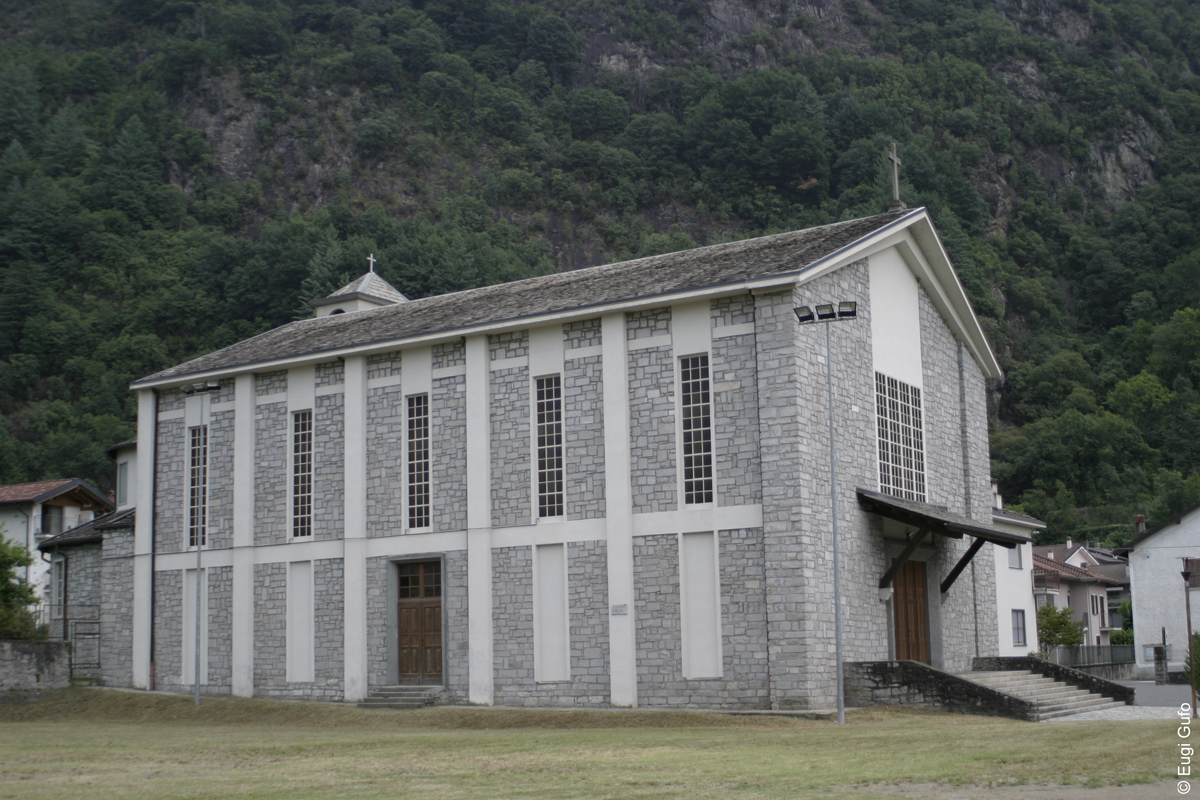
It stands near the church of Maria Mediatrice: built in the second half of the 1950s and consecrated in 1960, it is the new parish church of Campo Mezzola.
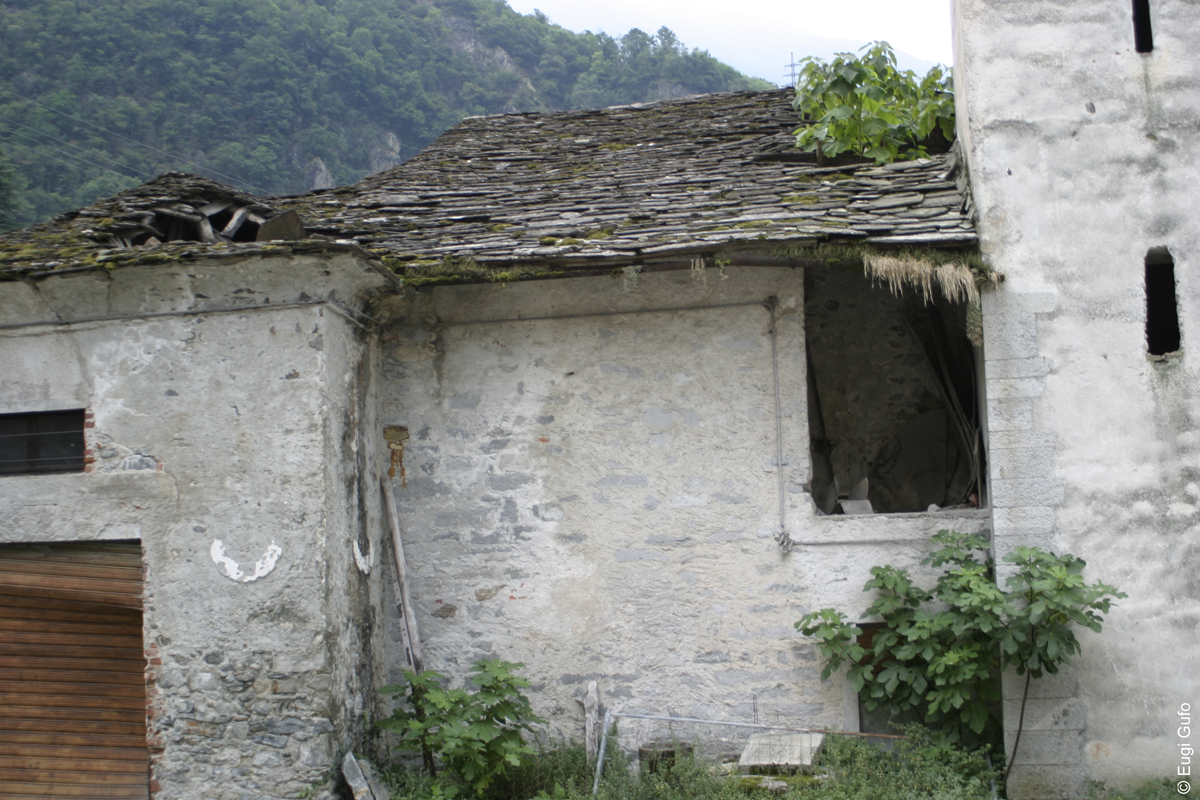
The parish, however, remains dedicated to Saint Columbanus. Indeed, the old village church was dedicated to that saint. The 18th-century building — elevated to parish status in 1886 and now deconsecrated — stands in somewhat precarious condition.

I have read that its architectural recovery is officially underway, yet I noticed no visible sign of works on site.
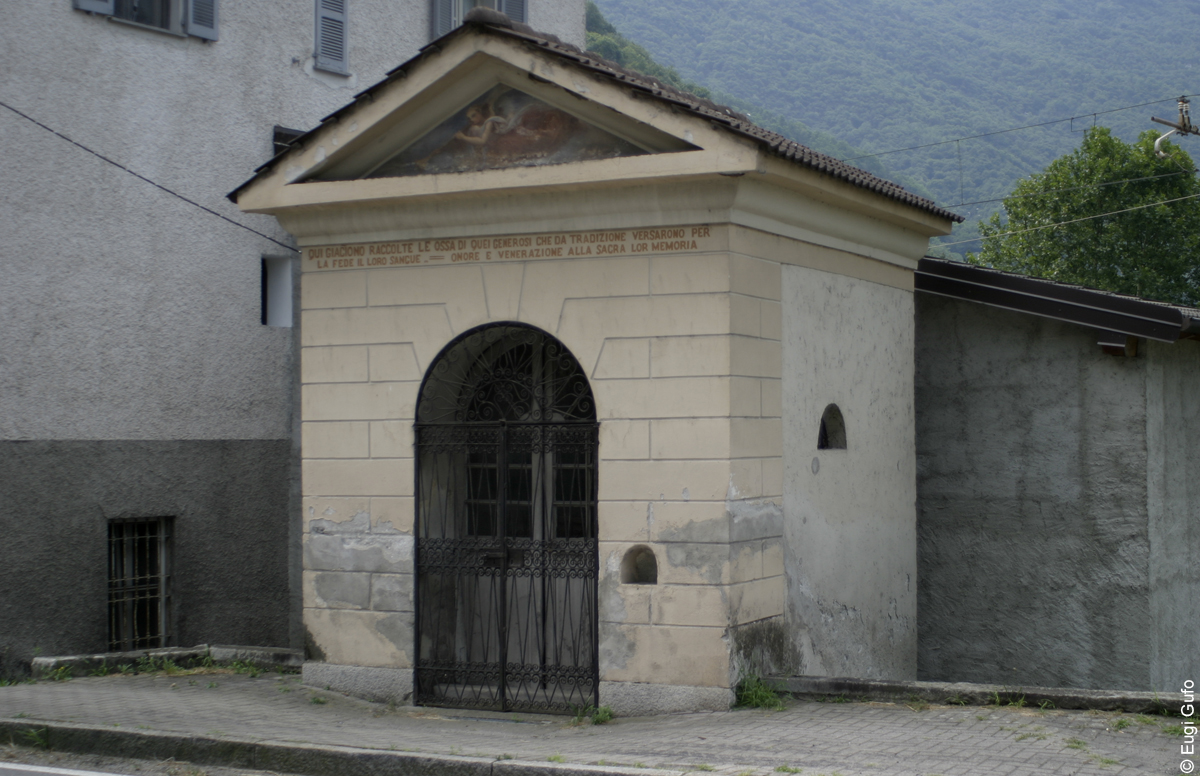
Thus the best-preserved old religious building is this chapel:
Far more useful and interesting is the local Edison hydroelectric power plant.
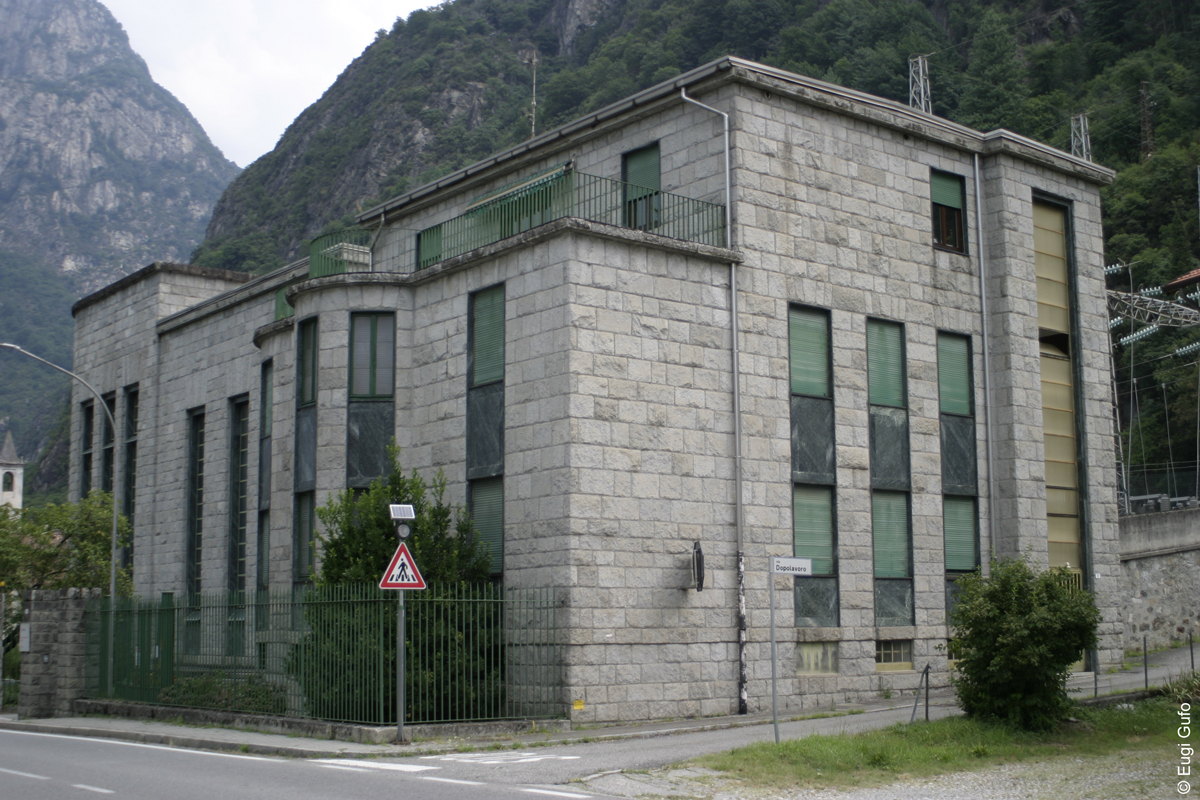
It is also interesting because on its grounds, outside the building, stand two curious monuments.

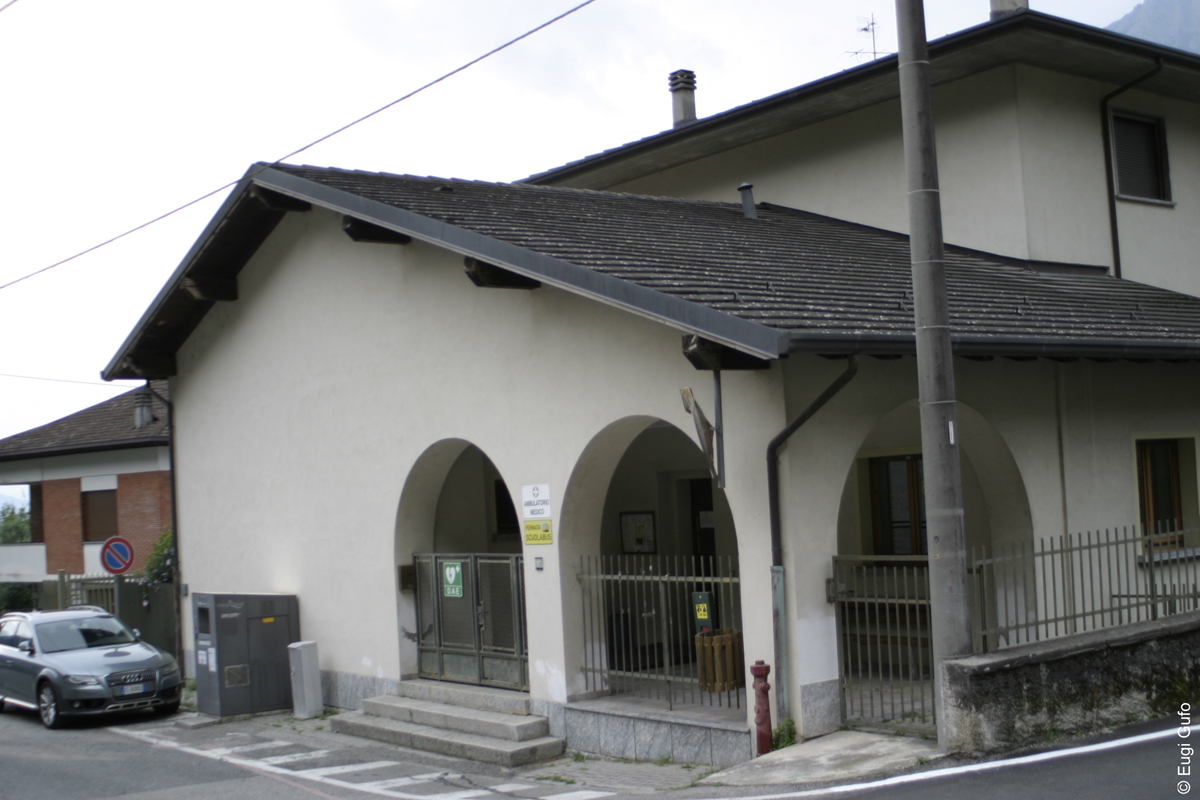
The local medical clinic, by contrast, is noteworthy for being marked only by a very small sign on its façade.
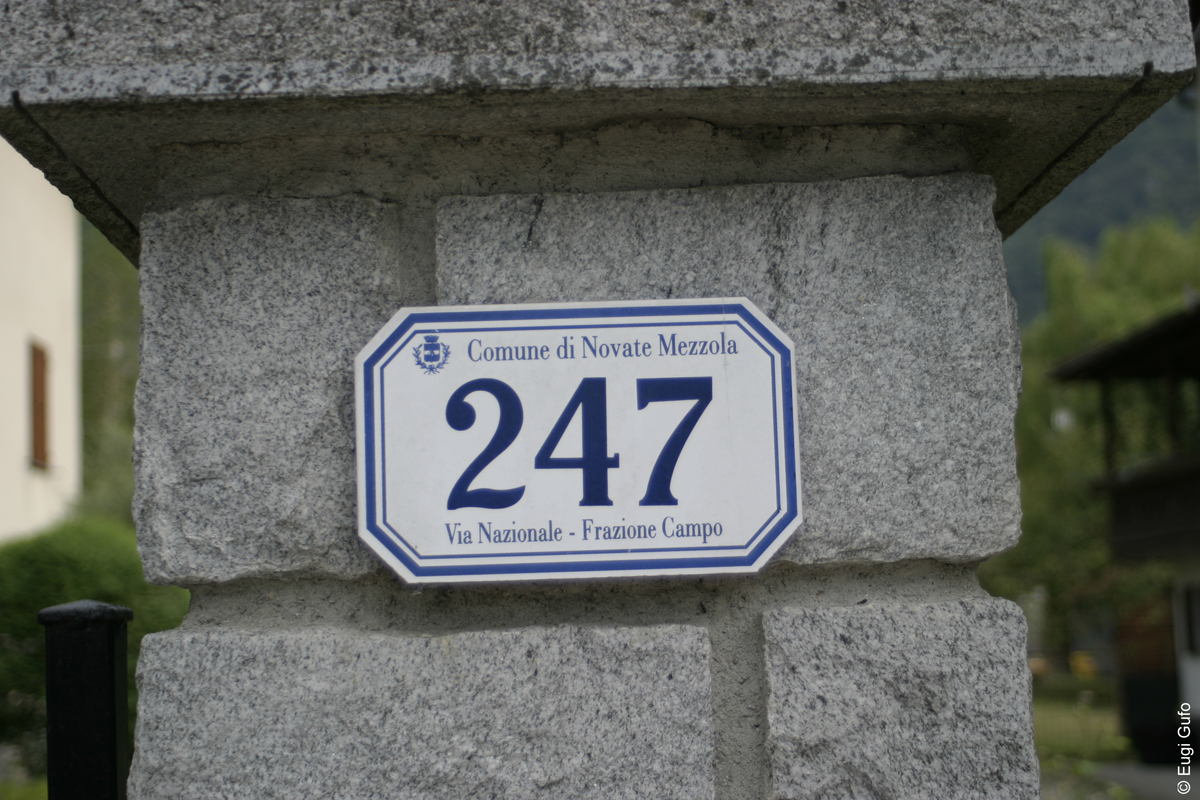
Speaking of local signage: in everyday life one rarely sees house numbers of this type, whereas in Novate Mezzola they are abundant.
There is also a sign — apparently produced by popular initiative, since its graphics do not conform to the Highway Code — proudly declaring that in Novate Mezzola children still play in the streets. Unfortunately, a non-local motorist would hardly have time to read the text, while locals already know this without such reminders.

To non-local drivers I add that parking in Novate Mezzola is easily found, even when it is not free.
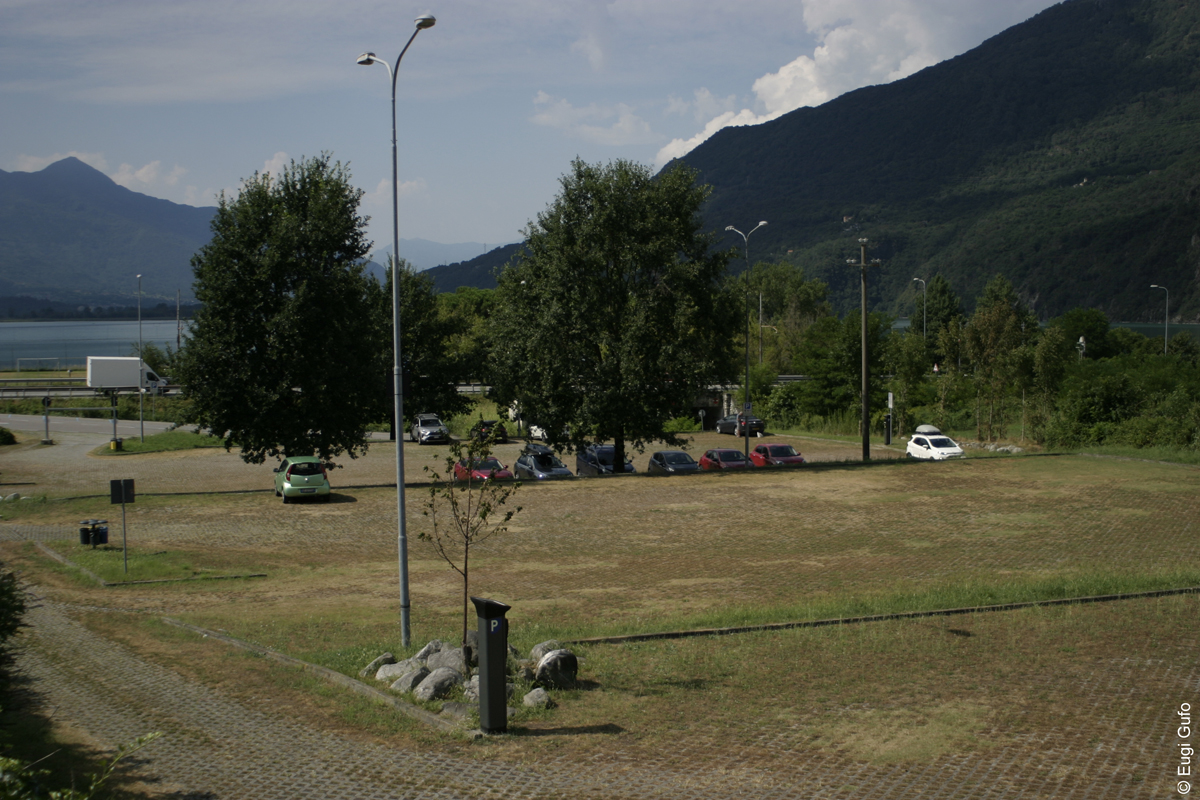
Consequently, if you wish to go there to see something interesting in the area, you are entirely free to choose between train and car.
As for me, having resigned myself to the search for something truly beautiful and interesting in Novate Mezzola, I finally set off toward the mountain trails of Val Codera — which, I may anticipate, did not disappoint me at all.
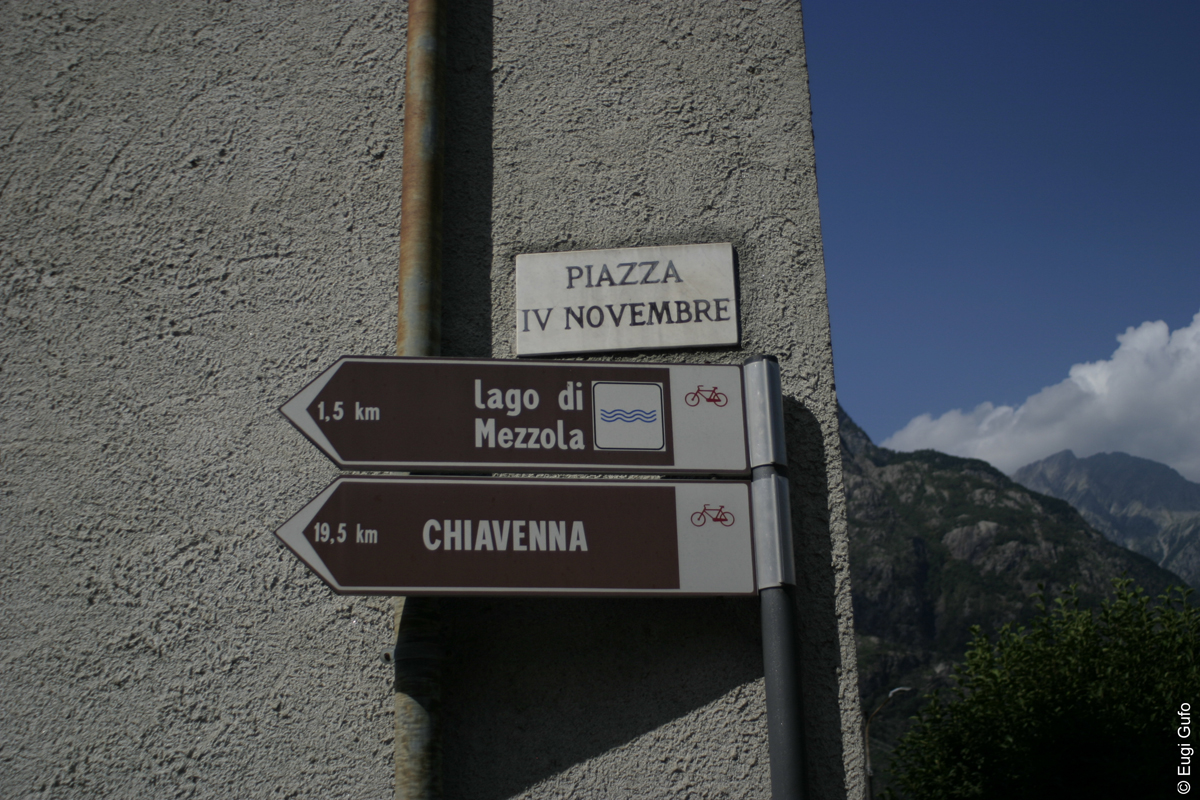
Today’s account, however, concludes here. It concludes with the observation that I did not waste the opportunity to explore Novate Mezzola — but I did waste my time exploring Novate Mezzola.

