


 Long live Ukraine! Fuck the war!
 RSS of site articles
What are the most widespread stereotypes about the city of Asti among ordinary mortals? First of all, an ordinary mortal knows that Asti is a wine city! And indeed, one of the first buildings we see upon leaving Asti railway station is an apparently rather old factory producing barrels and casks. Perhaps its products were never actually used for wine, but the coincidence is nevertheless amusing.
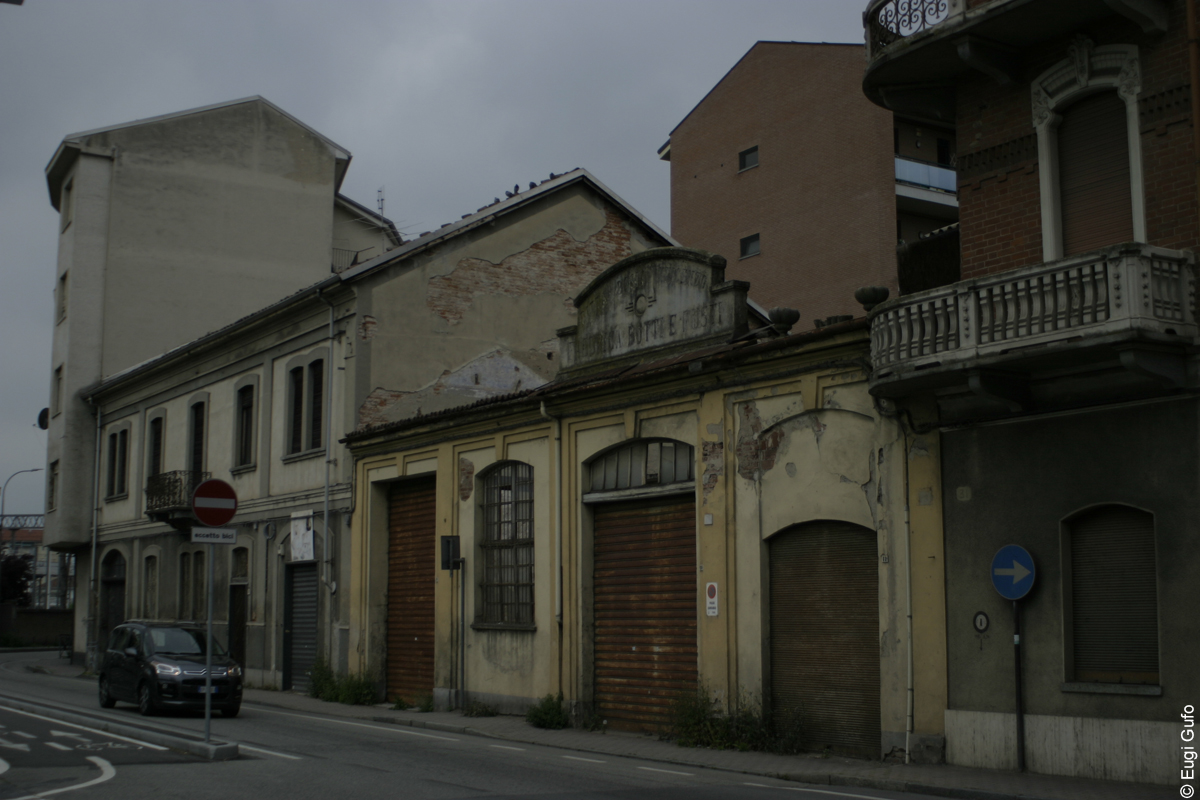
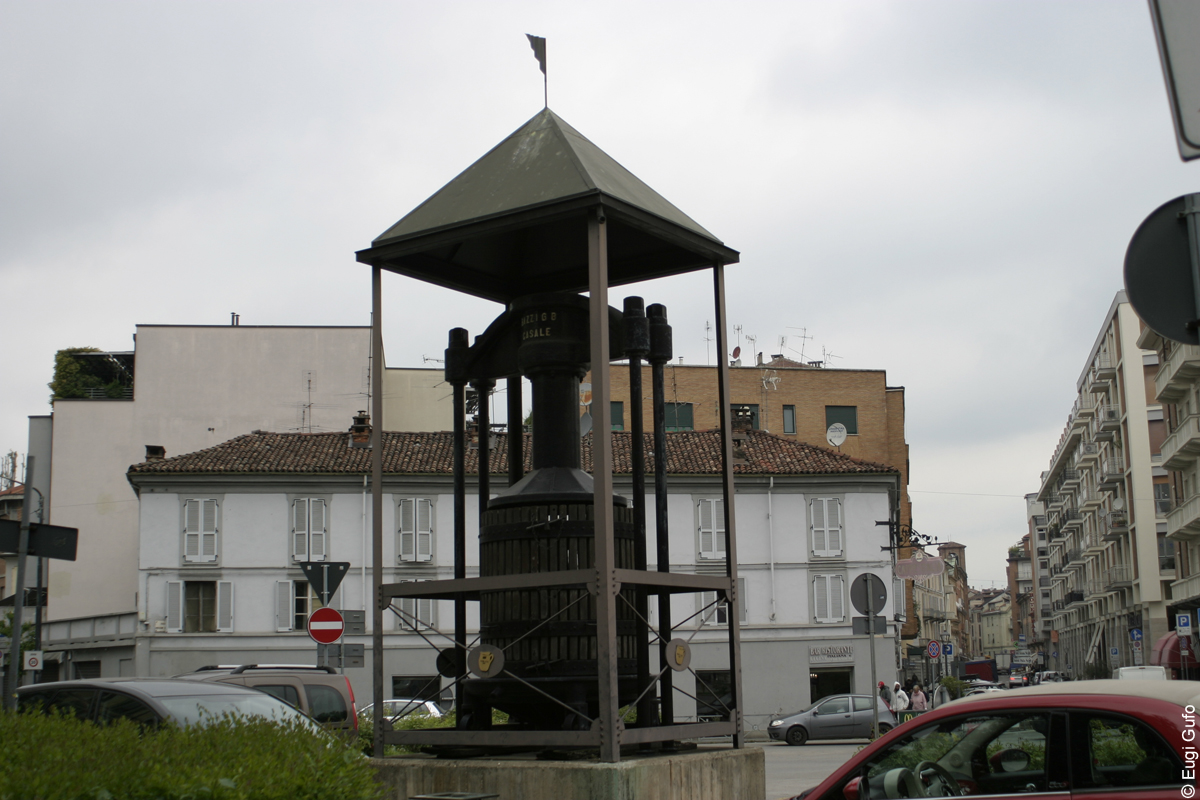
Contrary to what one might expect, I did not notice in Asti any massive use of barrels in street furniture — for example as improvised outdoor tables in front of bars, as one sees throughout Italy — nor in decorative settings. However, in compensation, many squares in Asti — including the one in front of the station — display relatively old tools once used in the wine industry: various types of presses, barrels, or simple carts for transporting raw materials. All the specimens I examined closely were in good aesthetic condition; I do not believe such objects are particularly rare in this region.
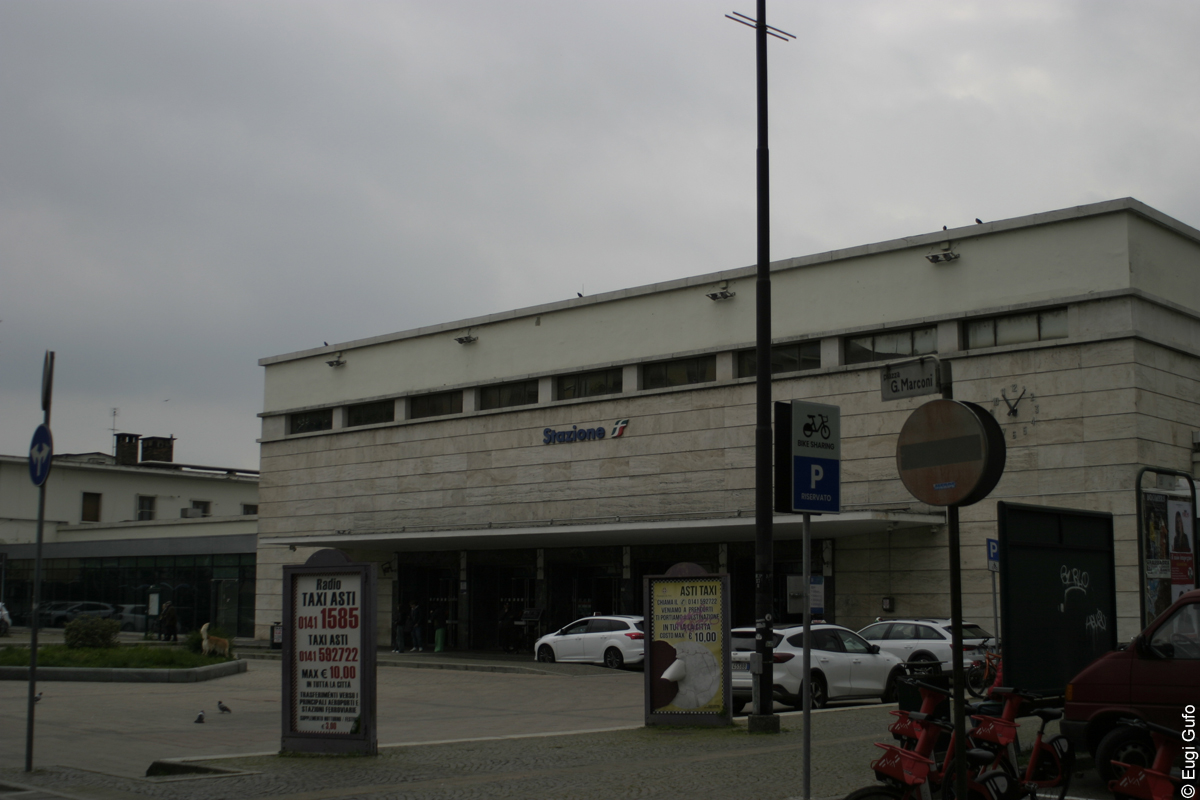
The railway station itself — from which we have not yet moved — has nothing particularly remarkable about it (except for a very high number of poles in front of the façade, making life difficult for photographers). The first version of the station dated back to 1850, certainly in the typical style of that era. The current building was constructed during the expansion of the Piedmontese railway network and inaugurated on 4 June 1916.
To finally leave the station area and head toward the more interesting parts of the city, we logically need to find the road to the centre. In Asti, strangely enough, this is not so straightforward: the road that seems most intuitive actually leads somewhere else entirely (what appears to be a grand avenue takes us across a large parking lot and into a peripheral area near the railway tracks). Essentially, to reach the centre from the station, one must walk toward this conspicuous «thing»… Is it appropriate to call it a «thing»?
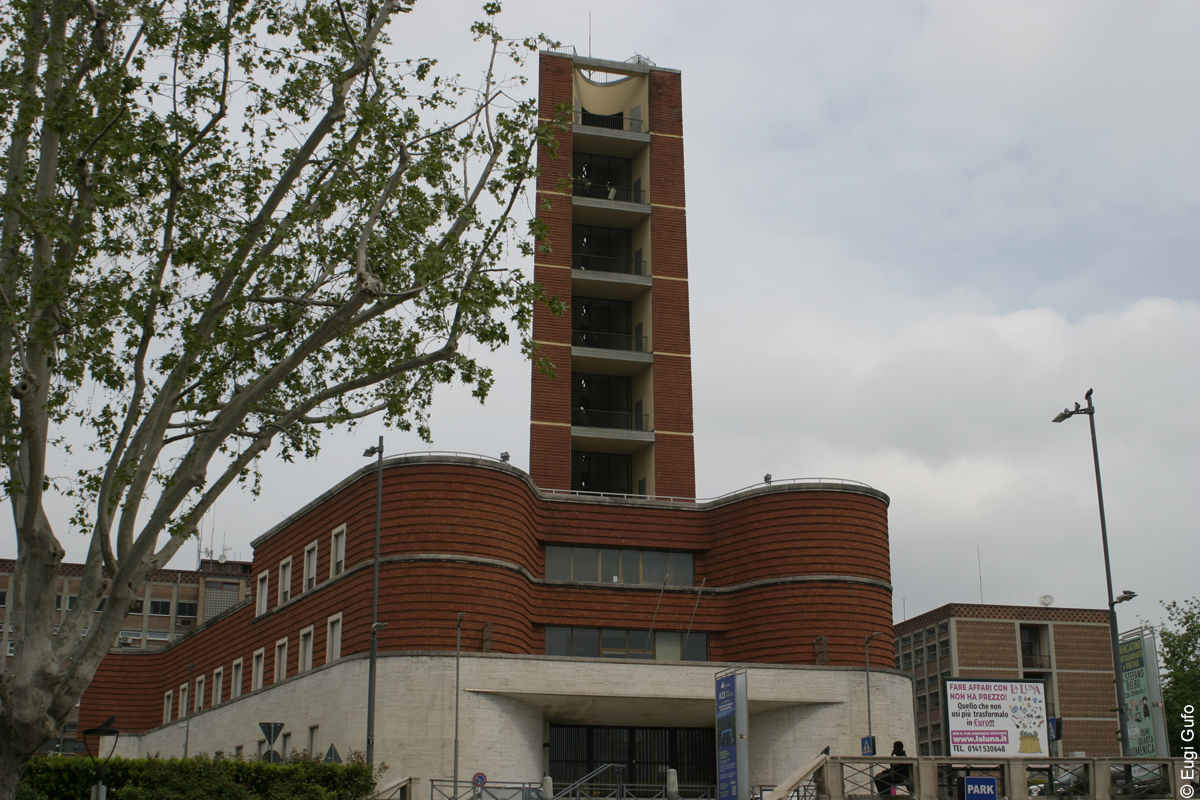
In reality, the building in the photograph above is the former Casa del Fascio, constructed between 1934 and 1935. I do not know what the architect had in mind when conceiving its form… Or perhaps he was expressing his personal opinion about Fascism in architectural language? In any case, he might have justified it by recalling that historically Asti was known as «the city of one hundred towers»: indeed, its historic centre once abounded in merchants’ houses and palaces equipped with monumental towers. Many of those towers (the well-known online encyclopaedia claims there were as many as 120 at their peak) are still standing. Though from a distance it is sometimes hard to tell whether one is looking at a tower, a bell tower, or simply a tall, narrow building.
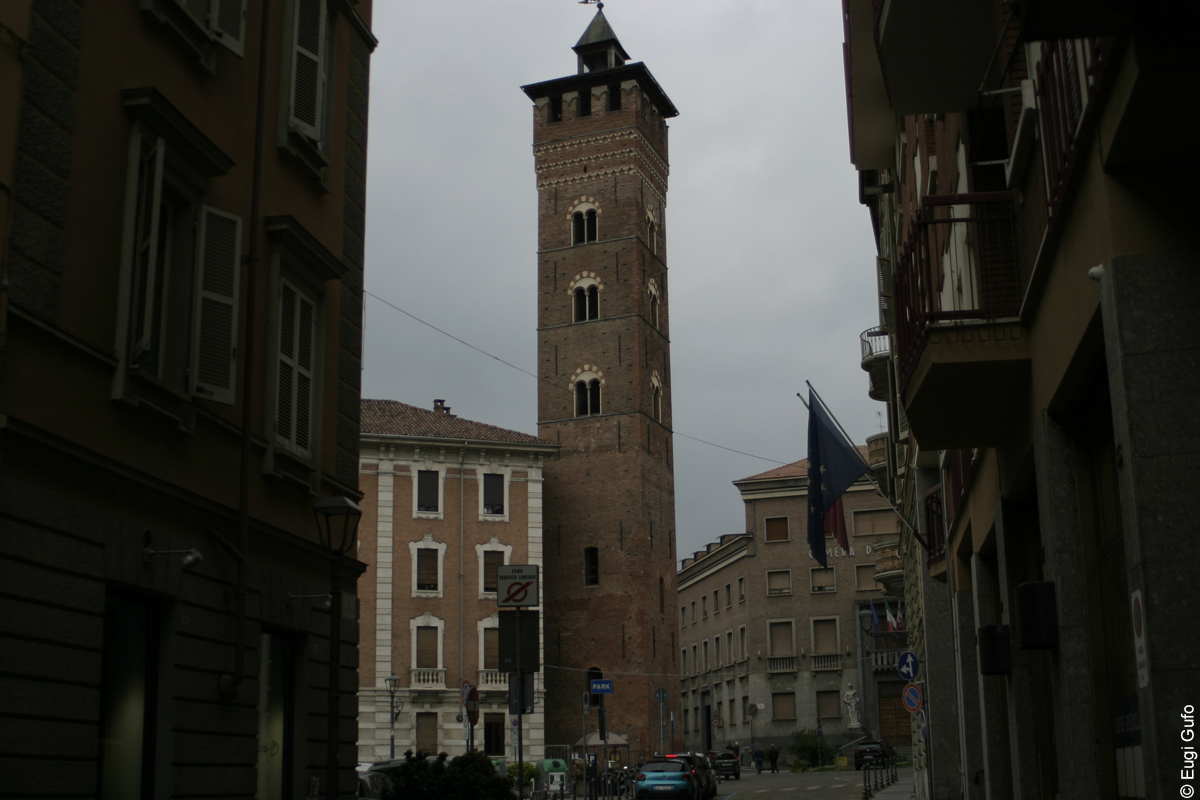
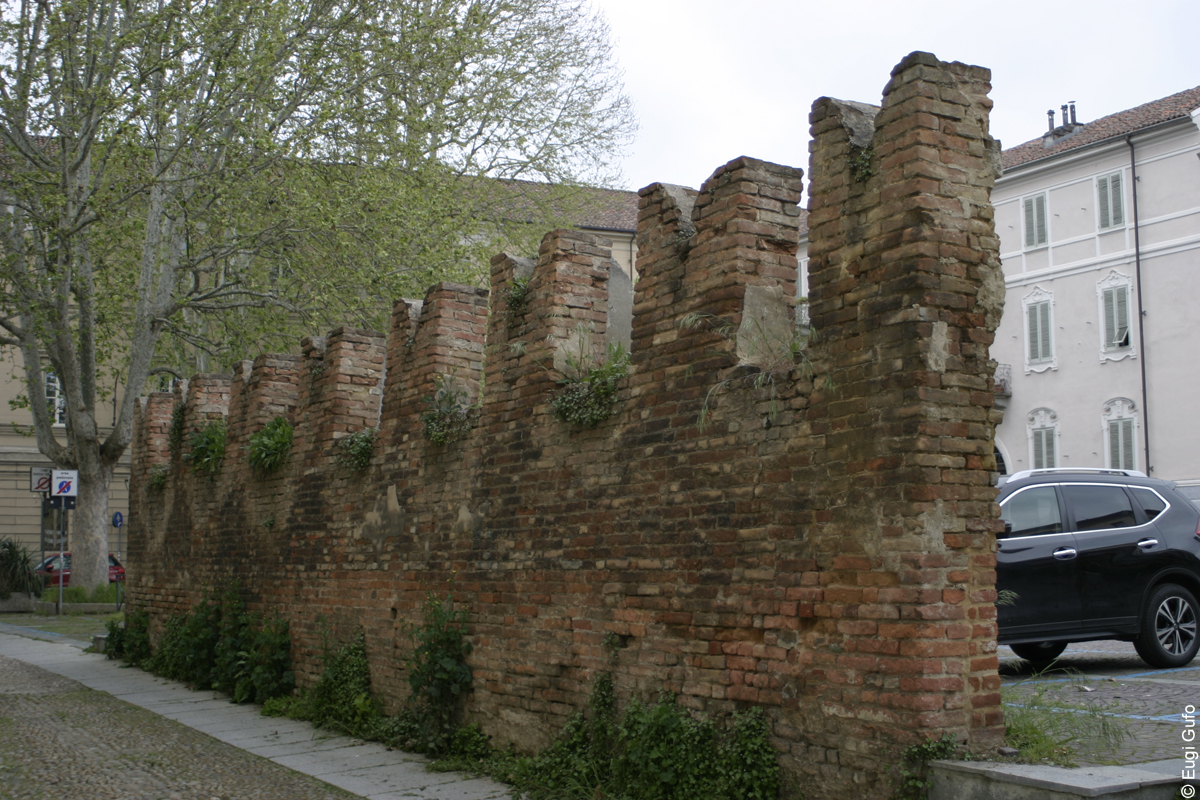
The same online encyclopaedia claims that in the north-western part of the city one may admire a surviving stretch of the medieval city walls (which, if I understood correctly, performed their defensive function more or less until the arrival of Frederick I Barbarossa). The difficulty is that a tourist may not even realise that he is standing before remnants of the walls rather than, for example, ruins of some ancient palace. Only very few sections are easily recognisable as fortifications.
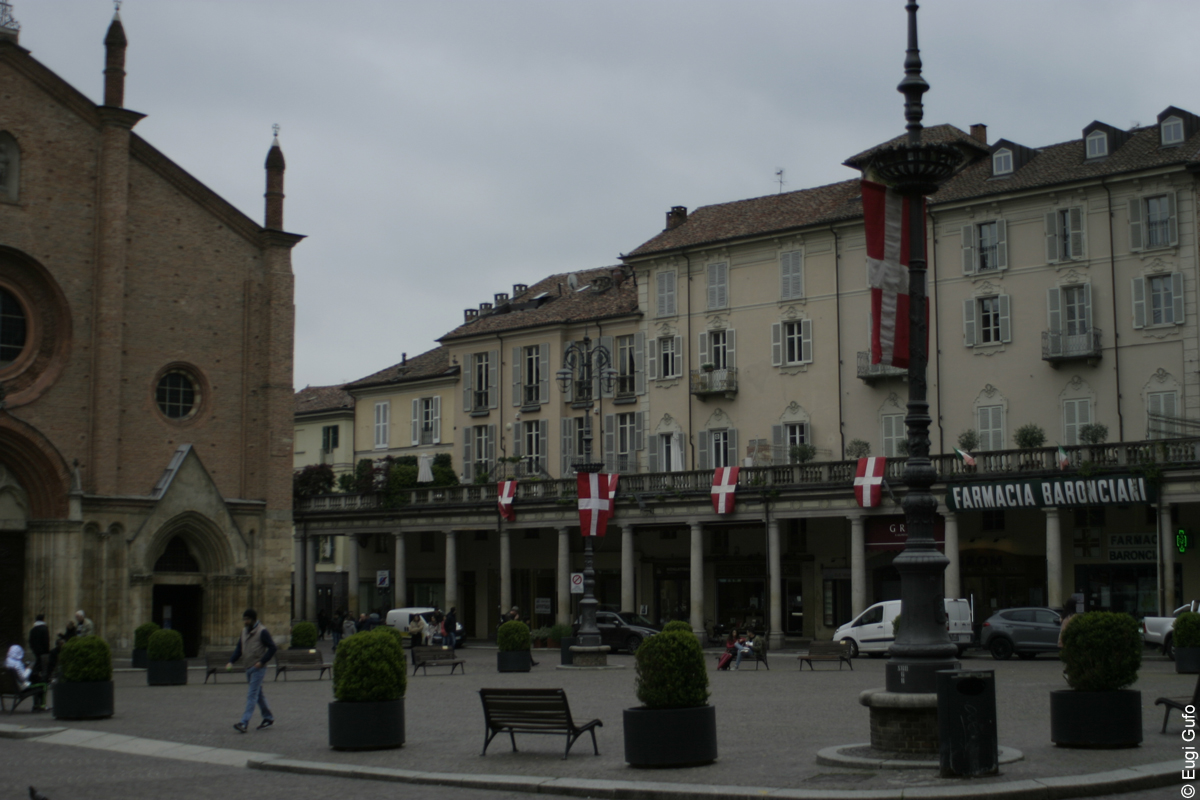
Another thing more or less everyone knows about Asti is that its historic centre is full of beautiful churches… In truth, that knowledge applies to virtually any Italian city, so one cannot really go wrong. A more important and less obvious clarification is this: one of the most beautiful, ancient, and central churches of the city does not hold the status of cathedral. I mean the Collegiata di San Secondo, a Gothic church built between the mid-13th and mid-15th centuries, located next to the Town Hall. Its façade contains several fine elements…

The interior, however, has been «restored» in a somewhat peculiar manner: I am tempted to say it was renovated by some surveyor according to his own personal vision of antiquity. Only a few original elements were preserved.
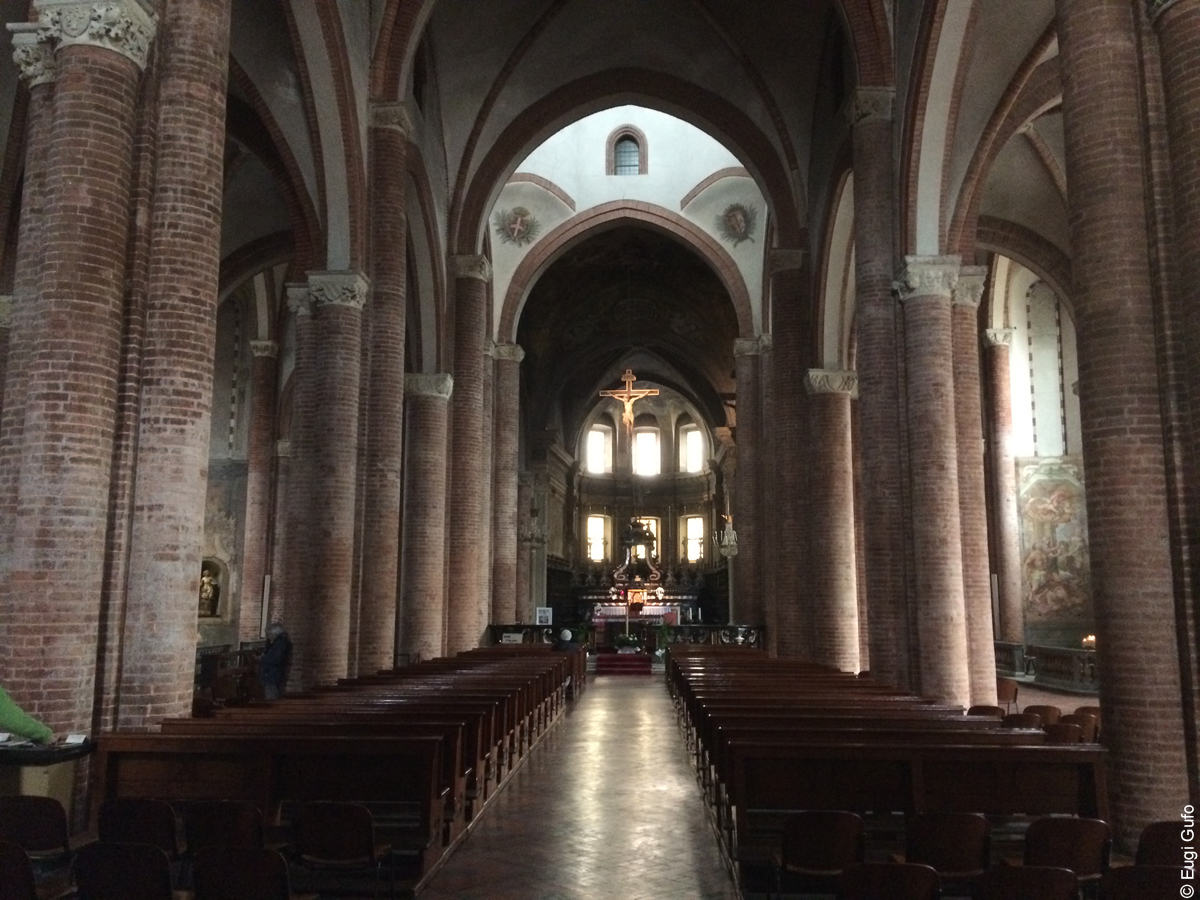
Indeed, this small detail of the left nave might at first glance seem the most beautiful part of the church.
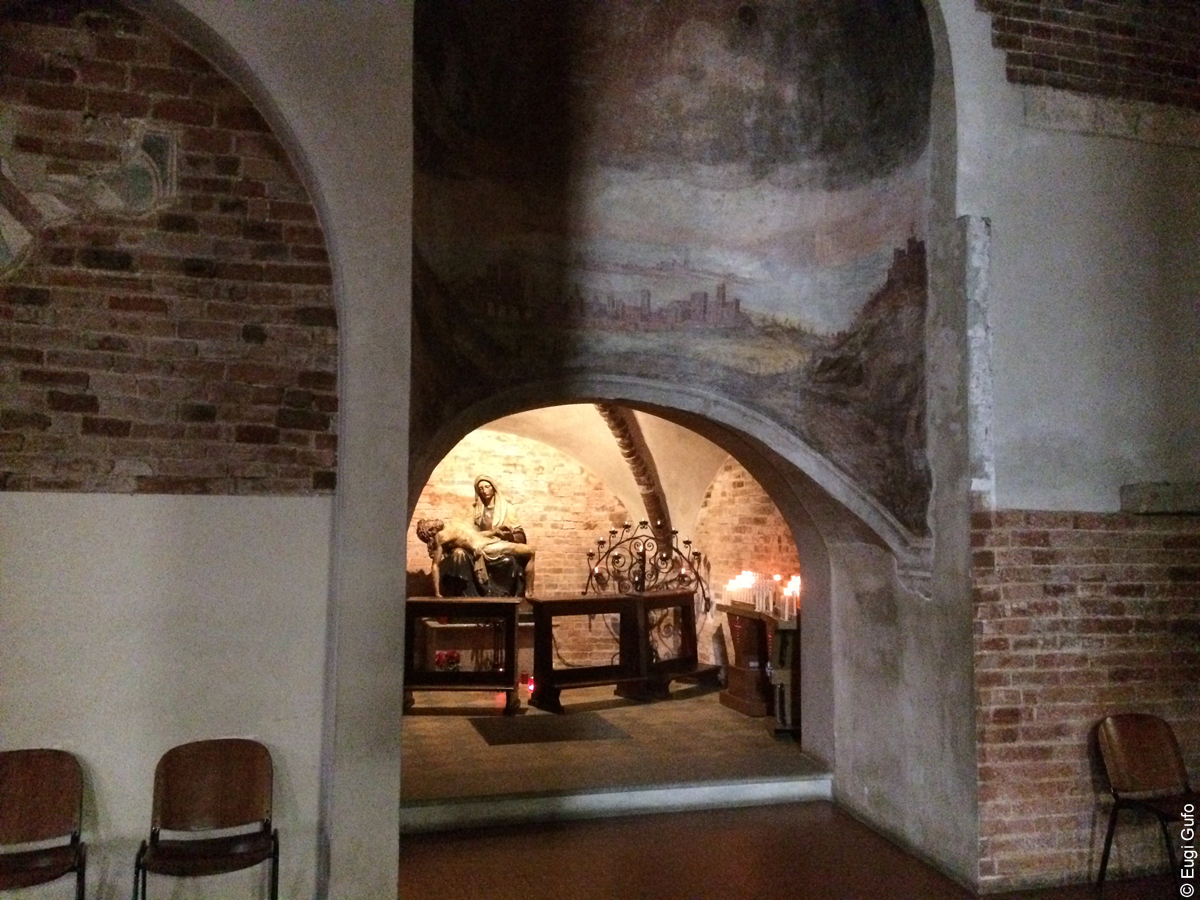
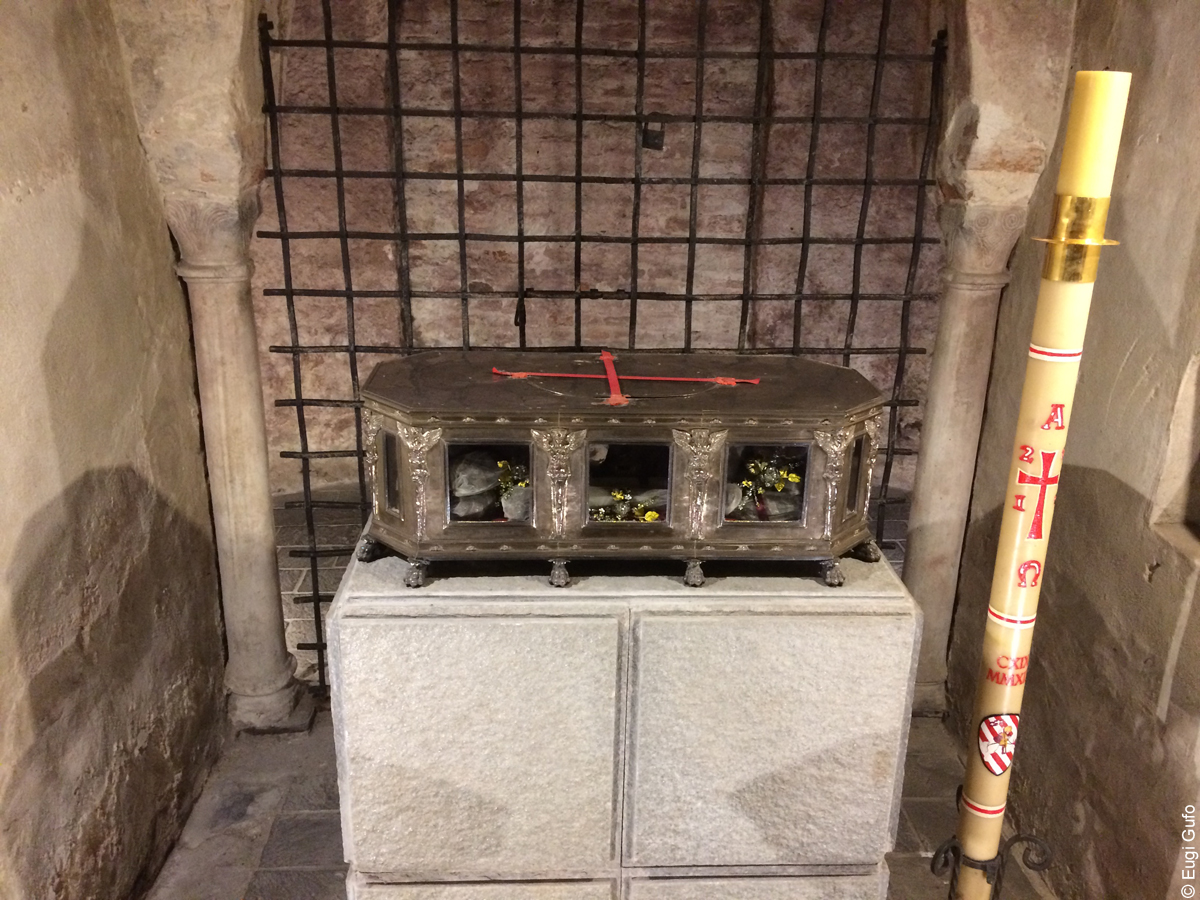
In reality, the most interesting point is the crypt of Saint Secondo, located beneath the altar and choir (the staircase is in the left nave).

The oldest part of the crypt dates from the 6th—7th centuries and houses the 16th-century silver reliquary containing «the bones of Saint Secondo» (the martyr and patron saint of Asti, beheaded in 119 for refusing to renounce Christianity). In truth, I was unable to see precisely what lies inside the metal container and, in any case, neither I nor anyone else today would be able to determine from which tomb any bones might have been taken. Yet the general atmosphere of the crypt is curious and worth visiting.
The square in front of the church is not large, but it is beautiful. The only building not visible at the time of my visit was the Town Hall, covered in scaffolding…
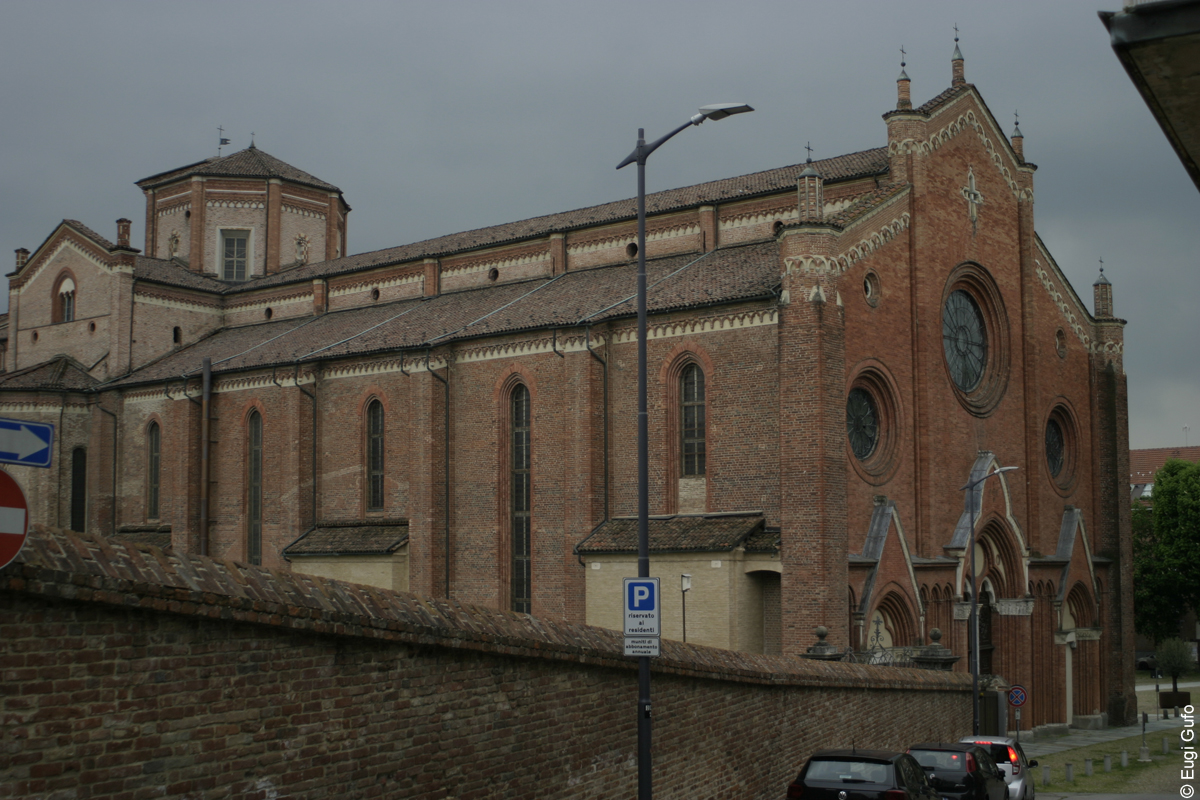
The cathedral of Asti, on the other hand, is the Cattedrale di Santa Maria Assunta, also built between the 13th and 15th centuries. It is indeed the largest church in the city, although it lies somewhat at the edge of the historic centre. I was unable to appreciate its interior because it was closed at the time of my visit (I believe this is the first time I have encountered a cathedral that closes for part of the day), but at least I was able to contemplate its fine Lombard Gothic exterior elements. It is worth seeing even from the outside alone.
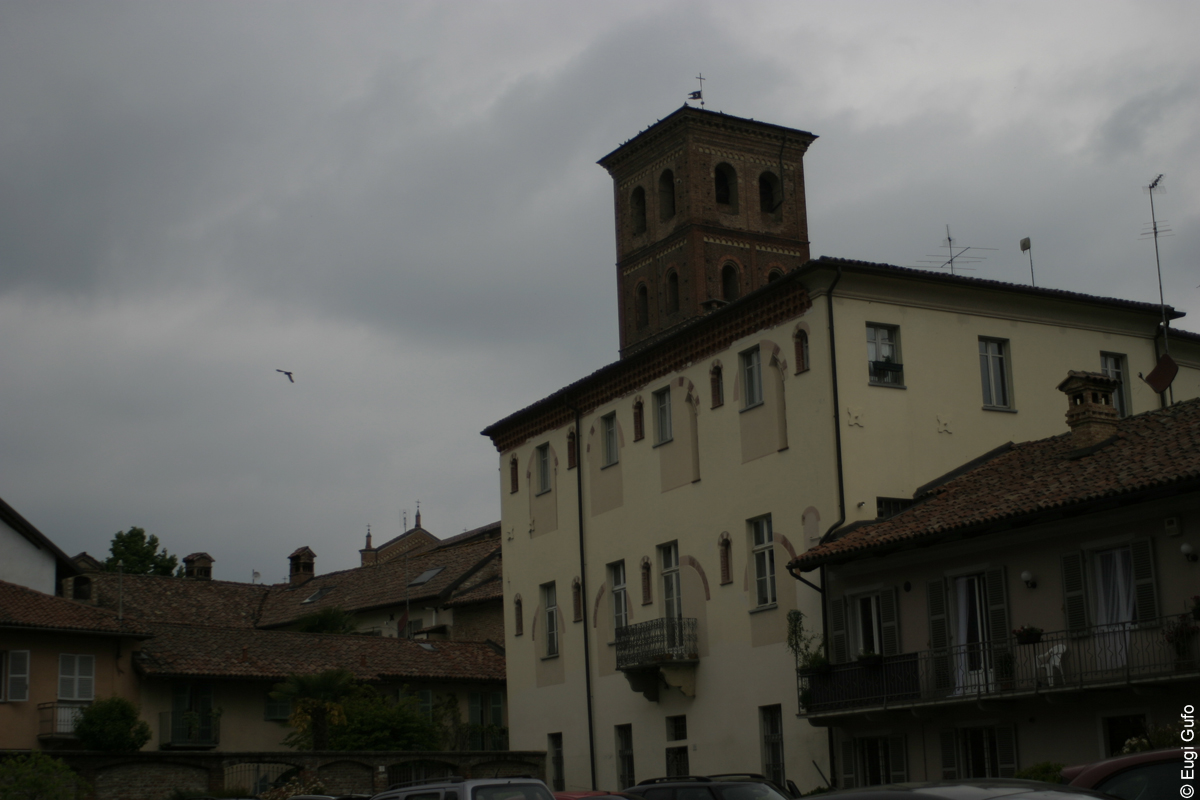
Its bell tower, viewed from afar, might easily be mistaken for yet another civic tower.
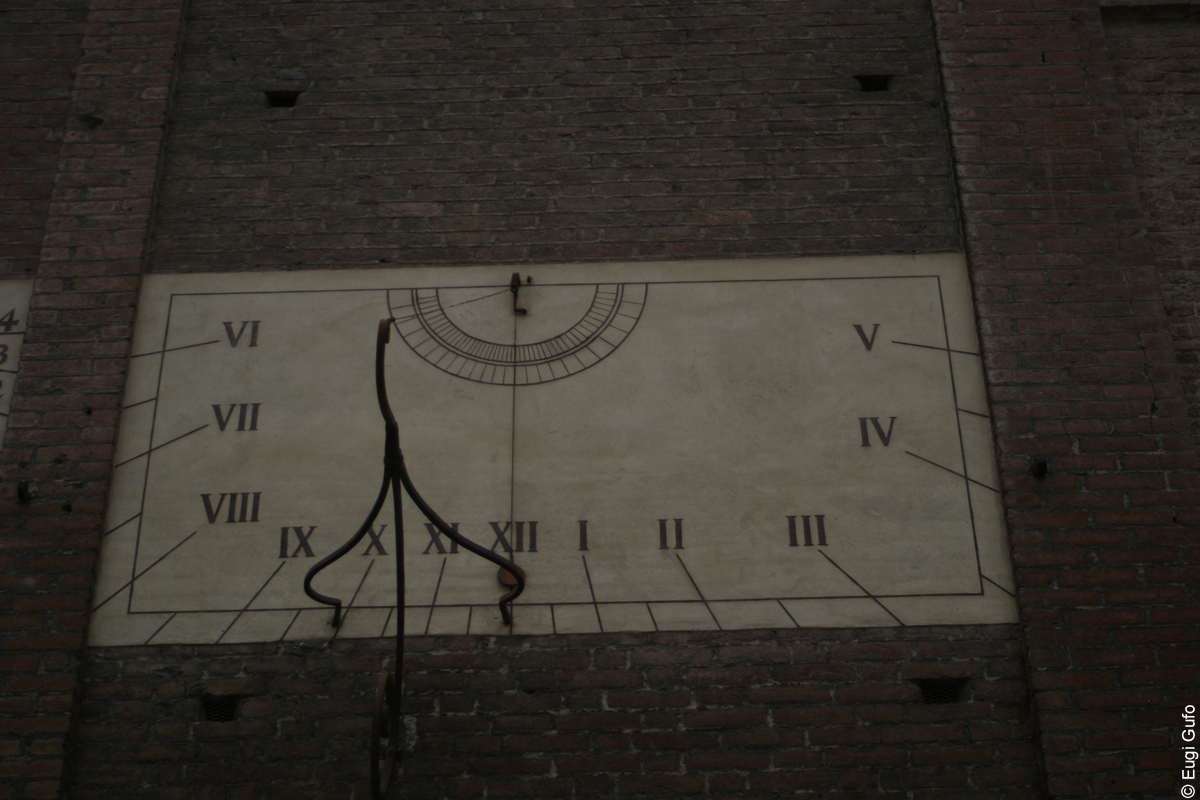
On the left side of the cathedral I found two curious sundials — especially the one that supposedly functions in the late evening (I would like to see how!).
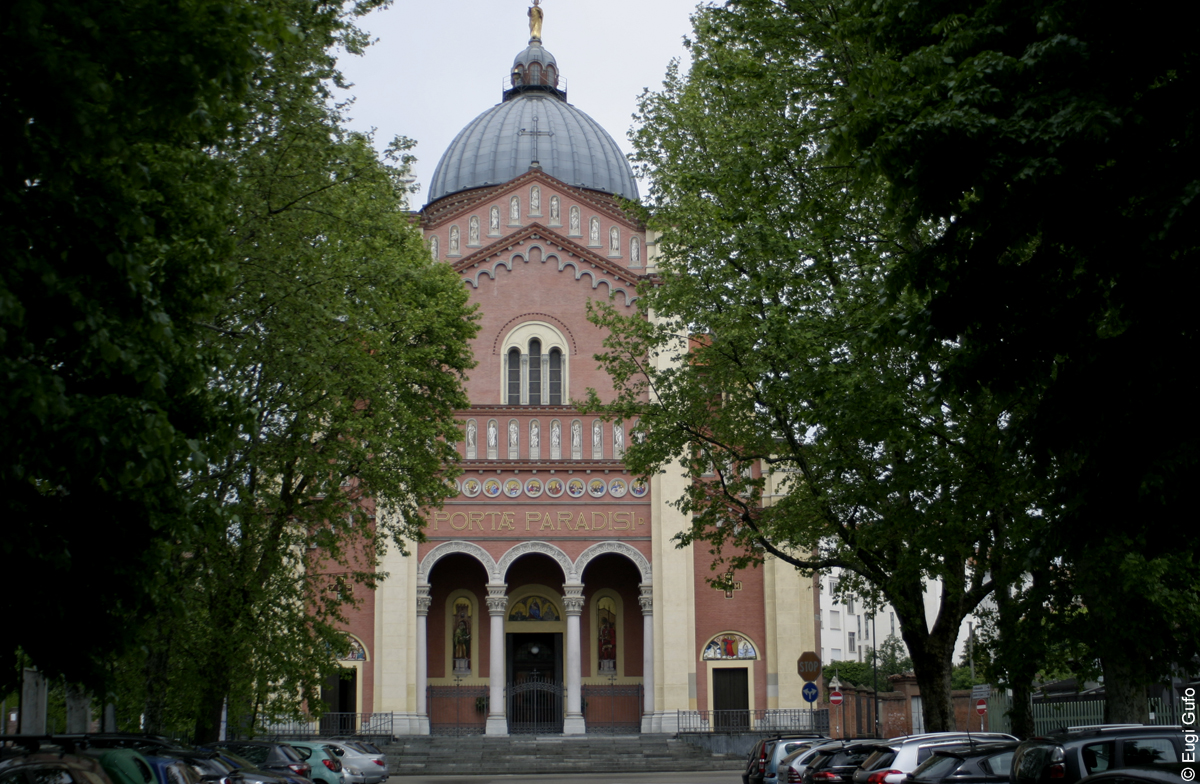
The local version of the «Madonnina» is a three-metre statue of the Virgin placed atop the dome of another church: the Santuario Diocesano della Beata Vergine del Portone, built between 1902 and 1912.
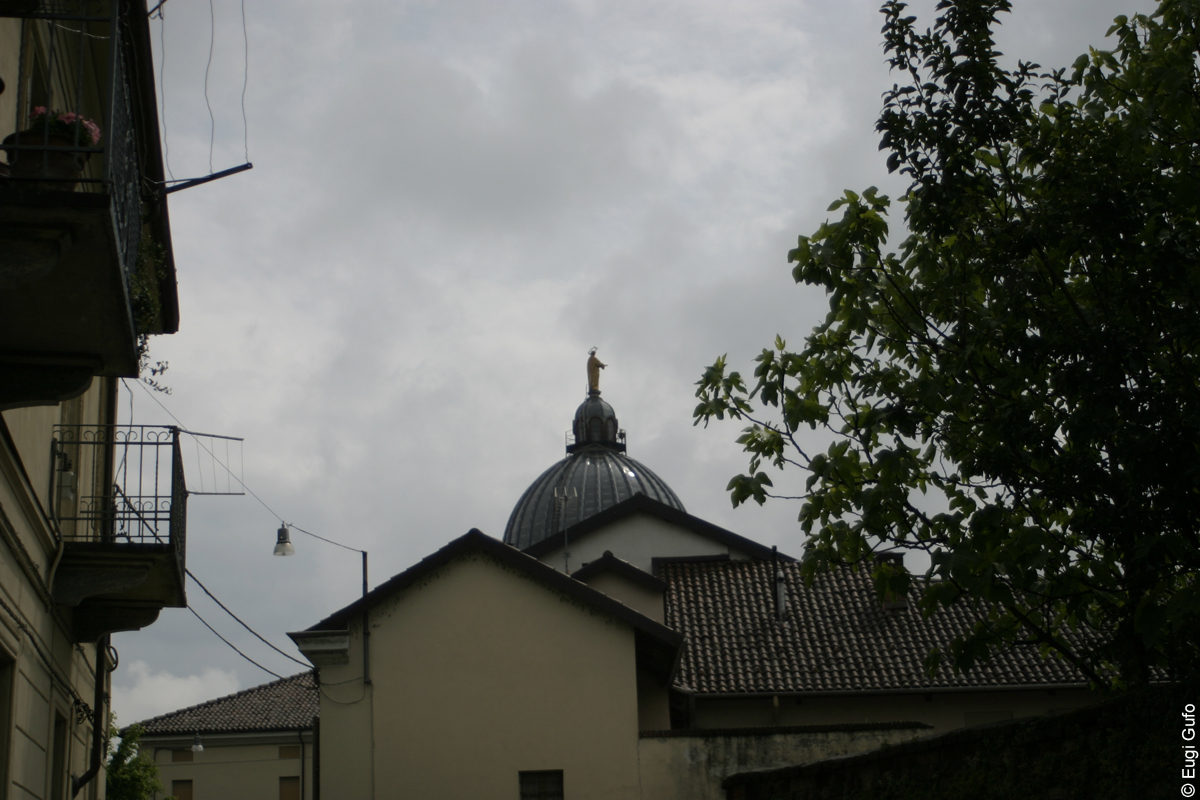
This neo-Romanesque-Byzantine style does not particularly appeal to me (it feels overly artificial and somewhat kitsch), yet it appears that sponsors are still willing to support the maintenance of the building in good condition.
Far more promising is this small bell tower…

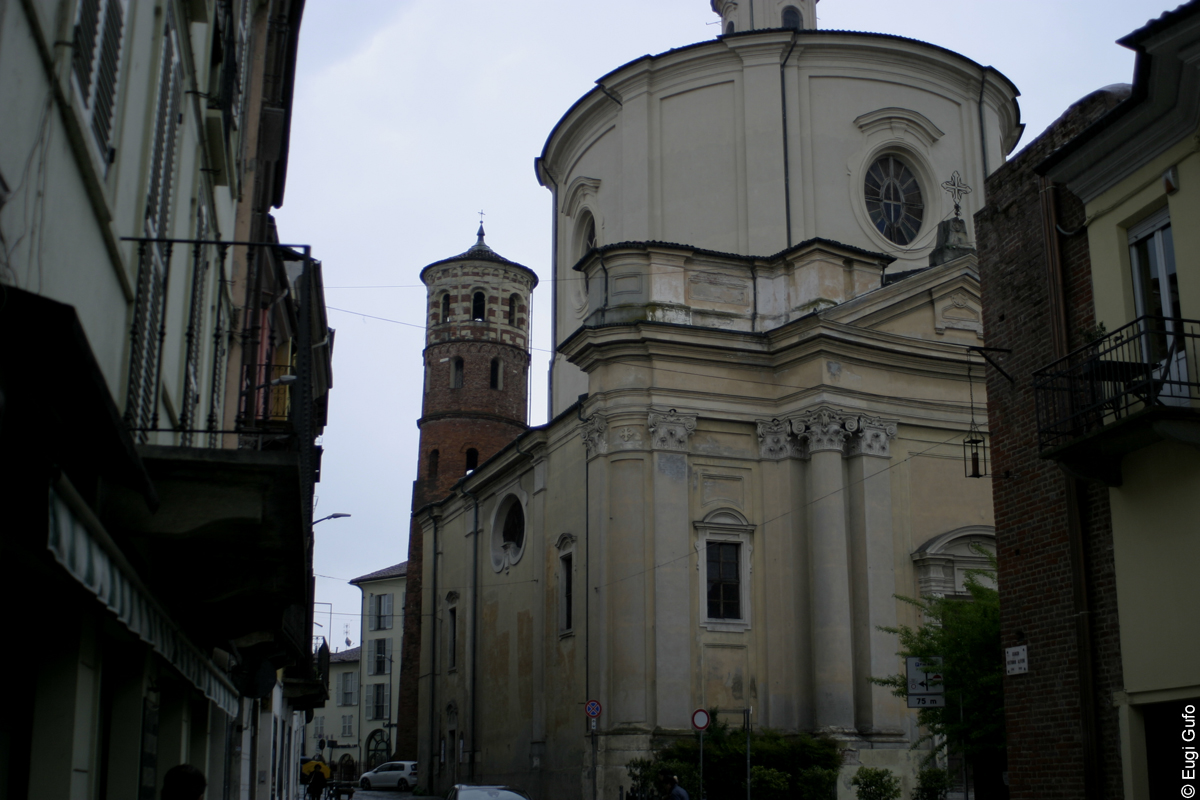
It belongs to the Santuario di San Giuseppe. Built even later — at the end of the 1920s — it is stylistically interesting, particularly for the centrally positioned bell tower that forms a continuation of the façade.
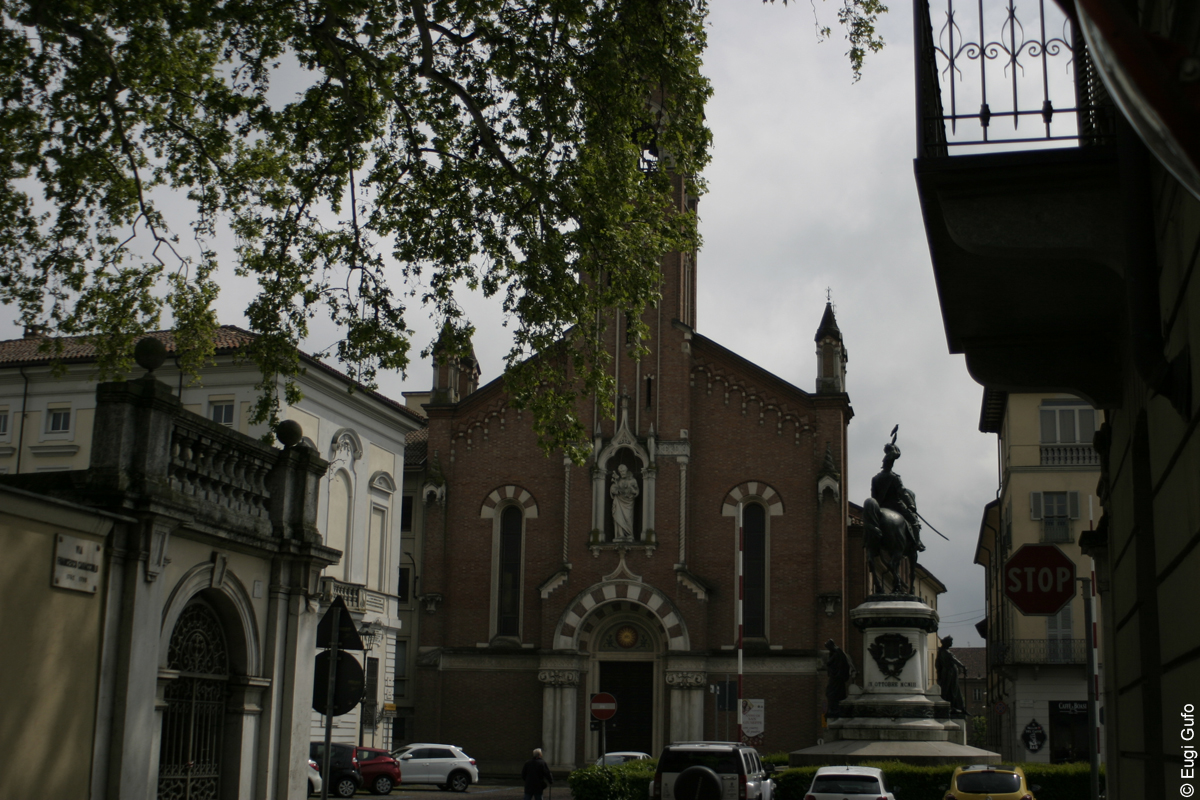
But the most beautiful building in Asti overall is the Baroque church of San Martino, constructed between the 17th and 18th centuries. It is considered the third most important church in Asti, though we are interested in it for two other reasons.
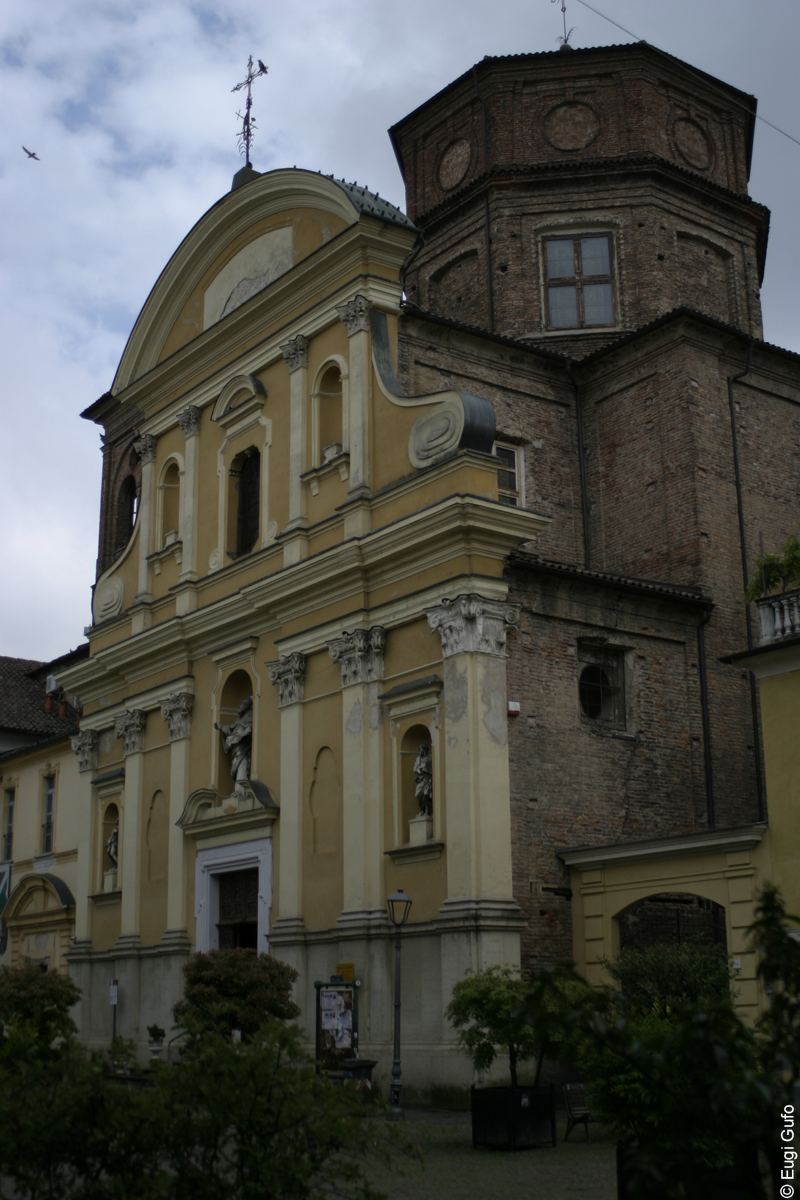
Not because its façade has presumably lost two statues…
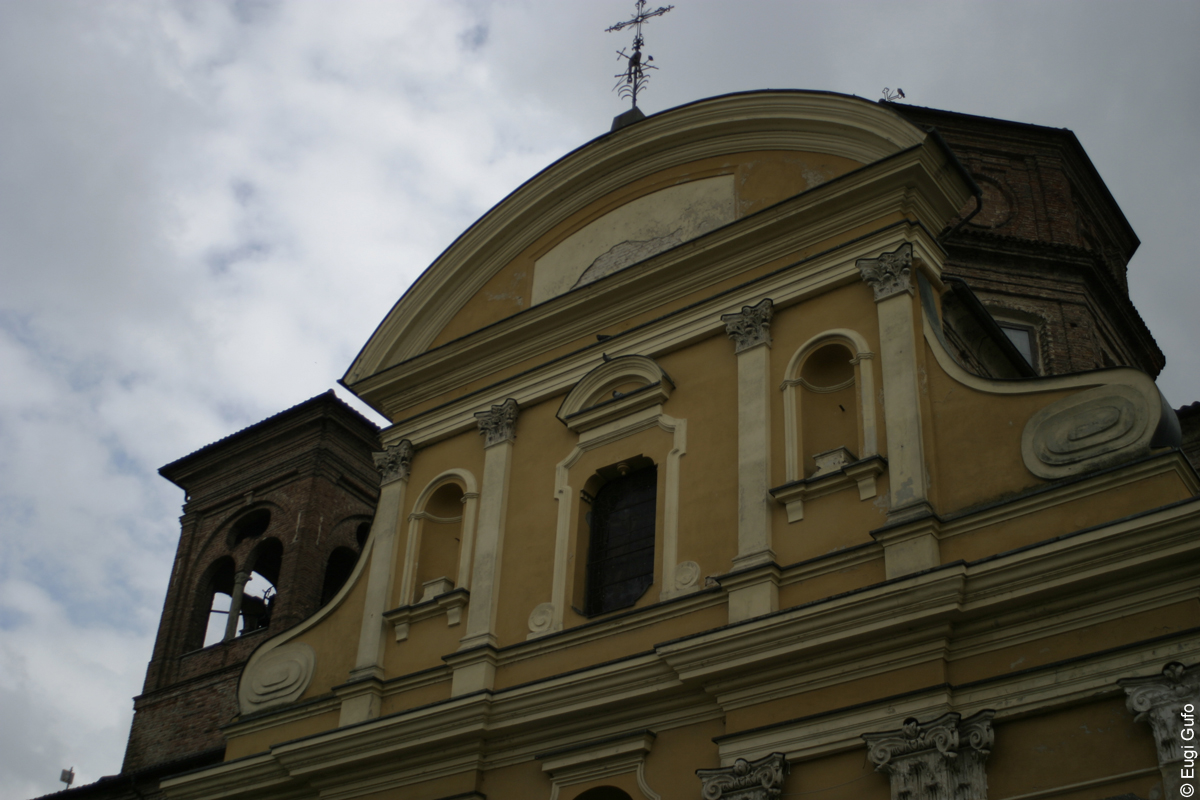
We are interested, first of all, because the interior is extremely beautiful. It may appear somewhat exuberant, but that is inherent to the Baroque style.
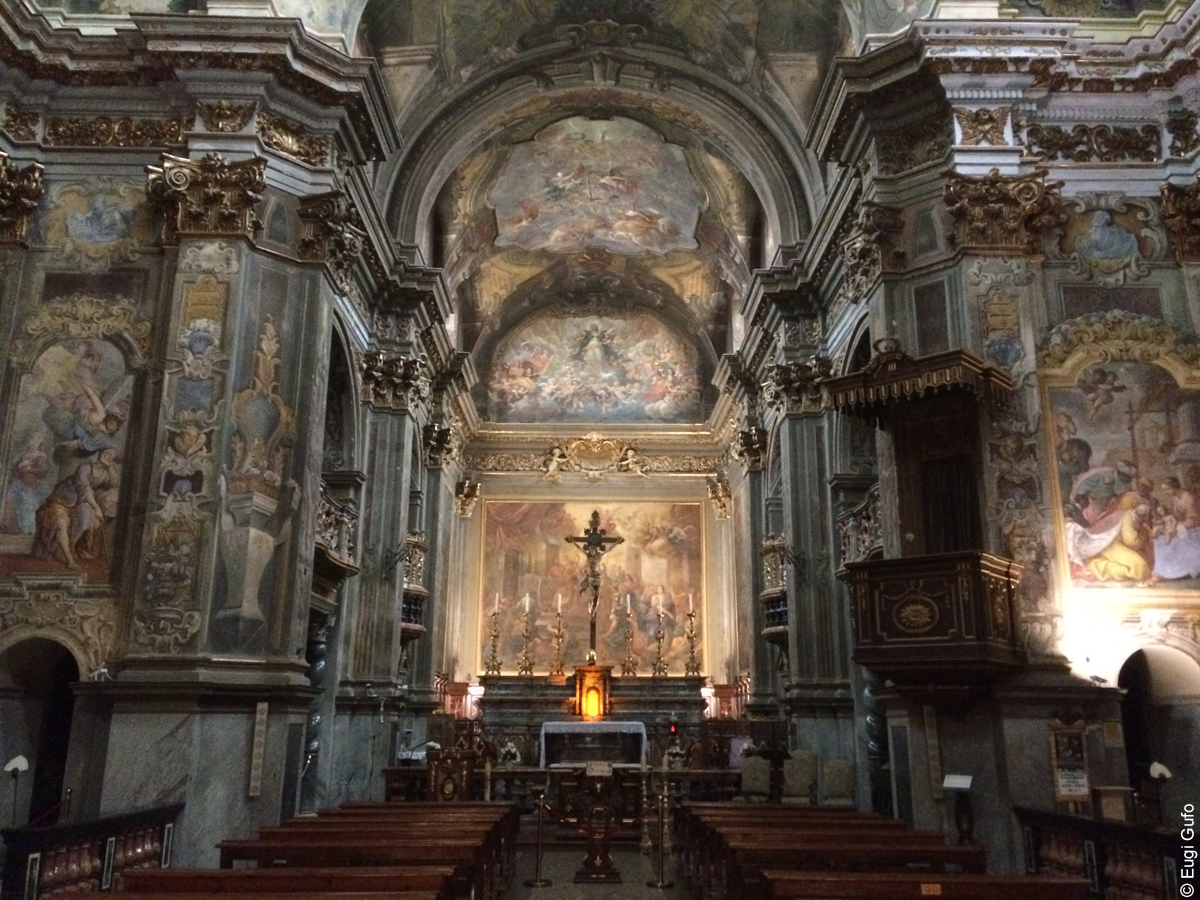
The second reason — which in order of importance might even be the first — is that the church is cared for by two very kind, available, and passionate ladies devoted to their mission. Thanks only to them I was able to see spaces not always accessible: the choir, the sacristy, the church museum (created by the parish priest during the pandemic and containing many historical objects used for Masses and processions), and a beautiful permanent nativity scene (constantly evolving with new figures and scenes; the little man with the tricolour sash, for example, represents Luciano Pavarotti). The ladies not only had the alarm system temporarily deactivated (they themselves would have needed such assistance!) but also shared many interesting stories. To make sure I do not forget: they arrive around 3:00 p.m.

Opposite this church stands the deconsecrated church of the Confraternita di San Michele, built between 1744 and 1749 in Baroque style. Today it is in good aesthetic condition (restored not long ago) and essentially functions as a temple of beer within a pub. Though I am neither a drinker nor particularly religious, I would have entered simply to admire this new use of the building — but unfortunately I arrived at the wrong time.

Behind the already mentioned neo-Romanesque-Byzantine sanctuary lies another aesthetically pleasing place that fully retains its religious function (which, according to my apatheistic logic, it would find difficult to lose). The church is also called «della Beata Vergine del Portone», and nearby stands the gate behind which an artistically interesting Via Crucis is hidden. The scenes seemed to me to be made of ceramic, though I am not entirely certain.
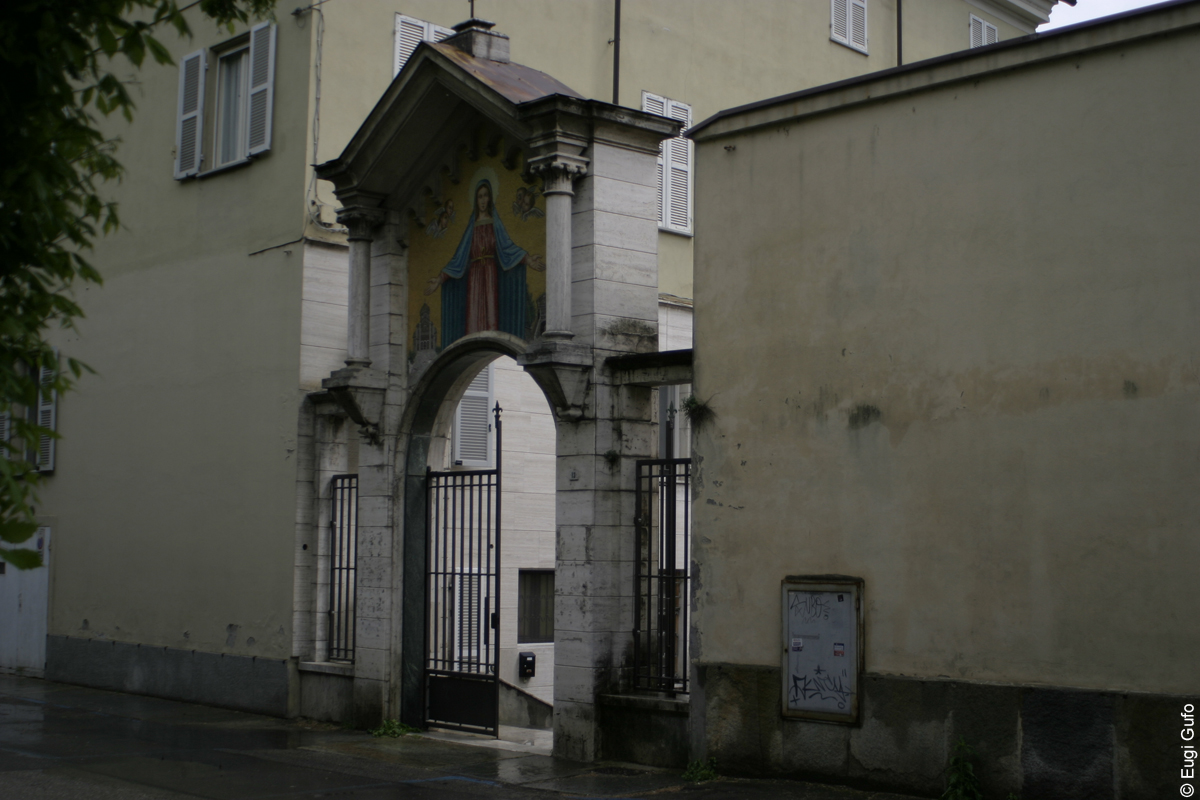
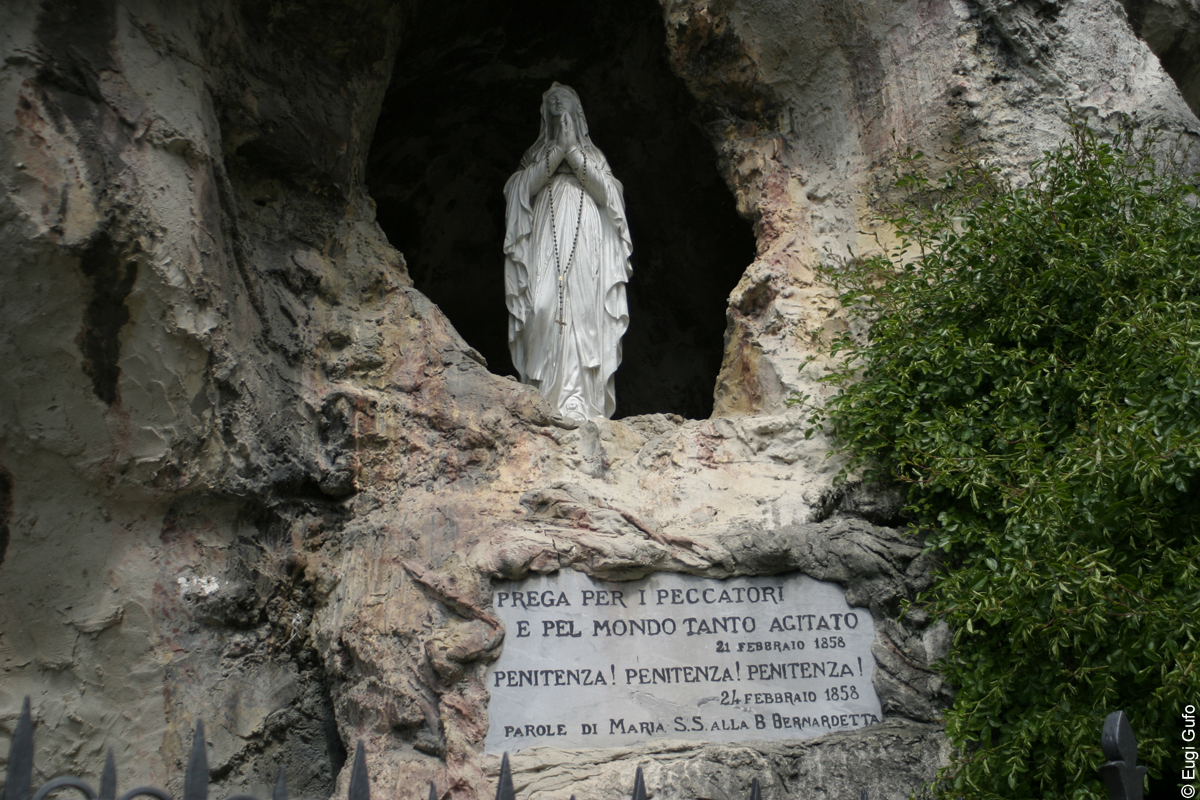
Those who walk the entire Via Crucis and pass under the arch arrive at the local replica of the «Grotto of Lourdes», inaugurated on 24 May 1930. From a purely aesthetic point of view, it is a beautiful place…
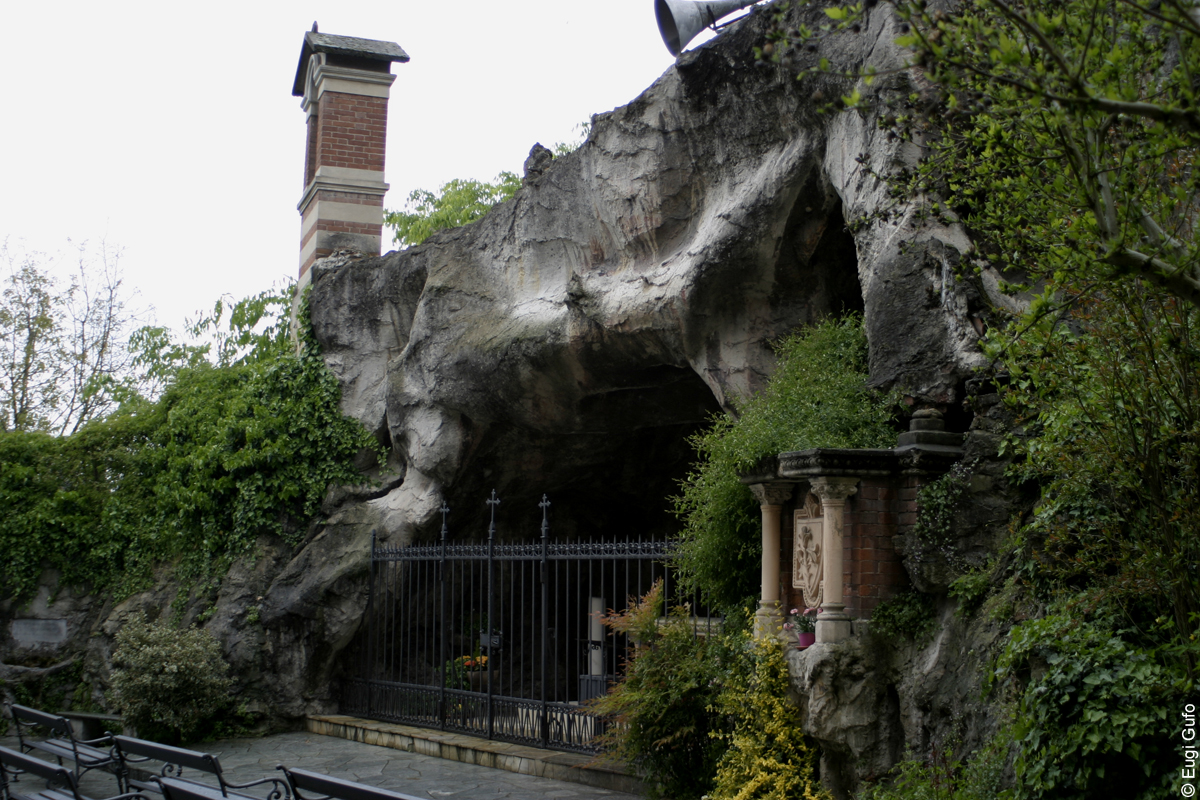
At first I wondered why there were two statues of the Virgin — one above in the grotto and one below near the small pond — but then I discovered that the second statue actually represents Saint Bernadette.
Do not worry about the gates at the beginning and end of this logistically useful and pleasant passage: they remain open all day.

Of course, Asti contains many more churches of varying sizes and styles, but I do not intend to write an encyclopaedia of the city’s religious architecture. Suffice it to say that many of those buildings are beautiful.
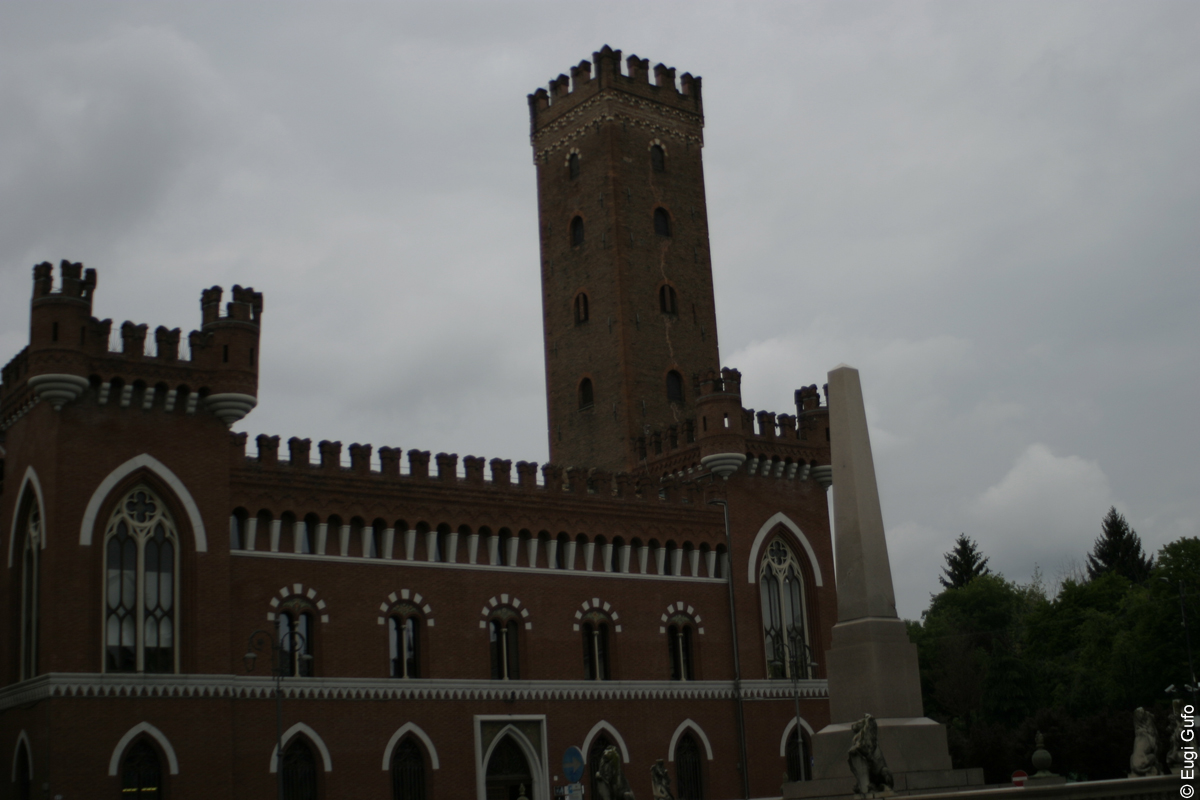
Let us finally look at something different. No, fake castles do not interest us…
What interests us, for example, is that Asti has beautiful squares. They are usually not large and often have a distinctly provincial appearance, but they are consistently charming.

It is also worth noting that the streets of the historic centre are beautiful even when very small and lacking striking architectural masterpieces.
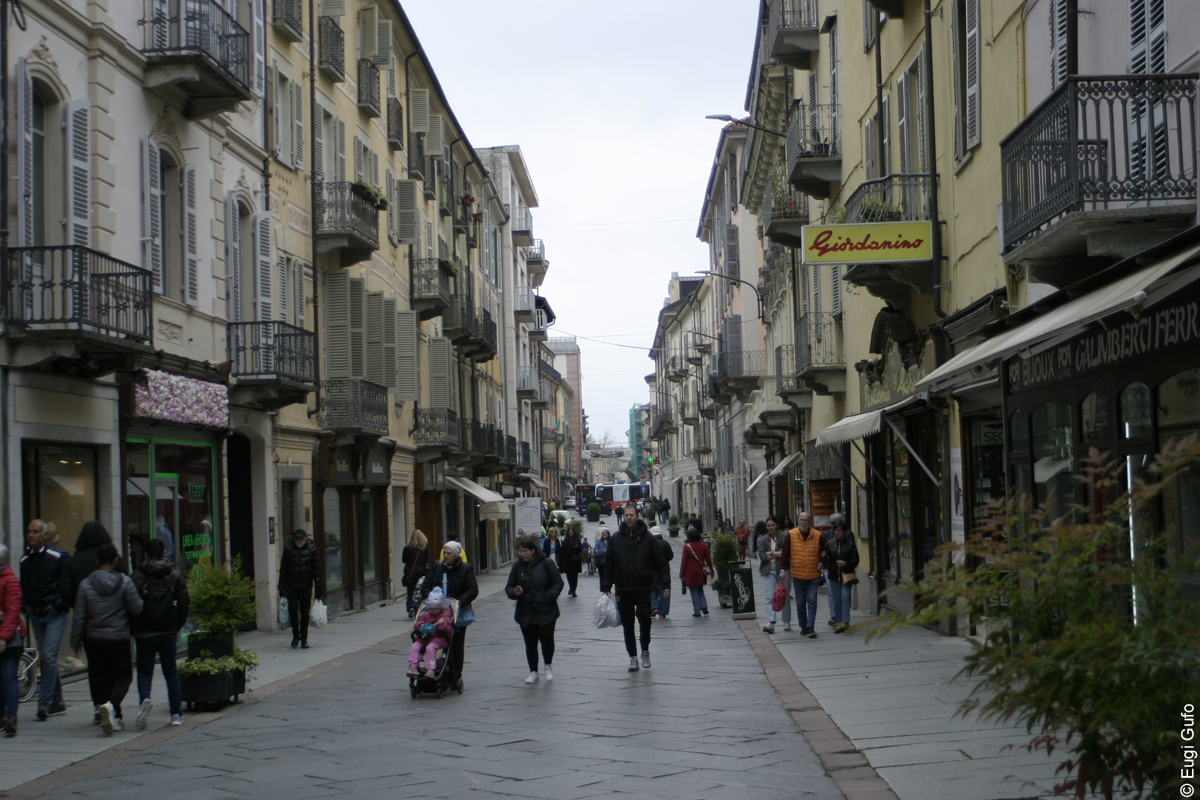
Naturally, one also encounters individual palaces of interest.
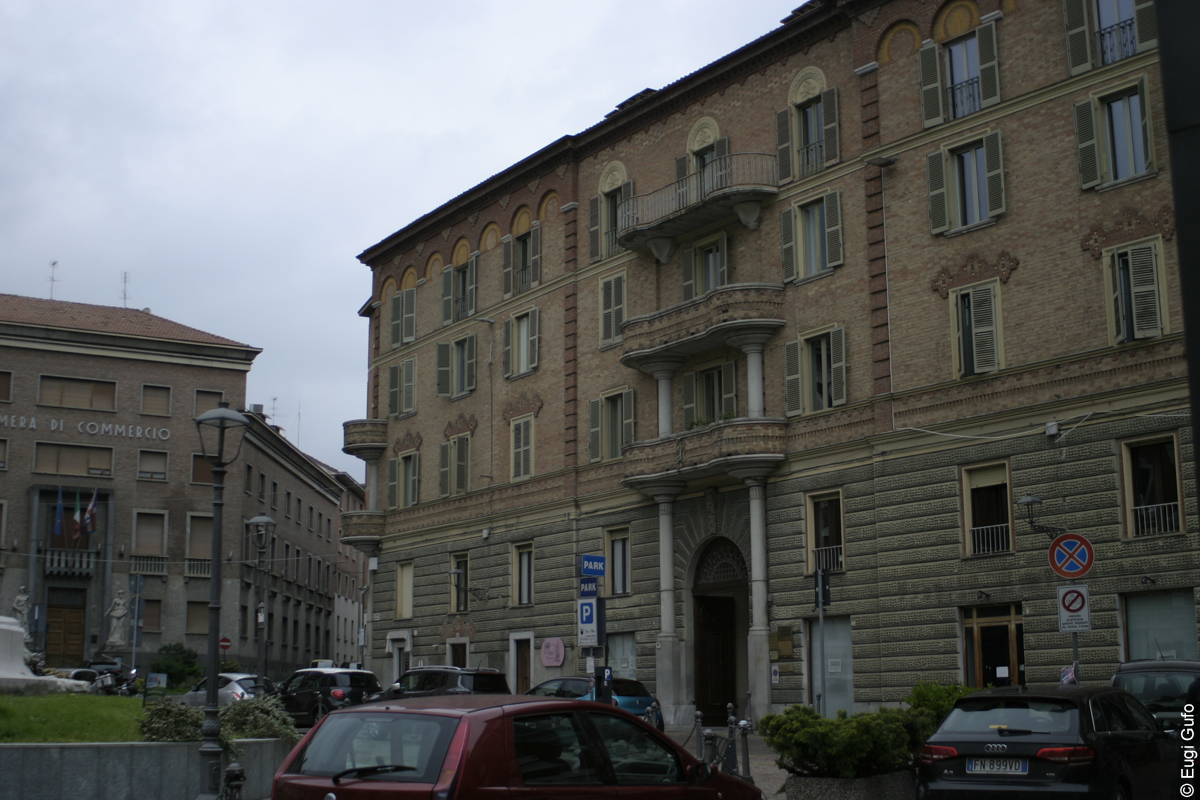
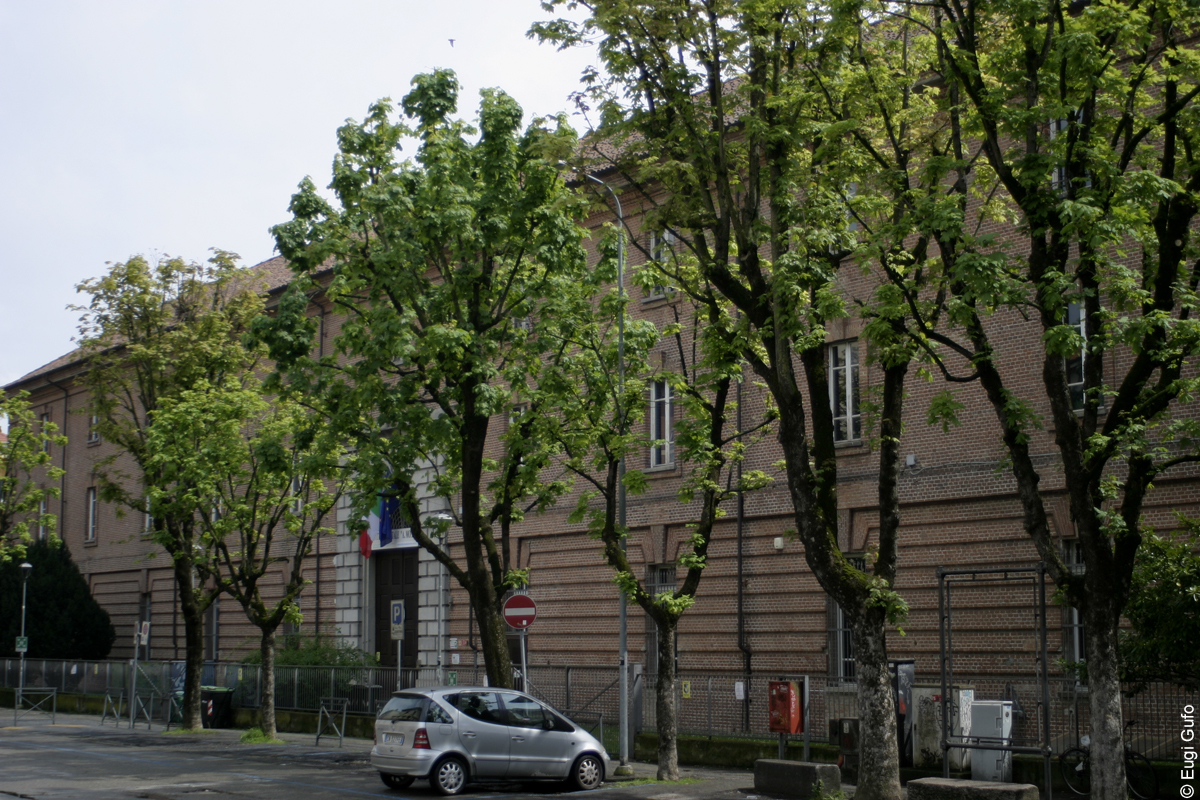
One of the largest yet most monotonous buildings in Asti is the local courthouse. I could not decide whether its exterior reminded me more of a prison or a barracks. Only while preparing this account did I discover that it is an 18th-century building originally constructed as a convent, later transformed into a military barracks for the Recruit Training Centre, and only afterwards converted into the Palace of Justice (inaugurated in 2004). In short, I had guessed almost perfectly.
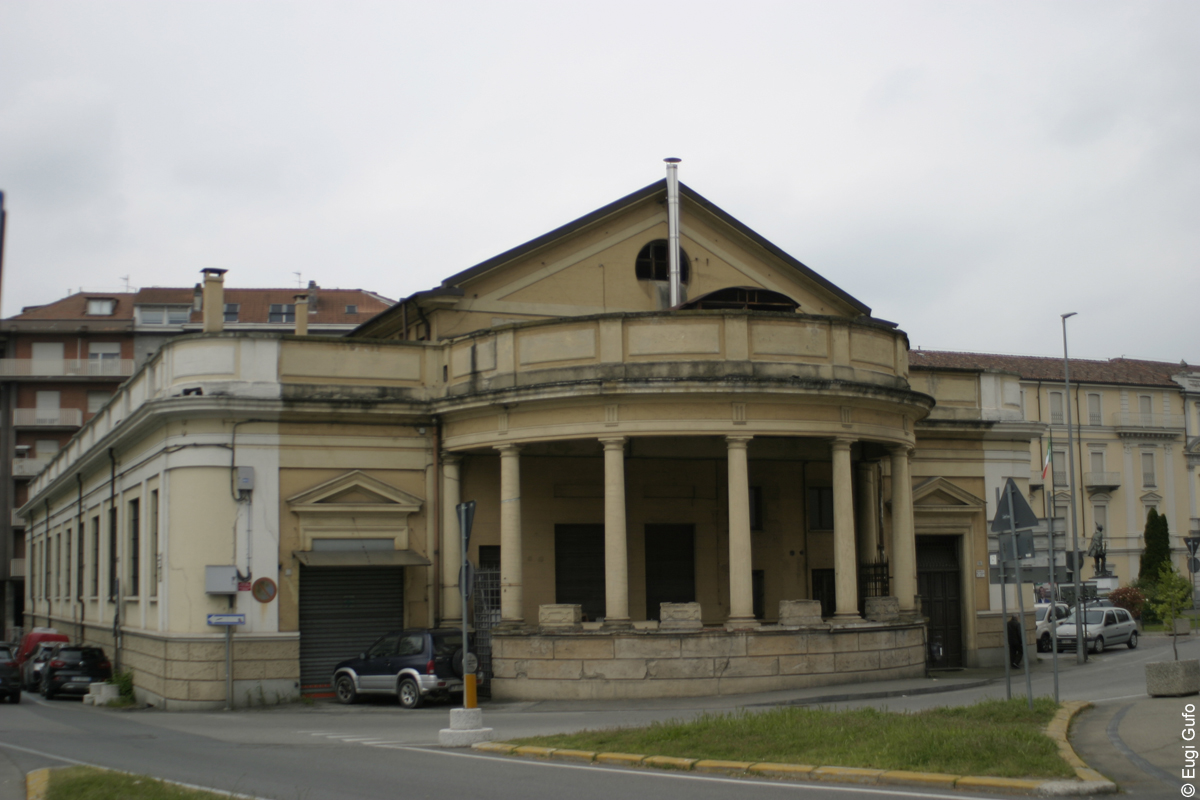
The building that wishes to resemble a theatre is in fact the municipal market. Consequently, it is still the stage for certain scenes and performances…
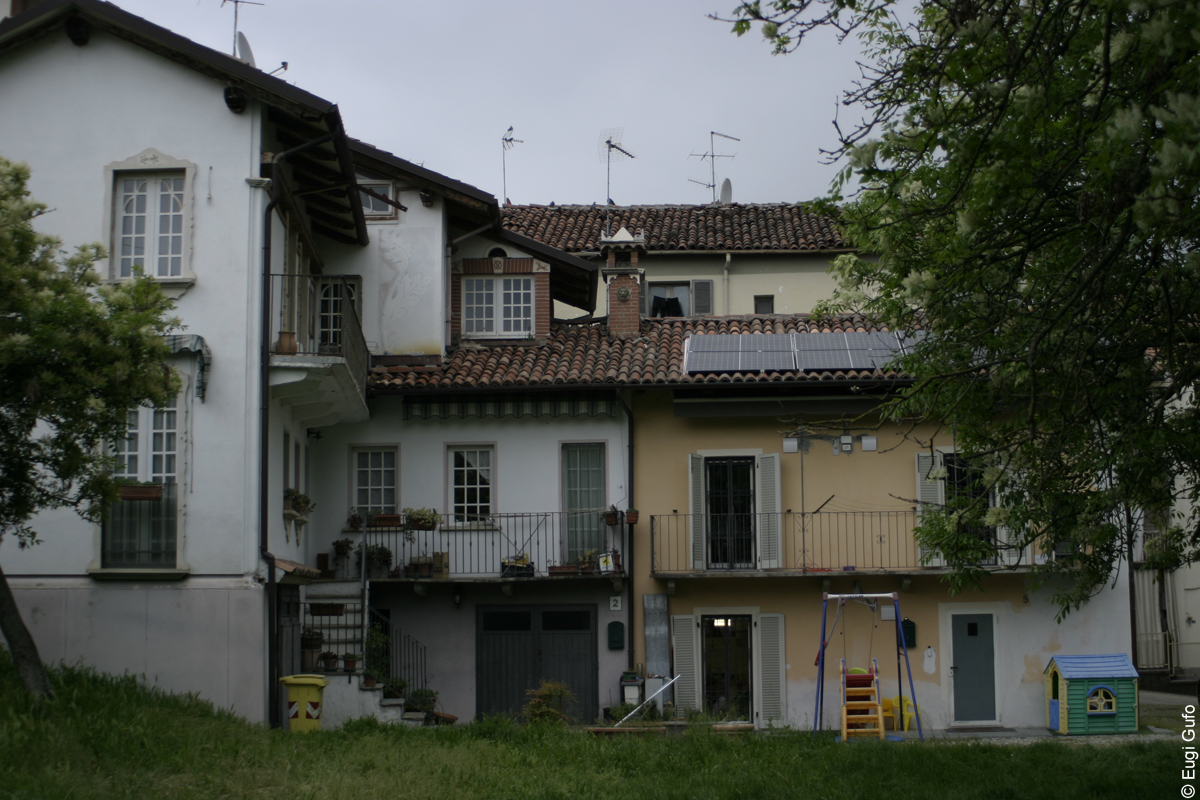
Some alleys or secondary streets of Asti’s centre aspire to resemble zones of a small village.
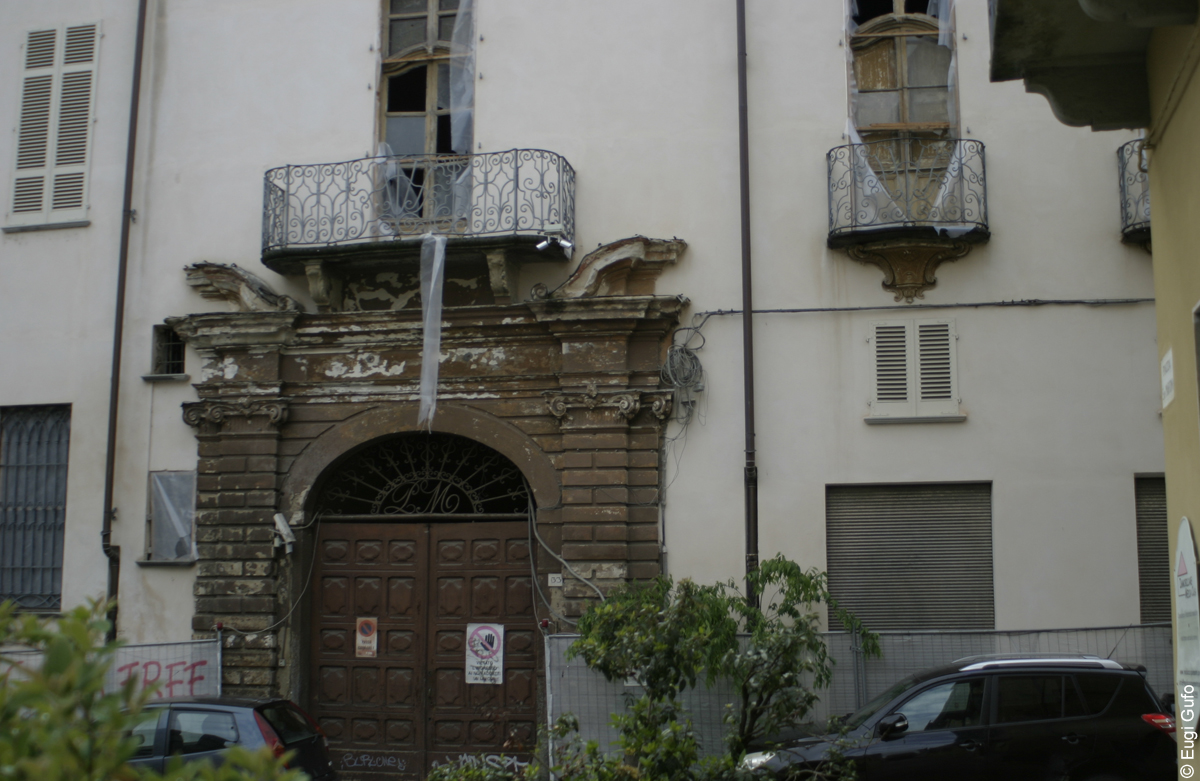
The restoration of some of the more beautiful buildings in the historic centre appears to have halted years ago.
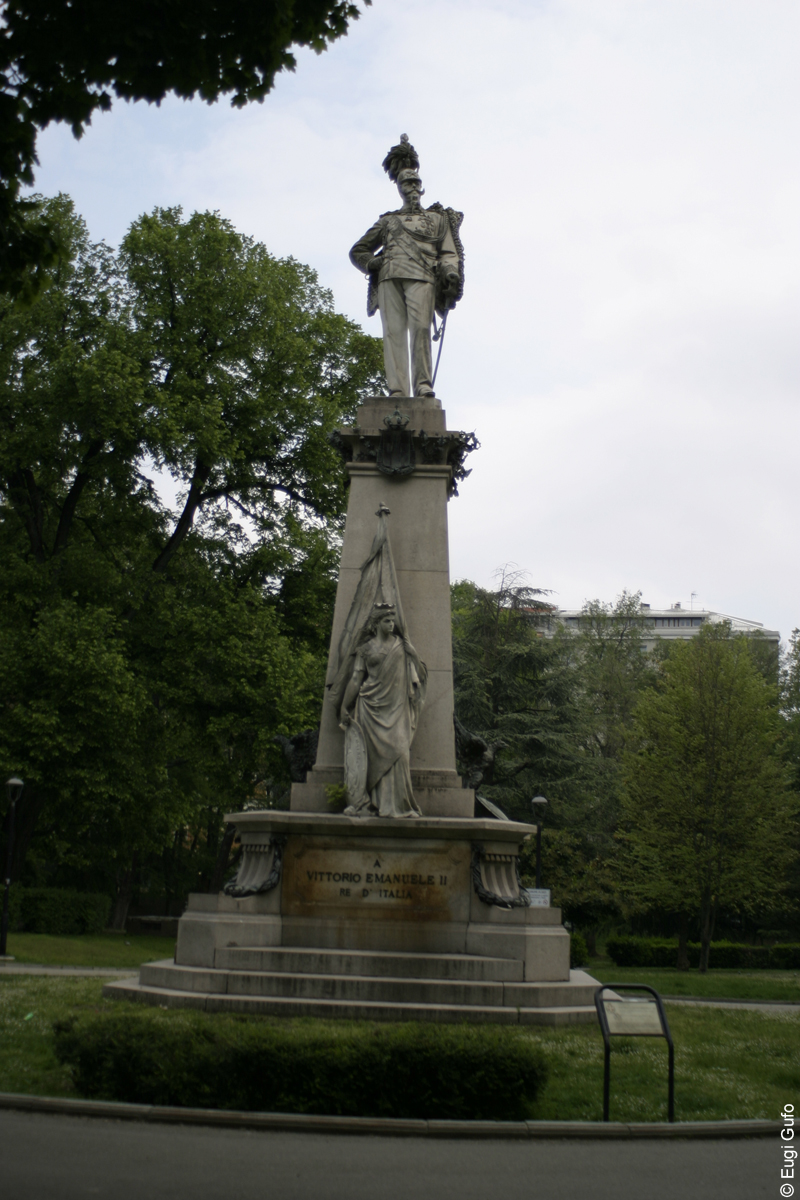
On the other hand, Asti is full of classical monuments such as the one dedicated to Vittorio Emanuele II (inaugurated in 1884 and restored in 2000).
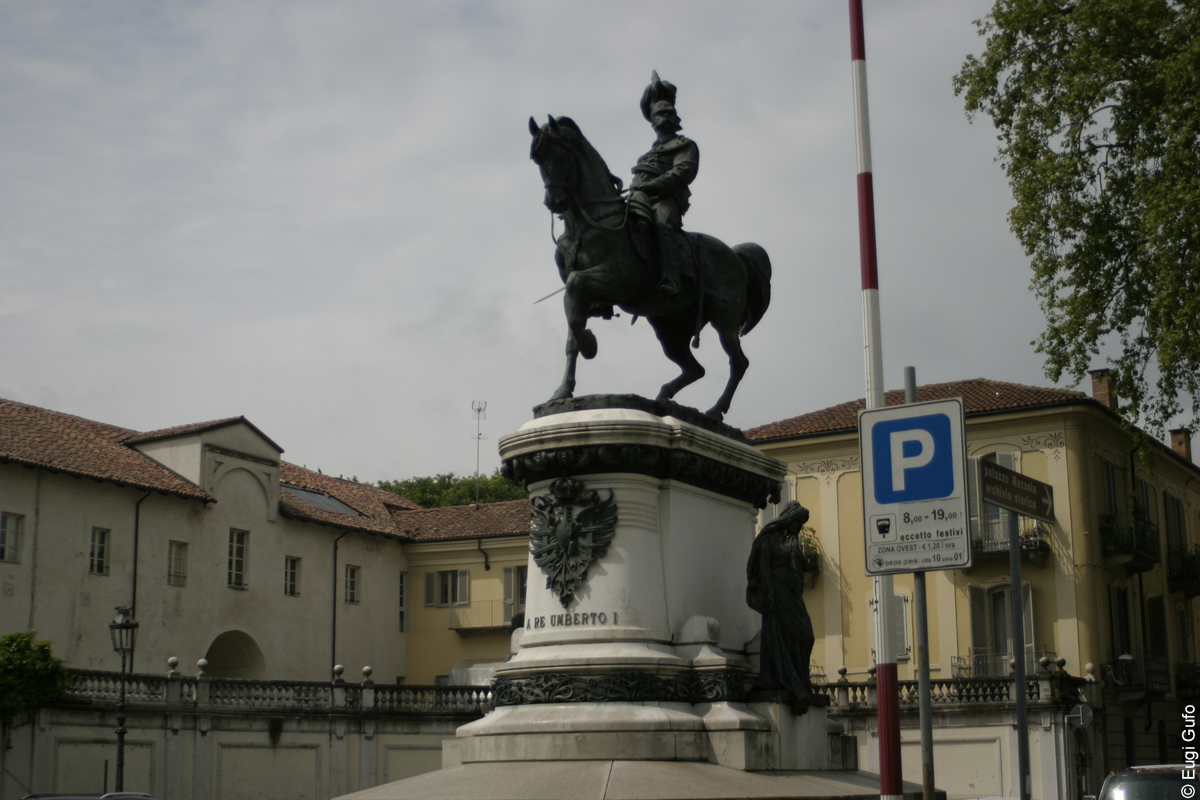
Or the monument to Umberto I (1903).
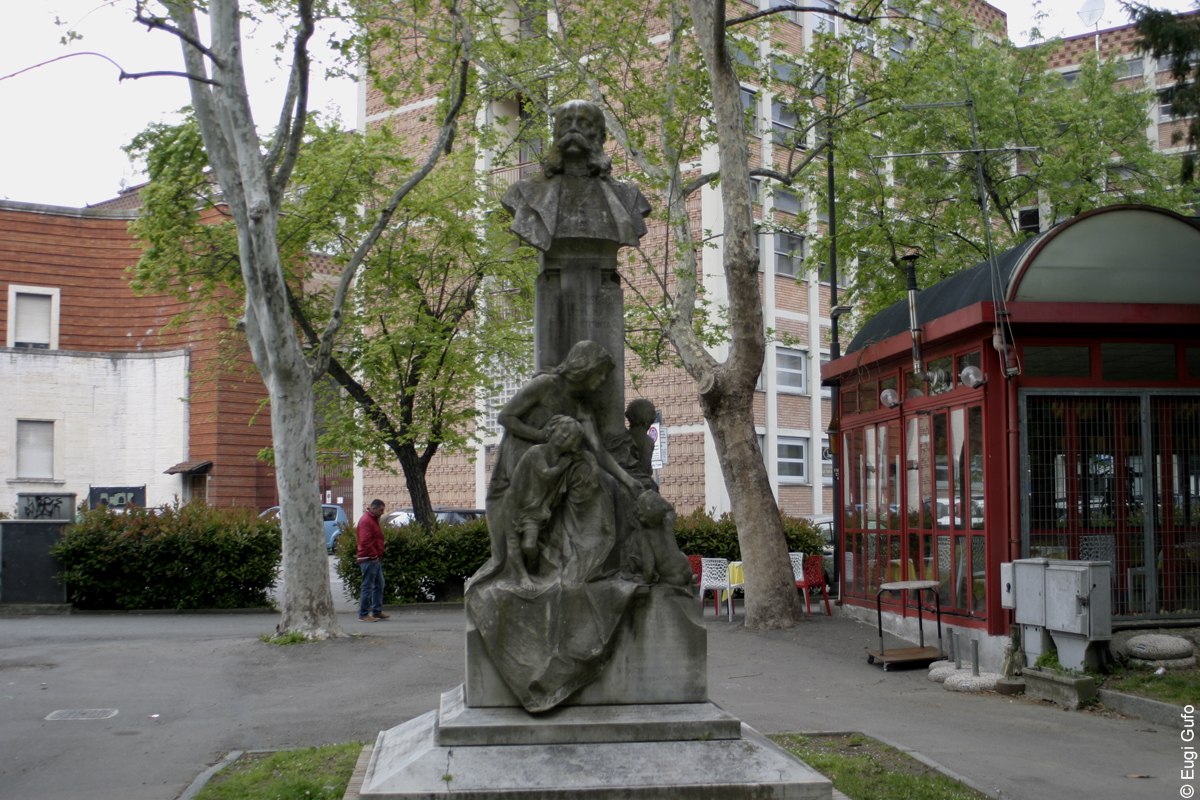
Or the bust of Secondo Boschiero, one of the brothers who founded a match factory in Asti in the mid-19th century. The monument, however, is due not to the gratitude of pyromaniacs but to the fact that he left a significant portion of his wealth to charity in his will.
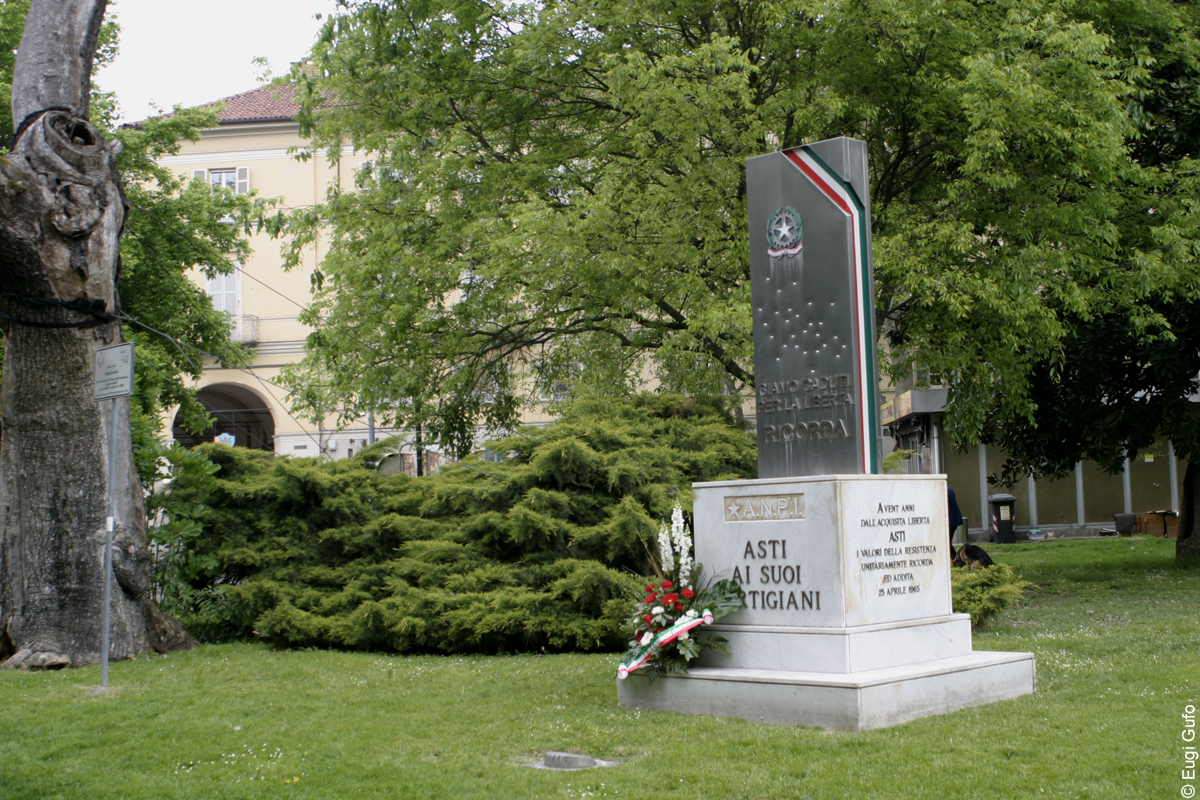
The monument to the partisans is beautiful and original — the idea of bullet marks is particularly striking.
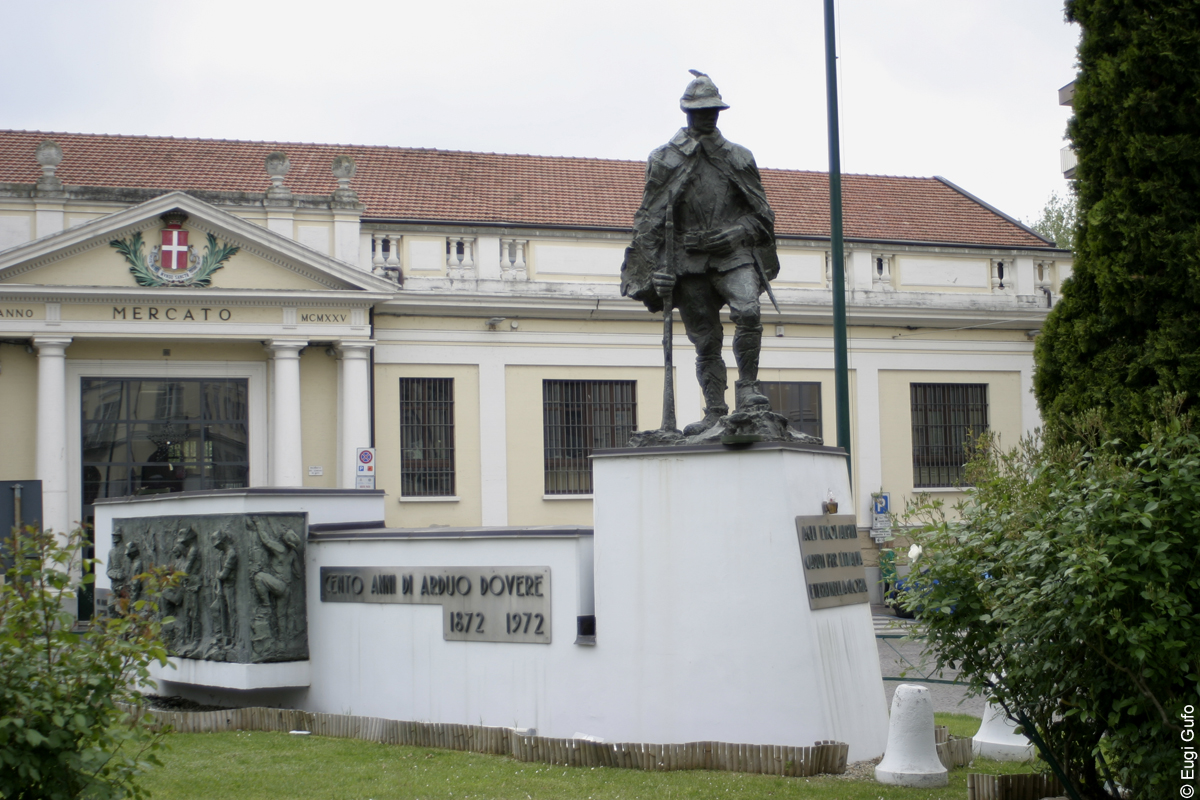
Also noteworthy is the monument commemorating the centenary (15/10/1872 — 15/10/1972) of the foundation of the Alpini Corps, even if it recalls only the five historic divisions.
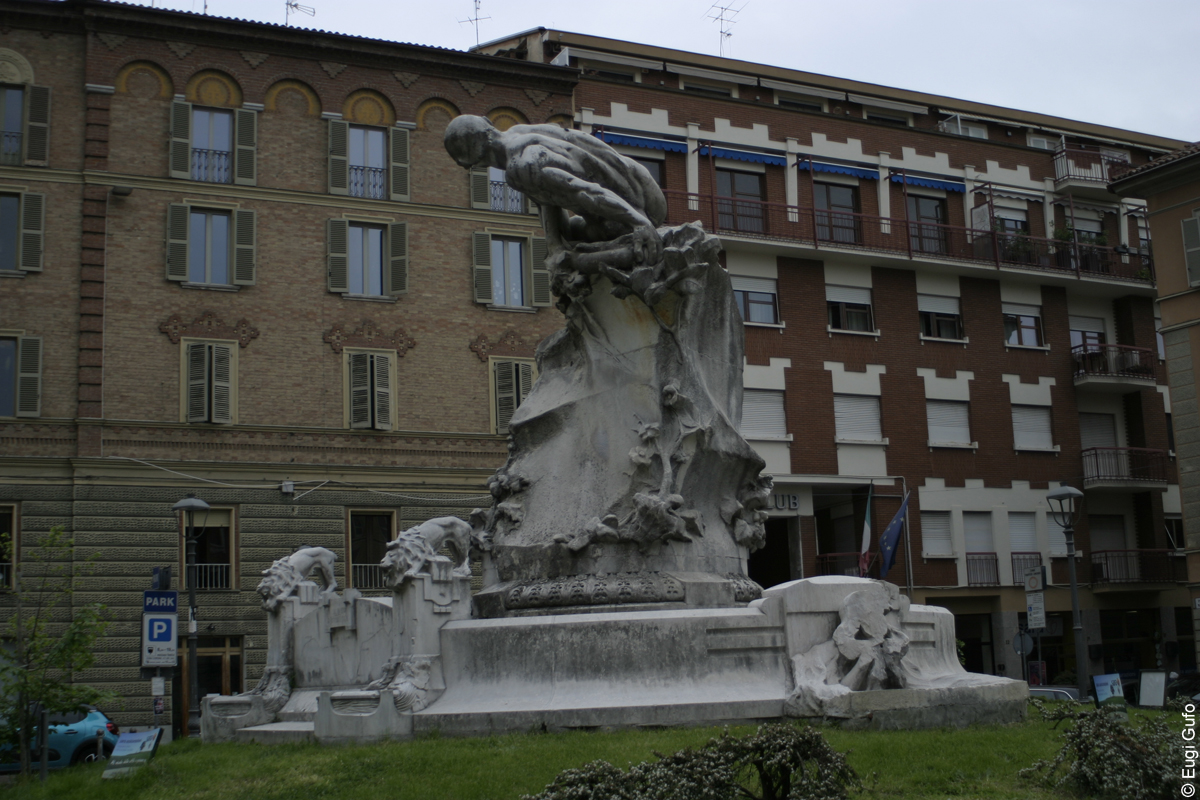
Only through intense online research did I discover that this strange monument is dedicated to the Asti aqueduct. Why specifically to the aqueduct, and why in this form? I have no idea…
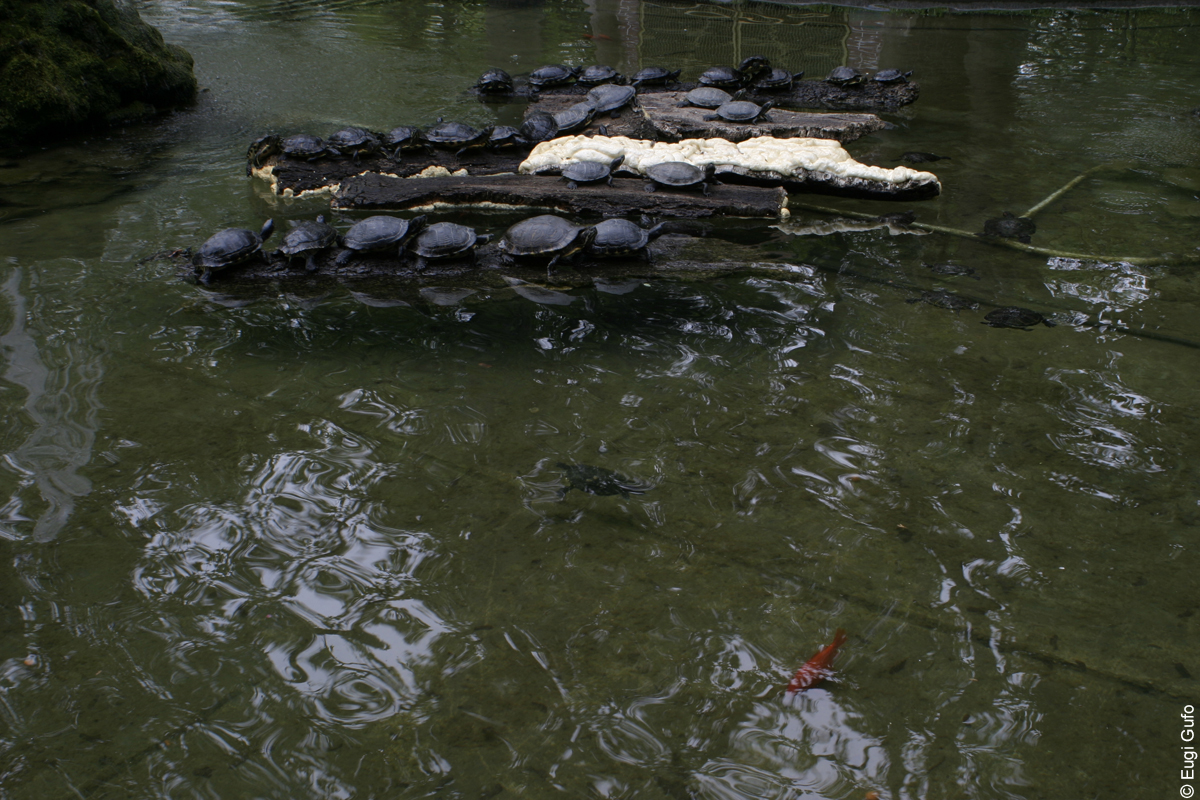
In one of the city parks there is also a charming monument to the local turtles. But not all the turtles you see in the photo belong to the monument. Try to guess which are the «intruders,» hahaha.
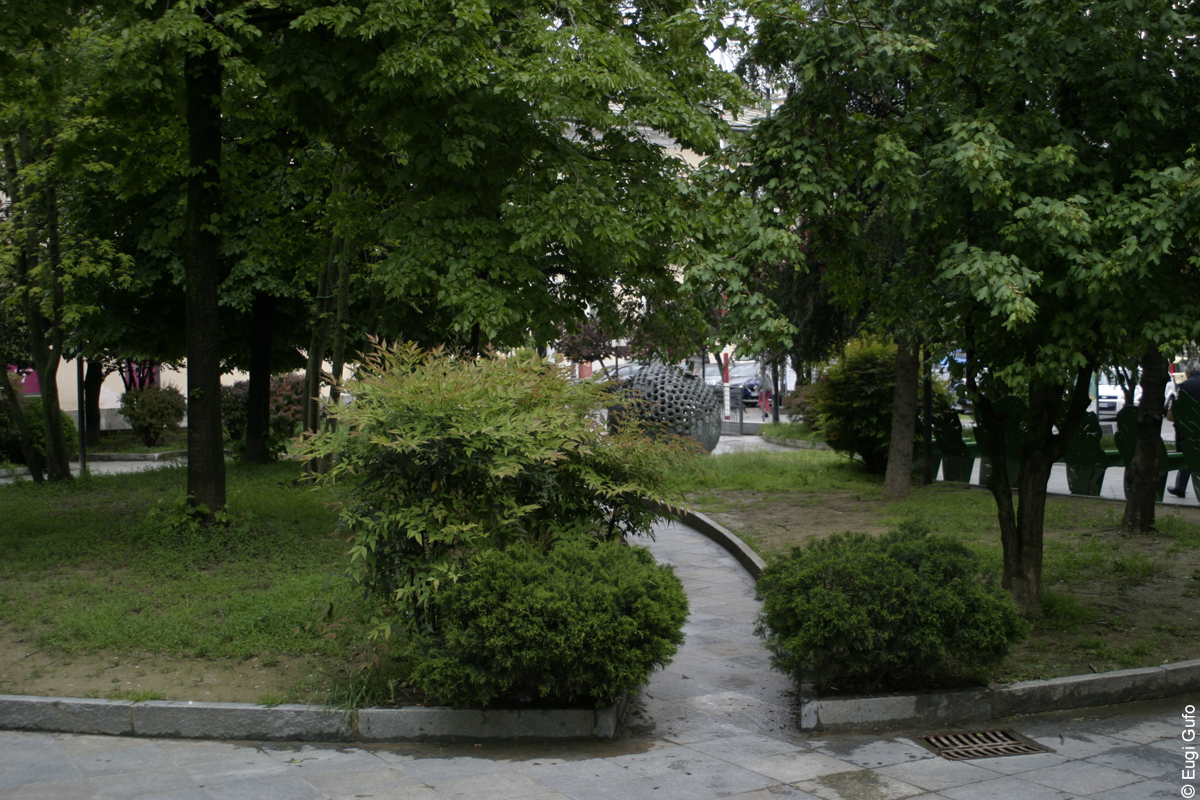
Asti has several parks, though almost all of them are very small — very small, yet usually well maintained.
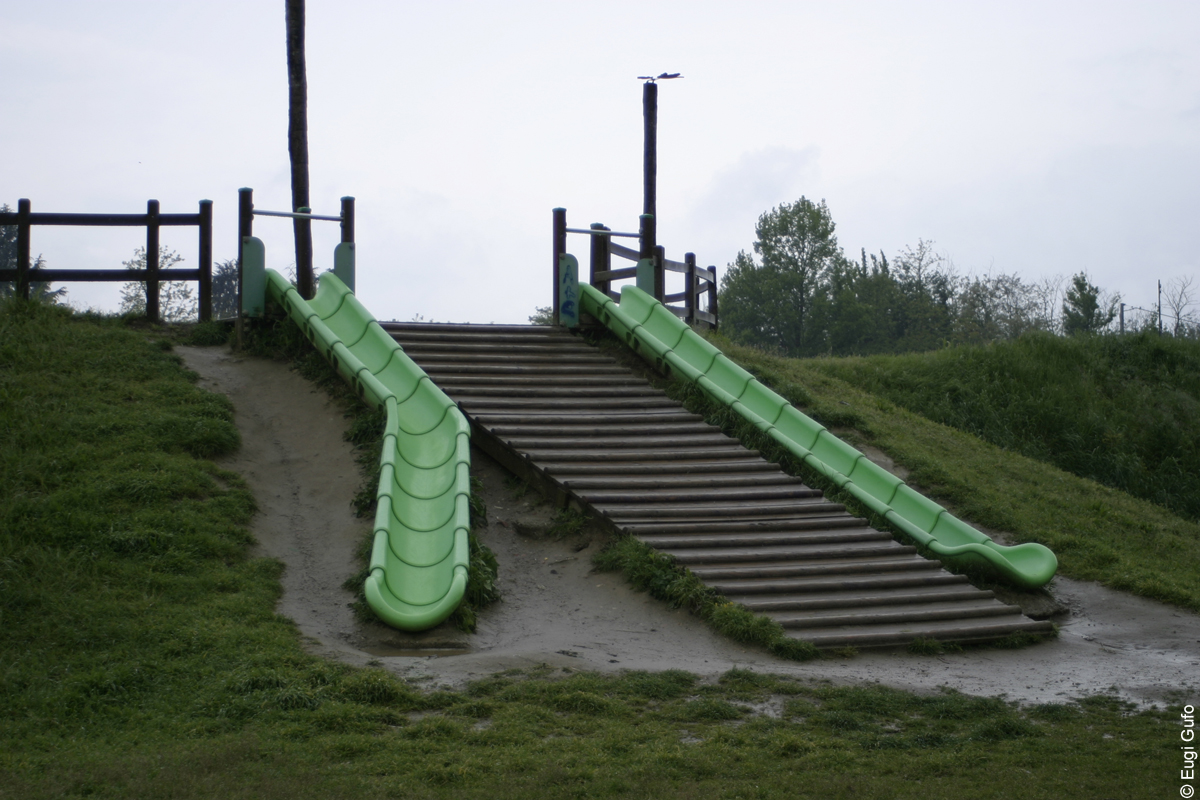
In one of the larger parks — located almost on the outskirts — I found a beautiful entrance designed for children (and for their mentally youthful relatives).
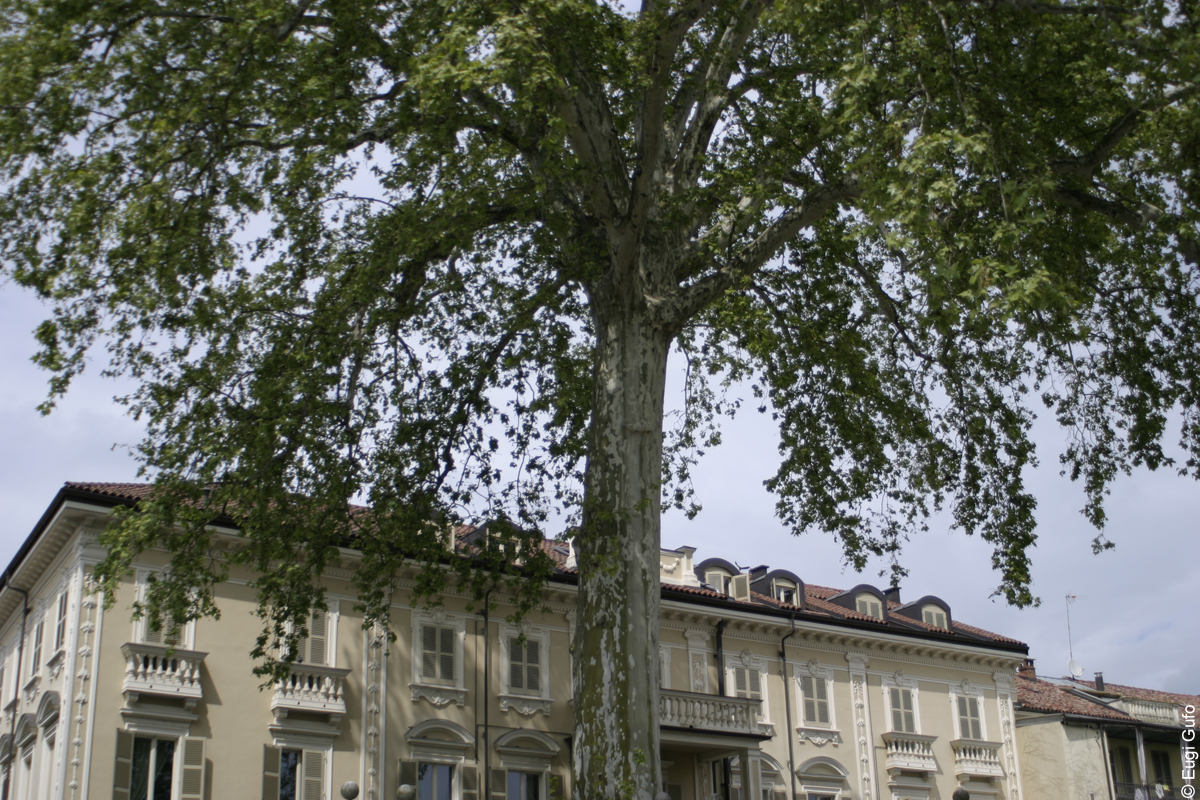
Besides parks, Asti also takes care of individual remarkable trees: for example, the centuries-old plane tree (apparently planted in 1849), 37 metres tall with a circumference of 520 cm. Thanks to this tree I learned of the existence of the official List of Monumental Trees of Italy (which includes about 3,300 trees recognised for their biological and ecological value, historical or cultural importance, and so on).
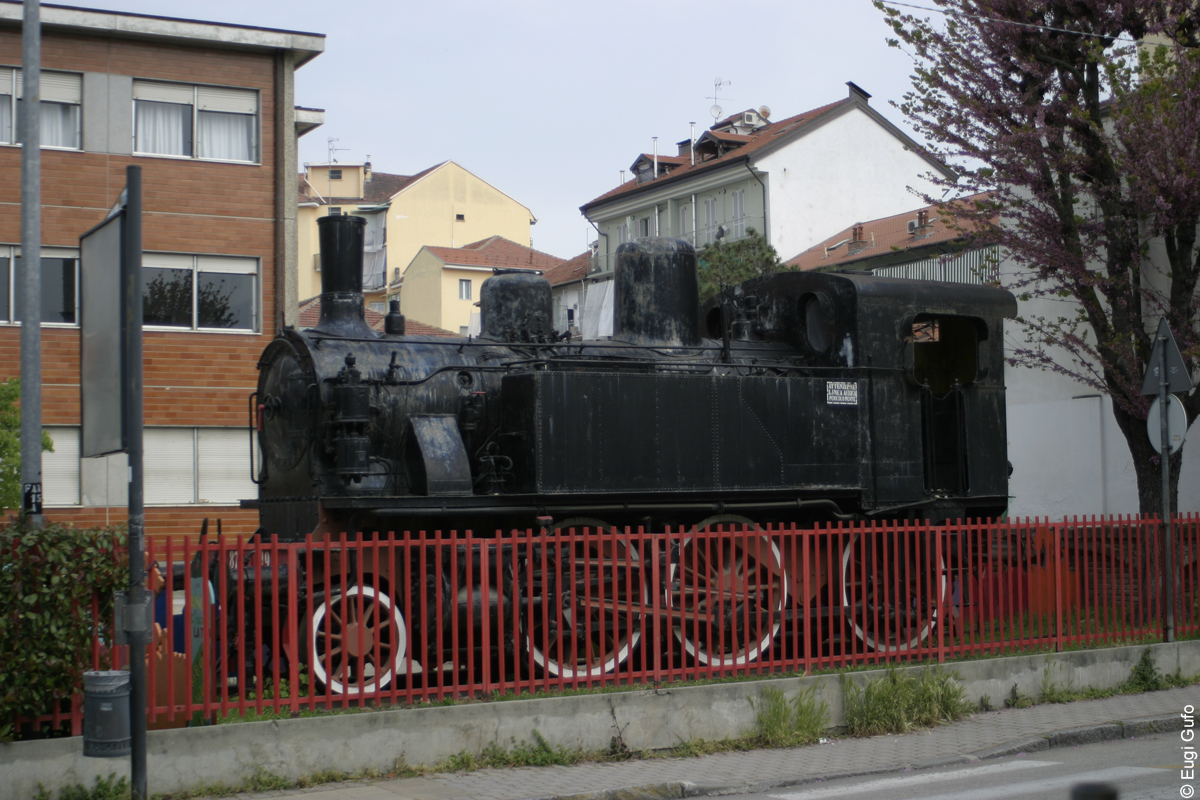
Yet I am more interested in human creations. Fortunately, Asti also offers curious, almost amusing human works. I understand that with only two observed cases one cannot draw firm conclusions about regional traditions, but I began to suspect something about Piedmontese habits. I recall having seen a 1950s fighter jet in the courtyard of a technical institute in Alessandria. In the courtyard of a primary school in Asti, however, I encountered a steam locomotive (no. 875.019), installed there in 1978. It is one of the 117 examples of the FS Group 875, designed by the Italian State Railways for passenger service on secondary lines and built between 1912 and 1916. I do not know precisely until which year this particular engine remained in regular service (I saw photographs from 1973 showing it still on the tracks), but I do know it was repainted by volunteers in 2016. I envy somewhat the children who have such a serious toy at school (as a child I had only played with a Soviet self-propelled artillery vehicle at a summer camp); and I inform adults that at least two museums in Italy exhibit locomotives of the same group.
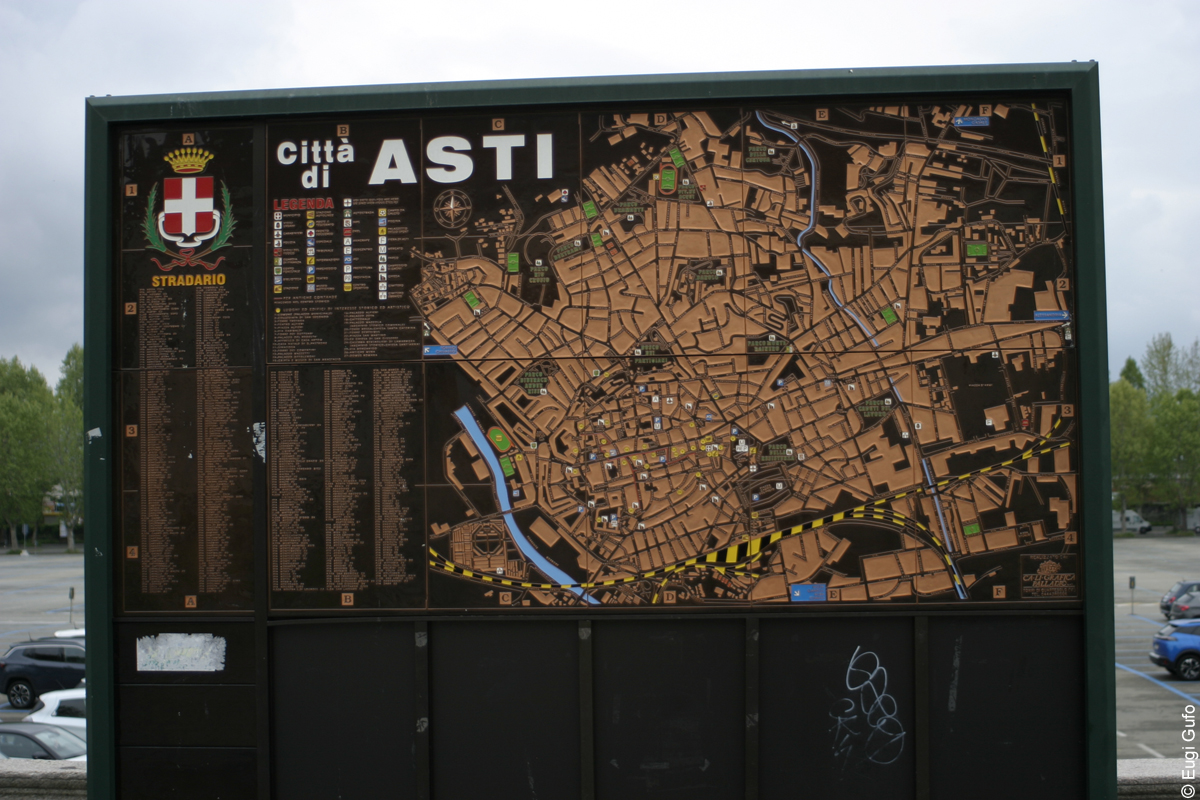
The traditional tourist attractions of Asti often do not need my promotion: partly because the historic centre is not very large (so if you study it attentively you will inevitably encounter the main sights), and partly because in some — albeit rare — points of the city there are tourist maps or arrows indicating the principal monuments.
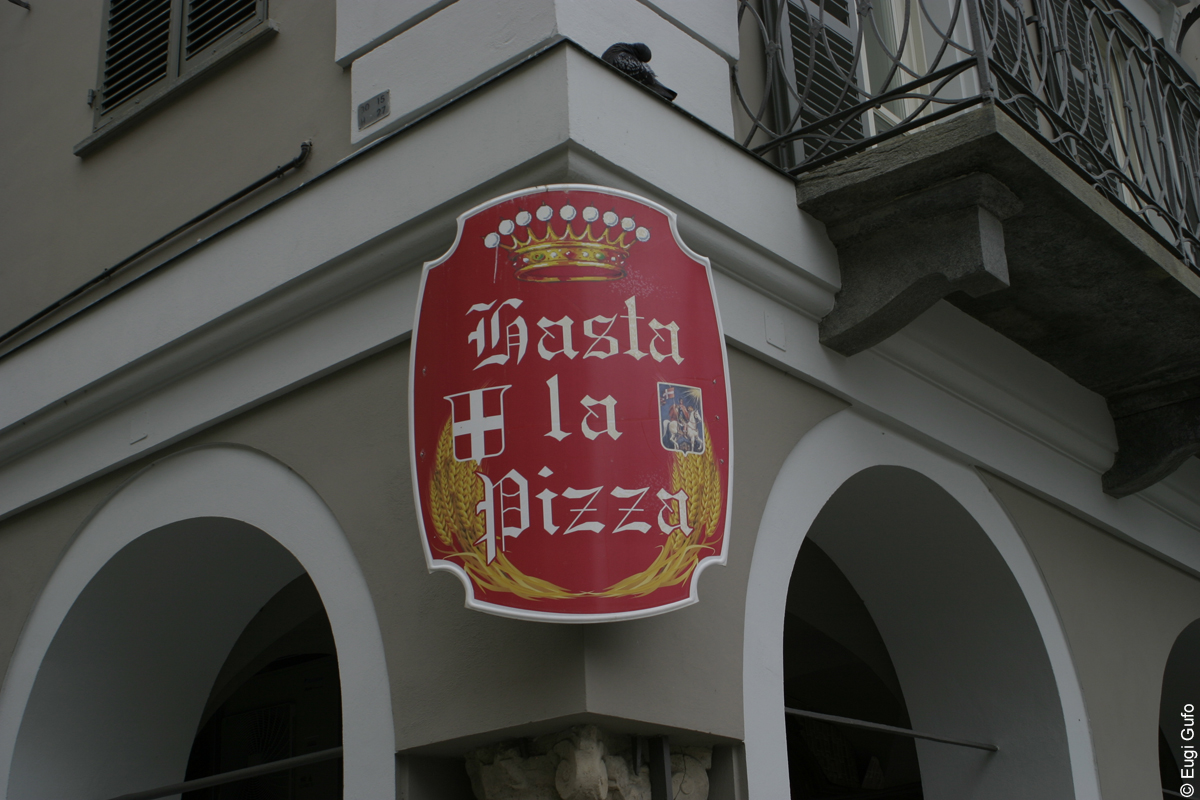
Not only official promoters of local tourism, but also private businesses in entirely different sectors appreciate and promote local history — even through wordplay of varying success (Hasta was the Roman-era name of Asti).
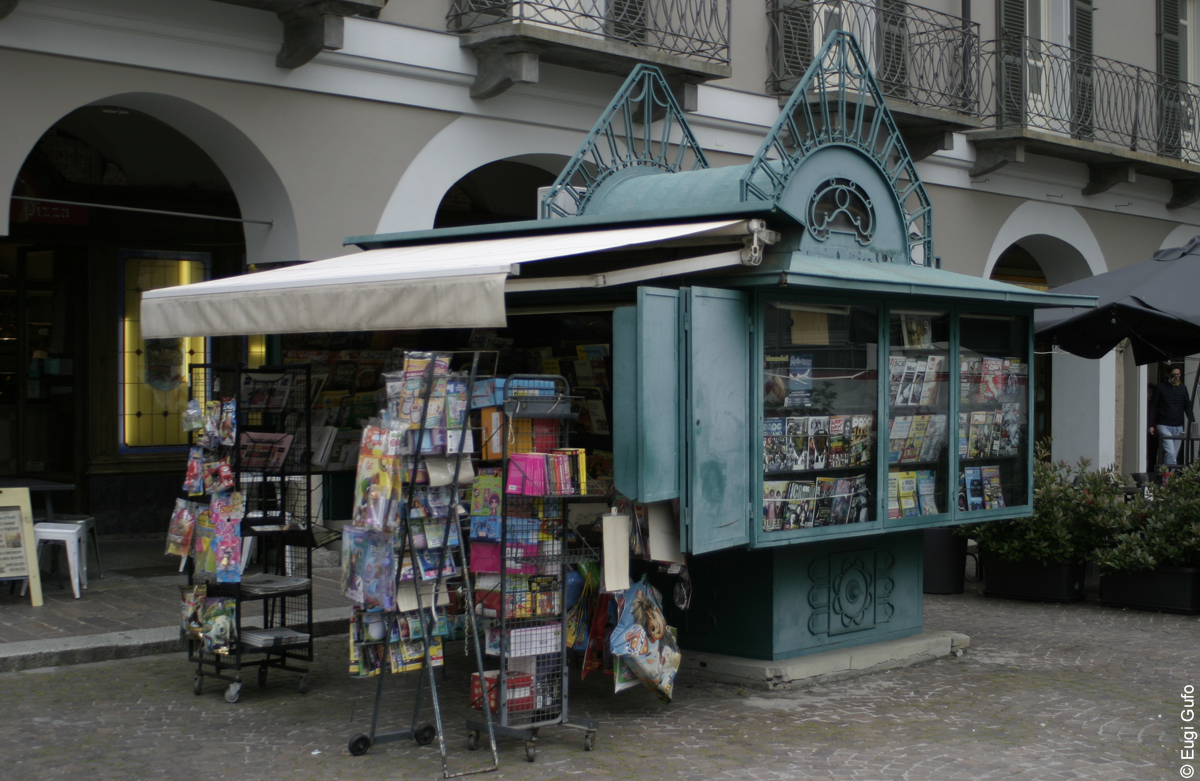
Indeed, they not only exploit history but also create it: for example, I have never seen a newsstand with a similar appearance. It deserves to become a museum piece once printed newspapers and magazines disappear entirely.
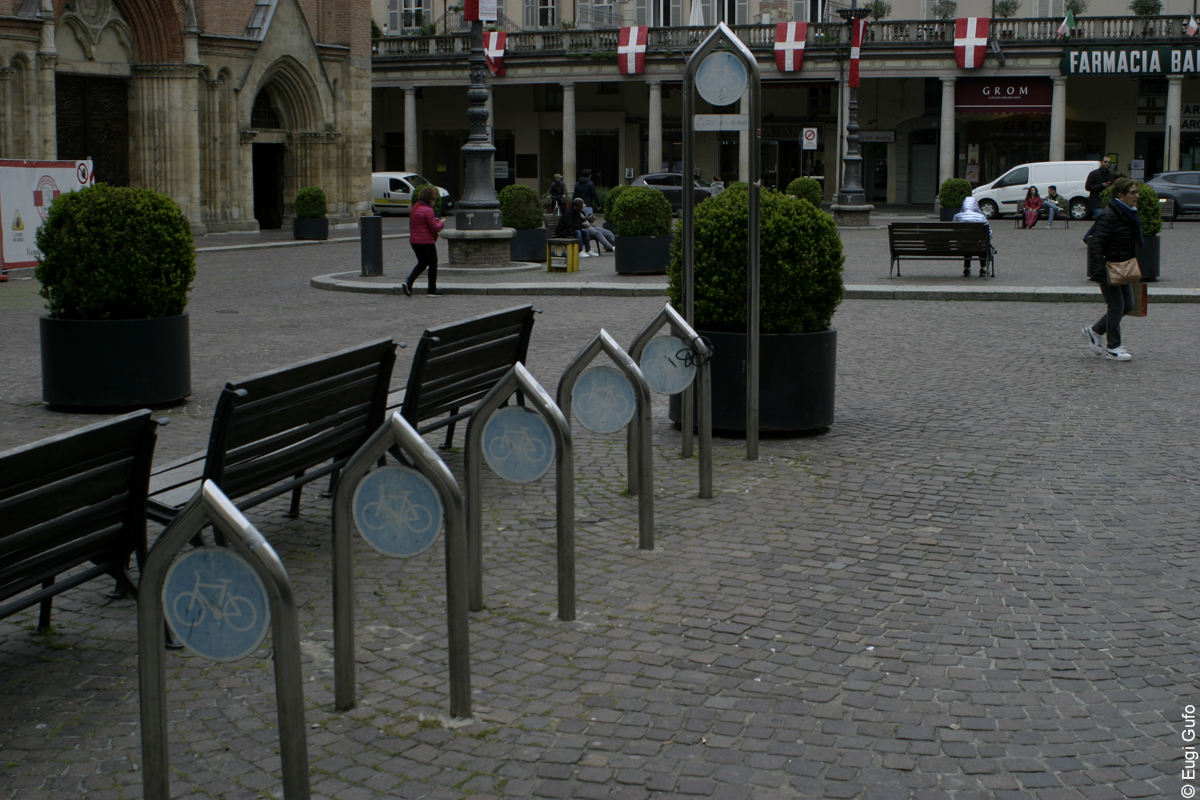
Even the «Gothic» bicycle racks are something new to me, though I am not sure whether they were designed by private initiative.
I could provide an infinite number of further examples, but my account is becoming rather long. So I conclude in the hope of having conveyed the fundamental idea: Asti is a beautiful city, worth seeing. Even had I wished to do so, I could not have shown you 100% of its beauties. Go and see them with your own eyes.
Asti, 26 April 2024
↓ Show comments ↓

