


 Long live Ukraine! Fuck the war!
 RSS of site articles
Throughout the entire Easter period of 2024 (Catholic Easter fell on Sunday, 31 March), uninterrupted rain was forecast across northern Italy — more or less as in the preceding days. Consequently, I found myself facing a rather melancholy choice: remain at home for all those days (thus wasting rare travel-friendly free time) or take a risk and go somewhere chosen more or less at random (quite possibly encountering hours of rain). It was a sad choice, but not a difficult one. Once again, I reasoned that by staying home I had exactly zero probability of a successful trip, whereas by taking the risk I at least had a microscopically small — but positive — chance. I cannot recommend this complex line of reasoning to those who enjoy more frequent travel opportunities during the year, but I can report the consequences in my particular case.
Having decided to attempt a journey, I also concluded that it would be unfortunate to invest time and money in a long trip only to see nothing because of rain. I therefore chose a destination not too far away, easily reachable and quickly explorable (perhaps between one shower and another). In this way, I would not be excessively disappointed in case of failure. I moved the mouse at random over one of the most promising (according to my experience) areas of Lombardy and «landed» on Esine, in the province of Brescia. Judging from the available Google images, it appeared relatively attractive and considerably more interesting than the neighbouring village of Cogno (a hamlet of Piancogno), with which it shares a railway station. To maximise the utility of the trip, I decided first to explore Cogno quickly, and then to dedicate more careful attention to Esine.
Tourists willing to gamble with the weather are often — though unfortunately not always — rewarded. Upon my arrival in Cogno, it was drizzling almost imperceptibly; after about ten minutes, it stopped entirely. I took out my camera and did not put it away again until the end of the excursion: the picturesque clouds produced no further rain.
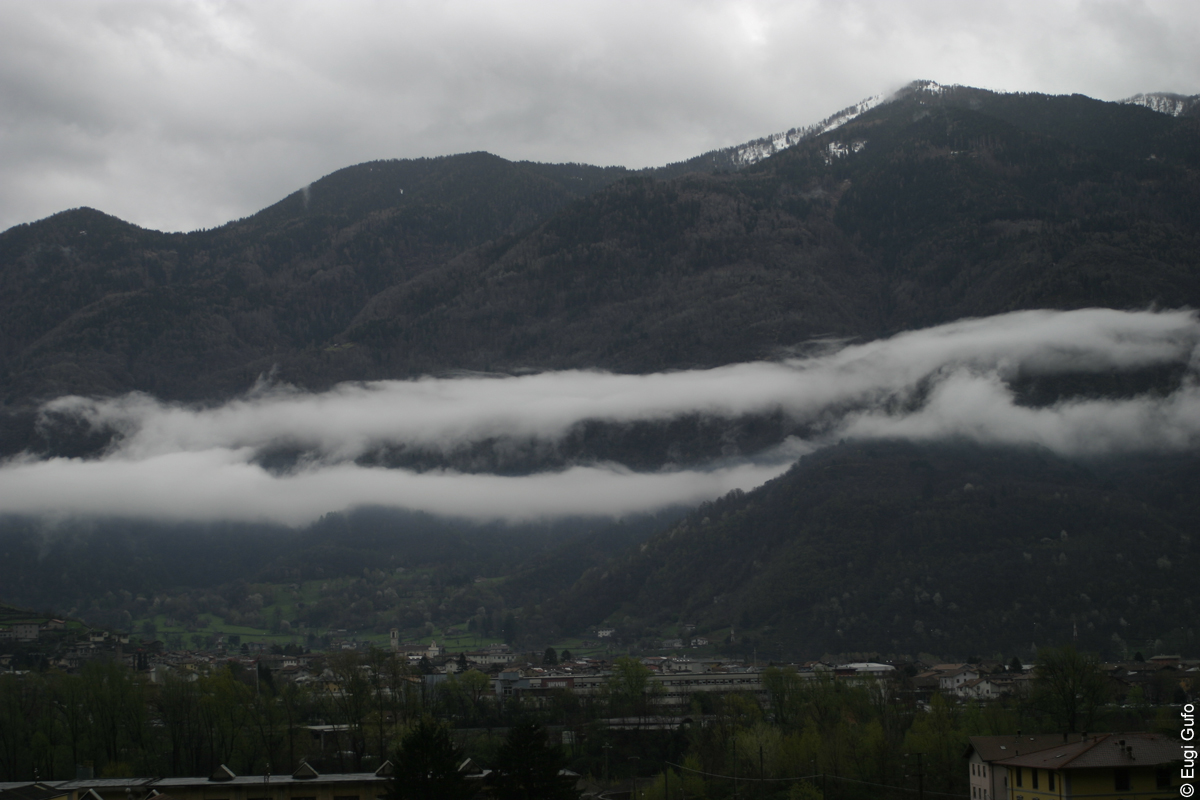
The main street of Cogno — the one running through the entire village roughly parallel to the railway — has nothing particularly remarkable about it. An impatient tourist might easily assume that the rest of the village offers little more…
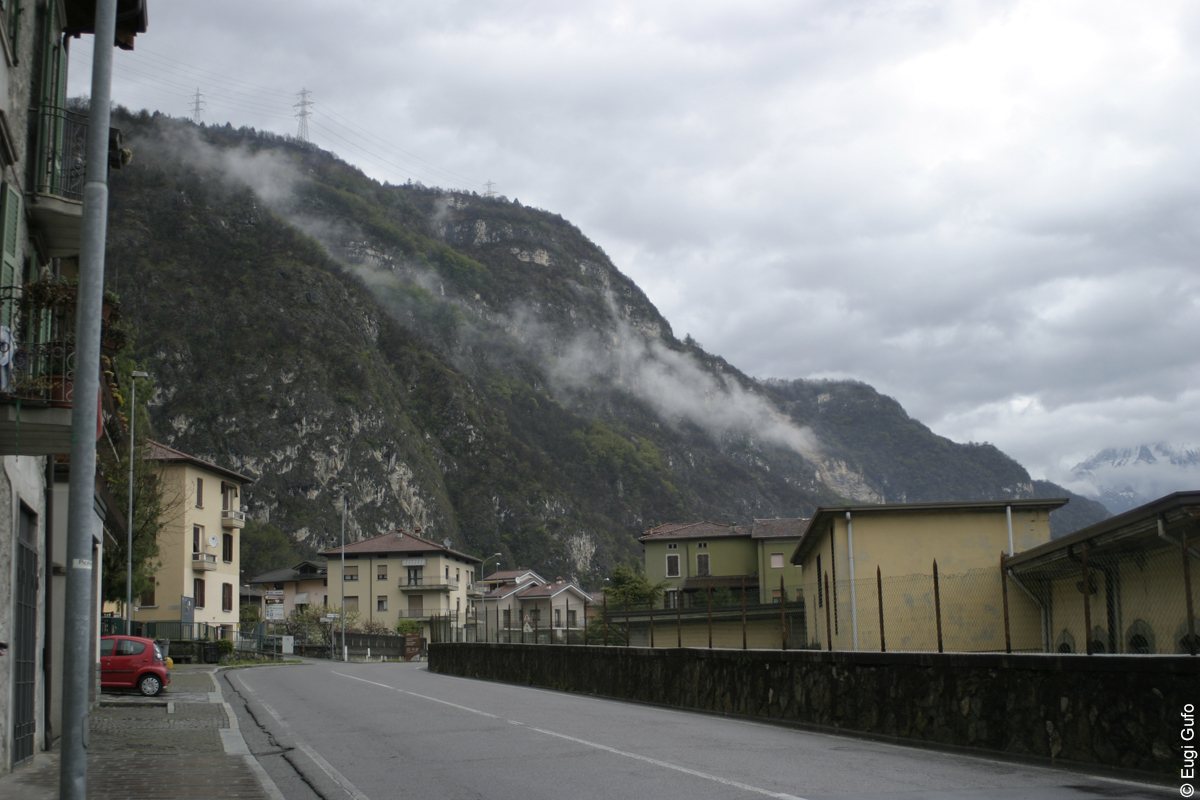
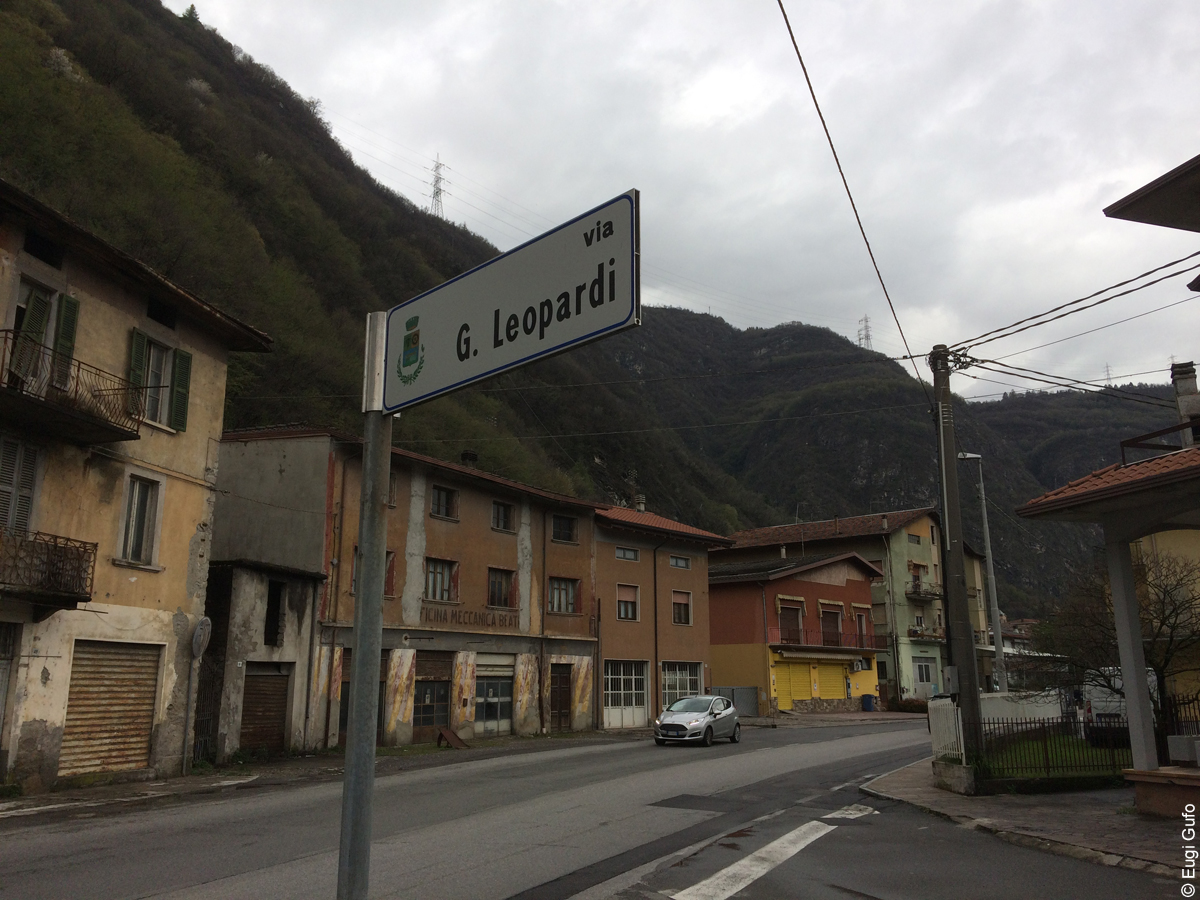
Many neglected façades, the majority of commercial premises closed for who knows how many years or decades, almost no people in the streets: an ideal setting for depressing toponyms…
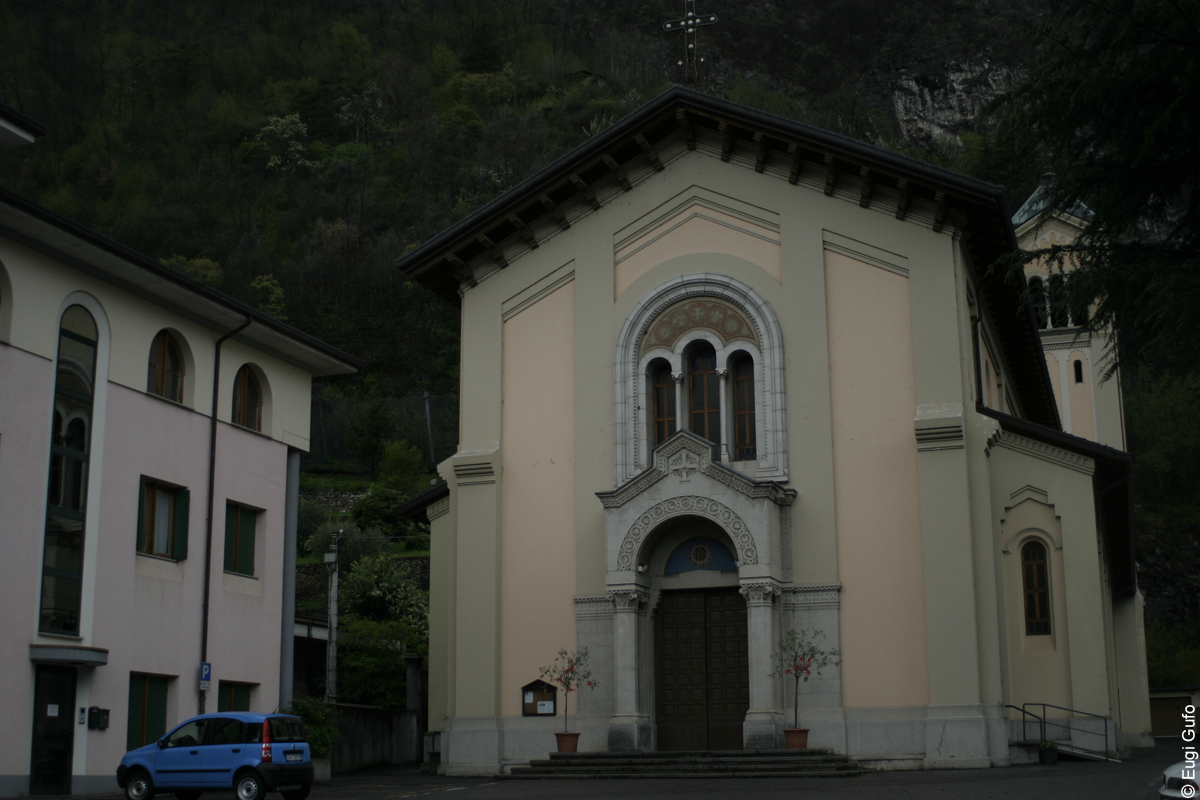
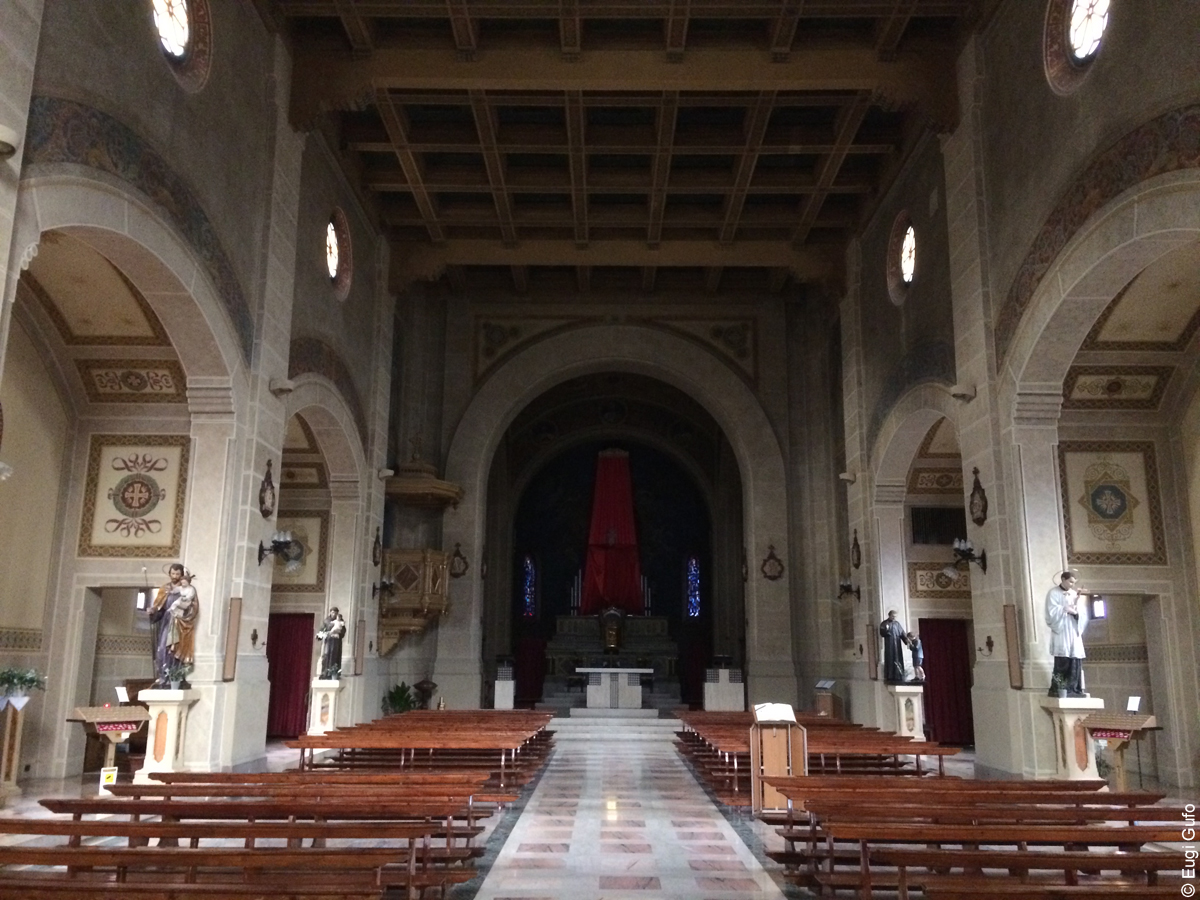
But one should not trust first impressions. Patience and curiosity are required; one must venture down side streets in search of something interesting. And suddenly, pleasant surprises begin to appear: I unexpectedly encountered the parish church of the Annunciation. Despite having been built in the twentieth century, it is beautiful in a classical sense.
The interior is even better: bright, not excessively ornate, relatively simple yet harmonious.
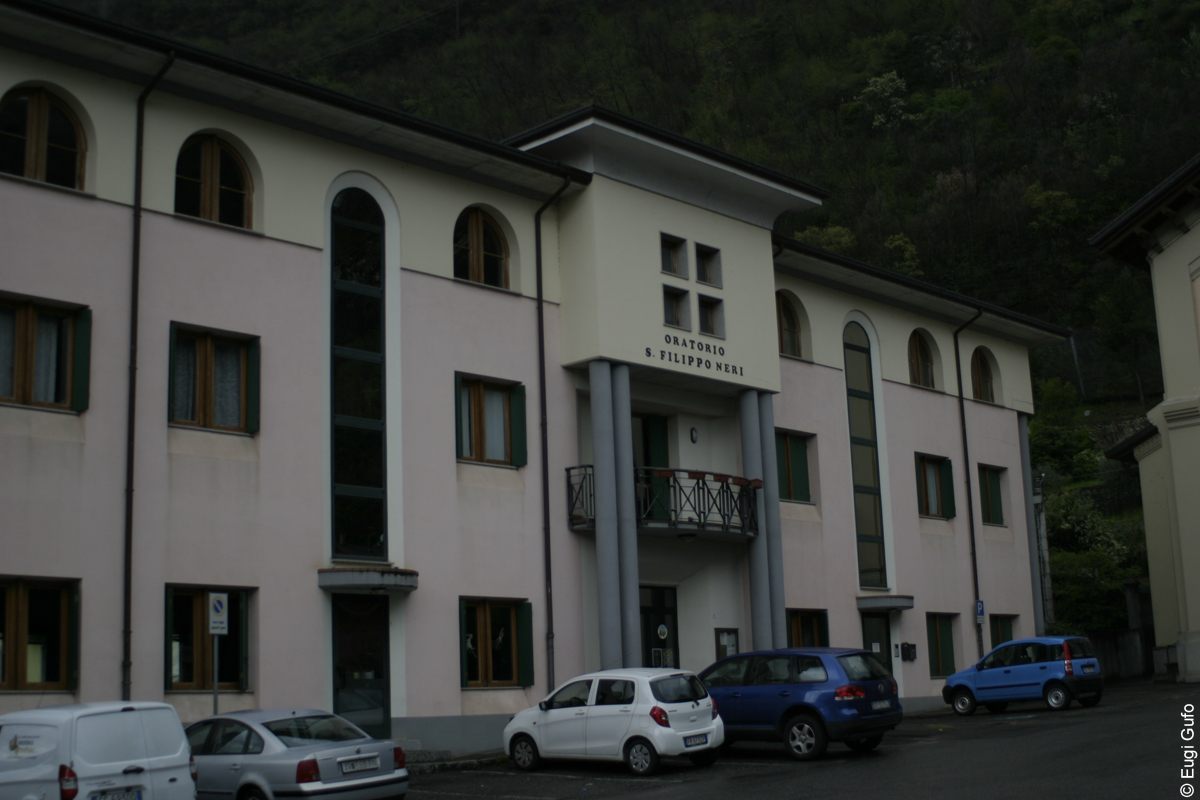
Next to this church stands the Oratory of San Filippo Neri, whose building seems as though it were designed in the 1990s by a school pupil assisted by primitive 3D software. But let us not be distracted.
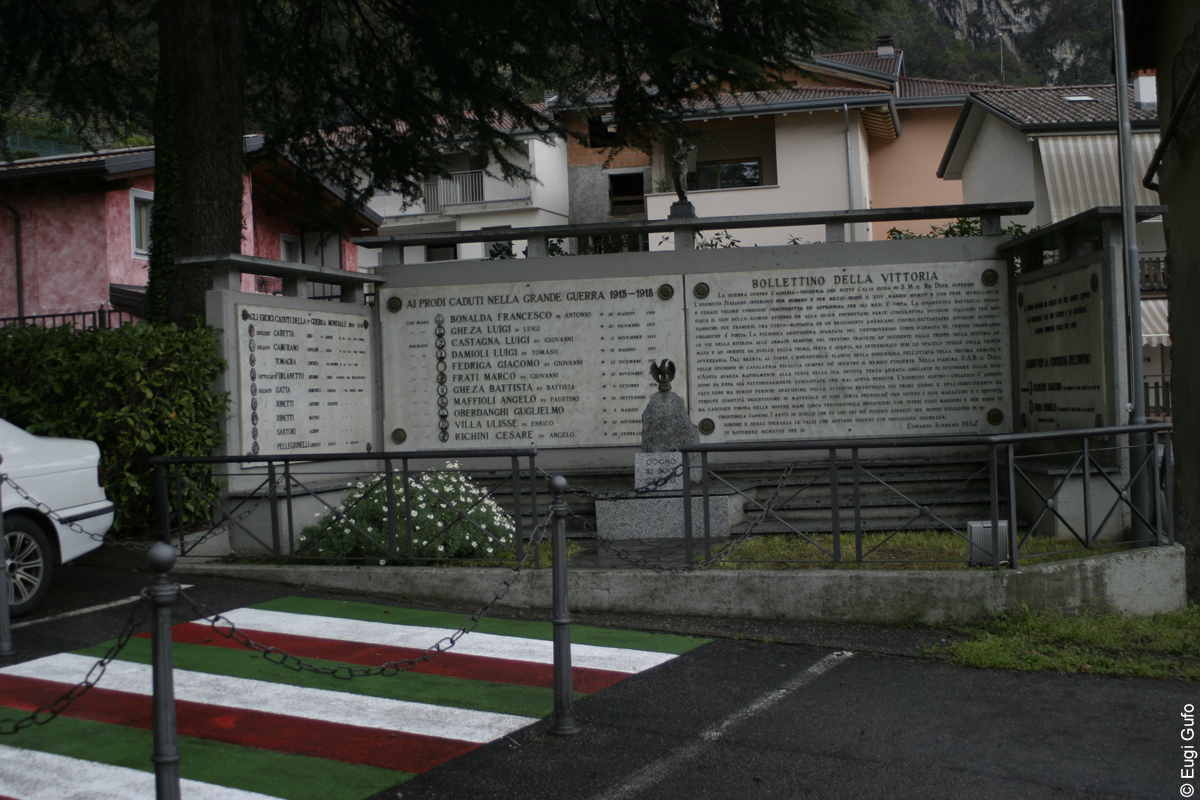
Very close to the church I also discovered a curious monument — remarkable for the rare content of its inscriptions — evidently conceived after the First World War and slightly updated after the Second. Judging by the reinforced concrete elements, it was restored relatively recently.
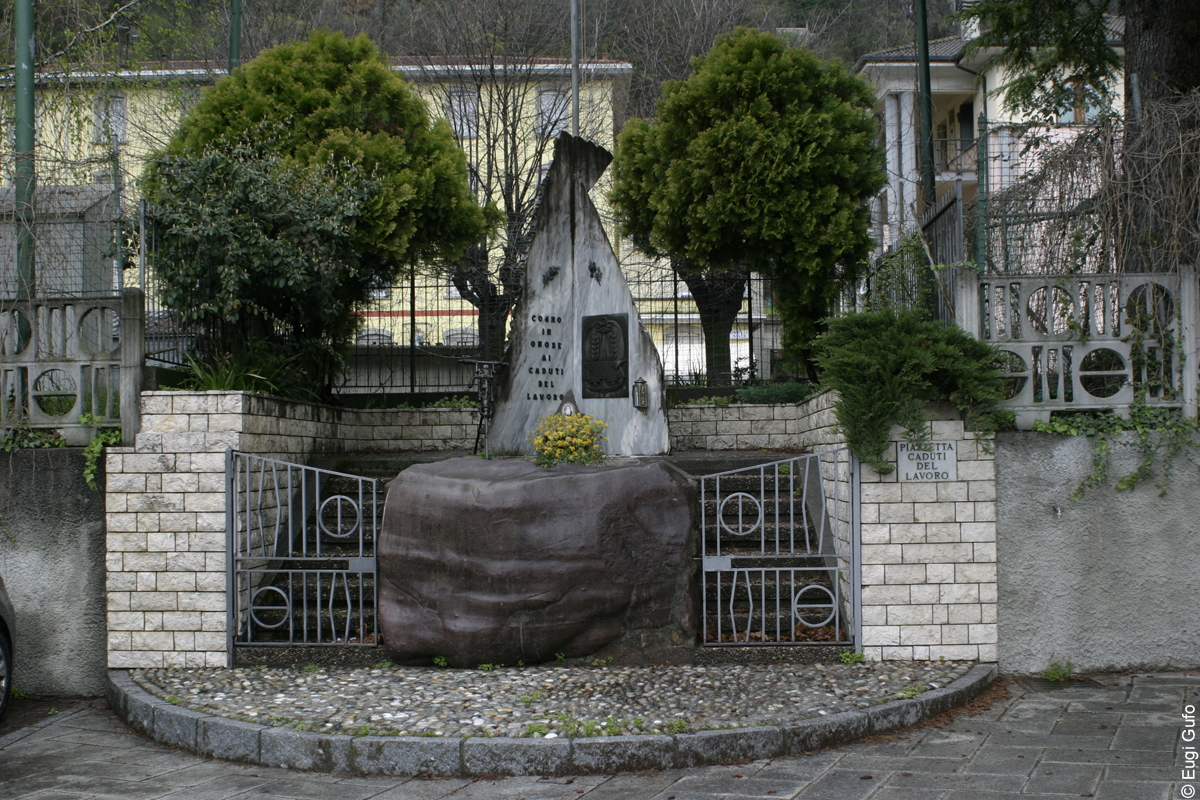
So as not to interrupt the narrative later, I shall immediately show you the monument dedicated to those who died at work. Please note the originality of the tool represented.
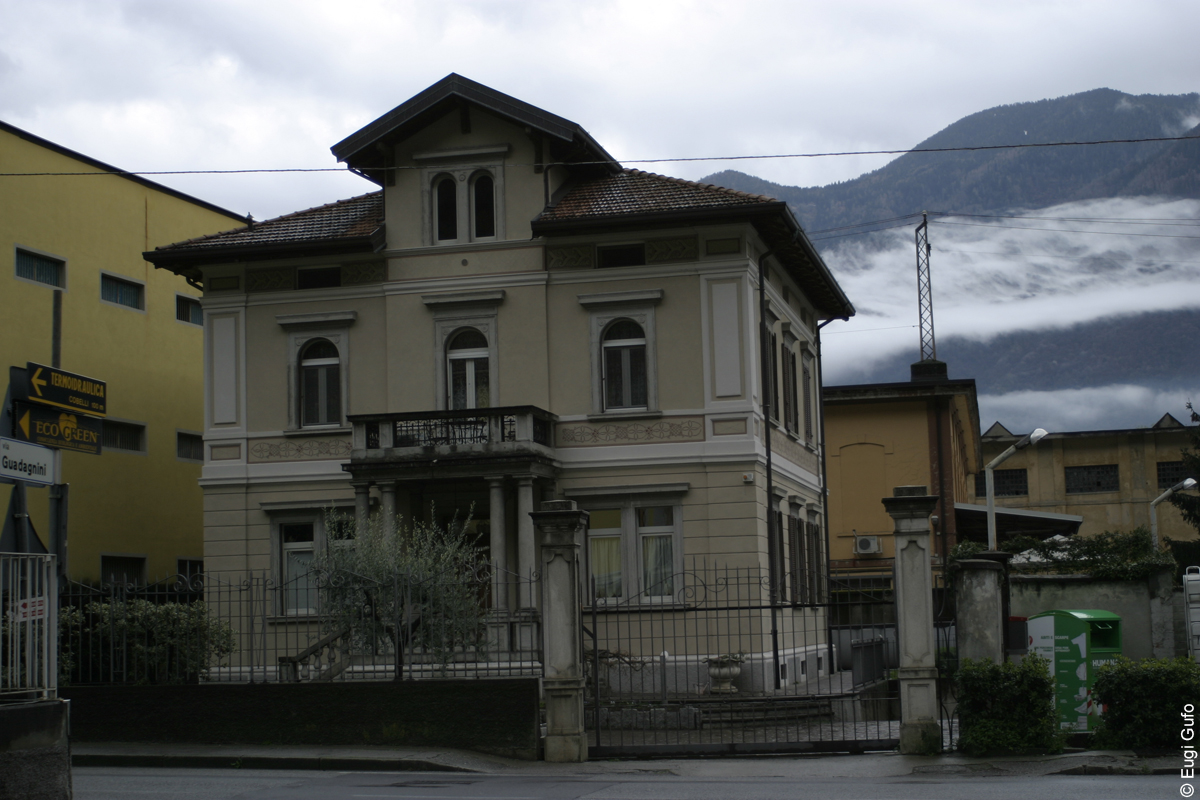
Not only the monuments, but also some of Cogno’s private villas are somewhat unusual.
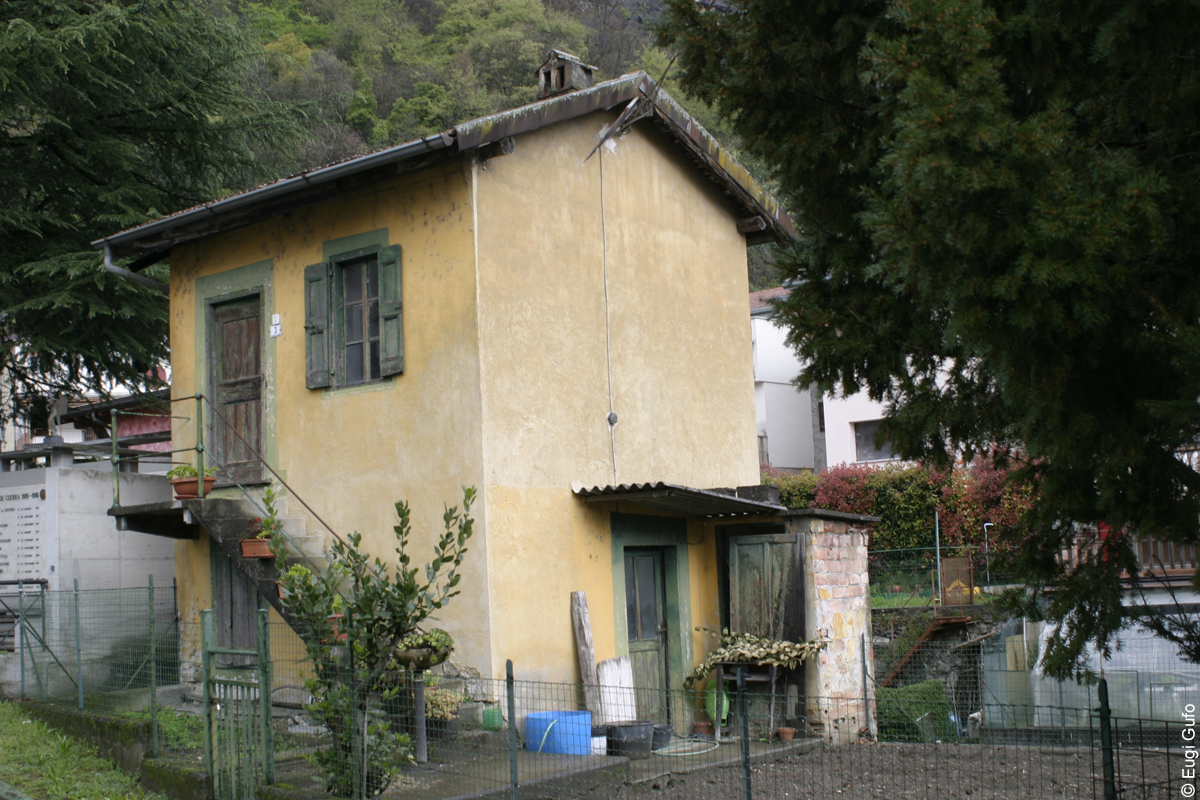
The local historic architecture is peculiar, though not particularly attractive.
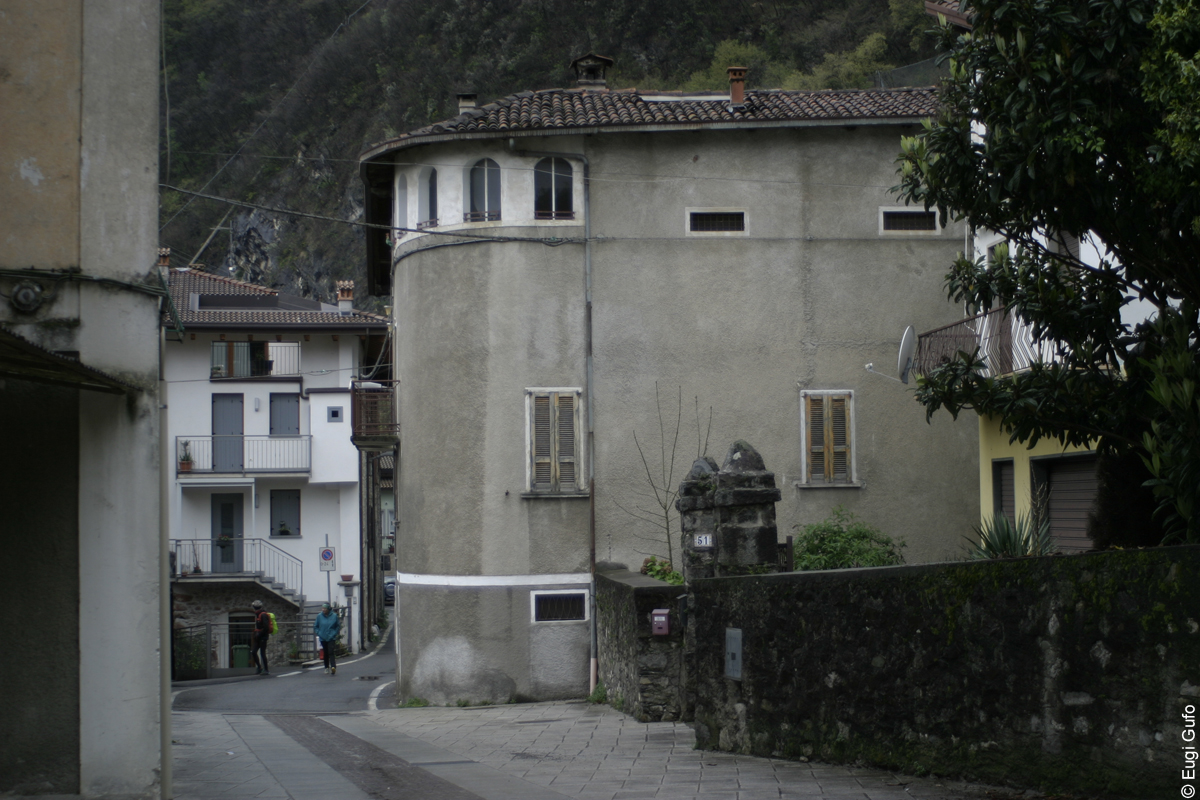
Modern architecture, meanwhile, may in fact be the result of rather aggressive restoration.
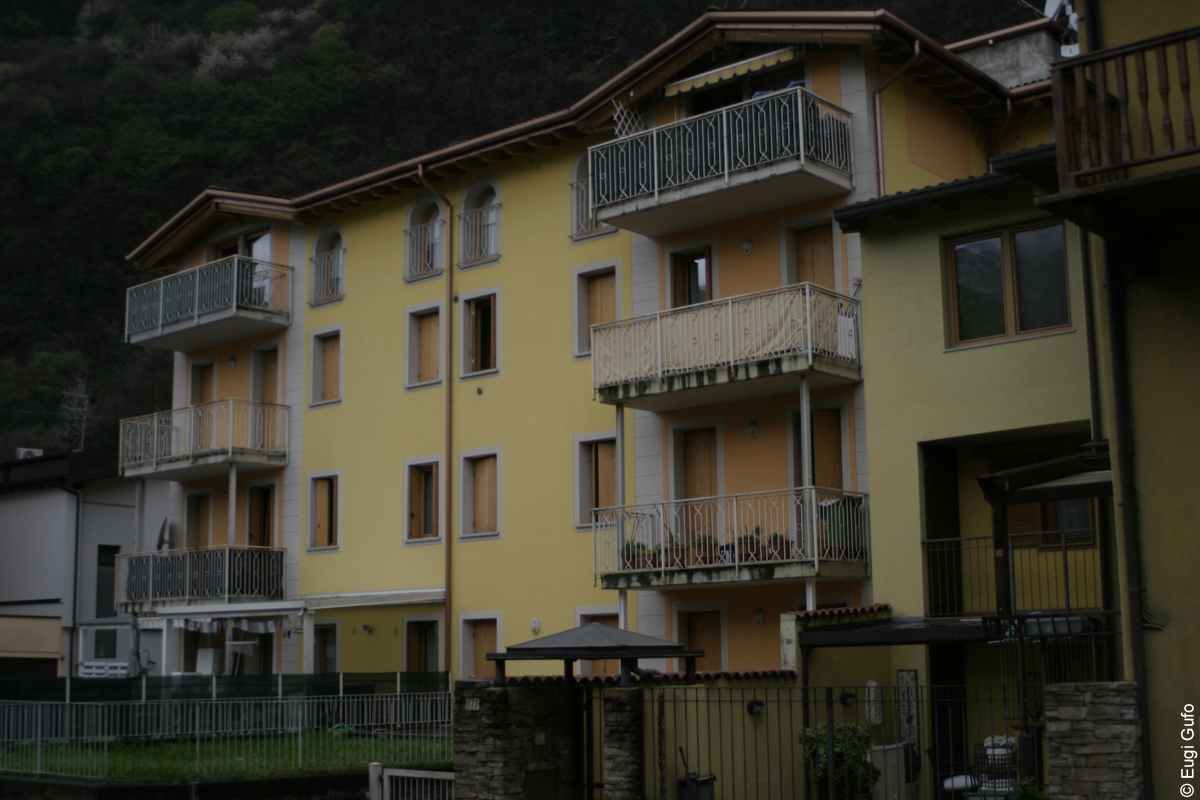
Old and genuinely beautiful private villas are extremely rare.
Occasional fragments of authentic antiquity may deceive the tourist — sometimes in a positive way. Take, for instance, these two metres of ancient masonry with a column and a plaque reading «Quartiere I Maggio.»
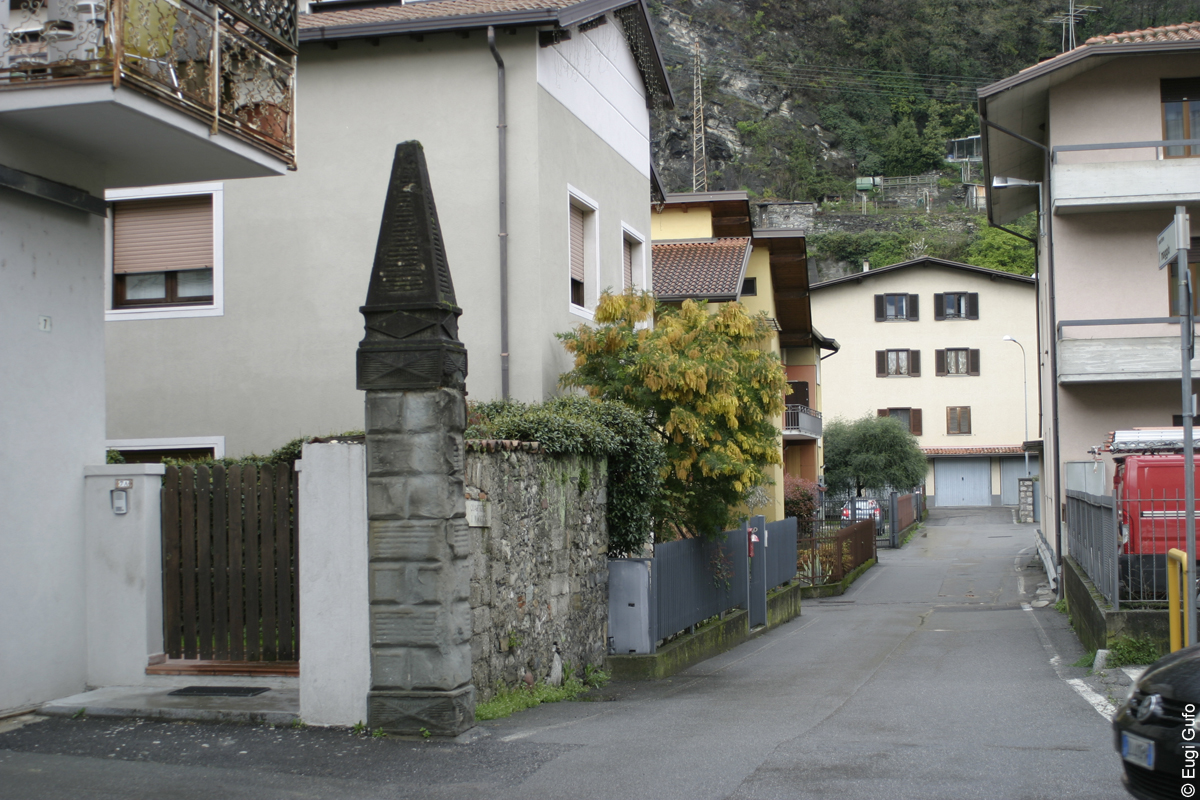
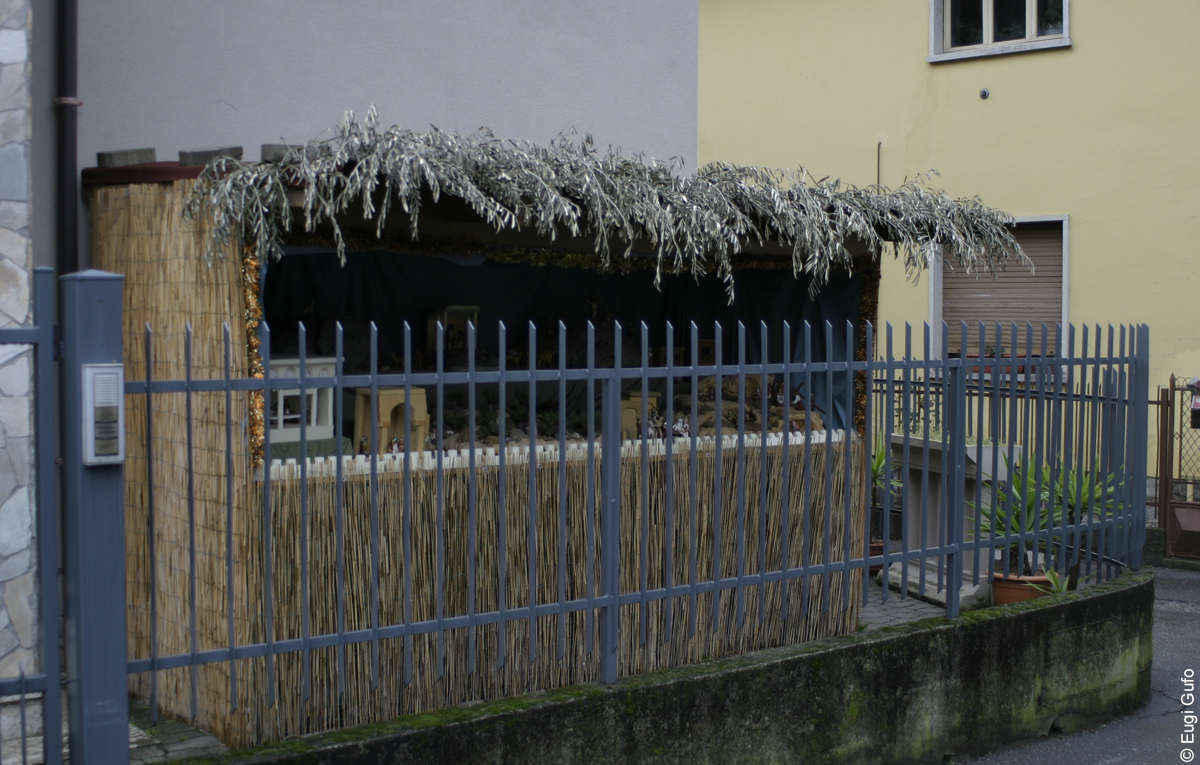
Surrounding it are only very dull apartment blocks from the second half of the twentieth or the beginning of the twenty-first century… Yet in the small courtyard of a modern villa I noticed a large Easter nativity scene. Until that moment, I had not even realised that constructing one for Easter was a custom.
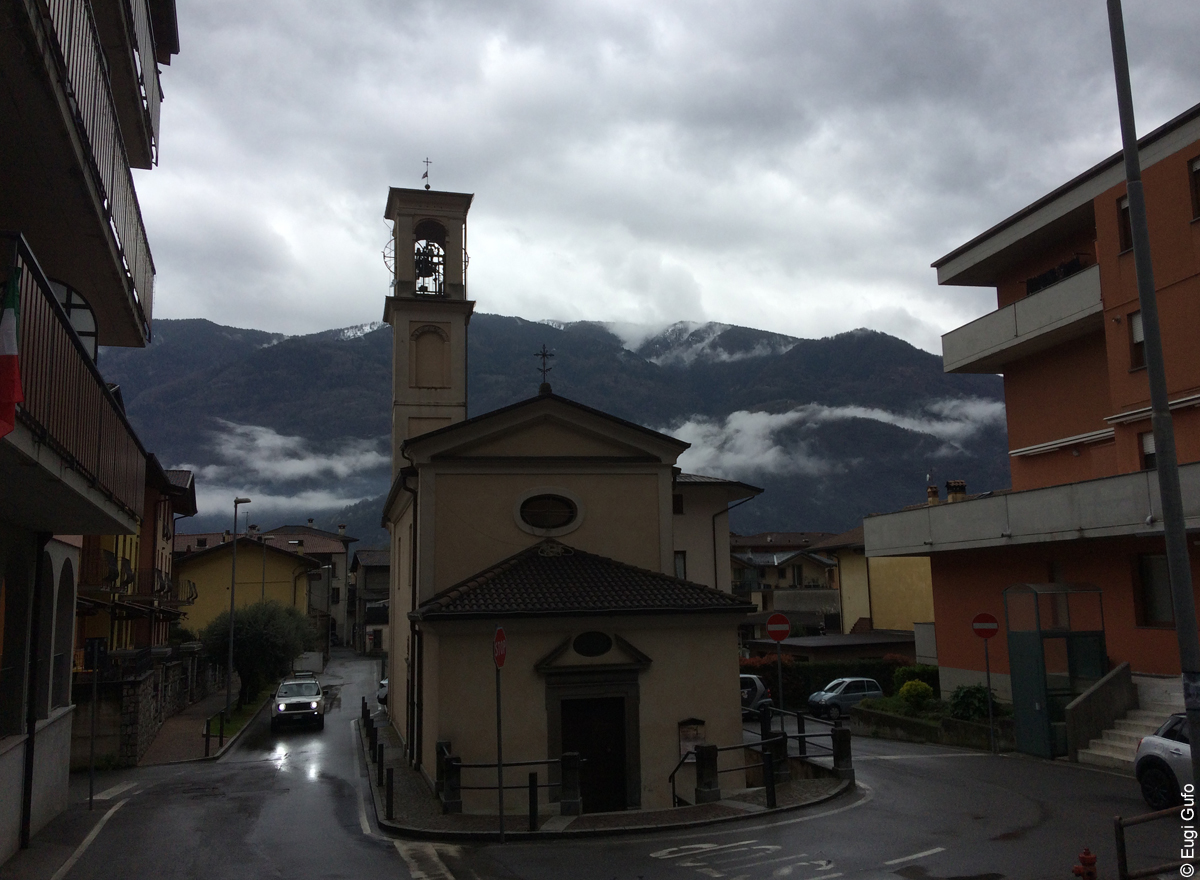
I should also mention another potentially interesting church in Cogno — the Church of San Filippo Neri, built between 1658 and 1662, enlarged in 1870, and not used for worship from 1927 to 1960 — which happened to be closed when I passed by. Let us content ourselves with its exterior appearance.
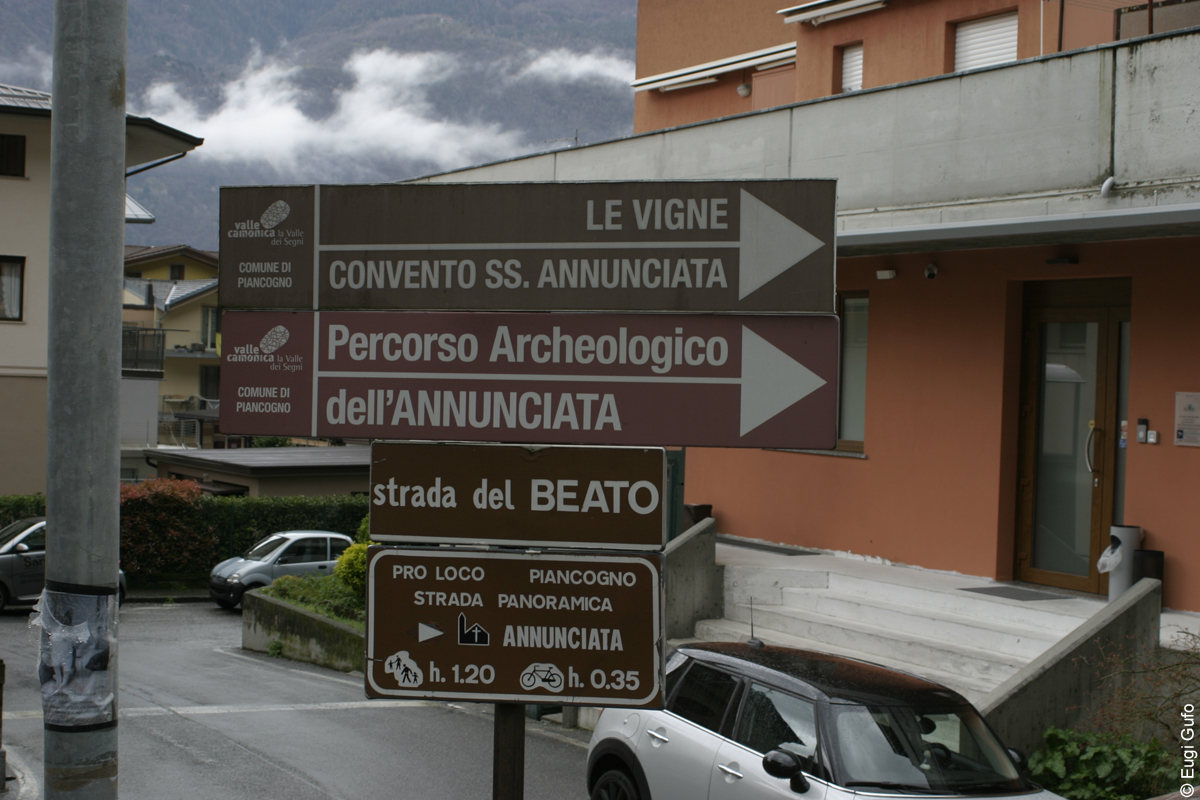
In several parts of Cogno I noticed signs indicating potentially scenic hill trails. Given the uncertain weather conditions, however, I preferred not to risk them. In my experience, such undertakings are better suited to summer.
A modest amount of pleasant nature is visible even from within the village itself — and for the end of March, that should suffice.
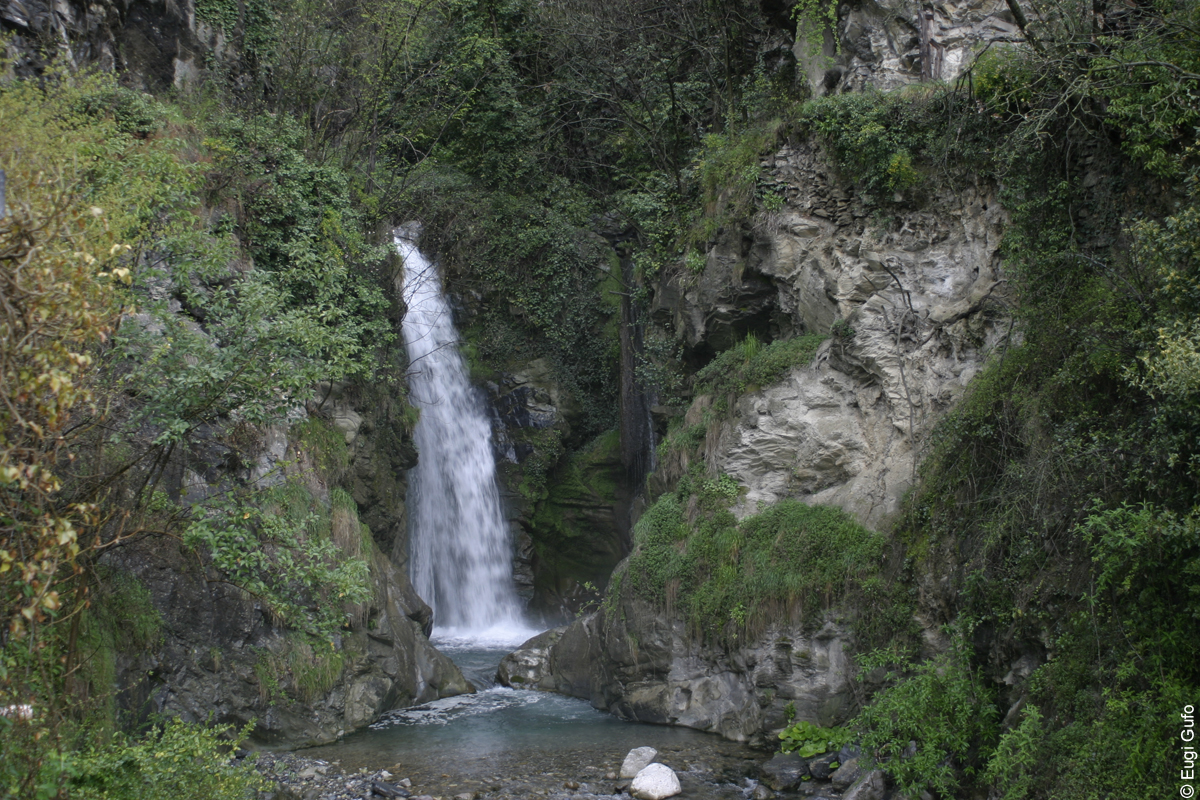
On hill (and mountain) paths, one must also know how to interpret signs and other graphical or physical indicators. I have learned to do so, though I am unsure about your level of expertise. In Cogno, at least, they warn you clearly:

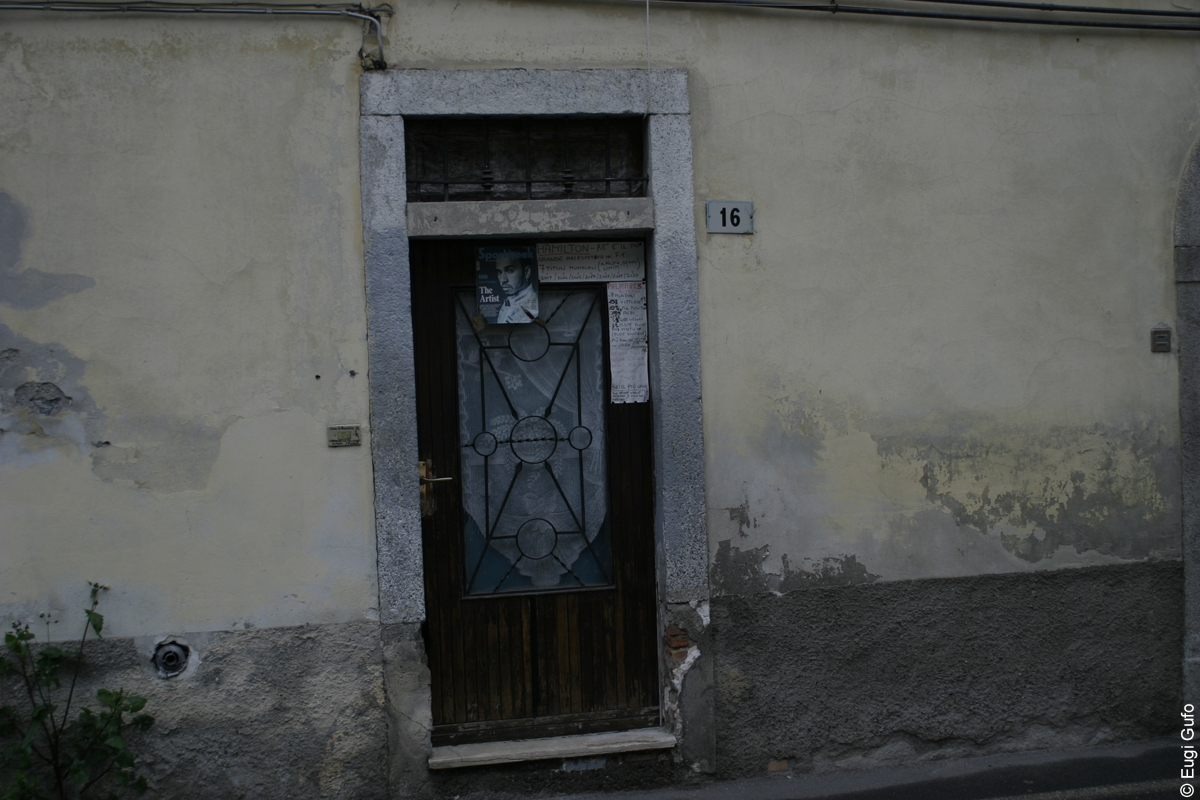
Let us return to the built-up area for a few additional curiosities. One resident, for example, has decided to remind us what our cities might look like should social networks and comment-enabled websites ever be shut down.
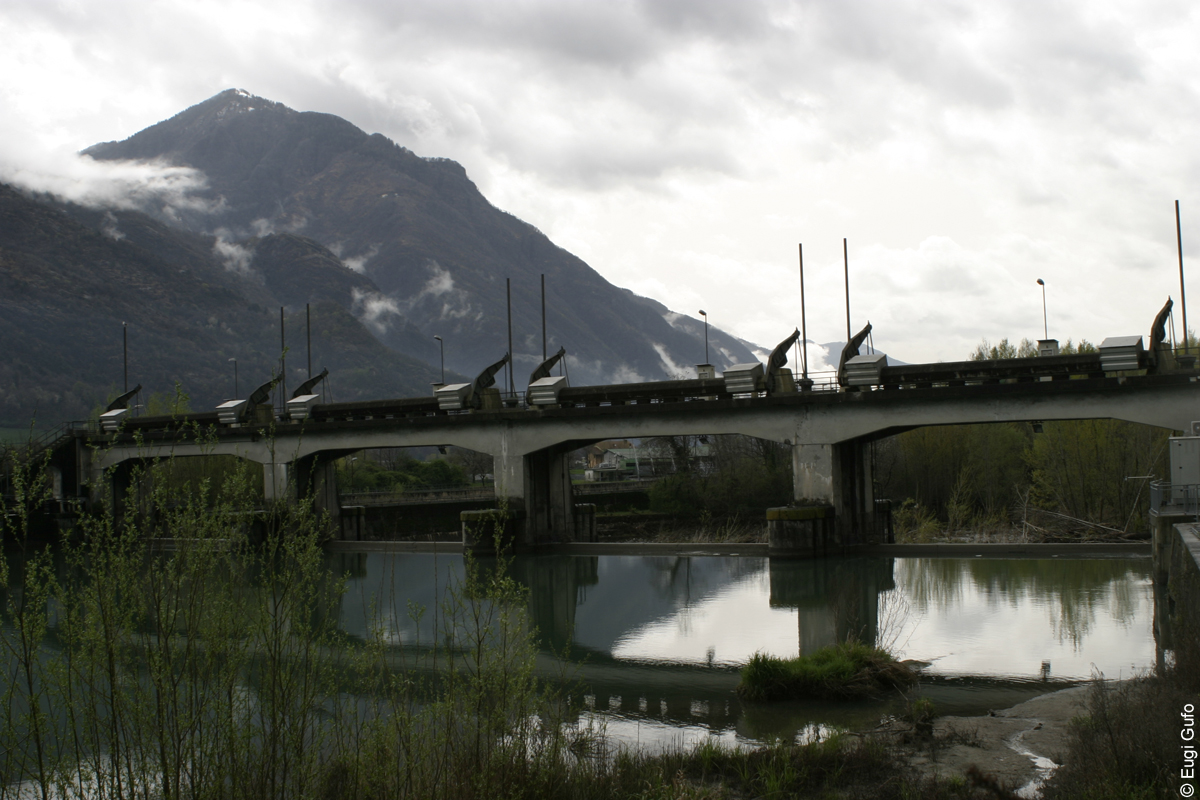
Meanwhile, I realised that I had completed a full circuit of Cogno: I found myself before the River Oglio, along which runs the railway line I used to arrive from Brescia. What appears from a distance to be a strange bridge is in fact part of the mechanism supporting the local hydroelectric power plant.
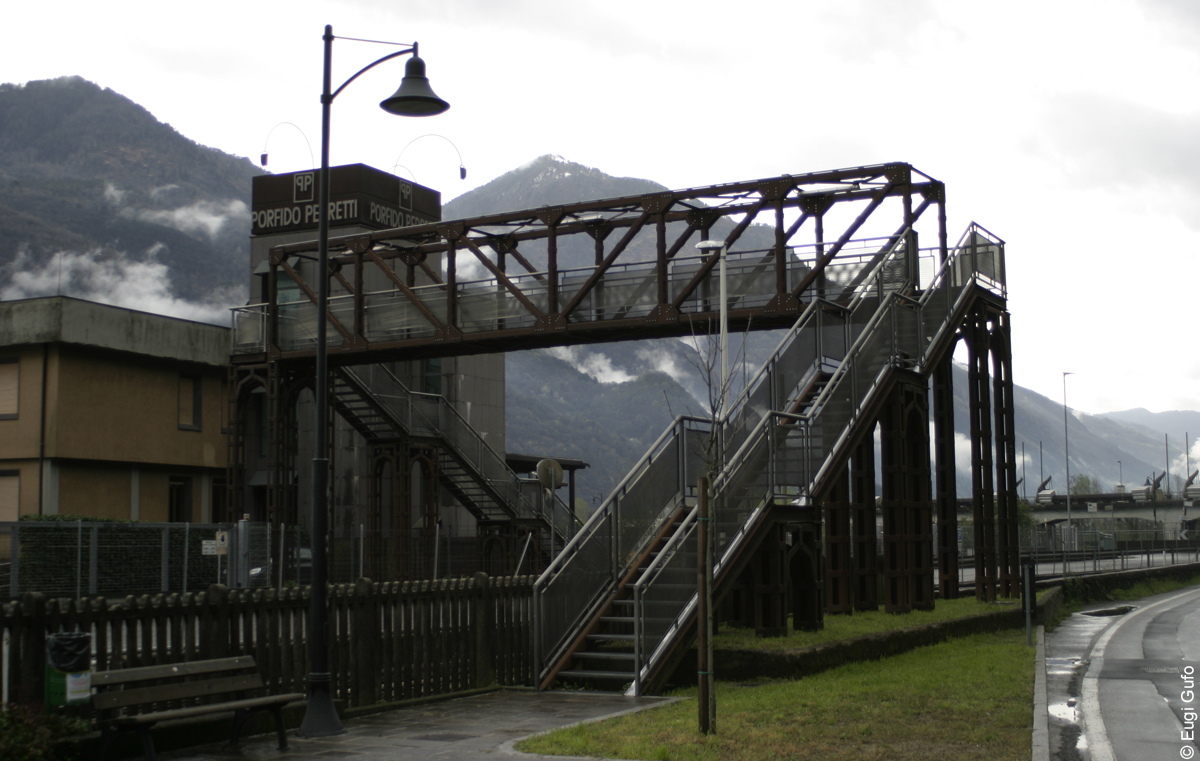
To reach Esine — the neighbouring village that was the true objective of my journey — one must first cross the railway tracks and only afterwards a bridge over the river. The metal footbridge over the tracks combines relatively old and more modern construction techniques, but it is accessible only on foot (and with a bicycle led by hand). Presumably there exists somewhere a route suitable for prams, though I did not see it.
I successfully crossed both railway and river and arrived in Esine — a decidedly more cheerful and attractive place. But that is a story for a separate account.
Cogno, 29 March 2024
↓ Show comments ↓

