


 Long live Ukraine! Fuck the war!
 RSS of site articles
After having explored the centre of Iseo with a degree of conscientious attention, I set off immediately towards Pilzone — a small frazione of Iseo, roughly two kilometres away — from which the so-called Via Valeriana begins. This is a 140-kilometre mountain route based on ancient communication roads, leading as far as Passo del Tonale and Passo dell’Aprica in the Alps.
Naturally, I had no intention of walking the entire route in one attempt (such enthusiasm would be unrealistic even on flat terrain). The objective was modest and observational: to examine the initial stretch, determine precisely where it begins, assess how it is equipped and signposted, and evaluate the density of human traffic. On the basis of these findings, future campaigns will be planned.
And, since I was already in the vicinity, it seemed only proper to examine the inhabited areas encountered en route.
The pedestrian path from Iseo towards Pilzone does not yet officially form part of the Via Valeriana and is therefore somewhat under-equipped in certain sections. For several dozen metres, for instance, one must walk alongside a motor road on a generous grassy verge beyond the white line. It is not dangerous — merely a reminder that one has not yet reached the ceremonial beginning of anything.
At the end of this approach, one encounters a combined pedestrian and vehicular crossing over the single track of the Brescia—Iseo—Edolo railway. Immediately beyond it begins Pilzone. Directly opposite the crossing — at a distance of only a few metres — stands the parish church. I am uncertain whether it is technically possible to photograph it without including the raised automatic barriers; I was not inclined to wait indefinitely for the announcement of one of the infrequent trains.
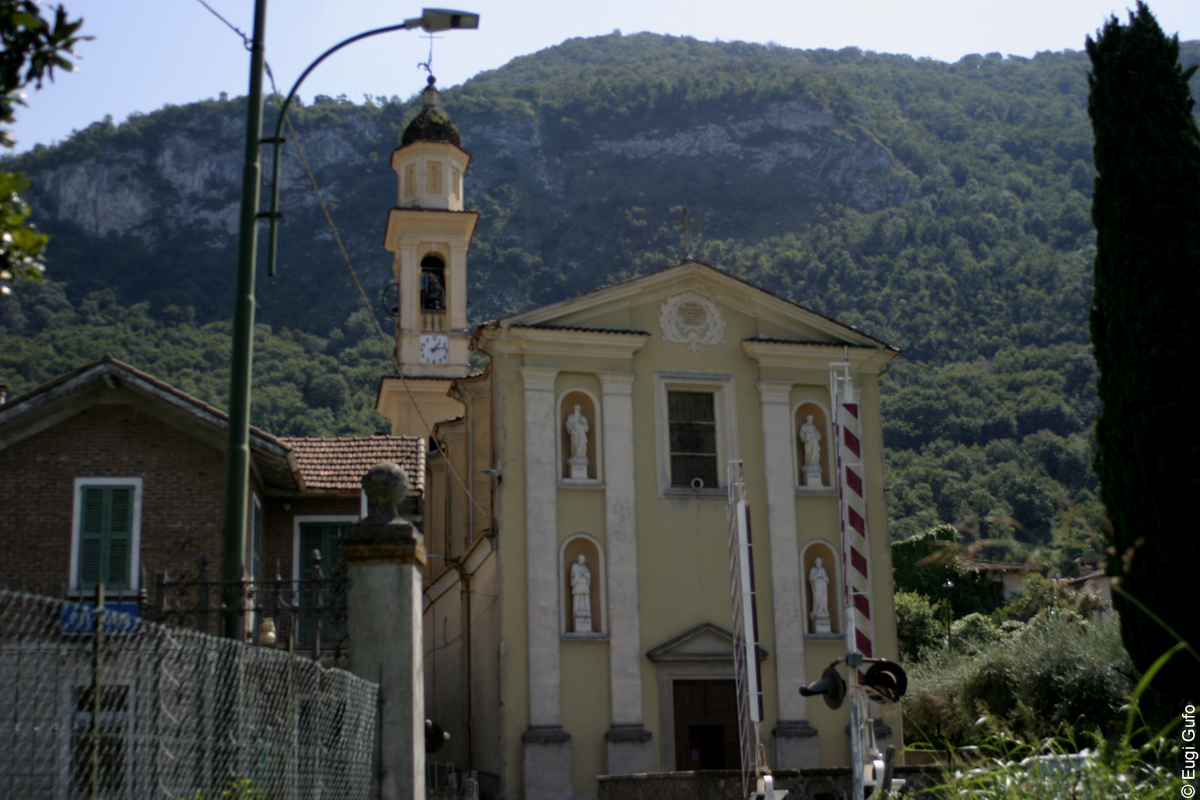
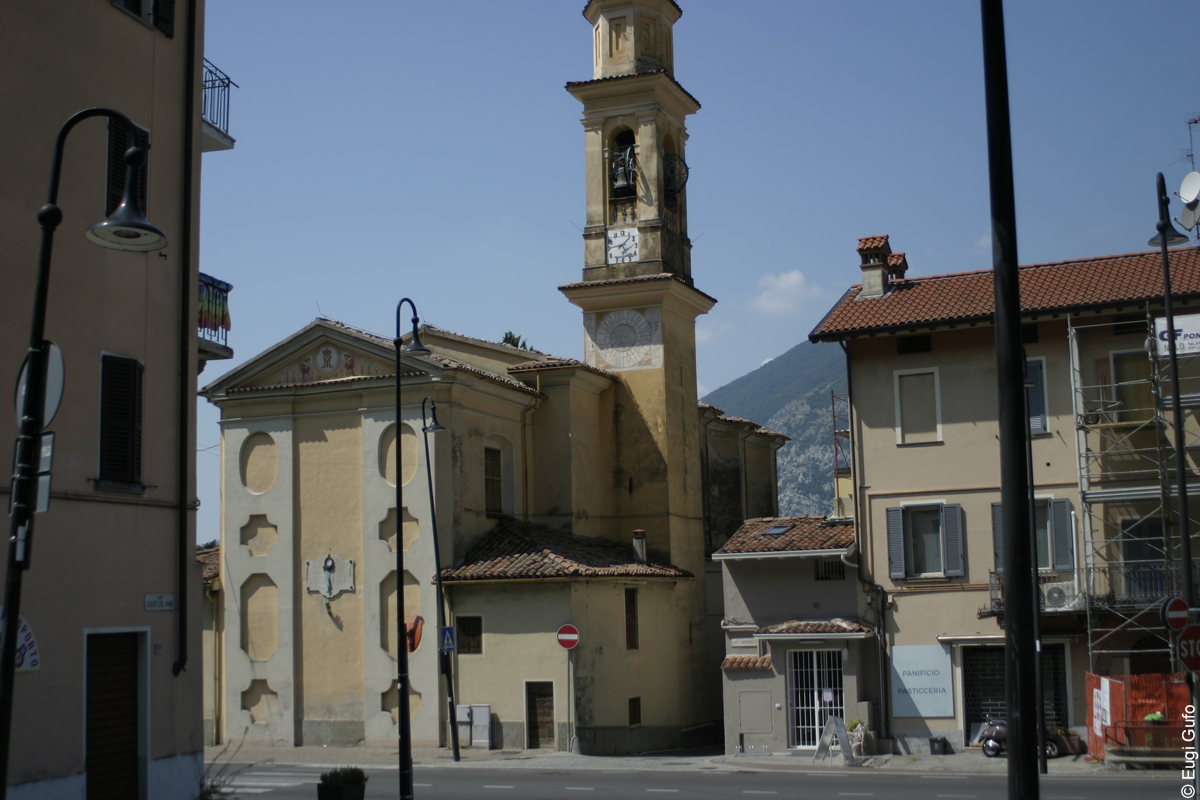
Photographing the same church from the rear is considerably easier — and arguably more intriguing. It appears that construction work for a secondary façade on the back side was at some point initiated and then, for reasons unknown, abandoned.
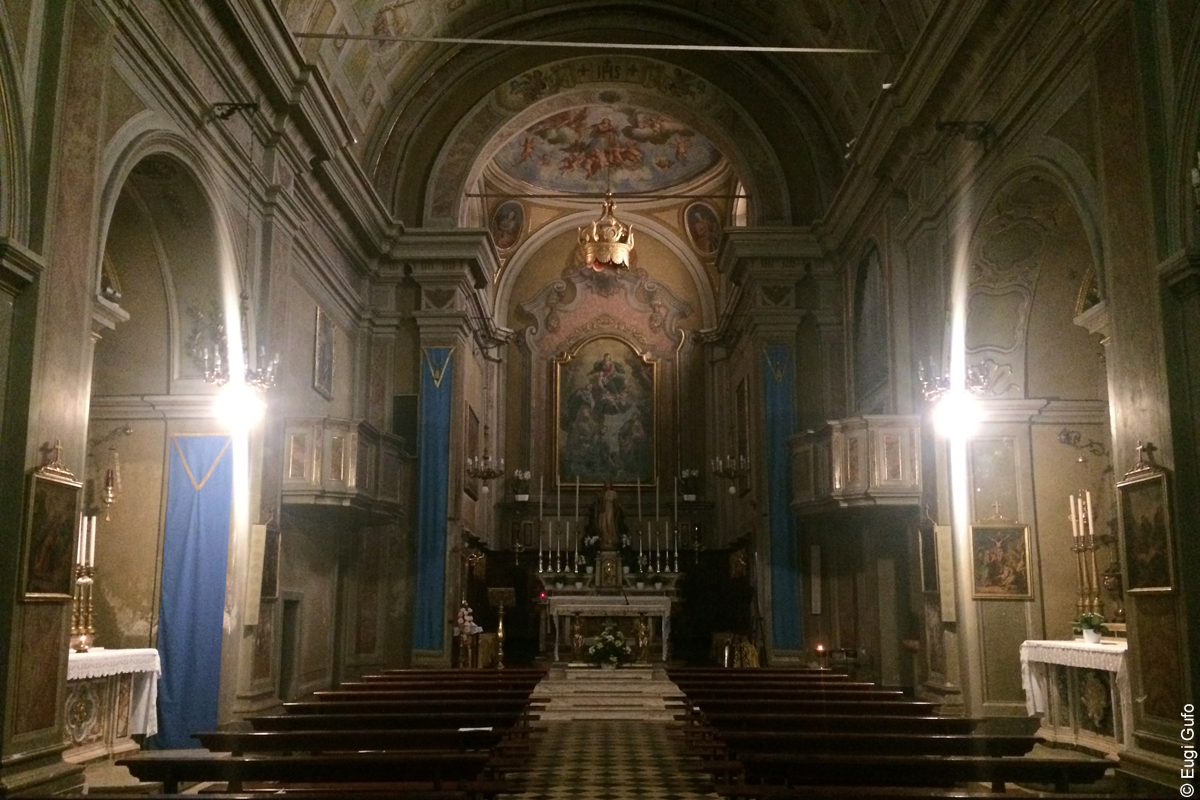
The interior of this church — dedicated to Saint Peter and built in the seventeenth century — is, in any case, far more interesting than the exterior might suggest.
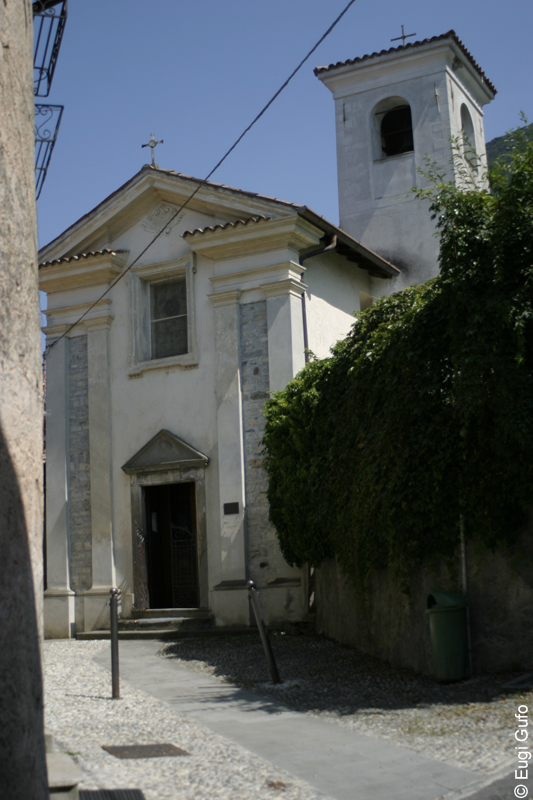
Pilzone also possesses a second church, dedicated to Saint Thomas and constructed between the fifteenth and seventeenth centuries. Unfortunately, its door was closed at the time of my visit. I regret this mildly, as the building appears architecturally more compelling than the first.
The remaining buildings of interest in Pilzone are of a secular nature. The most intriguing and presumably oldest private villa is currently in somewhat precarious aesthetic condition. One hopes it remains structurally salvageable.

Most of the other historic buildings have been restored — though in a manner that makes them appear recently constructed. Admittedly, they once were new; thus their present condition does not entirely contradict historical logic.
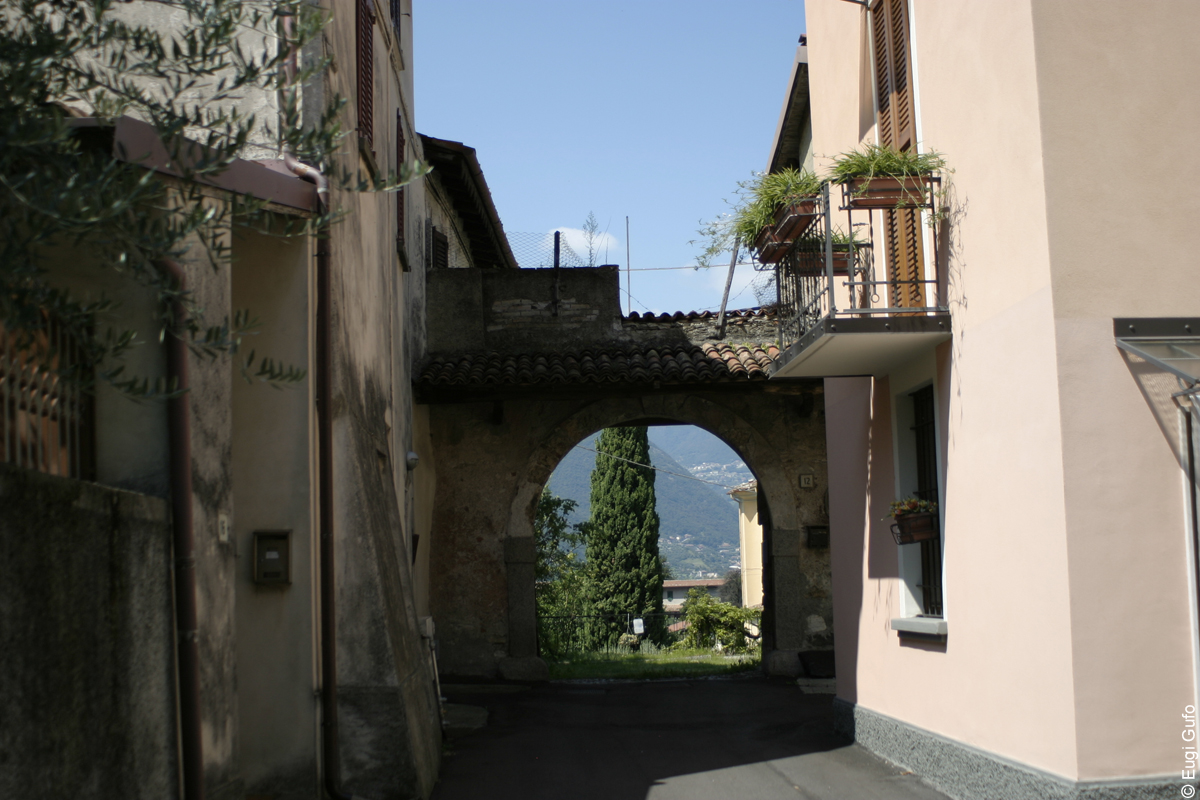
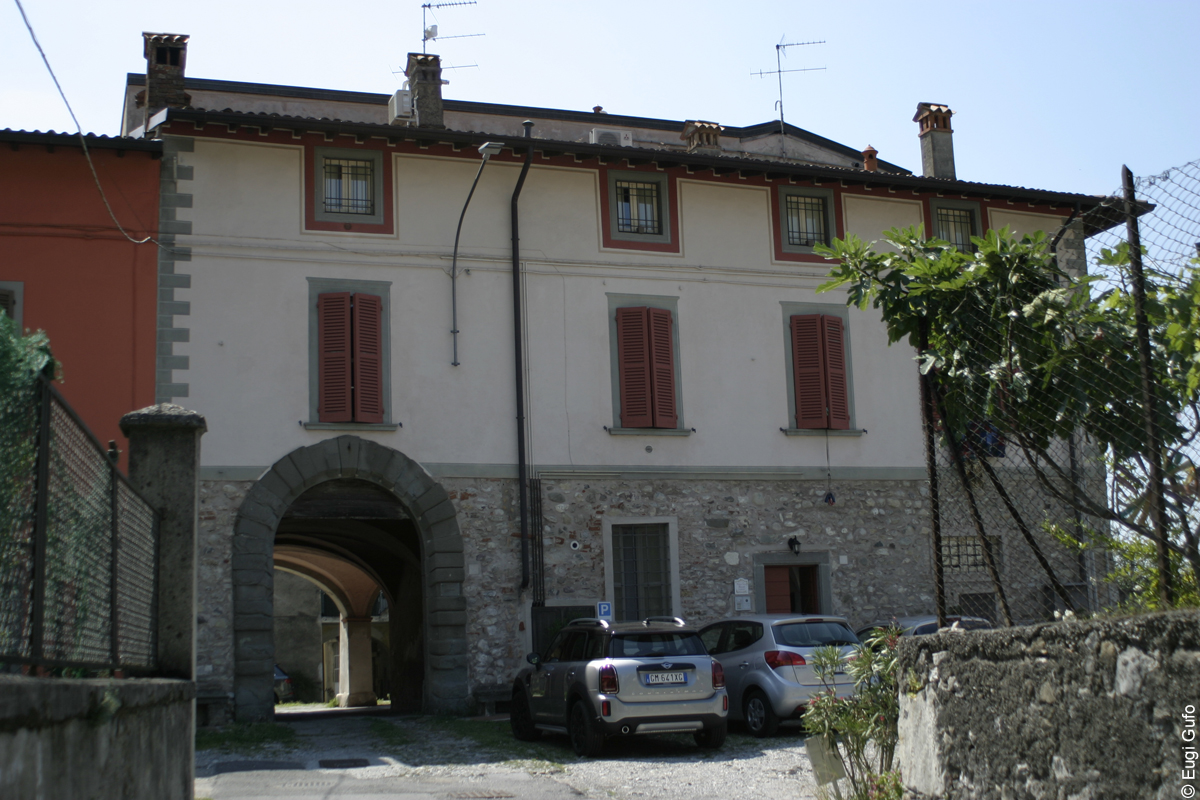 Pilzone is extremely small, yet it still offers the opportunity to discover a few architecturally pleasing corners, provided one is prepared to look.
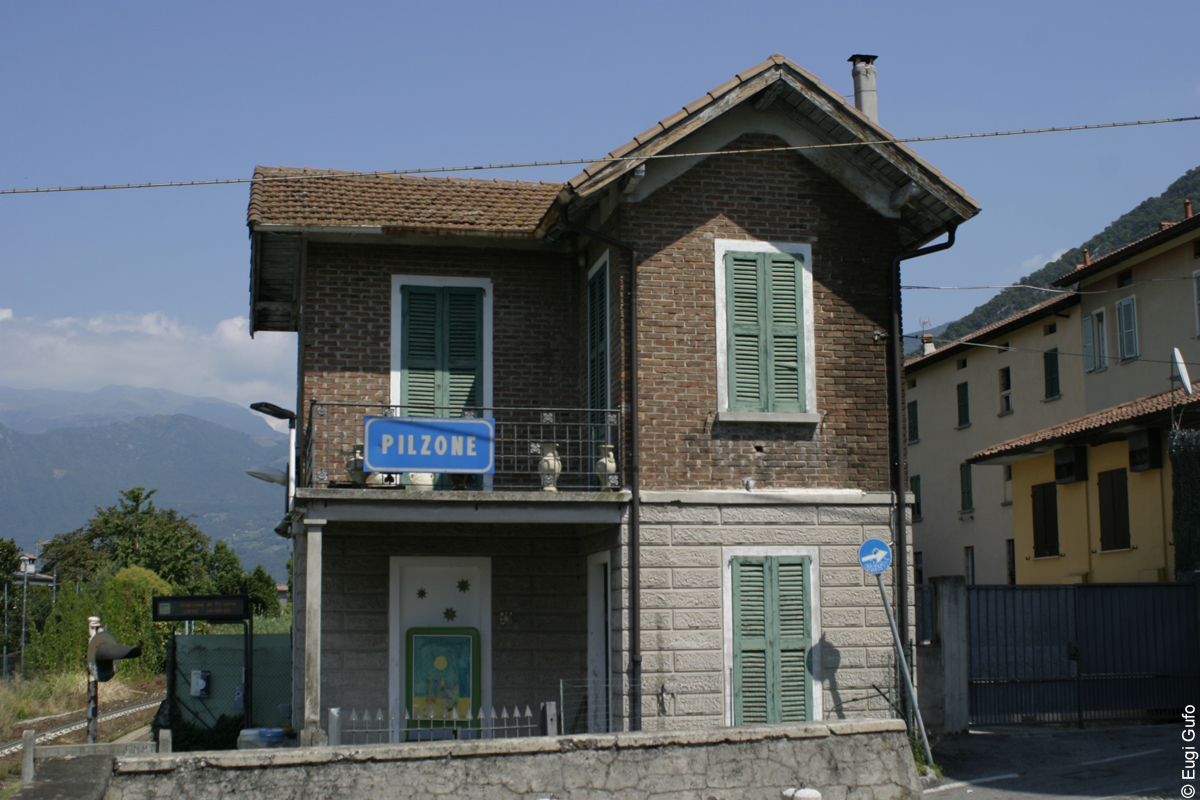
The railway station at Pilzone is the smallest I have encountered in Italy. I suspect this record may remain unchallenged for some time.
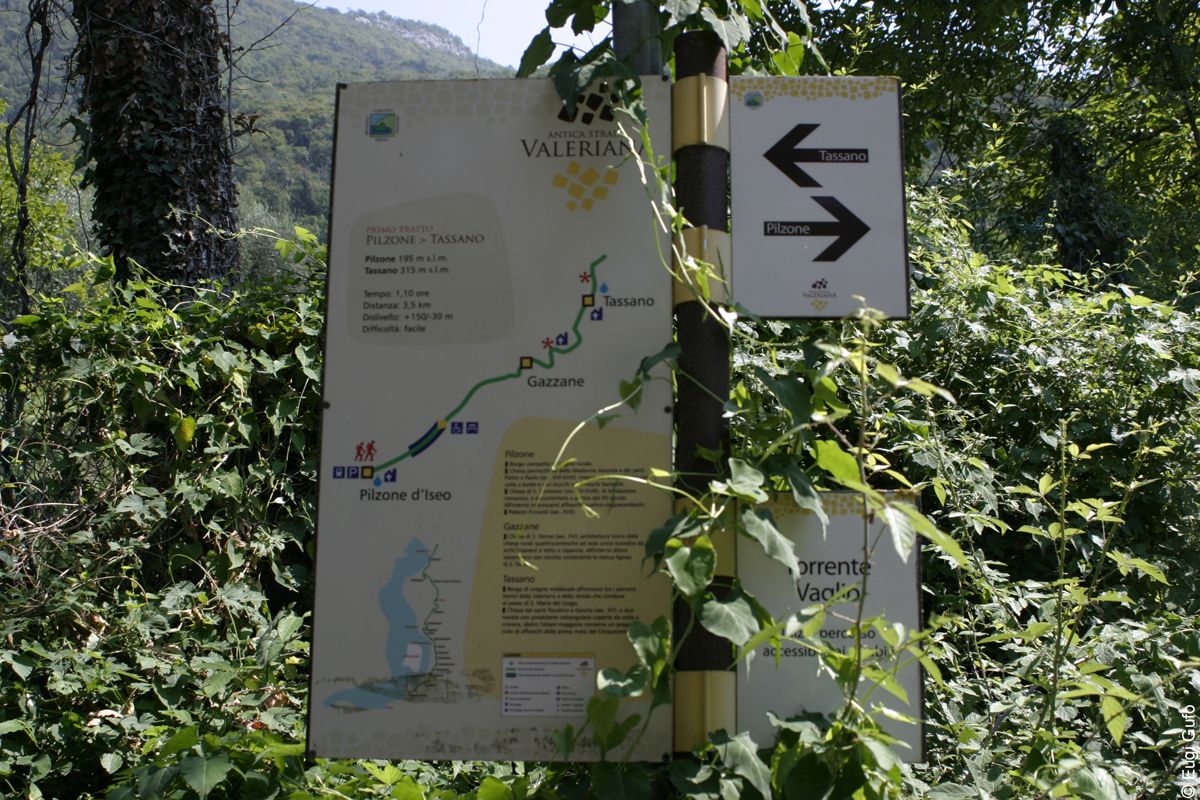
And that, essentially, concludes the inventory of the built settlement. We may therefore proceed to locate the beginning of the Via Valeriana itself.
It appears to be well signposted: frequent and clearly visible signs guide the walker forward in manageable increments.
The paving remains consistently well maintained, though composed of varying materials: concrete, then concrete with cobblestones, then medium-sized stones, then asphalt, and so forth. In this initial stretch, shaded sections seem more extensive than those exposed to direct sunlight — a fact not without importance in August.
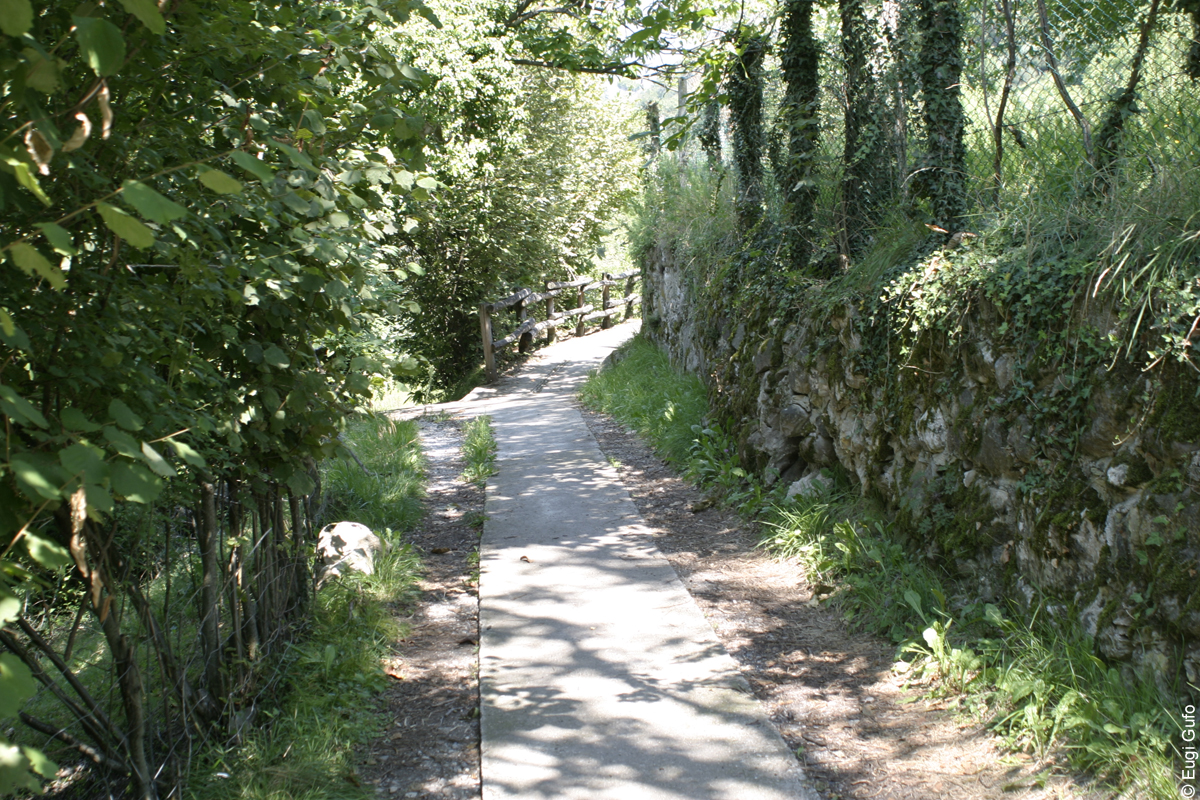
On two occasions I observed a bench placed in the shade — a gesture of modest but appreciated civilisation.

The picnic area, equipped with two tables, is instead positioned entirely in the sun and is therefore practically unusable in summer. One may recall the heat of August 2023 — or, failing that, simply imagine sitting under direct midday sunlight for recreational purposes.

One of the principal compensations of this stretch of the route is the continuous possibility of contemplating Lake Iseo, Monte Isola, and the small private island of Isola di San Paolo. Thus, any modest aesthetic deficiencies encountered in Pilzone itself are effectively balanced by the landscape.
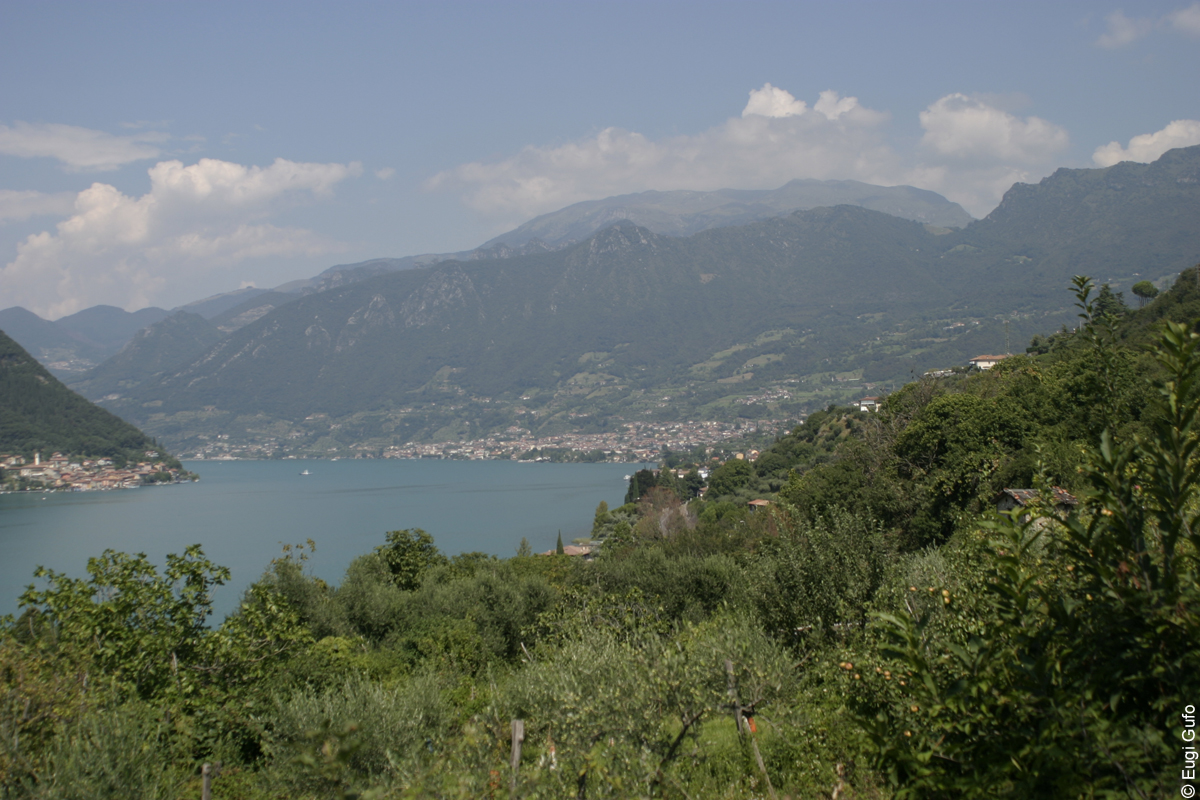
Continuing along the path — which broadly follows the contour of the lakeshore — one eventually reaches the descent towards the village of Sulzano. That settlement, however, deserves separate consideration. I prefer not to mix too many subjects within a single report.
Order, even in travel writing, must be preserved.
Pilzone, 16 August 2023
↓ Show comments ↓

