


 Long live Ukraine! Fuck the war!
 RSS of site articles
In theory, Iseo — a town of nearly nine thousand inhabitants in the province of Brescia — ought to be yet another lakeside settlement primarily designed to accommodate prosperous visitors with expensive sunglasses and an urgent need for prosecco. Its position certainly encourages such suspicion: a relatively narrow strip of land wedged between mountain and Lake Iseo, surrounded by agreeable scenery and nature, and maintained with a level of care that suggests the presence of serious investment.
In reality, however, Iseo proves to be both attractive and interesting even for «ordinary» tourists — those who merely wish to take a pleasant walk in an aesthetically satisfying environment and perhaps observe an actual town during a mountain excursion.
According to my observations, the historic centre corresponds to the main built-up portion of the municipality, and it may confidently be described as beautiful.
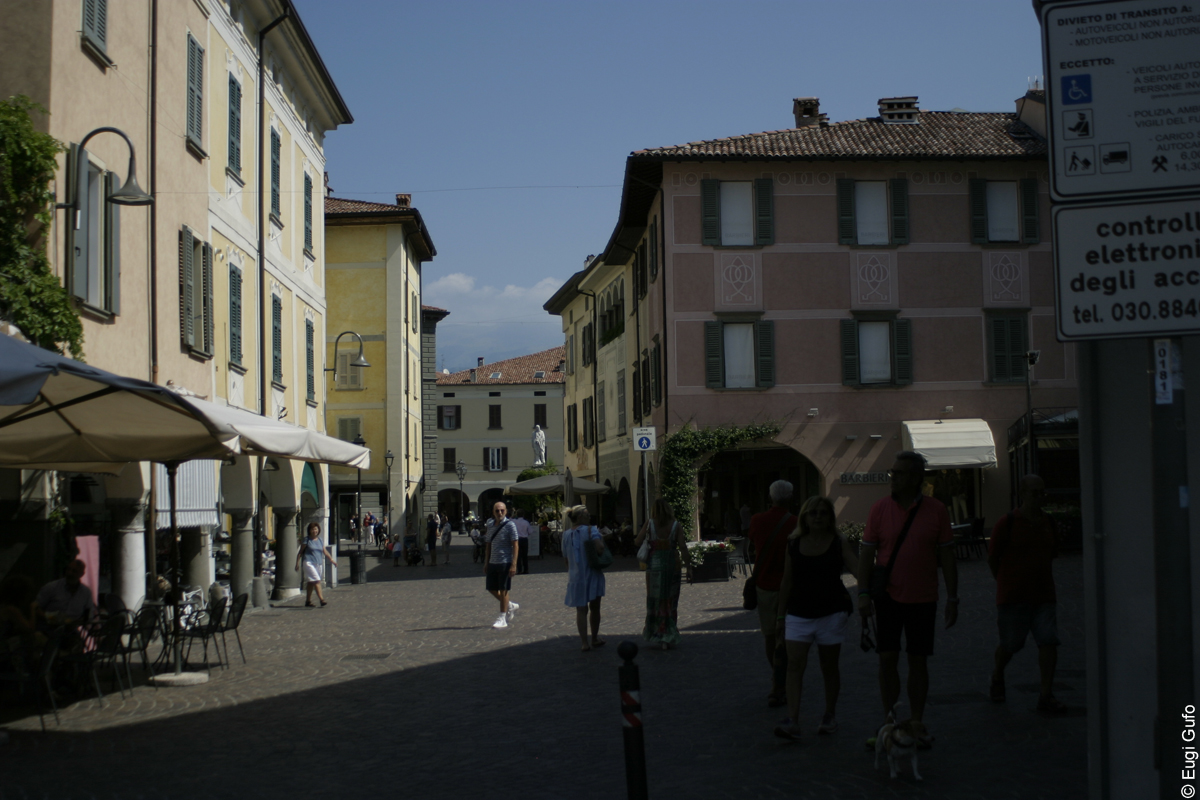
Even many of the secondary streets within the centre are aesthetically pleasing.
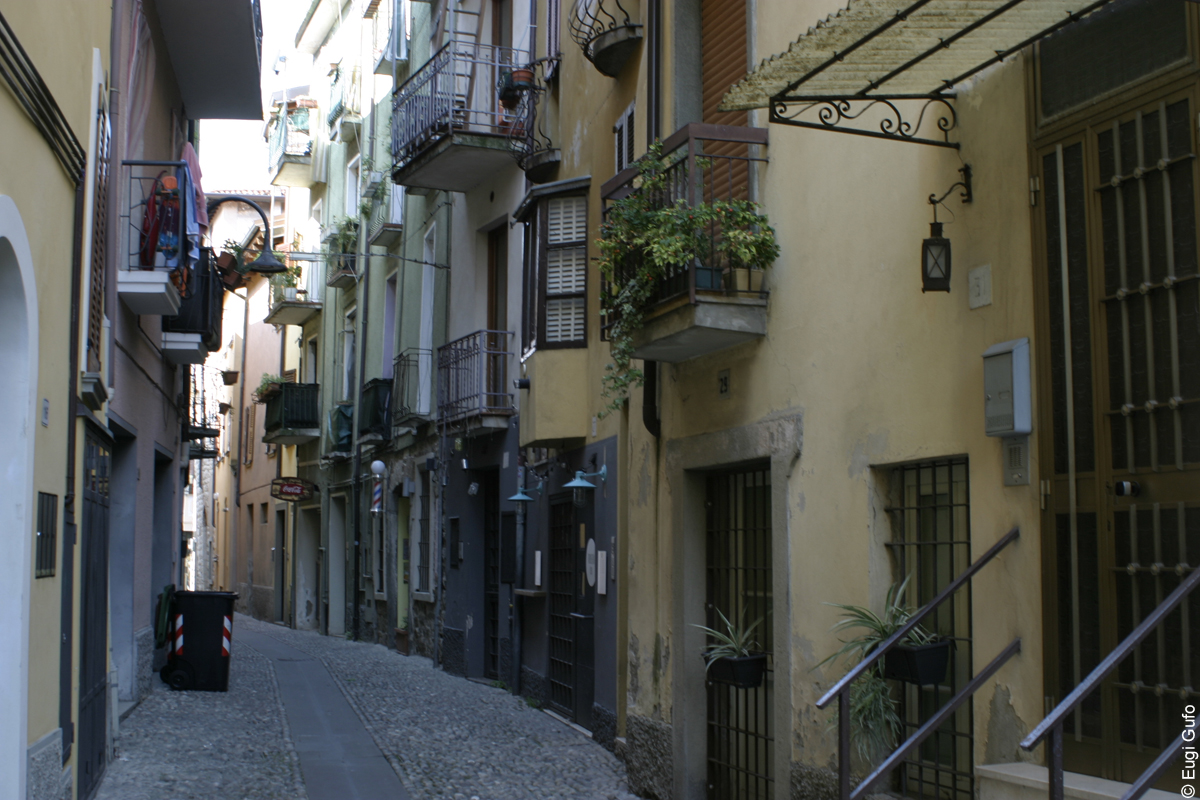
One of the liveliest and most traditionally appealing spaces is Piazza Garibaldi, entirely surrounded by arcades.
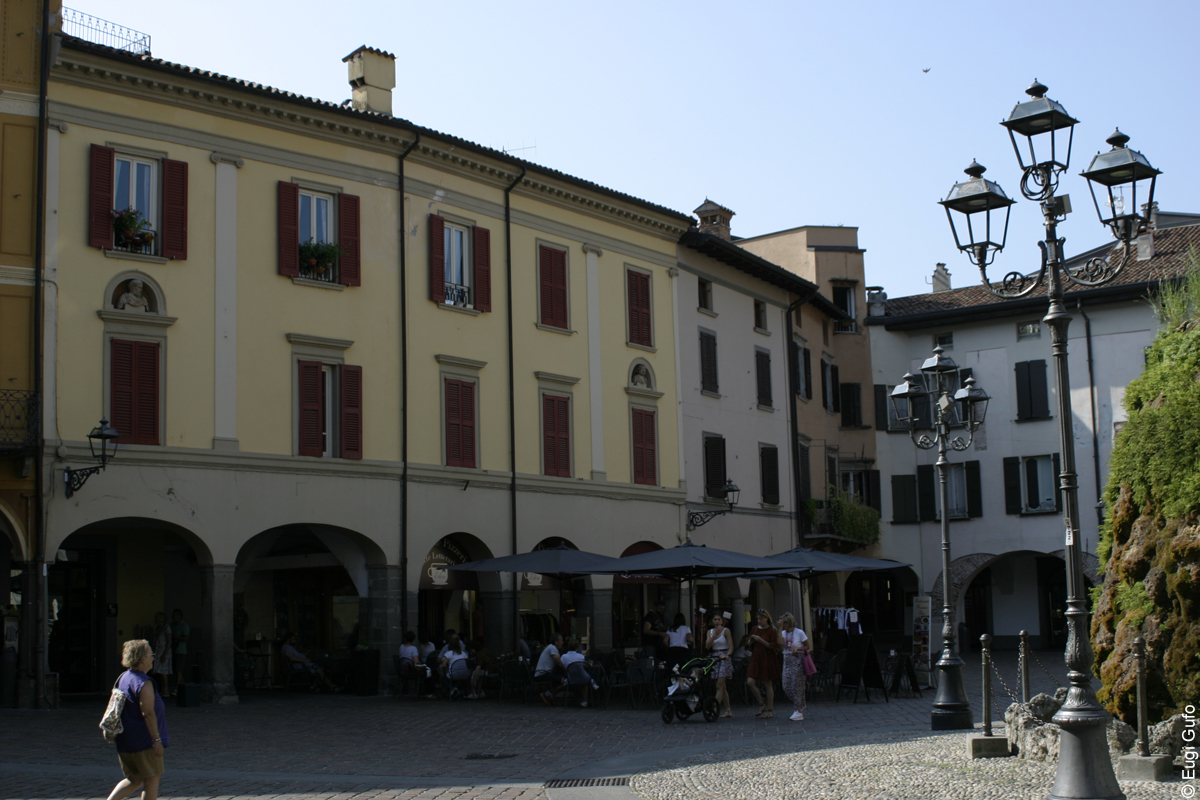
The Town Hall — one of the buildings facing the square — has a slightly brutal appearance and shares a curious feature common to many provincial municipal buildings: its ground floor contains commercial premises run by private businesses.
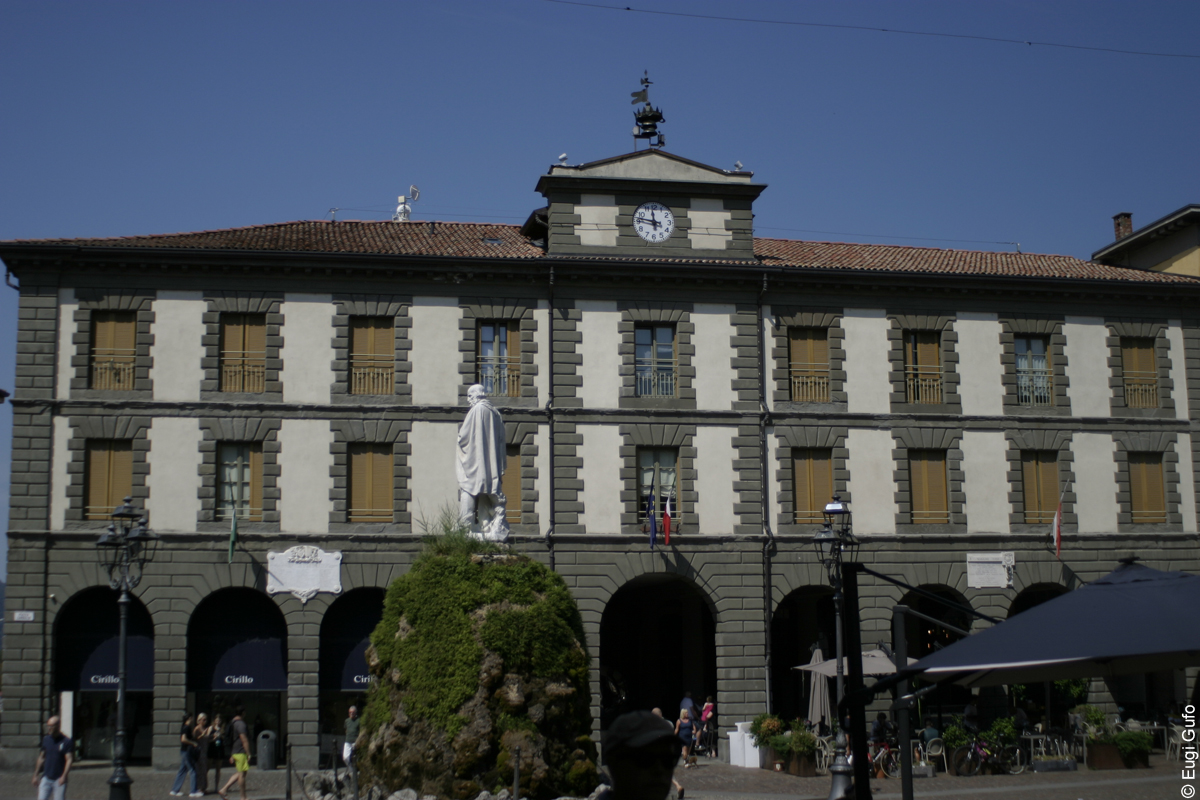
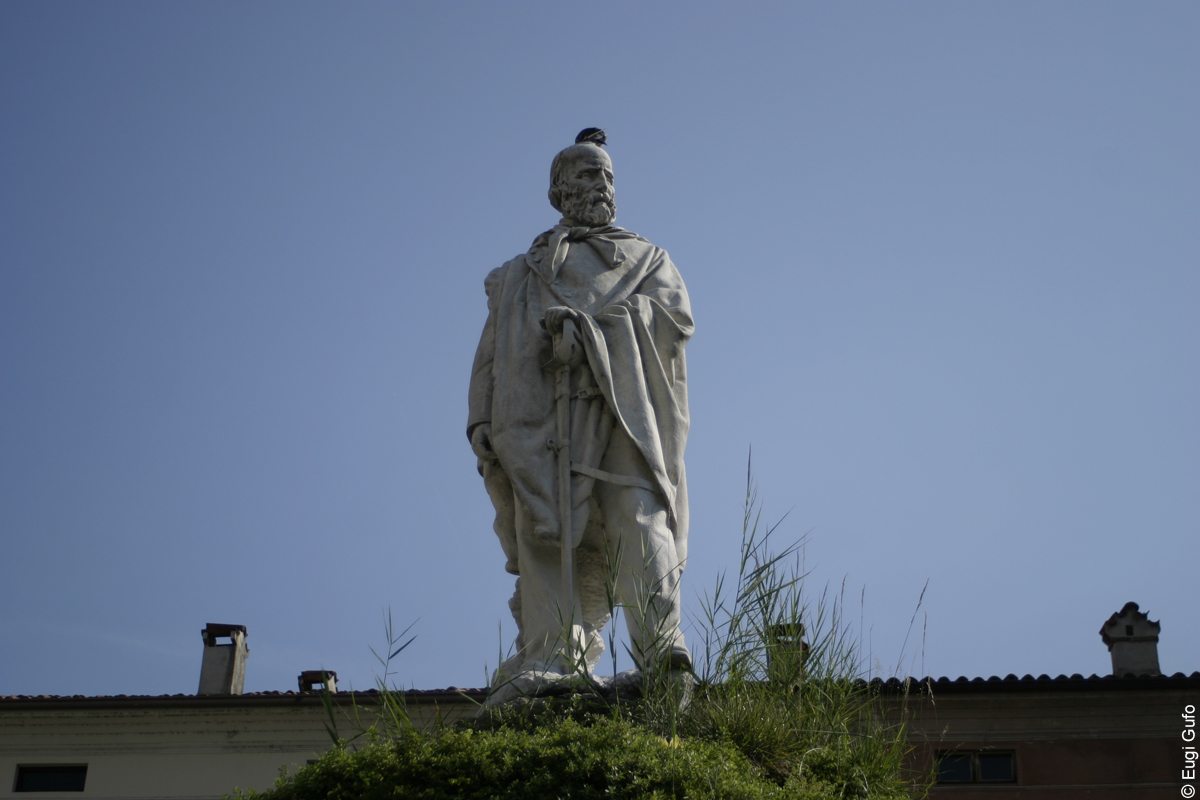
Opposite the Town Hall stands the monument to Giuseppe Garibaldi which, according to the plaque affixed to its pedestal, was the first monument to him erected in Italy (11 November 1883). I am not in a position to verify the chronological primacy of this claim, though I cannot help noting an intriguing detail: at the time of publishing this photographic account, the Iseo monument was conspicuously absent from the list of Garibaldi monuments on Wikipedia. One hopes that a serious and reliable historian will eventually clarify the matter.
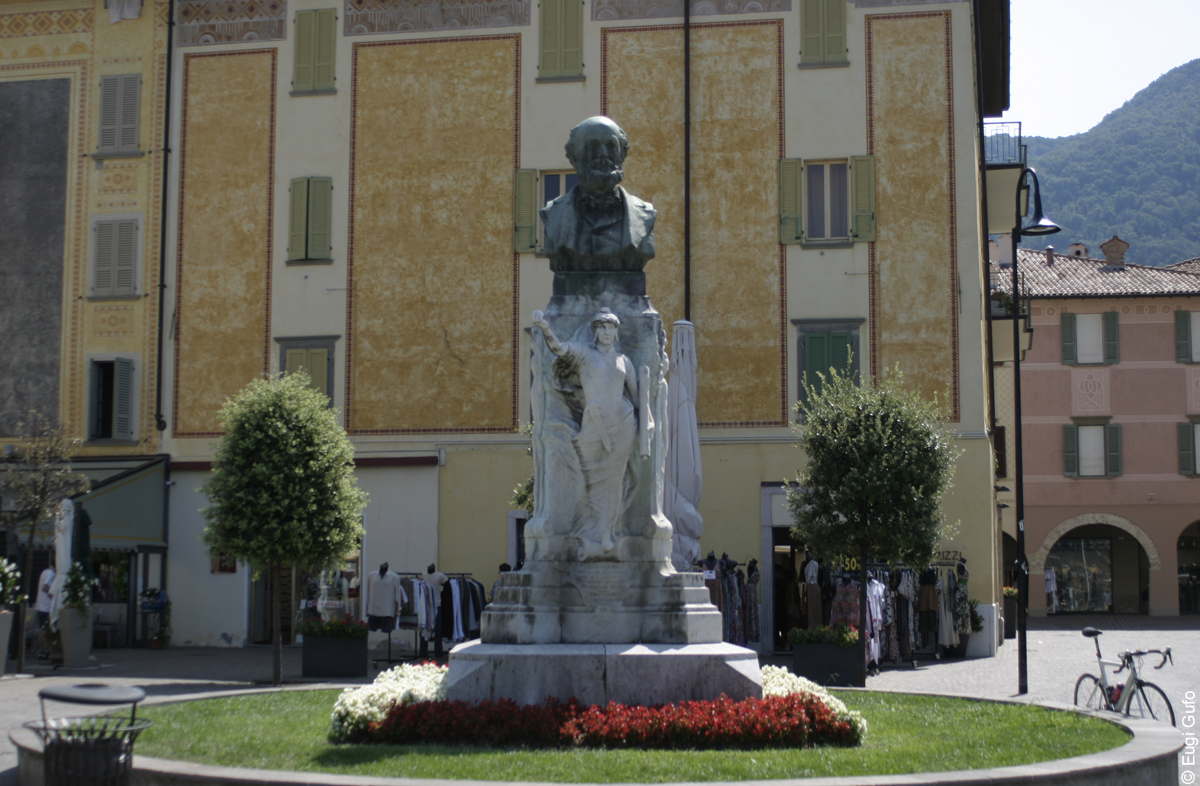
Among the other monuments observed in Iseo — so as not to revisit the topic repeatedly — I should mention the bust of the writer Gabriele Rosa, surrounded by allegorical figures representing Science, Republican Faith and Steadfastness in Labour. I cannot comment on his literary merits, though one suspects that being born in Iseo was a decisive factor in the creation of his monument.
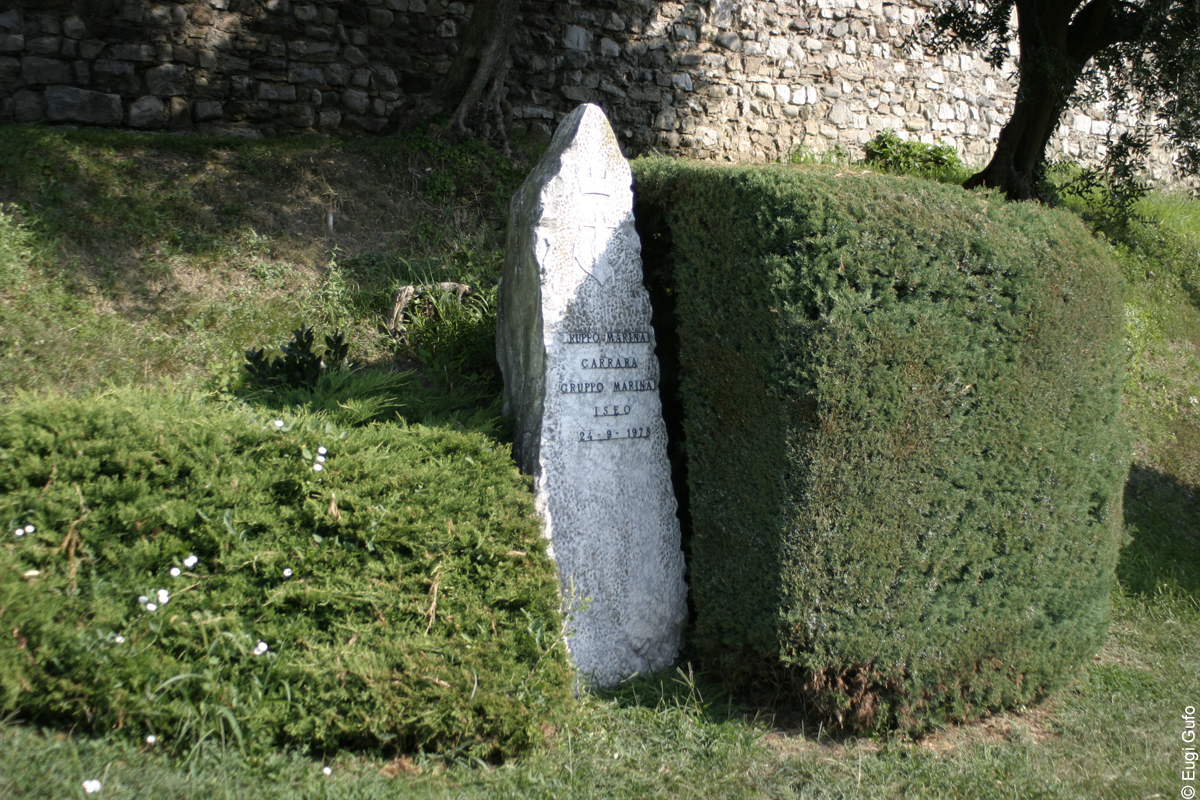
Other monuments are of more modest historical and artistic interest. For example, the obelisk dedicated jointly (for reasons not entirely clear) to the Gruppo Marinai Carrara and the Gruppo Marinai Iseo, erected on 24 September 1975.
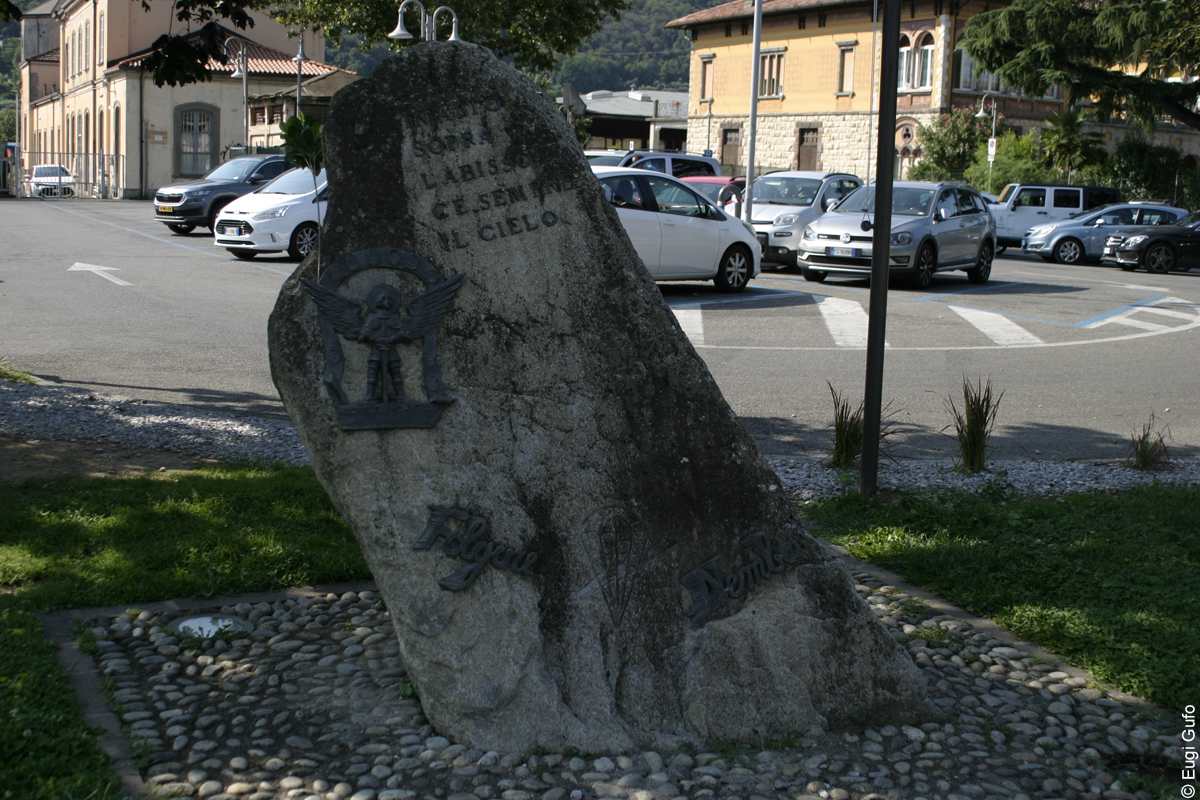
Or another monument to sailors, featuring the usual anchor and chain (though with the imaginative addition of a propeller). Or the monument dedicated to the Paratroopers’ Regiment «Nembo» of the «Folgore» Brigade, somewhat poorly preserved but still upright.
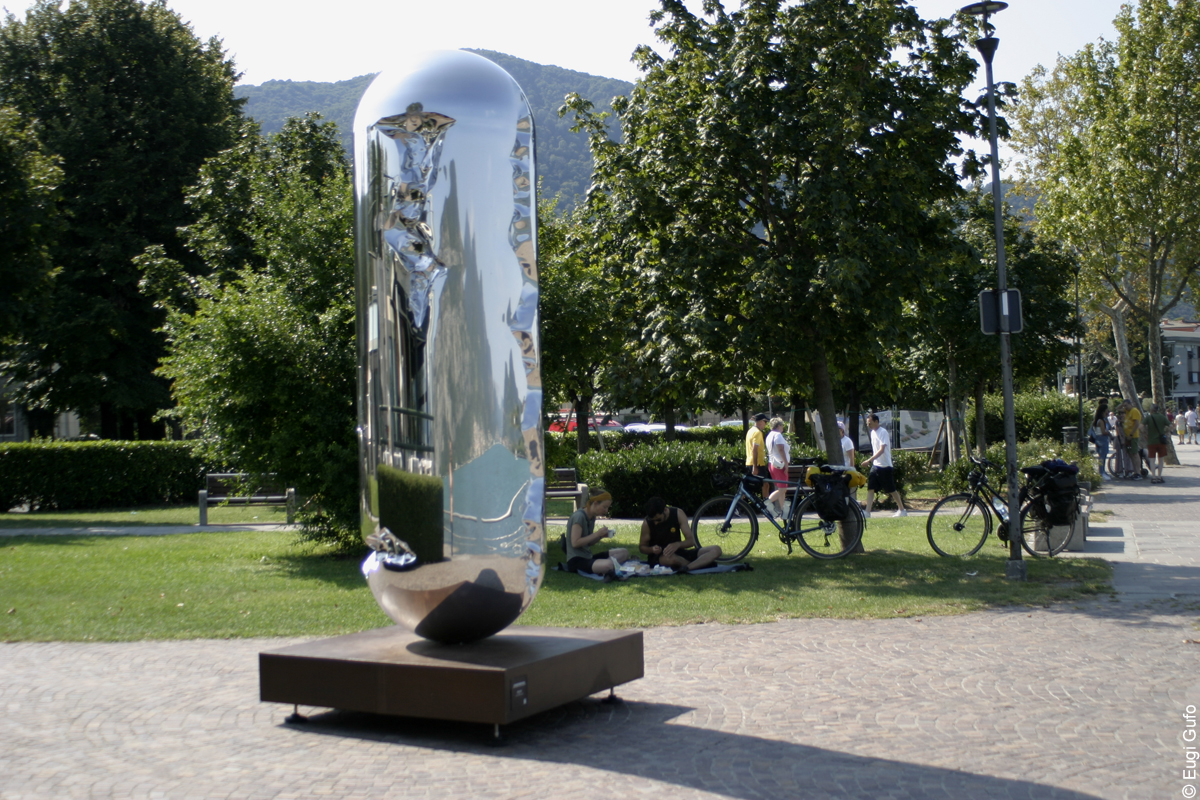
Those metallic reflectors of summer sunlight, incidentally, are not monuments but temporary art installations.
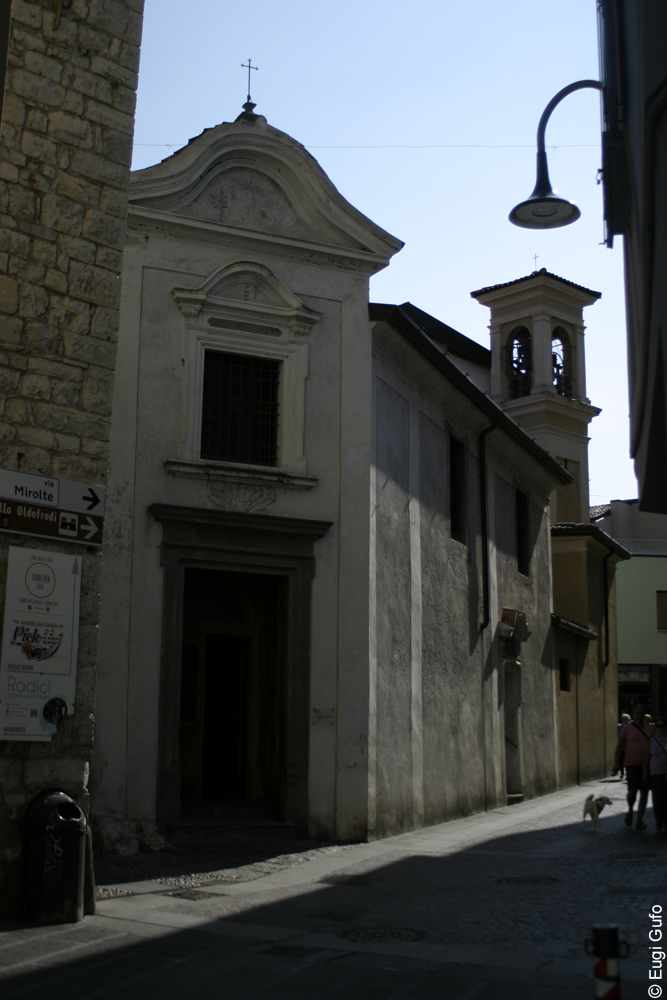
At this stage, it is advisable to move on to monuments of more durable significance — religious ones. Very close to Piazza Garibaldi stands the small Church of Madonna del Mercato (so named because the adjacent square has long served as the town market). It is interesting for at least two reasons. Firstly, its façade and entrance are positioned at a corner along one of the straight walls; the floor plan is almost square. (Until now, I had encountered a similar arrangement only in Breno.)
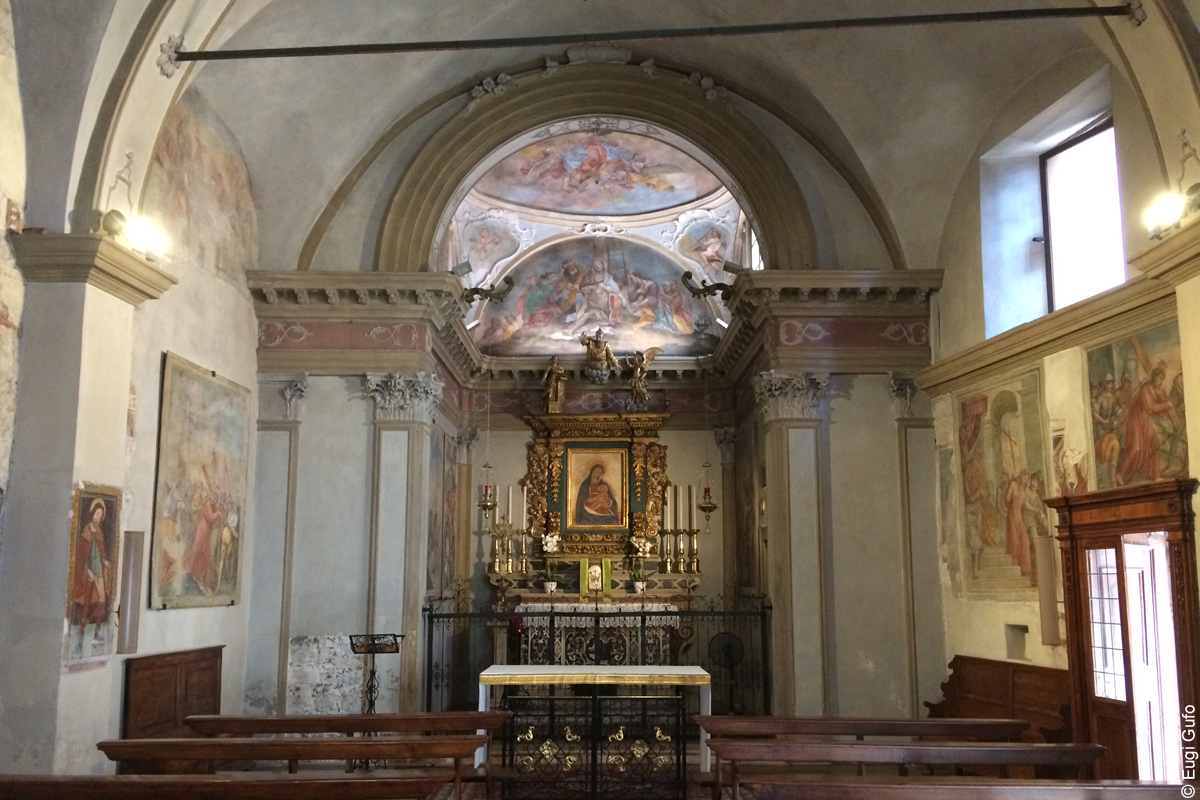
Secondly, the church contains noteworthy artworks: fifteenth-century frescoes and paintings from the fifteenth and sixteenth centuries. Certain details of the floor, however, produce a rather peculiar impression today — even for those familiar with the historical trajectories of particular symbols.
Behind the local castle (to which I shall return shortly) stands the Church of Madonna della Neve, built in 1655–1656. It reminds us of an important principle: architecture ought ideally to be photographed in winter. Even so, the summer photographs allow one to appreciate the almost extreme simplicity of the façade and the quality of the Baroque stone portal.
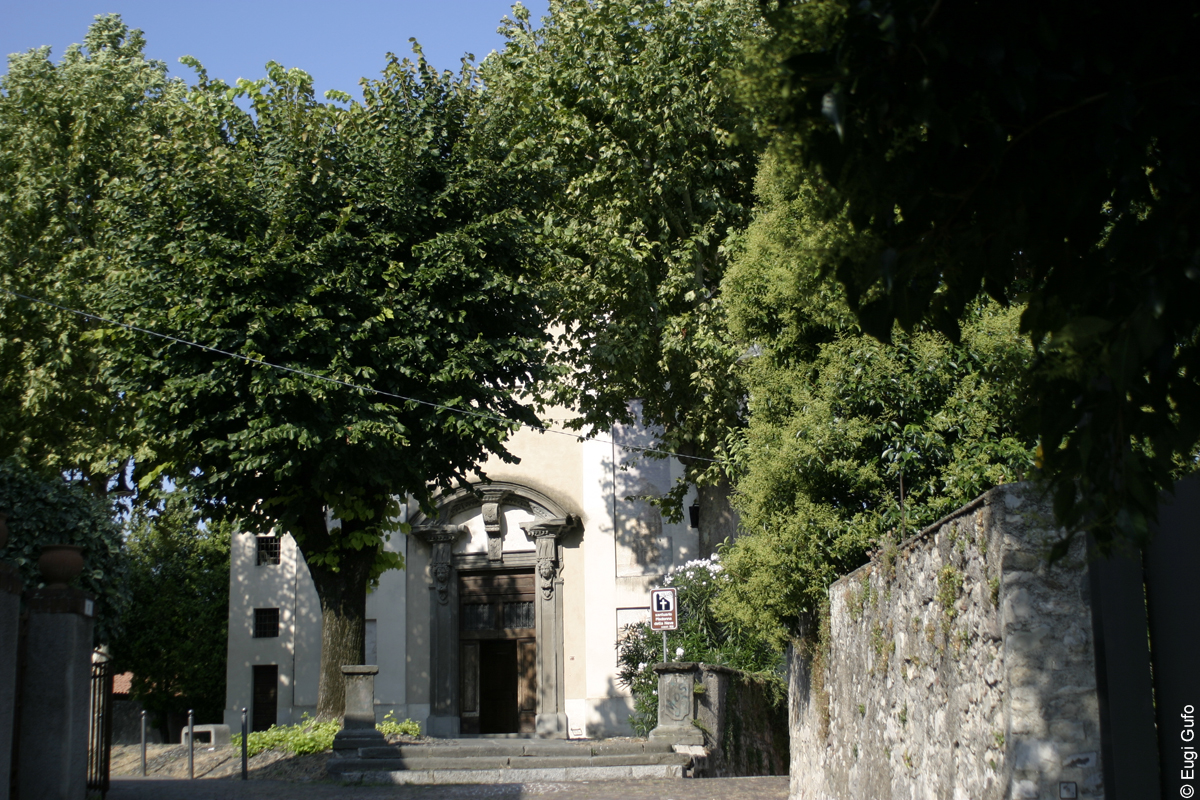
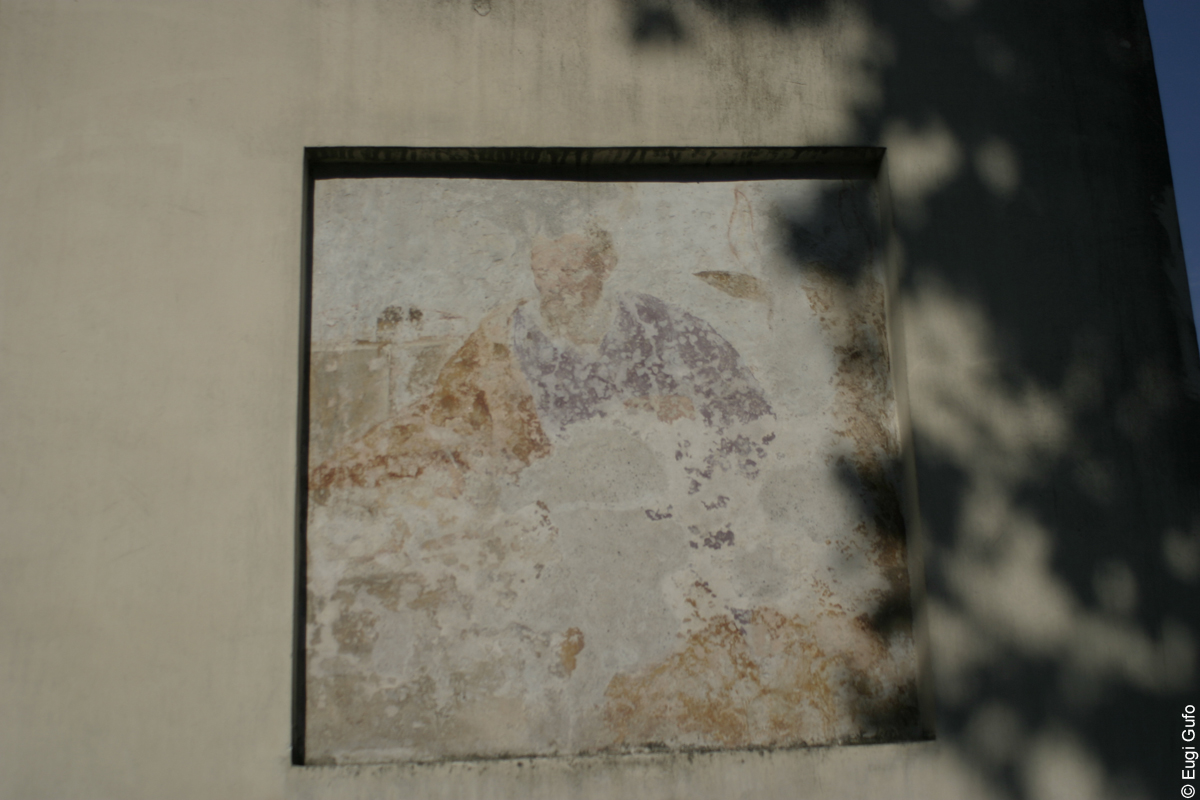
Within the rectangular recesses of the façade are frescoes depicting the Evangelists (in the square panels) and Saints Anthony of Padua and John the Baptist (in the taller ones), though they are now barely visible.
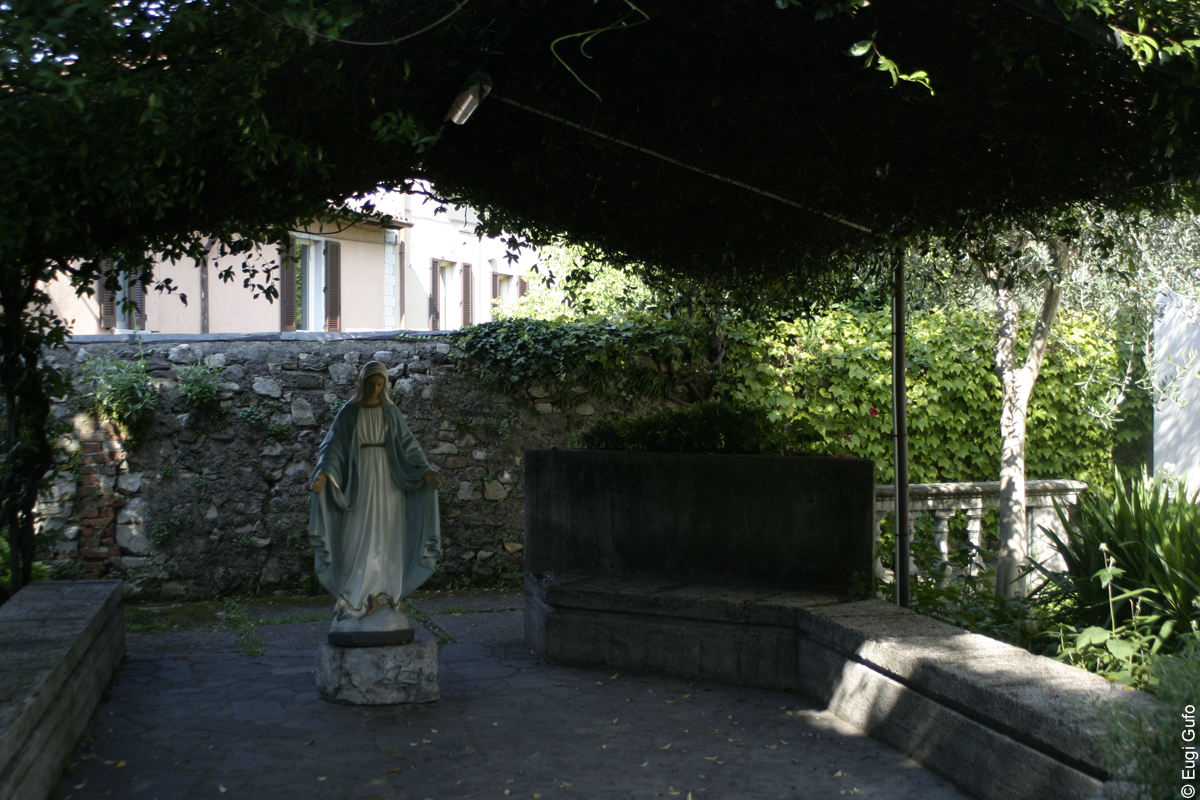
The best-preserved exterior element is this statue, whose age I cannot confidently determine (presumably not especially ancient).
The interior did not particularly appeal to me.
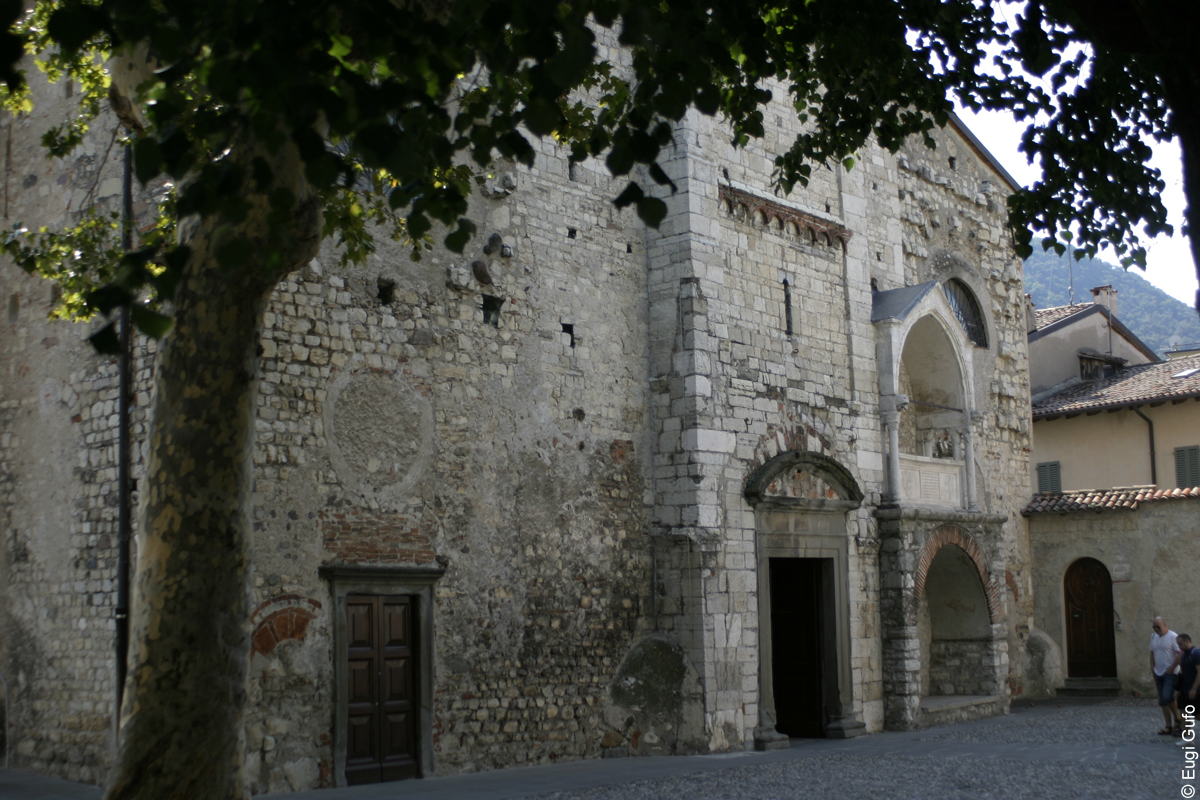
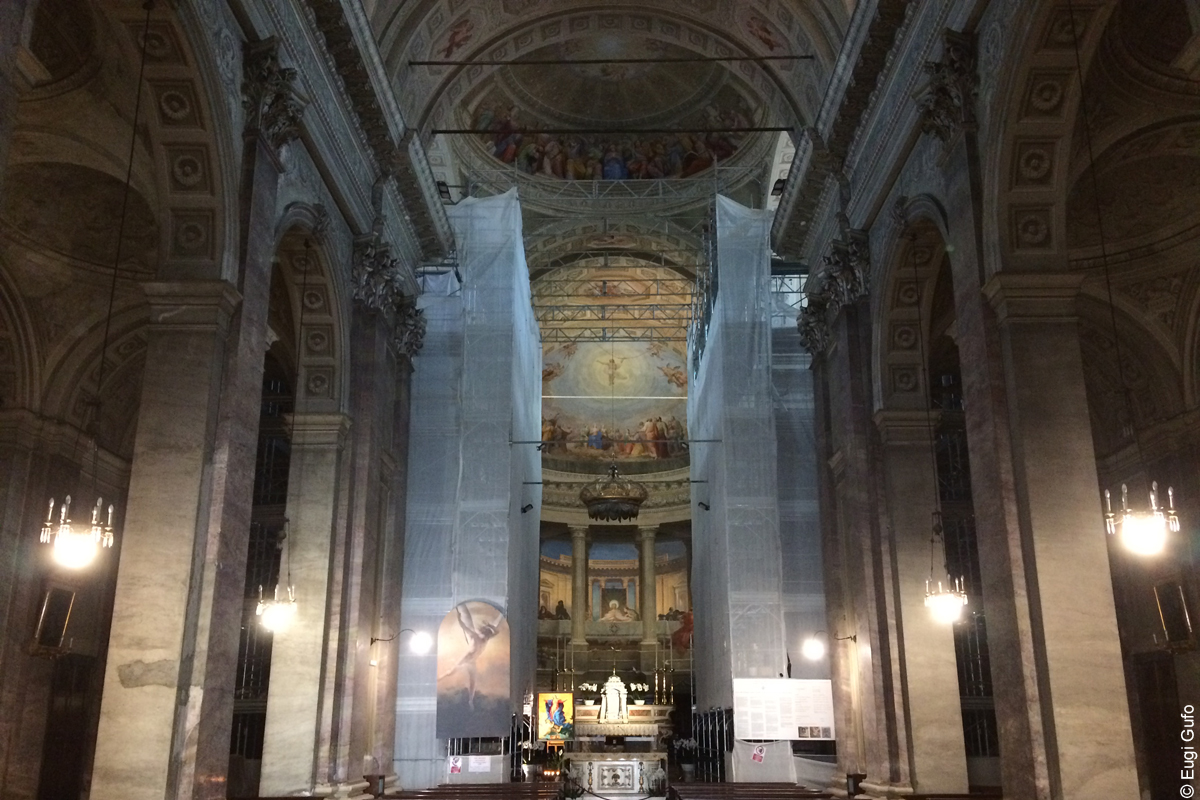
In the very centre of Iseo there is, however, a significantly more compelling religious ensemble: three buildings arranged around Piazza del Sagrato. The most renowned and best preserved of these is the Pieve di Sant’Andrea, a church founded between the late fifth and early sixth centuries and expanded or renovated during nearly every subsequent century. Its façade — composed of several distinct masonry types — incorporates the bell tower centrally, complete with entrance (a configuration I do not recall having seen elsewhere in Italy). To the right stands the funerary monument of the Ghibelline Giacomo III Oldofredi, Podestà of Milan in 1315 and 1321.
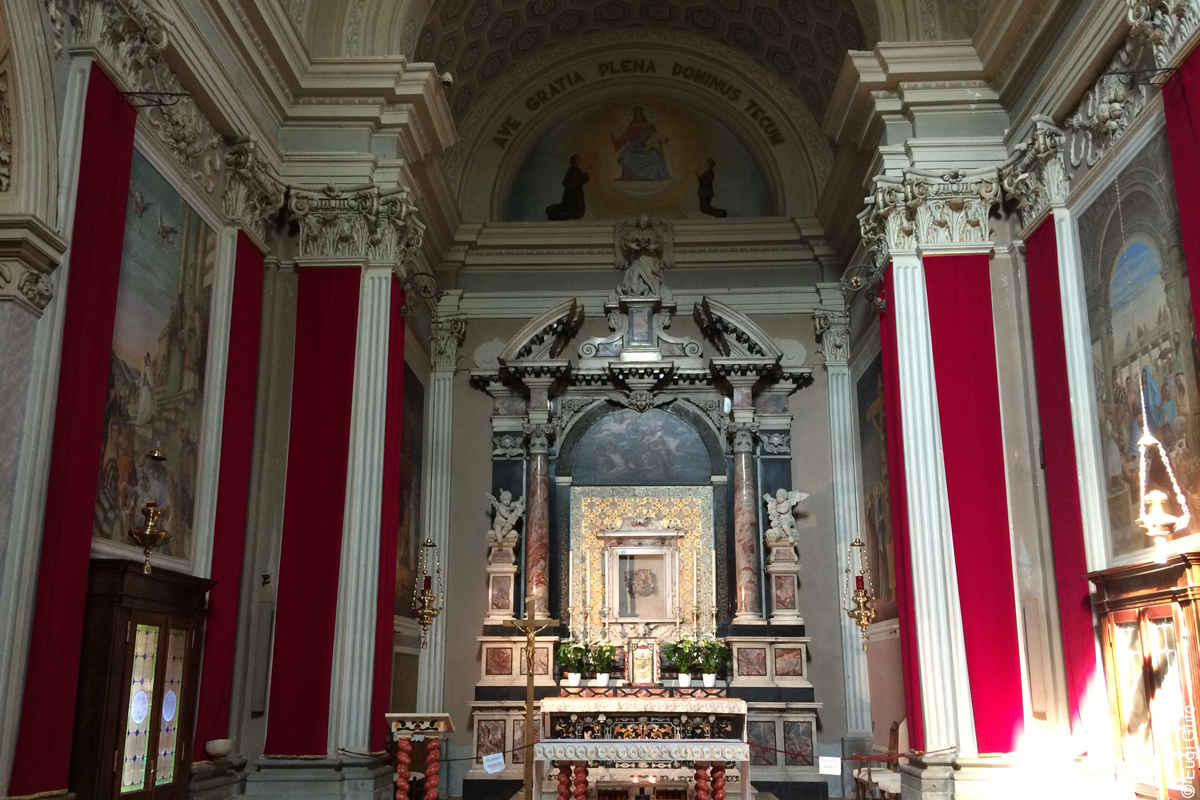
The imposing interior is stylistically coherent (likely due to nineteenth-century renovations) and aesthetically pleasing. Restoration work was underway near the altar during my visit, though the principal elements remained visible.
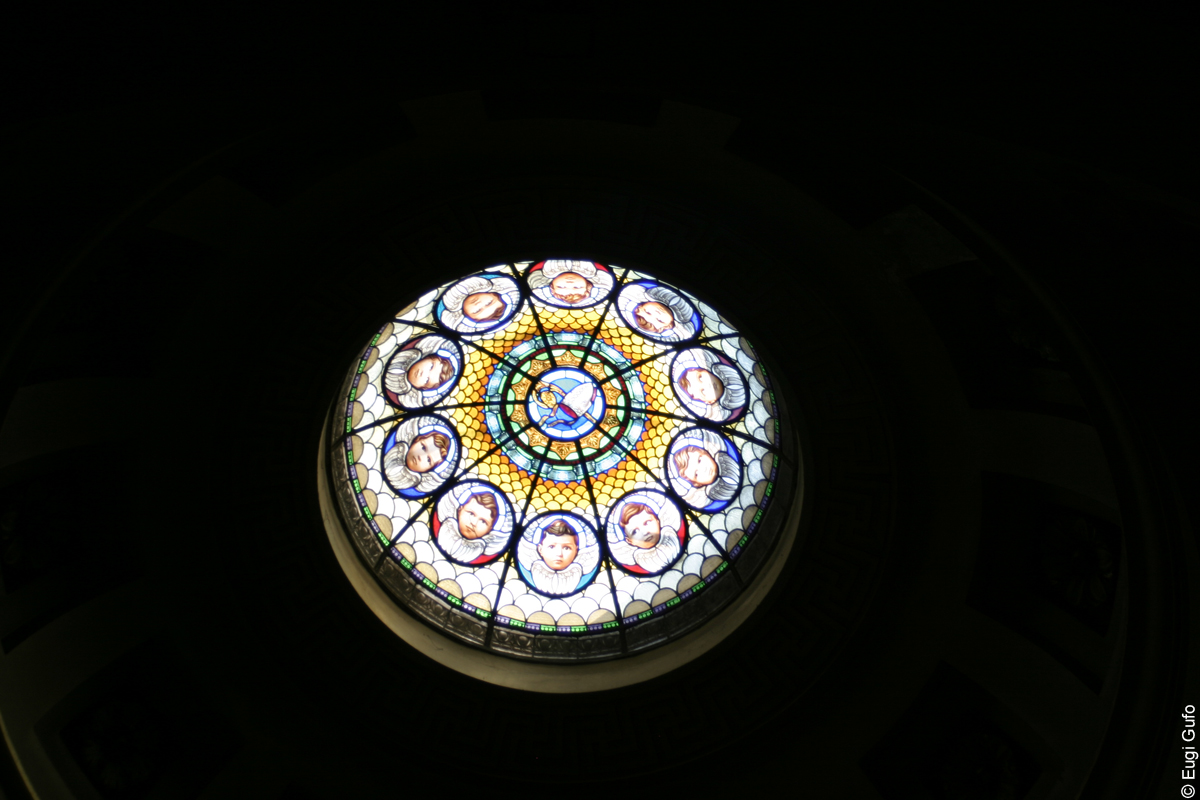
It deserves a paragraph of its own that the church also contains a small dome executed as stained glass. I cannot recall encountering quite the same solution elsewhere.
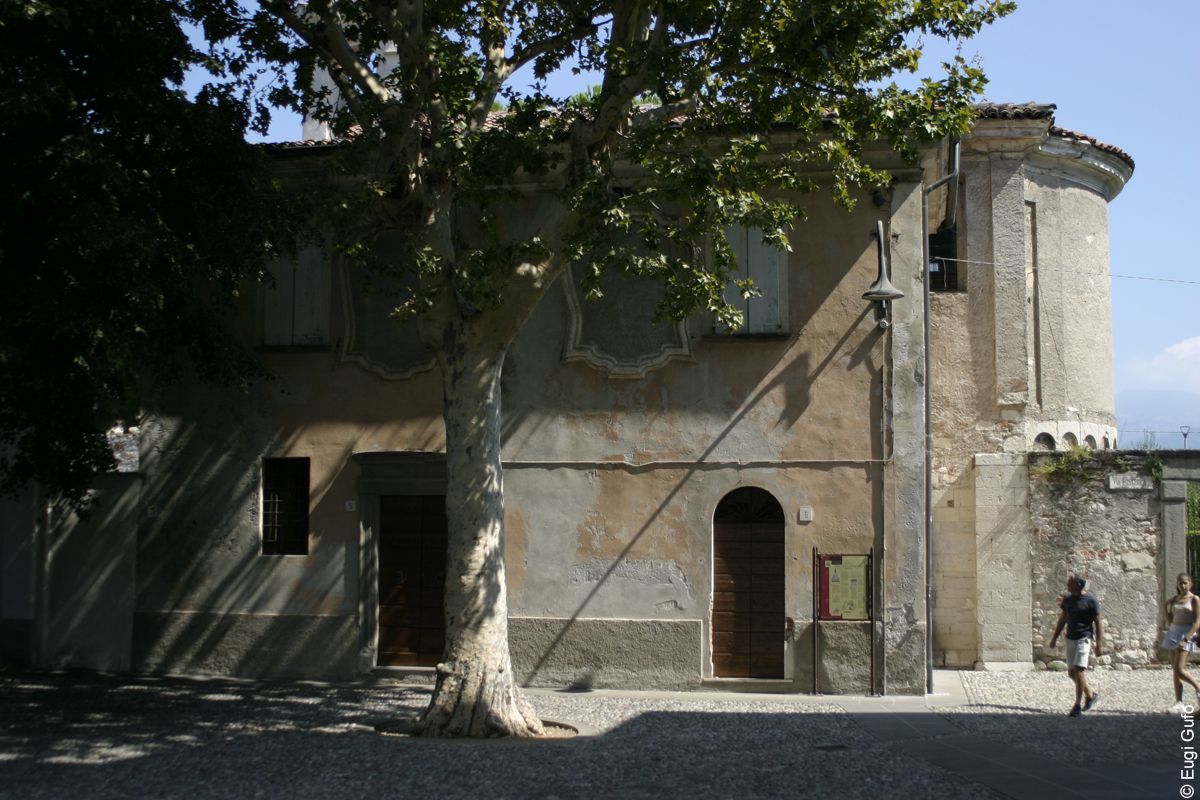
Facing the same square is the Church of San Silvestro, probably built as a private oratory for the Bishop of Brescia and already mentioned in an inventory of 1296. The side visible from the square does not immediately suggest that it is a church.
To see the façade, one must pass through a gate (open during the day).
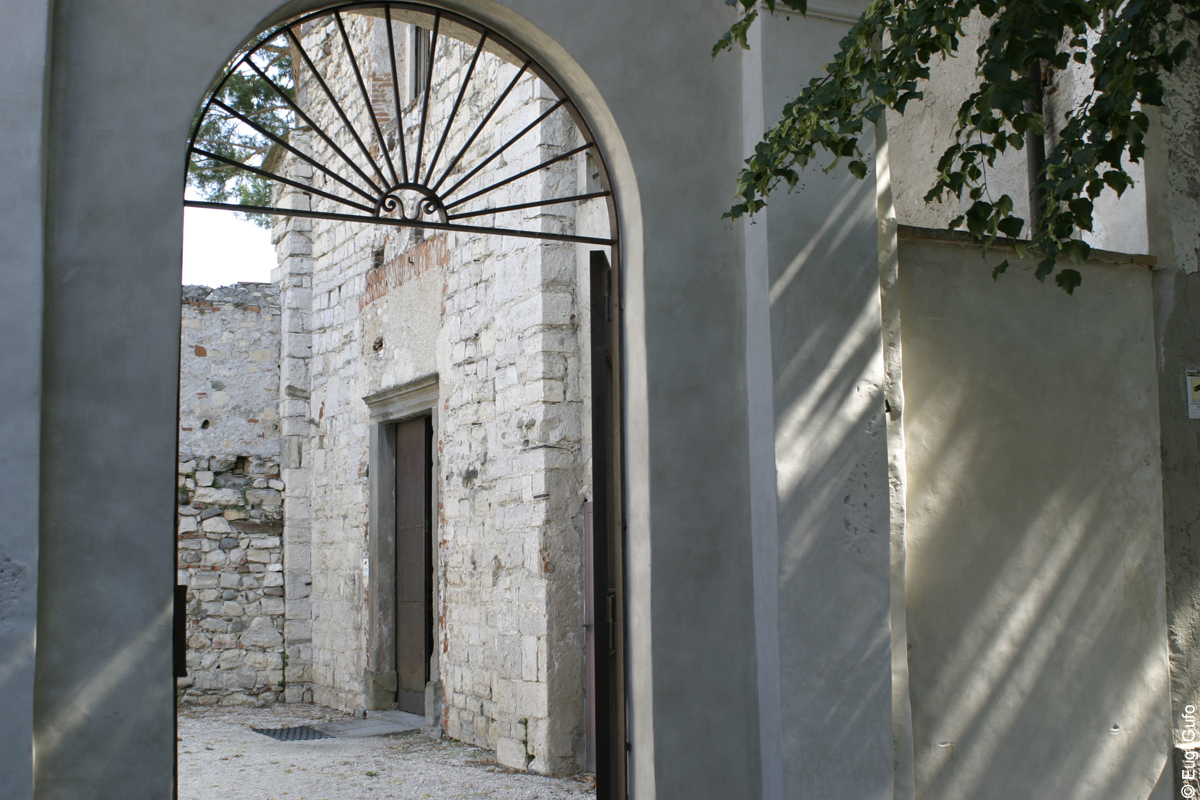
Deconsecrated in the twentieth century, the building was first used as a warehouse and later as a carpentry workshop. Restoration began in the early 1980s but, over nearly forty years, has produced rather modest results: the Danse Macabre uncovered in the apse behind the former altar position is more legible on the explanatory panels than on the original wall.

The Baptistery of St John was closed for unspecified works at the time of my visit. The remaining visible elements on Piazza del Sagrato are not religious.

Let us now turn to Iseo’s secular peculiarities. The small local castle — square in plan, roughly ten metres per side — already belonged to a Brescian monastery in the ninth century. Whether it previously belonged to local nobles remains unclear. From the early fifteenth century until 1585 it was owned by a family from Lovere, after which it was donated to the Capuchin friars. In 1797, following Napoleonic suppressions, it was privatised again, and the Municipality of Iseo acquired it only in the 1960s. It was after this final transfer that the «restoration» occurred, resulting in its somewhat unusual present appearance.
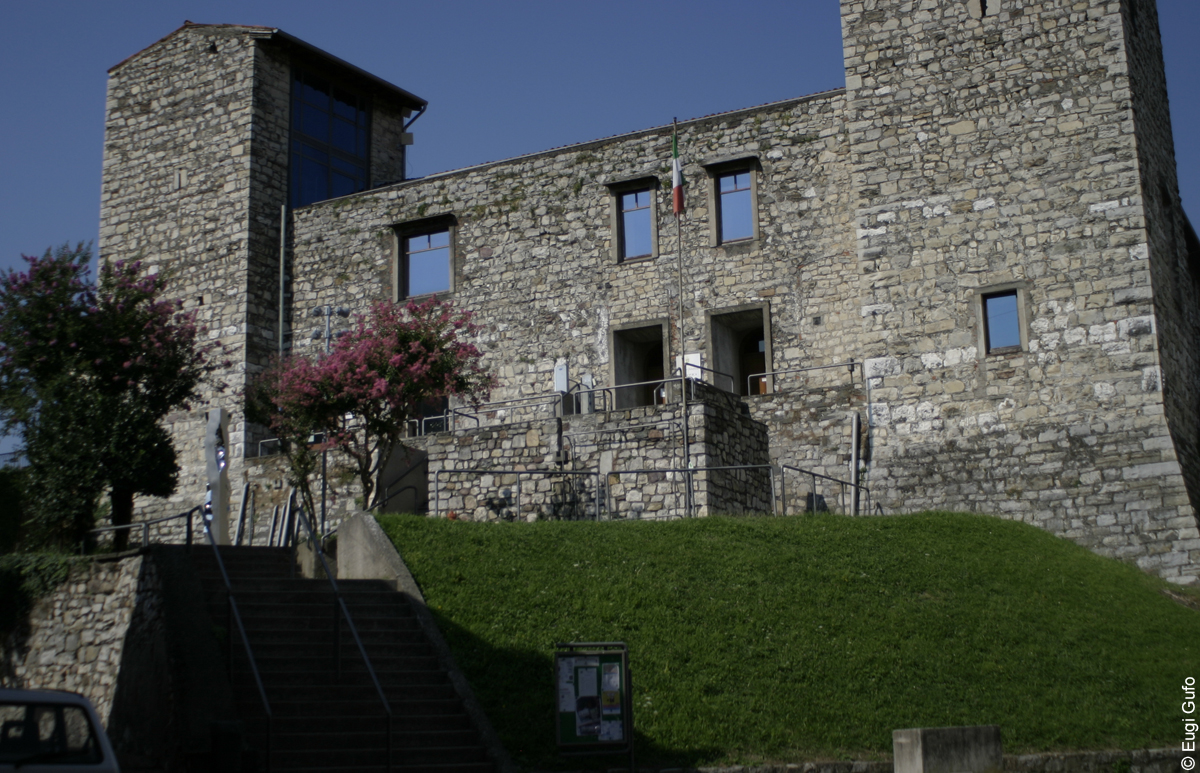
It now houses the municipal library, various cultural associations, a civic hall — and a cannon. For none of these four reasons, however, was it open during my visit. I remain uncertain how frequently it is accessible.
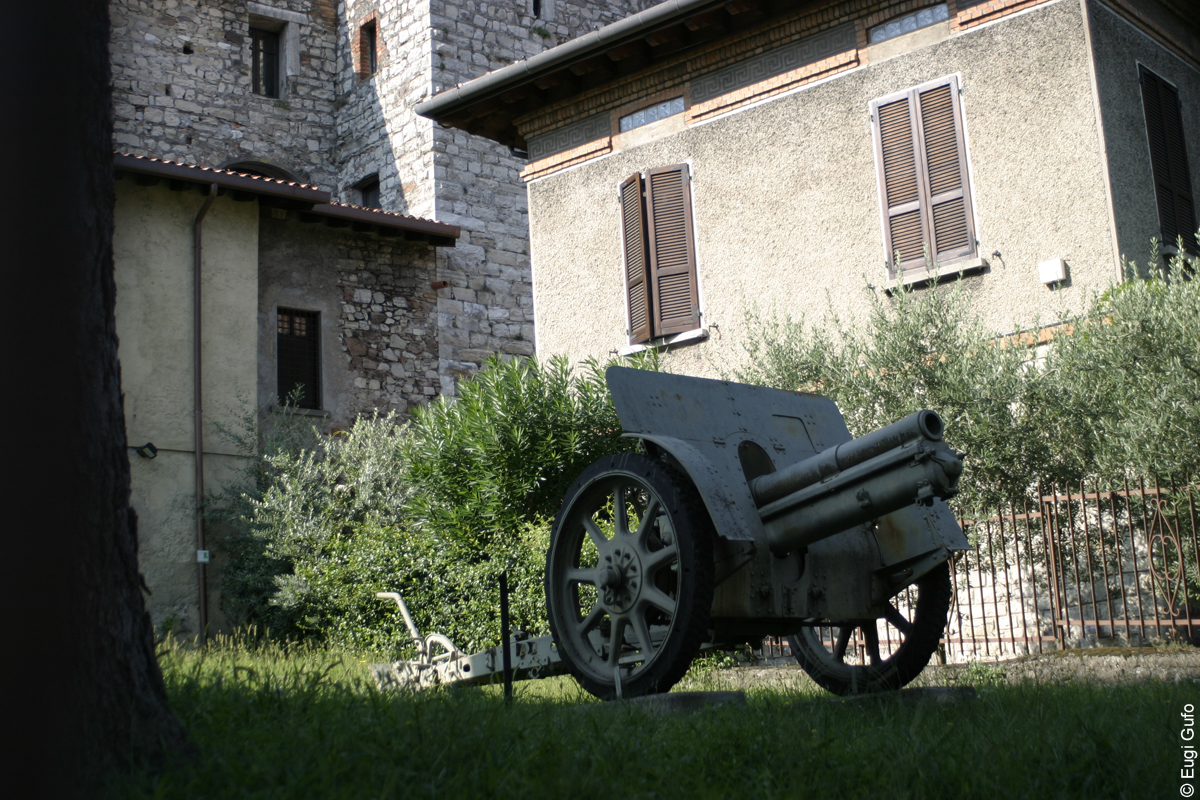
In a far less «creative» manner, the twelfth-century Arsenale was restored in the 1980s and now functions as an exhibition space.
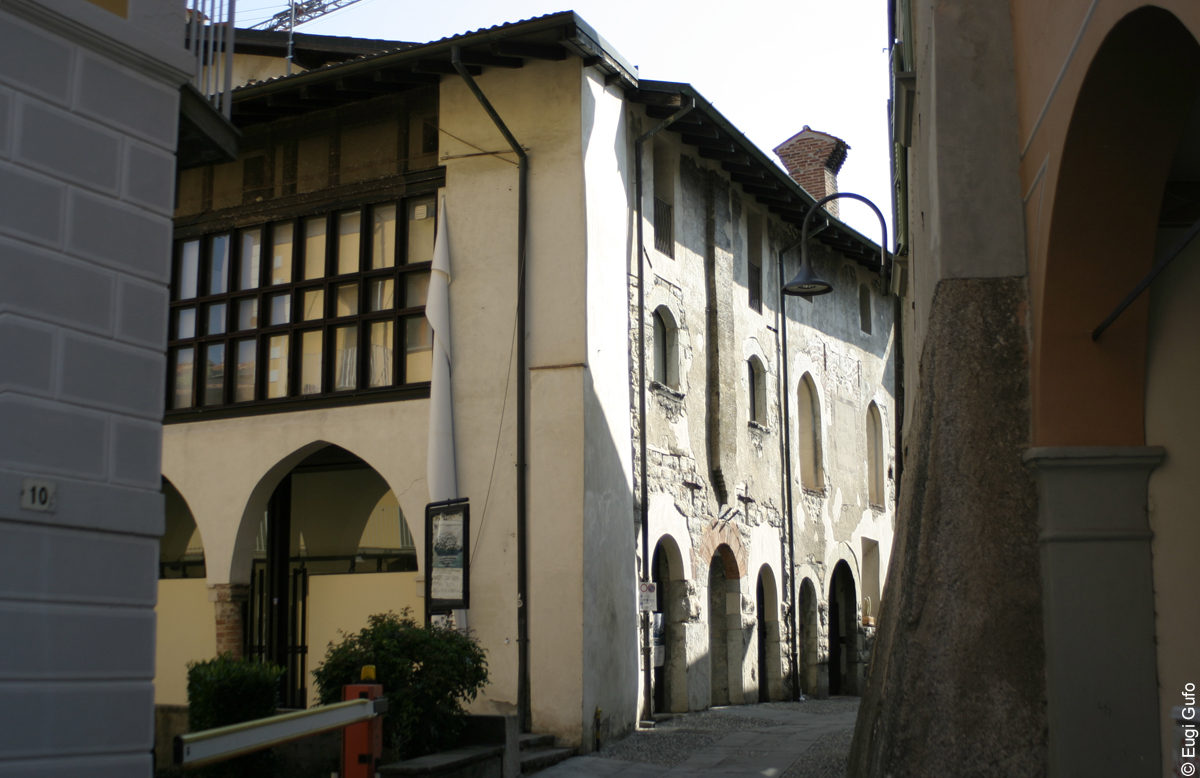
In general, the historic centre of Iseo appears carefully preserved, with commendable attention to detail; the castle thus seems an isolated eccentricity.
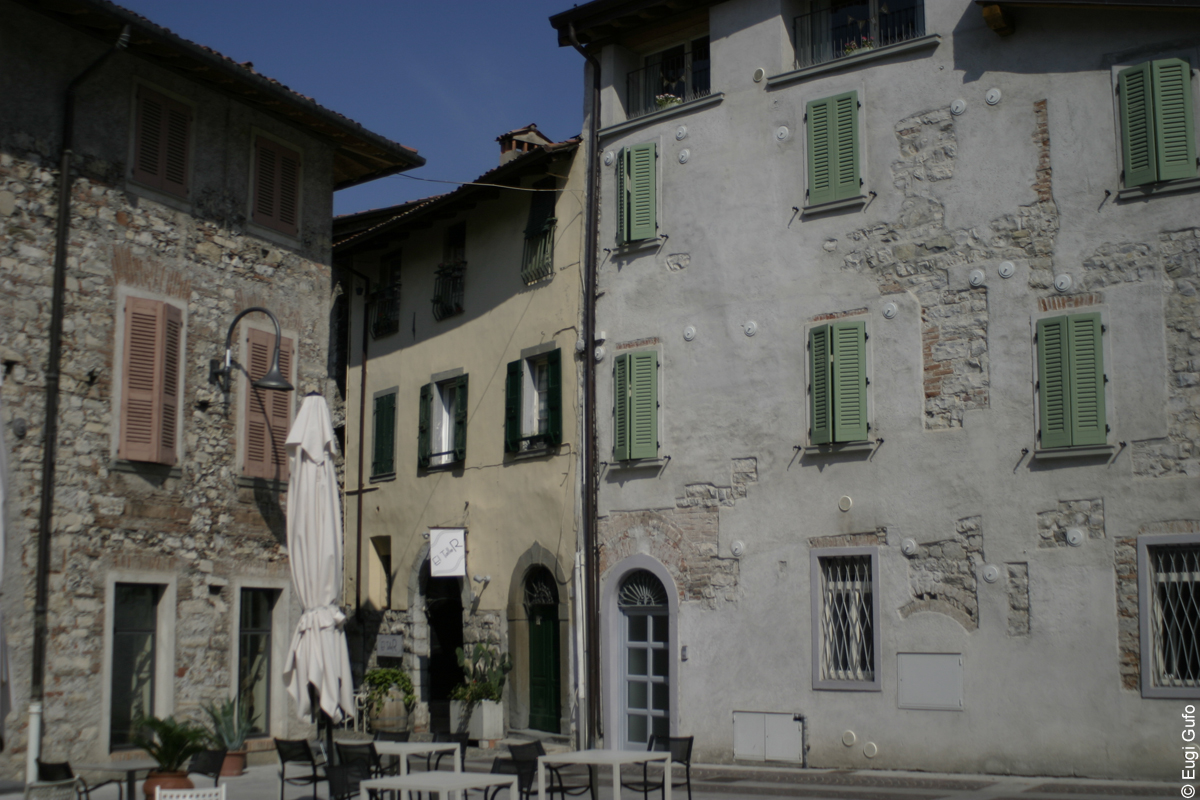
A few large private villas appear abandoned yet recoverable — one hopes that recovery will indeed occur.
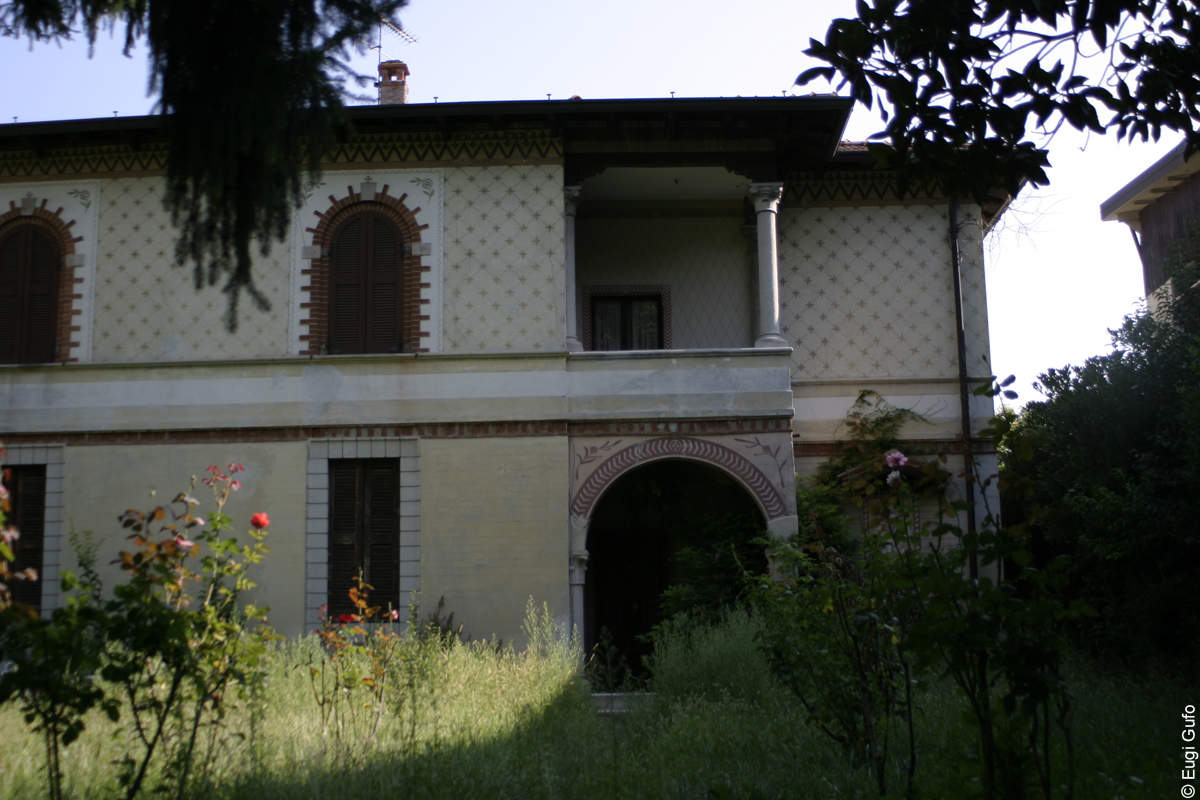
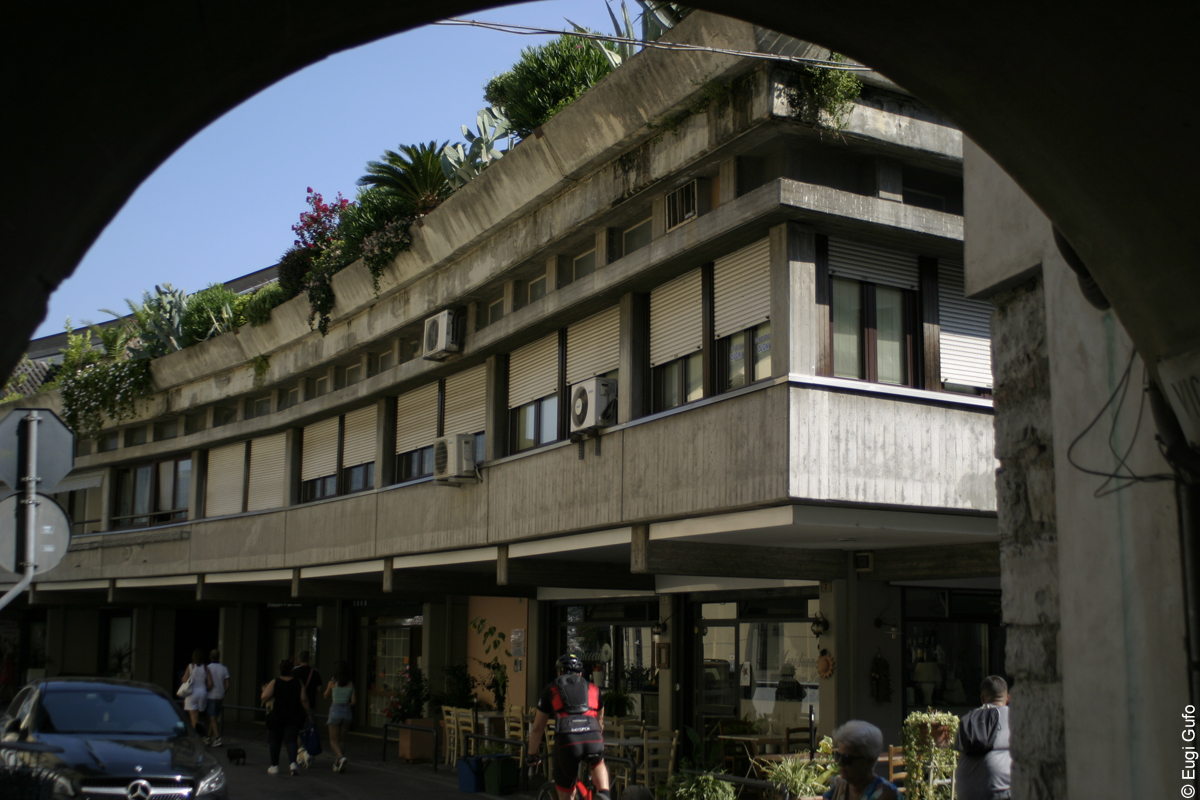
In the less central areas, including along the lakeside, modern buildings appear — sometimes rather unexpectedly. Only one struck me as moderately interesting.
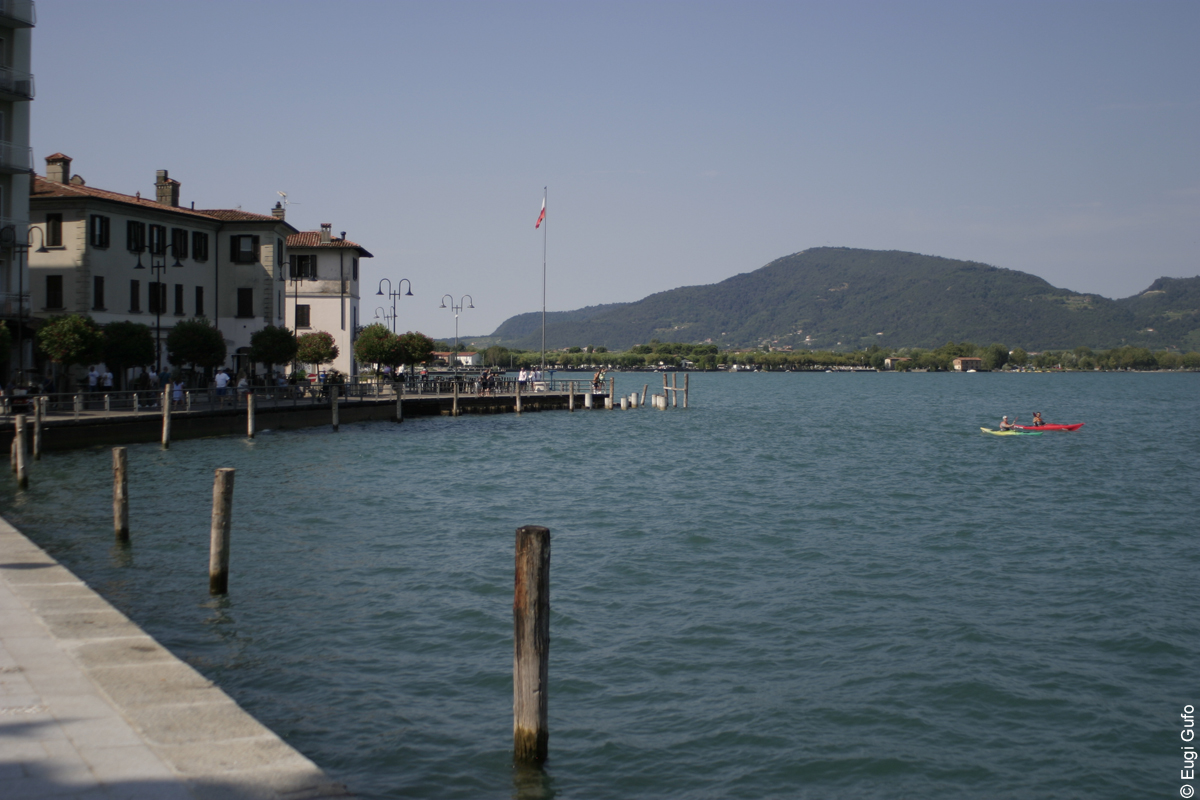
The lakeside promenade is pleasant throughout. In some sections the paving was being renewed, but the landscape of Lake Iseo remains a reassuring constant.
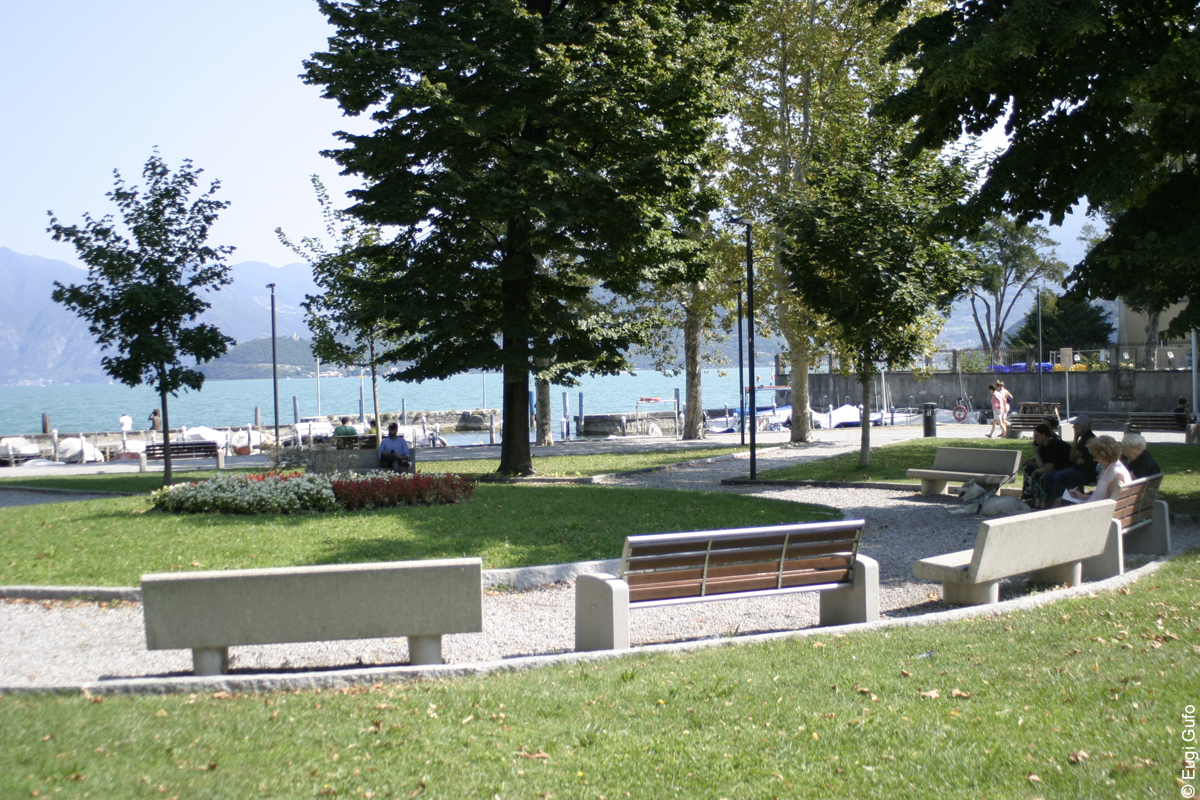
Not all benches are shaded, though the trees are still growing.
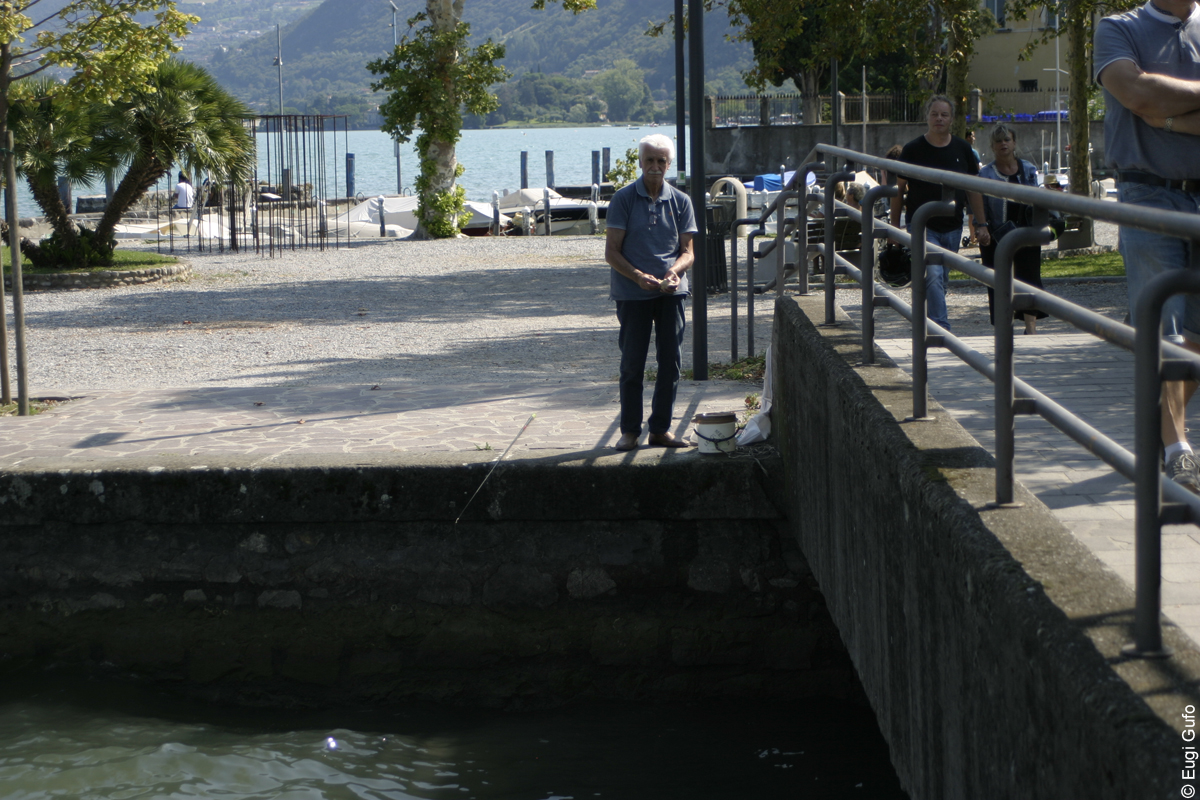
There is also ample space for amiable amateur fishermen.
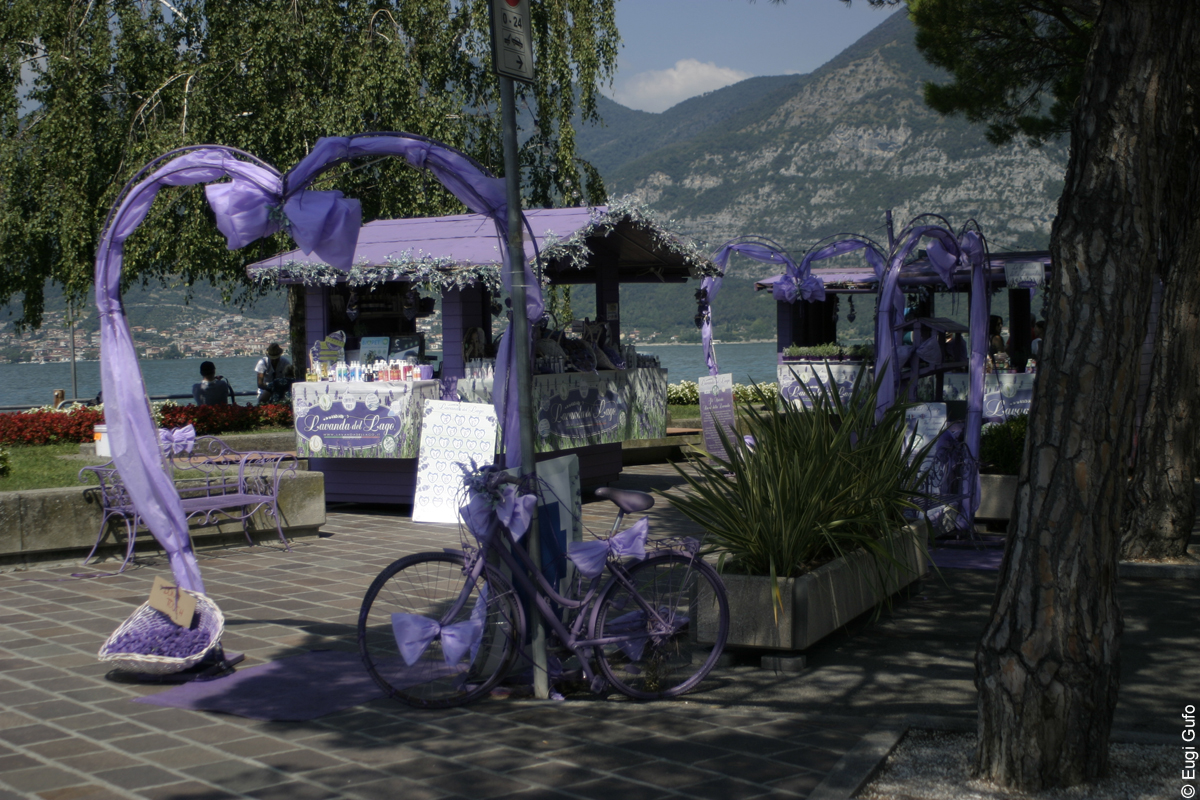
What from a distance had seemed to be the site of a particularly enthusiastic wedding turned out, in fact, to be advertising space for a local company.
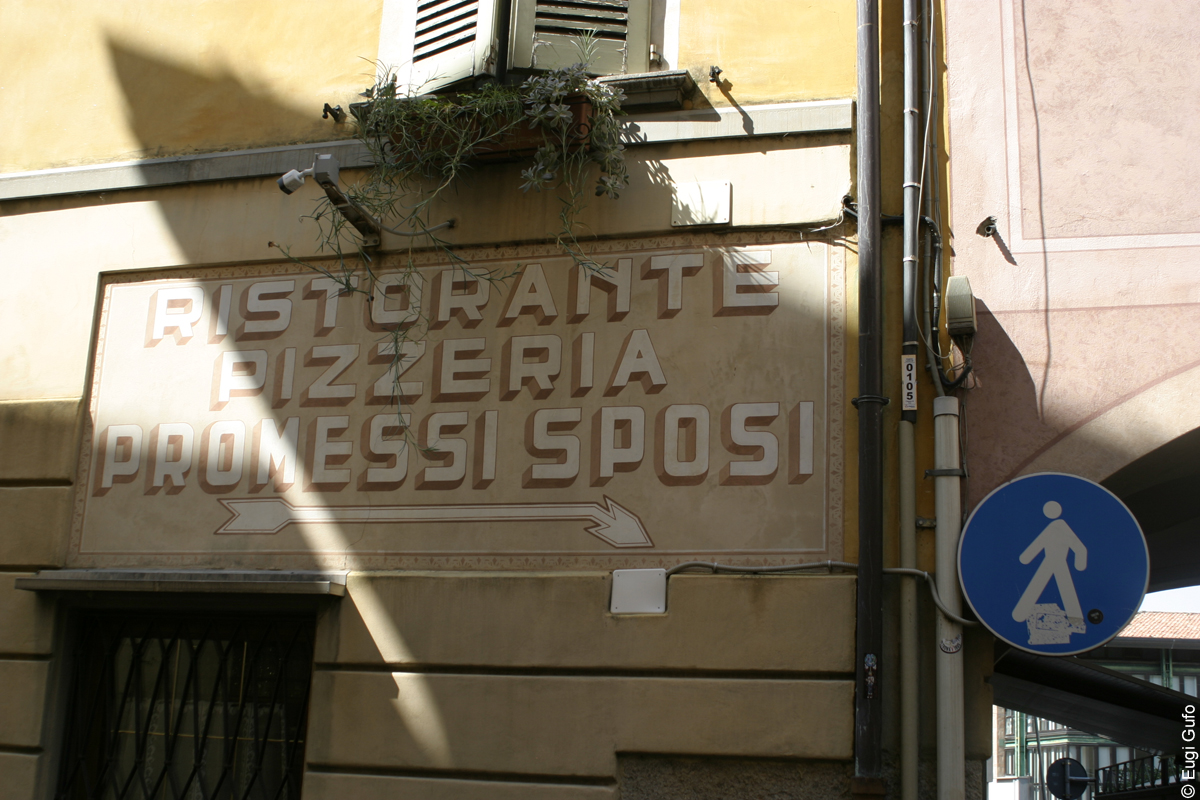
Cultural references, however, ought to be deployed with moderation. Otherwise, one risks reserving a restaurant table only to have the municipal police threaten the chef at the mayor’s behest; the chef then «loses» the reservation and hides behind a refrigerator, while one wanders desperately through the town — short of tables for two, afflicted by an epidemiological situation, and guarded by a vigilant local police force — in search of the simple right to dine in peace.
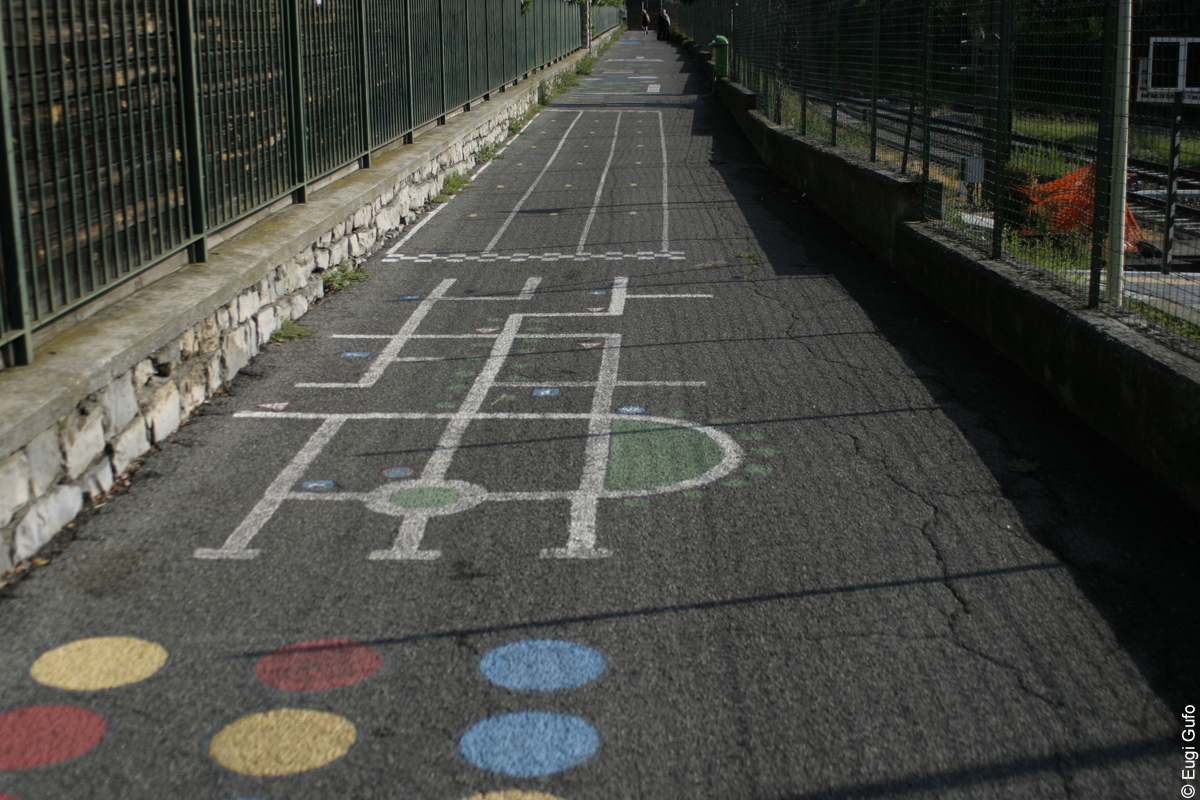
Only children possess sufficient energy to move about tirelessly. Near the railway station, an entire street has been equipped for them (there is no need to fear excessive noise: no more than two small and relatively slow trains arrive per hour).
Here is the station itself:
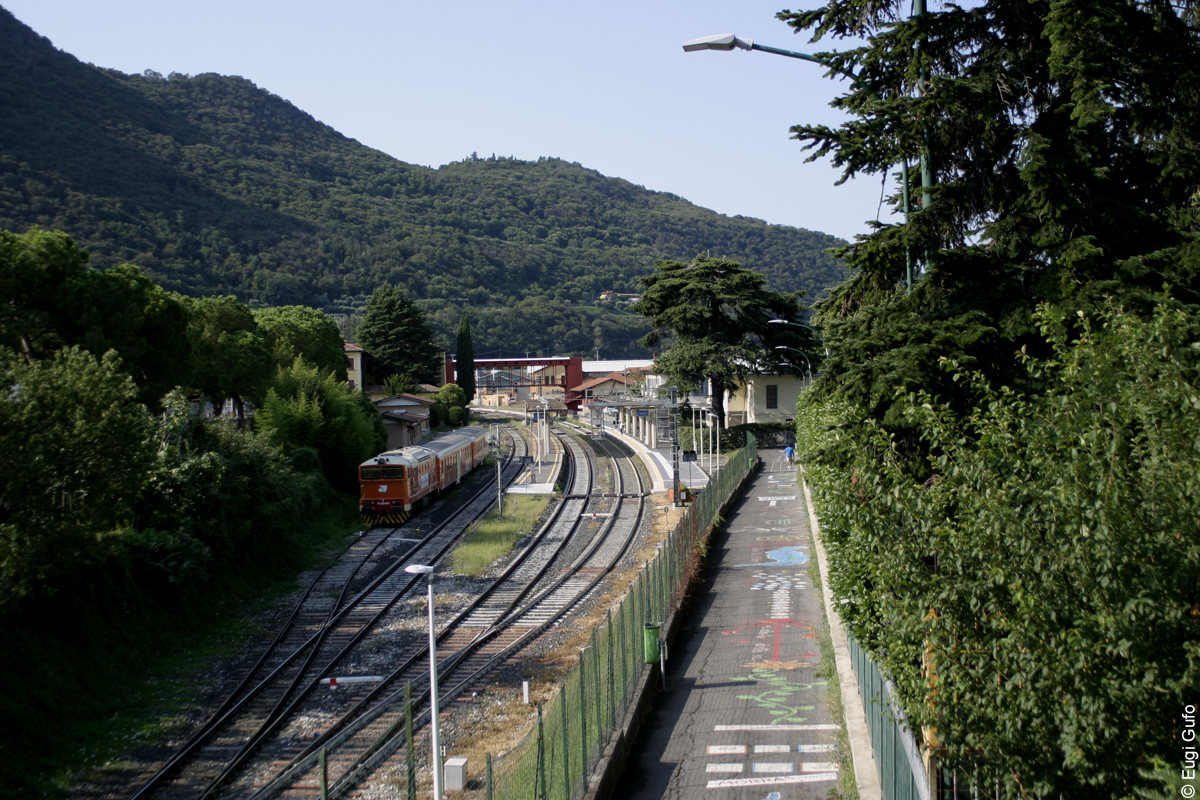
I used it merely to arrive by train from Brescia. After exploring the centre of Iseo, I continued on foot towards Pilzone — a subject for the next report. The final site I observed within Iseo’s territory was the local cemetery: surprisingly unremarkable in terms of monuments.
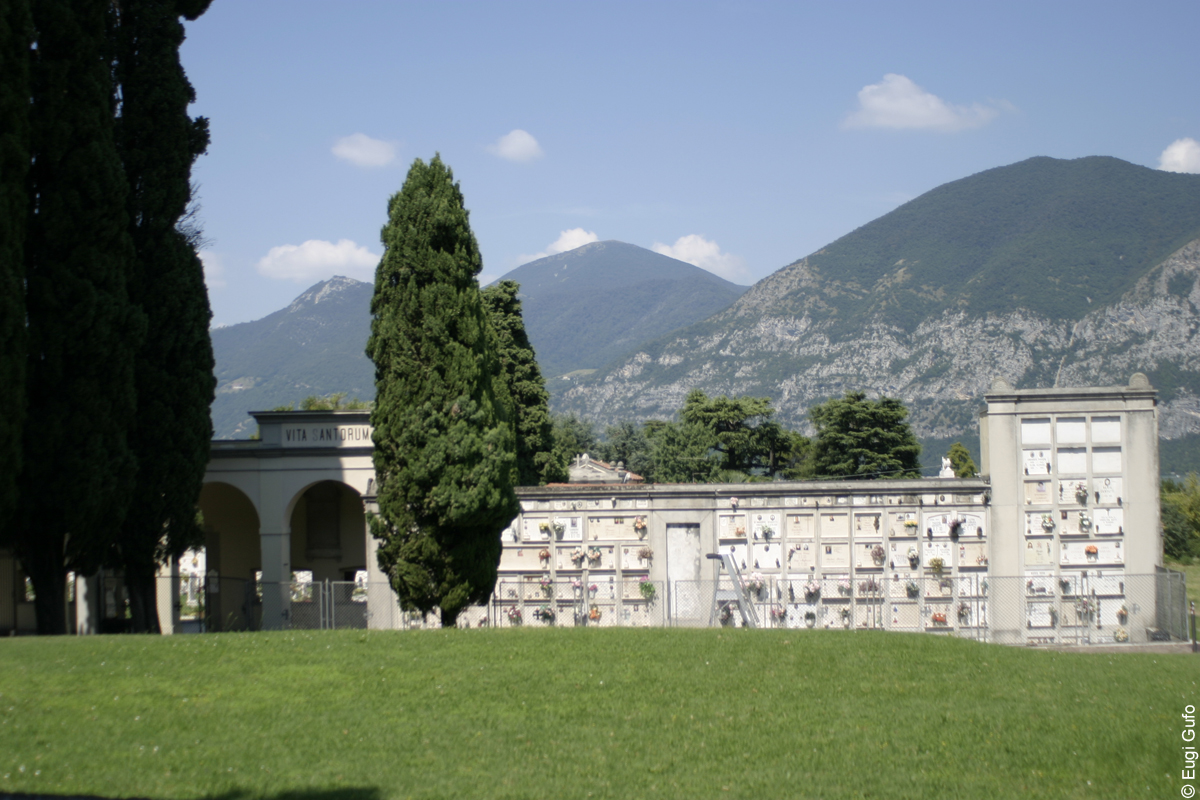
And with that, I believe I have described the most noteworthy sights encountered in Iseo.
Until next time.
Iseo, 16 August 2023
↓ Show comments ↓

