


 Long live Ukraine! Fuck the war!
 RSS of site articles
After a relatively thorough exploration of Lierna and a rather demanding stretch along the Sentiero del Viandante, I finally reached Varenna. At the same time, I also reached the conclusion that I had slightly overestimated my own strength — probably because, before setting off, I had not imagined the actual level of difficulty of that particular trail. In short, I realised I was far too exhausted to end the day with even a superficial study of another town. With a titanic effort (and in the hope of finding a shaded bench), I dragged myself through a few streets of Varenna and took only a handful of photographs.
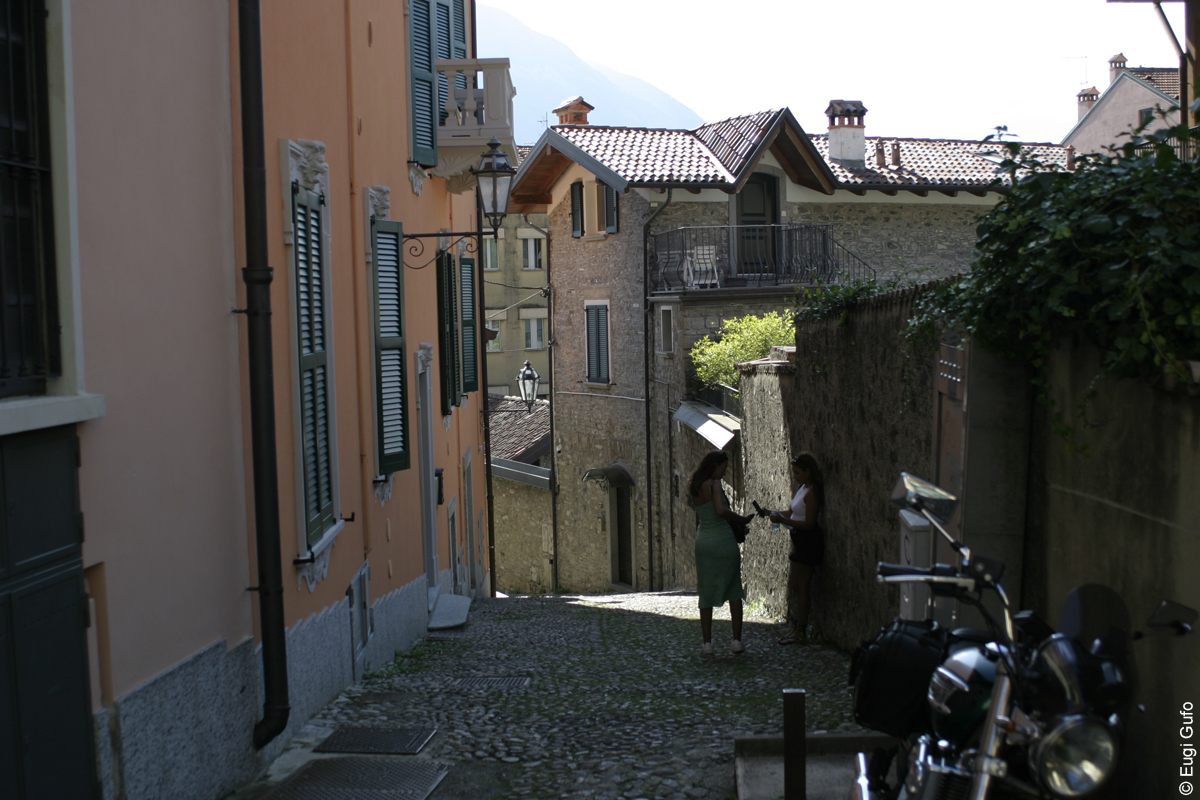
The historic centre of Varenna makes a very pleasant impression, but it is absolutely packed with tourists: it was probably the most crowded place I encountered during the summer of 2021. In the streets near the lake, one moves at the pace of a relaxed crowd drifting in various directions. The more or less deserted streets of the centre do exist, but they are extremely rare and all located far from the water.
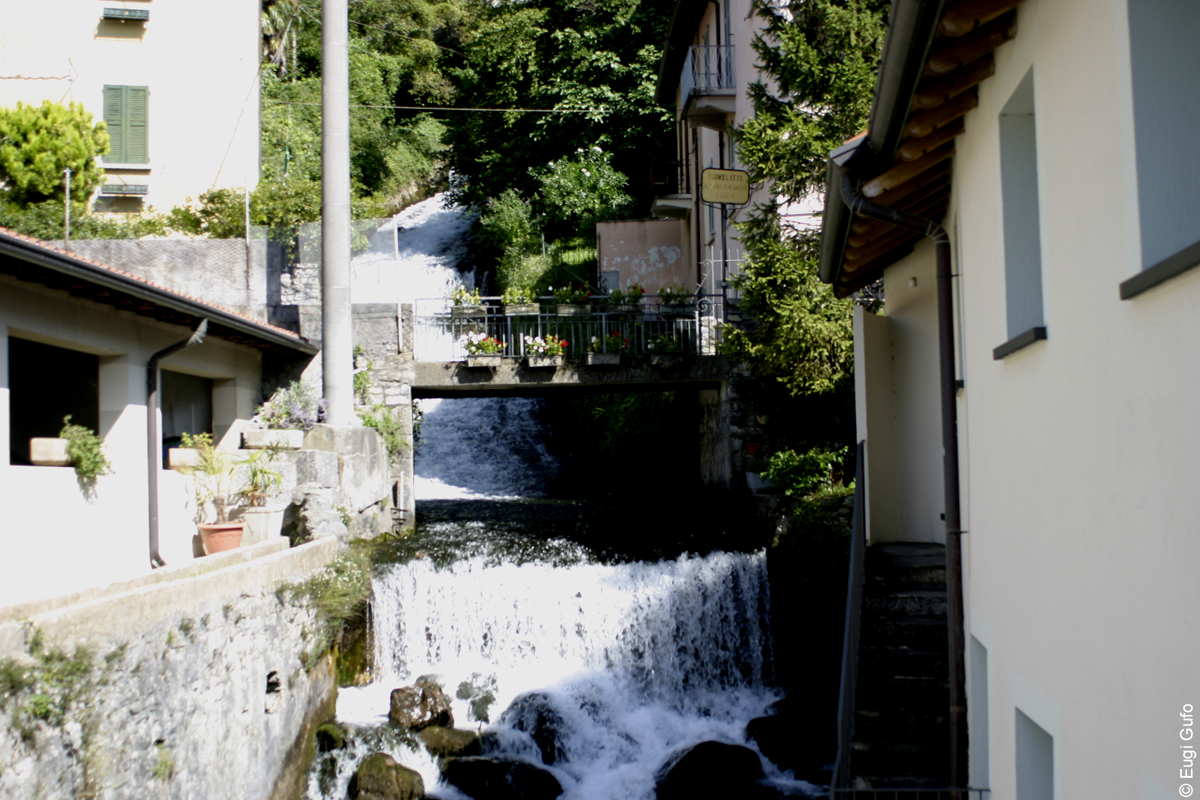
Very few tourists, however, notice the most interesting water in the area: that of the Fiumelatte, a tributary of Lake Como barely 250 metres long. It is a seasonal river, flowing roughly from March to October. Its colour (and therefore, most likely, its name) is due to the rapid movement of the water over a highly irregular riverbed — in general, an entirely normal mountain phenomenon.
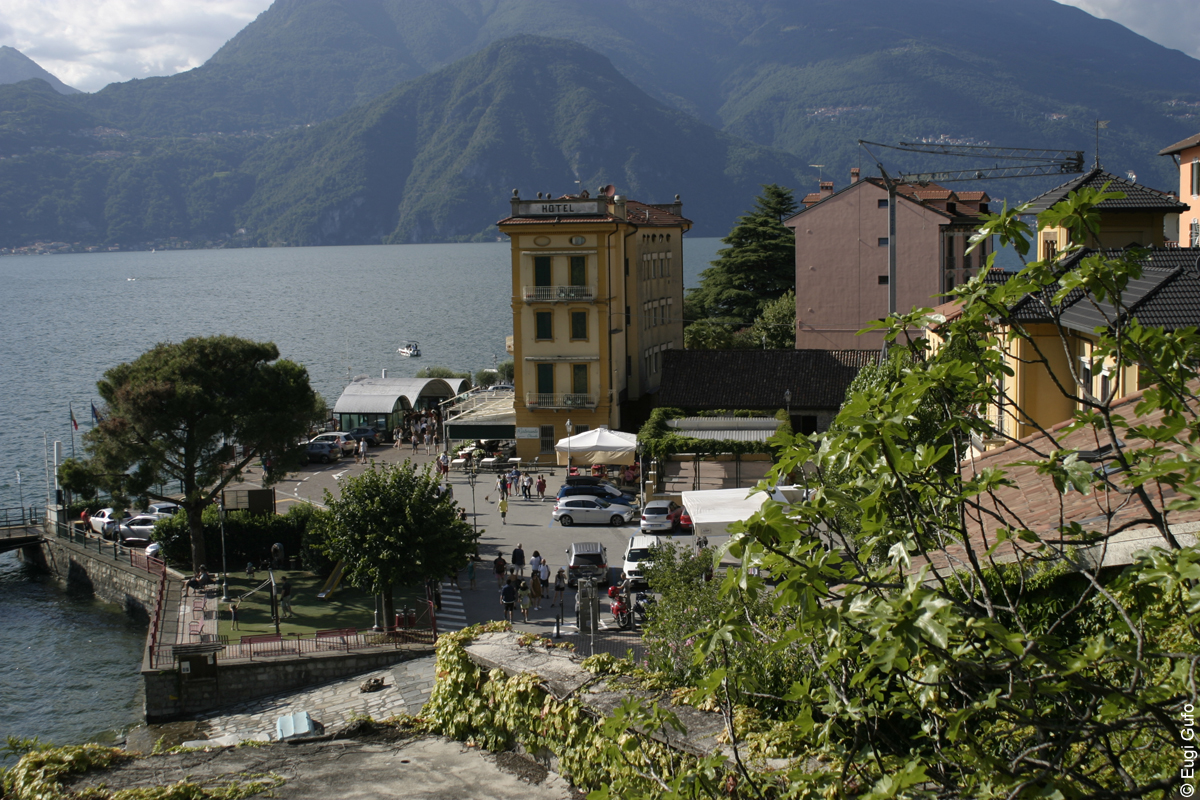
Traditionalist tourists, however, prefer the view of the lake. Almost the entire lakeside of Varenna is occupied by hotels, tourist establishments and ferry landings.
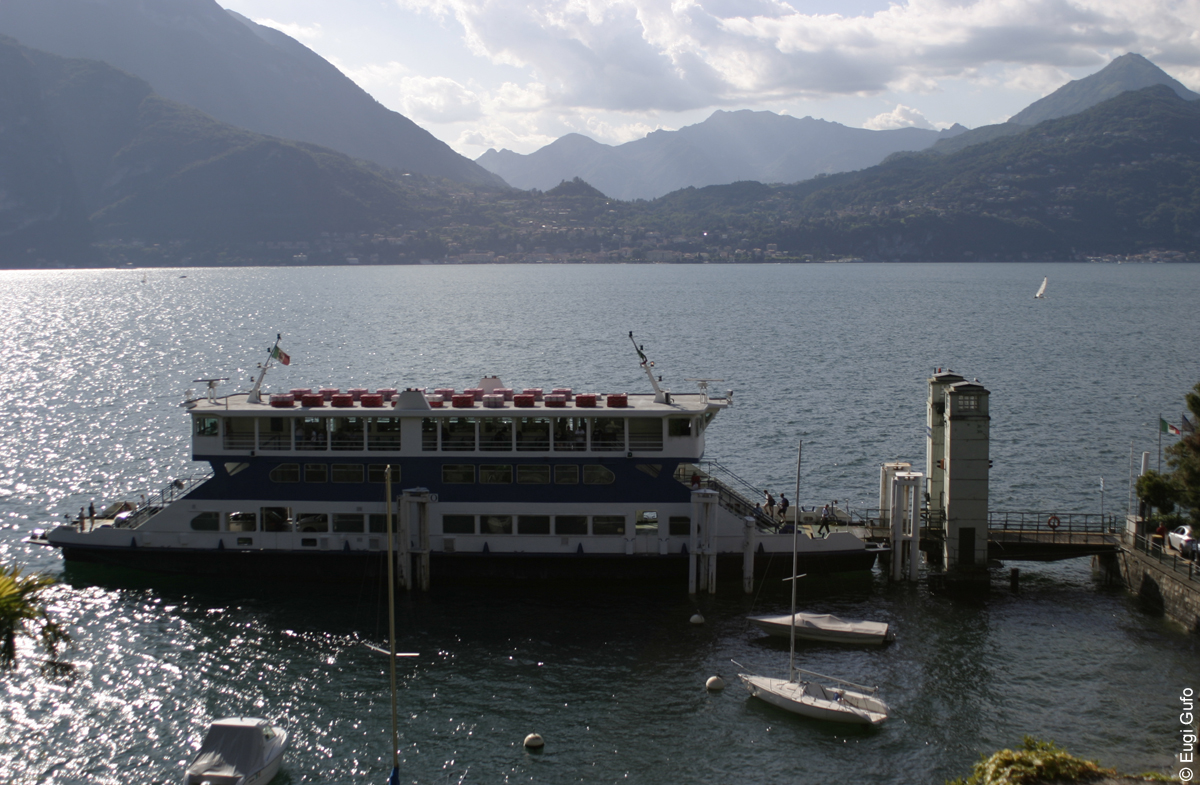
Various types of boats depart from Varenna towards different towns along the shores of the lake.
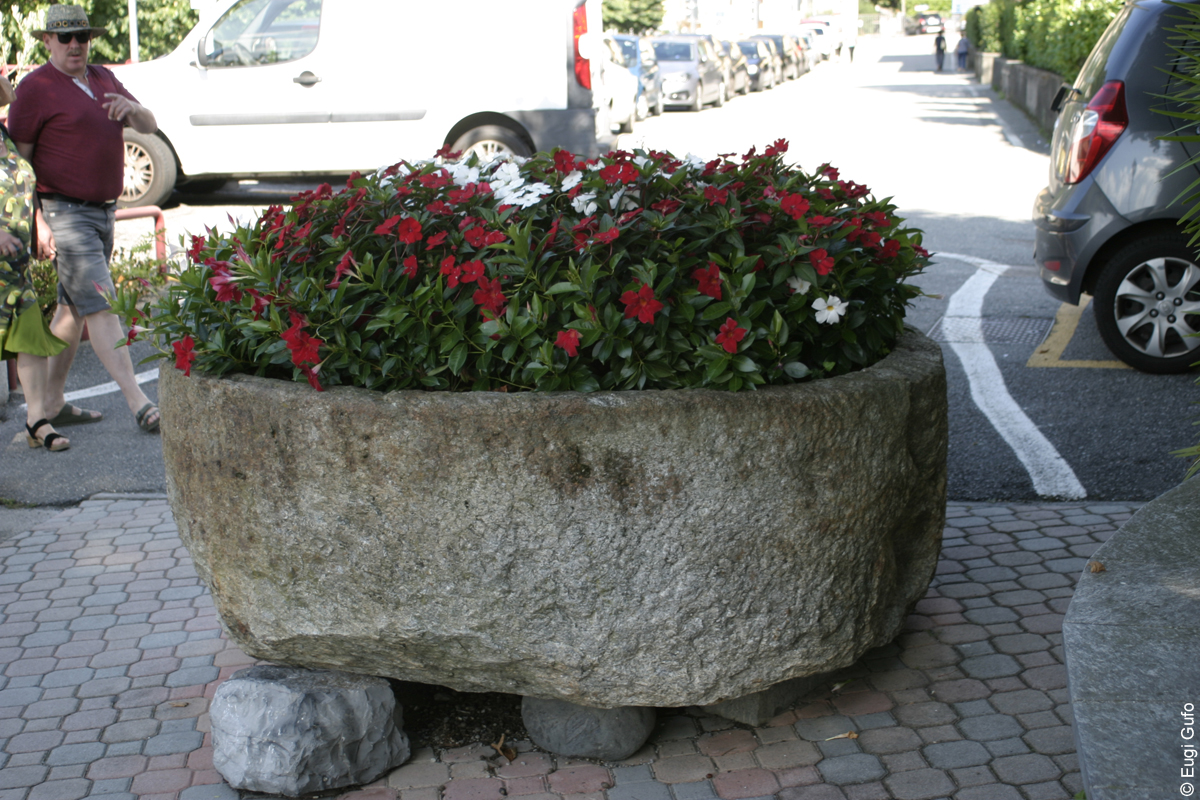
In Varenna too — as in many neighbouring municipalities — annual flowers account for a large share of the public greenery.
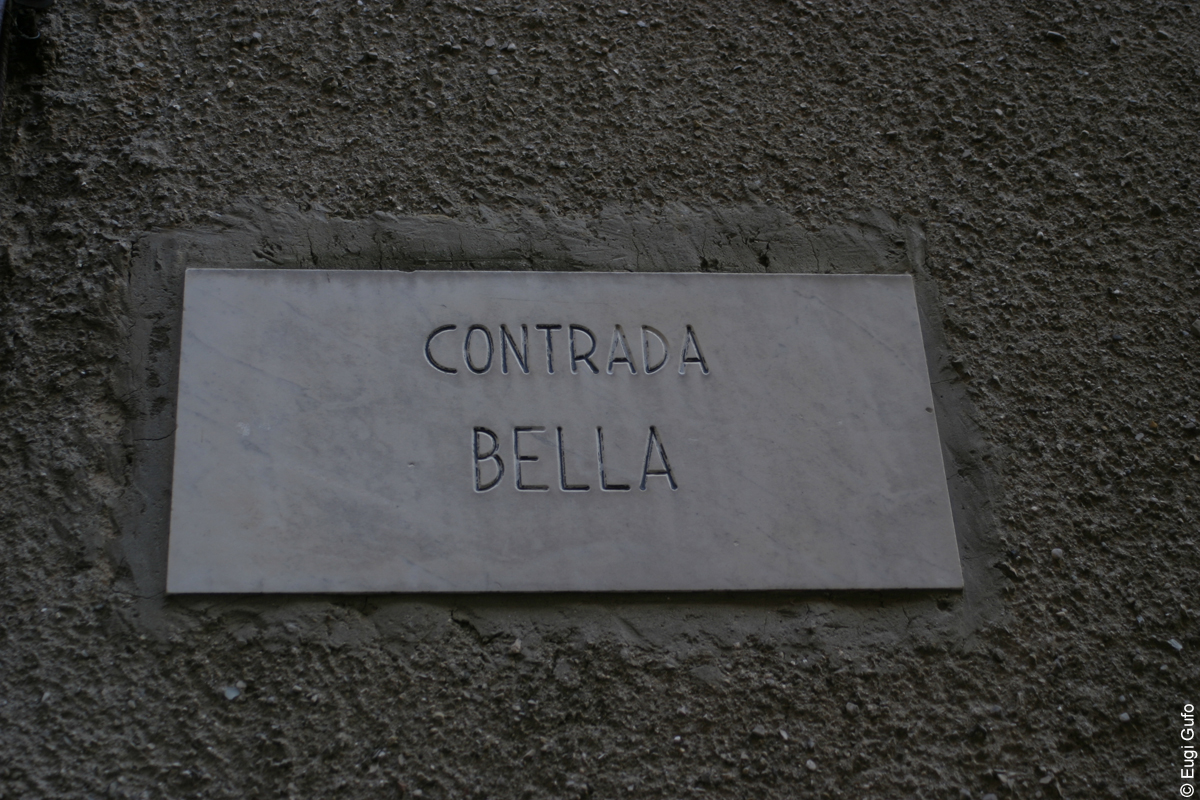
Street-name signs stand out only for their minimalism.
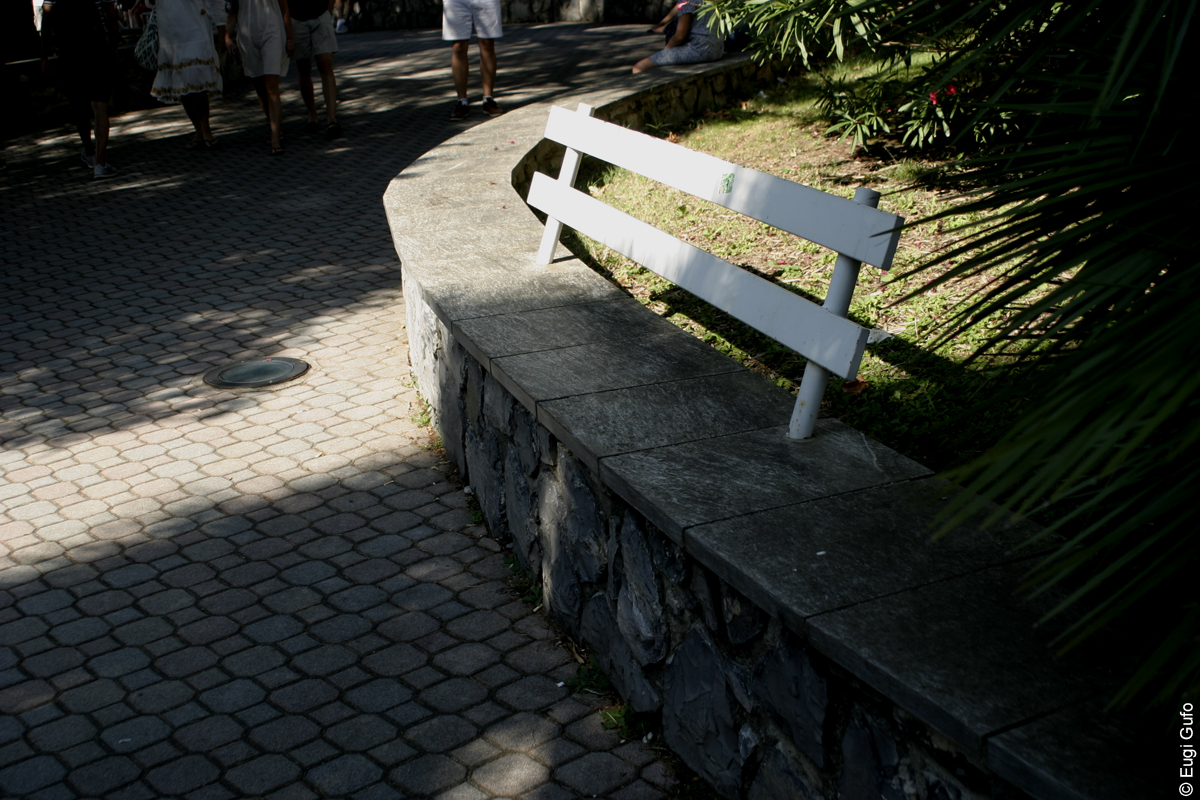
The benches, on the other hand, are often original. And some of them are even in the shade — celebration!
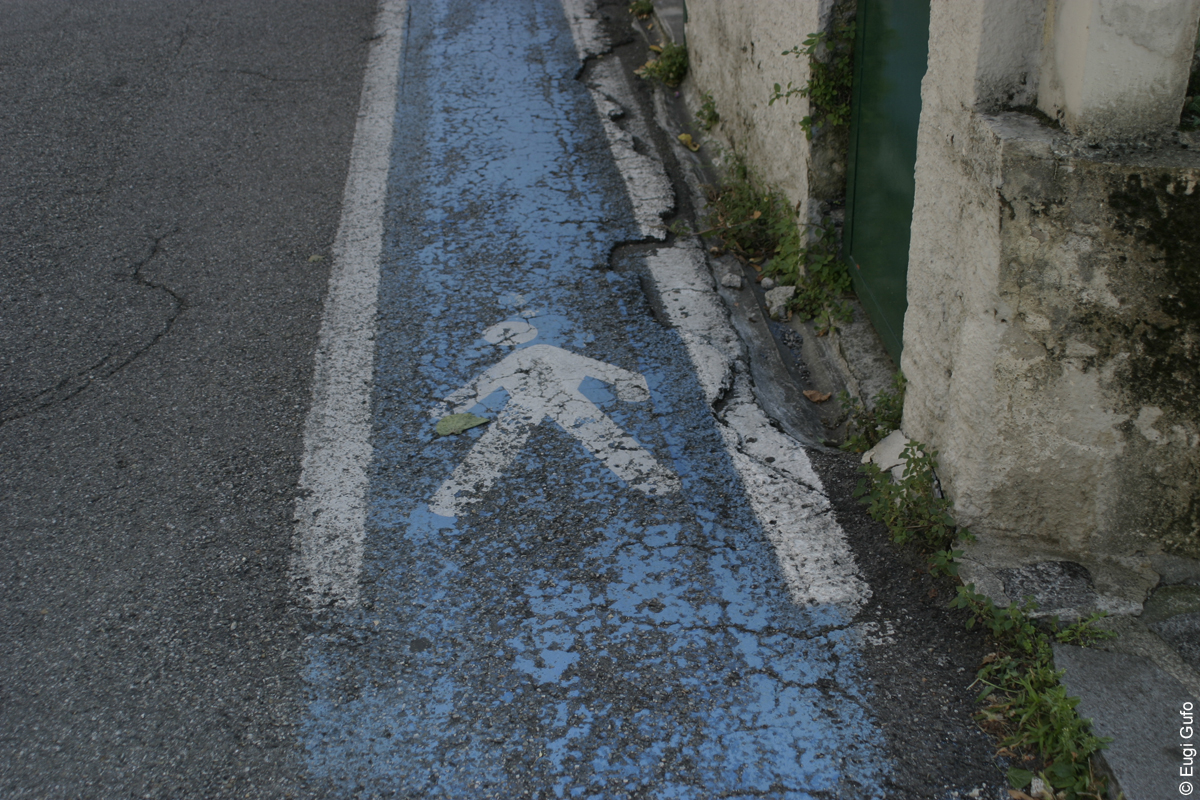
In certain areas the municipality has economised on building proper pavements, but not on the paint used to create graphic ones. I have already seen pedestrian areas separated from the roadway by nothing more than a simple white line, but this is the first time I have encountered one entirely coloured. I do not know why it was done this way; certainly, from a practical point of view, the colour does not guarantee greater safety.
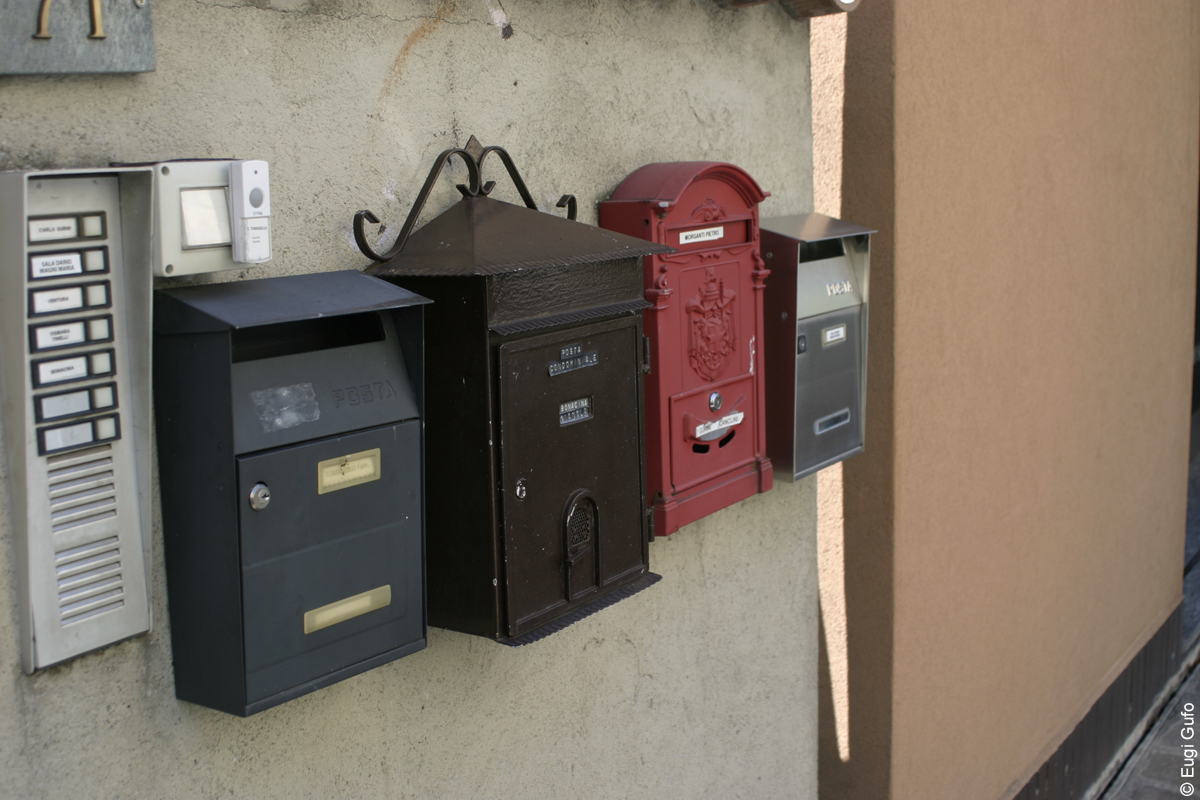
It is interesting to note that on some residential buildings (apartment blocks?) shared by several families, the letterboxes displayed are stylistically very different from one another.
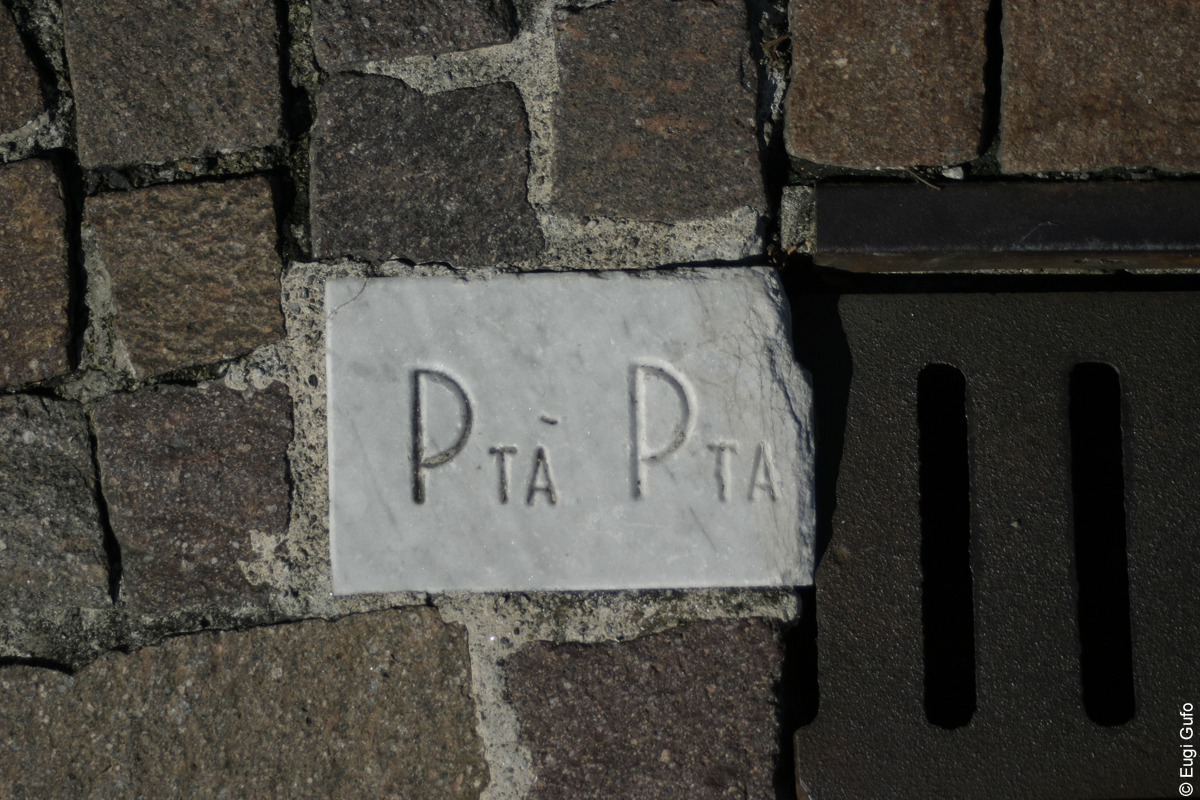
Meanwhile, the cobblestones marking the boundary of a private property contain three times as many letters as those seen on 99% of pavements in Lombardy.
And that is all — I have nothing else interesting to show you this time. I promise to return to Varenna soon: I know it has many beautiful and intriguing places. Next time, however, I should probably visit before exhausting my physical strength.
Varenna, 18 August 2021
↓ Show comments ↓

