


 Long live Ukraine! Fuck the war!
 RSS of site articles
The name of the town of Soresina (in the Province of Cremona), encountered by chance on a map, seemed vaguely familiar. In order to resolve this uncertainty, I decided to visit it in person.
The centre proves surprisingly attractive and architecturally varied — though, inevitably, compact.

The most interesting and beautiful church in Soresina is the one with the least inviting façade: the sixteenth-century Church of San Rocco.
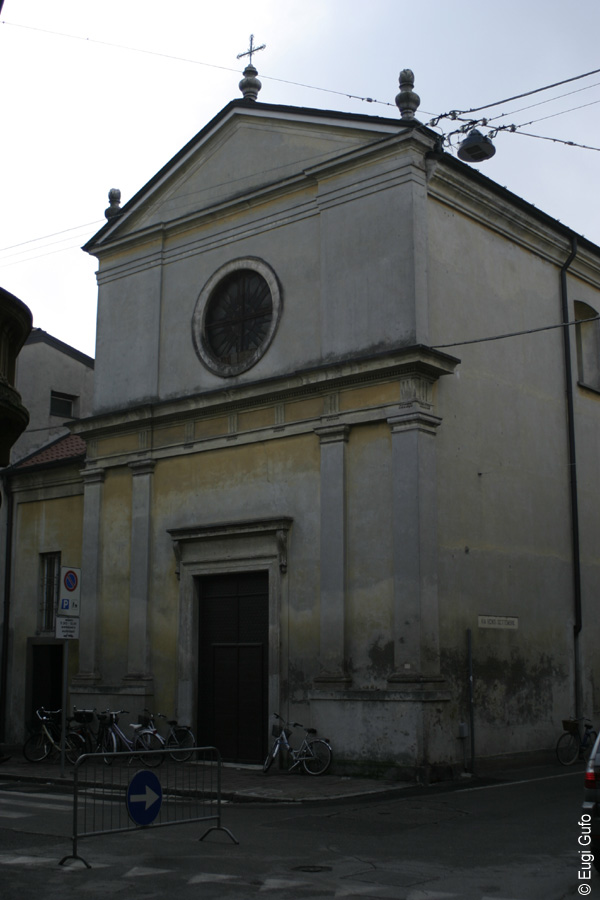
It is noteworthy not only for its original structure and proportions (best appreciated directly)…
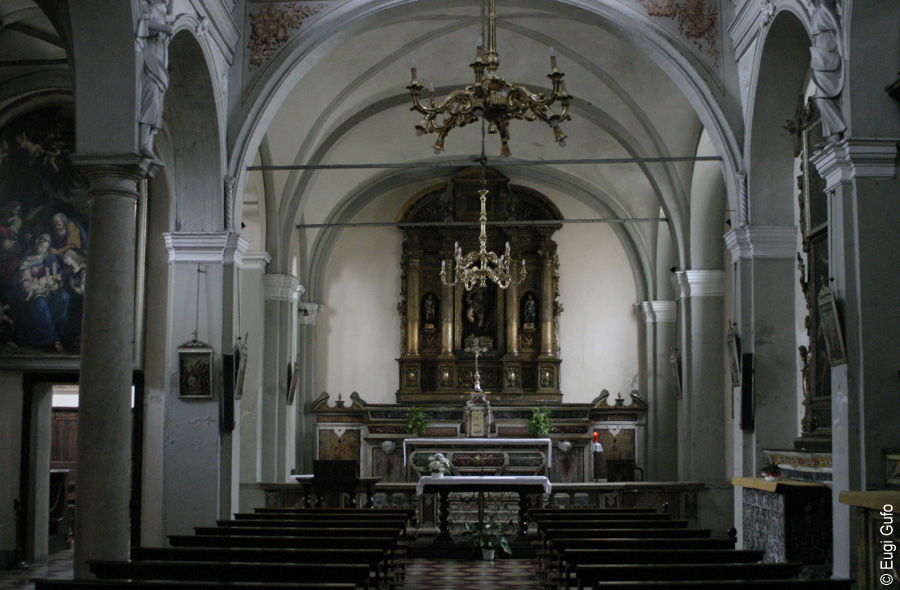
… but also for a maintenance solution I have not observed elsewhere: the organ pipes are fitted with closable shutters, operated by mechanism, presumably to protect them from unspecified threats. Dust, I imagine, remains unconvinced.

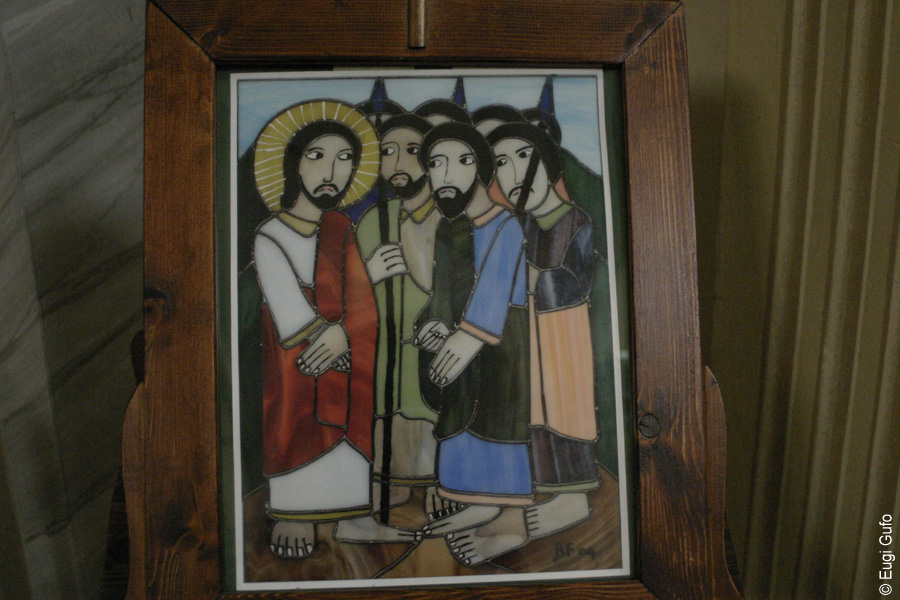
In another church — which I shall refrain from promoting in the interest of your aesthetic well-being — mosaics are displayed that appear, with some probability, to have been executed by my most promising pupil. The possibility of surpassing one’s teacher should never be dismissed.
At midday the bells of the cathedral begin an acoustic performance of considerable intensity. I recorded them for you.
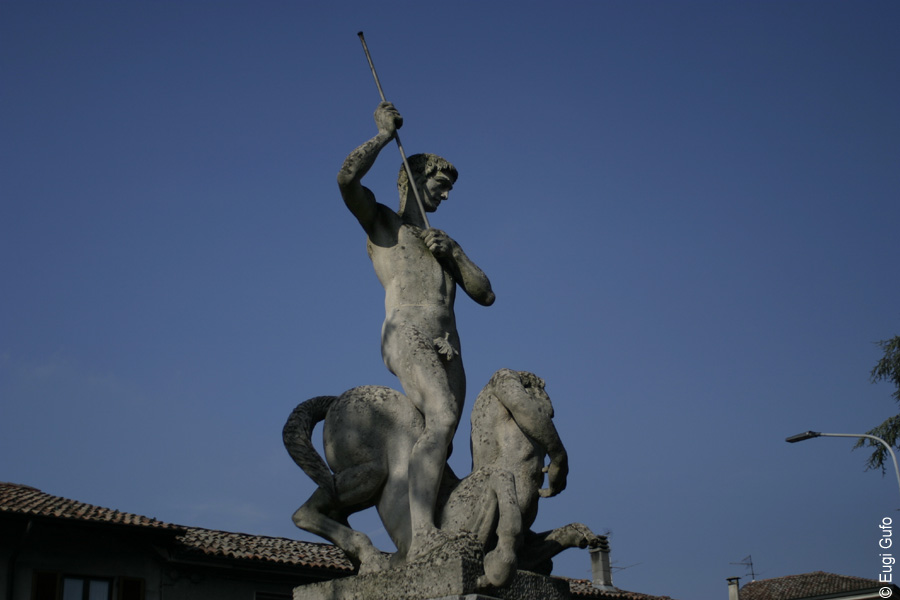
Local sculptors do not appear to have devoted excessive attention to anatomy. Unless, of course, centaurs are known to possess bifurcated spinal structures. The monument in question, installed in 1958, is dedicated to those who fell for freedom.
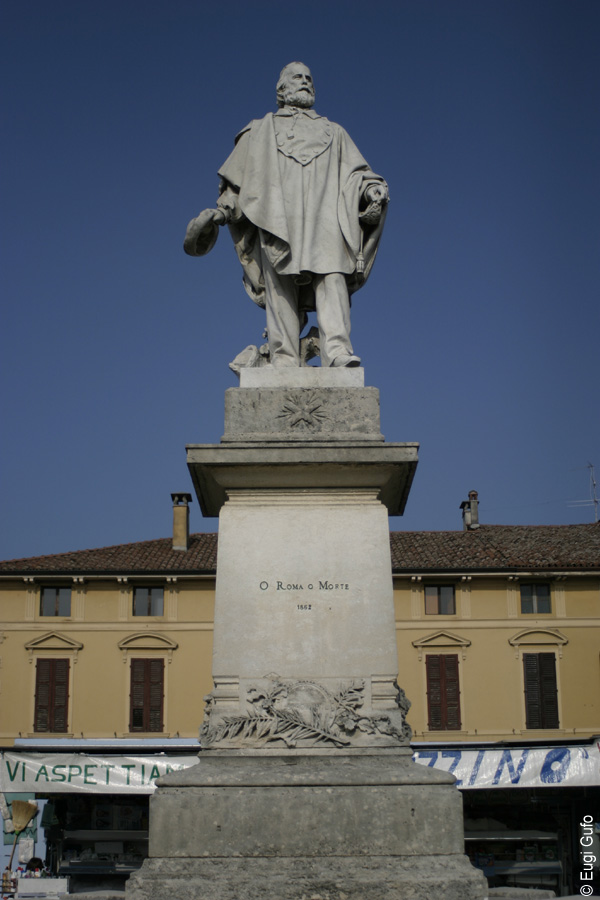
The monument entitled «O Roma o Morte» is dedicated to Garibaldi. The capitalised «M» lends the inscription a tone of devotional solemnity.
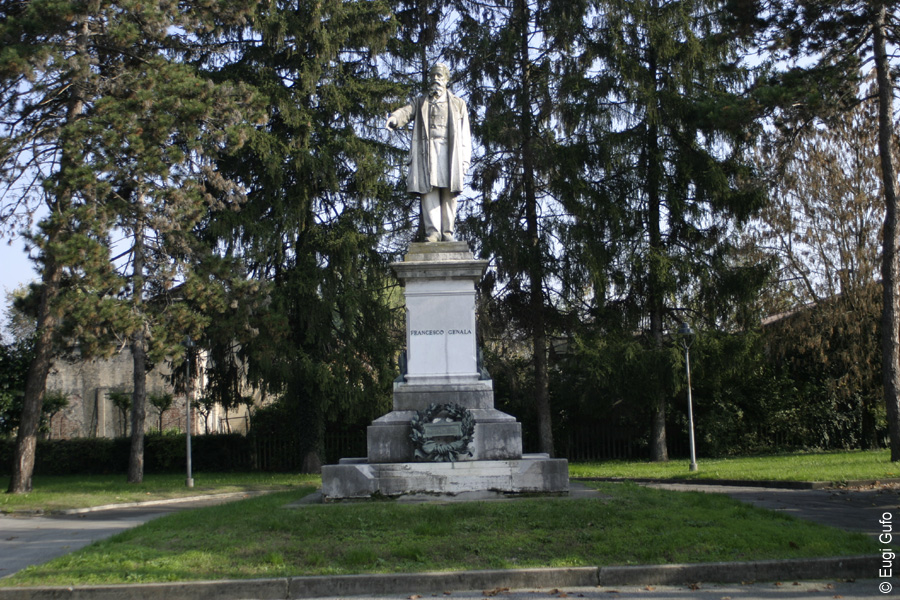
A monument of comparable scale, though on a more modest pedestal and positioned near the railway station rather than in the centre, honours Francesco Genala, one of Italy’s early Ministers of Education. His principal qualification for commemoration appears to have been birth in Soresina.
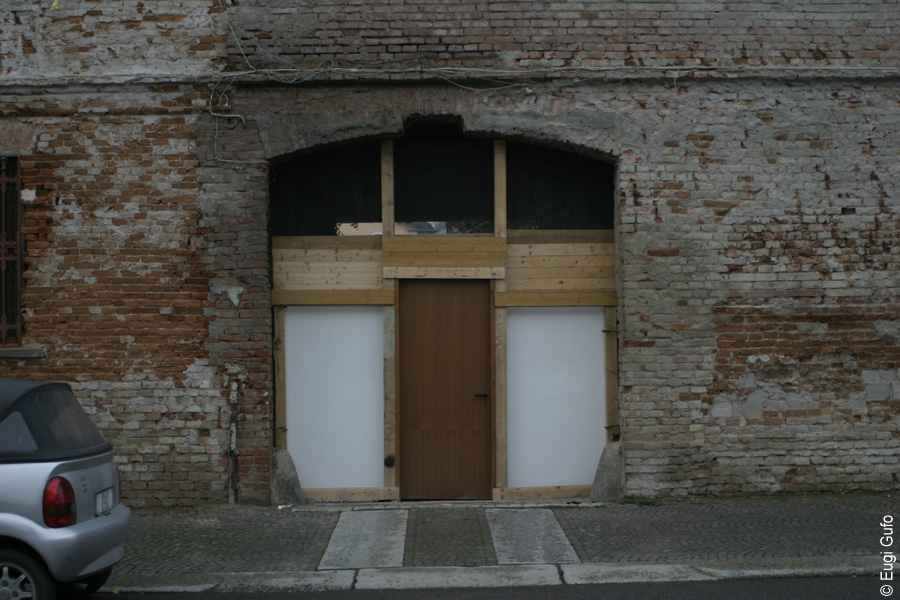
It would, however, be unjust to assume that only past artisans were capable of producing beauty. This, for example, is the most elegant temporary construction-site door I have yet encountered (attached, in this case, to a historic building under restoration).
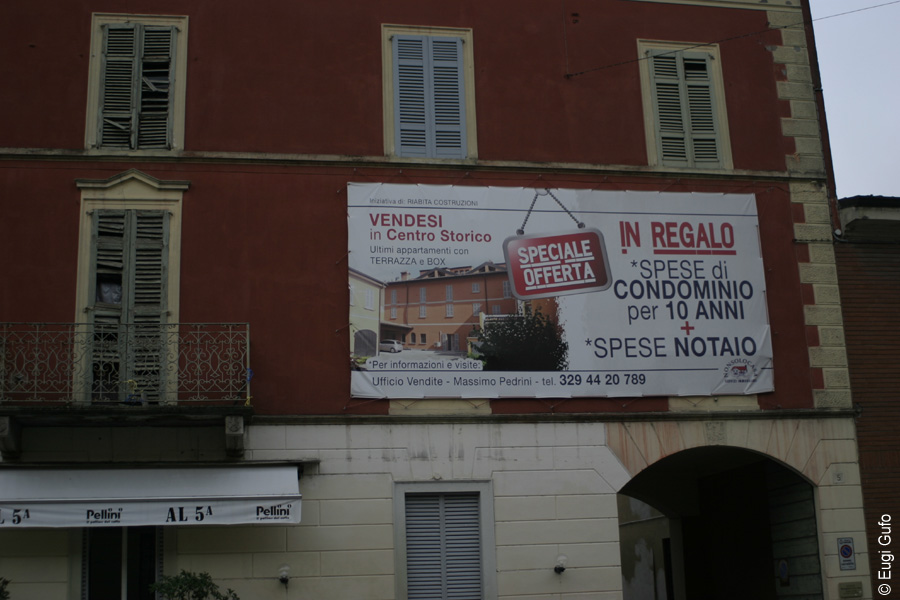
Meanwhile, local estate agents seem to have adopted certain strategies from automobile dealers — unless this is a broader national innovation. It is the first such offer I have seen.
The nursery school, which serves as a second home for many local children, resembles a correctional facility.
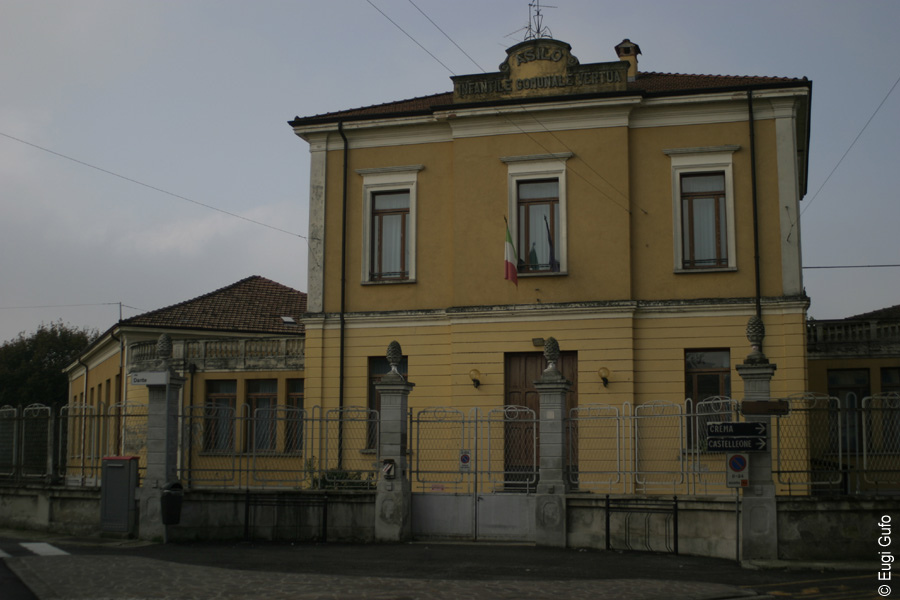
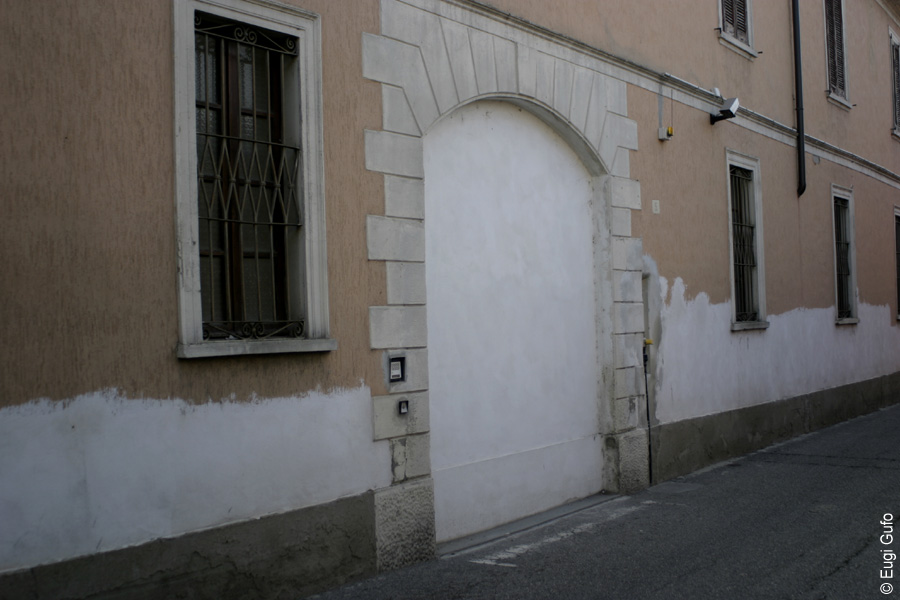
The residents of this apartment building may experience a comparable sentiment.
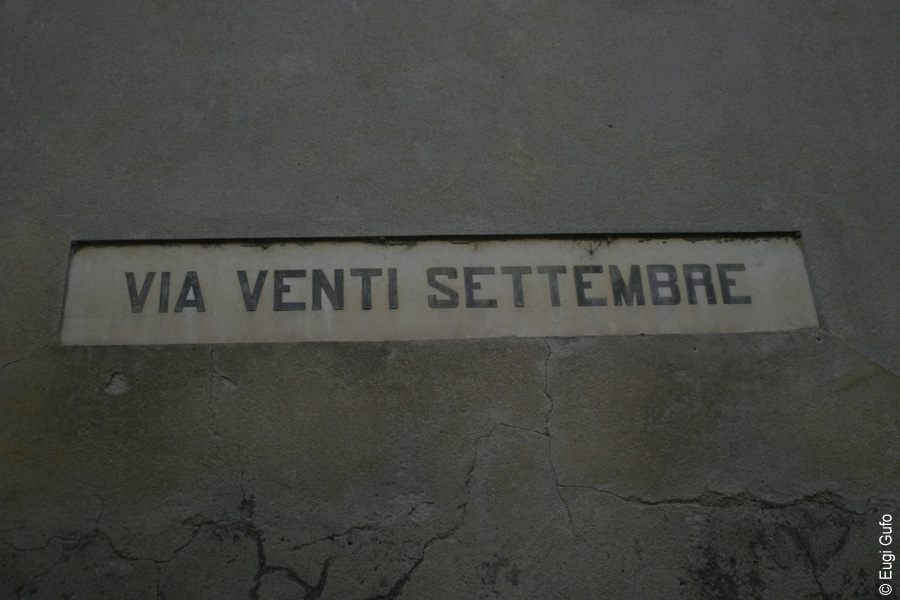
I find this method of street-name inscription particularly appealing: sufficiently long marble slabs, proportionate and restrained.
In the centre I encountered a precious historical artefact: a three-dimensional street sign in frosted glass, illuminated from within. Should it survive until my next visit, it deserves protective custody. (Comparable examples exist along Corso Vittorio Emanuele II in Milan, though flatter and less persuasive.)
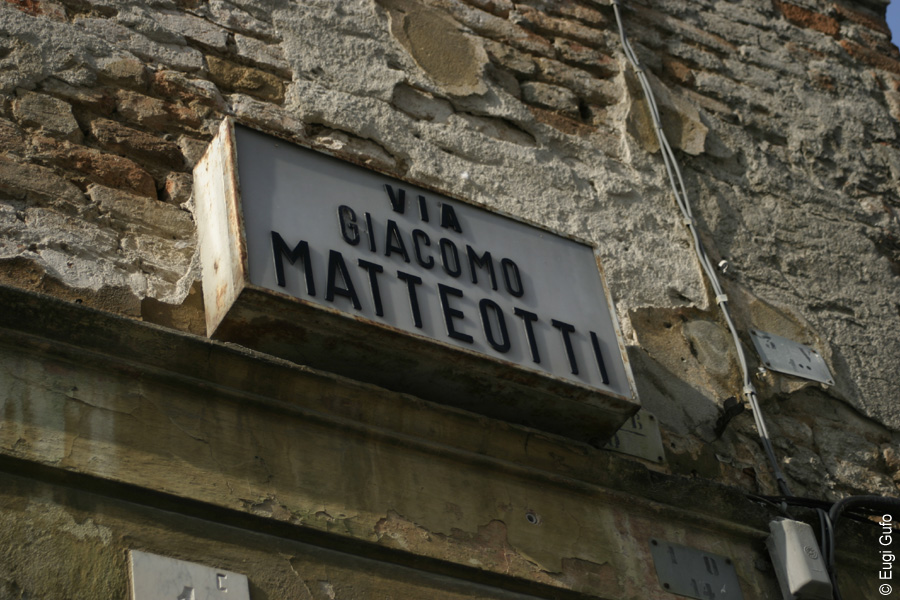
These peripheral signs are also noteworthy — though not conventionally attractive.
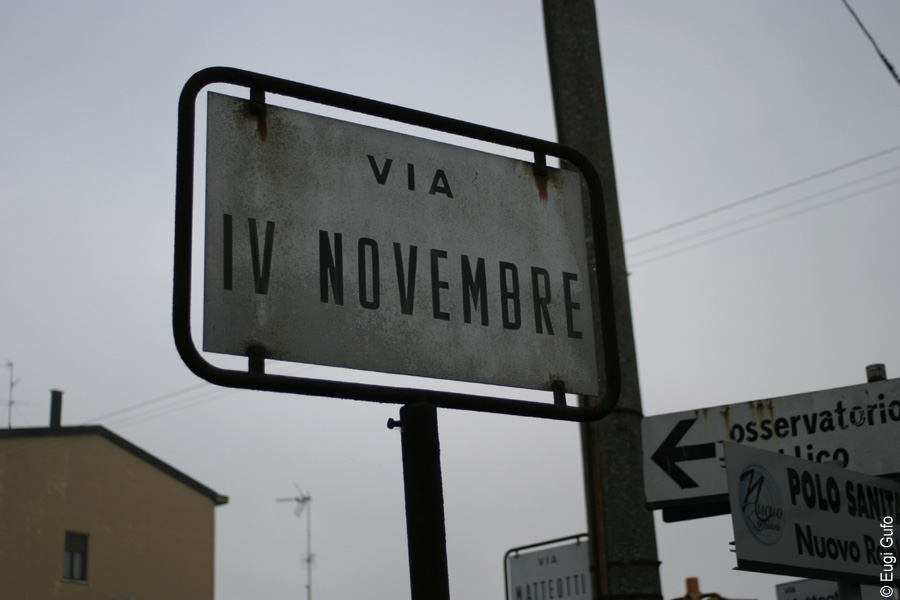
The frame of this particular example evokes something familiar, yet I am unable to identify the reference.

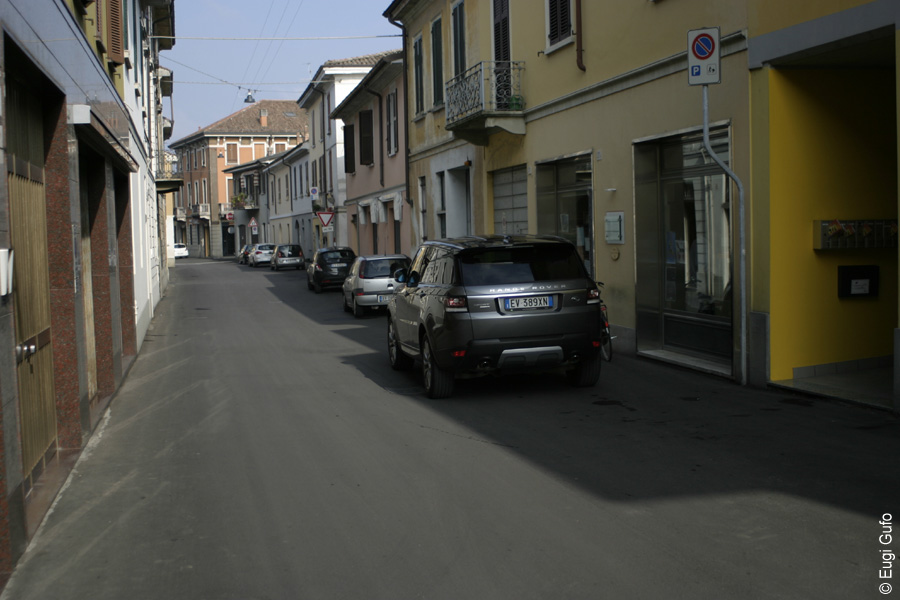
A significant number of central streets lack pavements. On either side. Even painted ones. Consequently, pedestrian safety depends largely on the moral refinement of drivers and their willingness to leave a navigable margin between vehicle and wall.
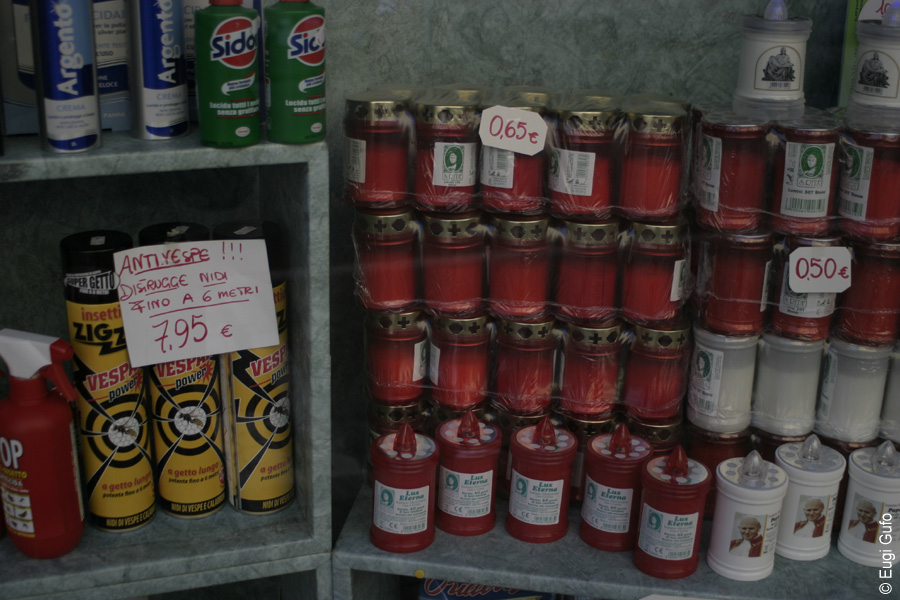
In the window of a small grocery shop I observed an intriguing juxtaposition of mass-destruction devices and ritual objects.
In a jeweller’s display, meanwhile, one finds an allegorical representation of what may occur to wooden objects after receiving jewellery as a gift. Seasonal shopping in Soresina may therefore acquire unexpected intellectual depth.

The extensive Monday market, occupying the principal streets of the centre, lacks display windows — mercifully. One may nevertheless question the contemporary logic of street markets in the twenty-first century, given the existence of daily supermarkets with extended hours, lower prices, and more standardised quality control.
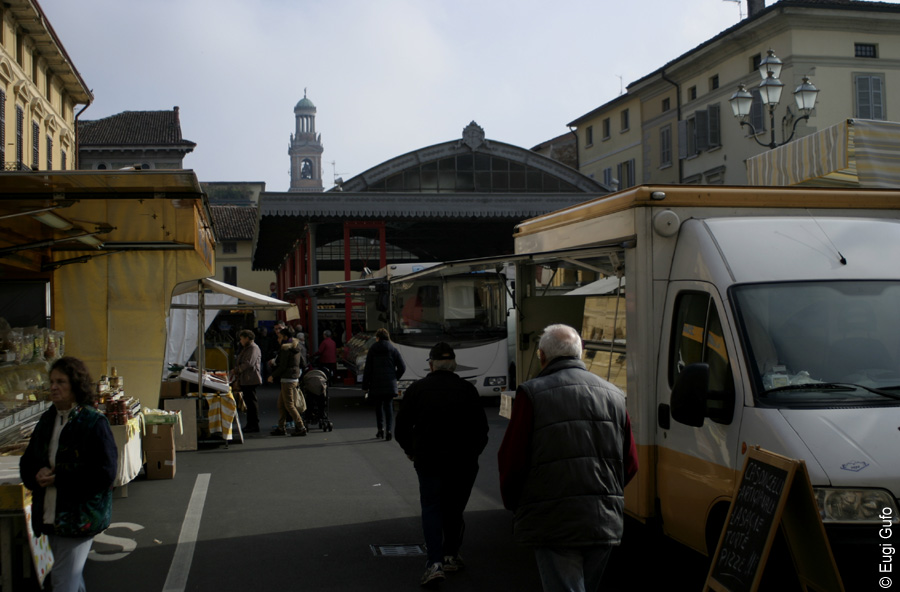
The former, smaller market structure has been reinforced in an aesthetically acceptable manner — an occurrence sufficiently rare to merit documentation.
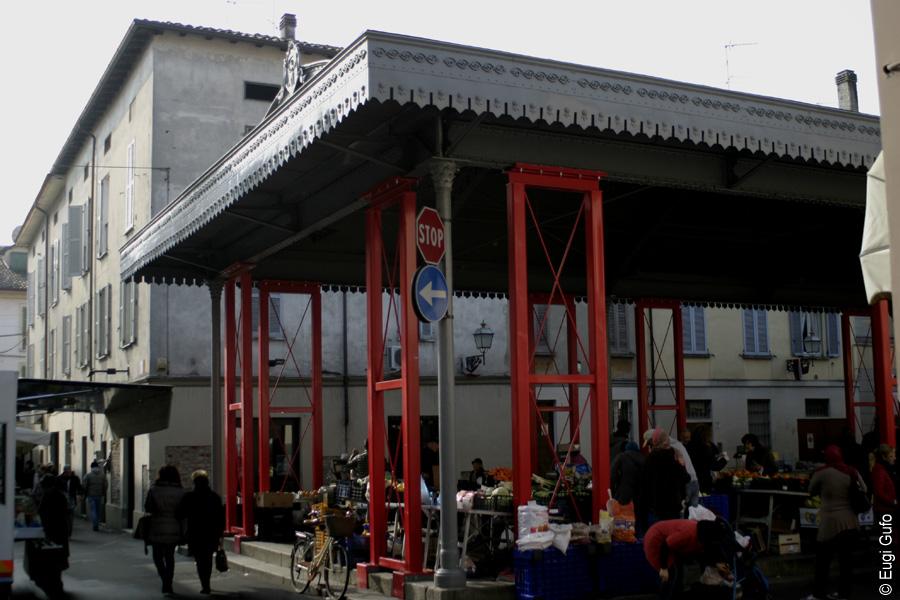
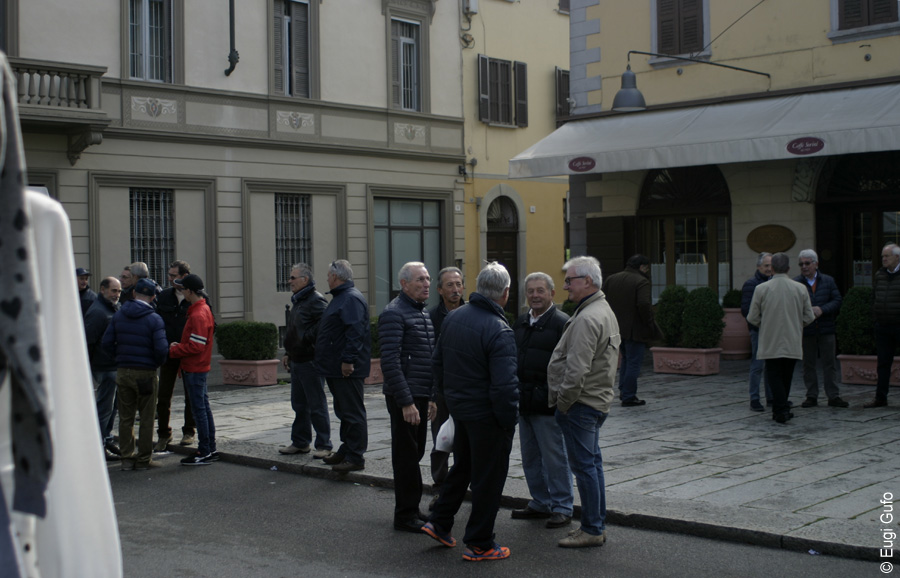
Whether due to the holiday weekend or not, I observed the market transforming into a social arena. Conversation appeared to dominate over commerce, which is perhaps the defining luxury of smaller urban environments.
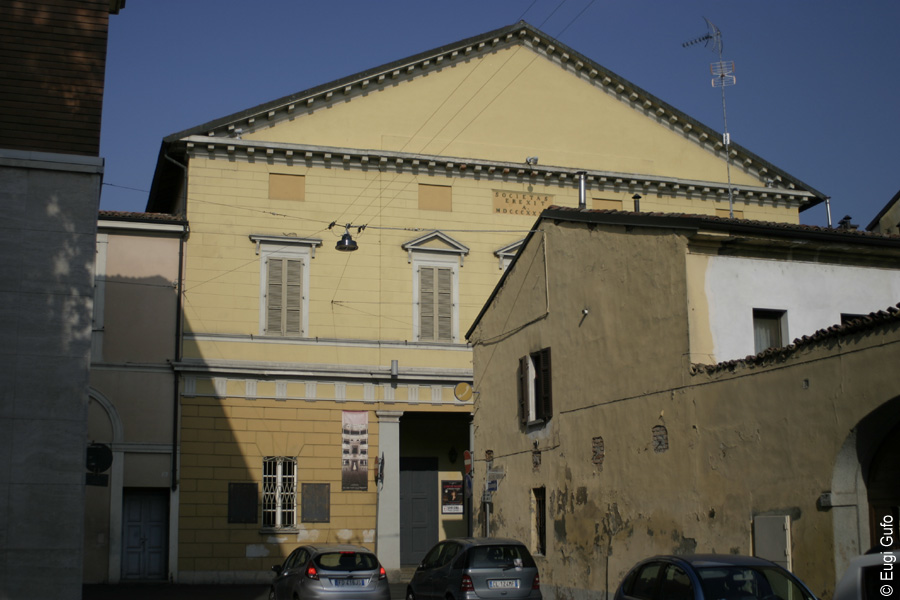
The local Teatro Sociale is compressed between buildings along a secondary street; judging from its programme, however, it remains commendably active.
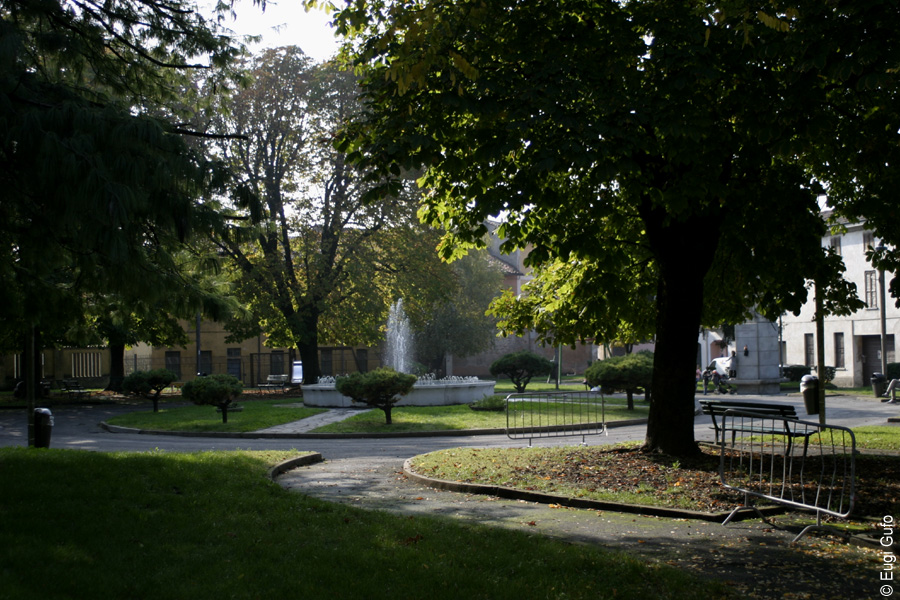
Green spaces are limited but well maintained.
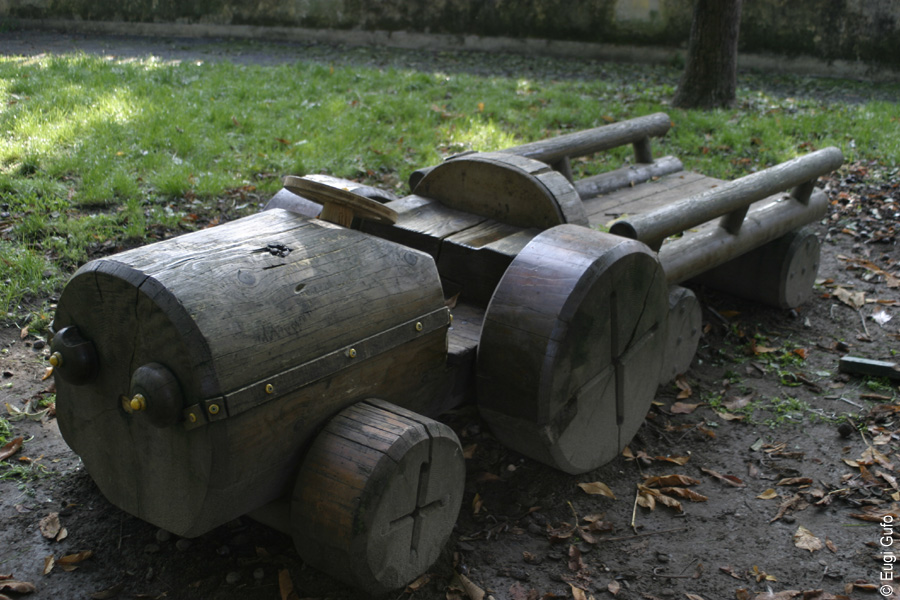
Their principal users are naturally children. For them, an engaging attraction has been installed — one that would have captivated me entirely at the age of three or four, despite its complete lack of technological sophistication.
In much of the outskirts, outdoor walks are accompanied by a persistent and suspicious odour. Upon identifying its source, I also discovered why the town’s name had seemed familiar.
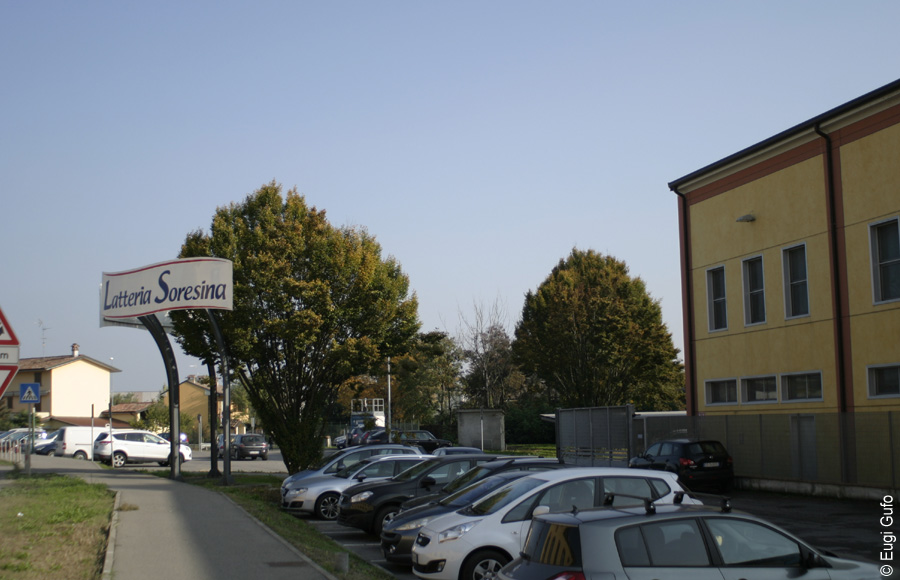
Other sectors of the local economy have not fared equally well.
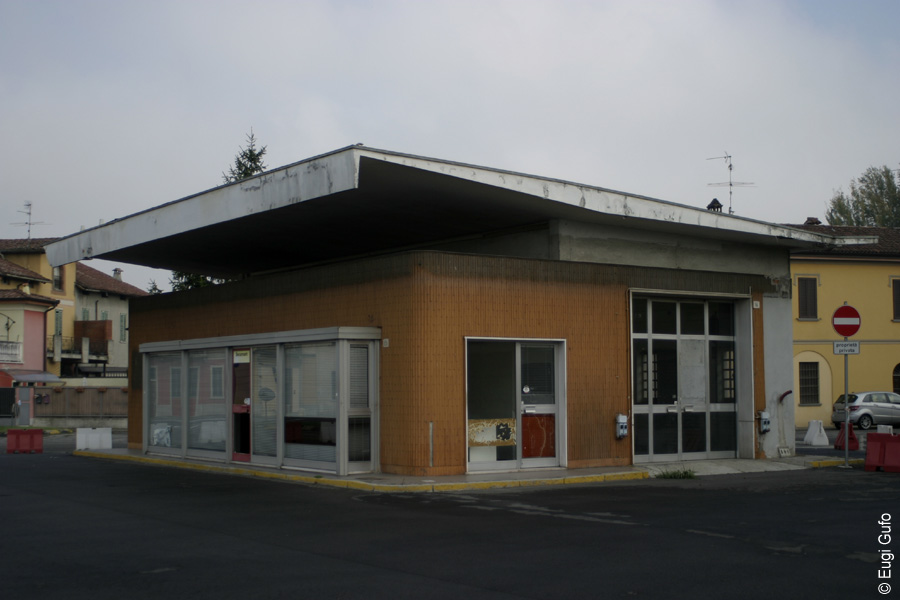
The same may be said of public transport: what remains of the former tramway has been reassigned to alternative purposes.
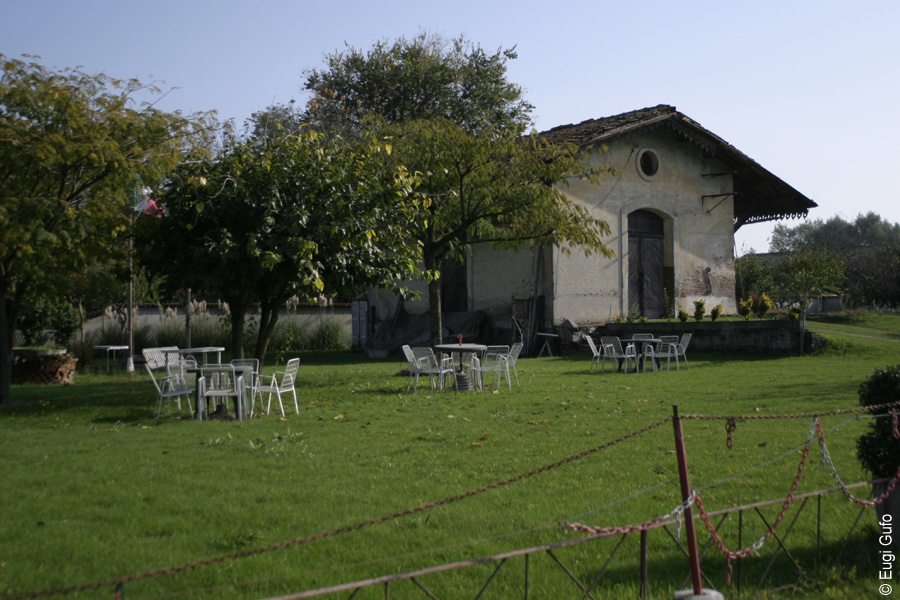
The railway station (three tracks) fortunately remains operational — possibly assisted by the fact that the building and surrounding areas have been granted on loan to the municipality.

Inside the station stands a remarkably large and curiously distinctive newsagent’s kiosk — almost beautiful. Its windows are filled with periodicals of uneven intellectual ambition. Alongside printed pornography (still industriously surviving), one finds sport and the private lives of public figures. There is, evidently, a market for such material.

The supposed station bar, furnished with antique pieces, proved to be a private establishment (interpretation withheld).
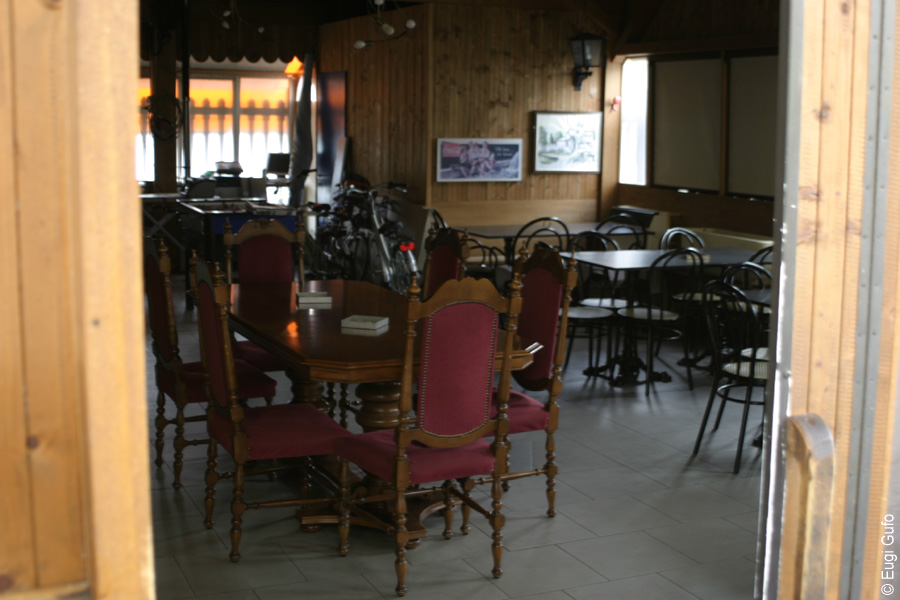
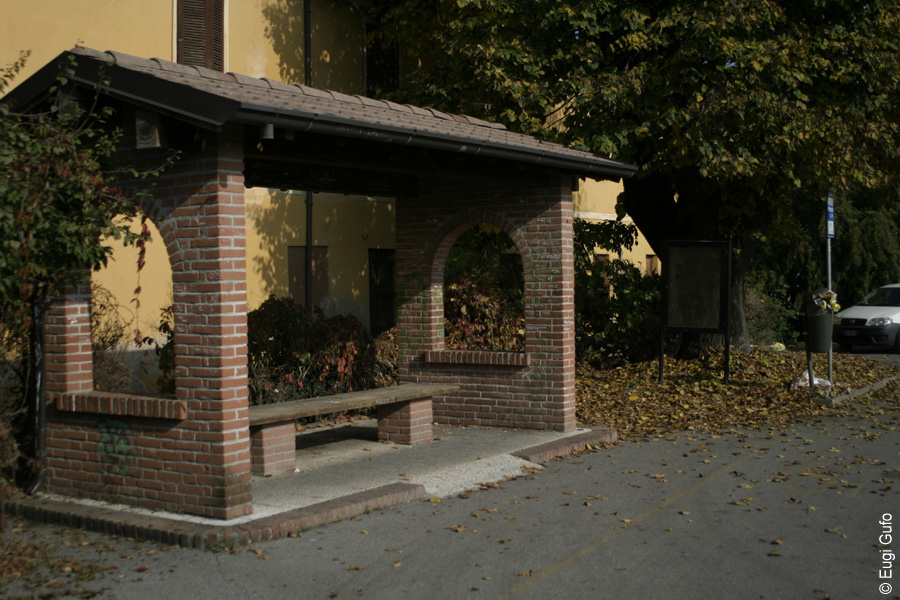
The nearby bus stop is agreeable in appearance, though of debatable utility in heavy rain.
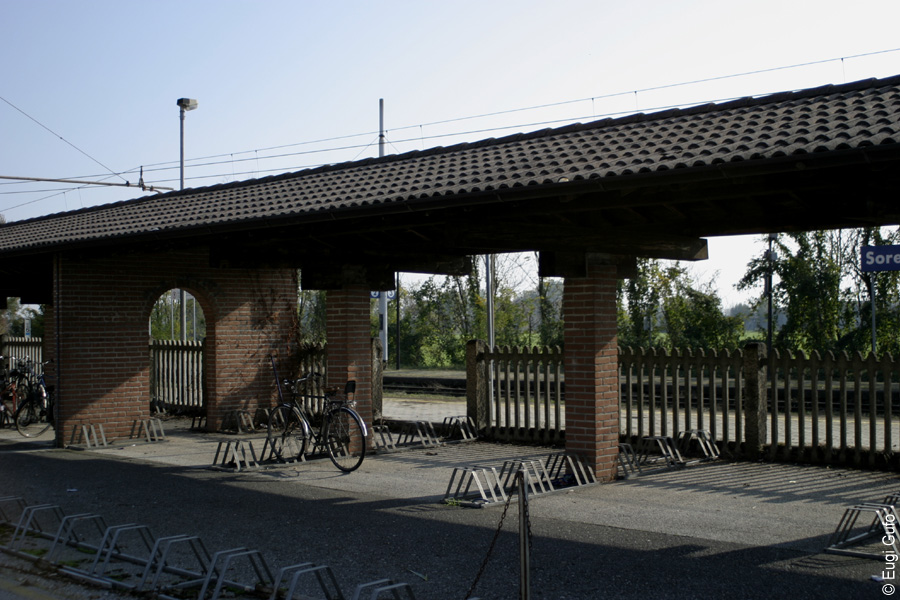
The bicycle shelter adopts the same architectural vocabulary. It is generous in exposure to sun and precipitation, and less persuasive as a deterrent to theft.
The station ashtray is excellent.

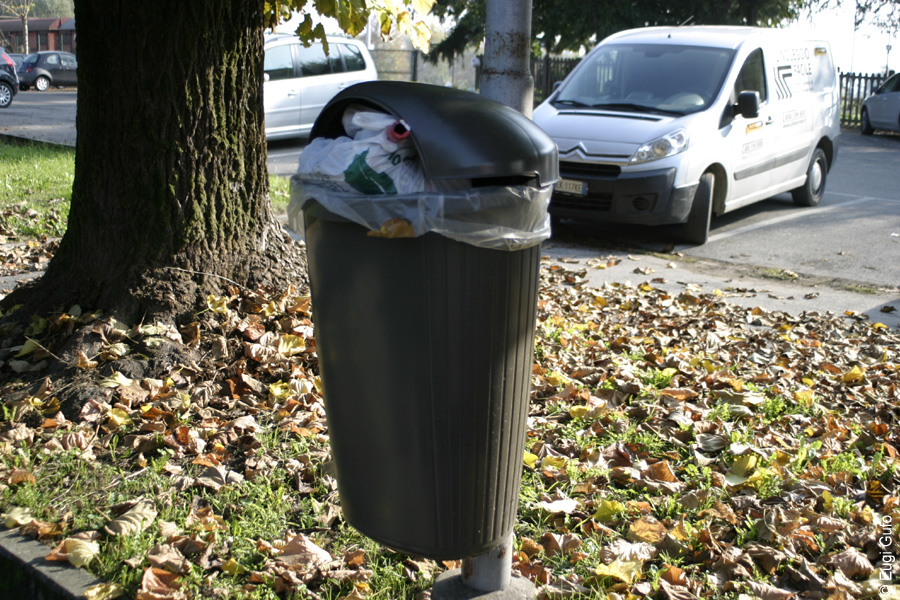
The litter bins are less so — though at least consistent throughout the town and of original design.
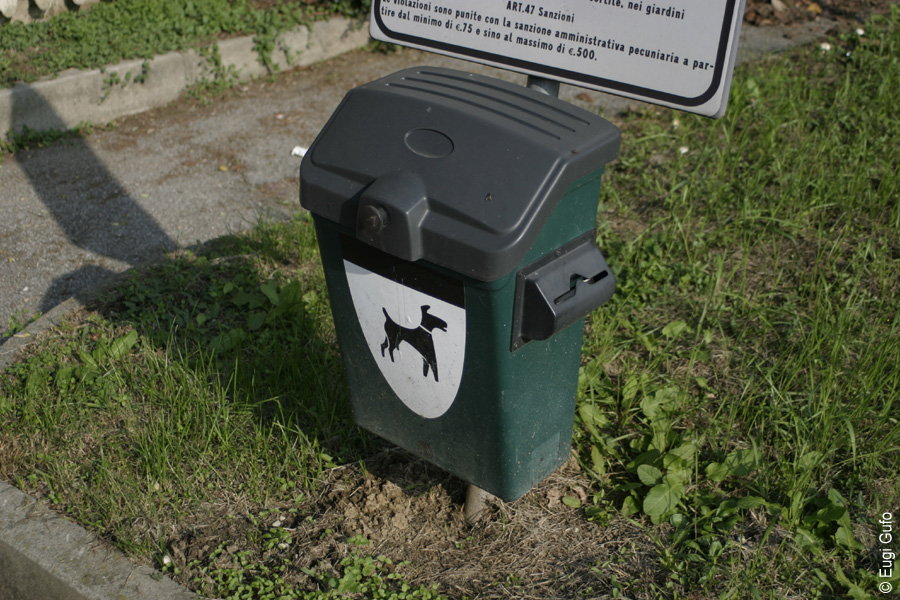
I observed only a single dispenser for dog-waste bags.
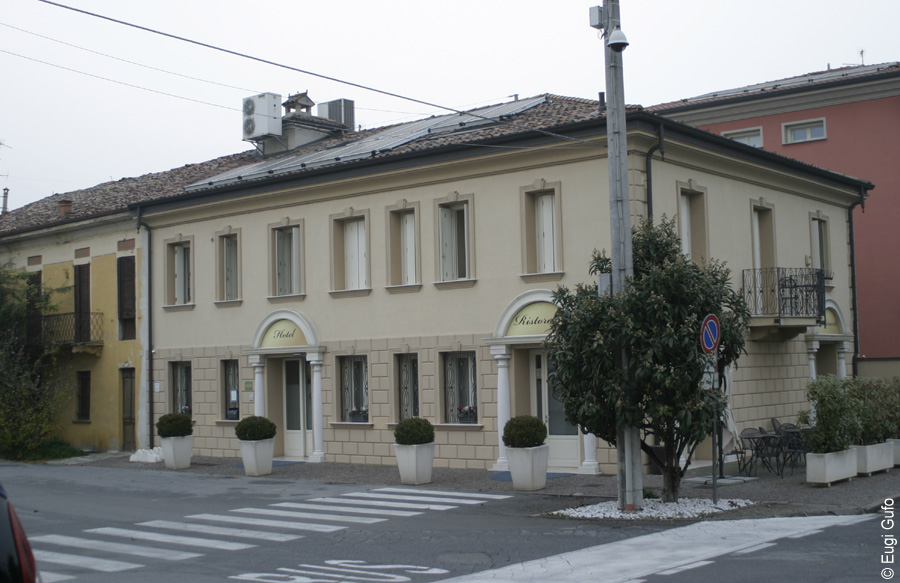
And with that, I relinquish any further ambition of discovering additional wonders in Soresina. Those endowed with greater stamina may reserve a room in this exuberantly kitsch hotel and continue the investigation.
Soresina, 31 October 2016
↓ Show comments ↓

