


 Long live Ukraine! Fuck the war!
 RSS of site articles
On a Saturday in mid-July 2015, unable yet to leave for Moscow, I decided to escape the exceptional Milanese heat and take refuge in some mountainous area. That is how the town of Tirano (in the province of Sondrio) happened to lie along my path. As I have done in most Italian towns I have visited, I began my exploration of Tirano from the local railway station (relatively attractive):
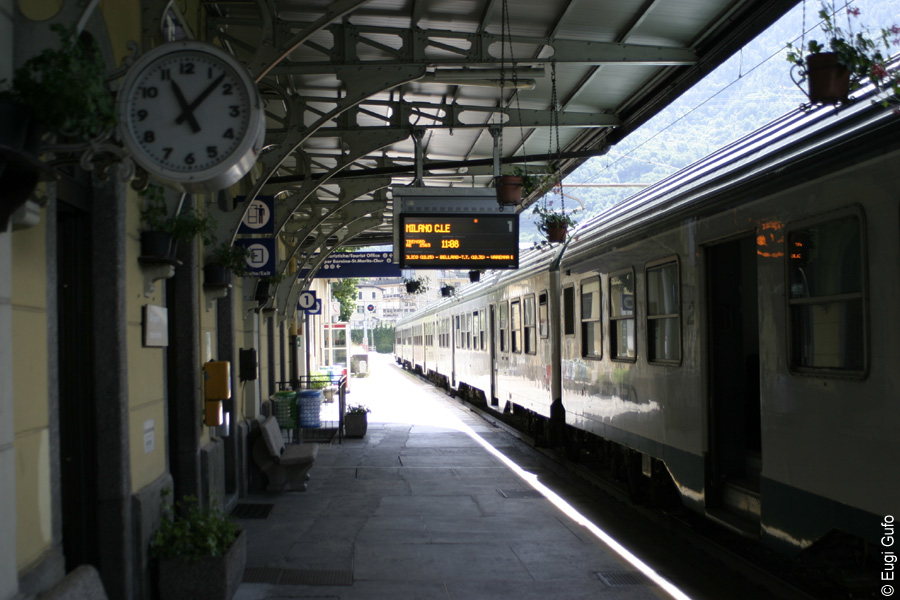
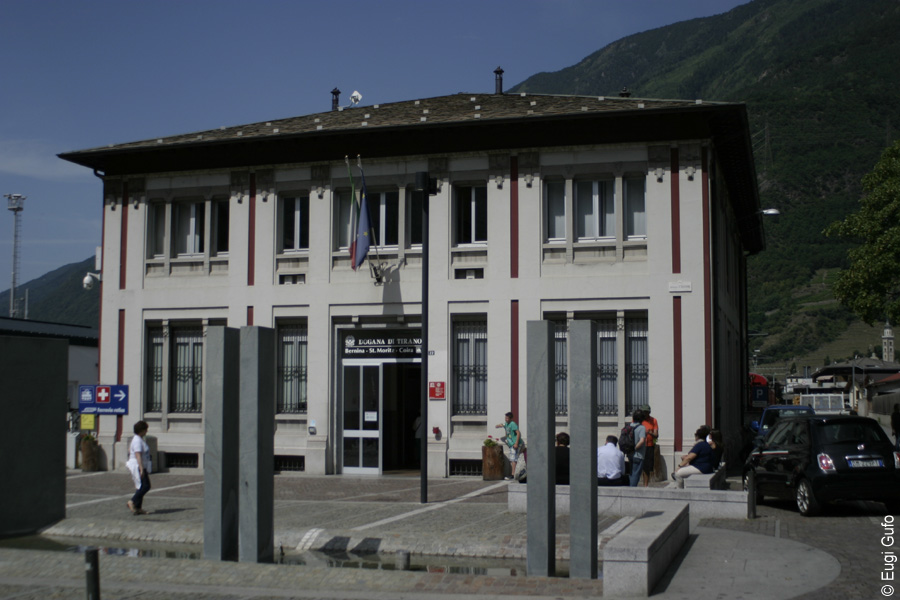
In fact, Tirano has no fewer than two railway stations, attached to one another. The second serves as the terminus of the Sankt Moritz (Switzerland)—Tirano line, on which the trains of the Rhaetian Railway operate.
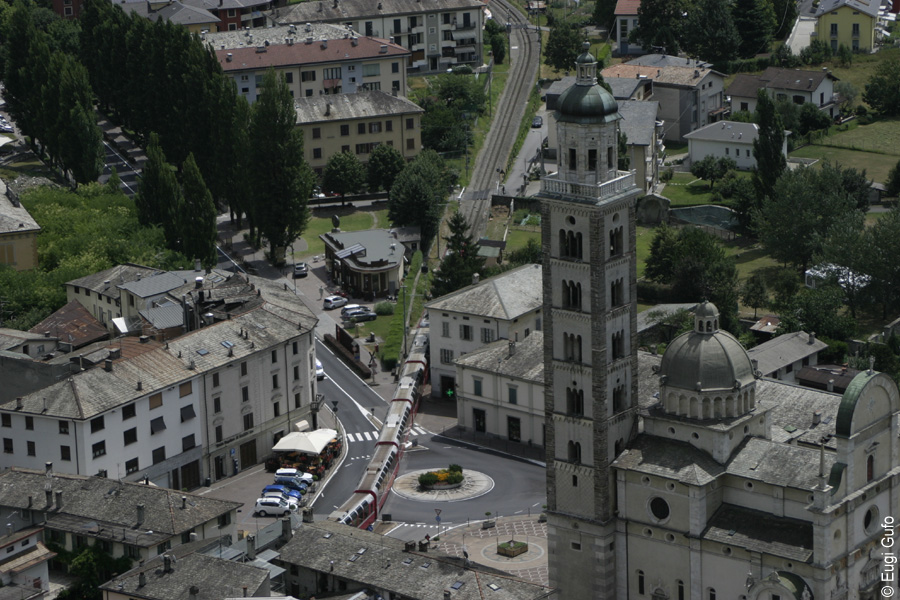
The narrow-gauge track of the Rhaetian Railway runs through the middle of the town, so the red trains resemble extremely long trams.
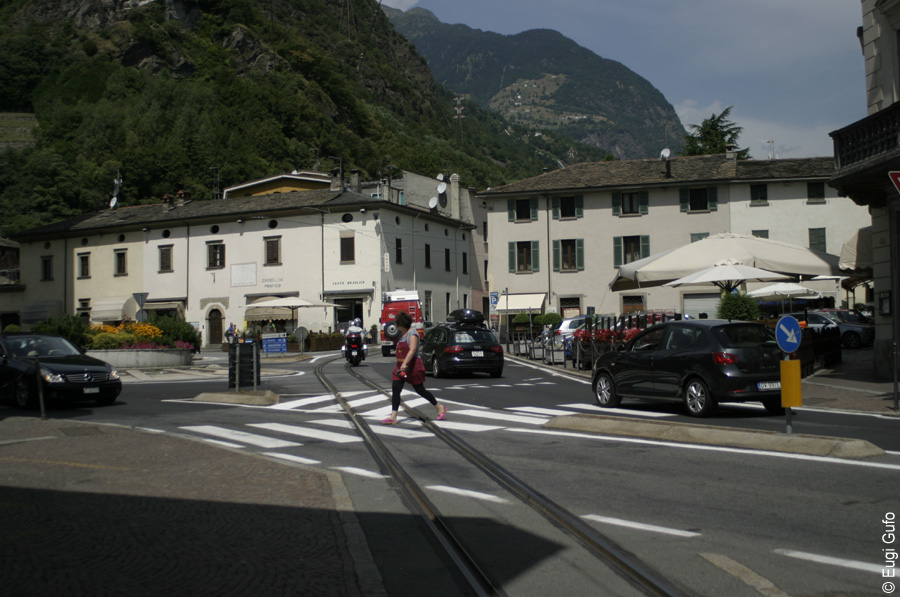
But, as you may have noticed, they do not always have a proper reserved lane. Consequently, one of the main squares simultaneously functions as a level crossing.
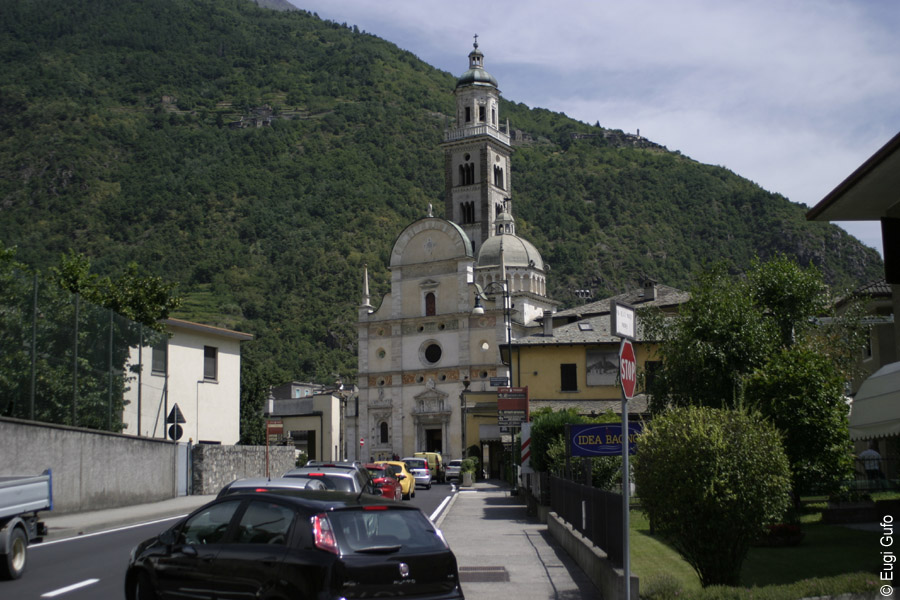
At this point, however, it is advisable to move on to Tirano’s more conventional attractions. The most beautiful, most visible and probably most famous building in Tirano is the Sanctuary of the Madonna di Tirano. Inside it is far less spacious than it might appear, but it is worth seeing for its elaborate decoration.
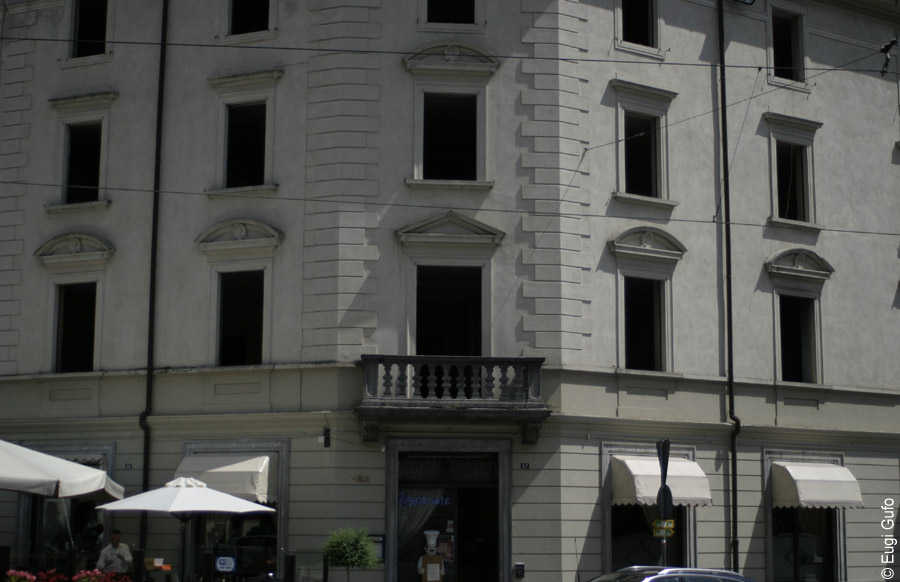
There are quite a number of fine civil buildings (both ancient and less so)… The Swiss border lies two kilometres from Tirano: the influence on the architecture is more than evident.

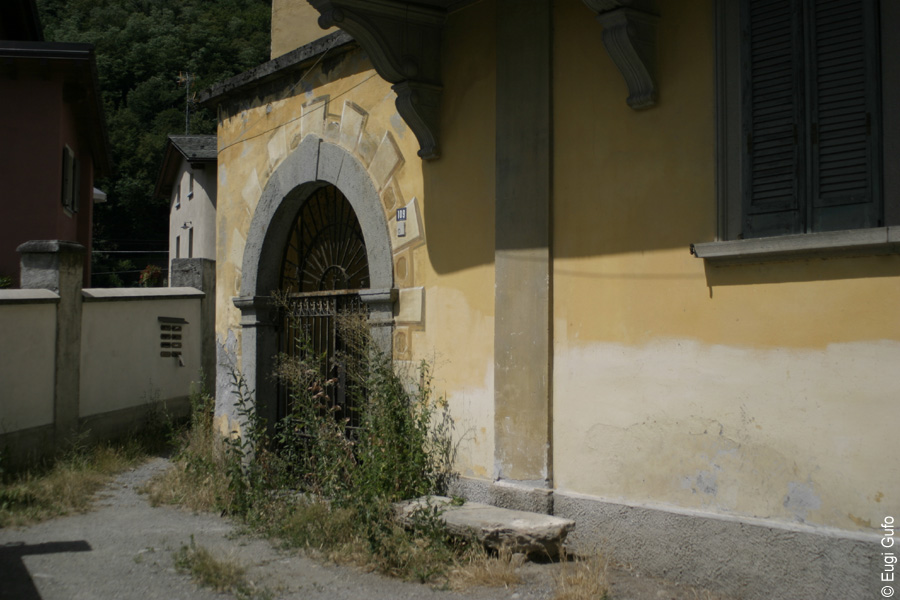
At first glance Tirano appears to be a prosperous tourist destination: full of restaurants, shops, cars with Swiss and German number plates. Yet even in the central streets abandoned buildings emerge, completely empty, with holes that were once windows and façades often in precarious condition.
As soon as I become sufficiently wealthy, I shall buy an abandoned house of this kind — perhaps in a more isolated area — and use it as a studio unreachable by the various worldly elements of disturbance.
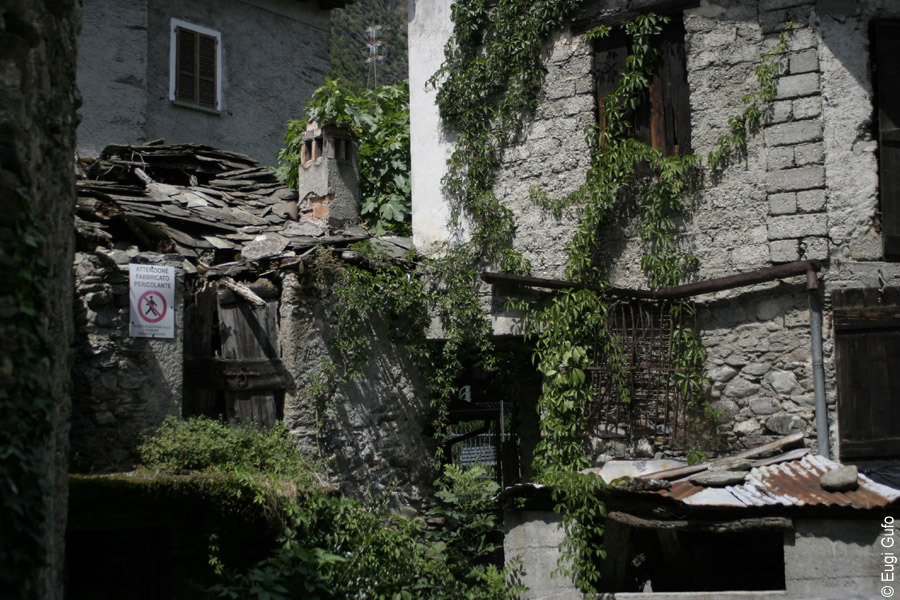
Although for the time being I cannot imagine how much the renovation and winter heating might cost.
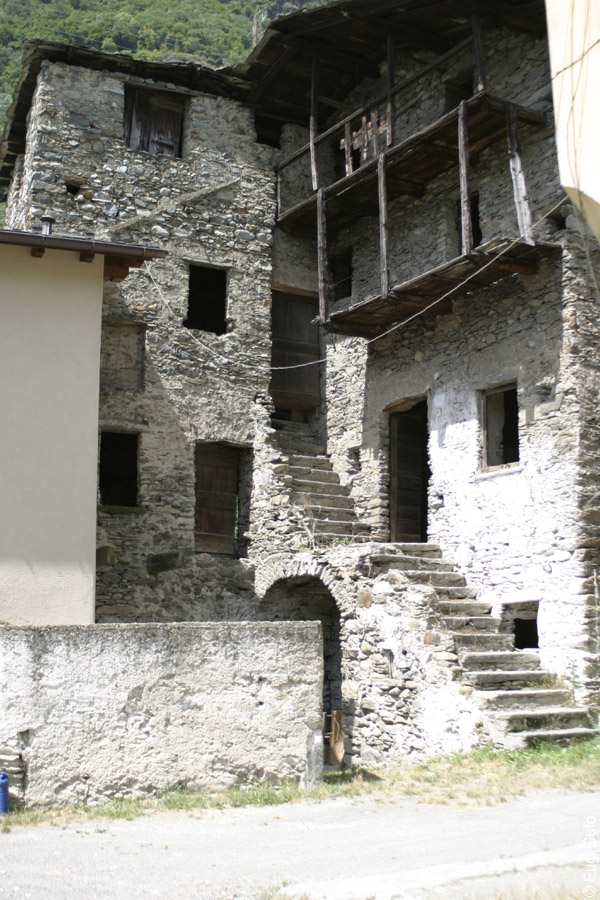
Irresponsible owners of architectural beauty are capable of abandoning any kind of house. I hope someone manages to save this one as well:
In general, some of the urban landscapes are rather beautiful.
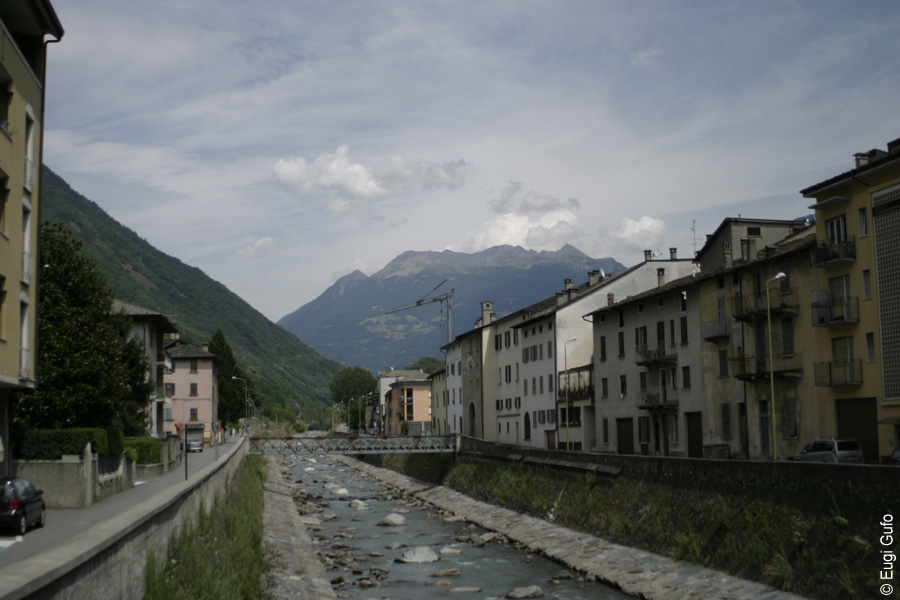
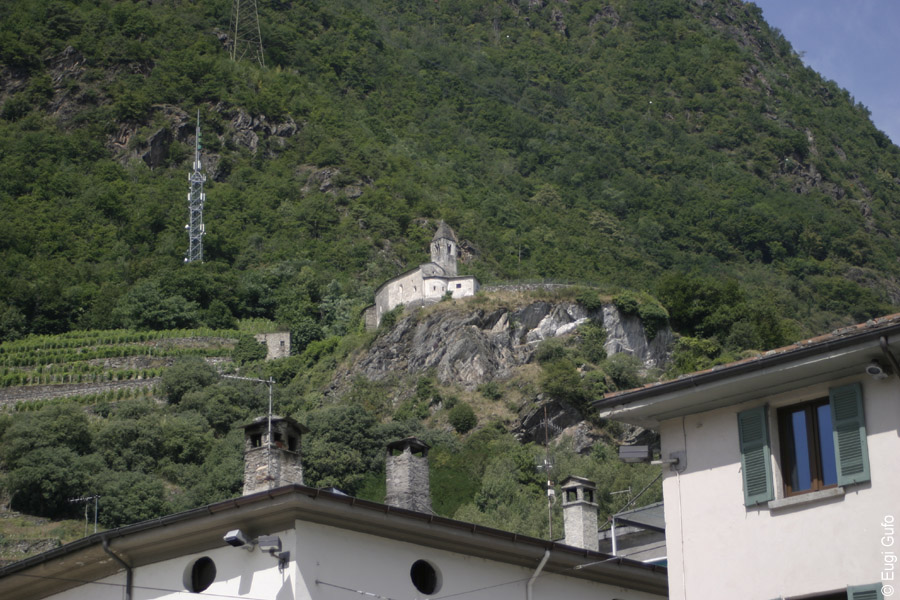
One of the principal advantages that every tourist should appreciate in a mountain town is the possibility of identifying interesting things to see on the outskirts simply by raising one’s gaze.
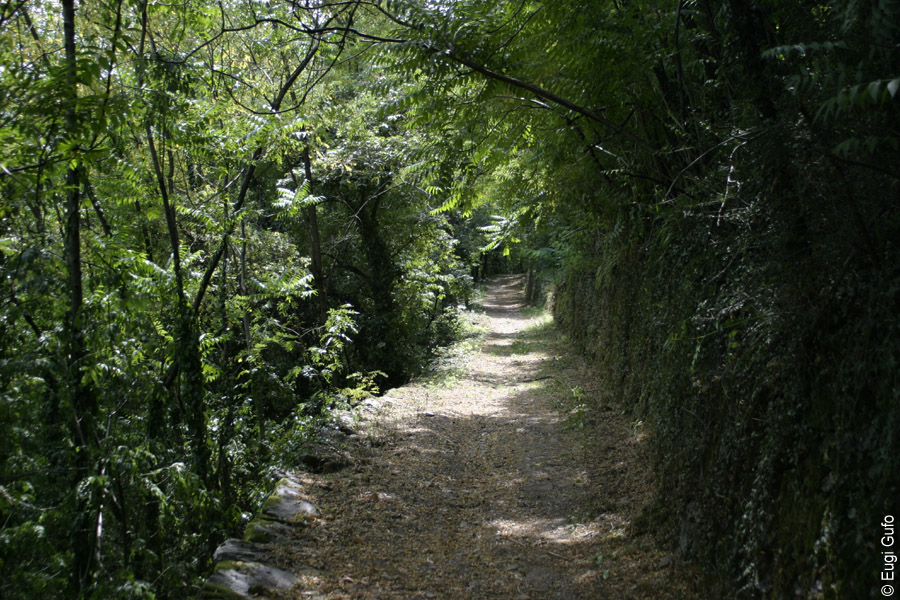
To my great good fortune, the path leading towards that church was almost entirely in the shade.
The church (S. Perpetua, 11th century) is not bad…
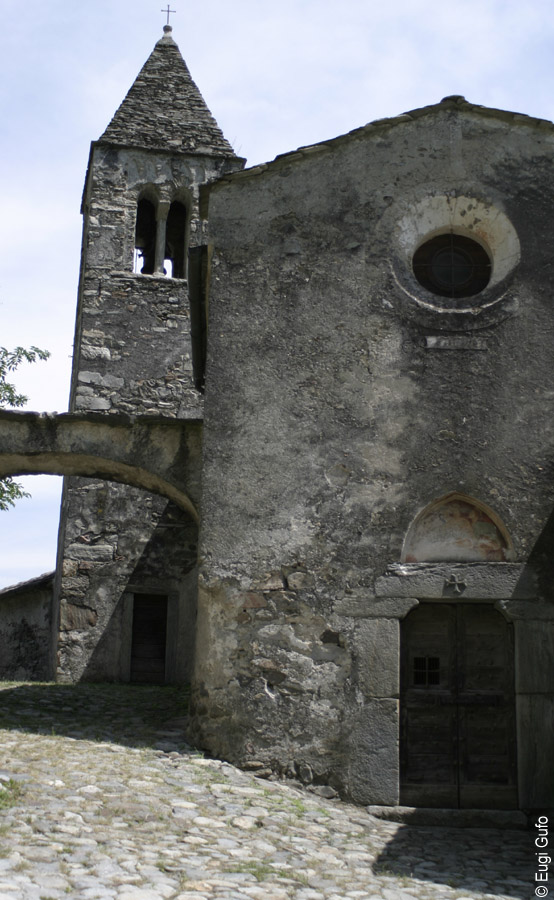
… and, seen up close, appears even more interesting than it did when observed from below.
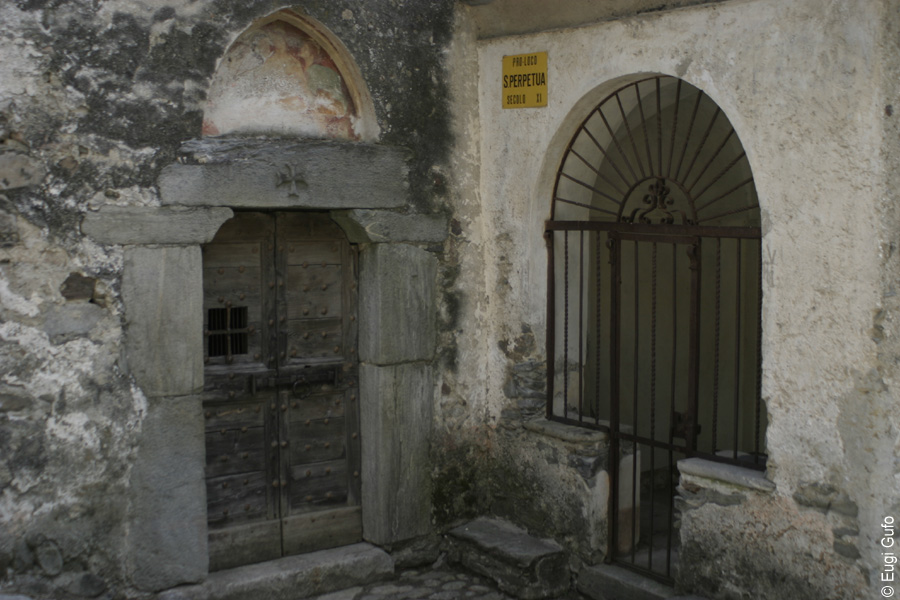
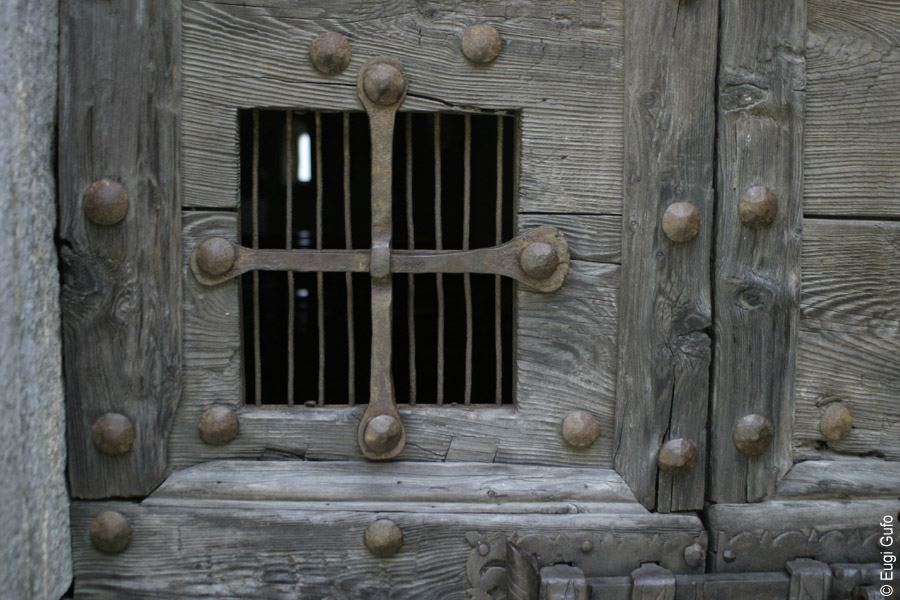
Unfortunately, however, it was closed, and I failed to force the door (once upon a time things were made to last until Judgement Day).
Another advantage of mountain towns lies in the possibility of searching for interesting places in the centre by looking from top to bottom.
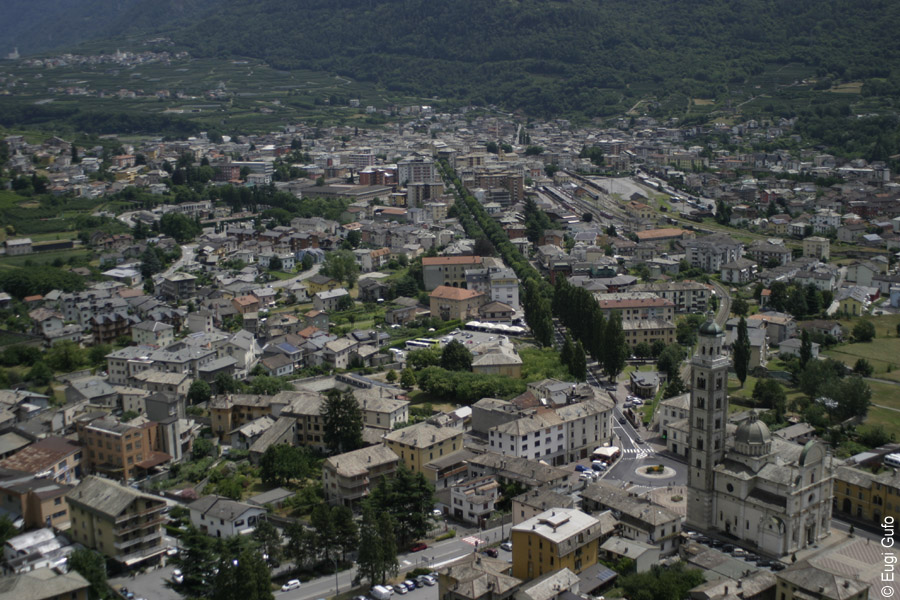
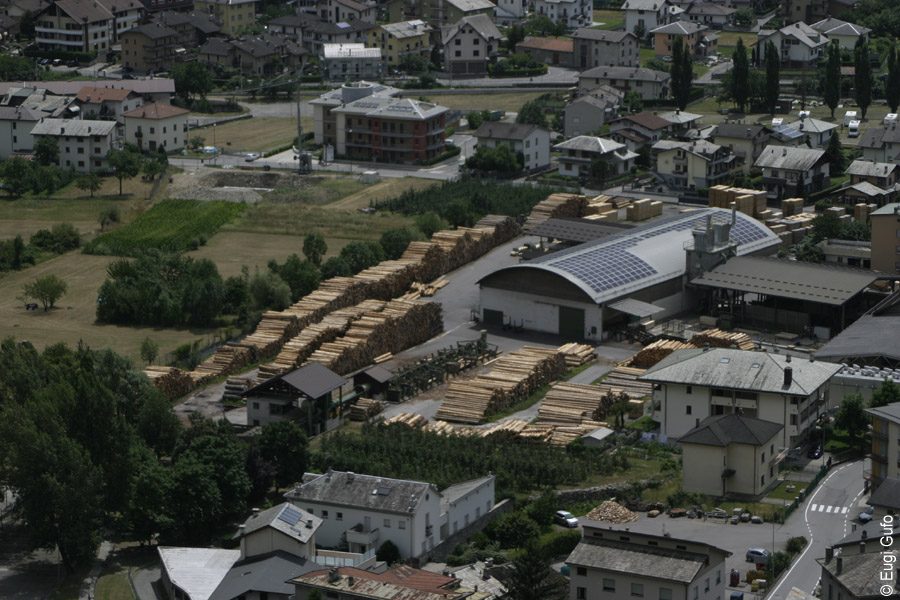
Not only places, but facts as well. It appears that one of the main sectors of the local economy is the timber trade.
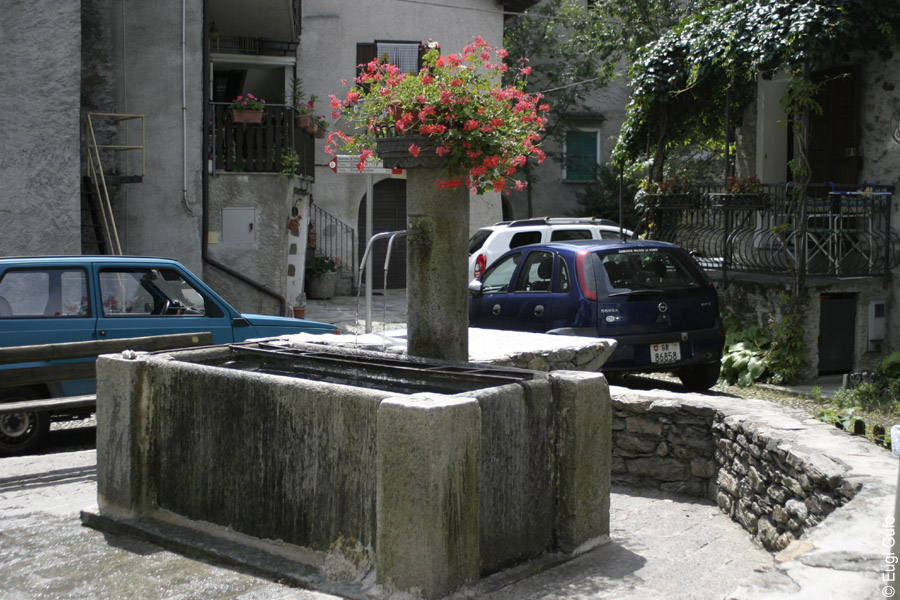
Besides timber, there is another abundant resource in Tirano: drinking water. The latter, however, is free (certain perpetually complaining individuals have yet to understand that water is always free); the fountains found throughout almost the whole of Tirano are of considerable size and never of the same shape.
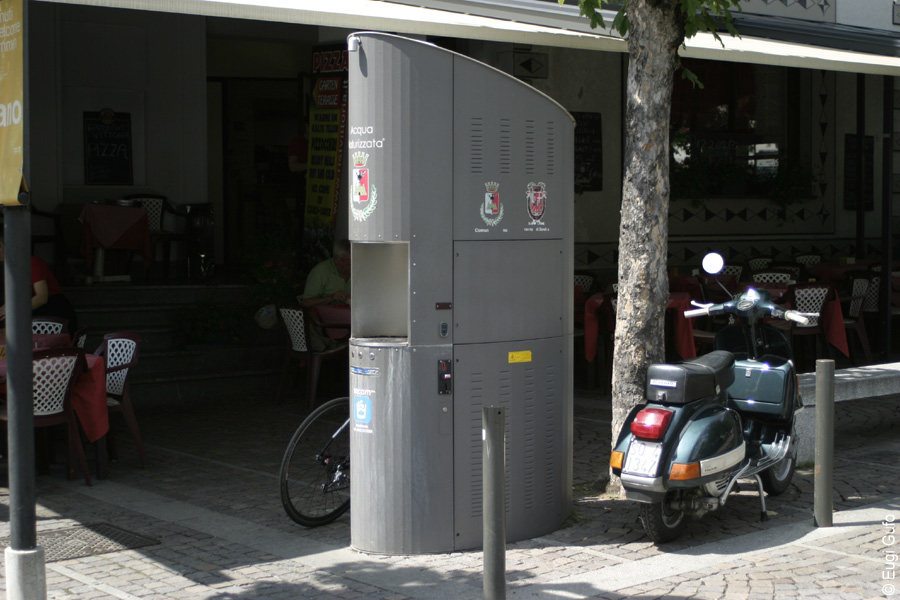
For those who do not trust historic fountains, a mega-dispenser has been installed near the railway station. It does, however, demand coins in exchange for water.
Having quenched their thirst, tourists and explorers may rest on a bench: there are so many that I briefly felt I was not in Italy (but then I remembered that I was in a border area). The most common model is made entirely of wood:
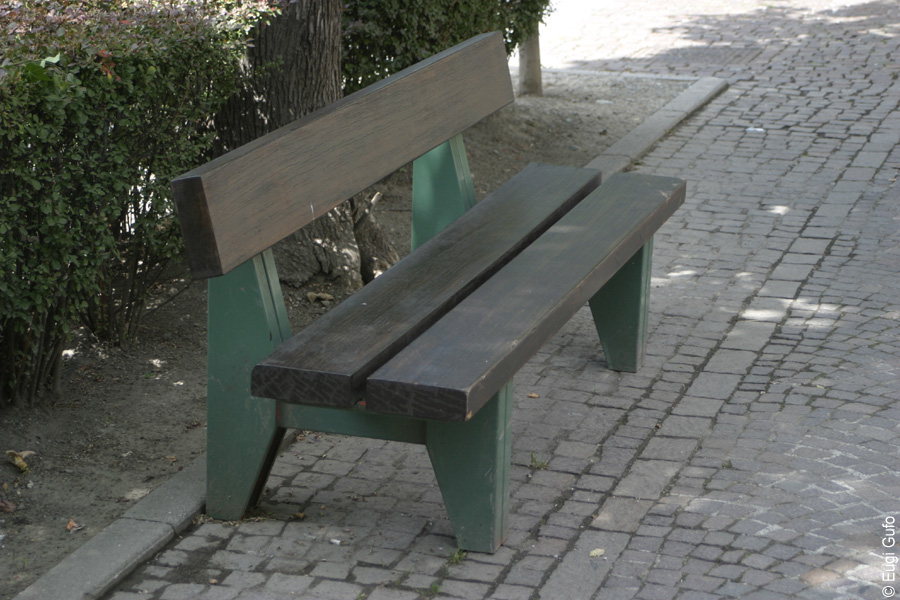
The most comfortable model, on the other hand, was spotted in one of the central squares. The specimens I can testify to, however, are not particularly well preserved.

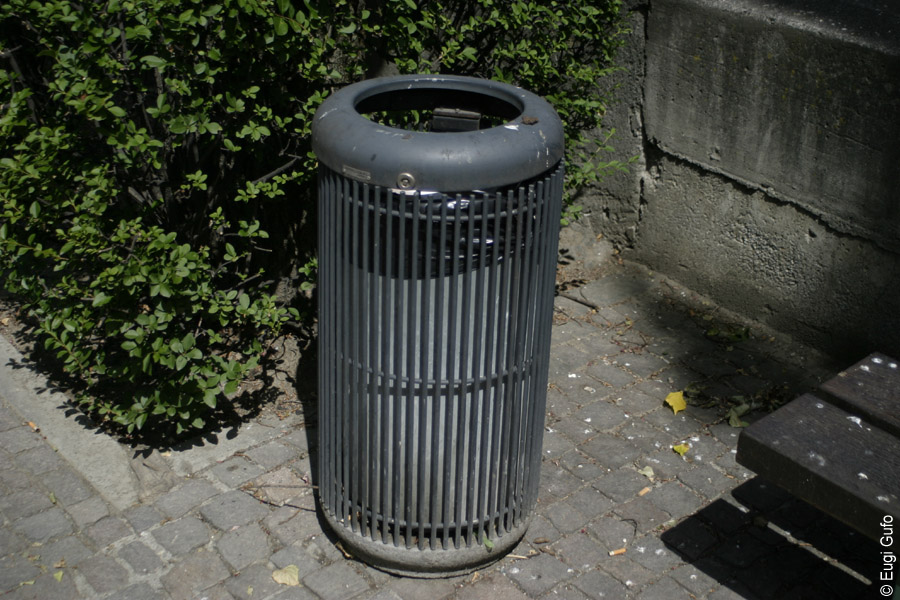
The most common litter bins in Tirano:

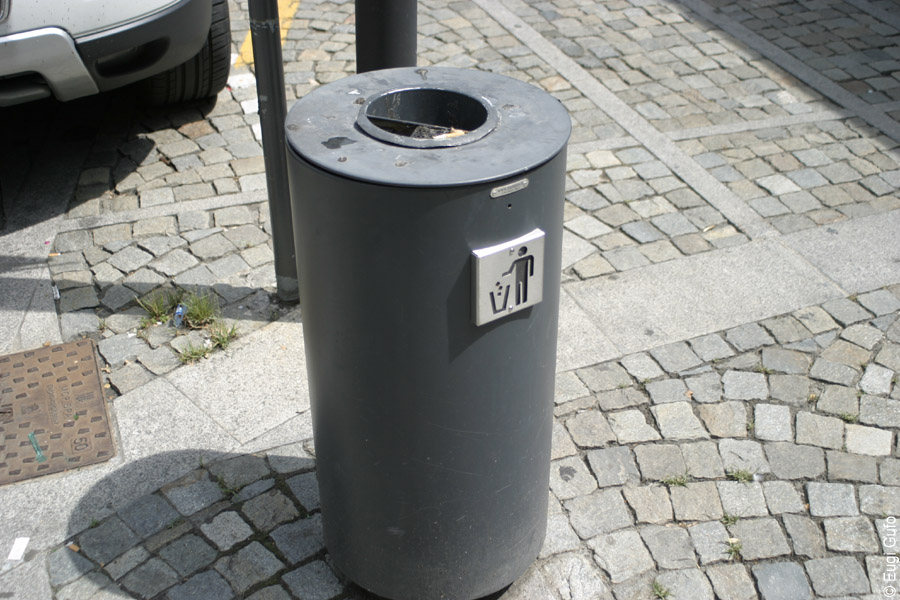
The less common litter bins in Tirano:
The only litter bin with an ashtray that I found in the whole of Tirano stands in the square in front of the railway stations. (Dear administrators of Italian towns! Even if your citizens are as orderly as the Swiss, do not encourage others to throw cigarette ends on the ground or extinguish them on items of street furniture.)
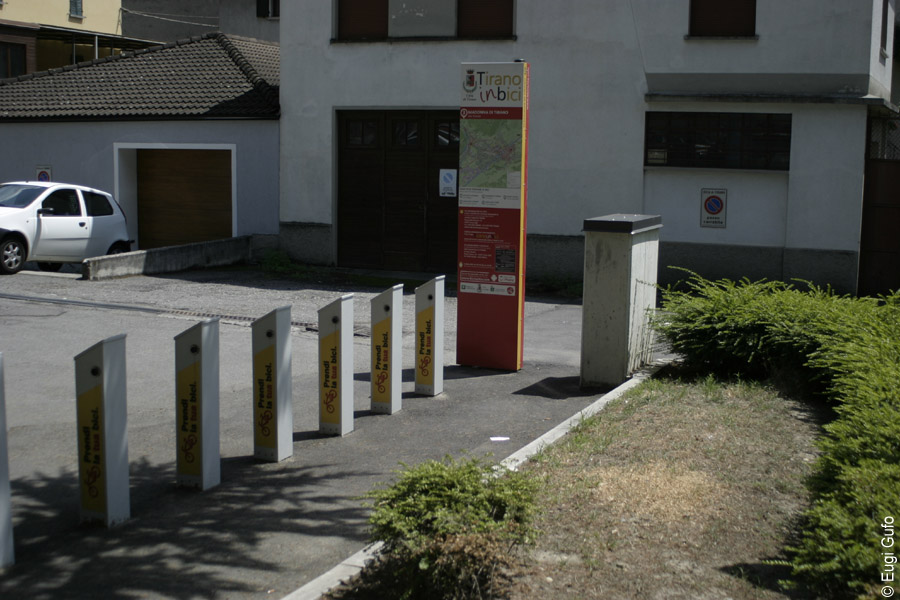
For those who pursue a healthier lifestyle, there is a local bike-sharing system (although in real life some people manage to combine smoking with cycling). Unfortunately, however, I did not see a single bicycle belonging to «Tirano in Bici».
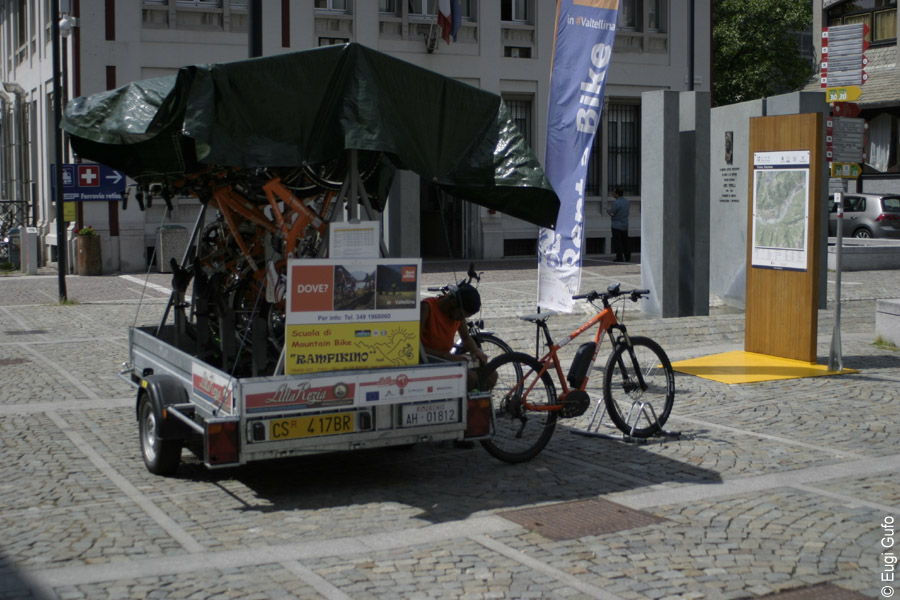
They must all have been stolen by this [mobile] Mountain Bike School…
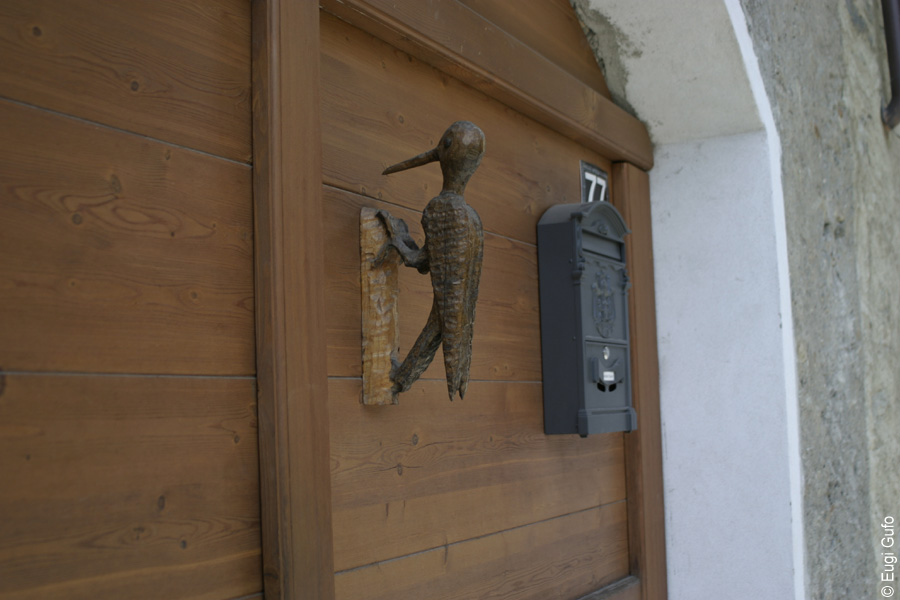
The woodpecker hanging on a private gate is strangely decorative only. It would be far more satisfying to see the idea realised to its full extent, if that sculpture functioned as a door knocker.
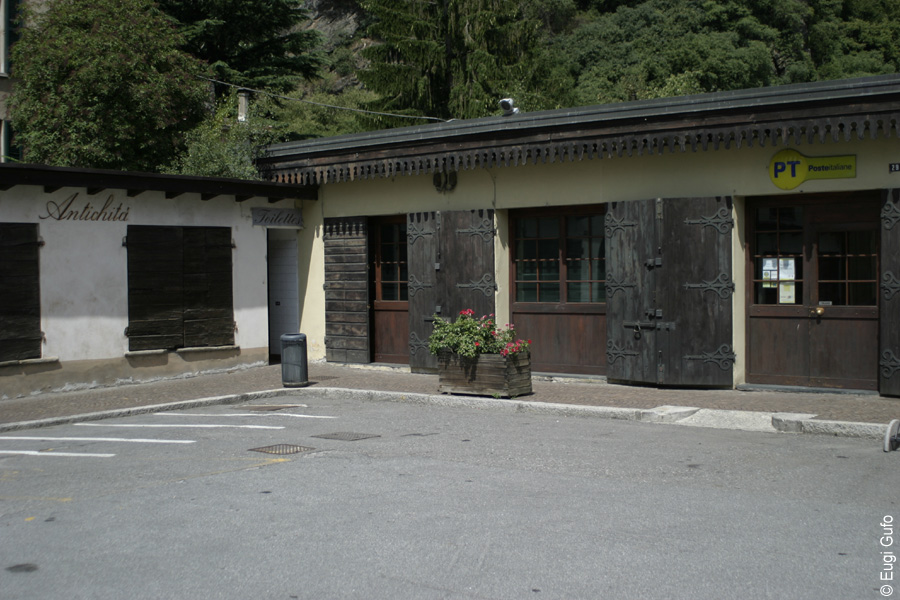
I almost forgot: according to my investigations, Tirano railway station is devoid of a WC (there usually is one, but it is either paid or locked). In the town, however, I happened to find an old public lavatory: it was open and, surprisingly, relatively clean. At that point in my journey I hypothesised that I had inadvertently crossed the Swiss border. And yet I had not…
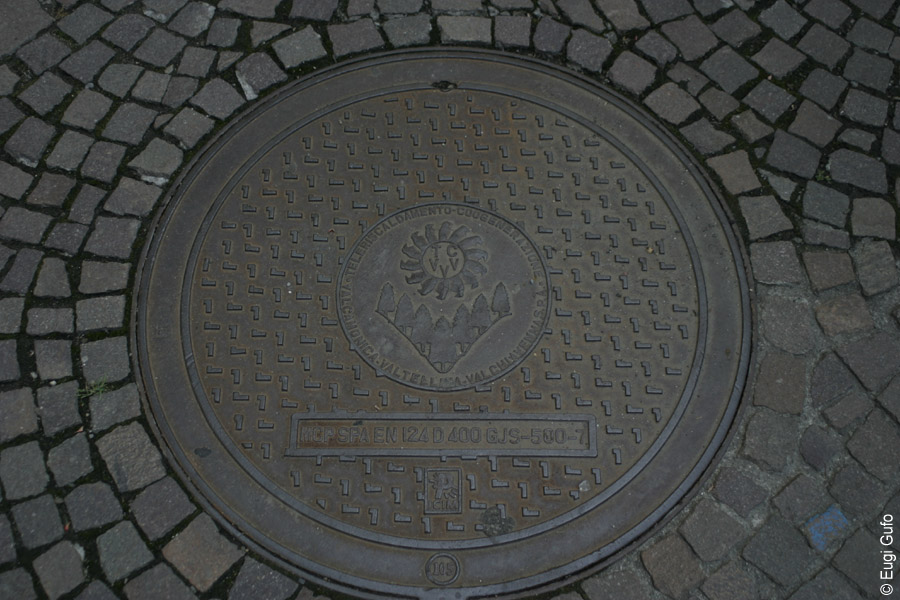
Even the manhole covers are beautiful? Ah no, it is only district heating… But they are beautiful nonetheless.
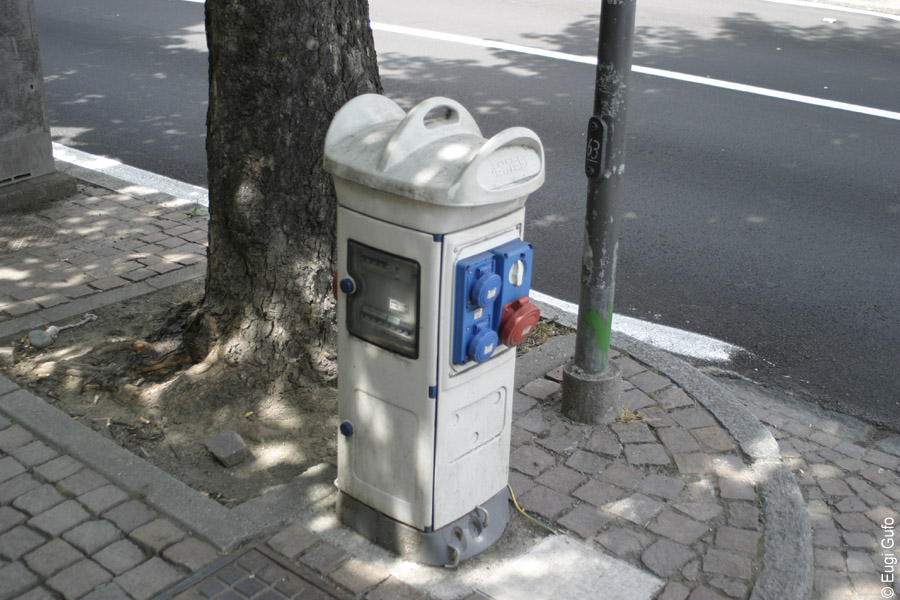
The electrical hook-ups for street traders, on the other hand, are rather unattractive. Moreover, white was chosen as their colour, which highlights every trace of accumulated dirt.
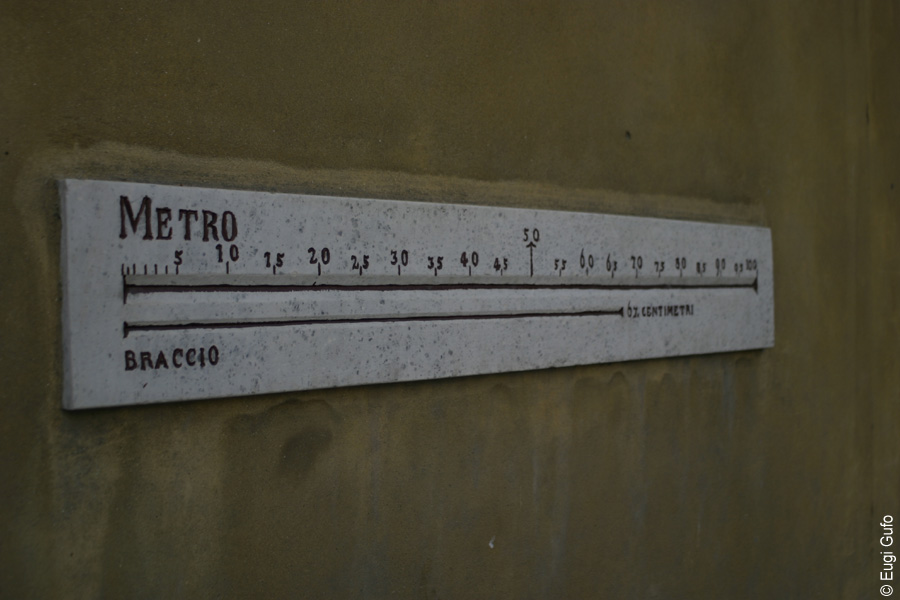
But the account is becoming somewhat too long, so I must conclude. I shall do so with the photograph of a useful and interesting detail. Affixed to the wall of one of the buildings, without any particular reason, is a marble plaque comparing two units of measurement.
Now that you are somewhat better informed about Tirano, you may go there in person and discover all those things that I have not shown you.
Tirano, 18 July 2015
↓ Show comments ↓

