


 Long live Ukraine! Fuck the war!
 RSS of site articles
I love seeing cities at night. Especially new ones. And I love even more seeing at night those cities that in the afternoon are full of brainless tourists. In short, my acquaintance with Finale Ligure could only begin at night. At 8:30 p.m. on Friday 19 July I took a train from Milano Centrale, and at 11:50 p.m. [still the same day] I got off at Finale Ligure Marina station (not marked on Google Maps!)…
Finalborgo, one of the three former municipalities that today make up Finale Ligure, is still surrounded by its 12th-century walls. Today, in the 21st century, all the gates are open even at night, and the bridges are lowered.

The borgo is small and can be explored in an hour, but the title of one of the «most beautiful villages in Italy» is absolutely deserved. The night-time lighting is well suited to the historic setting.
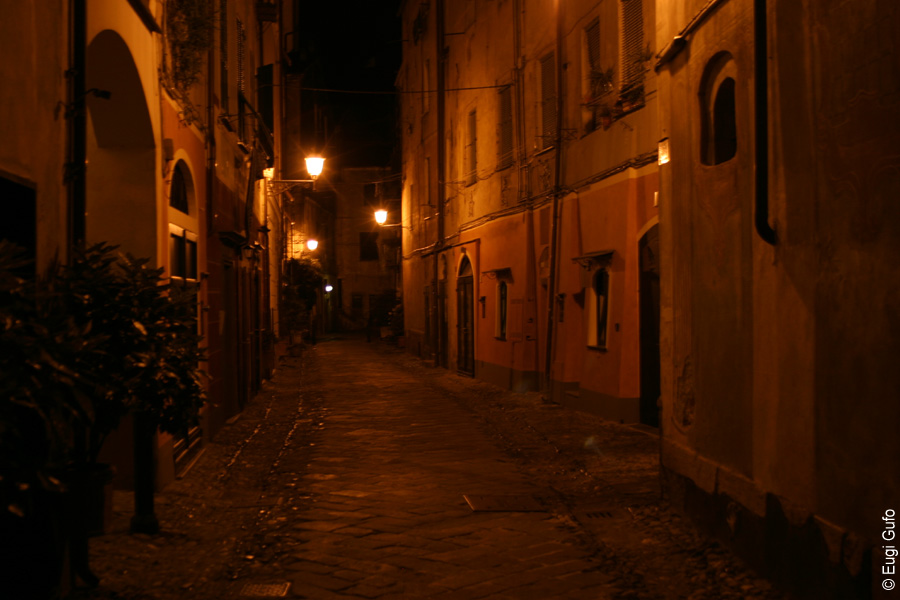
At a certain point, around three in the morning, I ran into two schoolboys (apparently just of age) who tried to ask me for a cigarette in English. When they realised I could speak Italian, they said: «Ah, thank goodness. You know, it’s full of foreigners here…»
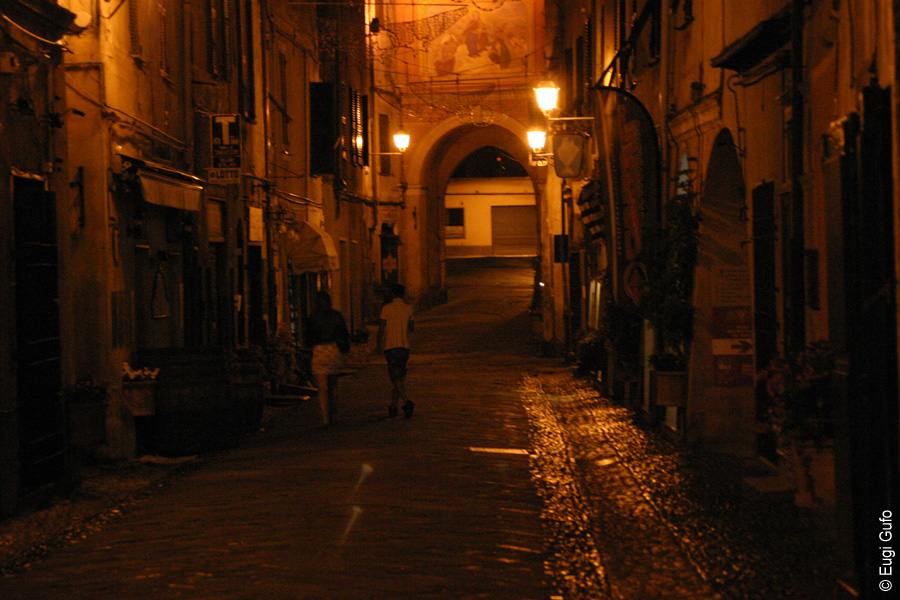
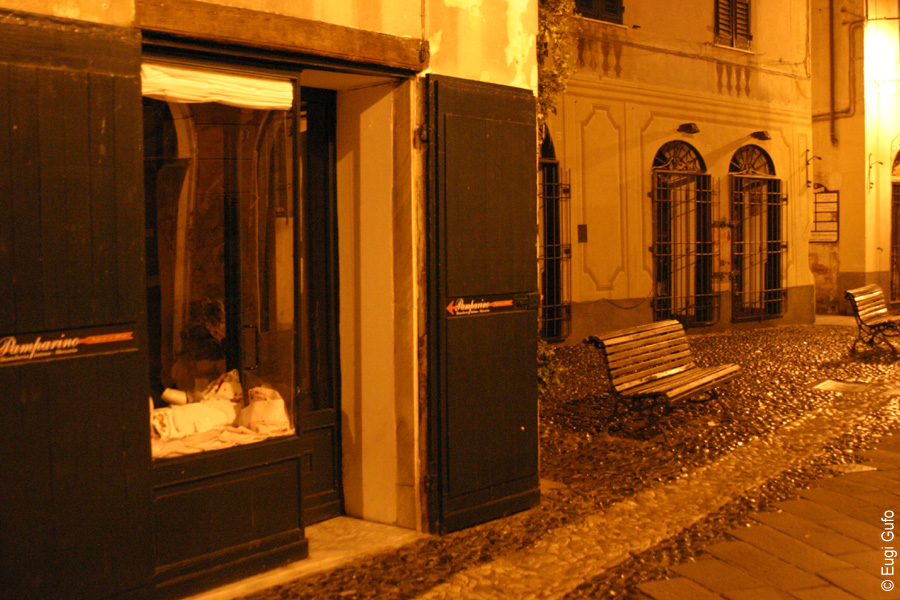
Another interesting detail: many local shopkeepers do not close their shop windows at night with roller shutters, grilles or shutters (what are those wooden ones called that you see in the foreground of the next photo?).
At this point I went to sleep. And the next morning I continued exploring the town.
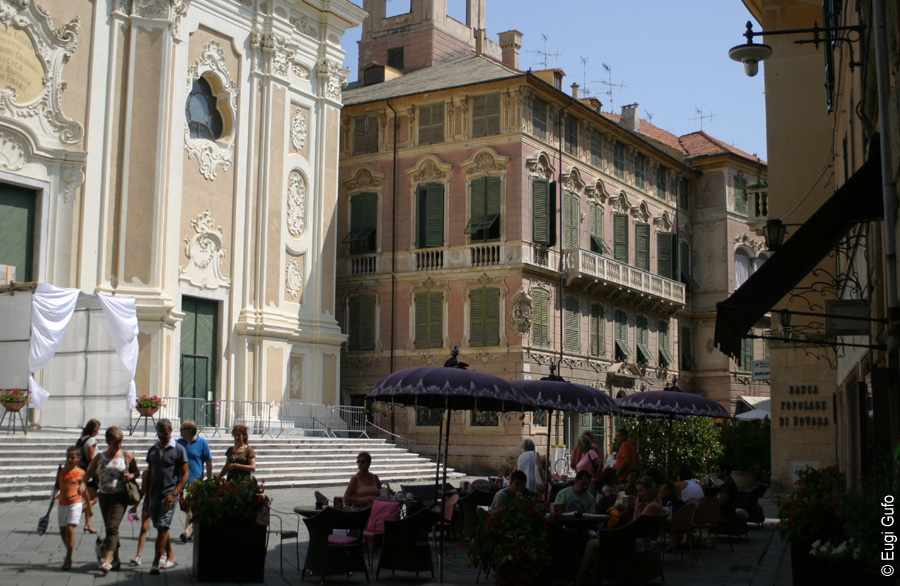
Tourists head towards the sea, locals open their slightly kitsch parasols over the outdoor tables… notice the scaffolding at the entrance of the church under renovation: in contrast to the parasols, it is so beautifully simple that it looks like a canopy set up for a papal visit.
But now that there is daylight, we can go up into the hills (beaches do not interest me) to see the town from above. Here we are halfway to the summit, on the small square in front of Castel San Giovanni (nothing special).

You may ask why I decided to climb all the way up under a mad sun, sweating like a pig. My answer: because I wanted to see the ruins of Castel Govone, founded in the 12th century by the Del Carretto marquesses, the local feudal lords.

I am absolutely not sorry for the effort and time required for the ascent (even less for the kilos lost): the castle is truly beautiful. Due to restoration works, however, I was unable to get any closer than this. So before going there, check the days when it is open to the public.
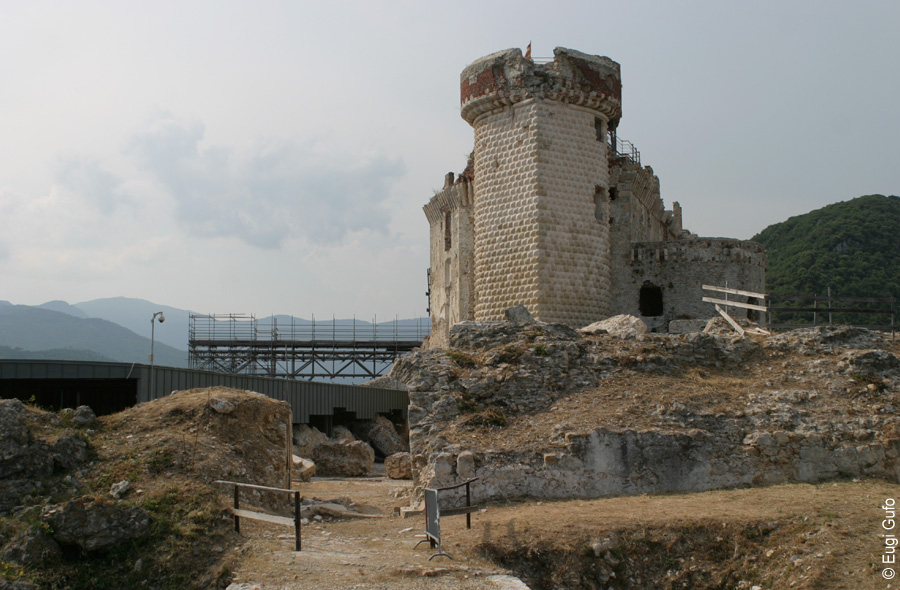
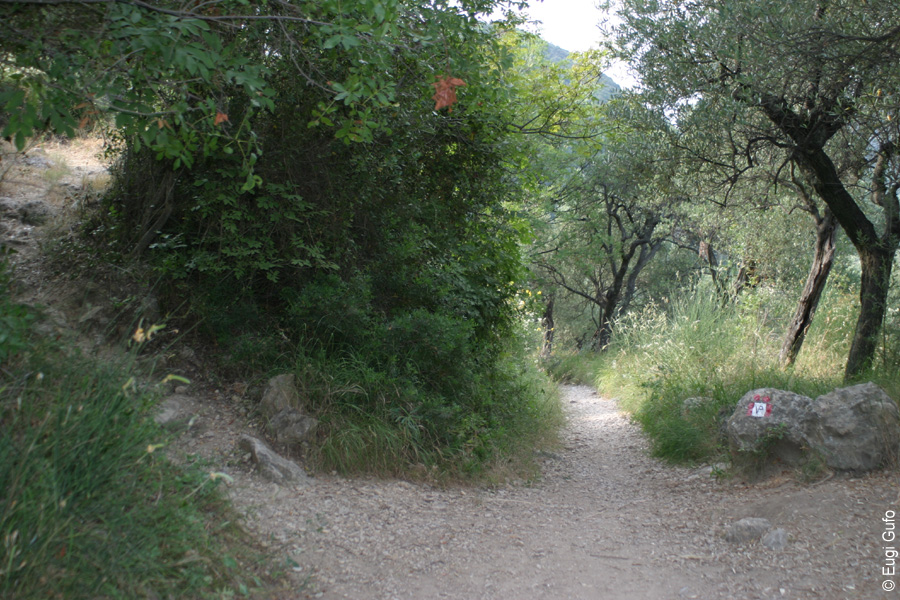
A tip for those who are at least as curious as I am: this castle disappears from view in the final third of the climb and reappears only when you reach the top of the mountain. Or when you take the wrong path and, unintentionally, start descending. So be careful: once you reach this «junction», you must take the path going up to the left.
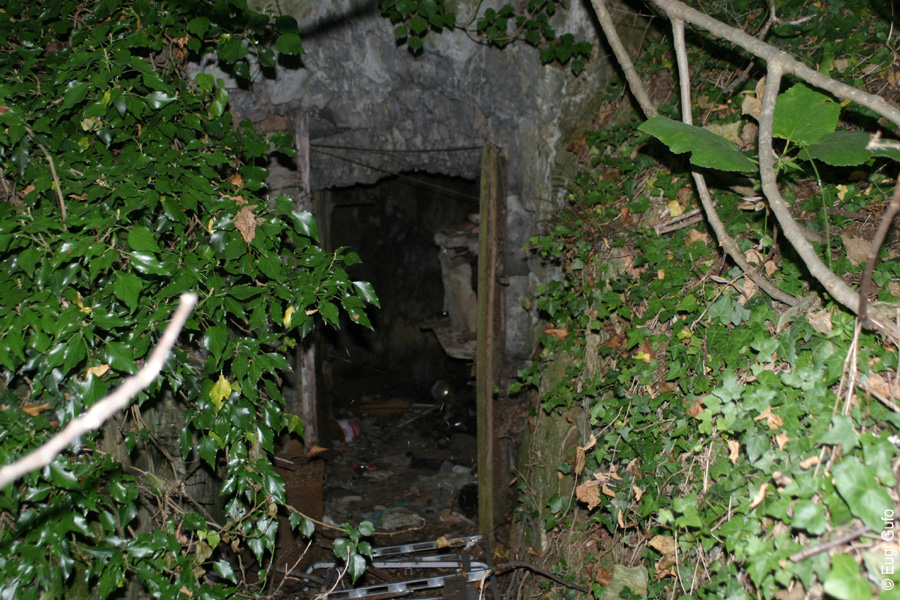
Now we can head back down to observe human life. Along the path running along the boundary between the built-up area and the mountains, I noticed two old abandoned caves. Both are fitted with doors and shelves. They are now full of assorted rubbish, but I believe they originally served as food storage (essentially ancient refrigerators).
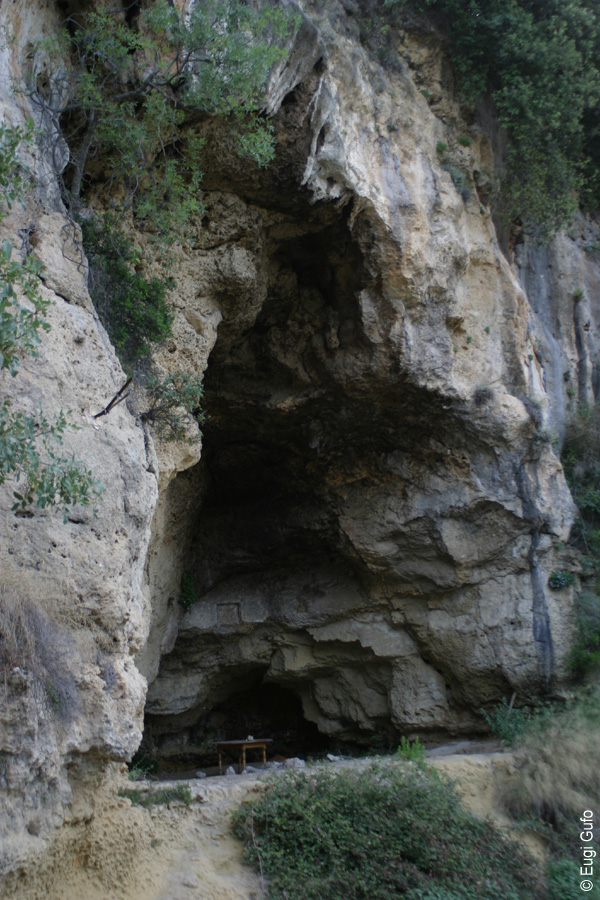
And then, at a certain point, I found a large inhabited cave.
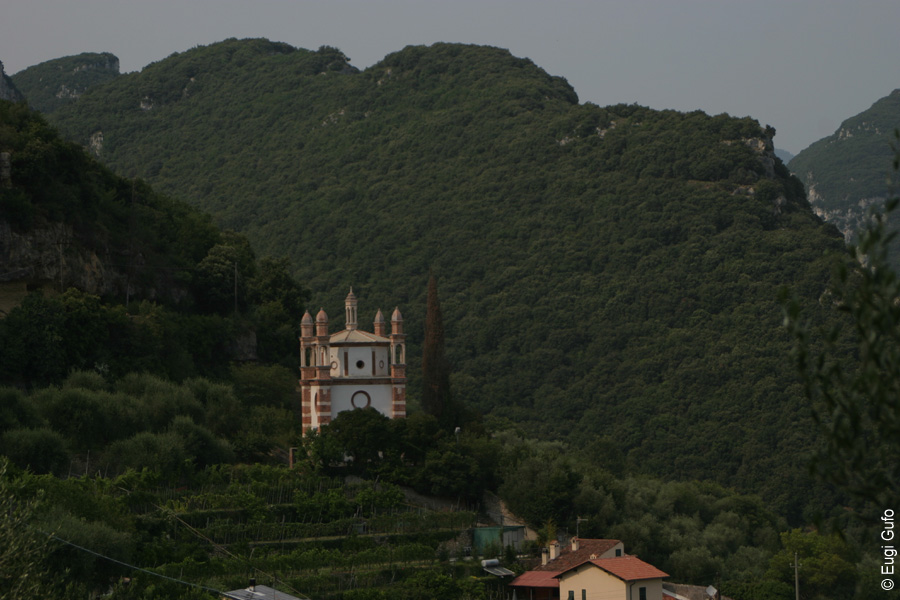
Not far from it stands a church (Our Lady of Loreto, or of the Five Bell Towers) that looks like a mosque.
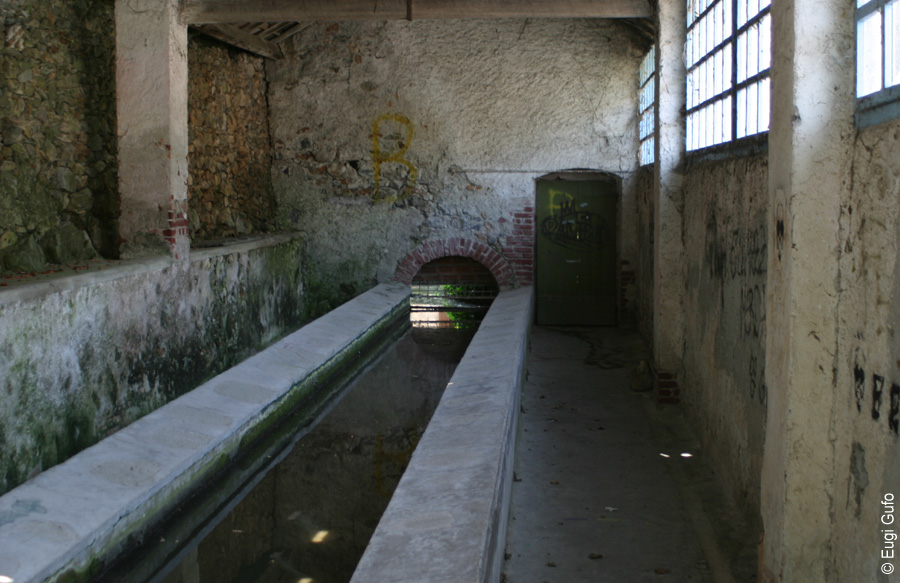
Continuing downhill towards the town, we reach the so-called Roman Road. At the point where it meets Finalborgo, we find a strange building whose interior reminded me of a structure I once spotted in Bergamo Alta. Of course, the differences are many (the first being running water), and the functions were probably different too. What was this particular structure used for? Horses cannot get in, so was it for washing clothes? Or for storing food in a cool environment?
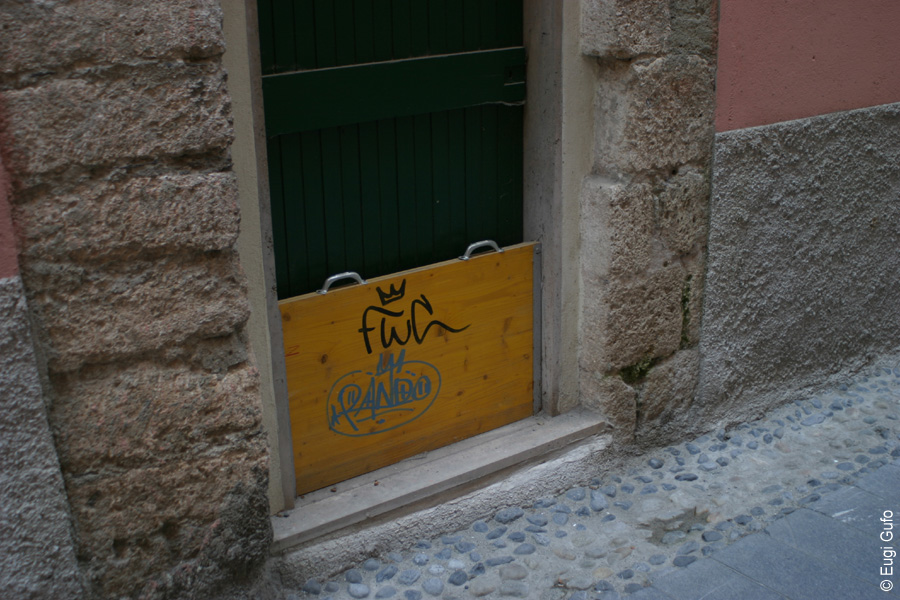
Many private houses, especially in the peripheral areas close to the mountains, even along pedestrian streets, have blackboards in front of their doors, about 50 cm high and insertable into vertical slots, for a purpose that remains unknown to me. What are they for?
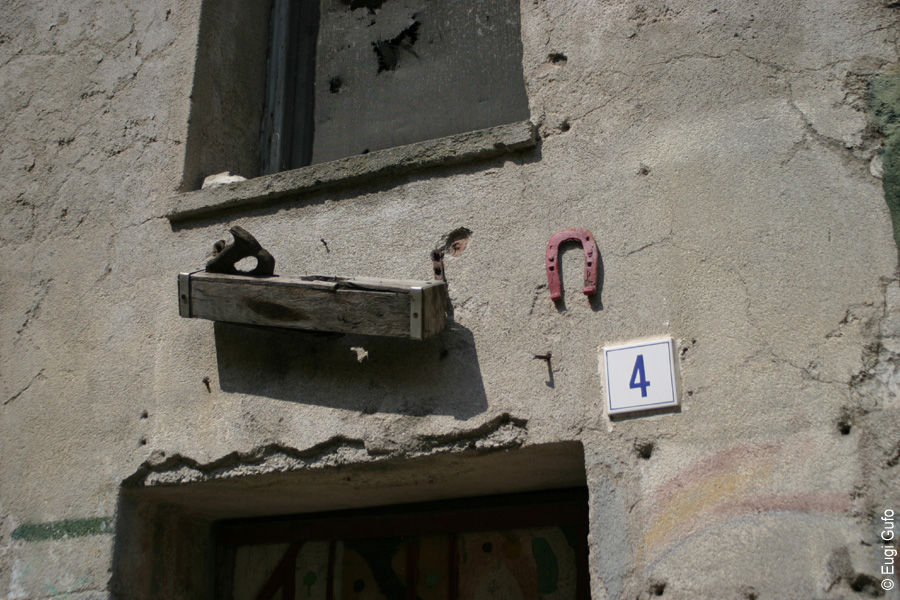
If, instead, we look up, above the entrance of an apparently abandoned building we notice not only a very ordinary horseshoe, but also a type of plane whose Italian name cannot be found in dictionaries (in Russian it is called fuganok, in German fugbank). Does it bring good luck in manual work? Or does it ward off the spectre of unemployment?
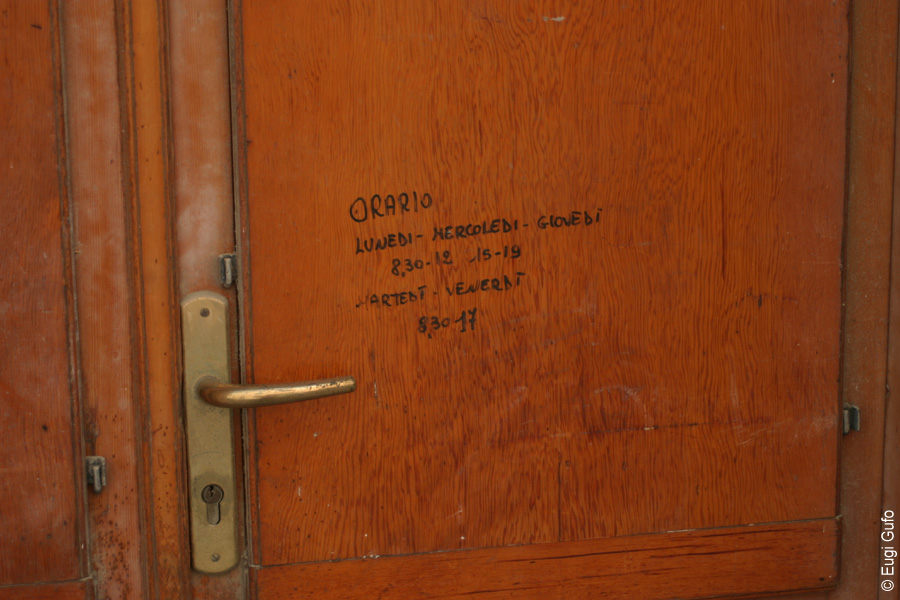
In fact, many mysteries are linked to the doors of Finale Ligure. Here, for example, is an entrance without any sign at all:
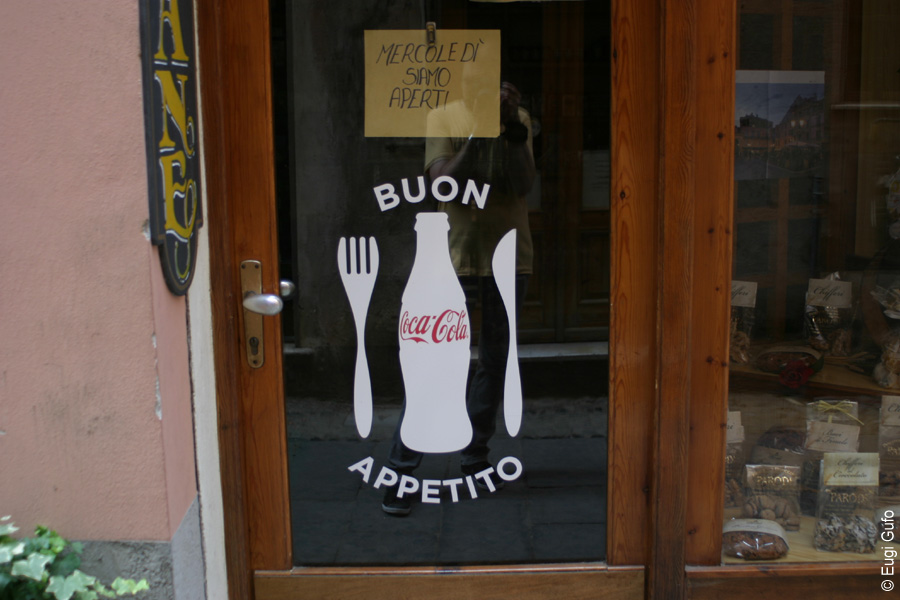
And then there are places where one eats Coca-Cola. The phrase «Coca-Cola. Enjoy your meal» sounds like blasphemy.
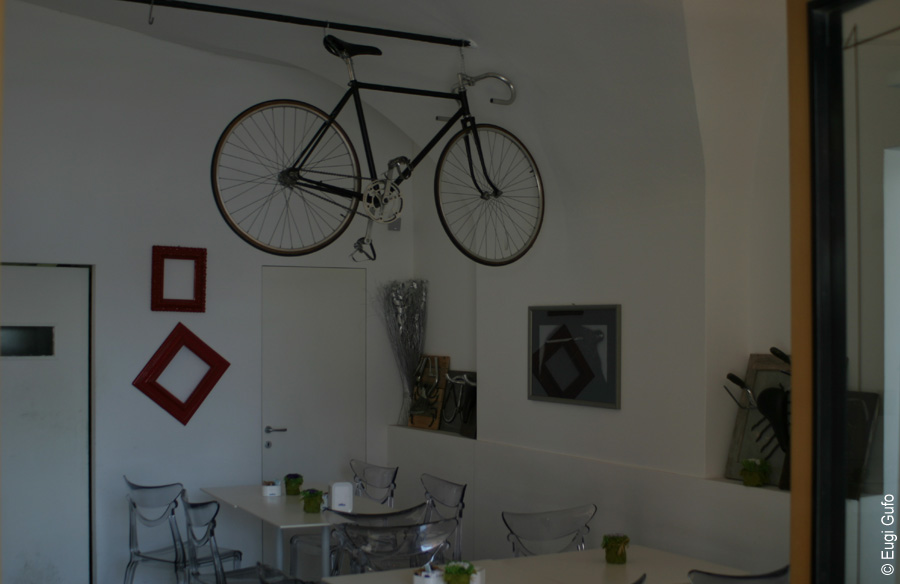
Years ago, after noticing a vintage Gilera motorbike on the windowsill (indoors!) of a Milanese canteen, I thought I had seen everything. In a bar in Finale Ligure they went even further by hanging a bicycle above the customers’ heads.
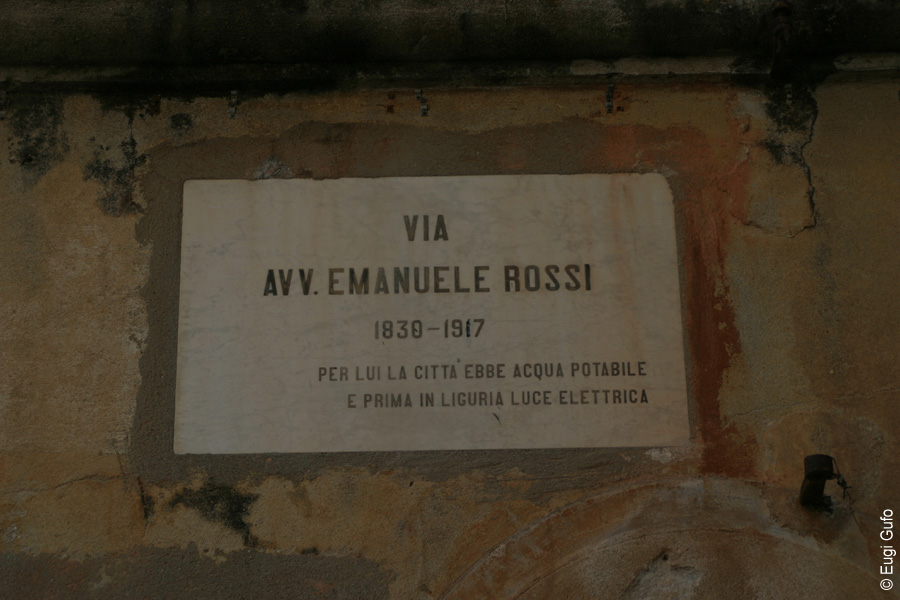
Ole! At last I see a street named in a decent way! Not after an abstract professional «patriot», but after a person who actually did something concrete for the benefit of their community.
Speaking of electric light: in the historic centre the most common street lamps are a bit too large, but beautiful.
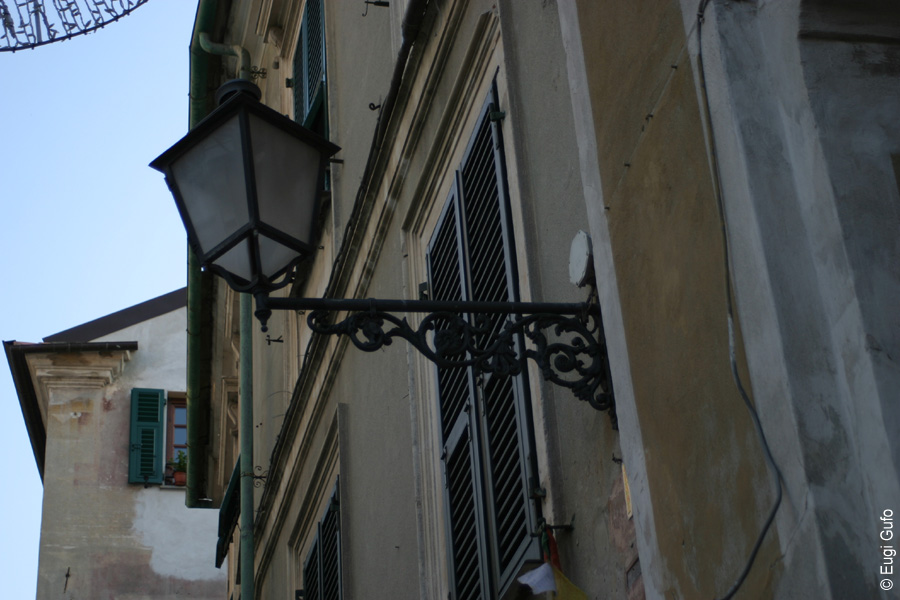
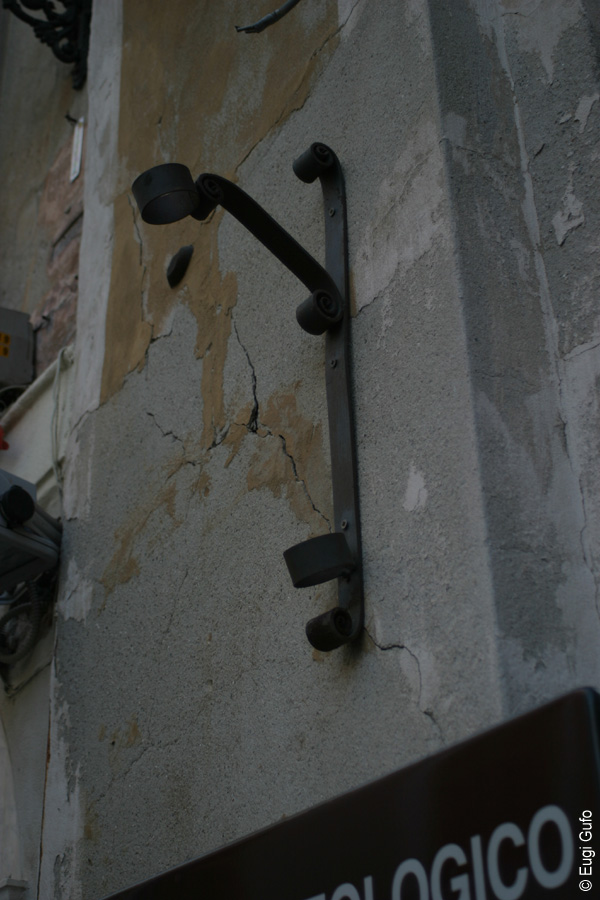
These metal structures, on the other hand, I do not know whether they are meant for flags or for torches.
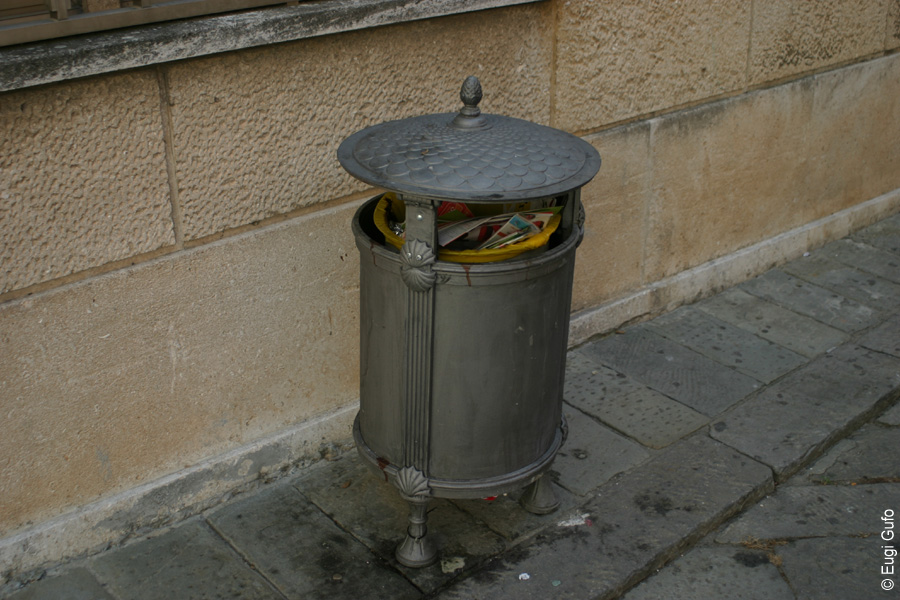
The bins in the historic centre are nice (I had only seen the smiley-face model in Soncino), but always overflowing. I do not know whether this should be blamed on the number of tourists or on poor work by the street cleaners.
At last, a recycling bin that can truly be described as beautiful.

Whereas the following model, original though it is, reminds me of something — but I cannot remember what.
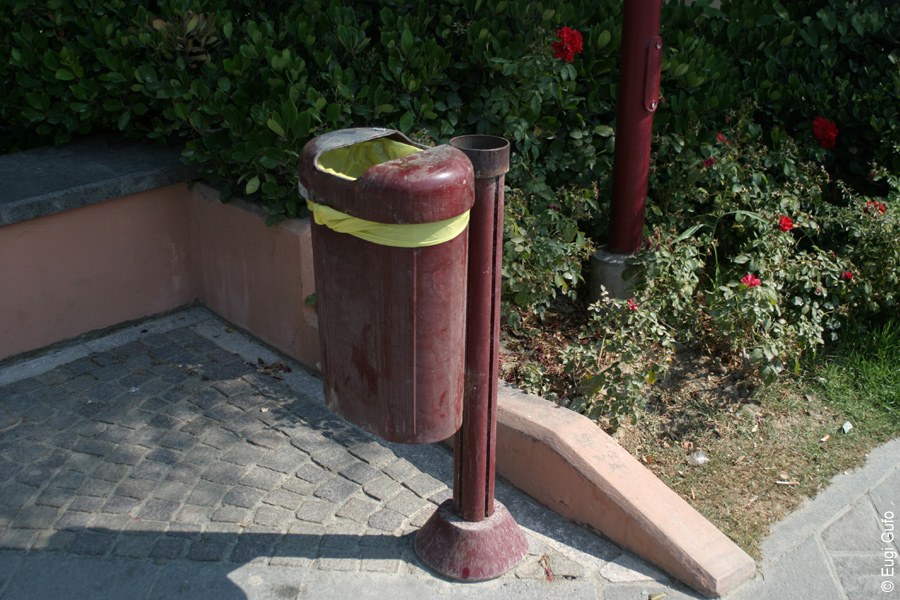
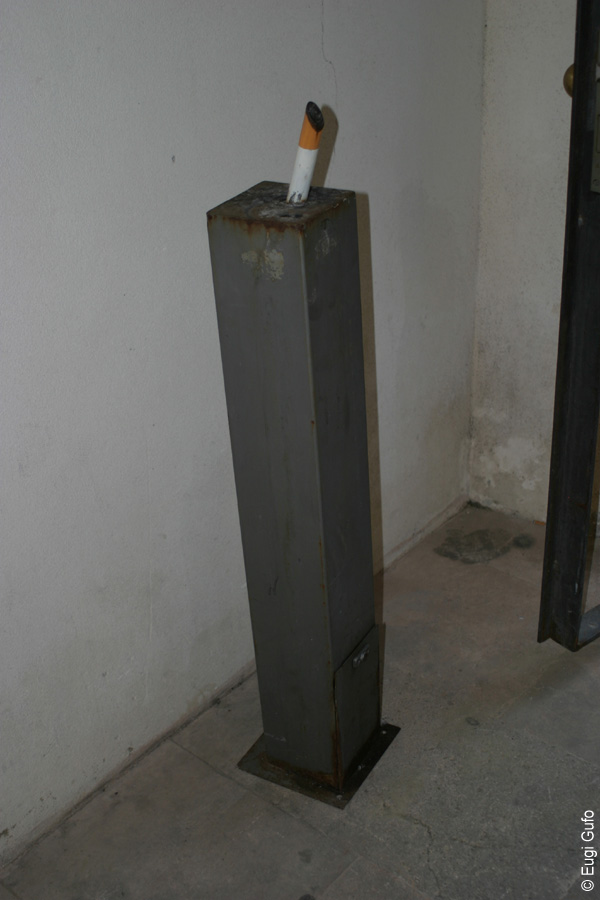
But the most monstrous object is the ashtray placed at the entrance of the municipal library… Still, it works as intended: cigarette butts thrown inside extinguish themselves due to the lack of oxygen.
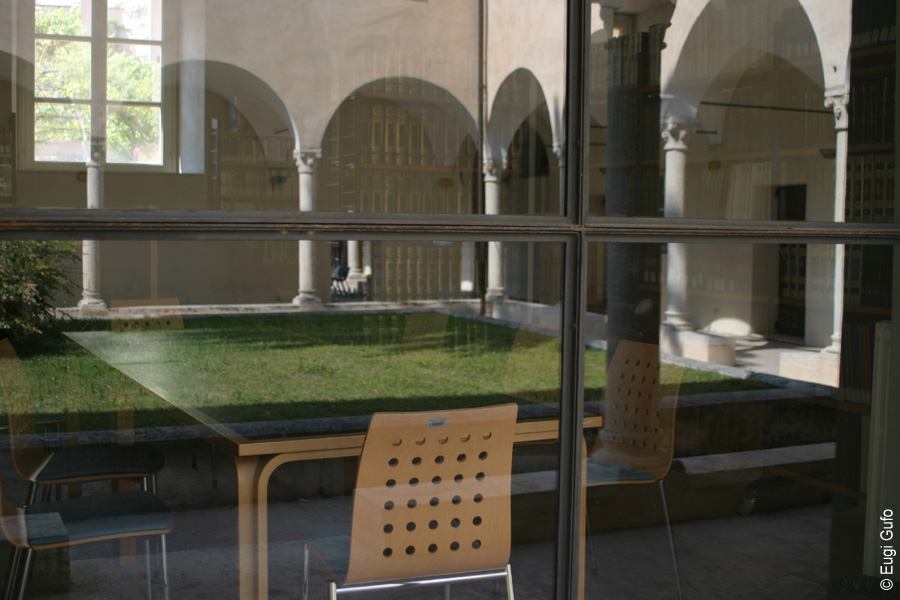
The chairs and encyclopaedias inside the library remind me of something… No, Eugi, no! Control yourself!
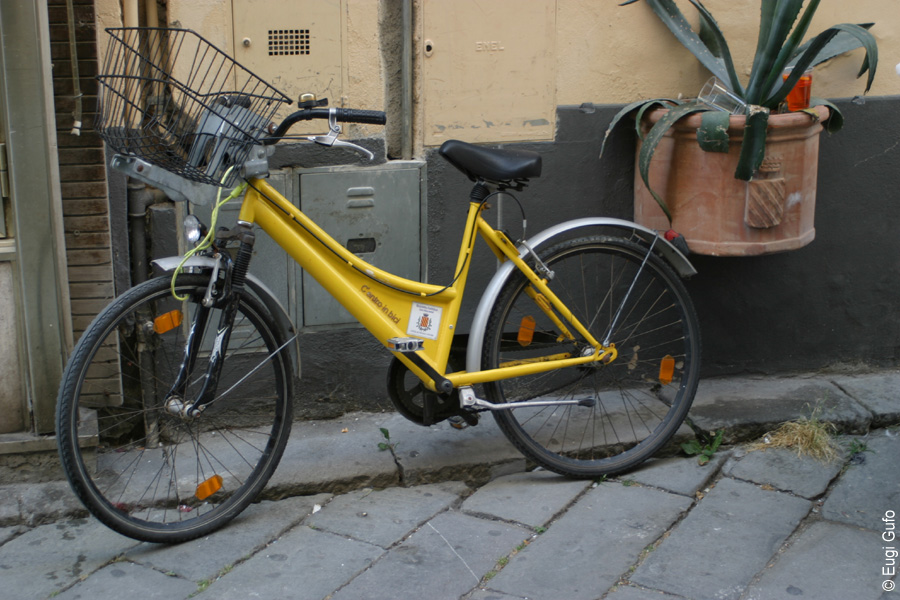
Finale Ligure’s bike-sharing system is quite widespread and well used throughout the town.
Well then, we have seen all the characteristic details of this city. It is time to leave. I therefore conclude with a photo of the FS station unknown to Google Maps.

Finale Ligure, 20 July 2013
↓ Show comments ↓

